Acoustic wall panels solve two problems at once in 2026: they cut echo in a room and they look like a design feature instead of a construction fix. This guide ranks the acoustic wall panel styles worth buying, what each one is actually good for, and where each one falls short.
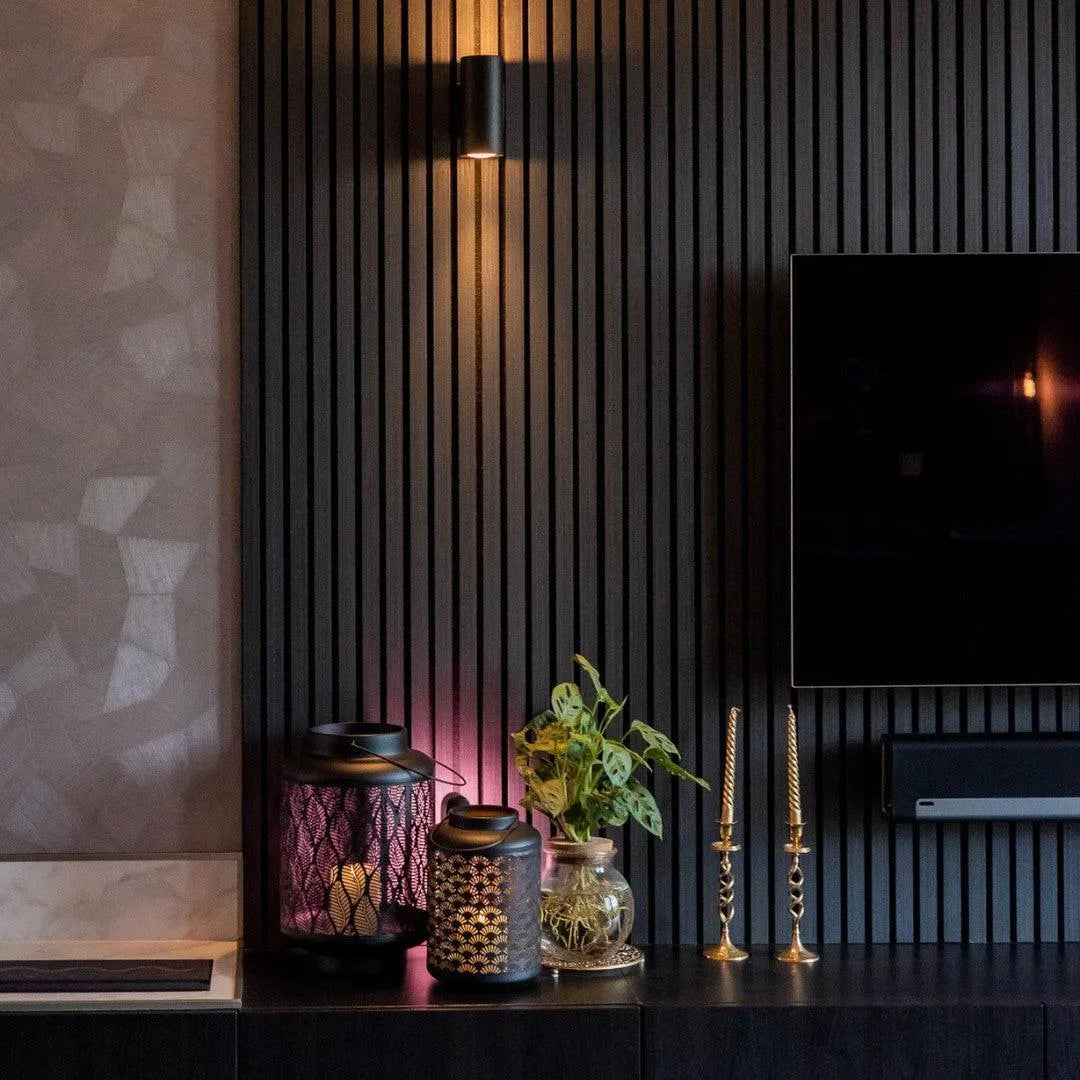
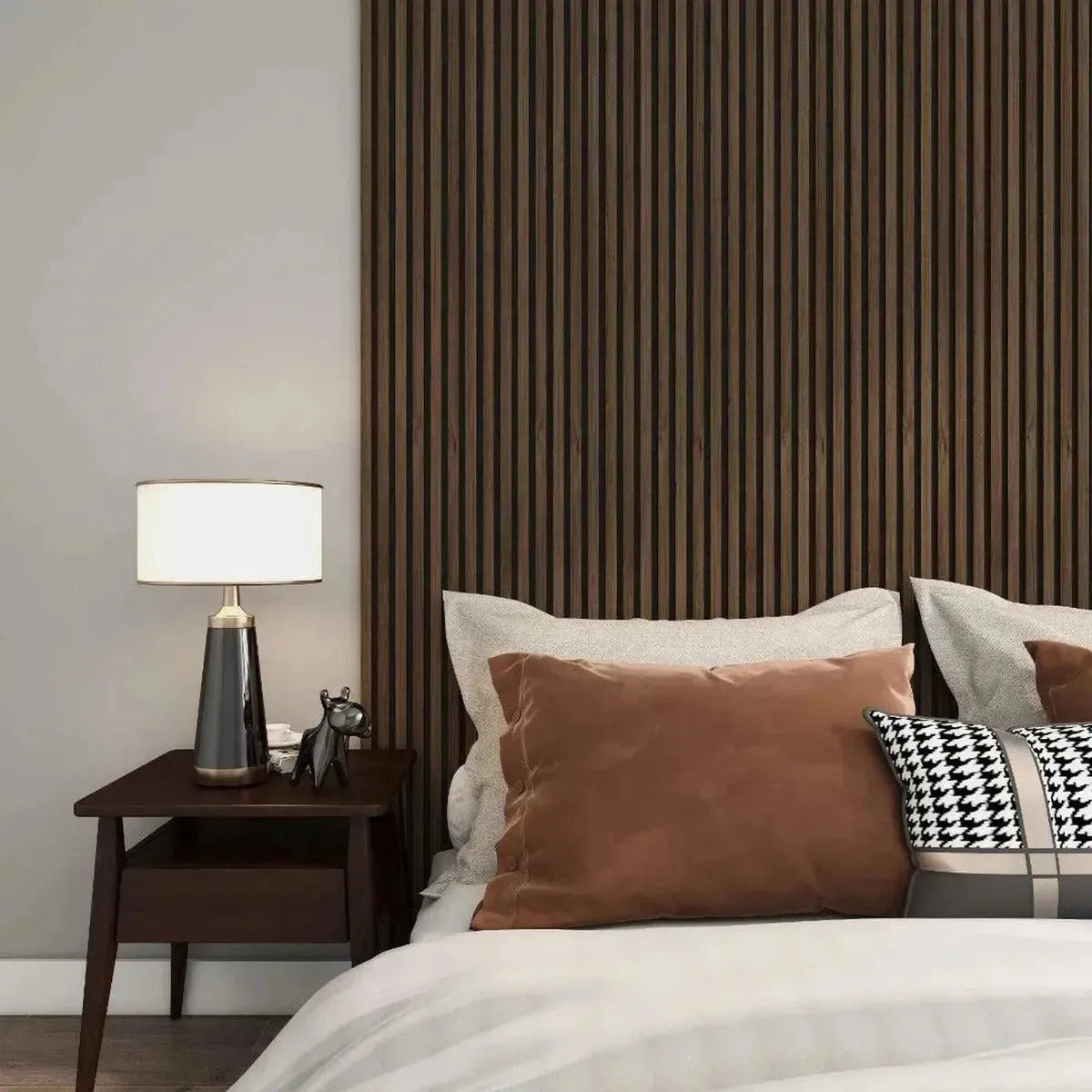
- Acoustic Slat Wall Panel in Walnut is the best overall acoustic wall panel for living rooms and home offices in 2026.
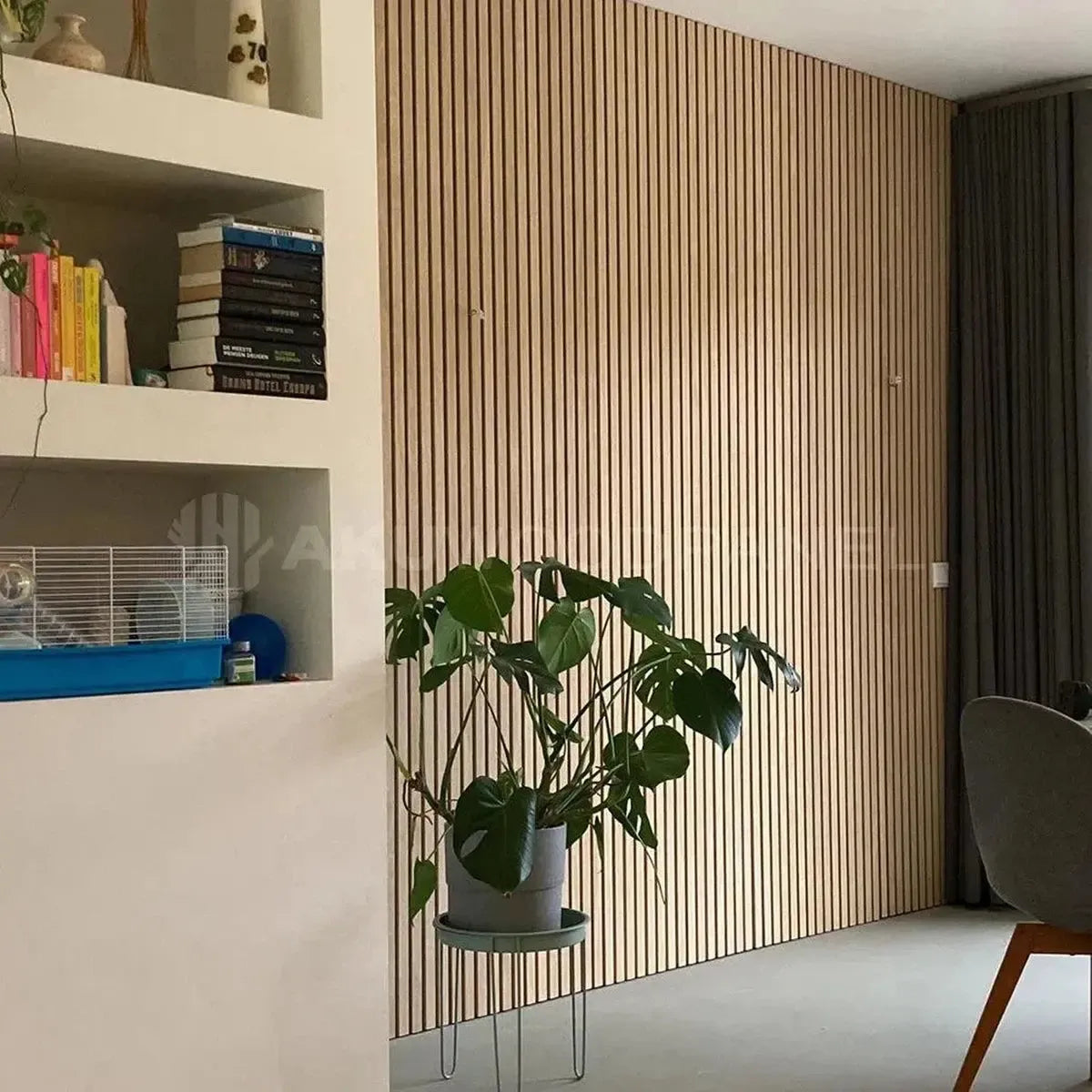
- Acoustic Slat Wall Panel in Natural Oak with Gray Felt wins on raw sound absorption thanks to its dense felt backing.
- Hexagon Acoustic Panel in Black is the pick for a bold geometric accent wall, not for whole-room noise control.
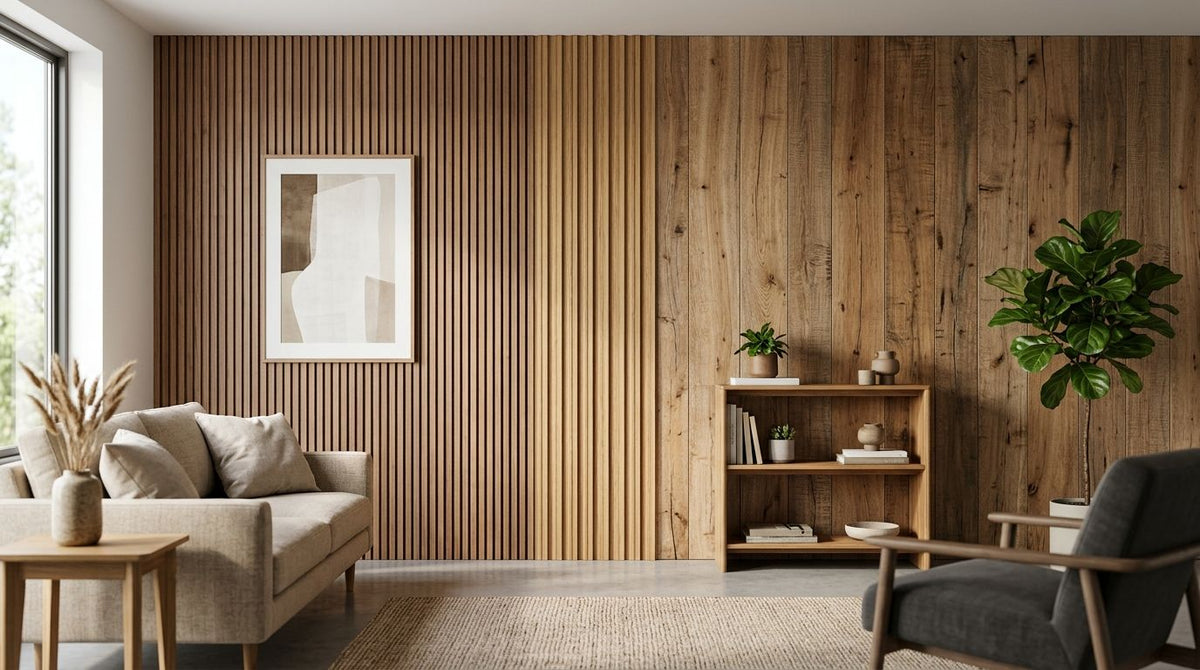
- Fluted Wall Panel in Natural Oak is the lower-cost route to a wood-look wall but does less for echo.
- Search interest in acoustic wall panels runs around 22,200 searches a month, and real wood veneer options outperform printed vinyl on longevity.
Why this matters
An echoey room isn't a decorating problem, it's a physics problem. Hard, flat surfaces — drywall, glass, tile, concrete — bounce sound instead of absorbing it, which is why open-plan kitchens and minimalist living rooms often sound louder than they should. Acoustic wall panels fix this by combining a felt or fiber core with a decorative wood face, so the wall does double duty: it looks finished and it quiets the room.
Not every panel labeled "acoustic" performs the same. Slat panels with a felt backing behave differently than solid fluted boards or 3D wood tiles, and the difference matters more in 2026 as open floor plans and hard-surface flooring have made echo complaints more common in both homes and small offices. The picks below sort out which format does what.
Best overall: Acoustic Slat Wall Panel in Walnut. Best for maximum sound absorption: Acoustic Slat Wall Panel in Natural Oak with Gray Felt. Best for a bold accent wall: Hexagon Acoustic Panel in Black. Read on for the full breakdown, including where each option is the wrong choice.
What makes the best acoustic wall panels
- Real wood veneer, not printed vinyl — veneer holds color and grain texture over years of light exposure; printed finishes fade and peel faster.
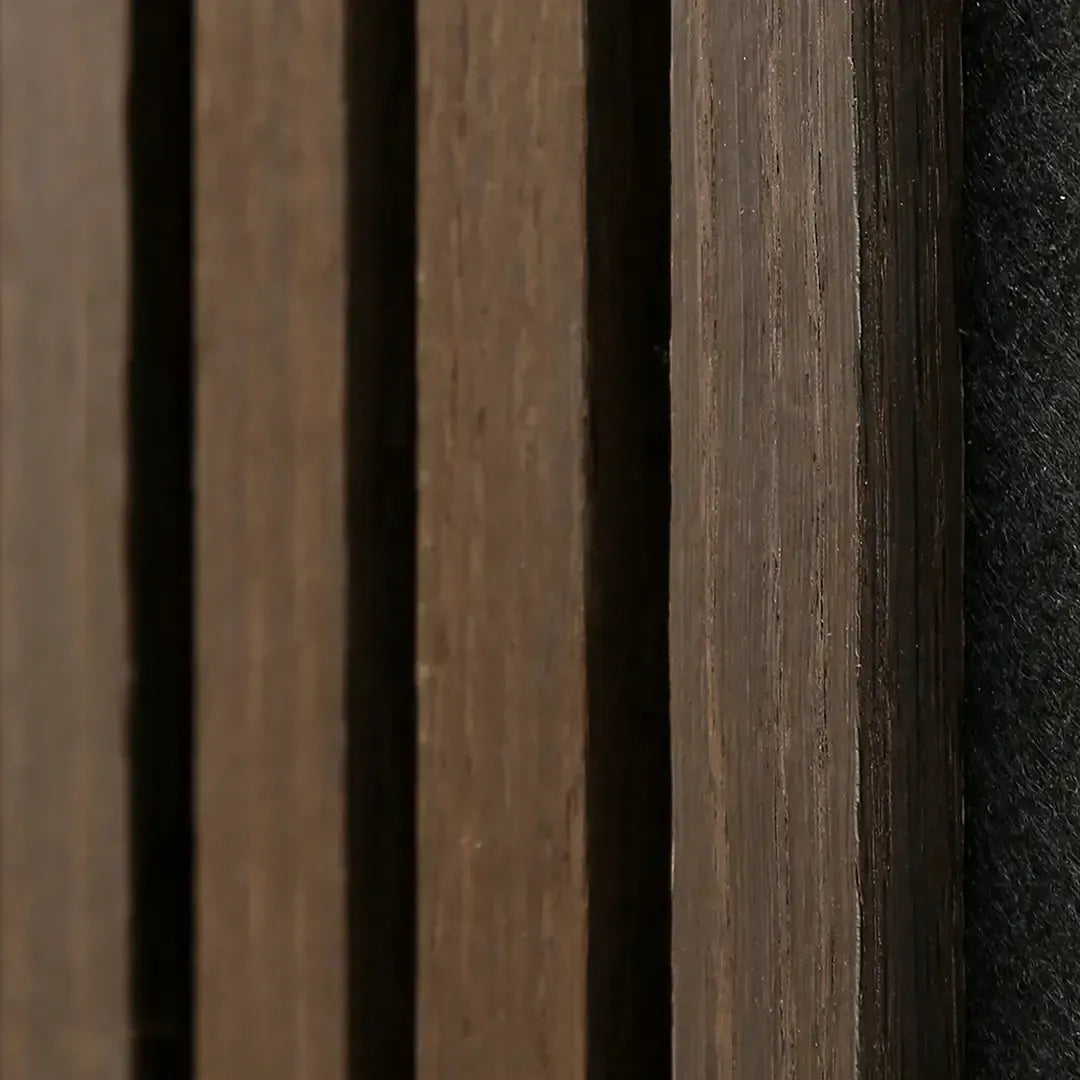
- A dense felt or fiber backing — this is what actually absorbs sound; a slat profile with no backing is decorative only.
- Slat spacing and depth — wider gaps between slats expose more felt surface area, which improves absorption.
- Installation format — interlocking tiles and click panels go up faster than panels needing full adhesive coverage.
- Finish consistency across a full wall — panels should batch-match in tone so a multi-panel wall doesn't look patchy.
- Fit for the room's actual noise problem — a panel chosen for looks alone won't fix a genuinely reverberant space.
Acoustic wall panels at a glance
| Panel | Best For | Standout Feature | Key Limitation |
|---|---|---|---|
| Acoustic Slat Wall Panel – Walnut | Living rooms and home offices | Real wood veneer over a felt-backed slat core | Not a full acoustic treatment for large open rooms |
| Acoustic Slat Wall Panel – Natural Oak with Gray Felt | Maximum sound absorption | Thicker felt layer visible between slats | Contrast felt shows dust more than solid-color panels |
| Hexagon Acoustic Panel – Black | Bold geometric accent walls | Modular hexagon shape for custom layouts | More cutting and planning needed than straight slat runs |
| Fluted Wall Panel – Natural Oak | Lower-cost wood-look accent walls | Solid fluted profile, no felt required | Weaker echo control than felt-backed slat panels |
| 3D Wood Wall Panel – Deep Dusk Walnut | Small feature walls and backsplash-style accents | 12x12 inch interlocking tile format | Best suited to small areas, not full-room acoustic treatment |
1. Acoustic Slat Wall Panel – Walnut: best acoustic wall panel for everyday living rooms and home offices
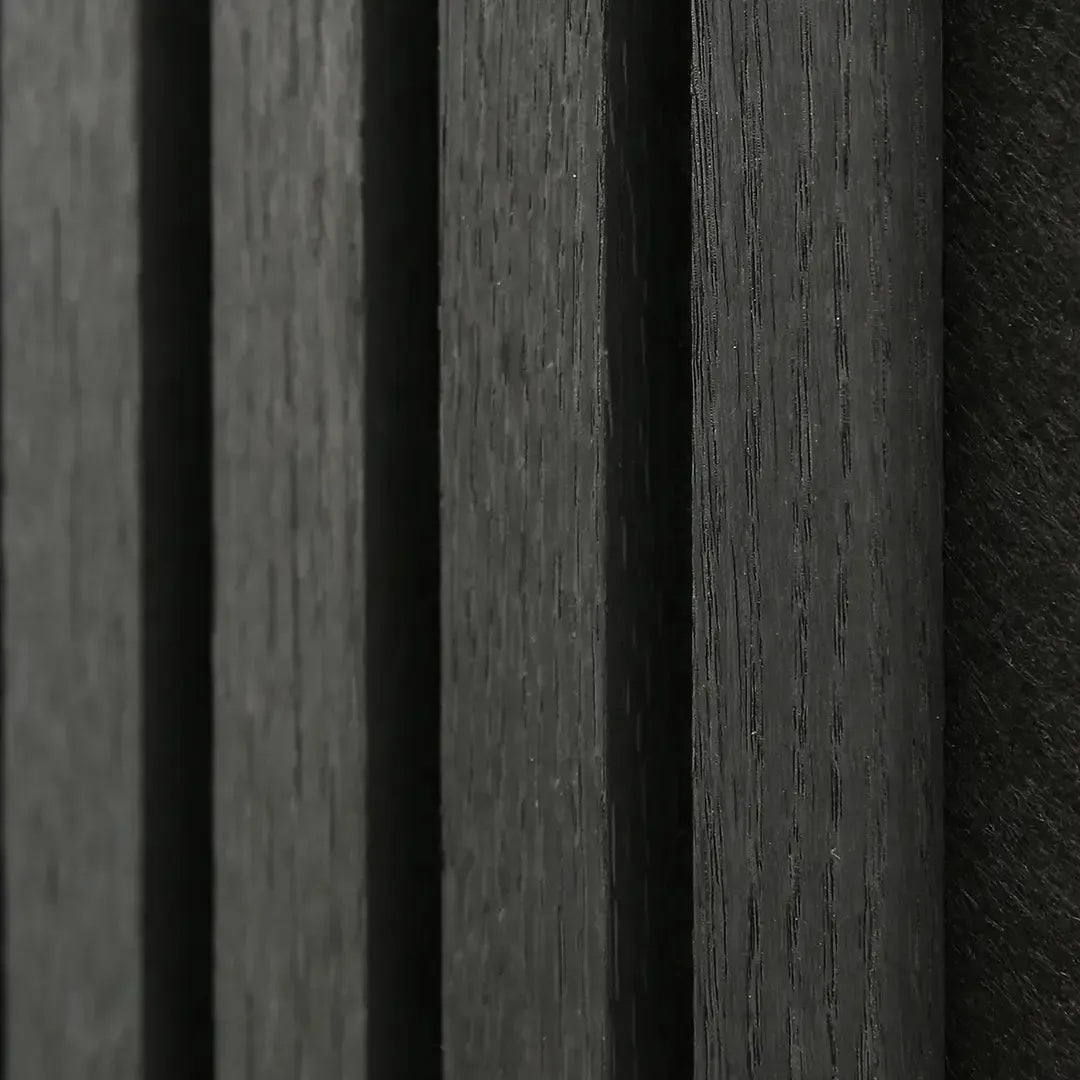
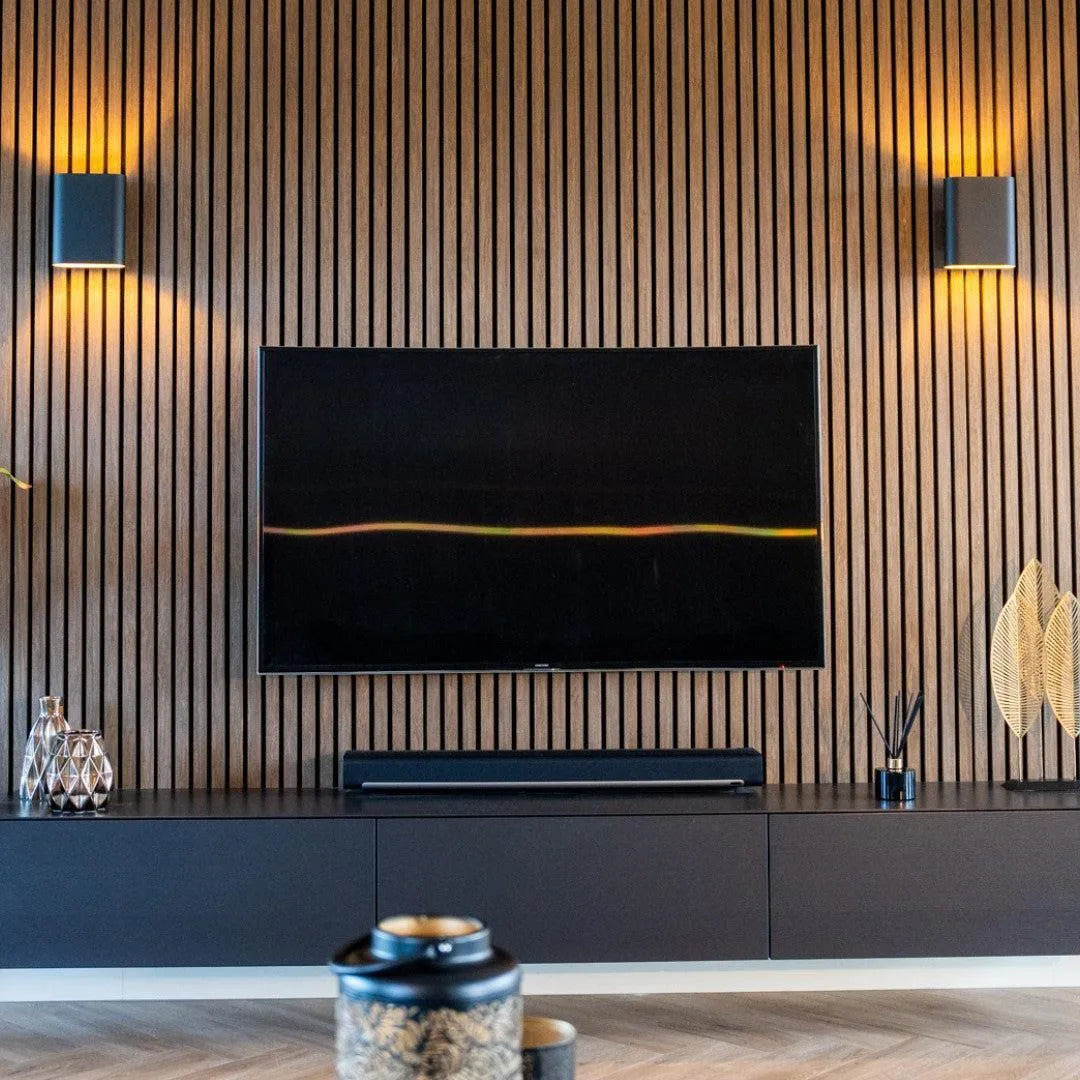
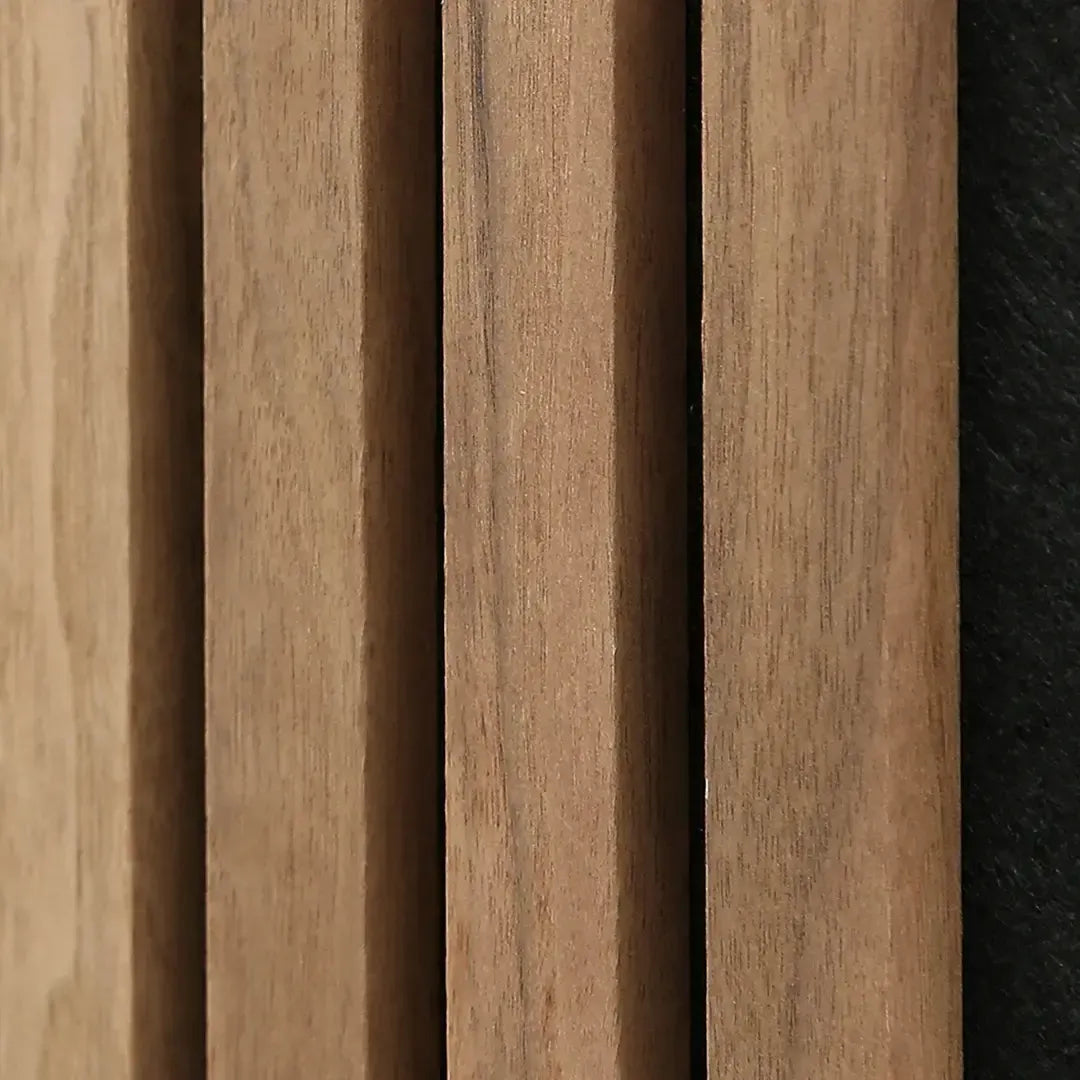
This is the standard slat profile: solid wood veneer slats mounted over a felt-backed base, in a walnut finish that reads warm without going dark. It's the panel most homeowners land on because it balances noise control with a finish that works in almost any room style, from a TV wall to a home office backdrop.
Acoustic Slat Wall Panel – Walnut pros:
- Felt backing behind every slat, not just a printed surface
- Walnut veneer tone works with both warm and neutral color schemes
- Straightforward panel-to-panel installation for accent walls
Acoustic Slat Wall Panel – Walnut cons:
- Won't fully quiet a large open-plan room on its own
- Walnut shows dust and fingerprints more visibly than lighter finishes
Best for: anyone treating a single feature wall in a living room, bedroom, or office who wants real wood grain with functional echo control.
Verdict: Buy if you want the most versatile acoustic slat panel in the lineup.
2. Acoustic Slat Wall Panel – Natural Oak with Gray Felt: best acoustic wall panel for maximum sound absorption
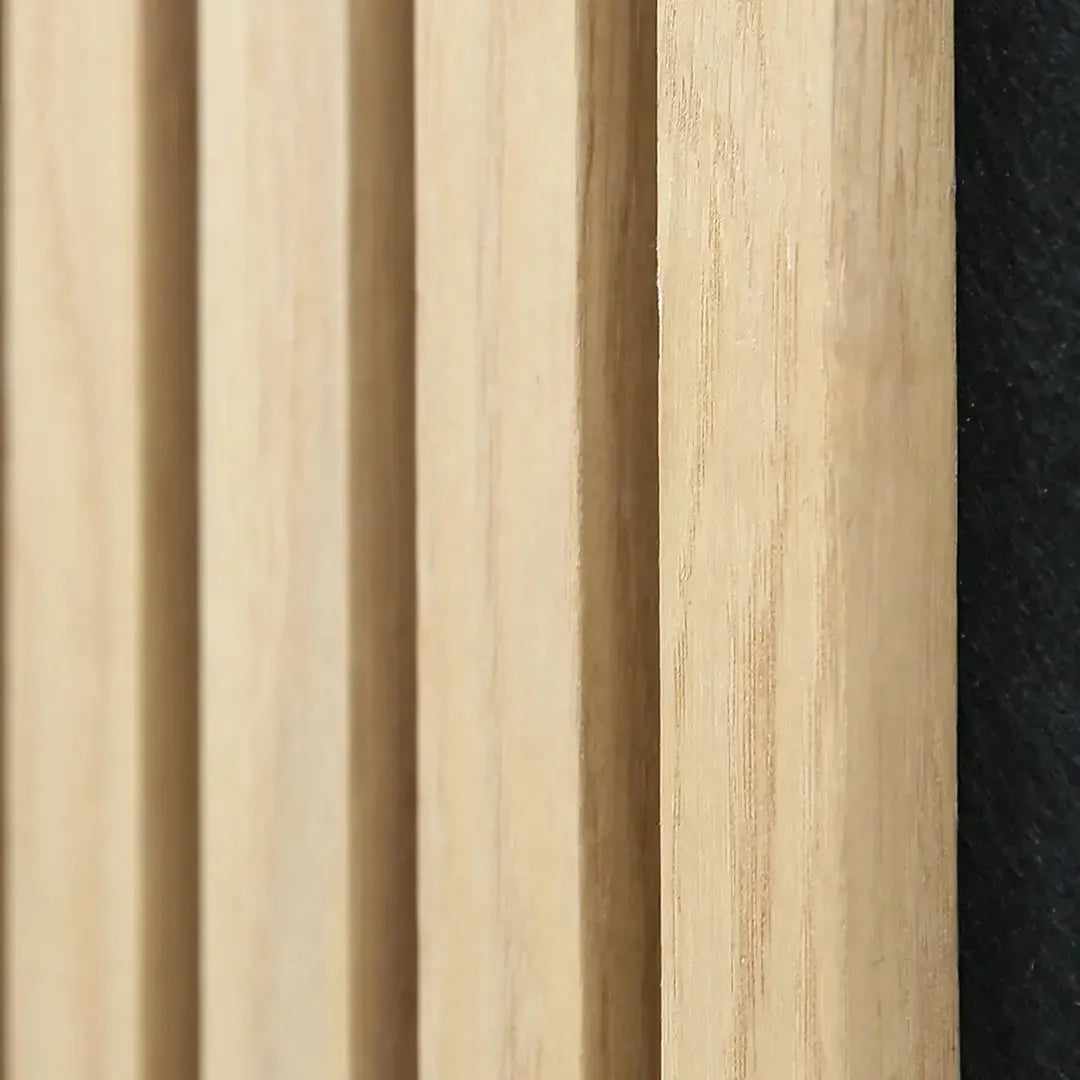
This version pairs a lighter natural oak veneer with a gray felt backing instead of a color-matched one, which increases the visible felt surface and, with it, the amount of exposed absorptive material per panel. It's the version to reach for when the room's actual complaint is that you can't hear people talk over the noise, not just that the room needs a feature wall.
Acoustic Slat Wall Panel – Natural Oak with Gray Felt pros:
- Contrast felt design increases absorptive surface area
- Natural oak brightens darker rooms better than walnut or smoked oak
- Same install method as the standard slat line
Acoustic Slat Wall Panel – Natural Oak with Gray Felt cons:
- Gray felt shows lint and pet hair more than matched-tone felt
- Lighter oak scratches more visibly than darker finishes
Best for: open-plan kitchens, dining rooms, and small offices where echo is the primary complaint, not just decor.
Verdict: Buy if sound absorption is the priority over color-matching.
3. Hexagon Acoustic Panel – Black: best acoustic wall panel for a bold geometric accent wall
Hexagon panels swap the linear slat look for a modular geometric shape you arrange yourself, in a black finish that reads as a design statement first and an acoustic treatment second. This is the pick when the wall itself needs to be the room's focal point.
Hexagon Acoustic Panel – Black pros:
- Modular shape allows custom, non-rectangular layouts
- Black finish pairs well with dark or industrial-style interiors
- Still felt-backed, so it contributes real absorption, not just looks
Hexagon Acoustic Panel – Black cons:
- Layout planning and cutting takes longer than a straight slat run
- Black finish shows dust and scuffs more visibly than wood-tone options
Best for: feature walls in media rooms, studios, or retail spaces where the geometric pattern matters as much as the acoustic function.
Verdict: Buy if the wall needs to double as a design centerpiece.
4. Fluted Wall Panel – Natural Oak: best decorative wall panel for a lower-cost wood-look accent
Fluted panels use a solid, ridged wood profile without a felt backing, which means the acoustic wall panels category includes them by look and material, but not always by function. They're the right call when the goal is texture and warmth on a budget-conscious wall, not measurable echo reduction.
Fluted Wall Panel – Natural Oak pros:
- Solid fluted profile adds visible texture without felt
- Natural oak tone matches easily with the oak slat line for mixed layouts
- Flexible design bends slightly for gentle curves
Fluted Wall Panel – Natural Oak cons:
- No felt backing, so it does noticeably less for echo than slat panels
- Not the right pick if noise control is the main goal
Best for: kitchen islands, TV walls, and hallway accents where the priority is texture, not acoustic performance.
Verdict: Hold for a purely decorative wall; Skip if echo reduction is the goal.
5. 3D Wood Wall Panel – Deep Dusk Walnut: best acoustic-style panel for small feature walls
This is a 12x12 inch interlocking wood tile rather than a full slat panel, with individually shaped wood pieces set into a dark walnut finish. It's built for smaller, high-impact surfaces — a bar back wall, a reading nook, a fireplace surround — where full slat panels would be overkill.
3D Wood Wall Panel – Deep Dusk Walnut pros:
- Handcrafted tile detail gives more texture depth than flat slats
- 12x12 inch tile size makes it easy to plan around small or irregular walls
- Works as an accent alongside slat panels elsewhere in the same room
3D Wood Wall Panel – Deep Dusk Walnut cons:
- Not designed as a whole-room acoustic solution
- More individual pieces to align than a single slat panel run
Best for: small feature walls, alcoves, and backsplash-style installs where texture matters more than square footage.
Verdict: Buy for a small accent area; Hold if you need to cover a full wall.


How we ranked these
Every panel above got scored against the same six criteria: real wood veneer versus printed finish, presence and depth of felt backing, slat or tile spacing, install format, finish consistency, and fit for the actual noise problem in the room. Panels that look like acoustic treatment but skip the felt backing — fluted panels, most 3D wood tiles — got ranked for decor use, not for noise control, because that's what they actually deliver.
“A slat panel with no felt behind it is decoration, not acoustic treatment.”
Which acoustic wall panel should you choose?
If you're treating one wall in a living room or office and want it to look finished, not clinical, Acoustic Slat Wall Panel – Walnut is the default pick for 2026. If the room's actual problem is that conversations get lost over background noise, move to the Natural Oak with Gray Felt version instead — the extra felt surface is doing real work. Want a wall that reads as a design statement first, go Hexagon Acoustic Panel – Black. Everything else on this list is a decor-first choice for smaller areas, and that's fine as long as you're not expecting it to fix an echo problem it was never built to solve.
FAQ
What's the best acoustic wall panel for a living room in 2026?
Acoustic Slat Wall Panel in Walnut is the best overall pick for living rooms in 2026 because it pairs real wood veneer with a felt-backed core that absorbs sound rather than just looking decorative.
Do acoustic wall panels actually reduce echo?
Felt-backed panels do reduce echo because the felt layer absorbs sound instead of reflecting it. Panels without felt backing, like most fluted boards, add texture but do far less for noise control.
Is a fluted wall panel the same as an acoustic wall panel?
No. Fluted panels are usually solid wood with no felt backing, so they look similar to acoustic slat panels but contribute much less sound absorption.
How do I choose between slat panels and hexagon panels?
Choose slat panels for straightforward wall coverage and consistent acoustic performance, and hexagon panels when the layout itself needs to be a geometric design feature.
Are 3D wood wall tiles good for noise control?
3D wood wall tiles like the 12x12 inch Deep Dusk Walnut panel work best on small feature walls or backsplashes rather than as a full-room acoustic solution.
What should I check before buying acoustic wall panels?
Check for real wood veneer over printed finish, confirm there is a felt or fiber backing behind the slats, and match the panel format to the size of wall you are actually covering.
Can acoustic wall panels be installed without full wall coverage?
Yes. A single feature wall with felt-backed slat panels still reduces echo noticeably, though full coverage produces a stronger acoustic effect than a partial wall.
Is gray felt or matched-tone felt better for acoustic slat panels?
Gray felt on the Natural Oak with Gray Felt panel exposes more visible absorptive surface, which helps sound absorption, while matched-tone felt blends in visually but shows less contrast.
One last thing
Before committing to a full wall, order a sample piece in the finish you're considering — felt color and wood grain read differently under your own lighting than they do in a photo, and swapping a small sample costs far less than repanelling a wall you don't like. Search interest in acoustic wall panels sits around 22,200 searches a month in 2026, which tells you the echo-and-aesthetics problem this category solves is a common one, not a niche complaint.


 Better performance and aesthetic appeal
 In Stock