Most panels labeled "acoustic wood" are just grooved veneer glued to MDF with nothing behind it to actually absorb sound. This guide ranks six real options by what's hidden behind the wood, not just how the wood looks, and tells you which room each one actually fits.
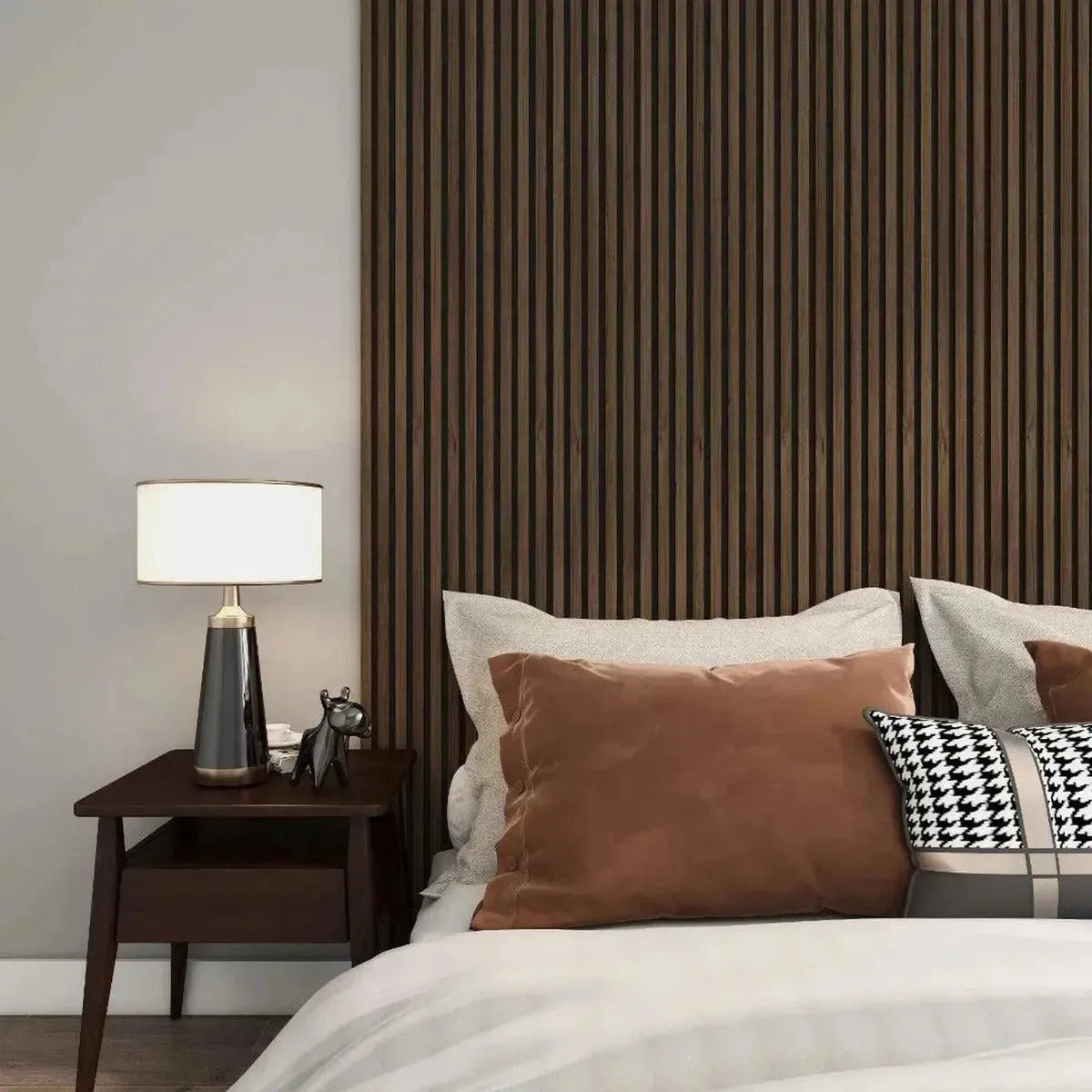
- AKU Woodpanel's Acoustic Slat Wall Panel in Walnut is the best overall acoustic wood panel for living rooms in 2026.
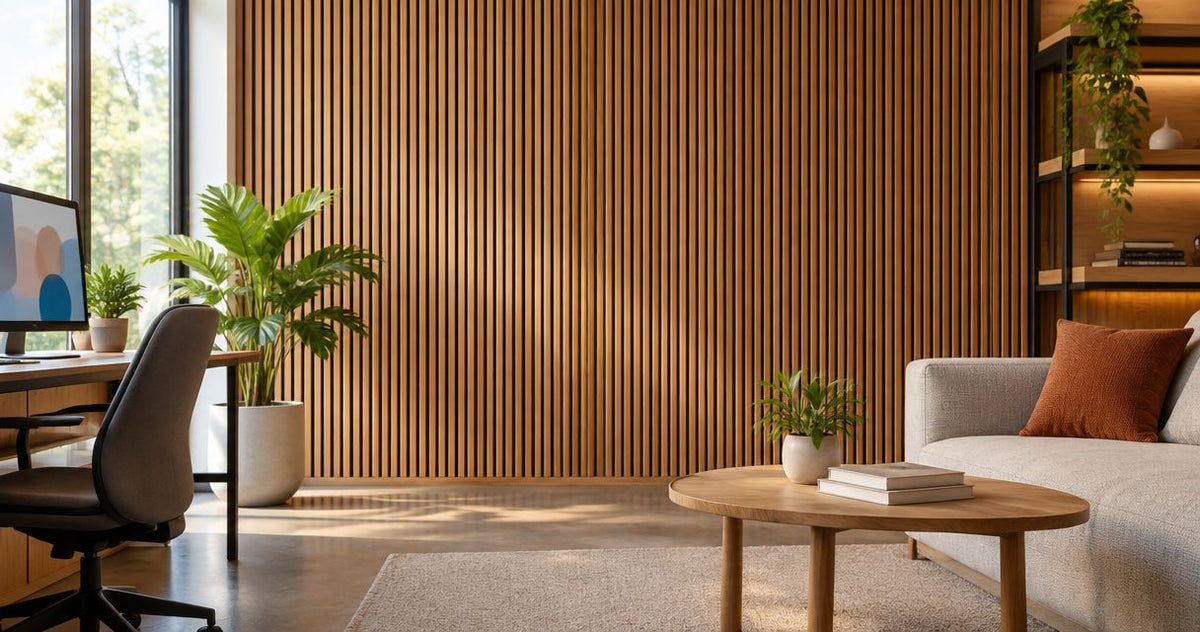
- Acoustic Slat Wall Panel with Gray Felt in Natural Oak wins for open-plan offices that need real absorption, not just looks.
- Fluted Wall Panel in Natural Oak is the pick for curved walls and DIY installs, not for maximum noise control.
- Hexagon Acoustic Panel in Black suits dramatic accent walls but shows dust and fingerprints faster than lighter finishes.
- The Full Sample Box is the lowest-risk way to test acoustic wood panels before ordering enough to cover a wall.
Why this matters
Echo isn't a design problem, it's a physics problem. Hard, parallel surfaces like drywall, glass, and hardwood floors bounce sound instead of absorbing it, and no number of throw pillows fixes a room with 10-foot ceilings and zero soft surfaces. Acoustic wood panels solve this two ways at once: a felt or fiber layer hidden behind slotted or slatted wood veneer breaks up sound waves the way foam panels do, while the visible surface reads as furniture rather than treatment.
Not every panel labeled "acoustic" backs that claim up. Some are decorative slats with no absorbing layer at all, which means they look the part in photos and do nothing for the actual noise problem. The six picks below get ranked by what's behind the veneer, where each one performs best, and where it falls short, so you're not guessing which one solves your room in 2026.
Best overall: the AKU Woodpanel Acoustic Slat Wall Panel in Walnut. Best for open-plan offices: the Acoustic Slat Wall Panel with Gray Felt in Natural Oak. Best for curved walls and DIY jobs: the Fluted Wall Panel in Natural Oak. Best low-risk starting point: the Full Sample Box.
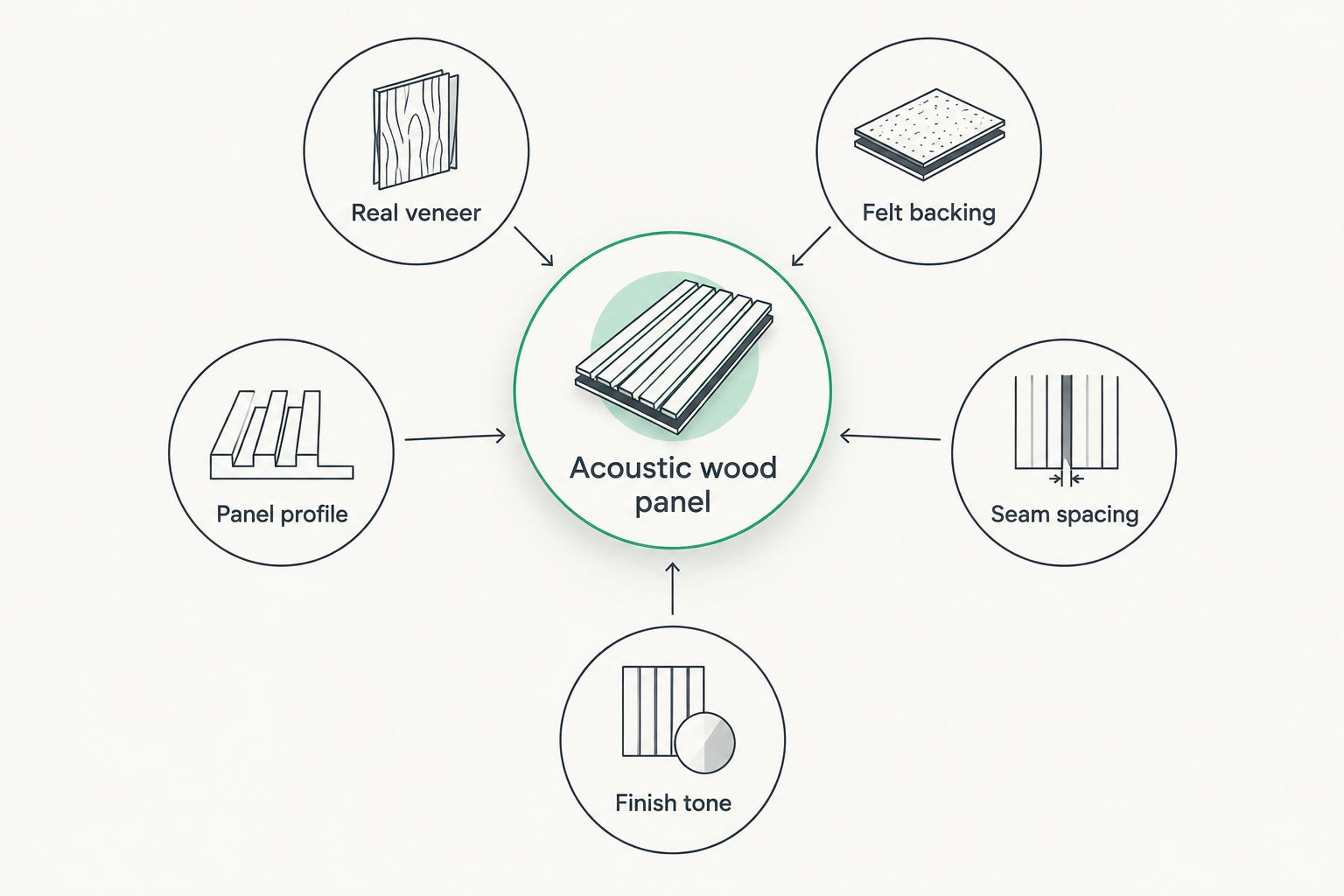
What makes the best acoustic wood panels
- Real wood veneer, not printed laminate — grain and color hold up under UV and daily wear; printed laminate fades and peels at the seams.
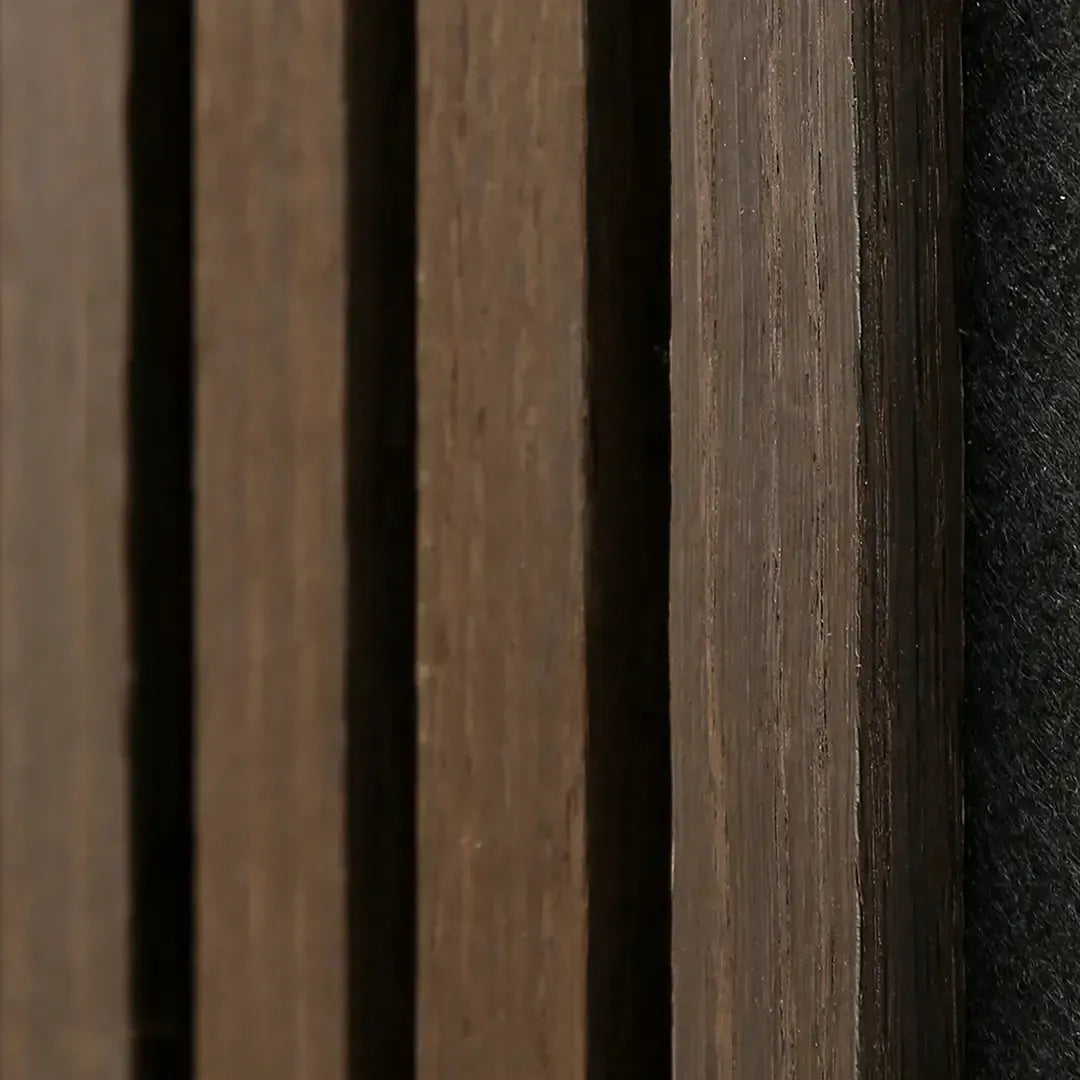
- A felt, fiber, or foam backing behind the wood — this is where the actual sound absorption happens, not in the visible slats.
- A profile that matches the wall's shape — flat slats work on flat walls; curved walls, columns, and irregular shapes need a flexible or modular profile.
- Interlocking edges that minimize visible seams — the difference between a finished wall and a row of individual boards.
- A finish tone that matches the room's light level — dark smoked oak and black hexagon absorb light as well as sound, which is the wrong call in a small, windowless room.
Acoustic wood panels at a glance
| Panel | Best for | Standout feature | Key limitation |
|---|---|---|---|
| Acoustic Slat Wall Panel (Walnut) | Living rooms and general accent walls | Felt-backed slats in real walnut veneer | Shows scratches more than lighter finishes |
| Hexagon Acoustic Panel (Black) | Dramatic accent walls and studios | Modular hex shape fits irregular walls | Dust and fingerprints show on black finish |
| Acoustic Slat Wall Panel with Gray Felt (Natural Oak) | Open-plan offices | Gray felt adds visible absorbing surface area | Felt collects lint and needs regular vacuuming |
| Fluted Wall Panel (Natural Oak) | Curved walls and DIY installs | Flexible profile bends around curves and columns | Less acoustic absorption than felt-backed slats |
| Full Sample Box | First-time buyers testing finishes | Compare grain and color before a full order | Doesn't test acoustic performance at wall scale |
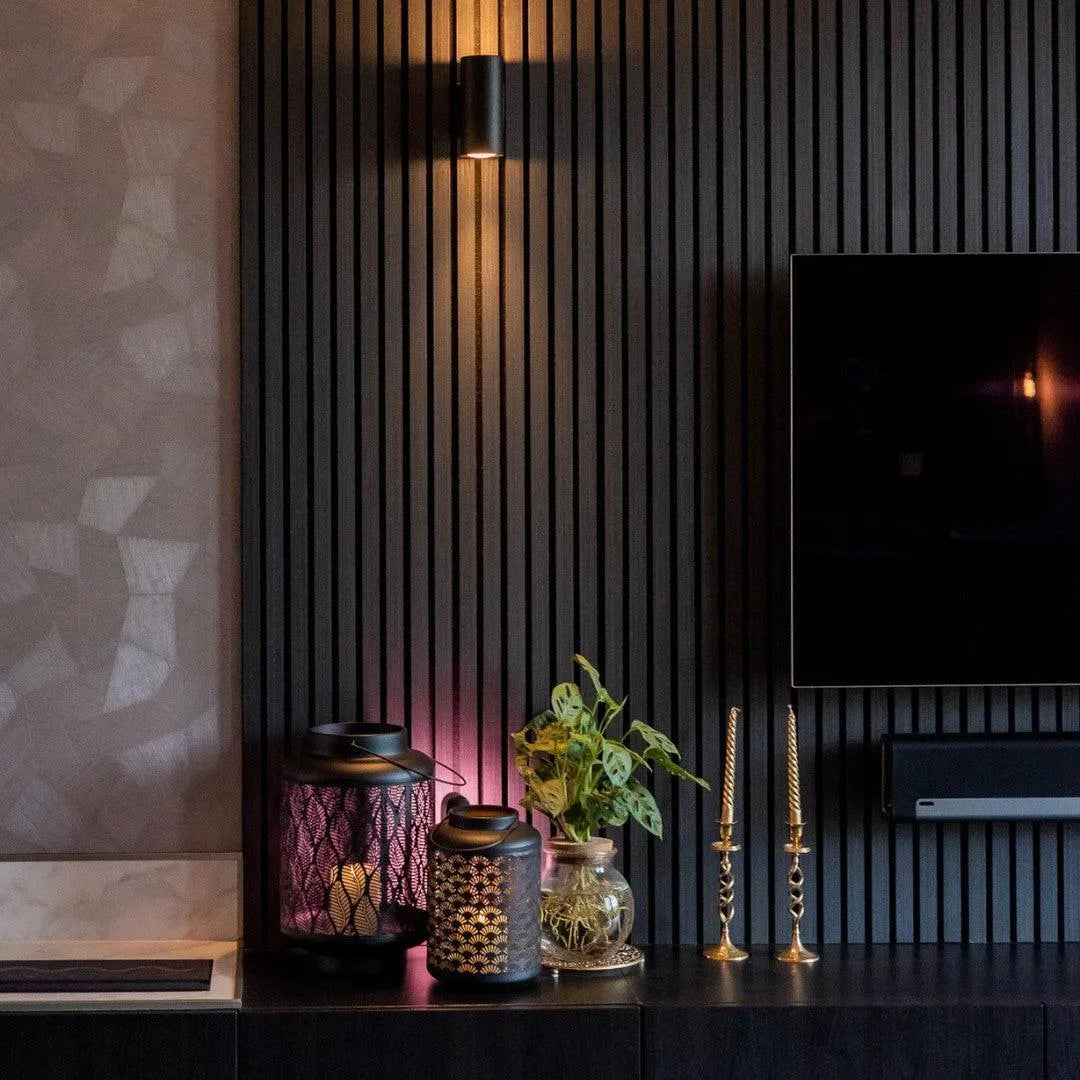
| Acoustic Slat Wall Panel (Smoked Oak) | Dark home theaters and media rooms | Dark tone controls glare, felt cuts echo | Shows fingerprints and dust noticeably |
1. Acoustic Slat Wall Panel in Walnut: best for living rooms
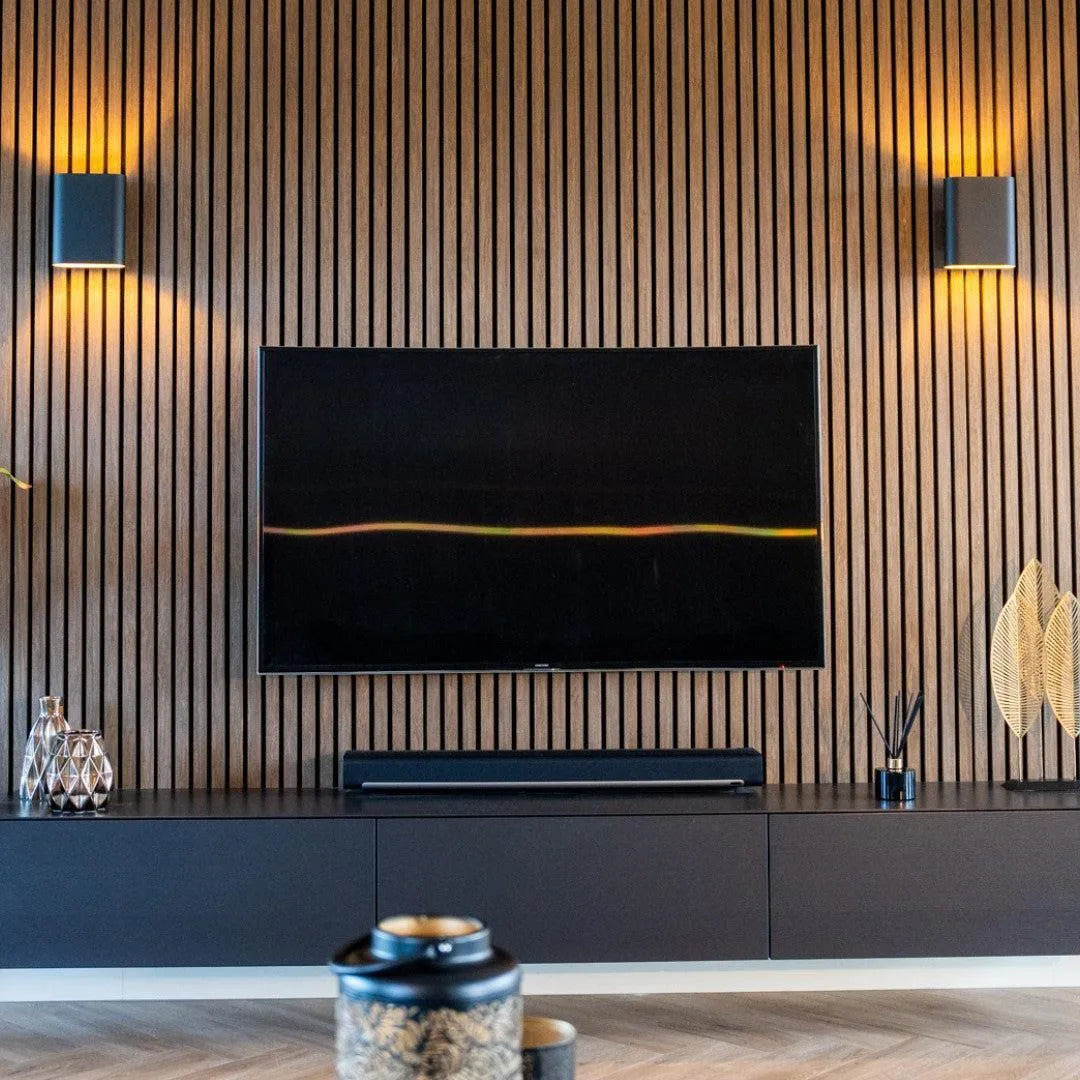
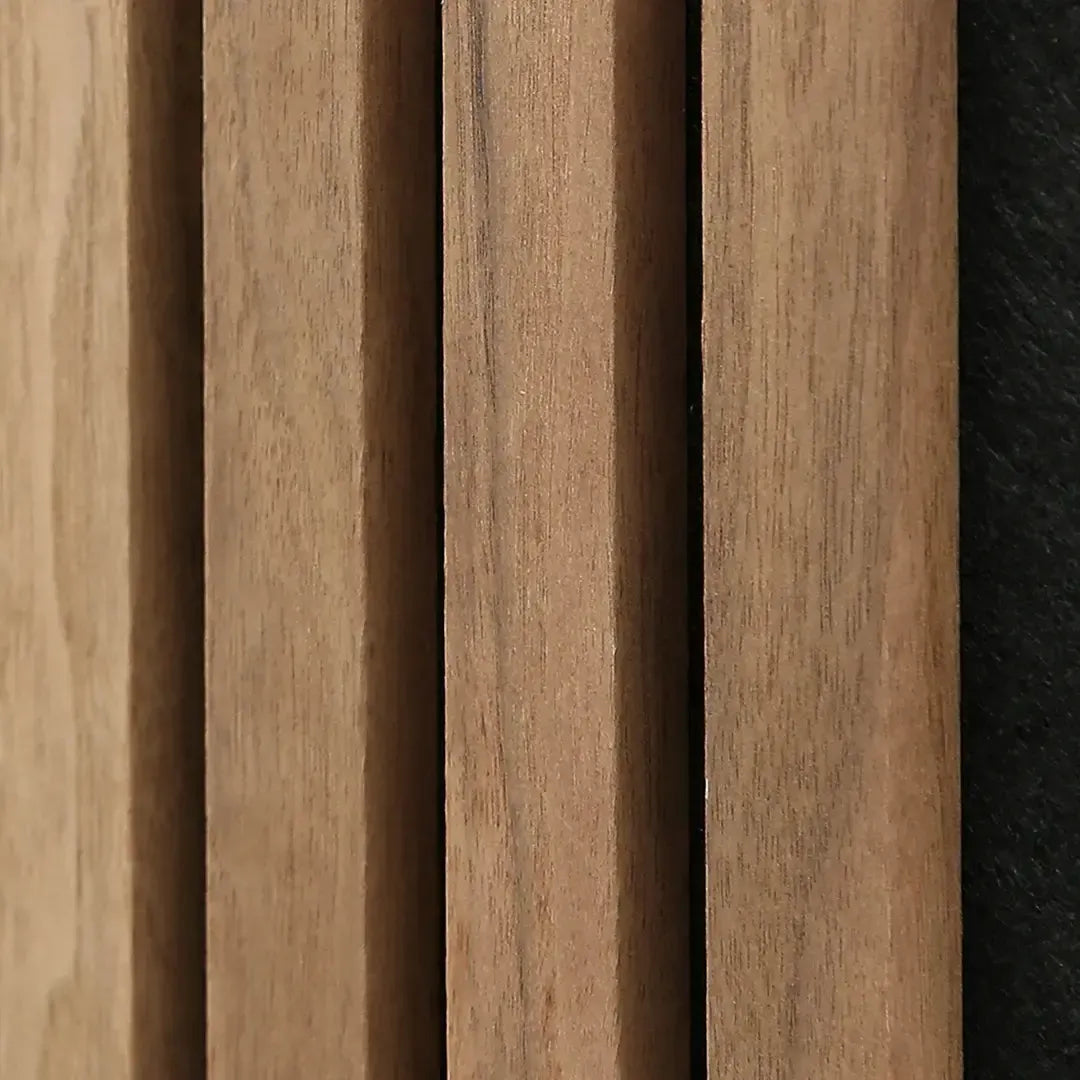
The Acoustic Slat Wall Panel in Walnut pairs vertical wood slats with a felt backing, and it's the panel most homeowners land on for a living room or hallway accent wall because walnut reads warm without darkening a room the way smoked oak or black finishes do. Installation follows the same interlocking-edge system used across the AKU Woodpanel slat line, so panels click together with minimal visible seams.
Acoustic Slat Wall Panel in Walnut pros:
- Real walnut veneer over a felt-backed core that dampens sound, not just decorative grooves
- Interlocking edges keep seams close to invisible across a full wall
- Shares mounting hardware with every other slat finish, so adding a second tone later is easy
Acoustic Slat Wall Panel in Walnut cons:
- Walnut's darker grain shows dust and light scratches more visibly than natural oak
- Not the cheapest starting point if you're only testing whether acoustic panels solve an echo problem at all
Best for: living rooms, hallways, and general accent walls where warmth matters as much as absorption. Verdict: Buy.
2. Hexagon Acoustic Panel in Black: best for dramatic accent walls
The Hexagon Acoustic Panel in Black swaps straight slats for a modular hexagon shape, which matters most when a wall isn't a clean rectangle — a chimney breast, a stairwell, or a wall broken up by a doorway. Each hexagon tile locks to its neighbors, so the panel builds out to whatever footprint the wall actually has instead of forcing custom cuts.
Hexagon Acoustic Panel pros:
- Modular hex shape adapts to irregular walls without custom cuts
- Black finish reads as a design statement, not just acoustic treatment
- Doubles as sound treatment in home studios and media rooms
Hexagon Acoustic Panel cons:
- Dust and fingerprints show up fast on a matte black surface
- Hexagon layouts take longer to plan and dry-fit than a straight slat wall
Best for: statement walls, home studios, and irregular wall shapes. Verdict: Buy for the right wall, skip if you want a fast install.
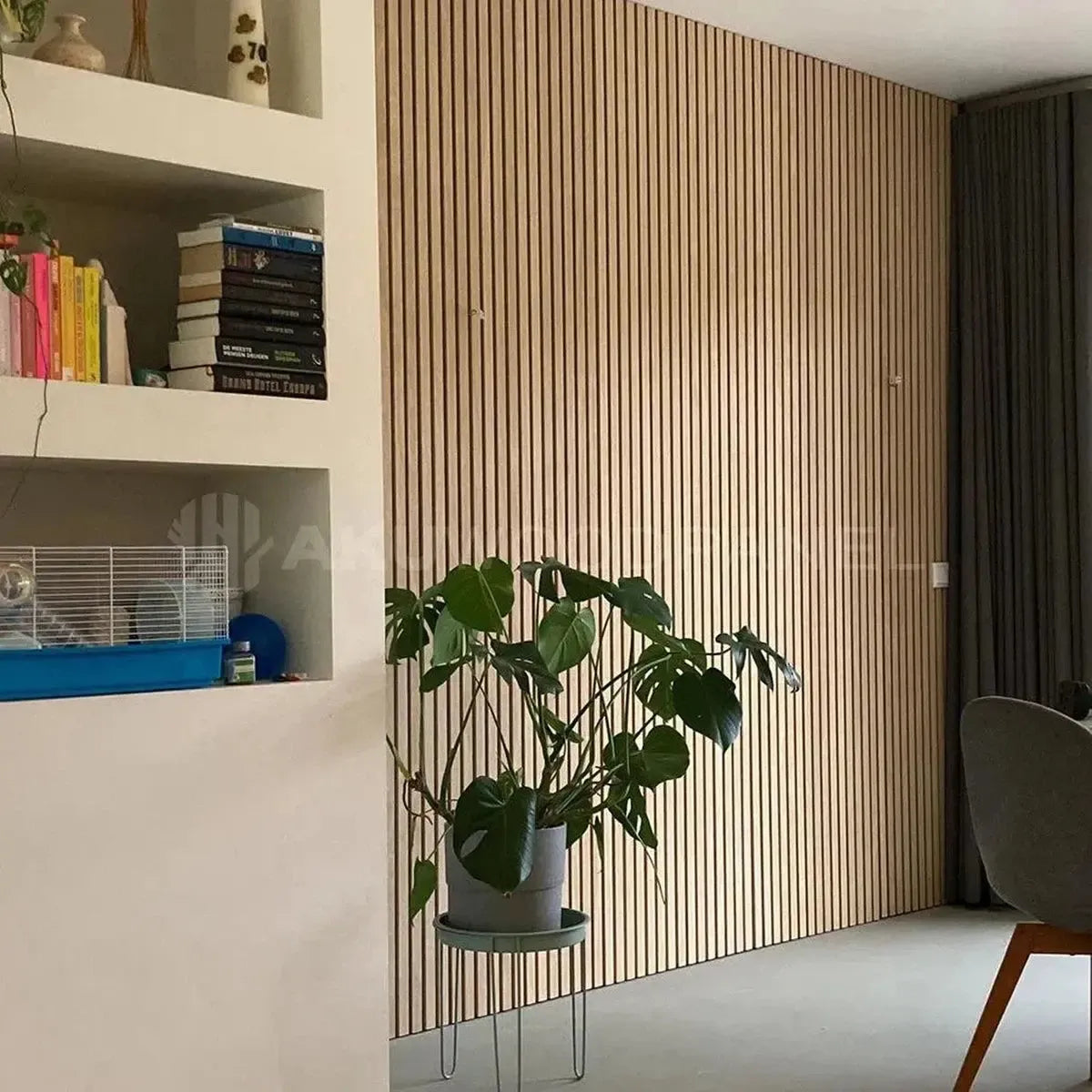
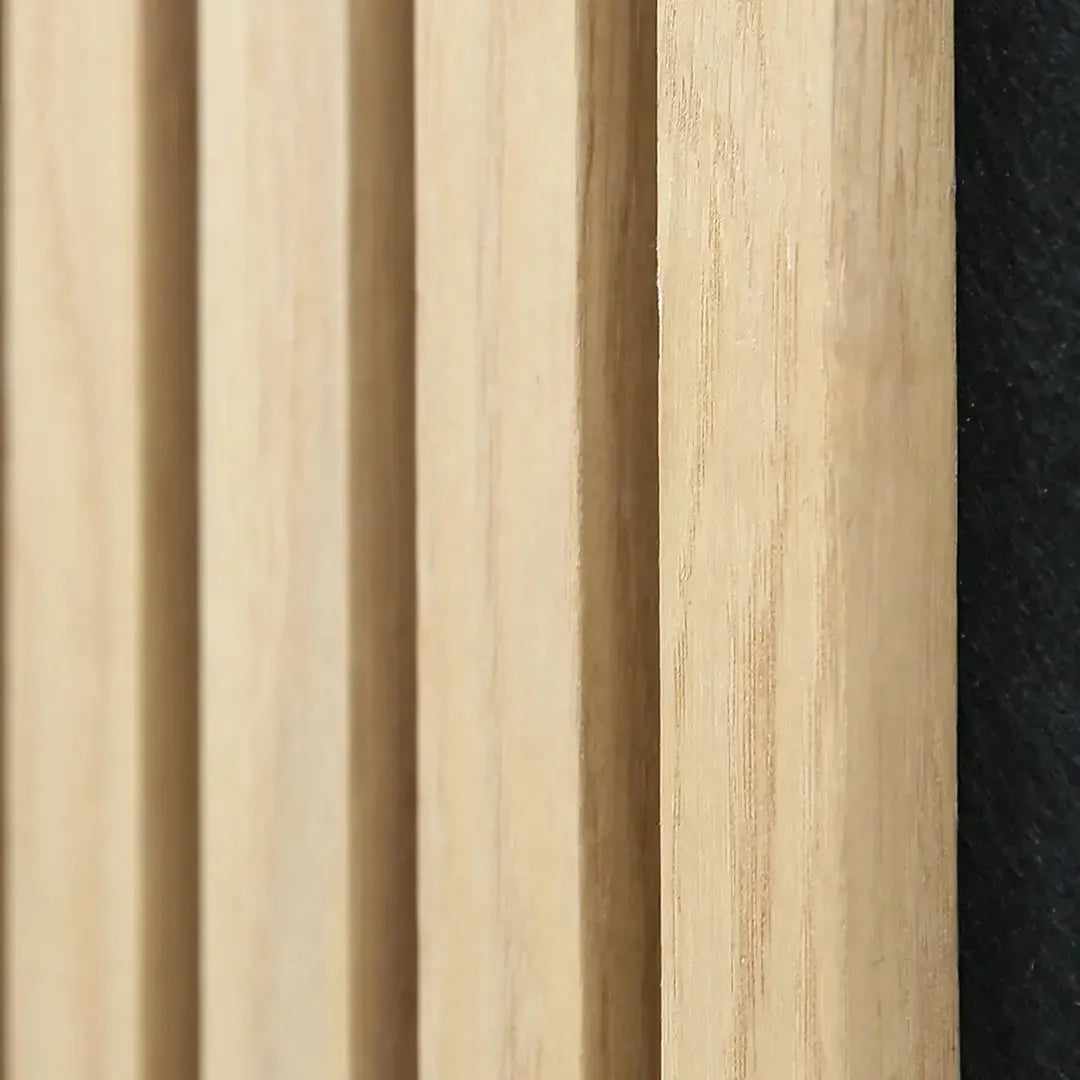
3. Acoustic Slat Wall Panel with Gray Felt in Natural Oak: best for open-plan offices
Open-plan offices have a specific echo problem: hard flooring, glass partitions, and a ceiling full of exposed ductwork. The Acoustic Slat Wall Panel with Gray Felt in Natural Oak puts more felt surface on display than the standard slat panel, since the gray felt shows between each oak slat instead of hiding behind it. That extra exposed felt is the difference between a panel that looks acoustic and one that pulls its weight in a 20-foot conference room.
Gray Felt Natural Oak pros:
- More exposed felt surface than standard slat panels, built for rooms with hard flooring and glass walls
- Natural oak keeps a commercial space from feeling as heavy as walnut or smoked oak would
- Consistent oak tone works across multiple meeting rooms without color-matching headaches
Gray Felt Natural Oak cons:
- Gray felt shows lint and pet hair faster than a fully wood-faced panel
- Lighter oak scratches are more visible than on smoked or black finishes
Best for: open-plan offices, conference rooms, and co-working spaces. Verdict: Buy.
4. Fluted Wall Panel in Natural Oak: best for curved walls and DIY installs
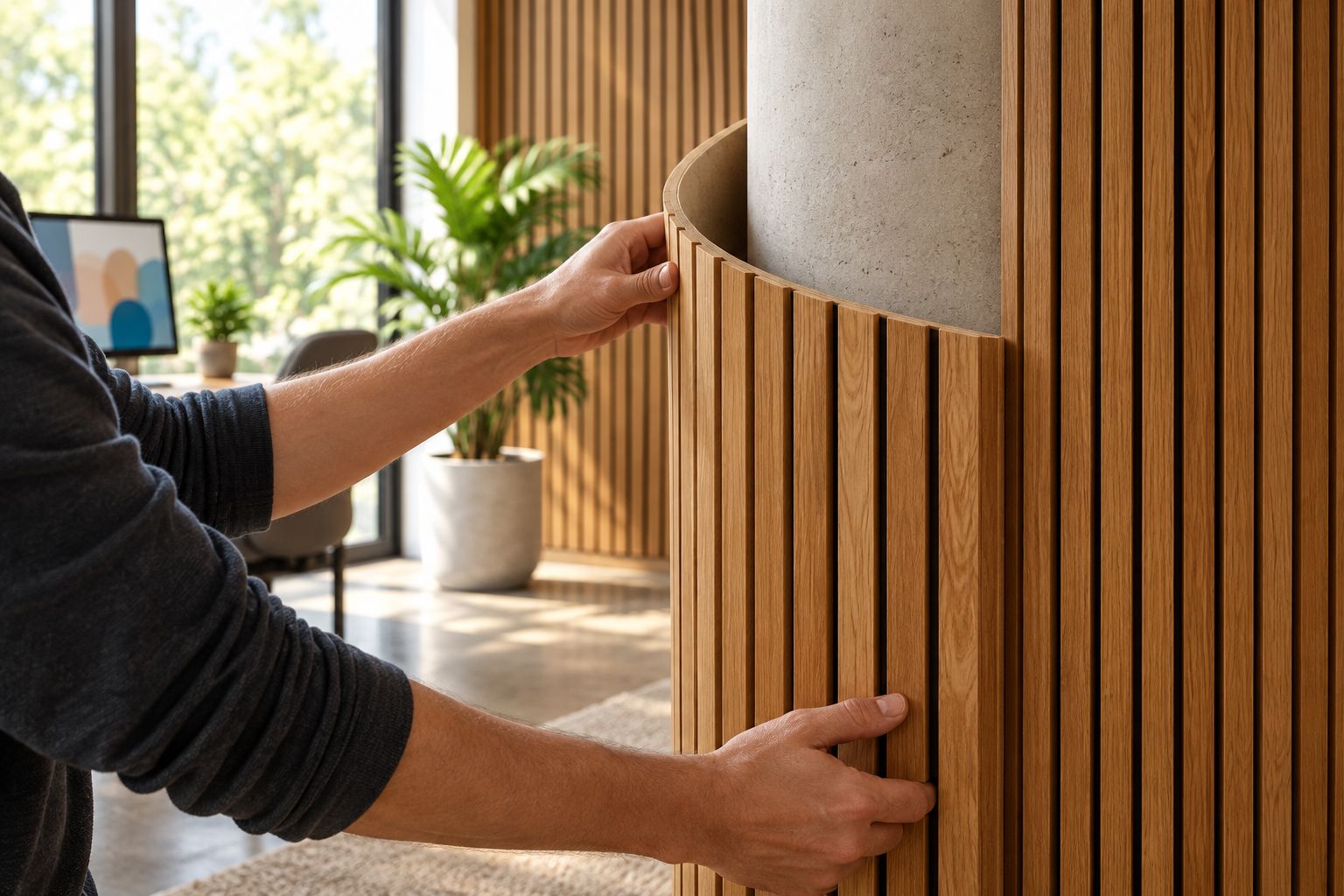
Flat slat panels don't bend. The Fluted Wall Panel in Natural Oak uses a flexible backing that lets it wrap columns, curved reception desks, and rounded corners without cracking the veneer — the flexibility is built into the product itself. It's also the lightest panel in this lineup, which matters if you're mounting solo instead of hiring an installer.
Fluted Wall Panel pros:
- Flexible profile bends around curves, columns, and rounded corners
- Lighter weight than felt-backed slat panels, easier for a one-person DIY install
- Natural oak fluting reads as texture rather than a hard acoustic product
Fluted Wall Panel cons:
- No felt backing means less acoustic absorption than the slat panels with gray felt
- Fluted grooves collect dust and need more frequent cleaning than flat slats
Best for: curved walls, columns, and DIY installs on a tight budget. Verdict: Buy for curves, skip if echo control is the only goal.
5. Full Sample Box: best low-risk starting point
Every finish above looks different on a screen than it does against your actual flooring at 3pm with the blinds half open. The Full Sample Box ships physical swatches of the slat panel line so you can hold grain and tone against the wall before ordering enough panels to cover it.
Full Sample Box pros:
- Physical samples remove the guesswork of ordering a finish sight-unseen
- Useful for comparing two or three finishes side by side in the same light
- Low commitment compared to ordering a full wall's worth of panels upfront
Full Sample Box cons:
- Doesn't tell you anything about acoustic performance at full wall scale
- Still requires a second order once you've picked a finish
Best for: first-time buyers unsure which veneer fits the room. Verdict: Buy if undecided, skip if you already know the finish.
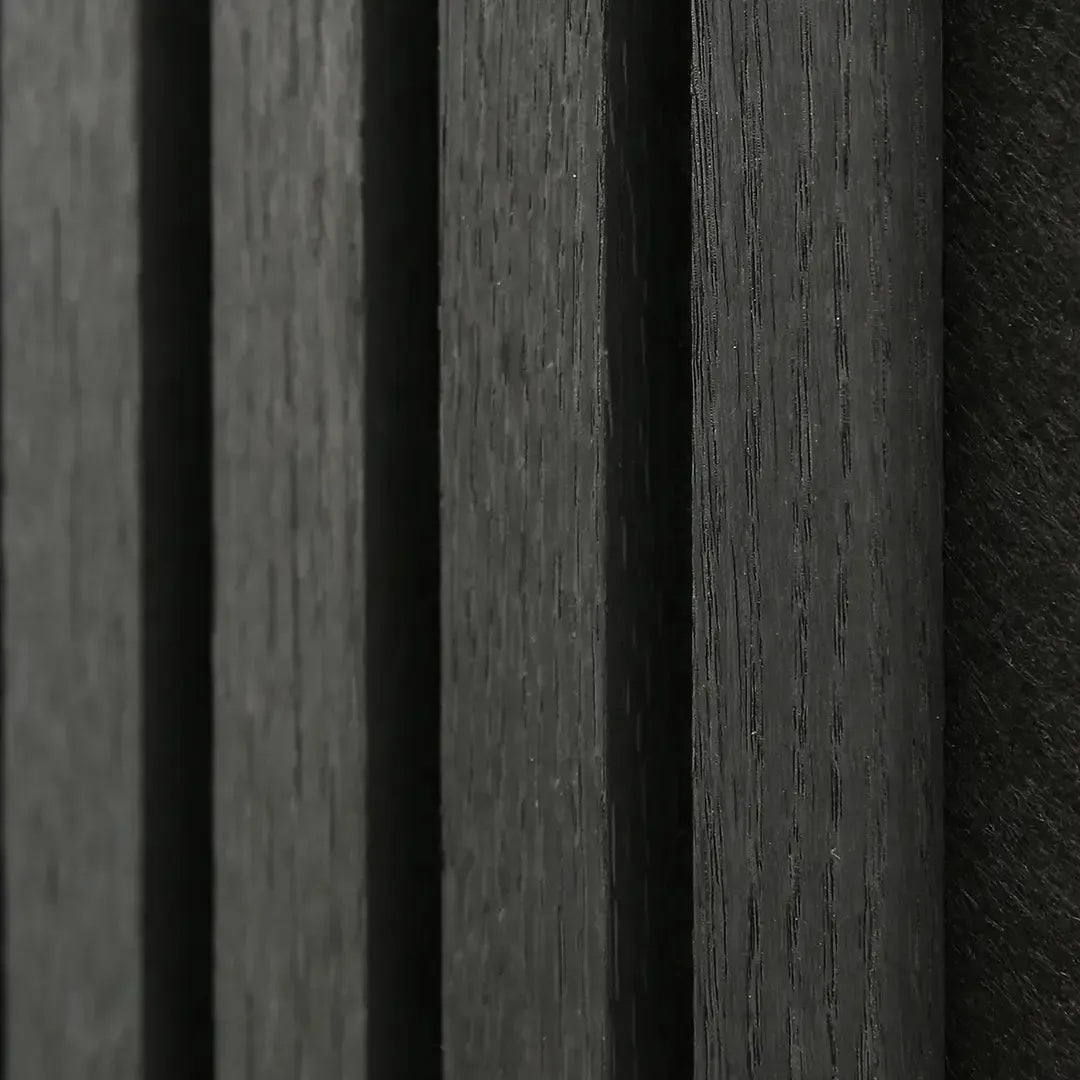
6. Acoustic Slat Wall Panel in Smoked Oak: best for dark home theaters
Smoked oak is the darkest standard finish in the AKU Woodpanel slat line, close enough to black to hide projector bounce and TV glare but with enough grain visible to avoid looking like a flat black wall. Paired with the same felt backing as the walnut and natural oak versions, it handles echo control in a media room the same way, just in a tone built for low-light viewing.
Smoked Oak pros:
- Dark tone controls glare and light bounce in home theaters and media rooms
- Same felt-backed acoustic core as the rest of the slat line
- Pairs well with blackout curtains and dark hardware finishes
Smoked Oak cons:
- Fingerprints and dust show up more on smoked oak than on natural oak
- Direct sun exposure in south-facing rooms can accelerate fading compared to lighter finishes
Best for: home theaters, media rooms, and dark, moody interiors. Verdict: Buy.
How these acoustic wood panels were ranked
Each panel above was scored against the five criteria from the section above: veneer quality, backing type, profile flexibility, seam visibility, and finish tone relative to typical room lighting. The Acoustic Slat Wall Panel in Walnut and the Gray Felt Natural Oak version scored highest on backing type, since both carry more exposed felt than the fluted or hexagon options. The Fluted Wall Panel in Natural Oak ranked lower on absorption but highest on install flexibility — it's the only panel here rated for curved surfaces. No single panel scored perfectly across all five criteria in 2026; that trade-off is exactly what the comparison table above is for.
Which acoustic wood panel should you choose?
Staring at a flat living room or hallway wall and want warmth plus a real drop in echo: the Acoustic Slat Wall Panel in Walnut is the default choice in 2026. Running an office or co-working space instead: the Gray Felt Natural Oak version puts more absorbing surface on the wall, which matters more in a room with hard flooring and glass. Curved wall, column, or a reception desk that isn't square: the Fluted Wall Panel in Natural Oak is the only one built for it. Still not sure which finish fits the room: order the Full Sample Box before committing to enough panels to cover a full wall.
FAQ
What's the best acoustic wood panel for a living room in 2026?
The AKU Woodpanel Acoustic Slat Wall Panel in Walnut is the best acoustic wood panel for most living rooms in 2026. It pairs a felt backing with real walnut veneer, so it cuts echo while still reading as a warm accent wall rather than acoustic treatment.
Are acoustic wood panels actually better than foam panels?
Acoustic wood panels absorb sound through a felt or fiber backing hidden behind a wood veneer face, similar to foam panels, but they double as a finished wall surface instead of looking like a recording studio. Foam alone usually costs less per square foot but has no design function once the room isn't used for recording.
Is real wood veneer worth it over printed laminate panels?
Real wood veneer holds its color and grain longer under UV exposure and daily wear than printed laminate, which can fade or peel at the seams within a couple of years. For a wall meant to last, veneer is worth choosing over a printed finish.
Do fluted wood panels absorb sound as well as slat panels?
Fluted wood panels absorb less sound than felt-backed slat panels because most fluted profiles, like the Fluted Wall Panel in Natural Oak, don't carry the same felt backing. They're chosen for flexibility around curves and columns first, acoustic performance second.
How many acoustic wood panels does a standard wall need?
Panel count depends on the wall's width and height and the specific panel's dimensions, so the number varies by product. Check the coverage details on the individual panel's page before ordering enough to finish a wall in one batch.
Can hexagon acoustic panels cover an irregular wall shape?
Yes. Hexagon acoustic panels, like the Hexagon Acoustic Panel in Black, lock together in a modular pattern that adapts to walls broken up by doorways, chimney breasts, or stairwells without the custom cuts a straight slat panel would need.
What's the difference between natural oak and smoked oak acoustic panels?
Natural oak keeps a room feeling bright and works well in offices and daytime living spaces, while smoked oak is a darker finish suited to home theaters and media rooms where glare control matters more than brightness.
Should I order a sample before buying acoustic wood panels?
Ordering a sample box is the lowest-risk way to check grain and color against your actual wall and lighting before committing to enough panels for a full room.
One last thing
Gray felt backing is the fastest way to spot a real acoustic panel versus a decorative one. If a wood panel labeled "acoustic" has no visible felt, foam, or fiber layer anywhere in its construction, it's likely grooved MDF with a veneer skin, and it won't do much for an echo problem no matter how good it looks in photos in 2026.


 Better performance and aesthetic appeal
 In Stock