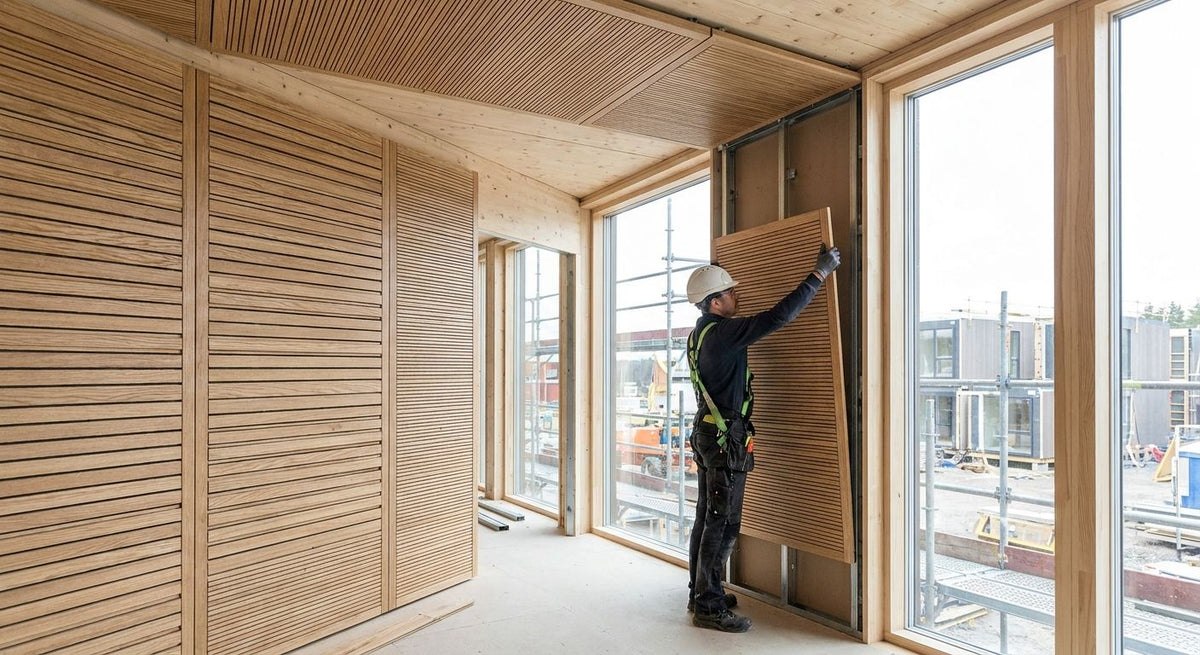
Modular construction moves fast, and wall assemblies that add noise control without slowing the line matter as much as R-value or fire rating. Acoustic wood panels for modular construction solve the unit-to-unit sound transfer problem that drywall alone never fully closes, and in 2026 the right slat, fluted, or hexagon pattern also does double duty as the finished interior surface.
- AKU Woodpanel's Acoustic Slat Wall Panel in Walnut is the safest 2026 pick for unit-to-unit noise control in modular builds. Buy.
- The Fluted Wall Panel in Walnut with a flexible design bends around curved modular pods where flat slats crack. Buy.
- Hexagon Acoustic Panel in Walnut breaks up long modular corridors while still absorbing sound. Consider.
- Skip felt-backed slat panels in high-moisture modular bathroom pods unless a vapor barrier sits behind them.
Why this matters for modular builds
A modular unit ships as a sealed box, usually 8 to 16 feet wide, and gets stacked or set next to another unit within hours of arriving on site. There's no second chance to fix a wall assembly once panels are laminated to the module's interior skin before transport.
That's why specification has to happen at the factory drawing stage, not after the unit rolls off the line. If you're building a spec sheet for a general contractor or a modular fabricator, how to specify acoustic wall panels for a construction project walks through the documentation a fabricator will actually ask for.
Wood veneer slat and fluted panels solve two problems at once inside a module: they absorb reflected sound in a small, hard-surfaced box, and they cover the raw substrate without adding a second finishing trade. That's a real labor-cost advantage on multi-unit modular programs where every trade-day multiplies across dozens of identical units.
How these panels were ranked
Ranking here weighs four factors that matter specifically for modular fabrication, not general residential remodeling: module width compatibility, moisture tolerance for factory-controlled humidity swings, documented fire-rating support for commercial modular programs, and install speed on a repeatable assembly line. Panels that need field trimming for every module lose points against panels that ship pre-sized for standard module widths.
Aesthetic finish (real wood veneer versus faux) is scored too, since modular multifamily and hospitality buyers increasingly reject vinyl-wrapped substitutes in 2026 spec packages.
The best acoustic wood panels for modular construction in 2026
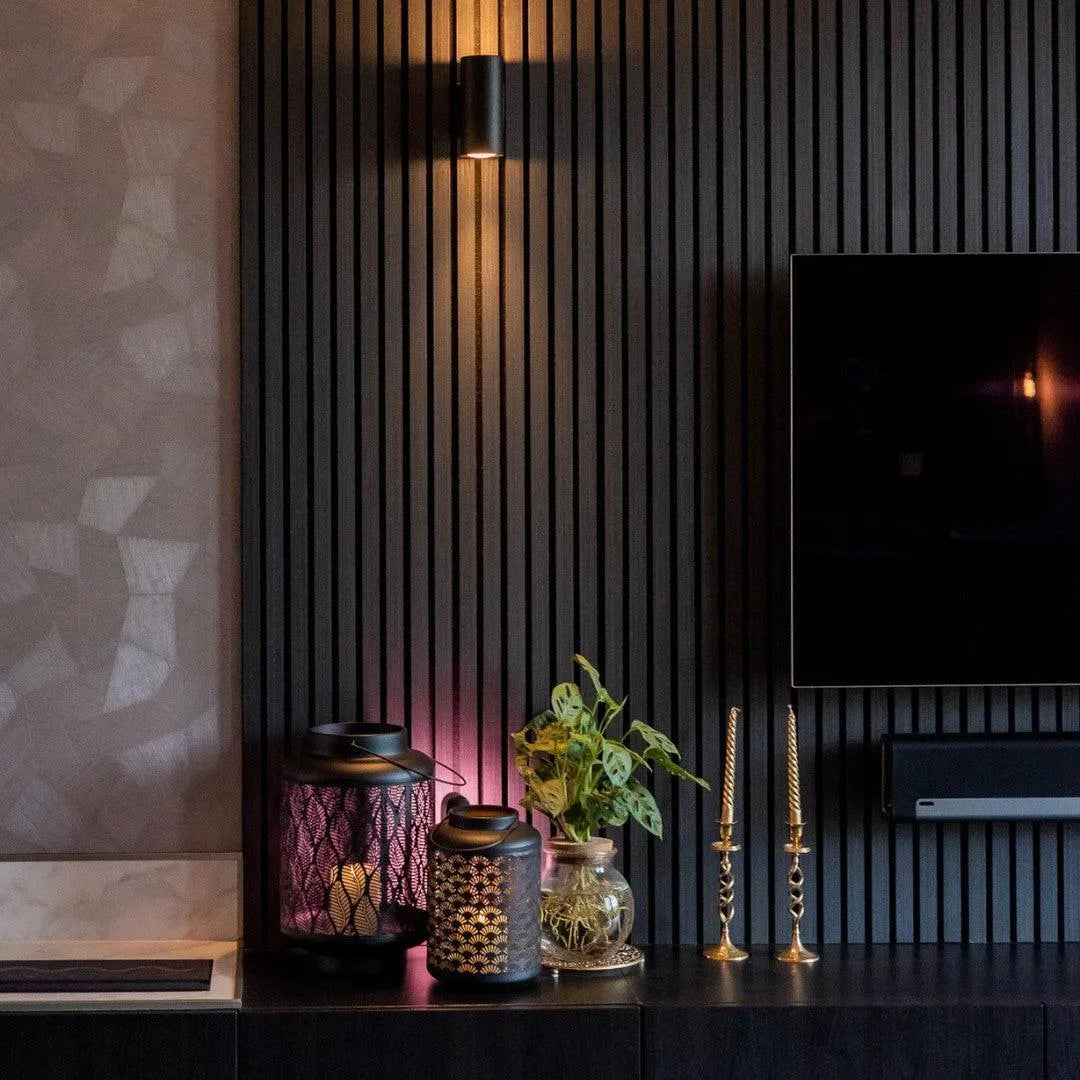
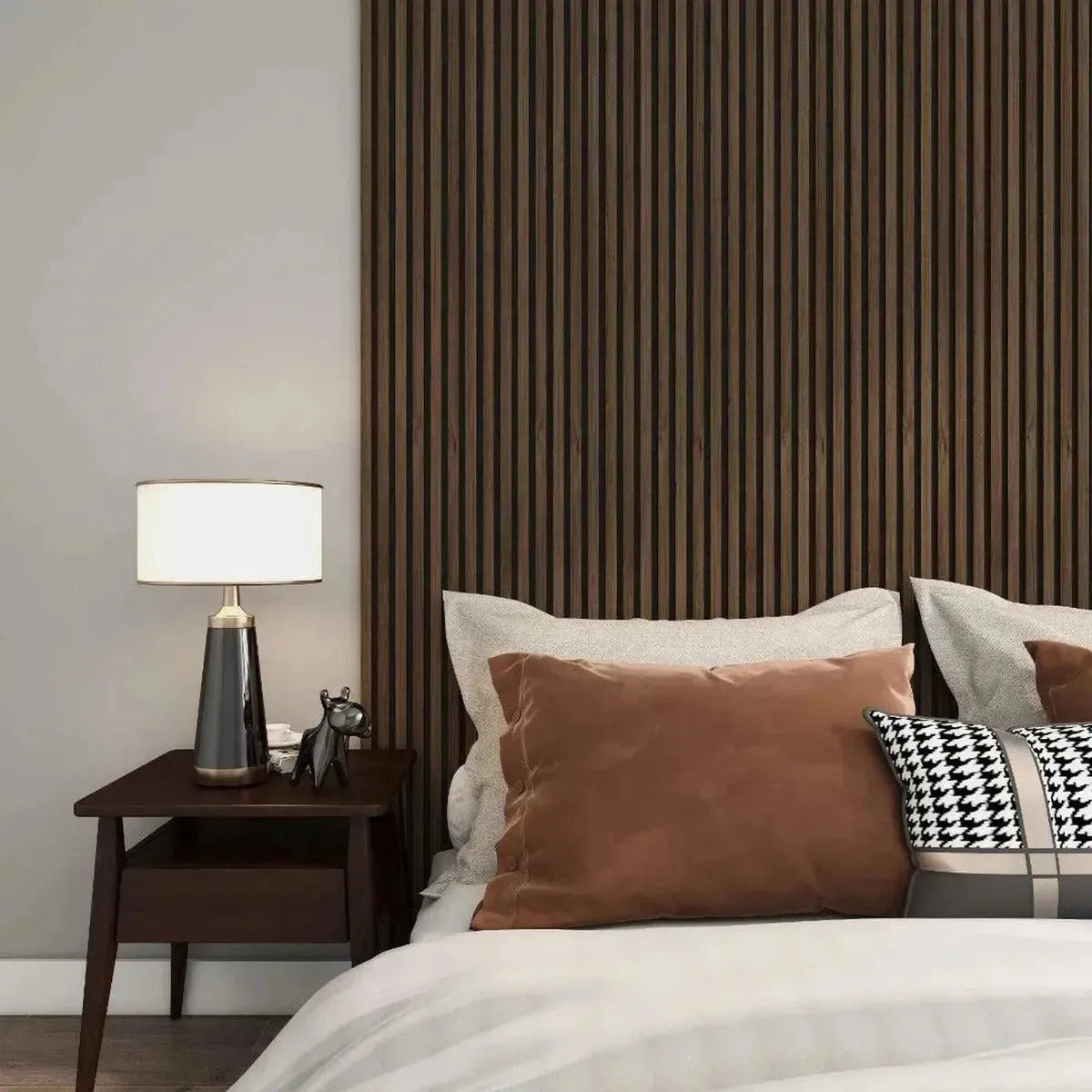
1. Acoustic Slat Wall Panel — Walnut
The safe pick for unit-to-unit party walls and corridor runs. Real walnut veneer sits over a slotted acoustic backer, and the slat spacing is wide enough to absorb mid-frequency noise without reading as a commercial ceiling tile. This is the pattern most modular fabricators default to when a spec calls for "wood acoustic panel" with no further detail. Buy — it's the pattern with the fewest install surprises on a repeatable line.
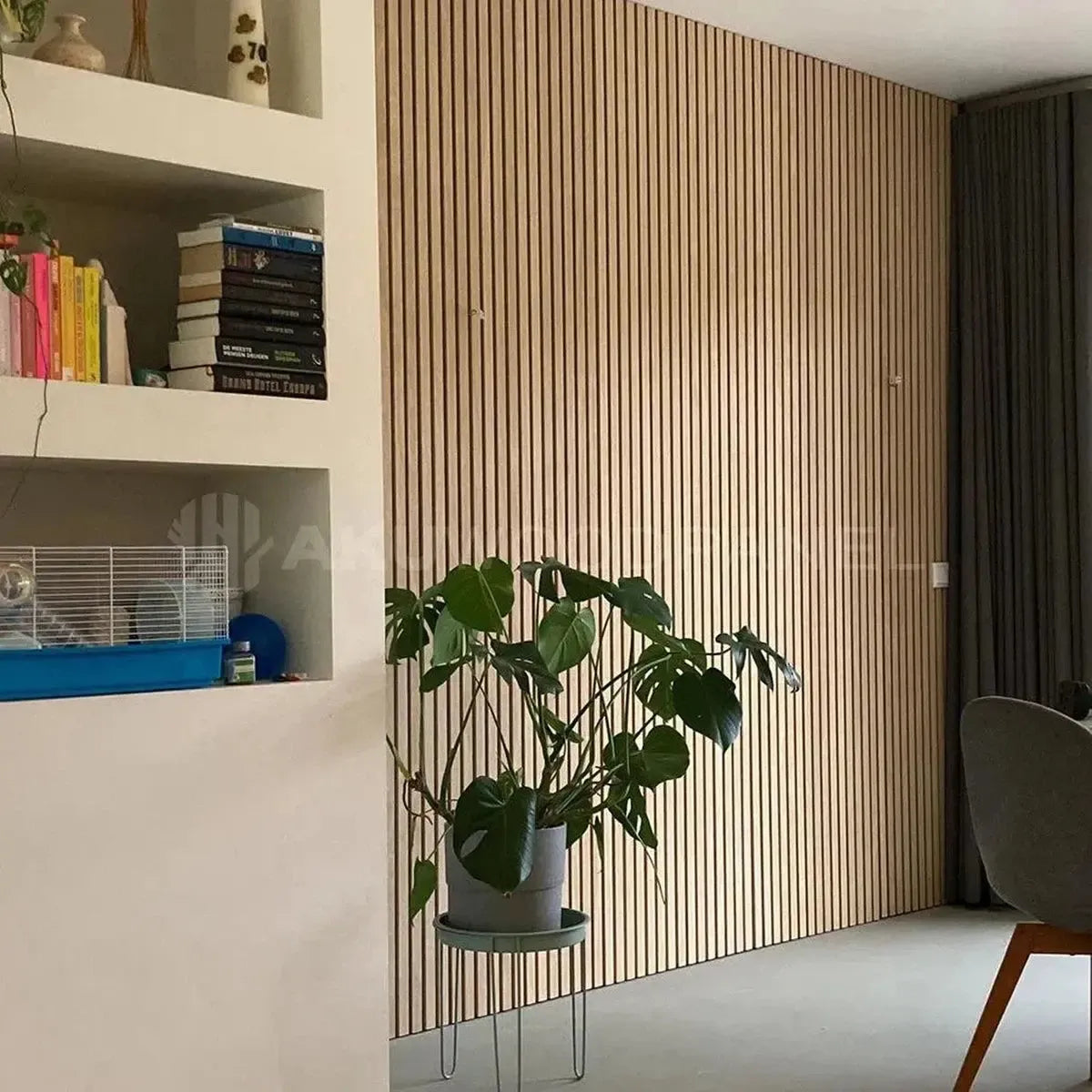
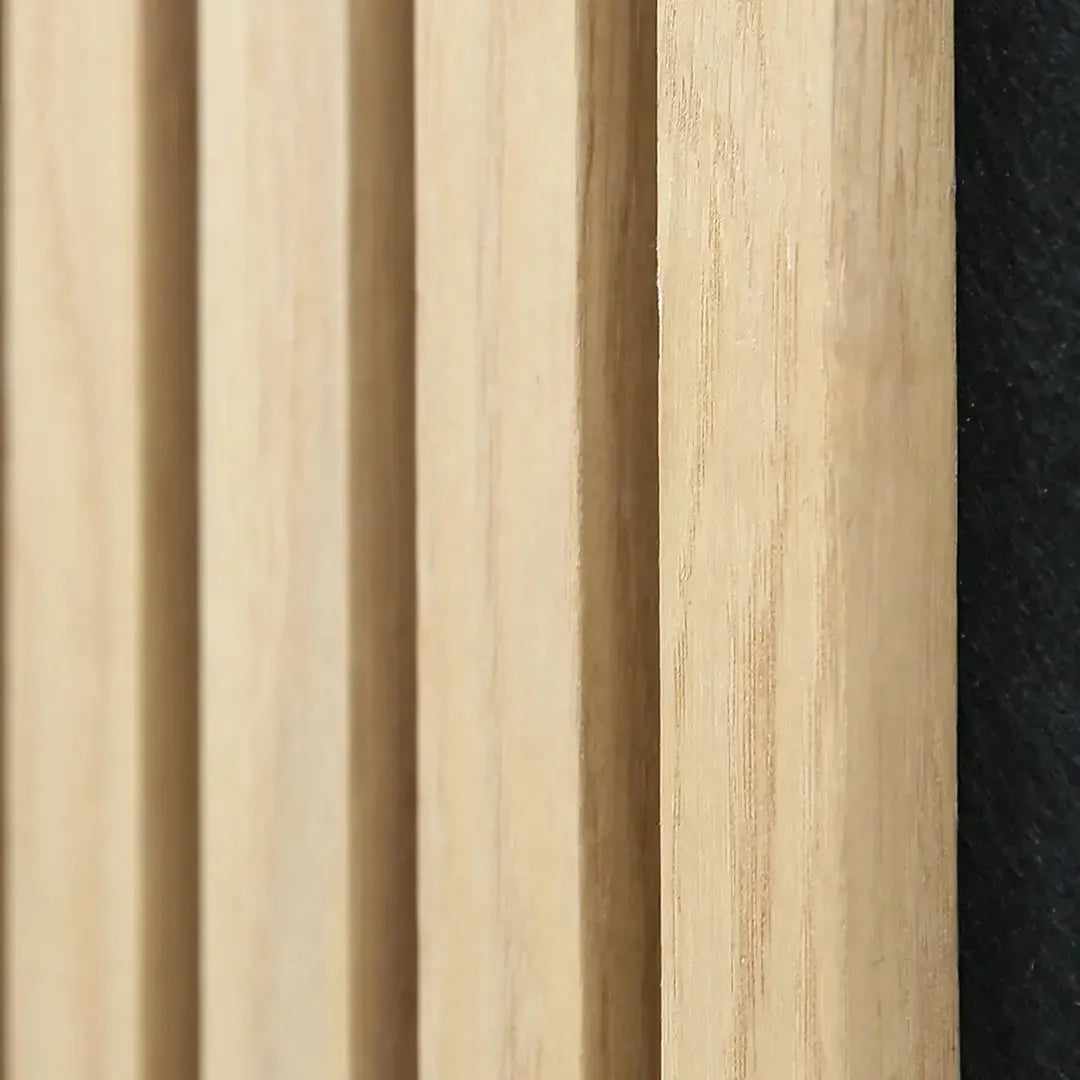
2. Acoustic Slat Wall Panel — Natural Oak with Gray Felt
The felt-backed option for thin-wall modules where you can't afford extra cavity depth for insulation batting. The gray felt layer behind the oak veneer does real absorption work in units where the wall cavity is already tight from HVAC or plumbing chases. Buy for tight-cavity modules, but confirm the felt is rated for the module's expected humidity before locking the spec.
3. Fluted Wall Panel — Walnut, Modern Flexible Design
The wildcard. Flat slat panels crack or gap when a module has a curved transition wall, bay window pod, or rounded reception module. This walnut fluted panel is built with a flexible design specifically so it bends around those radii instead of fighting them. It's a narrower niche use case than the flat slat panels above, but for curved modular pods it's the only real option on this list. The fluted wall panel in walnut with a flexible design is worth pulling a sample of before committing a curved-pod spec. Buy for curved or transitional walls.
4. Hexagon Acoustic Panel — Walnut
The visual break for long modular corridors, where a repeating slat pattern down 40 feet of hallway starts to feel institutional. The hexagon geometry still carries acoustic backing, so it doesn't sacrifice performance for looks, but it's a slower install than a straight slat run because each hexagon needs individual alignment. Consider it for lobby or corridor modules where budget allows the extra install time; skip it for repetitive bedroom or office modules where speed matters more than visual variety.
5. Exterior Wall Panel — Oak
The exterior wrap pick, not an interior acoustic panel, but relevant because modular exteriors often ship pre-clad. Pair it with matching corner and finishing trim — AKU Woodpanel's exterior trims run a standard 94.5-inch length, which matches most module panel heights without extra cutting. This panel doesn't do interior sound work, so don't confuse it with the acoustic-rated slat products above. Consider for exterior modular cladding programs, Skip if you need interior noise control.
6. 3D Wood Wall Panel — Slim Walnut
A decorative accent tile, not a primary acoustic solution. It's a real solid-wood tile with individually detailed grain, and it reads well in a lobby or common-area module as a feature wall. But it's thinner than the slotted acoustic slat panels and doesn't carry the same absorption backing. Skip it if the spec calls for measurable noise reduction; Consider it for a decorative accent wall inside a common-area module that already has acoustic treatment elsewhere.
Comparison table
| Panel | Best module use | Backing/finish | Verdict |
|---|---|---|---|
| Acoustic Slat Wall Panel — Walnut | Party walls, corridors | Slotted acoustic backer | Buy |
| Acoustic Slat Wall Panel — Natural Oak with Gray Felt | Thin-cavity modules | Gray felt absorption layer | Buy |
| Fluted Wall Panel — Walnut (flexible design) | Curved/transitional pods | Flexible substrate | Buy |
| Hexagon Acoustic Panel — Walnut | Lobby/corridor accent | Acoustic backing | Consider |
| Exterior Wall Panel — Oak | Pre-clad exterior facade | Weather-rated veneer | Consider |
| 3D Wood Wall Panel — Slim Walnut | Common-area accent wall | Solid wood tile, no acoustic backer | Skip for acoustic use |


Where to source panels for a modular project
Sampling before specifying matters more on modular programs than on a single residential remodel, because a wrong call multiplies across every unit in the run. AKU Woodpanel sells a full sample box of slat wall panel finishes specifically so a fabricator can hold real veneer next to the module's other finish materials before locking a 40-unit order.
For multi-unit programs, get a bulk quote before the spec goes final rather than after — pricing on wood veneer panels shifts with volume in ways a per-panel retail price won't show. If your project runs through a general contractor rather than direct-to-fabricator, ask for documented fire-rating and moisture-tolerance data up front; verbal assurances don't hold up when a building inspector asks for paperwork on a commercial modular project in 2026.
FAQ
What's the best acoustic wood panel for modular construction in 2026?
The Acoustic Slat Wall Panel in Walnut is the safest choice for most modular projects in 2026 because it ships in a pattern most fabricators already know how to install on party walls and corridors. It pairs a slotted acoustic backer with real walnut veneer, so it does noise absorption and finish work in one panel.
Is fluted paneling better than slat paneling for curved modular walls?
Yes, for curved or transitional walls specifically. Flexible fluted panels bend around radii that flat slat panels crack or gap on, but for straight party walls the standard slat panel is still the faster, cheaper install.
How much noise reduction do wood acoustic panels add to a modular unit?
Slat and felt-backed wood panels typically post NRC ratings between 0.65 and 0.90, depending on slot spacing and backing material. That's enough to noticeably cut reflected sound in a small, hard-surfaced modular box, though it won't match a dedicated acoustic wall assembly.
Can acoustic wood panels be installed over a metal stud modular wall?
Yes, wood slat and fluted panels mount over furring strips or directly to a prepared substrate on metal stud modular walls. The install method doesn't change significantly between wood-frame and steel-frame modules as long as the substrate is flat.
Do felt-backed acoustic panels work in modular bathroom pods?
Only with a vapor barrier behind them. Felt backing absorbs moisture along with sound, so in a high-humidity bathroom pod without a barrier, the felt layer can hold moisture against the wall over time.
How long does it take to install acoustic wood panels in a modular unit?
Slat panels install fastest since they mount in long, uniform runs. Hexagon and 3D tile patterns take longer per square foot because each piece needs individual alignment, which matters when a modular line is trying to hold a repeatable per-unit schedule.
Are hexagon acoustic panels as effective as slat panels for sound control?
Hexagon acoustic panels carry similar backing material to slat panels, so absorption performance is comparable. The tradeoff is install speed, not acoustic performance, since hexagon layouts take longer to align than a straight slat run.
Should exterior wall panels be used for interior modular noise control?
No. Exterior wall panels like the Oak exterior panel are built for weather resistance and facade cladding, not interior sound absorption. Use a dedicated acoustic slat or hexagon panel for interior noise work and reserve exterior panels for the module's outer skin.
One last thing
The detail that trips up most first-time modular specs is felt backing versus solid backing — the Natural Oak with Gray Felt panel trades some visible grain continuity for real absorption, and a lot of buyers pick the plain veneer version for looks without realizing they're giving up acoustic performance. If noise control is the actual spec requirement, the felt-backed version earns its keep even though it photographs slightly less clean in a sample deck.


 Better performance and aesthetic appeal
 In Stock