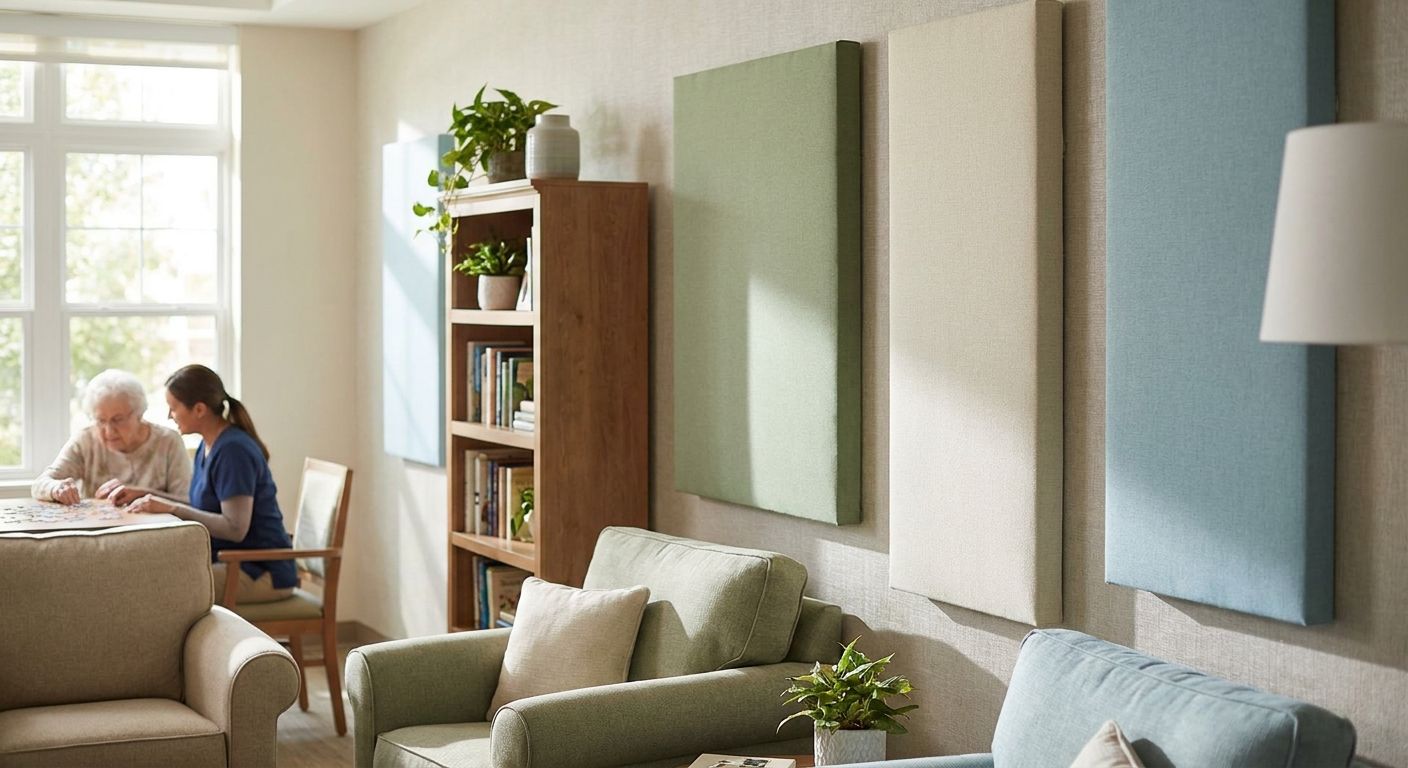
Assisted living and memory care units need acoustic treatment that does two jobs at once: cut reverberation in corridors and dayrooms, and read as warm, residential wood instead of clinical foam. Best overall: Hexagon Acoustic Panel Natural Oak with Gray Felt. Best for corridors and hallways: Acoustic Slat Wall Panel Smoked Oak with Gray Felt. Best budget option: the Full Sample Box.
- Hexagon Acoustic Panel Natural Oak with Gray Felt is the best acoustic panels for memory care pick for dayrooms — NRC 0.75, warm veneer tone.
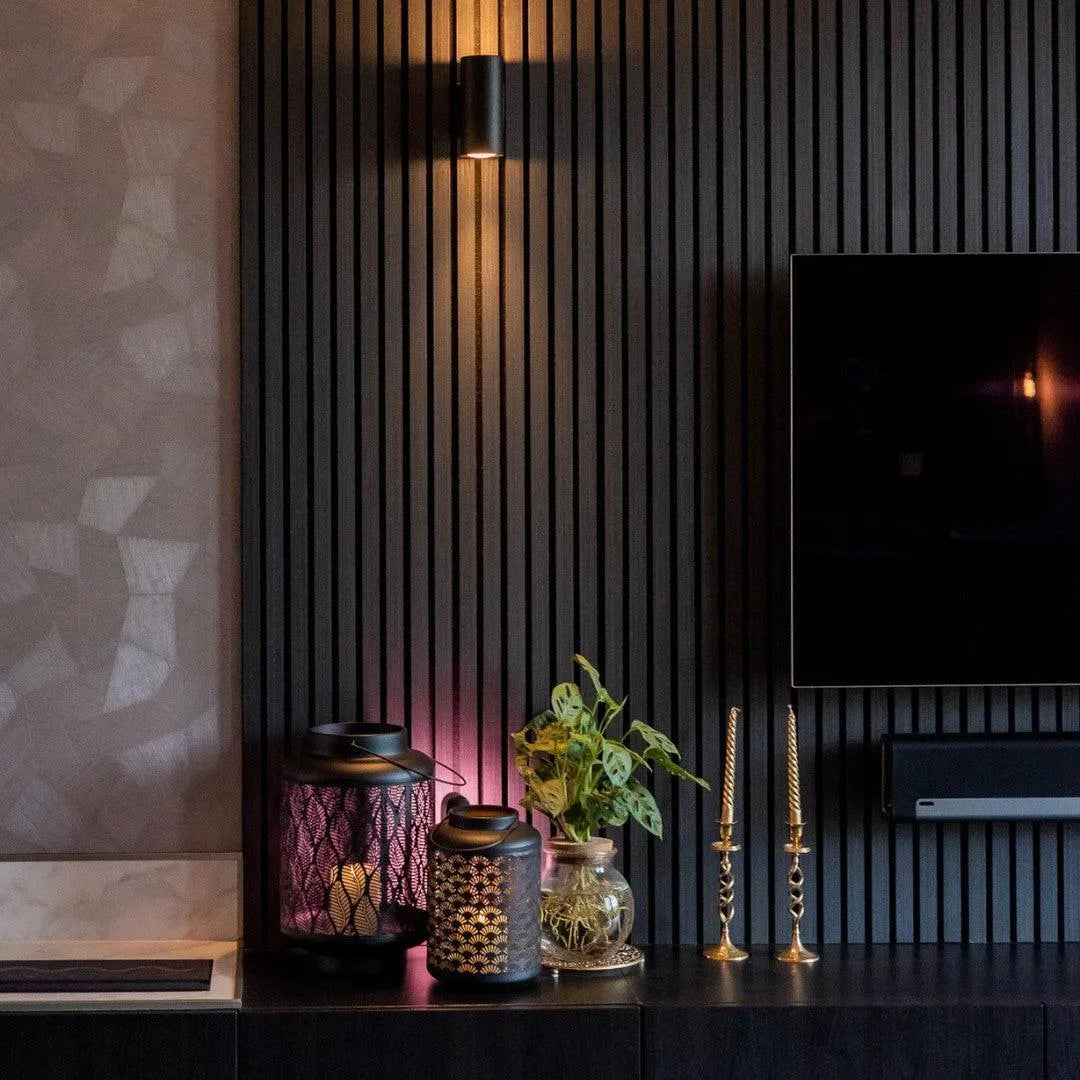
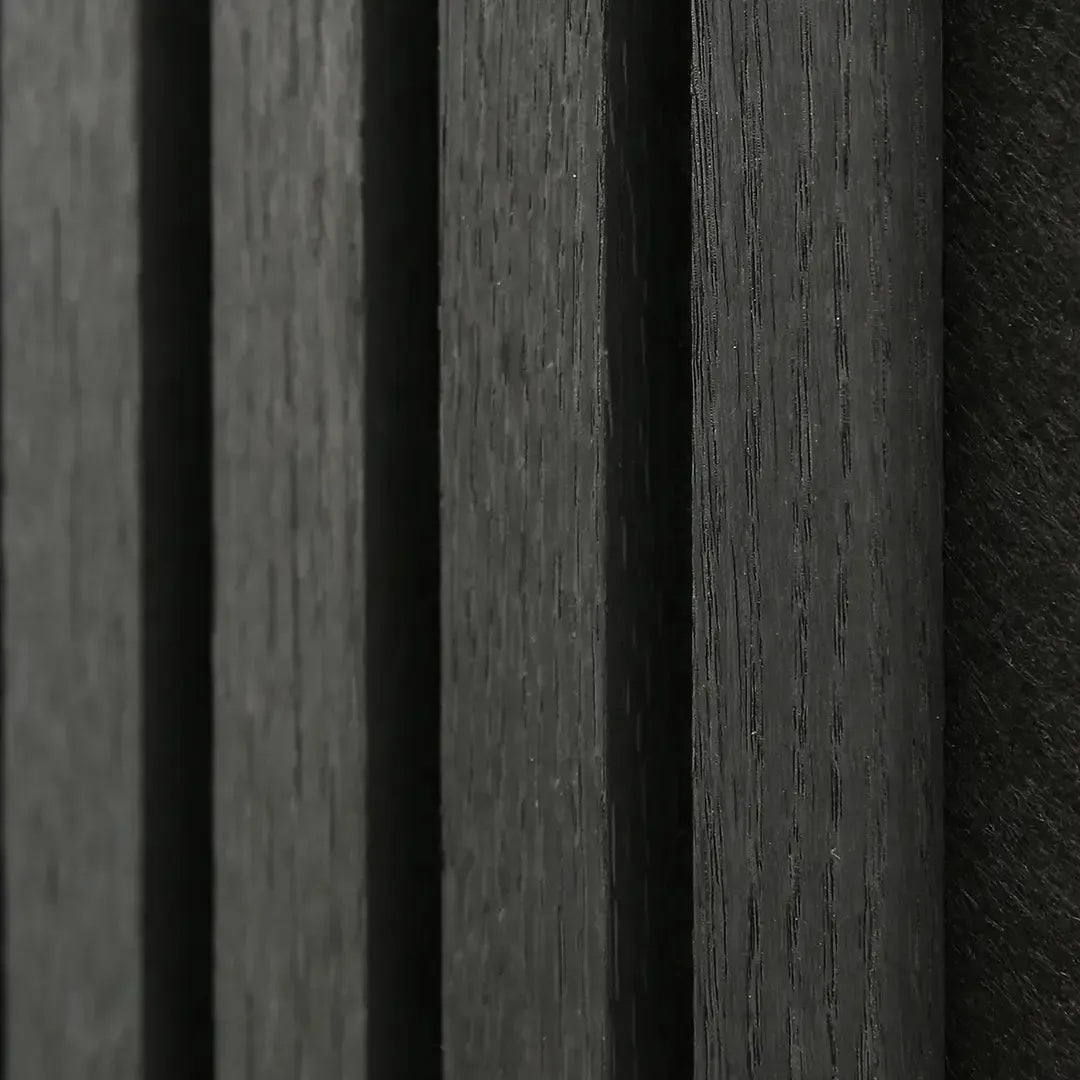
- Acoustic Slat Wall Panel Smoked Oak with Gray Felt handles high-traffic corridors without visually competing with wayfinding cues.
- Full Sample Box lets a facility test finish and grain before specifying a full unit in 2026.
- Hexagon and slat formats both install over drywall or furring strips without gutting occupied rooms.
Why this matters
Memory care residents spend most of their day inside common rooms, corridors, and dining halls with hard, sound-reflective surfaces: drywall, vinyl flooring, laminate cabinetry. Reverberation off those surfaces stacks overlapping conversations, HVAC hum, and PA announcements into noise that's hard to parse — and many residents already live with age-related hearing loss, which makes that stacking worse. Facility operators specifying acoustic treatment for these units in 2026 are also balancing infection-control cleanability, fire code, and a look that doesn't feel institutional to residents or their families touring the building.
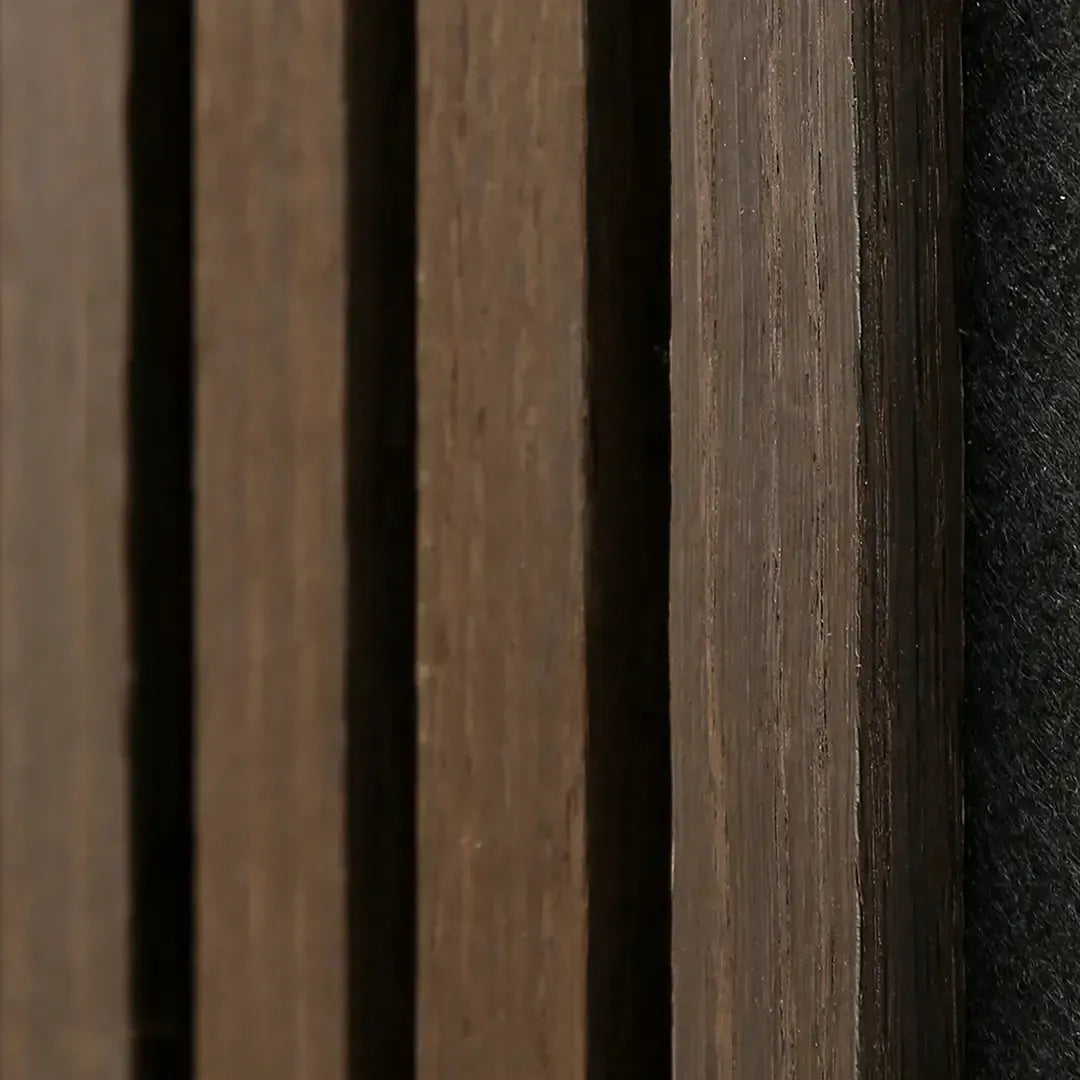
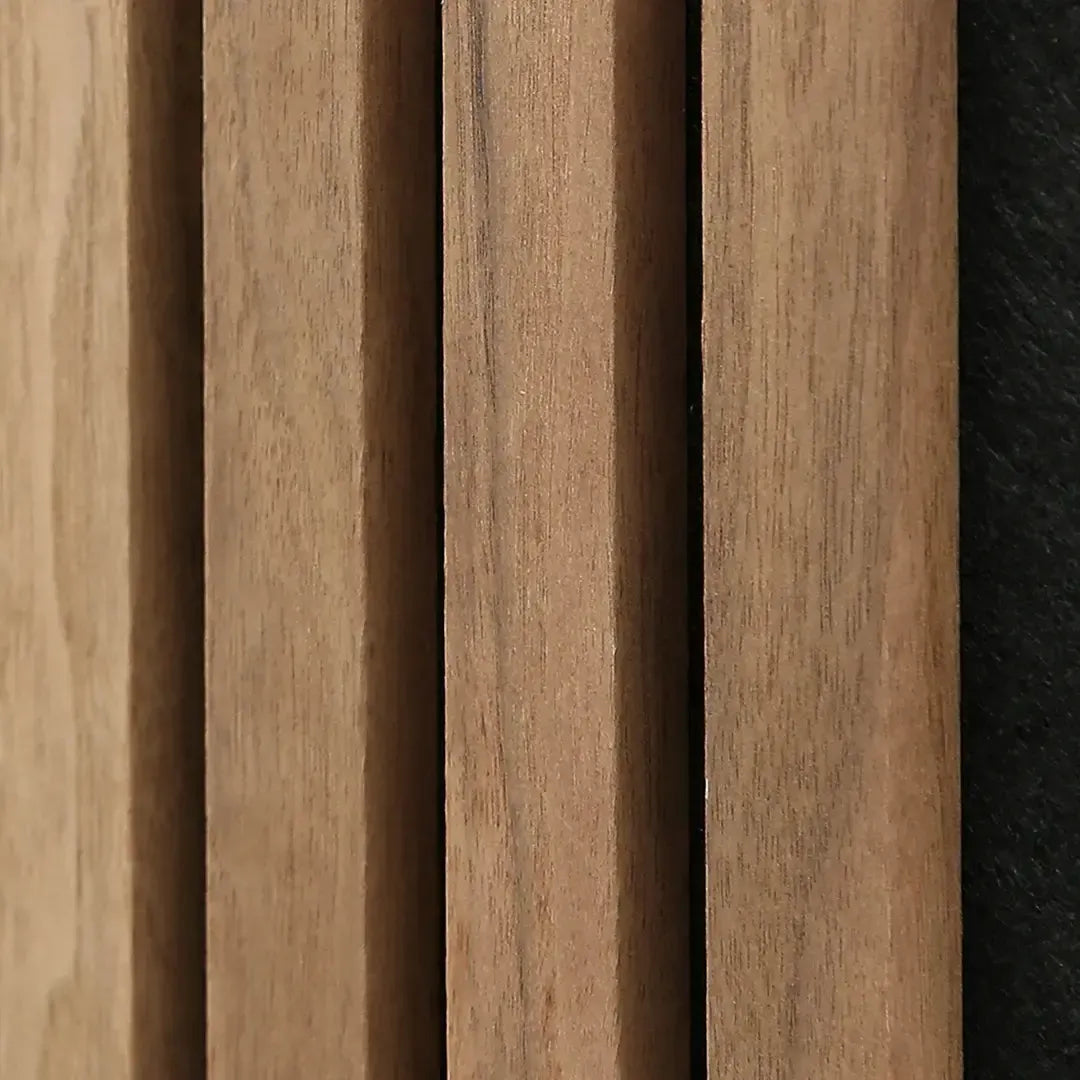
Wood veneer acoustic panels solve the noise problem without the sterile look of mineral fiber ceiling tiles or foam wedges. Akuwood Panel builds its acoustic slat and hexagon panels on a real 3-sided wood veneer face over a sound-dampening core, which is why they show up in senior living specs alongside healthcare and hospitality projects.
What makes the best acoustic panels for memory care
- NRC-rated sound absorption — a documented Noise Reduction Coefficient, not a marketing claim, so facility staff can compare panels against a baseline
- Low-VOC, fire-retardant construction — required for licensed care facilities under most state fire codes
- Warm, low-contrast wood tones — natural oak and lighter finishes support orientation without the high-contrast patterns that can visually disorient residents with dementia
- Durable veneer that survives institutional cleaning — corridors and dayrooms get wiped down daily
- Modular install — slat and hexagon tiles go up in occupied buildings without a full renovation shutdown
Best acoustic panels for memory care units at a glance
| Panel | Best for | Standout feature | Key limitation |
|---|---|---|---|
| Hexagon Acoustic Panel Natural Oak with Gray Felt | Dayrooms and common areas | NRC 0.75 sound insulation | Geometric layout needs careful planning around outlets |
| Acoustic Slat Wall Panel Smoked Oak with Gray Felt | Corridors and hallways | Slat pattern hides wall-mounted rails and cabling | Darker finish absorbs more ambient light in dim corridors |
| Acoustic Slat Wall Panel Natural Oak with Gray Felt | Resident bedrooms | Lightest, most residential tone in the slat range | Same felt backing shows dust in poorly ventilated rooms |
| Hexagon Acoustic Panel Walnut with Gray Felt | Dining and activity rooms | Deeper grain adds visual texture at eye level | Higher contrast than natural oak needs a lighting check |
| Full Sample Box – Slat Wall Panel | Piloting a single unit before full rollout | Natural, Smoked Oak, and Walnut in one box | Not a substitute for full-wall acoustic coverage |
1. Hexagon Acoustic Panel Natural Oak with Gray Felt: best acoustic panels for memory care dayrooms
This is a 32-inch hexagon acoustic panel, four to a box, built with a wood veneer face over a felt-backed core rated at an NRC of 0.75. That rating means it absorbs three-quarters of the sound energy that hits it, which is meaningfully better than a bare drywall or laminate wall in a dayroom full of overlapping conversation and TV noise. The natural oak tone reads warm and residential rather than clinical, which matters when families are touring the unit.
Hexagon Acoustic Panel Natural Oak with Gray Felt pros:
- NRC 0.75 — a documented, comparable acoustic rating
- Warm, low-contrast finish suited to memory care wayfinding goals
- Modular hexagon tiles let staff patch or extend coverage later
- Real wood veneer face, not a printed laminate
Hexagon Acoustic Panel Natural Oak with Gray Felt cons:
- Hexagon geometry takes more layout planning around light switches and door frames than a flat slat panel
- Felt backing shows through gaps if installation isn't tight
Best for: dayrooms, activity lounges, and any common area where residents gather and echo builds fast. Verdict: Buy.
2. Acoustic Slat Wall Panel Smoked Oak with Gray Felt: best acoustic panels for memory care corridors
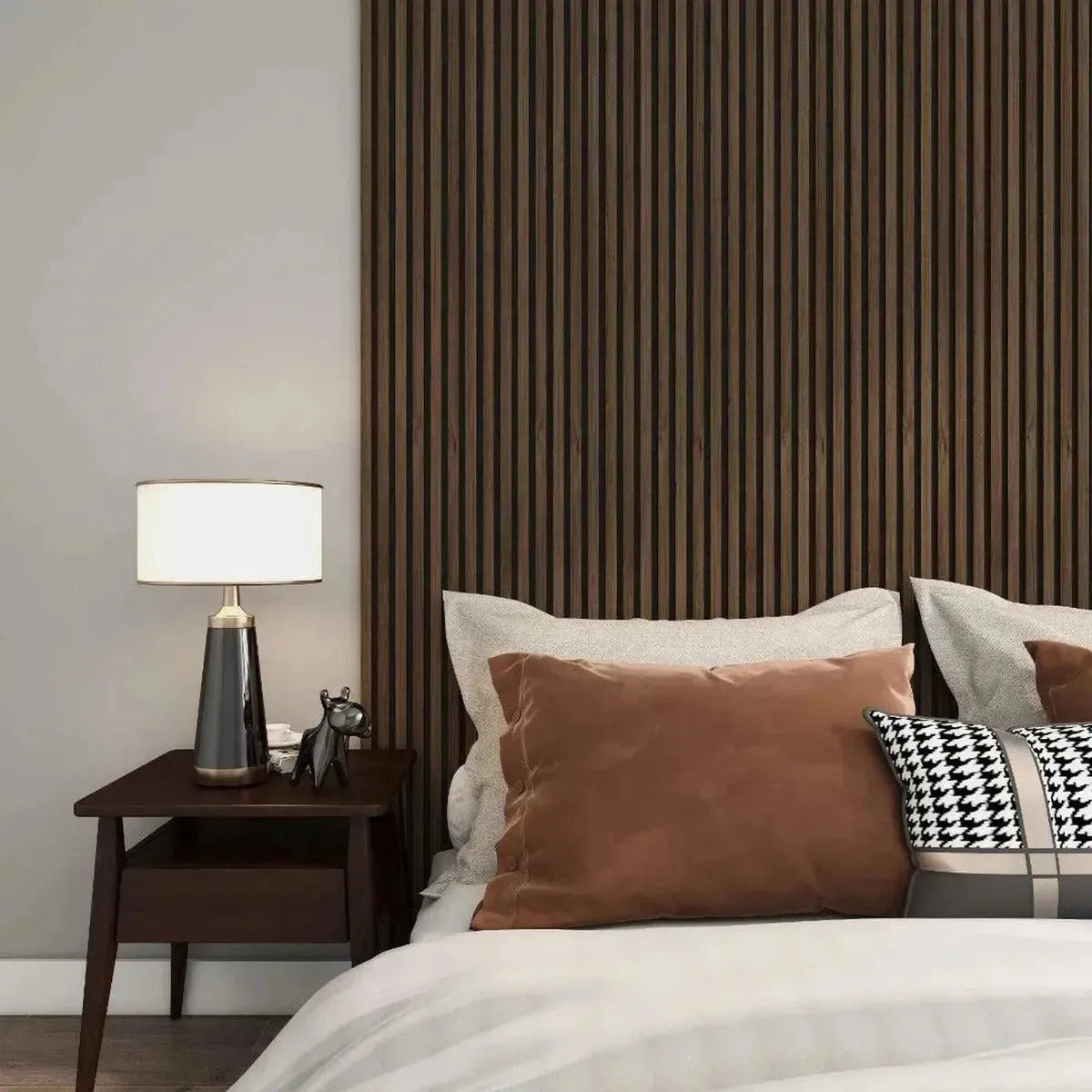
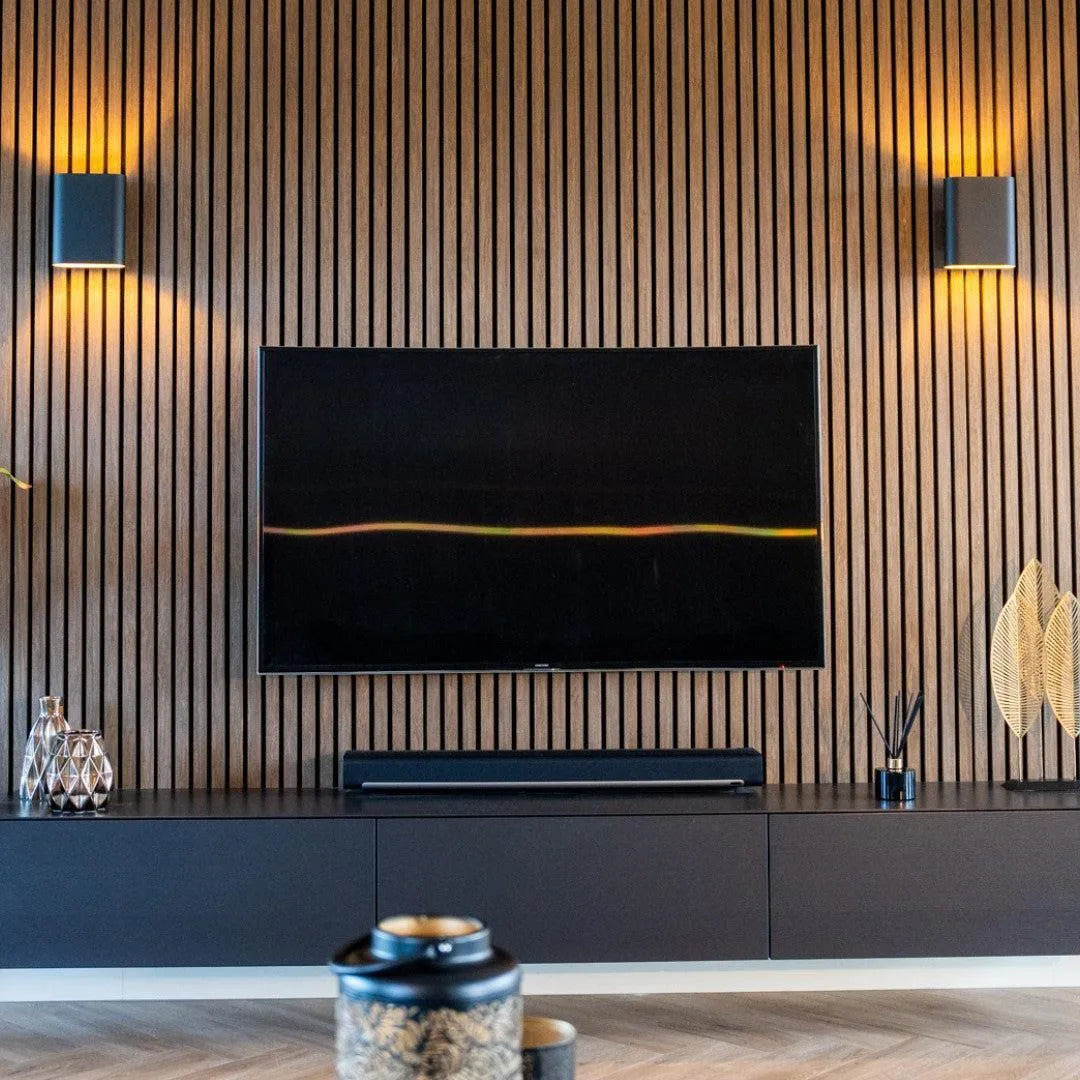
Corridors in memory care units carry foot traffic all day and usually run wall-mounted handrails and nurse call cording along one side. The vertical slat pattern on this panel visually breaks up that hardware instead of fighting it, and the smoked oak tone with gray felt backing dampens footstep and cart noise that otherwise bounces down a long hallway. It uses the same 3-sided wood veneer construction as the rest of the Akuwood Panel slat line.
Acoustic Slat Wall Panel Smoked Oak with Gray Felt pros:
- Vertical grooves work with, not against, corridor-mounted rails and signage
- Darker tone hides scuffs and scrapes from wheelchairs and carts better than pale finishes
- Straight slat format installs faster over long linear runs than hexagon tiles
Acoustic Slat Wall Panel Smoked Oak with Gray Felt cons:
- Absorbs more ambient light, so corridors with weak lighting may read darker after install
- No published NRC figure for this specific finish, unlike the hexagon line
Best for: high-traffic hallways and corridors between resident rooms. Verdict: Buy.
3. Acoustic Slat Wall Panel Natural Oak with Gray Felt: best acoustic panels for memory care resident bedrooms
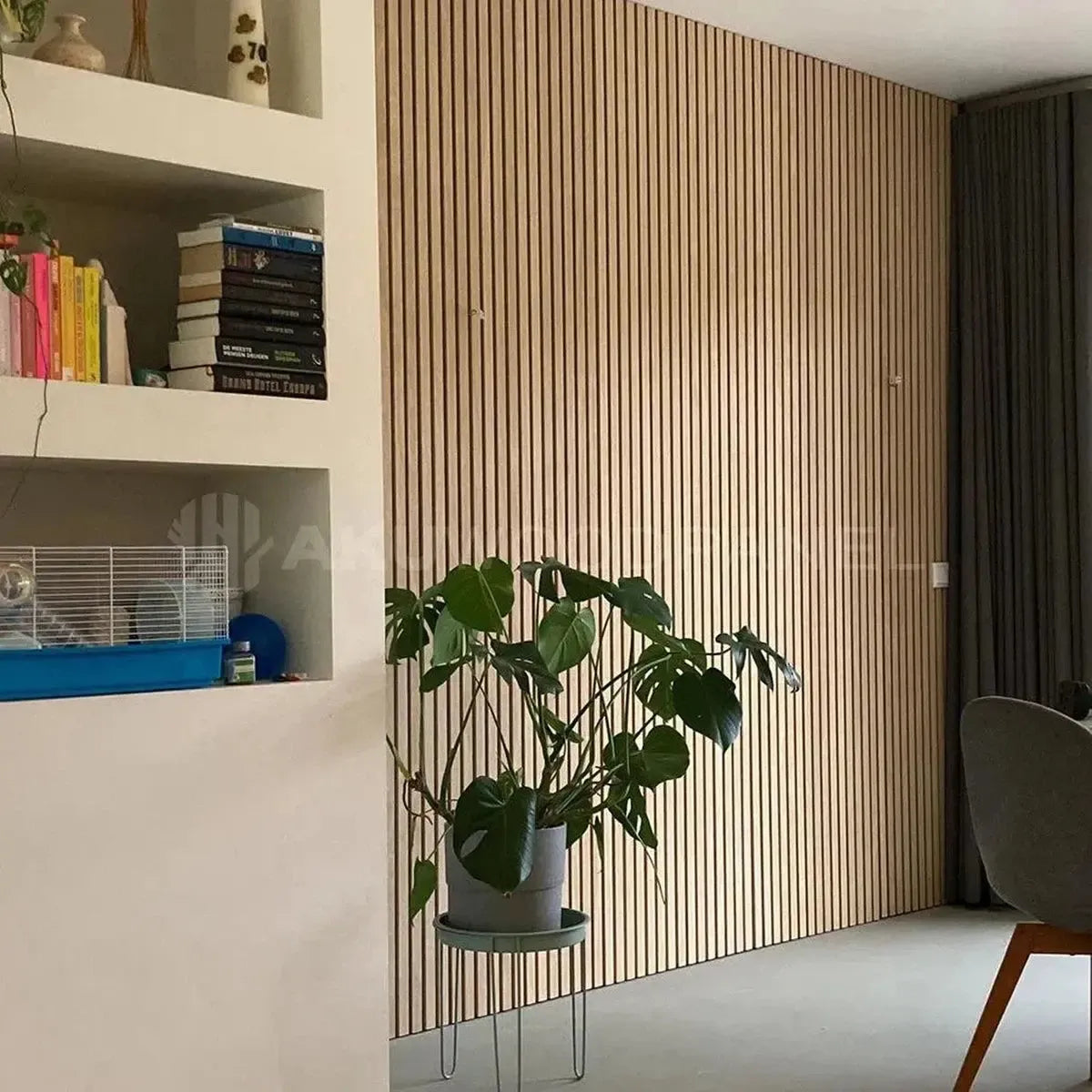
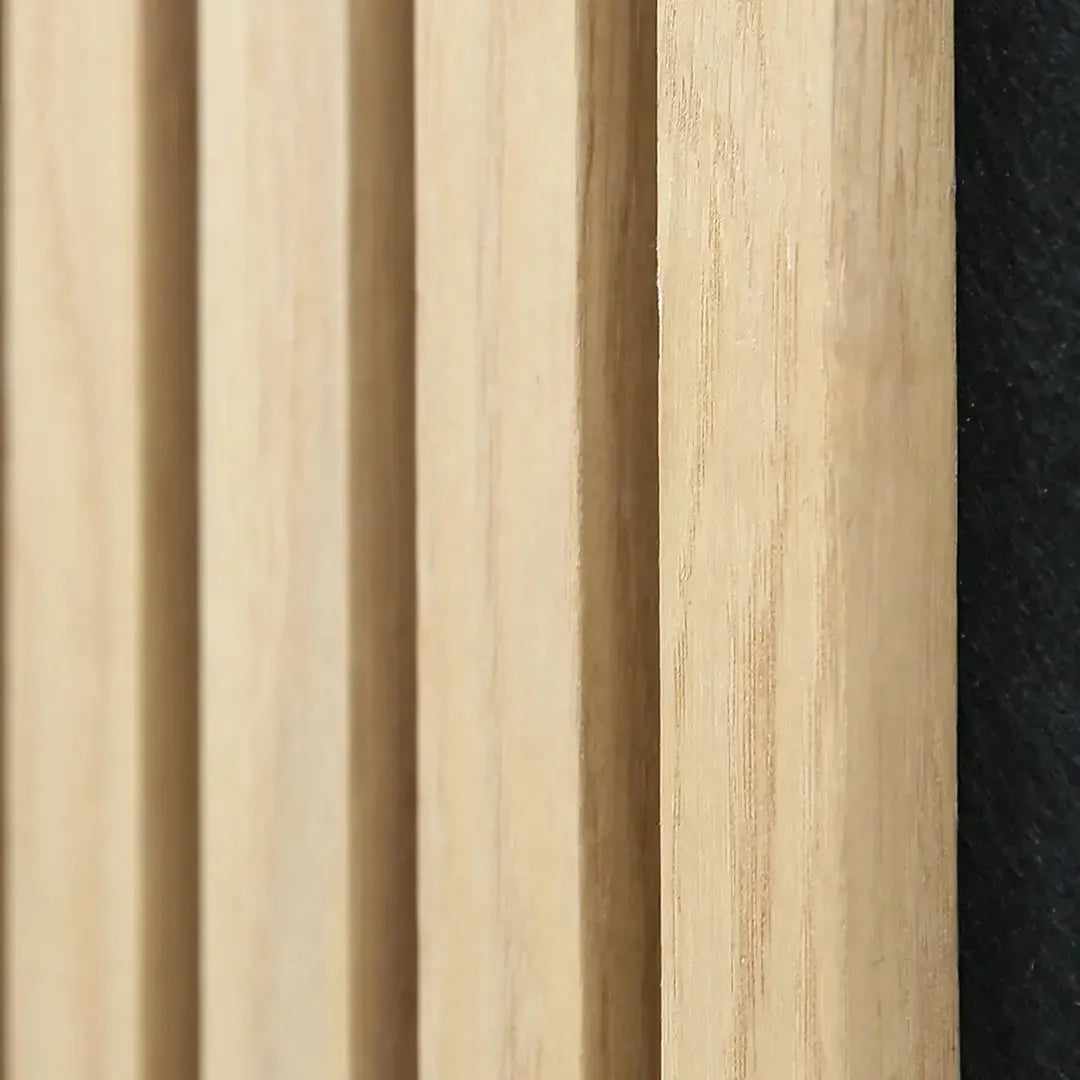
Bedrooms in a memory care unit need the calmest, most residential material in the building — this is where families judge whether the space feels like a home or a facility. The natural oak slat panel with gray felt backing is the lightest tone in Akuwood Panel's acoustic line, and the slat profile dampens sound without the busier geometric look of hexagon tiles.
Acoustic Slat Wall Panel Natural Oak with Gray Felt pros:
- Lightest, most residential wood tone in the slat range
- Low-contrast pattern avoids the visual noise that can disorient residents with dementia
- Same 3-sided veneer durability as the rest of the slat catalog
Acoustic Slat Wall Panel Natural Oak with Gray Felt cons:
- Light tone shows dust and marks faster than smoked or black finishes
- Not the strongest acoustic option for large open rooms — better suited to single-occupancy bedrooms
Best for: private resident bedrooms where the priority is a calm, home-like feature wall. Verdict: Buy.
4. Hexagon Acoustic Panel Walnut with Gray Felt: best acoustic panels for memory care dining and activity rooms
Dining and activity rooms in memory care units run louder than bedrooms and need more visual interest than a plain slat wall, since residents spend structured time here for meals and programming. The walnut hexagon panel with gray felt backing brings deeper grain and more visual texture at eye level than the natural oak version, while keeping the same hexagon acoustic construction.
Hexagon Acoustic Panel Walnut with Gray Felt pros:
- Deeper grain adds dimension to rooms residents use for extended periods
- Same hexagon acoustic core as the natural oak version
- Distinct enough tone to visually separate dining from dayroom zones in the same building
Hexagon Acoustic Panel Walnut with Gray Felt cons:
- Higher contrast against pale flooring or trim than natural oak — worth a lighting mockup first
- Same hexagon layout complexity around outlets and doorways
Best for: dining halls and structured activity rooms that need acoustic control plus a distinct visual identity. Verdict: Buy.
5. Full Sample Box – Slat Wall Panel: best acoustic panels for memory care pilot projects
Before a facility commits budget to a full unit rollout, the Full Sample Box puts Natural, Smoked Oak, and Walnut finishes in hand at once. It's not acoustic treatment on its own — it's four tiles, not a wall — but it's the lowest-risk way to check grain, tone, and how a finish reads under a specific room's lighting before ordering coverage for an entire corridor or dayroom.
Full Sample Box pros:
- Three finishes in one box, side by side, under actual room lighting
- Removes the guesswork of ordering a full unit's worth of panels sight-unseen
- Useful for facility groups piloting one unit before a multi-site rollout
Full Sample Box cons:
- Doesn't include the hexagon line, only slat finishes
- Provides zero acoustic coverage on its own — it's a decision tool, not a solution
Best for: operations teams piloting a single memory care unit before specifying panels across a multi-facility portfolio. Verdict: Buy — as a first step, not a final purchase.


How we ranked these
Every panel above got measured against the same five criteria: documented acoustic rating where available, fire and VOC suitability for a licensed care setting, tone contrast appropriate for dementia-friendly wayfinding, durability under daily institutional cleaning, and modular install that doesn't require an occupied unit to shut down. The hexagon line wins on documented NRC; the slat line wins on corridor-specific geometry and finish range for bedrooms.
Which acoustic panels should you choose for a memory care unit?
For most memory care operators specifying acoustic wood panels in 2026, the Hexagon Acoustic Panel Natural Oak with Gray Felt is the default pick for common rooms — it's the only option in this list with a published NRC 0.75 rating, and the natural oak tone keeps dayrooms feeling residential. Pair it with the Acoustic Slat Wall Panel Smoked Oak with Gray Felt for corridors, and start any multi-unit rollout with the Full Sample Box so facility staff can check finish and grain before committing to a full order.
FAQ
What are the best acoustic panels for memory care units?
The best acoustic panels for memory care units combine a documented NRC rating with a low-contrast wood finish — the Hexagon Acoustic Panel Natural Oak with Gray Felt from Akuwood Panel is rated at NRC 0.75 and reads as residential rather than clinical. Slat panels in natural or smoked oak work well for corridors and bedrooms where a straight linear pattern fits the room better.
Do acoustic wood panels meet fire code for licensed care facilities?
Fire code requirements vary by state and facility license type, so any acoustic panel spec for a licensed memory care unit should be checked against the local fire marshal's requirements before ordering. Ask the supplier for current fire-rating documentation on the specific finish you're specifying.
Is hexagon or slat panel better for memory care corridors?
Slat panels generally work better in corridors because the vertical pattern doesn't compete visually with wall-mounted handrails and nurse call cording. Hexagon panels are better suited to dayrooms and dining areas with more open wall space.
How much sound do acoustic wood panels actually absorb?
It depends on the panel — the Hexagon Acoustic Panel line from Akuwood Panel carries a published NRC of 0.75, meaning it absorbs about three-quarters of the sound energy that hits it. Not every finish in a supplier's catalog carries the same rating, so check the spec for the specific panel you're comparing.
Should memory care units avoid high-contrast wall patterns?
Dementia care design guidance generally favors low-contrast, low-glare finishes because sharp visual contrast can be disorienting for residents with cognitive impairment. Natural oak and lighter wood tones tend to read calmer than very dark or high-gloss finishes.
How much does it cost to order acoustic panels for a memory care unit?
Cost depends on the finish, the square footage covered, and whether you're piloting one room or specifying a full building. Check current pricing on the Akuwood Panel site for the specific panel and quantity you need.
Can acoustic panels be installed without disrupting an occupied memory care unit?
Slat and hexagon acoustic panels from Akuwood Panel install as modular tiles over drywall or furring strips, which lets facility maintenance stage the work room by room instead of closing the whole unit at once.
Do wood veneer acoustic panels need special cleaning in a care facility?
Wood veneer panels should be wiped down with the same non-abrasive cleaning protocols used elsewhere in the facility rather than harsh solvents, which can dull the finish over time. Check the panel's care instructions before adding it to a facility's standard cleaning rotation.
One last thing
The detail most facility planners miss: reverberation control matters more in memory care than in general senior living because residents with dementia have a harder time filtering overlapping sound into a single conversation, even before factoring in age-related hearing loss. A dayroom with an NRC 0.75 wall covering fewer square feet often does more for actual comprehension than spreading a lower-rated material across the whole room — install where residents spend the most seated time first, then expand.

 Better performance and aesthetic appeal
 In Stock