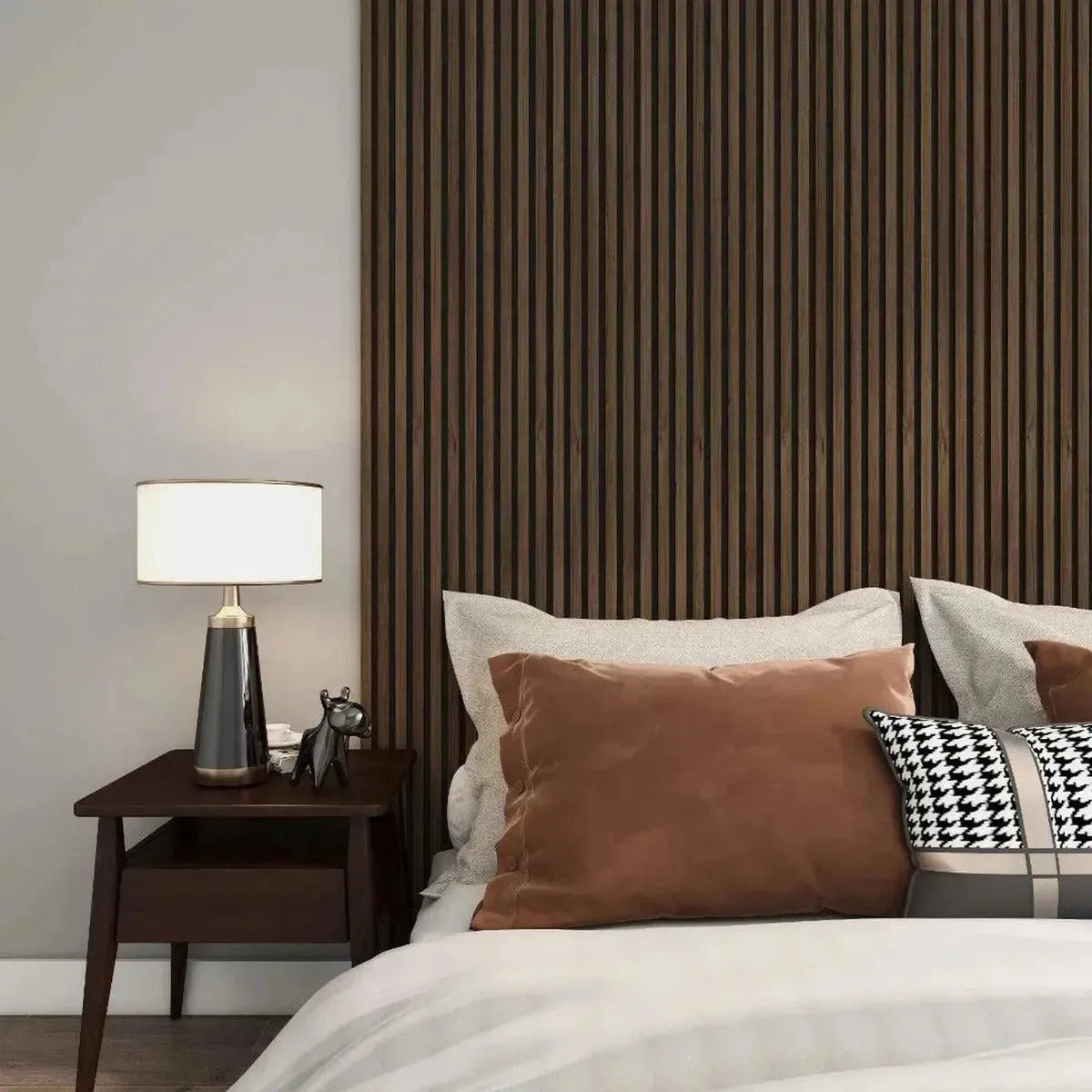
Andor Willow’s wood-slat wall panels give you a clear starting point for a wood feature wall. A slat finish alone does not settle whether your room needs sound absorption, a different wall pattern, or custom detailing. The best Andor Willow alternative in 2026 is Akustiq USA if you need real-wood-veneer acoustic slat panels; fabric-wrapped acoustic panels are the better starting point if a wood finish is not part of your brief.
- For Andor Willow alternatives in 2026, shortlist Akustiq USA acoustic wood panels when you want real-wood veneer and slats.
- Fabric-wrapped acoustic panels suit rooms where sound treatment matters more than a wood finish.
- Custom timber slats suit bespoke layouts, but the acoustic treatment needs its own specification.
- Hexagon acoustic panels offer a geometric alternative to continuous slat walls.
Why this matters
An alternative should solve a problem your original choice does not address. Start with your room, not a longer list of panel brands: are you treating echoes, changing the appearance of a wall, or trying to stop sound reaching another room?
Those are different jobs. Sound-absorbing panels address reflections inside a room; sound isolation depends on the construction separating spaces, including gaps, doors, and other transmission paths.
Choose the panel format after you define the job. A decorative wall can look finished while leaving the acoustic problem unresolved, and a technically suitable absorber can still be the wrong visual choice for your living room.
Andor Willow alternatives at a glance
This 2026 shortlist compares a named supplier with alternative panel formats and a custom-built approach. It is a buying guide, not a measured acoustic ranking: compare the exact product and mounting method before treating any two options as equivalent.
| Option | Best for | Standout feature | How it changes the decision |
|---|---|---|---|
| Andor Willow | Buyers considering a wood-slat feature wall | Wood-slat wall panel format | Keep it as the benchmark for your preferred finish and layout |
| Akustiq USA: Acoustic Slat Wall Panel Natural Oak | A wood-veneer acoustic slat wall | Real-wood-veneer acoustic slat panel range | Gives you another supplier and finish to assess against your project brief |
| Fabric-wrapped acoustic panels | Sound treatment without a wood-slat appearance | Absorptive material behind a fabric face | Changes the finish and construction rather than just the supplier |
| Custom timber slats | Bespoke spacing, edges, and wall layouts | Individually planned timber arrangement | Moves the project from a panel purchase to a designed assembly |
| Hexagon Acoustic Panel Natural Oak | A geometric wall composition | Hexagon panel shape | Replaces parallel slats with a tiled or clustered pattern |
1. Akustiq USA: best for wood-veneer acoustic slat walls
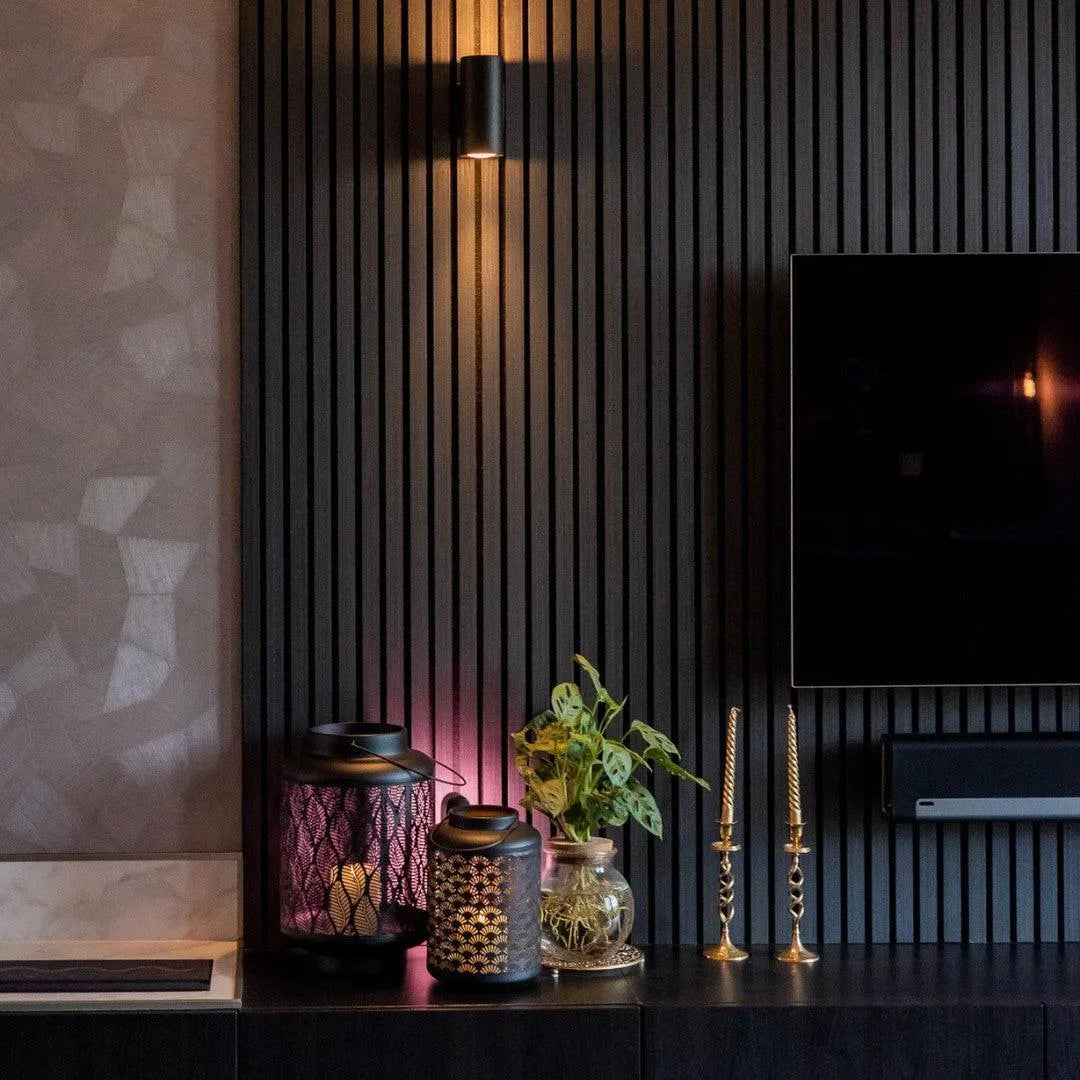
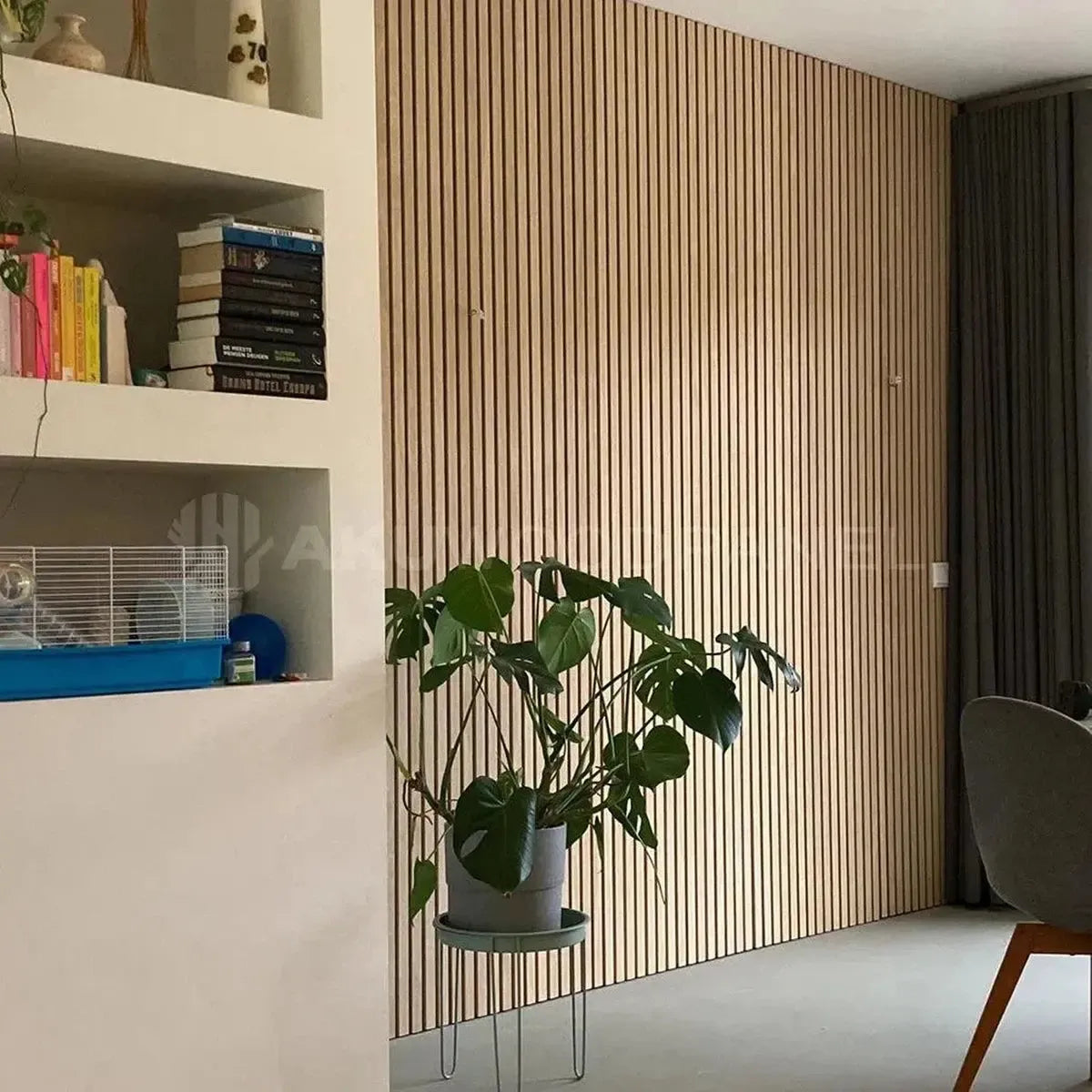
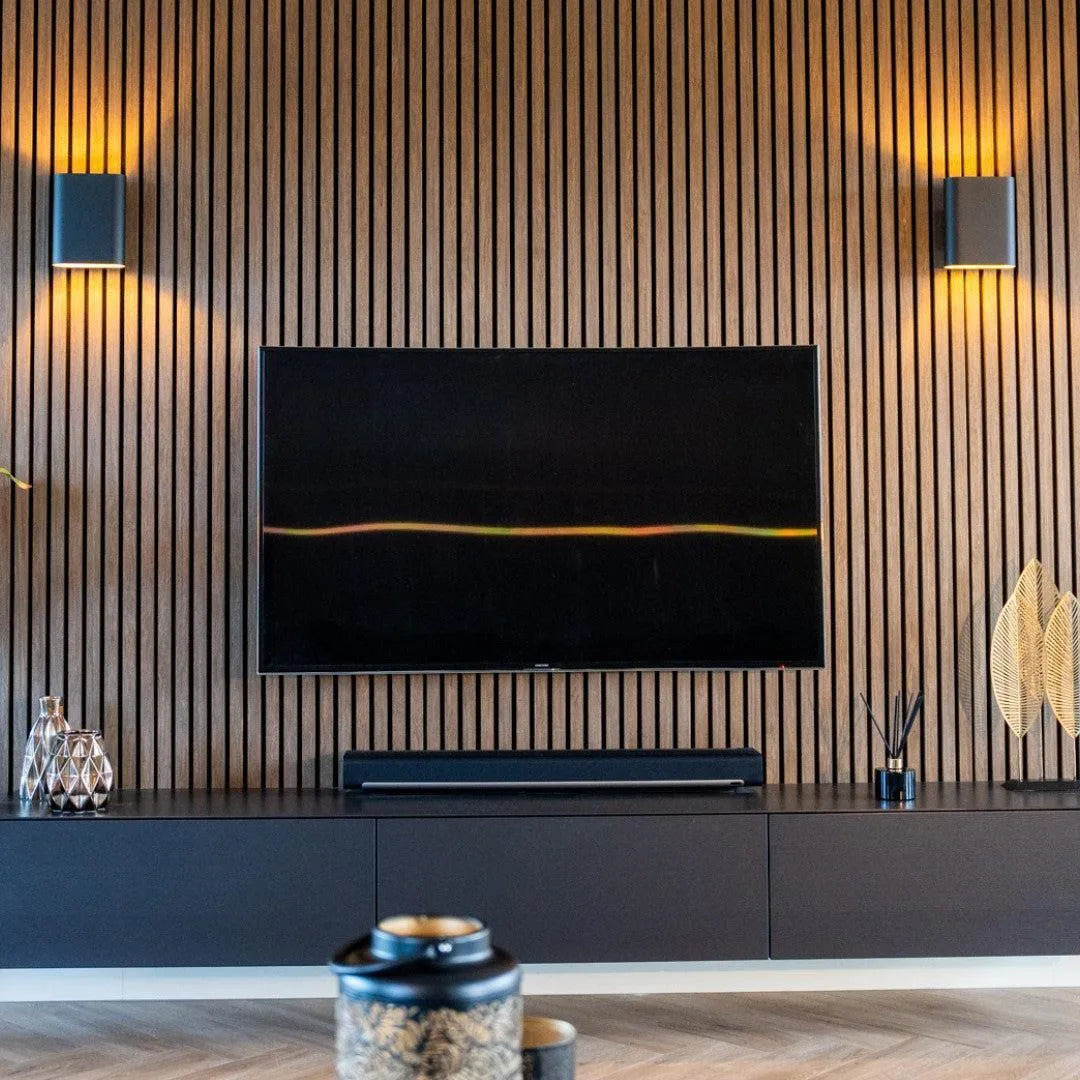
Akustiq USA manufactures and supplies acoustic wood panels for construction and interior applications. Its stated range includes real-wood-veneer acoustic slat panels, making it a direct shortlist option when you want to keep the wood-slat look rather than change the whole design.
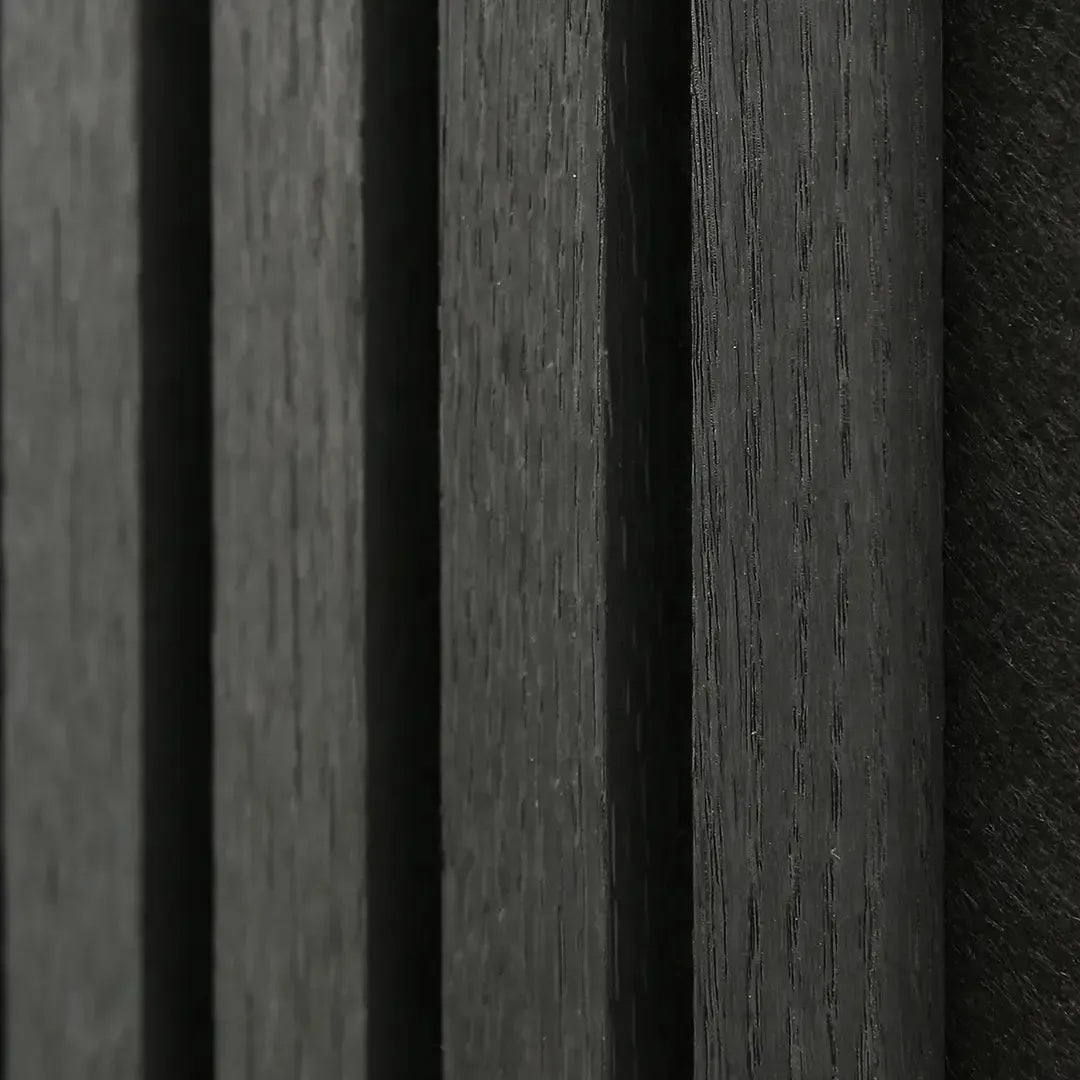
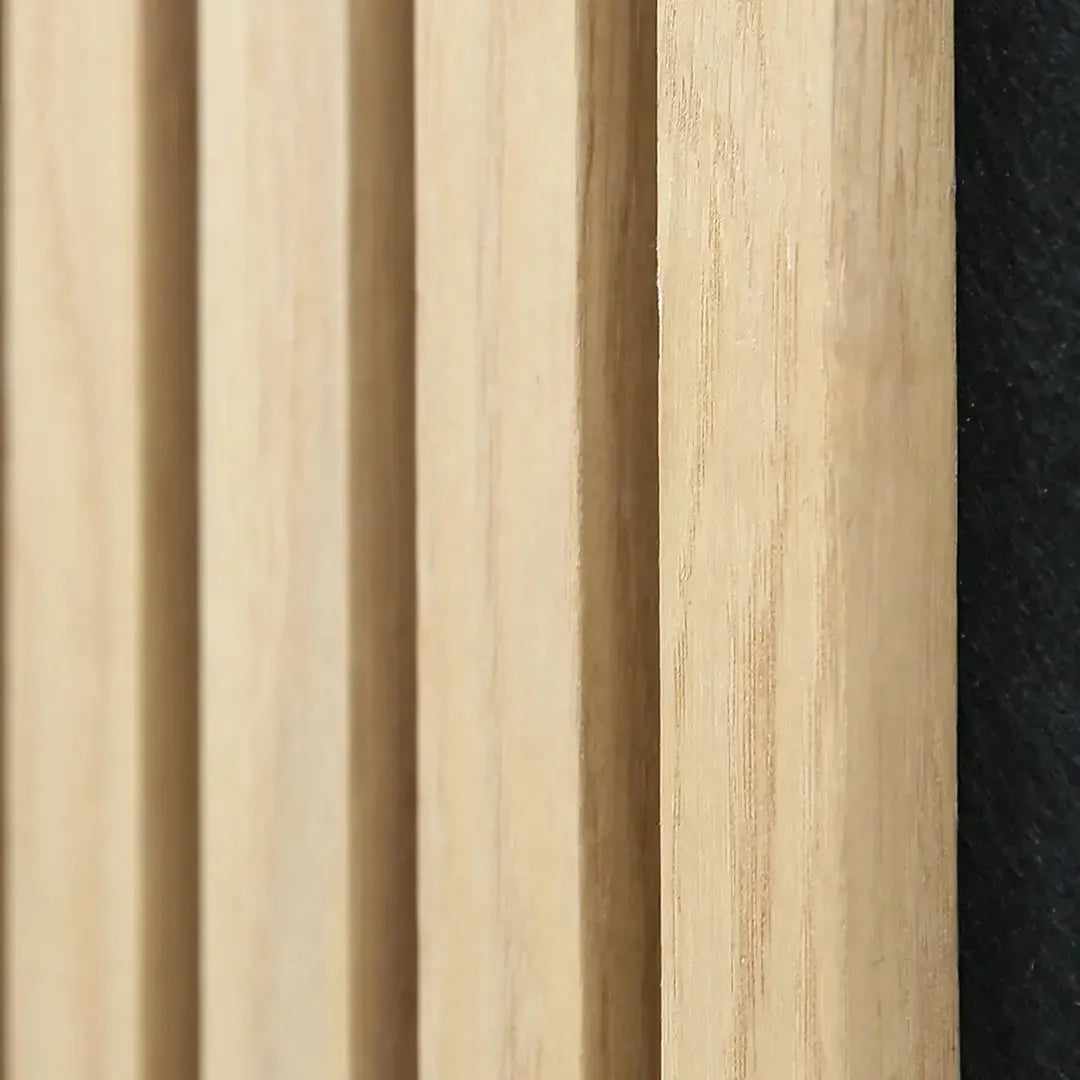
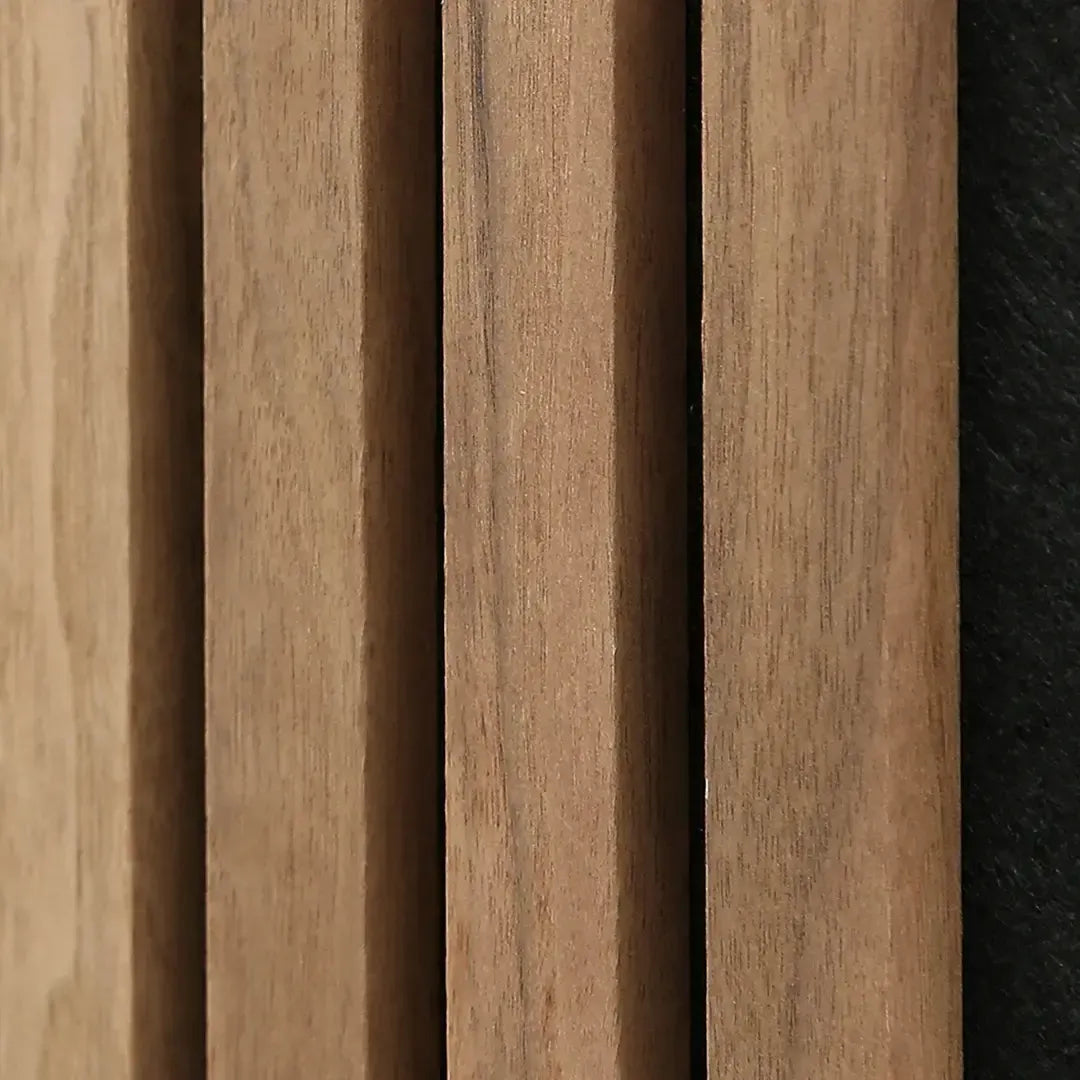
The catalog includes natural oak, walnut, black oak, and smoked oak slat panel options. Choose by the room’s existing materials first, then assess the exact panel construction and installation requirements.
Where this option shines
- Real-wood veneer fits a brief that calls for a genuine wood surface.
- Named oak and walnut options give you specific finishes to compare with flooring, furniture, and cabinetry.
- The broader range includes hexagon, fluted, and three-dimensional wood panels if your design moves away from slats.
- The stated customer base includes individual consumers and businesses.
Where this option falls short
- Wood-slat panels are not a substitute for a sound-isolating wall assembly.
- Repeated slats require planning around exposed edges, outlets, and corners.
- A wood-veneer surface does not establish suitability for wet areas, exterior exposure, or a commercial fire requirement.
Best for: Homeowners and project buyers seeking acoustic wood panels with a real-wood-veneer slat finish.
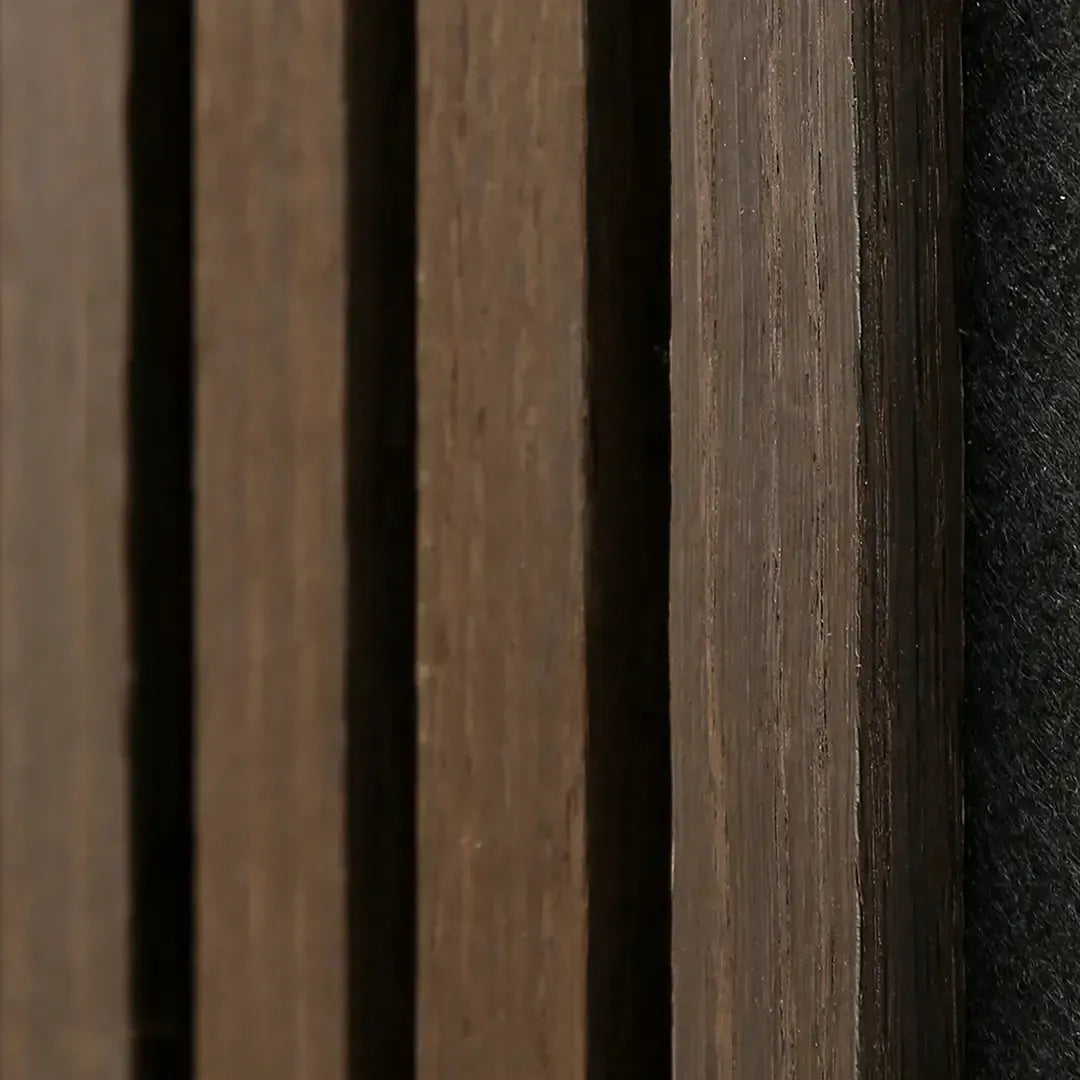
For a fair Andor Willow comparison in 2026, put physical samples beside each other under your room’s lighting. Assess the wood tone, visible backing, slat rhythm, and edge detail separately; a photograph combines all of them into one impression.
Then compare the installation documents. A finish you like is only half the decision if the wall needs a different support arrangement or the acoustic result depends on a particular mounting method.
Verdict: Hold until the sample, installation method, and project requirements align.
2. Fabric-wrapped acoustic panels: best for a non-wood finish
Fabric-wrapped acoustic panels use a fabric face over an absorptive core. They suit a shortlist where the primary goal is managing reflections and the room does not need a wood-slat appearance.
This is a different design choice, not a claim that every fabric panel outperforms every slat panel. Core construction, thickness, placement, and mounting all affect the result.
Where fabric-wrapped panels shine
- They provide a non-wood visual option for rooms where another timber finish would compete with existing materials.
- Separate panels let you plan treatment locations rather than assume an entire feature wall is necessary.
- Product test reports can help you compare absorption by frequency and mounting arrangement.
Where fabric-wrapped panels fall short
- They do not deliver the wood grain or linear texture of a slat wall.
- Fabric appearance and cleaning requirements need to suit the room’s use.
- Small decorative arrangements should not be treated as proof of adequate room treatment.
Best for: Home offices, listening spaces, and other interiors where a fabric finish fits the design brief.
When comparing fabric panels with Andor Willow, decide whether you are buying a wood feature wall or specifying sound treatment. If you want both, compare documented acoustic performance without abandoning the finish requirement.
Verdict: Hold until the acoustic report and fabric finish fit your room.
3. Custom timber slats: best for bespoke wall detailing
Custom timber slats let you design the spacing, alignment, and perimeter rather than work around a prefabricated panel layout. They are a relevant alternative when a wall includes unusual openings, integrated joinery, or a pattern that standard panels do not provide.
The acoustic layer needs separate attention. Exposed timber is not automatically an absorber, and a custom slat wall needs an appropriate assembly if sound absorption is part of the brief.
Where custom timber slats shine
- You can coordinate the layout with doors, cabinetry, and other fixed elements.
- Individual slats allow bespoke spacing and perimeter detailing.
- A designed assembly can address the visual wall and acoustic treatment as separate requirements.
Where custom timber slats fall short
- You must specify more components and installation details than with a finished panel.
- Repeating a consistent spacing across the wall requires careful layout and workmanship.
- Acoustic performance cannot be inferred from the appearance of the completed timber face.
Best for: Projects where custom geometry and joinery details are the main reason to move away from a standard panel.
Compare a custom design with Andor Willow at the assembly level: timber face, backing, supporting structure, exposed edges, and installation responsibilities. Comparing only the visible slats leaves much of the project undecided.
Verdict: Hold until the complete wall assembly is specified.
4. Hexagon acoustic panels: best for a geometric feature
The Hexagon Acoustic Panel Natural Oak is an option in the Akustiq USA acoustic wood panel range. Its hexagon shape changes the wall composition, giving you an alternative to the continuous parallel lines of slat panels.
Where hexagon panels shine
- The shape supports a geometric design rather than a linear slat pattern.
- You can plan a cluster or a larger composition around the wall’s focal point.
- A named natural oak option gives you a specific finish to assess.
Where hexagon panels fall short
- A hexagon layout will not recreate a continuous slat wall.
- Pattern boundaries need deliberate planning, especially near corners and furniture.
- Panel count alone does not establish enough absorption for the room.
Best for: Buyers who want a wood-toned geometric feature instead of parallel slats.
Verdict: Hold until the pattern and treatment area are planned together.
How to compare acoustic claims in 2026
Do not use the word acoustic as the whole specification. Ask for the product’s absorption test report and check the construction and mounting arrangement described in it.
Under ASTM C423, the Noise Reduction Coefficient, or NRC, summarizes absorption at 250 Hz, 500 Hz, 1,000 Hz, and 2,000 Hz. Those frequency bands explain why NRC is useful, but a single summary value does not describe every sound your room contains.
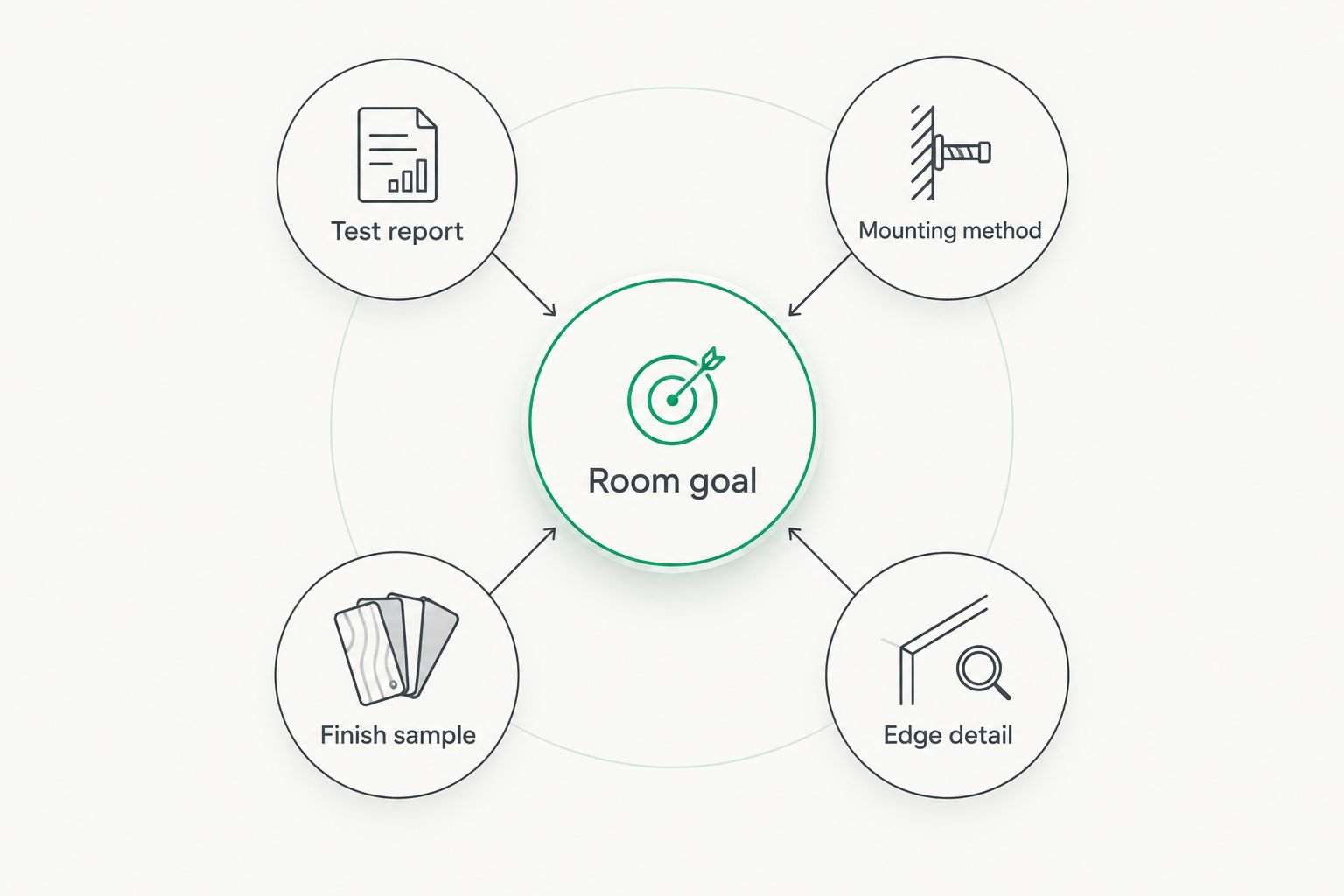
Use these checks before choosing an alternative:
- Room goal: Separate echo control from sound isolation and decorative cladding.
- Test report: Match the tested product construction to the product you intend to install.
- Mounting method: Check whether the tested assembly uses a backing arrangement or air space that your wall will reproduce.
- Finish sample: Assess the surface beside the materials already in your room.
- Edge detail: Plan corners, cut edges, outlets, and the wall perimeter before installation.
These checks prevent a common comparison error: choosing by a finish photograph, then expecting an acoustic result from an installation that was never part of the test.
For commercial work, add the applicable fire, maintenance, and installation requirements to the brief. A product name, wood species, or article title does not establish compliance; use documentation for the exact product and proposed application.
Why consider switching from Andor Willow?
The useful reasons to consider Andor Willow alternatives in 2026 are project requirements, not unsupported claims about another supplier. Use the following decision points to establish whether switching has a purpose.
You want a different wall pattern
A hexagon composition changes the design more than another slat finish does. If parallel lines are the part you no longer want, compare panel formats before comparing suppliers.
You need bespoke detailing
A custom timber assembly is relevant when fixed openings or joinery dictate the slat layout. Draw those constraints first; do not assume a different standard panel will remove them.
You are prioritizing acoustic treatment
If reflections are the main problem and wood is optional, fabric-wrapped absorbers belong on the shortlist. Compare test reports and placement requirements rather than treating the face material as a performance ranking.
You want another wood-veneer option
Another supplier gives you a separate finish and construction to assess. Switching makes sense only when that exact option fits your room or specification better—not simply because it appears on an alternatives list.
When staying with Andor Willow is the right call
Stay with Andor Willow when the selected panel’s finish, installation requirements, and documentation meet your project brief. An alternative does not become better merely by offering a different pattern or appearing first in a ranked guide.
For a 2026 renovation, write down what would justify changing your selection before ordering competing samples. If no alternative resolves a defined design or technical requirement, keep the decision focused and finish planning the installation.
FAQ
What's the best Andor Willow alternative in 2026?
Akustiq USA is the recommended shortlist option when you want real-wood-veneer acoustic slat panels. Choose by the exact finish, installation requirements, and acoustic documentation rather than the brand name alone.
Is Akustiq USA better than Andor Willow?
The better choice is the exact panel that meets your project requirements. Compare physical samples, panel construction, mounting instructions, and relevant test documentation before deciding.
Are acoustic wood panels the same as soundproofing?
No. Acoustic absorption addresses sound reflections inside a room, while sound isolation depends on the construction separating spaces and the paths through which sound travels.
Should I choose fabric acoustic panels instead of wood slats?
Choose fabric acoustic panels when a non-wood finish fits your room and you are specifying sound treatment. Compare documented performance for the proposed mounting method rather than assuming fabric is always better.
Can I use custom timber slats instead of prefabricated panels?
Yes, custom timber slats are an alternative for bespoke spacing and wall detailing. If absorption is required, specify the acoustic layer and complete assembly separately from the timber face.
Are hexagon acoustic panels a direct replacement for slat panels?
Hexagon acoustic panels are a design alternative, not an identical replacement. Their geometric layout changes the wall pattern, and the acoustic requirement still needs its own assessment.
What should I check before choosing acoustic wall panels?
Check the room goal, test report, mounting method, finish sample, and edge details. For commercial applications, also confirm the applicable requirements using documentation for the exact product.
One last thing
Resolve the exposed edge before you approve the feature wall. A panel photograph shows the face; your finished room also shows the perimeter, corners, and cuts around fittings.
Make a simple wall drawing with those details marked. It gives you a more useful final comparison than another saved inspiration image—and helps you choose a panel system you can actually finish as intended.

 Better performance and aesthetic appeal
 In Stock