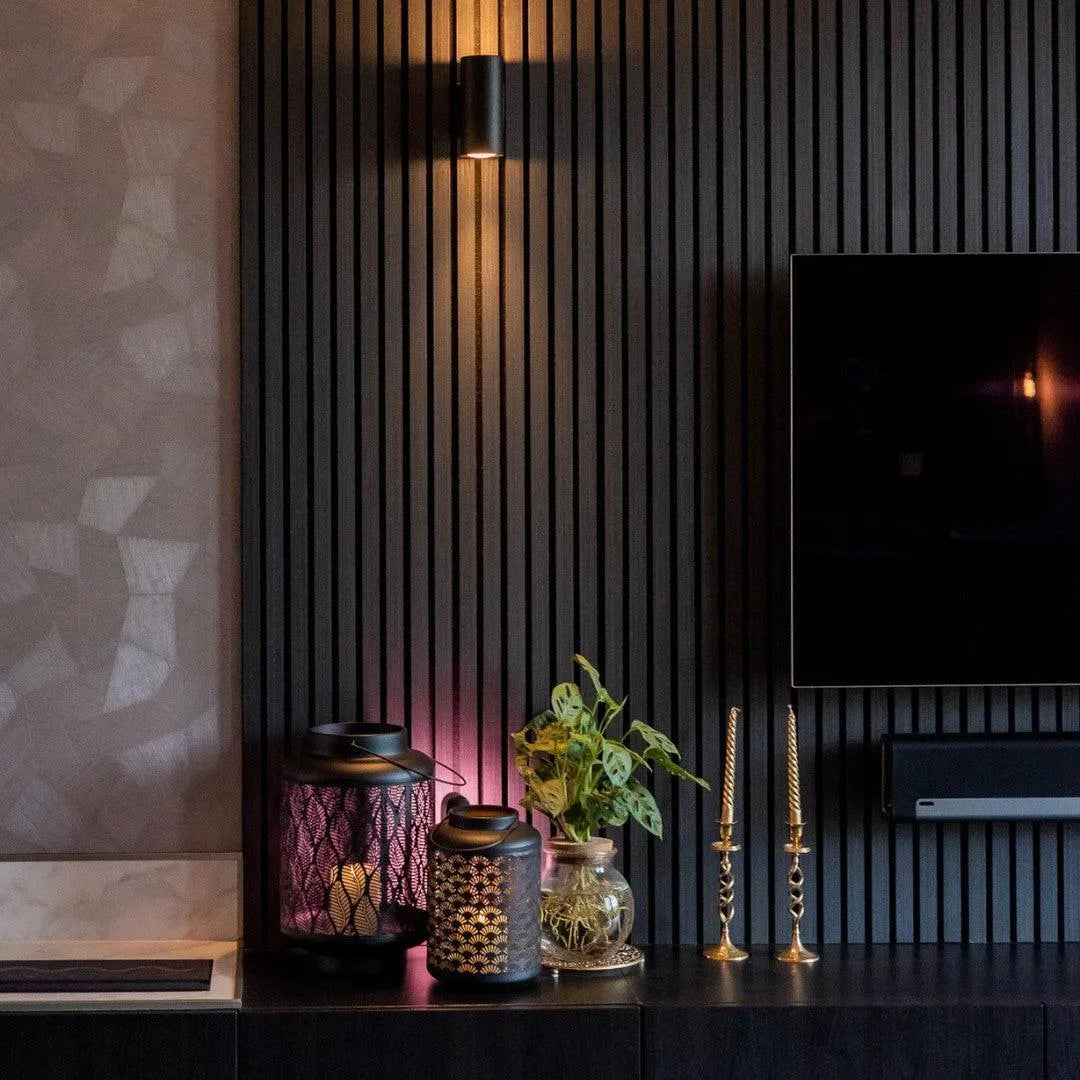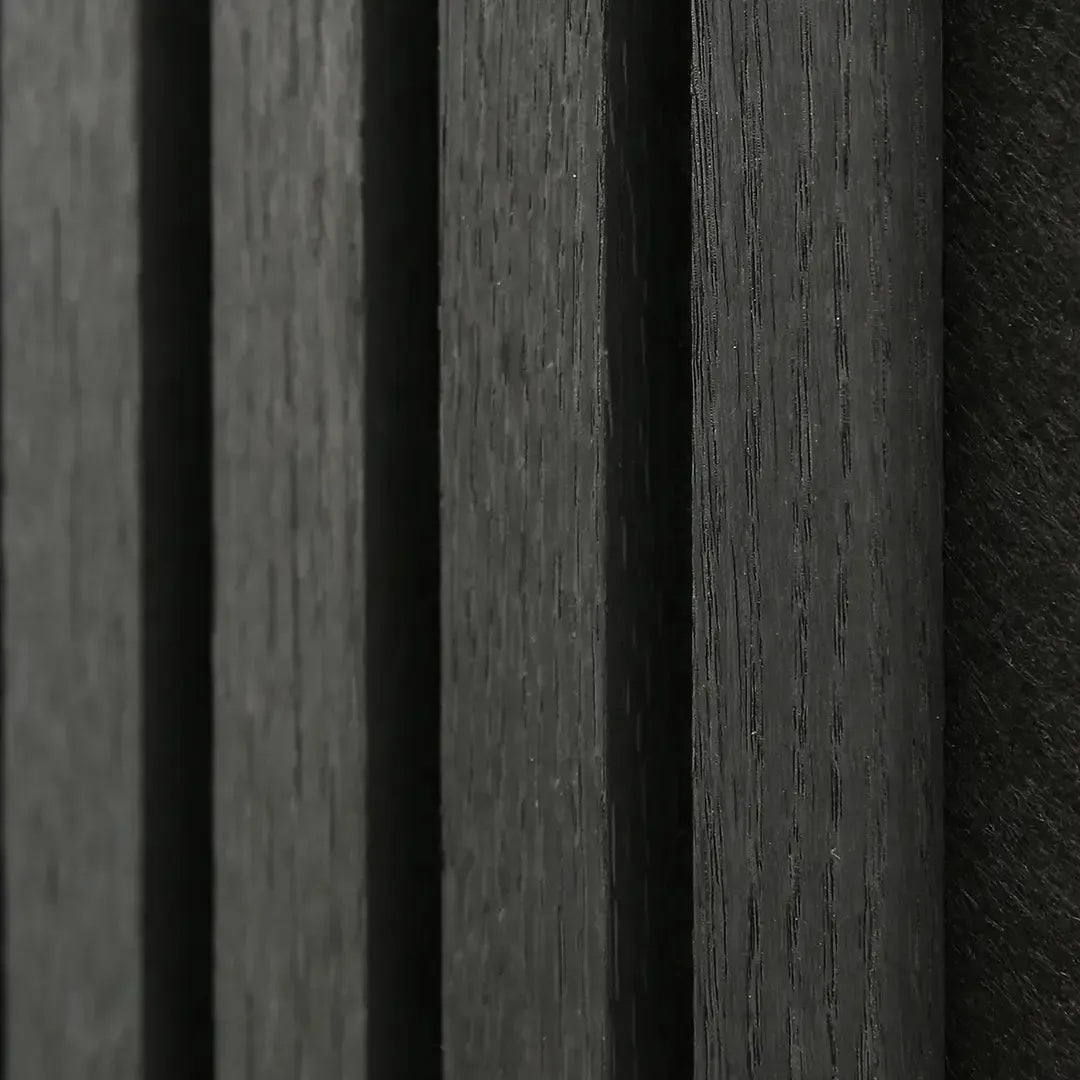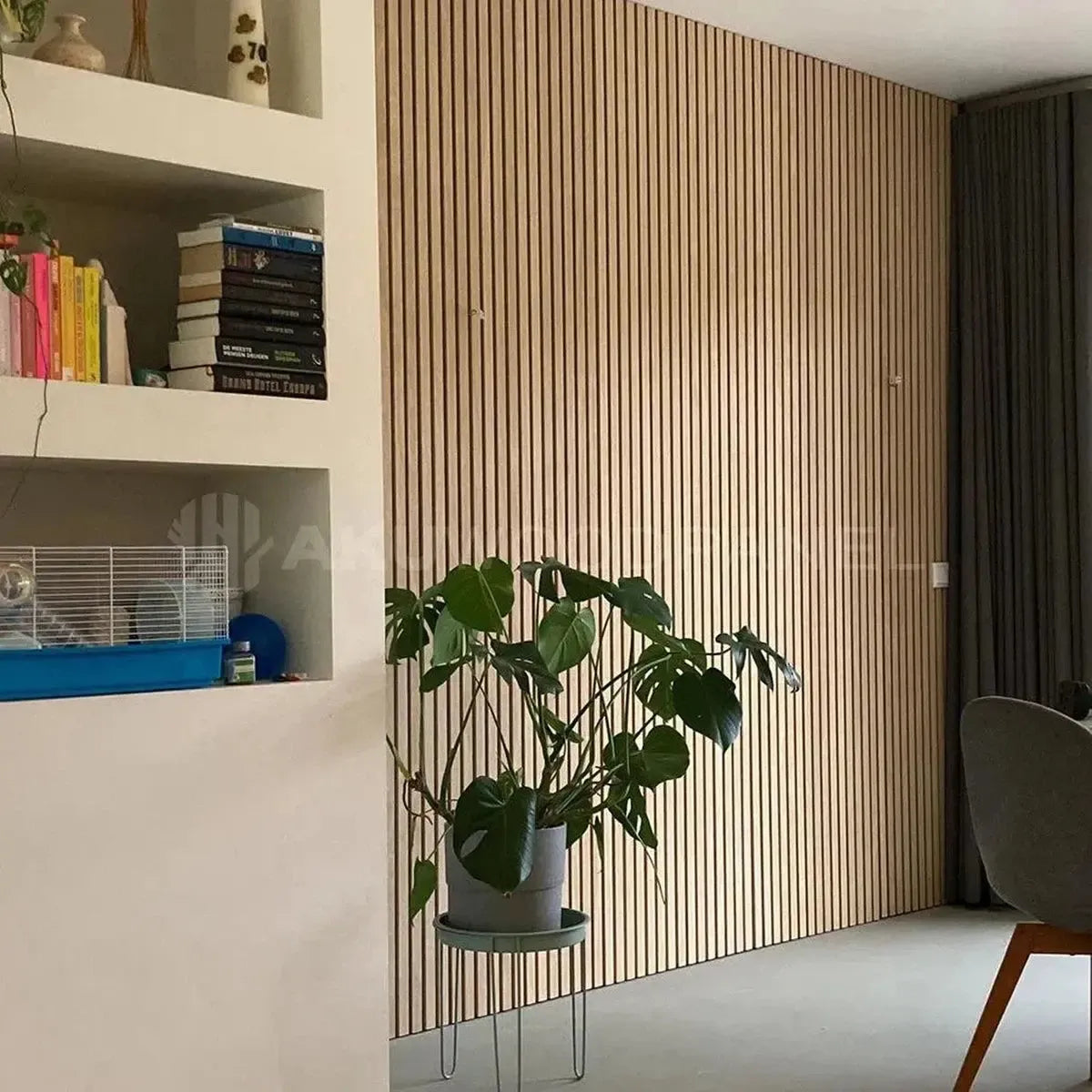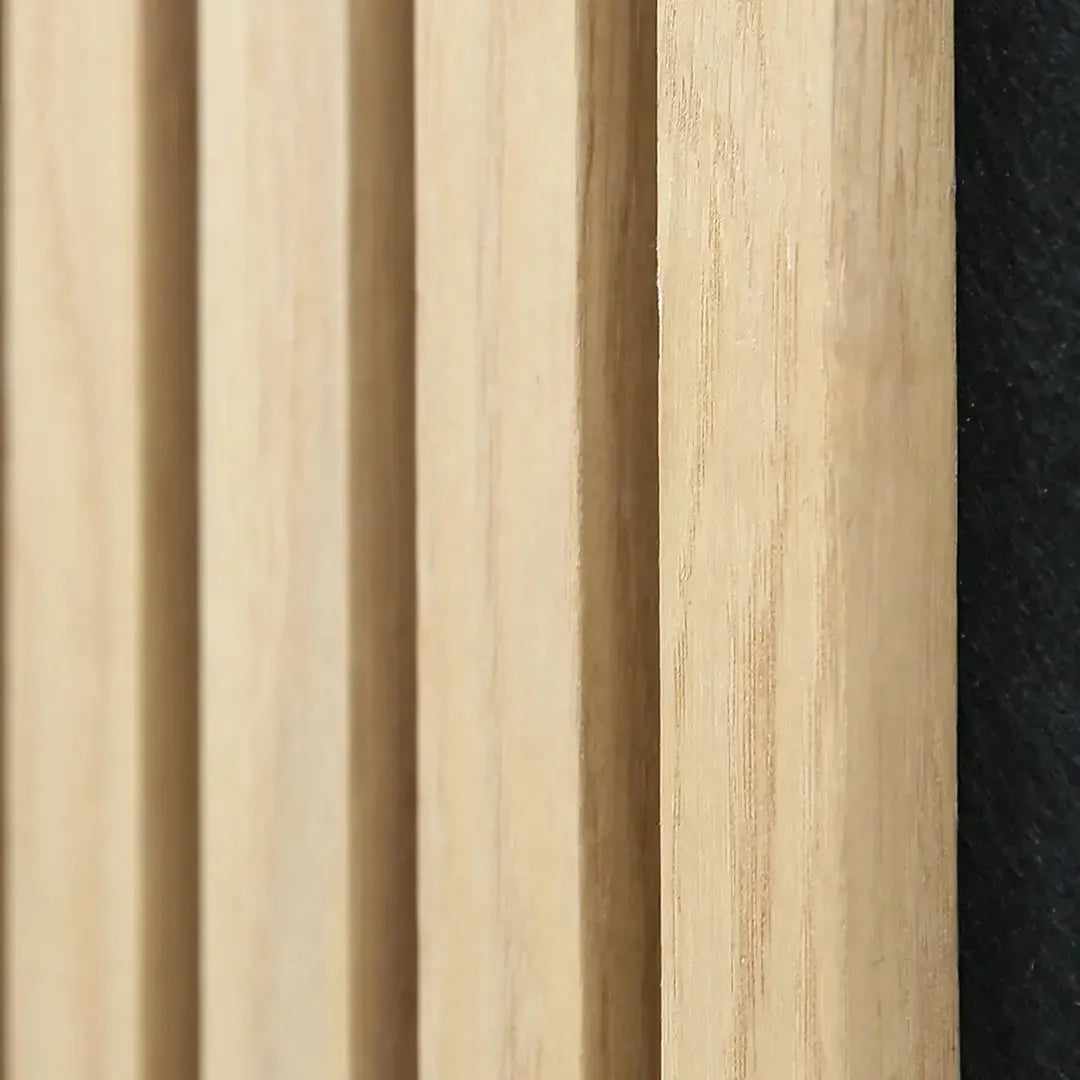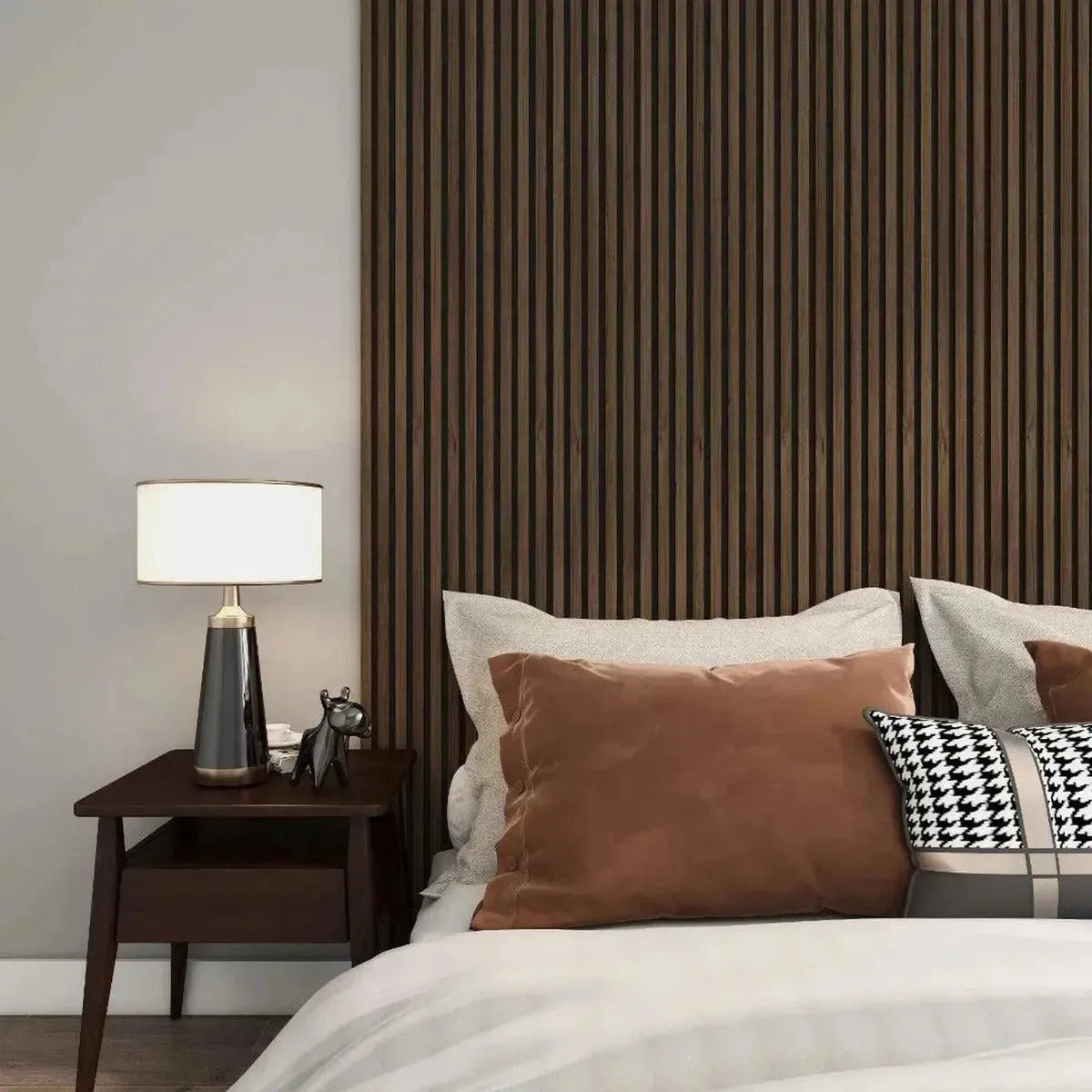
Choose Akustiq USA if you want to compare acoustic wood panels with other decorative panel formats for an interior project; choose Woodpanelwalls if its exact panel has already passed your finish, installation, and project-approval checks. For 2026, the deciding factor is the panel that fits your wall specification—not the brand name alone.
- For aku wood panel vs woodpanelwalls, choose by panel specification, sample approval, and installation requirements.
- Akustiq USA suits acoustic wood panel buyers comparing slat, hexagon, and fluted designs.
- Choose Woodpanelwalls when its exact panel already matches an approved finish and project specification.
- Sound absorption treats room reflections; it does not establish sound isolation between rooms.
Why this matters
A wood panel comparison needs to answer two separate questions: does the wall look right, and does the installed system do the job? A decorative feature wall and an acoustic treatment can share a similar appearance while serving different purposes.
Akustiq USA is a practical starting point for acoustic wood panel buyers comparing several decorative formats. That recommendation concerns product selection, not a claim that every panel has the same acoustic performance or installation method.
For a 2026 renovation, settle the room's main problem before choosing a finish. Echo, an unattractive wall, and noise from the neighboring room require different decisions. Treating them as interchangeable leads to a purchase that looks right but answers the wrong brief.
At a glance
Use this table as a buying outline. The Woodpanelwalls column describes the conditions that justify choosing its panel, rather than assigning unverified performance advantages.
| Dimension | Akustiq USA | Woodpanelwalls |
|---|---|---|
| Best for | Buyers comparing acoustic and decorative formats | Buyers with an already-approved panel specification |
| Panel format | Slat, hexagon, fluted, and other decorative options | Choose the exact format that matches your wall layout |
| Veneer and appearance | Real wood veneer appears in acoustic slat and fluted product descriptions | Choose when the physical sample matches the approved finish |
| Acoustic suitability | Selected hexagon descriptions state NRC 0.75 | Require evidence for the exact panel and mounting arrangement |
| Installation fit | Check instructions for the selected panel type | Favor an already-approved fixing method when retaining a specification |
| Edge finishing | Slat end pieces appear in the product catalog | Confirm the specified edge detail before ordering |
| Pricing model | Product-based online purchasing | Compare the purchasing basis stated in the current quotation |
| Standout feature | Several panel types within one catalog | An approved product match is a reason to retain the selection |
Catalog choice favors exploring several panel formats
The client's catalog includes acoustic slat panels, acoustic hexagons, fluted panels, three-dimensional wood panels, and exterior panels. These are different design directions, not interchangeable versions of one acoustic product.
If you're still deciding how the wall should look, comparing formats helps you narrow the brief. Slats create a repeated linear pattern. Hexagons create a geometric arrangement, while fluted surfaces emphasize continuous relief.
One concrete option is the Hexagon Acoustic Panel Natural Oak with Gray Felt. Its supplied product title specifies 32-inch panels and 4 panels per box. Those details identify the product; they do not establish how much of your wall a box covers.
Best for: a homeowner or designer still choosing the wall's visual structure. The advantage is choice. The drawback is that you must compare installation and performance separately across formats instead of assuming the entire catalog behaves alike.
Woodpanelwalls wins when its finish is already approved
For an interior designer working to an approved material schedule, retaining a Woodpanelwalls panel is the stronger decision when its sample is the accepted finish. Switching brands creates another approval task, even when the replacement uses the same wood species name.
That is a project-fit advantage, not a claim about better veneer. Natural oak, smoked oak, and walnut names do not establish identical color, grain, sheen, or edge treatment between suppliers.
Review the physical sample beside the materials it must match:
- Flooring and adjacent cabinetry.
- Painted walls and upholstery.
- Metal fixtures and lighting finishes.
- Existing woodwork that remains in place.
Best for: a designer preserving an approved finish scheme. The benefit is continuity. The limitation is that finish approval does not answer acoustic, fire-performance, or fixing questions; the selected panel still needs to satisfy those requirements.
In 2026, use the actual room lighting for this check. A product photograph is useful for shortlisting, but it is not a substitute for putting materials together.
Neither brand wins on veneer from a photograph
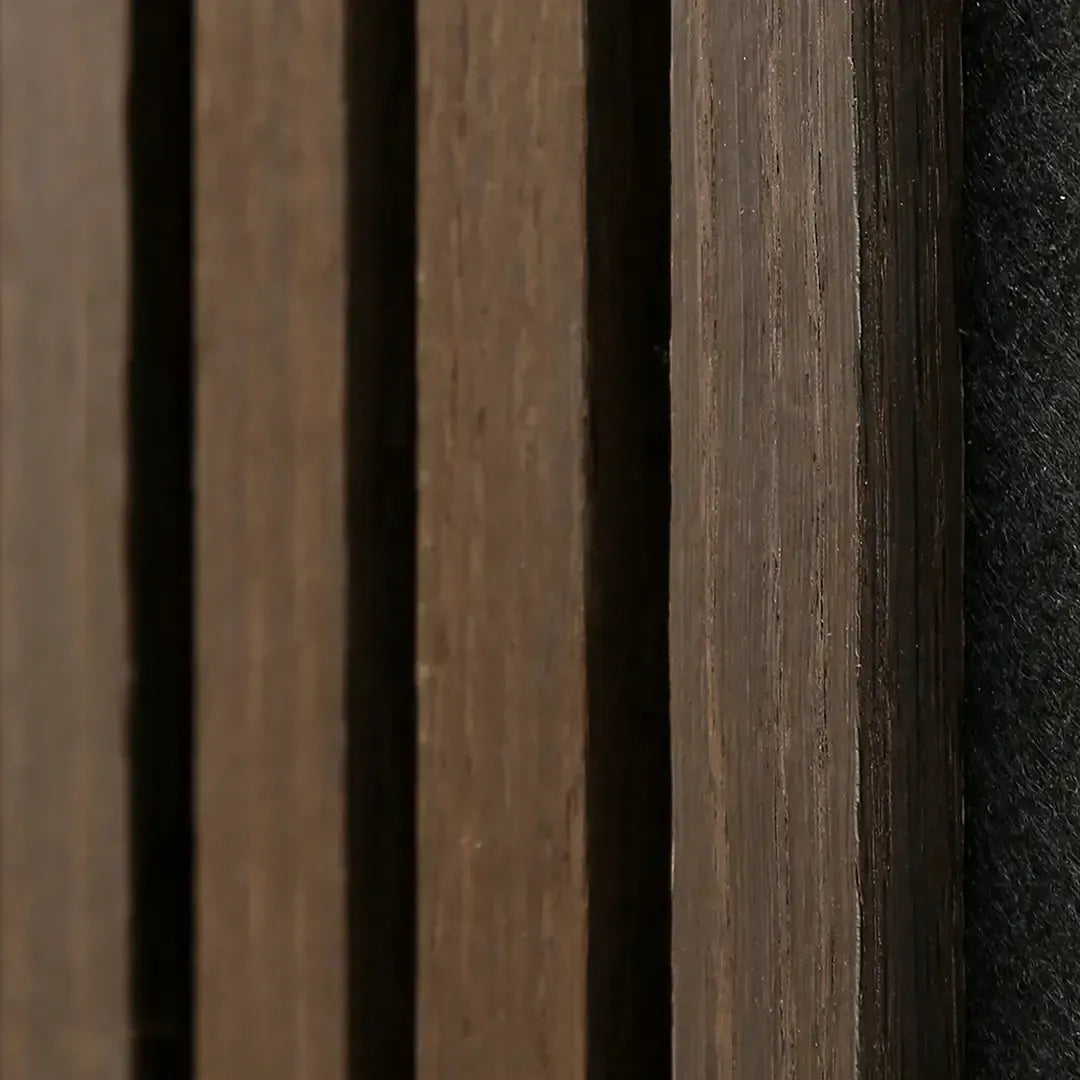
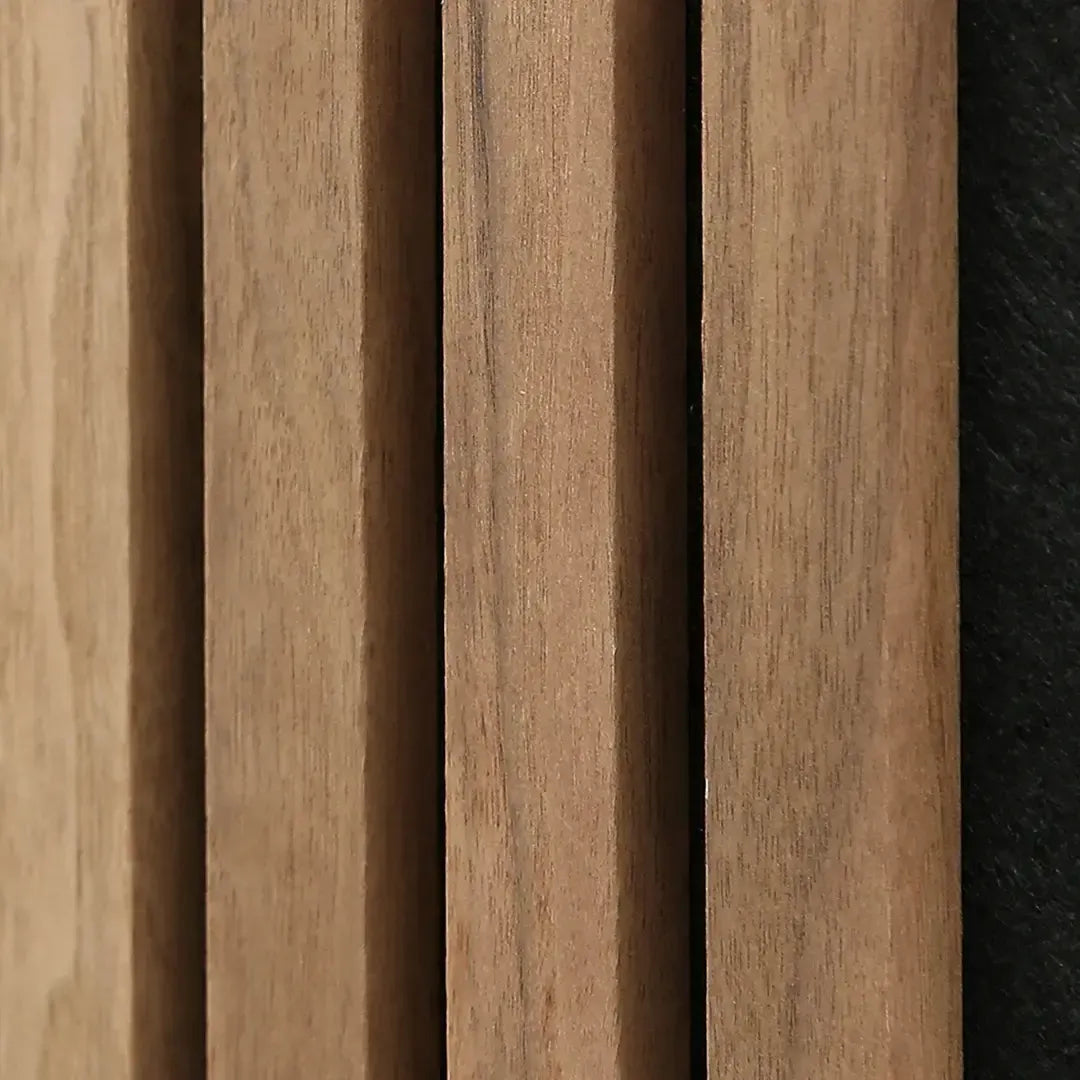
Real wood veneer is explicitly described in the client's acoustic slat offering and in its Natural Oak fluted panel description. The latter also specifies flexible MDF backing. Those are material facts about those products, not proof of every panel's construction.
When comparing either supplier, separate the face material from the backing and edge detail. A wood surface tells you what you see from the front; the construction determines what happens at cuts, corners, and exposed ends.
Ask these questions before accepting a substitute:
- Is the visible surface real wood veneer or another finish?
- Which faces receive the decorative finish?
- What backing material does the selected product use?
- What does a cut edge look like?
- What maintenance instructions apply to that finish?
Verdict: the physical sample and construction description decide the material match. Neither a species name nor an attractive room photograph establishes a winner. For both brands, the downside of choosing from images alone is discovering an unwanted edge or finish difference during installation.
Acoustic performance belongs to the installed assembly
The supplied 2026 descriptions for selected client hexagon panels state an NRC value of 0.75. That figure concerns sound absorption; it is not a percentage reduction in noise traveling through a wall.
NRC summarizes absorption measured under specified test conditions. To compare products properly, request the test report and identify the panel, mounting arrangement, and backing used. A result for one assembly does not automatically describe another installation.
Use two distinct goals:
- Room reflections: reduce the reflected sound contributing to echo and reverberation.
- Sound isolation: limit sound transmission through a room's boundaries.
Decorative acoustic treatment addresses the first goal. Sound isolation requires attention to the separating construction, openings, and other transmission paths.
Verdict: choose the documented assembly, not the larger-looking acoustic claim. Apply this rule equally to both suppliers. A stated absorption rating is useful evidence, but it does not establish the outcome for your whole room or prove that adjoining rooms will become quieter.
For a meeting room, listening space, or commercial interior, define the acoustic objective before approving the wall finish. The requirement belongs in the project brief, not in an assumption attached to the word acoustic.
Woodpanelwalls wins if its fixing detail is already accepted
For a contractor continuing an approved installation specification, Woodpanelwalls is the better choice when its exact panel and fixing method remain suitable for the wall. Keeping the accepted detail avoids redesigning the installation solely to change suppliers.
This recommendation has a clear boundary: an approved method for one wall is not automatic approval for another substrate, a ceiling, or a curved surface. Check the location and installation instructions each time.
Before switching either way, compare:
- Substrate condition and preparation requirements.
- Permitted mechanical fixings or adhesives.
- Panel orientation and joint layout.
- Cuts around outlets, switches, and openings.
- Any backing arrangement required for the intended acoustic assembly.
Best for: a contractor preserving an accepted construction detail. The benefit is less design rework. The drawback is that staying with a specification still requires checking the actual wall conditions; familiarity does not replace inspection.
For a 2026 fit-out, resolve these details before the installer arrives. A finish decision is incomplete until the attachment and termination details are workable.
A planned edge detail matters more than the brand
The client's catalog includes slat end pieces in natural oak, smoked oak, walnut, and black oak. Their presence gives you an edge-finishing option to investigate, but you still need to confirm compatibility with the panel you select.
For either supplier, draw the wall as an installation rather than a flat rectangle. Include outside corners, door reveals, skirting, ceiling junctions, and exposed panel ends. These are the places where an unfinished detail becomes visible.
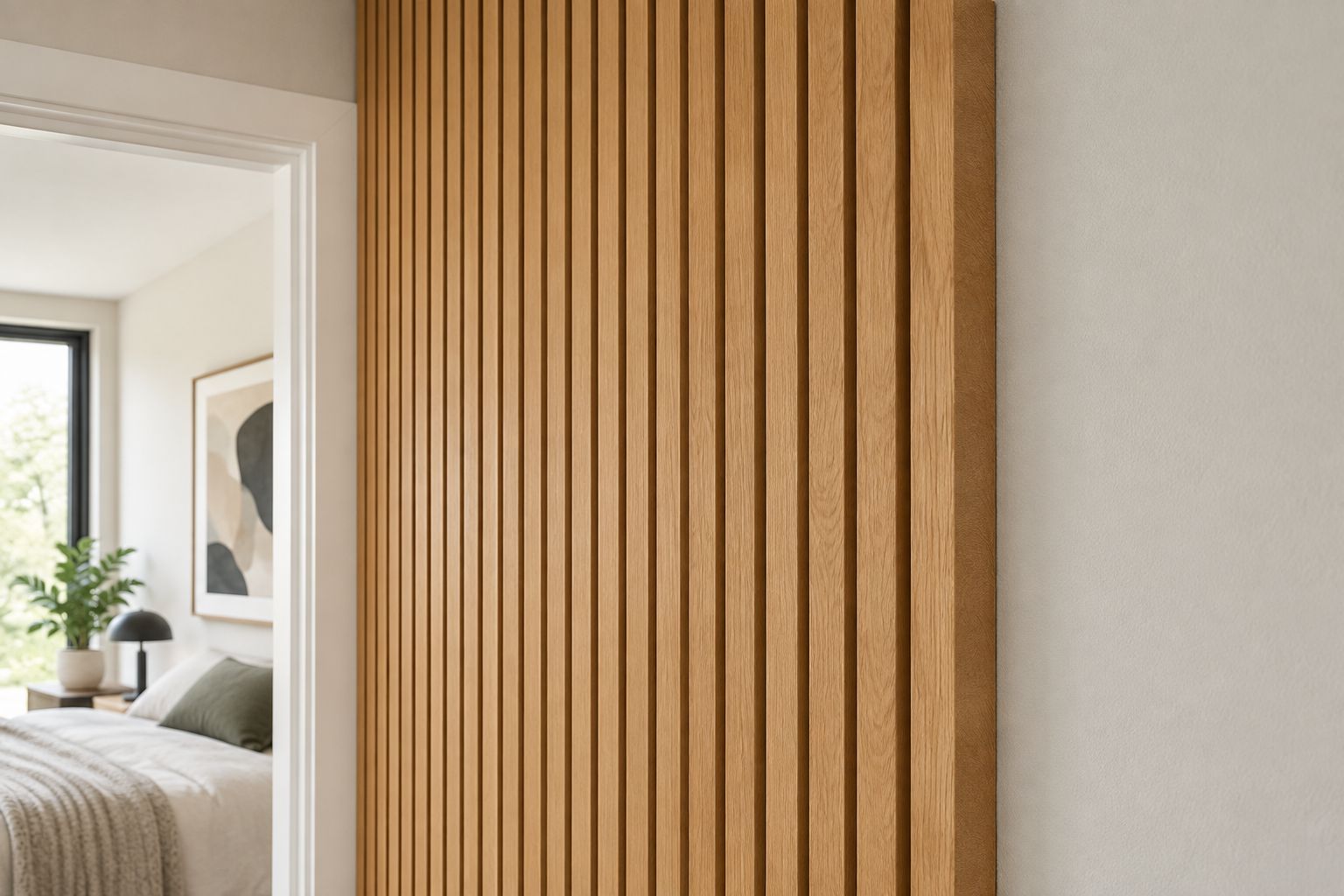
Verdict: neither supplier wins until the edge detail is resolved. A panel with an attractive face can still be the wrong choice if its exposed side cannot meet your design brief. Conversely, an accepted finishing detail can justify retaining an otherwise suitable panel.
Check the edge sample alongside the face sample. They answer different questions, and both affect the finished result.
Pricing: compare purchasing basis and installed scope
The client's online catalog presents individual products and boxed products. For the selected hexagon examples, the title states 4 panels per box. Compare that purchasing basis with the exact unit or package basis in a Woodpanelwalls quotation before evaluating project totals.
A box count is not a wall-coverage figure. Confirm usable dimensions, the proposed arrangement, and the treatment of openings and cuts. Do not substitute the stated 32-inch size for a verified coverage calculation.
For your 2026 budget, compare the same scope on both sides:
- Panels needed for the approved layout.
- Compatible finishing pieces.
- Required fixings and backing materials.
- Cutting and installation work.
- Delivery terms stated for your order.
A fixed layout makes the comparison more predictable because quantities and installation details are settled. Keeping the design open preserves flexibility, but it also leaves the final scope unsettled.
Verdict: choose by the complete purchasing and installation scope. A smaller product subtotal does not establish a better project decision if the two proposals cover different quantities or omit different components.
The catalog is useful when the design brief is still open
Akustiq USA offers acoustic wood panels alongside other decorative formats, giving you a way to compare wall treatments before committing to one visual direction. Keep the distinction between appearance and acoustic suitability intact while shortlisting.
These two hexagon options illustrate a finish comparison within one product type. Their supplied descriptions identify wood veneer and state NRC 0.75; request assembly-specific evidence before using that rating in a project specification.


Best for: buyers considering a geometric wall treatment. Compare the finish samples first. The limitation is that choosing between these colors does not determine treatment area, mounting details, or the room's acoustic result.
Final verdict
Choose Akustiq USA if you're still selecting the panel format
For a homeowner planning a feature wall or a designer comparing acoustic and decorative treatments, the client's catalog provides several formats to investigate. Start with the room's purpose, then narrow the material and installation requirements.
The main benefit is selection across panel types. The main responsibility is checking each shortlisted product independently; do not transfer one panel's acoustic rating or construction details to another.
Choose Woodpanelwalls if its exact panel is already approved
For a contractor or designer with an accepted Woodpanelwalls sample and installation specification, retain that panel when it continues to satisfy the brief. A supplier change needs a project reason, not just a different brand name.
The benefit is preserving an accepted selection. The limitation is that approval remains specific to the product, wall, and requirements you checked.
| Dimension | Winner |
|---|---|
| Open-ended format selection | Client catalog for exploring listed formats |
| Approved finish continuity | Woodpanelwalls when its sample is already accepted |
| Veneer and appearance | Physical sample and construction check |
| Acoustic suitability | Exact assembly supported by test evidence |
| Approved installation continuity | Woodpanelwalls when its fixing detail remains suitable |
| Edge finishing | Resolved, compatible edge detail |
| Purchasing model and scope | Complete like-for-like order comparison |
| Standout buying advantage | Catalog choice versus approved-spec continuity |
FAQ
Is AKU Wood Panel better than Woodpanelwalls?
Choose by the exact panel and project requirements, not the brand name alone. The client catalog suits buyers exploring several formats; Woodpanelwalls is the conditional choice when its panel already matches an approved specification.
Which should I choose for an echoey living room?
Choose a panel assembly with documented sound-absorption performance suitable for the room. Confirm the mounting arrangement and treatment plan rather than relying only on the acoustic label.
Will acoustic wood panels stop noise from the next room?
Sound absorption does not establish sound isolation between rooms. Noise transmission requires assessment of the separating walls, doors, openings, and other paths.
What does NRC 0.75 mean on a hexagon panel?
NRC 0.75 is a sound-absorption rating stated in selected client hexagon product descriptions. It does not mean that the panel blocks that proportion of noise through a wall; compare the underlying test assembly.
How do I compare the cost of panels from both brands?
Compare complete orders for the same wall layout and installation scope. Confirm package quantities, usable coverage, finishing components, fixings, labor, and the terms of each order.
Are panels with the same wood species name an exact match?
A shared wood species name does not establish an exact finish match. Compare physical samples for color, grain, sheen, and exposed-edge appearance in the project lighting.
Should I change suppliers after my designer approves a sample?
Keep the approved panel if it still meets the project requirements. Before substituting, obtain approval for the replacement finish, construction, installation detail, and any required performance evidence.
One last thing
Inspect the sample from the side, not just the front. View it at the doorway angle and against the adjacent painted wall. That check exposes the edge detail your finished installation will need, before you commit to the full order.



 Better performance and aesthetic appeal
 In Stock