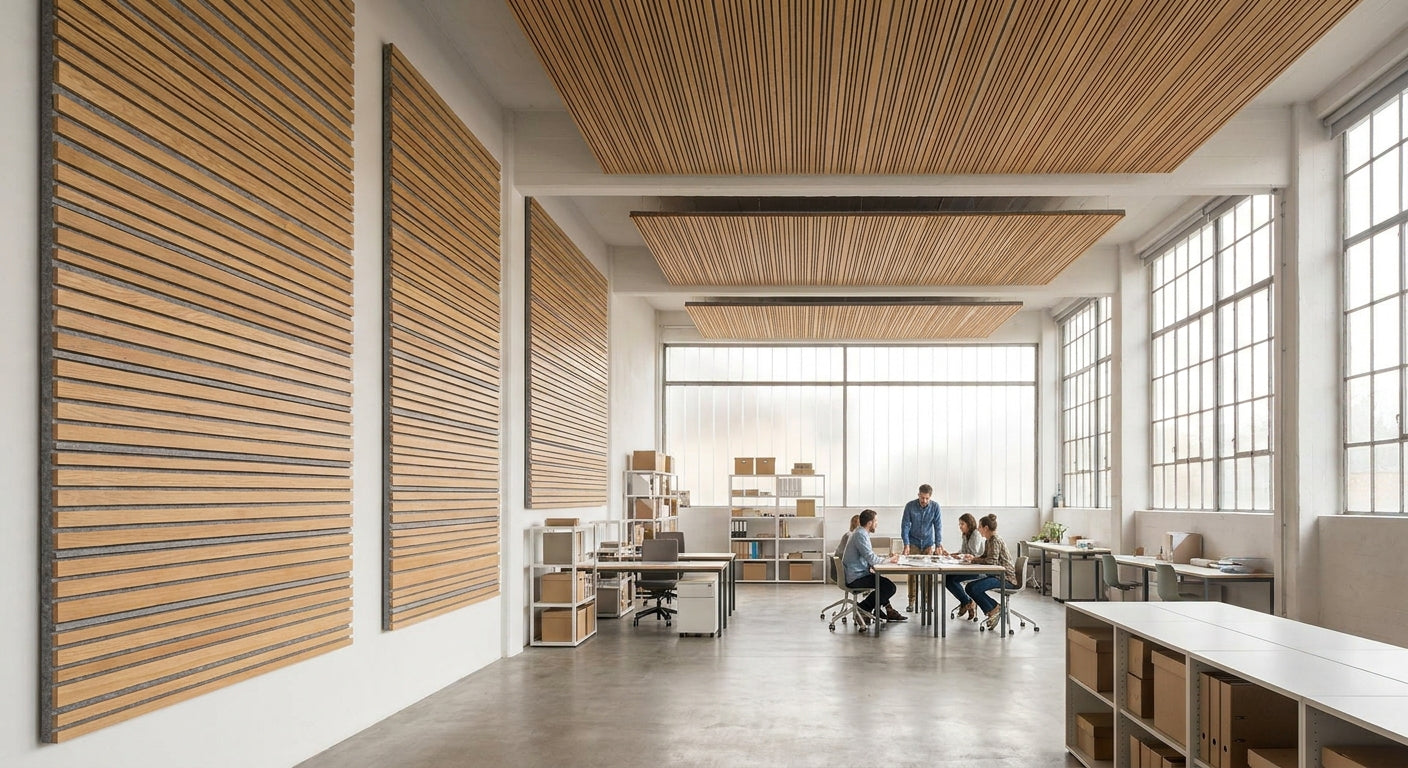
Open warehouses trap sound the way a shoebox traps a ping-pong ball — every forklift beep, pallet drop, and shouted instruction bounces off concrete, steel, and drywall until the whole floor sounds like a drum. Acoustic wood panels absorb that reflected noise at the source instead of just muffling it, and this guide breaks down which panel specs actually matter for a warehouse-scale install.
TL;DR: For acoustic wood panels open warehouse noise control, felt-backed slat panels with real oak veneer are the safe, proven choice for 2026 installs — they combine sound absorption with a finish that survives dust and forklift traffic. Akustiq USA's acoustic slat wall panels with gray felt backing are the top overall pick; hexagon panels work better for zoning breakrooms inside a larger warehouse floor. Skip smooth MDF veneer panels with no felt or perforation — they look like acoustic treatment but do almost nothing for reverberation. Verdict: Buy felt-backed slat panels, treat 15-25% of hard wall area, and budget for mounting hardware rated for steel or concrete block.
Why this matters
OSHA's permissible exposure limit is 90 dBA averaged over an 8-hour shift (29 CFR 1910.95), and open warehouses with metal roofing, concrete floors, and 20-30 foot ceilings routinely push ambient noise past comfortable conversation levels even without hitting that legal threshold. The problem isn't usually the noise source — it's reverberation, where sound keeps bouncing because nothing in the room absorbs it.
A felt-backed acoustic slat panel works because the felt layer behind the wood slats absorbs mid and high frequencies — the exact range where voices, alarms, and equipment whine live. Facilities that treat 15-25% of their hard reflective wall surface typically notice a measurable drop in perceived echo, which is the standard acoustic treatment target cited across commercial sound-dampening projects in 2026.
Who this is for
This guide is for facility managers, warehouse operators, and industrial building owners dealing with echo, shouting-over-noise complaints, or client tours where the space sounds worse than it should. If you're running a distribution center, 3PL floor, or manufacturing bay with exposed steel and concrete, this applies to you — not to someone soundproofing a home office or bedroom, where the noise problem and the fix are both smaller in scale.
What to look for in acoustic wood panels for open warehouse noise
Real absorption material, not just texture
Slats alone don't absorb much — the felt or acoustic backing behind them does the work. A panel with a dense felt layer performs meaningfully better against reverberant noise than a solid wood-look panel with no backing, so check that the product actually specifies a felt or acoustic core before buying for a warehouse application.
Coverage relative to ceiling height
Warehouses with 20-plus foot ceilings have more cubic air volume to treat than a standard office, so plan coverage in terms of total wall and partition area, not just the wall directly behind a workstation. Under-treating a warehouse wall barely moves the needle; concentrate panels on the largest unbroken hard surfaces first.
Finish that survives industrial conditions
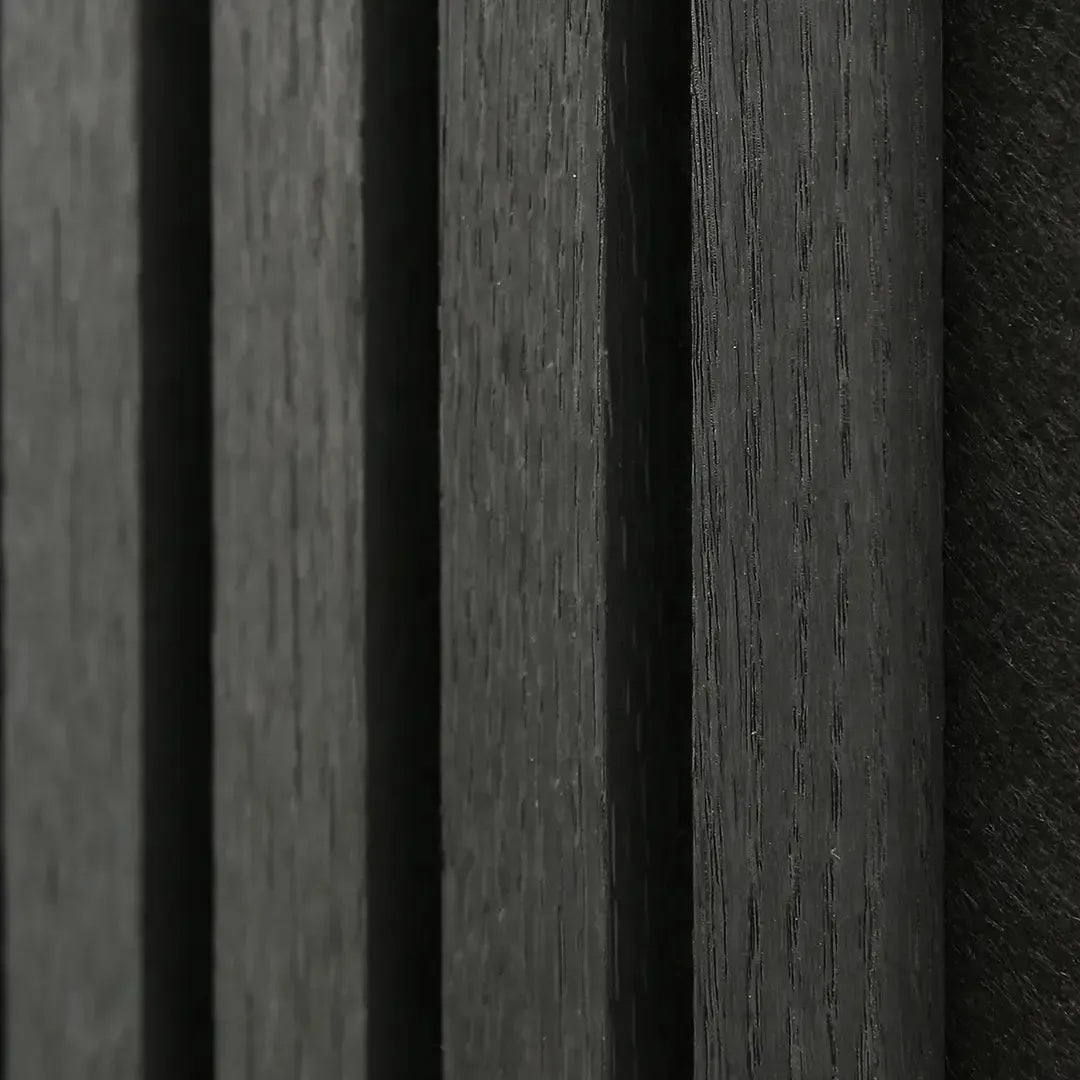
Oak, walnut, and black oak veneers hold up differently under dust, forklift traffic, and temperature swings near loading docks. Darker finishes like black oak hide scuffs and grime better on a working floor than pale natural oak, which shows dust buildup faster in a non-climate-controlled bay.
Mounting system compatible with your wall type
Most warehouses have exposed steel studs, concrete block, or corrugated metal — not drywall. Confirm the panel's mounting track or adhesive system is rated for your actual substrate before ordering, because a system designed for residential drywall can fail on block or metal.
Fire and safety compliance for commercial space
Commercial and industrial installs often carry different fire code requirements than residential rooms. Confirm fire-rated options are available for your building class before specifying panels across a large commercial run in 2026.
Top picks for open warehouse noise control
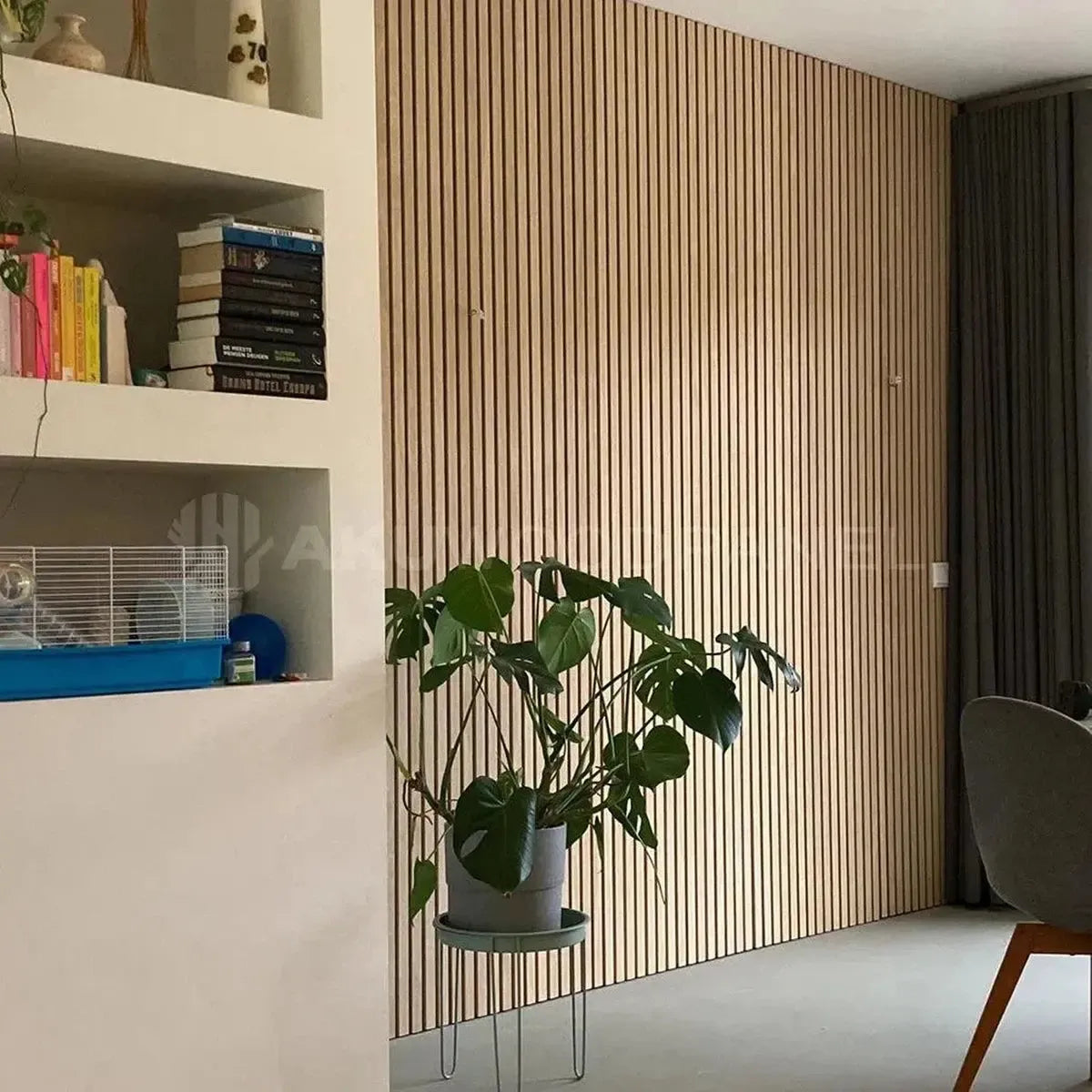
Akustiq USA Acoustic Slat Wall Panel, Natural Oak with Gray Felt — the safe pick. This is the panel referenced above: real oak veneer over a gray felt acoustic backing, built for absorption rather than decoration alone. It's the standard recommendation for large open floors because the felt layer does the actual noise work while the oak finish keeps the space from looking industrial-ugly. Verdict: Buy for main warehouse walls and break areas.
Hexagon Acoustic Panel, Gray Walnut with Gray Felt — the wildcard. Hexagon geometry breaks up long, flat warehouse partitions and works well for zoning a supervisor's office or breakroom carved out of a larger open floor. The felt backing gives it the same absorption function as the slat panels, just in a different visual pattern. Verdict: Consider for accent zones and partition walls, not full-floor coverage.
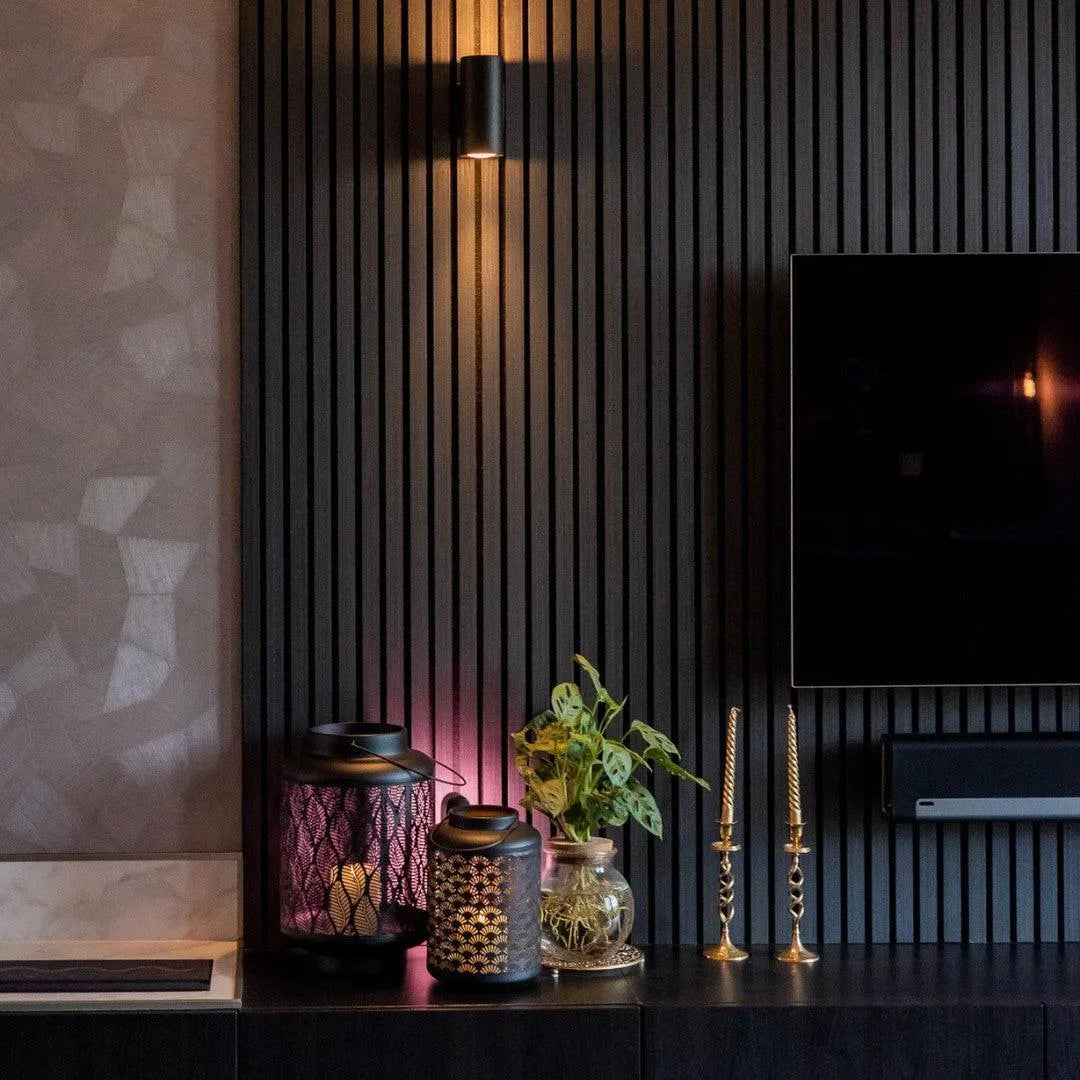
Acoustic Slat Wall Panel, Black Oak — the low-maintenance pick. Black oak hides dust, scuffing, and forklift marks far better than lighter finishes, making it the practical choice for loading dock walls and high-traffic corridors. Verdict: Buy for zones that take daily abuse.
Smooth veneer wall panel with no acoustic backing — the look-alike trap. It has the wood-slat aesthetic but no felt or acoustic core, so it does close to nothing for reverberation in a large open space. Verdict: Skip for any noise-control application, even though it's often marketed alongside acoustic lines.
What to avoid
- Decorative-only panels marketed as "acoustic" without a felt or perforated backing. They photograph the same as real acoustic panels but perform differently on an actual dB meter.
- Residential mounting systems on industrial substrates. A track rated for drywall anchors will loosen on vibrating steel framing near dock doors or heavy equipment.
- Treating only one wall and expecting floor-wide results. Warehouses have too much open air volume for a single accent wall to fix a whole-floor echo problem — this is the same coverage math that applies in open-plan office acoustics, just scaled up.
Verdict comparison
| Panel | Acoustic backing | Best use zone | Verdict |
|---|---|---|---|
| Natural Oak with Gray Felt | Yes, felt | Main floor walls, breakrooms | Buy |
| Hexagon Gray Walnut with Gray Felt | Yes, felt | Partition zones, accent walls | Consider |
| Black Oak Slat Panel | Yes, felt | Dock walls, high-traffic corridors | Buy |
| Smooth veneer, no backing | No | None for acoustic use | Skip |
FAQ
What's the best acoustic wood panel for open warehouse noise? Felt-backed slat panels with real wood veneer, like Akustiq USA's natural oak with gray felt, are the top pick for 2026 because the felt layer absorbs reverberant noise while the veneer holds up to warehouse conditions.
Do wood slat panels actually reduce echo, or just look good? The wood slats alone do little; the felt or acoustic backing behind them is what absorbs sound. Always confirm a panel has that backing before buying it for noise control rather than decoration.
How much wall area needs to be covered to notice a difference? Treating roughly 15-25% of hard reflective wall surface is the general target cited for commercial reverberation control, though larger open volumes with high ceilings may need more.
Are black oak panels better than natural oak for warehouses? Black oak hides dust, grime, and scuff marks better in a working industrial environment, making it the more practical finish for dock walls and corridors, while natural oak reads cleaner in offices and breakrooms.
Can acoustic wood panels mount on concrete block or steel studs? Most commercial mounting systems are designed for drywall by default, so confirm the track or adhesive system is rated for your actual substrate — concrete block and steel need different hardware than residential drywall.
Is hexagon paneling useful in a warehouse, or just for offices? Hexagon acoustic panels work well for zoning a partition wall or breakroom carved out of open warehouse space, though full-floor coverage is usually better served by slat panels across larger flat runs.
Does OSHA noise exposure apply to warehouse acoustic treatment? OSHA's 90 dBA 8-hour exposure limit under 29 CFR 1910.95 is a safety standard, not an acoustic comfort standard — reverberation and echo complaints often happen well below that legal threshold and are addressed separately with absorption treatment.
What's the biggest mistake in warehouse acoustic panel installs? Treating one accent wall and expecting whole-floor results. Open warehouses have too much air volume for a single wall to fix a floor-wide echo problem.
One last thing
The detail most buyers miss: the felt backing color matters almost as much as the wood veneer for how a warehouse space actually reads once it's finished, since gray felt against a dark oak or black oak veneer reads industrial-intentional, while the same panel against pale natural oak can look unfinished on a working floor. Match the felt tone to how utilitarian or polished you want the space to look before ordering — swapping felt color after installation isn't realistic once panels are mounted.



 Better performance and aesthetic appeal
 In Stock