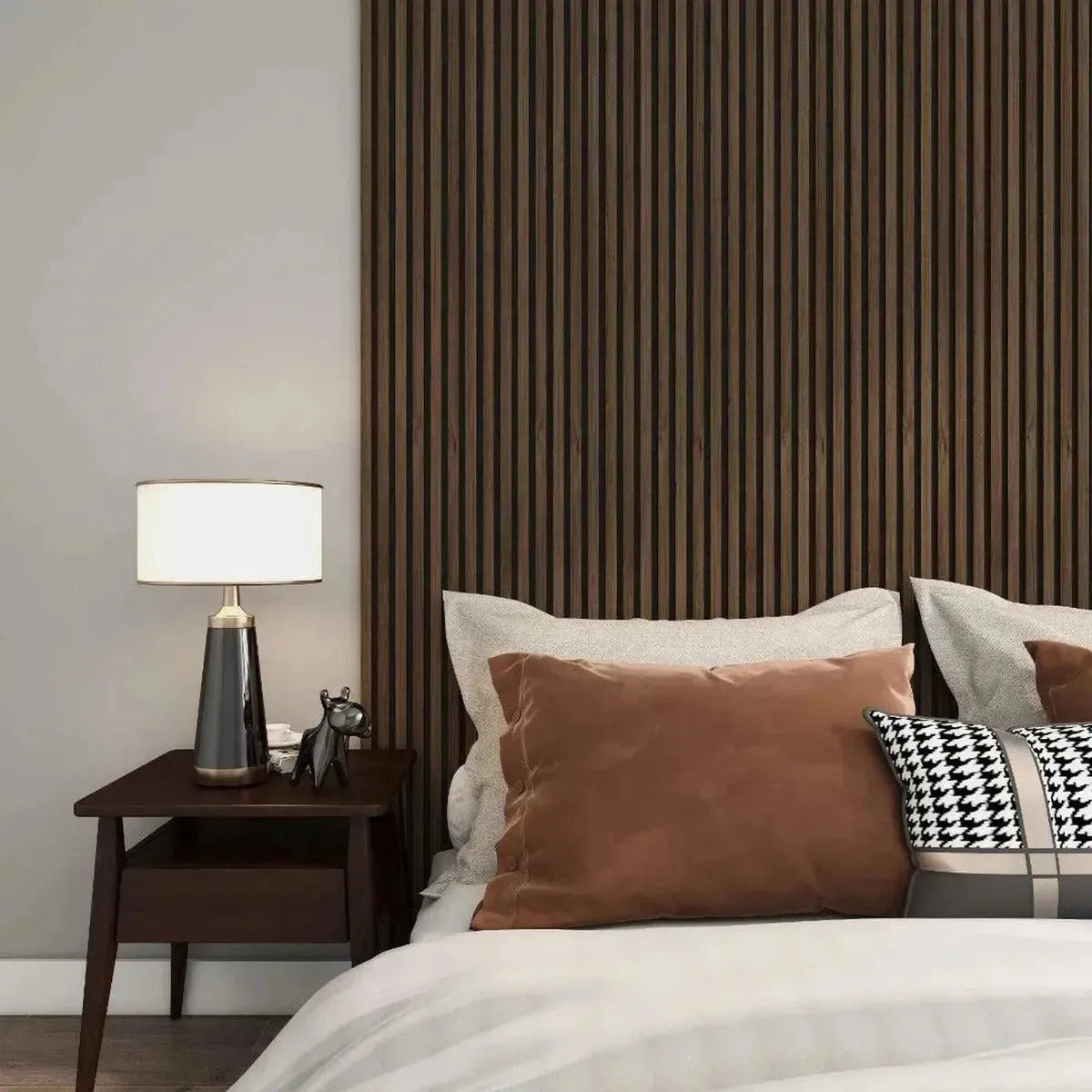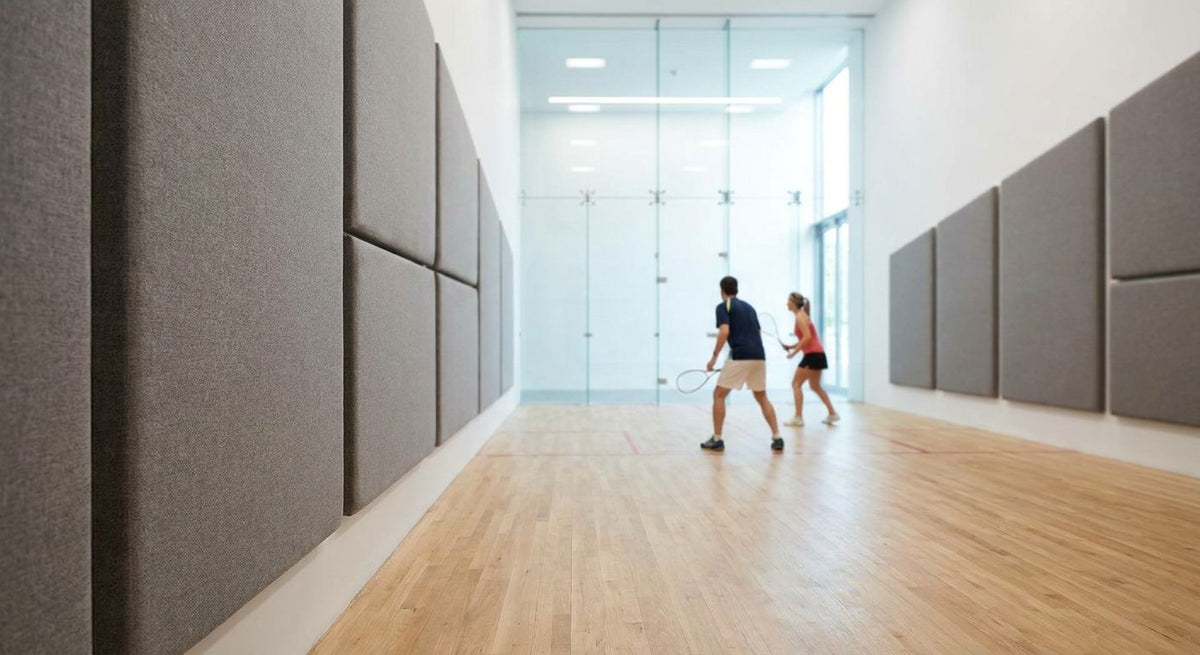
Squash clubs echo worse than almost any other indoor sports facility, and the fix usually isn't on the court itself — it's on the walls around it. This guide covers where acoustic panels for squash court facilities actually belong in 2026, what specs matter, and which Akuwood Panel products earn a Buy versus a Skip.
- Hexagon Acoustic Panel Natural Oak carries an NRC of 0.75 — Buy for galleries and lobbies, not the play wall.
- Regulation squash court playing walls need plaster or resin render for correct ball bounce, so acoustic wood panels go around the court, never on it.
- Acoustic Slat Wall Panel Walnut suits clubhouse and corridor walls taking heavy foot traffic in a 2026 renovation.
- Order the Full Sample Box at $10 before specifying a full facility run — a wrong 40-panel order costs far more.
Why this matters
A squash court is a sealed box of hard, flat, reflective surfaces by design — the game needs that for consistent ball bounce. The problem shows up the moment you step outside the court: viewing galleries with glass backs, concrete corridors, and clubhouse bars all reflect sound the same way the court does, minus any acoustic treatment to soften it.
Members complain about not hearing each other over the bar noise, coaches struggle to be heard through gallery glass, and multi-court facilities turn into an echo chamber between matches. That's the problem acoustic panels for squash court buildings actually solve — not the game surface, the human spaces around it.
Akuwood Panel makes acoustic wood panels with real wood veneer built for exactly this kind of high-traffic commercial application, and the specs below apply whether you're renovating one club or speccing a five-court complex in 2026.
Who this is for
This guide is written for squash club owners renovating a facility, architects and contractors speccing a new multi-court build, and gym operators adding a squash wing to an existing sports complex. If you're trying to quiet a lobby, a viewing gallery, or a corridor between courts — not the court itself — the criteria and picks below apply directly to your project.
What to look for in acoustic panels for squash court facilities
NRC rating, not just wood grain
The Noise Reduction Coefficient (NRC) tells you how much sound a panel actually absorbs versus how much it bounces back. Akuwood Panel's Hexagon Acoustic Panel line rates at 0.75 NRC, which is a meaningful absorption number for a gallery or corridor with hard flooring and glass. A panel that looks like wood but carries no NRC spec is decoration, not acoustic treatment — and in a squash facility, decoration alone won't fix the echo complaints.
Where the panel is actually going
This is the criterion most people get wrong. Regulation squash courts use plaster or resin-rendered walls specifically because the ball needs a predictable, hard bounce — acoustic wood panels, felt-backed or not, don't belong on that surface. Every acoustic panel in this guide is for the spaces around the court: entry corridors, viewing galleries, reception, and clubhouse walls.
Veneer durability for high-traffic zones
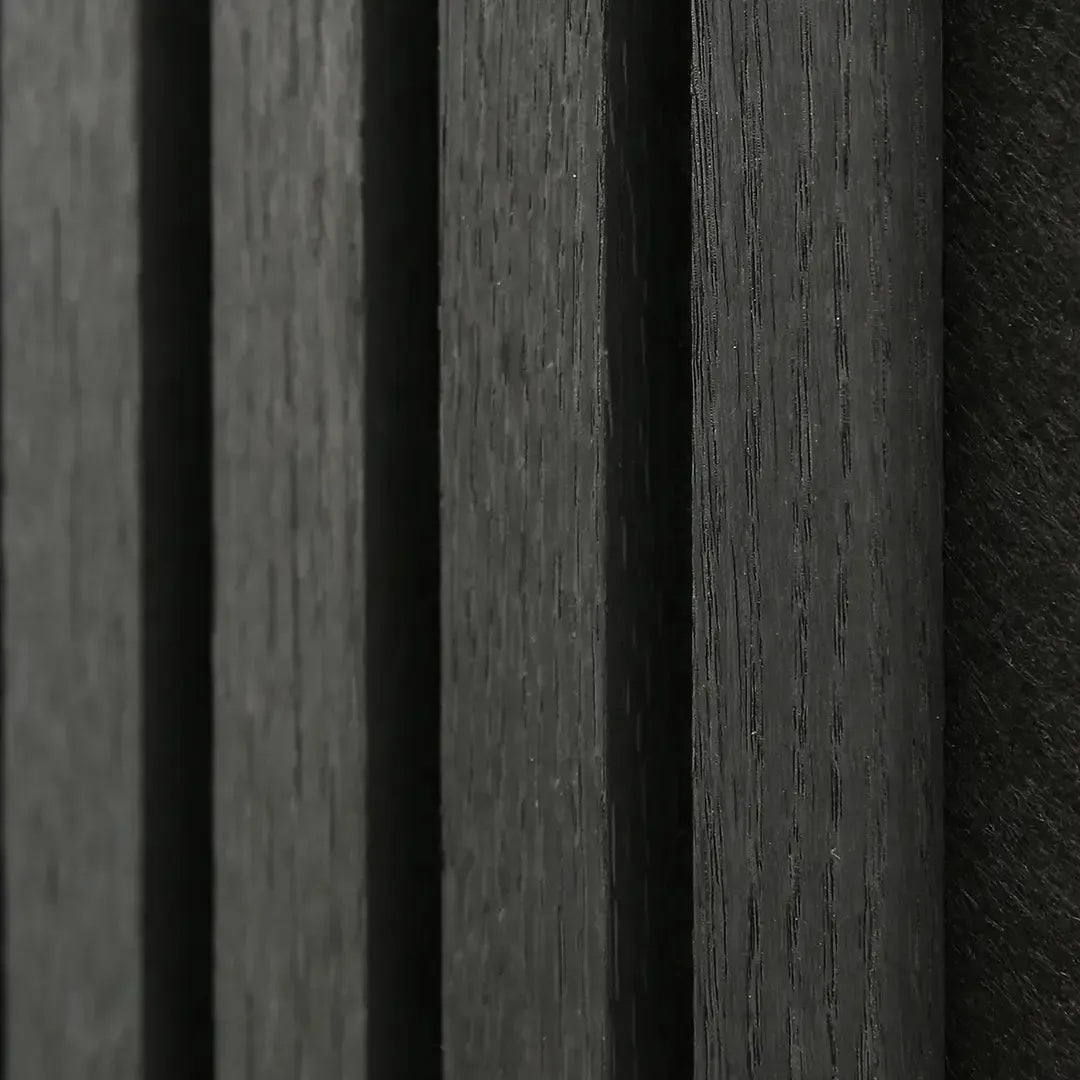
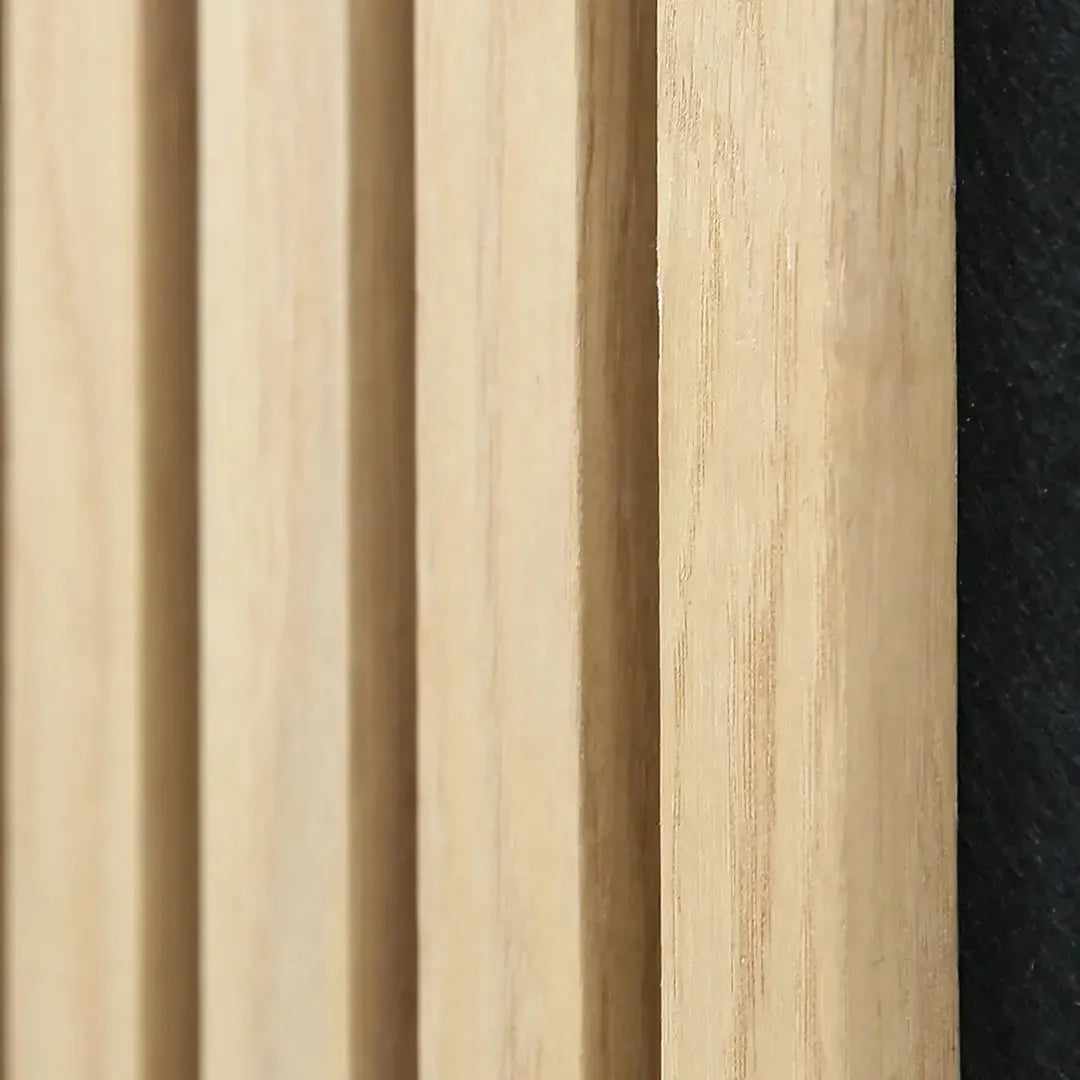
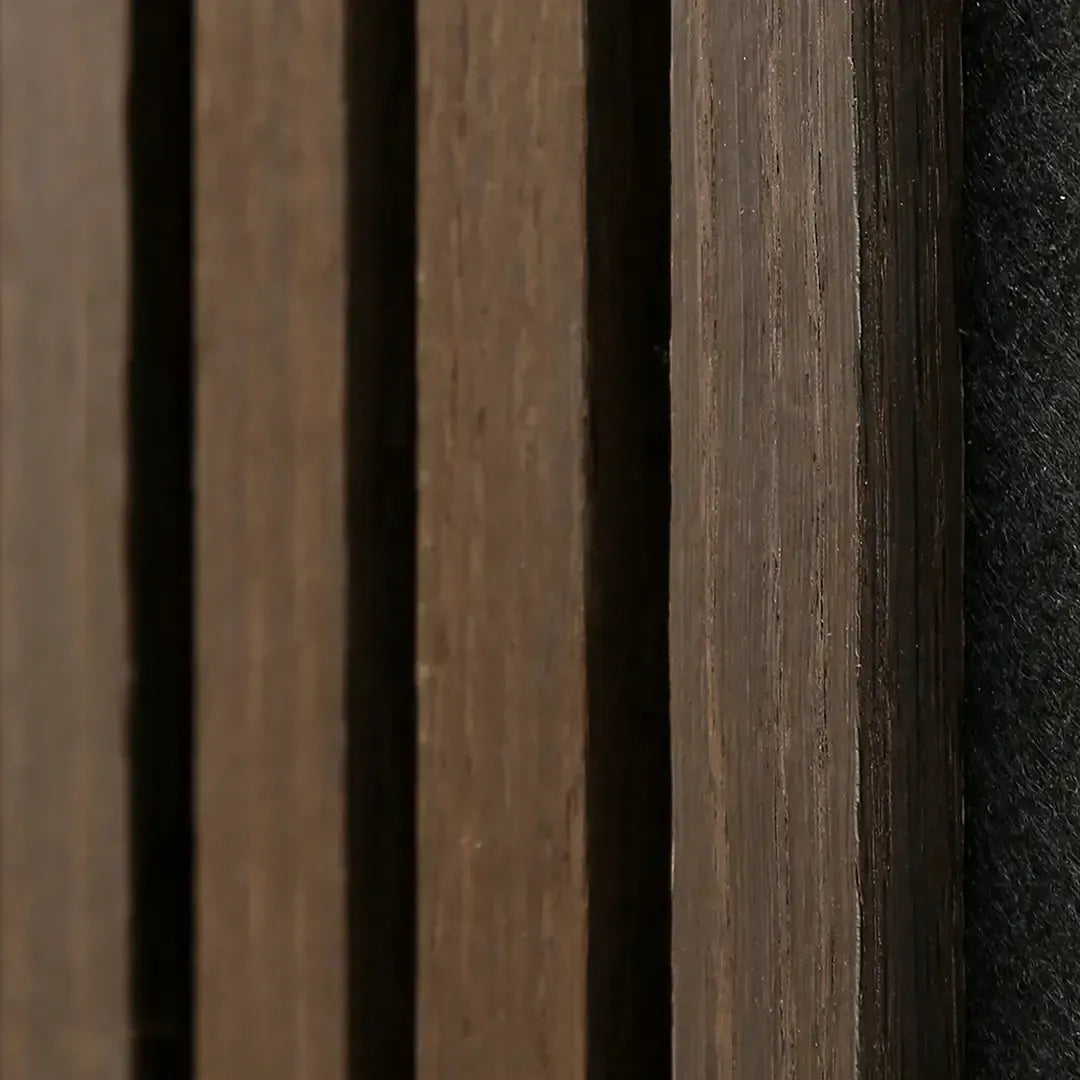
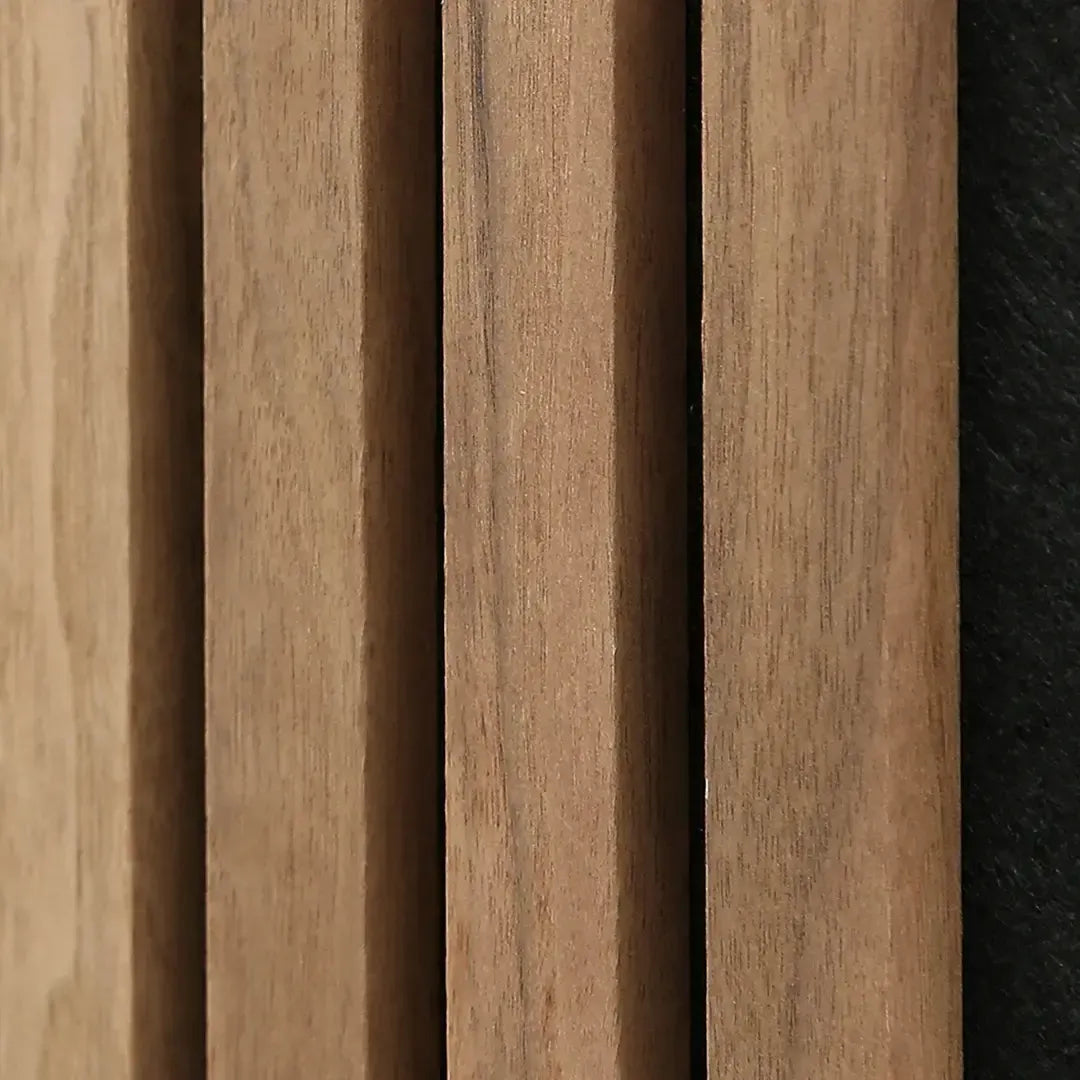
Corridors between courts see constant foot traffic, bag straps, and the occasional errant racket swing. Akuwood Panel's slat and hexagon lines use a 3-sided wood veneer built for that kind of wear rather than a thin laminate skin that chips at the edges within a year.
Maintenance in a sweat-and-humidity environment
Squash facilities run humid — players sweat, showers are nearby, and HVAC cycles constantly. Panels that can be wiped down without swelling or delaminating matter more here than in a living room installation, so check veneer sealing before ordering at facility scale.
Panel shape matched to the space
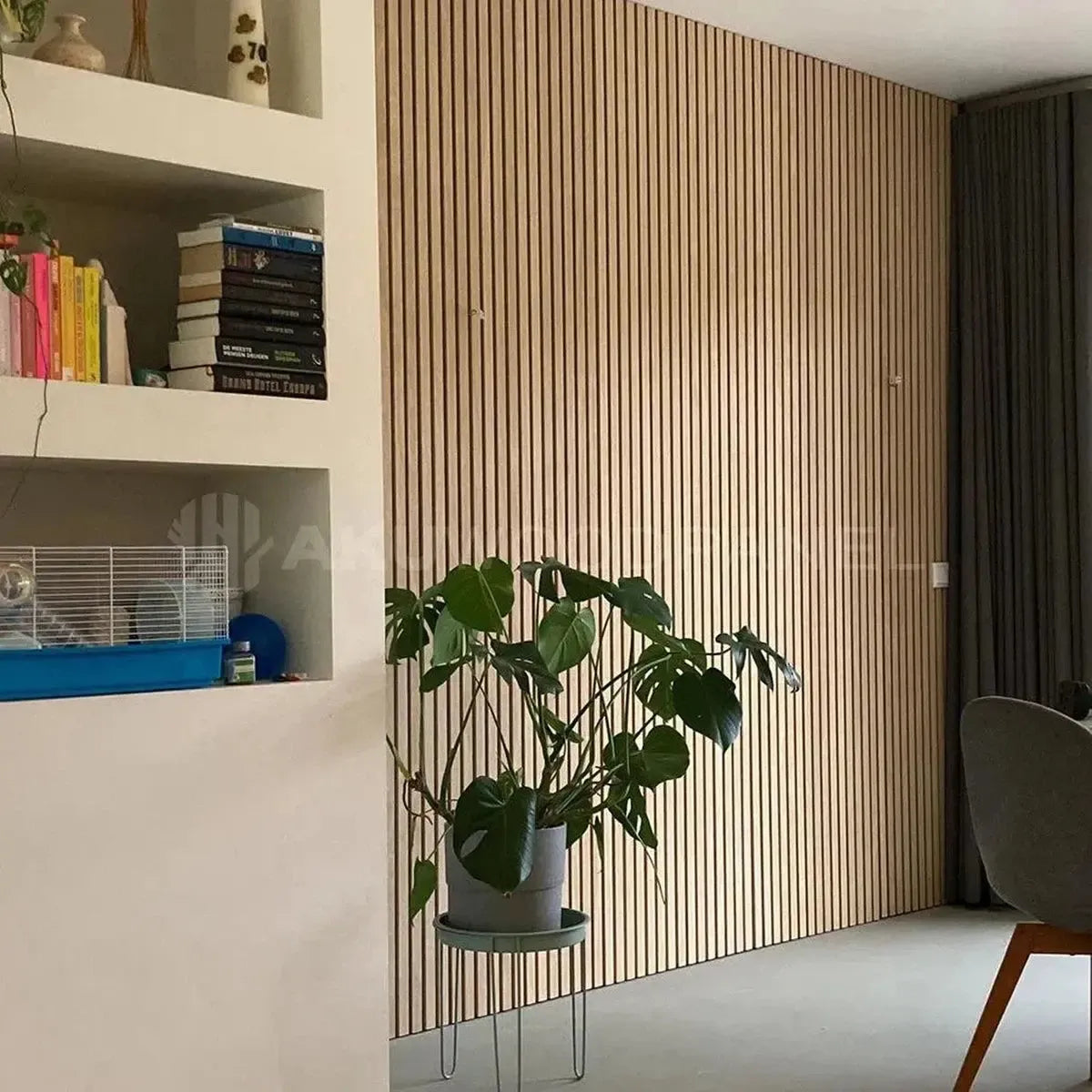
Long straight corridors and clubhouse walls suit slat panels; irregular gallery walls or feature walls behind reception often suit hexagon panels better because the geometric layout breaks up flat glass and concrete more effectively per square foot.
Sample before you commit at scale
A five-court facility renovation easily runs 40+ panels. Testing veneer tone and felt color against your actual lighting with a sample box before that order is cheaper than a return.
Top picks for squash court facility walls
The safe pick: Hexagon Acoustic Panel Natural Oak. NRC 0.75, 32-inch hexagon format, high-quality wood veneer finish built to hold its look for years under commercial lighting. This is the go-to for viewing galleries and reception walls where you want visible acoustic treatment that still reads as design. Buy. See the Hexagon Acoustic Panel Natural Oak.
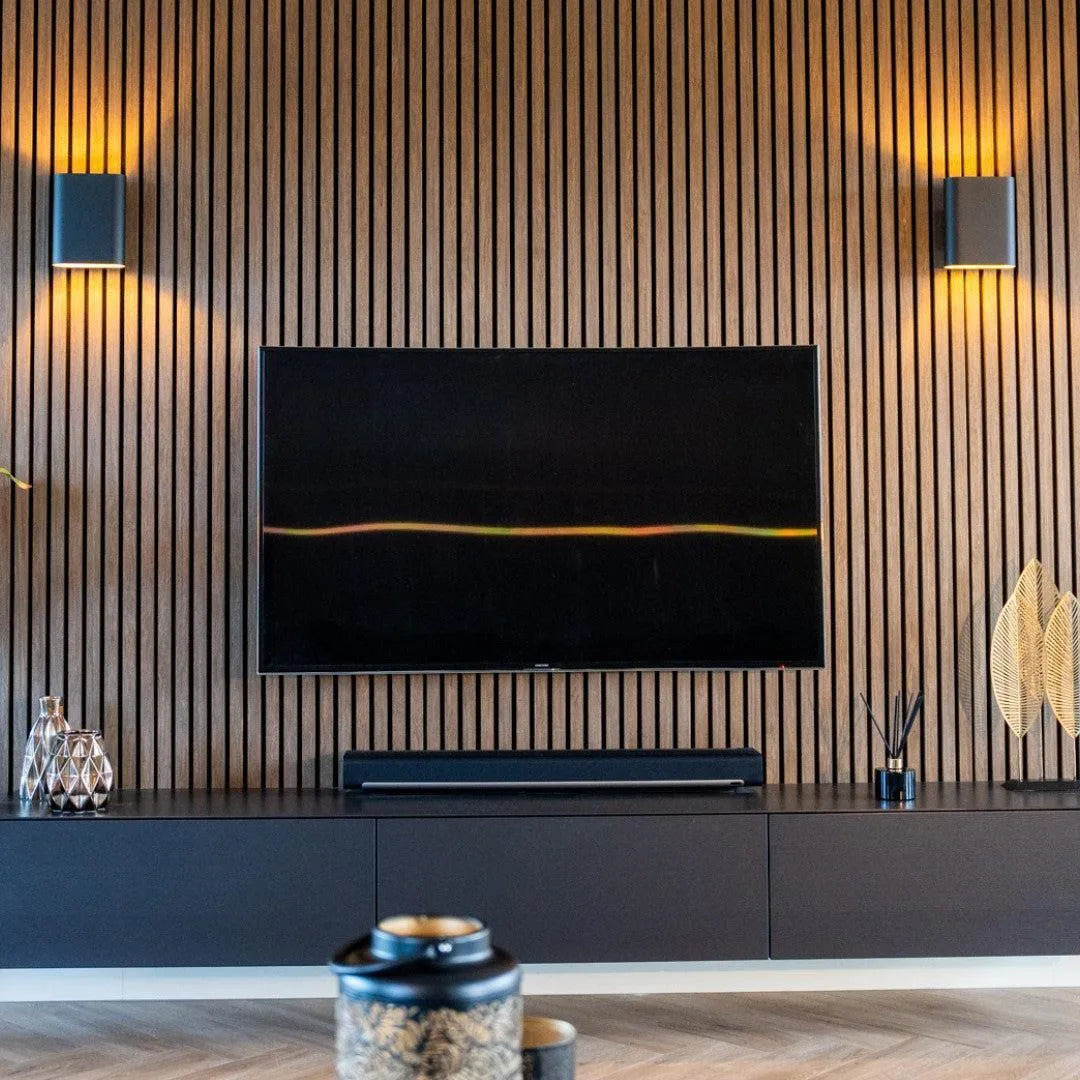
The workhorse pick: Acoustic Slat Wall Panel Walnut. Premium 3-sided wood veneer construction built for repeat handling in corridors and clubhouse walls, priced for facilities ordering by the run rather than the single panel. Buy for long corridor stretches. Check the Acoustic Slat Wall Panel Walnut.
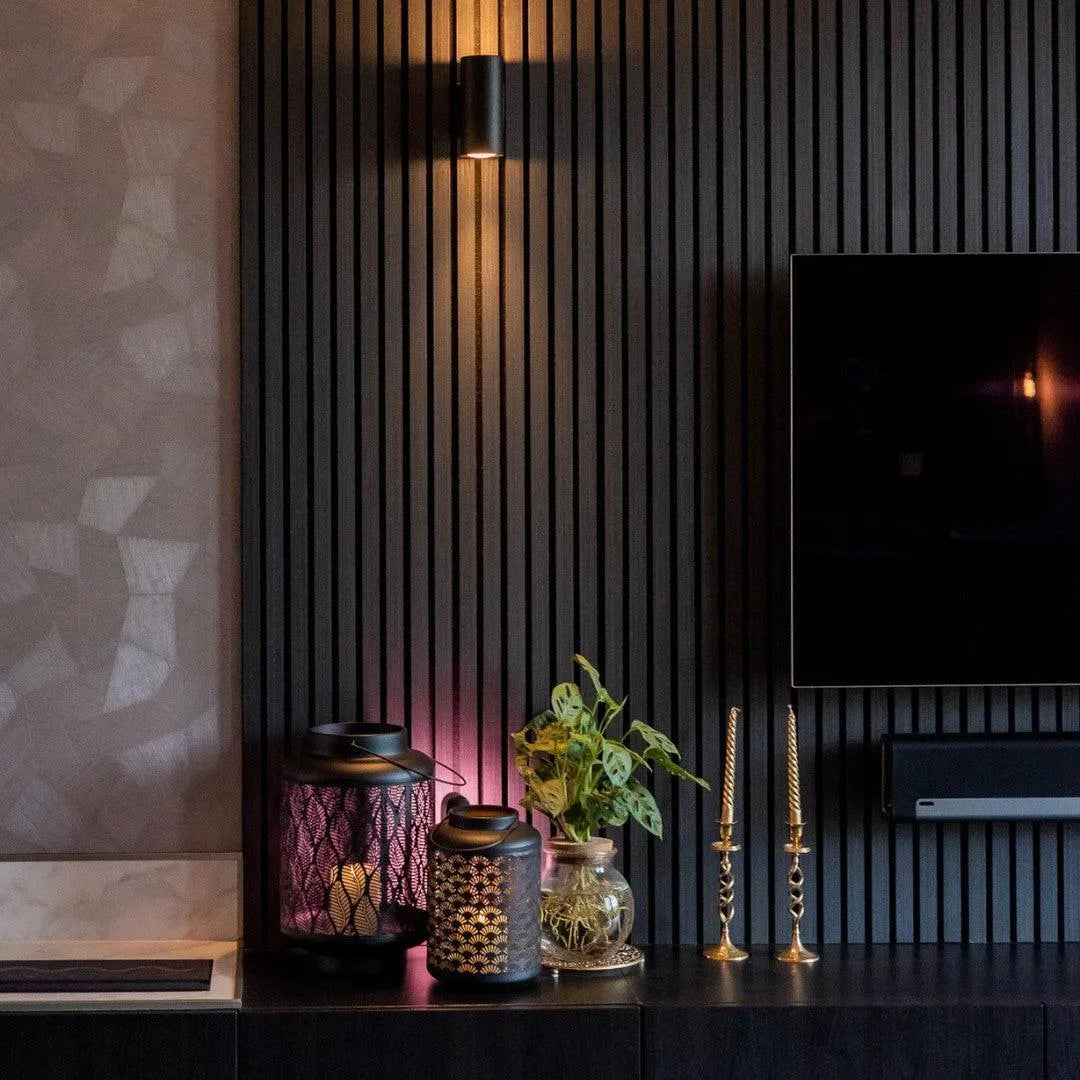
The felt-backed option: Acoustic Slat Wall Panel Smoked Oak with Gray Felt. Adds a felt backing layer behind the wood veneer for extra sound absorption on walls facing bar or reception noise directly. Consider for clubhouse zones nearest the bar or seating area.
The low-risk pick: Full Sample Box. Four panels — natural, smoked oak, and walnut — for $10, enough to hold against your actual gallery lighting before committing to a full facility order. Buy before any order over 10 panels. Order the Full Sample Box.


What to avoid
- Panels marketed for "any acoustic use" with no published NRC number. If the listing doesn't state an absorption rating, you're buying a wall finish, not a noise fix — a common gap in facility renovation bids in 2026.
- Any acoustic wood panel proposed for the actual court playing wall. Regulation bounce requirements rule this out regardless of how the panel performs elsewhere in the building.
- Thin laminate-faced panels in humid corridor zones near showers. They look identical to real veneer in a photo and delaminate within a season of facility-level humidity and foot traffic.
Verdict comparison
| Panel | NRC rating | Best zone | Verdict |
|---|---|---|---|
| Hexagon Acoustic Panel Natural Oak | 0.75 | Gallery, reception | Buy |
| Acoustic Slat Wall Panel Walnut | Not felt-backed | Corridors, clubhouse | Buy |
| Acoustic Slat Wall Panel Smoked Oak with Gray Felt | Felt-enhanced | Bar-adjacent walls | Consider |
| Full Sample Box | n/a | Pre-order testing | Buy first |
Where to source panels for a facility project
- Order the Full Sample Box first for any project over 10 panels — matching veneer tone to your gallery's actual lighting matters more than the catalog photo.
- Buy directly from Akuwood Panel rather than a reseller when ordering at facility scale, since panel batches need to match for grain consistency across a long corridor run.
- Confirm panel count against your actual wall dimensions before ordering — corridors and galleries rarely match standard room dimensions, so measure twice.
FAQ
Can you install acoustic wood panels on a squash court playing wall?
No. Regulation squash court playing walls use plaster or resin render for correct, consistent ball bounce, and acoustic wood panels change that surface response. Acoustic panels belong in the galleries, corridors, and clubhouse areas around the court, not on the court itself.
What NRC rating do you need for a squash club viewing gallery?
An NRC of 0.75, like Akuwood Panel's Hexagon Acoustic Panel line, gives meaningful absorption against the hard glass and concrete common in gallery construction. Lower-rated or unrated panels will look right but won't cut noticeable echo.
Is wood veneer better than foam acoustic panels for a squash facility?
Wood veneer panels hold up to commercial foot traffic and cleaning better than foam, which tears and stains in high-use corridors. Foam is cheaper per square foot but rarely survives a busy squash club past a year or two.
How many acoustic panels does a squash club corridor need?
Coverage depends on wall length, ceiling height, and how reflective the existing surfaces are, so measure the specific corridor before ordering. A sample box lets you test tone and finish before committing to a full run.
Do acoustic panels need to be fire rated for a commercial squash facility?
Commercial installations typically fall under local fire code requirements that vary by jurisdiction, so check your local building code before finalizing a facility-wide order. This applies to any wall finish, not just acoustic wood panels.
What's the difference between slat and hexagon acoustic panels for sports facilities?
Slat panels suit long straight corridor runs and clubhouse walls, while hexagon panels work better on irregular gallery walls where a geometric layout breaks up flat glass and concrete. Both come in the same premium 3-sided wood veneer from Akuwood Panel.
Can acoustic wood panels handle the humidity in a squash club?
Panels with proper veneer sealing handle typical facility humidity from showers and player sweat without swelling, but check the specific product listing before ordering for a wet zone. Avoid thin laminate-faced panels in areas near showers or pool decks.
One last thing
Most squash facility renovation quotes in 2026 treat acoustics as an afterthought behind flooring and lighting, but the gallery glass and concrete corridors are usually the loudest part of the whole building — treat those walls first and the noise complaints usually stop before you touch anything else.
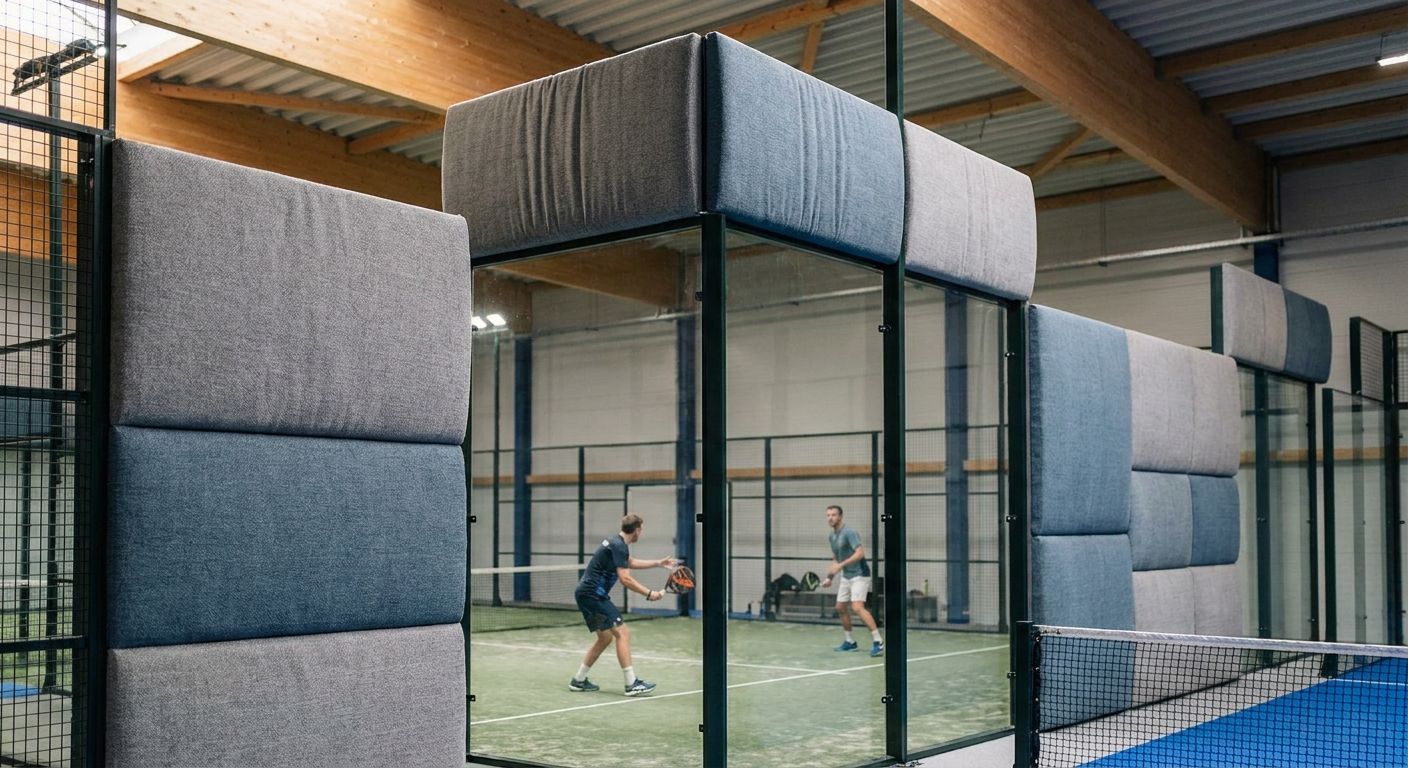
 Better performance and aesthetic appeal
 In Stock