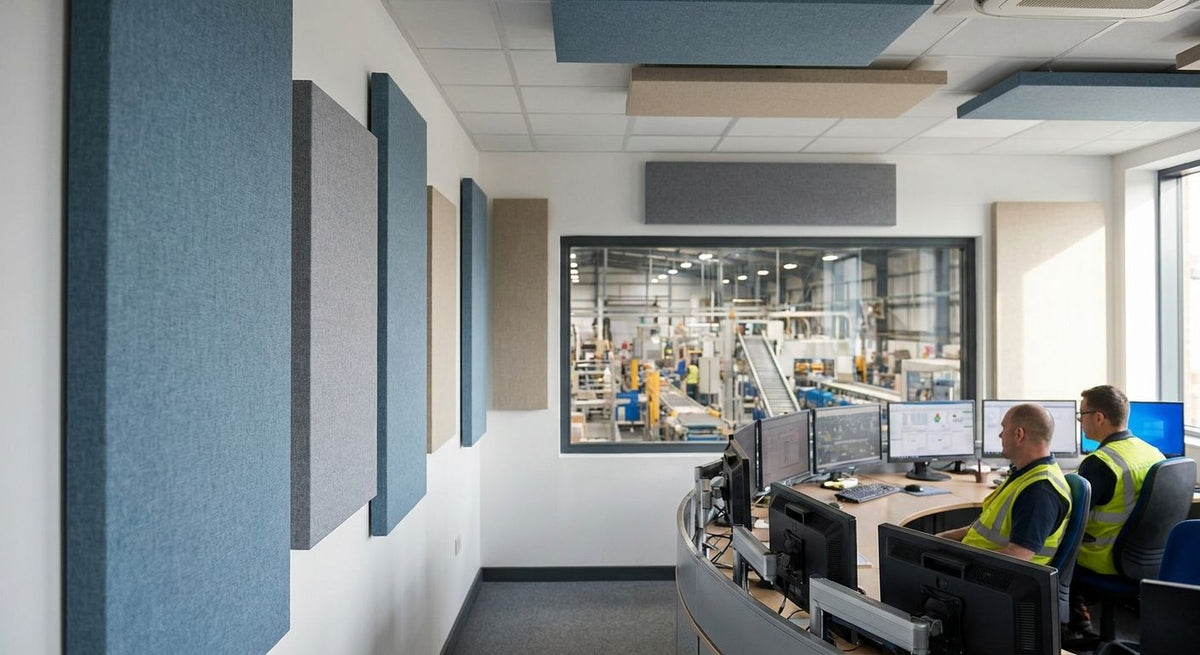
Manufacturing plant control rooms take punishment most offices never see: compressor drone through shared walls, HVAC roof units overhead, hard concrete or metal-stud construction that bounces every alarm chime back at the operator. Acoustic panels for manufacturing plant control room installs need real absorption data, not just a wood-look finish, and that's the gap this guide closes.
- Acoustic panels for manufacturing plant control room walls need felt backing and a stated NRC, not just wood veneer look.
- Hexagon Acoustic Panel Natural Oak with Gray Felt carries an NRC of 0.75 for direct noise absorption — Buy.
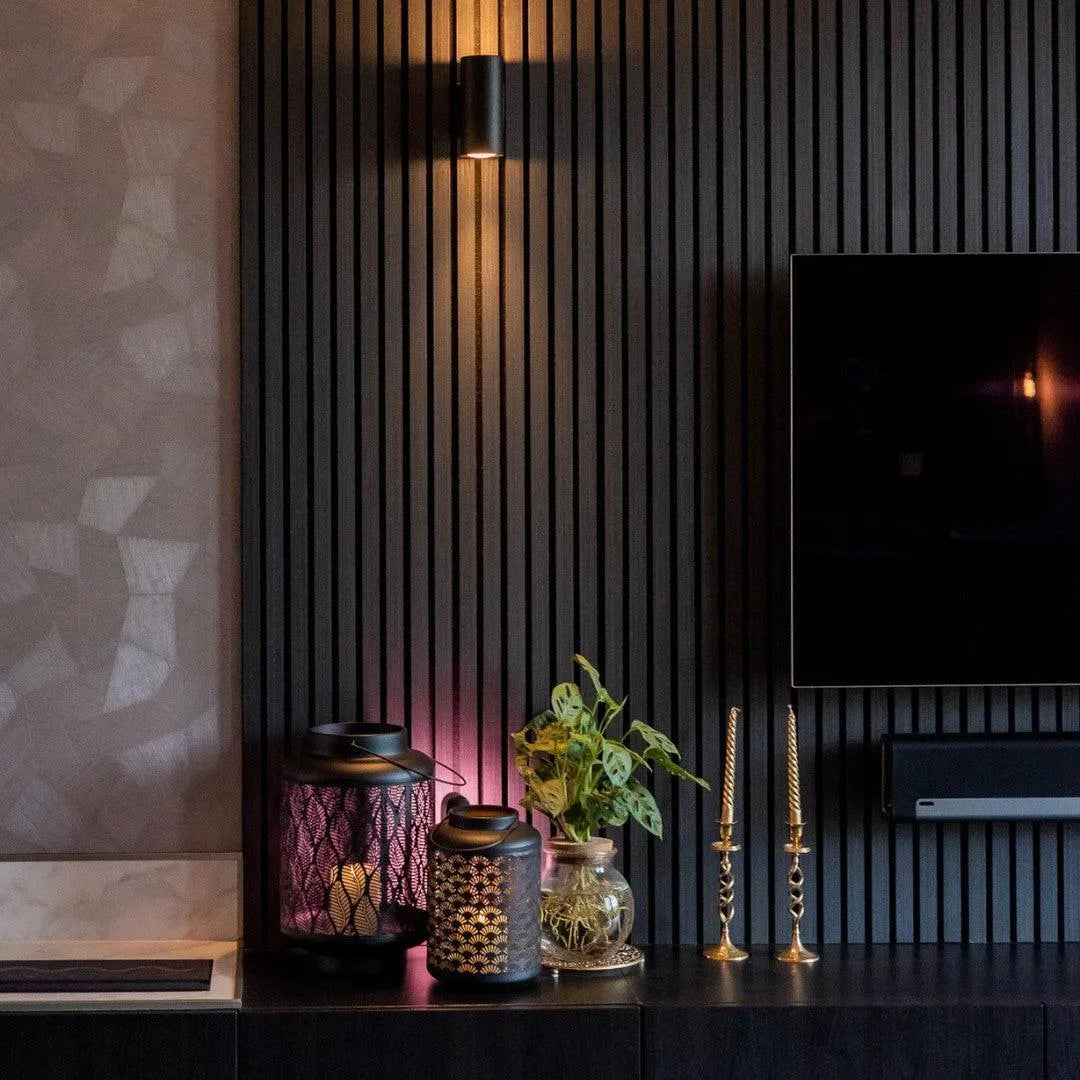
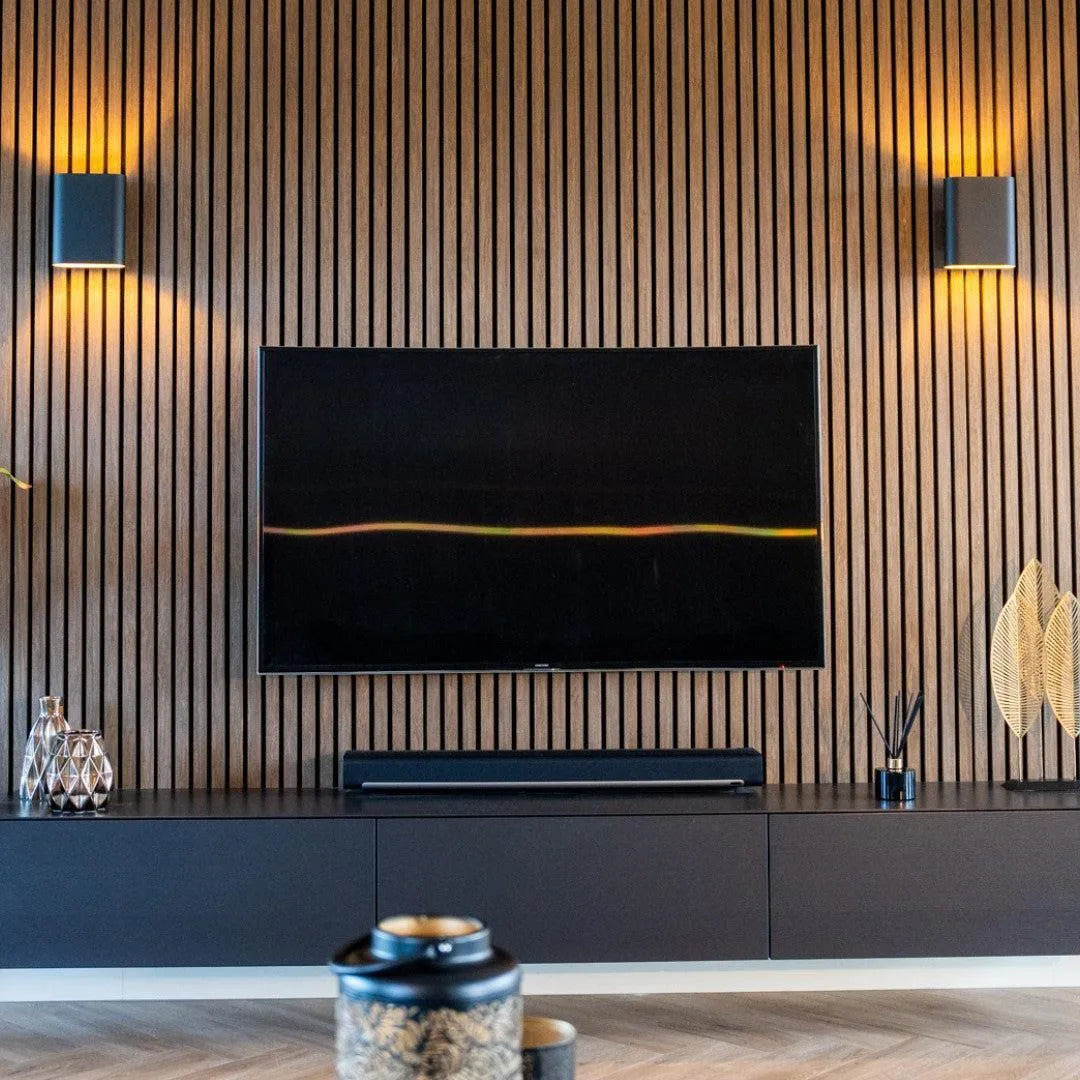
- Acoustic Slat Wall Panel Black Oak at $177.95 cuts monitor glare in dim control rooms — Buy.
- Skip unbacked fluted or 3D veneer panels here — they add texture, not sound absorption.
- Order the $10 Full Sample Box before specifying a full control room run in 2026.
Why this matters
A control room is where an operator has to hear an alarm over line noise, read a screen without glare bouncing off a hard wall, and stay alert through a 10 or 12-hour shift. Bare drywall or painted block reflects sound instead of absorbing it, which means every compressor cycle and forklift beep gets amplified inside a small room. Wood acoustic panels with felt backing solve two problems at once: they knock down reflected noise and they cut the visual glare that makes monitor banks hard to read under fluorescent light. Get the wrong panel \u2014 decorative, unbacked, no stated absorption number \u2014 and you've spent budget on a wall finish that does nothing for the noise complaint that triggered the project in 2026.
Who this is for
This guide is for plant engineers, facility managers, and maintenance directors specifying wall treatment for a control room, SCADA booth, or supervisory office inside an active manufacturing floor. You're working against a real noise complaint or an OSHA-adjacent concern, not decorating a lobby, and your walls are more likely concrete or metal stud than finished drywall. Budget matters, but so does documentation \u2014 you need a panel spec you can put in a purchase order, not a marketing photo.
What to look for in acoustic panels for a manufacturing plant control room
NRC rating and felt backing
Noise Reduction Coefficient (NRC) tells you how much sound a panel actually absorbs versus reflects, and for a control room this is the number that matters more than finish color. A felt-backed panel does the acoustic work; a solid wood or 3D-textured panel without backing mostly reflects sound with a nicer pattern. If your panel spec sheet doesn't list an NRC number, ask before you buy \u2014 for a step-by-step on reading the math, see how to calculate acoustic panel NRC rating for a room.
Substrate durability under plant conditions
Control rooms sit inside buildings with temperature swings, occasional humidity spikes near wash-down areas, and vibration from adjacent equipment. A 3-sided wood veneer panel over MDF holds up to normal HVAC-controlled interior conditions, but it's not rated for direct wash-down or outdoor exposure \u2014 that's a different product line entirely. Confirm the panel is specified for interior commercial use before it goes on a plant-floor-adjacent wall.
Wall-mount compatibility
Many control rooms are framed in metal stud or built against poured concrete or block, not standard residential drywall. Mounting method changes with substrate, and getting it wrong means a panel that pulls loose after a few months of door-slam vibration. Confirm your mounting hardware matches the actual wall material before you order panel quantity.
Finish tone and monitor glare
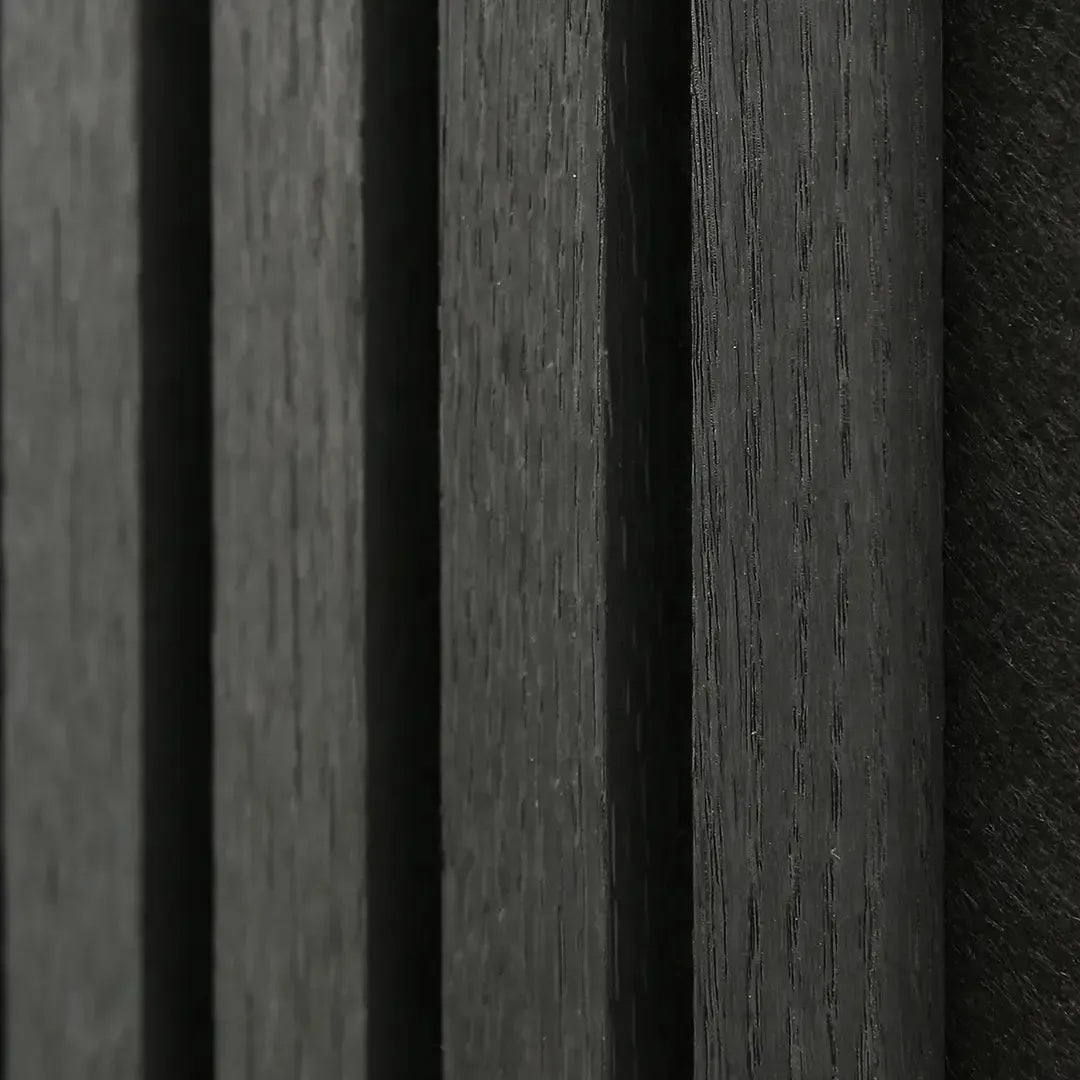
Dark tones like black oak and smoked oak absorb ambient light instead of bouncing it, which matters directly behind or beside a monitor wall where glare causes eye strain over a full shift. Lighter natural oak reads cleaner in rooms that also serve as a walkthrough stop for plant tours or auditors. Pick the tone based on where the panel sits relative to the screens, not just personal preference.
Coverage efficiency for tight footprints
Control rooms run small \u2014 often under 150 square feet \u2014 so panel size and box coverage matter more than they would on an open office wall. A 32-inch hexagon panel sold four to a box covers ground faster per unit than smaller tile formats, which cuts install time on a room where downtime for the operator is a real cost.
Fire and VOC considerations
Occupied industrial interiors typically fall under stricter fire code review than a residential accent wall, and low-VOC materials matter in a room where someone breathes the same air for a full shift. Confirm current fire rating documentation with the manufacturer for your specific plant's code requirements before finalizing a purchase order \u2014 this is not a detail to guess on.
Top picks for control room walls
The safe pick \u2014 Acoustic Slat Wall Panel Black Oak. Premium 3-sided wood veneer at $177.95 delivers a dark, low-glare finish that reads professional next to monitor banks and doesn't show fingerprints or scuffs the way lighter finishes do. It's the panel to default to when the room doubles as a stop on plant tours. Verdict: Buy.
The acoustic performer \u2014 Hexagon Acoustic Panel Natural Oak with Gray Felt. At $165.95 for a 32-inch, four-panel box, this line carries a stated NRC of 0.75, the clearest absorption number in the Akuwood Panel catalog and the one you want on a wall directly behind a noisy operator station. Verdict: Buy.
The wildcard \u2014 Acoustic Slat Wall Panel Smoked Oak with Gray Felt. Priced at $169.95, it pairs a felt-backed acoustic core with a moodier smoked finish than the natural oak option, useful when the control room sits in a dim corner of the plant and you want absorption without adding more visual brightness. Verdict: Consider.
The low-risk test \u2014 Full Sample Box, Slat Wall Panel. For $10, this box ships natural, smoked oak, and walnut samples so you can hold finish swatches against the actual control room wall under plant lighting before committing to a full order. On a budget-line purchase order, this step avoids an expensive reorder. Verdict: Buy.


What to avoid
- Unbacked fluted or 3D veneer panels. They look sharp on a showroom wall, but without felt backing they don't move the needle on reflected noise \u2014 fine for a lobby, wrong for a control room with a real noise complaint.
- Panels sold without an NRC figure anywhere in the spec. If a listing skips the number entirely, treat it as decorative, not acoustic, and price it accordingly.
- Exterior-rated panels moved indoors to save a step. Exterior wall panel lines are built for weather exposure, not the felt-backed absorption a control room needs \u2014 they're a different product for a different wall.
Verdict comparison
| Panel | Price | Acoustic backing | Best for | Verdict |
|---|---|---|---|---|
| Acoustic Slat Wall Panel Black Oak | $177.95 | 3-sided veneer | Glare control near monitors | Buy |
| Hexagon Acoustic Panel Natural Oak w/ Gray Felt | $165.95 | NRC 0.75 | Direct noise absorption | Buy |
| Acoustic Slat Wall Panel Smoked Oak w/ Gray Felt | $169.95 | Felt-backed | Dim rooms needing absorption | Consider |
| Full Sample Box | $10 | N/A (swatches) | Finish testing before order | Buy |
FAQ
What's the best acoustic panel for a manufacturing plant control room?
A felt-backed panel with a stated NRC, like the Hexagon Acoustic Panel Natural Oak with Gray Felt at NRC 0.75, is the strongest choice for direct noise absorption. Solid wood veneer panels without felt backing add finish but not measurable sound absorption.
Is NRC 0.75 good for industrial noise control?
An NRC of 0.75 means the panel absorbs roughly three-quarters of the sound hitting it rather than reflecting it, which is a strong figure for wall-mounted acoustic treatment. Pair it with ceiling treatment for rooms with severe reflected noise.
Can acoustic wood panels handle industrial plant environments?
Interior-rated wood veneer panels handle standard HVAC-controlled control room conditions but are not built for direct wash-down or outdoor exposure. Confirm the specific product line is rated for your room's humidity and temperature range before ordering.
Should I choose slat panels or hexagon panels for a control room?
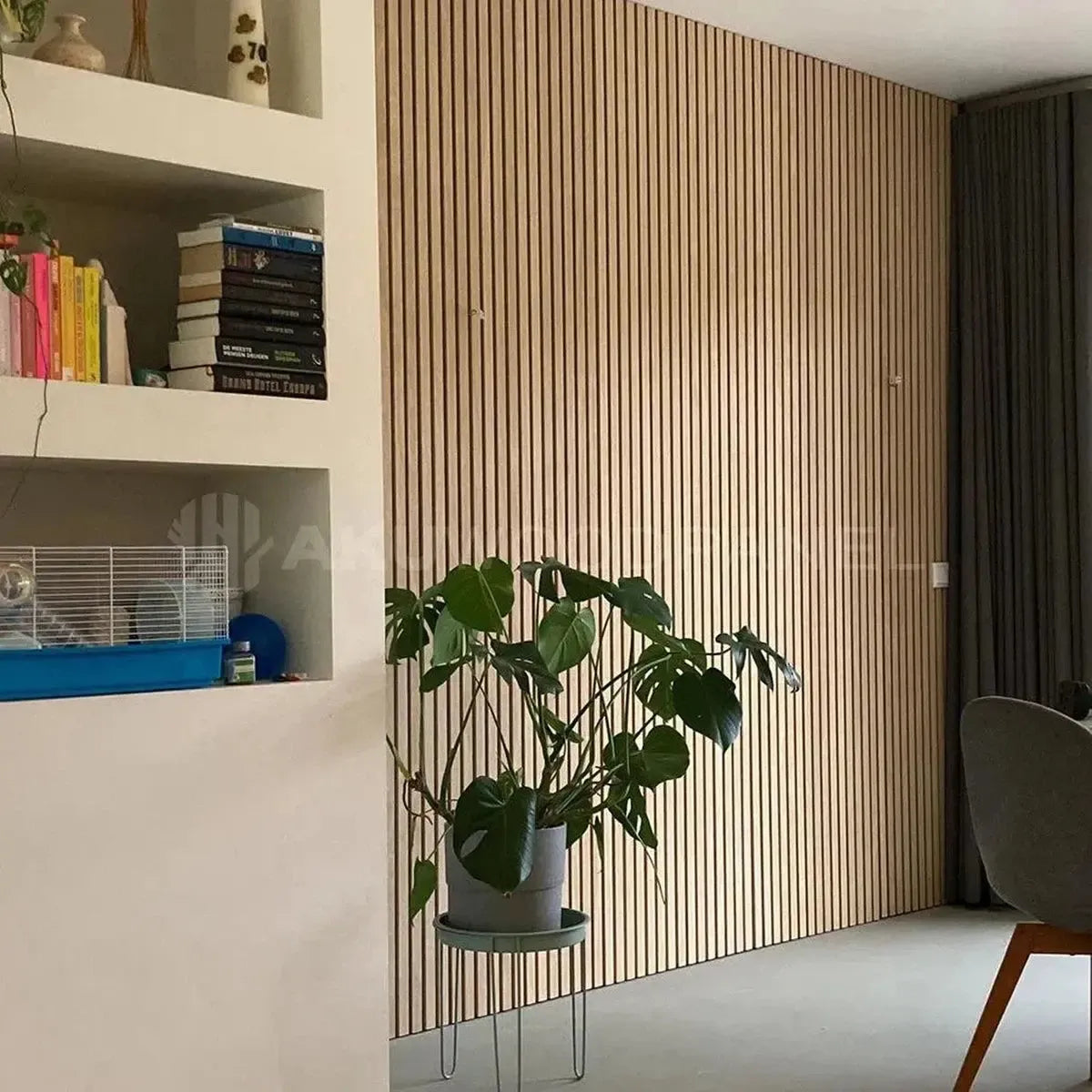
Slat panels with 3-sided veneer suit walls where glare control near monitors matters most, while felt-backed hexagon panels suit walls where absorbing reflected noise is the priority. Many control rooms use both — hexagon behind the loudest wall, slat elsewhere.
Do control rooms need fire-rated wall panels?
Occupied industrial interiors often fall under stricter fire code review than a residential wall, so confirm current fire rating documentation with the panel manufacturer for your plant's specific code before finalizing a purchase order. Don't assume a rating without checking the spec sheet.
How many acoustic panels do I need for a control room wall?
Measure the wall square footage and divide by the coverage per box — a 32-inch hexagon panel ships four to a box, so a small control room wall often needs two to three boxes. Order a sample box first to confirm finish and fit before buying full coverage.
How much does it cost to treat a control room with acoustic panels?
Panel pricing in 2026 runs from roughly $148.95 to $182.95 per box depending on finish and felt backing, before mounting hardware and labor. A small control room wall typically needs two to four boxes to fully cover the noisiest surface.
What's the difference between decorative and acoustic wood panels?
Decorative panels are finished for visual texture and carry no stated NRC, while acoustic panels add a felt or engineered backing specifically to absorb sound. For a control room noise complaint, only the acoustic version does the job.
One last thing
Most control room noise complaints trace back to one wall \u2014 the one shared with the loudest equipment \u2014 not the whole room. Spend the acoustic budget there first with a felt-backed, NRC-rated panel like the Hexagon Acoustic Panel Natural Oak with Gray Felt, and treat the remaining walls with lower-cost veneer finish for visual consistency. Order the $10 sample box before locking in a full purchase order in 2026; a finish mismatch under fluorescent plant lighting is a cheap mistake to avoid and an expensive one to fix after install.


 Better performance and aesthetic appeal
 In Stock