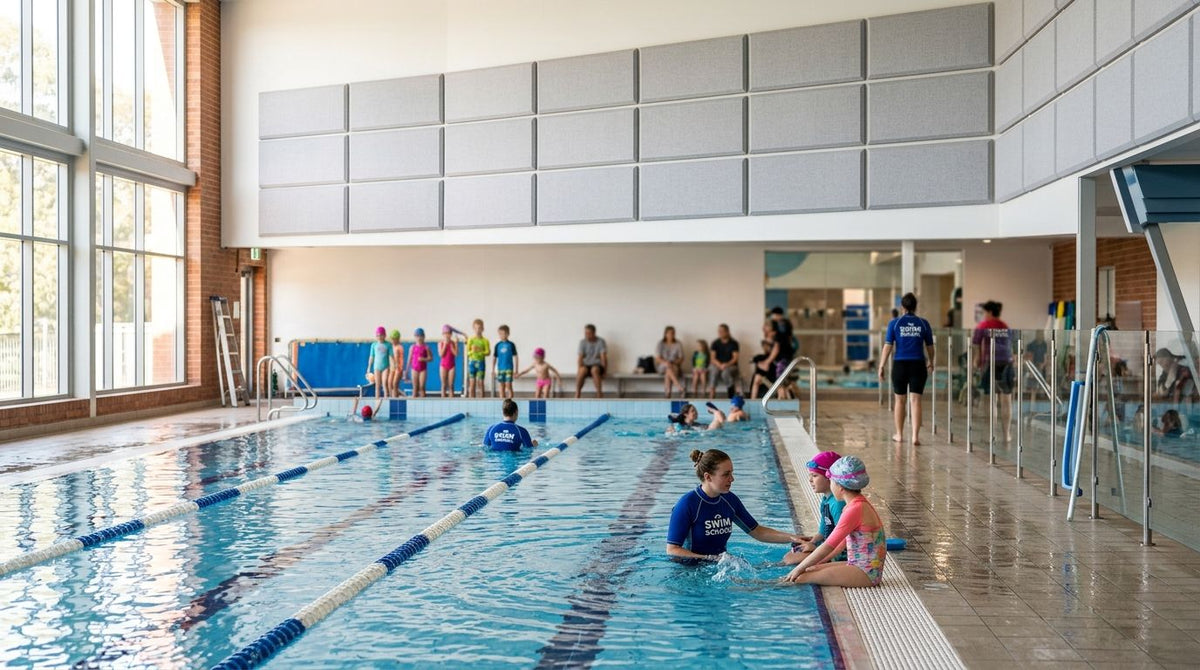
Swim school pool halls need acoustic panels that cut reverberation without trapping the humidity rising off a heated lap pool — a constraint that rules out half the "reduce gym echo" advice you'll find online. Tile floors, a glass viewing wall, and a flat water surface bounce sound straight back instead of absorbing it, and an untreated pool hall runs reverberation several seconds longer than a dry gym the same size. Akuwood Panel's felt-backed slat and hexagon panels absorb that reflected sound while staying stable in a room that never fully dries out, which is the main reason acoustic panels for swim school pool halls need a different spec sheet than a normal interior wall.
- Swim school pool halls need panels rated for standing humidity, not just sound absorption.
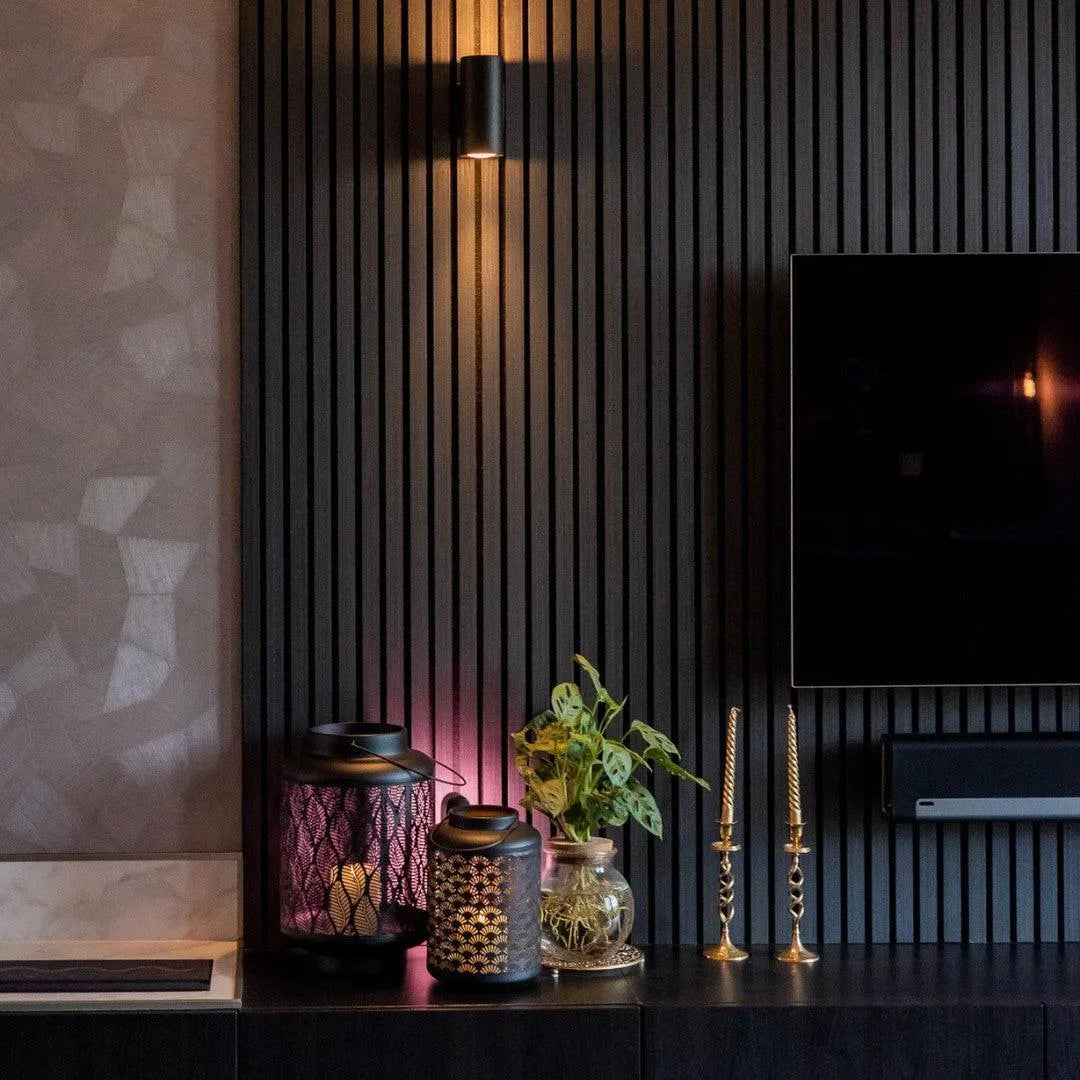
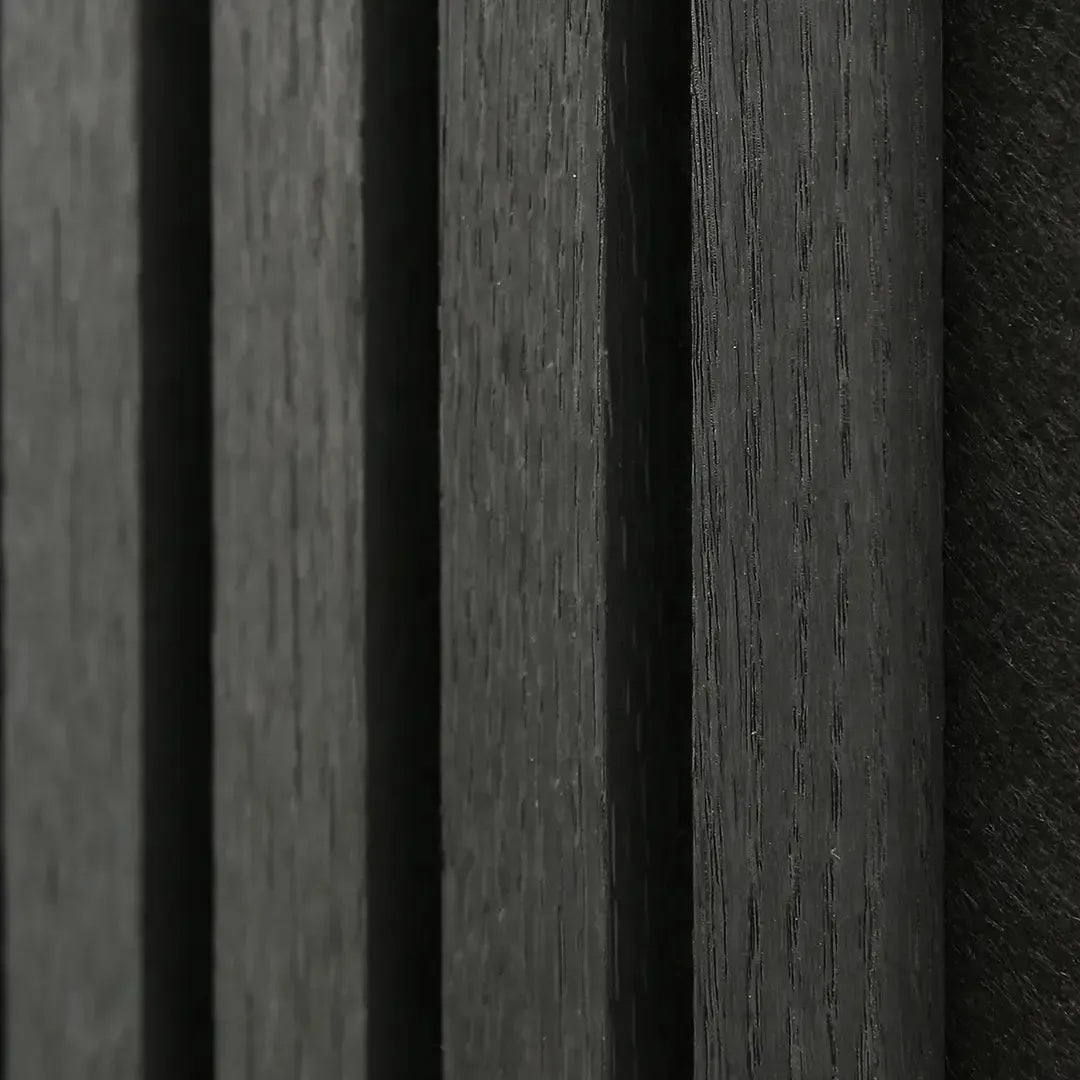
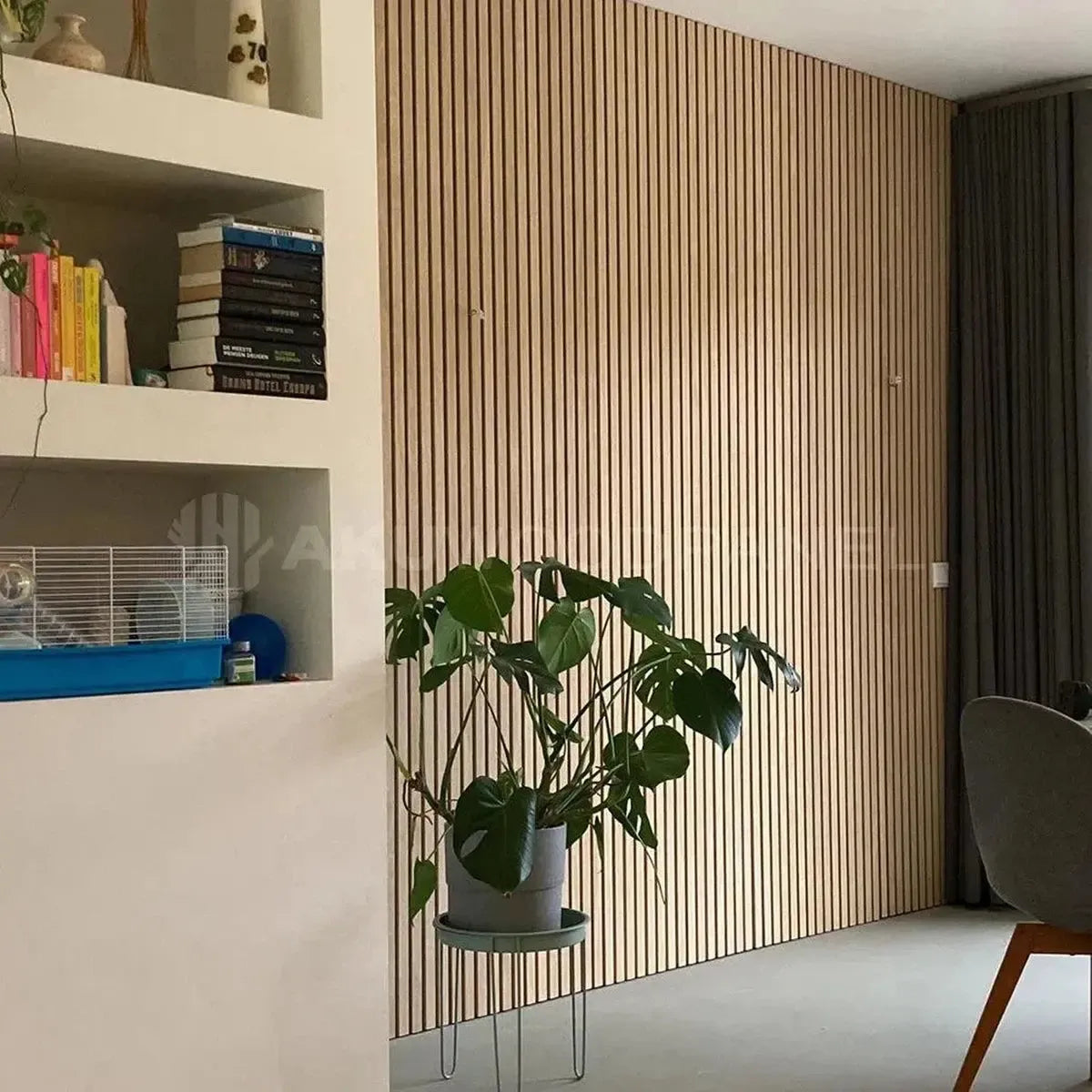
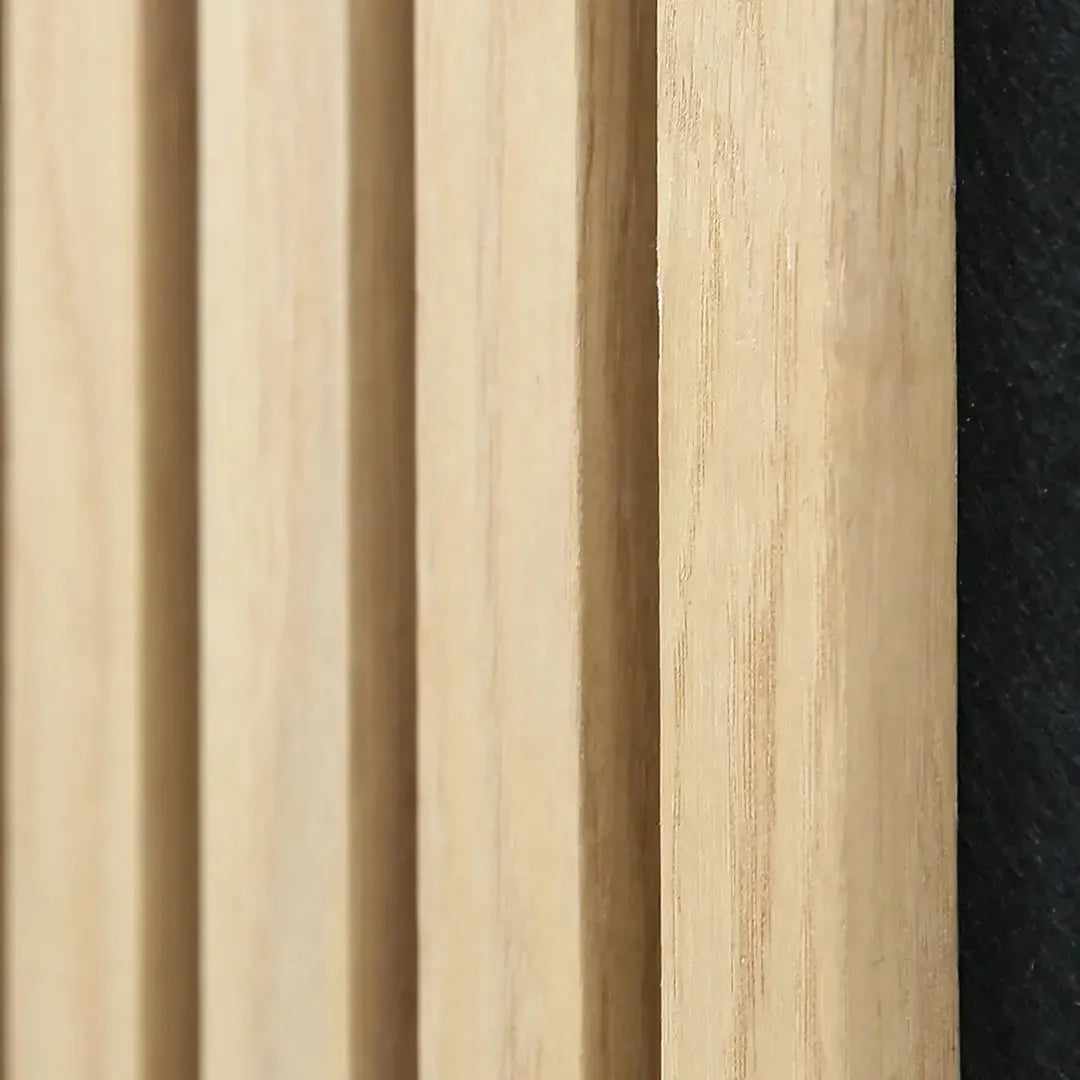
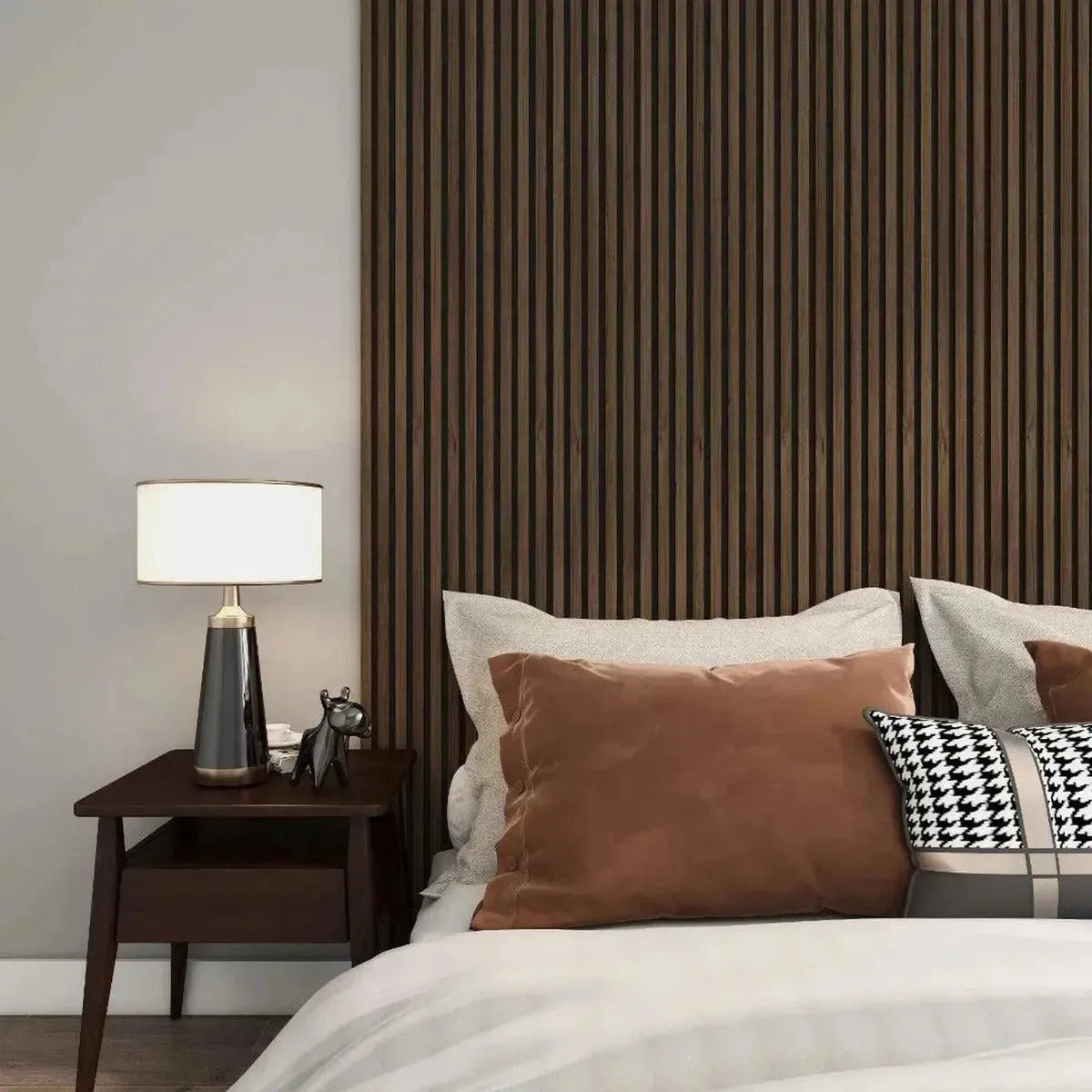
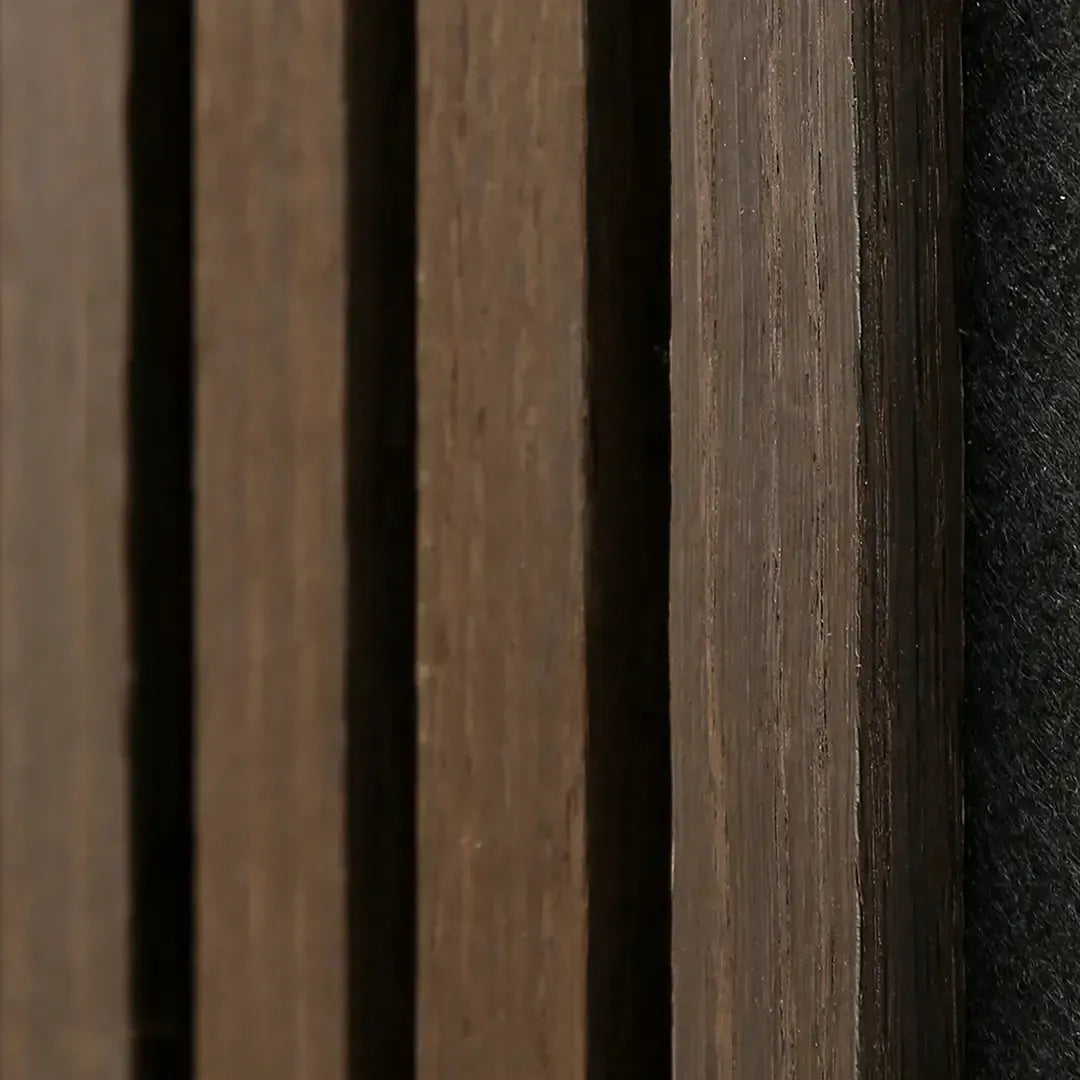
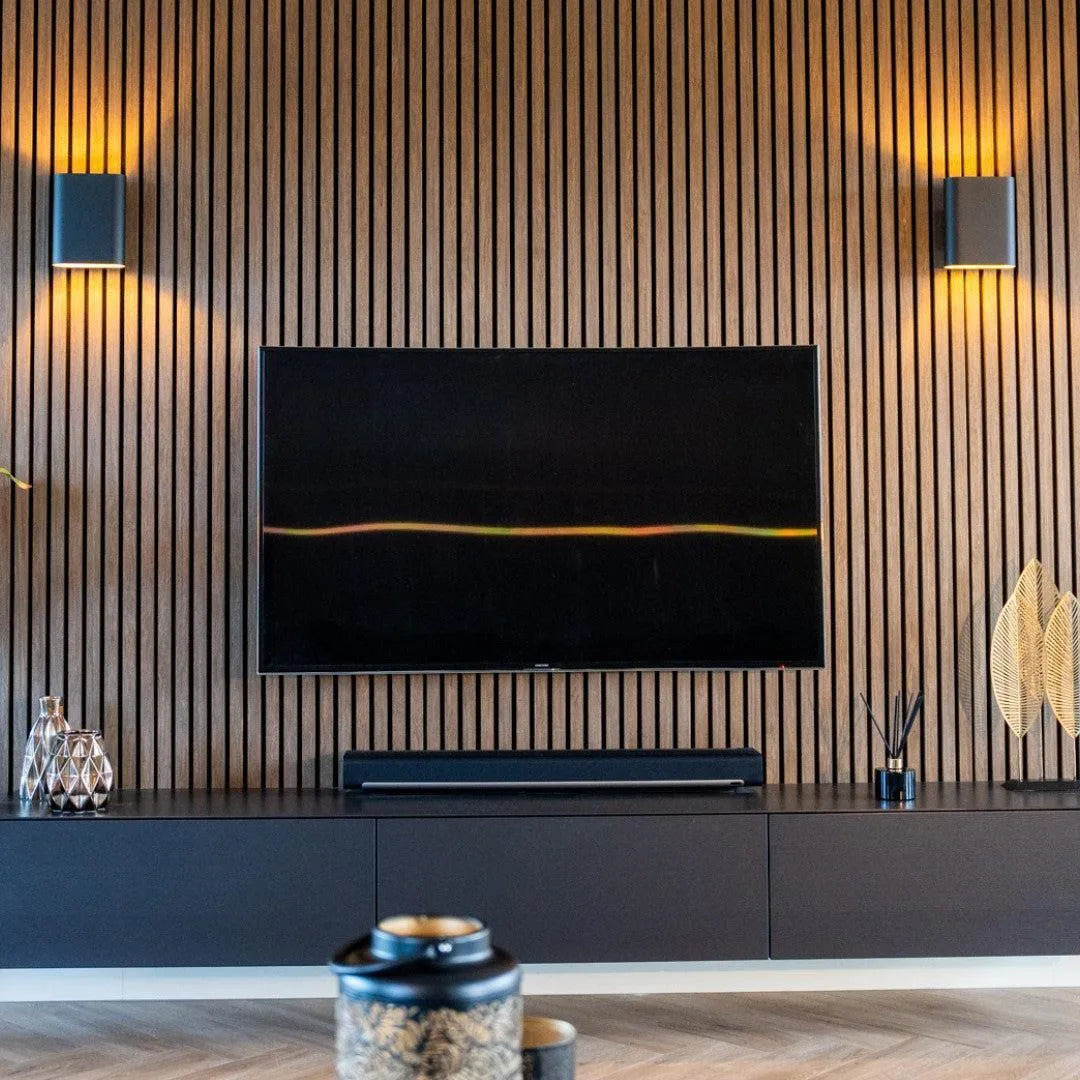
- Akuwood Panel's Natural Oak with Gray Felt slat panel is the default pick for pool hall feature walls in 2026: Buy.
- Hexagon felt panels carry an NRC of 0.75, enough to shorten repeated instructions in most pool halls.
- Mount panels no lower than 4 feet above deck level to keep them out of the daily splash zone.
Why this matters
A pool hall is one of the worst rooms in a building for speech clarity: hard tile, a glass gallery for parents, and open water all reflect sound instead of absorbing it. Swim instructors work with six to ten kids at a time, often two or three classes running side by side in the same hall, and every repeated instruction adds seconds a child spends unsupervised in the water. Acoustic panels for swim school pool halls exist to shorten the gap between a coach speaking and a kid hearing it once — Akuwood Panel's Natural Oak with Gray Felt acoustic slat panel is one of the few wood-veneer options built for a room that stays humid year-round rather than one that dries out between uses.
Why acoustic panels matter for swim school pool halls
Pool halls differ from a normal gym or classroom in three ways that change what you install in 2026:
- Standing humidity. The air rarely drops below the dew point the way a gym does after hours, so any panel core that swells or delaminates in moisture is a return waiting to happen.
- Splash exposure. The bottom 3-4 feet of any pool hall wall gets wet daily from cannonballs, kickboards, and deck traffic — panels below that line need to be an intentional, wipeable choice, not an accident.
- Multiple simultaneous instructors. Group lesson formats mean two or three voices competing in the same reverberant space at once, a different acoustic problem than a single speaker in a lecture hall.
“If an instructor has to repeat the same instruction twice before a kid in the water hears it, the pool hall is under-treated.”
Map the echo sources in your pool hall
Walk the hall before buying anything and mark where sound is actually bouncing.
- Flag parallel hard walls facing each other — these create the worst standing-wave echo.
- Note the glass viewing gallery; glass reflects nearly all the sound that hits it and needs a panel treatment on the opposite wall to compensate.
- Check ceiling height and material — low, hard ceilings above 6-8 lane pools trap sound worse than vaulted ones.
- Mark the mechanical or pump room wall, which layers a constant low hum under classroom noise.
- Identify where instructors stand during lessons — that's where absorption pays off first.
Rate any panel for standing humidity before you rate it for sound
The manual, free way costs only time: pull the manufacturer's spec sheet and confirm the panel core and backing are rated for continuous humidity, not just "moisture resistant" marketing copy, then check what happens to the acoustic backing after weeks of standing dampness. A wood panel finish built for high-humidity rooms behaves differently than one designed for a dry living room, and that difference is what most swim schools skip checking before they order.
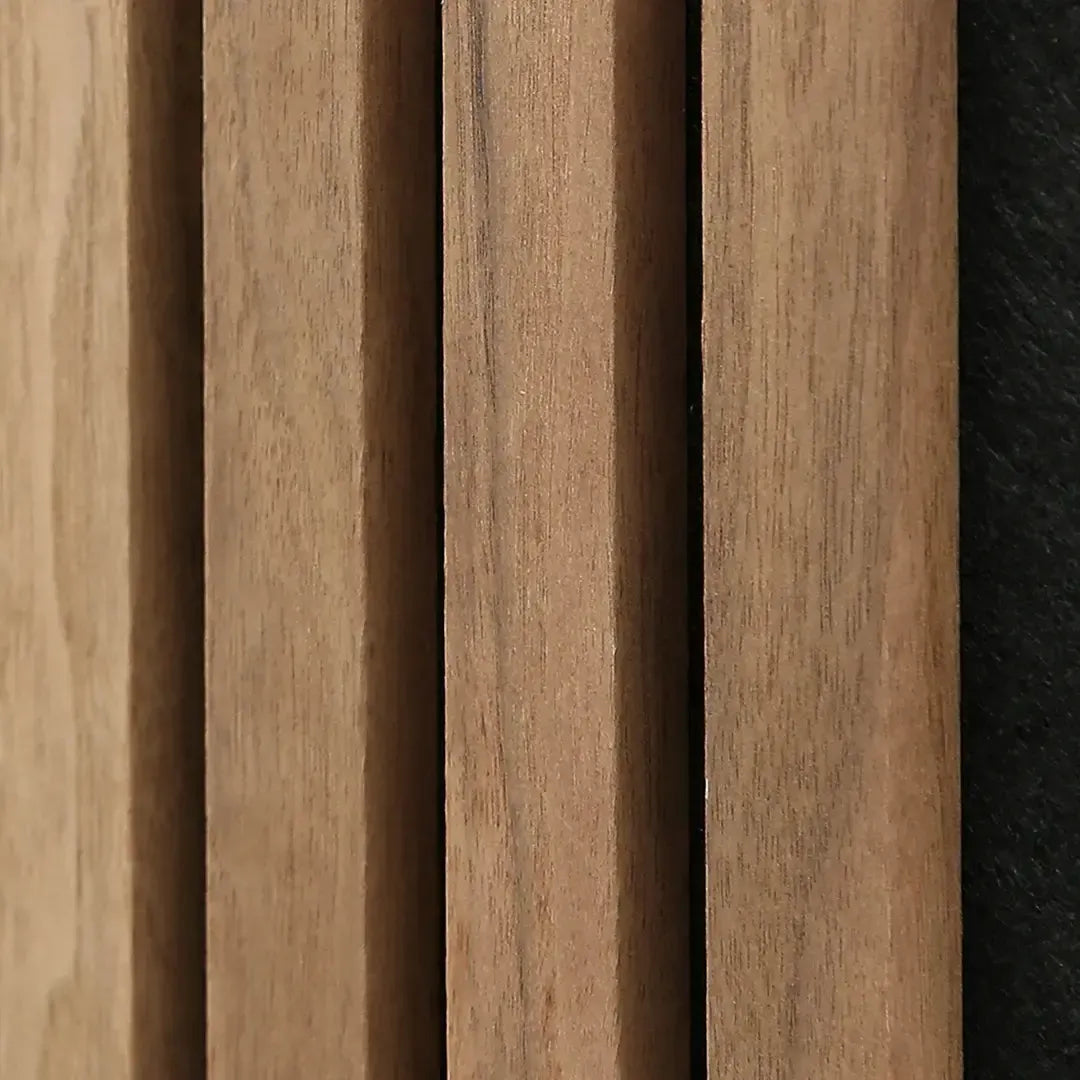
Akuwood Panel's felt-backed slat line is the faster path once the basics are confirmed: real oak or walnut veneer over a felt acoustic backing designed to hold up on interior walls that see daily temperature and humidity swings.
Calculate the coverage you need using NRC
- Measure total square footage of hard reflective wall surface — not floor, since the pool floor is water, not tile.
- Look up the Noise Reduction Coefficient (NRC) of any panel you're considering; Akuwood Panel's felt-backed hexagon panels carry an NRC of 0.75.
- Aim to treat 25-40% of total wall surface as a starting point in a rectangular pool hall, more if the ceiling is also hard and low.
- Run the math yourself with a guide to calculating acoustic panel NRC rating for a room before ordering a single box.
Place panels above the splash line
- Set the bottom edge of any panel run no lower than 4 feet above deck level.
- Use a separate, wipeable wainscot or tile below that line — never the acoustic panel itself.
- Leave a small air gap behind panels near pool walls so condensation doesn't sit against the backing.
- Avoid placing panels directly above starting blocks or diving areas that take direct splash impact.
Zone panels around each instructor station
- Cluster absorption on the wall directly behind or beside where instructors stand, not spread evenly across the whole hall.
- Treat the wall opposite the glass viewing gallery first — it's doing the most reflecting.
- Break long straight runs of slat panels with a hexagon section to interrupt flat, parallel reflections.
- Leave sightlines clear for lifeguards; panels should never obstruct a clear view of the water.
Install with humidity-safe hardware and clearance
- Use stainless or coated fasteners rated for wet-room environments, not standard interior screws.
- Leave manufacturer-specified expansion gaps between panel runs so humidity swings don't buckle the installation.
- Avoid direct adhesive mounting on any wall that gets condensation — mechanical fastening holds up longer.
- Check local pool-facility codes before final placement; some jurisdictions restrict wall treatments near deck edges.
Maintain panels in a chlorinated environment
- Wipe panels down monthly with a dry or barely damp cloth — chlorine residue plus standing moisture is what shortens panel life, not the chlorine alone.
- Inspect felt backing edges twice a year for separation from the wood face.
- Keep dehumidification running even outside pool hours to protect panels along with the rest of the building envelope.
- Replace any panel showing veneer lifting immediately — it signals moisture got behind the face, and one bad panel rarely stays isolated.


Compare acoustic panel options for swim school pool halls
| Option | Best for | Installation effort | Key limitation |
|---|---|---|---|
| Felt-backed wood slat panels | Feature walls behind instructor stations and reception areas | Screw-mounted, moderate DIY | Higher material cost than foam alternatives — Buy |
| Felt-backed hexagon panels | Breaking up long, flat parallel walls in narrow lap-lane halls | Modular, interlocking install | Layout planning takes longer than a straight slat run — Buy |
| Standard synthetic foam panels | Budget-only treatment in back-of-house mechanical rooms | Adhesive mount, fastest option | Degrades faster in standing humidity, holds chlorine odor — Hold |
| Untreated tile or drywall | Nothing — this is the baseline, not a real choice | None | Reverberation stays high, instructors repeat every instruction — Skip |
Common mistakes swim schools make with acoustic panels
- Treating the whole hall evenly instead of the reflection points. Spreading a fixed budget across every wall does less than concentrating it on the two or three surfaces doing the most reflecting.
- Mounting panels below the splash line. Panels that look fine on install day delaminate within a season once daily splash gets behind the veneer.
- Matching panel color to pool tile instead of sightlines. A dark panel behind a light tile wall can create a visual blind spot for lifeguards scanning the water.
- Ignoring the glass viewing gallery. Parents' observation windows reflect sound as hard as any wall — skipping the wall opposite it undercuts the whole treatment.
- Buying on NRC alone without checking the humidity rating. A panel with a strong NRC number that swells within six months of pool air isn't a deal, it's a re-do heading into 2026's next renovation cycle.
FAQ
What NRC rating do swim school pool halls need?
Aim for panels with an NRC of 0.70 or higher on the walls doing the most reflecting — Akuwood Panel's felt-backed hexagon panels carry an NRC of 0.75. Coverage matters as much as rating: treating 25-40% of hard wall surface is a reasonable 2026 starting point for a rectangular hall.
Are wood acoustic panels safe to install in a humid pool hall?
Real wood veneer panels with a felt acoustic backing hold up on interior pool hall walls when kept above the splash line and given a small air gap for condensation. They are not rated as wet-room wall coverings below deck-splash height — use a wipeable surface there instead.
How high above the pool deck should acoustic panels be mounted?
Keep the bottom edge of any acoustic panel at least 4 feet above deck level so daily splash from kickboards and cannonballs never reaches it. Anything installed lower needs a separate wipeable finish, not an acoustic panel.
Do foam acoustic panels work in a pool hall?
Standard synthetic foam panels absorb sound but degrade faster in standing humidity and pick up chlorine odor over time, which is why they're a Hold rather than a Buy for pool halls. They're a reasonable fit for a back-of-house mechanical room where appearance and longevity matter less.
Where should acoustic panels go in a pool hall with multiple instructors running classes?
Cluster panels on the wall behind or beside each instructor station rather than spreading them evenly across the hall. The wall directly opposite any glass viewing gallery should be treated first since glass reflects nearly all of the sound that hits it.
Can acoustic panels obstruct lifeguard sightlines?
Panels mounted correctly should never block a clear view of the water — plan placement around existing sightlines before finalizing a layout. Avoid dark panels directly behind light tile where contrast could create a visual blind spot during scanning.
How often do acoustic panels need maintenance in a chlorinated pool hall?
Wipe panels down monthly with a dry or barely damp cloth and inspect felt-backing edges twice a year for separation from the wood face. Chlorine residue combined with standing moisture, not chlorine alone, is what shortens panel life.
One last thing
Run a one-wall pilot before committing to a full pool hall install: treat just the wall behind the busiest instructor station for one season of 2026 classes, then measure whether repeat-instruction frequency actually drops before covering three more walls. Most swim schools that skip this step end up over-treating the quiet end of the hall and under-treating the one wall that mattered.
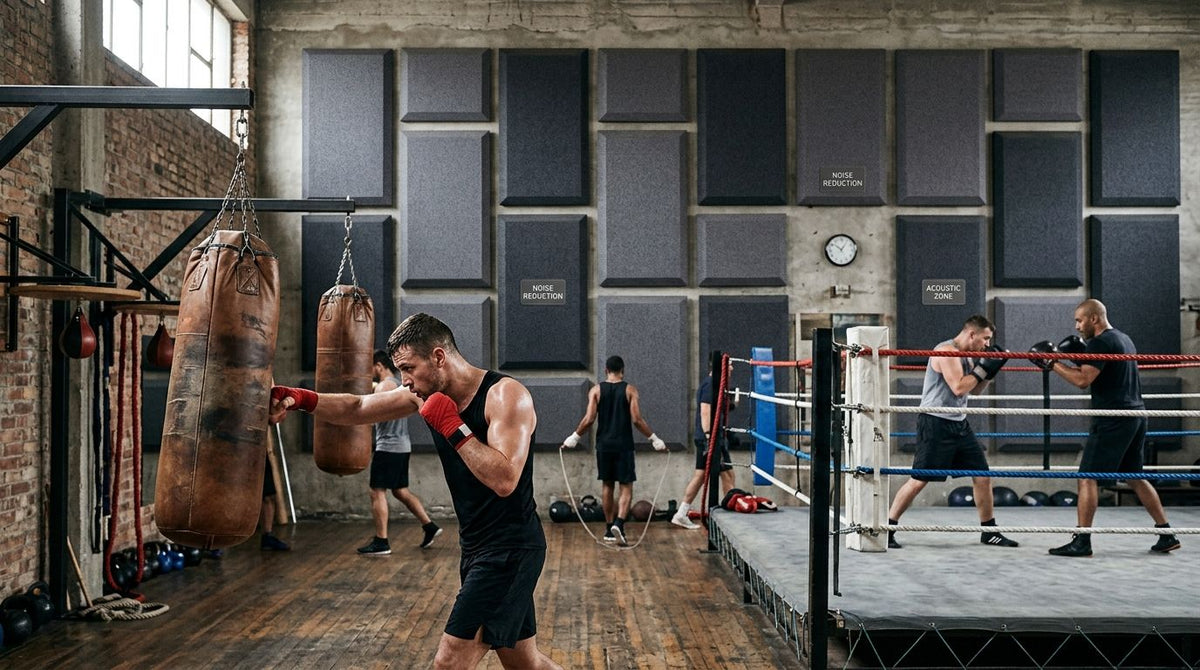

 Better performance and aesthetic appeal
 In Stock