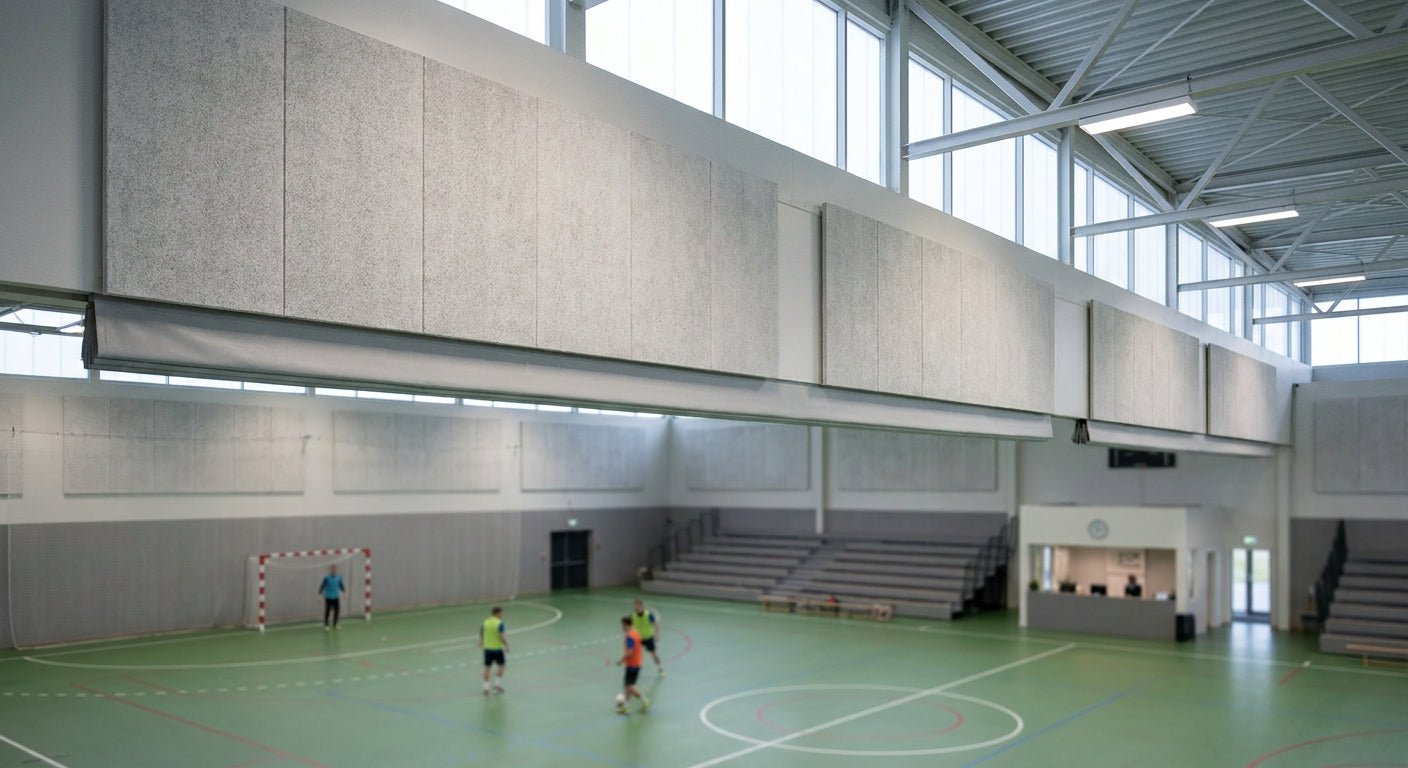
Concrete block walls and open steel roof decking turn every whistle, ball strike, and sideline shout in an indoor soccer or futsal arena into reverb that stacks up fast. The right acoustic panels for a futsal arena cut that noise without giving up wall space to ball-impact damage.
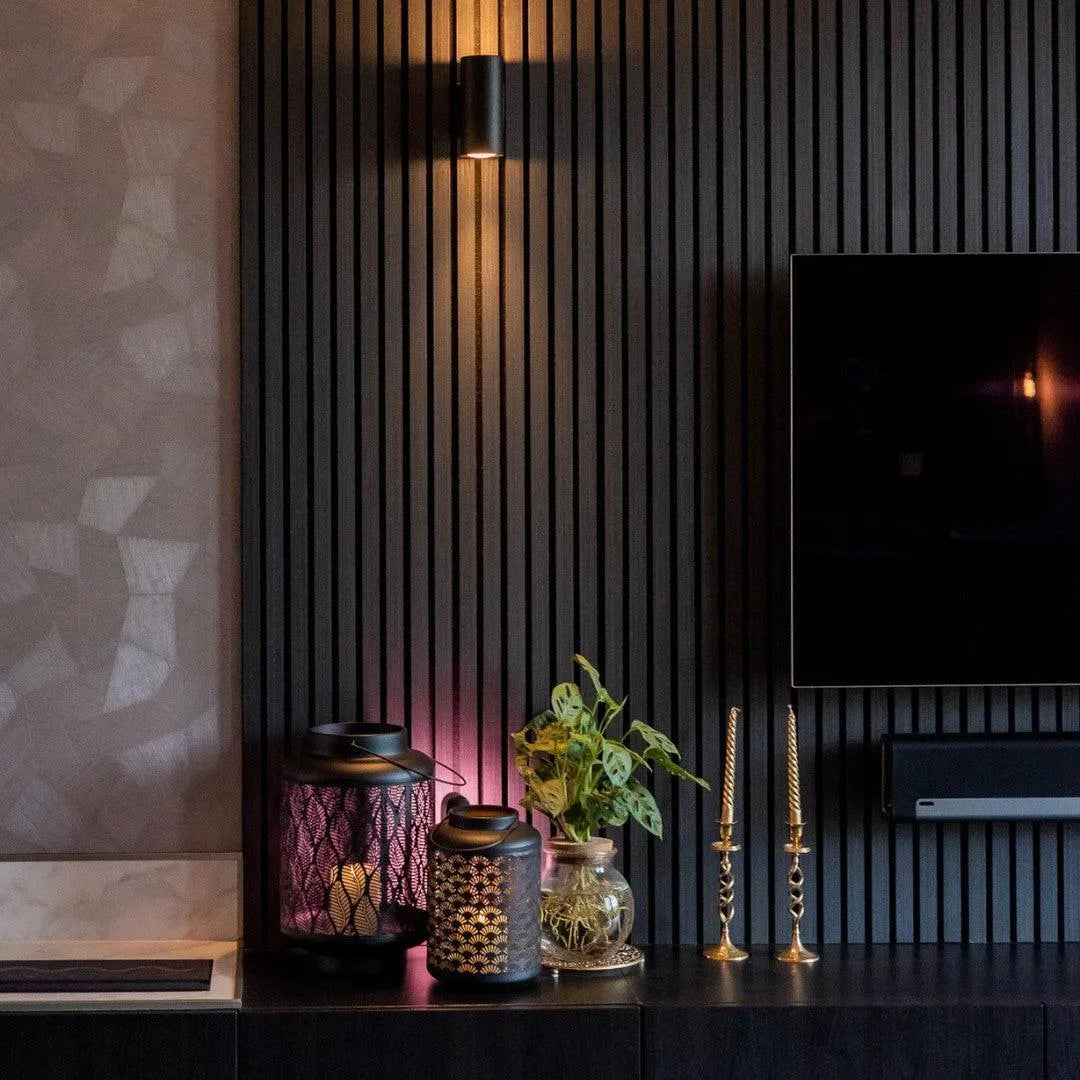
- Acoustic Slat Wall Panel Black Oak survives direct ball strikes on futsal arena side walls in 2026 — Buy.
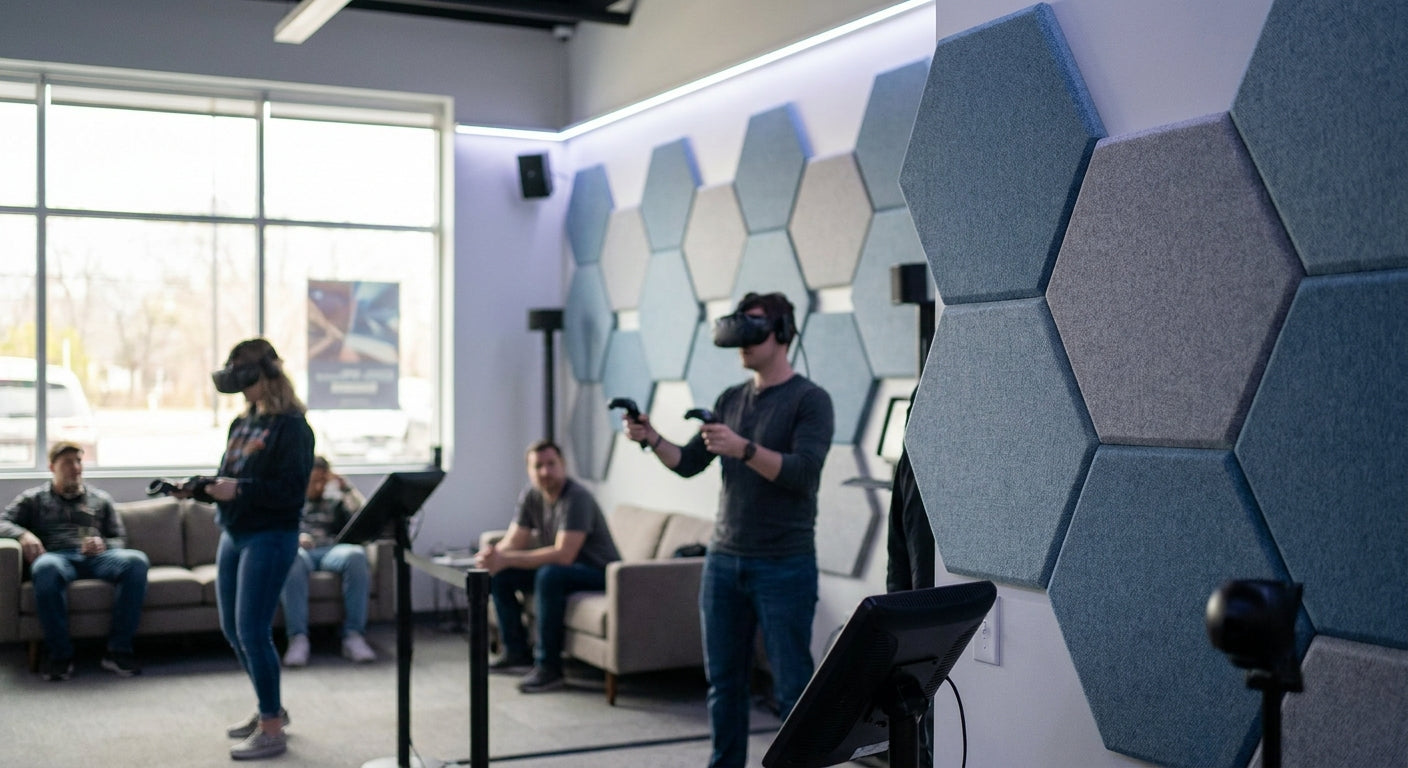
- Hexagon Acoustic Panel Walnut with Gray Felt rates 0.75 NRC, the absorption number to target for acoustic panels for futsal arena walls.
- Skip fabric-wrapped foam panels near goal areas — a hard shot tears the fabric within one season.
- Order the $10 Full Sample Box before covering an entire arena wall in 2026.
Why this matters
Indoor soccer and futsal facilities run on hard, reflective surfaces: poured concrete floors, block or tilt-up walls, and exposed steel trusses overhead. Every whistle blast and ball strike bounces multiple times before it decays, burying coaching instructions and turning a two-hour rental into a headache for the staff standing near the court.
Futsal compounds the problem specifically. The smaller court and continuous wall-to-wall play mean the ball hits perimeter walls dozens of times a match, not the occasional deflection you get on a full-size pitch. Facilities treating noise reduction in sports halls report the same fix works across gyms, rec centers, and soccer courts: absorptive wall area, not decoration.
Untreated arenas in 2026 still lose tenants over noise complaints, not turf quality or lighting. Acoustic wood panels from AKU Woodpanel solve the reverb problem while giving the facility a finished look that raw foam or fabric panels can't match.
Who this buying guide is for
This guide is for facility owners, general contractors, and design-build teams outfitting an indoor soccer or futsal arena — new construction or a warehouse retrofit — who need wall treatment that absorbs sound, survives constant ball contact, and doesn't need replacing every season. It's built for anyone comparing acoustic panels for a futsal arena against foam, fabric, or bare block wall, and weighing sound performance against the real abuse of daily play.
What to look for in acoustic panels for a futsal arena
Impact resistance from direct ball strikes
A futsal ball moving at 30-40 mph hits the same stretch of wall dozens of times a night, every night, for years. Panels built with a real wood veneer over an engineered board core hold their finish under that abuse far longer than fabric-wrapped fiberglass, which shreds at the seams within a season of goal-mouth play.
NRC rating high enough to cut real reverb
NRC, or Noise Reduction Coefficient, measures how much sound a panel absorbs versus reflects on a 0-1 scale. The Hexagon Acoustic Panel Walnut with Gray Felt rates 0.75 NRC, which is the number to target for a court where whistles and shouting need to stay intelligible across 200-plus feet of open span.
Coverage across the reflective wall area
A handful of decorative panels scattered across one wall does almost nothing for reverb — acoustic treatment works on total absorptive area, not placement. Budget coverage for the full perimeter wall height that takes direct ball contact, typically the lower 8 feet, plus any hard end walls behind the goals.
Humidity and cleaning tolerance
Indoor arenas run warm and humid from body heat, HVAC cycling, and the occasional hose-down after a tournament weekend. Panels need a finish that resists swelling and doesn't demand a gentle-hands-only cleaning routine — a sealed veneer that tolerates a damp cloth beats a raw or unsealed surface every time.
Mounting that survives a season, not a month
Panels held up with adhesive alone loosen under the vibration of repeated ball impact. A facility running six-plus hours of play a day needs mechanical fastening into studs or furring strips behind the panel, not a peel-and-stick shortcut meant for a bedroom accent wall.


Top picks for acoustic panels in a futsal arena
Each pick below covers a different zone of the court. None of them are interchangeable — the wall behind a goal takes a different beating than the lobby wall by the front desk.
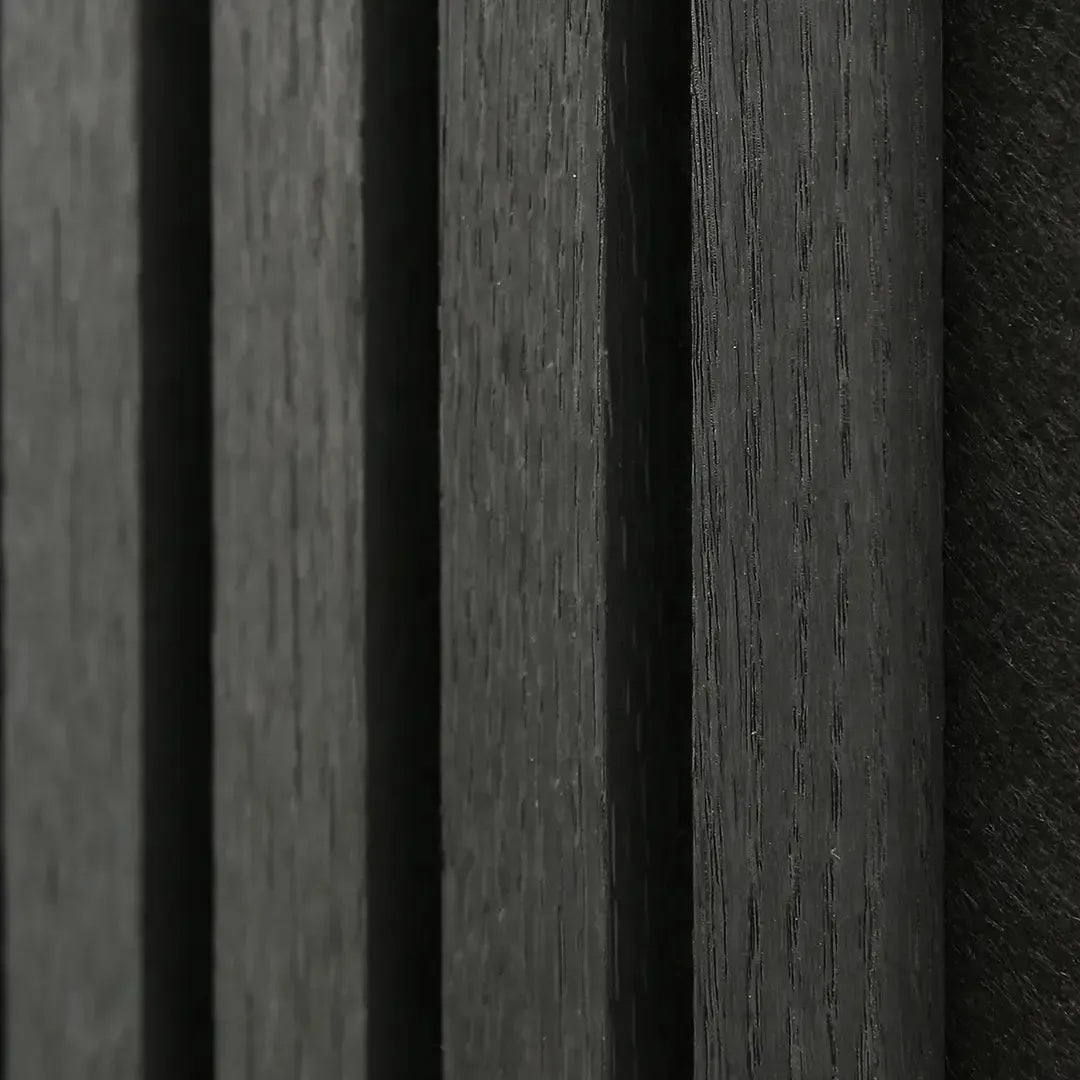
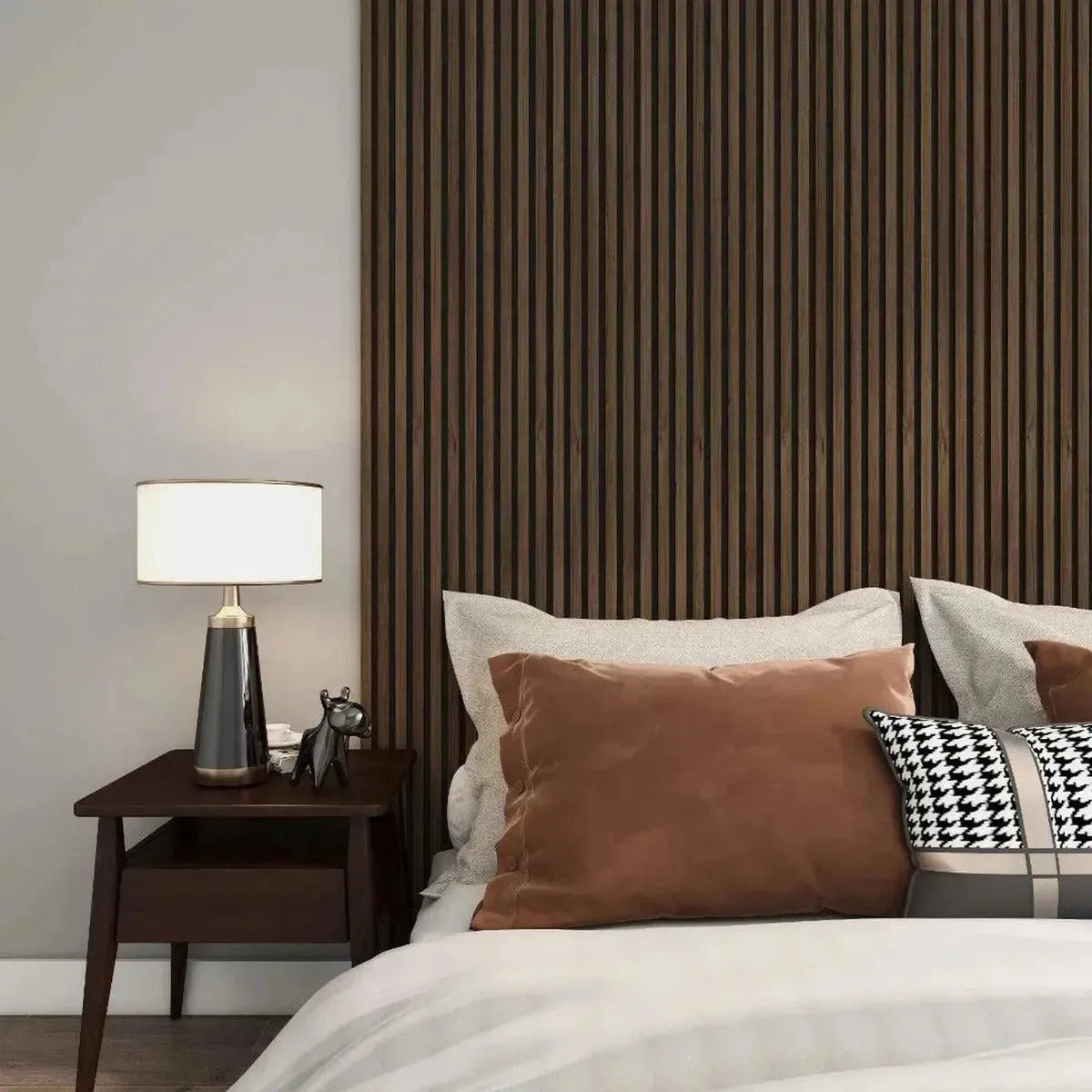
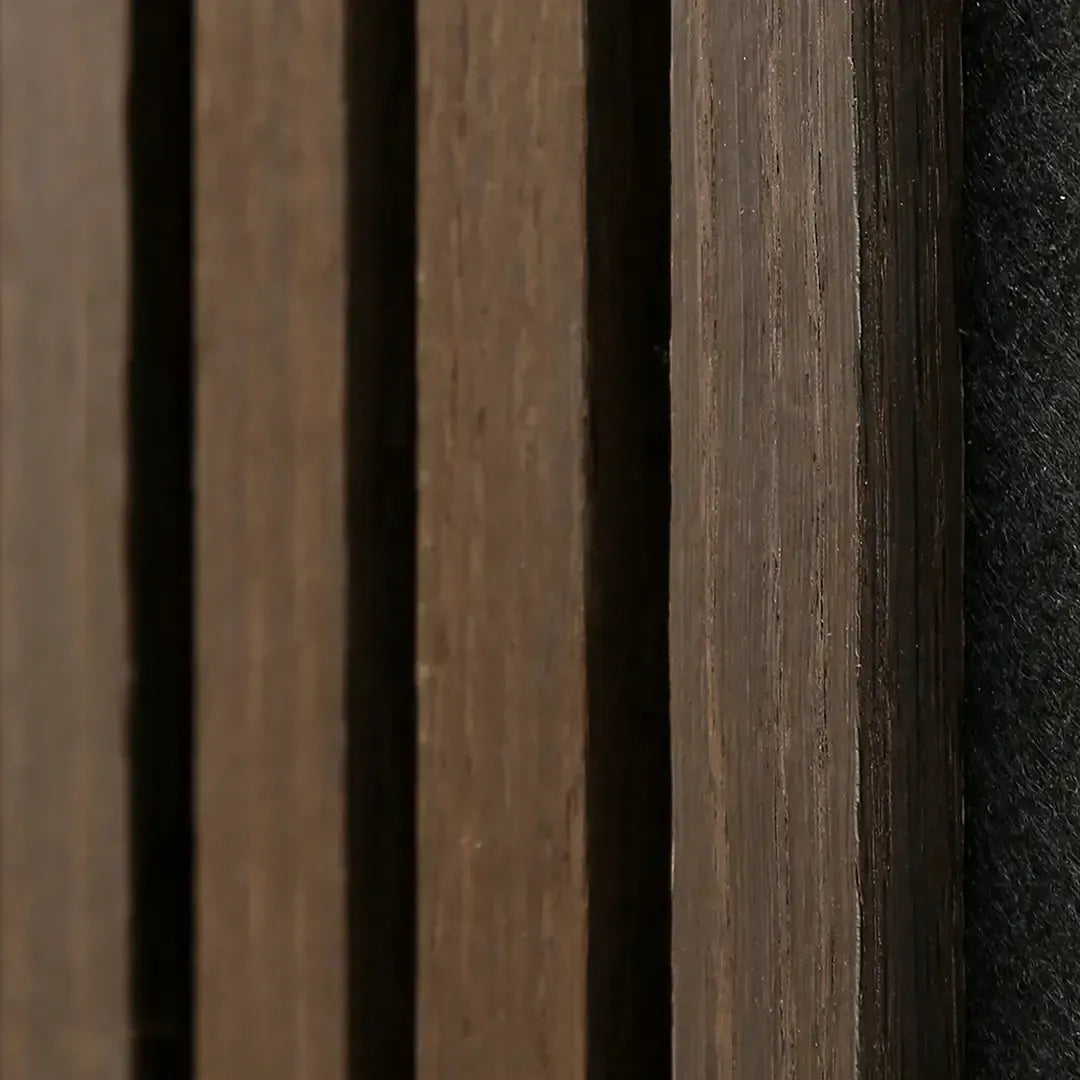
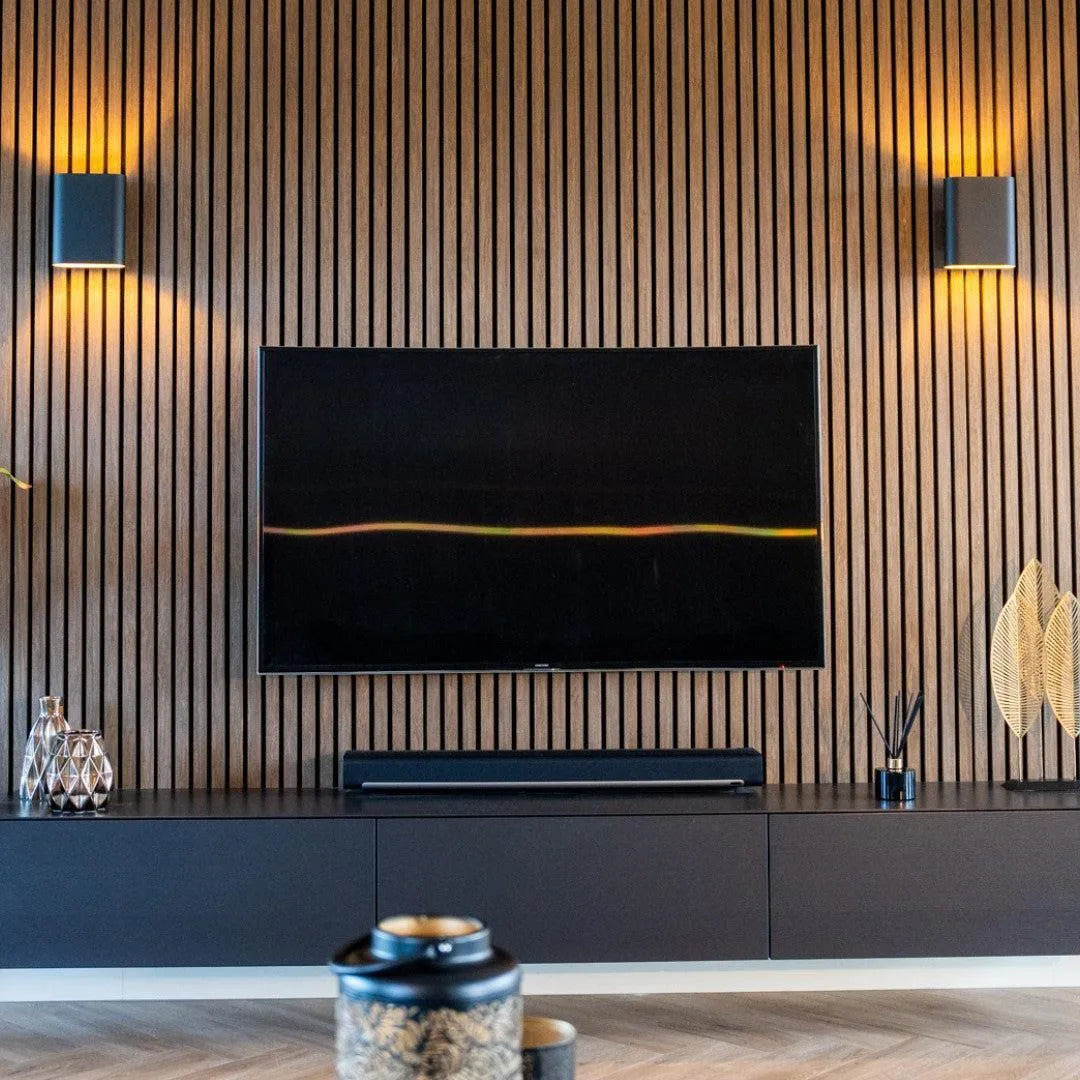
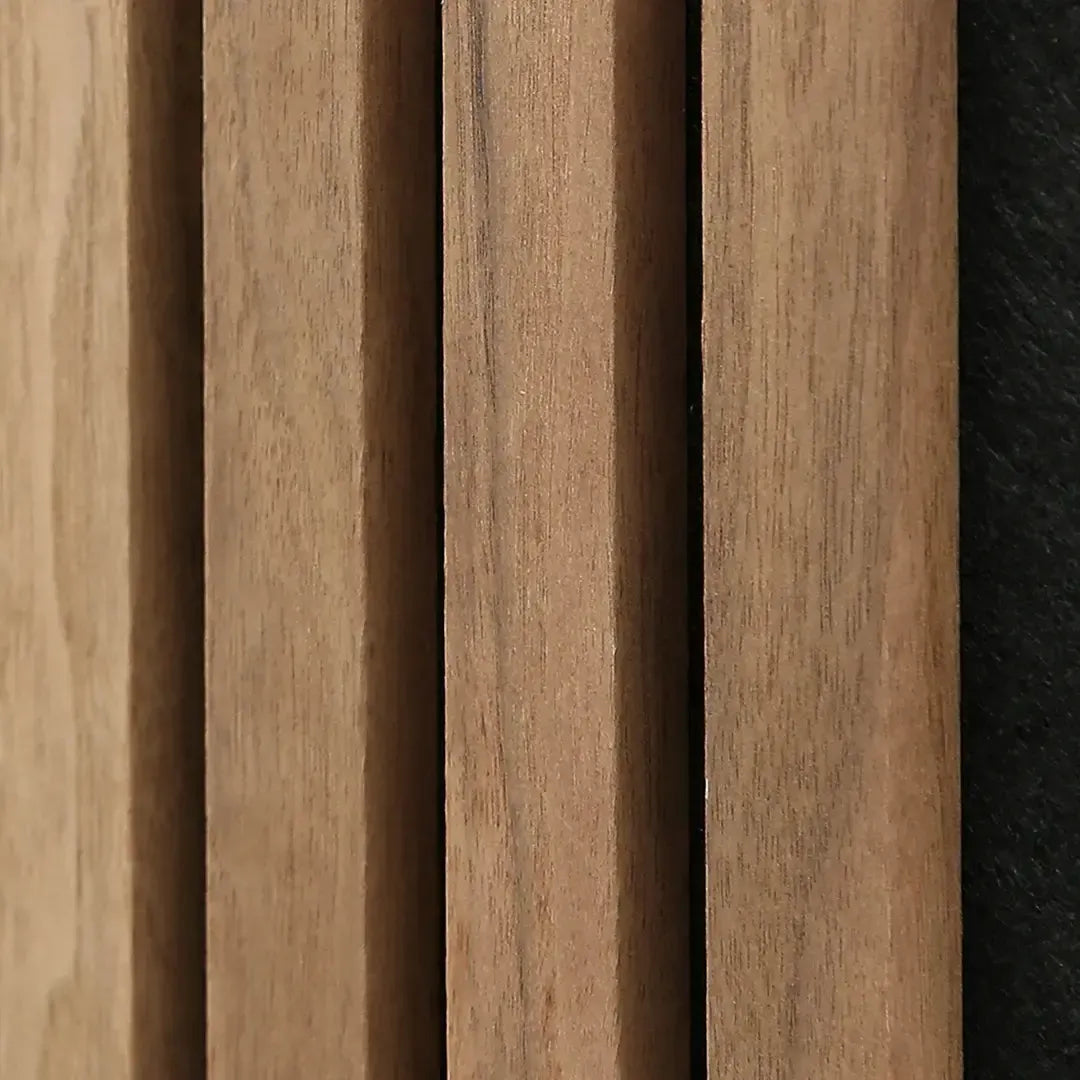
The safe pick: Acoustic Slat Wall Panel Black Oak Real 3-sided wood veneer over an engineered core, priced at $177.95 per box, sheds direct hits without cracking at the slats. Mount it across the lower 8 feet of any wall inside striking distance of the ball and it stays intact through a full 2026 season of daily play. Verdict: Buy for perimeter walls and goal-end zones taking constant contact. Acoustic Slat Wall Panel Black Oak
The perimeter workhorse: Hexagon Acoustic Panel Walnut with Gray Felt This 32-inch hexagon panel rates 0.75 NRC and ships four to a box at $165.95, giving a facility real absorption instead of decorative filler. It's the right call for side walls above ball-strike height, where sound treatment matters more than raw impact resistance. Verdict: Buy for upper wall zones and spectator-side treatment. Hexagon Acoustic Panel Walnut with Gray Felt
The goal-end absorber: Acoustic Slat Wall Panel Smoked Oak with Gray Felt At $169.95 per box, the gray felt backing behind the smoked oak veneer adds absorption exactly where shots concentrate: directly behind the goal mouth. Verdict: Consider it for goal-end walls where you want impact resistance and extra sound dampening in one panel.
The budget test run: Full Sample Box, Slat Wall Panel At $10 for four panels in Natural, Smoked Oak, and Walnut, this is the cheapest way to check how a finish holds up under your arena's actual lighting and humidity before ordering enough panel to cover a wall. Verdict: Buy first, always, before a full-facility order.
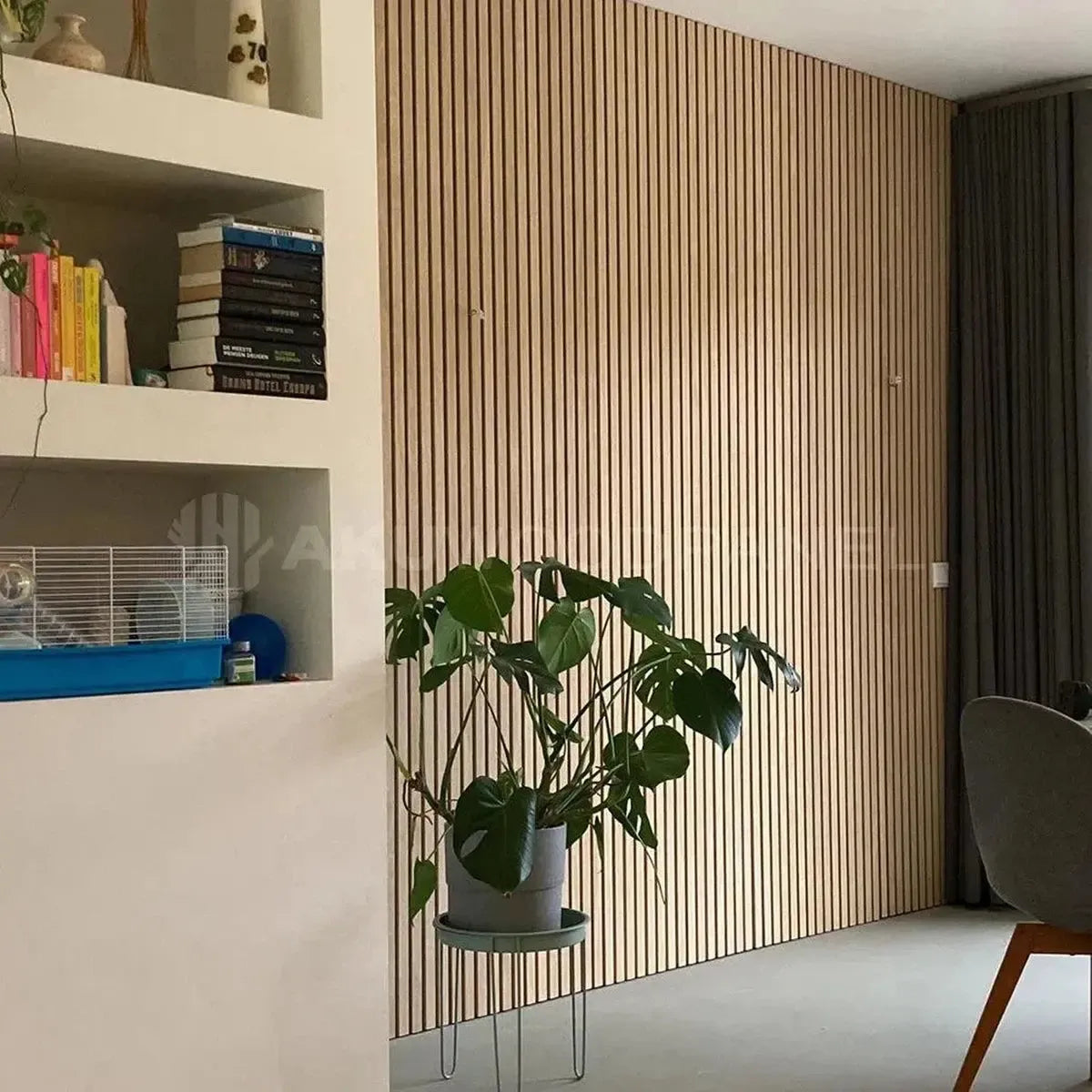
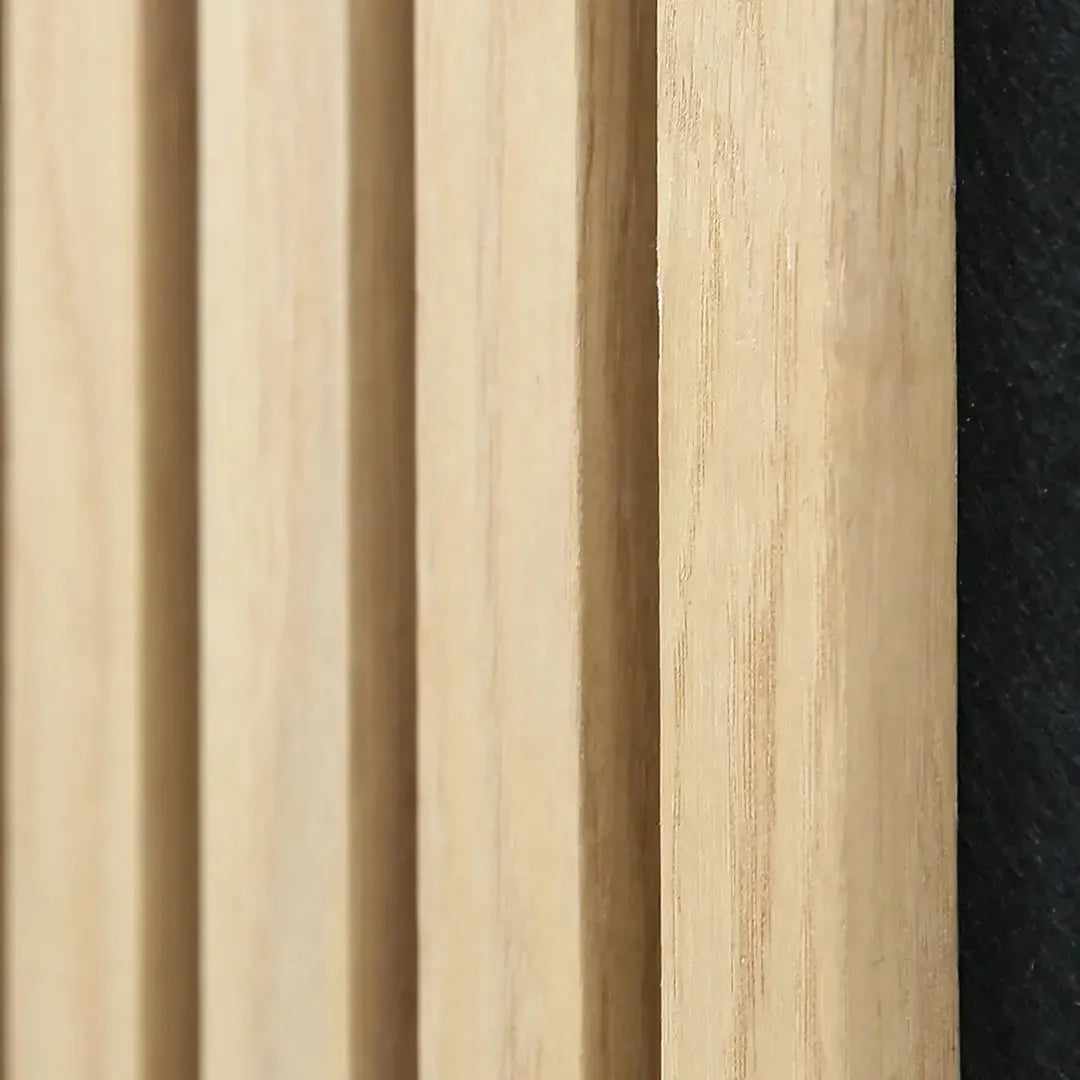
The lobby upgrade: Acoustic Slat Wall Panel Natural Oak Natural Oak brings a lighter, retail-grade finish suited to reception areas, viewing lounges, or check-in desks — the zones where players' parents wait, not where the ball ever lands. Verdict: Consider for front-of-house areas only; it's not the panel to put behind a goal.
What to avoid
- Fabric-wrapped fiberglass panels — they look like acoustic treatment, but the fabric face tears at the first hard shot; replacing torn panels every few months costs more than installing real wood veneer once.
- Foam pyramid or wedge panels — designed for recording studios, not sports facilities, they compress, discolor, and fail most commercial fire codes for a public assembly space.
- Ultra-thin laminate "wood look" panels — the printed veneer peels at the edges once arena humidity gets involved, usually inside the first year.
Verdict comparison table
| Panel | NRC / Absorption | Impact Durability | Best Zone | Verdict |
|---|---|---|---|---|
| Acoustic Slat Wall Panel Black Oak | Moderate, solid veneer | High | Perimeter walls, goal ends | Buy |
| Hexagon Acoustic Panel Walnut with Gray Felt | 0.75 NRC | Moderate | Upper walls, spectator side | Buy |
| Acoustic Slat Wall Panel Smoked Oak with Gray Felt | High, felt-backed | High | Behind goal mouth | Consider |
| Full Sample Box | Not applicable | Not applicable | Pre-purchase testing | Buy first |
| Acoustic Slat Wall Panel Natural Oak | Moderate | High | Lobby, lounge | Consider |
“A futsal ball moving at 30 to 40 mph hits the same patch of wall hundreds of times a season — panels either survive that or they don't.”
FAQ
What's the best acoustic panel for a futsal arena wall?
Acoustic Slat Wall Panel Black Oak is the best all-around pick for 2026 because it pairs real wood veneer durability with enough absorption to cut reverb on high-contact walls. Reserve the hexagon and gray-felt options for zones above ball-strike height.
Do acoustic panels survive direct ball impact?
Panels with a real 3-sided wood veneer over an engineered core survive direct ball impact; fabric-wrapped foam and fiberglass panels do not. Test any finish with a sample box before covering a full wall.
How much NRC rating do you need for an indoor soccer facility?
Target 0.7 NRC or higher for a court with 200-plus feet of open span, like the 0.75 NRC on the Hexagon Acoustic Panel Walnut with Gray Felt. Lower-rated panels won't move the needle on whistle and voice clarity.
Is real wood veneer better than foam panels for sports facilities?
Yes — real wood veneer over an engineered core holds up to ball strikes and cleaning chemicals, while foam panels compress, discolor, and often fail commercial fire codes for public assembly spaces. Wood veneer also survives 2026-level daily play without visible wear.
How many wall panels does a futsal court need?
Coverage depends on wall height and total perimeter length, not a fixed count — budget for the full lower 8 feet of any wall taking direct ball contact plus both goal-end walls. Measure your specific court before ordering.
Can acoustic panels handle humidity in an indoor arena?
Sealed wood veneer panels handle typical indoor arena humidity from HVAC cycling and body heat without swelling. Thin laminate wood-look panels do not, and tend to peel at the edges within a year.
How much do acoustic panels for a futsal arena cost per box?
Slat wall panels for arena use run $169.95 to $182.95 per box depending on finish, and hexagon panels run $148.95 to $165.95 per box of four. A $10 sample box lets you test finishes before the full order.
Where should panels go first in an indoor soccer facility?
Start behind the goals, where shots concentrate, then move to the side walls at ball-strike height. Lobby and spectator areas can wait since they don't affect in-court acoustics or take ball impact.
One last thing
Most facilities treat the wrong wall first. The loudest reverb usually comes off the ceiling and the end walls behind the goals, not the long side walls spectators lean against. Start acoustic panel coverage behind the goals in 2026 before touching the sidelines, and the difference shows up in the first weekend of play — coaches can be heard across the court without shouting.
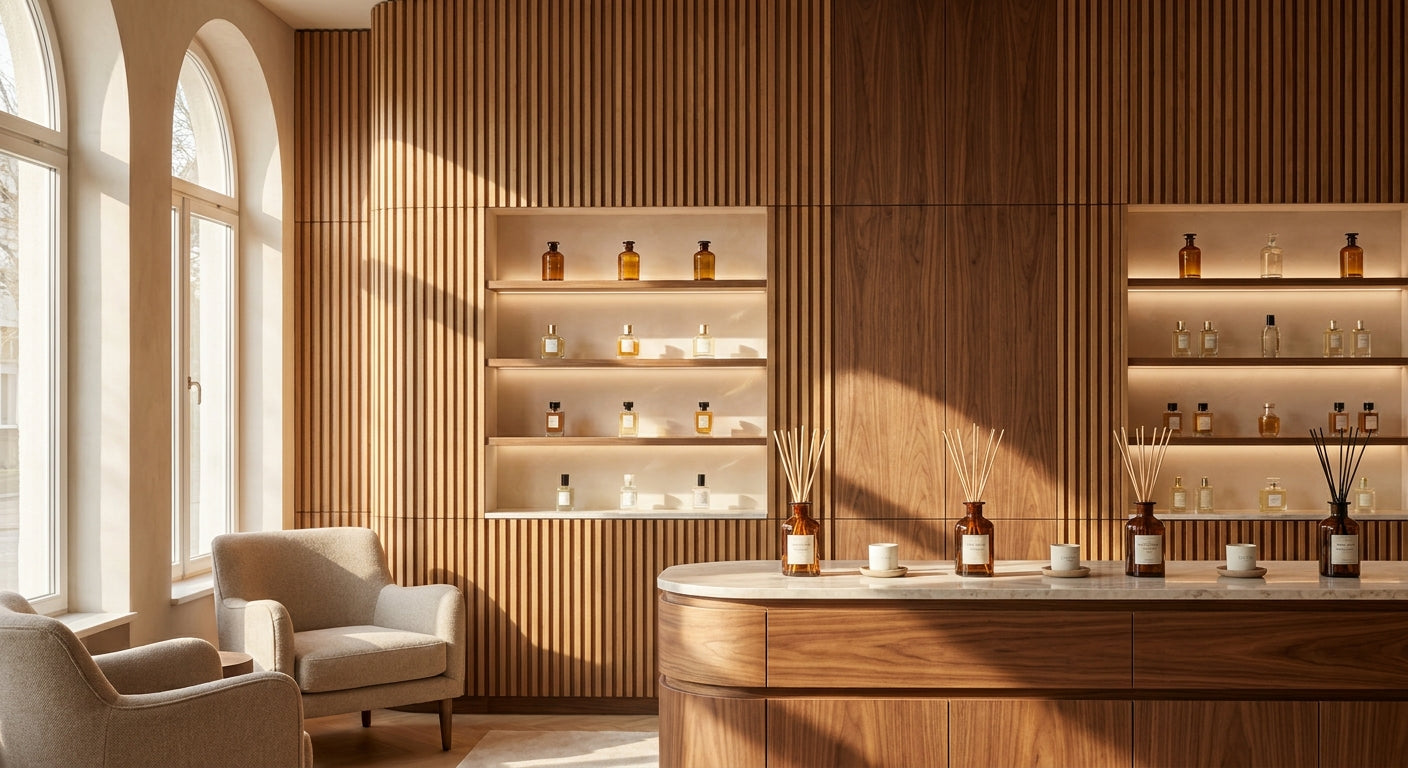
 Better performance and aesthetic appeal
 In Stock