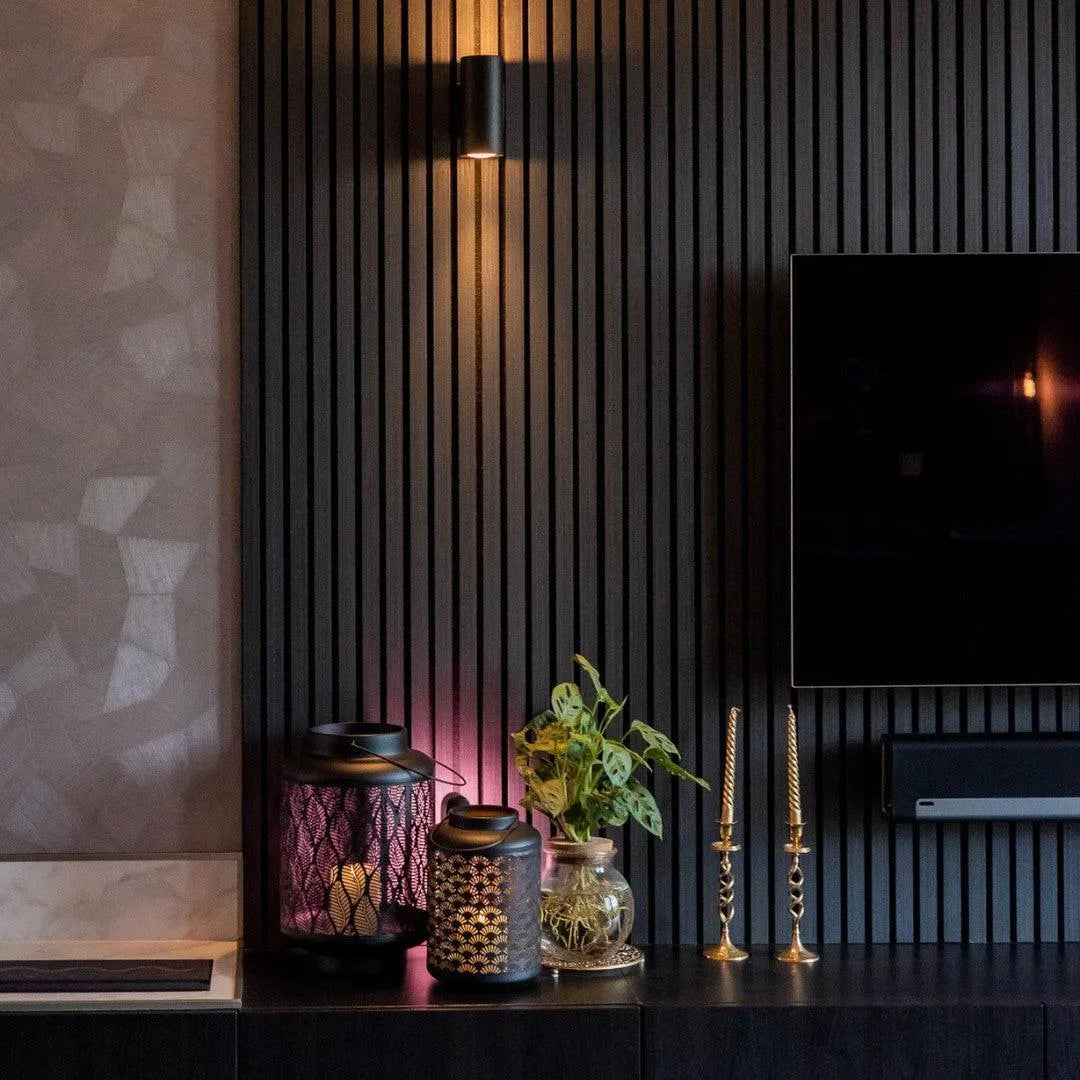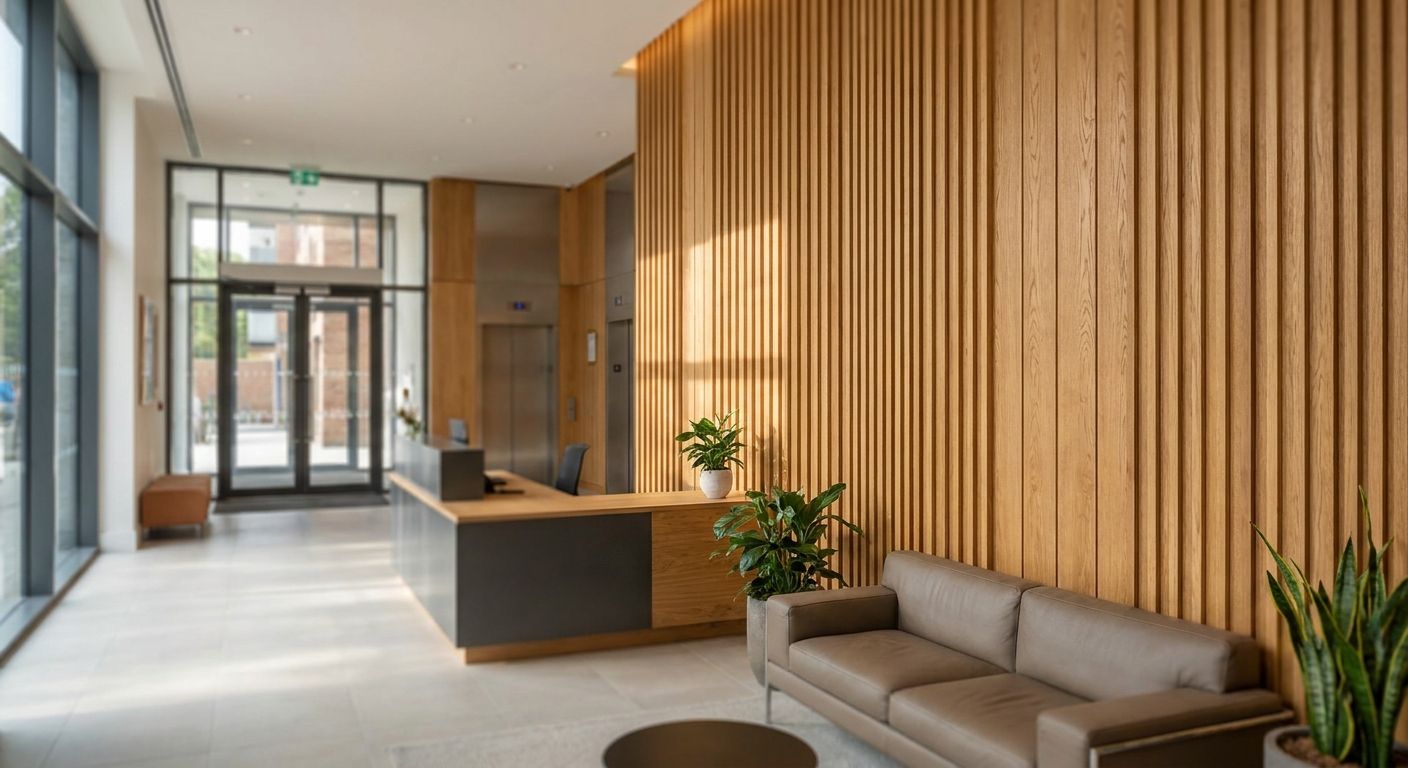
Condo and co-op lobbies get judged in the first ten seconds a resident or buyer walks through the door — and most boards are stuck with builder-grade drywall, cold marble, or laminate paneling that dents, scuffs, and does nothing for the echo bouncing off the elevator bank. Wood wall panels for condo lobbies solve both problems at once: they cut hard-surface noise and upgrade the visual first impression without a full gut renovation.
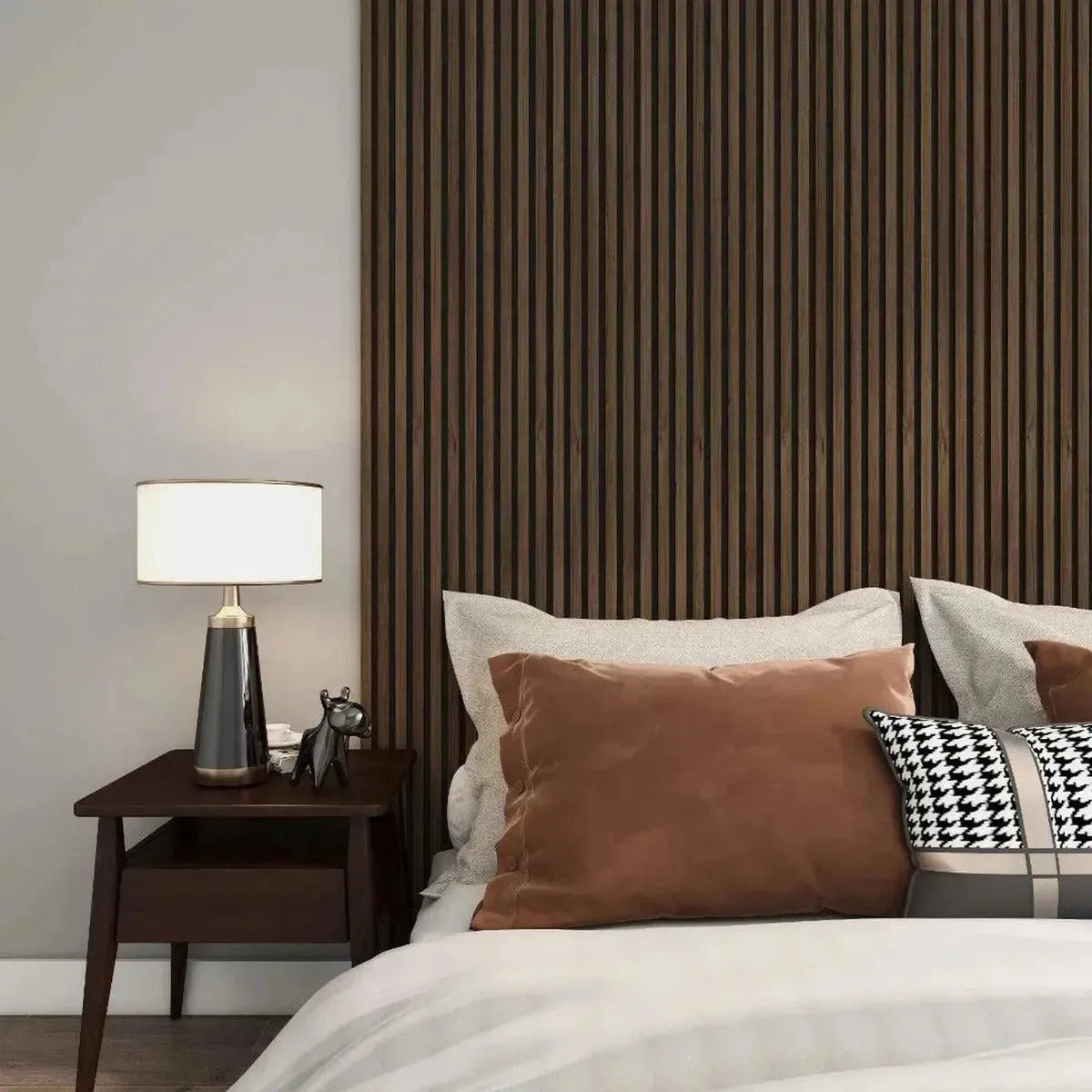
- Acoustic Slat Wall Panel Walnut is the safe pick for condo lobbies in 2026 — real wood veneer over an acoustic core. Buy.
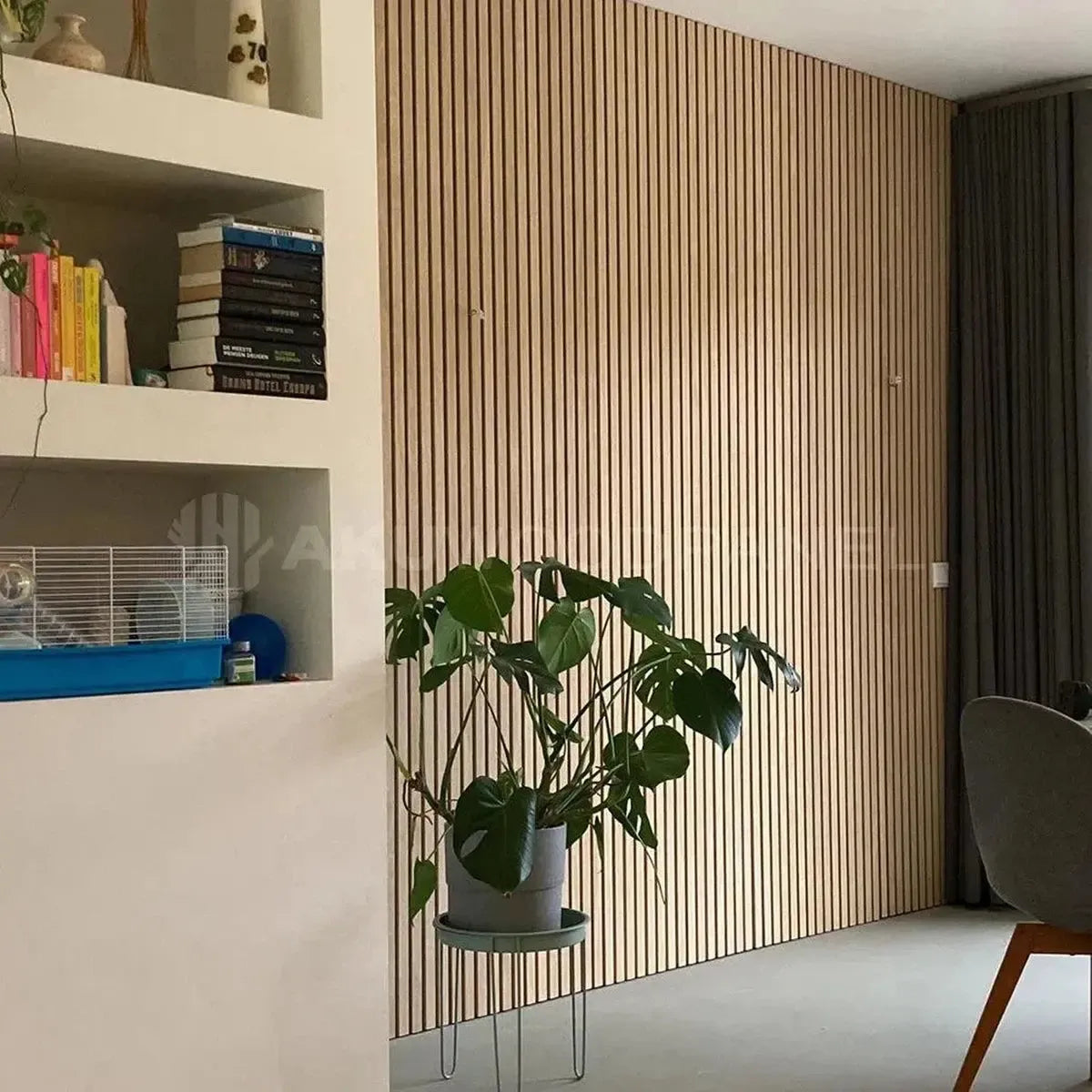
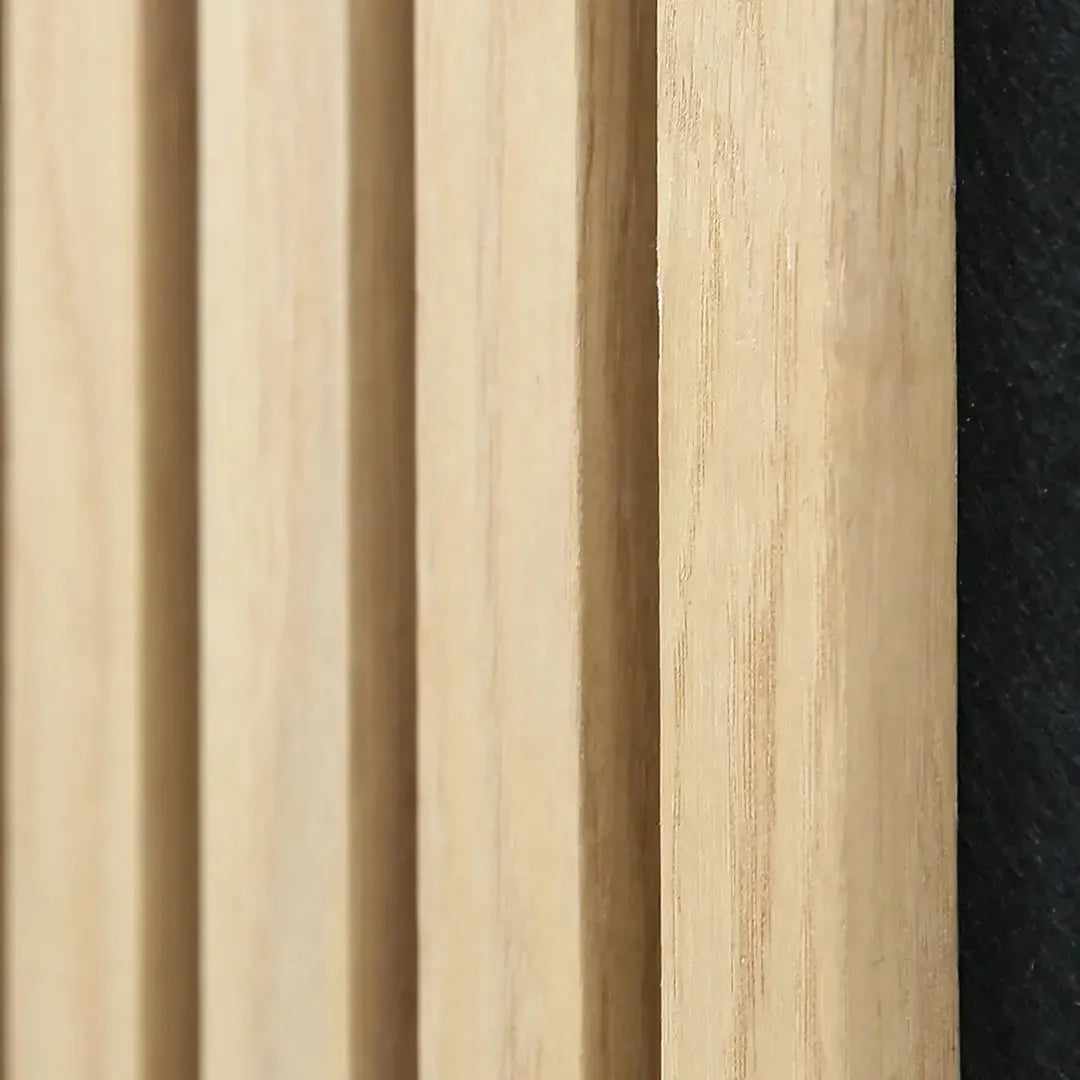
- Fluted Wall Panel Natural Oak works for boards chasing a design statement at the elevator bank. Buy.
- Avoid thin laminate-look vinyl panels in entry vestibules — they show wear inside 12-18 months of foot and cart traffic.
- Check fire rating and building code compliance before a co-op board vote, not after.
- AKU Woodpanel's acoustic and fluted lines cover both echo control and pure aesthetic upgrades for multifamily lobbies.
Why this matters
Lobbies in condo and co-op buildings are almost always hard-surface rooms — tile floors, glass entry doors, painted drywall or stone accent walls. Sound has nowhere to absorb, so footsteps, package deliveries, and lobby conversations echo straight up the stairwell or into the elevator lobby.
Boards also live under two constraints nobody else in residential interiors deals with: a vote, and a budget line that has to survive an annual meeting. A vendor who shows up with vague specs and no fire documentation gets tabled. A vendor with a clear material spec, a coverage number, and a real installed example gets approved. Wood wall panels built with real wood veneer over an acoustic-rated core answer both the sound complaint and the "does this look expensive" question in one purchase.
Multi-unit buildings also see traffic that single-family homes never do — moving dollies, delivery carts, strollers. That changes what "durable enough" means for a lobby install versus a living room accent wall.
Who this buying guide is for
This is written for condo board members, co-op board treasurers, property managers, and building owners specifying a lobby or common-area renovation in 2026. If you're comparing vendors for a board presentation, sourcing samples before a vote, or trying to figure out why the lobby echoes every time the elevator door opens, this is your buyer's guide.
What to look for in wood wall panels for condo lobbies
Fire rating and code compliance
Multifamily common areas fall under stricter fire code than residential interiors, and a board that approves an uncertified material is the board that gets the violation letter. Ask any vendor for documentation before the panels ship, not after installation. This single question eliminates half the online panel sellers targeting DIY homeowners.
Acoustic performance in hard-surface rooms
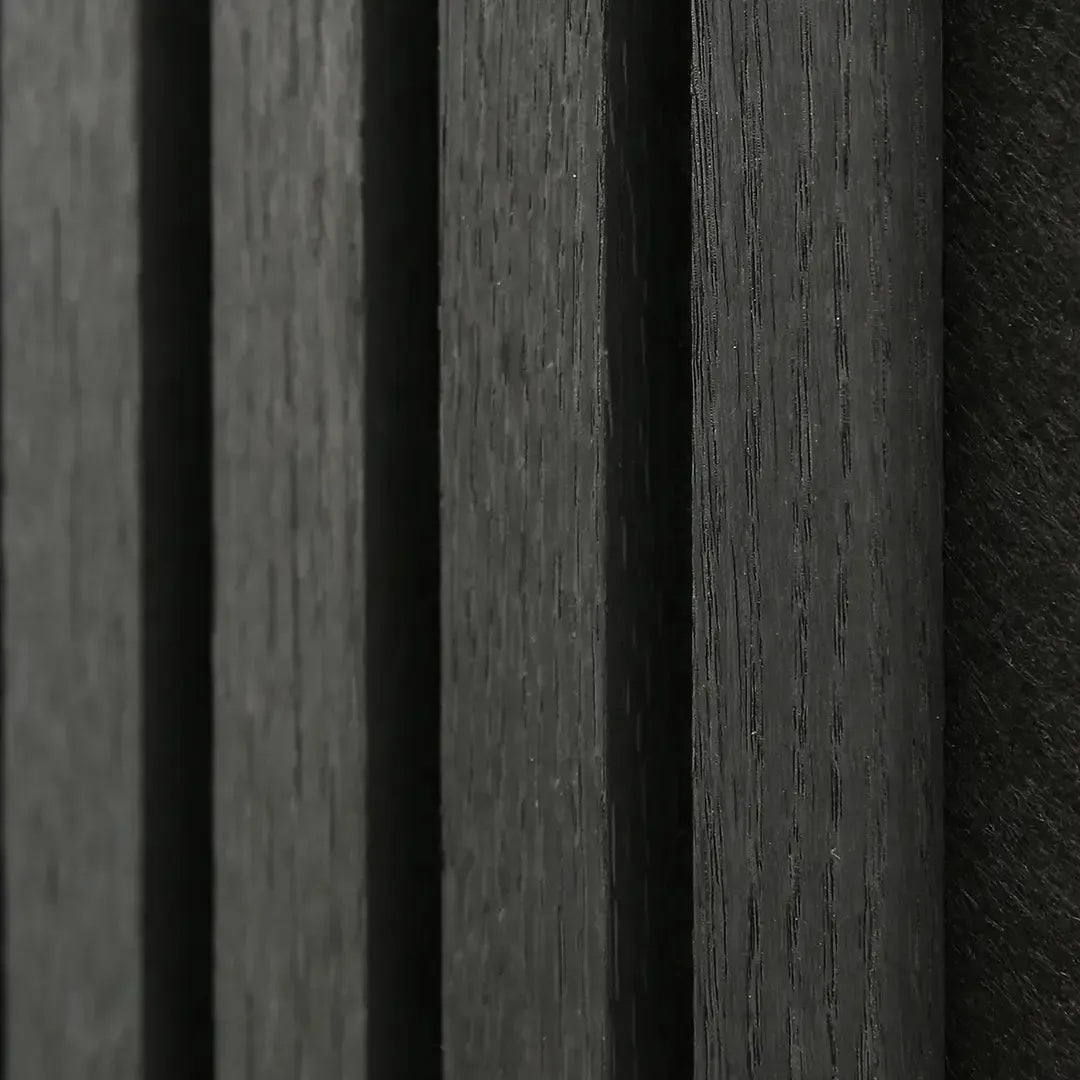
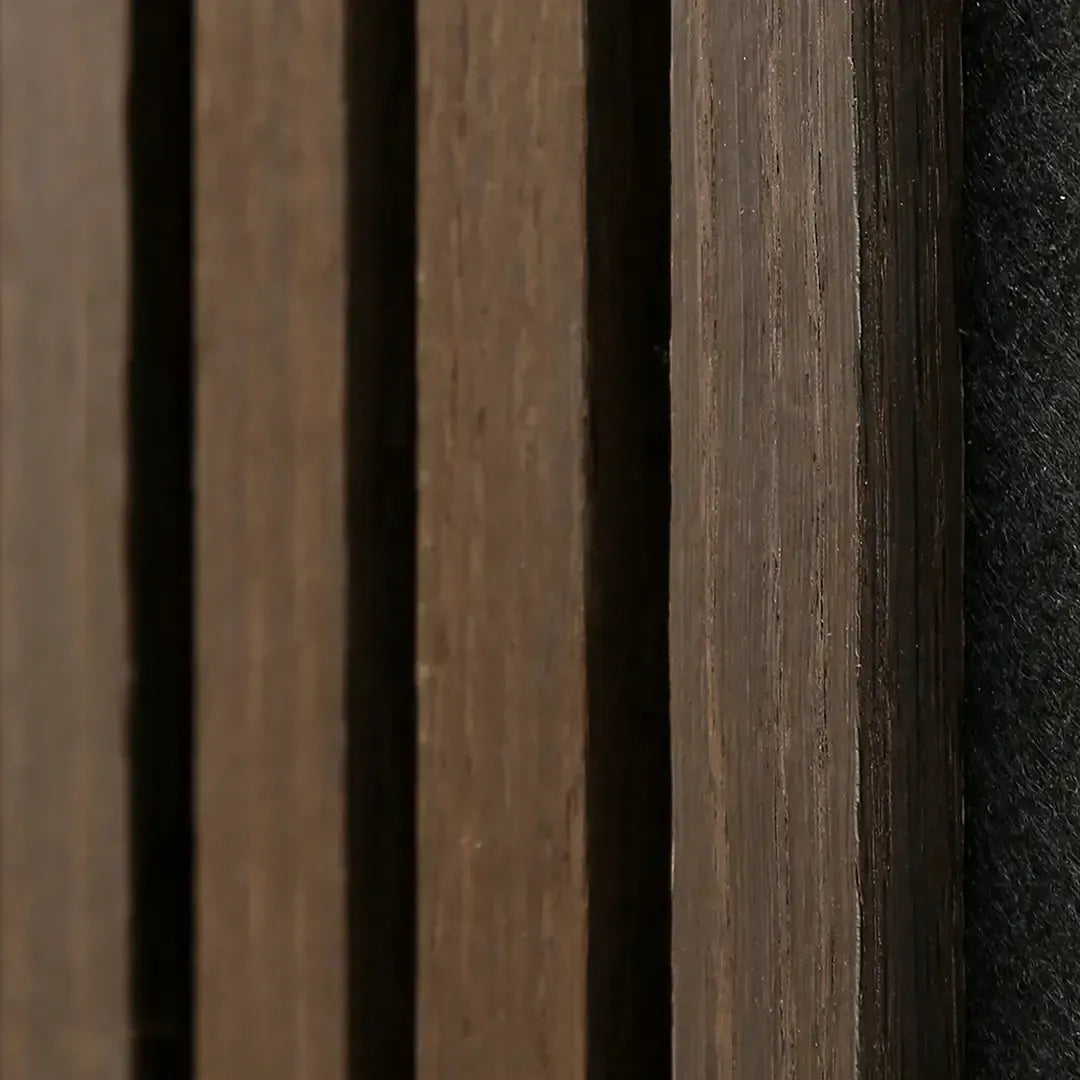
A lobby with tile floors, a glass door, and a drywall ceiling reflects nearly all the sound that hits it. Slat-style acoustic panels with a felt or fiber backing absorb mid- and high-frequency noise — the range that makes conversations and elevator dings feel harsh. Look for panels built specifically as acoustic products, not decorative slats with no absorptive layer behind them.
Durability under high foot and cart traffic
Lobbies see luggage carts, delivery dollies, and strollers scraping past the walls daily. Real wood veneer over a rigid MDF core holds up to bumps far better than thin laminate skins, which chip and peel at the edges within a year or two of daily contact.
Installation downtime
A lobby can't close for three weeks. Panel systems that install directly over existing drywall with basic mounting hardware get a lobby wall done in a weekend instead of a month, which matters when the space is the only entrance residents have.
Perceived quality and resale optics
Buyers and appraisers register lobby finishes as a proxy for how well the whole building is maintained. Real wood veneer reads differently than printed laminate under lobby lighting, and it's one of the cheaper ways to move a building's first impression up a tier without touching flooring or lighting.
Budget per square foot for board approval
Boards vote on numbers, not vibes. Get a per-panel or per-square-foot cost locked in before the meeting, including trim and end pieces, so the vote isn't derailed by a change order two months later.
Top picks for condo and co-op lobbies
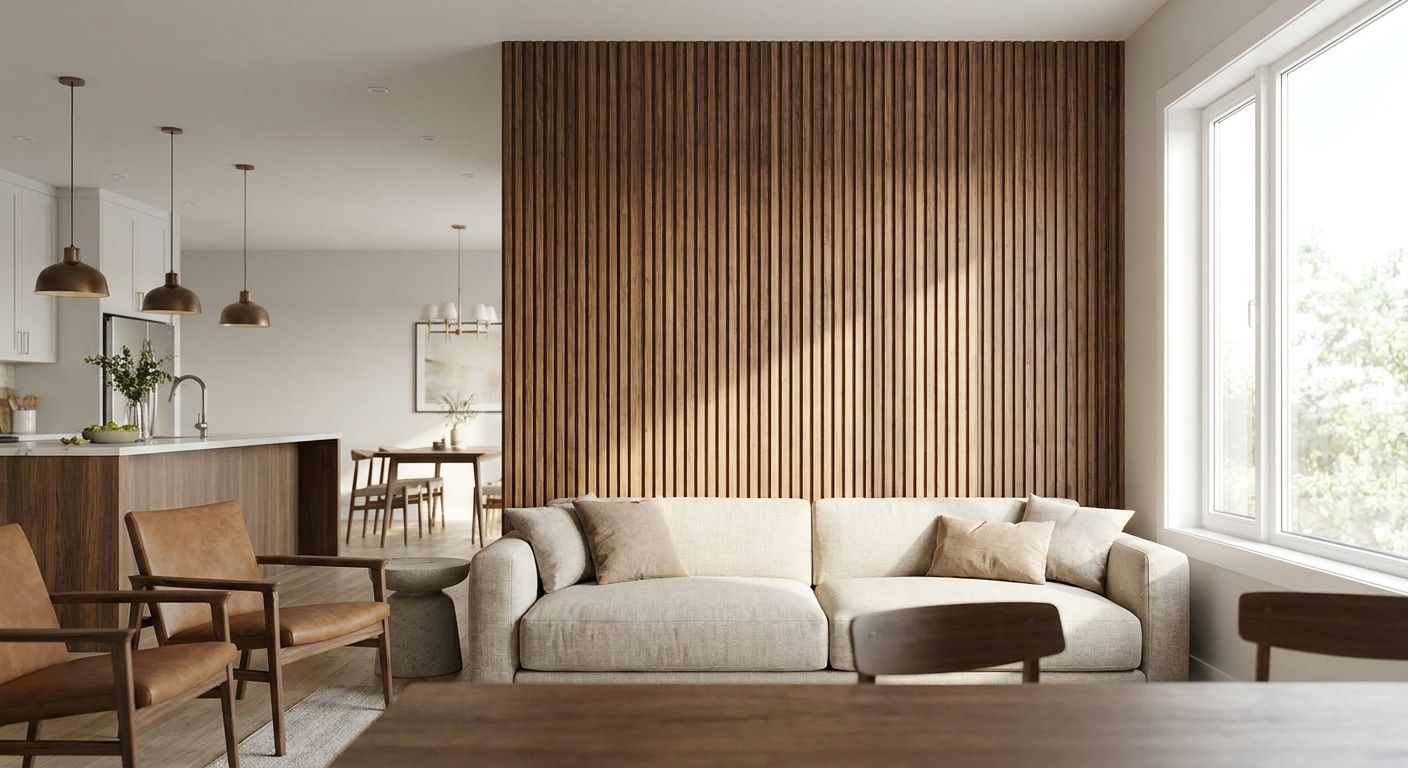
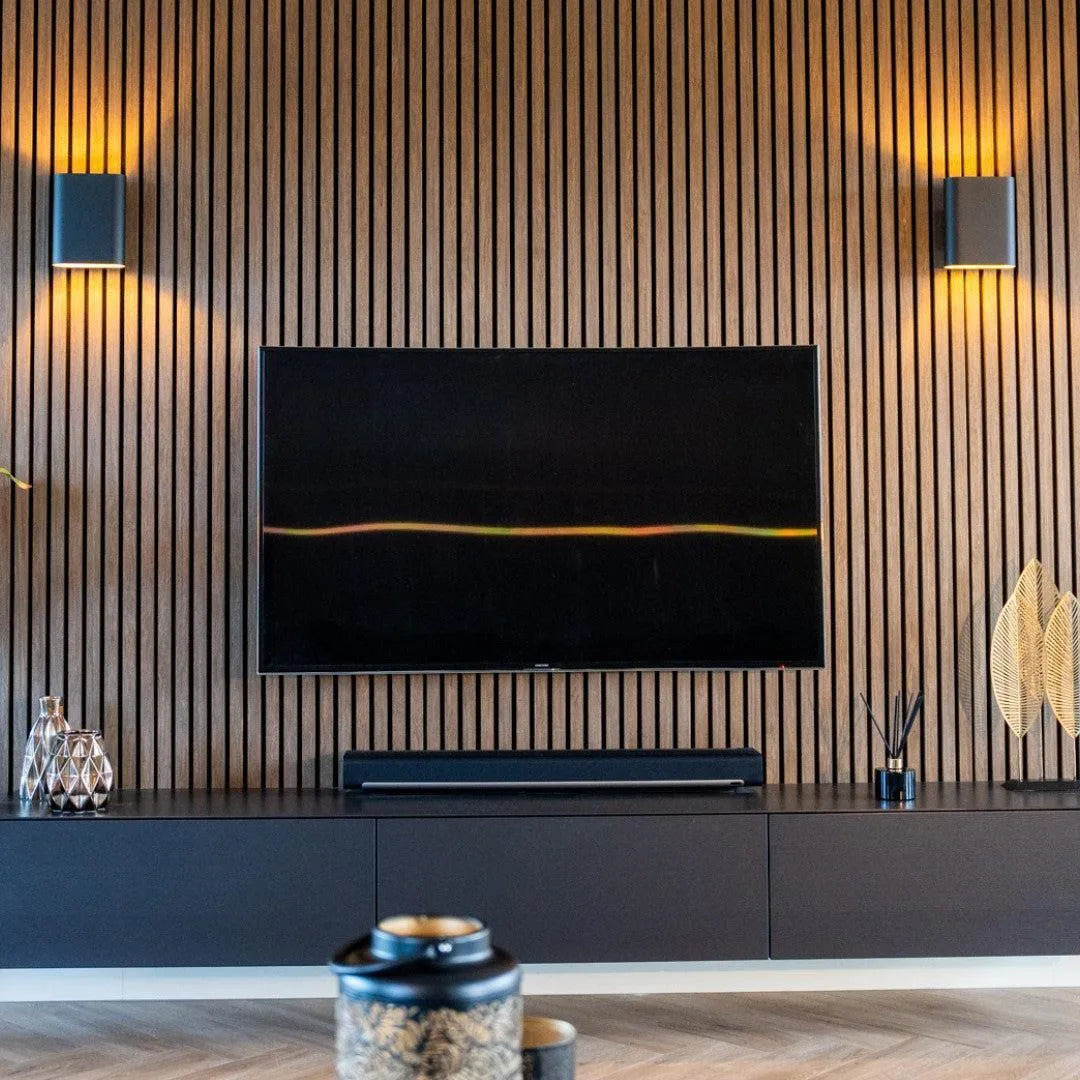
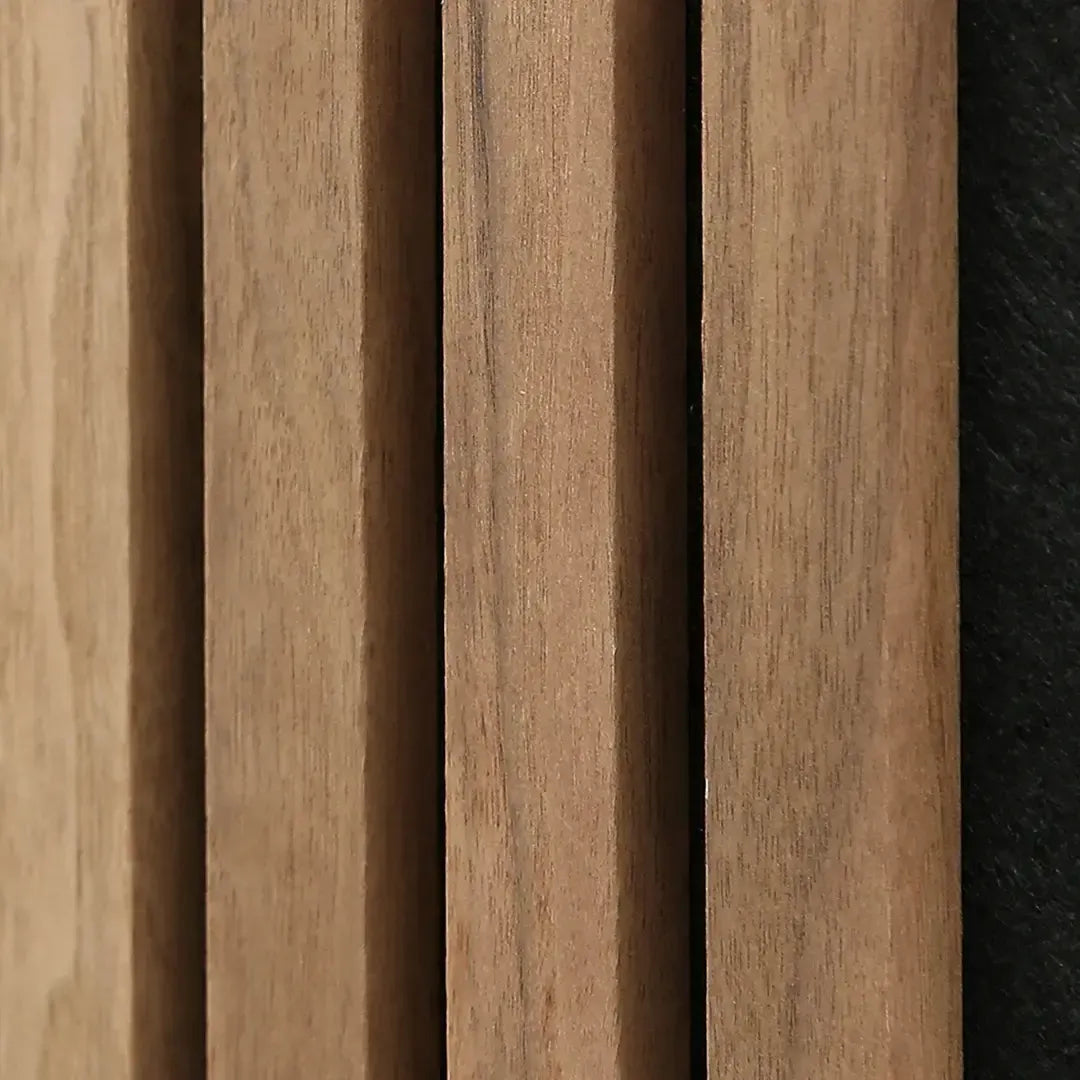
Acoustic Slat Wall Panel Walnut — the safe pick. Real 3-sided wood veneer over an acoustic-rated core, in a walnut tone that reads warm under both daylight and lobby LED fixtures. It's the pick that gets approved without debate because it solves the echo complaint and looks intentional, not experimental. Buy — see the walnut acoustic slat panel for lobby elevator walls and reception nooks.
Fluted Wall Panel Natural Oak — the design statement. Built with real wood veneer over a flexible MDF backing, priced at $233.95 per panel as of 2026, this line adds vertical depth that reads as a design decision rather than a patch job. It's the pick for boards trying to reposition a dated lobby ahead of a sales season. Buy for a feature wall behind a concierge desk — check the fluted natural oak panel for exact coverage per box.
Hexagon Acoustic Panel Black — the wildcard. A geometric acoustic panel that works when a board wants something more architectural than a slat wall, typically on a single feature wall rather than full coverage. It reads modern fast, which is a risk in a traditional pre-war lobby. Consider it only if the rest of the lobby finishes already lean contemporary.
Smoked Oak Slat Wall Panel with Gray Felt — the acoustic workhorse. This pairs a darker veneer with a visible felt backing detail, giving slightly more absorption in rooms with unusually hard, flat surfaces like all-glass entry vestibules. Buy for buildings with genuine noise complaints, not just aesthetic upgrades.
What to avoid
- Thin laminate or vinyl "wood-look" panels. They photograph fine in a listing but chip and delaminate at corners within 12-18 months under lobby cart traffic — a maintenance headache no board wants to revisit mid-year.
- Decorative-only slat panels with no acoustic backing. They fix the look but leave the echo problem untouched, which means the same complaint resurfaces at the next annual meeting.
- Panels sold without fire documentation. If a vendor can't produce a spec sheet on request, that's the sign to move to the next vendor, not to ask twice.


Verdict comparison
| Panel | Best for | Fire-code check needed | Verdict |
|---|---|---|---|
| Acoustic Slat Wall Panel Walnut | General lobby echo control | Yes | Buy |
| Fluted Wall Panel Natural Oak | Design-forward feature wall | Yes | Buy |
| Hexagon Acoustic Panel Black | Contemporary lobbies only | Yes | Consider |
| Smoked Oak with Gray Felt | High-glass, high-echo entries | Yes | Buy |
| Laminate wood-look vinyl | Nothing lobby-grade | N/A | Skip |
A lobby wall that pairs acoustic panels for condo common areas with proper end trim solves the echo complaint and the "this looks cheap" complaint in the same board vote.
FAQ
What's the best wood wall panel for a condo lobby in 2026?
Acoustic slat wall panels with real wood veneer over a felt or fiber backing are the best choice for condo lobbies in 2026 because they cut hard-surface echo while upgrading the visual finish. Walnut and smoked oak tones read well under most lobby lighting.
Do wood wall panels need a fire rating for co-op common areas?
Yes, most multifamily common areas require fire-rated wall finishes under local building code. Get fire documentation from the vendor before a board vote, not after installation.
How much do acoustic wood wall panels cost for a lobby?
Panel pricing varies by finish and coverage, with fluted and slat styles running around $233.95 per panel as of 2026. Get an exact per-square-foot quote including trim and end pieces before budgeting a full lobby wall.
Is real wood veneer better than laminate for high-traffic lobbies?
Real wood veneer over a rigid core holds up to cart and dolly traffic far better than laminate, which chips and delaminates at the edges within a year or two of daily contact. Laminate is a downgrade in any lobby with regular deliveries or moving activity.
Can wood wall panels be installed without closing the lobby?
Most panel systems mount directly over existing drywall with standard hardware, which typically lets a lobby wall get finished over a weekend rather than a multi-week renovation. Confirm the install method with the vendor before scheduling.
Do acoustic panels actually reduce echo in a lobby?
Slat-style acoustic panels with a felt or fiber backing absorb mid- and high-frequency sound, which is the range that makes hard-surface lobbies feel harsh and loud. Decorative-only panels without an absorptive backing will not fix an echo complaint.
What finish works best for a pre-war or traditional lobby?
Warmer tones like walnut or natural oak in a slat format tend to fit traditional lobby architecture better than dark, geometric hexagon panels, which read more contemporary. Match the panel tone to existing trim and flooring before ordering.
How do boards get bulk pricing on wood wall panels?
Vendors who supply multifamily and commercial projects typically offer volume pricing for full-lobby or multi-building orders. Ask directly for a bulk quote before finalizing a per-panel budget for board approval.
One last thing
The detail that gets missed most often in lobby renovations isn't the panel finish — it's the end pieces and trim. A wall of real wood veneer panels with raw, unfinished edges at the corners looks like a DIY job even when the panels themselves cost $233.95 each. Budget for matching end pieces from the start, not as an afterthought after the board already approved the main order.


 Better performance and aesthetic appeal
 In Stock