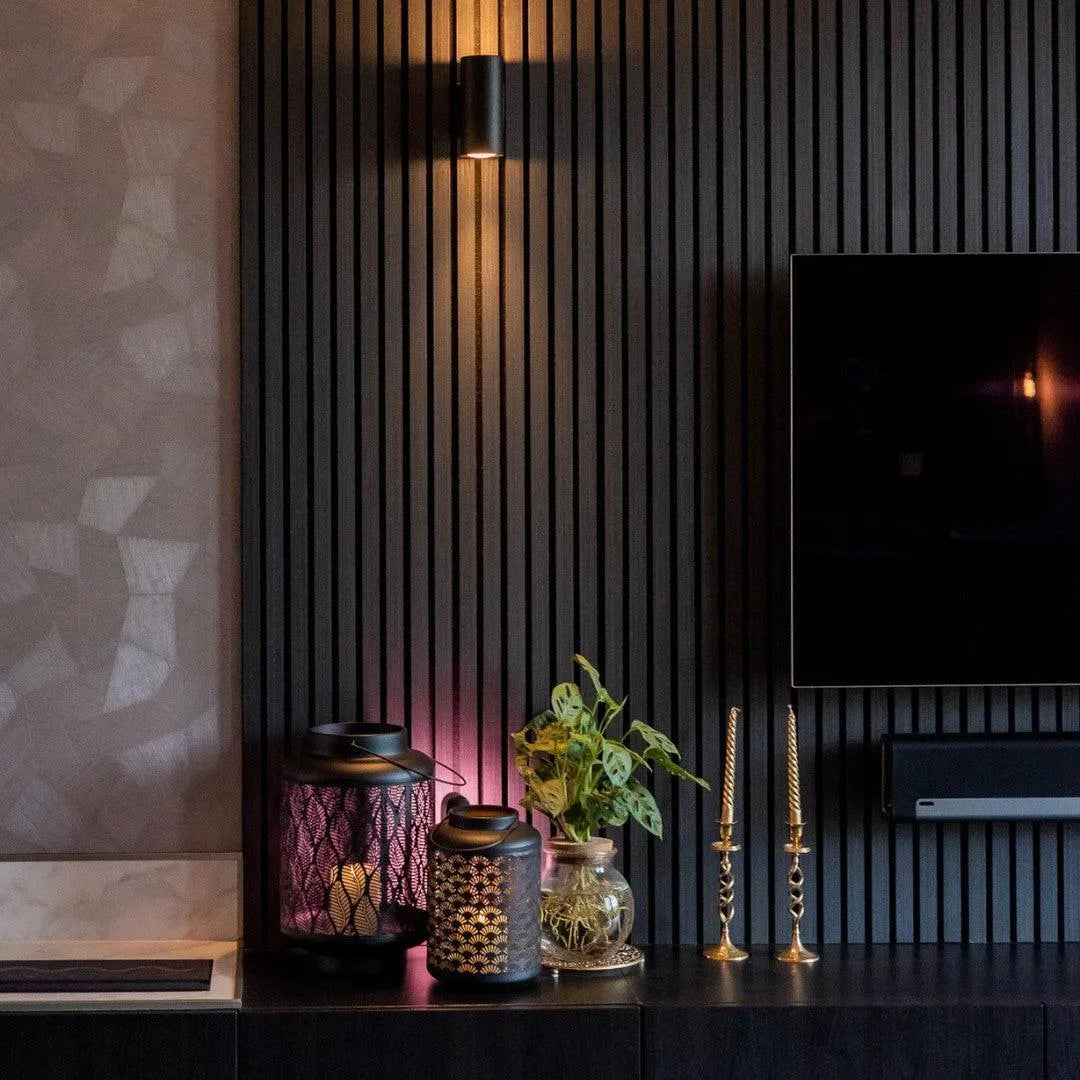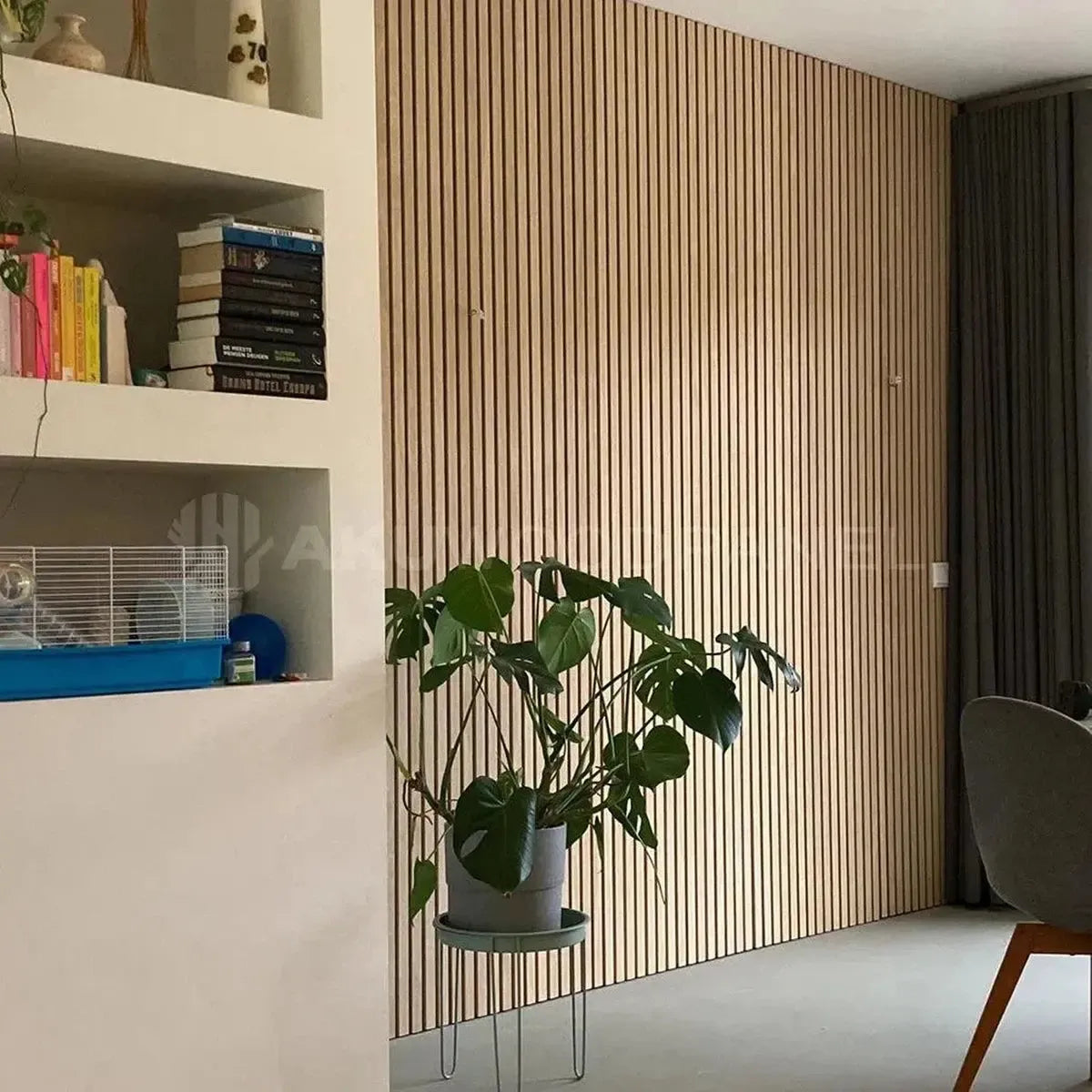
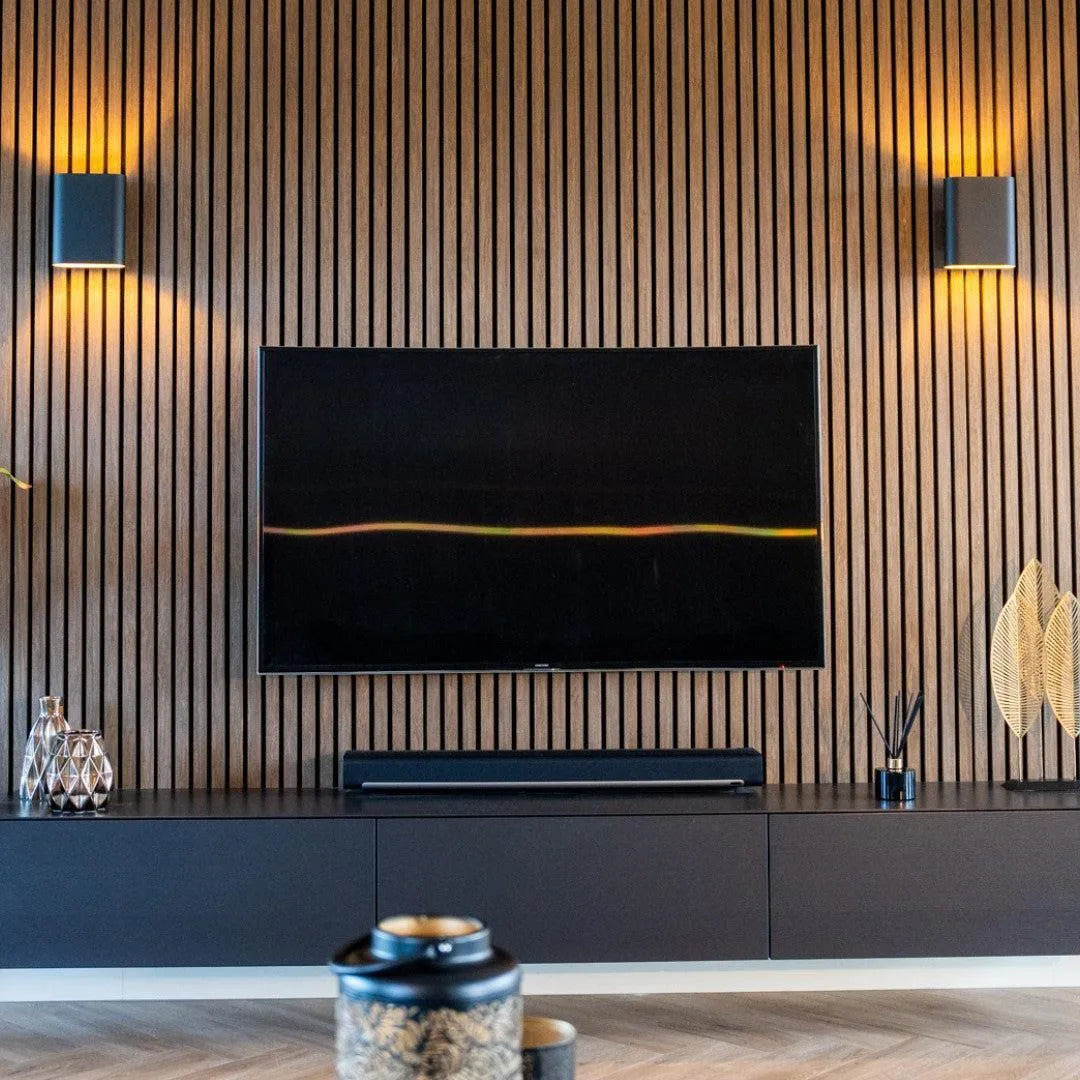
Model home staging lives or dies in the first ninety seconds a buyer spends walking through the entry, and a blank drywall wall reads cheaper than the finishes in the kitchen you spent the budget on. Wood slat panels fix that in an afternoon per unit, without the drying time or touch-up risk of paint.
- Acoustic Slat Wall Panel Natural Oak is the safe wood panels for model home staging pick at $169.95 a box — buy it.
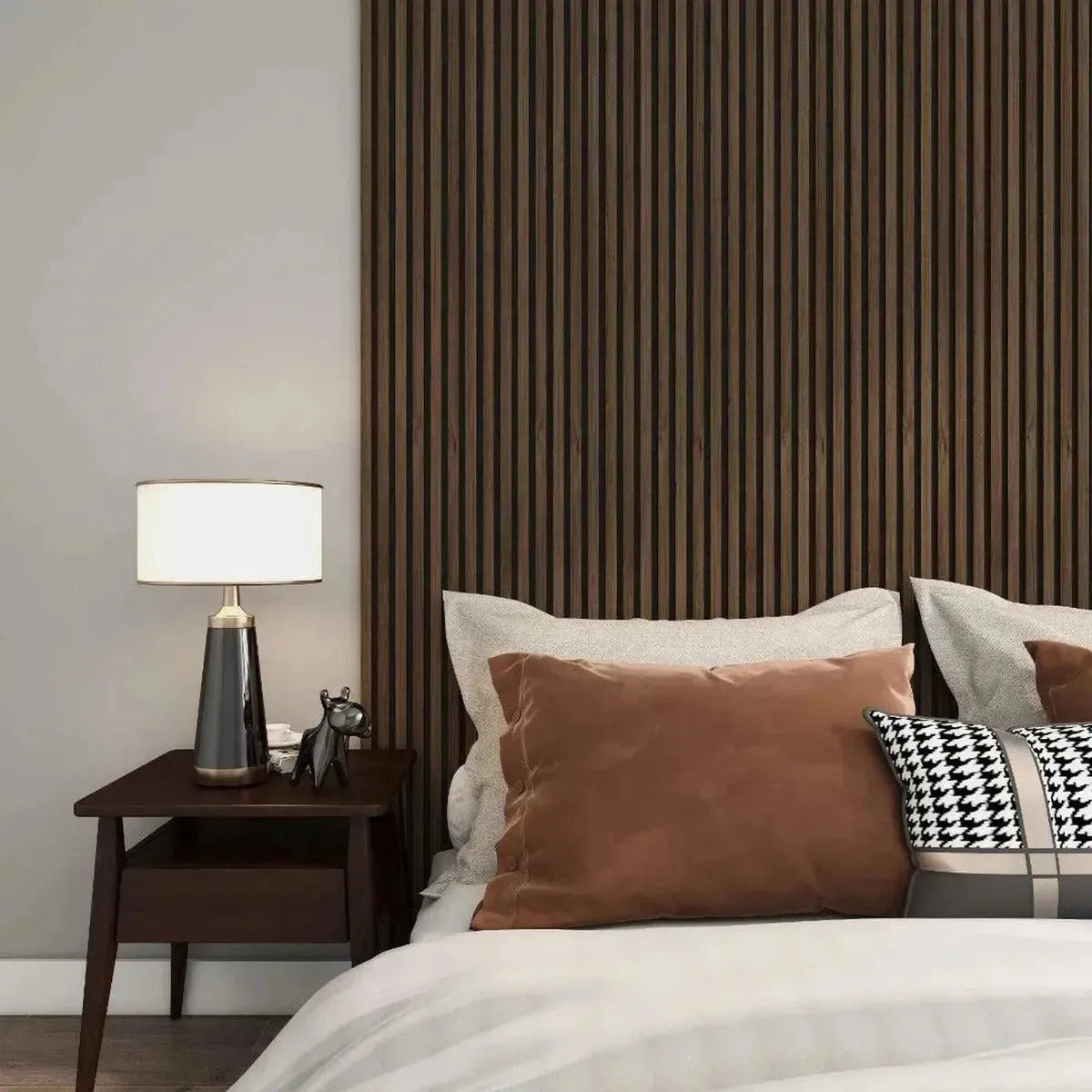
- Acoustic Slat Wall Panel Walnut suits the premium unit in a community at $182.95 — consider it for the flagship model.
- Order the Full Sample Box before committing panels across five or ten identical units.
- Skip printed laminate under $100 — it photographs flat in listing photography and open house lighting.
Why this matters
A model home isn't a house you live in — it's a sales tool that has to look finished on day one and hold up through months of foot traffic from strangers touching every surface. Builders staging three, five, or ten identical floor plans across a community need finishes that read consistent unit to unit, install fast between walkthroughs, and don't need a repaint every quarter.
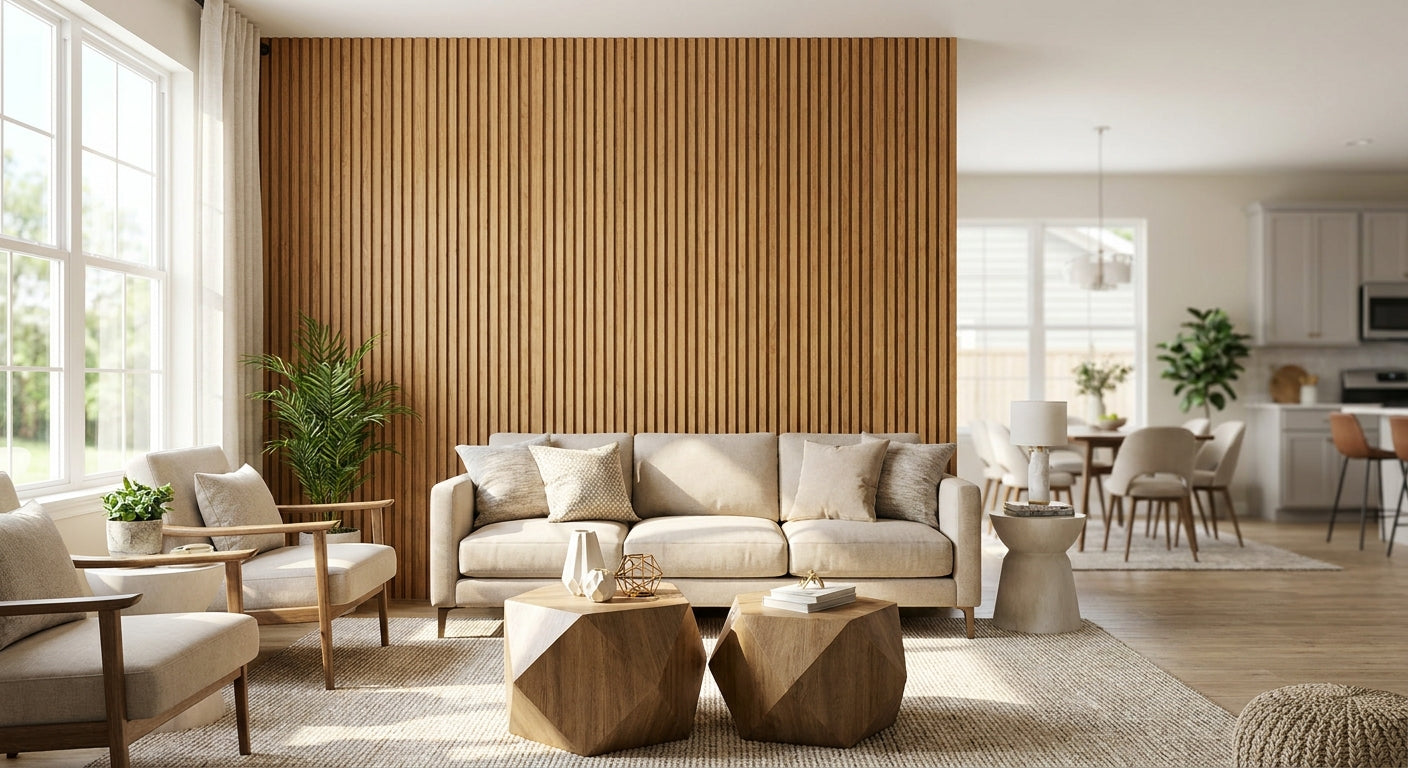
Wood slat panels solve the specific staging problem paint can't: texture. A flat accent wall in a model home photographs the same as every other builder's spec house on Zillow. A slat wall with real wood veneer photographs differently, and it's the kind of detail buyers mention to their agent. Before locking in a single finish across a whole community, order the Full Sample Box and hold it against your actual lighting rig — model home lighting runs warmer or cooler than most showrooms, and veneer tone shifts under it.
Who this is for
This guide is for builders, staging companies, and leasing offices installing wood accent walls across multiple identical or near-identical units — not a single homeowner doing one accent wall. If you're staging one house, budget and repeat-unit matching matter less than in a 6-unit model row where every wall has to match the one next door.
What to look for in wood panels for model home staging
Batch consistency across repeat units
A model home community isn't one wall — it's the same wall repeated five or ten times, and buyers walk unit to unit in the same afternoon. Panels with inconsistent dye lots or grain printing show the seams between units immediately, which undercuts the "premium finish" story you're trying to sell.
Real veneer over printed laminate
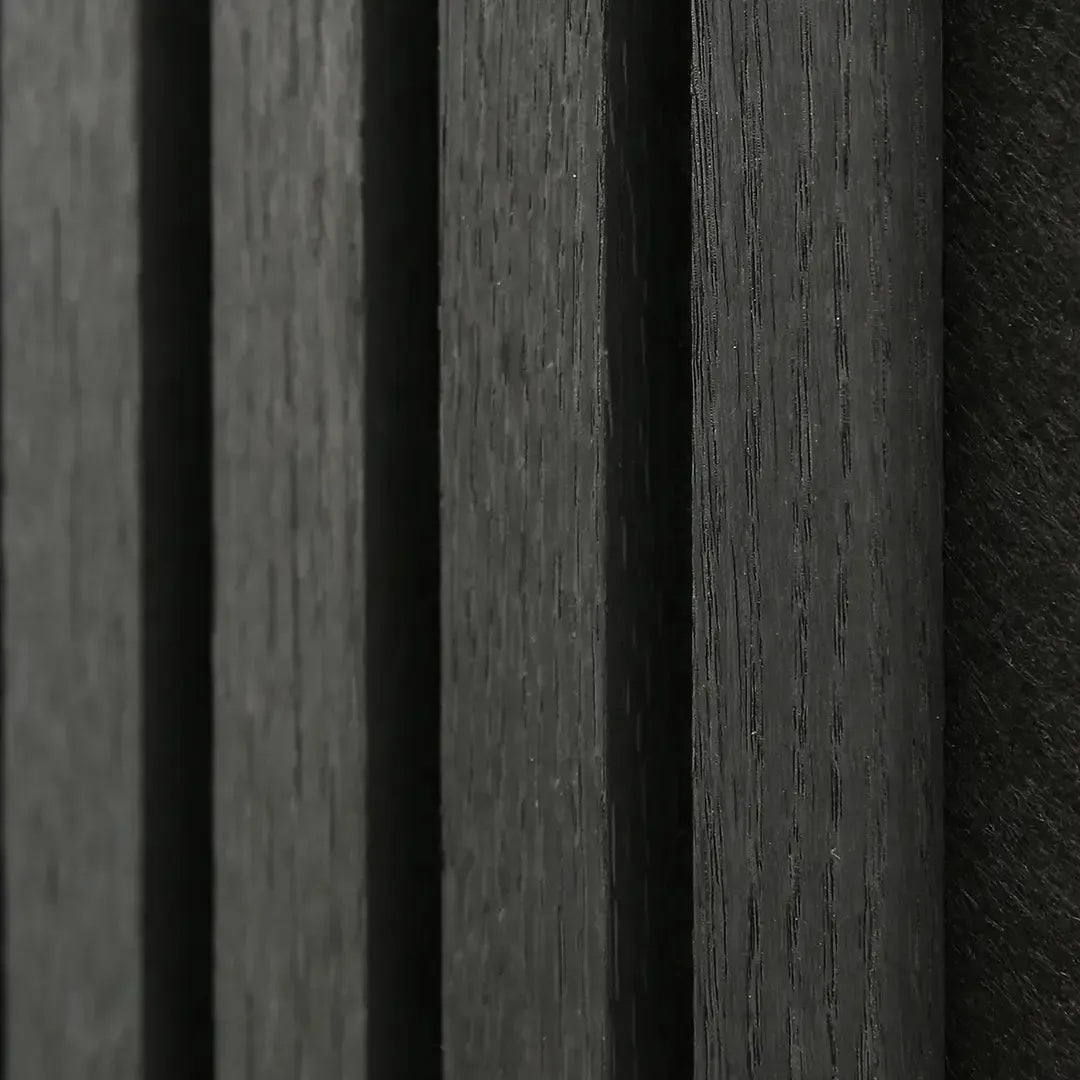
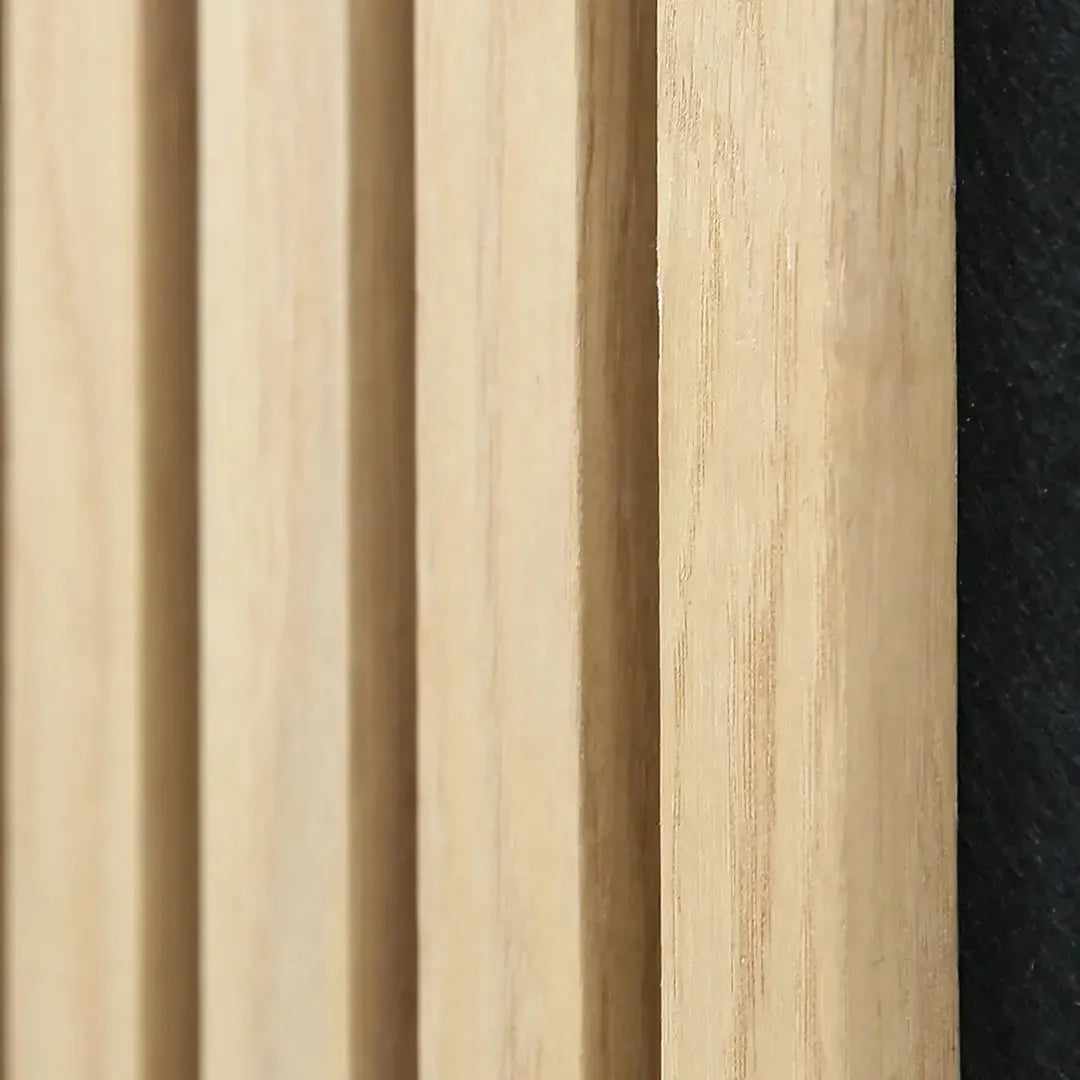
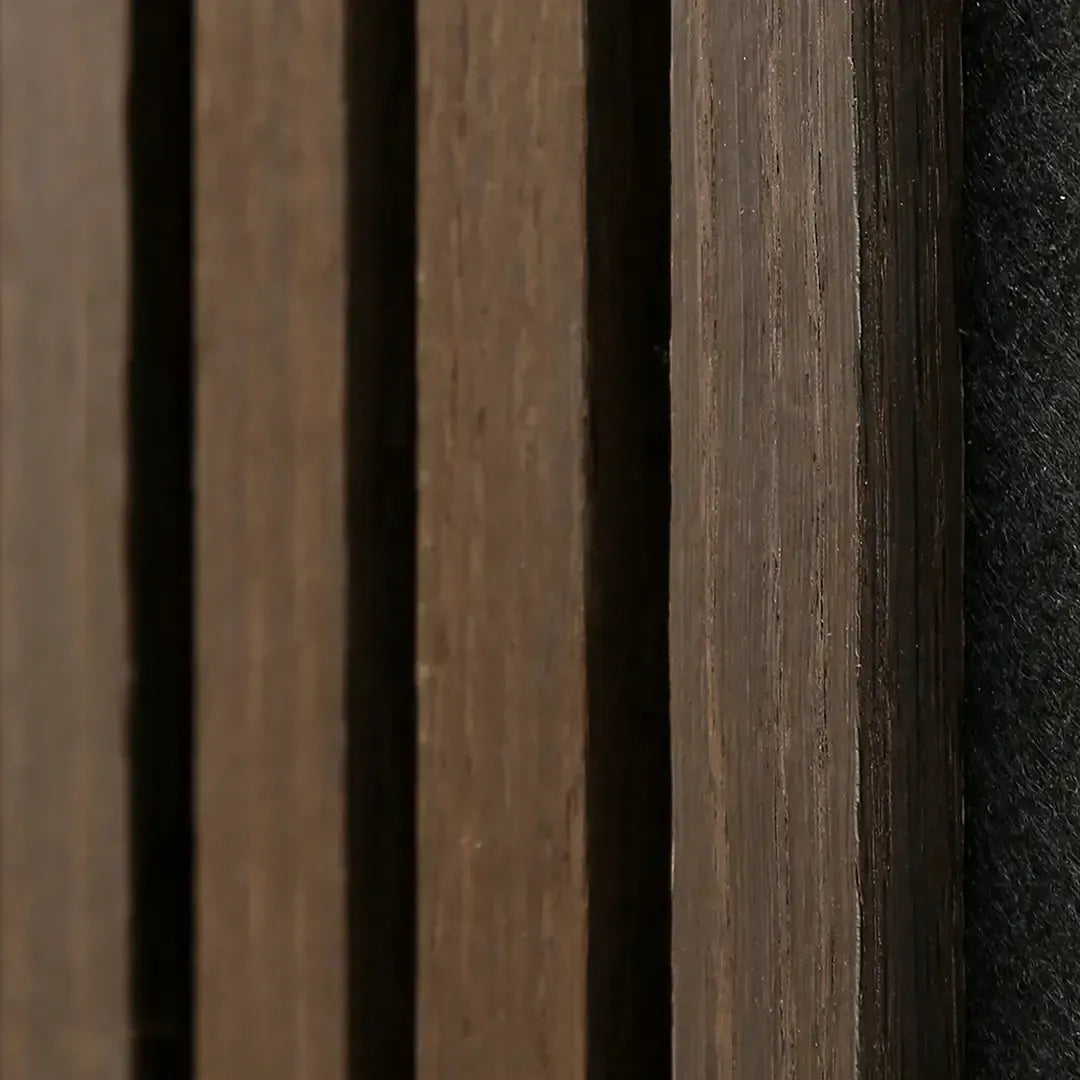
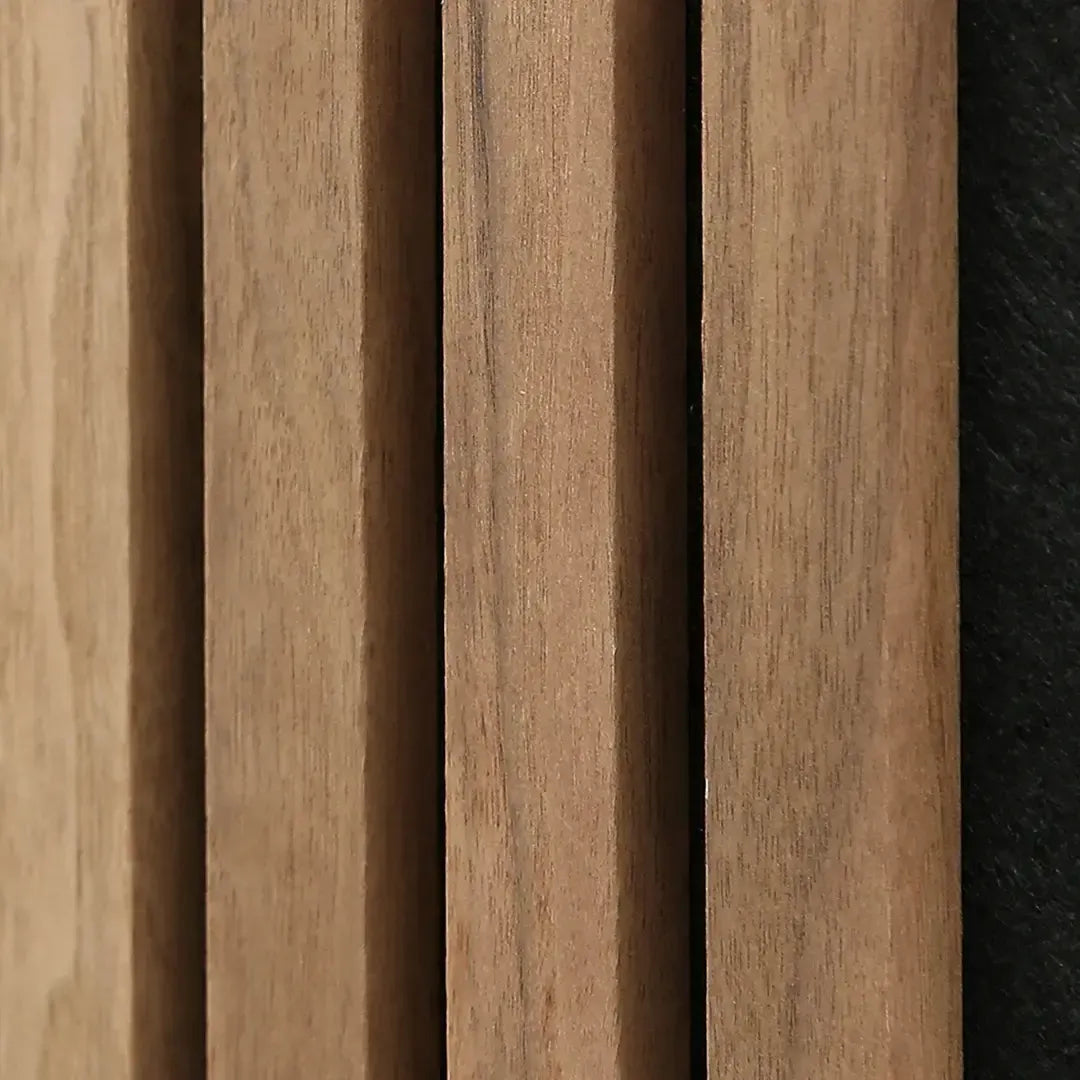
Listing photography and in-person walkthroughs both expose printed wood-look laminate under strong lighting — it goes flat and slightly plastic in a way buyers register even if they can't name it. A genuine 3-sided wood veneer keeps grain depth under both phone-camera flash and afternoon sun through the entry windows.
Install speed against a staging deadline
Model homes go from empty shell to open-house-ready on a fixed calendar, and a wall finish that needs multiple coats or long cure time eats into that window. Panel systems that click or clip into place let a two-person crew finish an accent wall in under a day per unit.
Acoustic performance in open-plan layouts
Most 2026 model homes lean toward open-plan great rooms with vaulted ceilings, and hard surfaces bounce sound in a way that makes a house feel empty and echoey during a walkthrough — the opposite of "move-in ready." Felt-backed acoustic panels rated around 0.75 NRC take the hollow slap out of a room before a single piece of furniture goes in.
Cost per unit at community scale
A finish that looks great at $300 a wall stops looking great when you multiply it across ten units in a community. Builders need a per-box price that holds up against the staging line item in the overall community marketing budget, not just the flagship unit.
Durability through repeated open houses
Model homes see more foot traffic in six months than most houses see in ten years of normal living, and panels near entries and hallways take the brunt of bags, strollers, and curious hands. A veneer that scuffs after one open house weekend isn't a staging finish — it's a liability.
Top picks for model home staging
Acoustic Slat Wall Panel Natural Oak — the safe pick. Priced at $169.95 a box with a 3-sided wood veneer finish, this is the panel that matches almost any builder color palette from farmhouse to modern. It reads warm without skewing dark, which keeps it flexible across a community with mixed exterior styles. Verdict: Buy — the default choice for a leasing office or repeat-unit rollout via Acoustic Slat Wall Panel Natural Oak.
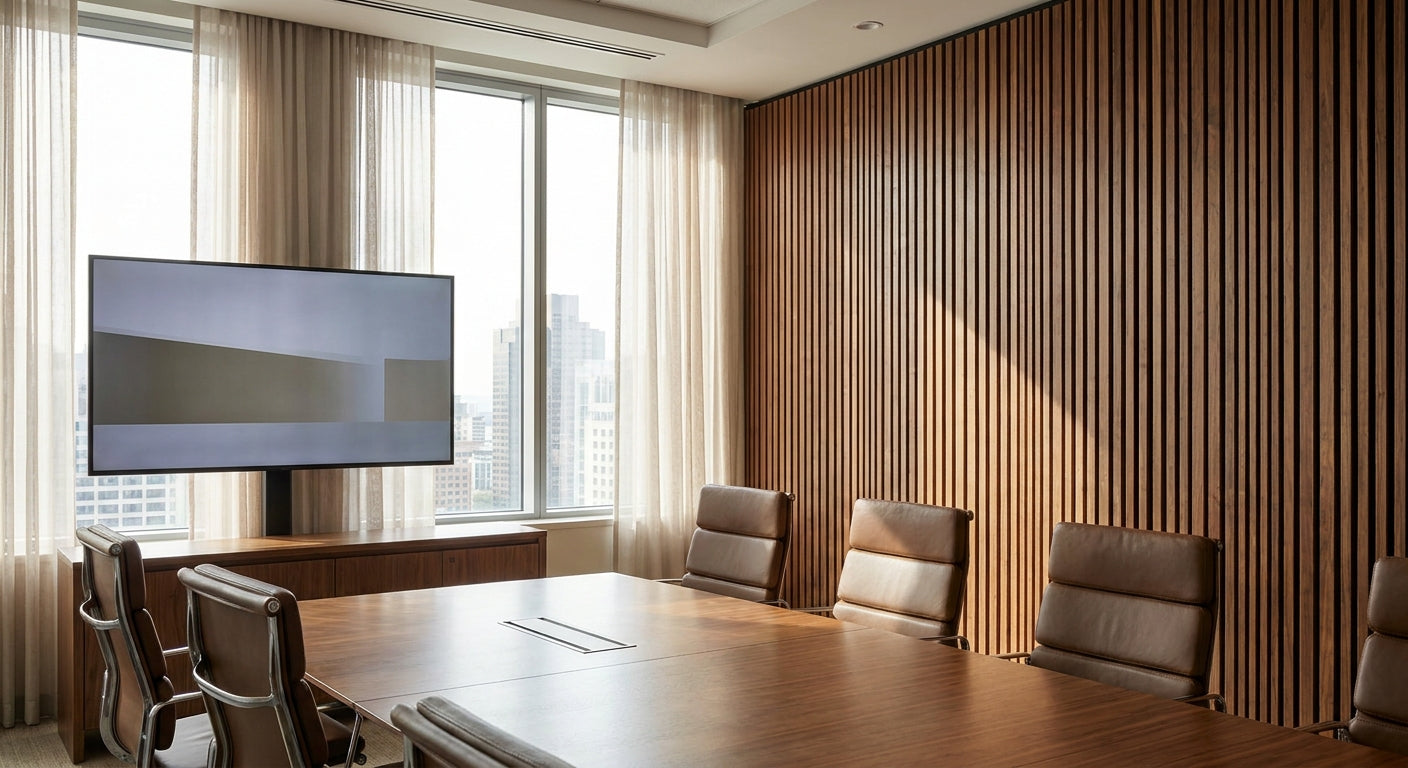
Acoustic Slat Wall Panel Walnut — the flagship-unit upsell. At $182.95 a box, the darker walnut grain signals a higher price point the moment a buyer walks in, which is exactly the job of the one "showcase" model in a community with multiple floor plans. It photographs richer under warm entry lighting than lighter finishes. Verdict: Consider for your top-tier unit through Acoustic Slat Wall Panel Walnut — skip it for the base-plan units where the price gap doesn't earn its keep.
Fluted Wall Panel Natural Oak — the fast accent-wall wildcard. Fluted profiles cover a wall's worth of texture with fewer linear feet than a full slat install, which shortens crew time on a tight staging calendar. It reads as a deliberate design choice rather than a filler wall, which matters in a listing photo set. Verdict: Consider for entry walls and kitchen islands via Fluted Wall Panel Natural Oak.
Full Sample Box — the pre-rollout check. Before a crew touches ten identical units, this is the step builders skip and regret — lighting rigs and finish schedules vary enough between a showroom and an actual model home that a sample check on-site catches tone mismatches before install day. Verdict: Buy before any multi-unit order, no exceptions.
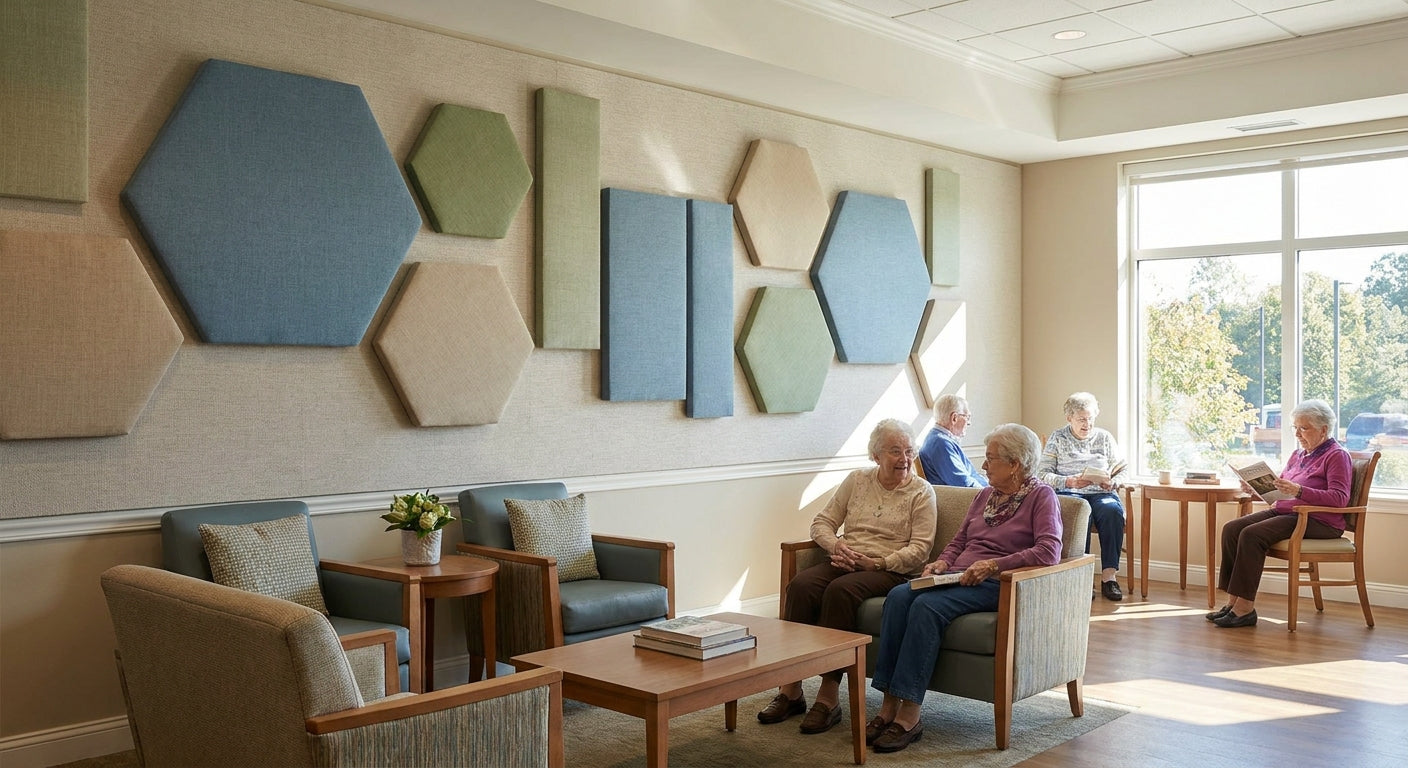
Hexagon Acoustic Panel Natural Oak — the lobby and clubhouse pick. For community clubhouse walls or leasing office reception areas that sit apart from the model homes themselves, the hexagon geometry breaks up a large flat wall differently than a straight slat run. Verdict: Consider for shared amenity spaces, not individual model unit interiors.


What to avoid
- Printed laminate labeled "wood look" — it looks fine in a supplier photo and flat under real open-house lighting, and buyers notice the difference even without naming it.
- Ultra-thin peel-and-stick veneer — seams and edge lifting show up fast under the traffic a model home takes on in its first six months, which is a repair callback the sales team doesn't need.
- Non-acoustic panels in vaulted great rooms — a flat decorative panel with no felt backing does nothing for the echo that makes an empty model home sound hollow during a walkthrough.
Verdict comparison
| Panel | Best for | Price | Verdict |
|---|---|---|---|
| Acoustic Slat Wall Panel Natural Oak | Repeat-unit rollout, base plans | $169.95 | Buy |
| Acoustic Slat Wall Panel Walnut | Flagship or showcase unit | $182.95 | Consider |
| Fluted Wall Panel Natural Oak | Entry and kitchen accent walls | Varies by run | Consider |
| Hexagon Acoustic Panel Natural Oak | Clubhouse and leasing office | Varies by run | Consider |
| Full Sample Box | Pre-rollout tone check | Sample pricing | Buy |
FAQ
What's the best wood panels for model home staging in 2026?
Acoustic Slat Wall Panel Natural Oak at $169.95 is the safest default for repeat-unit staging in 2026 because its tone matches most builder palettes. Walnut works better as the upsell finish in a single flagship unit.
Are acoustic wood panels worth it over paint for model homes?
Yes for open-plan layouts with vaulted ceilings, where hard surfaces echo and make an empty house sound hollow during a walkthrough. Felt-backed slat panels rated around 0.75 NRC cut that echo before furniture goes in.
How much do wood slat panels cost for a model home accent wall?
Panel boxes run from roughly $126.95 for smaller tile formats up to $182.95 for premium walnut veneer as of 2026. A typical accent wall needs multiple boxes depending on wall size.
Can wood panels handle repeated open house foot traffic?
Premium 3-sided wood veneer panels hold up better than printed laminate or peel-and-stick veneer under the heavier traffic a model home sees in its first six months. Entry and hallway walls take the most wear and deserve the sturdier veneer option.
Is natural oak or walnut better for a model home entry?
Natural oak reads warmer and matches a wider range of builder color schemes, making it the safer choice across multiple units. Walnut skews darker and photographs richer, which works best as a single showcase-unit upgrade.
Do model homes need acoustic panels or just decorative ones?
Open-plan great rooms with vaulted ceilings benefit from acoustic backing because empty rooms echo and feel unfinished during a walkthrough. Smaller accent walls in bedrooms or hallways can use decorative-only panels without the acoustic upcharge.
How many panels does a typical model home accent wall need?
Coverage depends on wall dimensions, but most single accent walls in a model home entry or living room use several boxes of slat or fluted panels. Ordering the Full Sample Box first confirms tone before calculating exact coverage.
Can staging companies reuse wood panels across multiple properties?
Slat and fluted panels install with clip systems designed for clean removal, which makes reuse across a staging rotation realistic compared to glued-down laminate. Check the panel's specific mounting method before planning a multi-property reuse cycle.
One last thing
The detail most builders miss: the Full Sample Box exists specifically because tone shifts between a supplier's showroom lighting and a model home's actual fixture package, and catching that mismatch before a ten-unit order is cheaper than repainting a community's worth of accent walls in month two.
 Better performance and aesthetic appeal
 In Stock