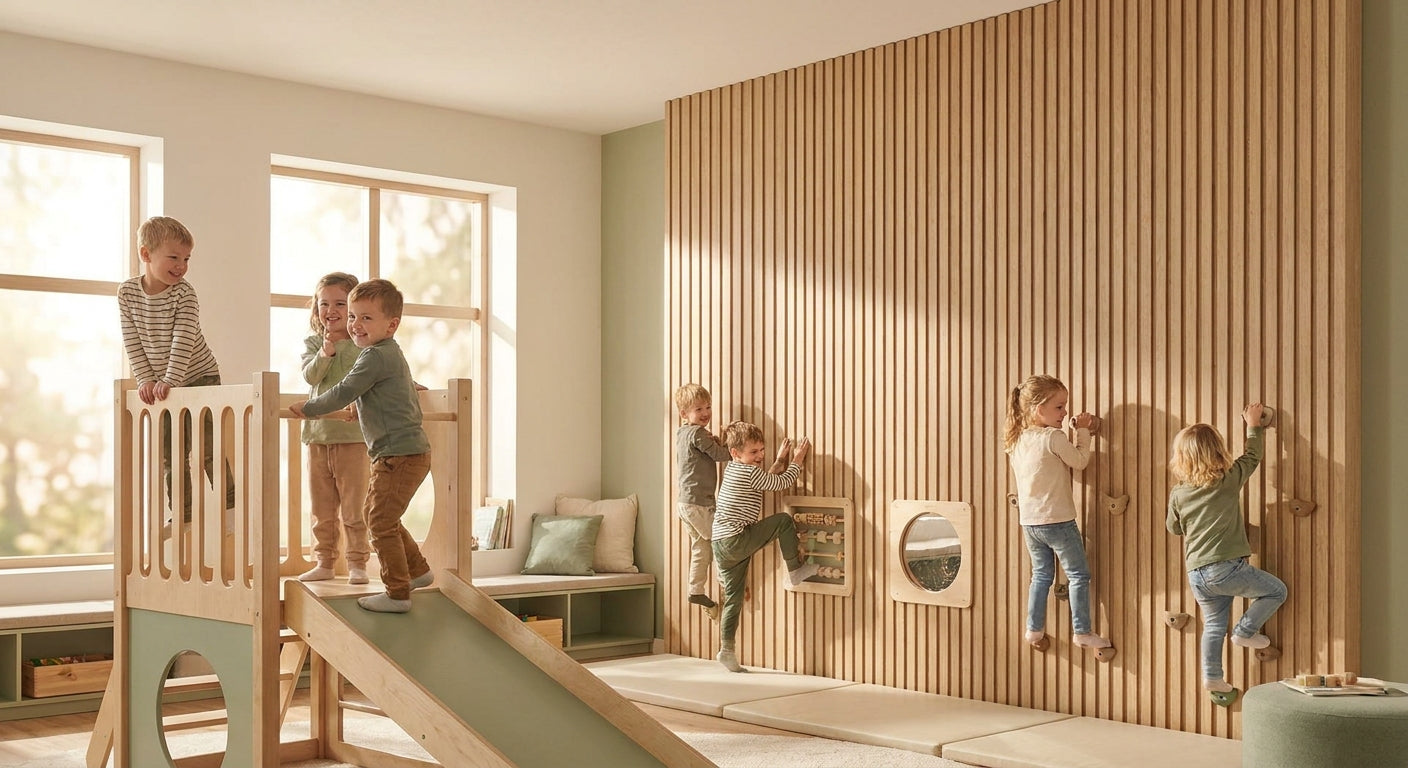
Indoor playgrounds bounce sound off drywall, plastic tube slides, and concrete floors until every scream turns into a wall of noise — the right wood panels for indoor playground walls fix that without turning the space into a padded cell.
- Acoustic Slat Wall Panel Walnut cuts echo and hides scuffs at $182.95 per box — buy it for main play corridors.
- Hexagon Acoustic Panel Natural Oak with Gray Felt rates 0.75 NRC, the strongest sound absorber in this lineup.
- Fluted Wall Panel Natural Oak looks sharp but skip it near climbing zones; raised ridges catch backpacks and toys.
- Wood panels for indoor playground walls run $165.95 to $182.95 per box in 2026 depending on finish and backing.
Why this matters
Indoor playgrounds are loud by design. Hard plastic slides, trampolines, ball pits, and drywall bounce sound around a room instead of absorbing it, and a facility packed with kids on a weekend can push noise levels high enough to make normal conversation between staff and parents difficult. The same problem shows up in classrooms and schools, where hard surfaces and tall ceilings turn ordinary chatter into a wall of sound long before anyone raises their voice.
Wood slat and hexagon panels solve two problems at once: felt or perforated backing absorbs sound, and real wood veneer gives a play space a finished look that acoustic foam panels can't match. Trampoline parks and ball-pit zones already carry plenty of visual noise from bright equipment colors — a warm wood wall gives the eye somewhere to rest while the felt backing does the acoustic work. For a 2026 build-out or a retrofit of an aging facility, that dual function matters more than a single decibel number on a spec sheet, because parents notice the wood grain before they notice the quiet.
Who this is for
This guide is for owners and facility managers building or renovating an indoor playground, family entertainment center, trampoline park, or a daycare-adjacent play zone in 2026. If you're specifying wall finishes for a commercial space where kids climb, scream, and throw things at 3pm on a Tuesday, the criteria below apply directly to your project, not to a quiet residential accent wall. The same logic applies whether you're paneling a single corridor or an entire play floor — the wall still has to survive daily contact from kids who don't know it's expensive.
What to look for in wood panels for indoor playground wall cladding
Acoustic performance (NRC rating)
Bare drywall and concrete reflect sound instead of absorbing it, and that reflection is what turns 20 kids into what sounds like 60. Panels with felt or perforated MDF backing carry a Noise Reduction Coefficient, and the Hexagon Acoustic Panel Natural Oak with Gray Felt rates 0.75 NRC, the strongest absorber in this lineup. Skip any panel without a stated NRC number if noise control is the actual reason you're paneling the wall, since the wood grain alone does nothing for echo.
Impact and scuff resistance
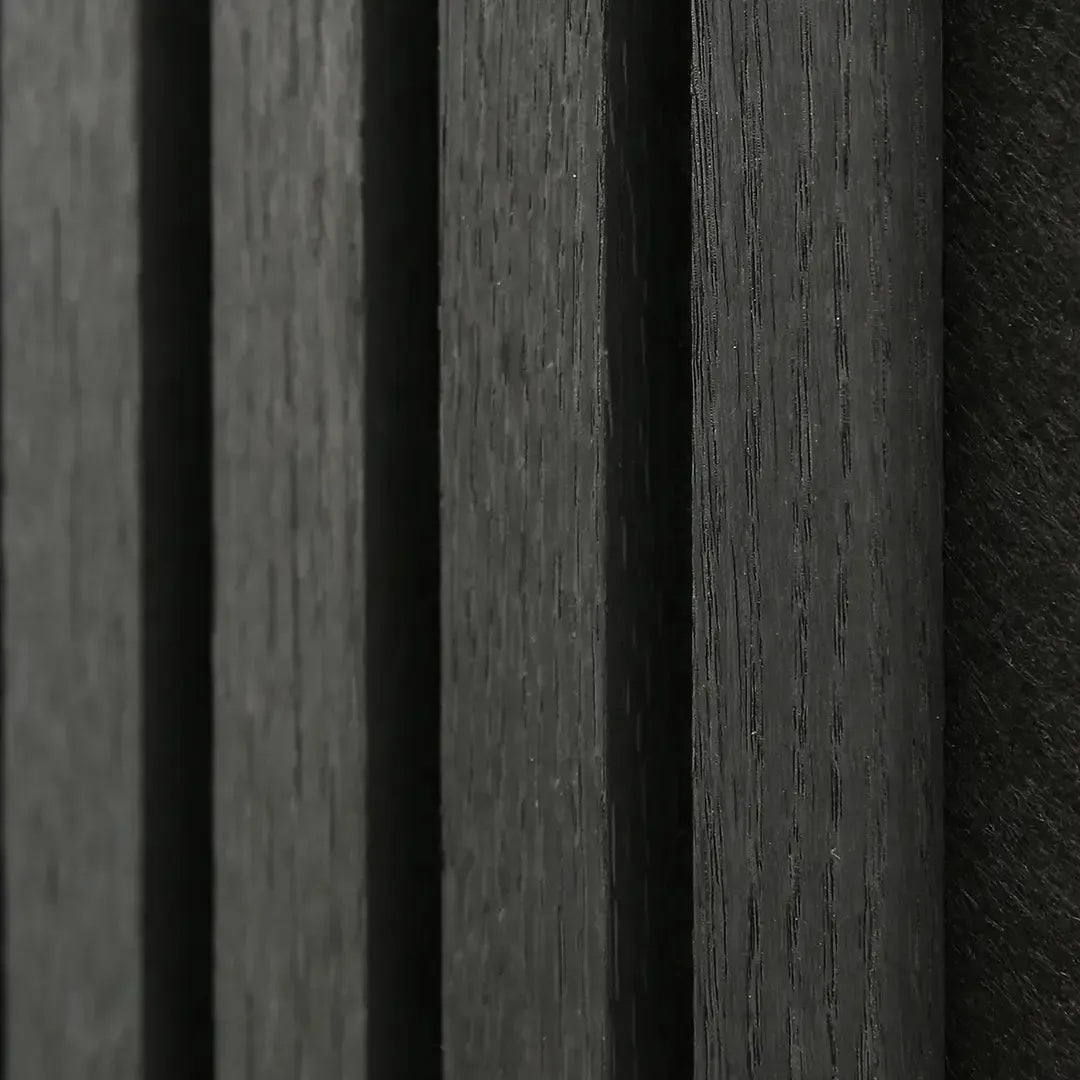
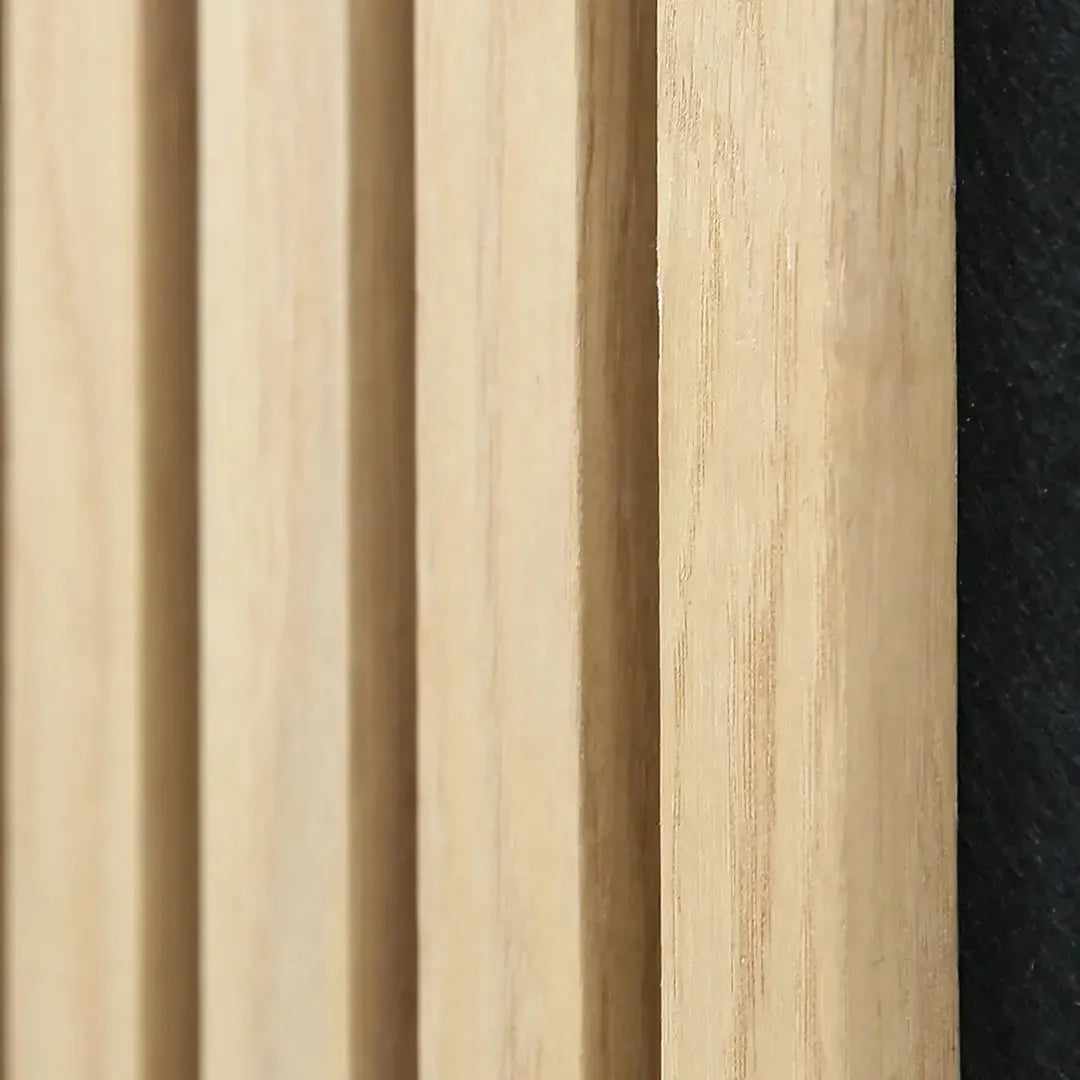
Kids run into walls. That's not a hypothetical, it's the baseline condition of an indoor playground, and a finish that scuffs or dents on contact will look worn within a year. Darker finishes like Black Oak and Smoked Oak hide scuff marks far better than pale Natural Oak, which shows every mark under bright play-area lighting. If your budget only stretches to one finish upgrade, spend it here before spending it on acoustic rating.
Cleanability and sanitizing
Play equipment gets wiped down daily in most facilities, and wall panels near ball pits or soft-play zones take spray cleaner overspray whether you plan for it or not. A sealed 3-sided wood veneer finish wipes clean without swelling, but felt-backed panels should stay above splash height, since felt absorbs moisture and wood veneer doesn't. Plan your panel layout around where the mop bucket and spray bottle actually go, not just where the design looks best.
Fire and code compliance
Commercial play spaces answer to occupancy codes a home accent wall never sees. Confirm the fire rating of any panel with your local building department before ordering enough material to cover a full play zone, because that's a compliance step no product page substitutes for a call to your inspector. This step matters more the larger the wall run gets — a small accent wall rarely triggers the same scrutiny as a full corridor.
Cost at commercial scale
A single living-room accent wall needs one or two boxes. An indoor playground wall run can need 40, 60, or more boxes to cover slide corridors and climbing zones, so a $17 difference per box between Natural Oak and Walnut becomes a four-figure line item fast. Price the full wall run in 2026 dollars before committing to the finish you like best in a single product photo.
Top picks for wood panels for indoor playground wall cladding
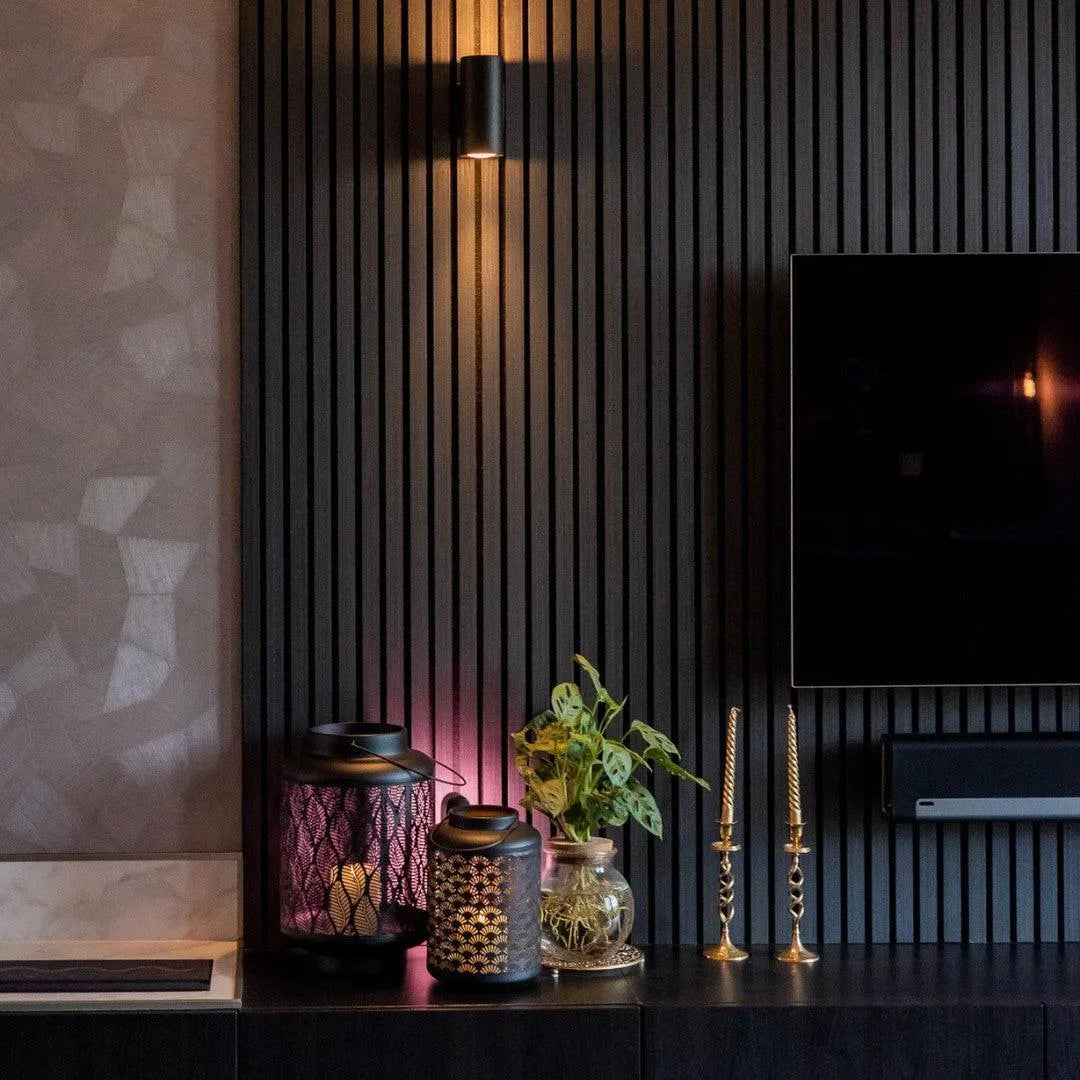
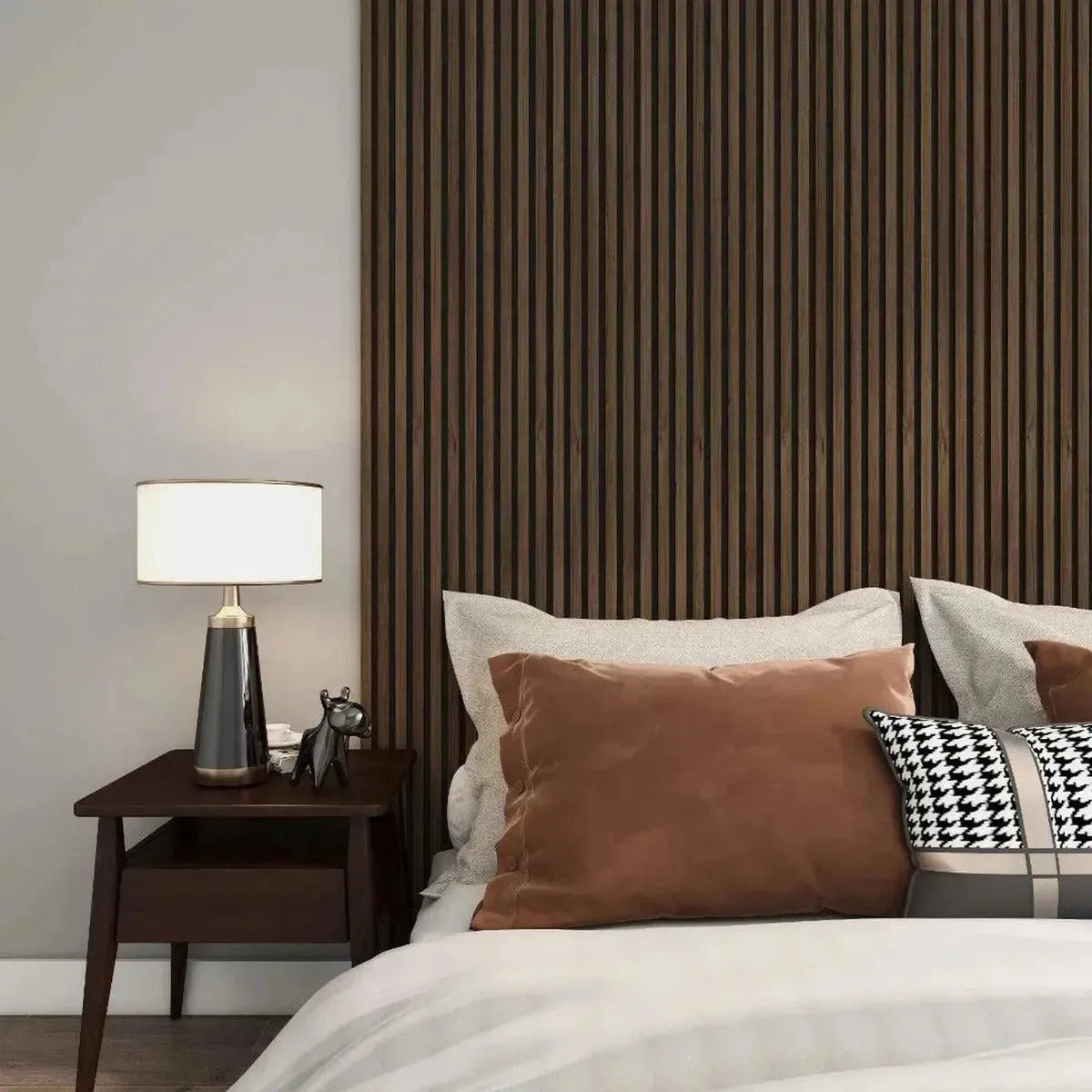
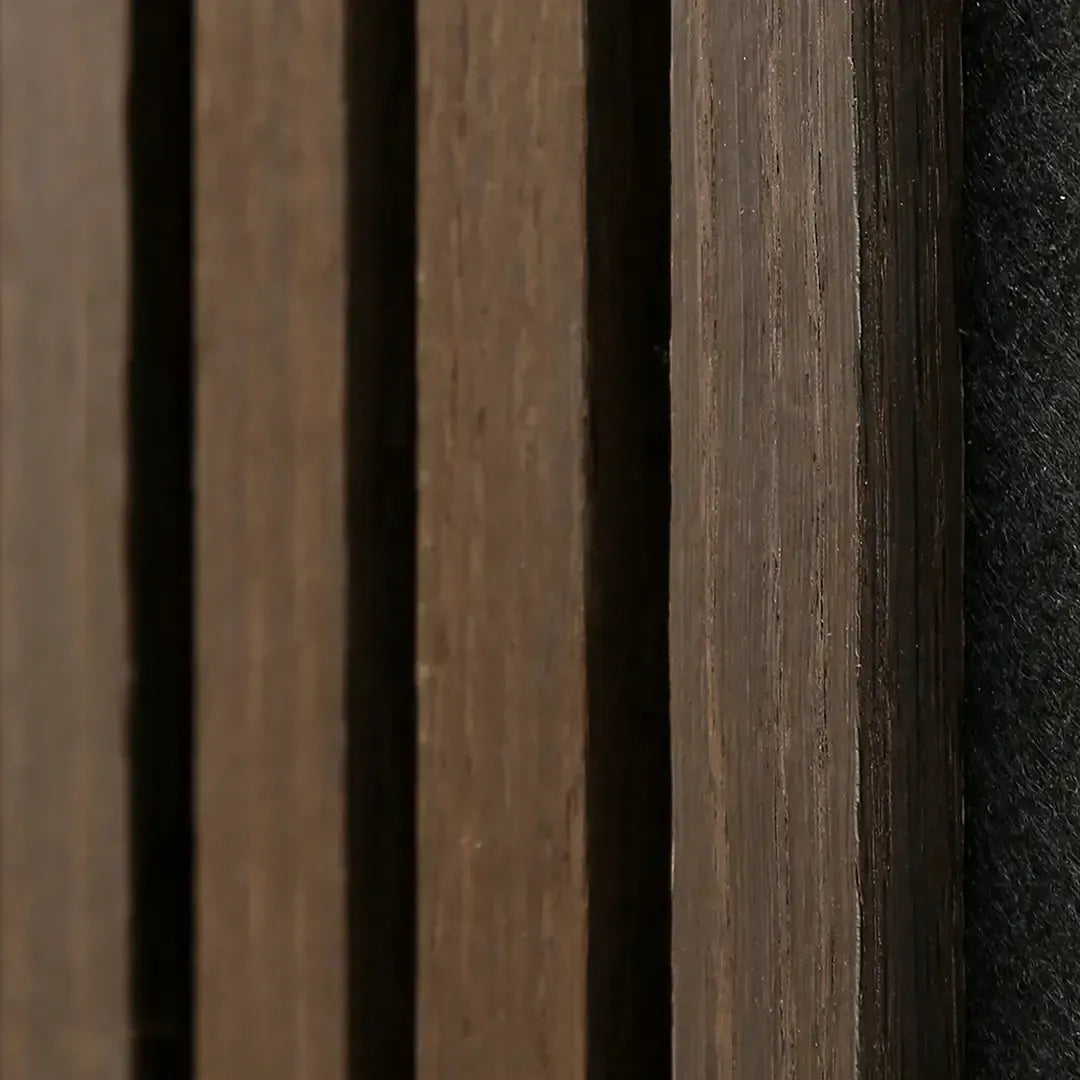
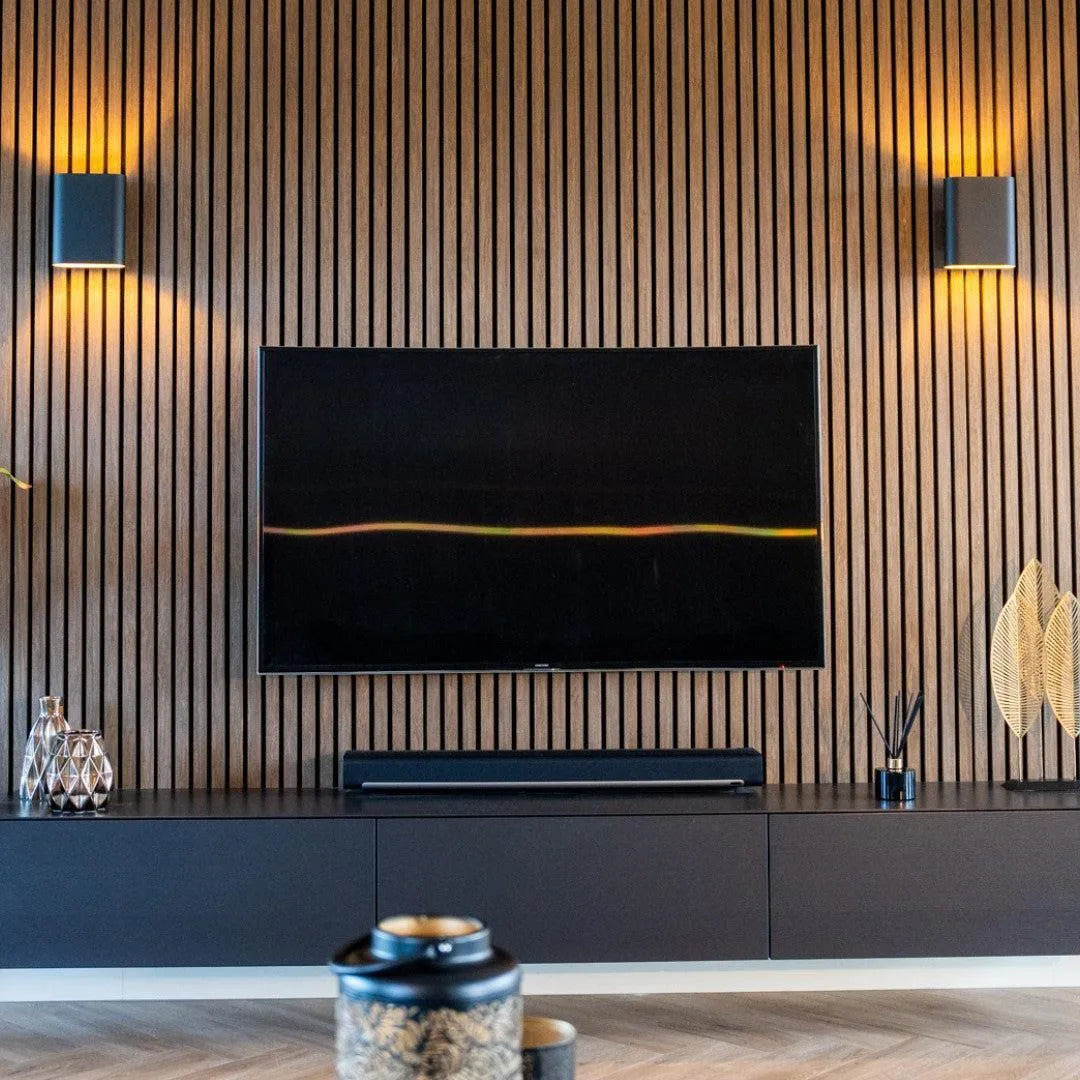
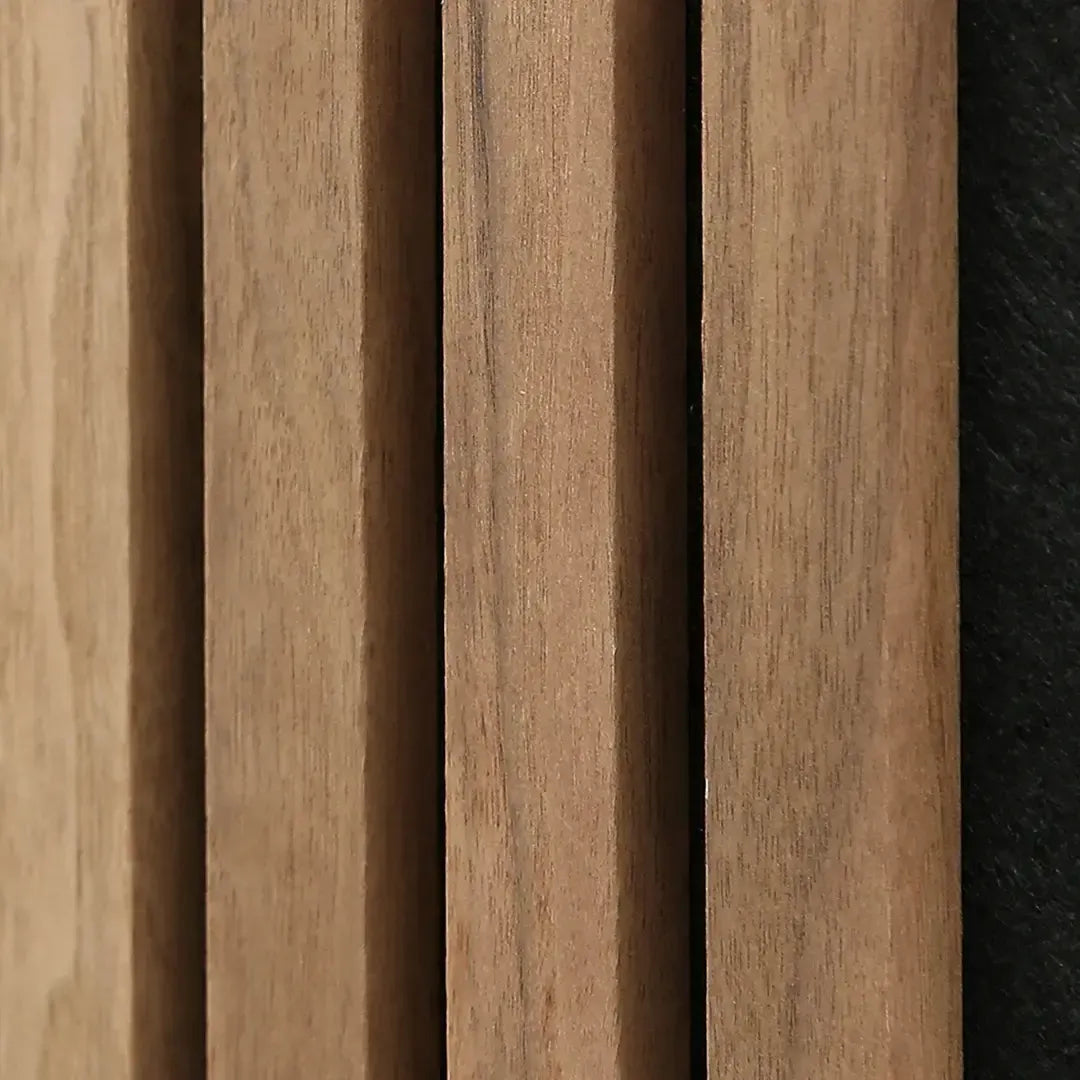
The premium pick: Acoustic Slat Wall Panel Walnut — $182.95 per box, dark grain that hides contact marks from day one. The 3-sided wood veneer construction holds up under repeated contact better than painted MDF, and the walnut tone reads as intentional design instead of a budget shortfall. For the main play corridor that takes the heaviest daily traffic, this is the Acoustic Slat Wall Panel Walnut, and the verdict is Buy.
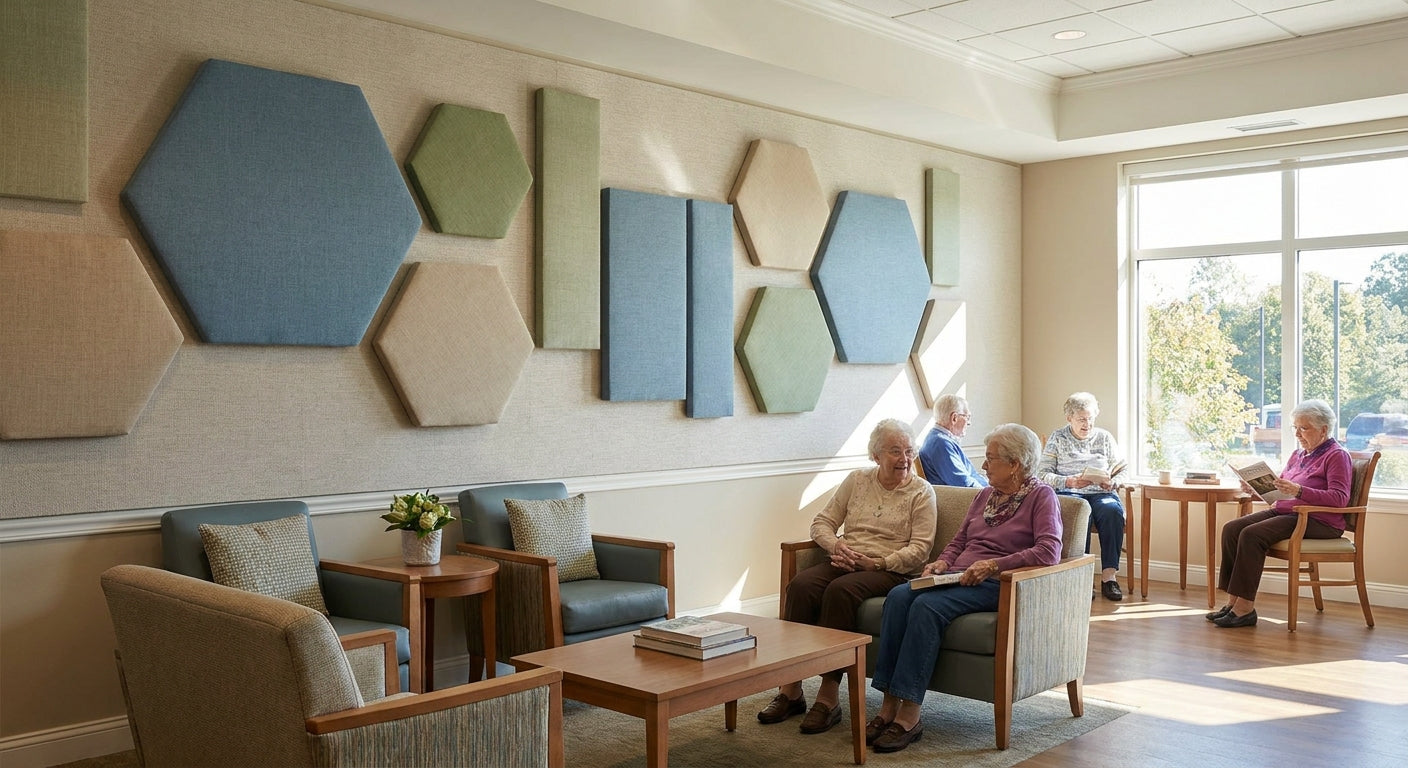
The acoustic workhorse: Hexagon Acoustic Panel Natural Oak with Gray Felt — rated 0.75 NRC, the strongest sound absorber in the lineup. Four 32-inch hexagon acoustic panels ship per box at $165.95, and the honeycomb layout breaks up flat wall runs so climbing walls and ball-pit corners stop reading as one long slab. Buy for any zone where echo, not aesthetics, is the main complaint driving the purchase.
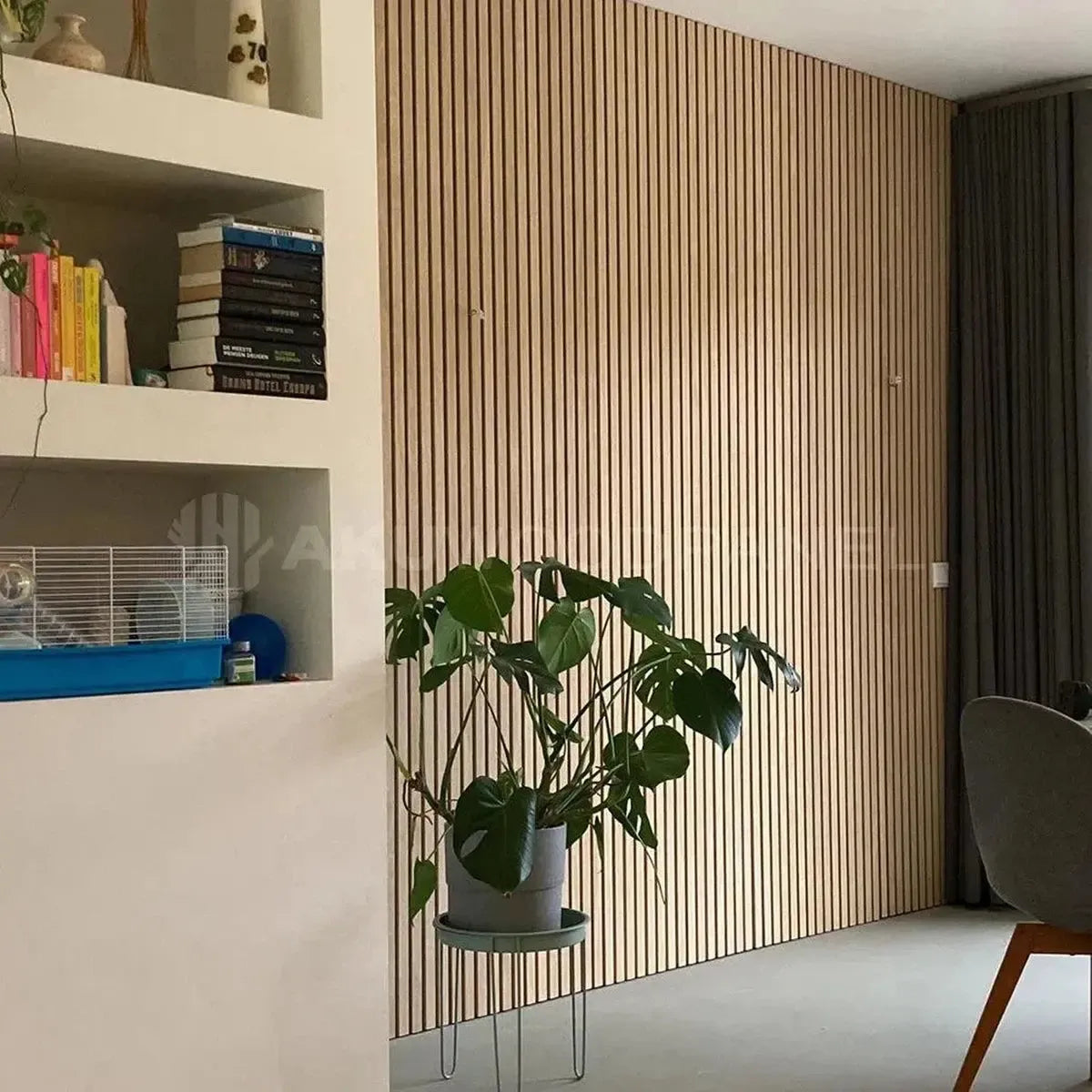
The budget-conscious pick: Acoustic Slat Wall Panel Natural Oak with Gray Felt — a lighter natural oak tone at $169.95 per box, with the same gray felt backing as the walnut version. It shows scuffs faster than the darker finishes, so it fits reception areas and low-contact walls better than the middle of a climbing structure. Consider natural oak with gray felt panel for perimeter walls, not the highest-contact zones on the floor.
The decorative wildcard: Fluted Wall Panel Natural Oak — sharp on a reception wall or a low-traffic hallway, but the raised ridges catch backpack straps, jacket zippers, and stray toys in an active play zone. Save the fluted look for admin offices and parent waiting areas in the same building, where foot traffic is calmer. Skip it inside the padded play boundary.


“If a wall panel can't survive a dodgeball to the face, it doesn't belong inside the play boundary.”
What to avoid
- Raw MDF slat panels without sealed veneer. They swell with humidity from cleaning sprays and sweaty kids running past all day, and swelling shows up as warped edges within months of installation.
- "Wood-look" panels with paper-thin veneer. A veneer layer too thin to sand or repair won't survive years of contact in an active play zone. Check that the listing specifies a 3-sided wood veneer, not a printed laminate wrap.
- Felt-backed panels below the splash line. Felt backing absorbs moisture and holds it, which means mildew risk near ball pits, water play features, or entrances that track in rain during 2026's wetter months.
Verdict comparison table
Read this table left to right per finish, not top to bottom by price — the cheapest box isn't automatically the right call for a climbing wall.
| Panel | Price/box (2026) | NRC rating | Scuff resistance | Verdict |
|---|---|---|---|---|
| Acoustic Slat Wall Panel Walnut | $182.95 | Not rated | High | Buy |
| Hexagon Acoustic Panel Natural Oak w/ Gray Felt | $165.95 | 0.75 | Medium | Buy |
| Acoustic Slat Wall Panel Natural Oak w/ Gray Felt | $169.95 | Not rated | Low | Consider |
| Fluted Wall Panel Natural Oak | — | Not rated | Low | Skip |
FAQ
What's the best wood panel for an indoor playground?
Acoustic Slat Wall Panel Walnut is the strongest overall pick for 2026 indoor playground builds because its dark finish hides scuffs and its 3-sided veneer holds up under repeated contact. Hexagon Acoustic Panel Natural Oak with Gray Felt wins specifically on noise control, rated at 0.75 NRC.
Are wood slat panels safe for kids' play areas?
Yes, when installed flush with sealed edges and kept away from sharp protruding trim. Fluted profiles with raised ridges are the one style to avoid directly inside a climbing or running zone because they can catch clothing and toys.
How much does acoustic wall paneling cost for an indoor playground?
Panels run $165.95 to $182.95 per box in 2026 depending on finish and backing, and a full commercial wall run can need 40 or more boxes. Price the whole run, not a single box, before choosing a finish.
Do wood panels actually reduce echo in indoor playgrounds?
Panels with felt or perforated backing absorb sound rather than reflecting it, which cuts the buildup that makes a room full of kids sound louder than it is. Hexagon Acoustic Panel Natural Oak with Gray Felt carries the highest rated NRC in the lineup at 0.75.
Can wood slat panels handle heavy daily impact?
Darker finishes like walnut and black oak hide contact marks better than light natural oak under daily running and climbing traffic. None of these panels are designed as padded impact surfaces, so they belong on walls outside direct fall zones, not as crash padding.
Is fluted wall paneling suitable for a climbing wall area?
No. The raised ridges on fluted panels catch backpack straps, jacket zippers, and loose toys in high-motion areas, so they work better in reception areas and offices than inside an active play zone.
How do you clean wood wall panels in a commercial play space?
Sealed 3-sided wood veneer wipes clean with standard spray cleaner without swelling, but felt-backed sections should stay above splash height since felt holds moisture. Daily wipe-downs are standard practice in most indoor playground facilities.
What NRC rating do you need for a loud indoor playground?
Look for panels rated 0.70 NRC or higher if noise complaints are frequent; Hexagon Acoustic Panel Natural Oak with Gray Felt rates 0.75. Lower-rated or unrated panels still help visually but won't move the noise needle as much.
One last thing
Hexagon panels don't just look different from a flat slat wall, the angled facets break up a wall run physically and not just visually, which is why mixing hexagon accents into slat corridors is a common move in 2026 play-space builds. If your facility has one long, loud corridor that sounds worse than the rest of the building, that's the wall to switch from slats to hexagon first, not the whole room. Every dollar in a play-space wood panel budget goes further when it's spent on the loudest wall, not the most visible one.
 Better performance and aesthetic appeal
 In Stock