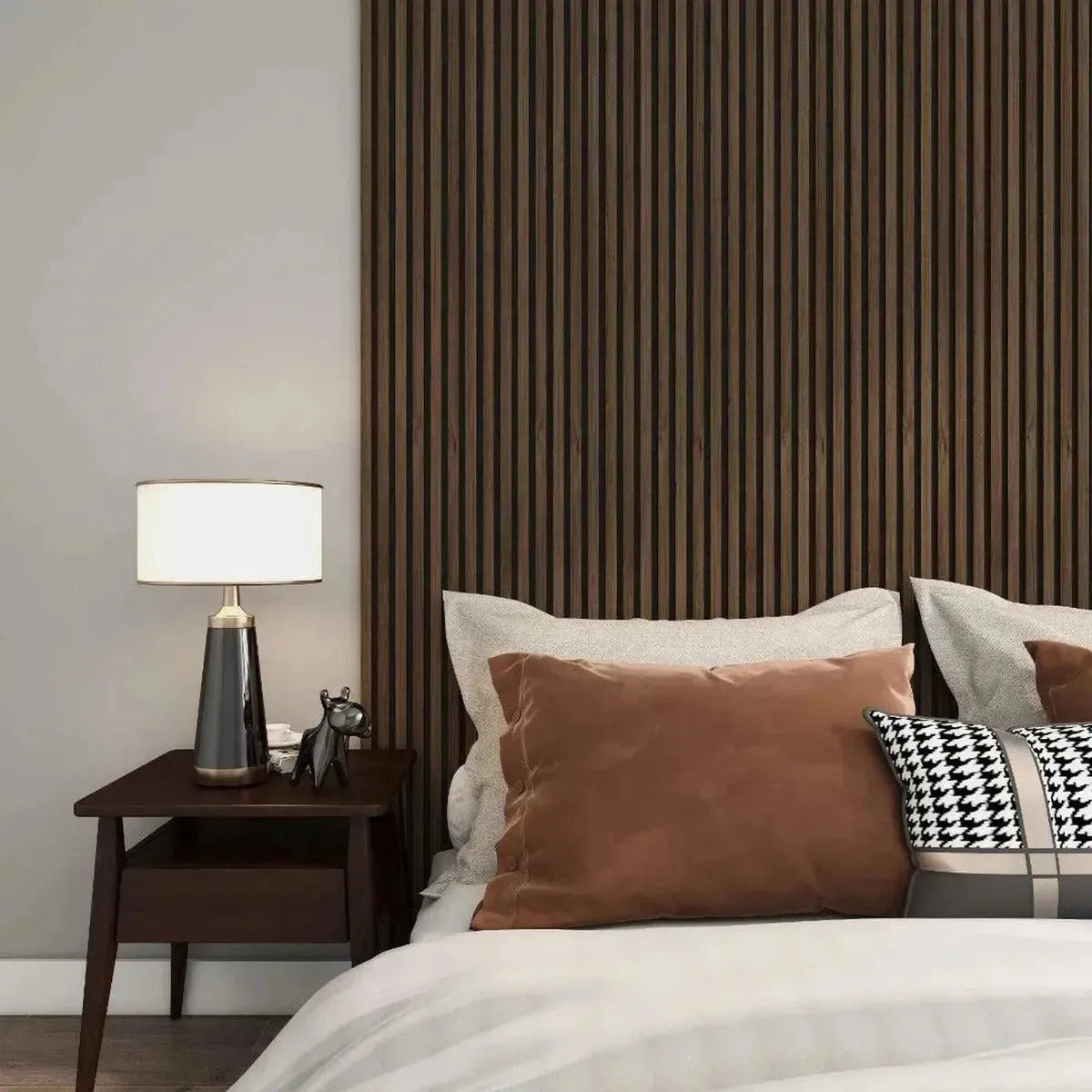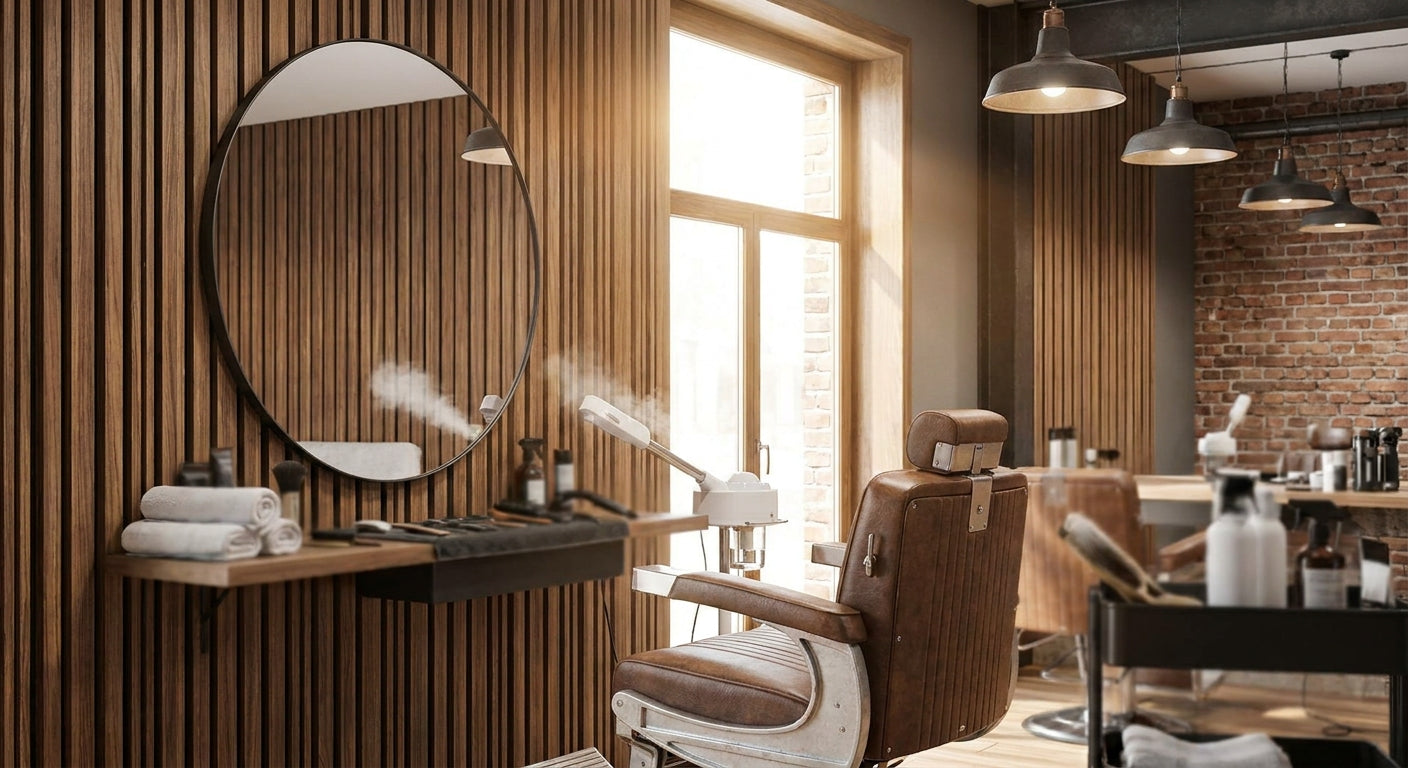
Barbershop interiors take a specific kind of abuse: clipper buzz bouncing off tile and mirrors, disinfectant wipe-downs every 20 minutes, and foot traffic that never really stops. Wood slat panels for barbershop walls fix the noise problem and the flat-drywall-look problem at the same time, if you pick the right backing and finish.
- Acoustic Slat Wall Panel Black Oak wins for dark, masculine barbershop walls in 2026 - Buy.
- Wood slat panels for barbershop interiors need felt or acoustic backing, not a wood-look laminate.
- Hexagon Acoustic Panel Black is the wildcard pick for a statement wall behind barber chairs - Buy.
- Skip look-alike laminate slats; real wood veneer holds up to daily clipper contact and chemical wipe-downs.
Why this matters
A barbershop with four chairs, a waiting bench, and a wall of mirrors is an acoustic trap. Sound bounces off glass, tile floors, and hard plaster walls with nowhere to go, so every clipper, every hair dryer, and every conversation stacks on top of the last one. Owners notice it as a room that feels louder than it should by 3pm.
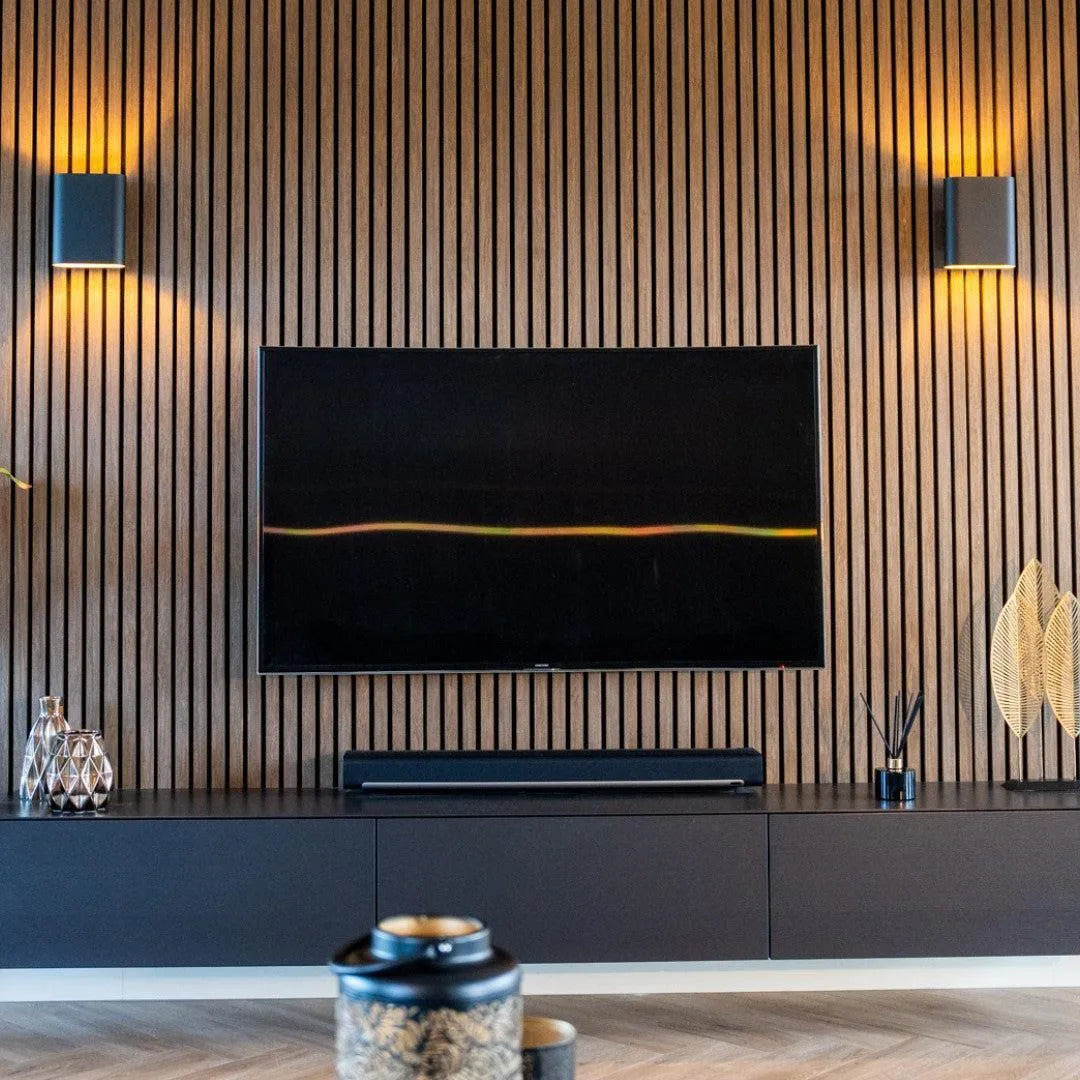
Wood slat panels solve two problems in the same install: they break up hard reflective surfaces, and if they're backed with acoustic felt, they absorb sound instead of bouncing it. Akuwood Panel's acoustic slat panels are built with real wood veneer over an acoustic core, which is the detail that separates a panel that actually quiets a room from one that's just a wood-look backdrop for photos.
Hair salons run into nearly the same combination of hard surfaces and constant talking. The approach covered in noise reduction in hair salons applies almost directly to a barbershop floor plan, since both spaces mix mirrors, tile, and open seating.
Who this is for
This guide is for barbershop owners and shop designers planning a renovation or new build in 2026, working with a wall behind the chairs, a reception or waiting area, or a retail display wall for pomade and grooming products. It assumes you care about how the shop looks in photos and how it sounds by the third client of the day, not just what's cheapest to hang.
What to look for in wood slat panels for a barbershop
Acoustic backing, not just the slat look
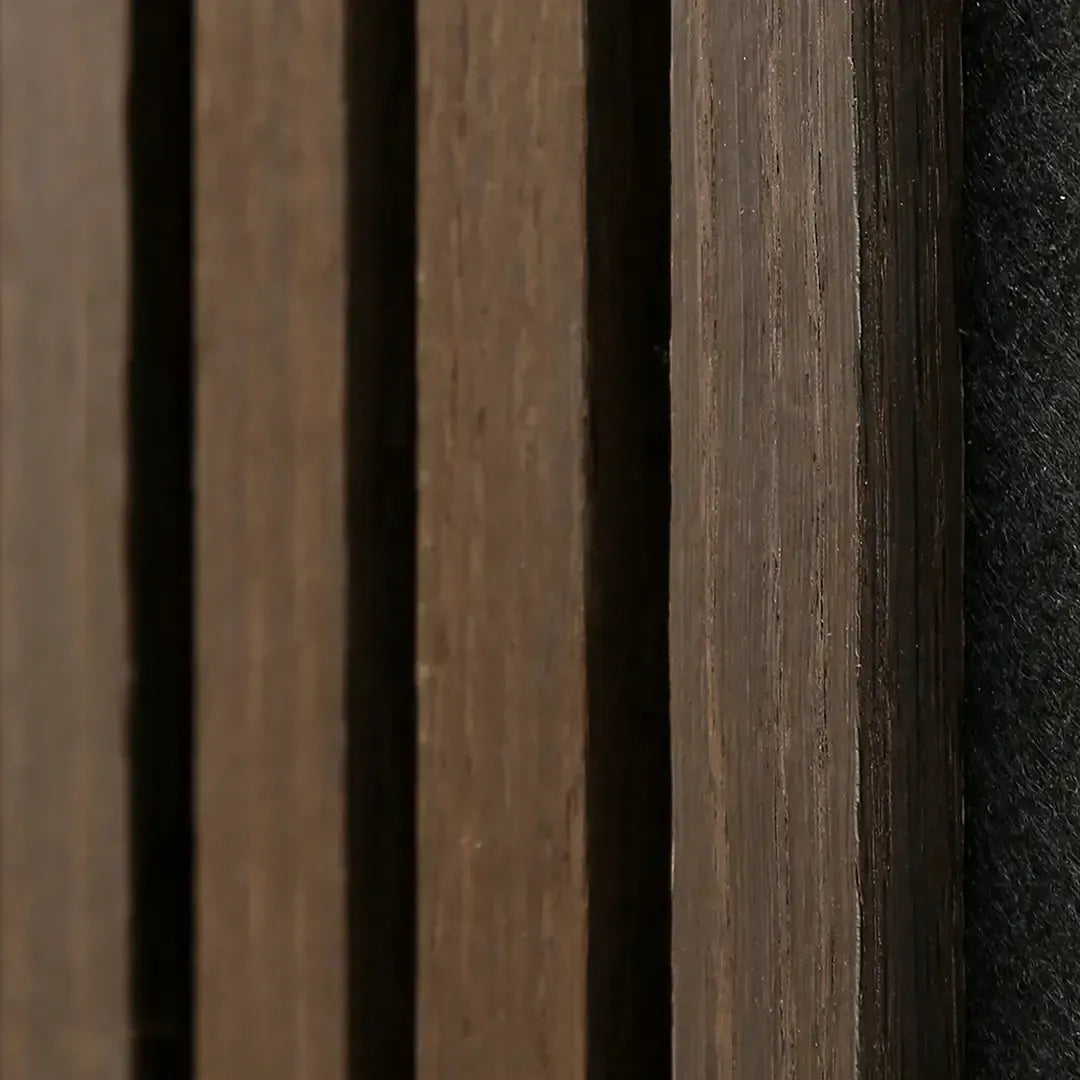
A slat profile alone does very little for sound. The acoustic value comes from felt or fiber backing behind the slats that absorbs mid and high frequencies, which is exactly the range of clipper buzz and speech. If a panel description doesn't mention a backing material, assume it's decorative only.
Real wood veneer over laminate
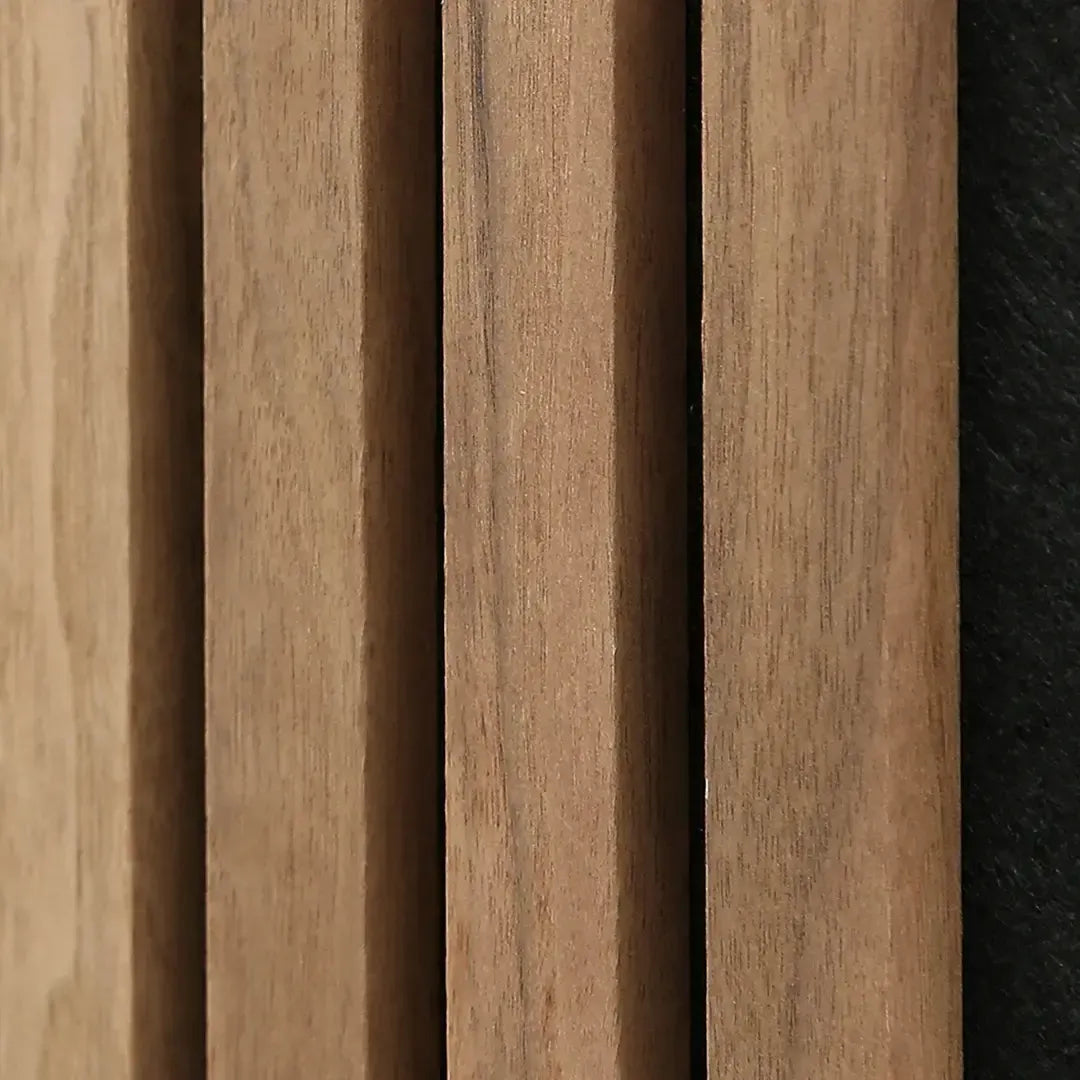
Barbershops get touched, leaned on, and photographed constantly. Real wood veneer takes light differently than printed laminate and doesn't show the same wear pattern after 12 months of daily contact. Laminate can look fine on day one and start peeling at the edges by the second summer.
Cleaning and chemical exposure
Disinfectant sprays, alcohol, and stray dye or bleach splashes are routine in a working barbershop. A wood veneer finish that's sealed properly wipes clean without staining, while an unsealed or raw finish absorbs whatever hits it.
Panel format for the layout
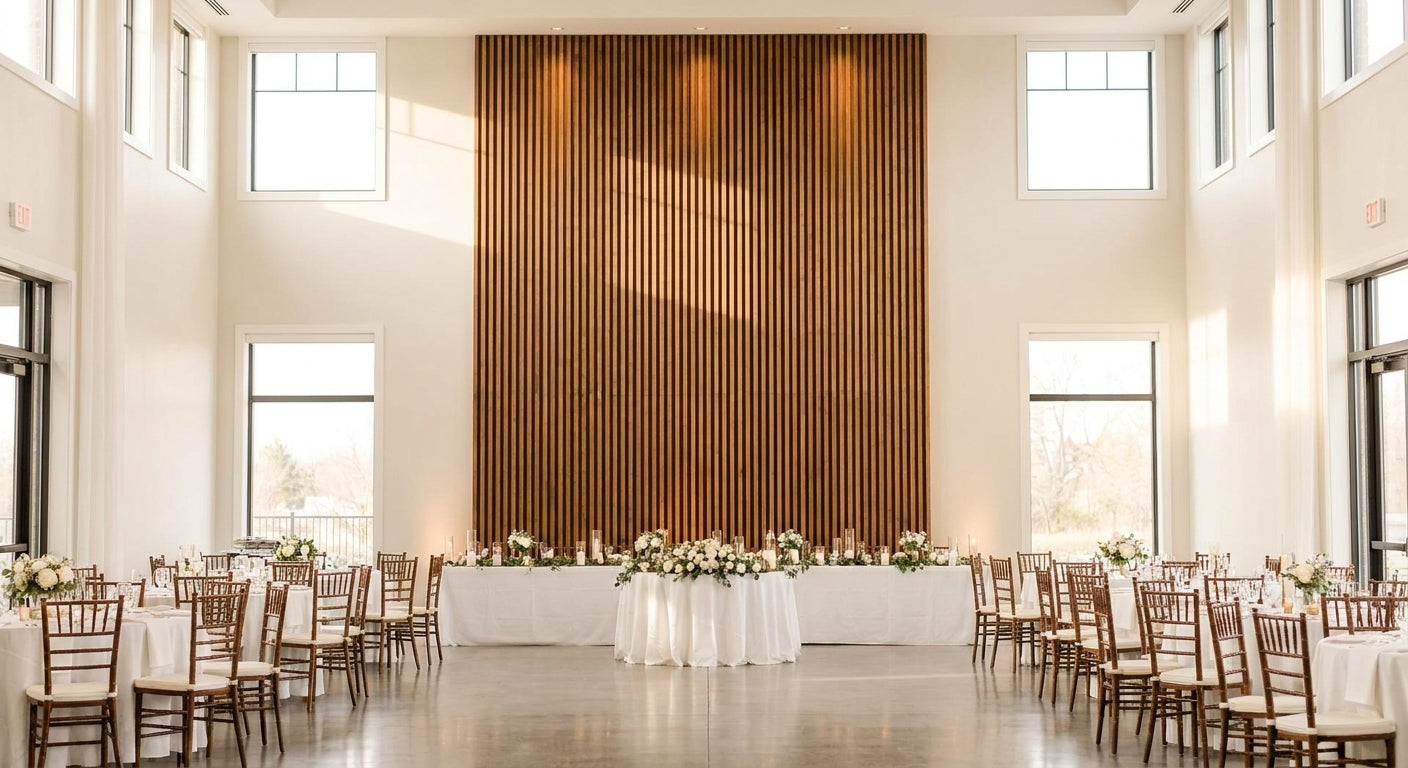
Slat panels run well behind a long row of chairs or a reception desk. Hexagon panels work better as a contained statement wall, like the space behind a single mirror station or a retail display. Pick the format based on the wall shape, not just the look you saw online.
Color match to the shop's identity
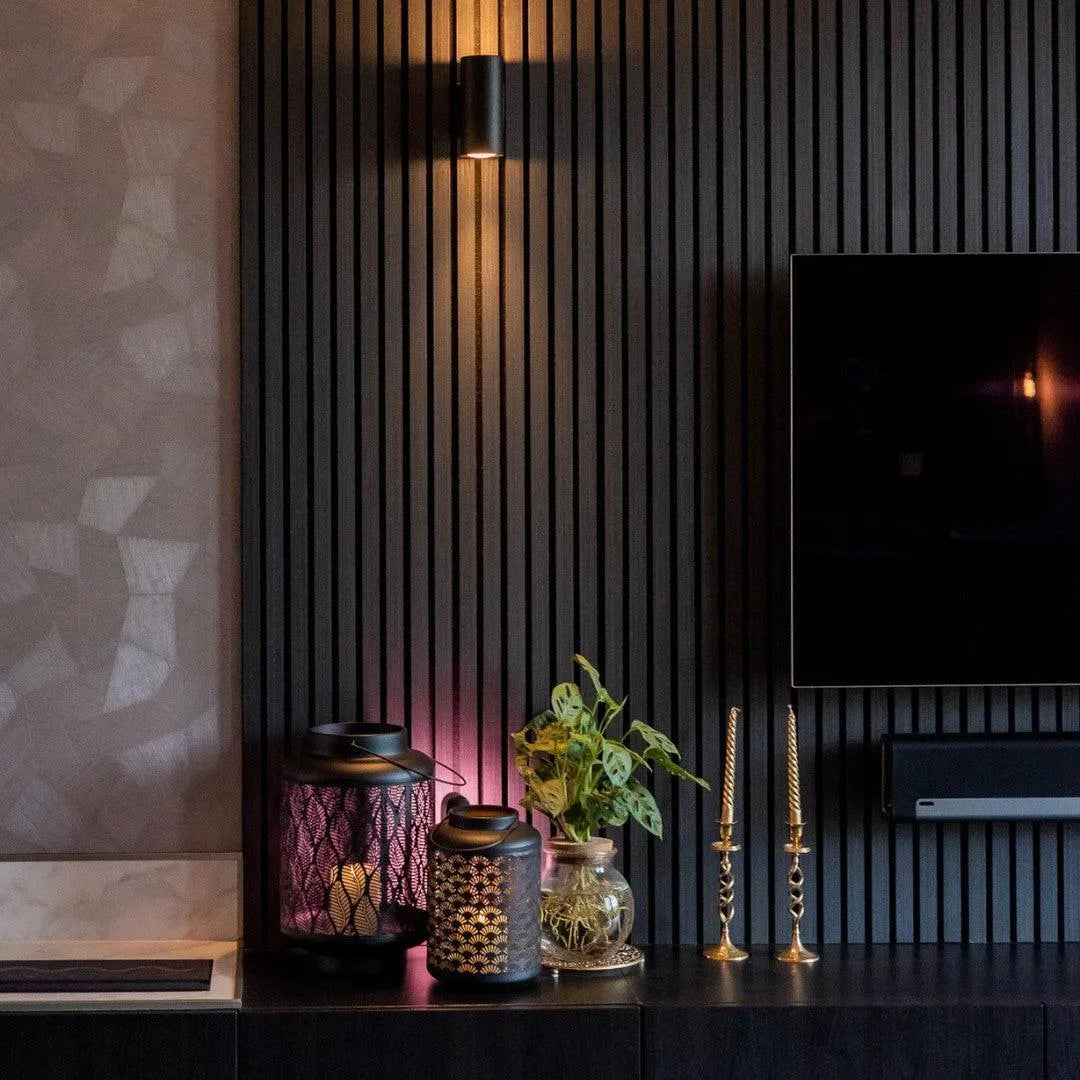
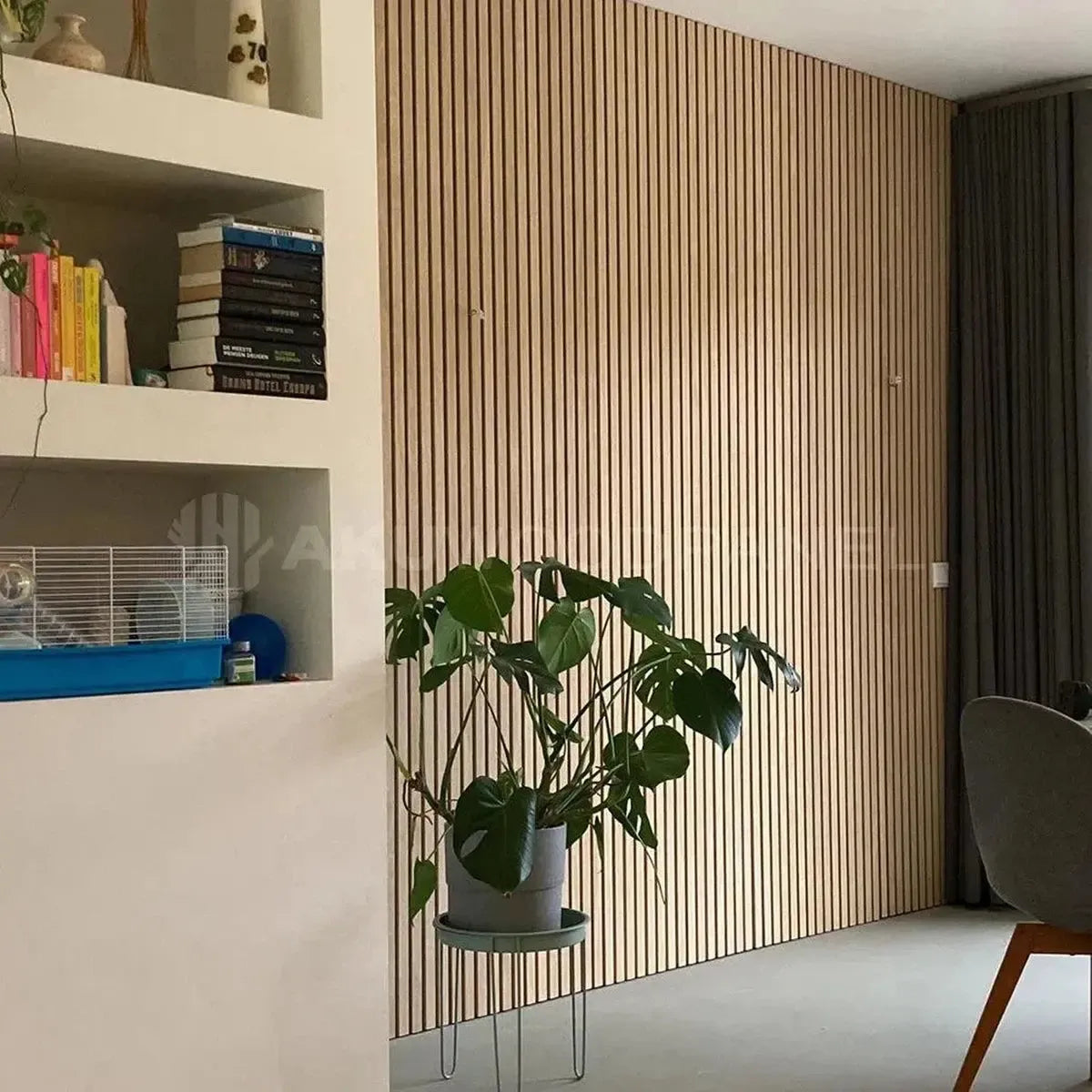
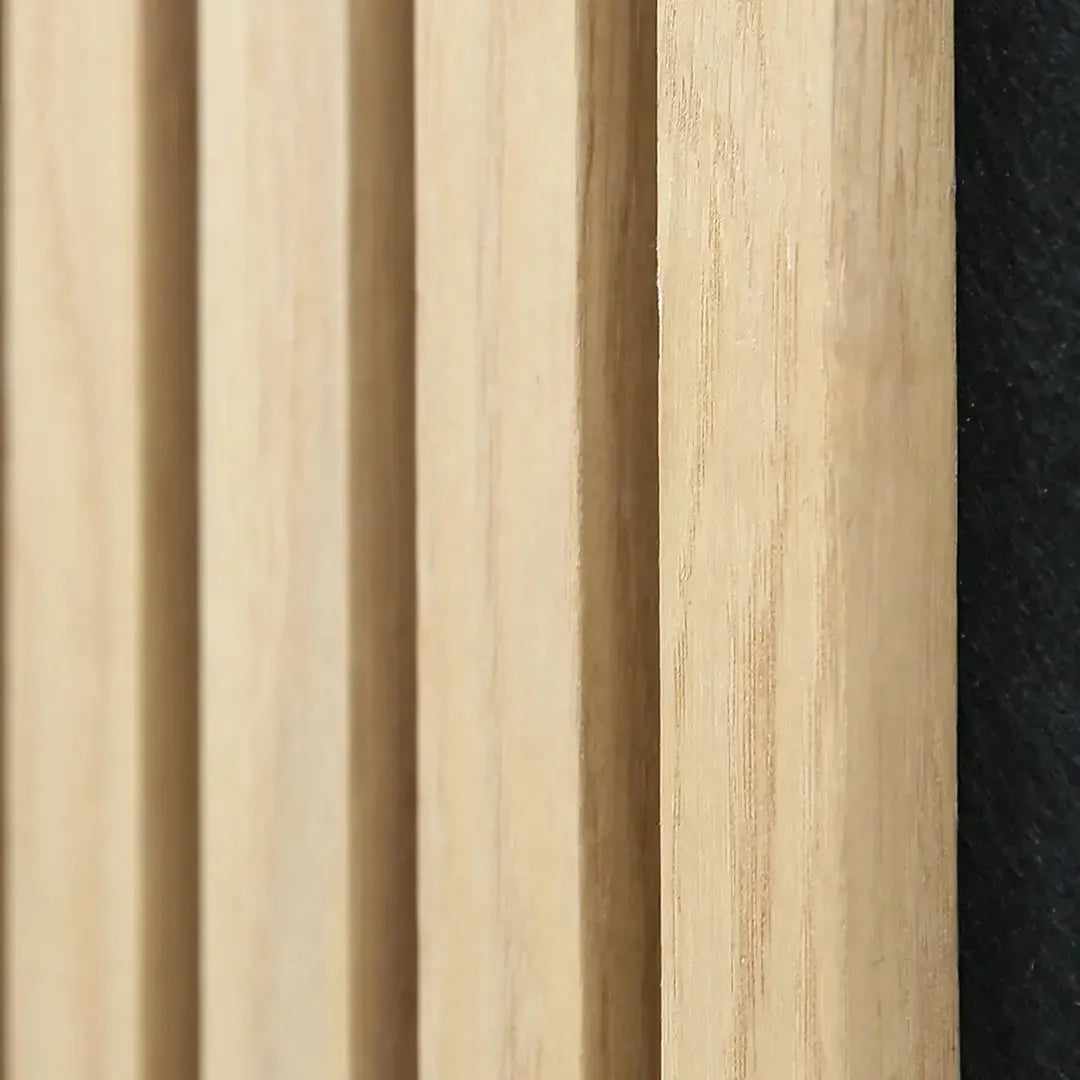
Black oak and smoked oak read as modern, masculine, and moody, which fits a barbershop leaning into a classic-with-an-edge identity. Natural oak and walnut read warmer and work better for a shop going for a vintage barber-and-lounge feel.
Clean edges at mirrors and doorways
A barbershop wall almost never runs edge-to-edge without interruption. Mirrors, outlets, and door frames cut into the panel run, so matching end pieces and trim matter more here than in a plain living room accent wall.
Top picks for barbershop walls
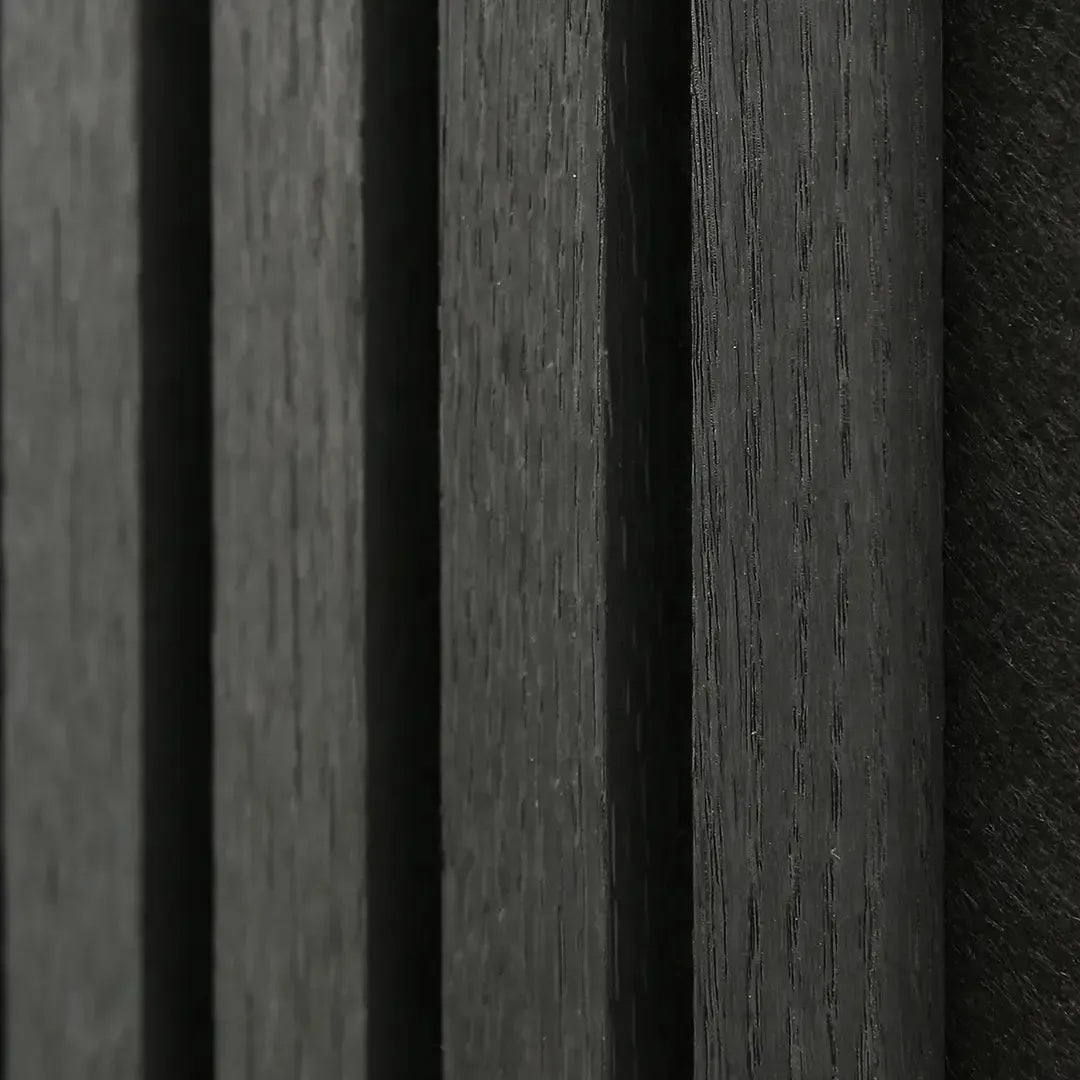
Acoustic Slat Wall Panel Black Oak - the safe pick. Dark oak veneer over slats with acoustic felt behind them makes this the pick that reads barbershop the moment a client walks in. It works on the wall directly behind the chairs, where the felt backing does the most work absorbing clipper noise at close range. Verdict: Buy.
Acoustic Slat Wall Panel Walnut - the warm pick. Walnut's reddish-brown tone softens a shop that leans heavily on black fixtures and chrome, and it photographs warmer under barbershop lighting than black oak does. Use it on a reception or waiting wall where you want the space to feel less clinical. Verdict: Buy.
Hexagon Acoustic Panel Black - the wildcard. A geometric hexagon layout on a single accent wall behind a mirror station gives a shop a design moment that slat panels can't replicate, and the felt-backed construction used across the hexagon line is rated at an NRC of 0.75 in the felt-backed versions, meaningful absorption for a small footprint. Verdict: Buy.
Smoked oak slat panels are worth a look too if the shop is going for an industrial, mid-tone finish rather than the darker black oak or the warmer walnut, particularly on a product display wall where you want texture without a heavy dark statement. Verdict: Consider.


What to avoid
- Slat panels with no acoustic backing. They look identical to the felt-backed versions in a photo, but they do almost nothing to quiet a room full of clippers and conversation.
- Glossy laminate finishes. They scratch visibly where clipper cases and product bottles rest against the wall, and the damage shows up within the first year of daily use.
- Panels without matching end pieces. A barbershop wall almost always breaks at a mirror or outlet, and a run without matching trim leaves raw edges exposed to hands and clipper cords.
Verdict comparison
| Panel | Best Wall | Backing | Verdict |
|---|---|---|---|
| Acoustic Slat Wall Panel Black Oak | Behind styling chairs | Acoustic felt | Buy |
| Acoustic Slat Wall Panel Walnut | Reception/waiting area | Acoustic felt | Buy |
| Hexagon Acoustic Panel Black | Accent wall behind mirrors | Felt-backed hexagon | Buy |
| Smoked Oak Slat Panel | Retail/product display wall | Acoustic felt | Consider |
FAQ
What's the best wood slat panel color for a barbershop?
Black oak and smoked oak suit a modern, masculine barbershop identity, while walnut and natural oak fit a warmer, vintage-lounge look. Pick the tone based on the fixtures and lighting already in the shop, since dark oak reads differently under warm bulbs than under cool LEDs.
Are acoustic slat panels durable enough for a barbershop?
Real wood veneer slat panels with a sealed finish hold up to daily wipe-downs and clipper contact through 2026 without peeling or fading the way printed laminate does. The wear point to watch is exposed edges, which is why matching end pieces matter at mirrors and doorways.
How much wall coverage do I need for a barbershop feature wall?
Coverage depends on the wall behind the chairs plus any waiting-area or reception wall you're treating, typically one to two full walls in a four-chair shop. Measure the exact wall dimensions and account for cutouts around outlets and mirrors before ordering.
Can wood slat panels handle humidity from shampoo sinks?
Sealed wood veneer panels handle occasional splash and steam near a shampoo sink, but they aren't rated for constant standing water. Keep panels a few inches back from direct spray zones and rely on tile or waterproof board immediately around the sink itself.
Is real wood veneer better than laminate slat panels for barbershops?
Real wood veneer wins for a barbershop because it doesn't show the peeling and scratching that laminate develops under daily clipper and chair contact. Laminate can look identical to veneer on day one, so check the product description for veneer versus printed finish before buying.
Do I need acoustic backing for a small barbershop?
Yes, a small barbershop with hard tile and mirrors reflects sound just as much as a larger shop, sometimes more because the room is tighter. Felt-backed slat or hexagon panels absorb that reflection even on a single accent wall.
How do I install slat panels around mirrors and barber chairs?
Plan the panel run to end at a mirror edge or outlet using a matching end piece rather than cutting a full panel awkwardly. Measure the wall in sections between fixed points first, then order panels and trim to those exact segments.
What's the difference between slat panels and hexagon panels for barbershop walls?
Slat panels run best along a long, uninterrupted wall like the one behind a row of chairs, giving a linear, classic look. Hexagon panels work better as a contained geometric statement on a single accent wall, such as behind one mirror station or a retail display.
One last thing
The detail most shops skip is the end piece. A barbershop wall almost never runs uninterrupted from corner to corner, and a slat run that stops mid-panel at a mirror or outlet leaves a raw edge that catches hands, cords, and clipper cases all day. Matching end pieces cost a fraction of the panel run and are the difference between a wall that looks finished in 2026 and one that looks unfinished by its second year.
 Better performance and aesthetic appeal
 In Stock