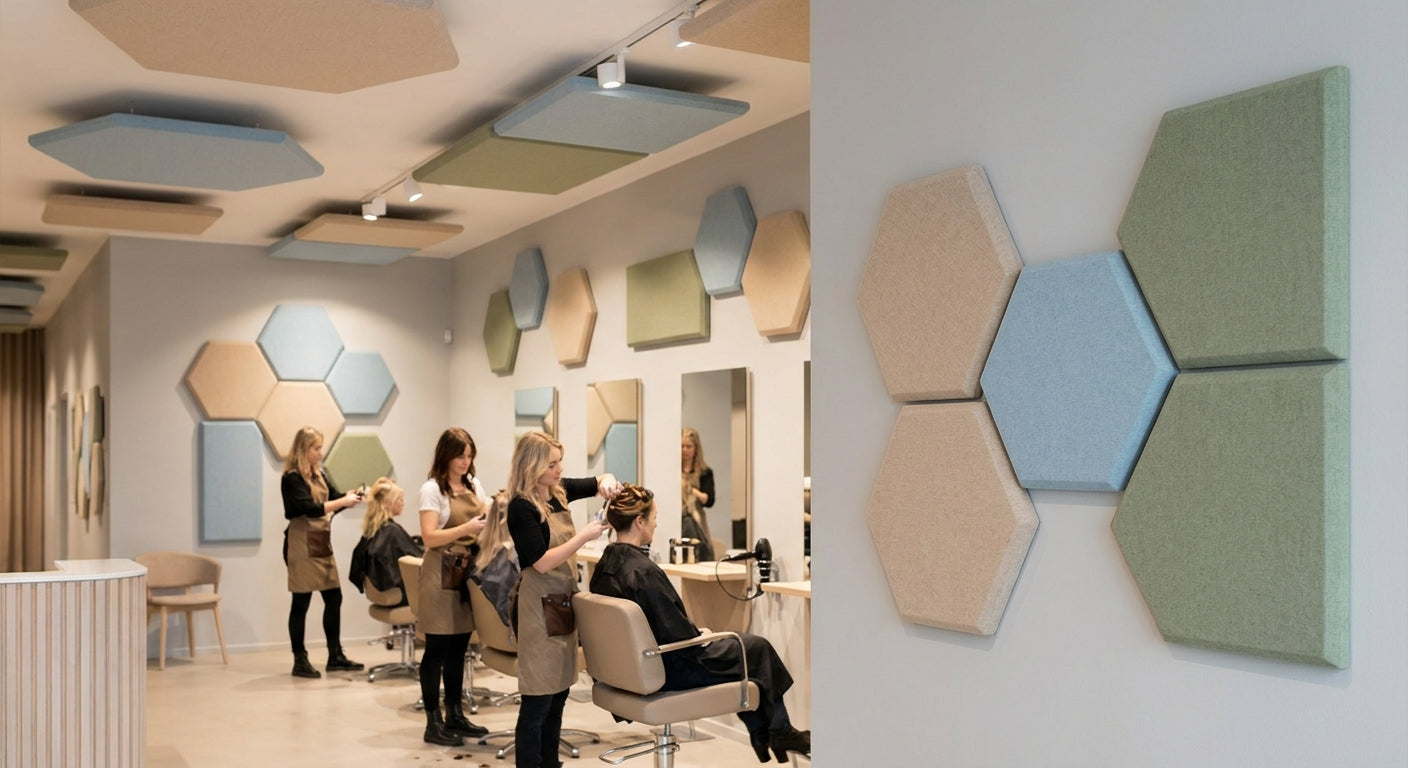
Clipper buzz, blow dryers, hard tile floors, and wall-to-wall mirrors turn most salons into echo chambers — the right acoustic panel fixes that without turning the space into a recording studio. This guide ranks the acoustic panels for hair salons that actually cut noise in 2026, and names the finishes to skip.
TL;DR
For acoustic panels for hair salons in 2026, felt-backed slat wall panels are the Buy: the AKU Woodpanel Acoustic Slat Wall Panel in Natural Oak with Gray Felt pairs real wood veneer with a sound-absorbing felt layer, which is what actually knocks down clipper hum and reflected chatter. Decorative-only options like fluted panels and 3D wood tiles look sharp but carry no felt backing, so they're a Skip for noise control. Order a sample panel before committing to a full wall — salon lighting and mirror placement change how a finish reads once it's up.
Why this matters
A hair salon has three things working against it acoustically: hard flooring for cleanup, glass mirrors on most of the wall space, and multiple noise sources running at once — dryers, clippers, music, conversation. Sound bounces off every hard surface instead of getting absorbed, which is why salons feel louder than the actual decibel level suggests.
Acoustic wood panels solve this two ways at once. The wood veneer gives the space the upscale, natural look salons are chasing in 2026, and the felt or acoustic backing behind the slats absorbs sound instead of reflecting it. Panels without that backing — fluted, hexagon without felt, or 3D textured tiles — still break up flat wall surfaces visually, but they won't do much for the noise problem. That distinction is the entire ranking below.
How we ranked
Each pick is evaluated on three factors that matter specifically for a salon environment: whether the panel has felt or acoustic backing (not just wood texture), how it holds up against daily moisture and product overspray, and whether it works on a commercial timeline — meaning it installs fast enough that a salon isn't closed for a week. Aesthetic fit matters too, since salon walls are on camera in every client photo, but it never overrides the acoustic performance question. A panel that looks great and does nothing for echo gets marked down no matter how it photographs.
The ranked list
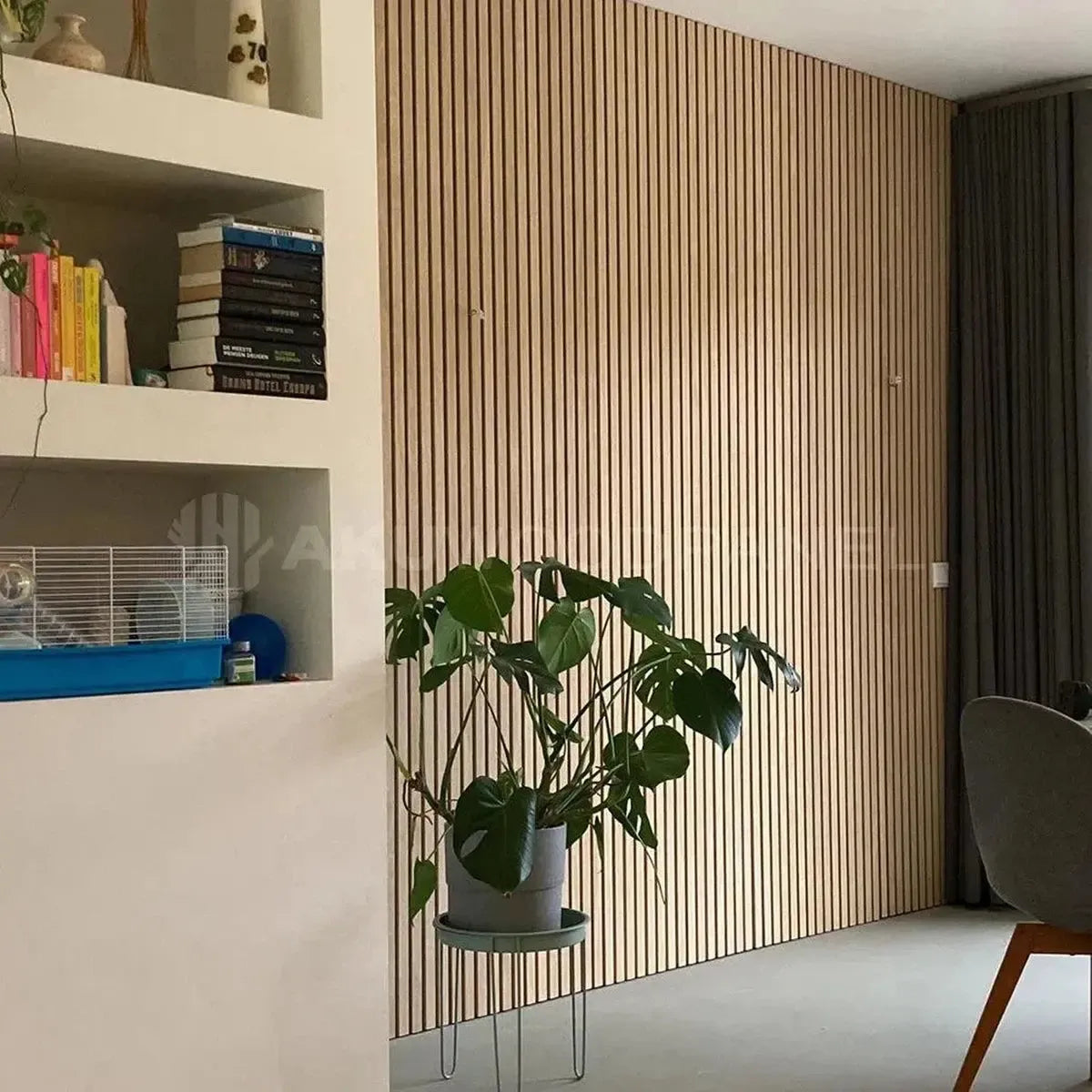
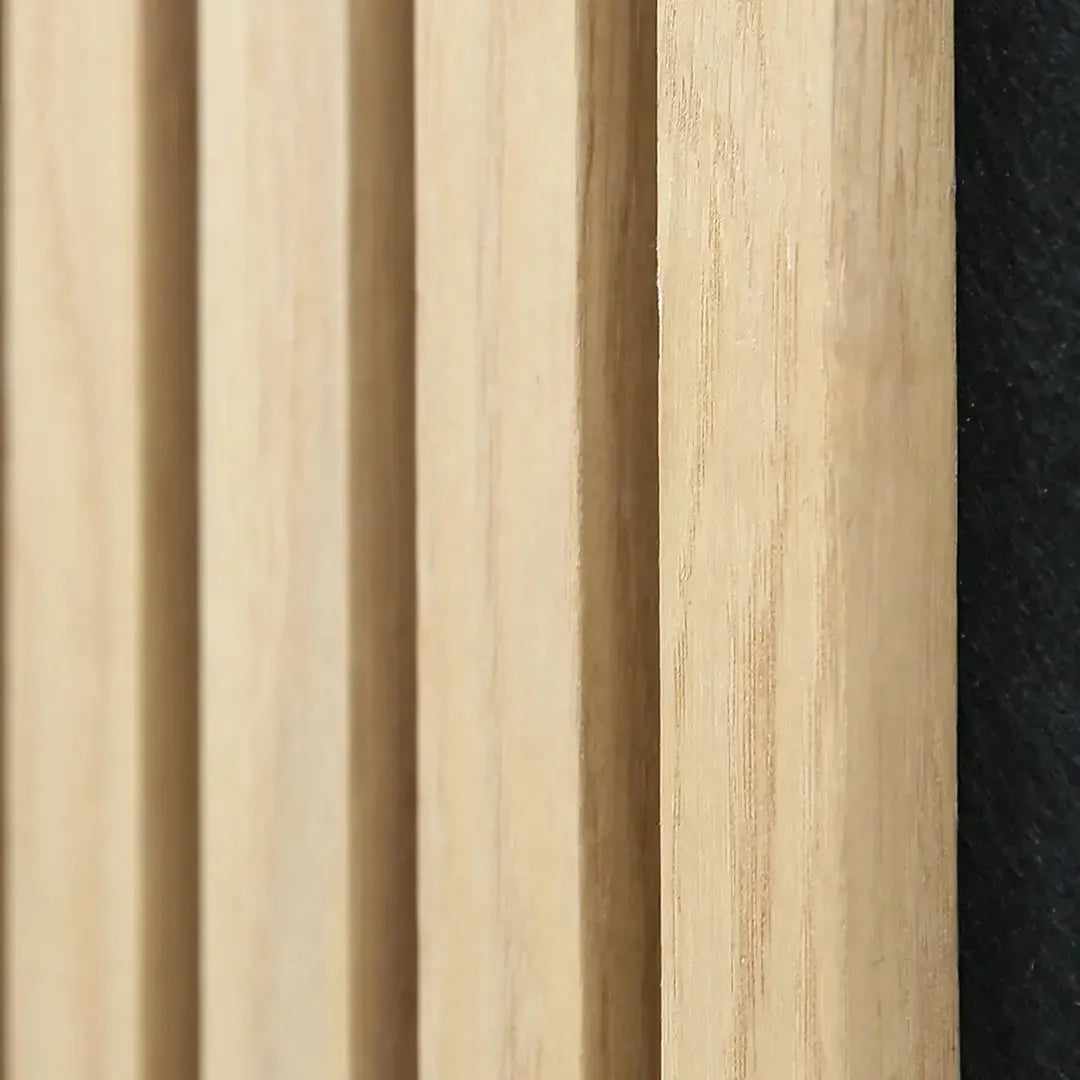
1. Acoustic Slat Wall Panel — Natural Oak with Gray Felt
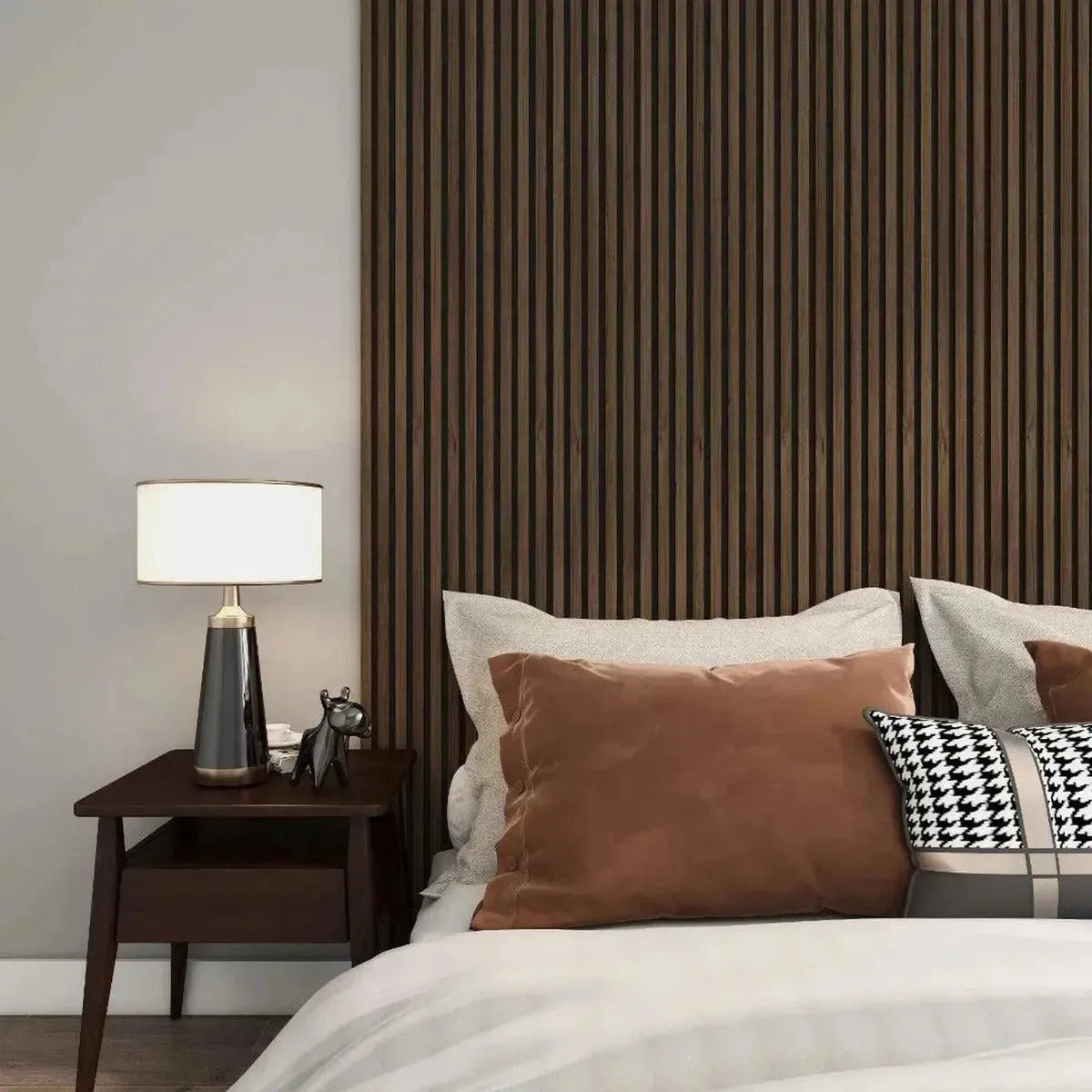
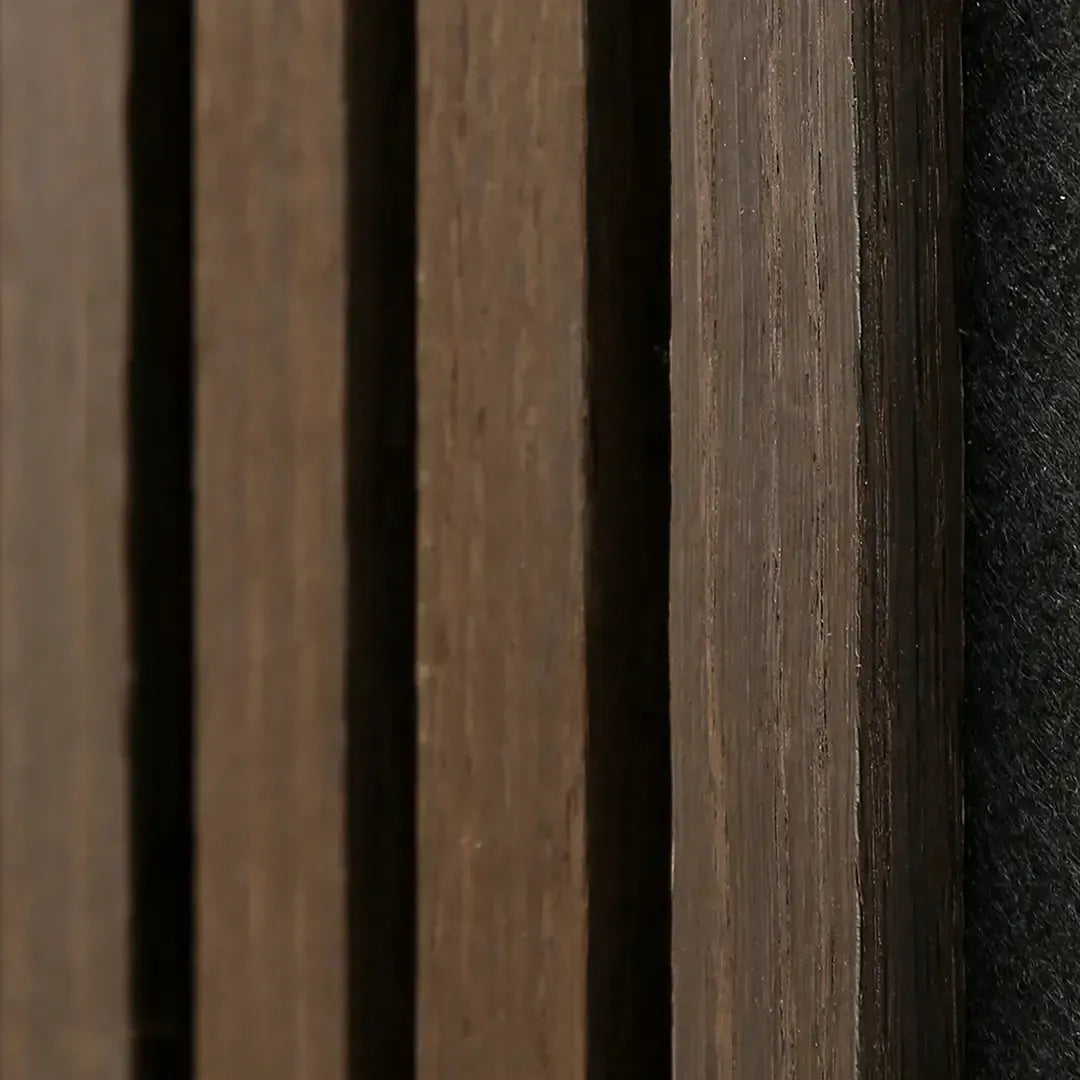
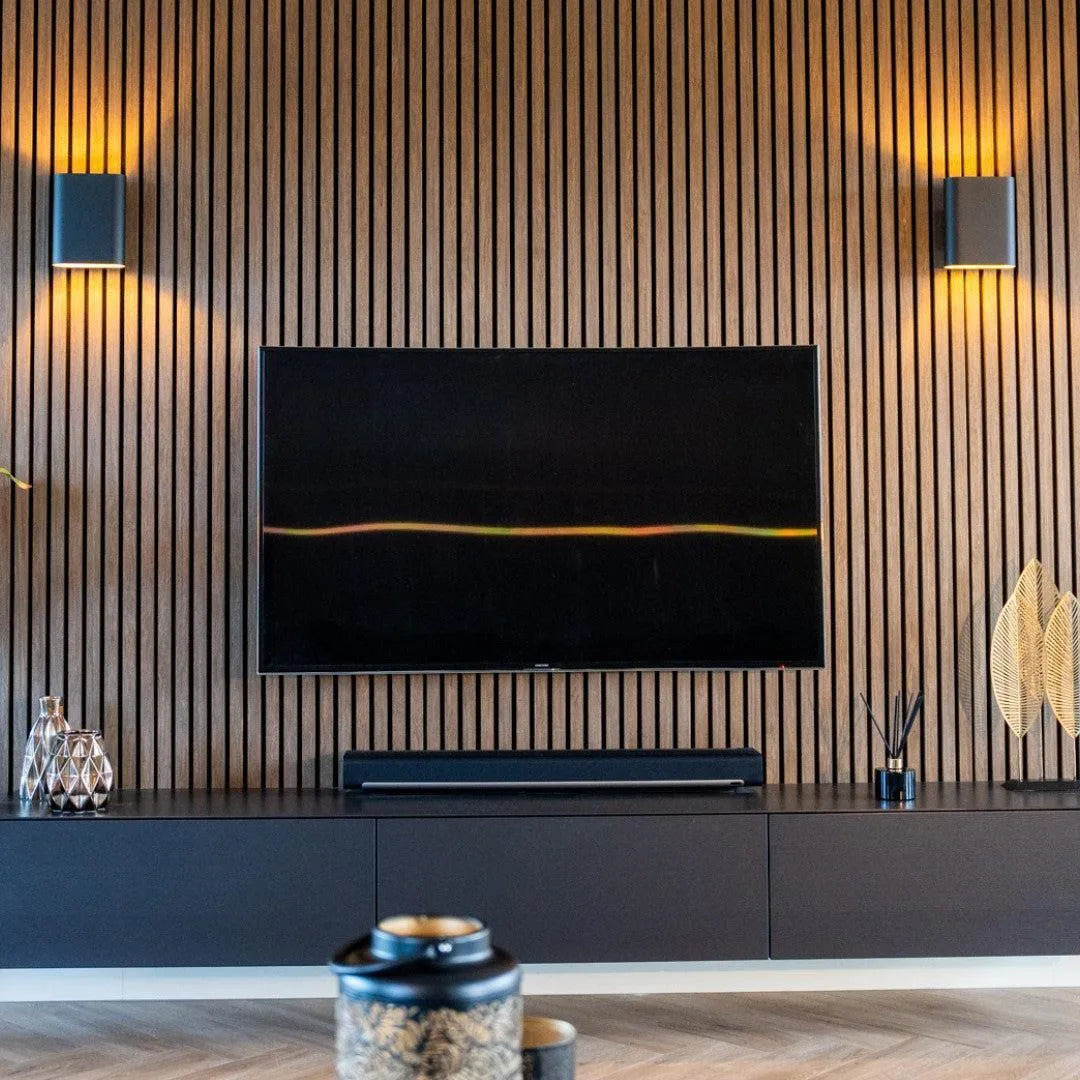
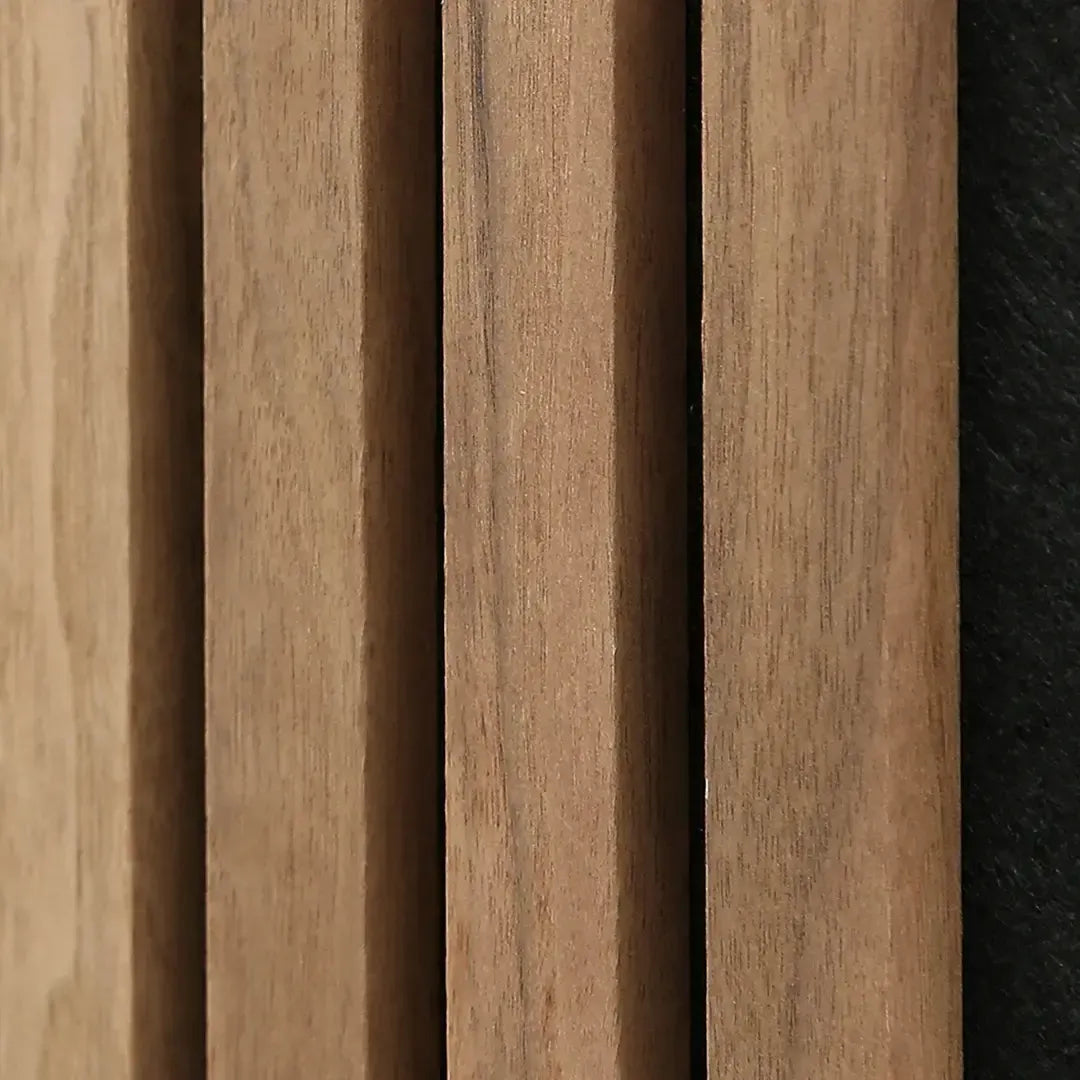
The noise-eater. This is the pick built specifically for rooms that need both sound absorption and a warm, natural finish. The gray felt backing sits behind real oak veneer slats, so the wall does double duty — absorbing reflected sound from clippers and dryers while giving the salon a wood-forward look that reads current for 2026 interiors. It works especially well behind styling stations, where the felt layer sits closest to the noise source. Verdict: Buy. See the Natural Oak with Gray Felt panel.
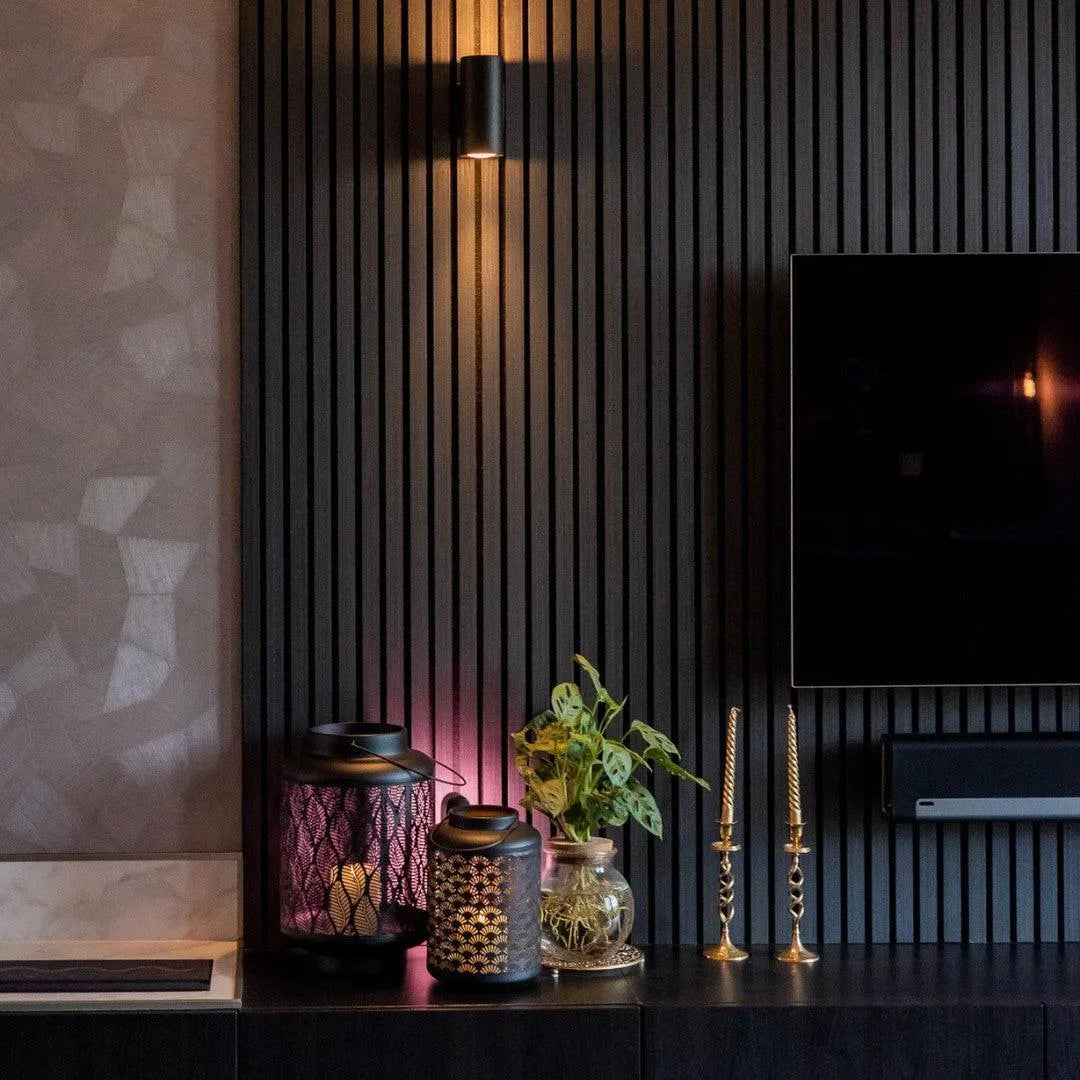
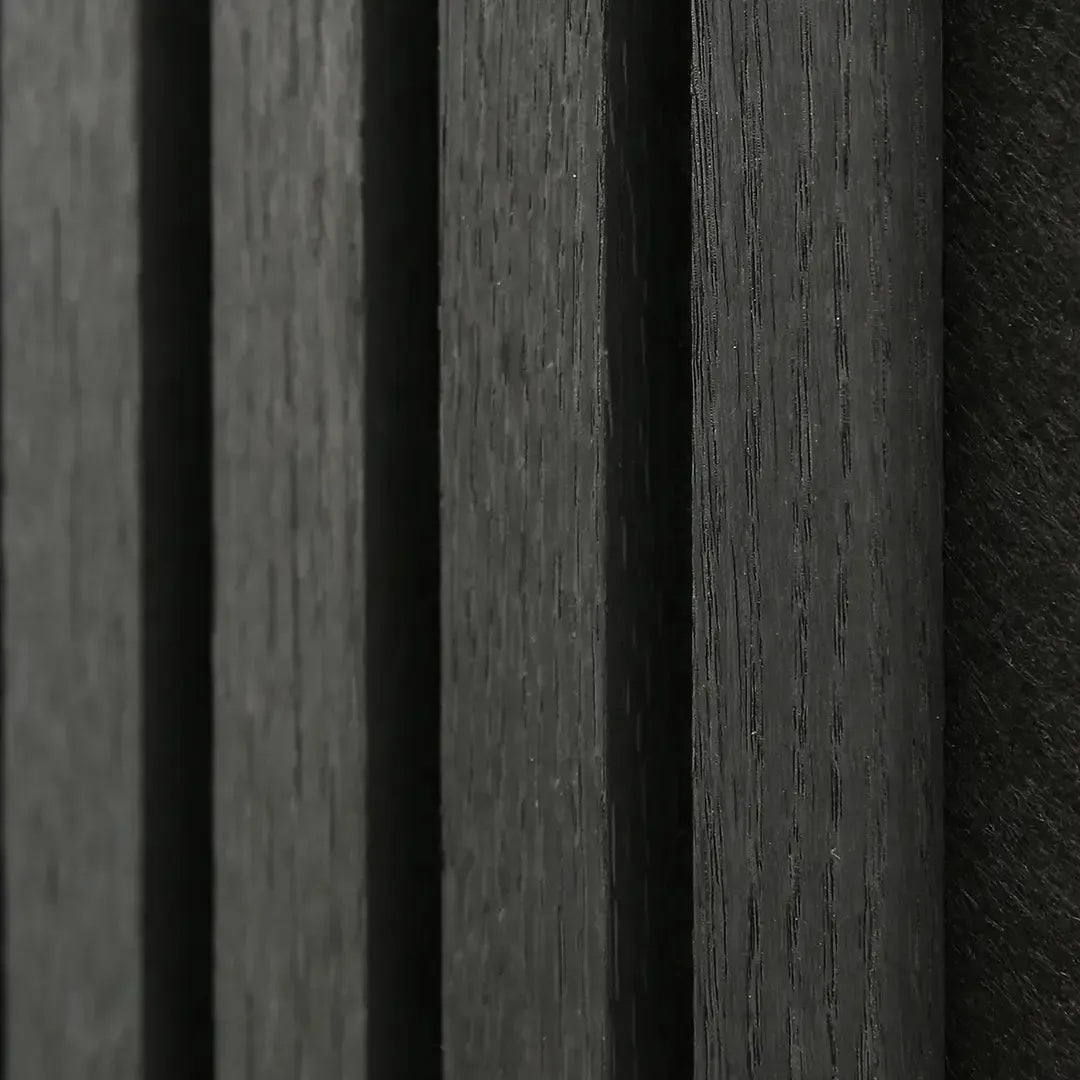
2. Acoustic Slat Wall Panel — Black Oak
The moody, modern pick. Black oak slat panels bring the same acoustic construction as the natural oak felt option but in a darker finish that suits salons leaning into a moody, editorial look rather than a Scandinavian one. The dark tone hides fingerprints and product residue better than lighter veneers, which matters in a space where hands are on the wall constantly. Verdict: Buy. Check the Black Oak acoustic slat panel.
3. Hexagon Acoustic Panel — Walnut
The decorative-first option. Hexagon-shaped acoustic panels break up a wall visually in a way flat slats can't, and the walnut finish gives a warmer, richer tone than oak. The catch: hexagon shapes have more seams and gaps between units than a continuous slat run, so absorption is slightly less consistent across a large wall. Verdict: Consider — better for a feature wall behind reception than a full noise-control installation.
4. Full Sample Box — Slat Wall Panel
Test before you commit. A salon wall is a big, visible investment, and lighting changes how a wood finish looks compared to a phone photo. Ordering a sample box lets you hold natural oak, black oak, smoked oak, and walnut against your actual wall lighting and mirror reflections before ordering full sheets. Verdict: Buy if you're still deciding between finishes. Order the full sample box here.
5. Fluted Wall Panel — Natural Oak
The aesthetic-only option. Fluted panels have become a go-to for salon reception walls because the vertical grooves catch light beautifully under pendant fixtures. But most fluted panel constructions skip the felt or acoustic backing layer entirely — they're built for visual texture, not sound absorption. Verdict: Skip for noise control; fine for a non-acoustic accent wall away from the styling floor.
6. 3D Wood Wall Panel — Textured Tile
Texture without the acoustic payoff. These raised, sculptural wood tiles add serious visual depth to a wall and photograph well for salon marketing, but the construction is solid wood veneer over a rigid backing, not a sound-absorbing assembly. Great for a statement wall behind the front desk, wrong tool for a loud blow-dry bar. Verdict: Skip if noise reduction is the actual goal.
Comparison table
| Panel | Acoustic Backing | Best Wall | Verdict |
|---|---|---|---|
| Acoustic Slat Wall Panel — Natural Oak with Gray Felt | Yes | Styling stations, wash area | Buy |
| Acoustic Slat Wall Panel — Black Oak | Yes | Styling stations, moody interiors | Buy |
| Hexagon Acoustic Panel — Walnut | Partial | Reception feature wall | Consider |
| Fluted Wall Panel — Natural Oak | No | Non-acoustic accent wall | Skip for noise |
| 3D Wood Wall Panel — Textured Tile | No | Front desk statement wall | Skip for noise |
Where to buy
- Buy directly from the AKU Woodpanel website rather than a third-party marketplace listing — finish batches and felt specs vary between resellers.
- Order samples before ordering full-wall quantities. A finish that looks right on a screen can read differently under salon LED lighting.
- If you're outfitting a multi-chair salon or a small chain, ask about bulk quantities for consistent felt-backing lots across every wall — commercial buyers get treated differently than a single accent-wall order.
FAQ
What's the best acoustic panel for a hair salon? Felt-backed slat wall panels, like the Natural Oak with Gray Felt option, are the strongest pick for 2026 because the felt layer behind the wood veneer actually absorbs sound instead of just adding texture.
Do wood panels really reduce noise, or is that a myth? Wood alone doesn't absorb much sound — it's the felt or acoustic backing behind the veneer that does the work. A solid wood panel with no backing layer will look good but won't meaningfully cut echo.
Are fluted panels good for salon walls? Fluted panels work well as a decorative accent, but most versions lack acoustic backing, so they're a Skip if your main goal is cutting noise rather than adding texture.
How much wall coverage does a salon actually need for noise control? Coverage needs vary by room size and hard-surface ratio (mirrors, tile, ceiling height), so it's worth mapping your loudest walls — usually behind stations and the wash area — before ordering.
Can I install acoustic wood panels myself, or do I need a contractor? Slat wall panels are designed for straightforward installation on drywall or furring strips, and many salon owners handle it without a contractor, though a large commercial wall may still benefit from professional install for a clean, even finish.
Is black oak or natural oak better for a salon? Both carry the same felt-backed acoustic construction — the choice comes down to whether the salon's interior leans warm and Scandinavian (natural oak) or dark and editorial (black oak).
Do acoustic panels hold up to salon humidity and product spray? Wood veneer panels are generally fine in normal salon humidity, but they shouldn't sit directly behind a wet station or shampoo bowl without protection — keep acoustic slat walls on dry-side stations.
Should I order samples before buying full panels for a commercial space? Yes — a sample box lets you compare finishes like natural oak, black oak, smoked oak, and walnut against your actual salon lighting before committing to a full-wall order.
One last thing
The wall behind the shampoo bowls is usually the loudest spot in the salon and the one owners forget to treat — water running, bowls clinking, and hard tile bouncing every sound back into the room. Put the felt-backed acoustic slat panel there before the reception wall; clients notice the calm faster than they notice the finish.

 Better performance and aesthetic appeal
 In Stock