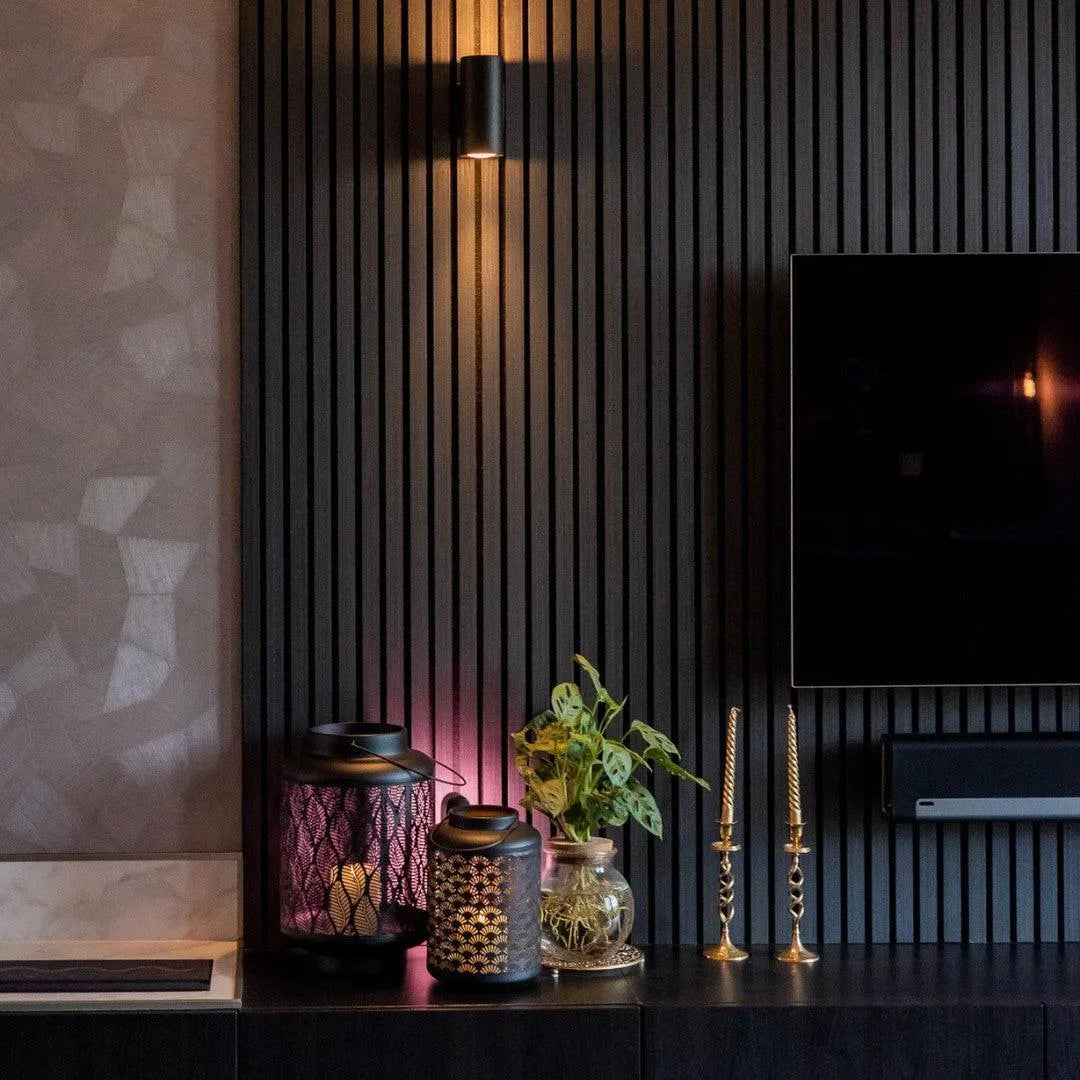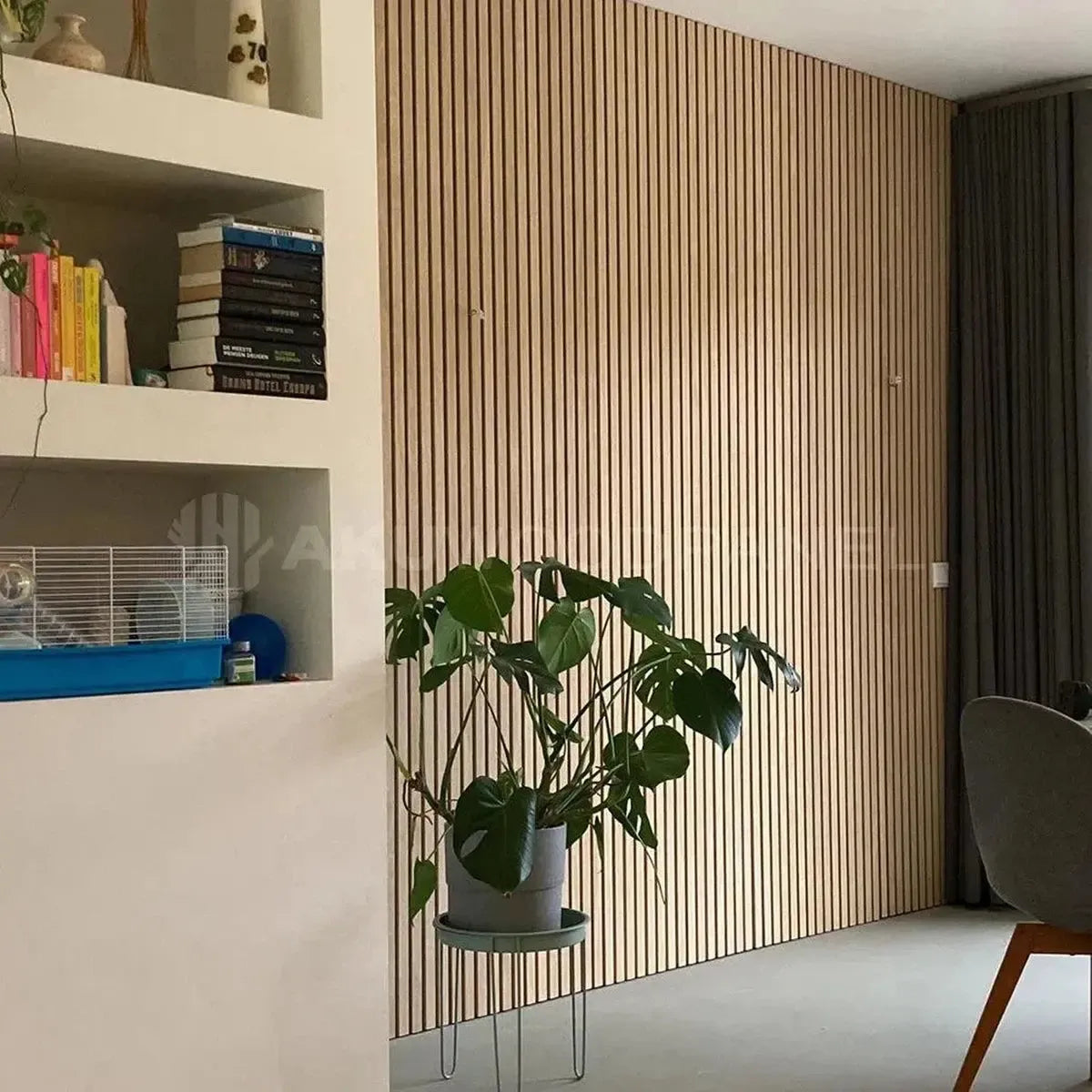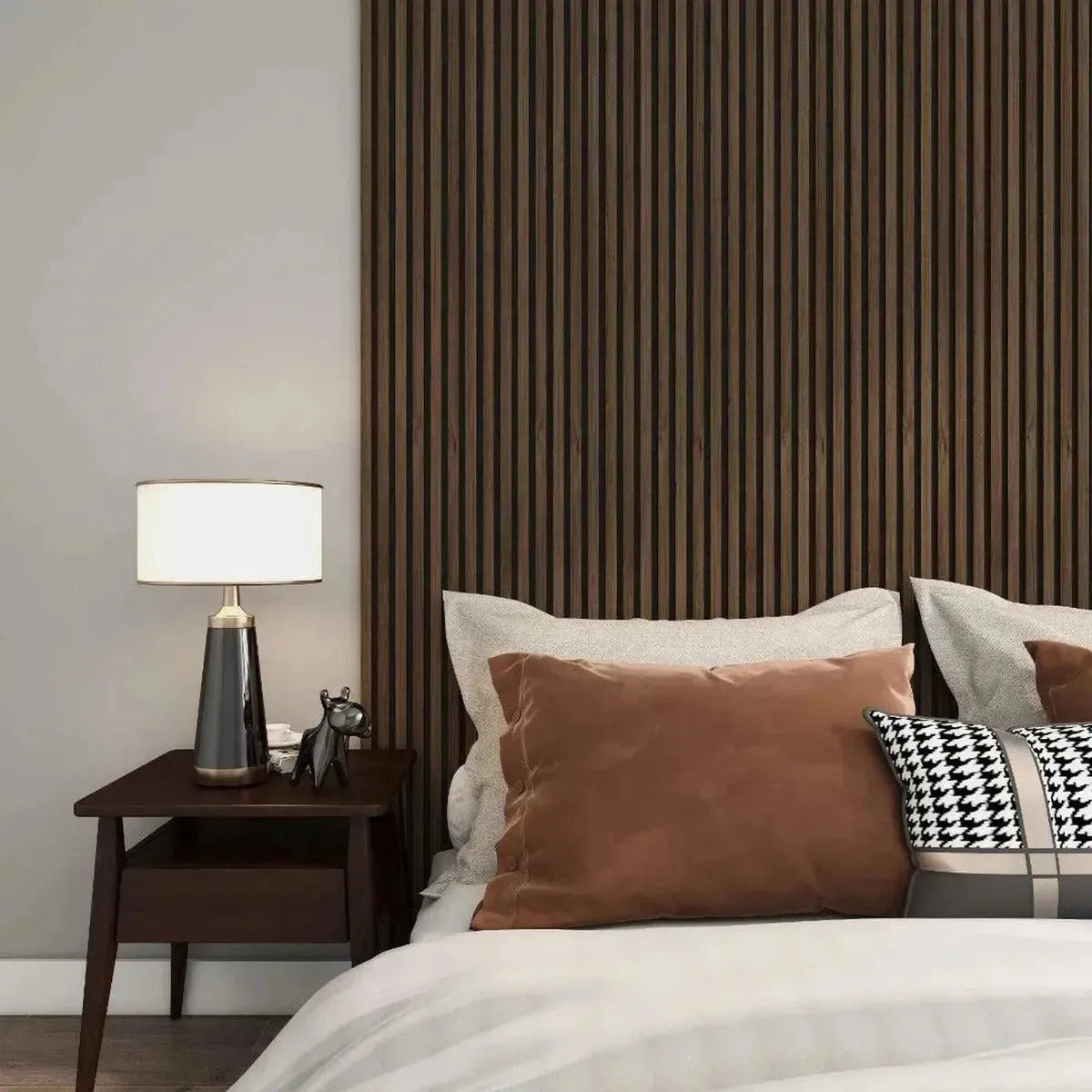
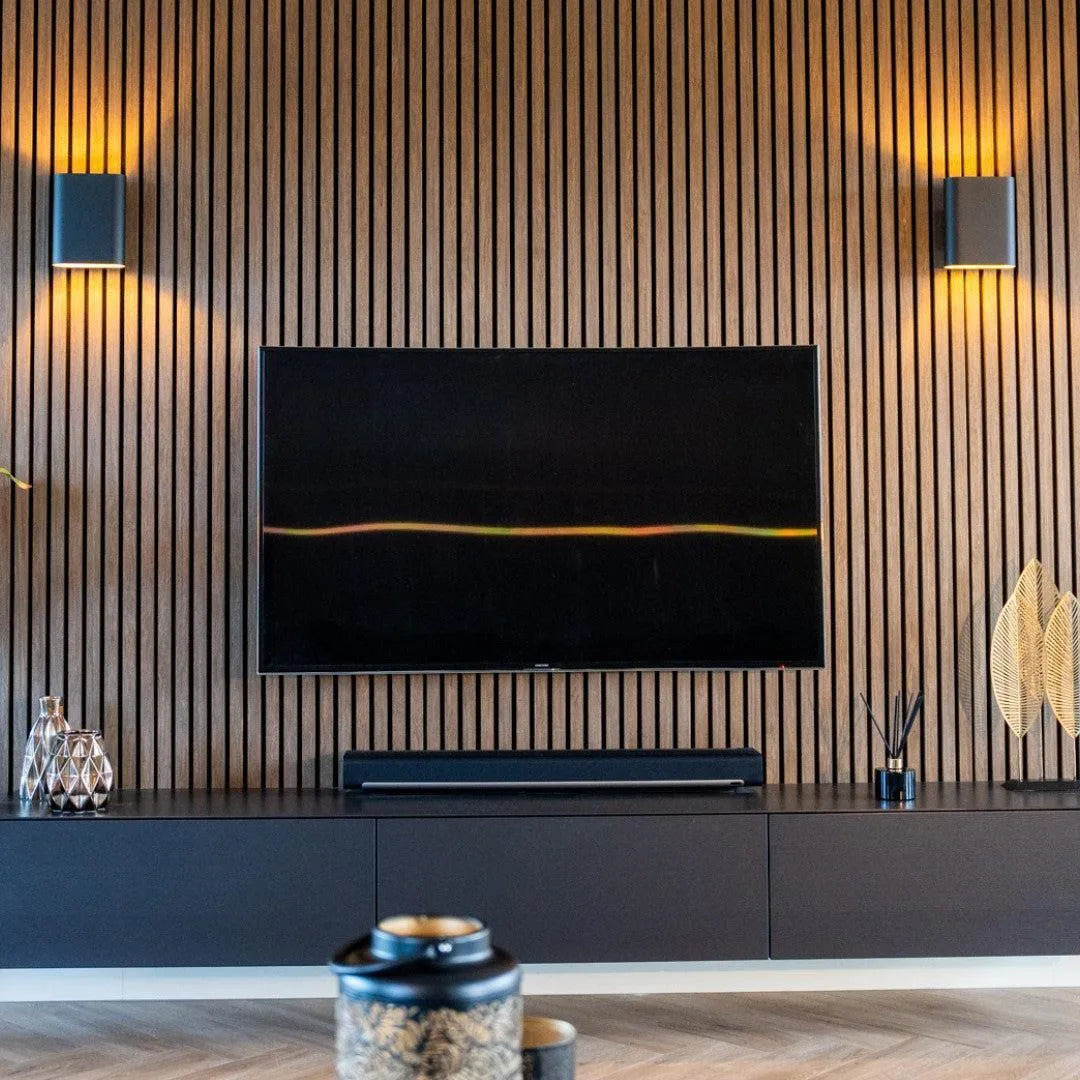
Artisan knife and cutlery shop wood panels are acoustic slat and fluted wall systems installed around display cases and sharpening stations to cut the echo bouncing off glass and tile while giving blades a warm, craft-shop backdrop instead of a sterile retail look. This guide covers where to place them, which veneer tone reads best against steel, and how AKU Woodpanel's acoustic slat panels stack up against fluted and hexagon options for a working cutlery floor in 2026.
- Wood panels for cutlery shop interiors cut glass-and-tile echo; AKU Woodpanel's acoustic slat panels carry an NRC of 0.75.
- Walnut and black oak veneers pair best with dark steel blades; natural oak suits lighter Damascus and stainless pieces.
- Treat the register wall and open display cases first — that's where noise and sightlines overlap most.
- Fluted panels fit narrow pilasters between cases; full slat runs work better behind one feature display.
- Order a single sample panel before a full wall — veneer grain reads differently under LED case lighting.
Why wood panels for cutlery shop interiors matter
A knife shop is a hard-surface room by design: glass cases to show the steel, tile or polished concrete to keep metal filings off carpet, track lighting bounced off every blade. Those same surfaces reflect sound, which means a customer asking about edge geometry three feet from the register competes with the case-to-case chatter of everyone else in the shop.
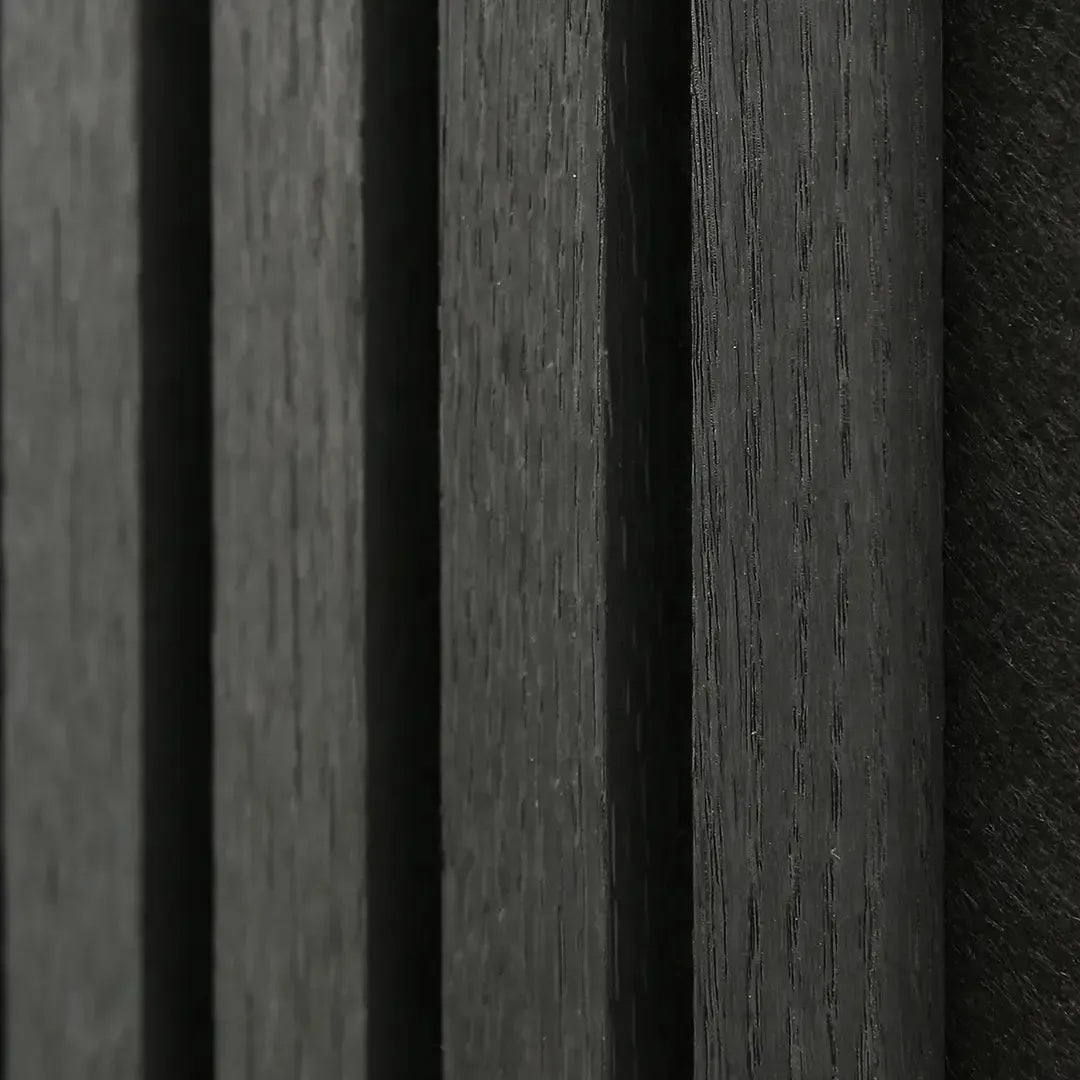
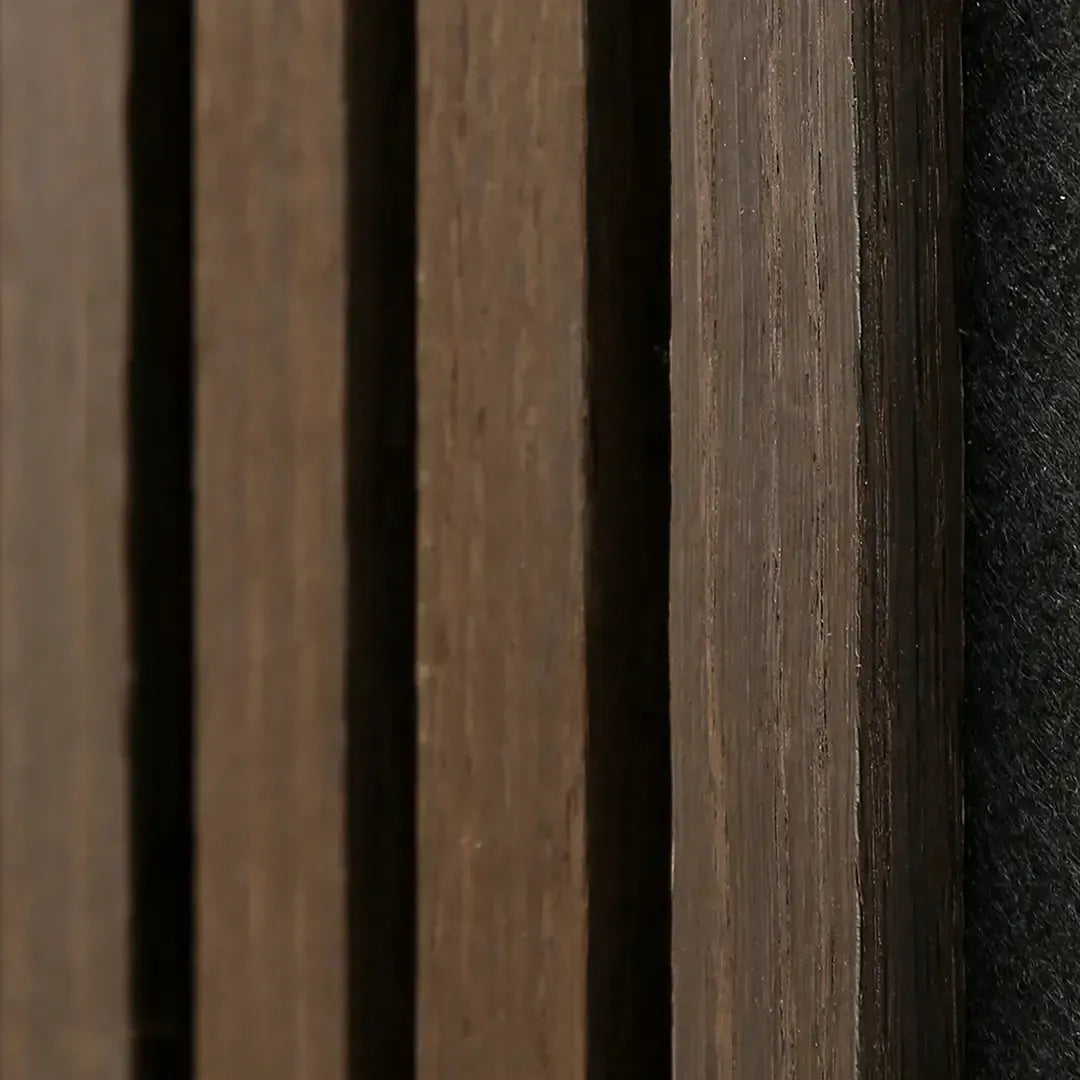
AKU Woodpanel's walnut acoustic slat panels absorb the mid-range frequencies that make that conversation legible again, and the wood veneer does double duty as a backdrop that reads as artisan rather than big-box. That combination — sound control plus material warmth — is the whole case for wood panels over foam or fabric in a shop where the product itself is a handmade object.
Map the noise sources in your showroom
Start without buying anything. Walk the floor at a busy hour and note where sound actually collects before deciding where panels go.
- Glass display cases along the main wall, which reflect sound straight back at the register
- Tile or polished concrete flooring, especially in older retail buildouts
- Exposed ceiling or ductwork above an 8-foot showroom, common in converted storefronts
- The register and wrap area, where multiple conversations overlap during busy hours
- A back-room sharpening bench, if grinder or belt noise carries into the sales floor
Add sound-absorbing surface before you add more glass
Once you know where sound collects, treat the reflective wall behind it rather than adding more hard surfaces to compensate. Foam and fabric are the cheap first options; acoustic wood slat panels are the step up that also functions as a finished retail wall.
- Fabric-wrapped acoustic panels: inexpensive and removable, but they show fingerprints fast in a shop where customers handle product
- Foam acoustic wedges: functional in a back room, wrong tone for a sales floor built around craftsmanship
- Acoustic wood slat panels like AKU Woodpanel's Natural Oak or Smoked Oak lines: absorb sound and double as a retail backdrop
- Felt-backed hexagon panels: good for spot treatment behind a single feature case rather than a full wall
- Ceiling baffles: worth adding only if the room has 10-foot-plus ceilings and slat walls alone aren't enough
Match veneer tone to your blade and handle inventory
The panel behind a display case is part of the product photo whether you plan it that way or not. Pick a tone that makes steel and handle material pop instead of blending in.
- Black oak for blackened steel, G10, and Micarta handles — the dark grain reads as intentional, not dim
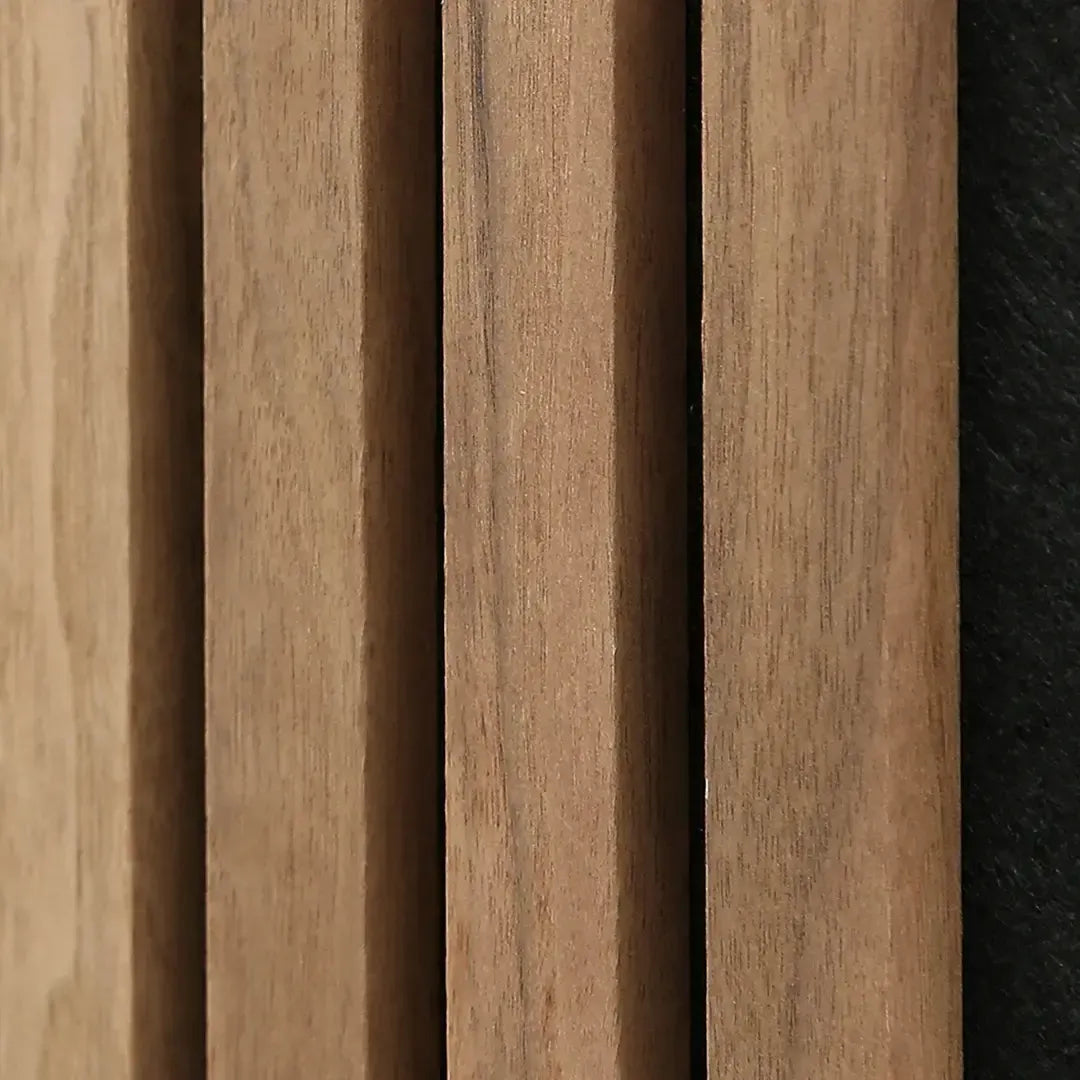
- Walnut for warm handle woods like cocobolo or stabilized burl, and for shops leaning traditional over modern
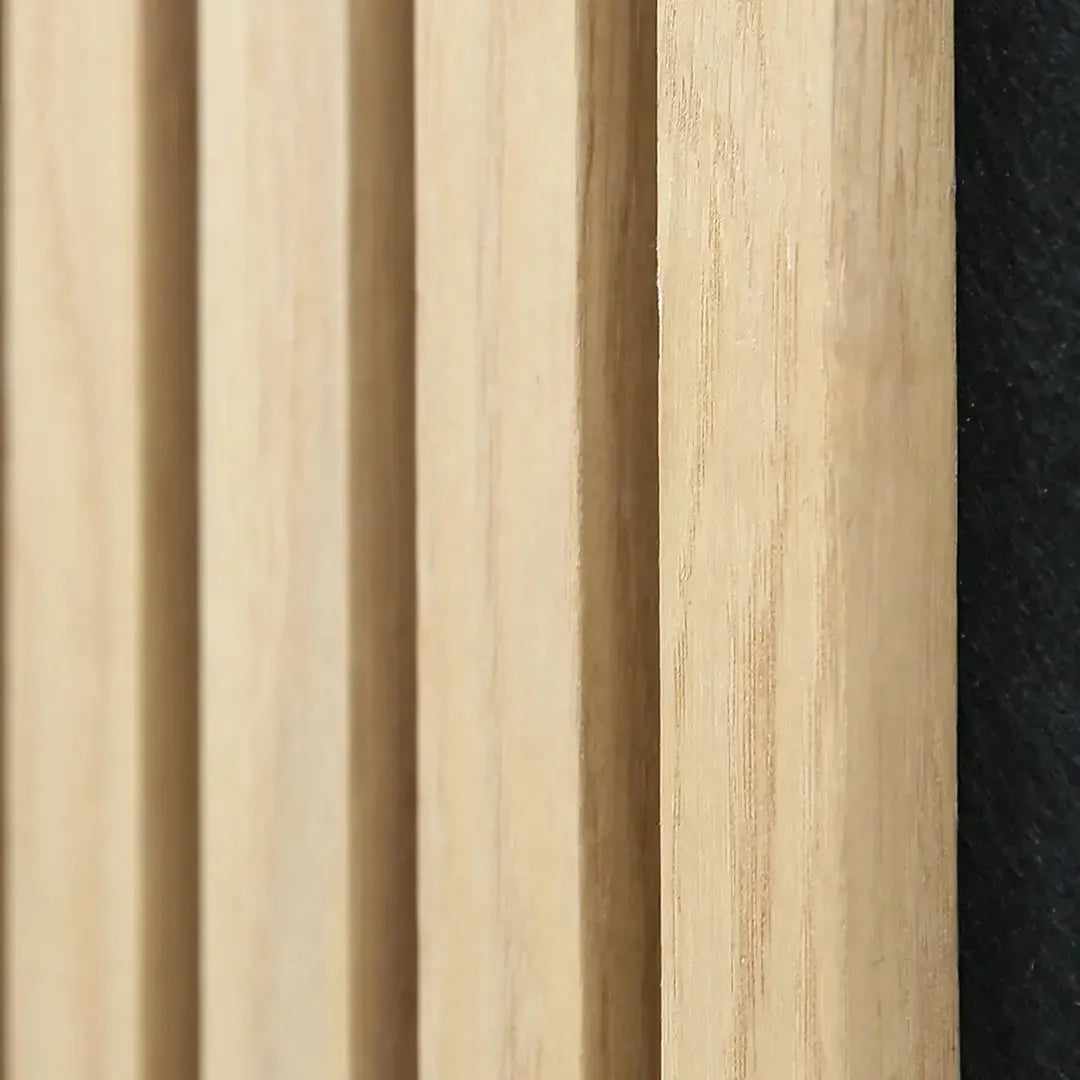
- Natural oak for stainless blades and Damascus patterns, where a lighter background keeps the pattern legible
- Smoked oak for a moodier back wall behind a single hero display rather than the whole shop
- Natural oak with gray felt where you need extra absorption near a sharpening bench without switching tone
Decide where panels go relative to sightlines and lighting
A panel installed in the wrong spot blocks the exact lighting a knife shop depends on to sell edge quality. Plan placement around what customers need to see, not just around wall square footage.
- Keep panels below track lighting runs, not intersecting them
- Treat the wall behind open cases first, since that's where reflected sound is loudest
- Skip paneling directly behind glass shelving where blades sit at eye level — the wood should frame the display, not crowd it
- Run panels floor-to-case-height rather than floor-to-ceiling behind low cases, so the upper wall stays clean for signage
- Leave the sharpening bench wall for a felt-backed option if it's visible from the floor
Compare acoustic slat, fluted, and hexagon layouts for a knife wall
Each AKU Woodpanel format solves a different layout problem. A shop with long, uninterrupted wall runs behind cases wants a different panel than one with narrow pilasters between fixtures.
Natural oak fluted panels work on case dividers and pilasters where a full slat run would look busy at that width. Full acoustic slat walls work better behind one continuous display, where the repeated slat pattern reads as a deliberate design choice rather than a patchwork.
“If a customer can't hear the steel spec you just quoted them over the register, the panels aren't doing their job.”
Comparison: wall treatment options for a cutlery shop
| Option | Best for | Key limitation |
|---|---|---|
| AKU Woodpanel acoustic slat panels | Full display walls needing absorption plus a wood veneer finish | Needs furring strips or plywood backing on uneven walls |
| AKU Woodpanel fluted panels | Narrow pilasters and case dividers where slats would look busy | Lower acoustic absorption than felt-backed slat panels |
| AKU Woodpanel hexagon acoustic panels | Accent walls behind a single feature knife or the register | Geometric layout takes more planning than a straight slat run |
| Fabric-wrapped acoustic panels | Renters needing removable, budget acoustic treatment | Shows fingerprints and doesn't match a wood-and-steel look |
| Foam acoustic wedges | Back-of-house sharpening rooms, not customer-facing space | Reads industrial, wrong tone for a retail sales floor |
Verdict: AKU Woodpanel's acoustic slat panels win for the main sales wall behind open cases; fluted panels win for narrow dividers; foam stays in the back room.


Common mistakes cutlery shops make with wall panels
- Hanging panels directly above open blade displays, blocking the downlighting needed to show edge geometry
- Choosing fluted panels for noise control and expecting slat-level absorption they don't have
- Matching veneer to the flooring instead of the steel, so Damascus or blackened blades disappear against the wall in photos
- Skipping a sample and discovering the grain reads warmer under LED case lighting than it did in daylight photos
- Paneling floor-to-ceiling behind a low glass case, wasting a section of wall customers never see anyway
FAQ
What's the best wood panel for a knife shop with glass display cases?
Acoustic slat wall panels in black oak or walnut work best behind open glass cases in 2026 because they absorb reflected sound and give blades a warm, non-reflective backdrop. Natural oak works better when the shop stocks lighter stainless or Damascus pieces.
Do acoustic wood panels actually reduce echo in a retail cutlery shop?
Yes — felt-backed acoustic slat and hexagon panels carry an NRC of 0.75, which meaningfully cuts reflected sound off glass and tile. Decorative-only fluted panels absorb less because they lack the felt backing.
Is fluted paneling or slat paneling better for a cutlery store?
Slat paneling is better for full display walls where sound absorption matters most; fluted paneling fits narrow pilasters and case dividers where a slat pattern would look cramped. Most shops use both in different spots.
How much wall coverage does a small knife shop need for a noticeable acoustic improvement?
Treating the wall directly behind the busiest open case and the register wall covers the two loudest reflection points in most small shops. A full-room wrap is rarely necessary unless ceilings run past 10 feet.
Can wood panels go behind a register counter in a cutlery shop?
Yes, and it's one of the highest-value spots since register conversations overlap with case chatter more than anywhere else on the floor. Keep the panel below any mounted signage or card reader hardware.
What's the difference between AKU Woodpanel's acoustic slat panels and fluted panels?
Acoustic slat panels use a felt backing for sound absorption and suit full display walls; fluted panels are a decorative profile without felt backing, better suited to narrow dividers between cases. Both use the same 3-sided wood veneer finish.
Do dark veneer panels make a knife display look smaller?
Dark panels like black oak or smoked oak can visually shrink a narrow room if used floor-to-ceiling on every wall. Limiting dark veneer to one feature wall and keeping adjacent walls lighter avoids that effect.
How do I test a wood panel tone against my inventory before ordering a full wall?
Order a single panel or sample piece and hold it against your case under the same LED lighting customers see, not daylight from a doorway. Grain and tone shift noticeably between the two light sources.
One last thing
Most cutlery shops that email AKU Woodpanel about acoustic slat panels assume they need to cover every wall to get a noticeable result. A single felt-backed hexagon or slat panel behind the busiest open case — the one closest to the register — usually does more for legibility on the floor than a full room wrap, because that's where the loudest cluster of customers and staff actually stands. Panel the rest of the shop for looks in 2026; panel that one wall for sound.



 Better performance and aesthetic appeal
 In Stock