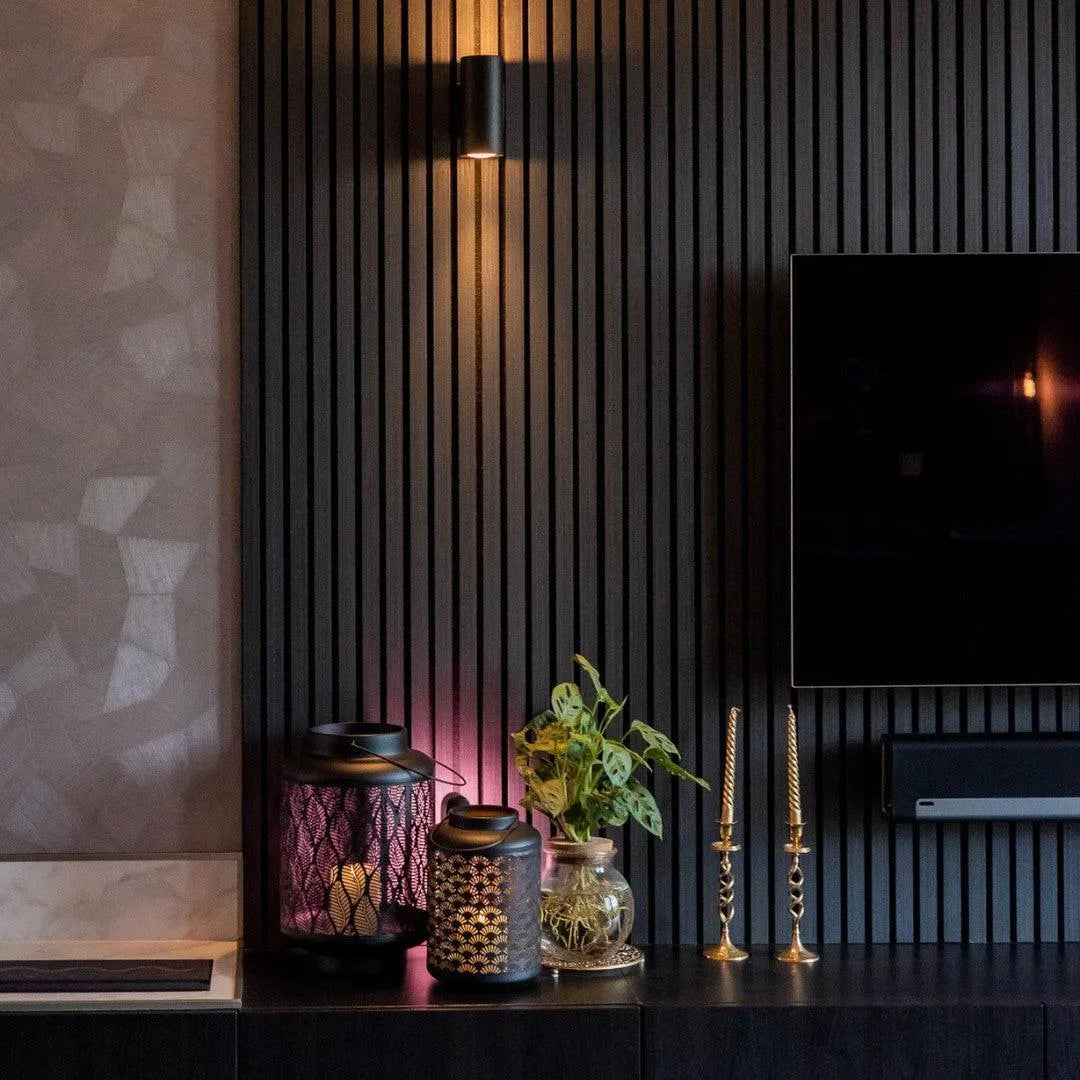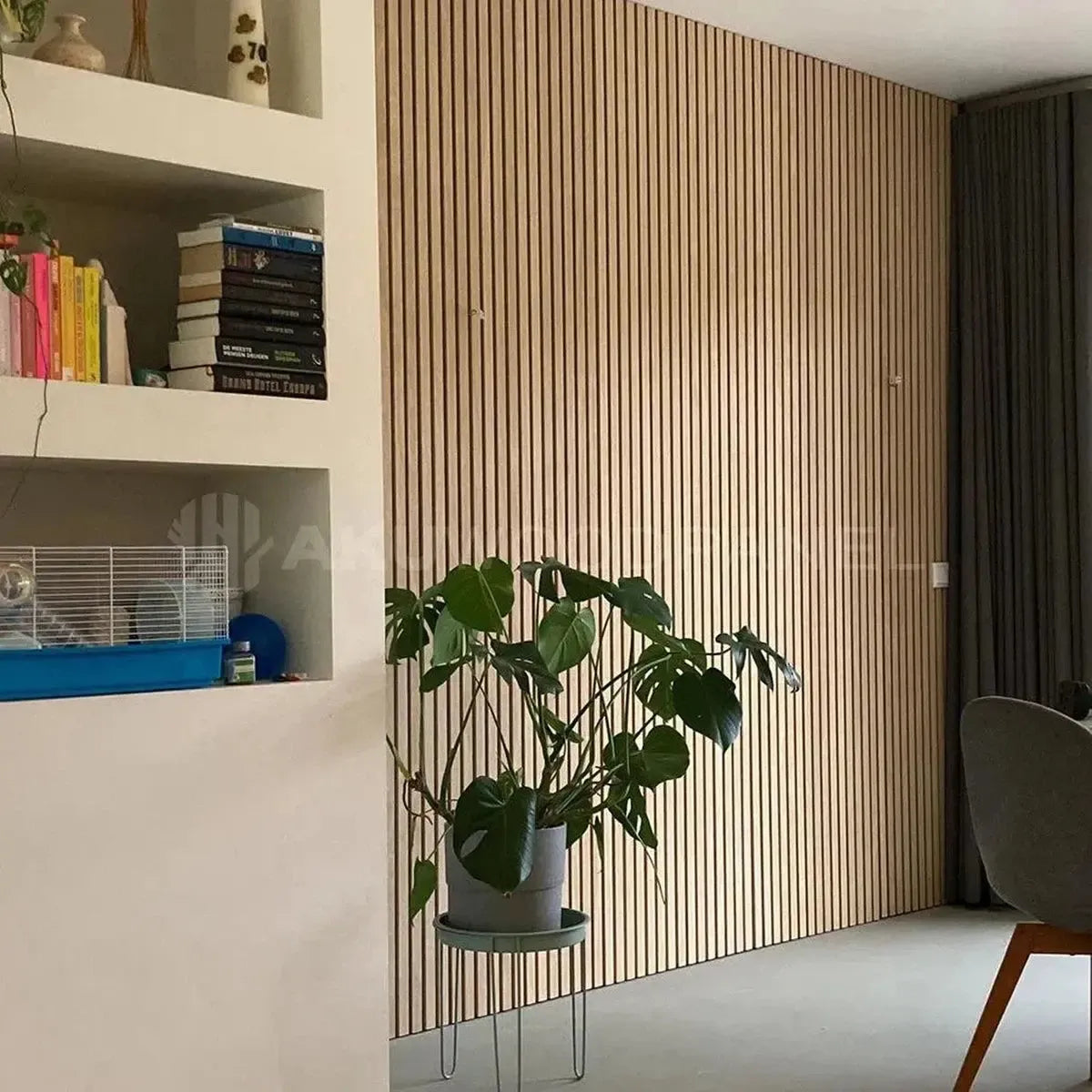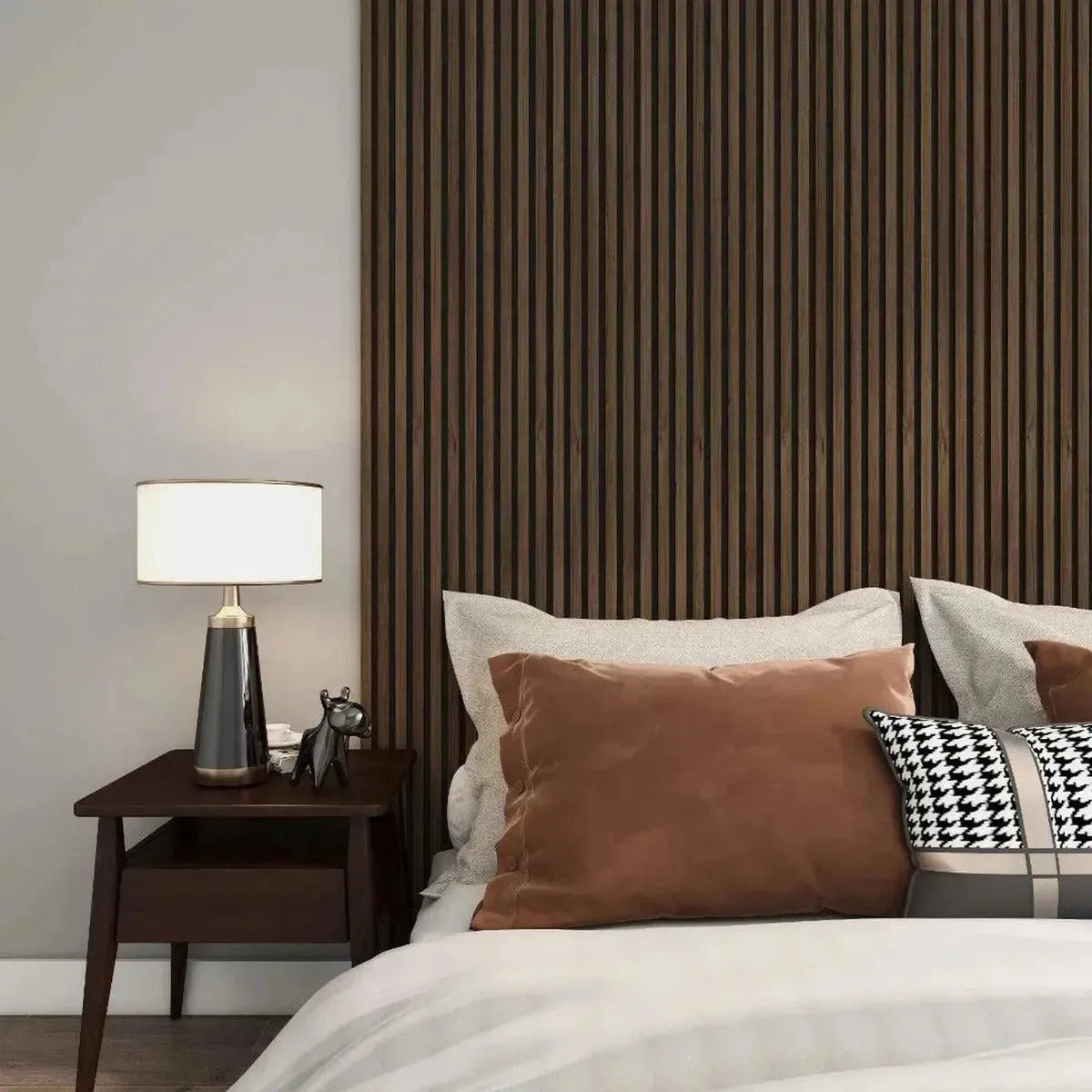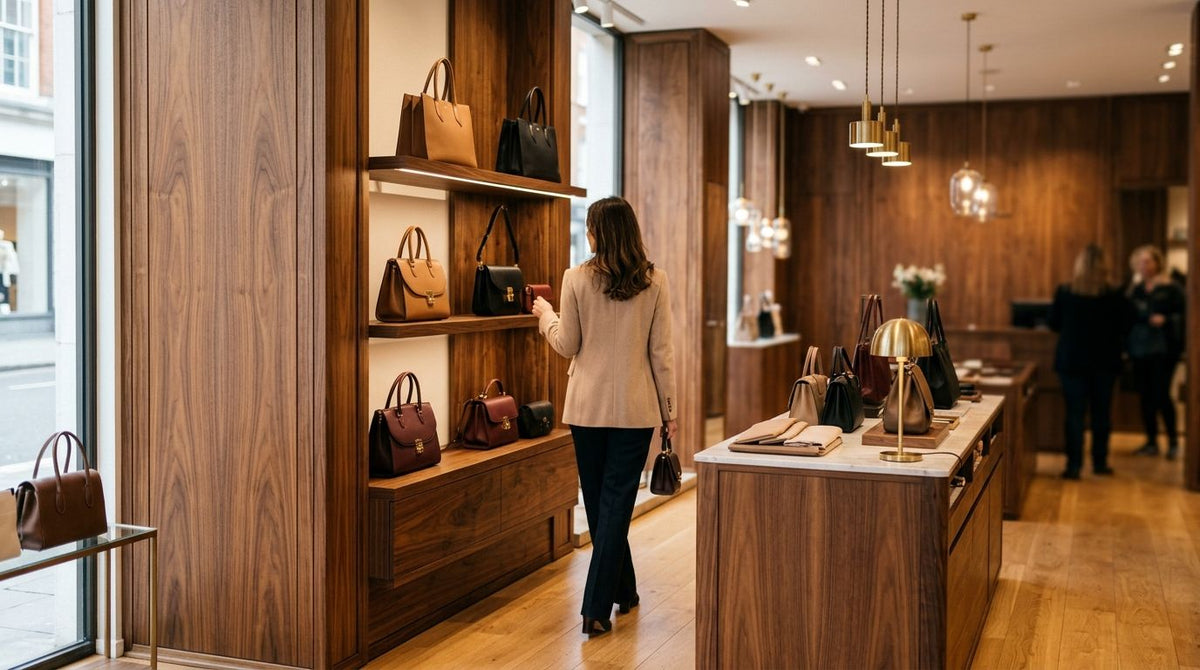
Luxury handbag and leather goods boutiques use wood wall panels to cut hard-surface echo, frame product displays in warm material, and signal craftsmanship before a customer touches a single bag. This segment differs from general retail because the wall itself has to compete with $2,000 handbags for attention without winning — the panel supports the product, it doesn't upstage it.
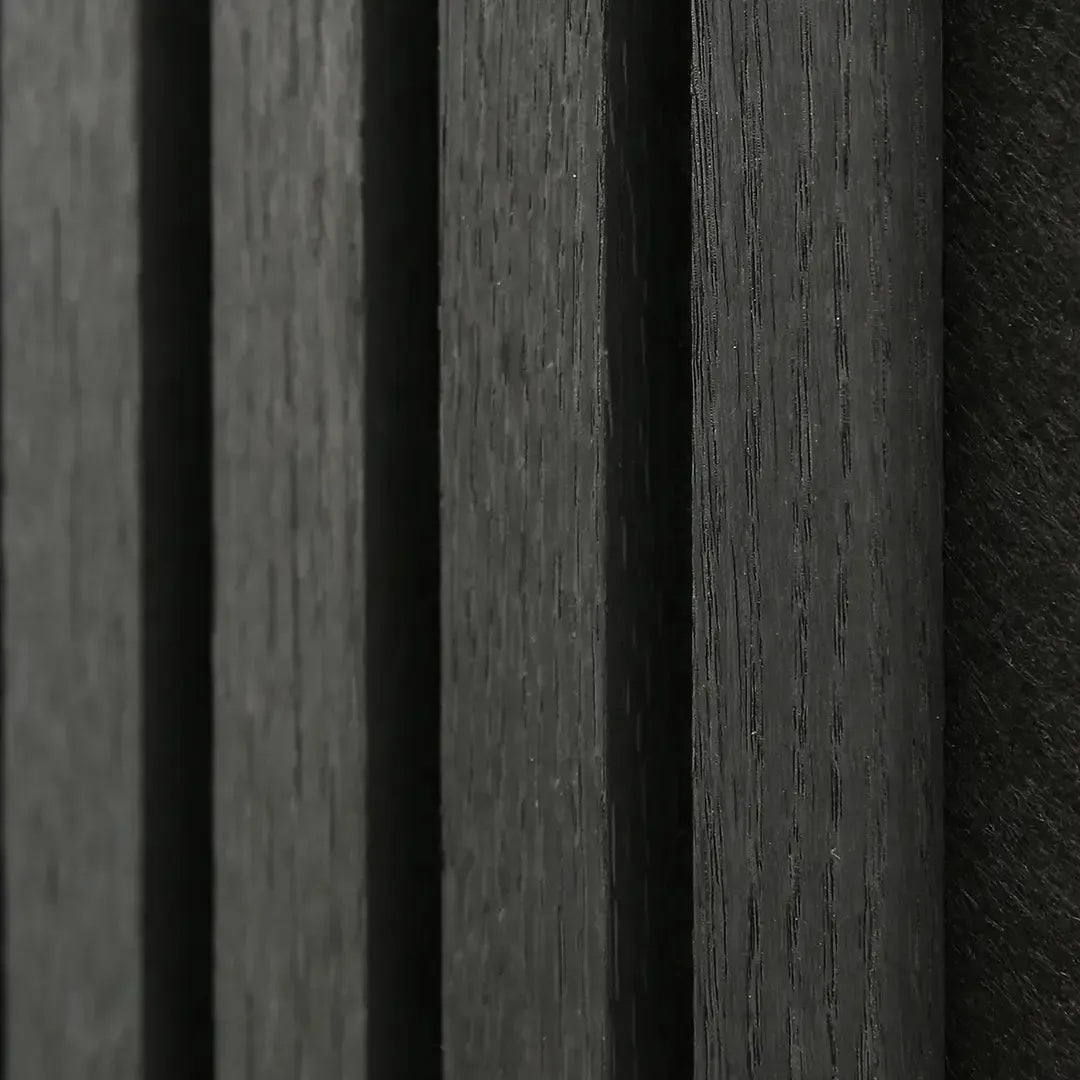
- Walnut and black oak acoustic slat panels are the strongest wood panels for handbag boutique interiors in 2026 because they read dark and premium under spotlighting.
- Felt-backed acoustic panels carry a 0.75 NRC rating, which matters in boutiques with hard floors and glass display cases.
- Fluted and hexagon panels work as accent zones behind counters and fitting areas without covering an entire sales floor.
- Budget the install around a phased schedule so the store never closes for more than a weekend.
Why wood panels for handbag boutique interiors matter
A leather goods boutique has three acoustic enemies: polished concrete or stone flooring, glass display cases, and high ceilings common in flagship retail spaces. Sound bounces instead of absorbing, which makes a quiet luxury environment feel tinny and cheap the moment two customers start talking.
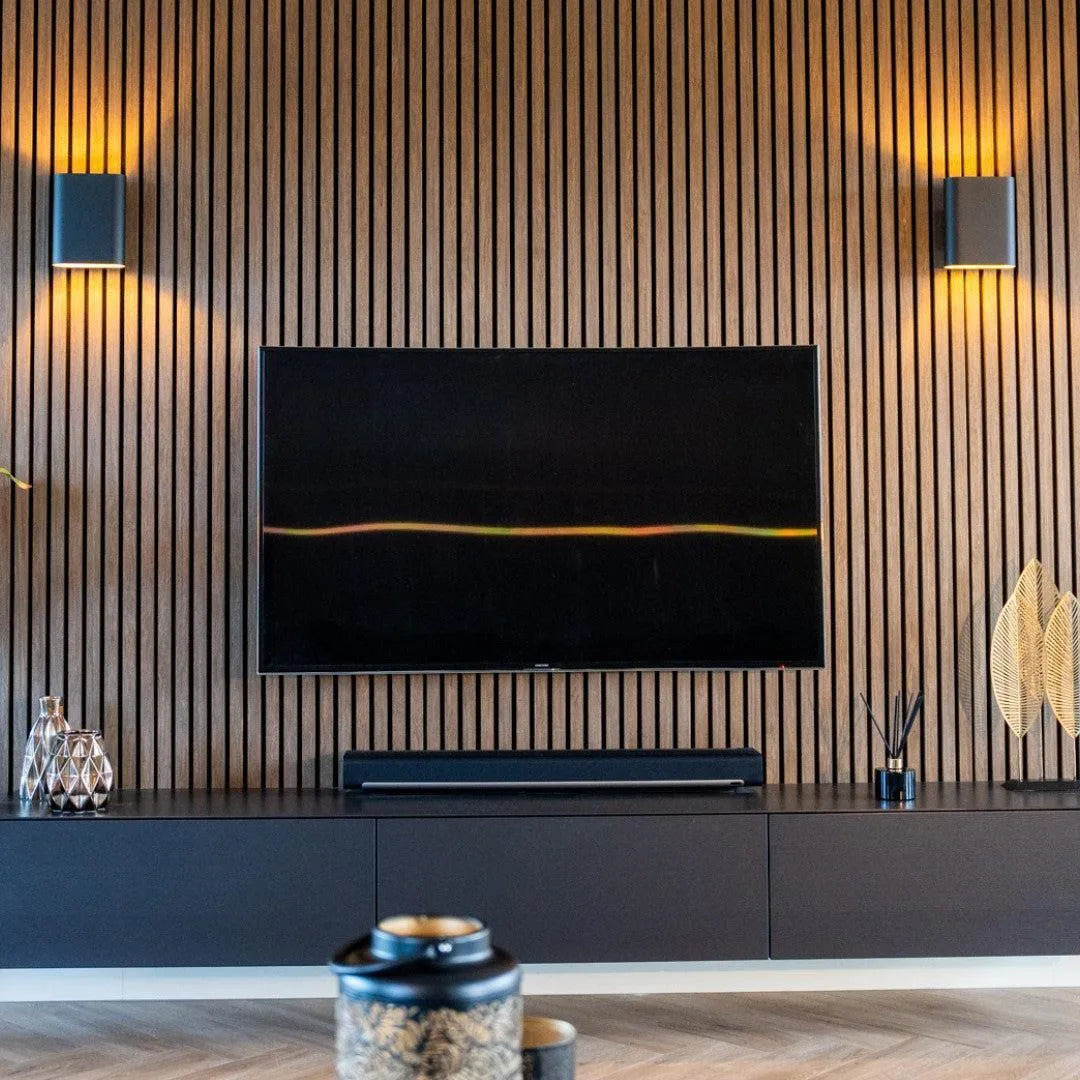
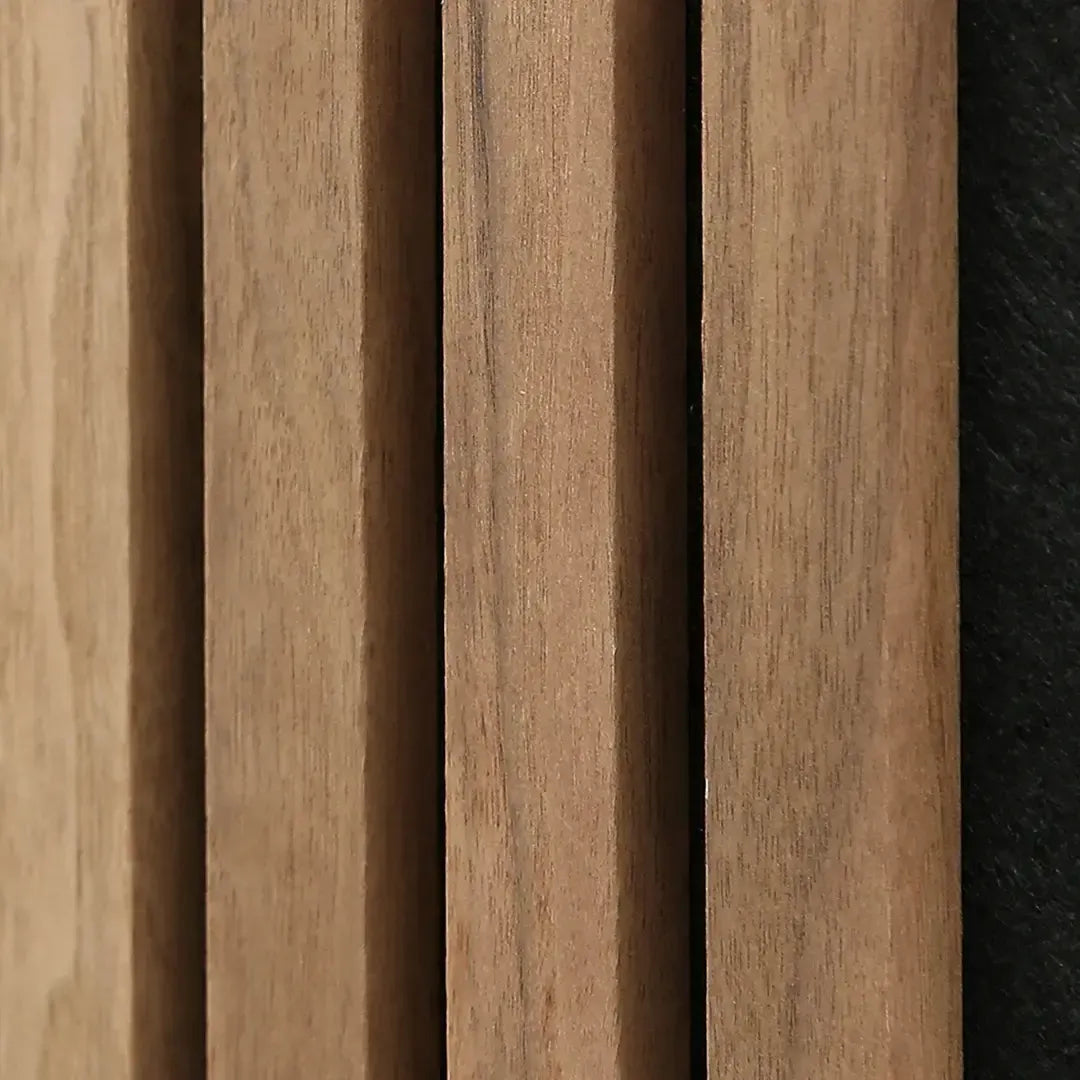
Wood wall panels solve two problems at once in this setting. The veneer surface reads as material quality — the same value language the merchandise is selling — and the acoustic core behind walnut acoustic slat wall panels knocks down reverberation without a single visible speaker or foam tile. That combination is why designers spec wood over fabric panels in this category: fabric absorbs sound but doesn't carry the same tactile, premium signal a handbag brand needs on its walls.
Choose a wood tone that reads as luxury, not rustic
The wrong tone turns a handbag boutique into a cabin. The right one turns a bare wall into a backdrop that photographs well for the brand's own social content in 2026.
- Go dark for leather-forward brands: black oak or smoked oak reads formal and heavy, matching saddle leather and hardware tones.
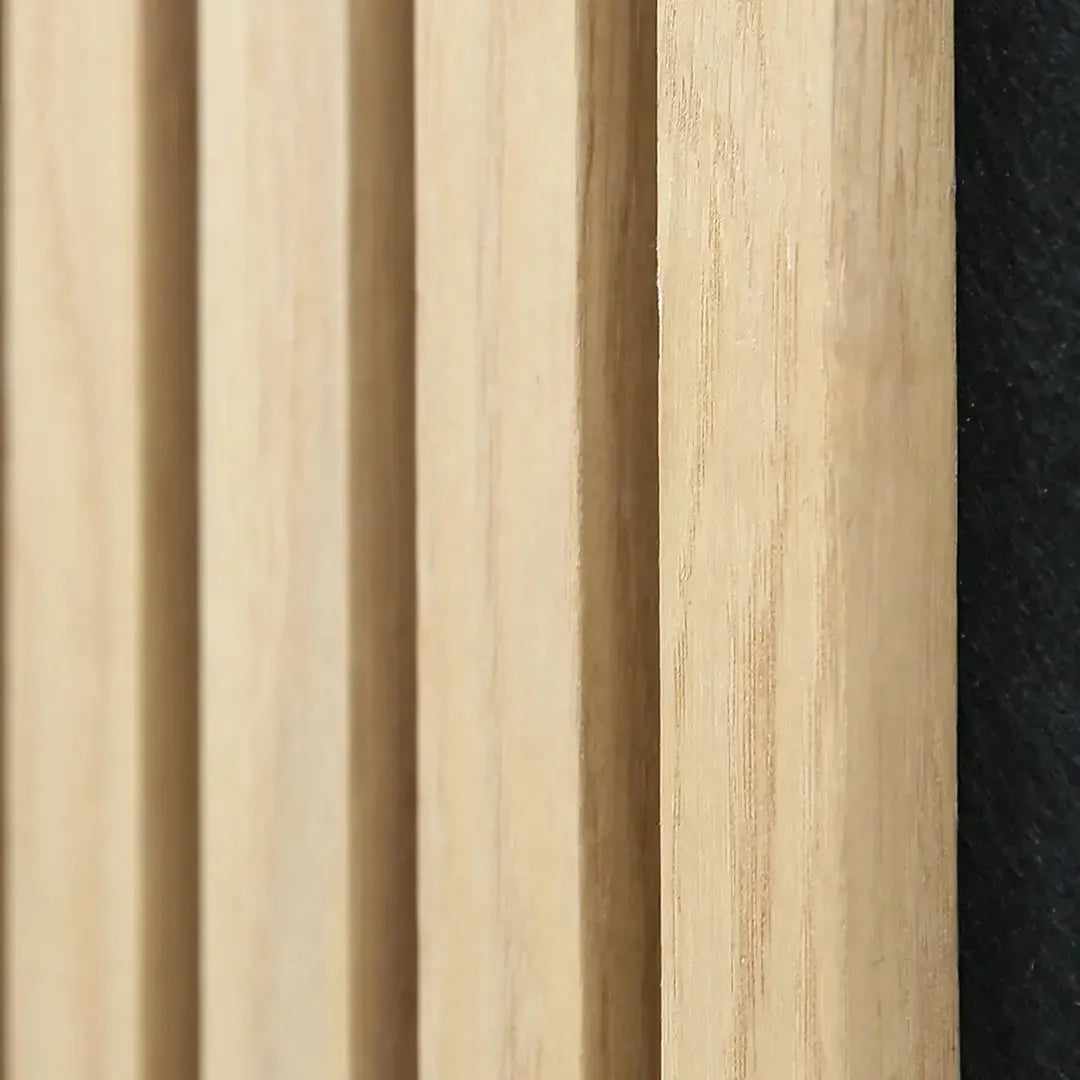
- Go warm for lighter product lines: natural oak or walnut suits pastel leather, canvas, and lighter hardware finishes.
- Avoid high-gloss laminate finishes near leather displays — they compete with the sheen of patent leather and metal clasps instead of framing it.
- Sample before committing: order a physical swatch and hold it next to the actual bag colors carried in-store, not a screen render.
- Keep tone consistent between the sales floor and the fitting or consultation area so the brand feels unified, not patchworked.
Specify acoustic performance for hushed retail acoustics
Handbag boutiques sell trust as much as leather. A noisy, echoing room undercuts that trust before a sales associate says a word.
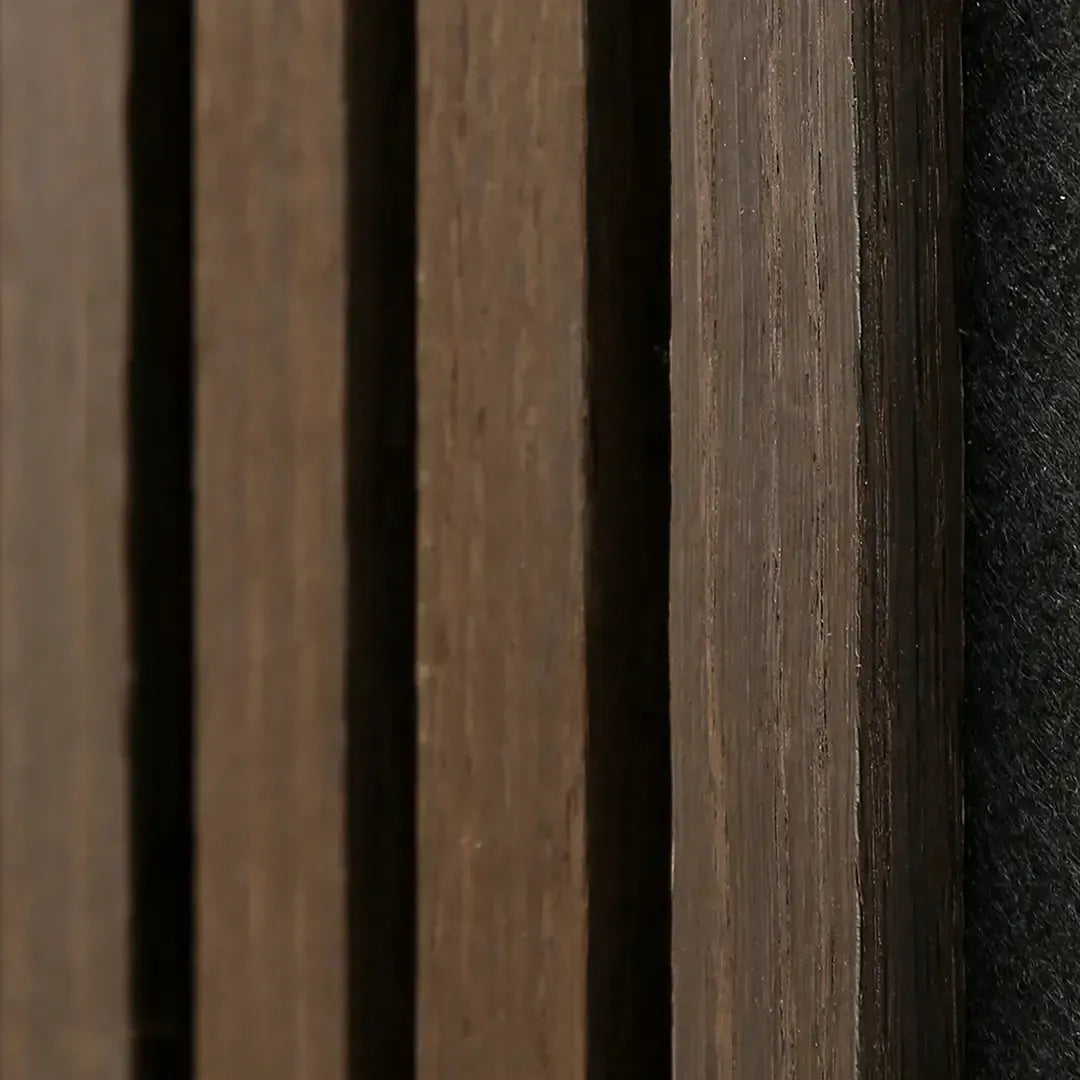
- Request felt-backed panels over plain veneer slats when the space has hard flooring and no soft furnishings.
- Cover at least one full wall, not a strip, if the room has a ceiling over 10 feet — partial coverage barely moves the needle on reverberation.
- Place acoustic panels behind the register and consultation area first — that's where quiet conversation matters most for closing a sale.
- Skip acoustic treatment on walls already softened by curtains, rugs, or upholstered seating; double-treating wastes budget.
- Check the felt color option against the store's palette — gray felt reads neutral, which works with almost any leather color story.
Match panel texture to the leather and hardware displayed
Texture pairing is where boutiques either look curated or look like a generic showroom. Slat, fluted, and hexagon profiles each send a different signal.
- Slat panels suit structured, minimalist handbag lines — the repeating vertical line echoes clean hardware edges.
- Fluted panels soften a room with rounder, softer leather silhouettes, like the fluted wall panel in walnut with a flexible modern design.
- Hexagon panels work best as a single accent wall behind a hero display table, not across an entire floor — the geometry is a focal point, not a backdrop.
- Mix textures sparingly: one dominant panel type per zone keeps the eye on the merchandise instead of the wall.
- Match grain direction across adjoining walls so the install reads intentional rather than assembled from leftover boxes.
Plan panel layout around product displays and lighting
A panel wall behind a spotlighted display case behaves differently than one lit by ambient ceiling light. Plan the layout before the panels ship.
- Mock up display case positions on paper first, then mark where panel seams will fall relative to shelving brackets.
- Keep panel runs uninterrupted behind glass cases — visible seams under focused lighting read as a flaw, not a design choice.
- Leave a clean, panel-free zone around any fitting mirror; grain patterns compete with reflections.
- Route lighting tracks before final panel fastening whenever possible so cable runs don't force mid-wall cuts.
- Reserve a narrower panel width, like a tile-format option, for tight counter returns and narrow support columns.
Address durability for high-touch, high-turnover retail
A handbag boutique sees more hand contact, more furniture moved for events, and more foot traffic than a private home. Panel choice has to survive that without visible wear inside a year.
- Choose real wood veneer over painted MDF for any wall within arm's reach of shoppers browsing tables.
- Use corner trim and finishing trim pieces at outside corners and counter edges to prevent chipped panel ends from repeated cart or ladder contact.
- Avoid soft, unsealed finishes near entry doors where seasonal humidity swings are sharpest.
- Keep a spare box of the same panel batch on hand for the first 12 months — dye lots vary slightly between production runs.
- Clean with a dry or barely damp cloth only; solvent cleaners strip veneer sheen faster than normal retail wear does.
Budget and phase the install around store hours
A flagship boutique rarely gets to close for a full week. Phasing the install protects revenue days through a 2026 trading calendar.
- Panel the back wall and consultation area first — it's the highest-value acoustic zone and the least disruptive to close off.
- Schedule slat and hexagon panel installs for overnight or early-morning windows; both formats mount without wet trades or long cure times.
- Order end pieces and trim in the same batch as the main panels to avoid a second freight wait mid-project.
- Hold back the fitting-room wall for a second phase if the store can't lose that space during peak season.
- Build a 10% panel overage into the order for cuts around outlets, corners, and unexpected wall irregularities.


Comparison: panel options for handbag boutique interiors
| Option | Best for | Key limitation |
|---|---|---|
| Acoustic slat panel, walnut or black oak | Full accent walls behind registers and display cases | Needs uninterrupted wall length for a clean grain match |
| Hexagon acoustic panel | Single focal wall behind a hero display table | Not suited to covering large, uninterrupted sales floor walls |
| Fluted wall panel | Softer, curved product lines and fitting areas | Less acoustic absorption than felt-backed slat panels |
| Peel-and-stick backsplash tile | Small counters and point-of-sale nooks | Decorative only, not a substitute for a full acoustic wall |
AKU Woodpanel's acoustic slat panels are the strongest pick for full handbag boutique feature walls in 2026, built for exactly this kind of high-visibility, hard-surfaced retail zone.
Common mistakes handbag boutiques make
- Treating the whole floor instead of the noisiest zone. Full-floor paneling burns budget that would do more good concentrated behind the register and consultation area.
- Choosing a panel tone that fights the leather colors on display. A high-gloss or overly rustic finish pulls the eye away from the product, not toward it.
- Skipping trim pieces at outside corners. Bare cut edges chip fast in a space with foot traffic and rolling display carts.
- Installing panels before finalizing lighting and shelving layout. Seams end up landing behind glass cases where they're most visible.
- Ignoring humidity near entry doors. Seasonal swings at the storefront door stress unsealed panels faster than anywhere else on the floor.
“The wall should support the handbag, not compete with it.”
FAQ
What are the best wood panels for handbag boutique interiors in 2026?
Walnut and black oak acoustic slat panels are the strongest choice for handbag boutique interiors in 2026 because they combine a premium, dark-toned veneer finish with acoustic absorption suited to hard-surface retail floors. Hexagon and fluted panels work well as secondary accent zones.
Do wood panels actually reduce echo in a retail store?
Yes, when the panel has a felt or acoustic backing rather than a solid veneer surface alone. Felt-backed panels carry an NRC value of 0.75, which cuts reverberation in rooms with concrete or stone flooring and glass display cases.
Should a handbag boutique panel the entire sales floor?
No. Full-floor paneling is rarely necessary and often wastes budget. Concentrating acoustic panels behind the register, consultation area, and one hero display wall covers the zones where sound and visual impact matter most.
Is black oak or walnut better for a leather goods boutique?
Black oak suits formal, leather-forward brands with darker hardware tones, while walnut pairs better with warmer leather and canvas product lines. Both use premium 3-sided wood veneer built for retail-grade visibility.
Can wood wall panels be installed without closing the store?
Slat and hexagon panels mount without wet trades or long cure times, which makes overnight or early-morning installs realistic for most boutiques. Phasing the highest-priority wall first limits disruption further.
How do fluted panels differ from slat panels for boutique walls?
Fluted panels have a rounder, softer profile that suits curved product silhouettes and fitting areas, while slat panels give a cleaner, more structured line matching minimalist handbag displays. Fluted panels generally offer less acoustic absorption than felt-backed slat panels.
What panel finish holds up best to daily handling in a boutique?
Real wood veneer holds up better than painted MDF in high-touch zones because it resists the scuffing painted surfaces show within months. Corner and finishing trim pieces protect exposed edges from chipping under regular foot and cart traffic.
One last thing
The detail most boutiques miss isn't the panel color — it's the felt backing. A gray felt core behind an oak or walnut veneer keeps the 0.75 NRC acoustic benefit completely invisible from the sales floor, so the wall reads as pure material craftsmanship while quietly doing the acoustic work through a full 2026 trading year.

 Better performance and aesthetic appeal
 In Stock