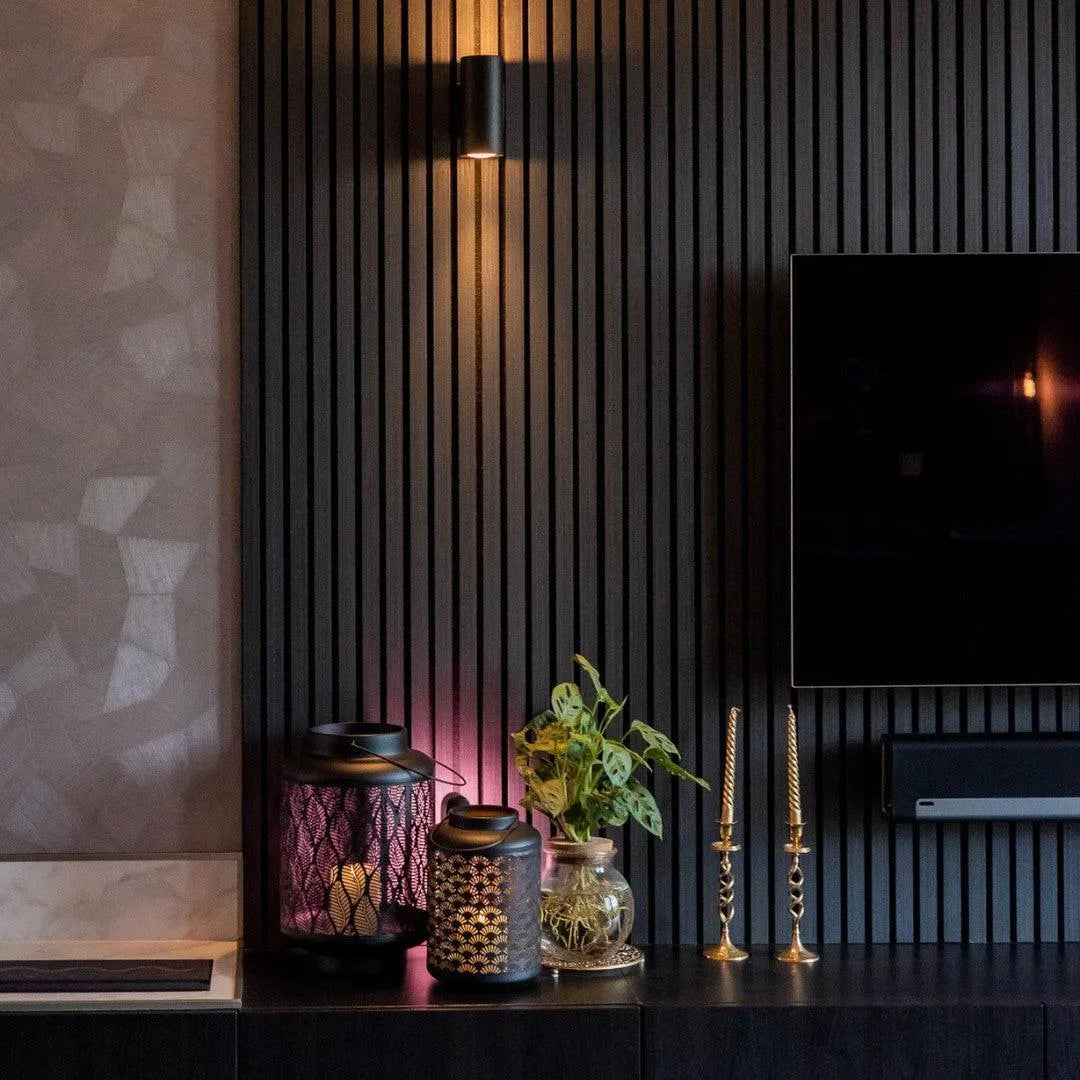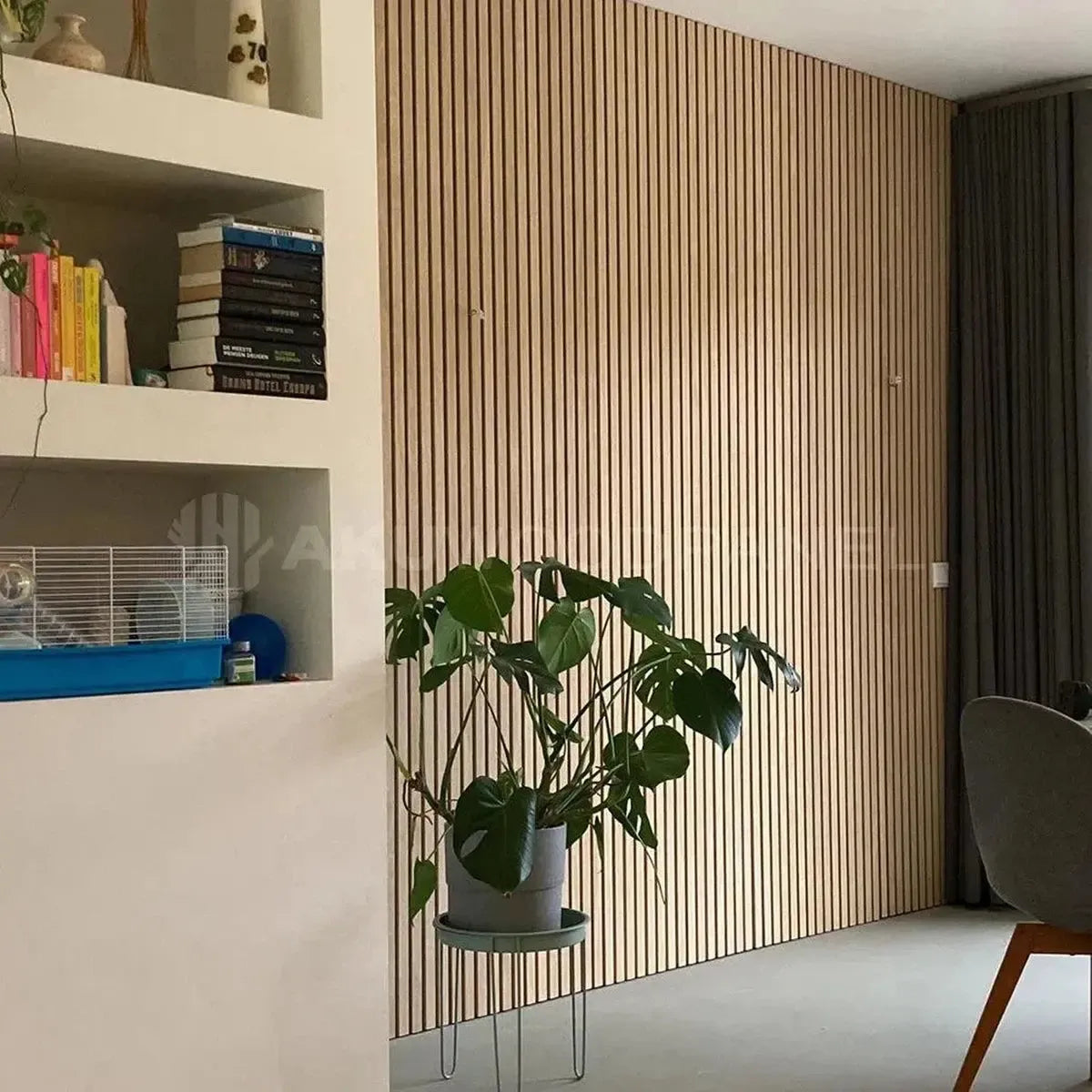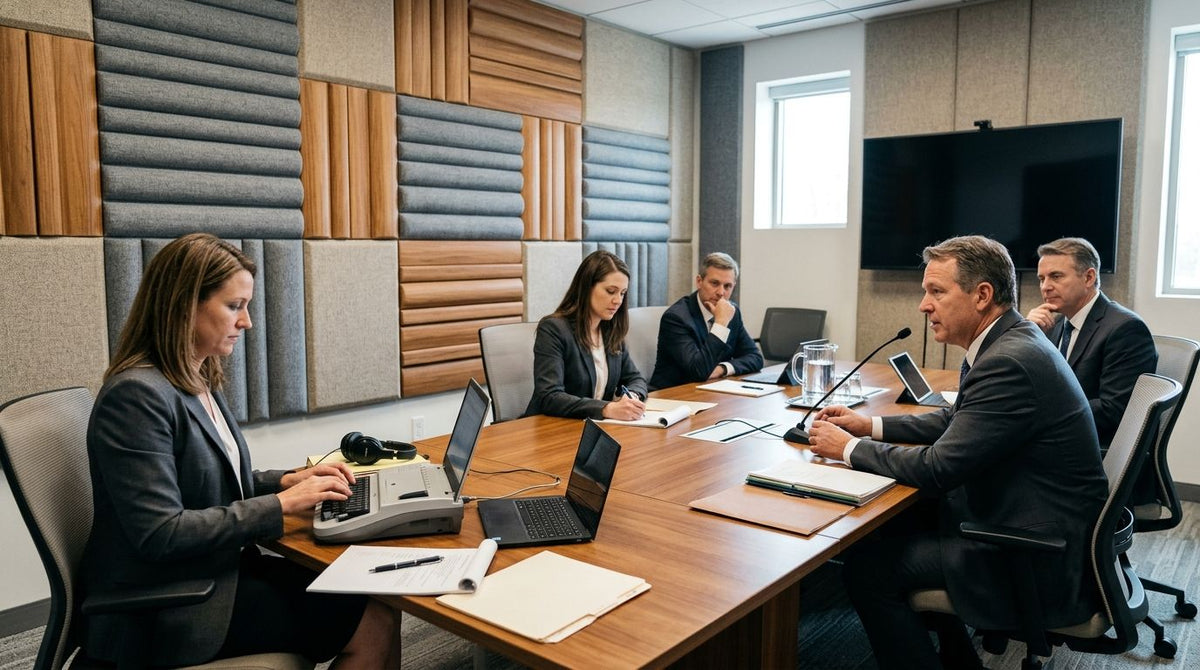
Acoustic panels for deposition room walls stop hard, reflective surfaces from turning a witness's testimony into an echoey mess that the court reporter has to ask to repeat. A conference room built for closing deals with glass walls and drywall is the worst possible room for capturing clean audio, and that's exactly the room most firms hand over for depositions.
Corporate legal teams have a narrower brief than a homeowner picking panels for a living room: the room needs to sound clear for a stenographer and a video recorder, look credible enough for opposing counsel and clients, and go up fast between hearings without shutting the room down for a week.
- Acoustic panels for deposition room walls should target the surfaces behind the court reporter and witness chair first, not the whole room.
- Akuwood Panel's slat wall panels use a 3-sided wood veneer and pair with felt backing rated at 0.75 NRC on the hexagon line for sound absorption.
- Treat hard, parallel walls and glass first in 2026 renovations — flutter echo off those surfaces is what kills transcript accuracy.
- A drywall-and-fabric panel setup costs less upfront but looks and performs worse on camera than real wood slat panels.
Why acoustic treatment matters for deposition rooms
A deposition record lives or dies on what the transcript captures, and reflective walls scatter sound before the microphone ever gets a clean signal. Video depositions add a second problem: remote attorneys watching over Zoom hear every bounce and hum that an in-person witness wouldn't notice.
Untreated conference rooms with glass, drywall, and hard flooring create flutter echo — sound bouncing rapidly between two parallel hard surfaces. That's a specific, fixable acoustic problem, not a generic "noisy room" complaint, and it's the reason firms search for acoustic slat panels for law firm office interiors instead of generic office decor.
A room that looks unfinished or acoustically raw also sends a signal to opposing counsel and clients about how the firm runs its practice. Wood slat panels solve both problems at once: they absorb reflected sound and they read as a deliberate design choice, not a retrofit.
Identify the reflective surfaces first
Walk the room before buying anything. Most deposition rooms have two or three surfaces doing most of the damage, and treating those first gets you 2026-appropriate acoustic performance without covering every wall.
- Glass walls or interior windows facing the conference table
- Bare drywall directly behind the witness chair
- Hard flooring paired with a hard ceiling (creates vertical flutter)
- Large flat-screen or whiteboard surfaces
- Exposed HVAC returns or vents near the recording setup
Prioritize the walls behind the court reporter and witness
Don't treat the whole room evenly. The two zones that affect transcript and recording quality most are the wall directly behind where the court reporter sits and the wall behind the witness chair, since sound reflecting off those surfaces re-enters the microphone at a delay.
- Treat the wall behind the witness chair before anything else
- Cover the wall behind or beside the stenography station second
- Address the wall opposite any glass partition third
- Leave decorative walls (bookshelves, art) for last since they're already partially absorptive
Choose a sound-absorbing wall material
Once the priority walls are mapped, pick a material that absorbs mid-to-high frequency speech sound instead of just looking finished. Fabric-wrapped foam is the cheapest manual option; real wood slat panels with a felt or acoustic fleece backing perform closer to what a commercial sound consultant would spec for a conference room.
- Foam acoustic tiles: cheap and fast, but look unprofessional in a client-facing room
- Fabric-wrapped fiberglass panels: good absorption, limited finish options
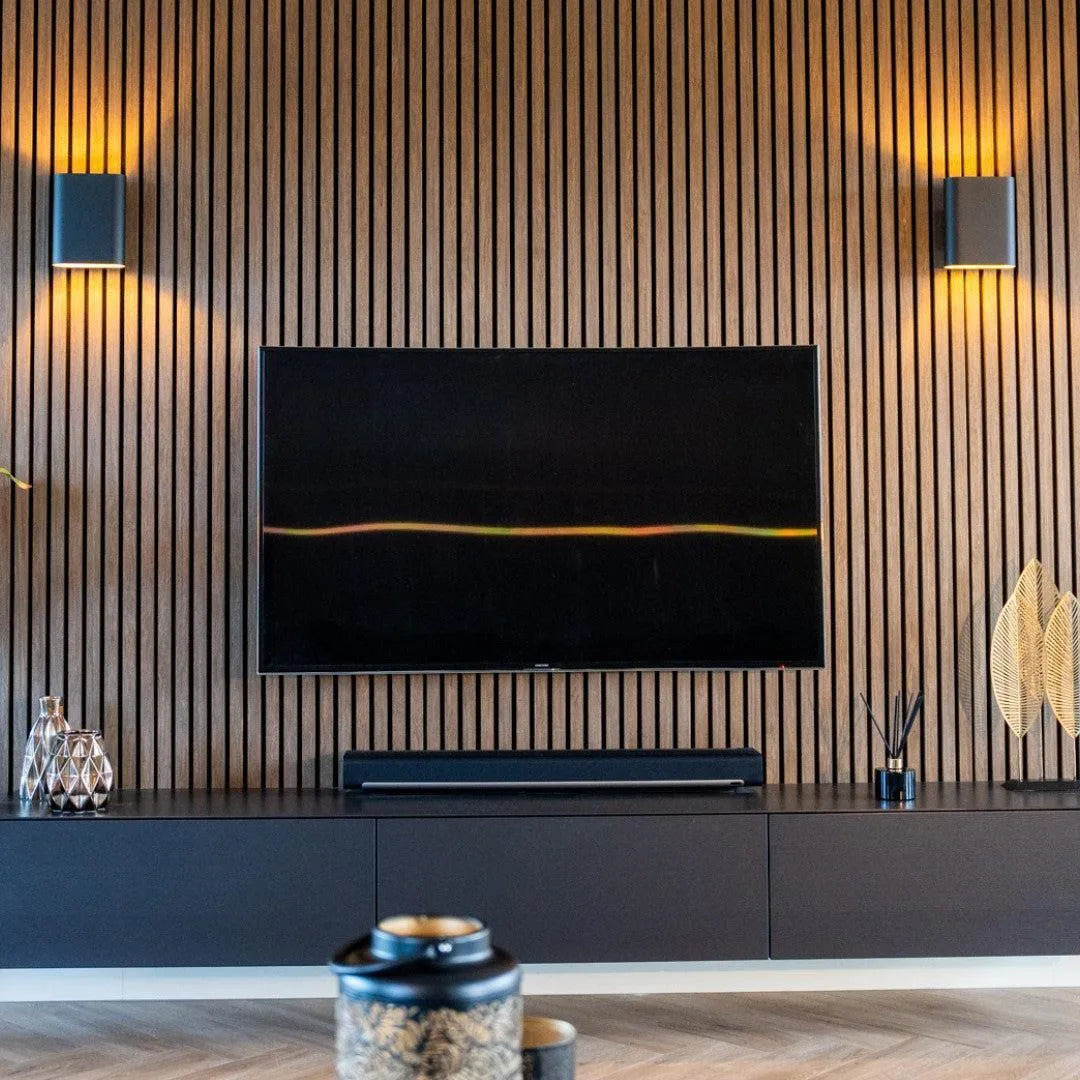
- Wood slat panels with felt backing: absorbs sound and matches office millwork
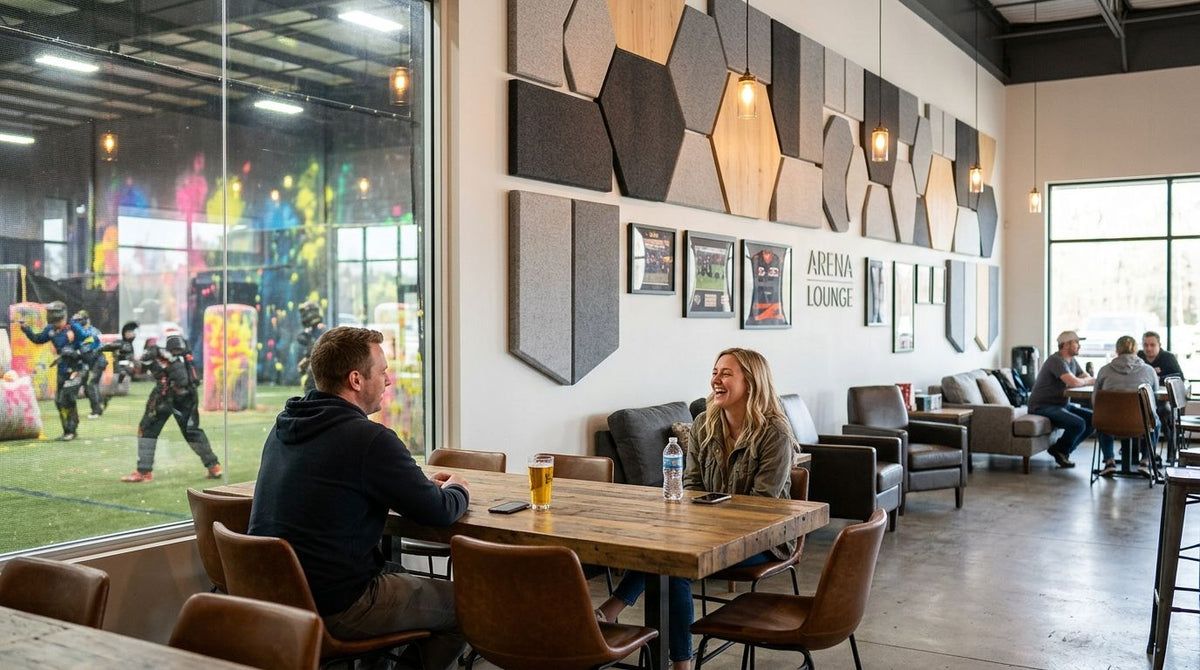
- Hexagon acoustic panels: same absorptive backing in a modular, geometric layout
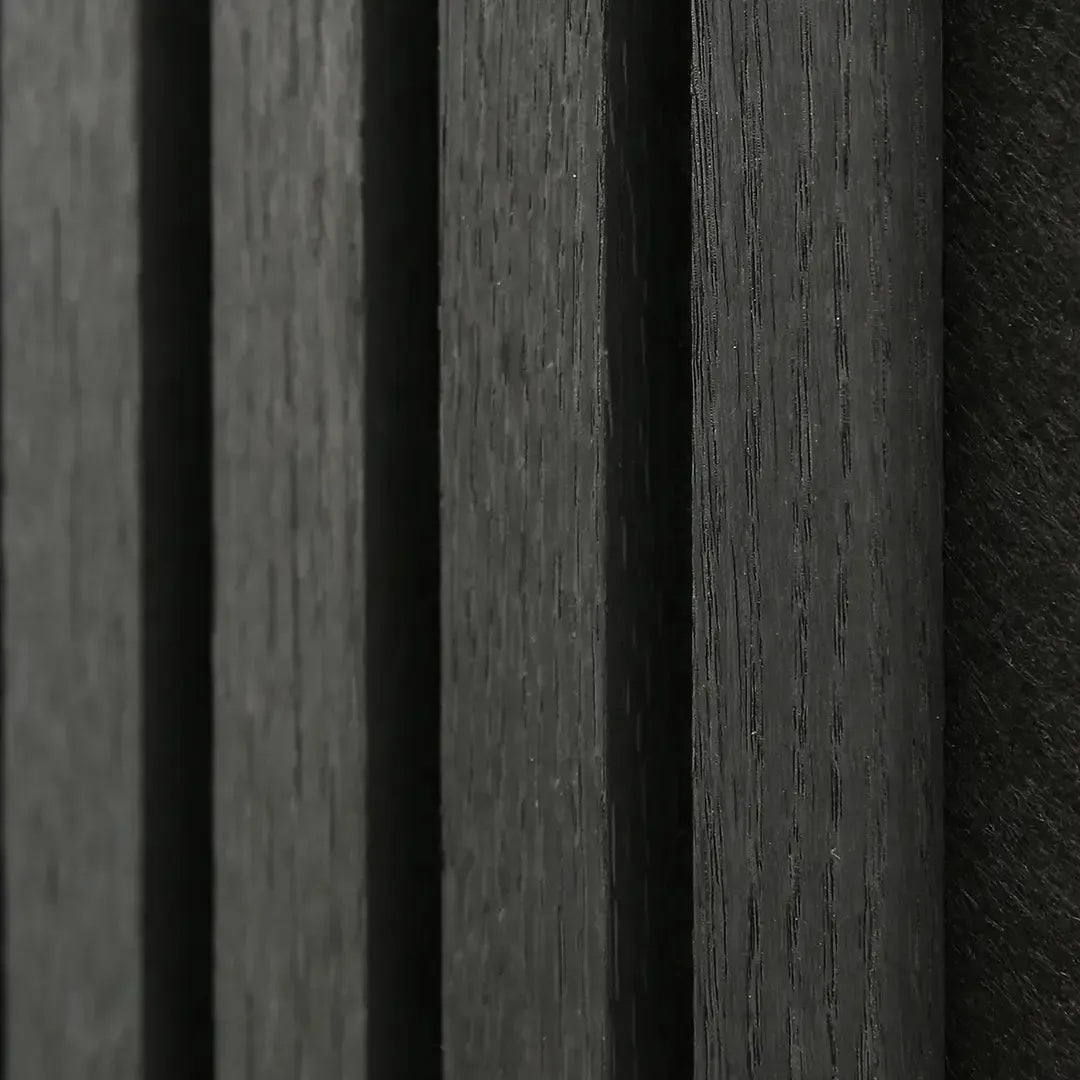
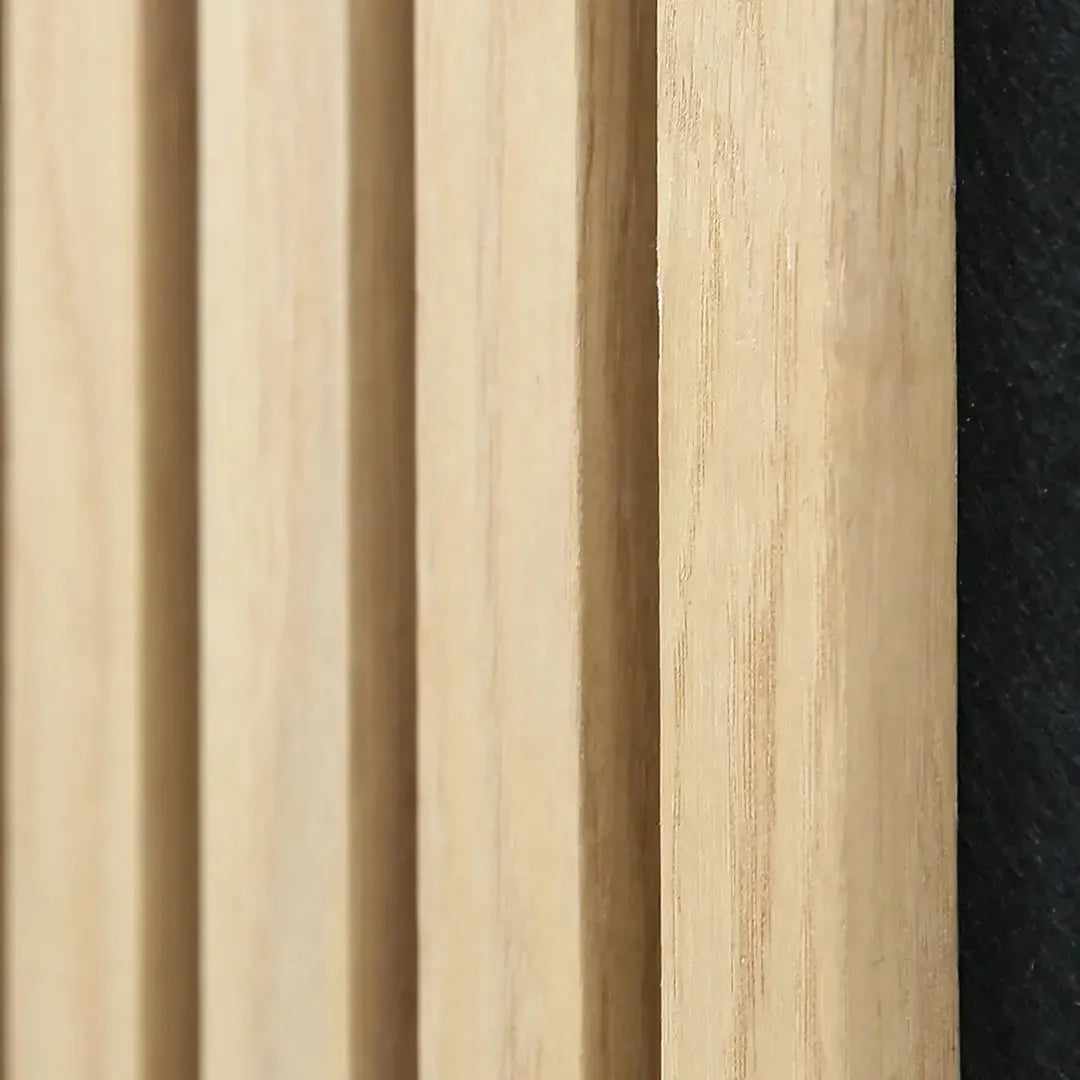
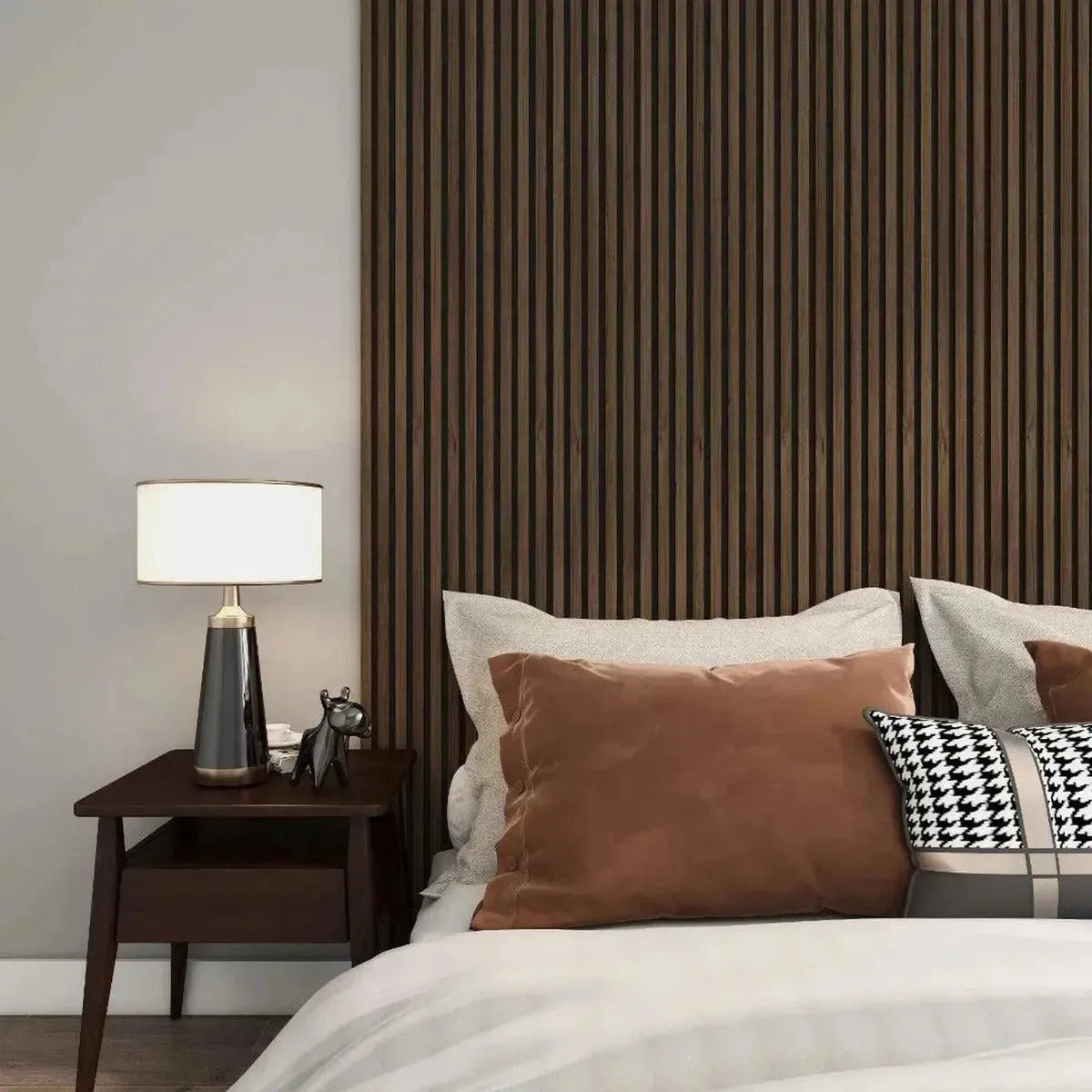
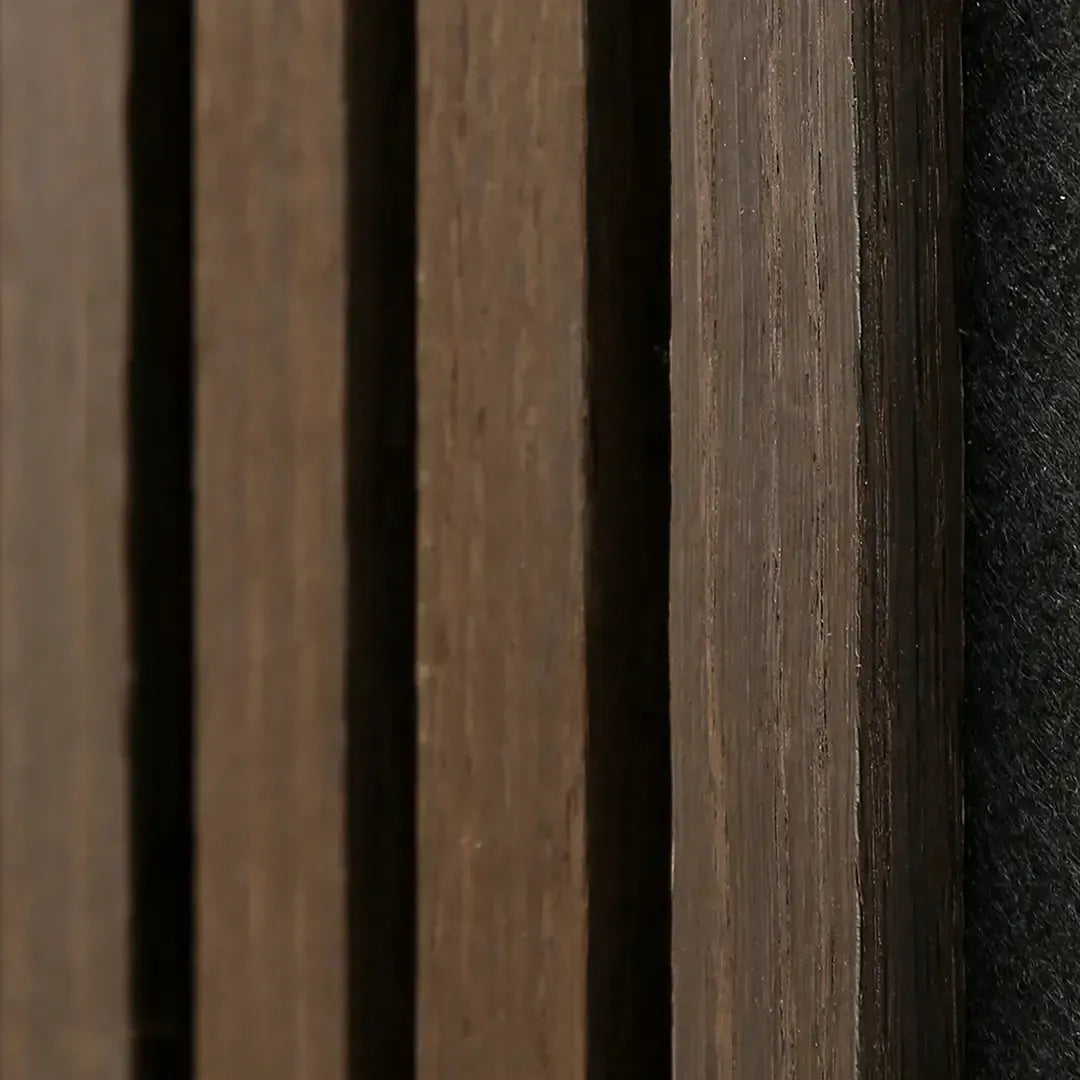
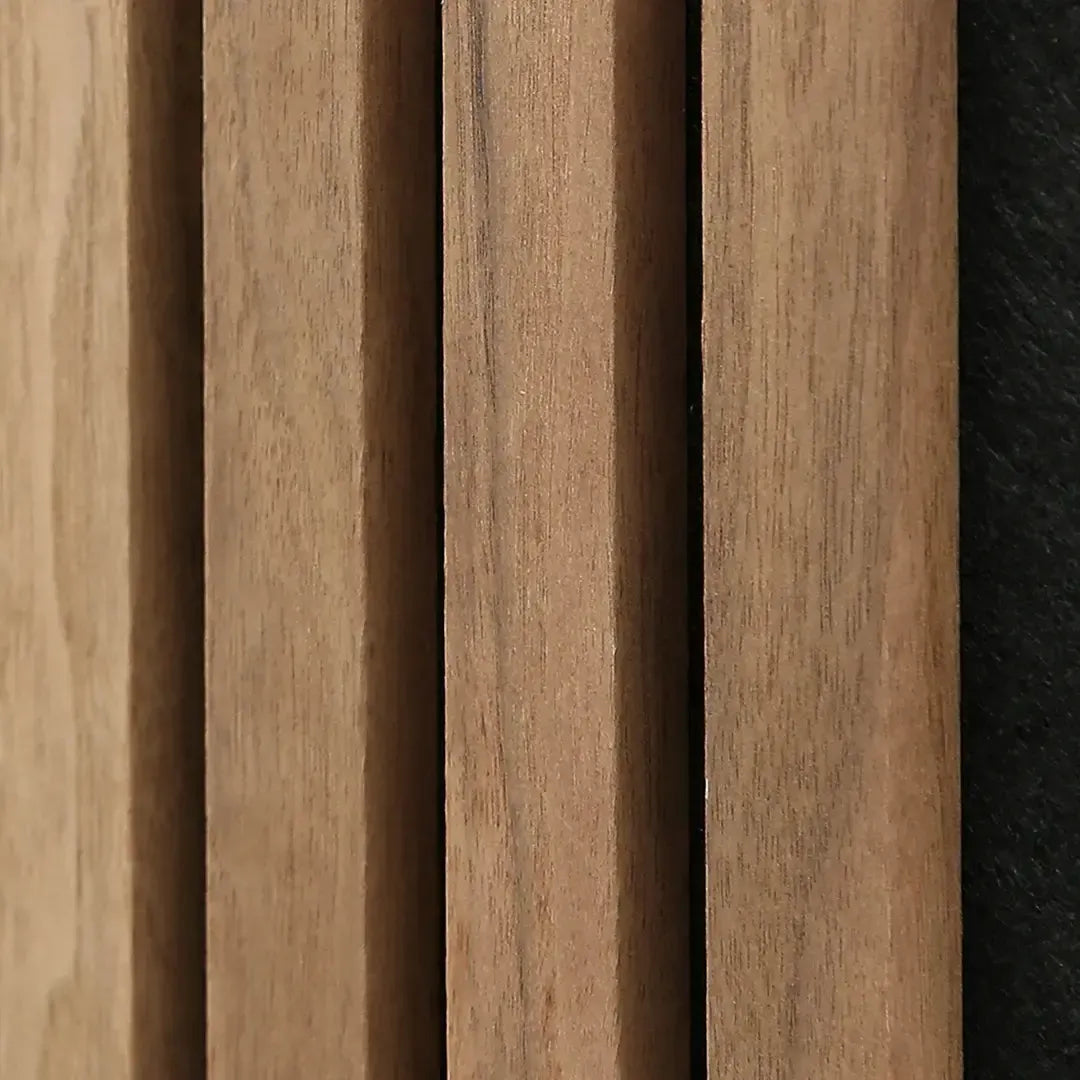
Akuwood Panel's Acoustic Slat Wall Panel in Natural Oak with Gray Felt is built for exactly this brief — a 3-sided wood veneer face over a felt acoustic backing, finished enough for a law office and absorptive enough to cut flutter echo on the wall behind a witness chair.
Verify the acoustic rating before you commit
Don't buy on looks alone. Ask for the Noise Reduction Coefficient (NRC) rating on any panel line under consideration — it tells you how much of the sound hitting the panel gets absorbed versus reflected back into the room. Akuwood Panel's Hexagon Acoustic Panel line, for example, carries a 0.75 NRC rating, which puts it in the range firms use for conference room and boardroom treatment.
- Ask for the published NRC value, not just "acoustic" in the product name
- Compare NRC ratings across the specific walls you're treating, not the whole room average
- Confirm the backing material (felt, fleece, foam) since that's what drives absorption, not the wood face
- Check fire rating requirements if the building has commercial code obligations
Plan installation around the deposition calendar
A deposition room can't sit torn up for a week. Manual installation with adhesive-backed or click-together slat panels lets a facilities team turn a conference room around in a day or two instead of scheduling a full renovation crew.
- Schedule installs for a week with no depositions or hearings booked
- Order end pieces and trim in the same finish to avoid raw edges at corners
- Order a sample box before committing to a full room to check the finish under the room's actual lighting
- Confirm wall type (drywall, concrete, glass mullion) before ordering mounting hardware


Comparing wall treatment options for deposition rooms
| Option | Best for | Key limitation |
|---|---|---|
| Real wood slat acoustic panels | Firms wanting sound absorption that reads as finished millwork | Costs more upfront than paint or fabric panels |
| Hexagon acoustic panels | Modular accent-wall treatment on the witness-facing wall | Covers less total wall area per box than slat panels |
| Fabric-wrapped fiberglass panels | Budget-conscious facilities teams needing fast coverage | Limited finish options, looks less polished on camera |
| Foam acoustic tiles | Temporary or rented spaces needing quick fixes | Unprofessional appearance for client-facing rooms |
Wood slat acoustic panels win for firms that need the room to look like a law office and perform like a treated recording space at the same time.
Common mistakes firms make with deposition room acoustics
- Treating the whole room evenly instead of the priority walls. Covering every wall wastes budget when the witness and reporter walls do most of the work.
- Skipping the NRC check. A panel labeled "acoustic" without a published rating may be decorative only.
- Ignoring the glass wall. Firms often treat drywall and leave the glass partition untouched, which keeps flutter echo alive.
- Scheduling installs during active caseloads. Turning a deposition room into a construction zone mid-litigation creates scheduling headaches.
- Matching panels to the lobby instead of the room's function. A boardroom-grade acoustic slat wall needs different priority walls than a reception area, even when the finish matches.
FAQ
What are the best acoustic panels for a deposition room?
Wood slat panels with a felt or fleece acoustic backing are the best fit for deposition rooms in 2026 because they absorb speech-frequency sound while keeping a professional, client-facing finish. Akuwood Panel's slat panels use a 3-sided wood veneer over an absorptive backing built for exactly this use case.
Do deposition rooms need soundproofing or sound absorption?
Most deposition rooms need sound absorption, not soundproofing. Absorption reduces echo and flutter inside the room so the court reporter and recording equipment capture clean audio; soundproofing blocks sound from leaving the room entirely and is a separate, more involved project.
How much wall coverage does a deposition room need?
Coverage depends on the room's hardest surfaces, but treating the wall behind the witness chair and the wall near the court reporter first addresses most flutter echo problems without covering every wall.
What NRC rating should I look for in a conference room panel?
Look for a published NRC rating rather than a product name alone. Akuwood Panel's Hexagon Acoustic Panel line publishes a 0.75 NRC rating, which is a reasonable absorption benchmark for a conference or deposition room wall.
Is real wood veneer better than laminate for a law office wall?
Real wood veneer holds up better on video calls and in person because it shows genuine grain instead of a printed pattern, which matters in a room clients and opposing counsel see directly. Laminate options cost less but read as less credible in a legal setting.
Can acoustic wood panels be installed without a full renovation?
Yes. Slat panels are designed for wall mounting without demolition, and a facilities team can typically complete a single-room install over a weekend when no hearings are scheduled.
Do glass conference room walls need acoustic treatment too?
Glass walls are one of the biggest sources of flutter echo in a conference room because they're hard and often parallel to another hard wall. Treating the opposite wall with an absorptive panel is the standard fix when the glass itself can't be covered.
One last thing
The cheapest fix in most deposition rooms isn't a full panel wall — it's treating the single wall directly behind the witness chair first, since that's the surface closest to the microphone and the one doing the most damage to transcript clarity. Firms that start there before budgeting for a full room see the acoustic improvement before they've spent on wall two.


 Better performance and aesthetic appeal
 In Stock