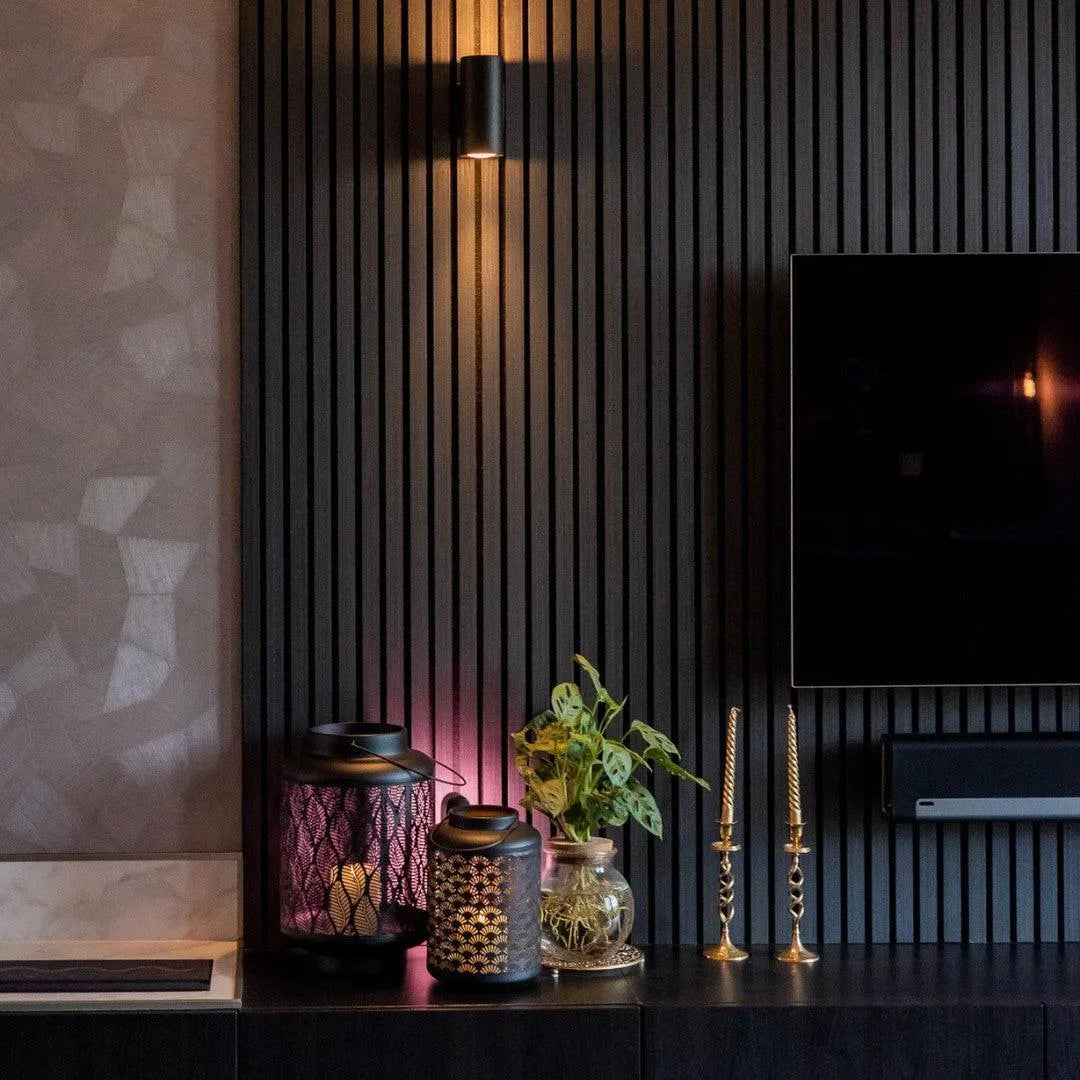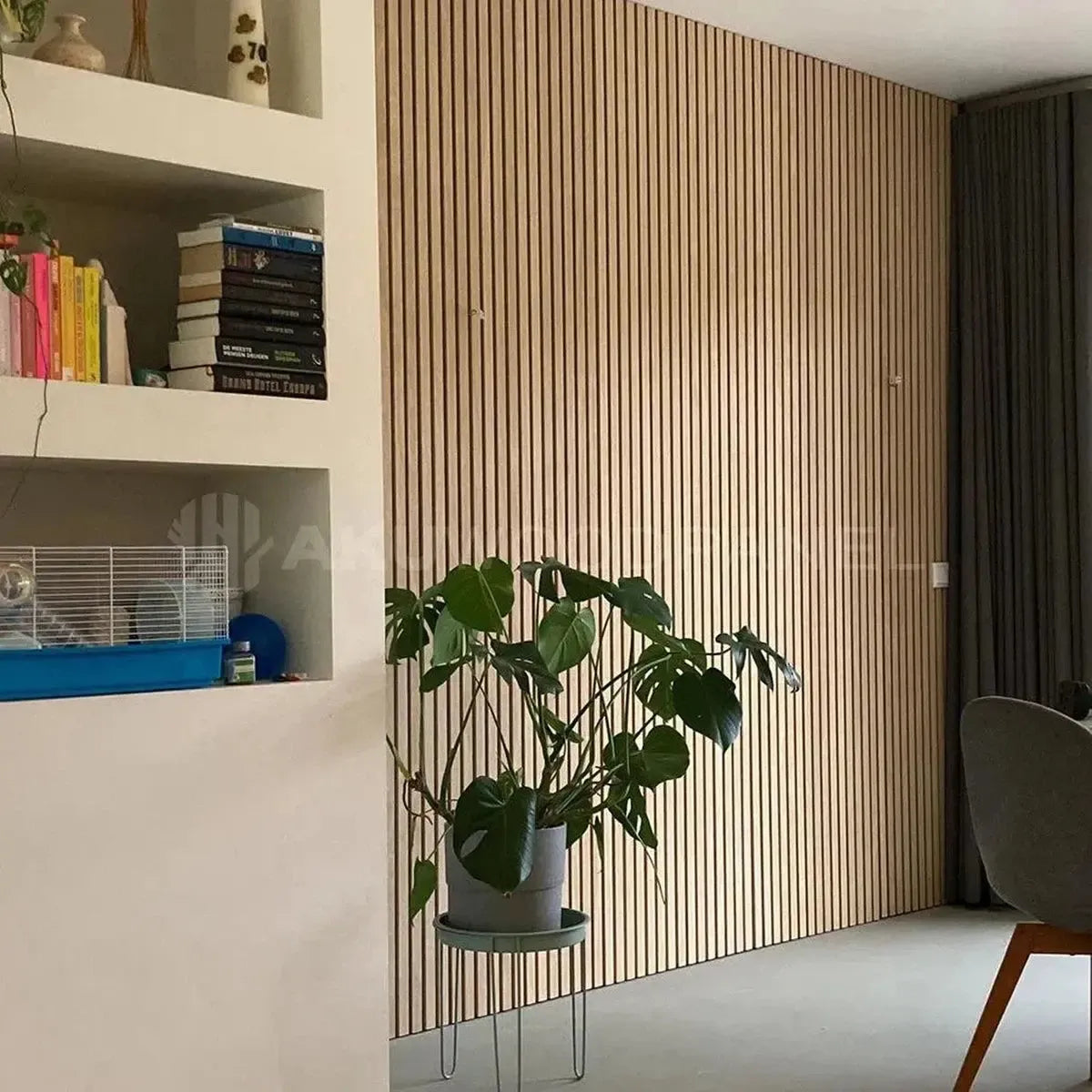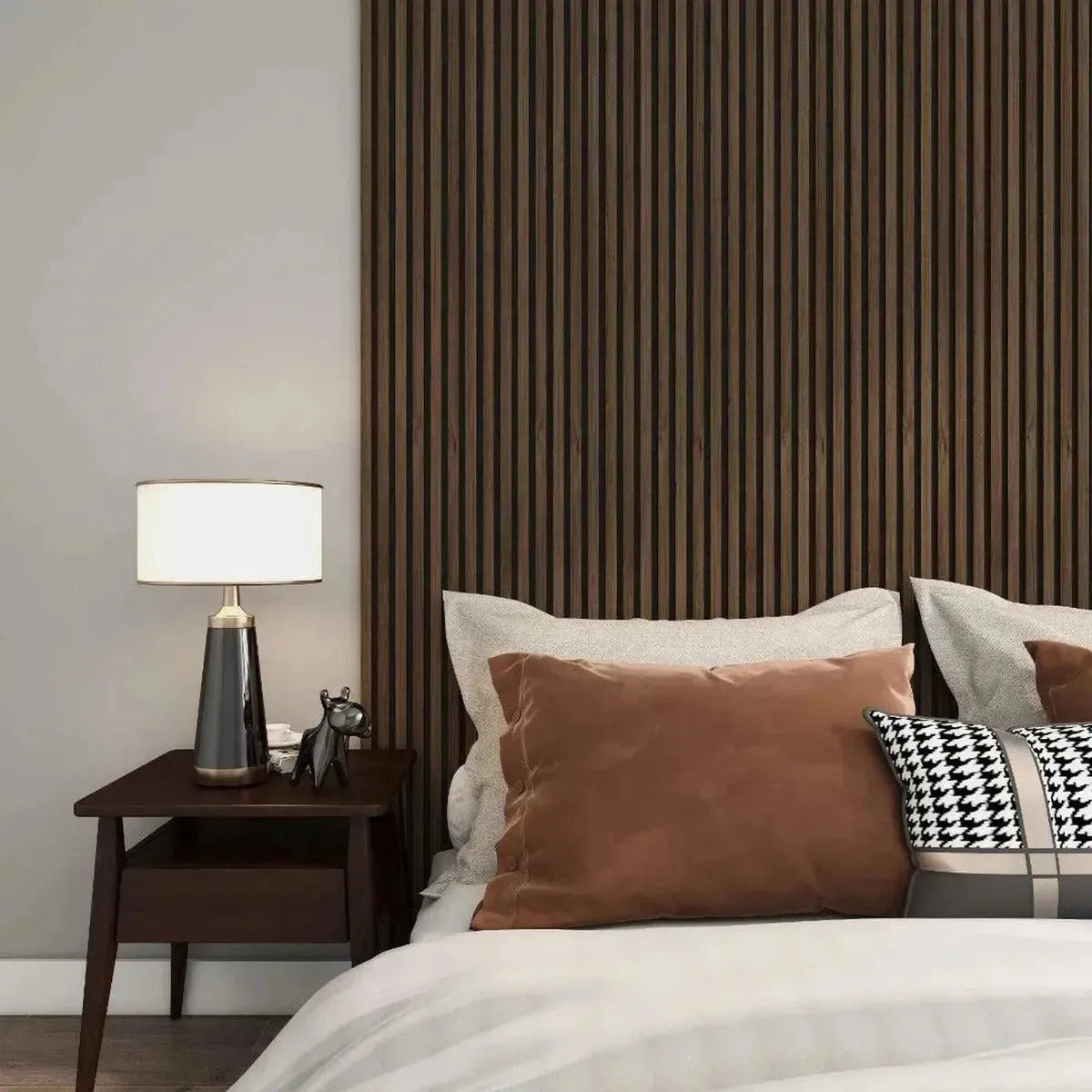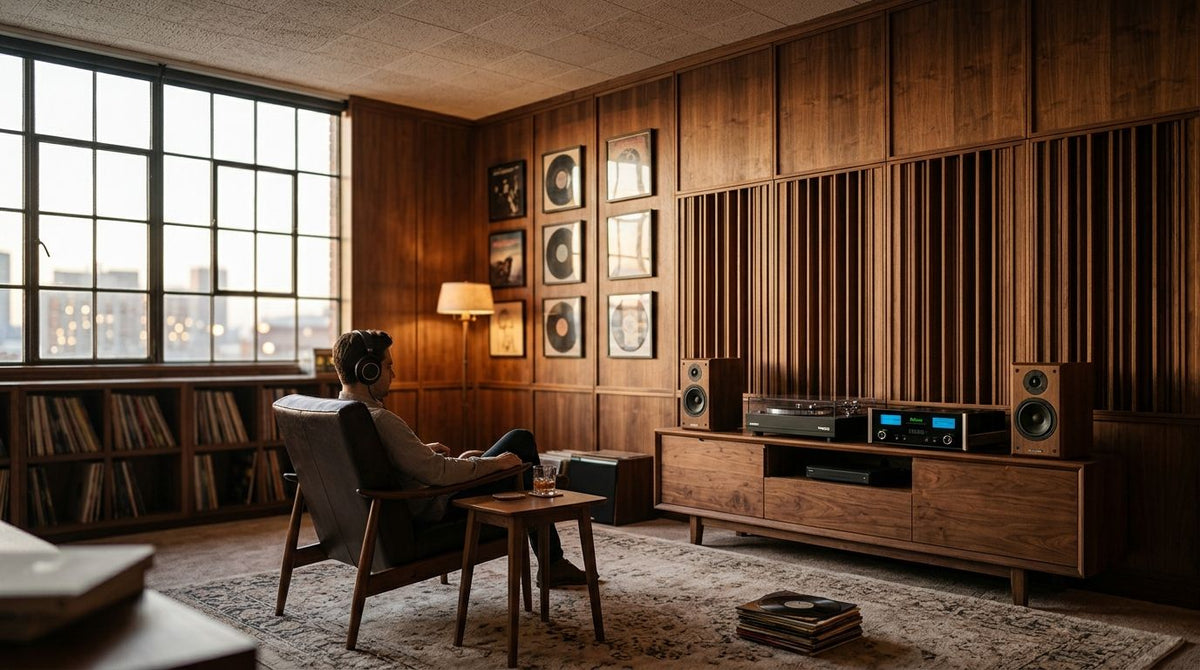
Wood panels for listening lounge interiors are acoustic wall treatments that pair slatted or fluted wood veneer with sound-absorbing backing, installed with the aim of giving A&R teams, artists, and licensing partners a room that plays a mix accurately while still looking like a place worth signing a deal in. A record label's private listening room has two jobs a home studio never has: it has to sound neutral enough to judge a final master, and it has to look like money to the people sitting on the couch. Foam wedges solve the first problem and wreck the second.
- Real wood veneer slat panels absorb sound and read as premium finish, unlike foam wedges or acoustic tile.
- Hexagon acoustic panels from Akuwood Panel carry a 0.75 NRC rating, enough for most listening lounge sizes.
- Treat first-reflection points and the rear wall before touching the ceiling or low end.
- Black Oak and Walnut slat panels suit the dark, editorial look most label lounges want in 2026.
- Budget for teardown and re-install if the lounge doubles as a brand activation space.
Why wood panels for listening lounge interiors matter
A listening session is a performance, not just a playback. The room has maybe 20 minutes to convince a room full of skeptics that a track is finished, and every slap-back echo off a bare drywall corner undercuts that. Labels also host press, sync licensors, and artist teams in the same space, so the walls do double duty as acoustic treatment and set dressing.
Wood veneer over an acoustic core solves both jobs at once. Hexagon acoustic panels built with a 3-sided wood veneer carry a documented NRC value of 0.75, which puts them in useful range for mid-sized lounges without needing wall-to-wall foam. That single spec matters more here than in a home studio, because a listening lounge can't hide the treatment behind a curtain — it's the backdrop for every meeting that happens in that room in 2026 and beyond.
Update your reflection map before buying panels
Start with where sound actually bounces, not where the wall looks empty.
- Mark first-reflection points from the main monitors to the primary listening seat using a mirror trick: sit in the seat, slide a mirror along the side walls, mark every spot where you see a speaker.
- Identify the rear wall behind the listening position — this is the single highest-impact surface in most lounges.
- Note ceiling height; anything under 9 feet needs a ceiling cloud in addition to wall treatment.
- Flag glass, doors, and hard cabinetry — these need compensating absorption nearby, not direct treatment.
Treat first-reflection points and the rear wall first
Don't spread coverage evenly across every wall. Concentrate panels where the ear actually catches slap echo.
- Cover the two side-wall reflection points identified in your mirror test, roughly 2-3 feet of panel width per point.
- Fully treat the rear wall behind the listening chairs — this kills the flutter echo that makes vocals sound smeared.
- Leave the front wall behind the monitors mostly untreated or lightly treated; over-damping the front kills stereo image.
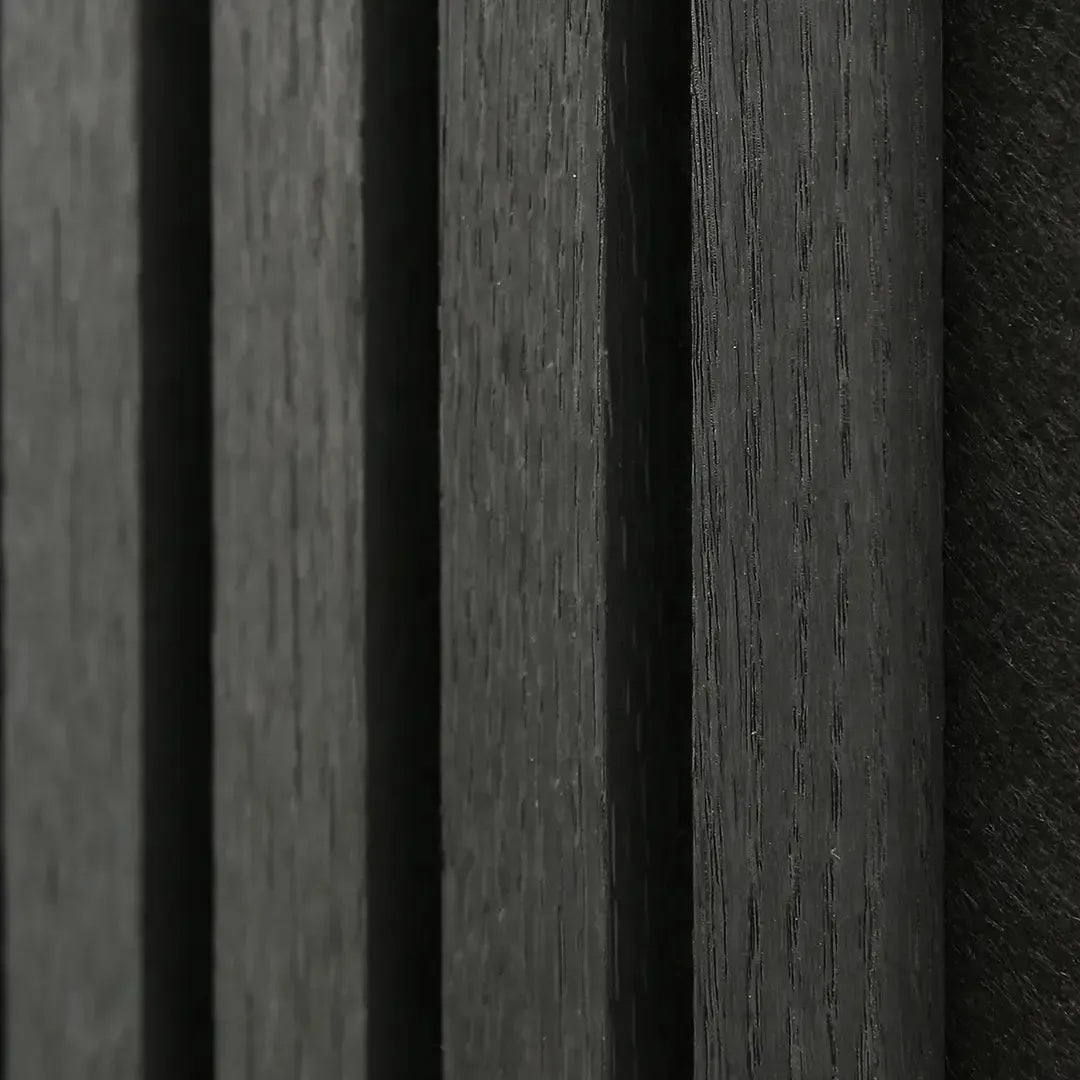
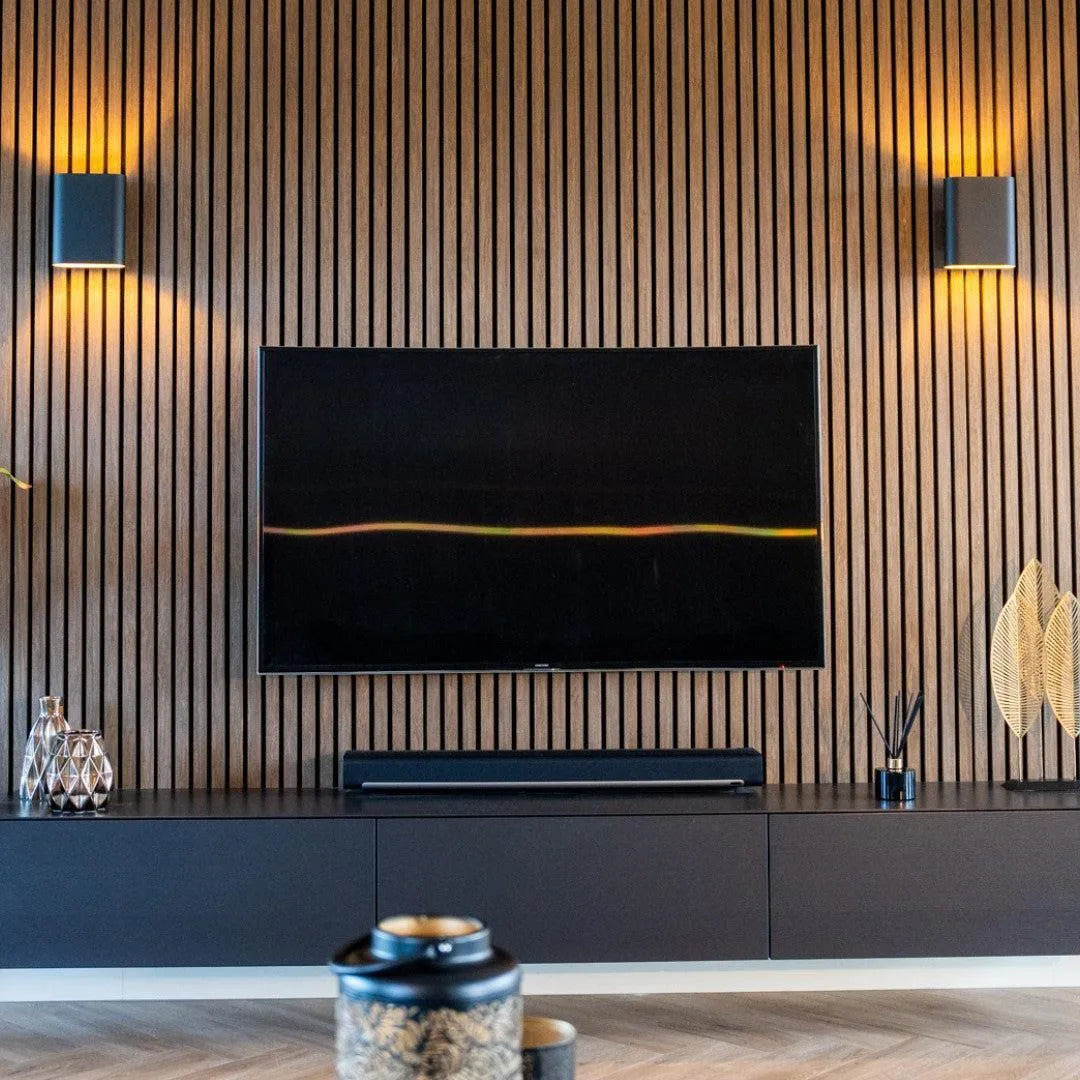
- An acoustic slat wall panel in Black Oak works well on rear walls where labels want a darker, editorial finish rather than a bright oak tone.
Choose a wood veneer that reads premium on camera
Listening rooms get photographed for press kits and social content almost as often as they get used for actual playback. The finish has to hold up in flash photography, not just in person.
- Pick a veneer tone that photographs well under mixed LED and daylight — smoked oak and black oak both avoid the yellow cast that lighter natural oak can pick up under warm bulbs.
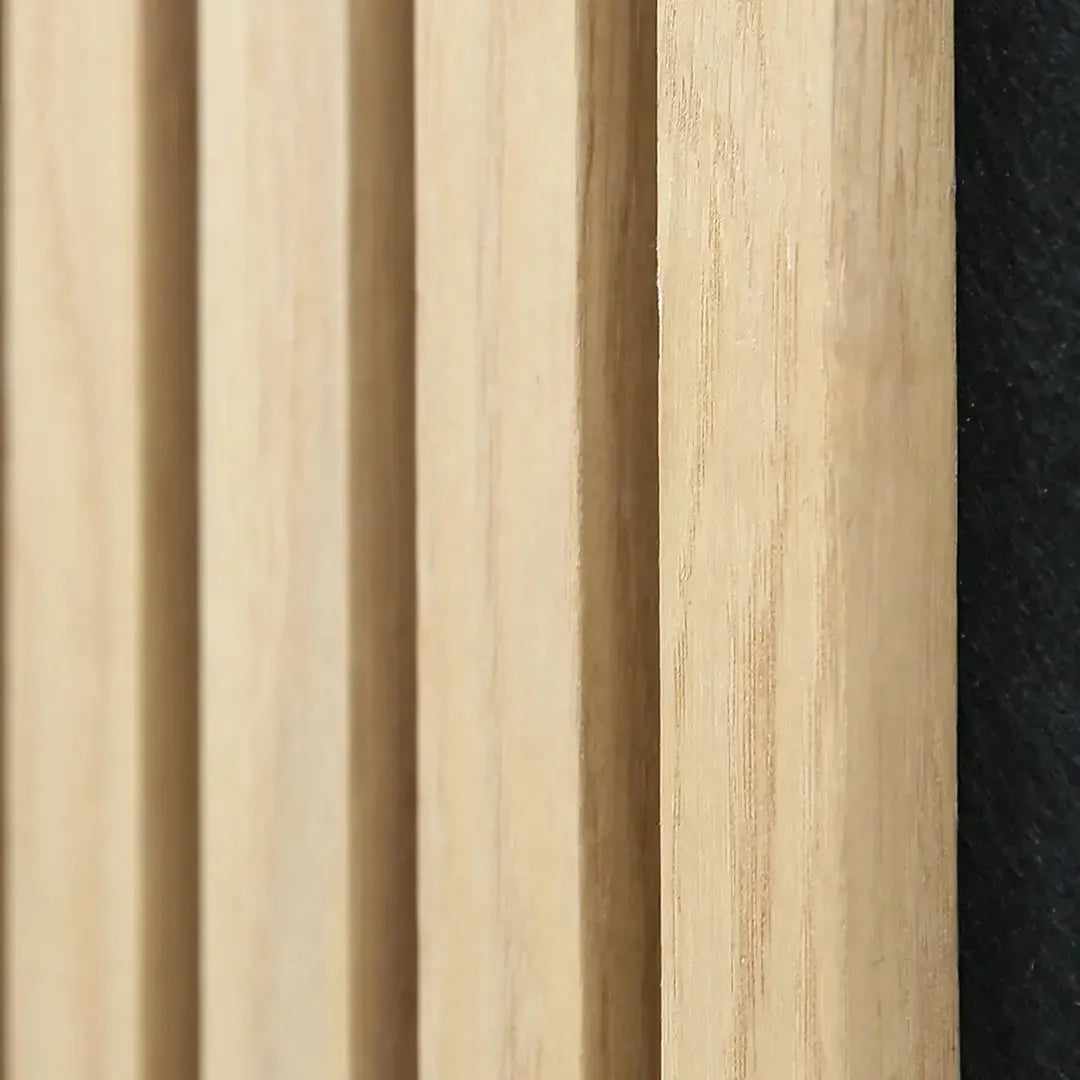
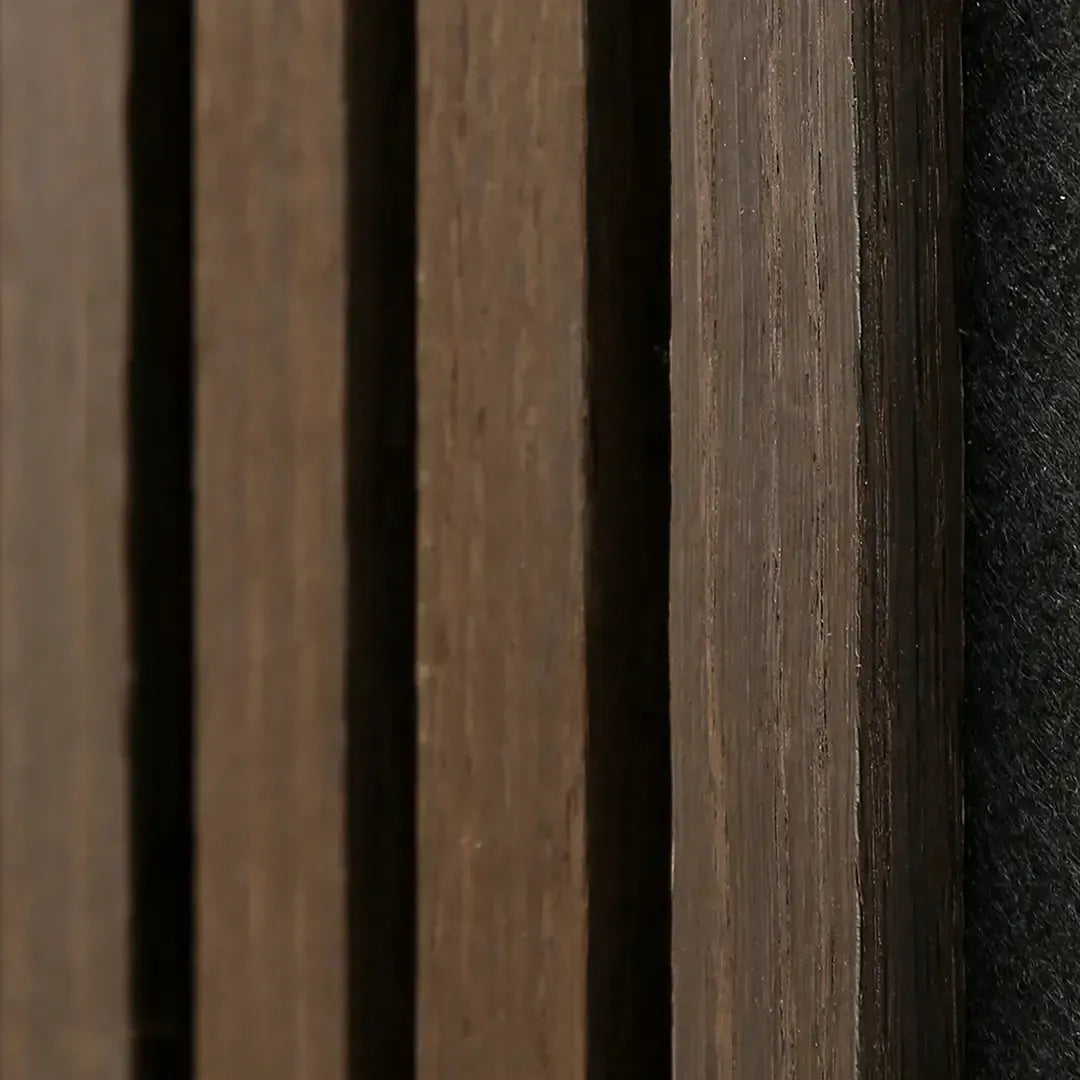
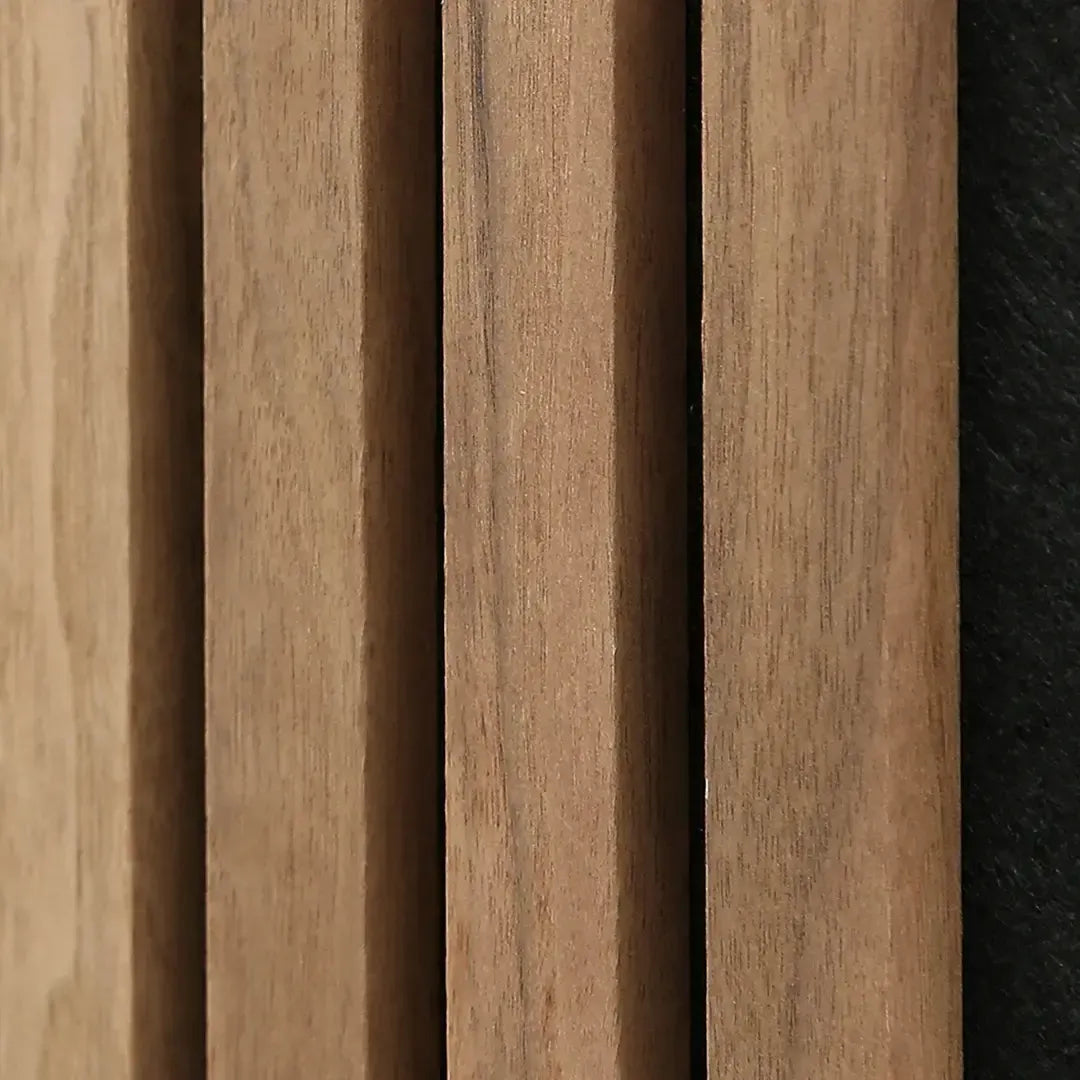
- Use a 3-sided wood veneer construction rather than a printed laminate; the grain reads as real wood on close-up video, printed finishes don't.
- Match panel orientation (vertical vs horizontal slats) to the room's proportions — vertical slats read taller in low-ceiling lounges.
- Keep one wall in a contrasting tone (walnut against oak, or a hexagon pattern against flat slats) so the room photographs with depth instead of one flat texture.
Balance absorption with diffusion for playback accuracy
Too much absorption kills a room dead and makes mixes sound smaller than they'll play elsewhere. Listening lounges need controlled reflection, not zero reflection.
- Combine flat slat panels (mostly absorptive) with a hexagon acoustic panel section on one side wall to add a mild diffusive texture.
- Avoid parallel bare walls on both sides of the seating position — even one panel run breaks up standing wave buildup.
- Test with a track the team already knows well before finalizing coverage; ears catch over-damping faster than any measurement.
- Keep a small percentage of hard, untreated surface (a glass table, a hard floor section) so the room doesn't sound like a padded cell.
Handle low-frequency buildup separately from the walls
Wall panels absorb mid and high frequencies well; they don't fix bass buildup in corners. Skip this step and every mix will sound bass-heavy in the lounge and thin everywhere else.
- Place bass traps in room corners, floor to ceiling, independent of the wall panel layout.
- Check subwoofer placement against the room's dimensions — a sub in a corner doubles bass energy compared to a sub against a flat wall.
- Re-test the mix after bass traps go in; wall panel coverage sometimes needs adjusting once low end settles.
- Don't substitute more wall panels for bass trapping — they're solving different frequency ranges.
Plan for teardown and re-install
Label spaces get rebranded, resized, or moved between office leases more often than a home studio ever does. Panels that can come down clean and go back up are worth more over three years than panels that are cheaper but permanent.
- Choose panel systems with click-in or screw-mount hardware rather than full adhesive application.
- Order end pieces and trim to finish exposed panel edges cleanly on both first install and any future reconfiguration.
- Keep a small reserve of matching panels in storage for the inevitable wall repair or extension.
- A walnut acoustic slat wall panel holds its color well over repeated handling, which matters if panels get moved between spaces.
Budget and phase the install
Most labels don't treat the whole lounge in one pass. Phase it around what actually gets used first.
- Treat the rear wall and both first-reflection points in phase one — this covers 70-80% of the audible improvement.
- Add the ceiling cloud and bass trapping in phase two once the room is in daily use and problem areas are obvious.
- Save decorative diffusion (hexagon accent walls, mixed-tone feature walls) for phase three once the core acoustics are settled.
- Order sample boxes before committing to a full room order — veneer tone reads differently under a room's actual lighting than in a product photo.
Comparison: panel options for a label listening lounge
| Option | Best for | Key limitation |
|---|---|---|
| Real wood veneer slat panel (Akuwood Panel) | Rooms that double as press and client space and need premium finish plus absorption | Higher install cost than foam; needs a flat wall or furring strips |
| Hexagon acoustic panel | Adding diffusion texture on an accent wall without losing absorption | Best as a supplement to flat slat coverage, not the sole treatment |
| Standard acoustic foam wedges | Fast, cheap treatment in a room nobody photographs | Looks unfinished in client-facing spaces; degrades and yellows over a few years |
| Fabric-wrapped fiberglass panels | Rooms needing heavy broadband absorption behind a hidden wall | Fabric shows soiling and wear faster than sealed wood veneer in high-traffic lounges |
Verdict: for a private listening lounge that also hosts artists and press, real wood veneer slat panels from Akuwood Panel beat foam and fiberglass on the one metric that matters most in this segment — the room has to sound right and look right at the same time.


Common mistakes labels make with listening lounge acoustics
- Treating the room like a recording studio control room. A listening lounge doesn't need the near-field precision of a recording studio control room — over-treating it kills the social feel a signing meeting needs.
- Buying foam because it's fast, then redoing the room before the first press visit. Foam ages badly under photography and yellows within a couple of years of regular use.
- Skipping bass trapping and blaming the wall panels. Wall coverage doesn't fix corner bass buildup; low end gets judged wrong in the room and right everywhere else.
- Treating every wall equally instead of concentrating coverage on reflection points. Even coverage wastes budget and still leaves the actual echo problem behind the listening chairs untouched.
- Not planning for teardown when the lounge gets rebranded. Adhesive-only installs get destroyed during any office reconfiguration; click-mount systems survive it.
FAQ
What's the best wood panel for a music label listening lounge?
Real wood veneer acoustic slat panels in a dark tone like Black Oak or Walnut work best for listening lounges in 2026 because they absorb reflections while still photographing well for press and artist visits. Foam handles the acoustics but looks unfinished in a client-facing room.
Is wood panel acoustic treatment as effective as foam?
Wood veneer slat panels with an acoustic backing perform comparably to foam on absorption, and hexagon acoustic panels from Akuwood Panel carry a documented NRC of 0.75. The difference is durability and appearance, not raw sound absorption.
How much wall coverage does a listening lounge need?
Most of the audible benefit comes from treating the rear wall behind the listening seats and the two first-reflection points on the side walls. Full wall-to-wall coverage is rarely necessary and can over-damp the room.
Do hexagon acoustic panels work as well as flat slat panels?
Hexagon acoustic panels add mild diffusion alongside absorption, which suits accent walls better than full-room treatment. Pairing flat slat panels for primary absorption with a hexagon section for texture gives better playback accuracy than hexagon panels alone.
Can wood acoustic panels be moved if the lounge gets redesigned?
Panel systems mounted with click-in hardware or furring strips can be removed and reinstalled cleanly, which matters for label spaces that get rebranded or relocated. Fully adhesive installs are much harder to salvage during a redesign.
What color wood panel photographs best for press and artist visits?
Darker tones like Black Oak and Smoked Oak hold their color under mixed LED and daylight better than lighter natural oak, which can pick up a yellow cast in photos. Most label lounges lean darker for this reason.
Do I need bass traps in addition to wall panels?
Yes. Wall panels absorb mid and high frequencies but do little for corner bass buildup, so a listening lounge needs floor-to-ceiling bass traps in the corners regardless of wall panel coverage.
How do I know if panel coverage is enough for the room?
Play a track the team already knows well and listen for slap echo or smeared vocals; if it's gone at the rear wall and both first-reflection points, coverage is usually sufficient. Over-treating past that point starts to shrink the room's stereo image.
One last thing
The rear wall behind the listening chairs does more acoustic work than every other surface in the room combined — treat that one wall properly before spending another dollar on the rest of the lounge. Labels that jump straight to a full wall-to-wall install in 2026 often end up pulling the front-wall treatment back out a year later, because damping behind the monitors narrows the stereo image nobody notices until an artist says the mix sounds boxed in.

 Better performance and aesthetic appeal
 In Stock