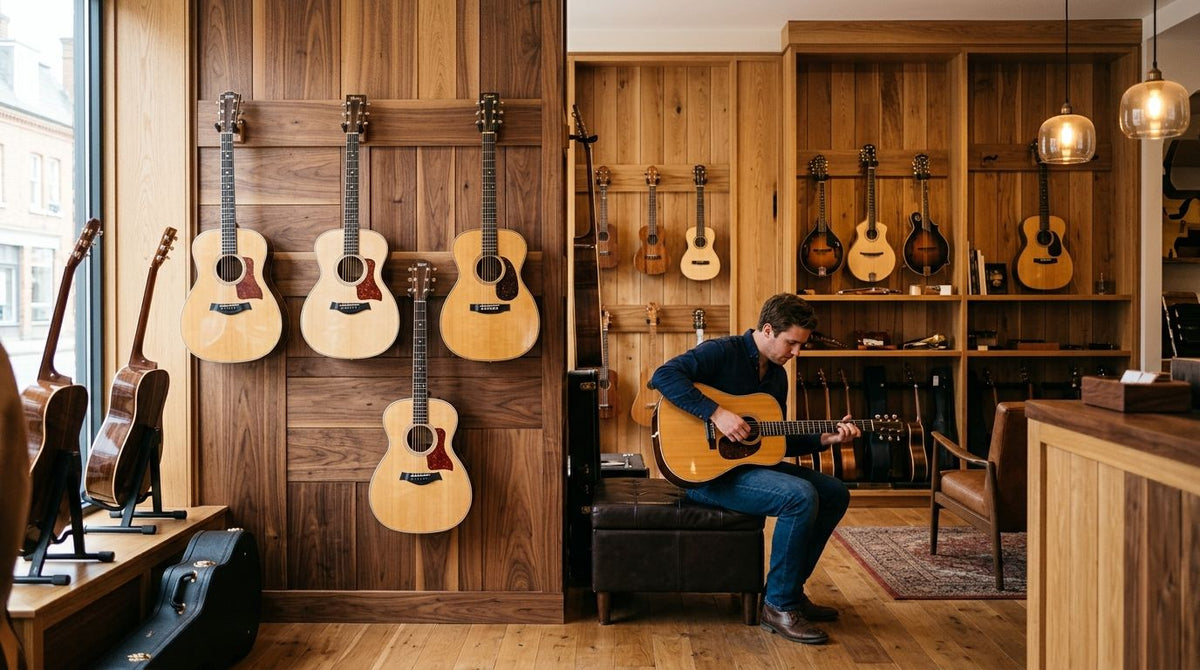
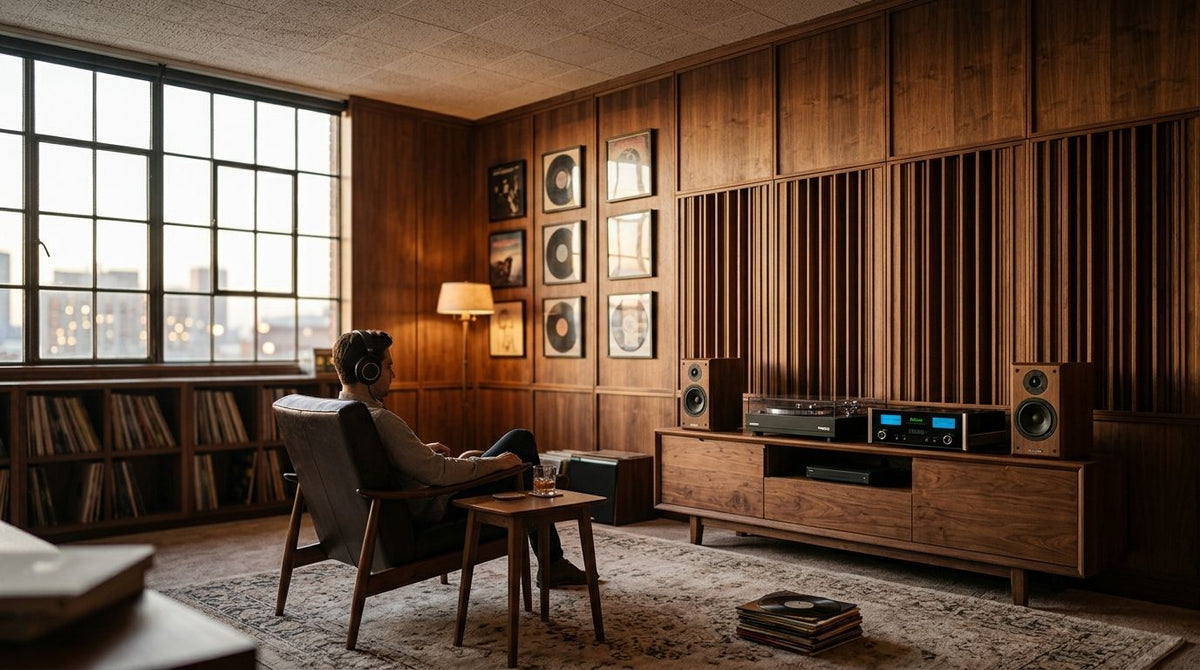
Boutique musical instrument shop interiors need acoustic treatment that kills flutter echo around testing walls without turning the room into a padded box that clashes with handmade guitars, upright pianos, and vintage amps. A shop selling $2,000 acoustic guitars can't sound like a warehouse when a customer plucks a string — the room has to disappear so the instrument's tone comes through clean.
- Wood panels for instrument shop interiors fix the metallic ring hard floors and glass cases create around testing amps and acoustics.
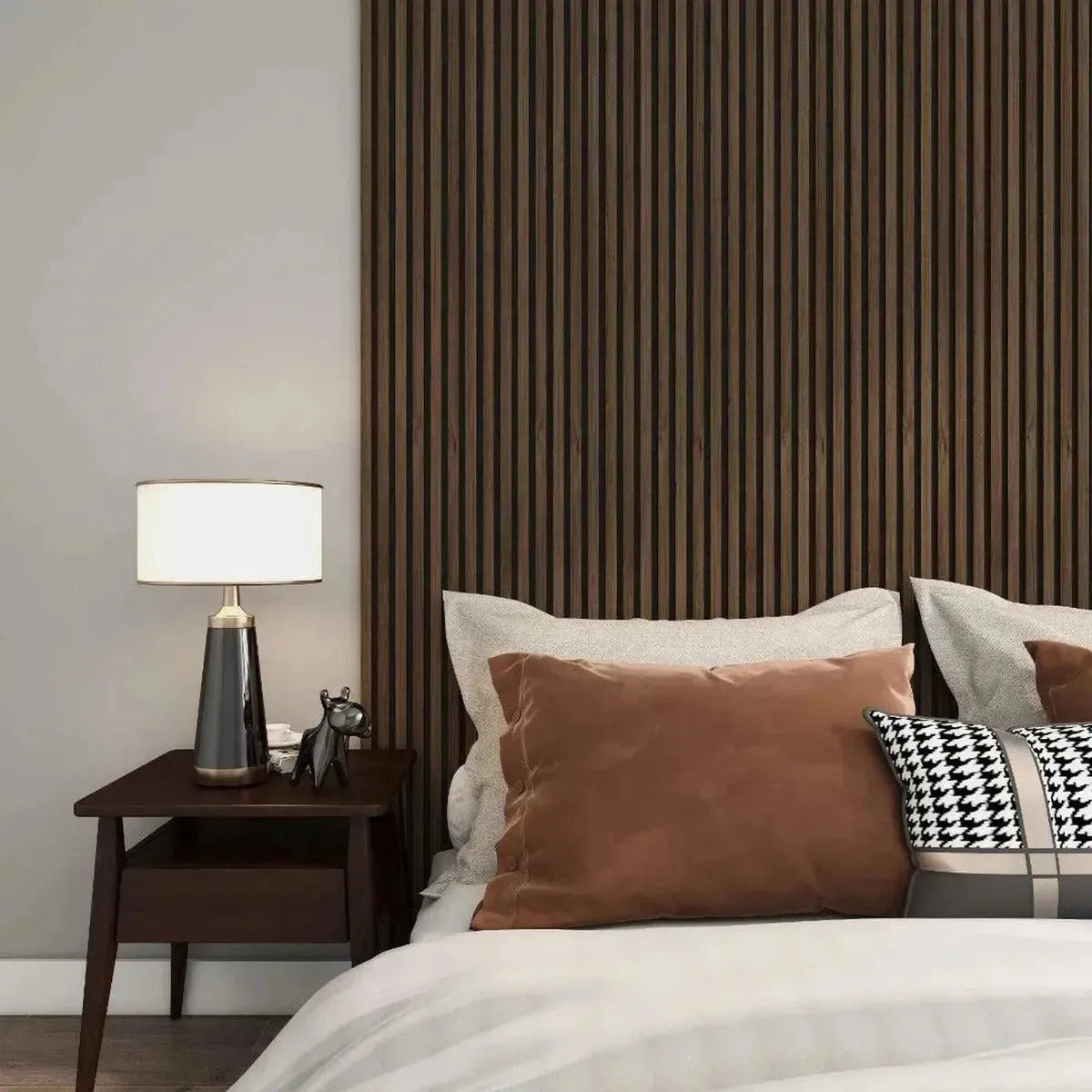
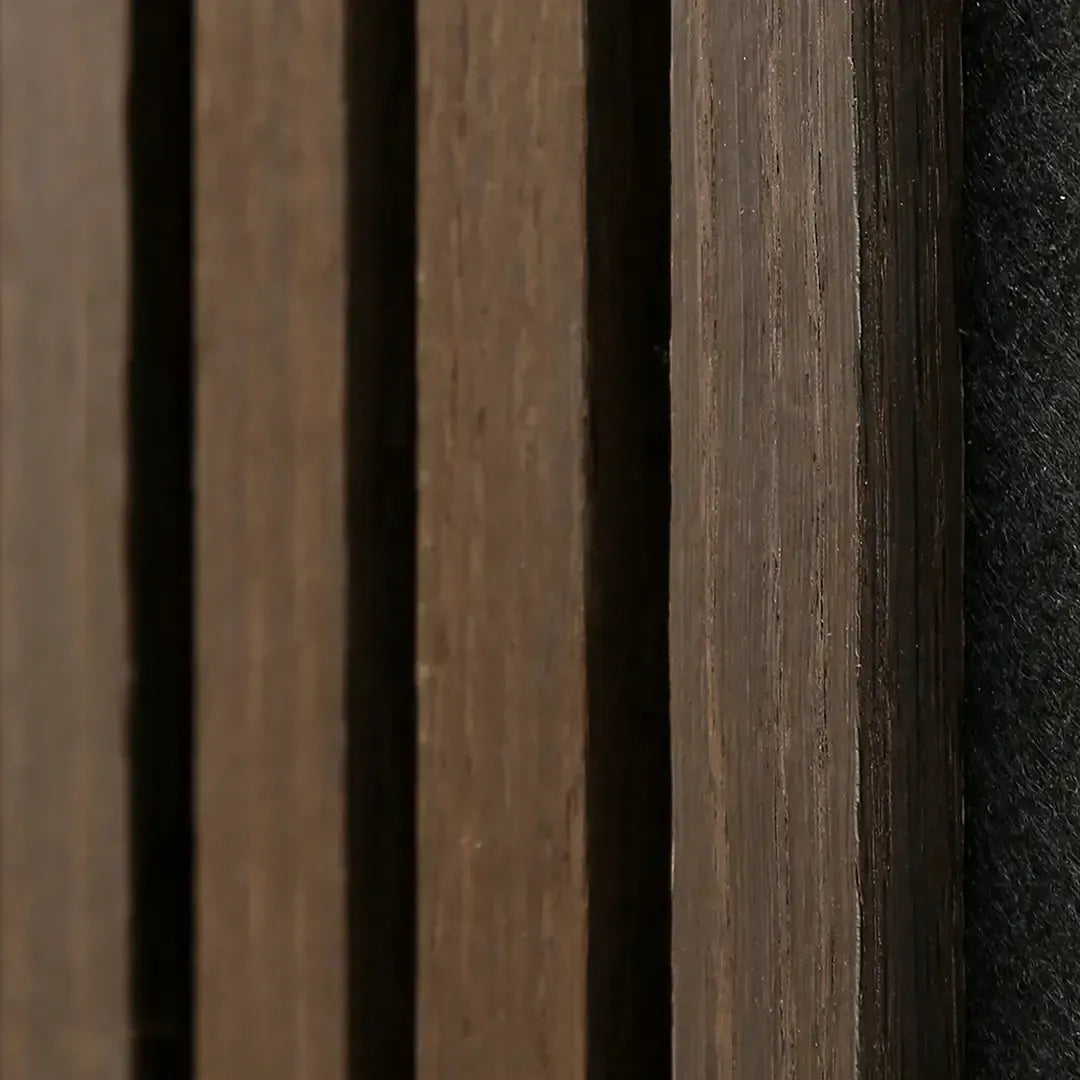
- Akuwood Panel's walnut and black oak acoustic slat panels pair real wood veneer with felt backing for warmth and sound absorption together.
- Cover the demo wall first in 2026 fit-outs: testing zones need the most absorption per square foot, not the whole sales floor.
- Hexagon acoustic panels carry an NRC value of 0.75, enough to cut slap-back echo near amp stacks and stringed instrument walls.
- Order a sample box before committing a wall, because grain color shifts under shop lighting more than most owners expect.
Why this matters for instrument shops
A hardware store can live with a little echo. An instrument shop can't, because sound quality is the product demo. Reflective glass display cases, tile or polished concrete floors, and open ceilings all bounce sound around testing amps, acoustic guitar walls, and piano corners, adding a ring that makes gear sound worse than it is.
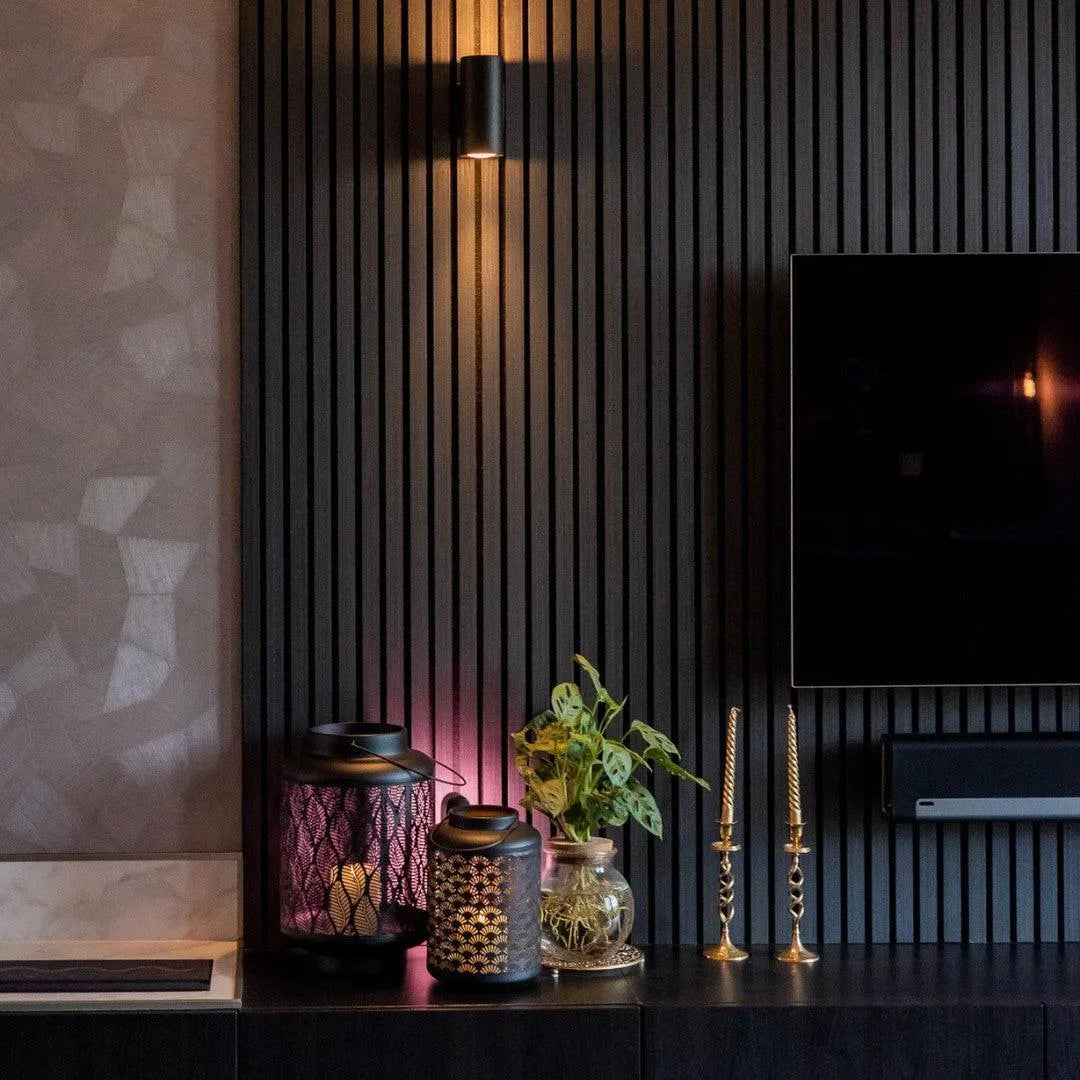
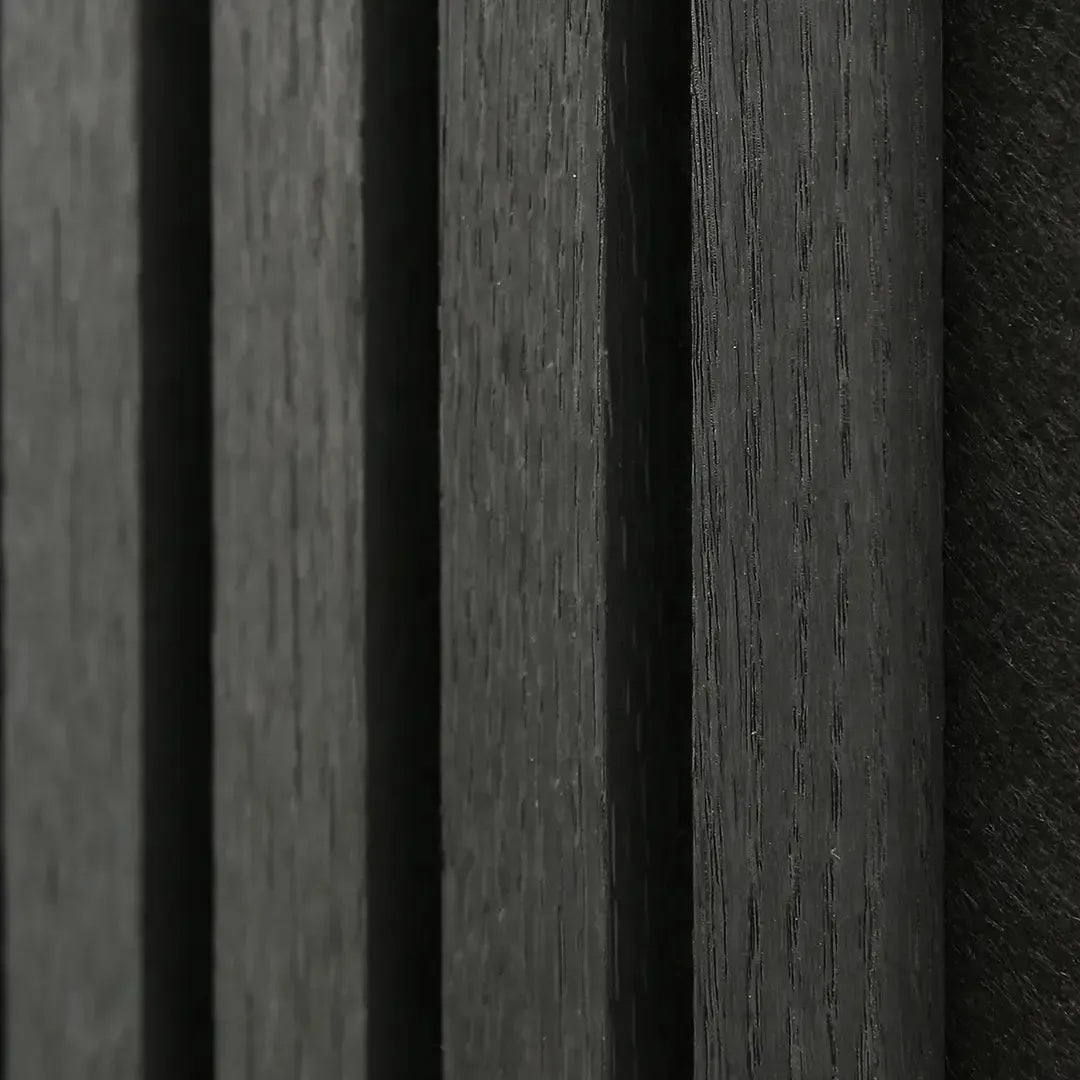
The fix isn't foam. Foam kills the ring but looks like a rehearsal space, not a retail environment built around craftsmanship. A walnut acoustic slat wall panel does both jobs — real wood veneer on the surface, an acoustic felt backing behind it — so the wall looks like it belongs next to a rack of handmade instruments while it's quietly absorbing sound.
How to select wood panels for a boutique instrument shop
Map your echo hot spots
Walk the floor with a hand clap before you buy anything. Note where the slap-back is worst.
- Walls behind amp testing stations, where volume and reflection compound
- Corners near glass display cases and mirrors
- Any wall facing a hard floor with no rugs or furniture
- Ceiling height changes near double-height entries
- Walls directly behind the cash wrap, where staff talk over ambient ring
Rate panels by acoustic performance before finish
Color and grain matter, but NRC (Noise Reduction Coefficient) is what actually quiets the room. Akuwood Panel's hexagon acoustic panels carry an NRC of 0.75, which puts them in useful range for a mid-size showroom wall, not just decoration.
- Check the NRC or absorption spec on any panel before ordering, not just the finish photo
- Prioritize felt-backed or slat designs with an air gap over solid veneer boards for demo walls
- Reserve solid wood veneer boards for walls that don't need acoustic work, like a reception desk backdrop
- Don't assume a wood-look panel absorbs sound; many decorative composite panels are acoustically flat
Cover the demo and testing walls first
Don't panel the whole store in year one. Put the budget where the sound problem actually lives — the wall behind the amp testing area or the guitar wall where customers stand closest to reflective glass.
- Treat the wall directly behind or facing amp stacks first
- Extend coverage to any wall a customer stands within 6 feet of while testing an instrument
- Skip storage rooms and back-of-house areas in the first phase
- Budget for expansion once you hear how much the treated wall changes the room
Balance acoustic coverage with retail display needs
Slat panels absorb well but can compete with a guitar wall's sightlines if overused. Mixing formats keeps both jobs working.
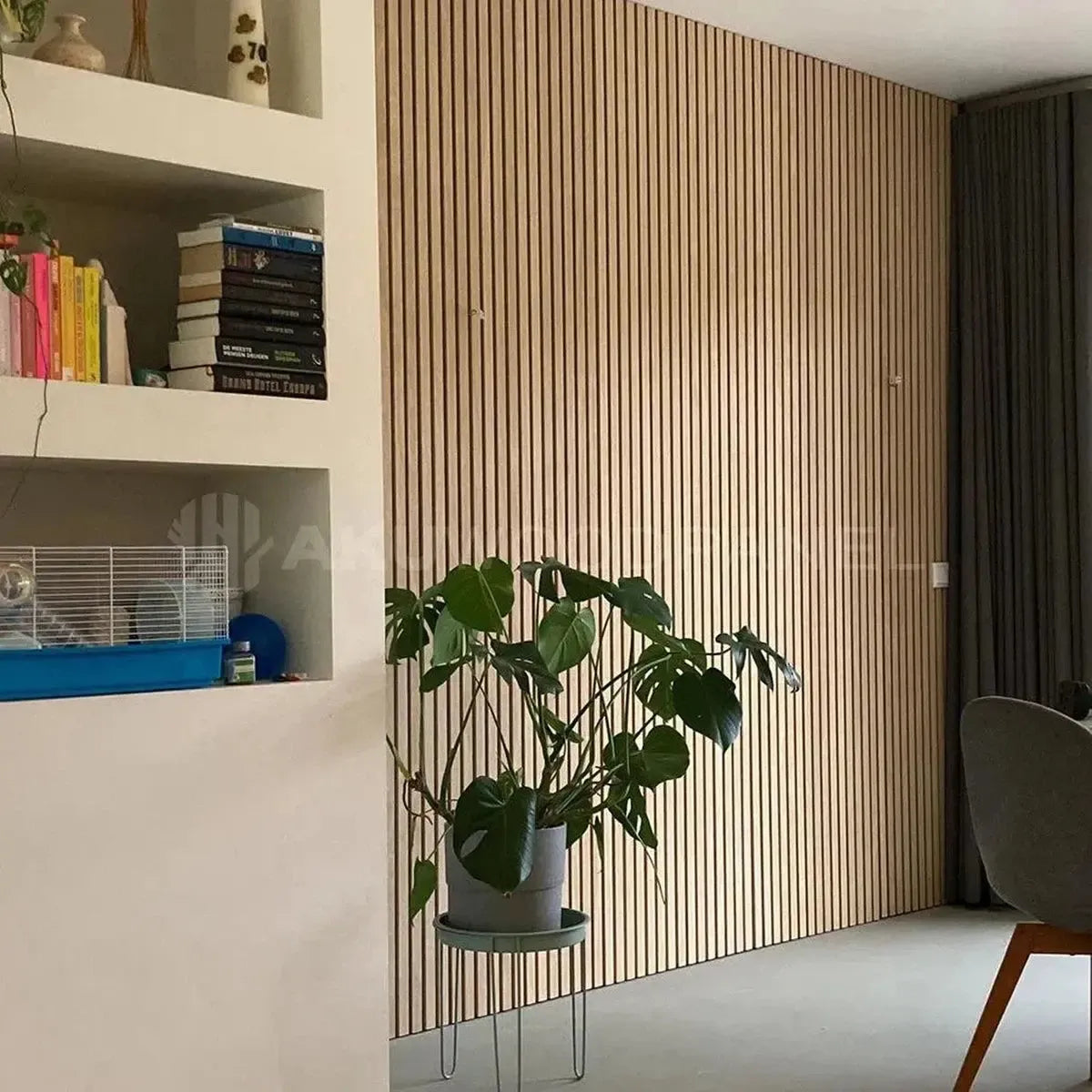
- Use slat wall panels as a full-coverage backdrop behind testing stations
- Add a hexagon acoustic panel cluster near the entrance, where absorption matters less than visual impact
- Keep guitar hangers and shelving off the acoustic slat sections so the felt gap stays effective
- Reserve fluted panels for non-acoustic accent zones like a counter surround or window bay
Match panel finish to the instruments you sell
A shop full of dark vintage-style guitars and brass instruments reads differently against black oak than against natural oak. Finish choice is a merchandising decision, not just decor.
- Black oak or smoked oak panels work well behind darker-finish stringed instruments and vintage amps
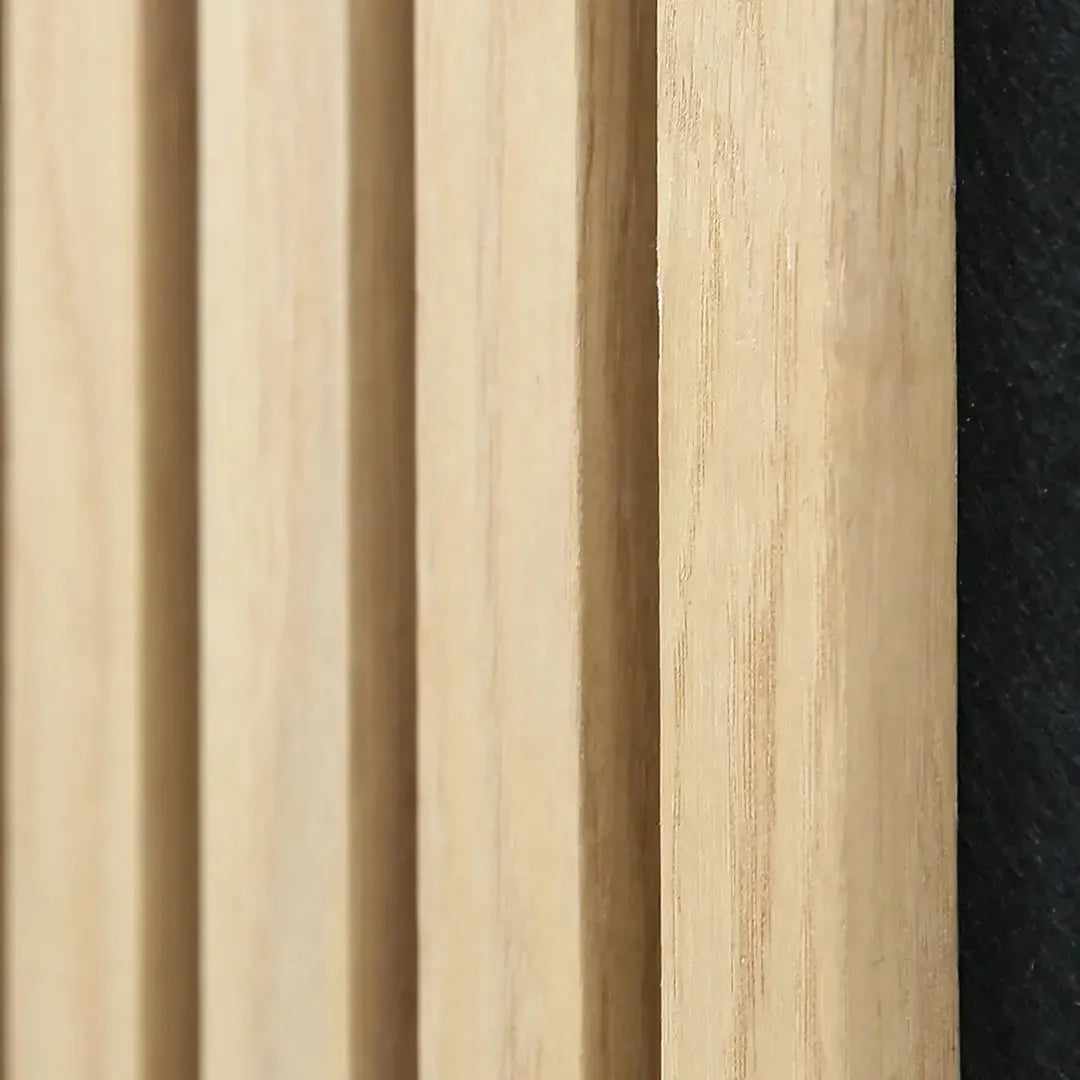
- Natural oak or walnut panels read warmer next to acoustic guitars and pianos with lighter tonewoods
- Avoid high-gloss finishes near glass display cases, which double the glare problem
- Test a sample against your actual stock under store lighting before ordering a full wall
Install without damaging a leased retail space
Most boutique shops lease their space, so reversible installation matters as much as sound performance.
- Use click-together or adhesive-backed slat systems where the lease bars drilling into structural walls
- Keep end pieces and corner trim on hand to finish exposed edges cleanly around doorways
- Photograph the original wall condition before install so a teardown at lease-end is straightforward
- Plan panel runs around existing outlets and speaker wiring rather than cutting new channels
Order samples before a full wall commitment
Grain, felt color, and tone all shift under LED showroom lighting compared to a product photo. A full sample box of slat wall panels settles the finish question before a large wall order goes in.
- Hold samples against your darkest and lightest instrument stock, not just a blank wall
- Check the sample under the exact bulb type used in the showroom, not daylight
- Compare felt-backed and solid veneer samples side by side for the acoustic-versus-decorative tradeoff
- Get sign-off from whoever runs the sales floor, not just the buyer


Compare panel options for instrument shop walls
| Option | Best for | Key limitation | Verdict |
|---|---|---|---|
| Wood acoustic slat panels | Demo walls behind amps and guitar testing stations | Needs consistent wall depth for the felt-backed air gap | Buy for testing zones |
| Hexagon acoustic panels | Entrance accent walls and smaller feature sections | Lower total coverage per box than slat panels | Buy for accents |
| Fluted wall panels | Non-acoustic decorative zones like counter surrounds | Minimal sound absorption, decorative only | Use for looks, not quiet |
| 3D wood wall tiles | Small feature walls or reception backdrops | Not designed as a primary acoustic solution | Use sparingly |
| Generic acoustic foam panels | Budget-first back-of-house rooms | Doesn't match a retail finish; reads as a rehearsal space | Skip on the sales floor |
Common mistakes boutique instrument shops make
- Treating only the practice room and ignoring the sales floor. The first impression happens at the door, and an untreated retail floor still rings even if the back room is dead quiet.
- Choosing foam-look panels to save money. They undercut the craftsmanship story a shop sells instruments on; customers notice the mismatch between a $3,000 guitar and a warehouse wall.
- Over-covering walls with slats and blocking sightlines. A guitar wall needs visibility as much as quiet, and full slat coverage behind display hooks defeats the merchandising.
- Skipping the NRC spec and buying on finish alone. A panel that looks right in a product photo can be acoustically flat, leaving the ring problem unsolved after the wall goes in.
- Not sampling finish against actual instrument stock. Wood tone reads differently under showroom LEDs than on a screen, and a mismatched wall behind five figures of inventory is expensive to redo.
FAQ
What's the best wood panel for instrument shop interiors in 2026?
Acoustic slat wall panels with a felt backing, such as Akuwood Panel's walnut or black oak lines, work best for demo and testing walls because they combine real wood veneer with sound absorption. Reserve decorative-only formats like fluted panels for non-acoustic accent zones.
Do wood acoustic panels actually reduce echo in a retail space?
Felt-backed slat and hexagon panels absorb sound rather than just deflecting it, which is different from solid decorative wood boards. Akuwood Panel's hexagon acoustic panel carries an NRC of 0.75, a meaningful absorption rating for a showroom-size wall.
Is real wood veneer better than foam for a music shop demo wall?
For a retail floor selling instruments, wood veneer panels keep the craftsmanship look intact while still absorbing sound through a felt backing. Foam panels absorb well but read as a rehearsal space rather than a sales floor.
Should I panel the whole store or just the testing area first?
Start with the wall behind amp stacks and guitar testing stations, since that's where the echo problem is worst and most visible to customers. Expand coverage in phases once you hear the difference on the treated wall.
Can wood acoustic panels go in a leased retail unit?
Yes. Click-together or adhesive-backed slat systems avoid drilling into structural walls, and end pieces or corner trim finish exposed edges cleanly. Photograph the original wall before install if the lease requires restoration at move-out.
How do I pick a wood panel finish for an instrument shop?
Match the finish to your stock: black oak or smoked oak suits vintage-style guitars and brass instruments, while natural oak or walnut reads warmer next to lighter tonewood instruments. Order a sample box before committing to a full wall.
What's the difference between slat panels and hexagon panels for a shop wall?
Slat panels give full-coverage acoustic treatment ideal for demo walls, while hexagon panels work better as accent clusters near an entrance or feature wall. Most boutique shops in 2026 mix both formats rather than using one across the whole store.
One last thing
The hexagon panel's NRC rating of 0.75 is the number worth remembering in 2026 — it's the difference between a wall that looks quiet and one that is. Put that panel, or the felt-backed slat version, on the wall a customer stands closest to when they pick up an instrument, and the rest of the store can stay purely visual.

 Better performance and aesthetic appeal
 In Stock