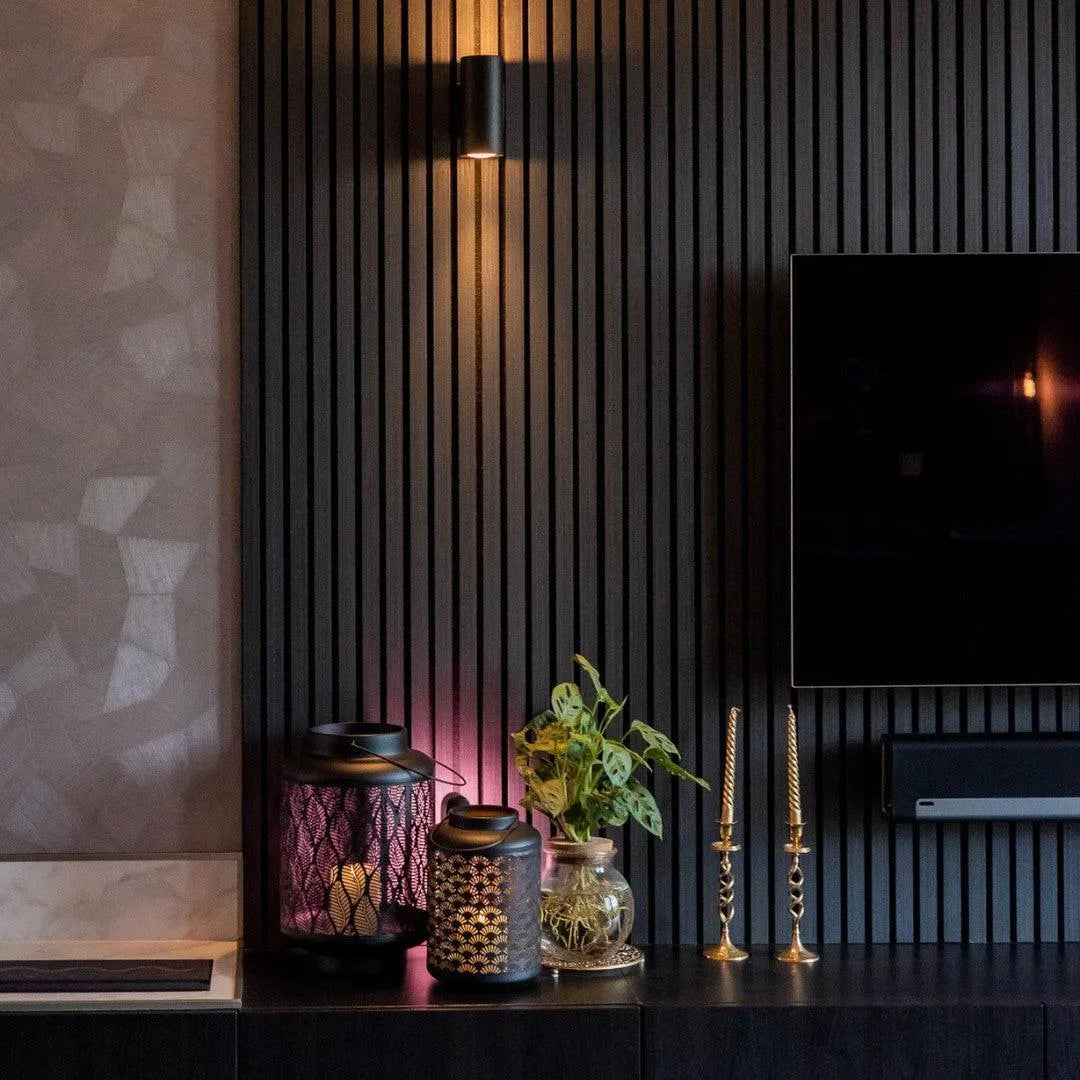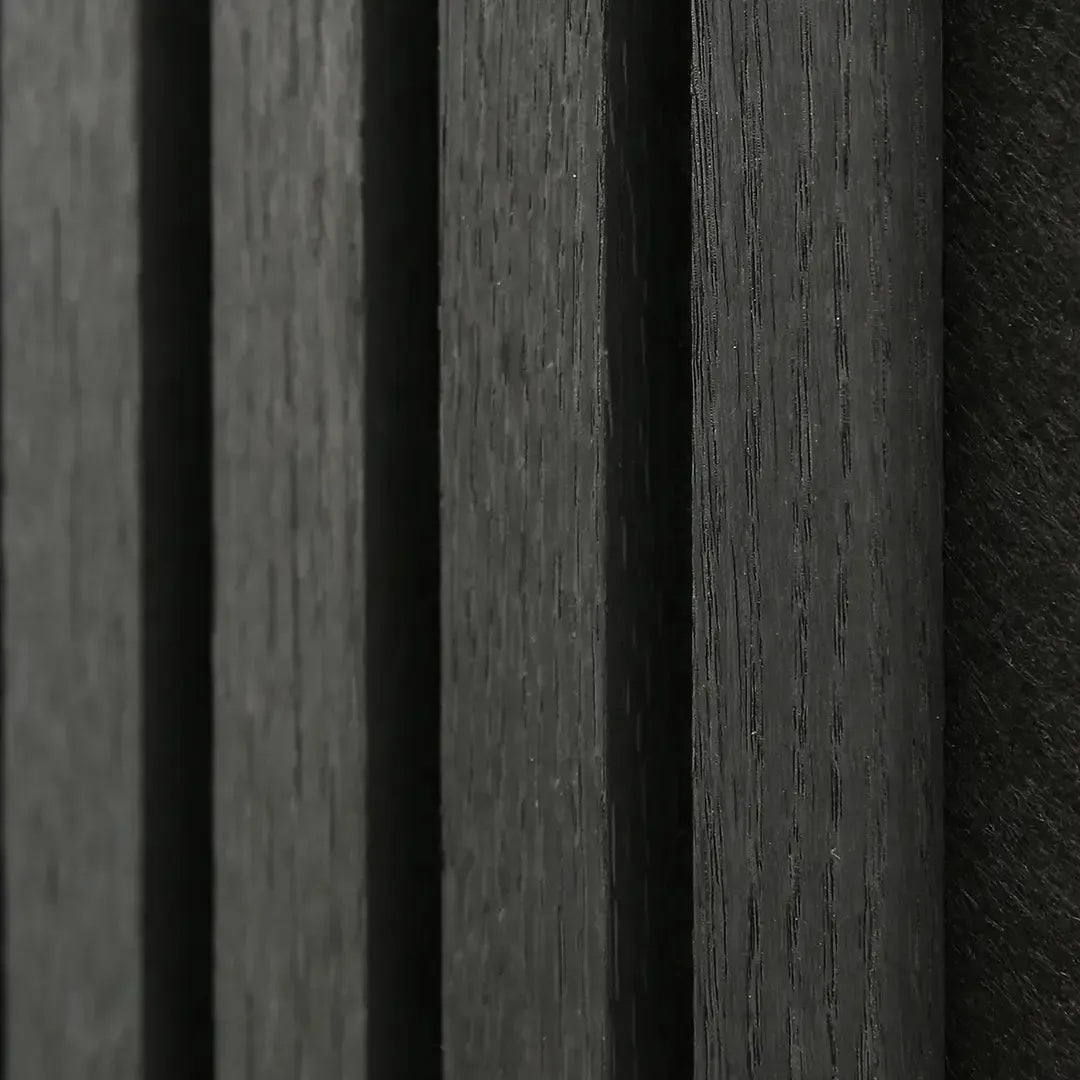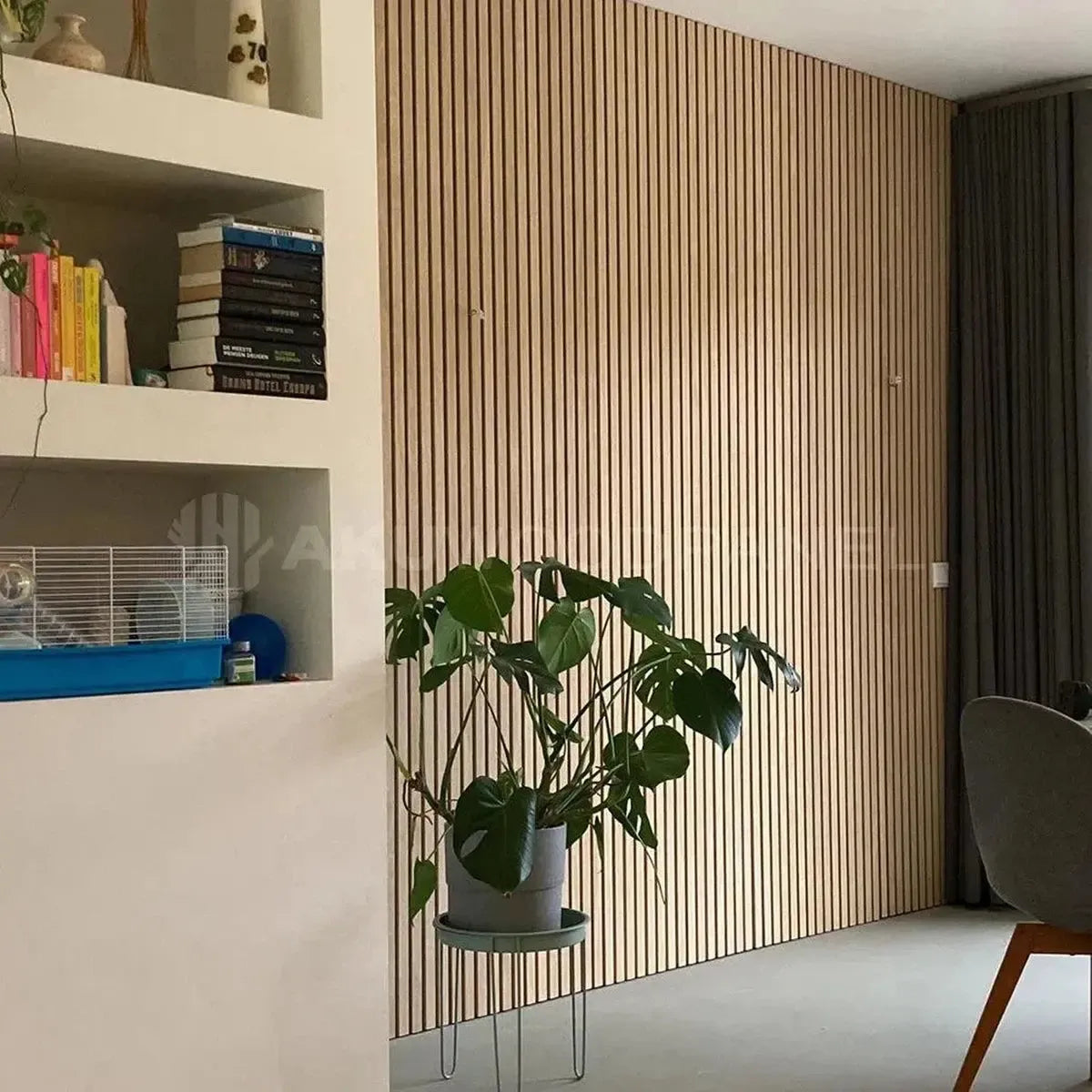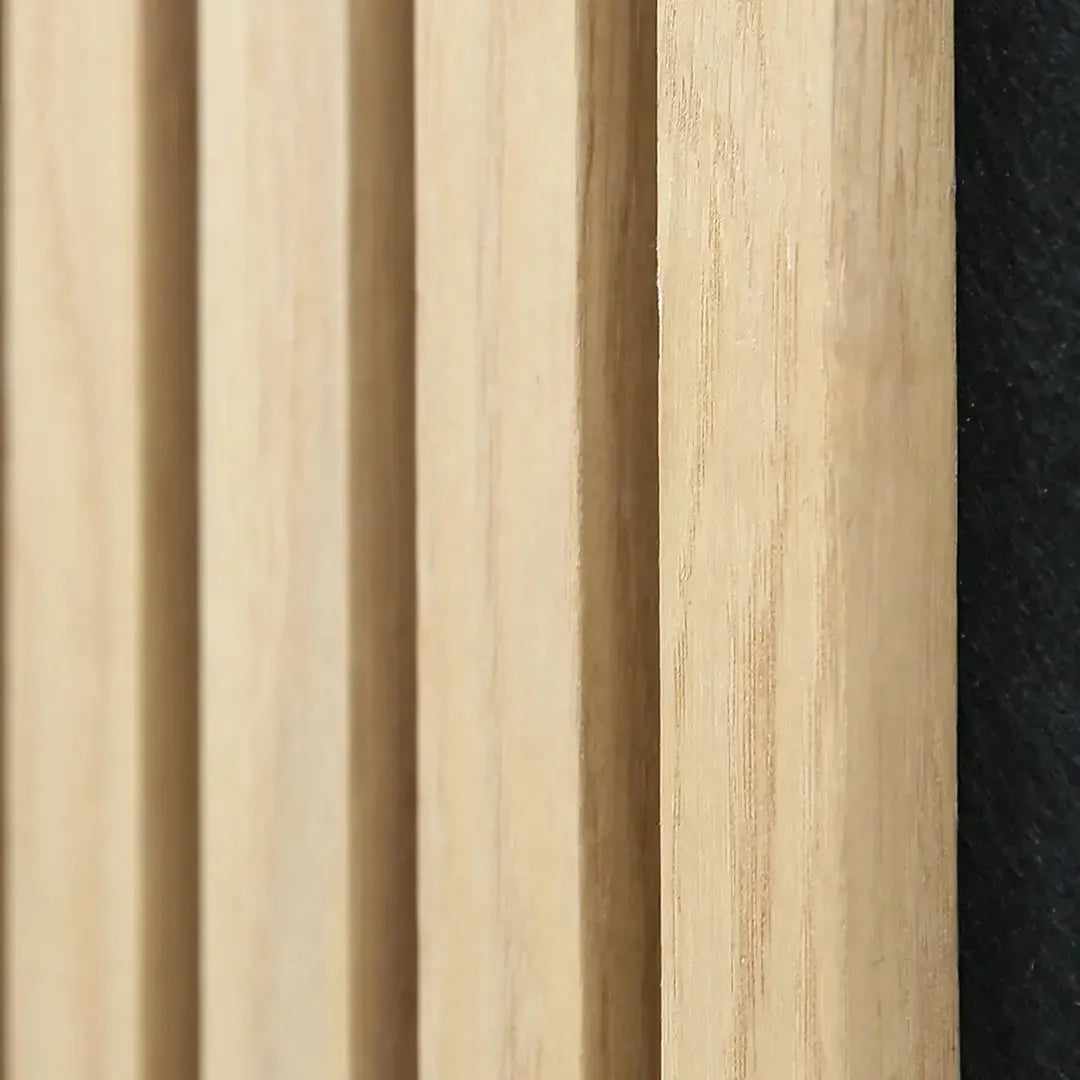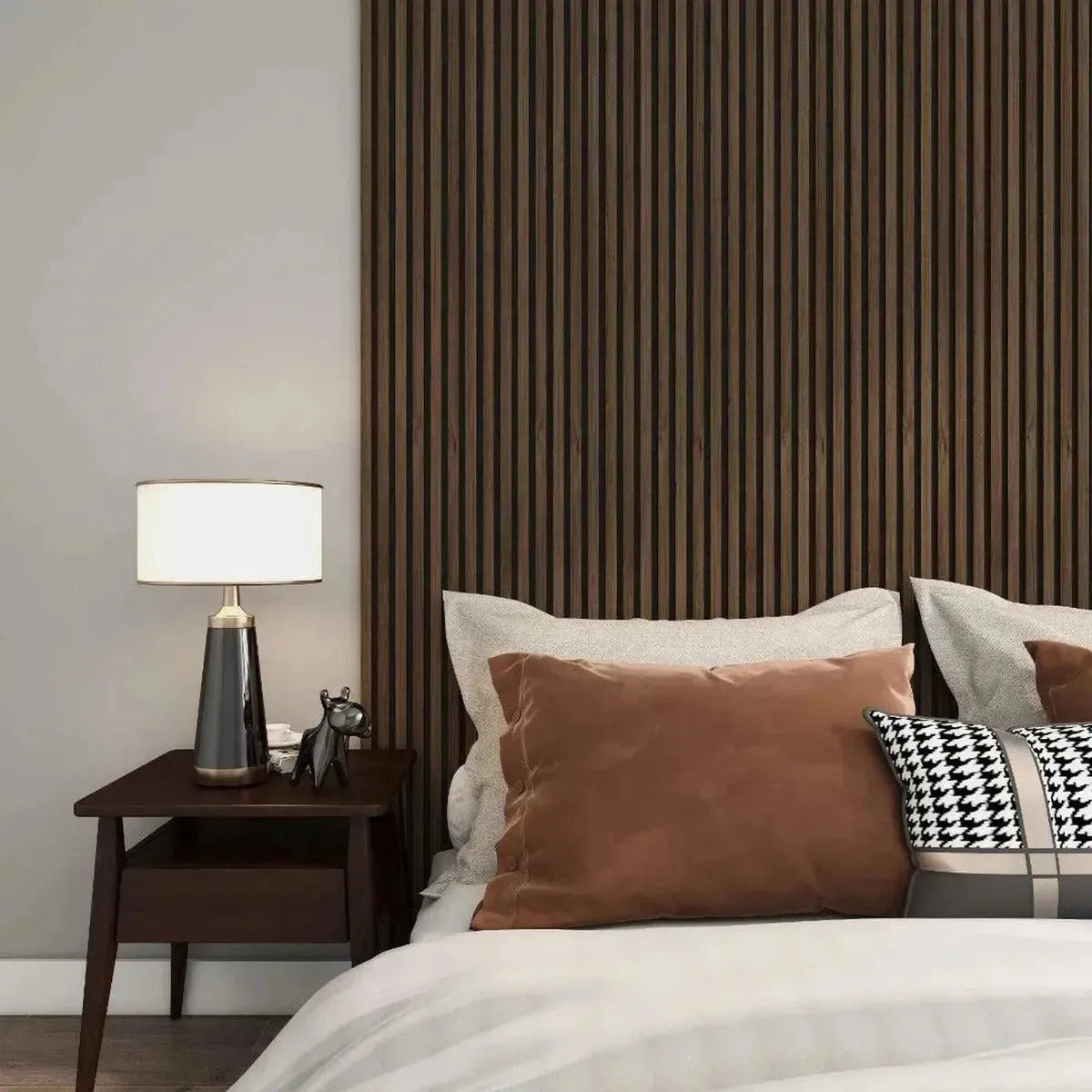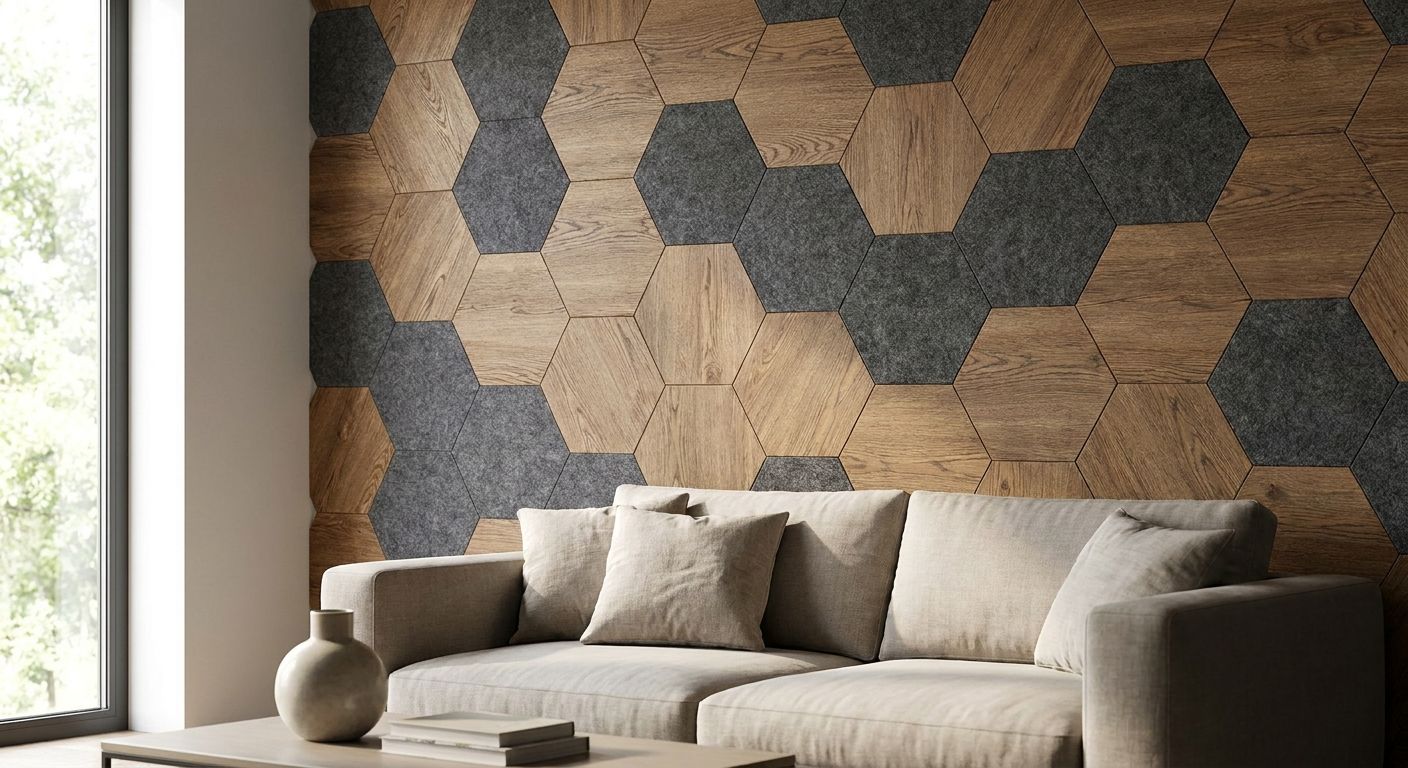
Smoked oak hexagon panels with gray felt sit right at the intersection of two AKU Woodpanel product lines: hexagon-shaped tiles for texture, and felt-backed acoustic panels for sound control. This guide breaks down which real SKUs get you closest to that exact combination for a living room wall in 2026, and which pairings to skip.
- Hexagon Acoustic Panel Smoked Oak is the closest single match to smoked oak hexagon panels gray felt - Buy for accent walls.
- Acoustic Slat Wall Panel Smoked Oak with Gray Felt keeps the exact finish and felt combo in a slat format - Consider.
- Hexagon Acoustic Panel Walnut with Gray Felt gives you felt backing in hexagon form in a lighter wood tone - Consider.
- Skip mixing more than two felt colors on one living room wall in 2026 - it reads busy, not designed.
Why this matters
Smoked oak is the darkest standard veneer tone in most wood panel catalogs, and gray felt is the neutral backing color that shows up across multiple acoustic lines. Searching for the two together usually means you want a specific look: dark, matte, warm wood broken into geometric shapes, with just enough felt visible at the seams to soften the room acoustically without turning the wall into a slab of black.
The Hexagon Acoustic Panel Smoked Oak is the product that gets you nearest to that exact spec on AKU Woodpanel's current catalog. Living rooms are the room type where this combination gets requested most, ahead of bedrooms and home offices, because a TV wall or sofa wall benefits from both the visual texture and the echo reduction a felt-backed panel provides.
Who this is for
This guide is for homeowners planning a living room accent wall or full media wall who already know they want a darker wood tone and a geometric panel shape rather than straight slats. It's also useful if you're comparing hexagon panels against slat panels and trying to figure out whether the felt backing behaves the same way in both formats. If you haven't settled on smoked oak yet and are still choosing between finishes, start with the broader finish comparison before locking into hexagon tiles specifically.
What to look for in smoked oak hexagon panels with gray felt
Grain and tone consistency across tiles
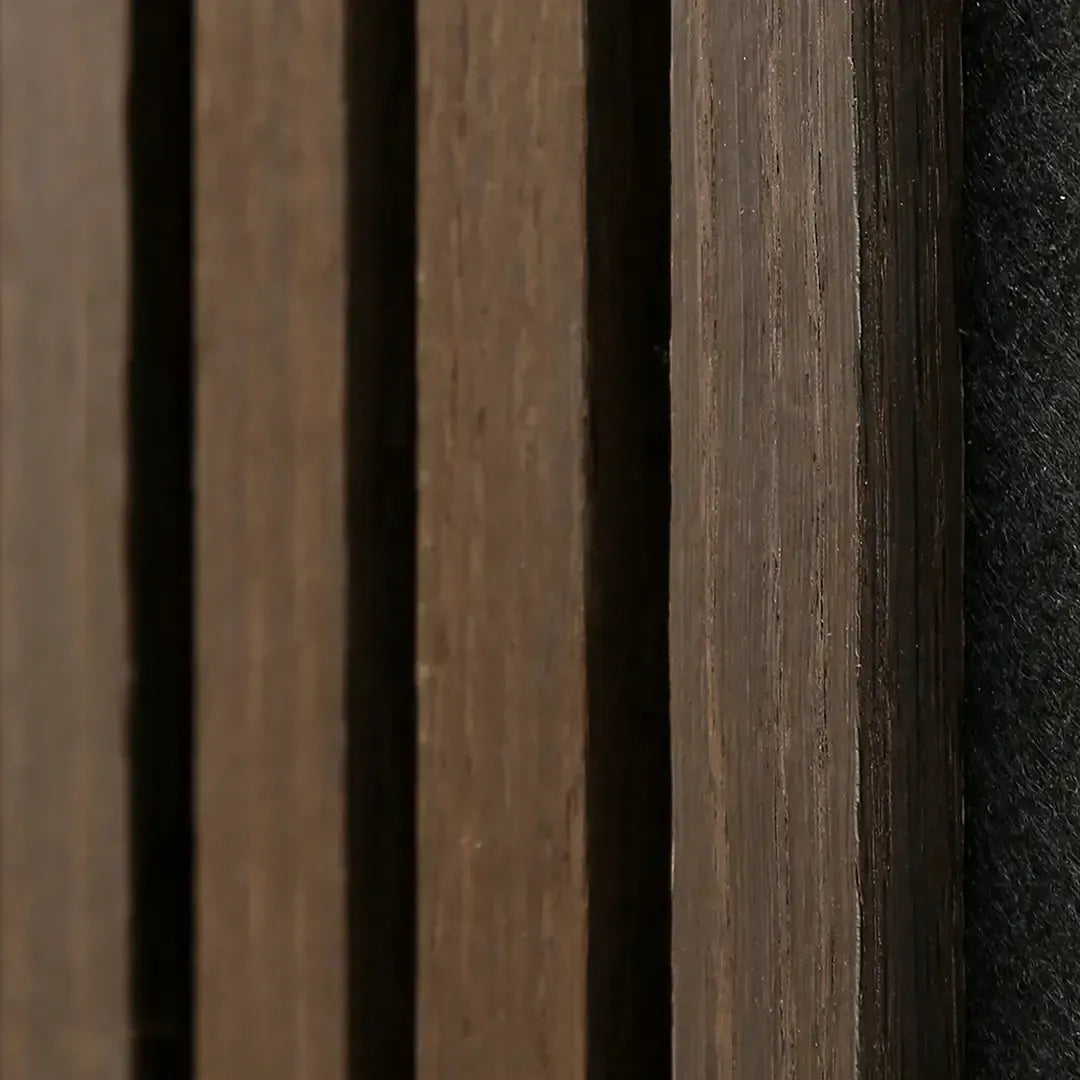
Smoked oak gets its color from a fuming or staining process applied to the veneer, and tile-to-tile variation is normal with any real wood product. Order enough tiles from the same batch to cover a full wall rather than topping up later, since a second order months apart can show a visible tone shift once installed side by side.
How the felt backing actually functions
The gray felt sits behind the wood veneer face and is what absorbs sound, not the wood itself. A living room with hard floors, a large window, and no soft furnishings is exactly the kind of space where felt-backed panels make an audible difference versus a solid wood veneer panel with no felt layer at all.
Panel format: hexagon versus slat
Hexagon tiles create a broken, geometric texture that reads more modern and works well as a standalone accent wall. Slat panels read more linear and traditional and tend to disappear into a room rather than becoming the focal point. If the living room already has a strong architectural feature, hexagon tiles compete with it; slats tend to complement it instead.
Coverage planning before you order
A typical living room accent wall runs 8 to 12 feet wide and 8 to 9 feet tall. Map the wall dimensions and tile size before ordering so you're not short a box mid-install, and account for cuts around outlets, switches, and any window or fireplace openings that break up the surface.
Mounting method for your wall type
Drywall, plaster, and concrete all take hexagon acoustic panels differently. Renters generally do better with adhesive-friendly mounting since it avoids permanent wall damage, while homeowners doing a full media wall usually get a cleaner result with mechanical fasteners into studs or furring strips.
Where the wall sits relative to sightlines
A smoked oak hexagon wall directly behind a TV competes with screen glare during the day. Placing the panel on the wall perpendicular to the TV, or on the sofa wall instead, usually gets more visual credit for the same panels and the same square footage.
Top picks for smoked oak hexagon panels with gray felt
Hexagon Acoustic Panel Smoked Oak — the direct match. This is the SKU that matches the finish you're searching for in the hexagon format. It works as a standalone accent wall in a living room with 8-foot or taller ceilings, where the geometric shape has enough vertical room to read as intentional rather than cramped. Verdict: Buy.
Acoustic Slat Wall Panel Smoked Oak with Gray Felt — the format swap. Same finish, same felt backing color, different shape. If the hexagon geometry feels like too much for a first wood panel wall, this slat version gets you the identical smoked oak and gray felt combination in a more conservative layout. Verdict: Consider if you want the finish without the geometric commitment.
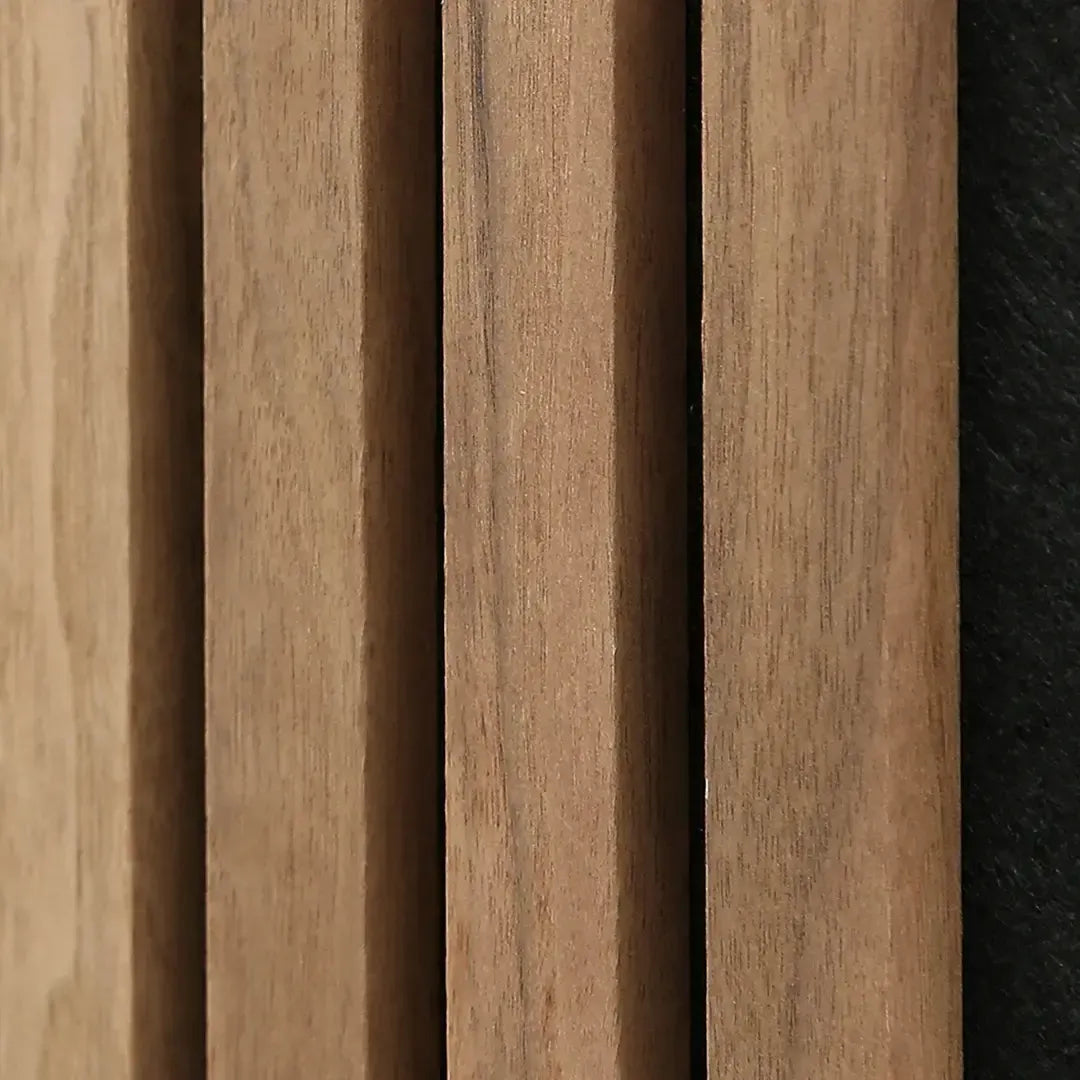
Hexagon Acoustic Panel Walnut with Gray Felt — the felt-forward option in a different tone. If smoked oak is reading too dark once you see a sample against your existing floor, this walnut version keeps the hexagon shape and gray felt backing but shifts to a warmer mid-tone wood. Verdict: Consider for rooms with light flooring where full smoked oak risks looking heavy.
Hexagon Acoustic Panel Natural Oak — the light-room fallback. Worth naming as a contrast point: natural oak in hexagon form is the lightest option in this product family and reads almost the opposite of smoked oak. Only relevant if you're second-guessing how dark to go. Verdict: Skip if the brief is specifically smoked oak.
Hexagon Acoustic Panel Black — the wildcard. The darkest hexagon option available, one step past smoked oak in tone intensity. It suits a room that's already committed to a moody palette, but it's a harder wall to reverse if you change your mind in a year or two. Verdict: Skip unless the rest of the room is already dark.
“The felt is doing the acoustic work in these panels, not the wood veneer - it's just wearing a wood face.”
What to avoid
- Ordering hexagon tiles in two different veneer batches. Smoked oak is a stained finish, and batch-to-batch variation is more visible on a hexagon layout than on a flat slat wall because the eye tracks each individual tile edge.
- Skipping the felt-backed version to save on a base panel. A solid veneer hexagon panel with no felt backing looks nearly identical in photos but won't do anything for a living room with an echo problem, which is usually half the reason people search for this combination in 2026.
- Mixing gray felt with a second felt color on the same wall. Combining the smoked oak with gray felt alongside a walnut with gray felt is fine tonally, but adding a third felt shade into the same sightline starts to look unplanned rather than layered.
Verdict comparison
| Panel | Format | Felt backing | Best for | Verdict |
|---|---|---|---|---|
| Hexagon Acoustic Panel Smoked Oak | Hexagon | Included | Standalone accent wall, dark palette | Buy |
| Acoustic Slat Wall Panel Smoked Oak with Gray Felt | Slat | Included | Same finish, more conservative layout | Consider |
| Hexagon Acoustic Panel Walnut with Gray Felt | Hexagon | Included | Light-floor rooms, warmer tone | Consider |
| Hexagon Acoustic Panel Natural Oak | Hexagon | Varies | Light, bright living rooms | Skip for this brief |
| Hexagon Acoustic Panel Black | Hexagon | Varies | Already-dark, moody rooms | Skip unless committed |
For a deeper look at how gray felt performs specifically in living room layouts, the gray felt acoustic panel guide for living rooms walks through placement and echo reduction in more detail than fits here.
FAQ
What's the best smoked oak hexagon panel for a living room in 2026?
Hexagon Acoustic Panel Smoked Oak is the closest catalog match for a smoked oak hexagon look with felt backing, and it works best on an accent wall with 8-foot or taller ceilings. It suits rooms already leaning toward a dark, matte palette.
Is gray felt better than black felt for acoustic panels?
Gray felt shows less dust and lint over time than black felt and reads more neutral against a range of wood tones. Black felt disappears more completely into darker veneers like smoked oak or black oak if you want the felt lines invisible.
Do hexagon acoustic panels actually reduce echo?
Yes, when the panel has felt backing behind the wood veneer, since the felt layer is what absorbs sound, not the wood face itself. A solid veneer hexagon panel without felt backing provides minimal acoustic benefit.
Can I mix hexagon and slat panels in the same living room?
Yes, mixing formats works when the finishes match, such as pairing a smoked oak hexagon accent wall with smoked oak slat panels on an adjacent wall. Keep the felt color consistent across both formats to avoid a mismatched look.
How many hexagon panels do I need for an 8-foot living room wall?
Coverage depends on individual tile size, so measure the wall in square feet and check the per-box coverage listed on the product page before ordering. Always round up rather than down to account for cuts around outlets and trim.
Should smoked oak hexagon panels go on the TV wall or the sofa wall?
The sofa wall or a wall perpendicular to the TV usually shows the panel better than the wall directly behind the screen, since daytime glare competes with the texture on a TV wall. This also avoids shadowing from the TV itself across the hexagon pattern.
Is walnut or smoked oak better for a living room with light flooring?
Walnut with gray felt reads warmer and lighter than smoked oak and tends to balance better against light or natural wood flooring. Smoked oak works better against mid-tone or dark flooring where the contrast doesn't feel too heavy.
One last thing
The detail most people miss when shopping smoked oak hexagon panels with gray felt: the felt color barely shows once panels are installed edge to edge, since it only peeks through at the seams. If echo reduction is the actual goal rather than the visible felt line, prioritize the felt-backed SKU over chasing an exact felt-color match, since the acoustic performance comes from that backing layer regardless of how much of it you can see.



 Better performance and aesthetic appeal
 In Stock