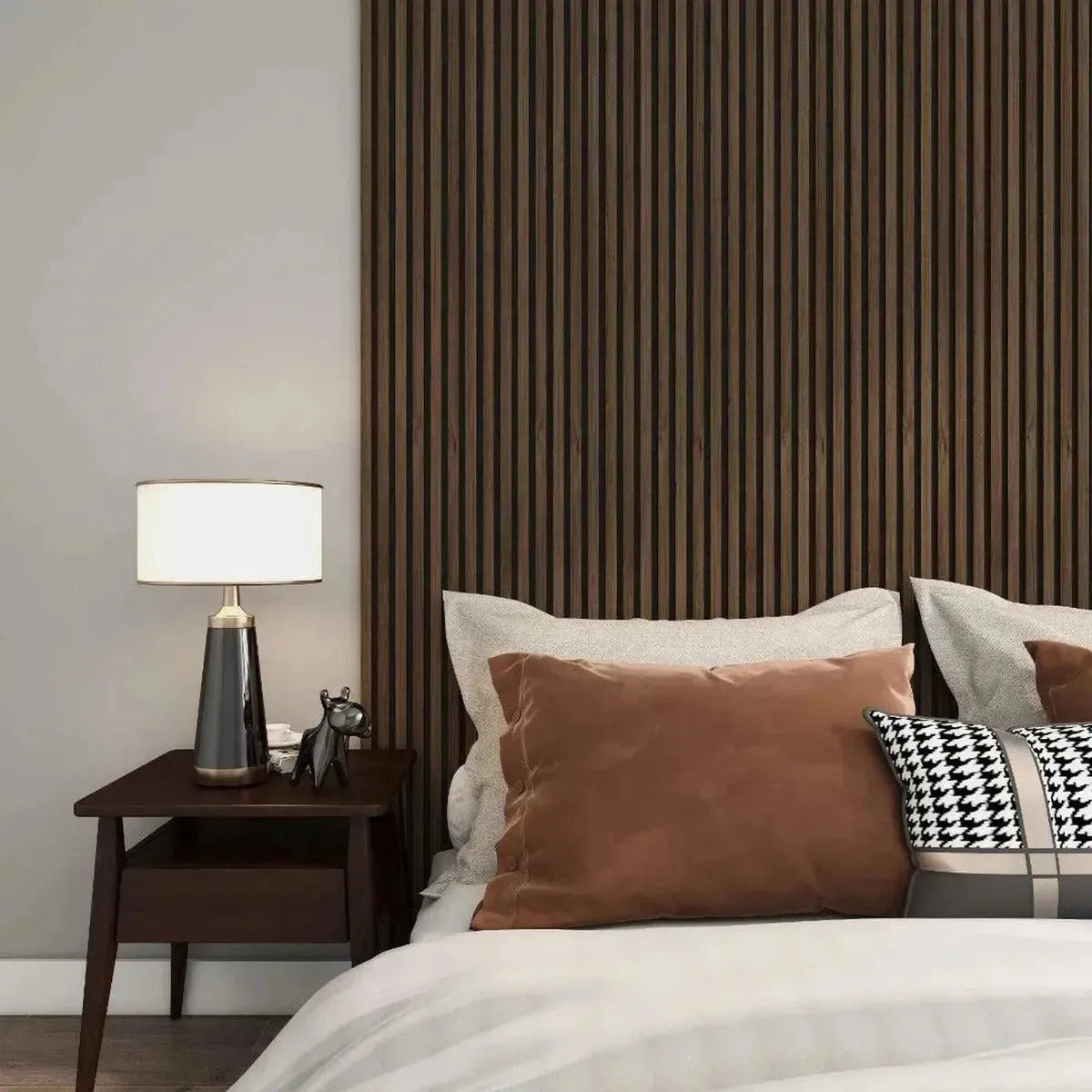
Home offices amplify every echo a hard-surfaced room can produce, and acoustic slat wall panels are the fastest fix that also looks intentional on a video call. This guide breaks down what to look for in slat wall panels for home office acoustic treatment, which AKU Woodpanel picks solve which problem, and what to skip entirely.
TL;DR
Acoustic Slat Wall Panel Natural Oak with Gray Felt is the safe pick for most home offices dealing with echo, since the felt backing does the acoustic work while the oak veneer reads professional on camera. If you want more visual contrast, Acoustic Slat Wall Panel Black Oak is a strong second, and Acoustic Slat Wall Panel Walnut covers anyone who wants warmth without going full light-oak. All three are Buy-rated for 2026 home office builds; foam panels and adhesive slat wallpaper are both Skip.
Why this matters
A home office with drywall, a desk, and a window is close to acoustically bare — sound bounces instead of absorbing, which is why video calls sound tinny and in-person meetings feel louder than they should. Acoustic panels solve real echo problems in home offices far more reliably than rugs or curtains, because slat panels combine a wood veneer surface with a felt or acoustic backing that actually absorbs mid and high frequencies instead of just diffusing them.
The difference matters more in 2026 than it did five years ago, simply because remote and hybrid work means more people are running calls out of spare bedrooms and converted closets — rooms that were never built with sound in mind.
Who this is for
This guide is for anyone working from a home office who takes regular video calls, records audio, or just wants a room that doesn't sound like an empty box — freelancers on daily client calls, remote employees in daily standups, and anyone converting a spare bedroom or basement corner into a workspace in 2026. If your biggest complaint is that your own voice echoes back at you through your headset, or that colleagues keep asking you to repeat yourself, you're the target buyer here.
What to look for in slat wall panels for a home office
Felt or acoustic backing, not just wood slats
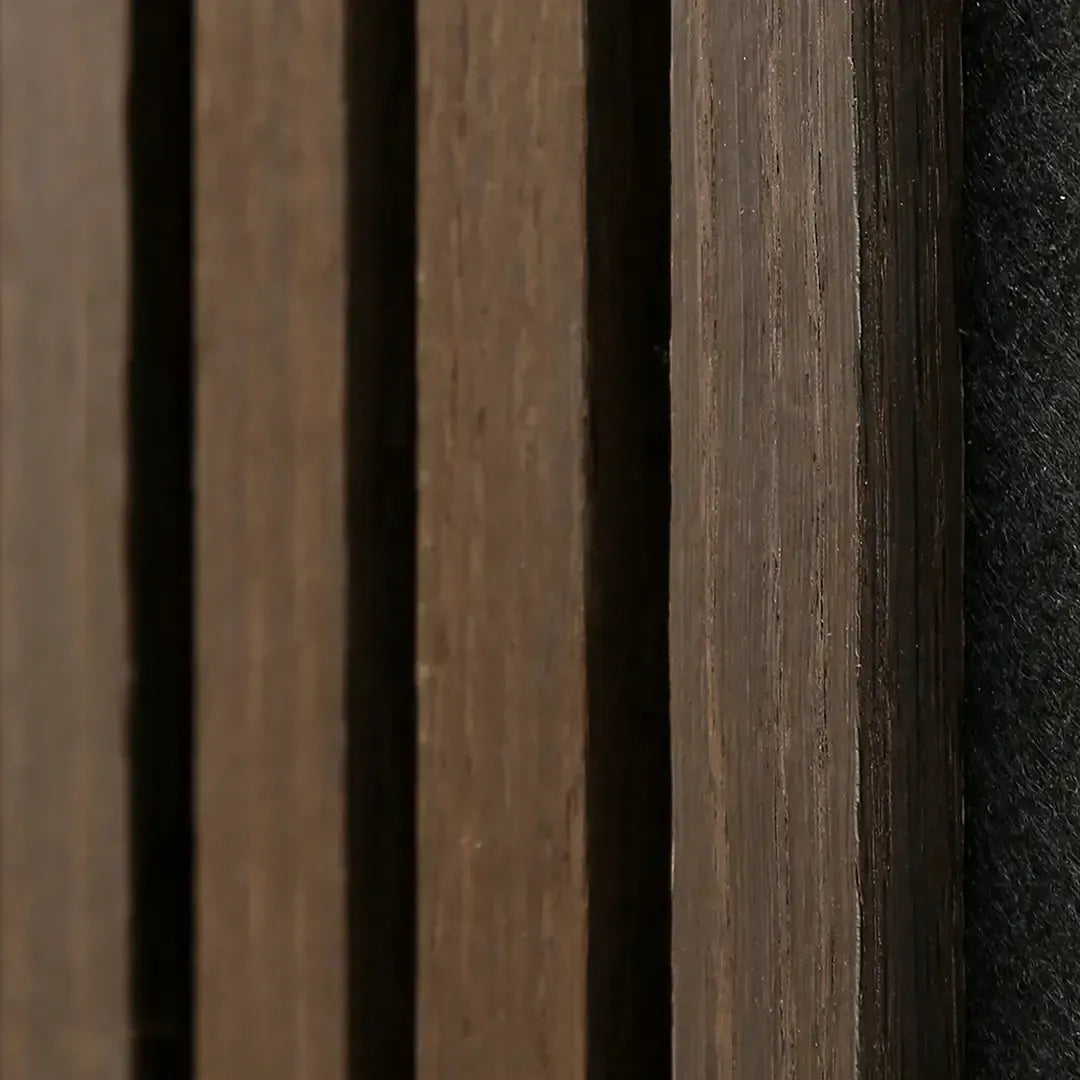
Decorative slats without a backing look similar but do almost nothing for sound. The backing is what absorbs reflected sound waves instead of letting them bounce straight back into your microphone, which is the entire point of acoustic treatment versus decorative paneling.
Veneer tone that reads well on camera
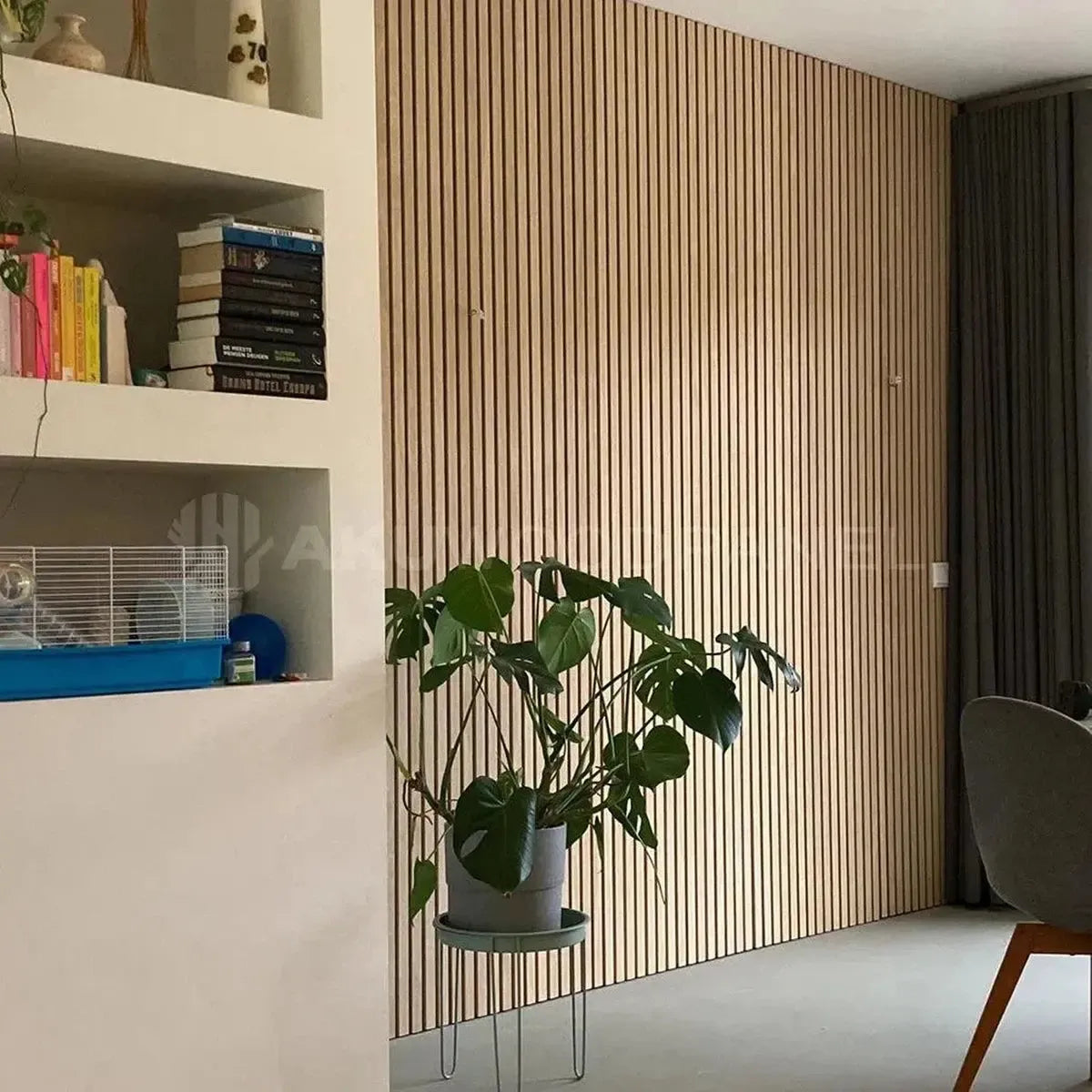
Your wall is now part of your on-screen presence. Light oak brightens a dim room and photographs neutral on most webcams; black oak and smoked oak add contrast but can go dark under weak lighting, so match the tone to how much natural light the room gets.
Coverage flexibility for a partial wall
Most home offices don't need to treat every wall — one accent wall behind the desk chair, roughly 60% of that single wall's surface, is usually enough to cut noticeable echo without turning the room into a cabin. Panels sold with end pieces and matching trim make partial coverage look finished instead of half-done.
Install method that fits a rented or owned space
Home offices split between owned homes and rentals, and the install method needs to match. Panels that mount with adhesive or a simple track system work in both scenarios; anything requiring wall anchors into drywall is a bigger commitment for a renter.
Durability against daily desk use
A home office wall gets bumped by chairs, cables, and monitor arms more than a living room wall does. Solid veneer over MDF or plywood core holds up to that daily contact better than thin laminate finishes.
Top picks for home office acoustic treatment
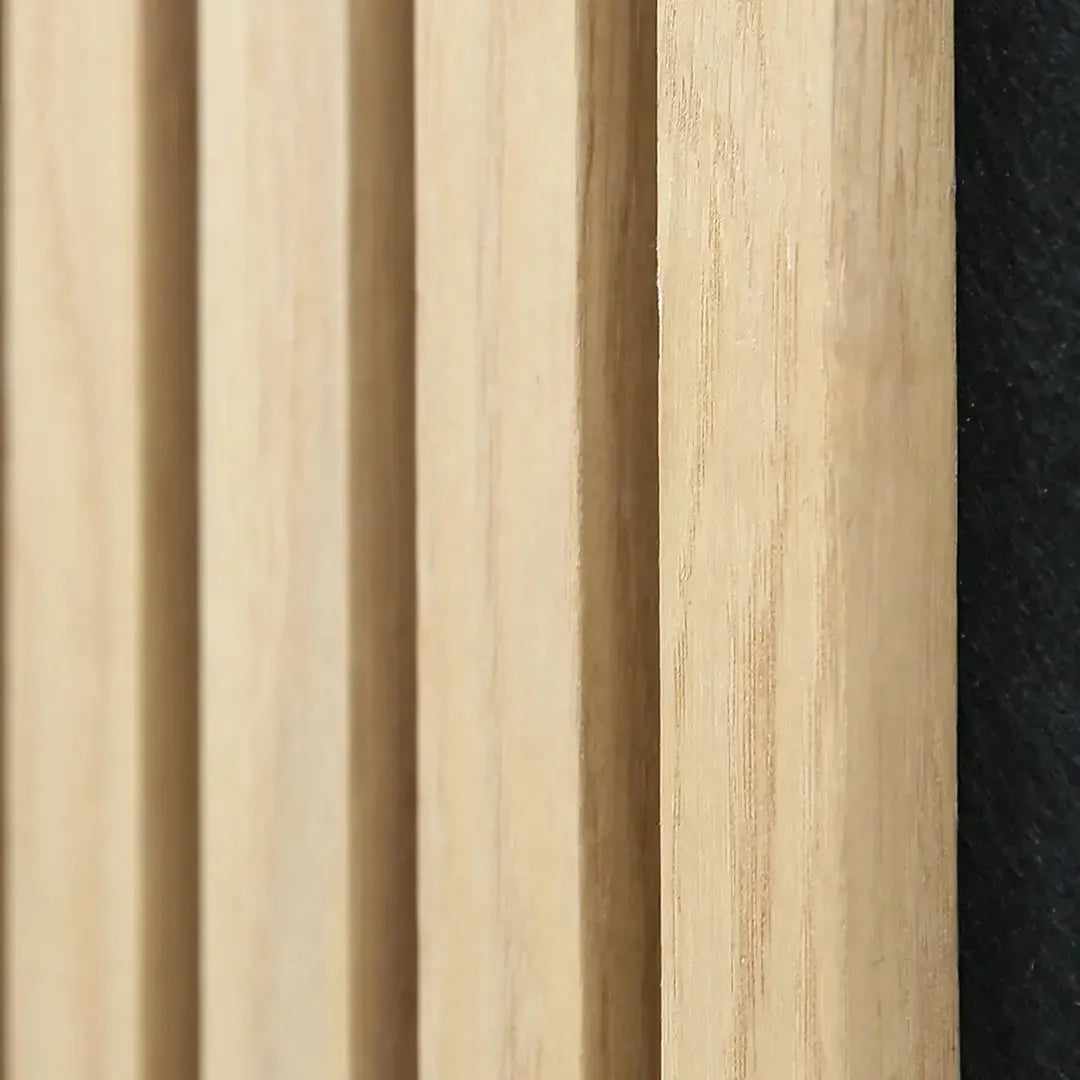
The safe pick: Acoustic Slat Wall Panel Natural Oak with Gray Felt
This is the pick that solves the actual problem without any tradeoffs. The gray felt backing is the acoustic component doing the real work, and the natural oak veneer keeps the look neutral enough to sit behind you on every call in 2026 without going out of style. Verdict: Buy — this is the acoustic slat wall panel to default to if you're only treating one wall.
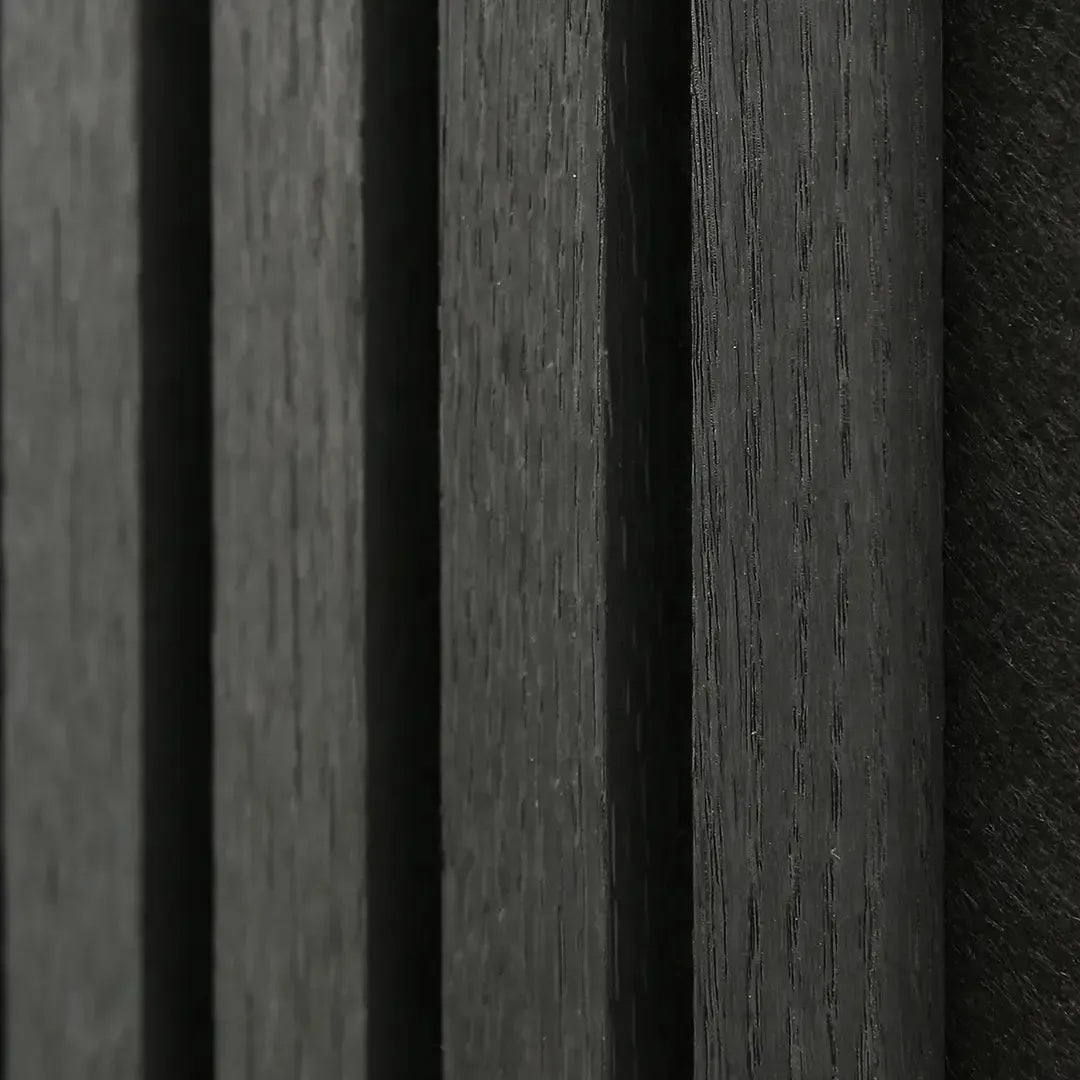
The contrast pick: Acoustic Slat Wall Panel Black Oak
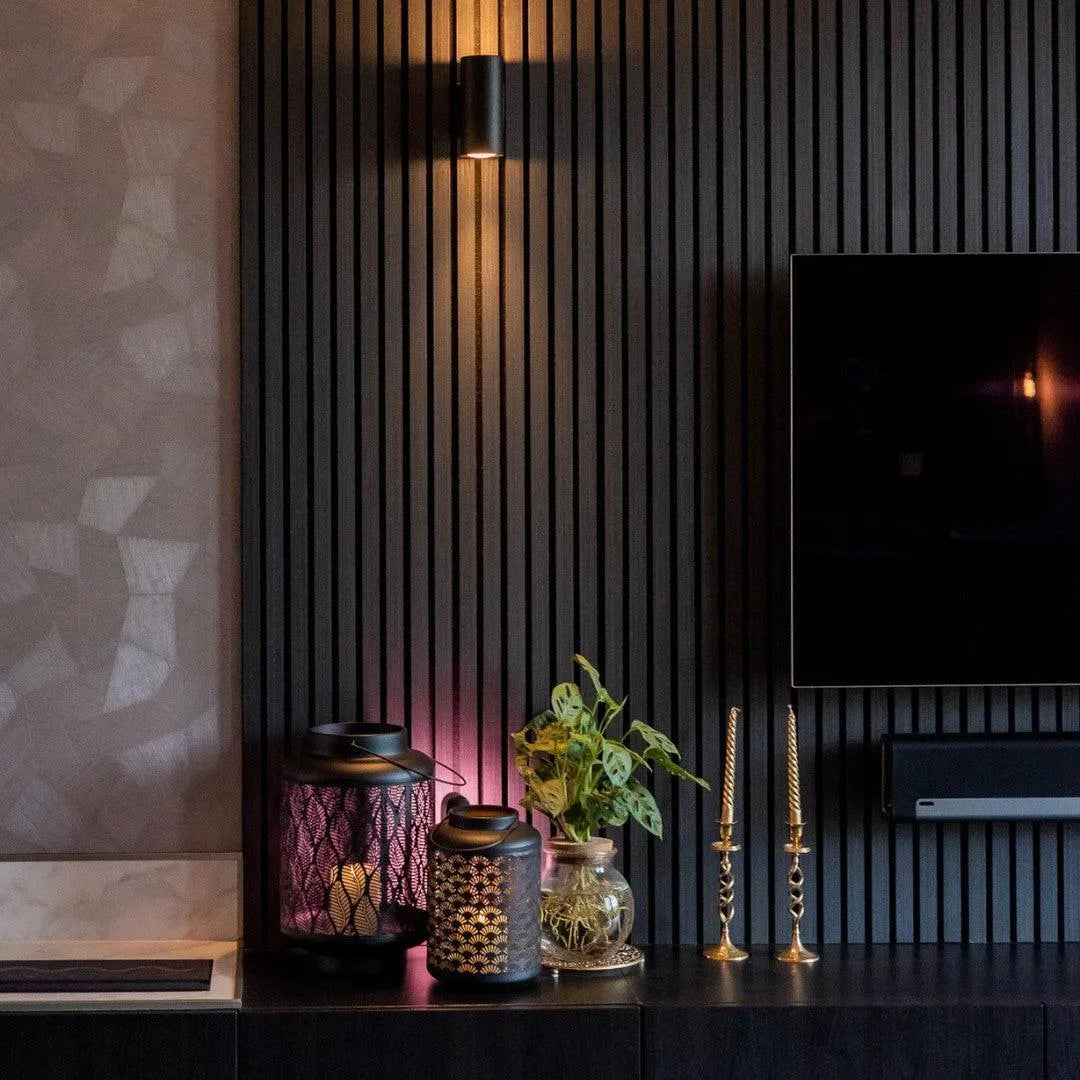
Black oak is the pick for anyone who wants their home office wall to look deliberate rather than default. It pairs well with brighter desk lighting since the dark tone can otherwise swallow light in a dim room, so plan a lamp or ring light alongside it. Verdict: Buy, with the caveat that you check your room's ambient light before committing — the black oak acoustic slat panel rewards a well-lit setup and punishes a dark one.
The warm-tone pick: Acoustic Slat Wall Panel Walnut
Walnut sits between the brightness of oak and the drama of black oak, and it's the pick for home offices that already lean warm — wood desks, brass hardware, that kind of room. It carries the same felt-backed acoustic function as the other AKU Woodpanel slat options, just in a mid-tone finish. Verdict: Buy for warm, traditional-leaning offices; the walnut slat wall panel is a Skip if your room is already dark-toned, since two warm-dark elements together will read heavy on camera.
The budget-test pick: Sample panels before committing
Before ordering enough panels for a full wall, ordering samples in the finish you're considering is the cheapest way to avoid a mismatch — checking tone against your actual desk lighting at your desk, not under a showroom light, catches problems a product photo won't show. Verdict: Consider this step non-negotiable if you're ordering more than a single accent wall's worth of panels for 2026.
What to avoid
- Adhesive slat wallpaper or vinyl slat wraps. These mimic the look but carry zero acoustic backing, so they solve nothing for echo and only address the decorative half of the problem.
- Full foam acoustic panels as your only treatment. Foam absorbs high frequencies well but does nothing for the professional look a home office on camera needs, and most people remove them within a year because they clash with the rest of the room.
- Ultra-thin veneer over hollow core panels. These dent easily near a desk chair and don't hold screws or mounting hardware well if you ever need to hang anything on top of the finished wall.
Verdict comparison
| Pick | Felt backing | Camera tone | Best light condition | Verdict |
|---|---|---|---|---|
| Natural Oak with Gray Felt | Yes | Neutral, bright | Any room | Buy |
| Black Oak | Yes | High contrast | Well-lit rooms | Buy |
| Walnut | Yes | Warm, mid-tone | Rooms with warm decor | Buy |
| Foam-only panels | No felt/wood combo | Poor on camera | Any | Skip |
| Adhesive slat wallpaper | None | Neutral but flat | Any | Skip |
FAQ
What's the best slat wall panel for a home office with echo problems? Felt-backed acoustic slat panels in a light oak finish are the most reliable starting point for 2026 home offices, since the felt backing absorbs sound while the veneer keeps the room looking finished rather than treated.
Do acoustic slat panels actually reduce echo in a small room? Yes, when the backing includes felt or another absorptive layer rather than decorative slats alone — the wood surface alone does very little, the backing material is what absorbs the reflected sound.
How much wall coverage do you need for a home office? One accent wall covering roughly 60% of its surface, positioned behind your desk chair, is generally enough to cut noticeable echo in a typical home office without full-room treatment.
Is walnut or oak better for video call backgrounds? Oak reads brighter and more neutral on most webcams, while walnut adds warmth that suits rooms with existing wood furniture — neither is objectively better, it depends on your room's existing light and decor.
Can you install slat wall panels on drywall without professional help? Most slat wall panel systems are designed for DIY installation on drywall using adhesive or a track system, making them workable for a weekend project rather than a contractor job.
Do felt-backed panels work better than plain wood slats for acoustics? Felt-backed panels perform meaningfully better for sound absorption than plain wood slats, because the felt layer is the component doing the acoustic work while the wood slats alone mostly just diffuse sound rather than absorb it.
How many panels does a typical home office need? A single accent wall in an average home office typically requires enough panels to cover one 8 to 10-foot wall section, which is usually achievable with one order plus end pieces for a clean finish.
Are acoustic slat panels worth it compared to foam panels for a home office? Slat panels cost more upfront than basic foam but solve both the acoustic problem and the on-camera appearance problem at once, which is why they've become the default pick for home offices being used daily for video calls in 2026.
One last thing
The wall that matters most for call audio isn't the one you're staring at — it's the one behind your chair, because that's the surface your microphone picks up reflections from most directly. Treat that wall first before touching anything else in the room, and you'll hear the difference on your very next call before you even finish the rest of the office.
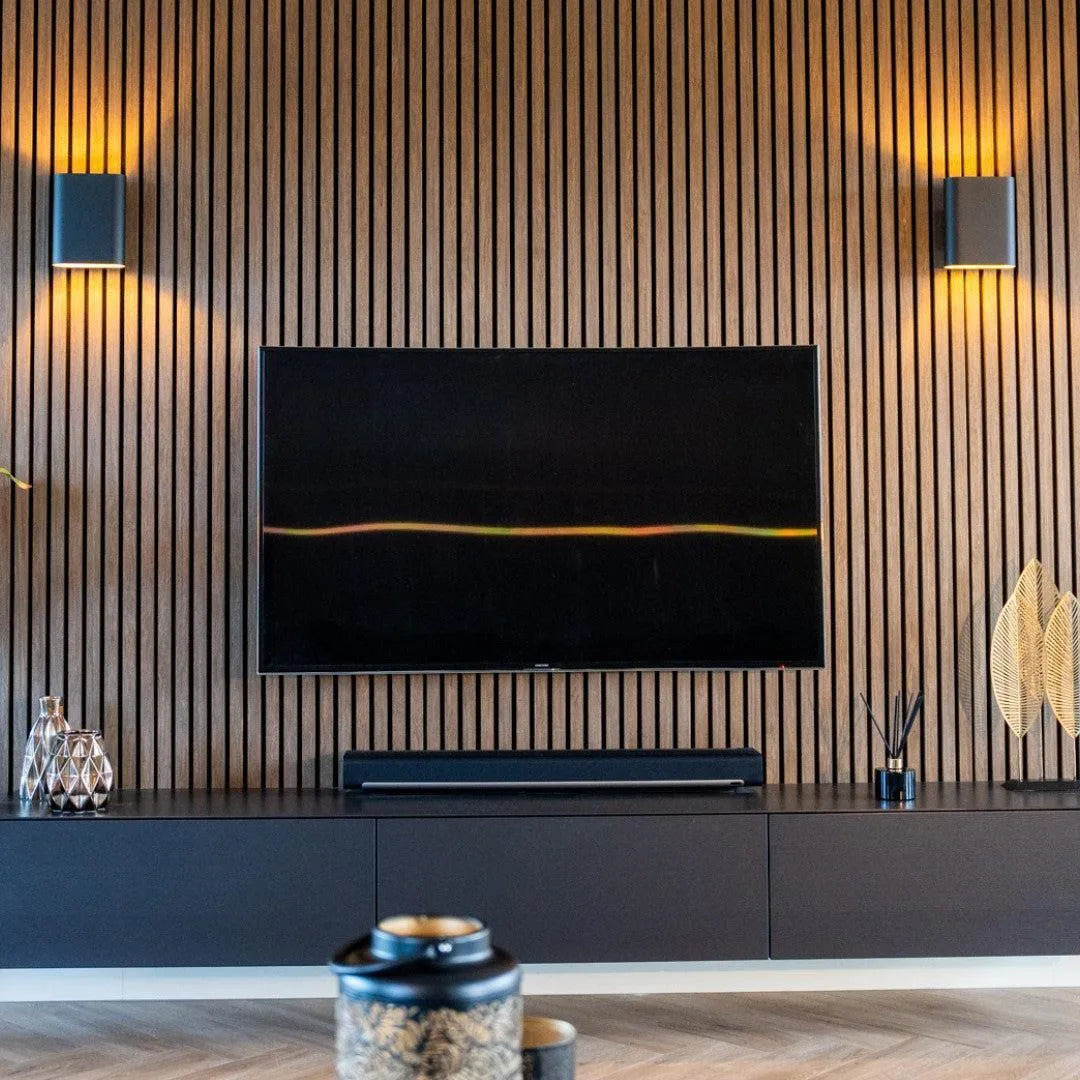
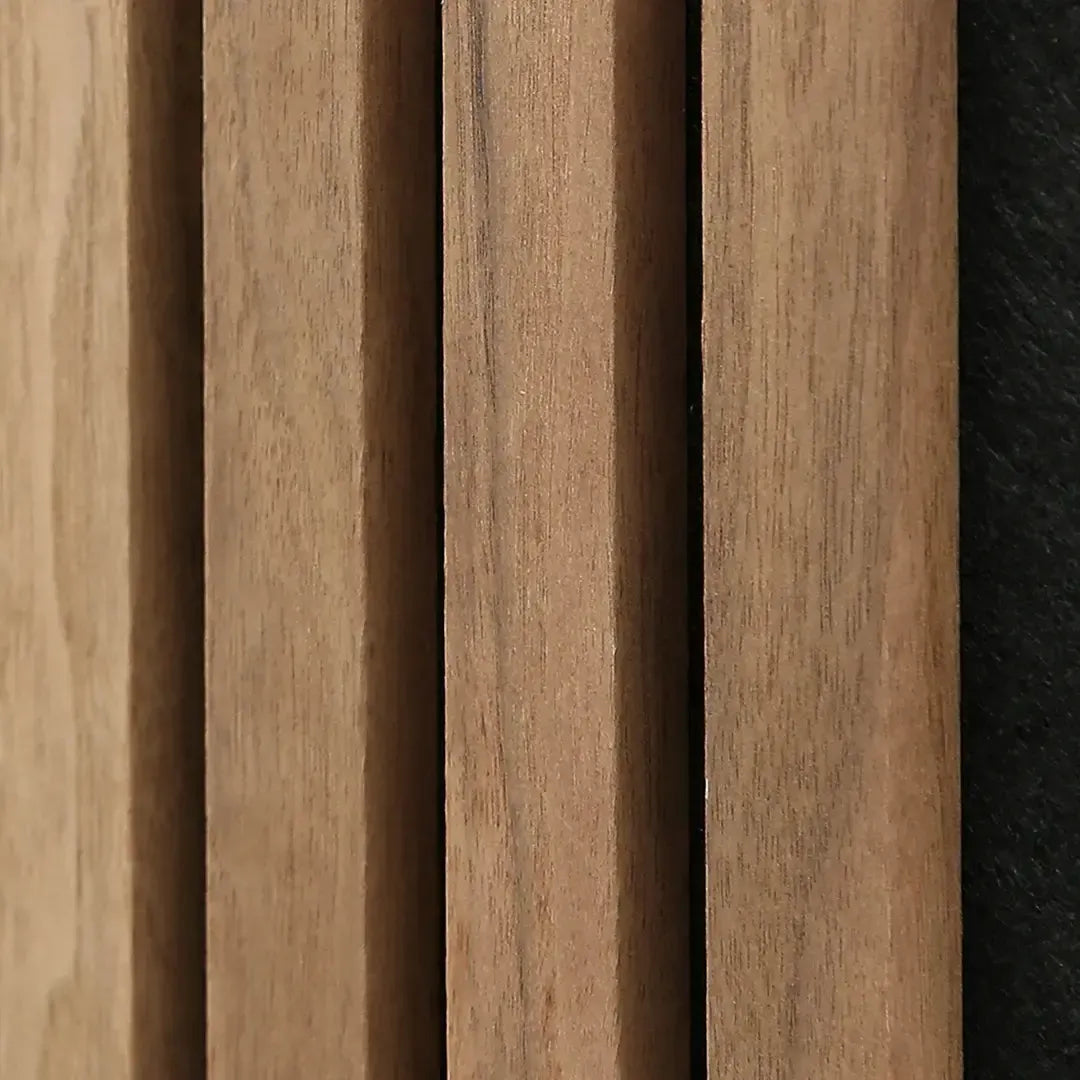
 Better performance and aesthetic appeal
 In Stock