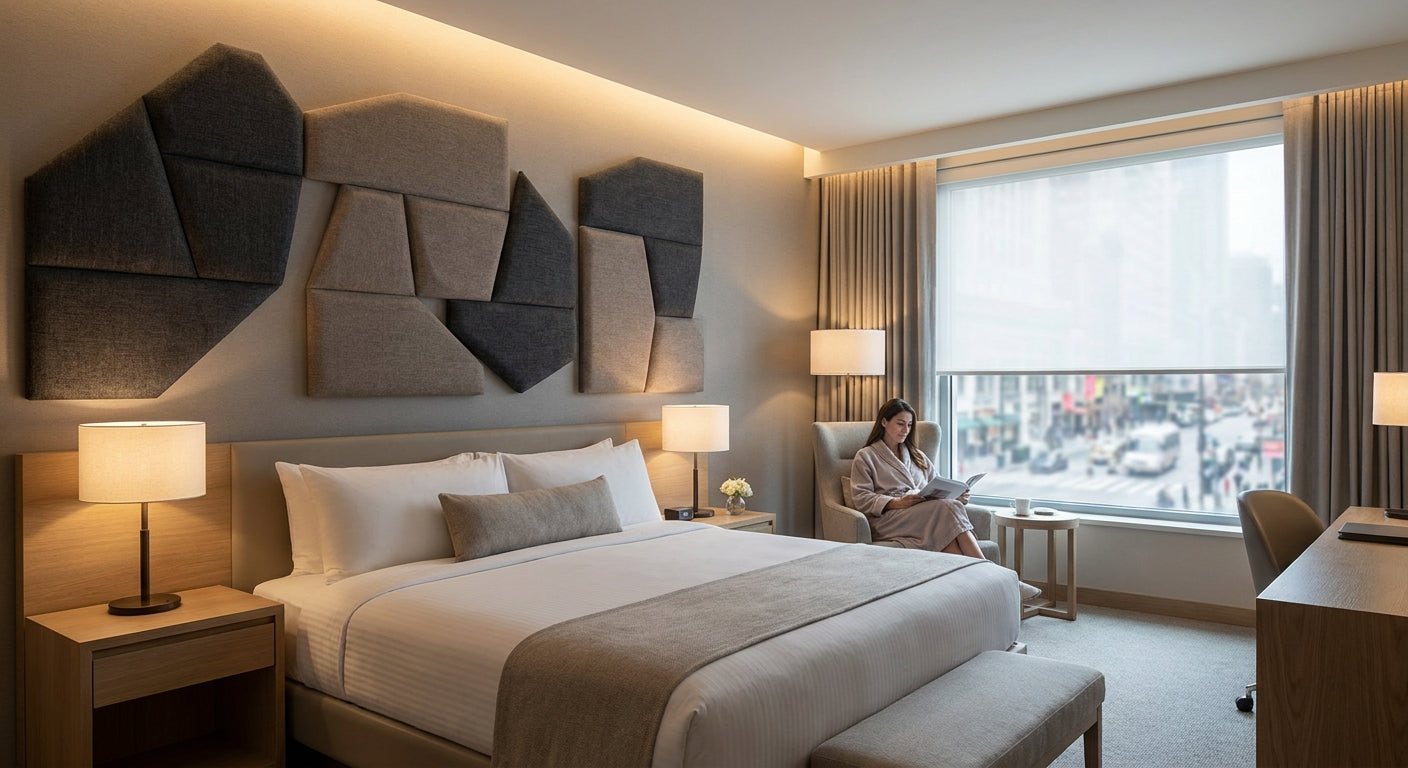
Guest reviews mentioning "paper-thin walls," "heard every door slam," or "AC rattled all night" tank a hotel's star rating faster than a dated bathroom, and acoustic panels hotel guest room noise treatment is one of the few upgrades that fixes the complaint without a permit or an HVAC overhaul.
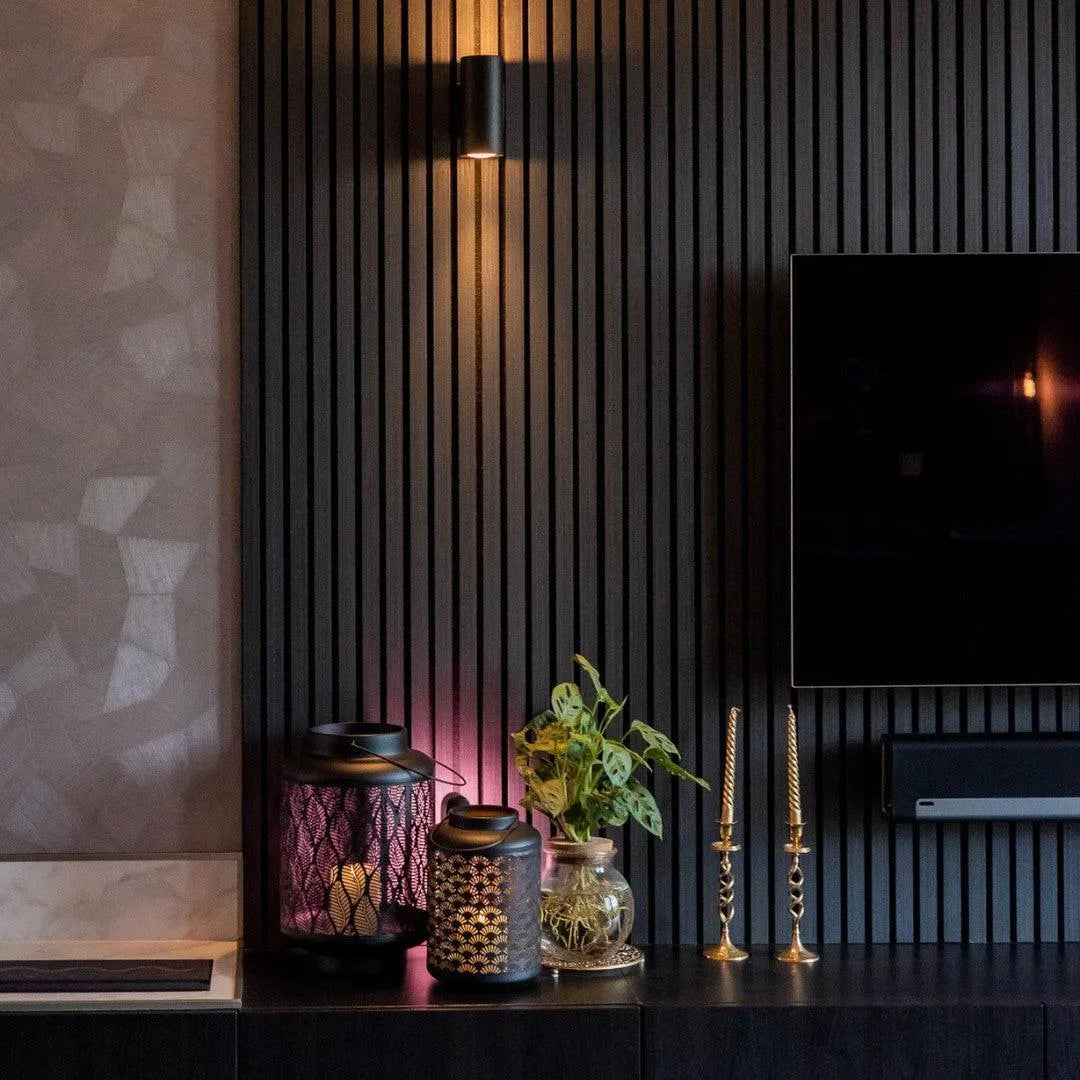
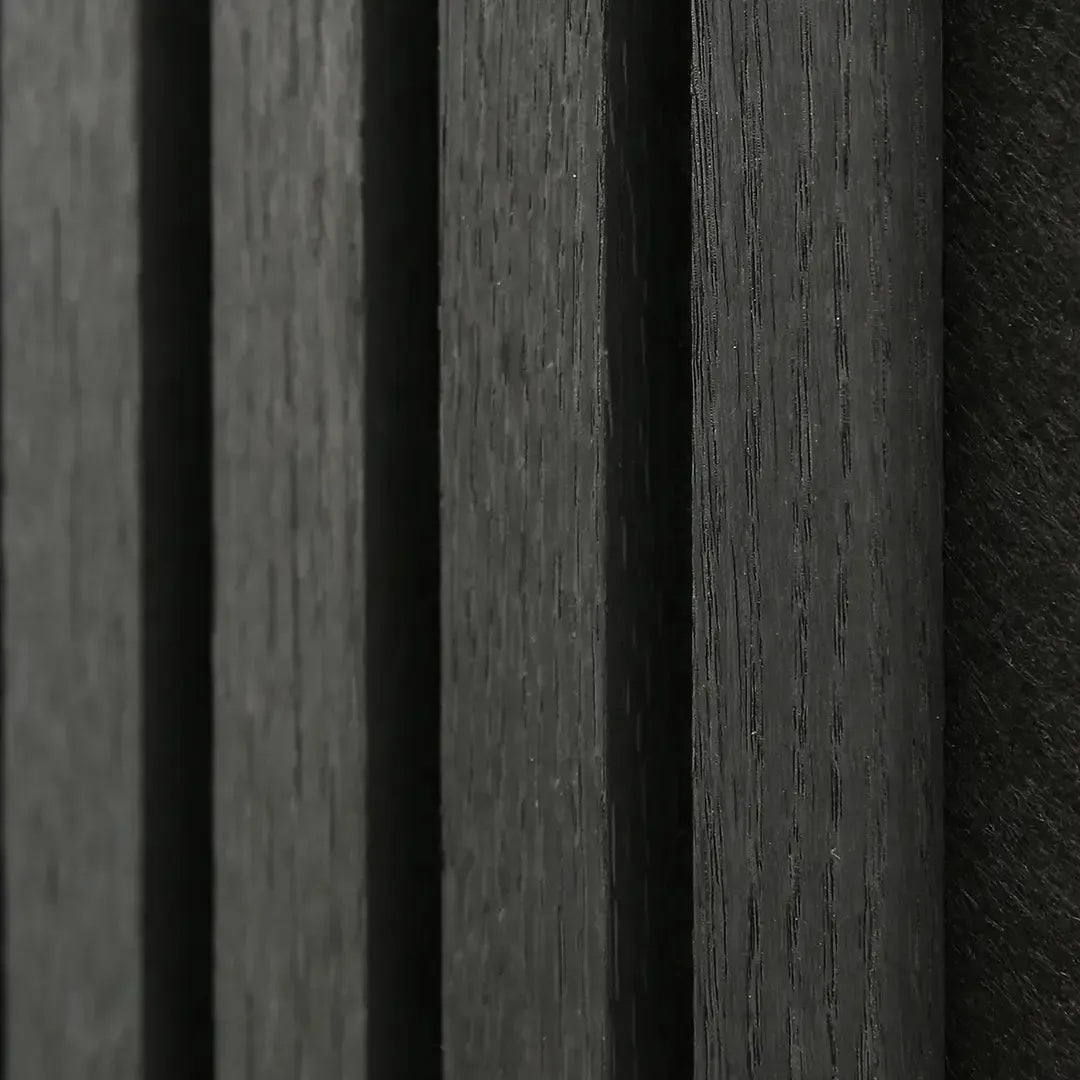
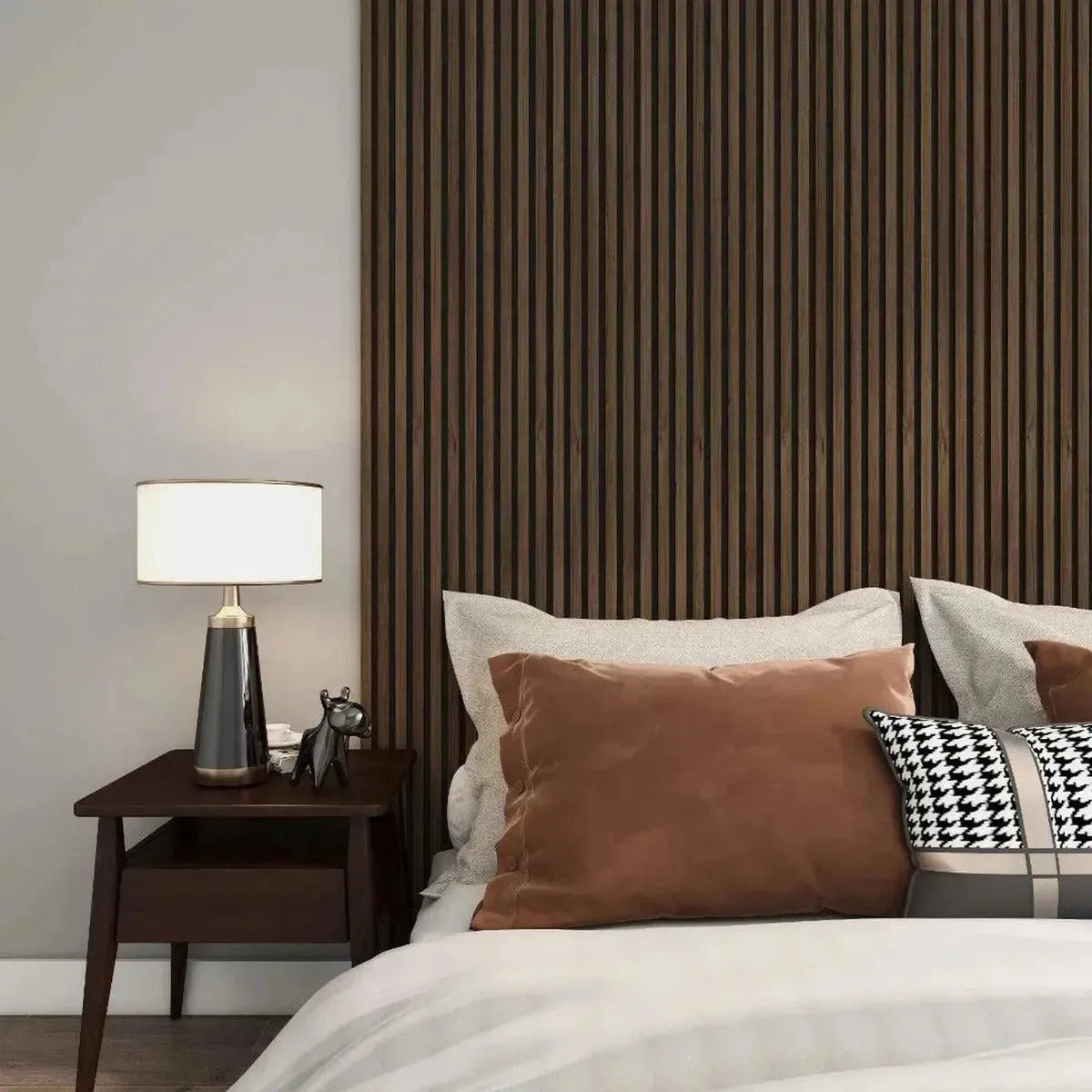
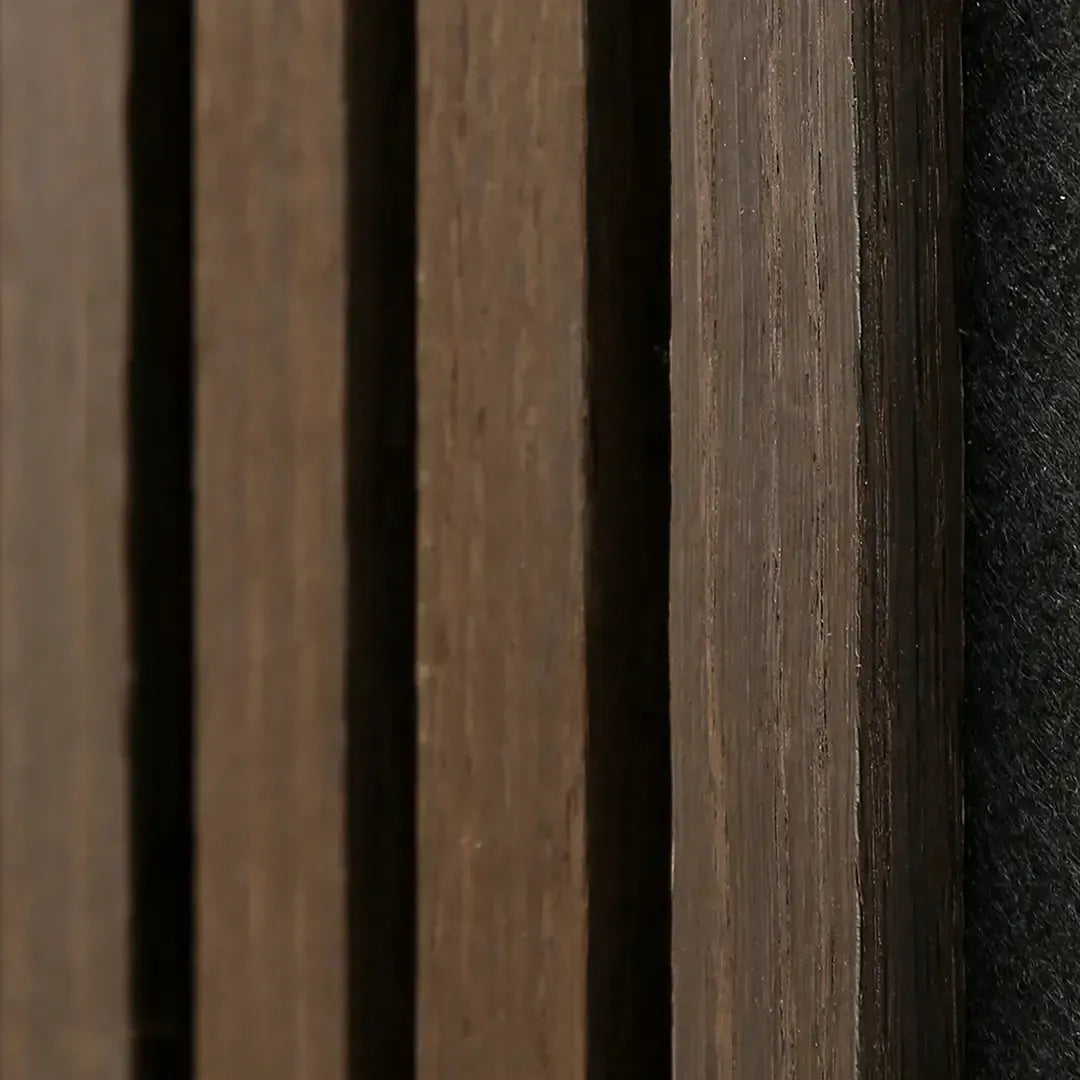
TL;DR: For acoustic panels hotel guest room noise control in 2026, the AKU Woodpanel Acoustic Slat Wall Panel in Smoked Oak with Gray Felt is the Buy for most guest-room renovation budgets — a felt-backed slat face over real wood veneer that reads as a design upgrade in listing photos while cutting flutter echo behind the panel. Skip any slat product sold without a felt or acoustic backing layer; it looks identical in a thumbnail but does nothing for reverberation. Check a sample box before committing to a floor-wide spec, because oak and walnut tones shift under hotel corridor lighting in ways a screen never shows.
Why This Matters
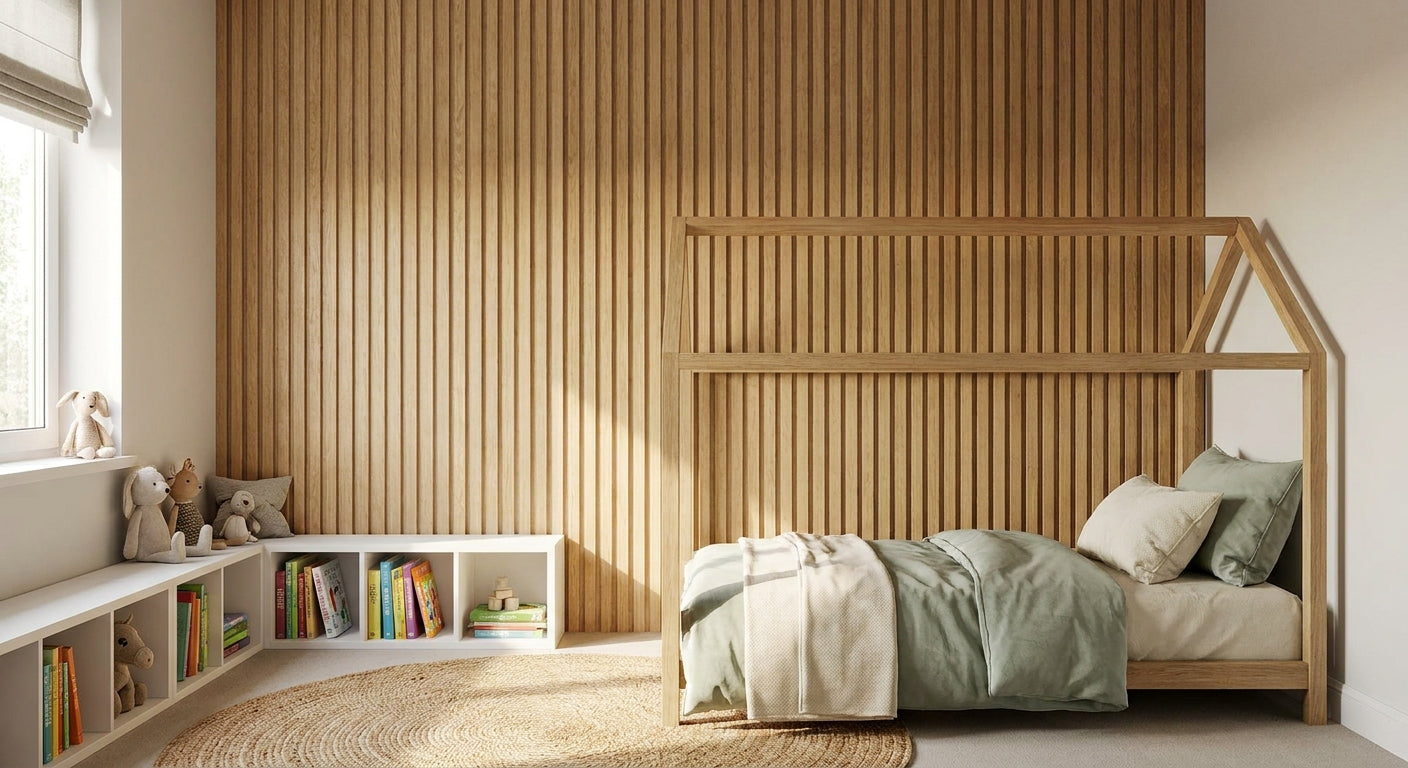
Noise is one of the most repeated complaints in hotel review data, and it's one of the few problems a property can fix room-by-room instead of floor-by-floor. A guest room with a hard drywall surface, a laminate headboard wall, and a tile bathroom bounces sound between every flat plane in the space. Acoustic wood panels break up that reflection without a full renovation: they mount over existing drywall, cover a wall in one pass, and double as the finish upgrade a 2026 renovation budget is usually trying to justify anyway.
The properties that get the most out of this fix are the ones where noise complaints are recurring in review dashboards, not a one-off. If your GSA reports or online reviews show a pattern, the headboard wall and any wall shared with an adjoining room are the highest-leverage single change on the punch list.
Who This Guide Is For
This is written for hotel owners, general managers, and interior designers specifying guest-room renovations for boutique properties, extended-stay brands, and independent operators running anywhere from 20 to 300 keys. It also applies to operators managing a portfolio of short-term rental units where review scores hinge on the same complaints a full-service hotel deals with. If you're choosing between a wall treatment that just looks good and one that actually changes how a room sounds, this is for your spec sheet, not your mood board.
What To Look For In Acoustic Panels For Hotel Guest Rooms
Felt-backed acoustic core, not decorative-only slats
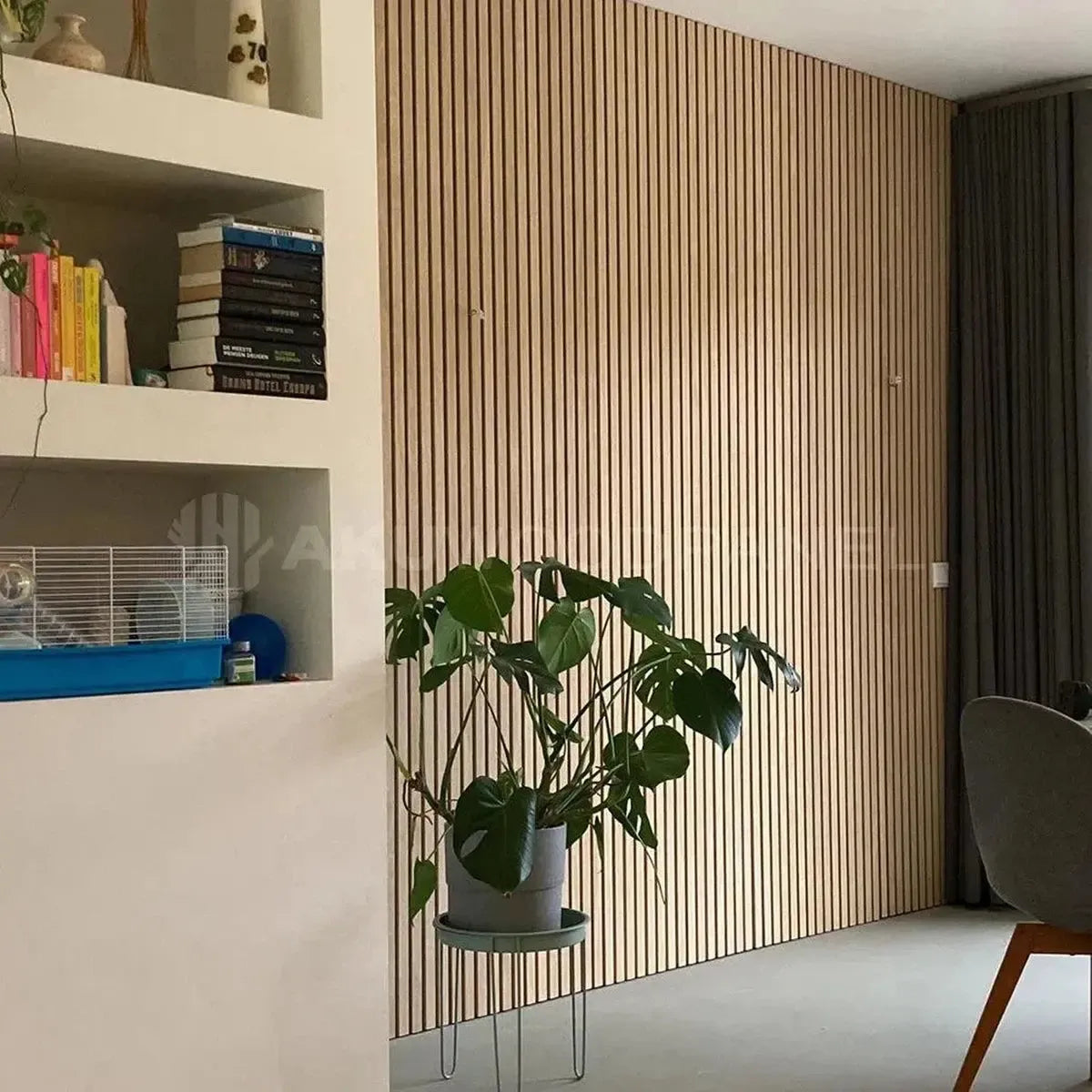
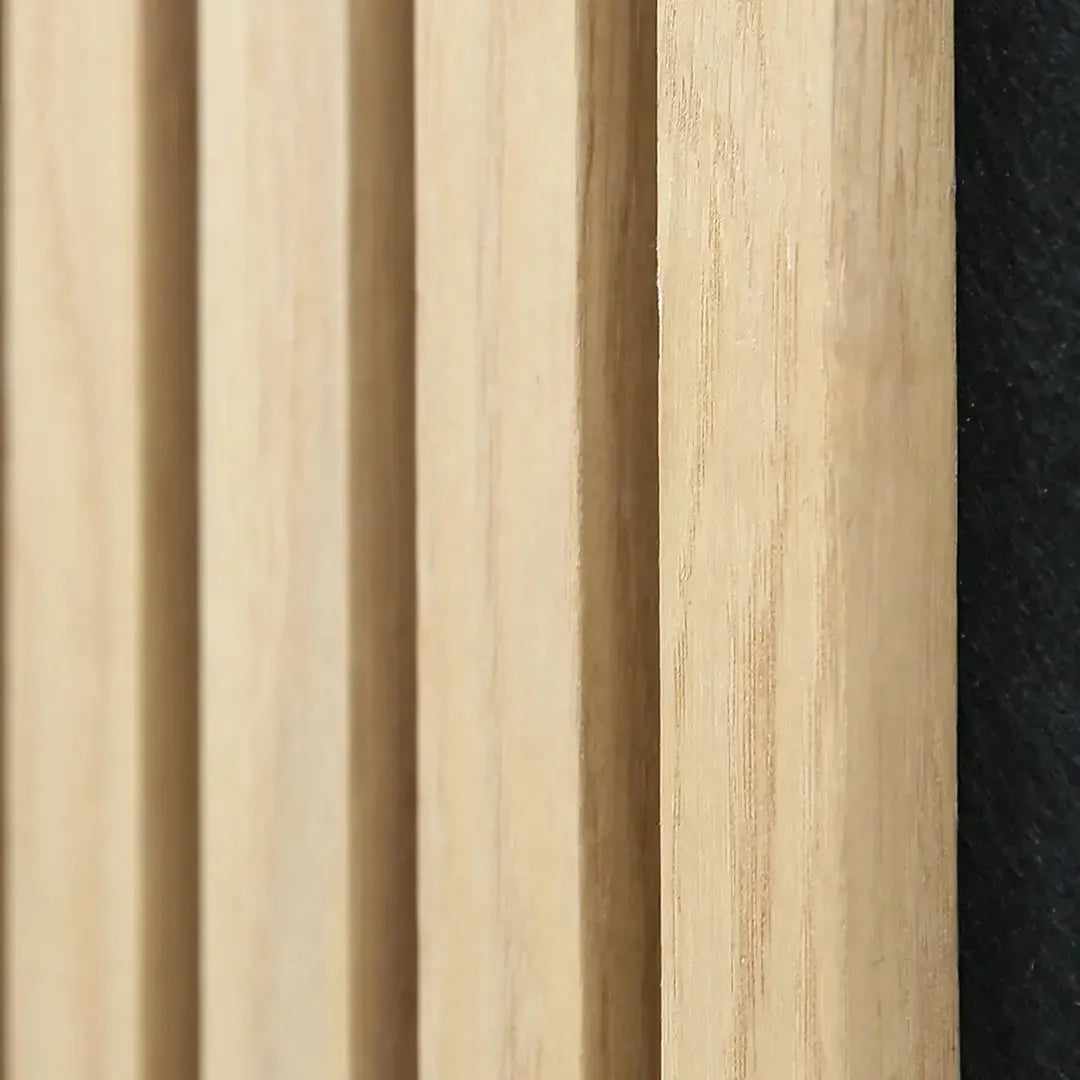
A slat wall panel with no backing material is a design element, not an acoustic one — it photographs the same as a felt-backed version but leaves the reflective surface behind the slats untouched. The AKU Woodpanel Acoustic Slat Wall Panel in Natural Oak with Gray Felt pairs a wood veneer slat face with a felt layer behind it, which is the detail that actually absorbs mid and high-frequency reflection in a guest room. Confirm felt backing on the spec sheet before approving a supplier, not after the panels are on the wall.
Fire rating and code compliance for guest-occupied rooms
Guest rooms are occupied overnight, which puts them under stricter fire code scrutiny than a lobby or office wall. Ask any supplier for fire-rating documentation before a hotel-wide order, and treat "commercial-grade" as a claim to verify, not a spec to assume.
Real wood veneer that survives housekeeping chemicals
Guest rooms get cleaned daily with commercial-grade disinfectants, and a printed-finish or laminate panel discolors under repeated chemical contact faster than a real veneer does. Real wood veneer over an engineered core holds up to daily housekeeping turnover in a way vinyl wraps do not, which matters over a multi-year renovation cycle.
Panel width and repeat pattern for wall coverage math
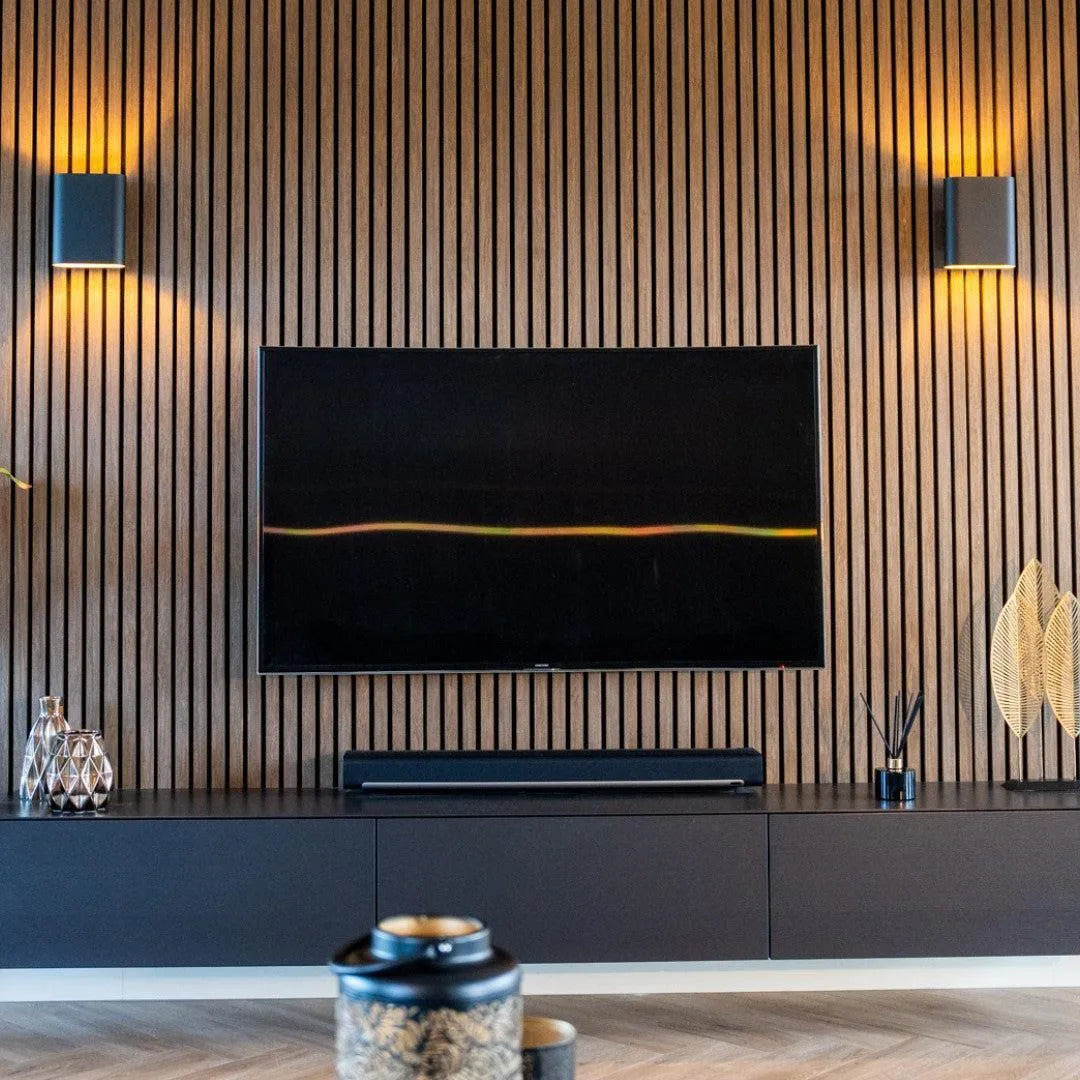
Guest-room walls run narrower than open-plan commercial walls, so panel width determines how clean the seams look on a headboard wall versus a full corridor run. A wider repeat pattern hides seams better on a single accent wall; a narrower one gives more flexibility around outlets, thermostats, and wall-mounted TVs.
Sample-first specification process
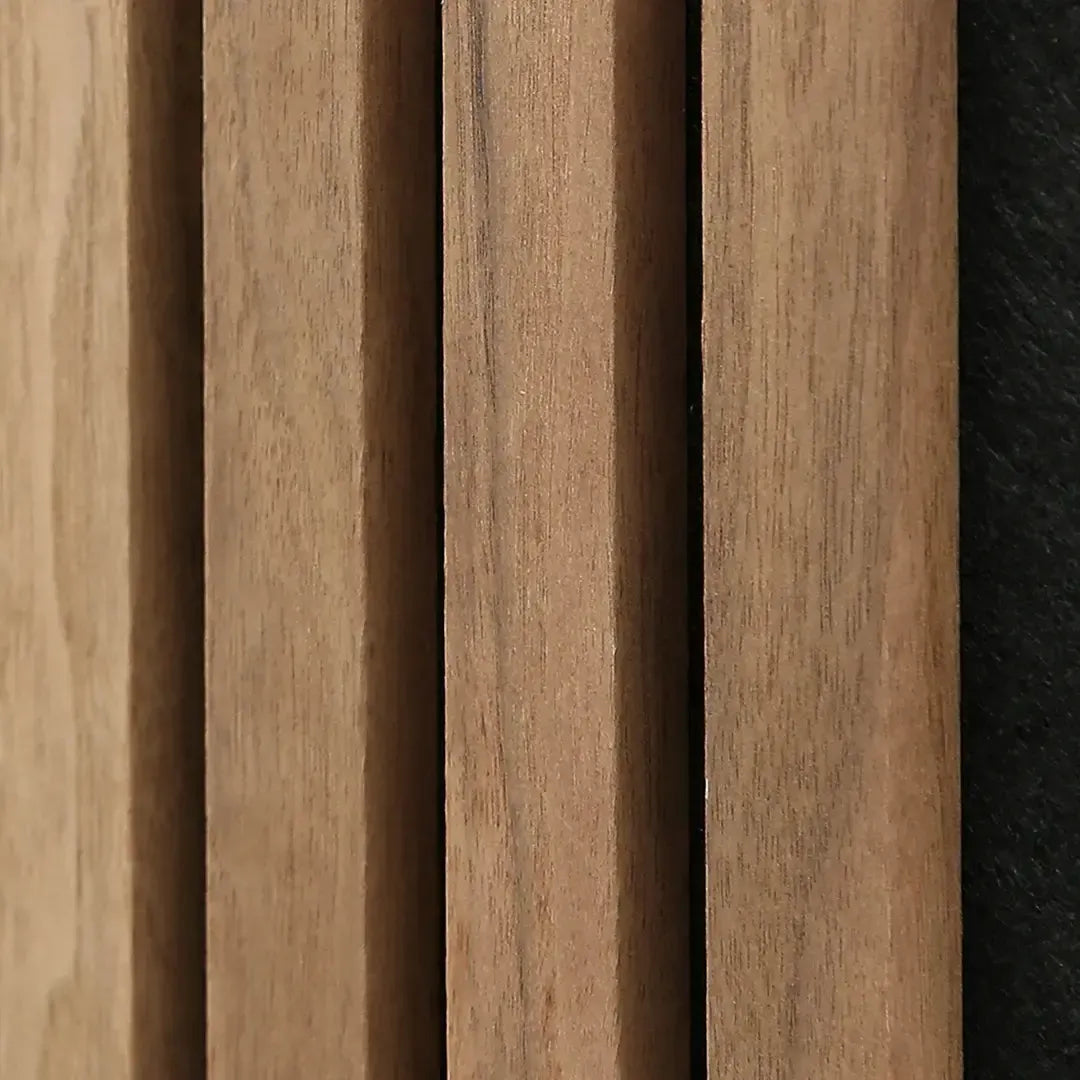
Never spec a multi-room order off a product photo. Order the full sample box before committing, because guest-room lighting — dimmer and warmer than a showroom — changes how oak, walnut, and smoked finishes read once installed. A 50-room order built off a screen color is an expensive mistake to catch after installation, not before it.
Top Picks For Hotel Guest Room Noise Control
The quiet standard. The Smoked Oak with Gray Felt slat panel linked above in the TL;DR is the pick for properties treating headboard and shared walls across a full renovation. The felt-backed slat face cuts mid-frequency flutter echo while the smoked finish reads darker and more boutique than a standard oak tone under warm guest-room lighting. Verdict: Buy for any 2026 renovation spanning more than a handful of keys.
The boutique statement wall. Properties leaning into a design-forward brand identity get more mileage treating one feature wall per room instead of a full surround — see how this plays out in wood panel feature walls for boutique hotel bedrooms for room-by-room layout examples. Verdict: Consider for independent boutique properties where the wall is part of the guest experience, not just noise control.
The dark accent. A Black Oak slat finish reads dramatic against white bedding and brass fixtures, and it hides fingerprints and scuffs better than a lighter tone in a high-turnover room. Without felt backing confirmed on the specific SKU, treat this as a design layer to pair with felt-backed panels elsewhere in the room rather than a standalone acoustic fix. Verdict: Consider as a design accent, not the primary noise-control surface.
The natural oak baseline. A standard Natural Oak slat panel gives the lightest, most neutral finish in the lineup, which works for properties matching an existing light-wood brand palette. It's a solid design choice, but confirm felt backing before treating it as your acoustic fix over a purely decorative one. Verdict: Consider for brand-matching, Skip if noise reduction is the primary goal and felt backing isn't specified on the order.
What To Avoid
- Decorative-only slat panels with no backing layer. They photograph identically to acoustic versions but leave the reflective surface behind the slats untouched — read the spec sheet, not the thumbnail.
- Full-floor orders with no sample check. Guest-room lighting shifts finish color enough that a floor-wide order based on a product photo alone is a common, expensive mistake in 2026 renovation cycles.
- Skipping fire documentation to save a step. A guest-occupied room carries different fire code weight than a lobby wall — get the paperwork before the order, not after the inspection.
Verdict Comparison
| Pick | Best For | Felt Backing | Verdict |
|---|---|---|---|
| Smoked Oak with Gray Felt | Full renovation, shared walls | Yes | Buy |
| Boutique feature wall layouts | Design-forward independents | Varies by SKU | Consider |
| Black Oak | High-turnover, dark accent | Confirm on SKU | Consider |
| Natural Oak | Light, brand-matching finish | Confirm on SKU | Consider/Skip |
FAQ
What's the best acoustic panel for hotel guest room noise? A felt-backed slat wall panel over real wood veneer is the strongest combination for guest rooms in 2026 — the felt layer absorbs mid and high-frequency reflection while the veneer keeps the finish photo-ready for listings.
Is acoustic wood paneling better than foam acoustic panels for hotels? For guest rooms, yes — foam panels read as a studio or gym treatment and rarely survive design review for a guest-facing space, while felt-backed wood slat panels double as the room's actual finish material.
How many panels does a guest room headboard wall need? Coverage depends on panel width and wall dimensions, but most single-wall headboard treatments in a standard guest room run in the range of eight to twelve panels depending on width and window placement.
Do acoustic panels stop noise between adjoining hotel rooms? They reduce reflected sound and flutter echo inside the treated room rather than blocking transmission through the shared wall itself — for true room-to-room noise, panels pair with denser wall assemblies, they don't replace them.
Can housekeeping clean around wood slat acoustic panels safely? Yes, real wood veneer panels handle standard commercial cleaning products better than laminate or vinyl-wrapped alternatives, which is one reason veneer holds up longer in daily-turnover guest rooms.
Do acoustic panels need a fire rating for hotel use? Guest rooms are occupied overnight and fall under stricter fire code review than open commercial space, so confirm fire-rating documentation from any supplier before a multi-room order.
Should a hotel order samples before a full guest-room order? Always — guest-room lighting is dimmer and warmer than a showroom or product photo, and finish tones like oak and walnut read differently once installed under that lighting.
Are acoustic wood panels worth it for a boutique hotel versus a budget property? Boutique properties get double value because the panel functions as both the acoustic fix and the design statement, while budget properties may prioritize felt-backed function over the finish upgrade.
One Last Thing
The detail most renovation teams miss isn't the panel — it's the wall it's going on. A felt-backed slat panel mounted directly to bare drywall does less work than the same panel mounted over a wall that's already had a noise complaint logged against it for a reason beyond flutter echo, like a shared plumbing chase or a thin partition. Treat the panel as the finish layer on top of a noise diagnosis, not a replacement for one, and a 2026 renovation budget goes further than a blanket order across every room on the floor.
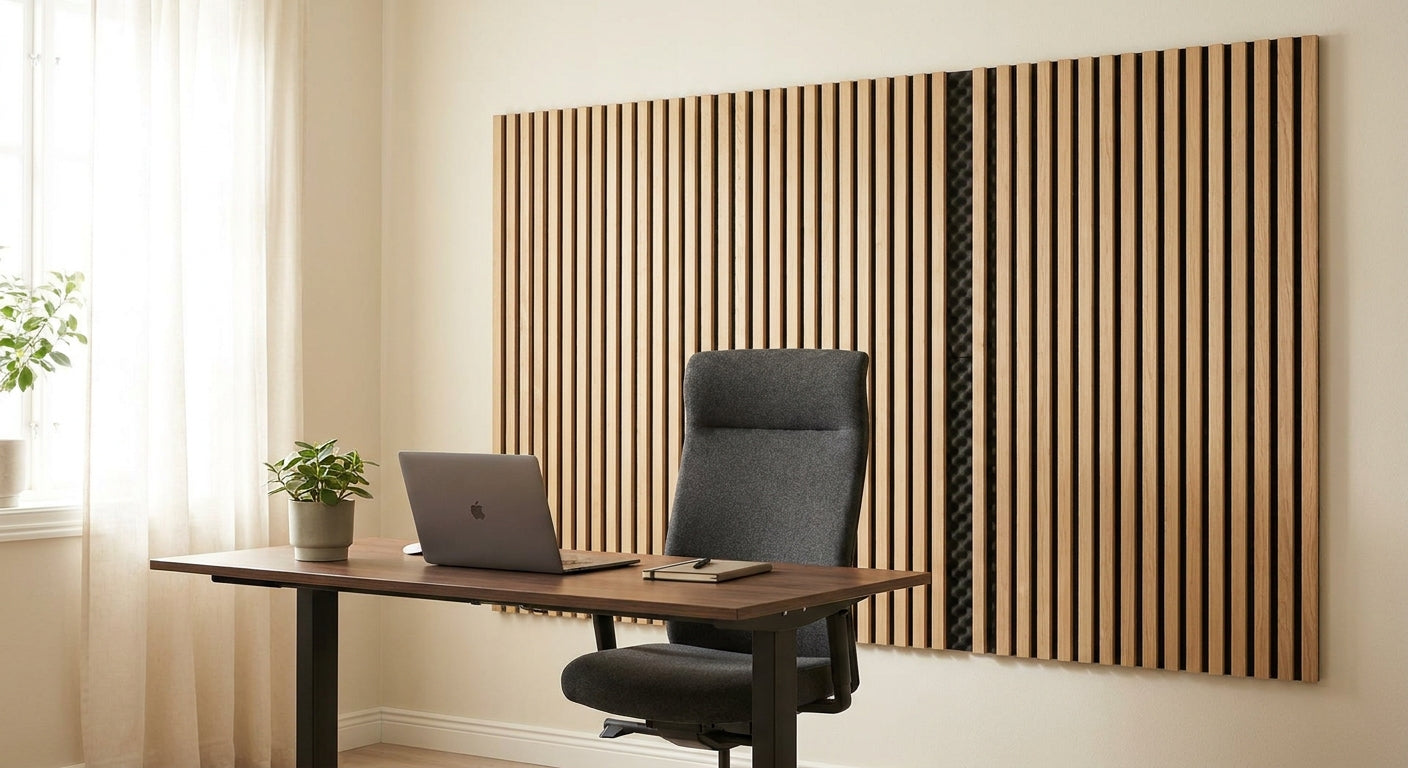

 Better performance and aesthetic appeal
 In Stock