Commercial contracts fail on wood panel jobs for one reason more than any other: nobody checked the supplier's numbers before the wall went up. Here's the exact vetting sequence to run before you sign, using the documentation, samples, and terms that separate a real manufacturer from a reseller with a nice website.
- Vet wood panel supplier commercial contracts by demanding NRC and fire-rating documentation before quoting square footage.
- Order a full sample box ($10) and physically stress-test veneer, felt backing, and edge finishing before committing.
- Confirm production capacity against your project timeline in 2026 — undercapacity suppliers quietly extend lead times mid-contract.
- A supplier that won't share three commercial references in writing is a Skip, regardless of price.
Why this matters
A commercial wall panel order is not a homeowner accent wall. You're buying hundreds or thousands of square feet on a schedule tied to a GC's punch list, and a bad batch discovered at install means torn-out drywall, blown timelines, and a change order nobody wants to sign. In 2026, more architects and contractors are specifying real wood veneer panels over laminate for lobbies, restaurants, and open offices, which means more suppliers are entering the market with thinner track records. Vetting the supplier before the purchase order protects the schedule more than any spec sheet does.
What you'll need
- A written scope: square footage, room type, acoustic or fire requirements
- Sample requests from at least two suppliers, including a full sample box if the manufacturer offers one
- A copy of the project's fire code and acoustic requirements from the architect or building department
- Three commercial references to call, not just email
- A calendar with your hard install date and 15% buffer built in
The steps
1. Request the full documentation package first
Ask for NRC (Noise Reduction Coefficient) test data, fire rating certification, VOC/emissions data, and warranty terms before you ask for a quote. This accomplishes one thing: it tells you whether the supplier manufactures or resells. A manufacturer has this paperwork on hand in minutes. A reseller stalls, forwards you a generic PDF, or asks which specific product you meant.
Common mistake: accepting a marketing spec sheet as a substitute for lab-tested NRC data. A sheet that says "acoustic performance" with no number attached is not documentation — it's a placeholder.
2. Order samples and physically stress-test them
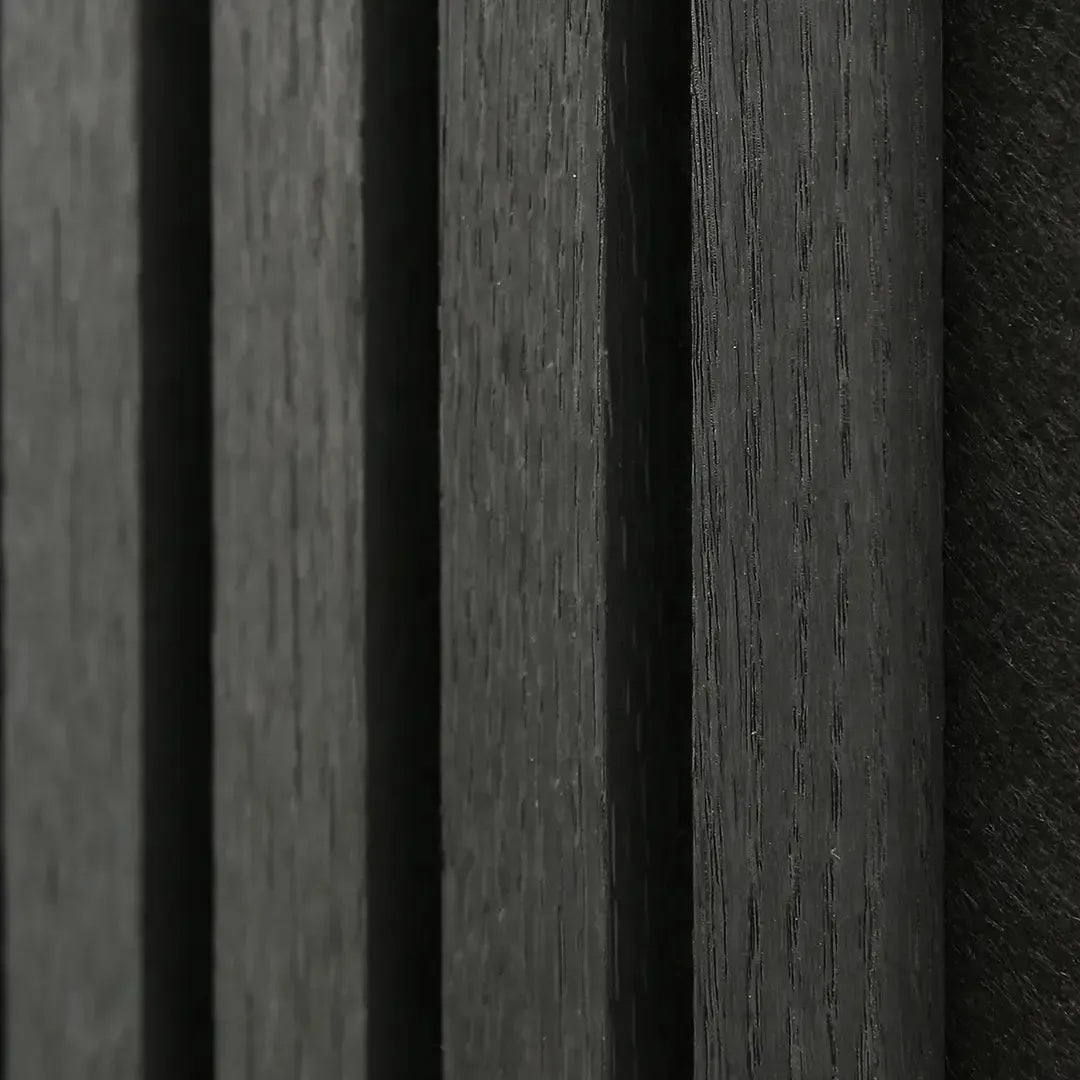
Get a sample box in hand before any 2026 purchase order goes out. Check three things by hand: does the veneer show grain consistency across pieces, does the felt backing (if acoustic) stay bonded when you flex the panel, and does the edge profile match what the drawings call for. A full sample box covering natural, smoked oak, and walnut finishes costs a fraction of what a bad batch costs in labor to remove.
Expected outcome: consistent grain and color across every sample piece, tight felt adhesion with no peeling at the corners after a week sitting out.
Common mistake: approving a single sample piece instead of requesting multiples from different production runs — one good panel doesn't prove batch consistency.
3. Verify production capacity against your contract timeline
Ask directly: what's your current lead time, and what happens if my order lands during your busiest quarter? A supplier quoting a 3-week lead time with no buffer for a 4,000 square foot commercial order is telling you they haven't run the math. Cross-check the answer against your hard install date, then add 15% as a hedge — commercial wood panel orders slip more often from production queuing than from shipping delays.
Common mistake: locking a contract date based on a verbal lead-time estimate with nothing in writing.
4. Check fire rating and code compliance for the specific room type
Different commercial spaces carry different code requirements — a restaurant back wall, a school corridor, and an office lobby don't share the same fire classification thresholds. Ask the supplier for fire-retardant slat wall panels for commercial projects documentation matched to your room's occupancy classification, not a generic "meets code" statement. If the architect already specified a rating in the drawings, get written confirmation the product meets that exact number before ordering.
Expected outcome: a certificate or test report referencing the specific standard your local code enforces, not a marketing claim.
5. Vet the pricing structure and bulk terms
Commercial volume should carry different pricing than a retail single-panel order. Ask how net terms work for contractors, whether bulk tiers exist at your square footage, and whether pricing is locked for the contract duration or subject to change if the order spans multiple phases. Compare that answer against how other suppliers structure contractor pricing before you commit.
Common mistake: assuming the listed retail price applies automatically to a bulk commercial order without asking.
6. Confirm logistics and delivery reliability
Ask how the supplier ships large commercial volumes — palletized freight, split shipments, or a single truck delivery — and what happens if a shipment arrives damaged. Get the claims process in writing before the panels leave the warehouse. A supplier who can't answer this clearly in one conversation will struggle when a pallet actually arrives cracked.
Expected outcome: a written damage-claim policy and a named contact for freight issues, not "we'll figure it out."
7. Call three commercial references, not just read testimonials
A supplier's website testimonials are curated. A phone call with a GC or facilities manager who used the product on a similar-scale job in the last 12 months tells you what actually happened when things went wrong. Ask each reference one direct question: would you order from this supplier again on a time-sensitive project?
Common mistake: accepting a reference list with no commercial (versus residential) projects on it — residential feedback doesn't tell you how a supplier handles volume.
Troubleshooting
- Supplier won't provide NRC or fire test data — treat this as disqualifying for any project with acoustic or code requirements. No documentation means no verified performance.
- Samples arrive inconsistent between pieces — request a second sample batch from a different production run before ordering; one bad batch happens, two means a process problem.
- Lead time keeps moving in follow-up emails — get a written delivery date with a penalty clause for delay before signing, or move to a supplier who commits in writing.
- Pricing quote changes between the sample stage and the purchase order — ask for a written quote with a 30-day validity window; verbal pricing that shifts is a red flag on contract discipline.
- References only cover residential jobs — push for at least one commercial reference at comparable square footage; residential experience doesn't predict commercial-scale performance.
- No answer on freight damage policy — build your own inspection-on-arrival clause into the purchase order if the supplier can't provide one.


Tools and resources
- Fire code and NRC test reports from the manufacturer, matched to your room's occupancy classification
- A sample box ordered and reviewed before any contract quote is finalized
- Reference notes from at least three commercial buyers, dated within the last 12 months
- A written purchase order with lead time, pricing validity, and freight damage terms spelled out
- A guide on specifying acoustic wall panels for a construction project if the architect hasn't finalized product callouts yet
What to do next
Once the supplier passes documentation, samples, and reference checks, move to pricing structure. Contractors ordering at volume should read up on how bulk pricing on wood wall panels for contractors actually works before the first quote comes back, since net terms and volume tiers vary more between suppliers than most buyers expect in 2026.
FAQ
What documentation should a commercial wood panel supplier provide before I sign?
A commercial wood panel supplier should provide NRC acoustic test data, fire rating certification matched to your room's occupancy class, VOC/emissions data, and written warranty terms. A supplier who can't produce these within a few days is likely reselling rather than manufacturing.
How much does a sample box cost before ordering a commercial batch?
A full sample box runs around $10 and covers multiple finishes in one order. It's the cheapest insurance against a bad batch showing up on a job site months into a contract.
Is real wood veneer better than laminate for commercial wall panels?
Real wood veneer holds grain consistency and finish quality longer than laminate under commercial foot traffic and lighting, which is why more 2026 specs call for veneer over laminate in lobbies and hospitality spaces. Laminate can still work for budget-constrained projects with lower visibility.
How long is a typical lead time for a commercial wood panel order?
Lead times vary by supplier and order volume, but get a written date rather than a verbal estimate, and add roughly 15% buffer against your hard install date. Suppliers running near capacity often slip on unwritten timelines first.
What fire rating do commercial wall panels need?
Fire rating requirements depend on the room's occupancy classification and local code — a restaurant, school corridor, and office lobby can each carry different thresholds. Get the specific standard from your architect or building department before ordering, then confirm the supplier's product meets that exact rating in writing.
Should I call supplier references before signing a commercial contract?
Yes — call at least three references from commercial (not residential) projects at a comparable square footage. A phone conversation surfaces problems that curated website testimonials never mention.
What's a red flag when vetting a wood panel supplier?
The biggest red flag is a supplier who can't produce NRC or fire test data on request, or whose lead-time estimate keeps shifting in follow-up emails without anything in writing. Both point to a process or capacity problem that surfaces after the contract is signed.
Does bulk pricing exist for contractors ordering wood wall panels?
Many manufacturers offer volume tiers and net terms for contractor orders that differ from retail single-panel pricing, but the terms vary widely between suppliers. Ask directly rather than assuming the listed price applies to a bulk commercial order.
One last thing
The fastest way to separate a real manufacturer from a reseller isn't the sample quality — it's how fast they produce NRC and fire test paperwork. A manufacturer has it in an email within the hour. A reseller takes days, forwards a marketing sheet, or goes quiet. That single response time tells you more about how the rest of the contract will go than any price quote does.




 Better performance and aesthetic appeal
 In Stock