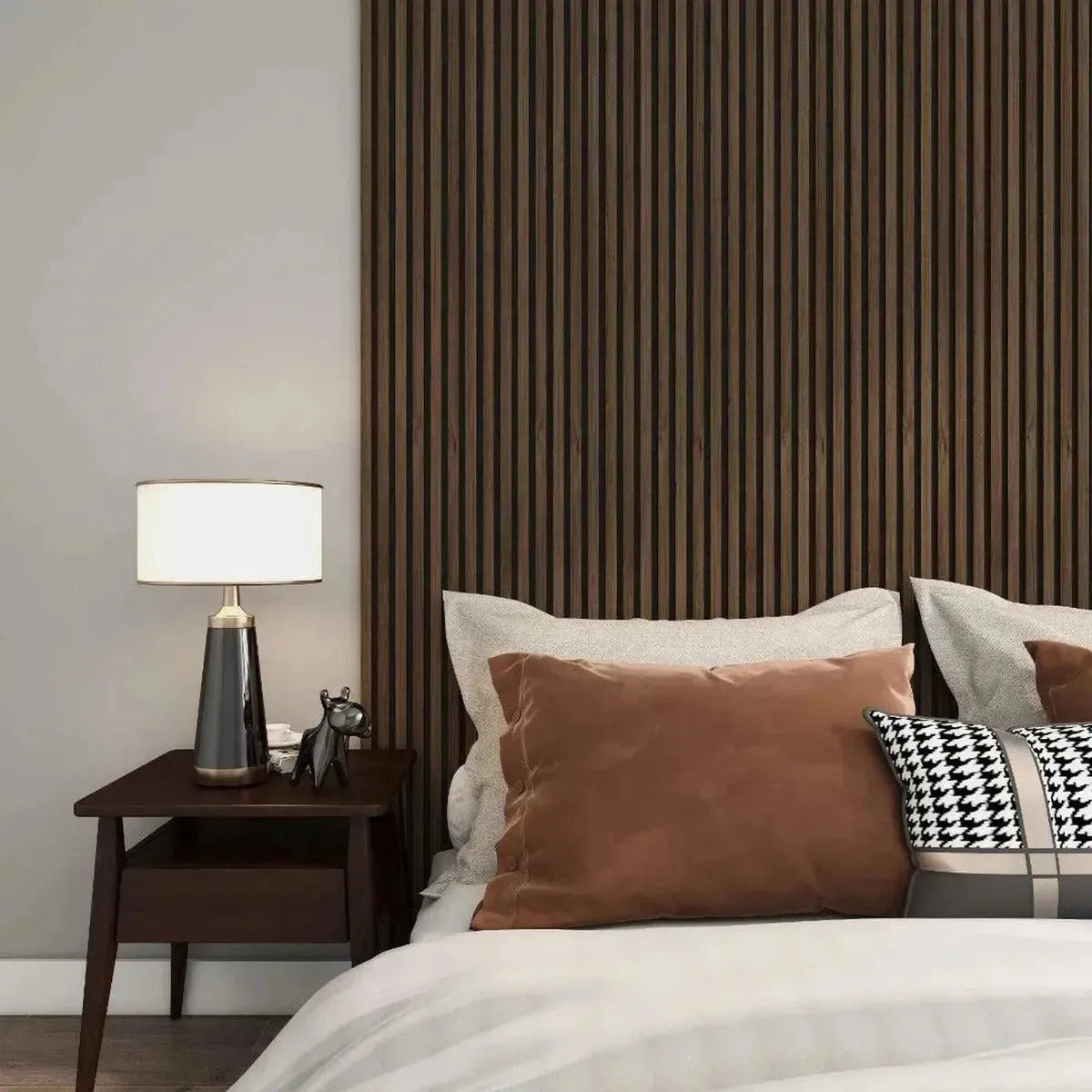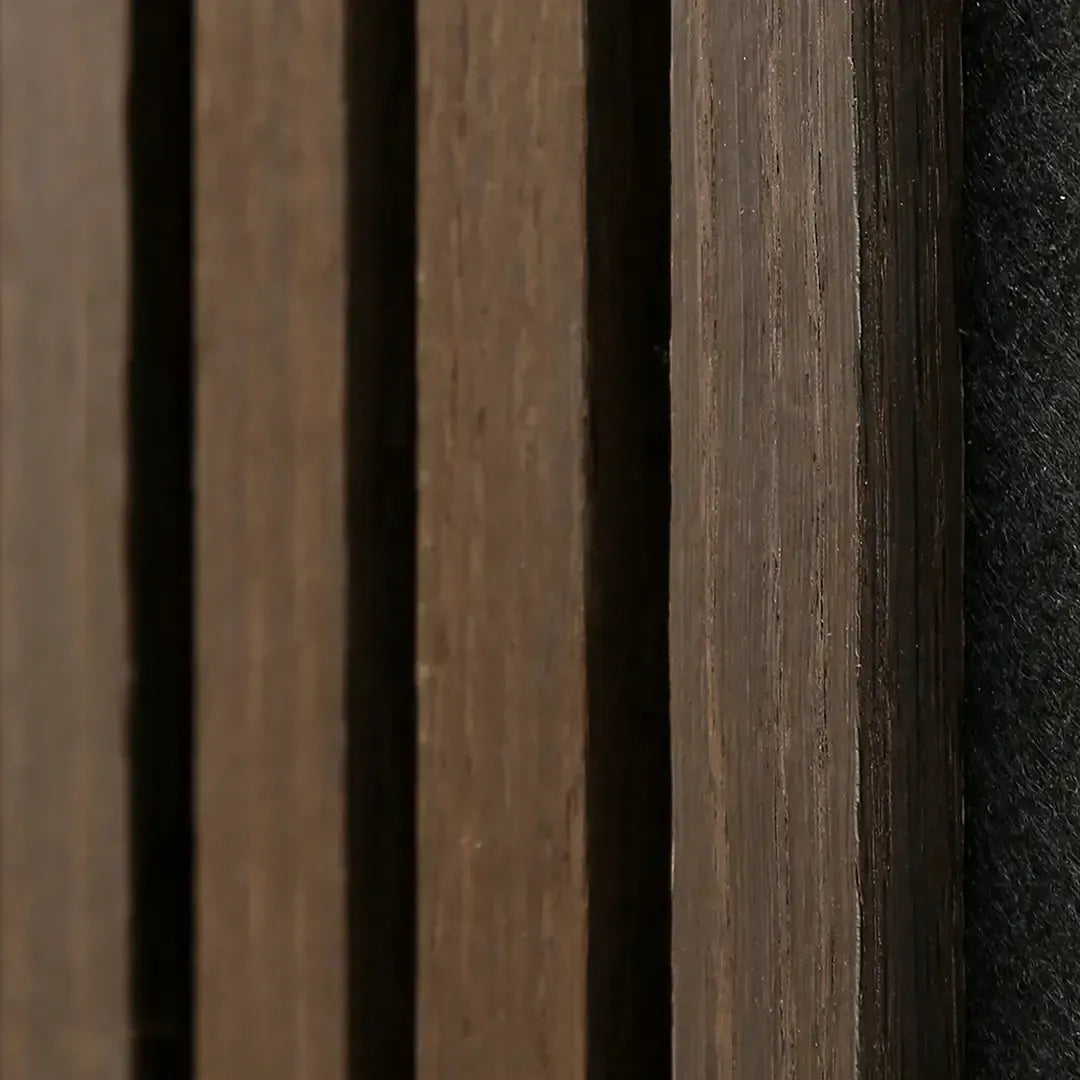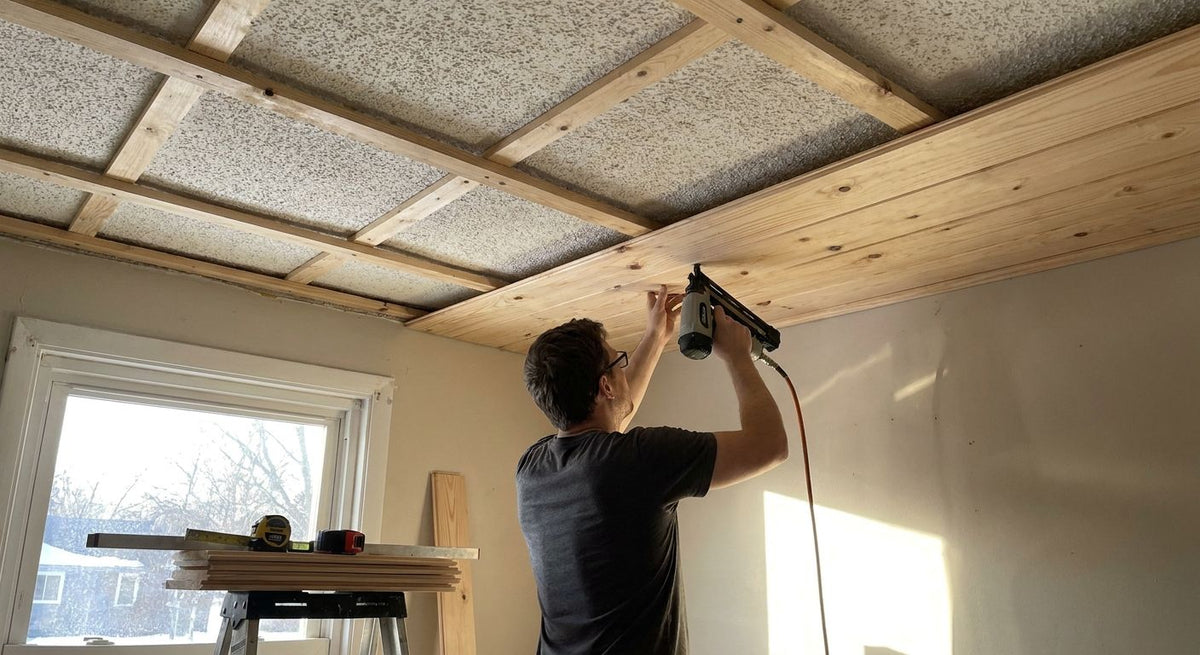
Wood panels mount over a popcorn ceiling by screwing furring strips through the texture into the ceiling joists, then attaching panels to the strips with screws or panel adhesive — no scraping required. Test any ceiling installed before 1980 for asbestos before you drill into it; that's the hidden step most how-to guides skip entirely.
- Furring strips over the joists is the reliable way to install wood panels over a popcorn ceiling in 2026.
- AKU Woodpanel acoustic slat panels mount to 1x3 furring strips without scraping the texture first.
- Skip gluing panels straight to popcorn texture — it flakes and panels sag within months.
- Locate joists every 16 to 24 inches on center before running strips perpendicular across the ceiling.
- Test pre-1980 ceilings for asbestos before any drilling starts.
Why this matters
Popcorn ceilings are common in homes built between the 1950s and 1980s, and the texture is never flat enough to hold a panel screw or drywall anchor on its own. Press a fingernail into it and you'll usually feel it give — that's loose gypsum and binder, not something a fastener grips.
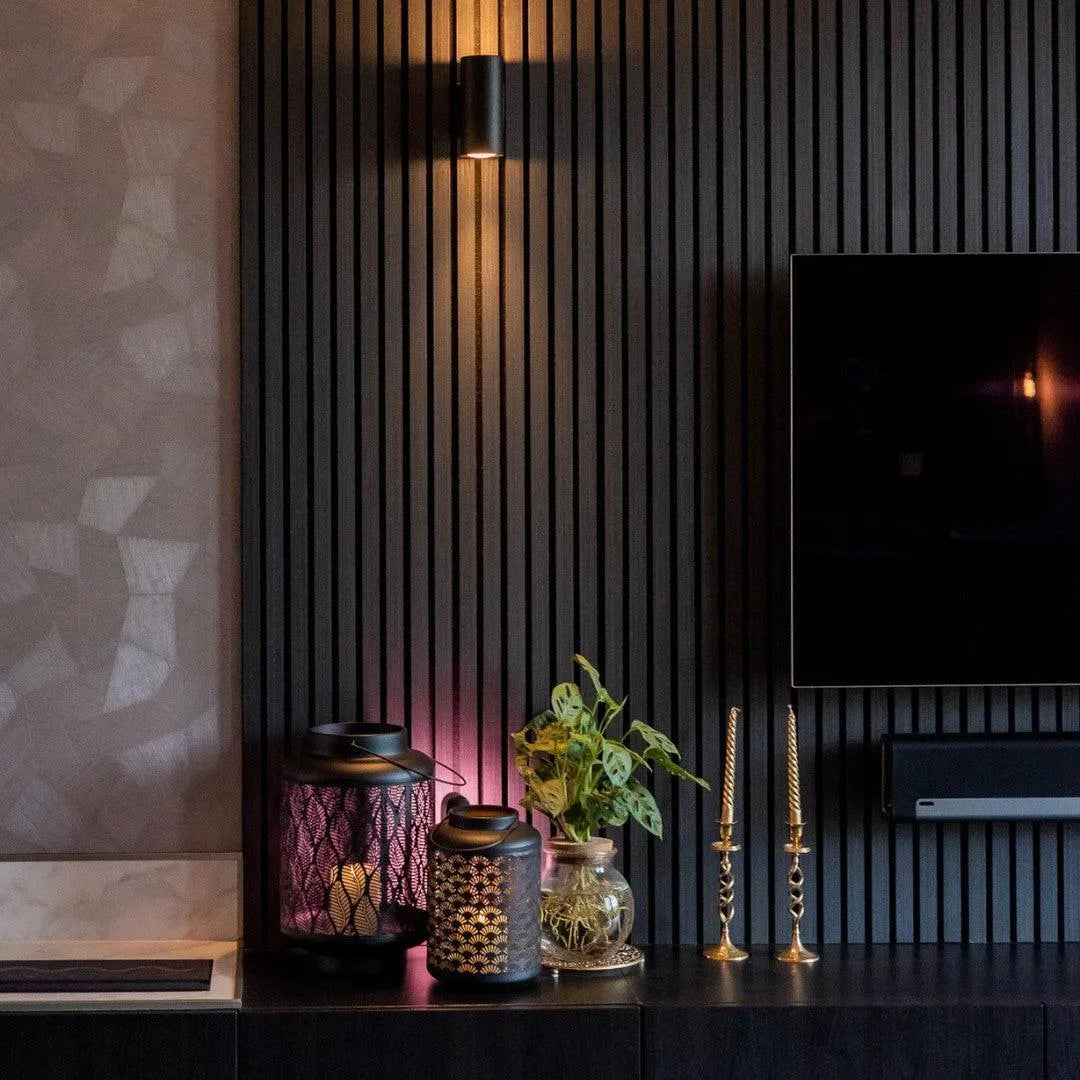
Furring strips solve the problem by giving you a flat, continuous surface anchored straight into the framing above the texture. This is also how you'd approach a ceiling install for a home theater or media room, where acoustic slat wall panels do double duty: they cover the popcorn and cut down reverberation at the same time.
How do you install wood panels over a popcorn ceiling?
- Locate the joists. Use a stud finder rated for ceilings, or tap-test along the surface. Ceiling joists typically run perpendicular to the room's longest span and sit 16 or 24 inches on center.
- Mark and snap chalk lines across the ceiling at each joist location so you have a guide once the strips go up.
- Screw 1x3 furring strips perpendicular to the joists, driving fasteners through the popcorn texture and into solid wood. Space strips roughly 16 inches apart to match standard panel widths.
- Shim low spots. Popcorn texture isn't uniform, so hold a straightedge across the strips and pack thin shims behind any that sit proud or low.
- Cut panels to fit around light fixtures, vents, and smoke detectors before you lift anything overhead — measuring twice on a ceiling install saves a second trip up the ladder.
- Fasten panels to the strips with screws or a panel adhesive rated for overhead use; gravity works against adhesive alone on a ceiling, so mechanical fasteners are the safer call.
- Finish the perimeter with trim or end pieces where the panel run meets a wall, so raw edges don't show.
Furring strips: the method that works over any popcorn texture
Furring strips are the default recommendation because they work regardless of how sound or crumbly the existing texture is. The strips transfer every pound of panel weight into the joists, not into the popcorn or the drywall paper beneath it.
This is the same approach covered in the sloped ceiling install guide, where uneven pitch creates a similar flatness problem furring strips solve.
Direct mount: only when the texture is genuinely sound
Skipping strips and screwing panels straight into the ceiling only works when you can hit a joist through the texture at every fastener point, and the popcorn itself isn't flaking. Even then, you're relying on the texture layer not to compress or crumble under load over time, which is a bet most installers won't take on a ceiling.
Verdict: furring strips are the install method for popcorn ceilings in 2026 — direct mount is a shortcut, not a standard.
Why installation difficulty varies
- Ceiling condition — flaking or water-damaged popcorn needs stabilizing before any strip goes up.
- Joist orientation — strips running the wrong direction relative to joists mean extra layout time.
- Panel material weight — real wood veneer panels carry more weight than laminate, so fastener spacing matters more.
- Fixtures in the field — recessed lights, vents, and detectors all need cut-outs planned before panels go up.
- Ceiling height — higher ceilings mean scaffolding or extended ladder work, which slows every step.
- Asbestos testing — pre-1980 texture that tests positive changes the whole project timeline before panels are even considered.
Do you need to remove popcorn ceiling before installing wood panels?
No, you do not need to remove popcorn ceiling texture before installing wood panels — furring strips bridge the uneven surface and give panels a flat, secure base to fasten into. Removing the texture only makes sense when it's already crumbling on its own or when asbestos testing comes back positive and abatement is happening regardless.
Can you glue wood panels directly to a popcorn ceiling?
Gluing wood panels directly to a popcorn ceiling is not reliable — adhesive bonds to the loose texture layer, not the solid drywall or joist underneath, and panels can sag or drop within months. Furring strips screwed into the joists carry the load the way adhesive on bare popcorn never will.
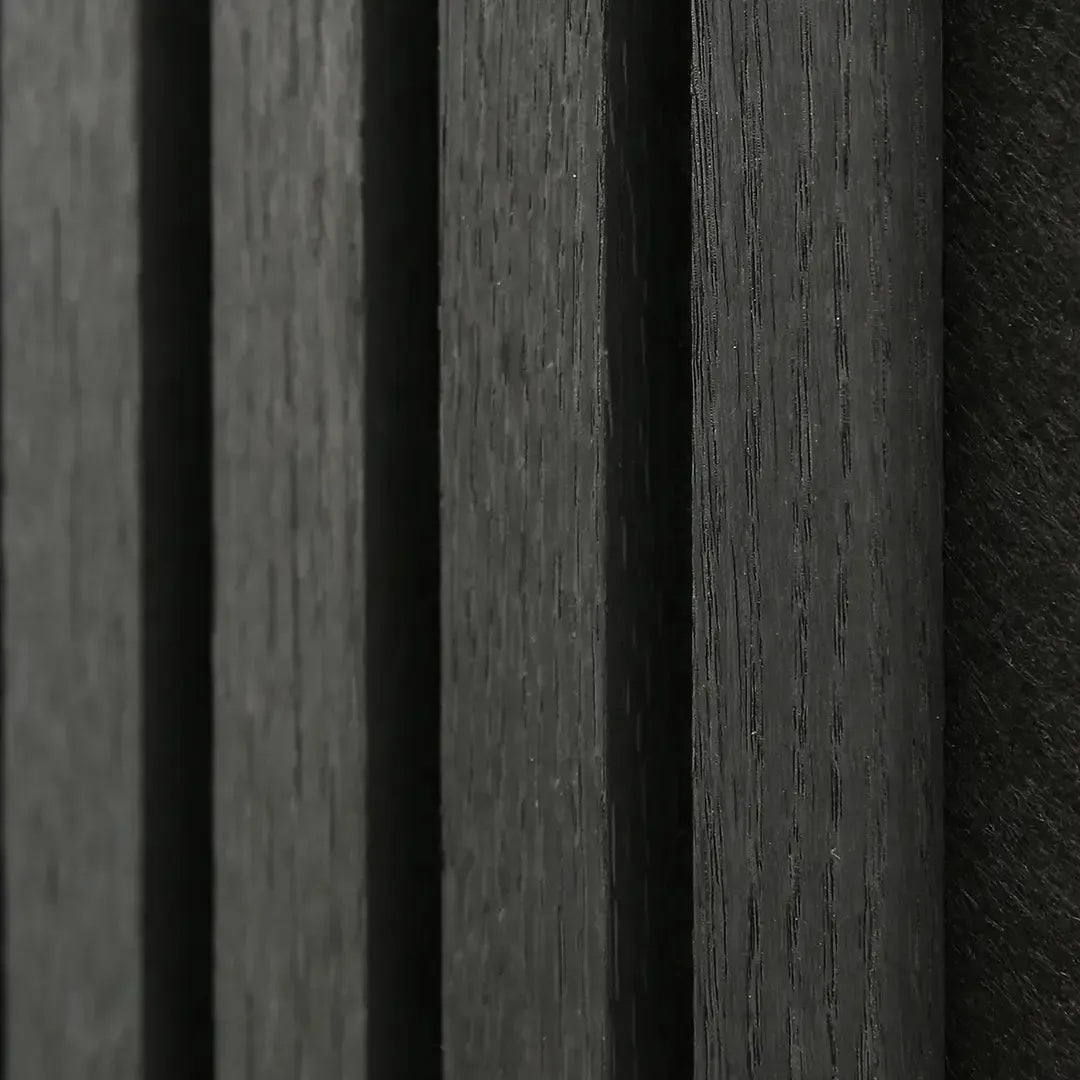
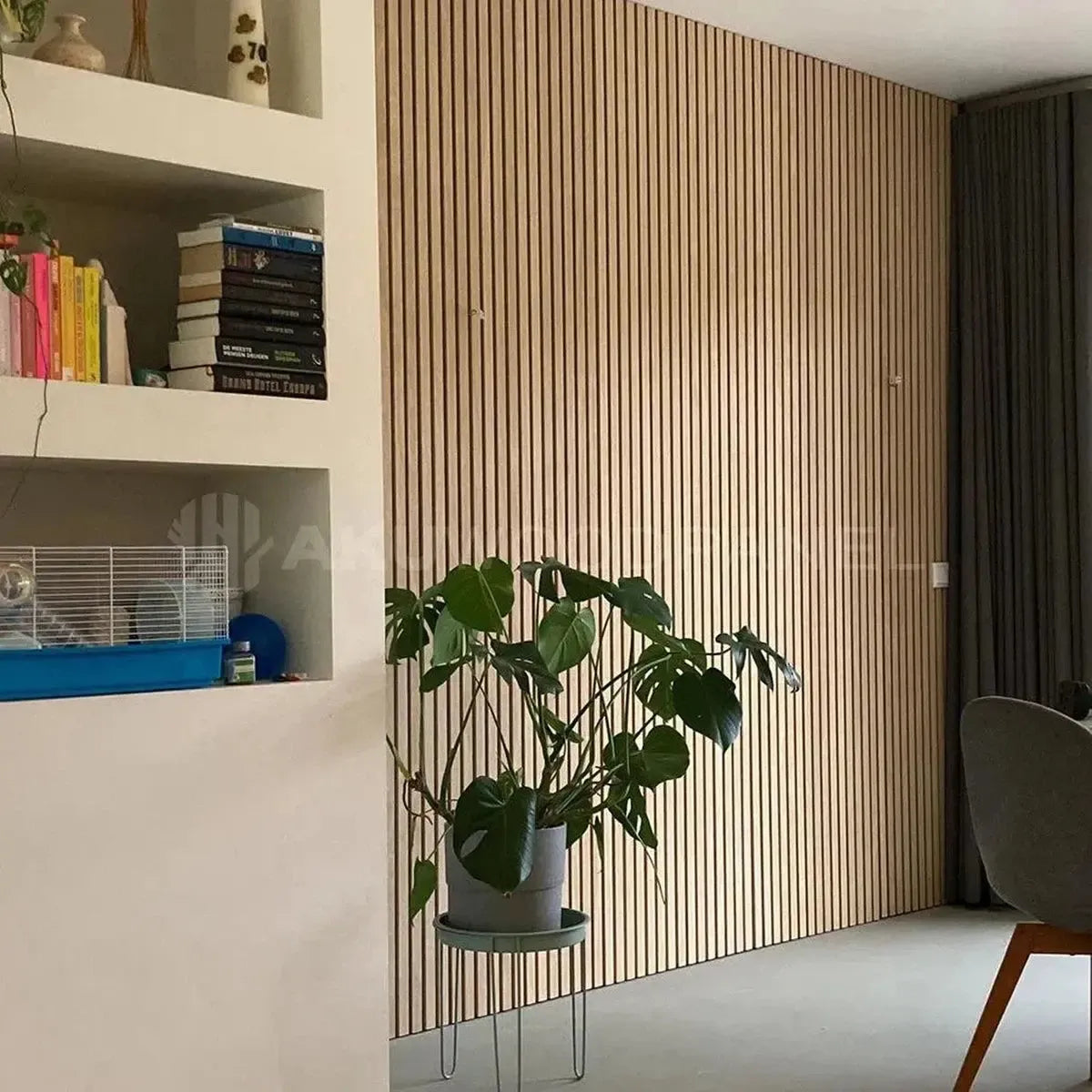
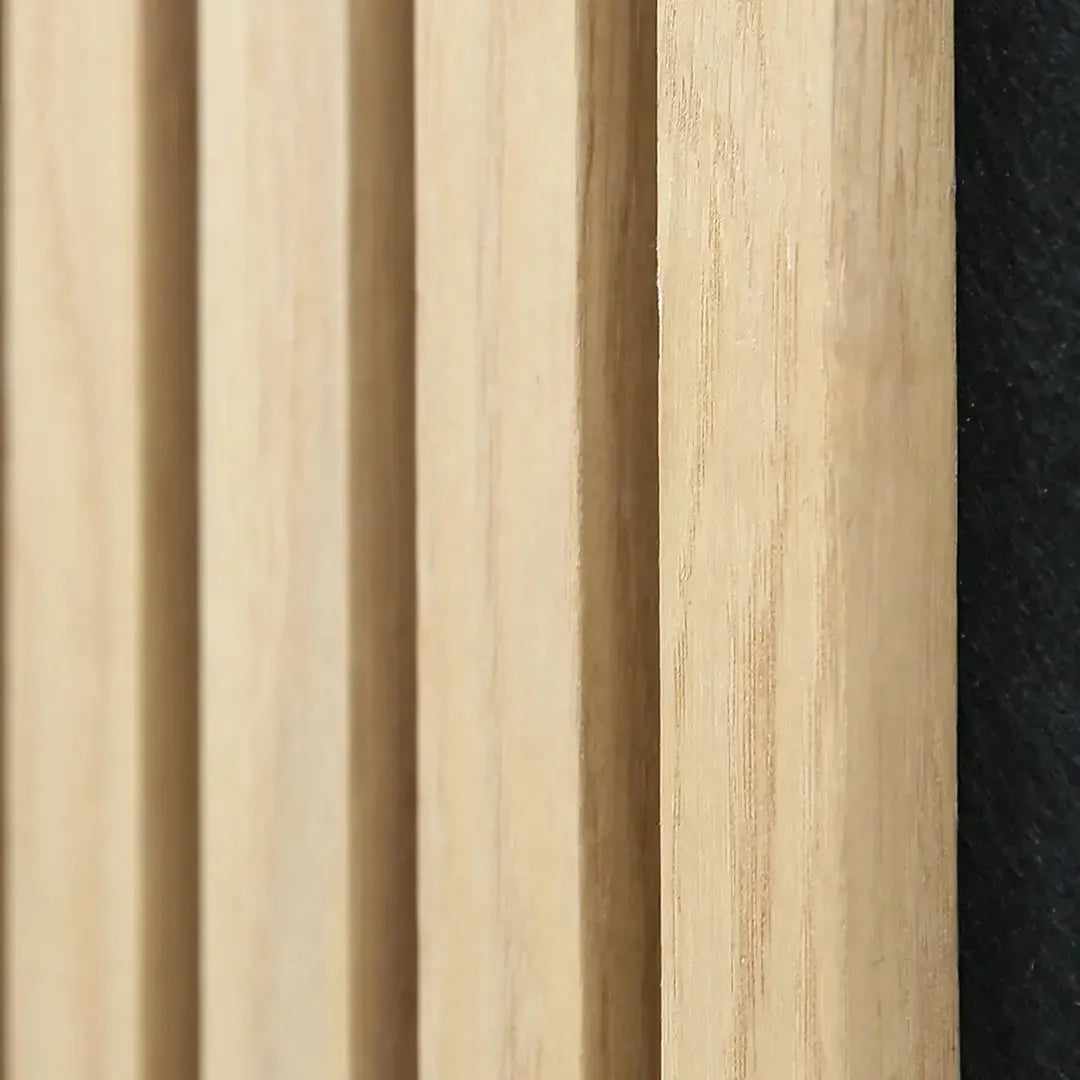
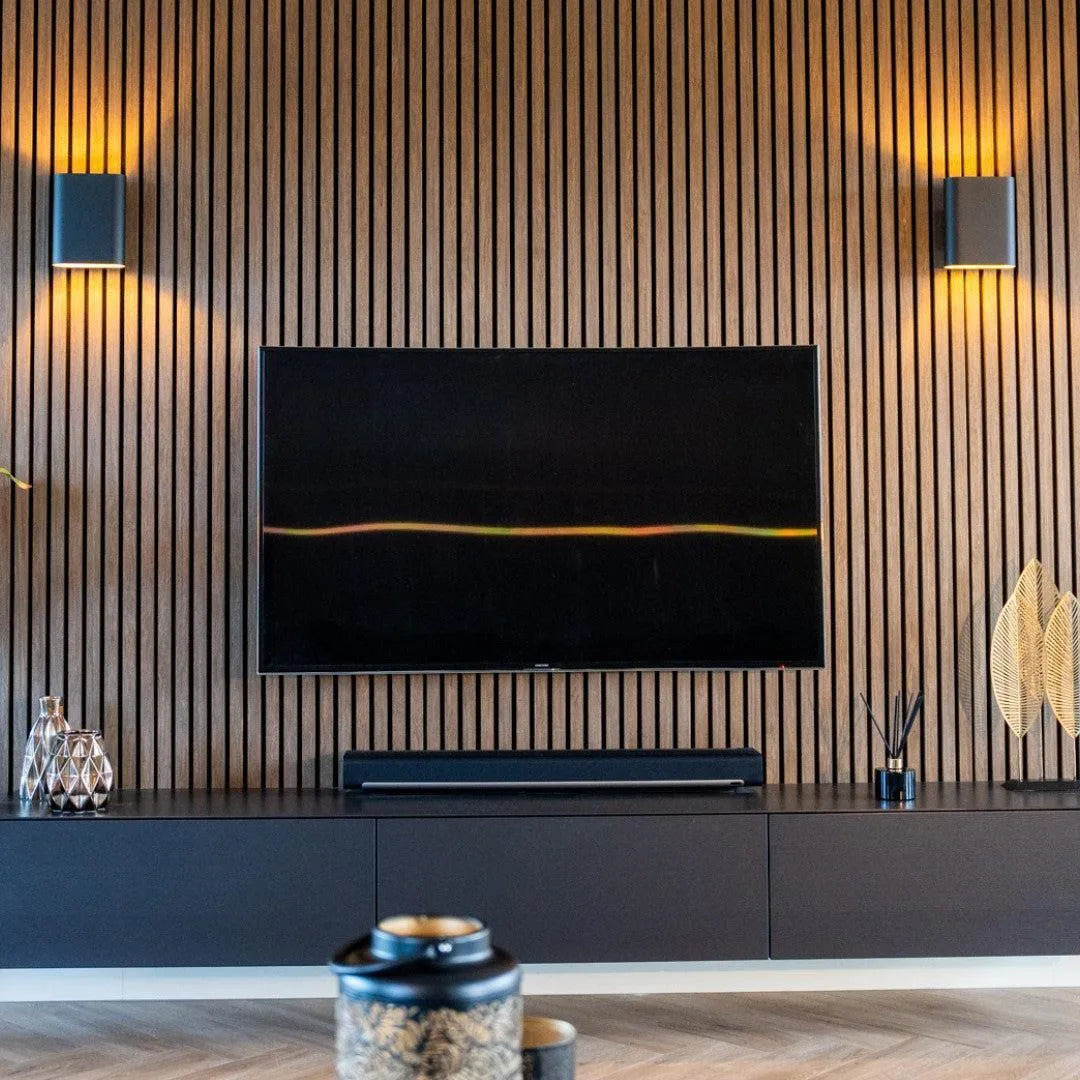
Acoustic slat panels with a real wood veneer face are the panel type most homeowners reach for on a ceiling project like this, since the tongue-and-groove profile keeps a clean, continuous look across strips without visible seams. Compare a few finishes before you commit to a full ceiling's worth.


FAQ
What's the best wood panel for a ceiling with popcorn texture?
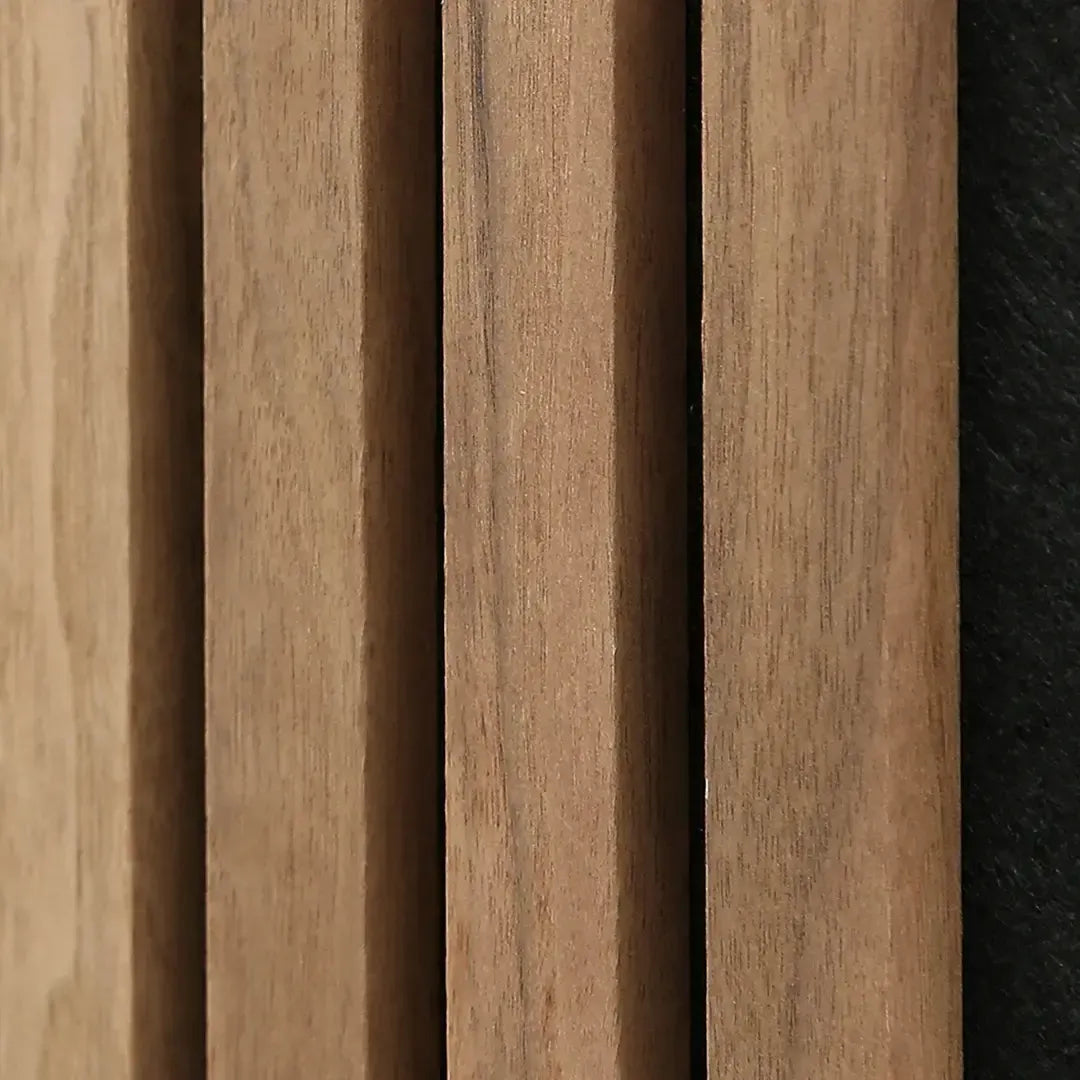
Acoustic slat wall panels with a 3-sided wood veneer face work best on a popcorn ceiling because the tongue-and-groove edges hide seams across multiple furring strips. Natural Oak and Walnut finishes are the most common picks for ceiling projects in 2026.
Is it cheaper to remove popcorn ceiling or panel over it?
Paneling over popcorn generally means less labor than scraping, since removal requires texture stripping, disposal, and a full drywall skim-coat before any finish work can start. Furring strips skip that entire demolition phase.
How do you find ceiling joists before installing furring strips?
A stud finder rated for ceiling use or a simple tap test locates joists, which typically run perpendicular to a room's longest wall and sit 16 or 24 inches on center. Mark every joist with a pencil line before you touch a drill.
Do wood panels work on a sloped or vaulted popcorn ceiling?
Yes, wood panels work on sloped and vaulted popcorn ceilings using the same furring strip method, adjusted for the pitch angle. The strips still transfer weight into the rafters instead of the texture.
What screws do you use to mount furring strips through popcorn texture?
Coarse-thread wood screws long enough to bite at least an inch into the joist behind the texture are standard for furring strip installs. Drywall screws alone don't hold well overhead once the panel weight is added.
Can you install acoustic wood panels on a ceiling for soundproofing?
Yes, acoustic slat panels reduce reverberation on a ceiling the same way they do on a wall, which is why they show up often in home theater and media room builds. The felt-backed versions add extra absorption over plain veneer panels.
Does a popcorn ceiling need asbestos testing before installing panels?
Any popcorn ceiling installed before 1980 should be tested for asbestos before drilling furring strips into it, since disturbing the texture is what releases fibers. A positive test changes the project into an abatement job first.
One last thing
Most popcorn ceiling panel failures show up at the perimeter, not the field — the spot where the last panel meets a wall and there's no furring strip to land a fastener into. Plan your trim and end-piece layout before the first strip goes up, not after, so every edge has something solid behind it.

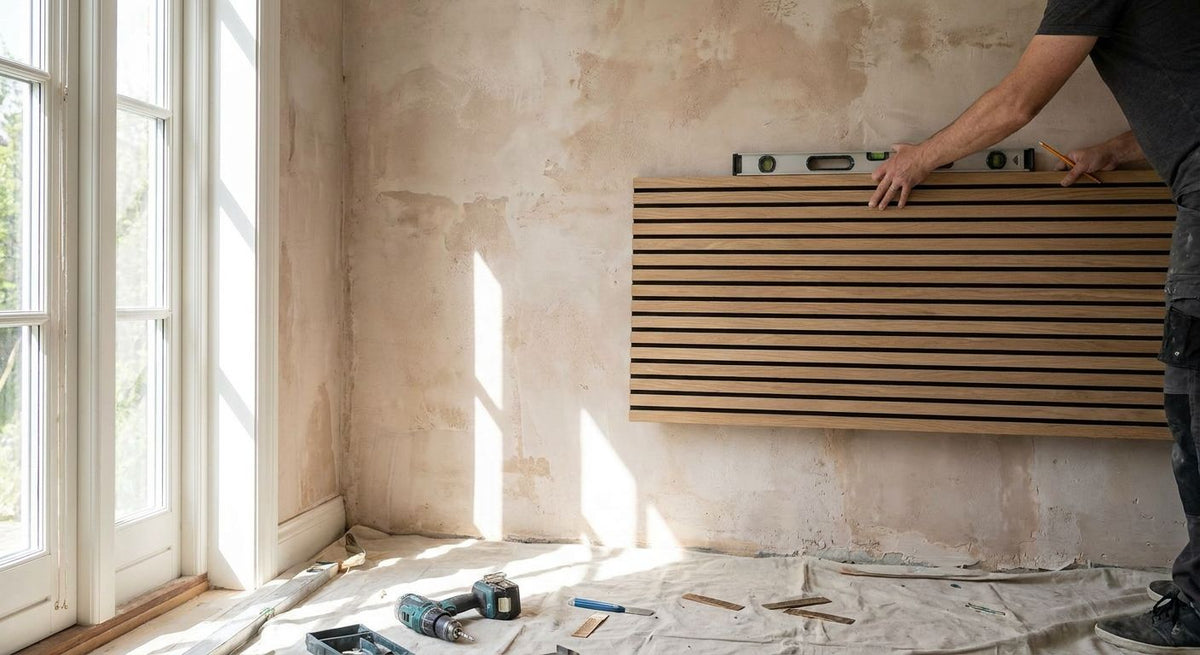

 Better performance and aesthetic appeal
 In Stock