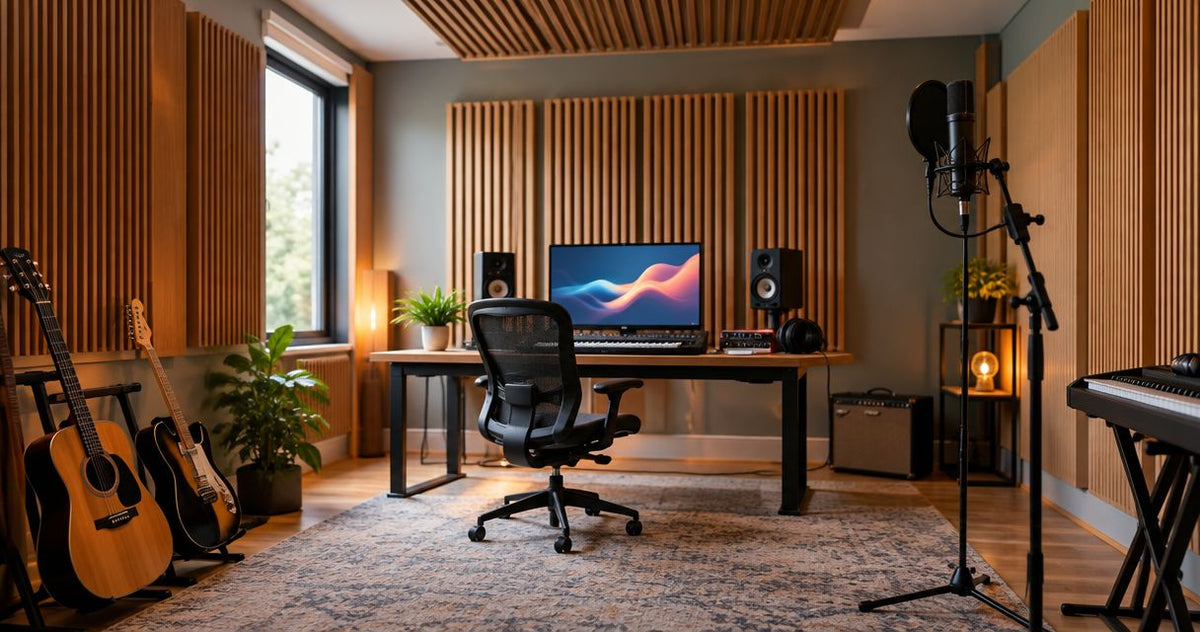
The cost to soundproof a home recording studio with wood panels depends on whether you need better sound inside the room or less sound traveling through its boundaries; a panel-only budget does not cover both jobs. Wood acoustic panels belong in an acoustic-treatment budget, while meaningful sound isolation requires a separate assessment of walls, doors, windows, ceilings, and ventilation. For a 2026 project, get an itemized quote that separates those scopes before choosing panel coverage.
- The cost to soundproof a home recording studio with wood panels must separate acoustic treatment from sound isolation.
- Akustiq USA acoustic wood panels suit homeowners seeking a wood finish within an acoustic-treatment plan, not standalone soundproofing.
- Budget for panel coverage, preparation, mounting, cuts, and finishing—not just the panels.
- Confirm tested performance for the proposed installation before treating decorative coverage as acoustic treatment.
What does soundproofing a home studio with wood panels cost?
Build the total from a defined room plan, not a generic price per wall. Start by identifying the problem: audible room reflections, sound entering your microphone from elsewhere, or music disturbing adjacent rooms.
The distinction matters when planning acoustic wood panels for home recording studios. Your treatment layout and your isolation work need separate specifications, even when the same contractor handles both.
| Budget component | What the quote should include | What it does not establish |
|---|---|---|
| Acoustic panels | Exact panel specification, quantity, and planned coverage | Sound isolation through the room boundaries |
| Installation | Surface preparation, mounting method, cutting, and labor | Acoustic performance without a defined assembly |
| Finishing | Exposed edges, corners, transitions, and cleanup | Additional absorption simply because trim is fitted |
| Sound isolation | Assessment and specified work on relevant sound paths | A guaranteed result from decorative panels alone |
| Verification | A clear method for checking the completed work | Proof based only on how the room looks |
Ask for these components separately in your 2026 quote. A combined total without quantities, mounting details, or exclusions makes competing proposals difficult to compare.
Why this matters
A home studio can sound less echoey while remaining audible in the next room. That is not a contradiction: absorption inside a room and transmission between rooms describe different acoustic problems.
Akustiq USA supplies acoustic wood panels for interior applications. Treat those panels as a specified interior material, not as evidence that an entire room will contain instruments, vocals, or loudspeaker playback.
Choose treatment for reflections; choose an isolation design for sound leakage. If your project needs both, keep both in the scope from the beginning so finished paneling does not conceal work that still needs attention.
Acoustic treatment: best for controlling room reflections
Acoustic treatment changes how sound behaves within your studio. Absorptive materials reduce reflected sound, but their effectiveness depends on frequency, construction, placement, and installation.
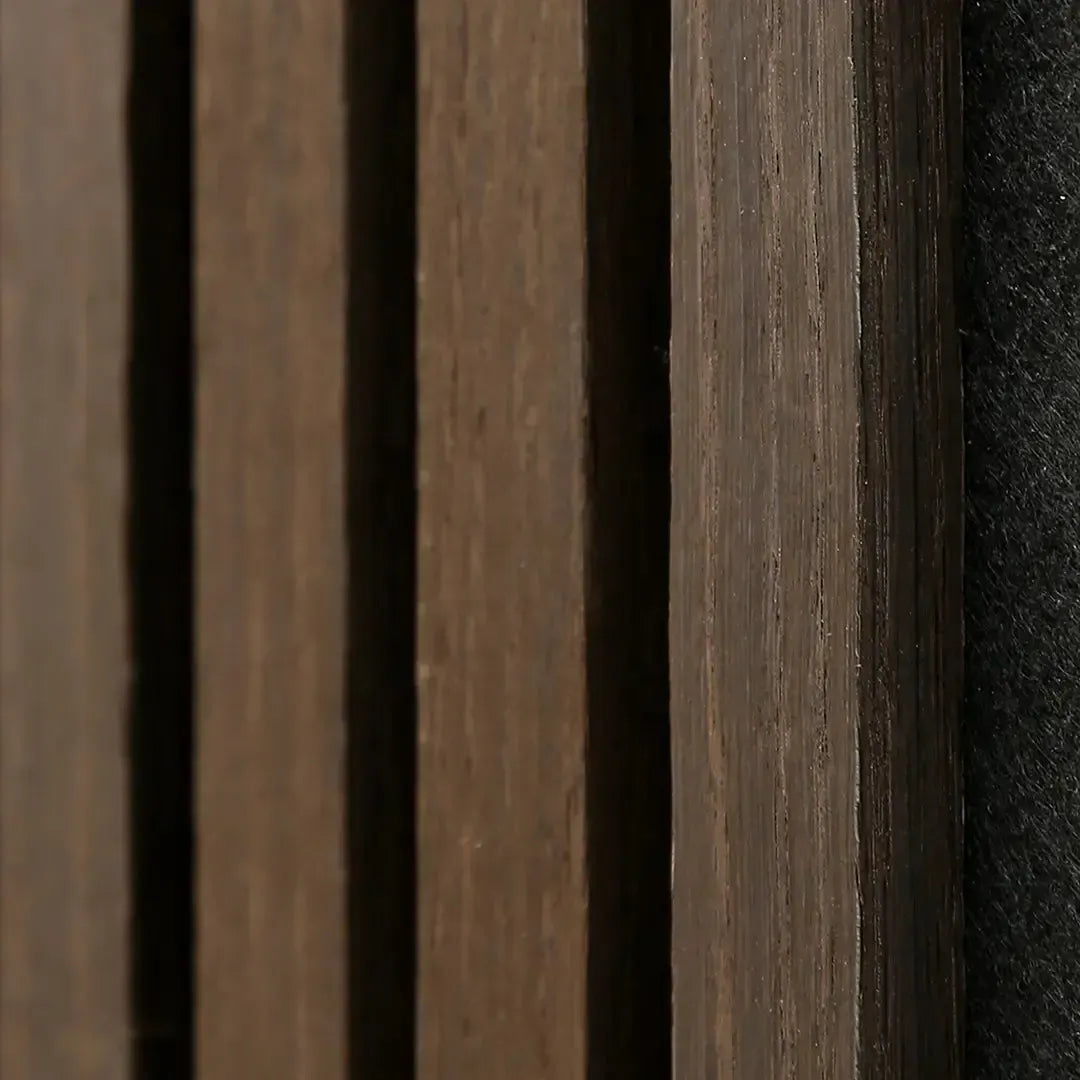
Wood slats alone do not tell you how much a panel absorbs. Ask for test information covering the complete panel assembly and its mounting arrangement, including any backing, cavity, or additional absorptive material.
For a recording space, the practical advantage is control over reflections that reach the microphone or listening position. The limitation is equally important: treatment does not establish how much sound your walls, door, or ceiling block.
Your treatment quote should identify:
- The surfaces being treated and the purpose of each treatment area.
- The exact panel construction and relevant acoustic documentation.
- The mounting arrangement used to support the proposed performance.
- Any separate treatment needed for low-frequency problems.
Avoid accepting a full-wall layout solely because it creates an attractive backdrop. Coverage should follow the acoustic objective, not replace it.
Sound isolation: best for reducing transmission between rooms
Sound isolation addresses sound passing through or around the room enclosure. Walls matter, but doors, windows, penetrations, ventilation routes, and connected building structures also need attention.
The benefit of a dedicated isolation scope is that it targets the problem behind complaints from neighboring rooms or unwanted background noise in recordings. Its limitation is disruption: the required work can extend beyond the visible wall surface.
For your 2026 studio plan, describe the actual source and receiving location. A vocal recording disturbed by street noise is a different brief from an acoustic drum kit disturbing an upstairs bedroom.
Ask the designer or installer to identify the relevant transmission paths before specifying construction. Do not cover a wall with wood panels and assume that an untreated door gap or shared ventilation path has stopped mattering.
A wood finish is a finish; an isolation result depends on the complete enclosure.
Combined treatment and isolation: best for mixed problems
A combined project fits studios that need clearer recordings and less sound transfer. The advantage is coordinated planning; the drawback is that a panel installation alone cannot define the whole job.
Sequence the work so the enclosure, services, and mounting provisions are settled before the decorative finish goes up. That gives you a chance to inspect concealed work and confirm that the final panel installation follows the intended acoustic assembly.
| Approach | Best for | Main advantage | Main limitation |
|---|---|---|---|
| Acoustic treatment | Reflections inside the recording or listening space | Targets room sound | Does not establish isolation |
| Sound isolation | Sound entering or leaving the studio | Targets transmission paths | Can require building work |
| Combined project | Studios with both problems | Coordinates the enclosure and room treatment | Requires separate specifications and checks |
Compare proposals within the same approach. A treatment-only proposal and a construction-based isolation proposal do not describe equivalent results.
Why the wood-panel installation budget varies
The installation scope changes with the room and layout. These factors belong in your panel quote rather than appearing as unexplained extras after you approve it.
- Coverage: State the measured treatment area and panel quantity. Floor area is not the same as wall area.
- Surface preparation: Identify uneven plaster, damaged surfaces, and other conditions requiring work before mounting.
- Mounting method: Specify the fixing arrangement and any supporting structure required by the chosen installation.
- Cuts and obstructions: Mark doors, windows, outlets, switches, and awkward wall shapes on the drawing.
- Edge finishing: Include exposed ends, corners, and transitions so the installer prices a finished result.
Ask the installer to connect each allowance to the room drawing. A proposal that names the work is easier to review than a single installation line with no explanation.
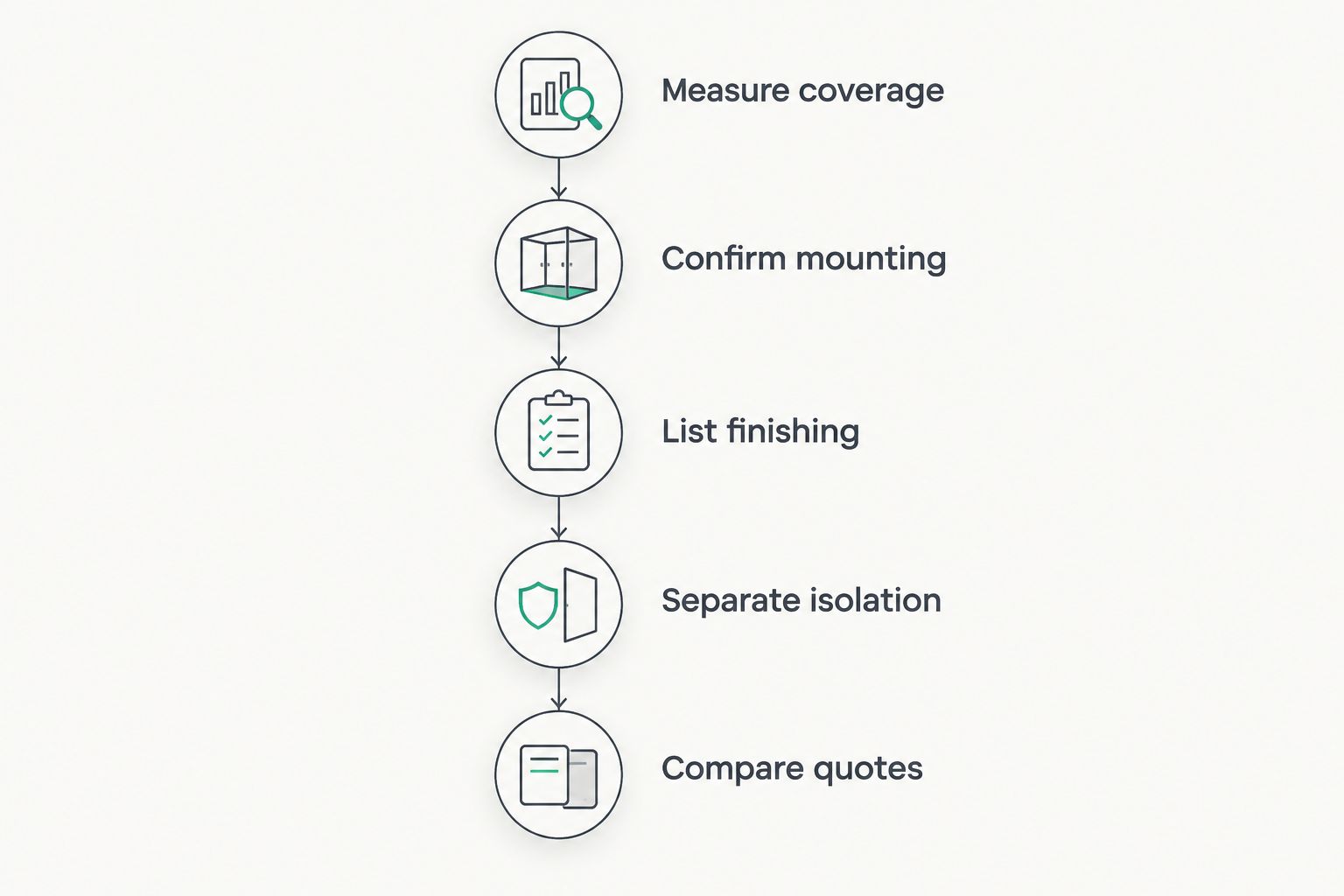
How do you build a usable studio budget?
Use the same room information for every supplier and installer. Consistent information produces comparable scopes and helps you spot omissions before placing an order.
Measure coverage
Record the width and height of each proposed panel area in feet, then calculate its area in square feet. Mark openings and interruptions separately instead of treating every wall as a clear rectangle.
Next, draw the panel layout using the selected product's confirmed dimensions. Dividing wall area by panel area is only a starting calculation: panel orientation, cuts, and usable offcuts affect the final quantity.
Confirm mounting
Ask how the panels will attach to the existing surface. The answer should cover the substrate, fixings, supporting structure where applicable, and any assembly details tied to acoustic performance.
Do not substitute a different mounting arrangement without checking its consequences. A test result for one installation does not automatically describe another.
List finishing
Mark every visible panel edge and transition. Include the work around openings and electrical fittings, with electrical alterations handled by a qualified professional where required.
Have the installer distinguish panel fitting from wall repair, electrical work, and repainting. That prevents a finished-looking drawing from hiding an incomplete scope.
Separate isolation
Create a distinct section for work intended to reduce sound transmission. Name the relevant boundaries and sound paths rather than using an undefined promise to soundproof the room.
If isolation is a project requirement, settle that design before approving the decorative panel installation. Reworking a finished wall is not a substitute for planning the enclosure.
Compare quotes
Check quantities, assembly details, labor scope, finishing, and exclusions side by side. Use current 2026 quotations and confirm what changes require a revised quote.
A useful proposal explains what you receive and how completion will be checked. It does not rely on a broad noise-reduction claim with no stated measurement or scope.
What acoustic evidence should you request?
Ask for the test report, not just an acoustic label. The report should identify the tested specimen, mounting arrangement, and results relevant to your intended installation.
Under ASTM C423, the noise reduction coefficient, or NRC, summarizes absorption using results at 250 Hz, 500 Hz, 1,000 Hz, and 2,000 Hz. Those frequencies explain why a single summary rating is not a complete description of studio performance.
NRC describes absorption, not sound isolation. Sound transmission class, or STC, concerns transmission through a tested building element or assembly; it is not interchangeable with NRC.
For your 2026 specification, ask whether the documentation matches the assembly you will actually install. Also request frequency-specific results when assessing a recording space, rather than assuming a summary rating establishes control of bass problems.
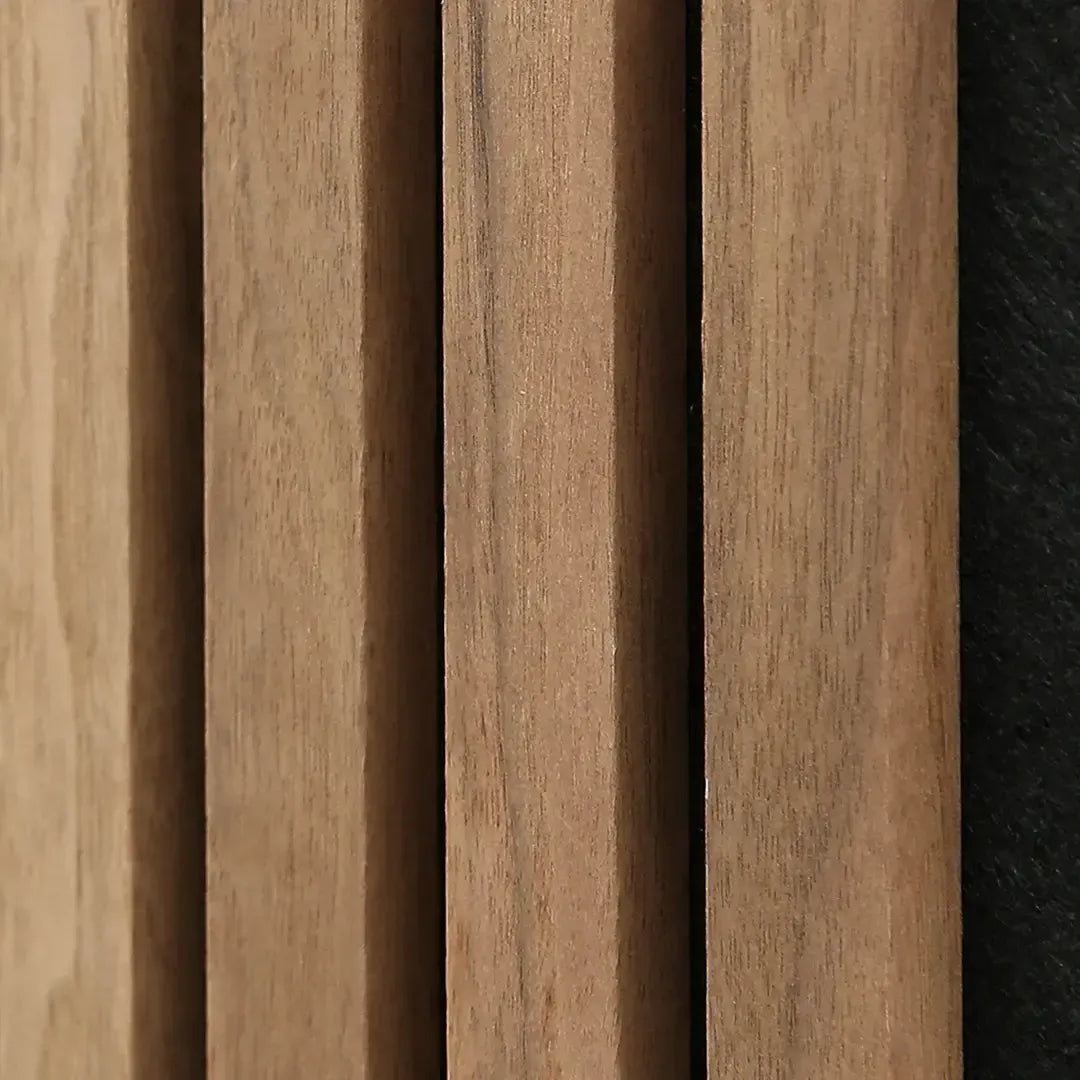
Do not infer acoustic equivalence from matching wood species, similar photographs, or a shared felt color. Compare documented constructions and installations.
Where do wood acoustic panels fit in the plan?
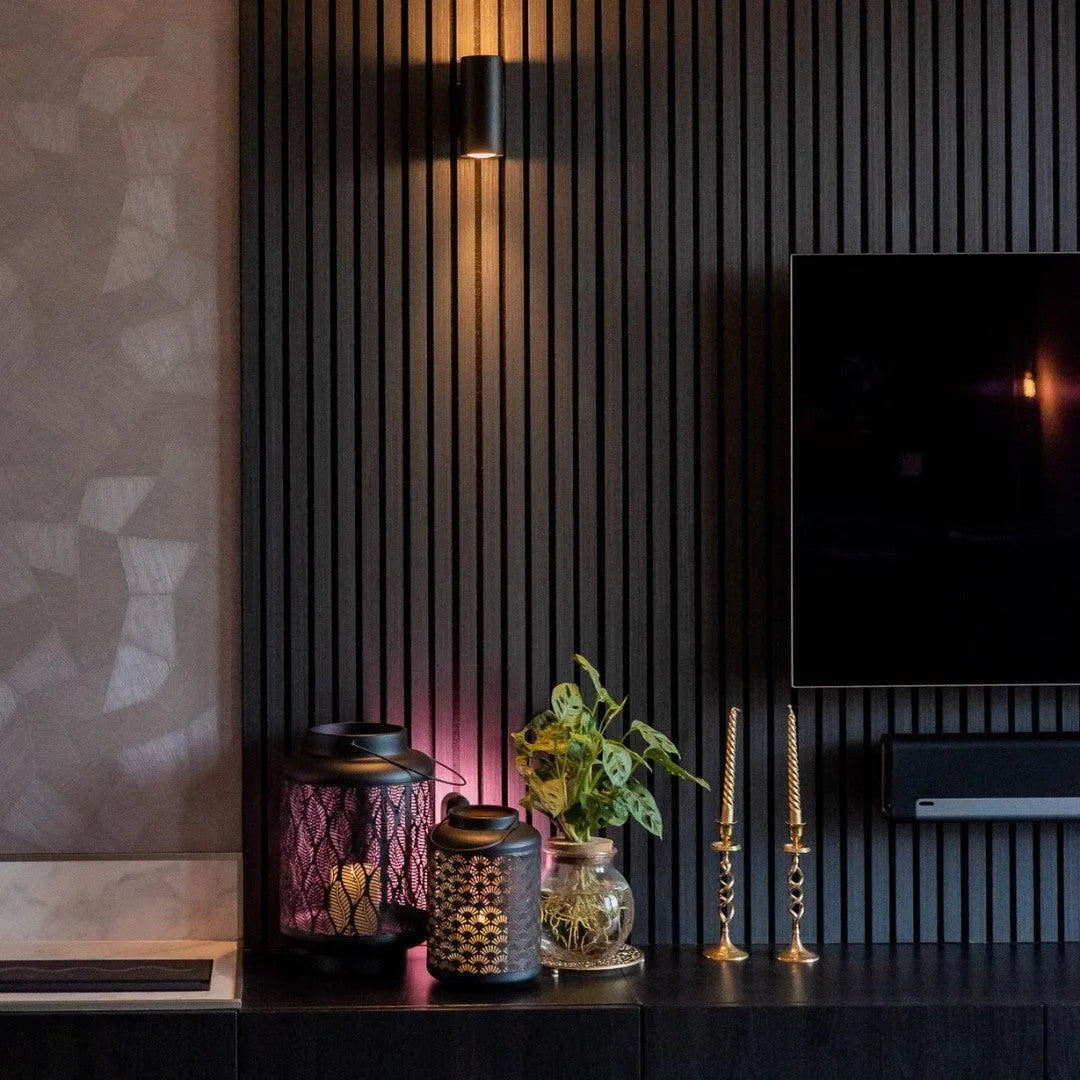
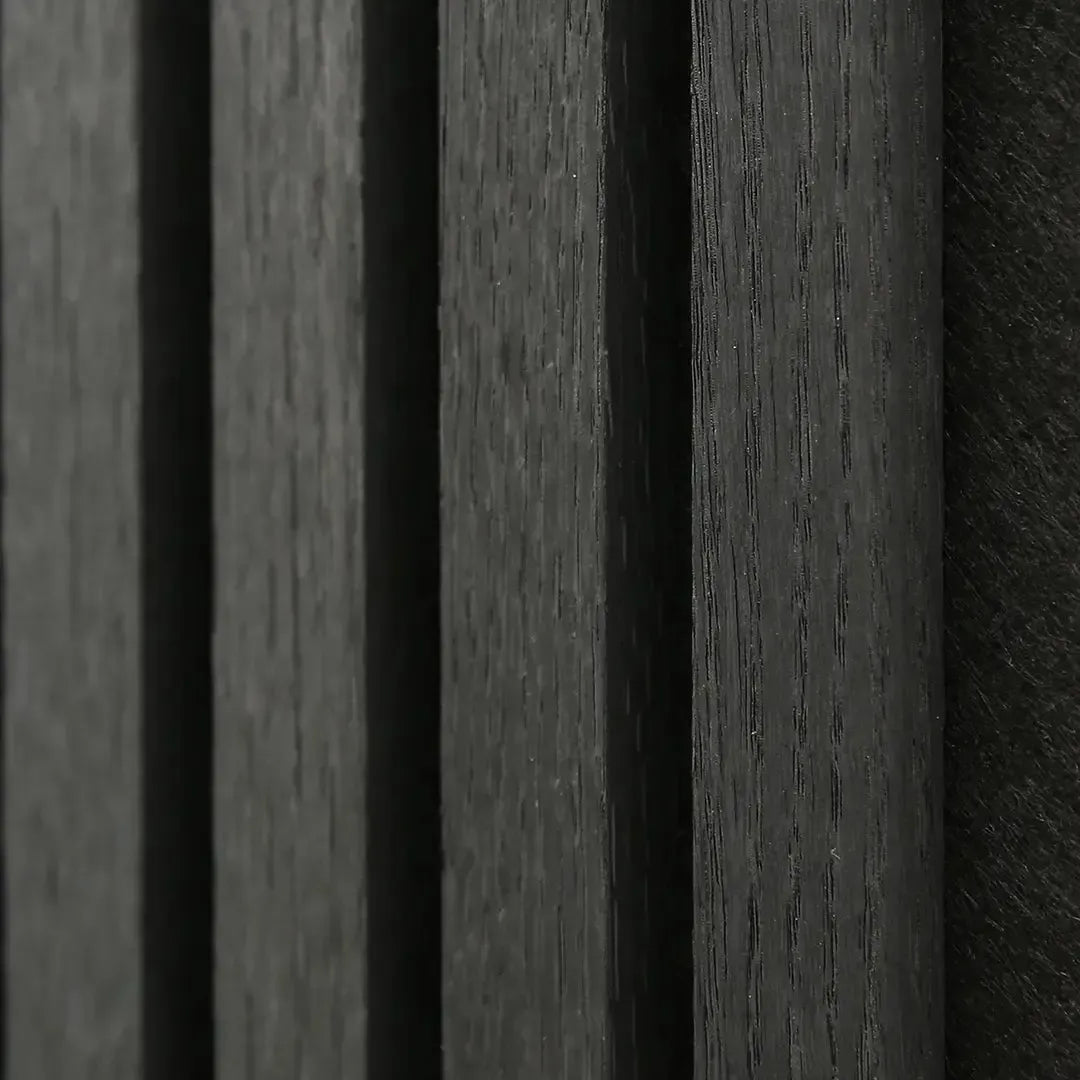
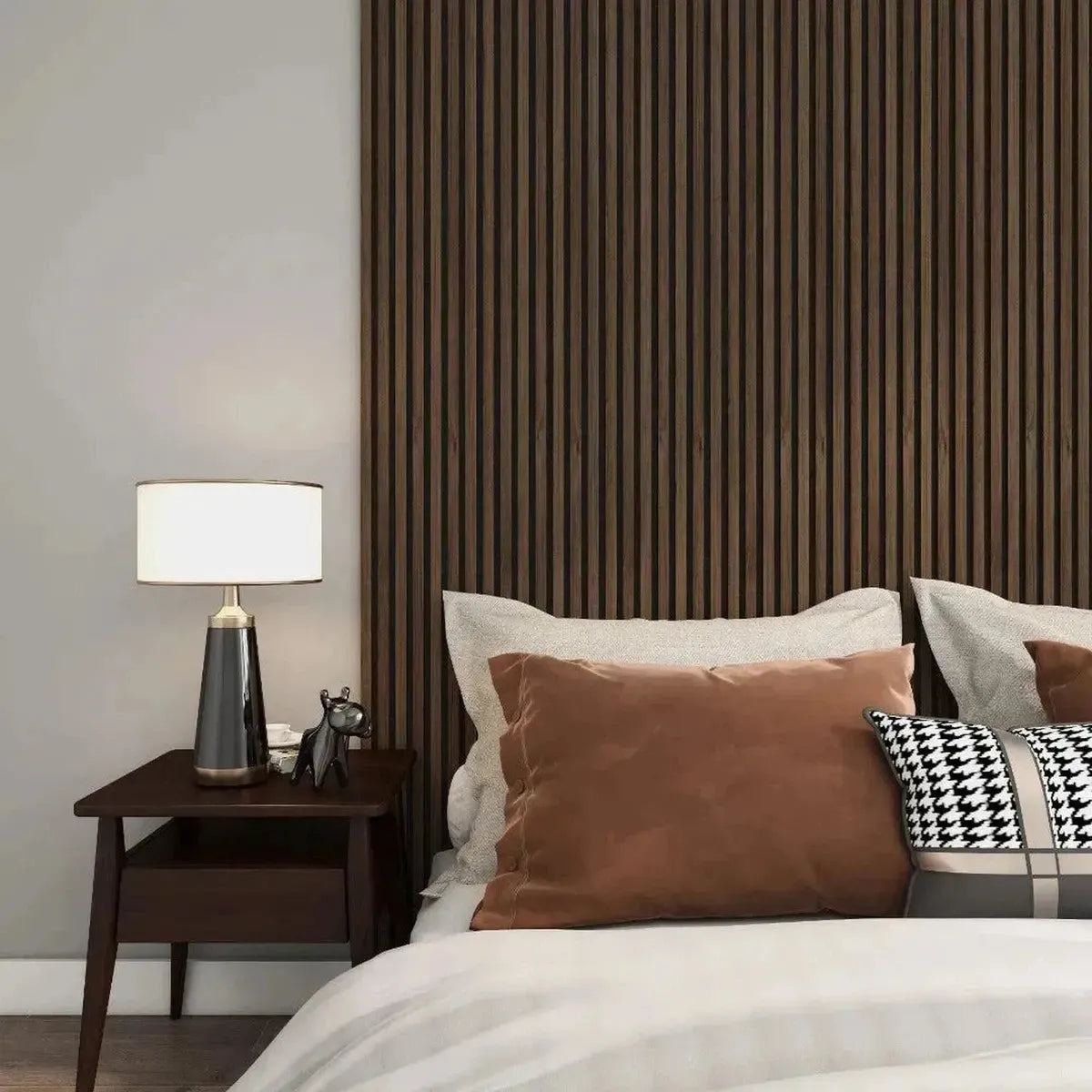
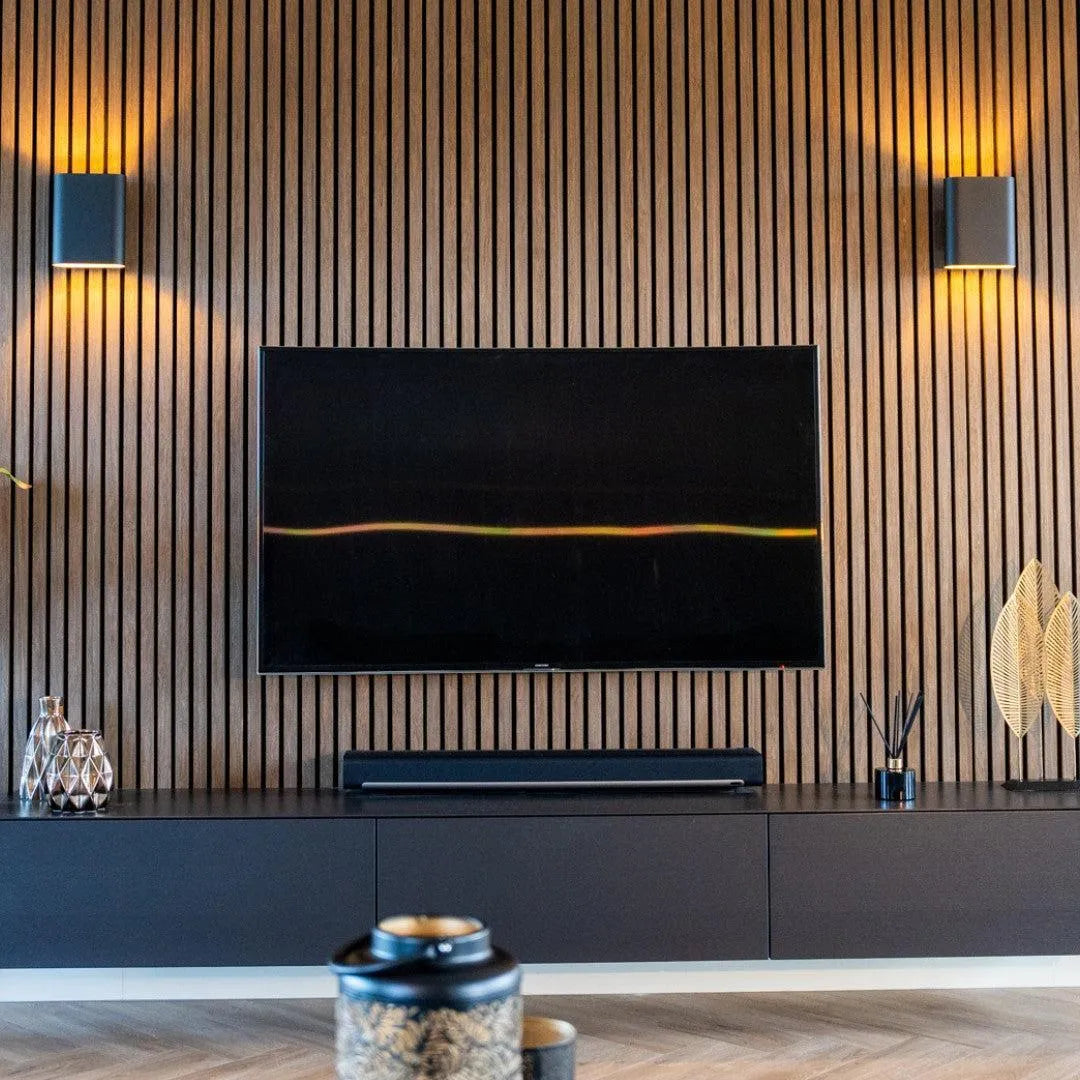
Akustiq USA acoustic wood panels are best for homeowners who want a wood finish as part of a specified acoustic-treatment plan. An option such as the Acoustic Slat Wall Panel Black Oak belongs in the material-selection stage, after you have defined the room's acoustic objective.
The practical benefit is combining a wood-panel finish with the planned treatment layout. The limitation is that selecting the panel does not establish the performance of the finished studio enclosure.
Before ordering, confirm dimensions, installation instructions, relevant test documentation, and the quantity needed for your drawing. Choose the finish after those checks, not instead of them.
Can you reduce the scope without compromising the goal?
Reduce decorative coverage before removing work essential to the acoustic objective. If your goal is controlling a specific reflection, a targeted layout deserves consideration before full-room paneling.
For an isolation project, do not delete door, ventilation, or penetration work simply to preserve a larger feature wall. Ask the designer which parts of the scope are essential to the stated result.
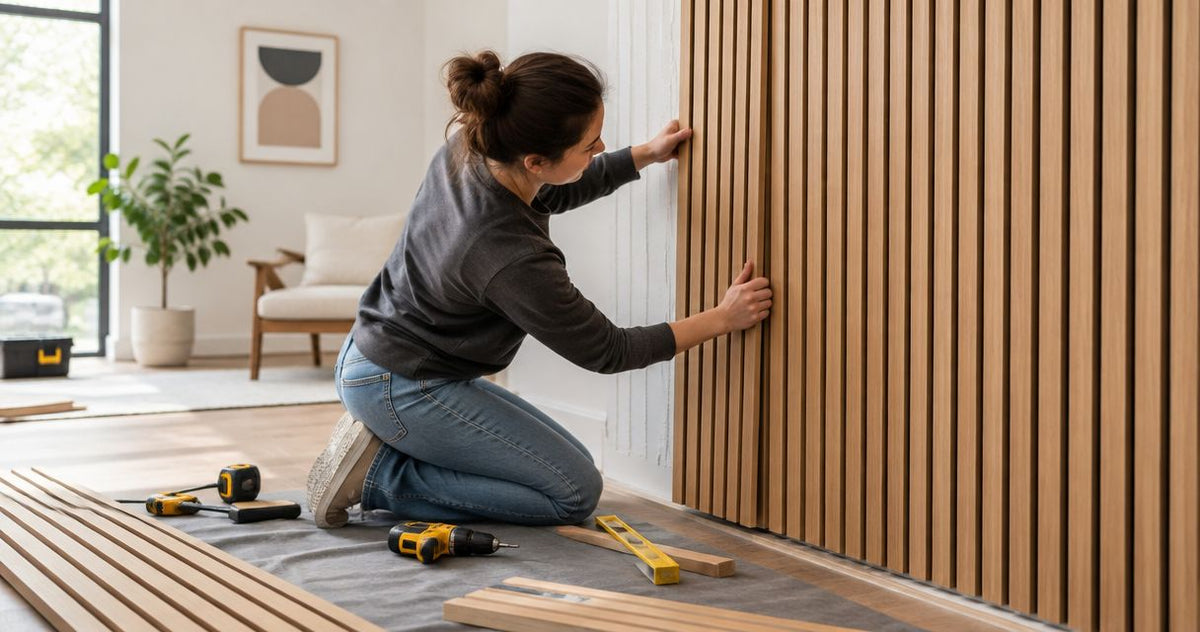
DIY installation is a separate decision. Compare the required cuts, substrate preparation, mounting instructions, and finishing work with your skills, then keep specialist construction and electrical work within the appropriate professional scope.
Do you need panels on every wall?
No—every wall does not automatically need wood acoustic panels. Placement should follow the recording or listening layout, the room's measured behavior, and the performance of the proposed treatment.
Will wood panels stop drums disturbing another room?
Wood acoustic panels alone are not a basis for promising drum isolation. Assess the enclosure and structural transmission paths separately, then design internal treatment around the studio's recording needs.
FAQ
What's included in the cost to soundproof a home recording studio with wood panels?
A complete scope separates acoustic panels and installation from any sound-isolation work. Panel quantities, surface preparation, mounting, cuts, finishing, and verification should be itemized.
Are acoustic wood panels the same as soundproofing?
No—acoustic wood panels address room treatment when their construction and installation provide absorption. Soundproofing concerns reducing transmission through and around the room enclosure.
Can I work out panel quantities from my studio's floor area?
No—panel quantities require measurements of the surfaces you intend to treat. Confirm the layout against actual panel dimensions, openings, cuts, and usable offcuts.
Is a higher NRC enough to choose panels for recording?
No—a higher NRC alone does not establish suitability for a recording studio. Review frequency-specific absorption data and the tested mounting arrangement, especially when low-frequency control matters.
Can I install acoustic panels myself?
DIY installation depends on the manufacturer's instructions, your wall construction, and your ability to complete the required work safely. Keep electrical alterations and specialist isolation work separate from basic panel fitting.
Are Akustiq USA acoustic wood panels enough to soundproof my studio?
Akustiq USA acoustic wood panels should not be treated as a complete sound-isolation system. Specify the room enclosure separately when your goal is reducing sound entering or leaving the studio.
What should I ask an installer before accepting a quote?
Ask the installer to confirm quantities, mounting details, surface preparation, cuts, finishing, exclusions, and completion checks. Require a separate scope for any promised reduction in sound transmission.
One last thing
Before you approve the 2026 installation, ask a simple question: Which problem does each line of this quote solve? A panel area should have a treatment or design purpose; an isolation item should address an identified transmission path.
That question is more useful than asking how much paneling makes a room soundproof. It turns a decorative-material purchase into a project with a defined result.

 Better performance and aesthetic appeal
 In Stock