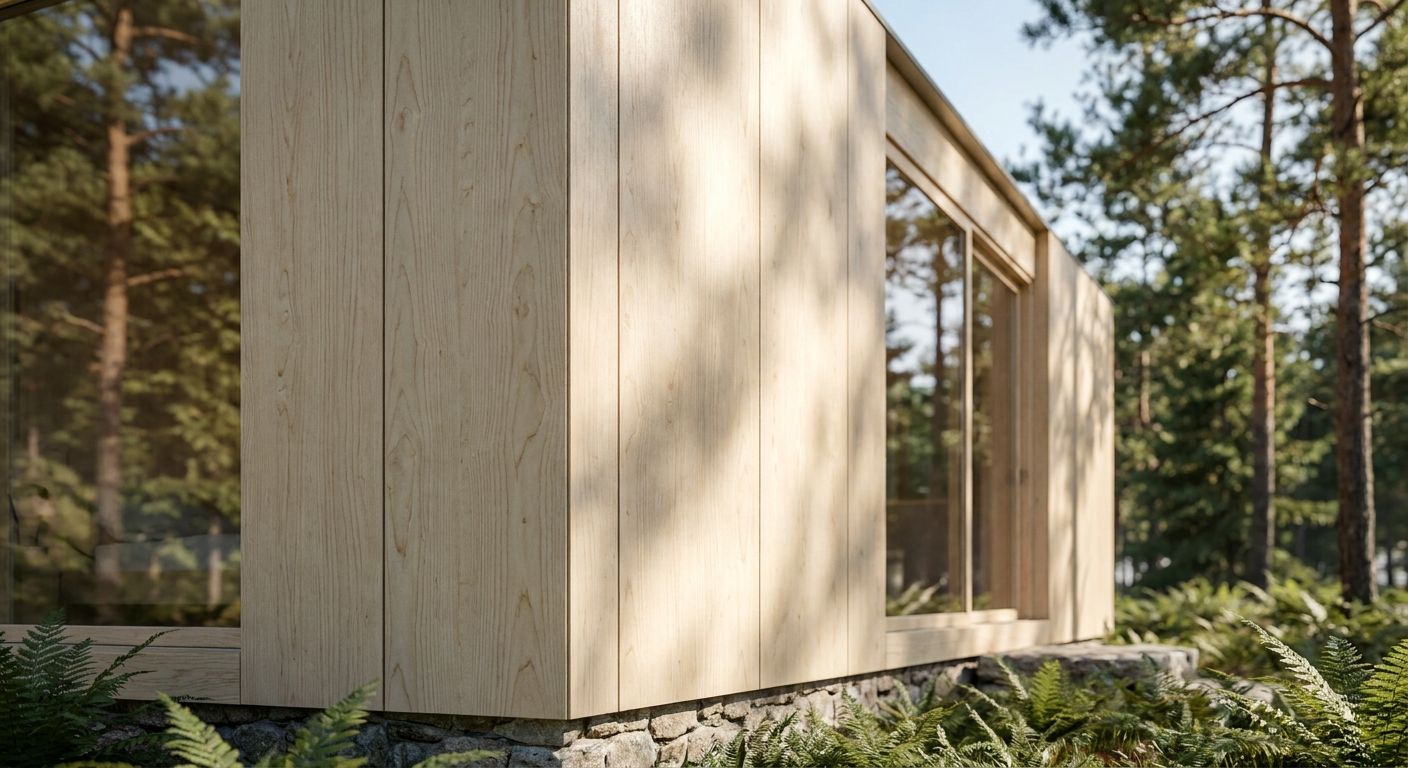
Birch exterior wall panels give a tiny home facade a warm, real-wood look without the weight penalty that heavier claddings like fiber cement bring to a trailer-mounted build. This guide breaks down what actually matters when you're specifying birch panels for a structure under 400 square feet, not a full-size house.
- Exterior Wall Panel Birch is the safe buy for tiny home facades in 2026 — real wood veneer at a fraction of the weight of fiber cement.
- Skip interior-rated slat panels outdoors; they lack weatherproofing and warp within one season.
- Pair birch panels with Exterior Panel Finishing Trim Birch and Exterior Panel Screws Birch to seal seams on a small elevation.
- Exterior Wall Panel Black works as a contrast accent, not a full-facade swap for birch exterior wall panels.
Why this matters
A tiny home has less wall area to hide mistakes than a standard house, so every seam, gap, and color mismatch shows up faster. Weight also matters in a way it never does on a slab foundation — a trailer-mounted build has a tow rating, and every pound of cladding competes with your water tank, propane, and furniture allowance for that number.
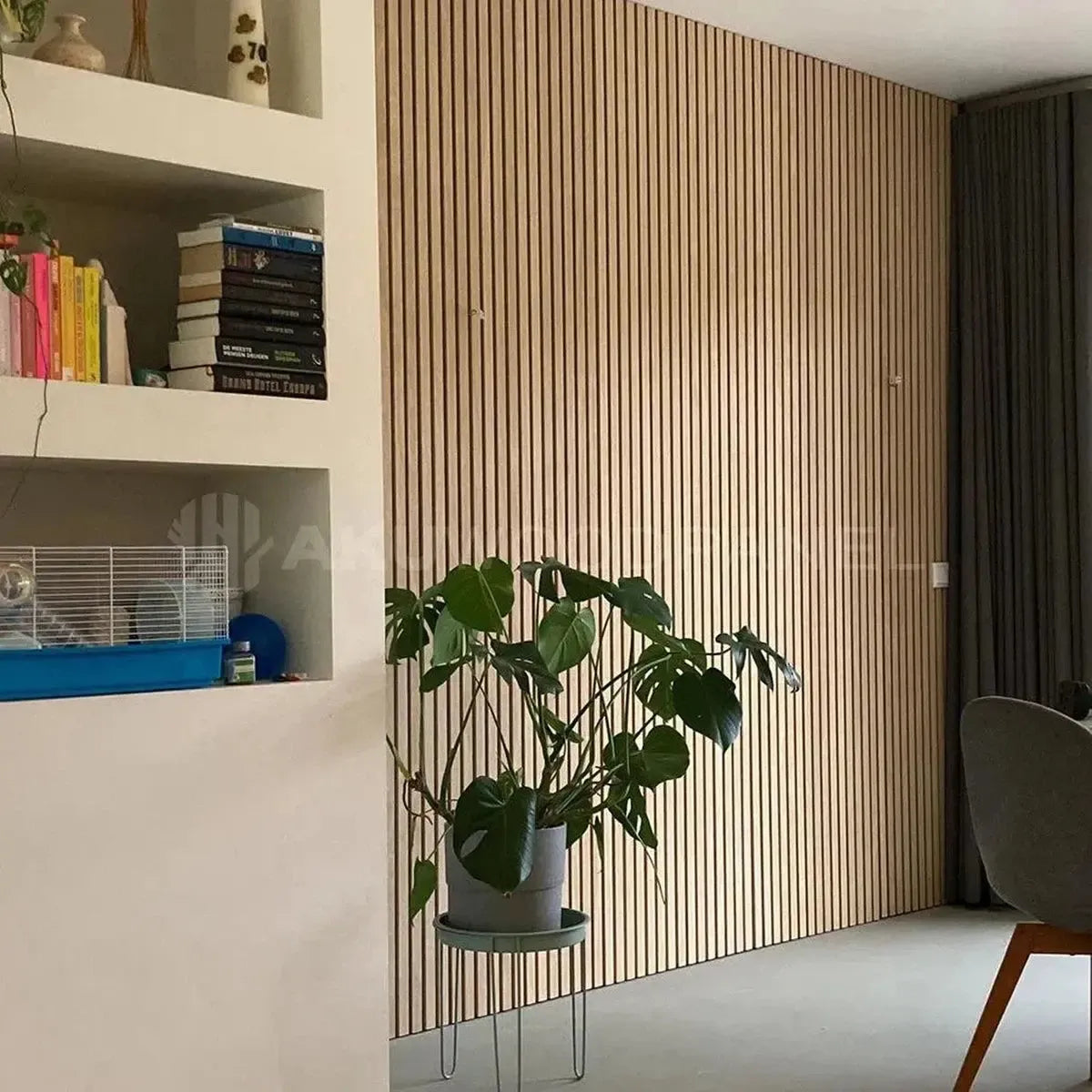
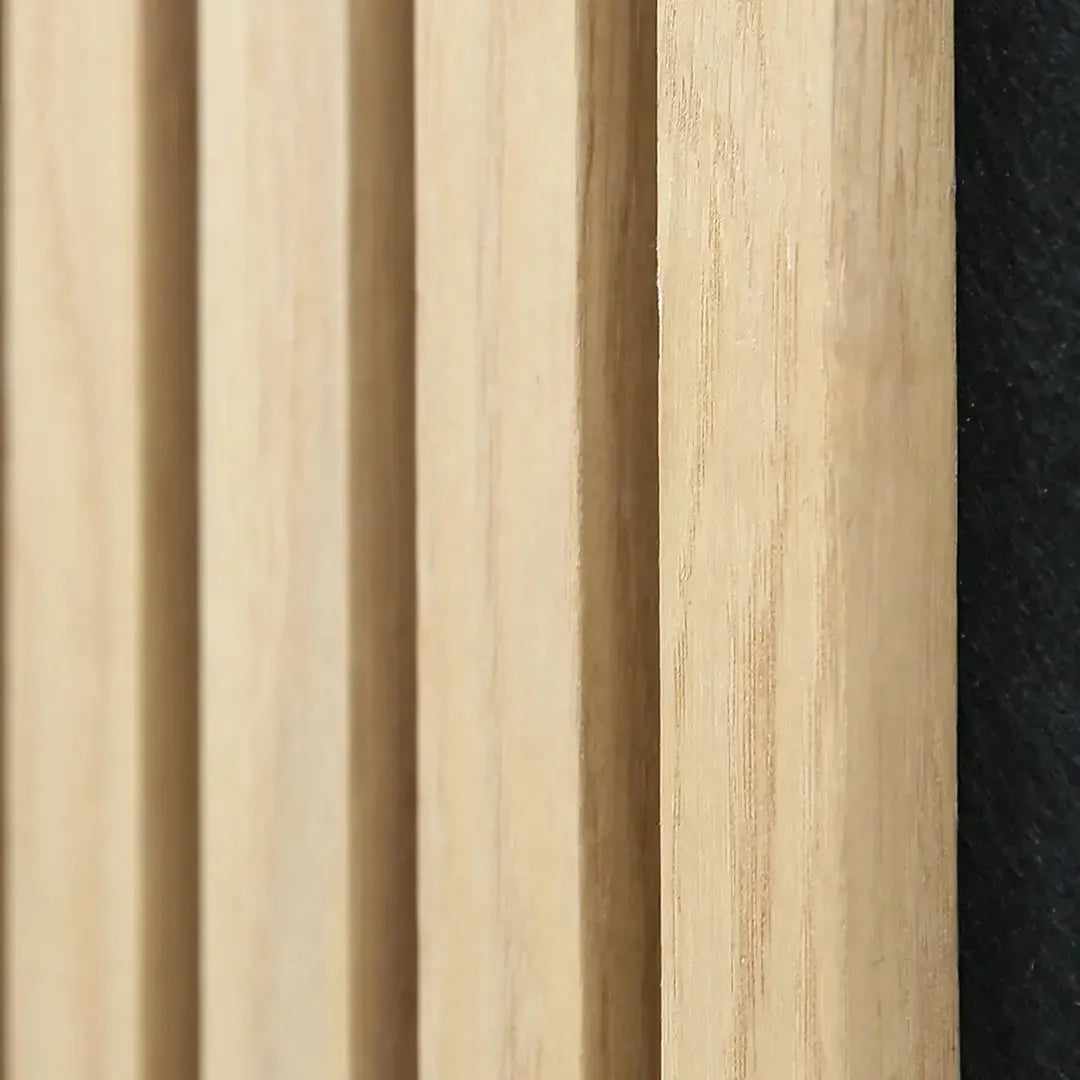
Birch exterior wall panels sit in the sweet spot: they read as real wood, not vinyl trying to look like wood, and the Exterior Wall Panel Birch line is built for outdoor exposure rather than repurposed from an interior product line. That distinction sounds small until your first wet winter in 2026 proves it isn't.
Who this is for
This guide is for tiny home builders and owners finishing an exterior wall on a structure under roughly 400 square feet — whether that's a trailer-mounted build, a park model, or a stationary backyard ADU. It assumes you're weighing panel weight, weatherproofing, and DIY installation against a tighter budget and a smaller crew than a standard home renovation gets.
If you're cladding a multi-family building or a commercial storefront, the calculus changes — weight and per-unit cost matter less than fire ratings and volume pricing, and you'll want a different set of criteria entirely.
What to look for in birch exterior panels for tiny homes
Weather and moisture resistance
A tiny home's exterior wall gets more rain-per-square-foot exposure than a standard house wall because there's proportionally more edge and corner detail on a small elevation. Panels rated for exterior use need a finish built to handle direct weather, not a clear coat meant for a dry interior room. Confirm the panel is explicitly sold as an exterior product before you buy — interior slat and 3D wood tile panels are not built for this job.
Weight per square foot
On a trailer-mounted tiny home, every material choice eats into your tow rating. Wood veneer panels run lighter than fiber cement or stone-look composite siding, which is one of the reasons birch exterior panels show up so often on tiny home builds in 2026 — they deliver the wood look without the axle penalty.
DIY-friendly installation
Most tiny homes get built or finished by one or two people, not a full framing crew. Panels that install with basic tools and standard screws beat systems that need specialty fasteners or a second set of hands to hold panels in place while they're fixed.
Trim and corner detailing
A tiny home has more corners, window returns, and door frames per square foot of wall than a standard house. Finishing trim and corner trim aren't optional add-ons here — they're what keeps water out of the one place panels can't cover on their own: the edge.
Visual scale on a small footprint
A panel pattern that reads fine on a 2,000-square-foot house wall can overwhelm a wall that's 8 feet tall and 12 feet wide. Simpler grain patterns and consistent plank widths tend to hold up better visually on a small elevation than busy, high-contrast finishes.
Top picks for tiny home exteriors
Exterior Wall Panel Birch — the standard pick. This is the panel most tiny home exteriors should start with: an exterior-rated wood veneer finish built to handle direct weather rather than a repurposed interior product. It's the default choice for full-facade cladding on a build under 400 square feet. Buy.
Exterior Panel Finishing Trim Birch — the seam sealer. Every panel run ends somewhere, and on a tiny home that edge is almost always visible from the ground. This trim matches the birch grain and closes off raw panel edges at rooflines, doors, and window returns. Buy.
Exterior Panel Screws Birch — the fastener match. Mismatched screws are the fastest way to make a clean panel install look amateur, and generic hardware store fasteners rarely match the panel finish or sit flush the way a matched screw does. Buy the fastener sized for the panel system, not whatever's in the garage. Buy.
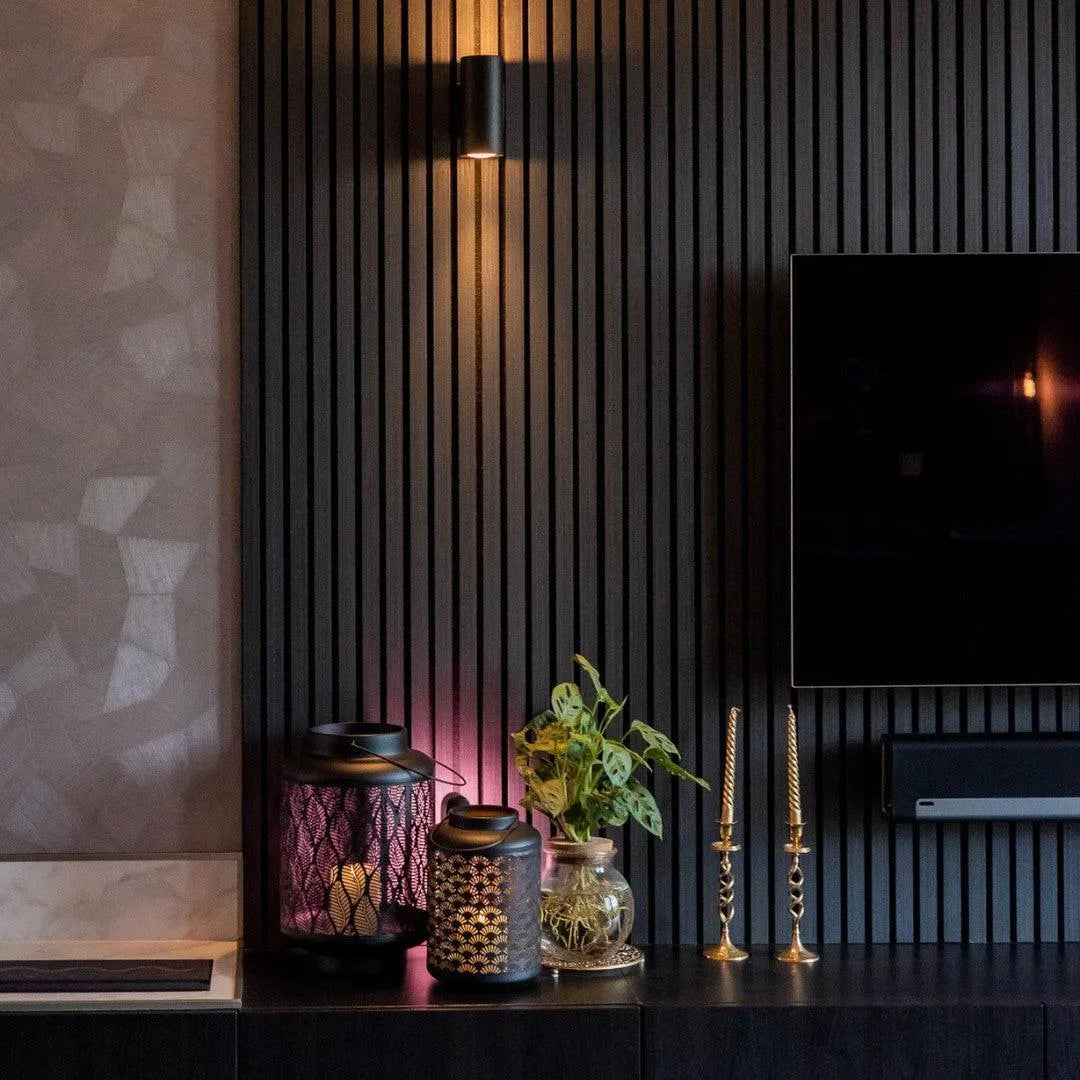
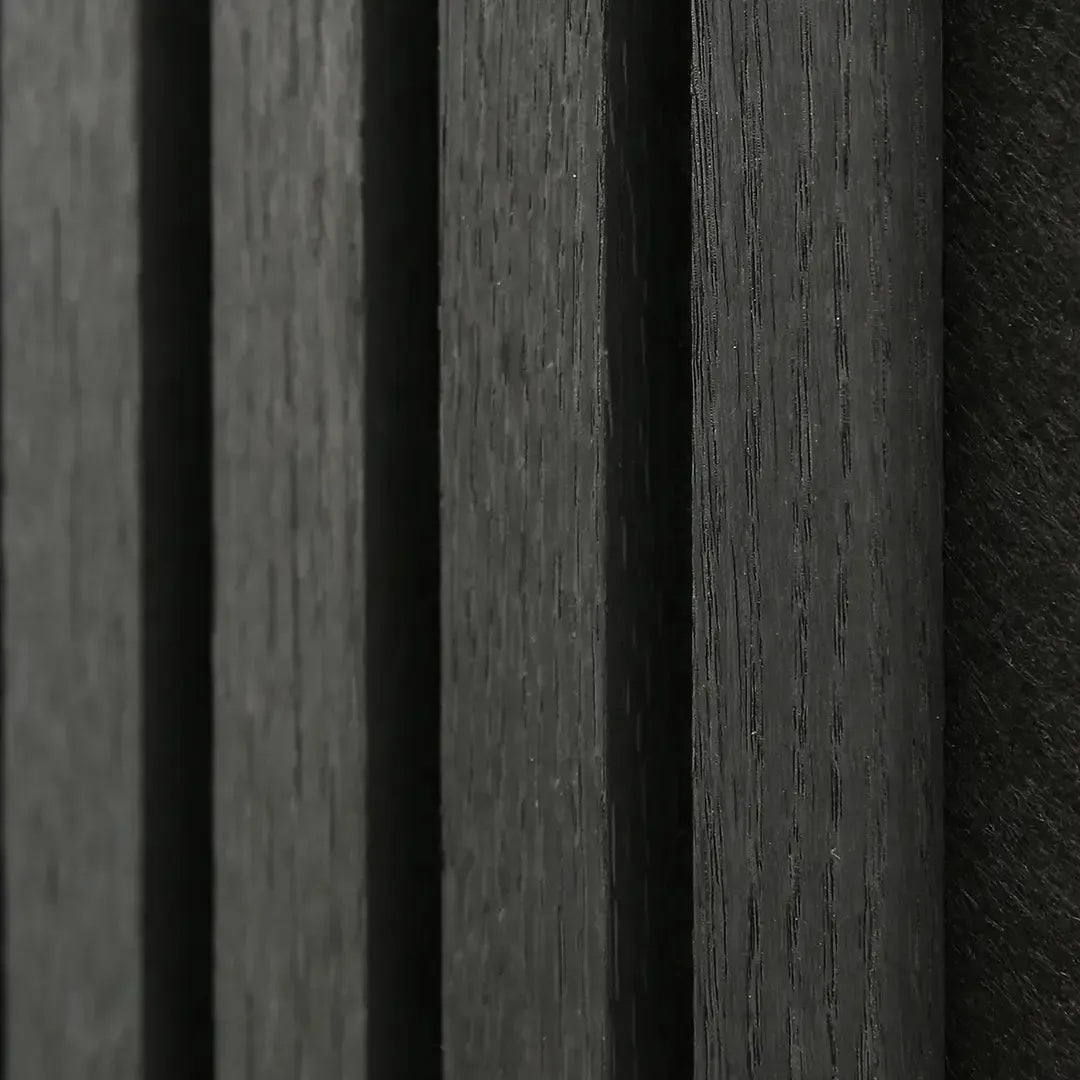
Exterior Wall Panel Black — the wildcard. Full-black exterior cladding on a tiny home reads modern, but on a small elevation it can make the structure look smaller and harder to photograph in bright sun. Use it as a contrast band around a door or base course rather than the whole facade. Consider.
“If a tiny home's exterior wall doesn't have finishing trim at every edge, water finds the seam within one season.”
What to avoid
- Interior slat or 3D wood tile panels used outdoors. These are built for dry indoor rooms — bedrooms, offices, bar walls — not for direct rain and UV exposure. They will warp and delaminate faster than an exterior-rated panel.
- Skipping corner and finishing trim to save money. The trim costs less than the panel and protects the one part of the install that fails first. Cutting it out to save a small amount on a small job is the wrong place to cut.
- Mixing fastener types across one wall. Different screw finishes catch light differently once the sun hits a small elevation at a low angle, and the inconsistency is more visible on a tiny home than it would be on a two-story house.
Verdict comparison
| Pick | Best for | Weather note | Install difficulty | Verdict |
|---|---|---|---|---|
| Exterior Wall Panel Birch | Full facade cladding | Exterior-rated finish | Moderate DIY | Buy |
| Exterior Panel Finishing Trim Birch | Sealing panel edges | Matches birch grain | Easy | Buy |
| Exterior Panel Screws Birch | Fastening to studs | Sized for exterior panel thickness | Easy | Buy |
| Exterior Wall Panel Black | Accent band or trim | Exterior-rated finish | Moderate DIY | Consider |
FAQ
What's the best exterior wall panel for a tiny home in 2026?
Exterior Wall Panel Birch is the strongest all-around choice for a tiny home facade in 2026 because it's built for outdoor exposure and weighs less than fiber cement or composite siding. It works as a full-facade solution on structures under roughly 400 square feet.
Is birch exterior paneling weatherproof?
Panels sold specifically as exterior wall panels carry a finish built for direct rain and UV exposure, unlike interior-rated slat or 3D wood tile panels. Always confirm a panel is marketed as an exterior product before installing it outdoors.
Can I install exterior wall panels on a tiny home myself?
Yes, most exterior panel systems install with basic tools and standard screws, which is why they suit owner-built tiny homes with a small crew. Matching the fastener to the panel system, like Exterior Panel Screws Birch, keeps the install clean.
What's the difference between interior and exterior wood wall panels?
Interior panels, such as slat wall panels and 3D wood tiles, are finished for dry indoor rooms and are not rated for rain or UV exposure. Exterior wall panels use a different finish specifically built to survive outdoor weather over multiple seasons.
Do tiny homes need special trim for exterior wall panels?
Yes, tiny homes have more corners and edges per square foot of wall than a standard house, so finishing and corner trim matter more here, not less. Skipping trim to save money is the fastest way to let water into a seam.
How much birch exterior panel do I need for a tiny home?
Coverage depends on your exact wall dimensions, so measure each elevation separately and account for window and door cutouts before ordering. A tiny home under 400 square feet typically needs far less material than a standard house, but waste from trimming has a bigger visual impact on a small wall.
Is birch a good wood veneer for exterior siding?
Birch veneer gives a lighter-weight alternative to composite or fiber cement siding while still reading as real wood, which suits weight-conscious tiny home builds. Confirm the specific panel is exterior-rated rather than assuming any birch veneer product works outdoors.
Can I mix birch and black exterior panels on the same tiny home?
Yes, using Exterior Wall Panel Black as a contrast band around a door or base course while cladding the rest of the facade in birch is a common approach in 2026. Running an entire small elevation in black can make the structure look smaller in photos.
One last thing
The detail that trips up most first-time tiny home builders isn't the panel — it's the trim. A wall that looks finished in photos often has raw, unsealed edges at the roofline or door frame, and that's exactly where a tiny home's smaller footprint makes every shortcut visible up close in 2026.
 Better performance and aesthetic appeal
 In Stock