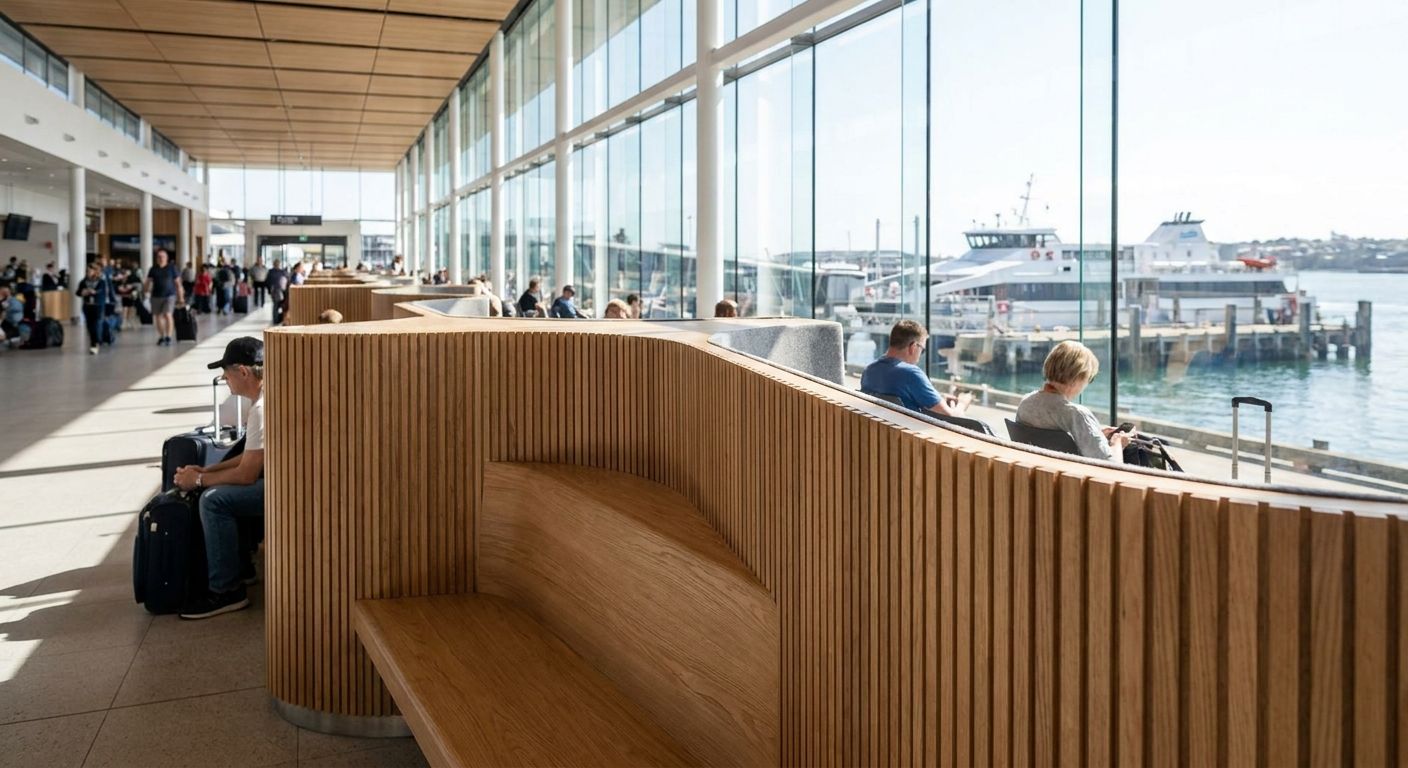
Ferry terminal waiting lounges are echo chambers by design: glass curtain walls, polished concrete floors, steel roof trusses. Every boarding announcement bounces off those surfaces and blurs into noise, and hundreds of rolling suitcases add to it daily. This guide ranks the best wood wall panels for ferry terminal waiting lounges in 2026, covering acoustic performance, durability under heavy foot traffic, and exactly where each panel earns its spot on the wall.
Best overall: Acoustic Slat Wall Panel in Natural Oak with Gray Felt. Best for scuff-prone corridors: Acoustic Slat Wall Panel in Black Oak. Best for accent walls: Hexagon Acoustic Panel in Walnut. Best for columns and curved bulkheads: Fluted Wall Panel in Natural Oak. Best for multi-terminal budget rollouts: Acoustic Slat Wall Panel in Smoked Oak.
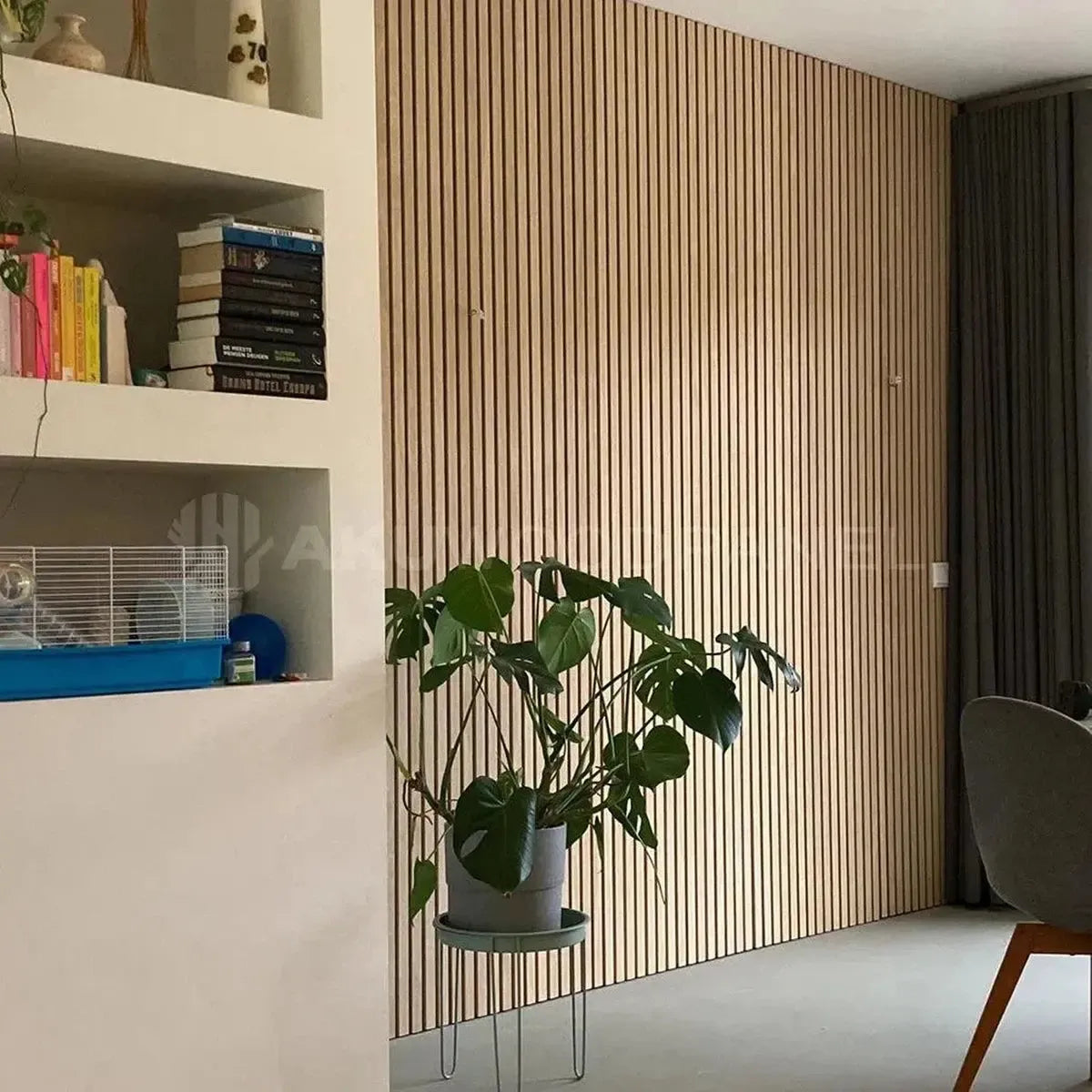
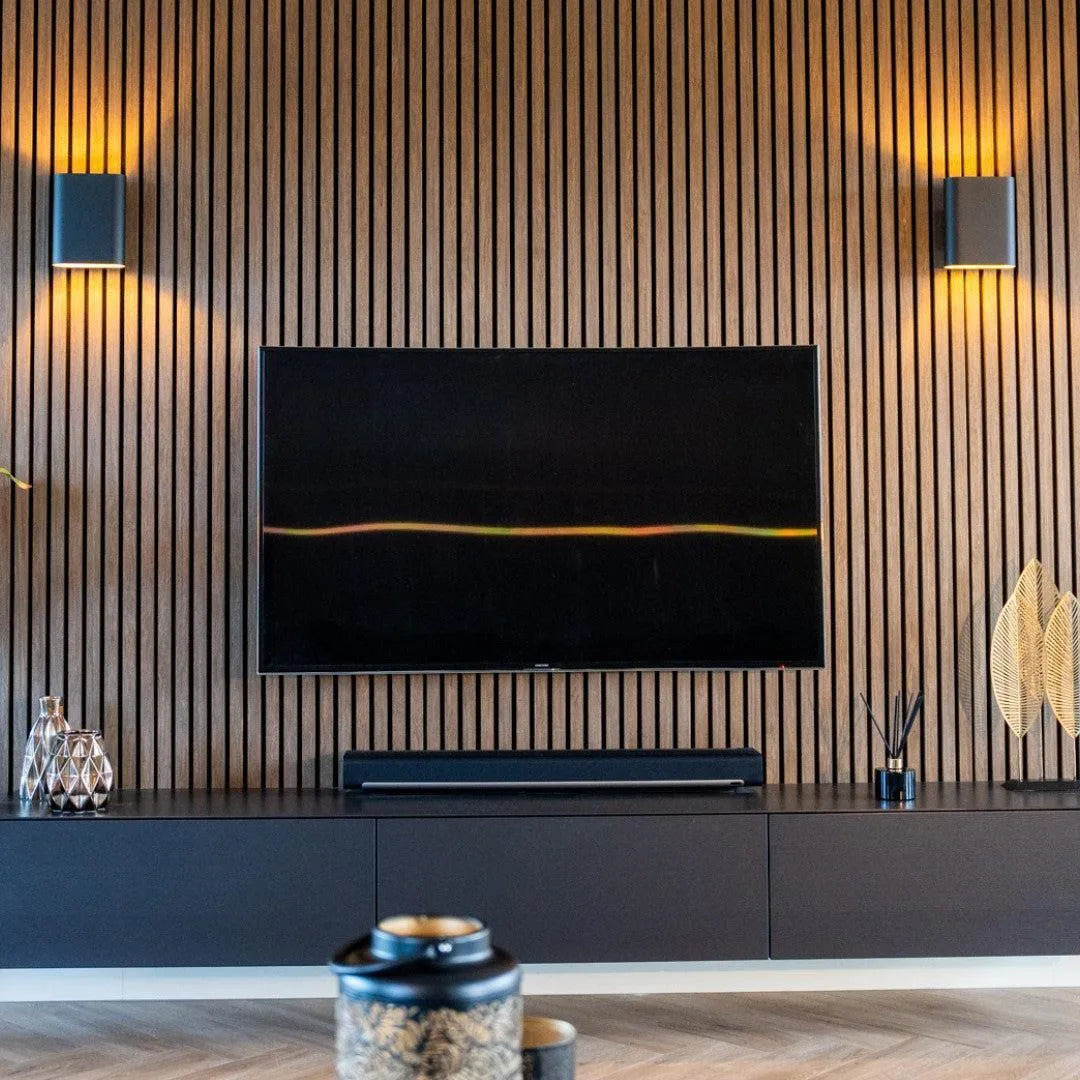
- Acoustic Slat Wall Panel in Natural Oak with Gray Felt is the best wood wall panel for ferry terminal waiting lounges overall in 2026.
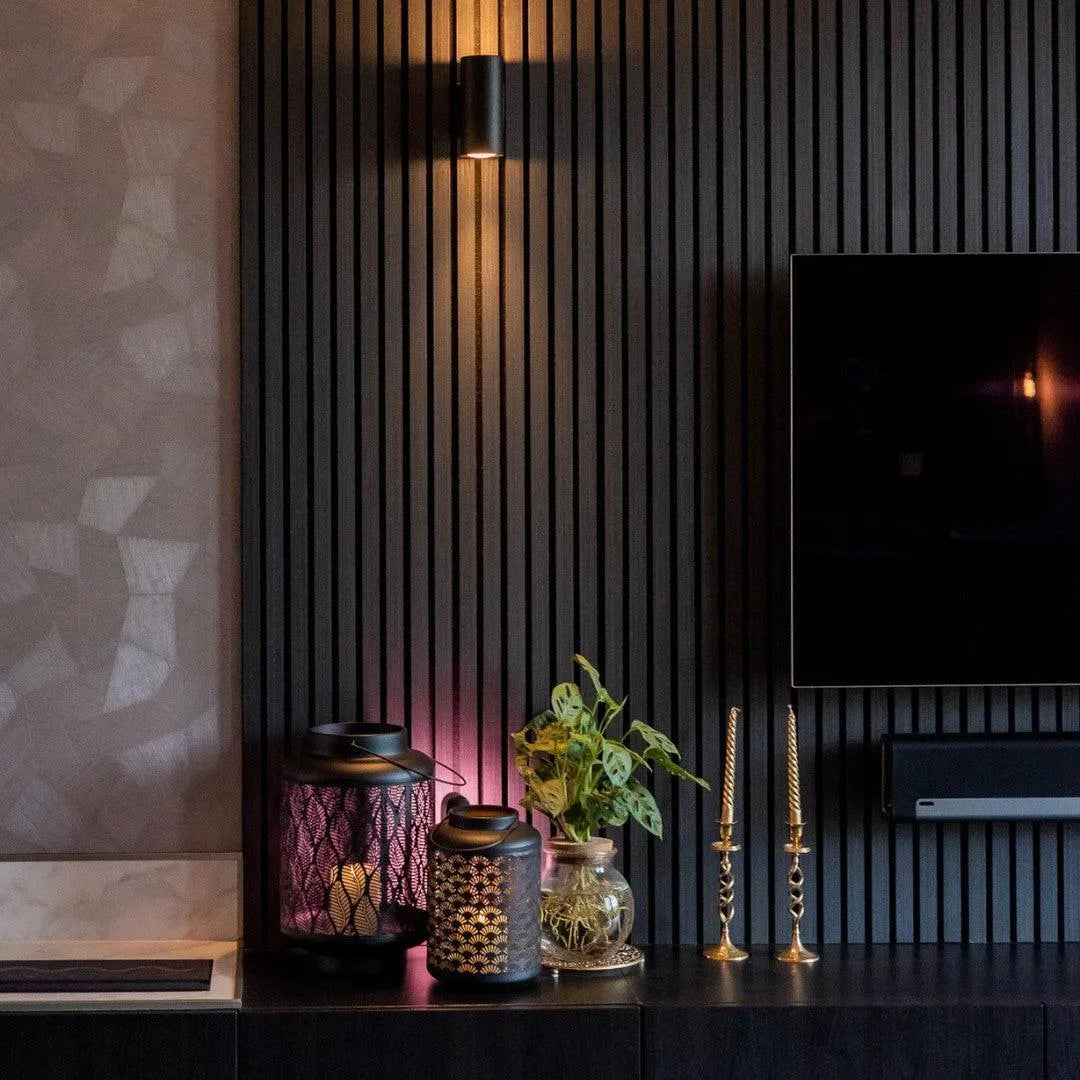
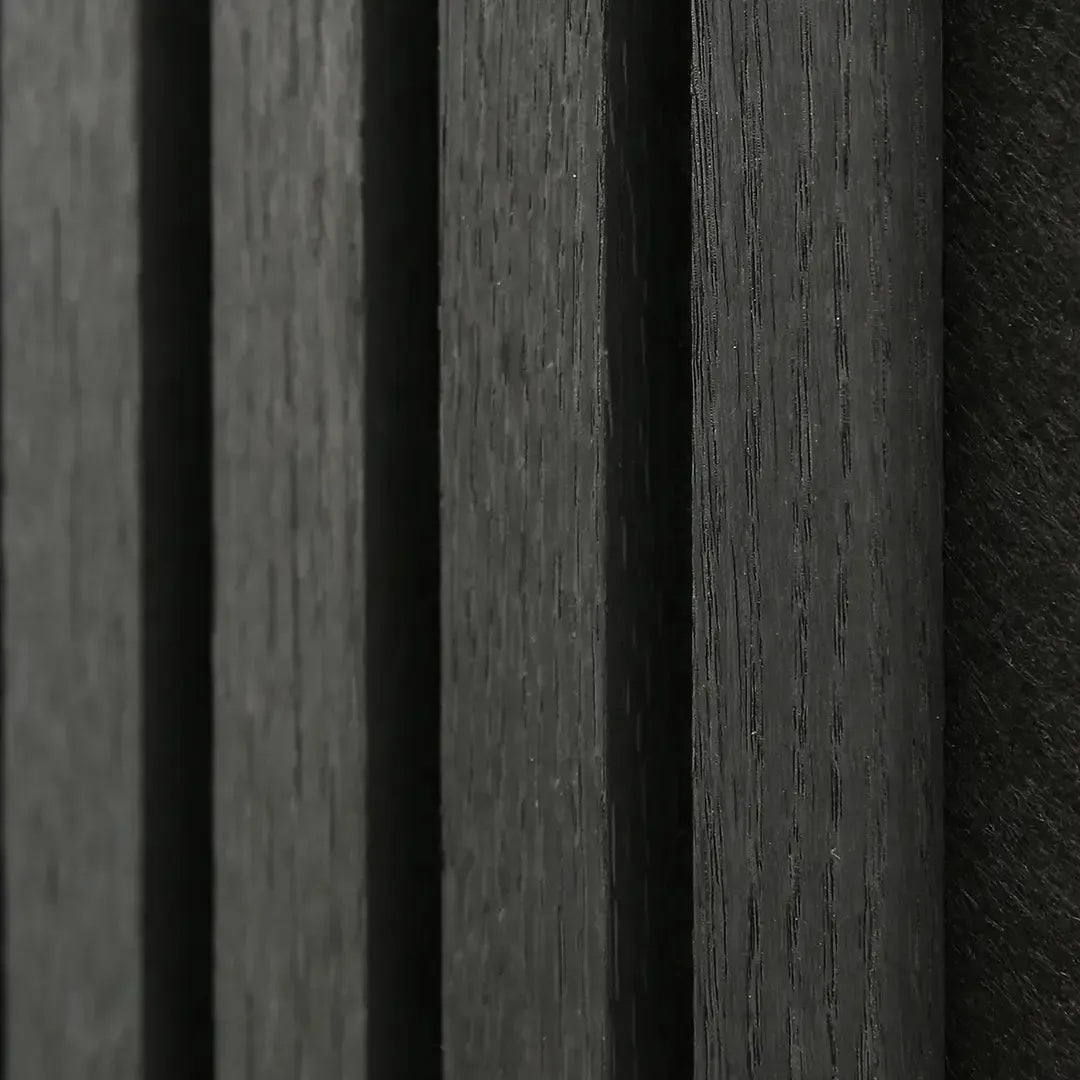
- Acoustic Slat Wall Panel in Black Oak hides scuffs on high-traffic corridors and boarding queues.
- Hexagon Acoustic Panel in Walnut suits ticketing counters and accent walls, not full-room coverage.
- Fluted Wall Panel in Natural Oak wraps structural columns and curved bulkheads that flat slats can't follow.
- Acoustic Slat Wall Panel in Smoked Oak is the budget pick for multi-terminal rollouts in 2026.
Why this matters
A ferry terminal waiting lounge runs on hard, reflective materials — glass for sightlines, concrete for maintenance, steel for structure. None of that absorbs sound, which is why gate announcements get harder to parse the busier the lounge gets. Wood wall panels solve two problems at once: they absorb reflected sound and give a warmer finish than bare drywall or block that takes visible wear over years of foot traffic.
The acoustic slat wall panel in natural oak with gray felt is built on a 3-sided real wood veneer with a felt-backed core designed for sound absorption, not just looks — that combination is why it tops this list. Commercial transit projects also tend to require Class A fire-rated wall coverings, which narrows the field before aesthetics even enter the conversation.
What makes the best wood wall panel for a ferry terminal
- Sound absorption over decoration — felt-backed or slatted construction that actually reduces reverberation, not a flat veneer laminate
- Commercial fire compliance — Class A fire-rated options for public transit and other code-regulated interiors
- Impact and scuff resistance — finishes that don't show every cart scrape or shoe scuff after a few months
- Coverage flexibility — the ability to wrap columns, curves, and irregular bulkheads without visible seams
- Maintenance simplicity — panels that clean with routine wiping instead of specialized care
- Rollout consistency — a finish that reads the same across multiple terminals or renovation phases
Wood wall panels for ferry terminals at a glance
| Panel | Best for | Standout feature | Key limitation |
|---|---|---|---|
| Acoustic Slat Wall Panel — Natural Oak with Gray Felt | Overall sound absorption | Felt-backed slat core over real wood veneer | Lighter finish shows dirt faster than darker tones |
| Acoustic Slat Wall Panel — Black Oak | High-traffic corridors | Dark finish masks scuffs and cart marks | Absorbs less ambient light in dim terminals |
| Hexagon Acoustic Panel — Walnut | Ticketing and accent walls | Modular honeycomb tiles for feature sections | Slower to install across large square footage |
| Fluted Wall Panel — Natural Oak | Columns and curved bulkheads | Flexible MDF backing follows curved surfaces | Less acoustic absorption than slat construction |
| Acoustic Slat Wall Panel — Smoked Oak | Multi-terminal budget rollouts | Consistent grain across bulk orders | Fewer built-in accessories than felt-backed line |
1. Acoustic Slat Wall Panel — Natural Oak with Gray Felt: best wood wall panel for ferry terminal waiting lounges overall
This panel pairs a real wood veneer face with a gray felt-backed slat core, which is the construction that does the actual work of pulling sound out of a room instead of just covering a wall. It's the panel to specify when the primary complaint from staff and passengers is that announcements are hard to understand over ambient noise.
Acoustic Slat Wall Panel Natural Oak with Gray Felt pros:
- Felt backing targets reverberation, not just wall coverage
- Real wood veneer reads as upgraded finish, not laminate
- Works across large open-plan waiting halls without visual monotony
Acoustic Slat Wall Panel Natural Oak with Gray Felt cons:
- Lighter oak tone shows grime faster in high-touch zones
- Slat gaps collect dust and need periodic vacuuming in dusty coastal terminals
Acoustic Slat Wall Panel Natural Oak with Gray Felt pricing: check current pricing on the product page, normalized per panel.
Best for: waiting lounges where echo and announcement clarity are the top complaint.
Verdict: Buy for the primary wall treatment in any 2026 lounge renovation focused on acoustics first.
2. Acoustic Slat Wall Panel — Black Oak: best for high-traffic corridors and boarding queues
Boarding queues take the worst physical abuse in any terminal — rolling luggage, strollers, and impatient elbows all make contact with the wall. Black Oak's dark finish is the practical answer: it hides scuffs that would show immediately on a lighter panel.
Acoustic Slat Wall Panel Black Oak pros:
- Dark finish conceals scuffs, scrapes, and cart marks
- Same 3-sided wood veneer and slat construction as the rest of the line
- Pairs well with steel and glass terminal architecture
Acoustic Slat Wall Panel Black Oak cons:
- Absorbs more visible light, which can read as heavy in already dim lounges
- Less acoustic differentiation from the natural oak line — the improvement here is cosmetic durability, not sound performance
Best for: corridors, queue lanes, and any wall zone that takes direct physical contact.
Verdict: Buy for queue and corridor walls, Hold for open lounge seating where a lighter tone reads better.
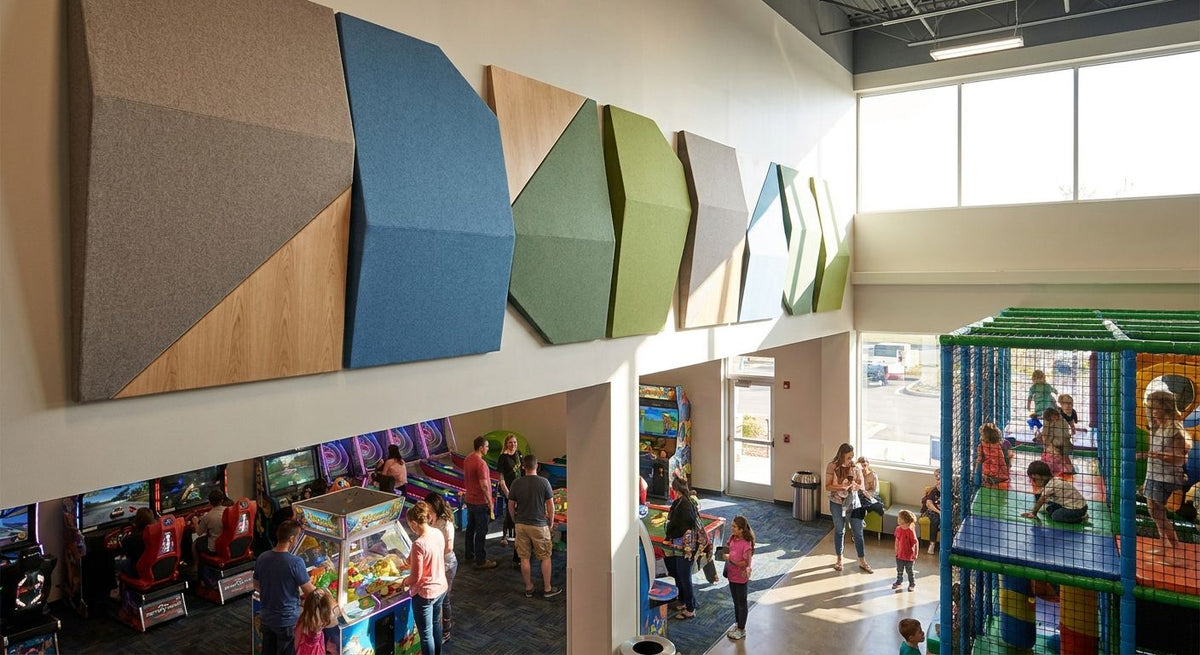
3. Hexagon Acoustic Panel — Walnut: best for ticketing counters and accent walls
The walnut hexagon acoustic panel is a modular tile system arranged in a honeycomb pattern, which makes it a feature-wall product rather than a full-room solution. It's the right call behind a ticketing counter or on a single accent wall where the goal is visual interest, not blanket coverage.
Hexagon Acoustic Panel Walnut pros:
- Honeycomb layout creates a distinct focal wall
- Walnut tone contrasts well against oak-toned slat panels elsewhere in the lounge
- Modular tiles simplify partial-wall or feature-section installs
Hexagon Acoustic Panel Walnut cons:
- Installing full corridors of hexagon tile takes longer than slat panel runs
- Not the first choice when reverberation control across a large hall is the main goal
Best for: ticketing counters, reception desks, and single feature walls.
Verdict: Buy as an accent, Skip if you need whole-room acoustic coverage on a tight installation timeline.
4. Fluted Wall Panel — Natural Oak: best for columns and curved bulkheads
Ferry terminals are full of structural columns, curved ticket-counter surrounds, and bulkheads that a flat slat panel can't wrap cleanly. The fluted wall panel in natural oak is built on a flexible MDF backing under real wood veneer, which lets it follow curves that rigid panels can't.
Fluted Wall Panel Natural Oak pros:
- Flexible MDF backing bends around columns and curved surfaces
- Fluted profile adds texture and depth without a slat gap pattern
- Matches the oak tones used elsewhere in a coordinated lounge design
Fluted Wall Panel Natural Oak cons:
- Fluted grooves offer less acoustic absorption than a felt-backed slat panel
- Best reserved for architectural detail, not the primary sound-control wall
Best for: columns, curved bulkheads, and architectural transitions.
Verdict: Buy for structural detail work, Hold as the sole acoustic solution for a lounge.
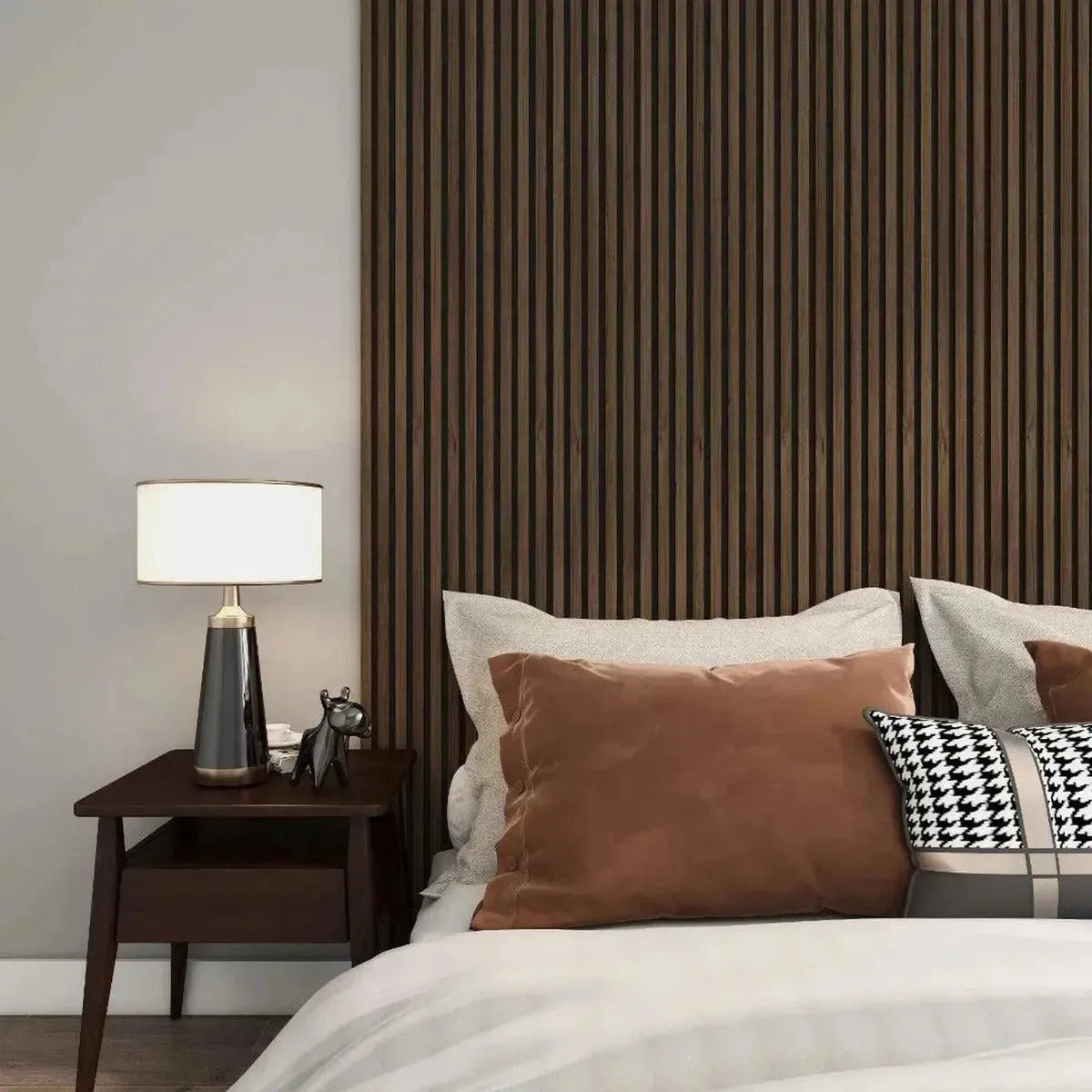
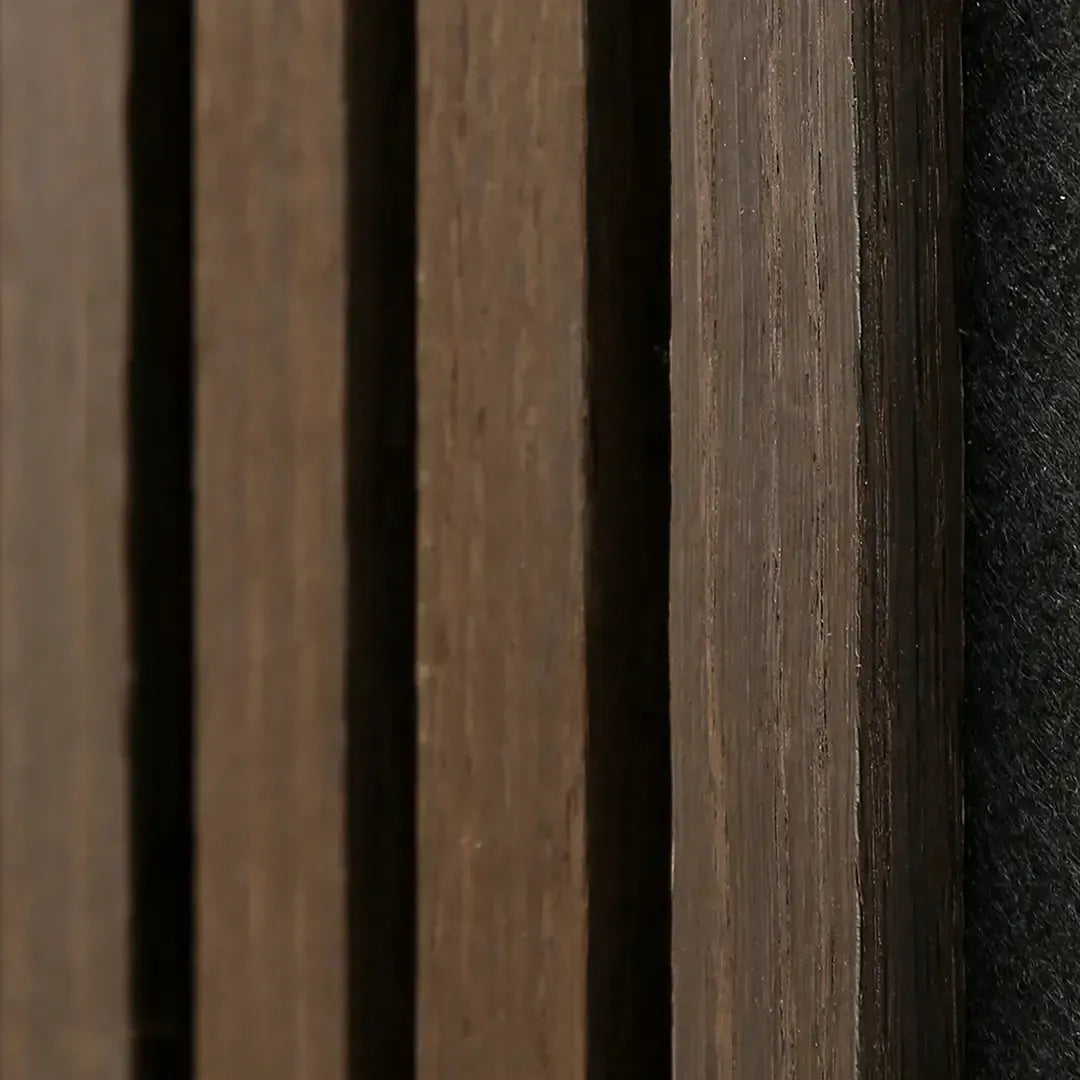
5. Acoustic Slat Wall Panel — Smoked Oak: best for multi-terminal budget rollouts
When a ferry operator is refitting several terminals on the same contract, consistency and cost control matter more than any single premium feature. Smoked Oak keeps the same slat construction and wood veneer as the rest of the line at a tone that reads consistently across bulk orders in 2026.
Acoustic Slat Wall Panel Smoked Oak pros:
- Consistent grain and tone across large multi-site orders
- Same acoustic slat construction as the felt-backed and black oak variants
- Mid-tone finish that hides moderate wear without going fully dark
Acoustic Slat Wall Panel Smoked Oak cons:
- Lacks the felt-backed acoustic core of the Natural Oak with Gray Felt option
- Fewer matching trim accessories listed than the natural oak and black oak lines
Best for: operators renovating multiple terminals on one budget.
Verdict: Buy for rollout consistency, Skip if felt-backed absorption is the non-negotiable requirement.
How we ranked
Each panel was measured against the six criteria above: sound absorption construction, fire compliance, scuff resistance, coverage flexibility, maintenance, and rollout consistency. Felt-backed slat construction outranked flat veneer and fluted profiles specifically on absorption, which is why the Natural Oak with Gray Felt panel takes the overall spot despite Black Oak's edge on scuff-hiding and Hexagon Walnut's edge on visual distinction.


Which wood wall panel should you choose?
If reducing echo is the actual complaint from passengers and staff, Acoustic Slat Wall Panel in Natural Oak with Gray Felt is the default pick for a 2026 ferry terminal lounge. Route it to Black Oak instead for corridors and queue lanes that take direct physical wear, and reserve Hexagon Walnut and Fluted Natural Oak for accent walls and structural detailing rather than full-room coverage. Multi-terminal contracts on a fixed budget should default to Smoked Oak for consistency across sites.
FAQ
What is the best wood wall panel for a ferry terminal waiting lounge?
The Acoustic Slat Wall Panel in Natural Oak with Gray Felt is the best overall choice for 2026, because its felt-backed slat construction targets sound absorption directly instead of just covering the wall.
Do wood wall panels actually reduce echo in transit terminals?
Felt-backed and slatted wood panels absorb reflected sound that hard surfaces like glass and concrete bounce back into a room, which is why acoustic slat construction outperforms flat veneer panels for echo control.
Is Black Oak or Natural Oak better for a busy boarding queue?
Black Oak is better for boarding queues because its dark finish hides scuffs and cart marks that show up quickly on the lighter Natural Oak tone.
Can wood panels wrap around terminal columns and curved walls?
Fluted wall panels with flexible MDF backing, like the Natural Oak fluted panel, are designed to bend around columns and curved bulkheads that rigid slat panels cannot follow.
Are hexagon acoustic panels good for full-room coverage?
Hexagon acoustic panels work best as accent or feature walls, such as behind a ticketing counter, rather than as the primary acoustic treatment for an entire waiting lounge.
Do commercial transit projects require fire-rated wall panels?
Public transit interiors typically require Class A fire-rated wall coverings, which is a standard building code classification worth confirming before specifying any panel for a terminal renovation.
What is the most budget-friendly option for multiple ferry terminals?
Acoustic Slat Wall Panel in Smoked Oak is the most practical pick for multi-terminal rollouts in 2026 because it keeps the same construction and a consistent tone across bulk orders.
One last thing
The detail most renovation plans miss is edge finishing: a terminal wall gets more direct contact and cleaning than almost any residential install, and unfinished slat panel edges are the first thing to chip or fray under that kind of use. Order end pieces or corner trim in the matching tone at the same time as the panels, not as an afterthought once the walls are already up.


 Better performance and aesthetic appeal
 In Stock