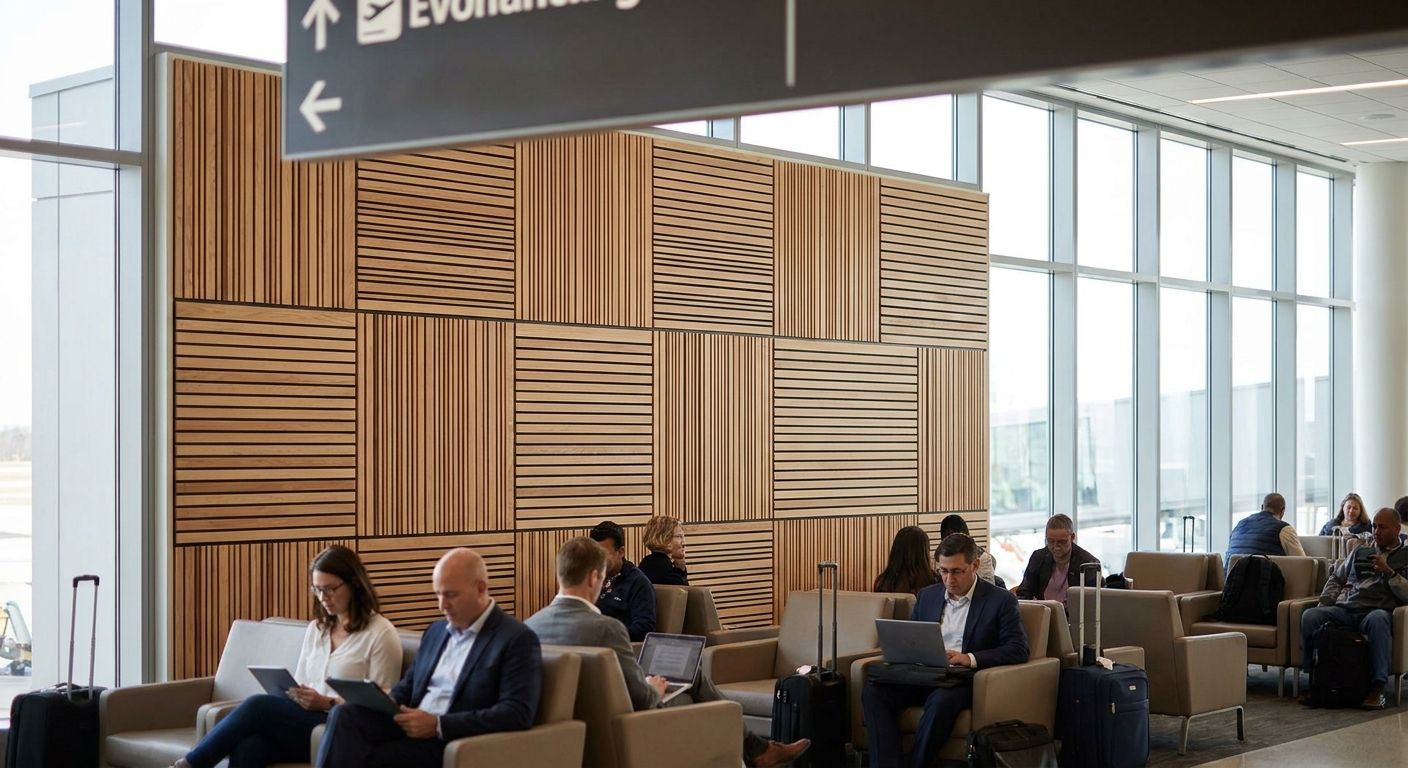
Airport terminals are volume machines for noise: hard floors, glass curtain walls, ceiling heights that push 30 feet, and thousands of daily footsteps bouncing sound with nowhere to land. Acoustic wood panels give architects and facilities teams a way to cut reverberation without hiding the material palette airports lean on for wayfinding and brand identity.
- Acoustic slat wall panel in Black Oak is the top pick for gate seating areas and check-in halls in 2026 — Buy.
- Hexagon acoustic panel in Smoked Oak carries an NRC of 0.75 and suits curved lounge walls — Buy.
- Natural Oak slat panel with gray felt backing balances acoustic performance and 2026 material cost — Buy.
- Skip standard fluted panels for main concourses; they add texture but little sound absorption for airport-scale noise loads.
Why this matters
A terminal with poor acoustics doesn't just feel loud — it makes gate announcements unintelligible and drives up traveler stress in a space people already dread. Acoustic wood panels solve two problems at once: they absorb sound energy that would otherwise ricochet off marble and glass, and they replace the generic drop-ceiling look with a material that reads as premium.
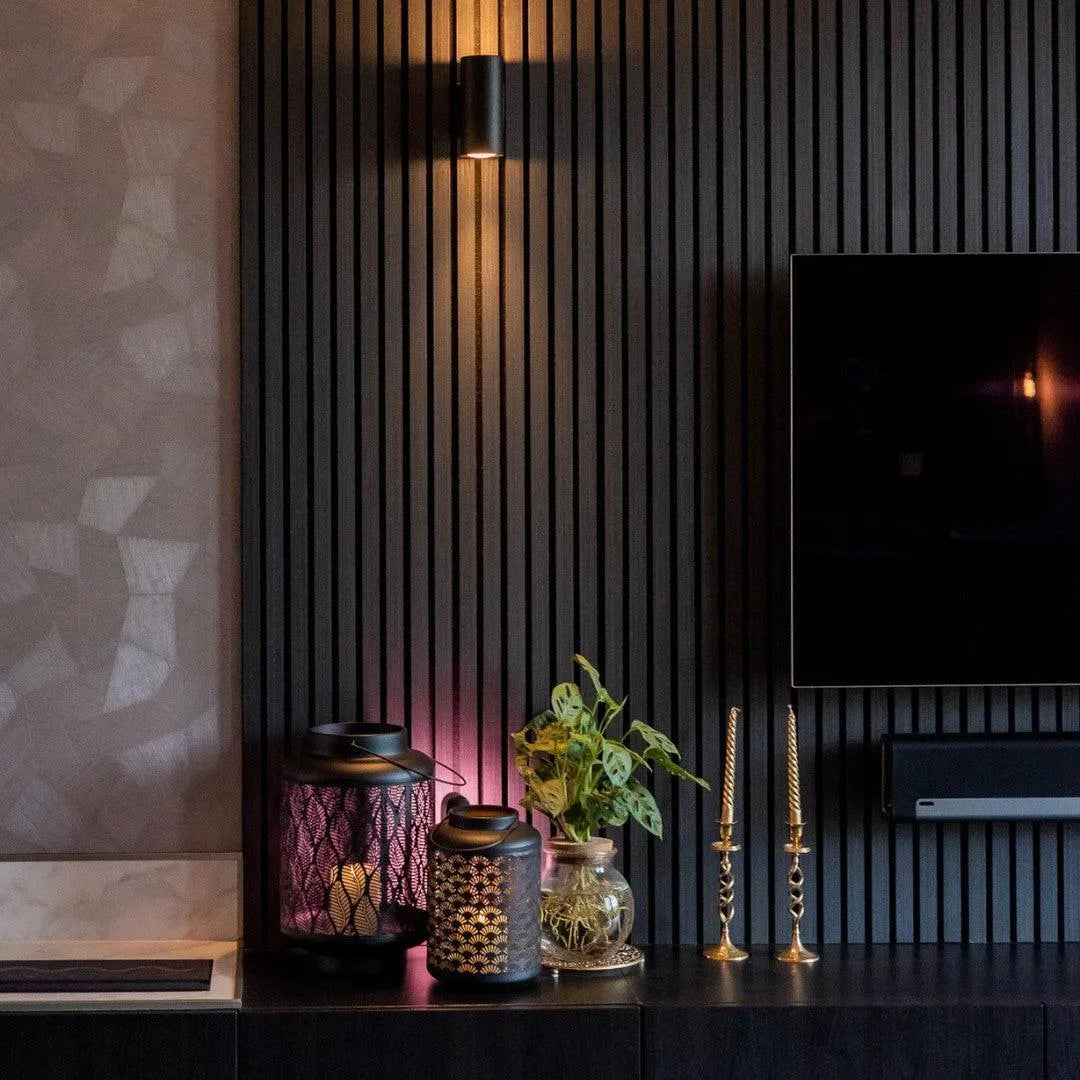
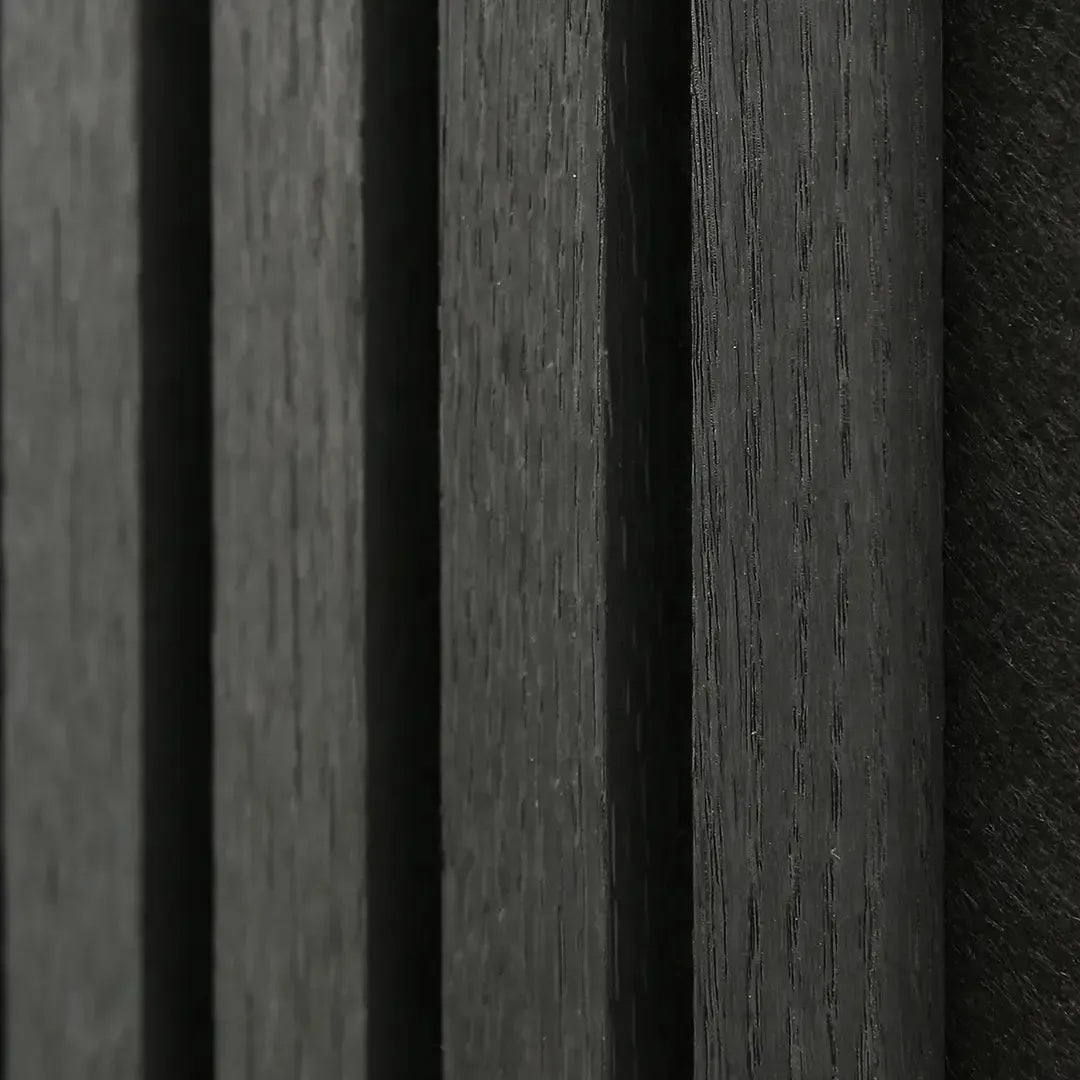
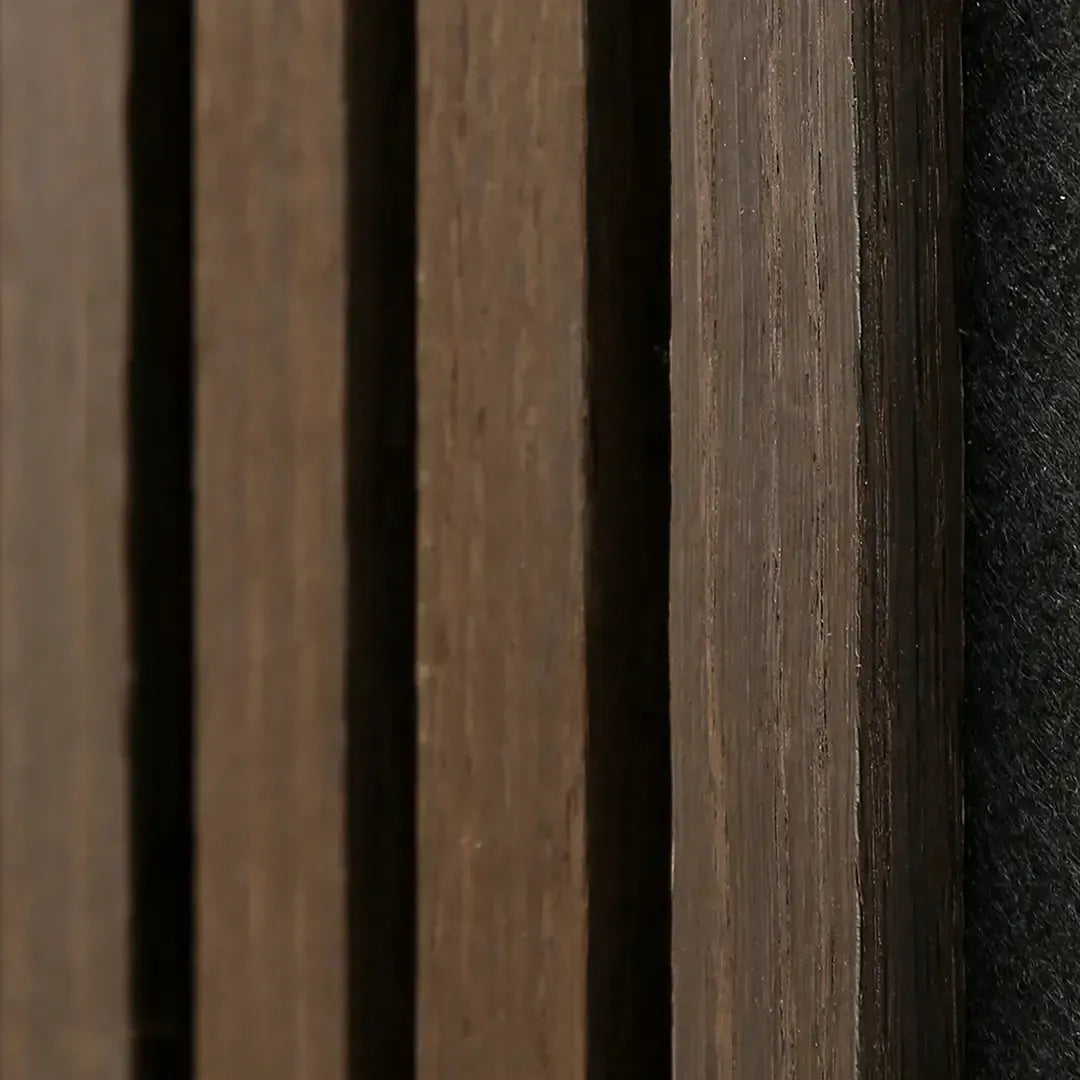
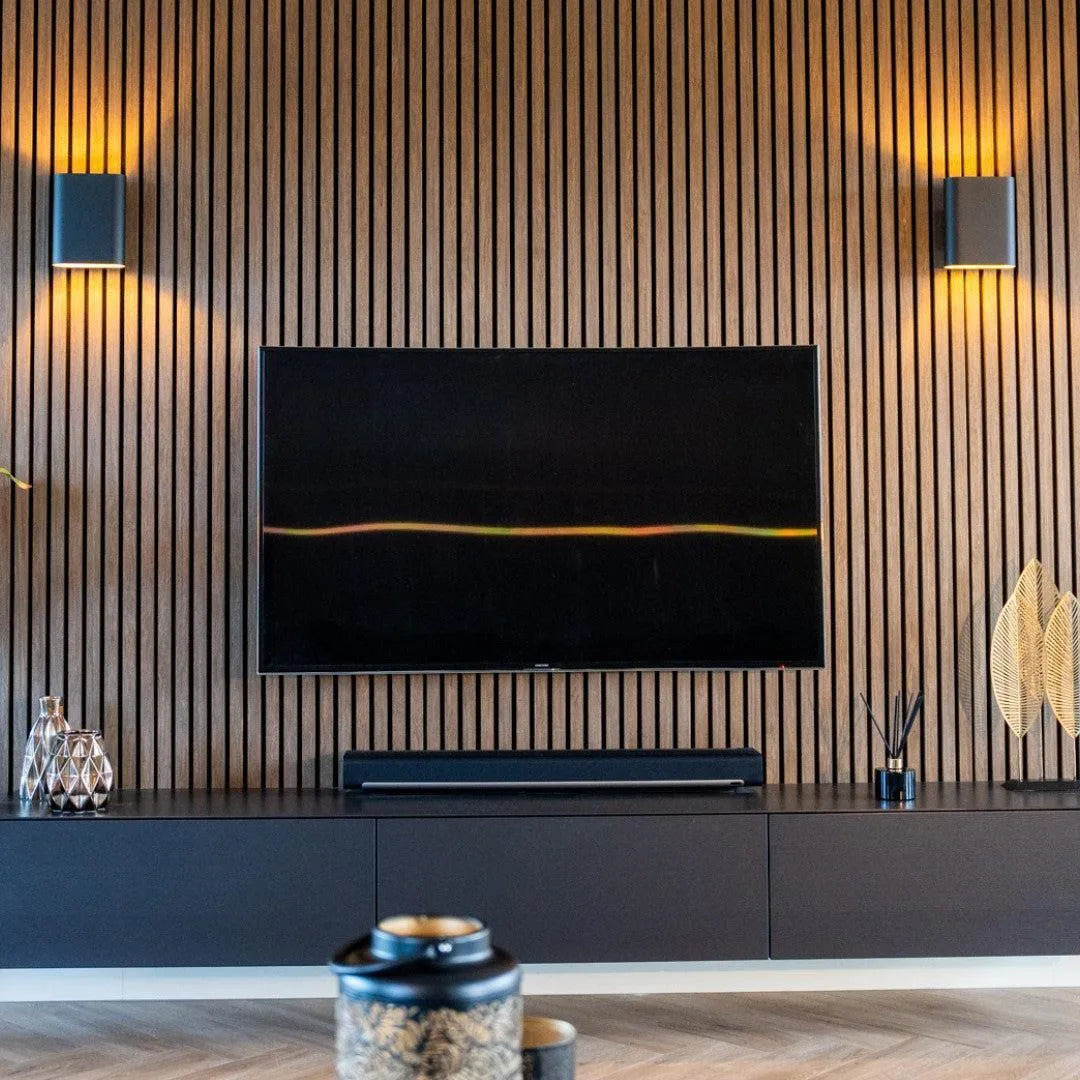
The acoustic slat wall panel in Black Oak shows up first in this list because it hits the mark most airport procurement teams care about in 2026: a felt-backed slat design that absorbs mid-to-high frequency noise, a real wood veneer finish that ages well under heavy foot traffic zones, and a dark tone that hides scuffing better than pale finishes in high-touch corridors.
Before specifying anything, check fire code requirements for your terminal class — most US airports require Class A flame-spread ratings for interior finish, and fire-retardant slat wall panel specs walk through what that means for wood veneer products.
How this list was built
This ranking weighs acoustic performance (NRC where published), finish durability under commercial foot traffic, and installed cost per panel box, using aggregated 2026 product spec data. Airport terminal projects skew toward large linear footage — gate corridors alone can run 200 to 400 linear feet per concourse — so cost per box and coverage per box matter as much as acoustic rating. Every product below is evaluated against that combination, not against residential-scale criteria like color-matching a sofa.
The ranked list
1. Acoustic Slat Wall Panel — Black Oak (Premium 3-sided Wood Veneer)
The workhorse pick for main terminal walls. Priced at $177.95 per box, this panel uses a felt-backed slat design that absorbs sound reflecting off hard terminal floors and glass facades. The dark oak finish resists visible wear in high-touch zones near check-in counters and security queues, where lighter finishes show scuffing within a year. For 2026 renovation budgets, it's the finish that pairs well with the metal and glass most terminals already use. Buy.
2. Hexagon Acoustic Panel — Smoked Oak
The geometric statement pick for gate lounges and curved feature walls. At $165.95 per box of four panels, it carries an NRC of 0.75 — meaning it absorbs roughly three-quarters of the sound energy that hits it, a meaningful reduction in a space where PA announcements compete with rolling luggage and boarding calls. Hexagon shapes also break up long sightlines in wide-open gate areas, which slat panels alone can't do. Buy.
3. Acoustic Slat Wall Panel — Natural Oak with Gray Felt
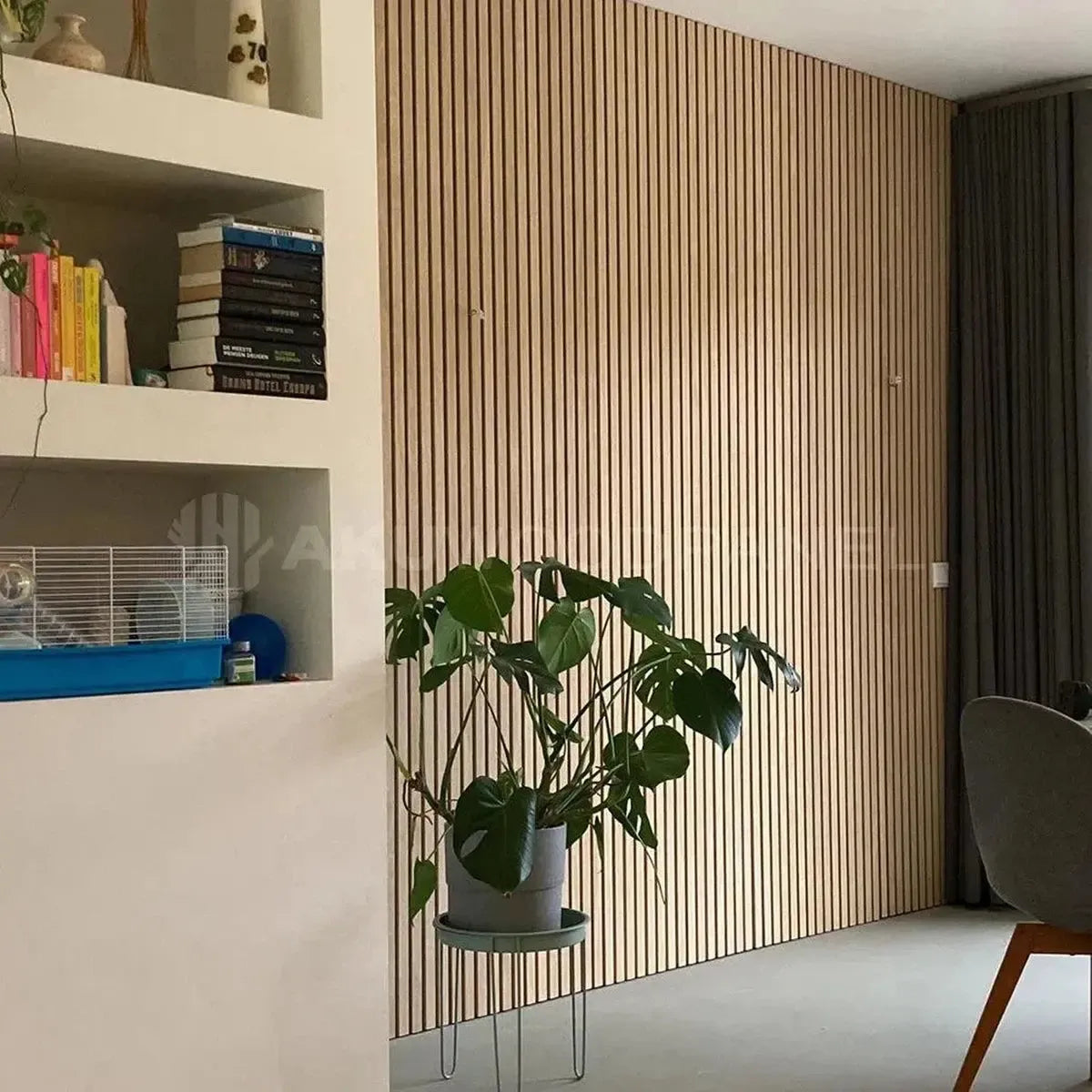
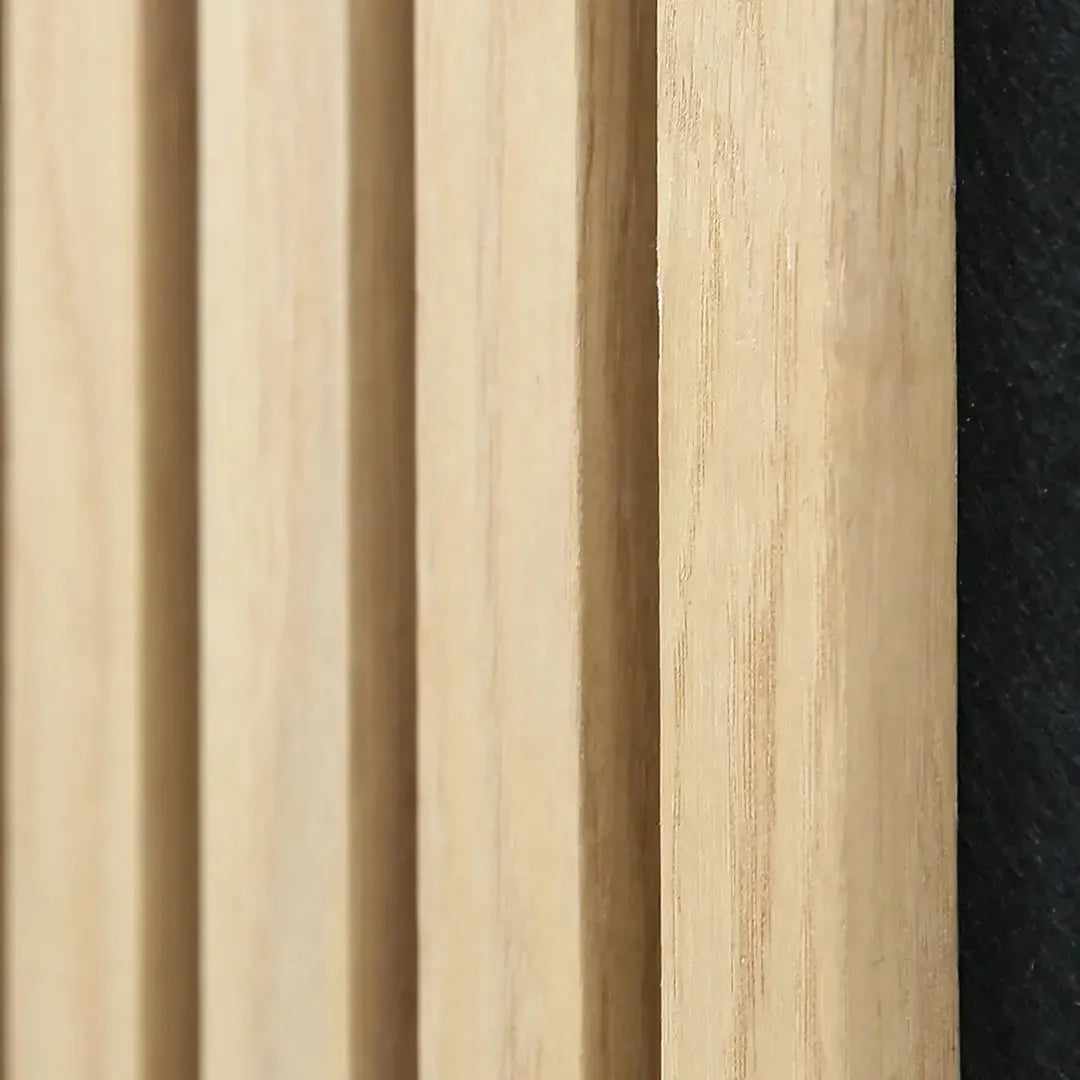
The budget-conscious pick that doesn't skimp on acoustic performance. At $169.95, it costs less than the Black Oak and Walnut variants while keeping the same felt-backed absorption structure. Lighter oak tones work well in terminals that lean into natural daylight and biophilic design, a trend more US airport renovations chased through 2025 and into 2026. Buy.
4. Hexagon Acoustic Panel — Natural Oak
The neutral pick for terminals that need acoustic treatment without a color statement. It matches the 0.75 NRC rating of its Smoked Oak sibling but reads lighter and more universal against white or gray terminal palettes. Good secondary choice when Black Oak or Smoked Oak already anchors the main concourse and you need a lighter tone for a satellite gate area. Consider.
5. Acoustic Slat Wall Panel — Smoked Oak
The dark accent pick for VIP lounges and premium check-in zones. At $177.95, it sits at the same price point as Black Oak but reads warmer under terminal LED lighting. Use it sparingly — an entire concourse in Smoked Oak absorbs sound but can feel cave-like under fluorescent-heavy retrofit lighting. Consider.
6. Fluted Wall Panel — Natural Oak
The texture pick that looks the part but underperforms acoustically for terminal-scale noise. Fluted panels have solid ridges rather than felt-backed slats, so they don't absorb sound the way the slat or hexagon lines do. Reserve it for narrow corridors, jet bridges, or decorative columns where the acoustic load is lower than a main concourse. Skip for primary noise-control zones.


Comparison table
| Panel | Style | Price | NRC | Best zone | Verdict |
|---|---|---|---|---|---|
| Black Oak slat panel | Slat, felt-backed | $177.95 | Felt-backed absorption | Main concourse, check-in | Buy |
| Hexagon Smoked Oak | Hexagon, felt-backed | $165.95 | 0.75 | Gate lounges, curved walls | Buy |
| Natural Oak with gray felt | Slat, felt-backed | $169.95 | Felt-backed absorption | Daylight-heavy concourses | Buy |
| Hexagon Natural Oak | Hexagon, felt-backed | $165.95 | 0.75 | Satellite gates | Consider |
| Smoked Oak slat panel | Slat, felt-backed | $177.95 | Felt-backed absorption | VIP lounges | Consider |
| Fluted Natural Oak | Fluted, solid ridge | Varies | Low acoustic value | Jet bridges, columns | Skip for primary zones |
Where to buy
- Order a sample box before committing to a full concourse spec — color rendering under airport LED lighting differs from studio photography.
- For multi-gate rollouts, standardize on one or two finishes across the terminal rather than mixing five; it simplifies future replacement and keeps the panel supply chain predictable through 2026 and beyond.
- Confirm fire-rating documentation with your supplier before final procurement sign-off — this is where most airport interior projects stall.
FAQ
What are the best acoustic panels for airport terminals in 2026?
Felt-backed slat wood panels like Black Oak and Natural Oak with gray felt, plus hexagon panels with a 0.75 NRC rating, are the strongest 2026 options for airport terminal noise control. They combine sound absorption with a finish that holds up under heavy foot traffic.
Do acoustic wood panels meet airport fire code requirements?
Fire code compliance depends on the specific panel construction and finish, so always request documentation from the supplier before specifying a terminal-wide install. Class A flame-spread ratings are the common baseline most US airports require for interior wall finishes.
How much do acoustic panels for airport terminals cost per box?
Slat wall panels run $165.95 to $182.95 per box depending on finish, and hexagon acoustic panels run $148.95 to $165.95 per box of four in 2026. Large concourse projects should budget by linear footage, not just per-box price.
Is hexagon or slat panel better for terminal acoustics?
Slat panels cover more linear wall footage efficiently for corridors and check-in areas, while hexagon panels work better on curved walls or as accent zones in gate lounges. Both hexagon lines carry an NRC of 0.75, matching acoustic performance in either shape.
Can wood acoustic panels handle high foot-traffic airport environments?
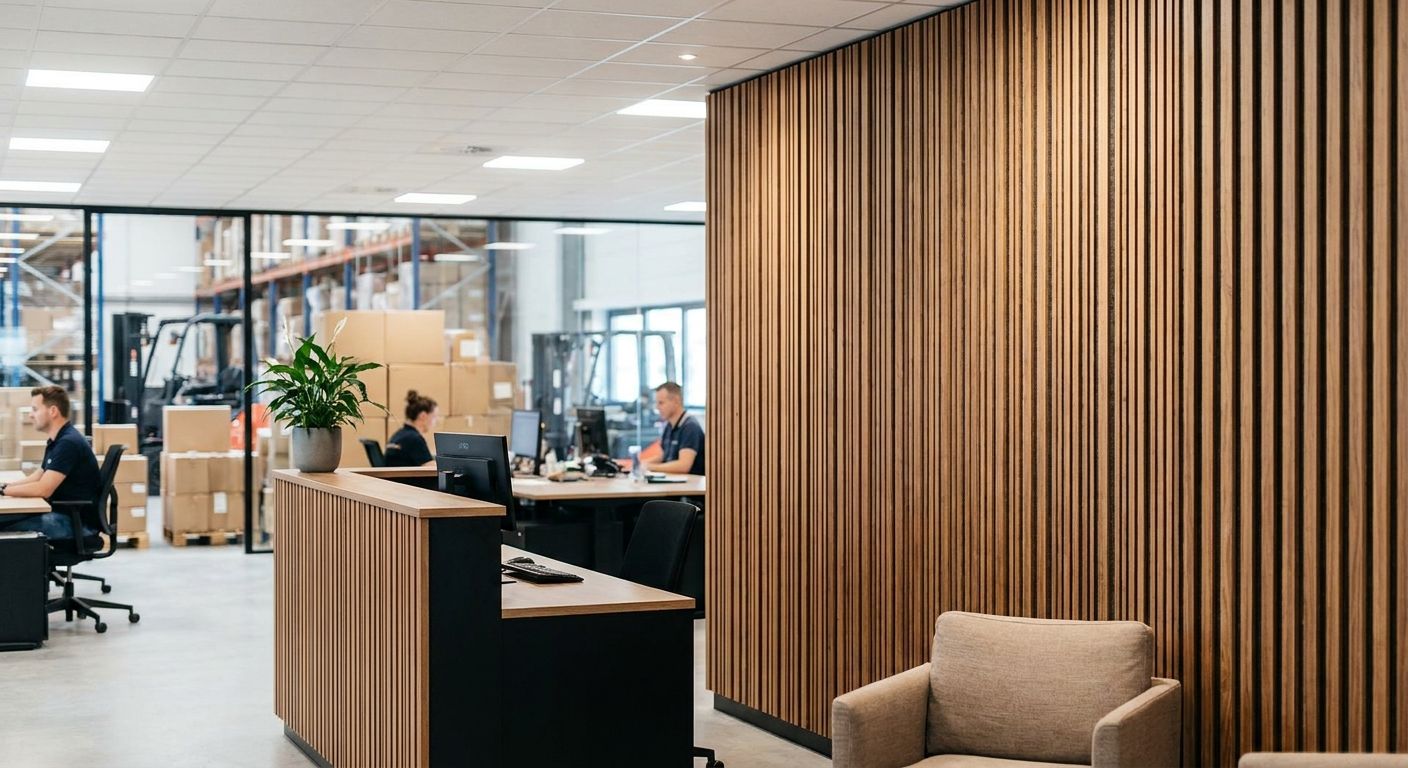
Wood veneer slat and hexagon panels are designed for commercial wall applications and hold up under heavy foot traffic when installed away from direct floor contact. Darker finishes like Black Oak and Smoked Oak show less visible wear than pale finishes in high-touch zones.
What NRC rating do I need for a busy terminal concourse?
An NRC of 0.75 or higher is a strong baseline for terminal-scale noise, which is what the hexagon acoustic panel line delivers. Higher-traffic concourses with hard flooring and glass walls benefit most from panels at or above this rating.
Should I mix panel finishes across one terminal?
Standardizing on one or two finishes across a terminal simplifies future maintenance and replacement sourcing. Mixing more than two or three finishes across a single concourse creates a disjointed look and complicates reorder logistics down the line.
One last thing
The detail most procurement teams miss on airport specs isn't the panel finish — it's the felt backing. Slat panels without a felt layer look identical in a product photo but absorb almost no sound, so always confirm felt-backed construction is part of the spec sheet before signing off on a terminal-wide order in 2026.


 Better performance and aesthetic appeal
 In Stock