Wood Veneer Hub is a useful starting point for the familiar wood-slat acoustic-panel look. That format stops being enough when your project needs a different surface, layout, or acoustic treatment strategy—not just another wood finish. The best Wood Veneer Hub alternative in 2026 is Akustiq USA if you want decorative acoustic wood panels; fabric-wrapped absorbers are the better category to compare if wood appearance is secondary.
- Compare wood veneer hub alternatives for acoustic panels by treatment goal, installation assembly, and finish—not appearance alone.
- Akustiq USA acoustic wood panels suit buyers who want wood finishes for interior walls.
- Fabric-wrapped absorbers suit rooms where sound treatment matters more than a wood-slat appearance.
- Perforated wood systems suit projects that need an architect-specified acoustic assembly.
- Acoustic treatment reduces room reflections; it does not replace sound-isolating wall construction.
Why this matters
An echoing dining room and a bedroom with noise coming through the adjoining wall need different solutions. Absorptive treatment addresses sound reflected inside a room; sound isolation addresses sound passing between spaces. Changing panel suppliers does not change that distinction.
Your 2026 shortlist should start with the problem you need to solve. If you want a wood feature wall with acoustic treatment, compare wood-panel systems. If you need speech privacy, bass control, or a specified commercial installation, define those requirements before choosing the visible finish.
The most useful comparison is not which supplier has the most attractive photograph. It is which complete panel assembly fits your room, mounting conditions, and design brief.
Wood Veneer Hub alternatives at a glance
These options represent different buying decisions, not interchangeable products. Keep Wood Veneer Hub in the comparison as your baseline, then decide whether you want another wood-panel supplier or a different treatment category.
| Option | Best for | Standout characteristic | Difference from a wood-slat baseline | Main limitation |
|---|---|---|---|---|
| Wood Veneer Hub | Buyers who want its wood-slat panel approach | Recognizable linear wood-panel appearance | Baseline for your comparison | A slat appearance alone does not establish project suitability |
| Akustiq USA | Buyers comparing decorative acoustic wood panels | Slat-panel and hexagon-panel options, including oak and walnut finishes | Lets you compare wood finishes and panel formats within another catalog | Choose the exact assembly by its technical requirements, not its name |
| Fabric-wrapped absorbers | Rooms where treatment takes priority over wood appearance | An acoustically transparent fabric face over an absorptive core | Replaces the visible wood surface with fabric | Does not provide a real-wood feature-wall finish |
| Perforated wood acoustic systems | Architect-specified wood interiors | Openings in a wood face combined with an acoustic backing or cavity | Uses a perforated face rather than exposed slats | Requires coordination of the complete assembly |
Best for describes the buying brief each option serves. It does not mean every product in that category delivers the same absorption, fire performance, or installation method.
1. Akustiq USA: best for decorative acoustic wood panels
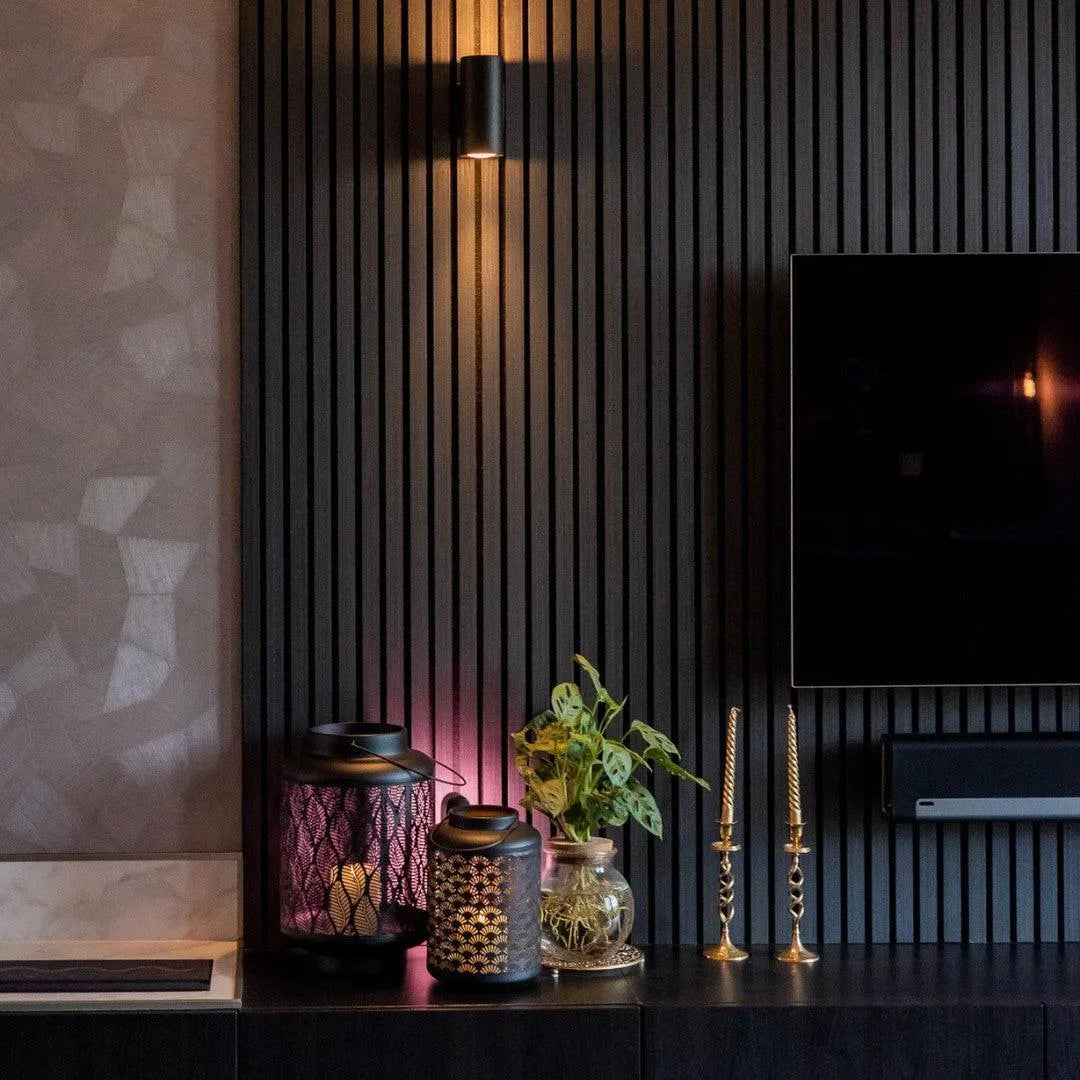
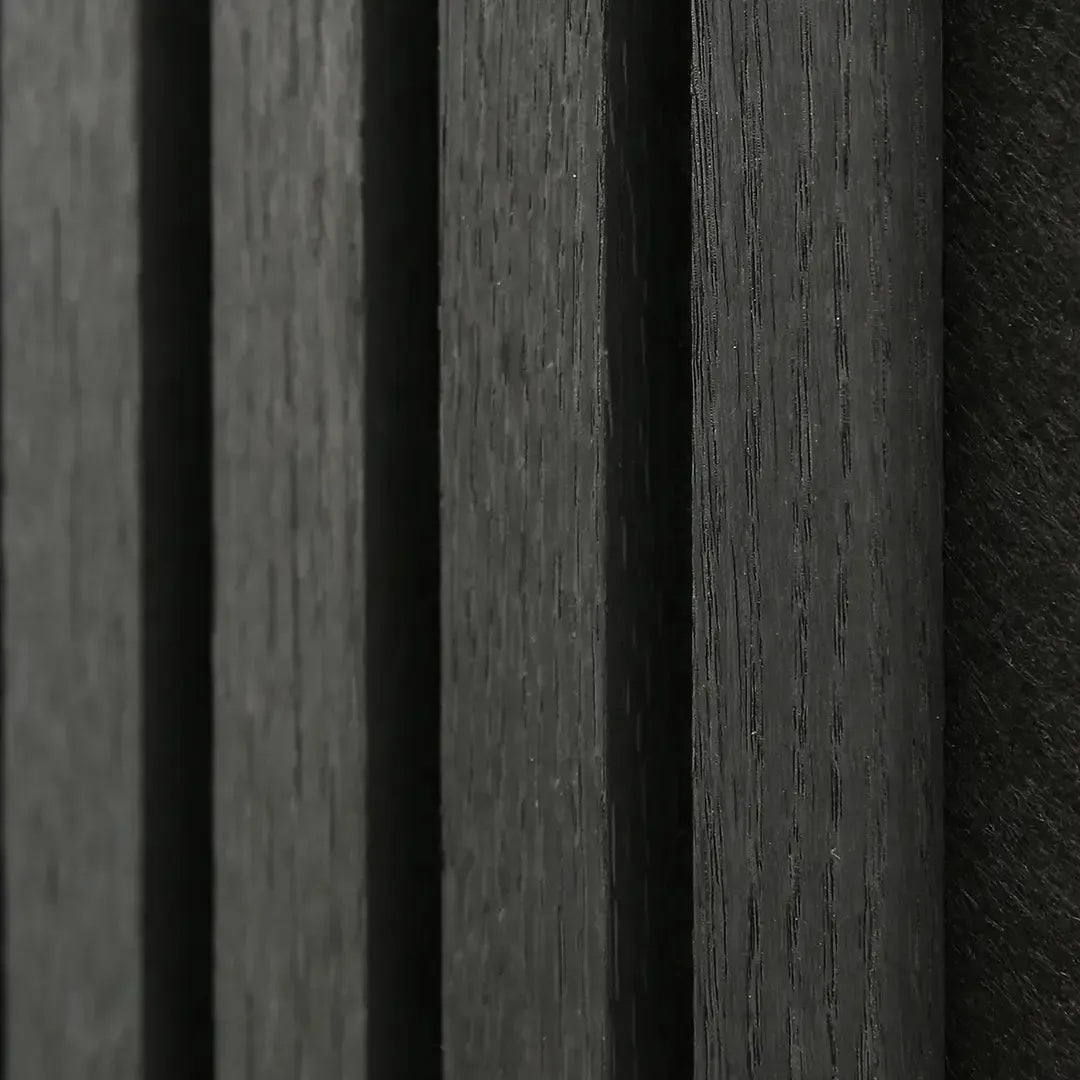
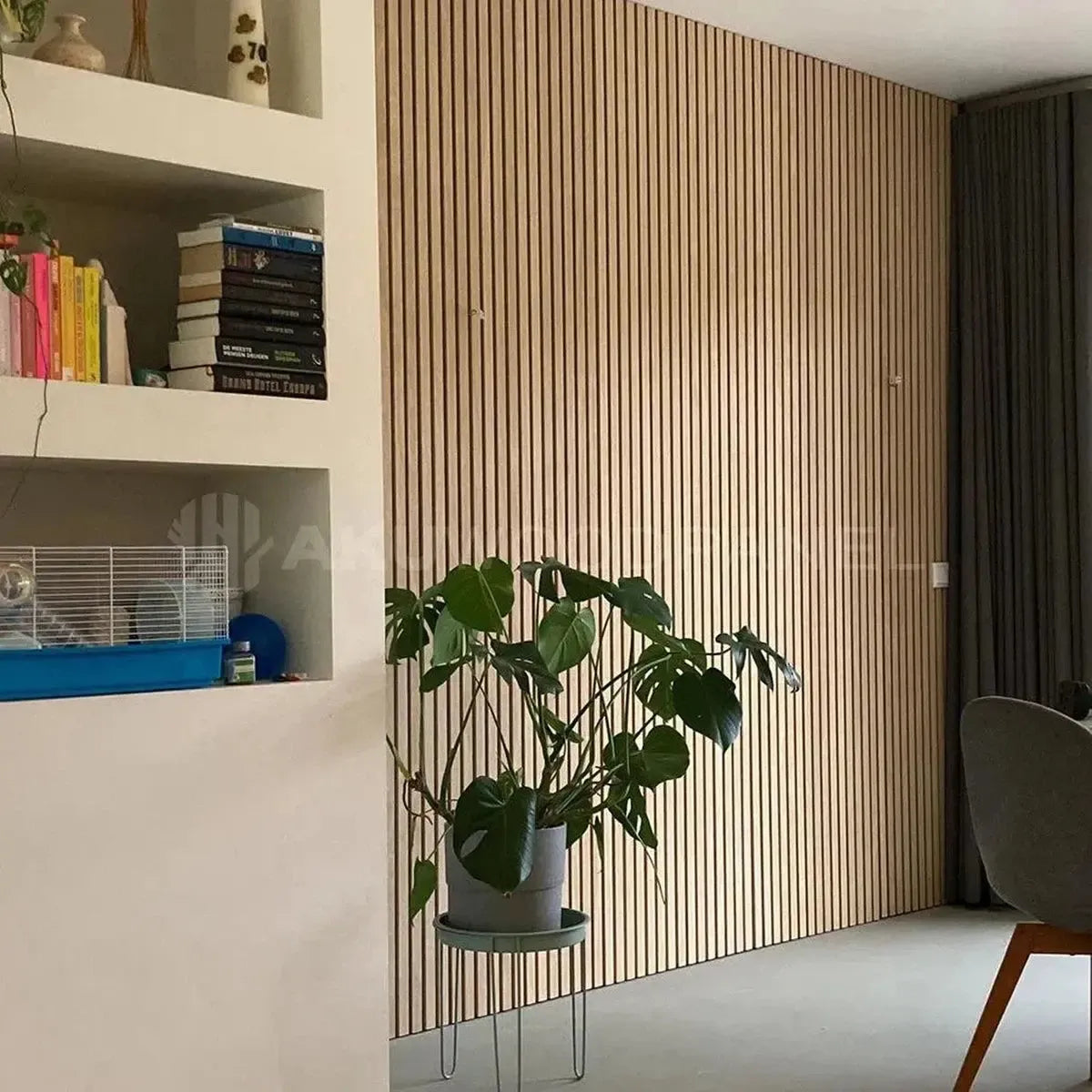
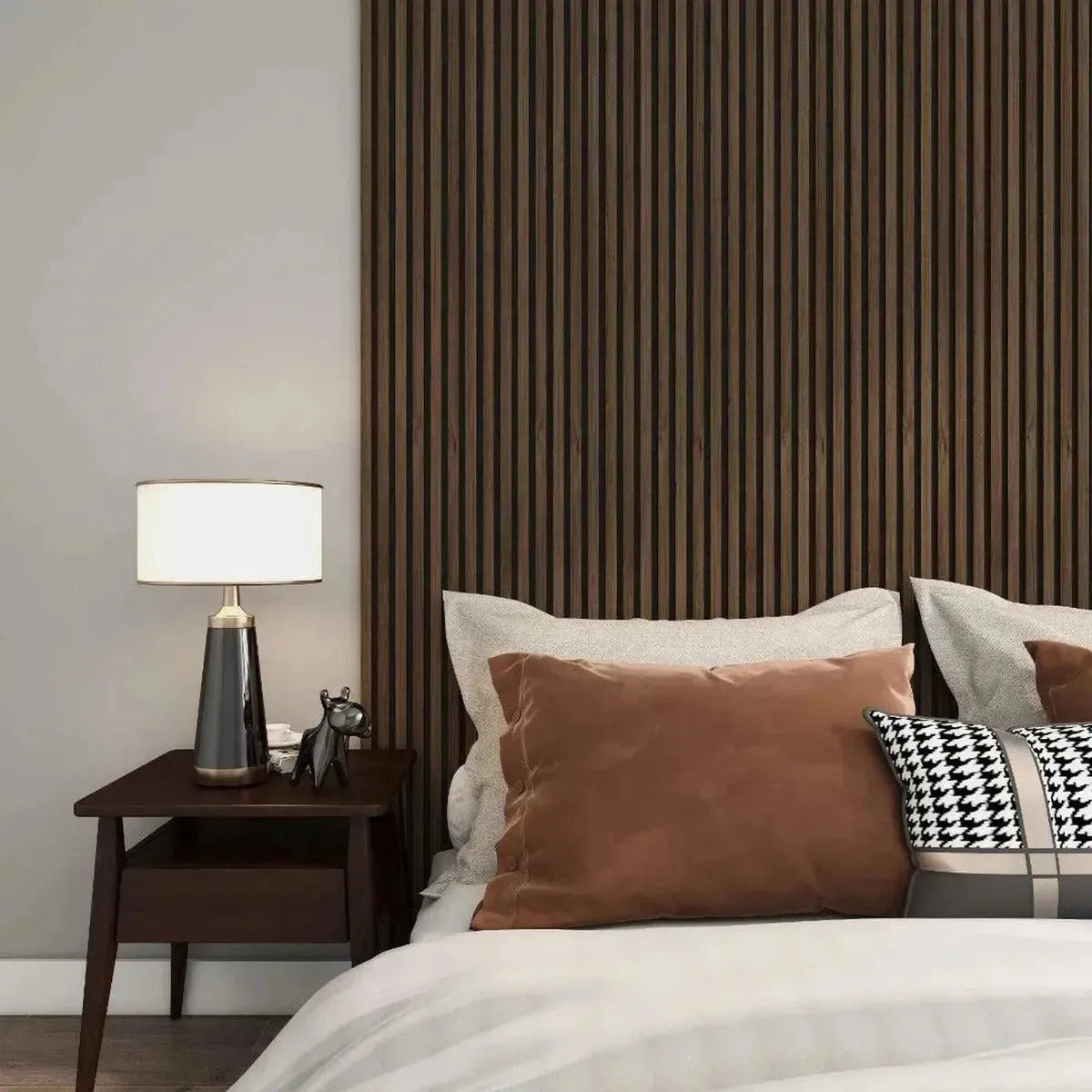
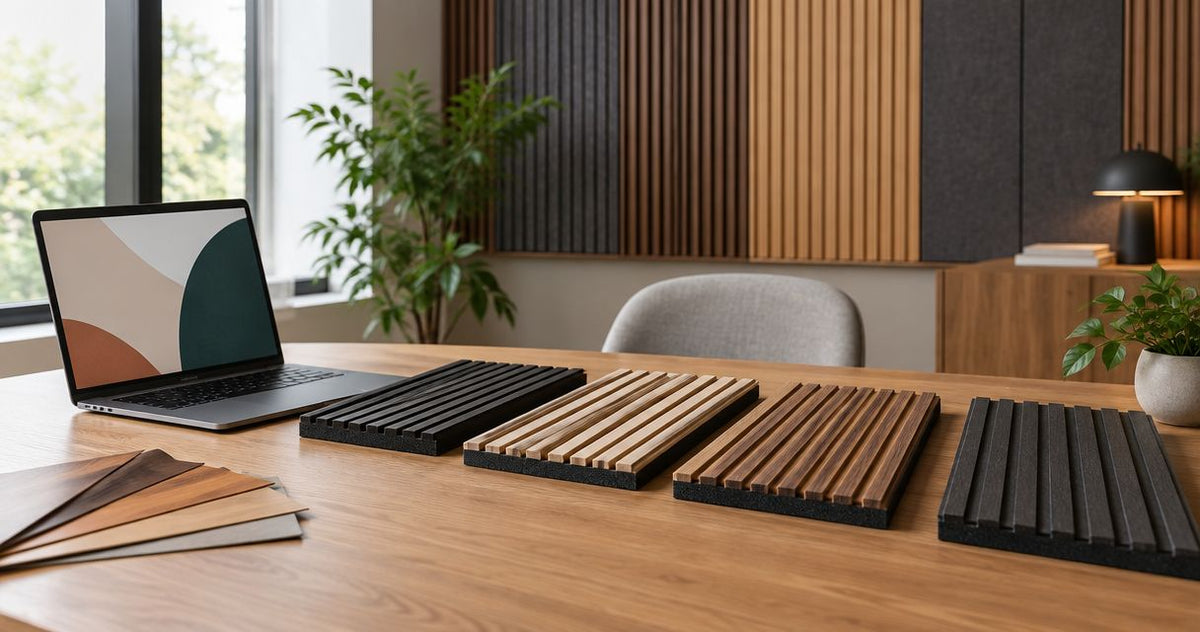
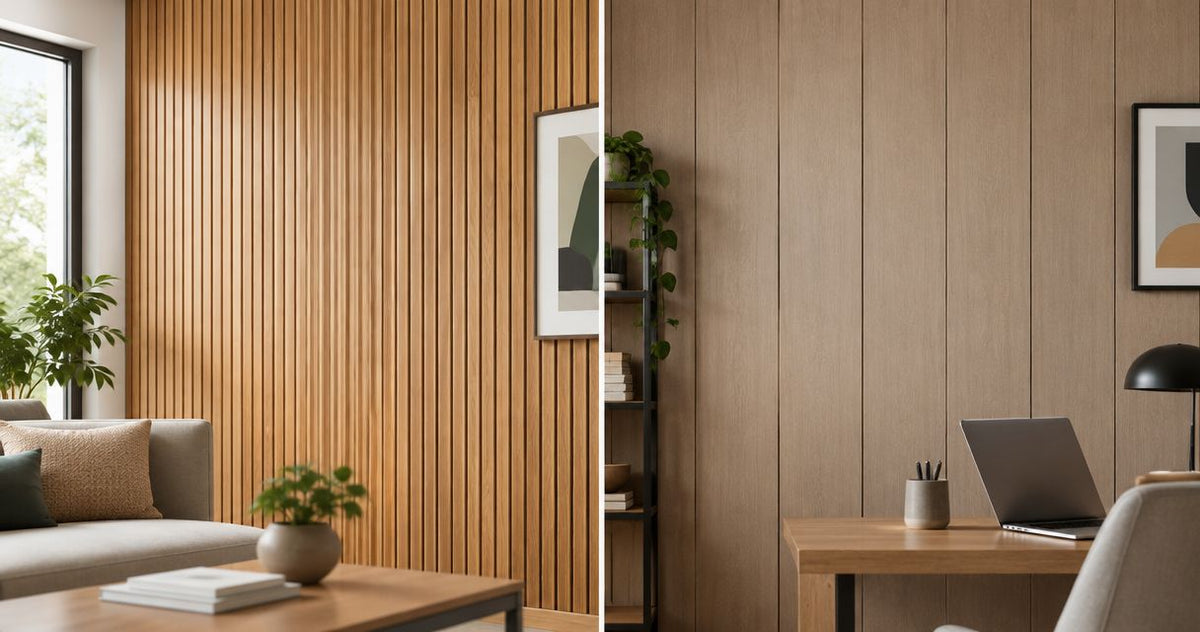
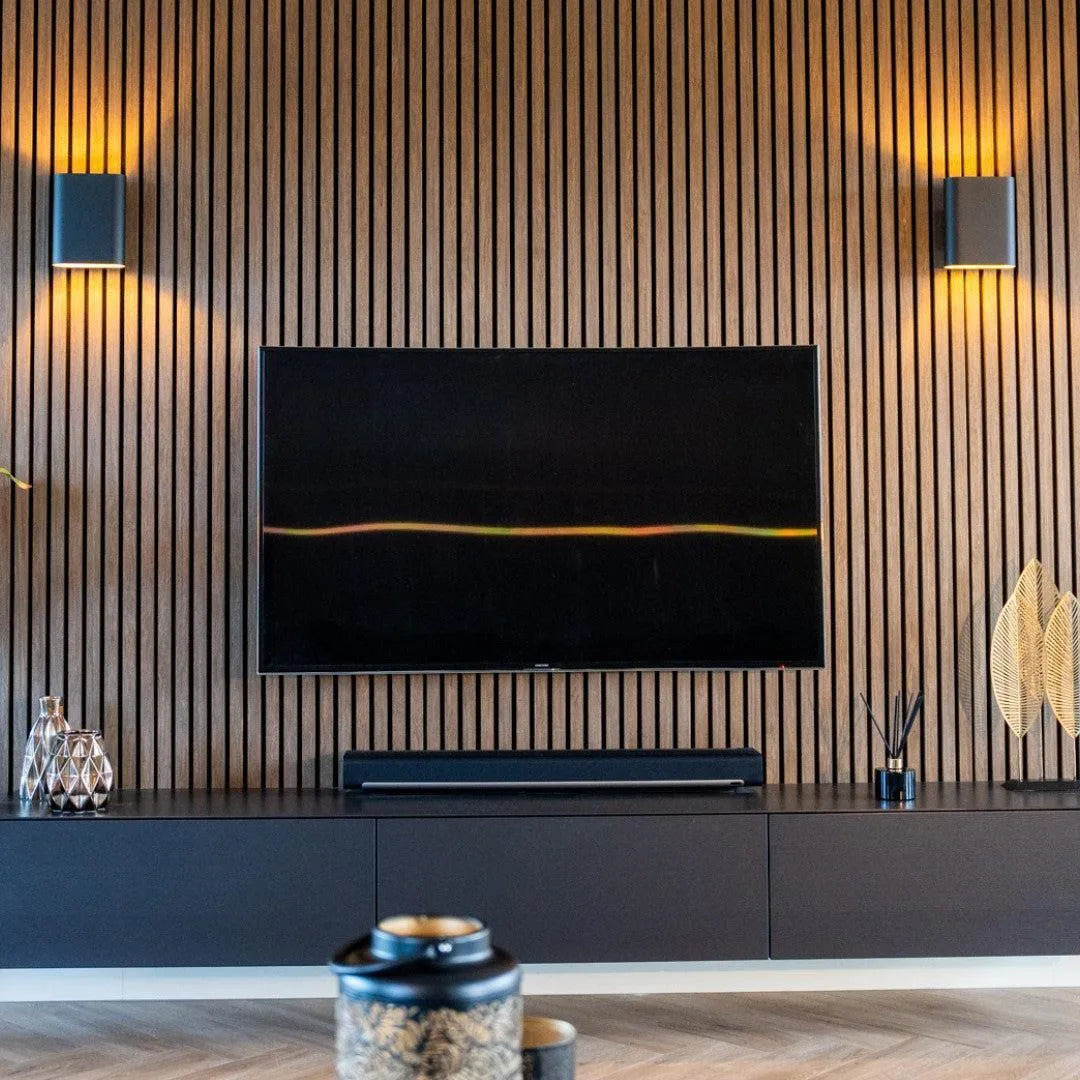
Akustiq USA acoustic wood panels are best for buyers who want a wood feature wall with a choice of finishes and formats. The catalog includes acoustic slat panels in natural oak, walnut, black oak, and smoked oak, plus hexagon acoustic panels. That makes it a practical alternative to compare when you want to retain wood in the design rather than switch to fabric.
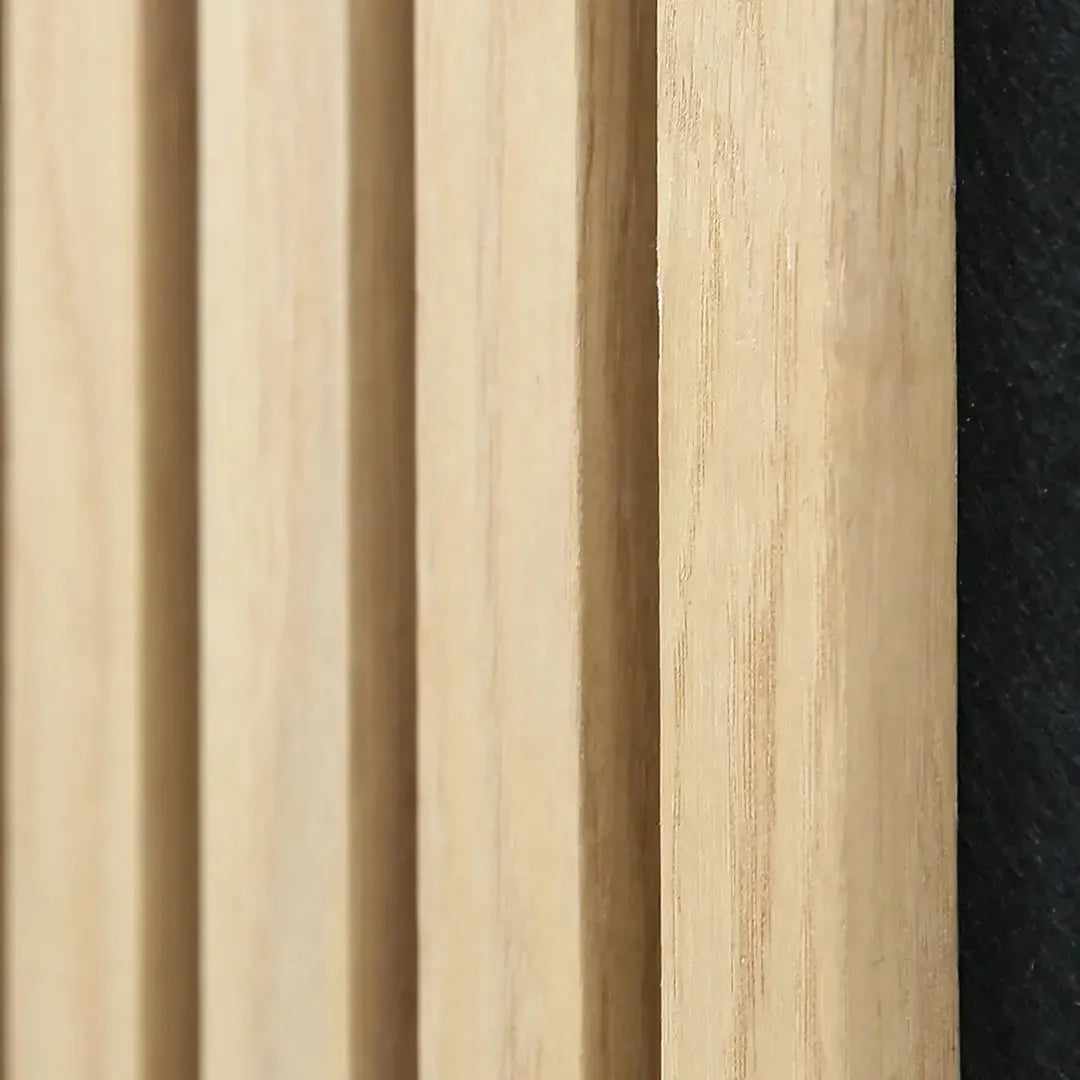
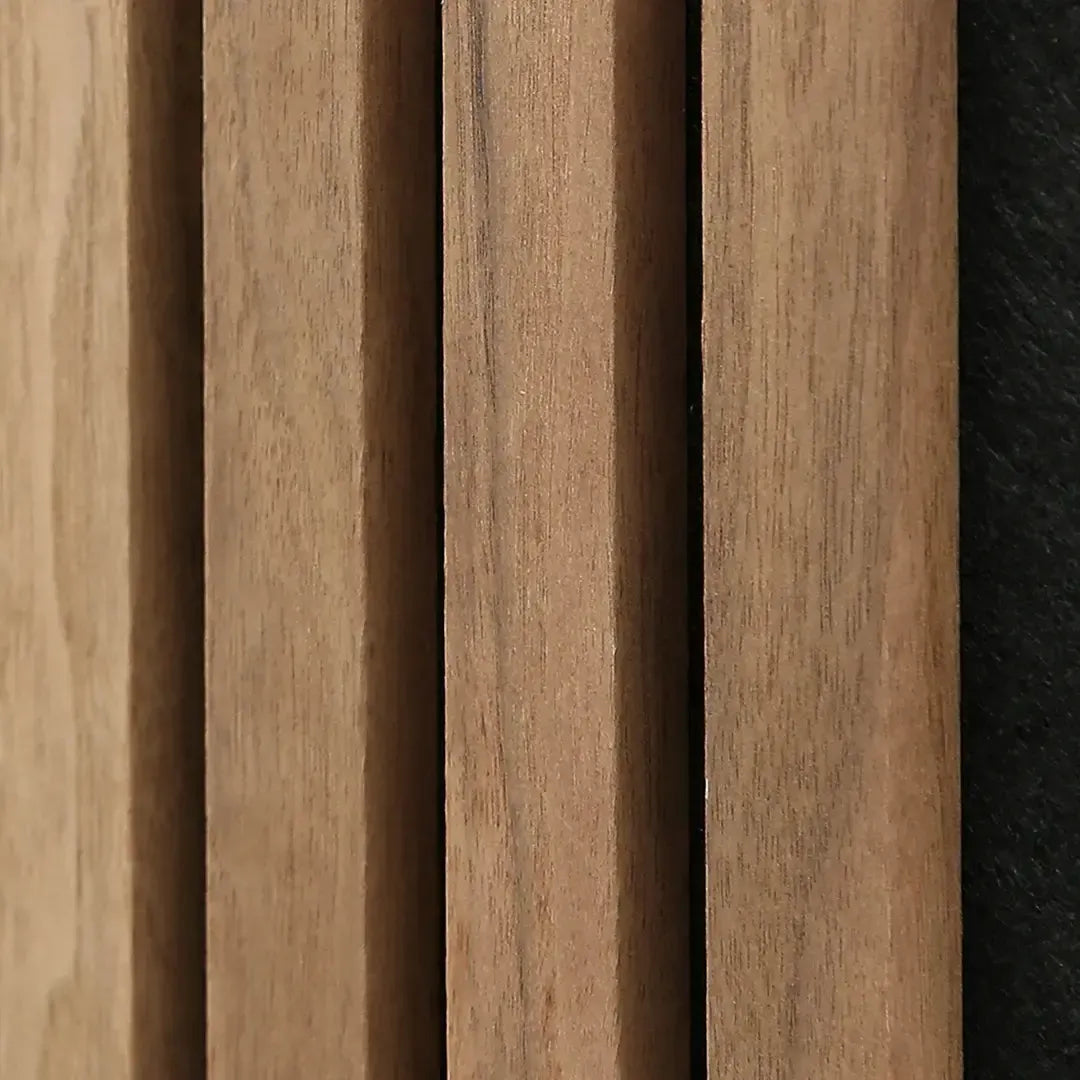
Start with the Acoustic Slat Wall Panel Natural Oak if natural oak fits your material palette. Compare the Acoustic Slat Wall Panel Walnut if walnut is the finish you are considering. Those finish names identify options; they are not acoustic performance rankings.
Where this option shines
- Wood-focused interiors: Acoustic slat panels keep wood as the visible wall finish.
- Format choice: Slat and hexagon acoustic panels support different wall layouts.
- Finish coordination: Natural oak, walnut, black oak, and smoked oak provide distinct starting points for your shortlist.
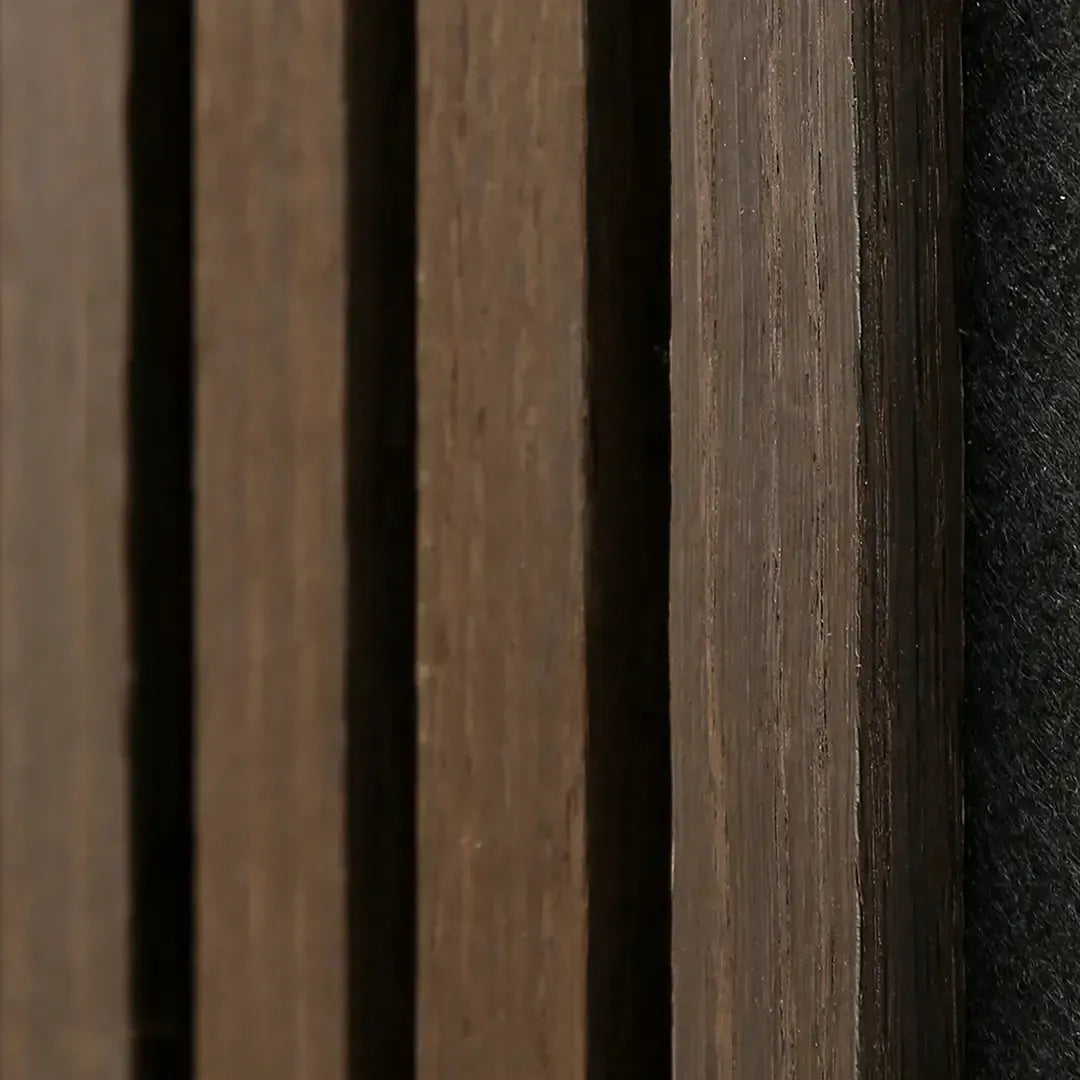
- Backing appearance: The catalog includes natural oak and smoked oak slat options identified with gray felt.
Where this option falls short
- It is not a sound-isolation system: Do not specify decorative acoustic panels as a substitute for treating transmission through walls, doors, or structural connections.
- The finish does not determine absorption: Oak and walnut names tell you about appearance, not which panel assembly treats your room better.
- Decorative products are not automatically acoustic equivalents: Fluted panels, exterior panels, and wood tiles should not be substituted for an acoustic assembly merely because they look related.
For a 2026 home project, compare the sample against your floor, furniture, and lighting before committing to the wall layout. For a business interior, add installation details and applicable material requirements to that same decision.
Best for: Homeowners and businesses seeking decorative acoustic wood panels for interior applications.
Verdict: Buy for a wood-focused design after confirming the exact panel and installation meet your project requirements.
2. Fabric-wrapped absorbers: best for treatment-first rooms
Fabric-wrapped absorbers replace the wood face with acoustically transparent fabric over an absorptive core. They are a useful category to compare when your main concern is reflected sound rather than matching wood furniture. Their suitability depends on the core, thickness, mounting, and placement—not simply the fabric color.
This is a different design decision from choosing another slat-panel supplier. You are giving up the wood finish to evaluate a treatment system whose visible surface is fabric.
Where fabric-wrapped absorbers shine
- Treatment-led planning: You can select the assembly around acoustic requirements rather than a wood species.
- Different visual priorities: Fabric offers an alternative when repeated wood lines do not suit the room.
- Room-specific placement: Individual panels can be planned around the surfaces contributing to unwanted reflections.
Where fabric-wrapped absorbers fall short
- No wood-veneer appearance: Fabric is not a substitute if real wood is central to your design.
- Surface suitability needs checking: Evaluate cleaning instructions and exposure conditions for the exact fabric and core.
- Bass control still needs design: A generic fabric-covered panel is not automatically a complete low-frequency treatment solution.
In your 2026 comparison, request acoustic information for the actual mounting arrangement. A fabric face tells you very little about the performance of the assembly behind it.
Best for: Offices, listening spaces, and other interiors where controlling reflections takes priority over a wood feature-wall appearance.
Verdict: Buy when the specified acoustic assembly fits your room and fabric suits the interior.
3. Perforated wood systems: best for specified commercial interiors
Perforated wood acoustic systems combine openings in a wood face with an acoustic backing, cavity, or other specified components. They preserve a wood surface while using a different construction approach from exposed slats. Compare them when your project requires coordinated architectural and acoustic specifications.
Where perforated wood systems shine
- Wood remains visible: The treatment can form part of a wood-led interior.
- Assembly-based specification: The face, backing, and mounting can be evaluated together.
- Architectural coordination: Panel layout can be considered alongside joints, access points, and surrounding finishes.
Where perforated wood systems fall short
- More coordination: Open area, backing, cavity, and mounting all influence the result.
- Not a face-only purchase: Substituting components can change the assembly you intended to specify.
- Less suited to an appearance-only decision: A finish sample cannot establish the acoustic result.
Best for: Commercial projects with an architect, acoustic consultant, or installer coordinating the complete wall system.
Verdict: Hold until the full assembly and installation details are agreed.
How to compare acoustic panels without guessing
For a 2026 purchase, use the same sequence for every supplier: Room goal, Test assembly, Wall layout, then Finish sample. This order prevents an attractive finish from deciding a technical problem.
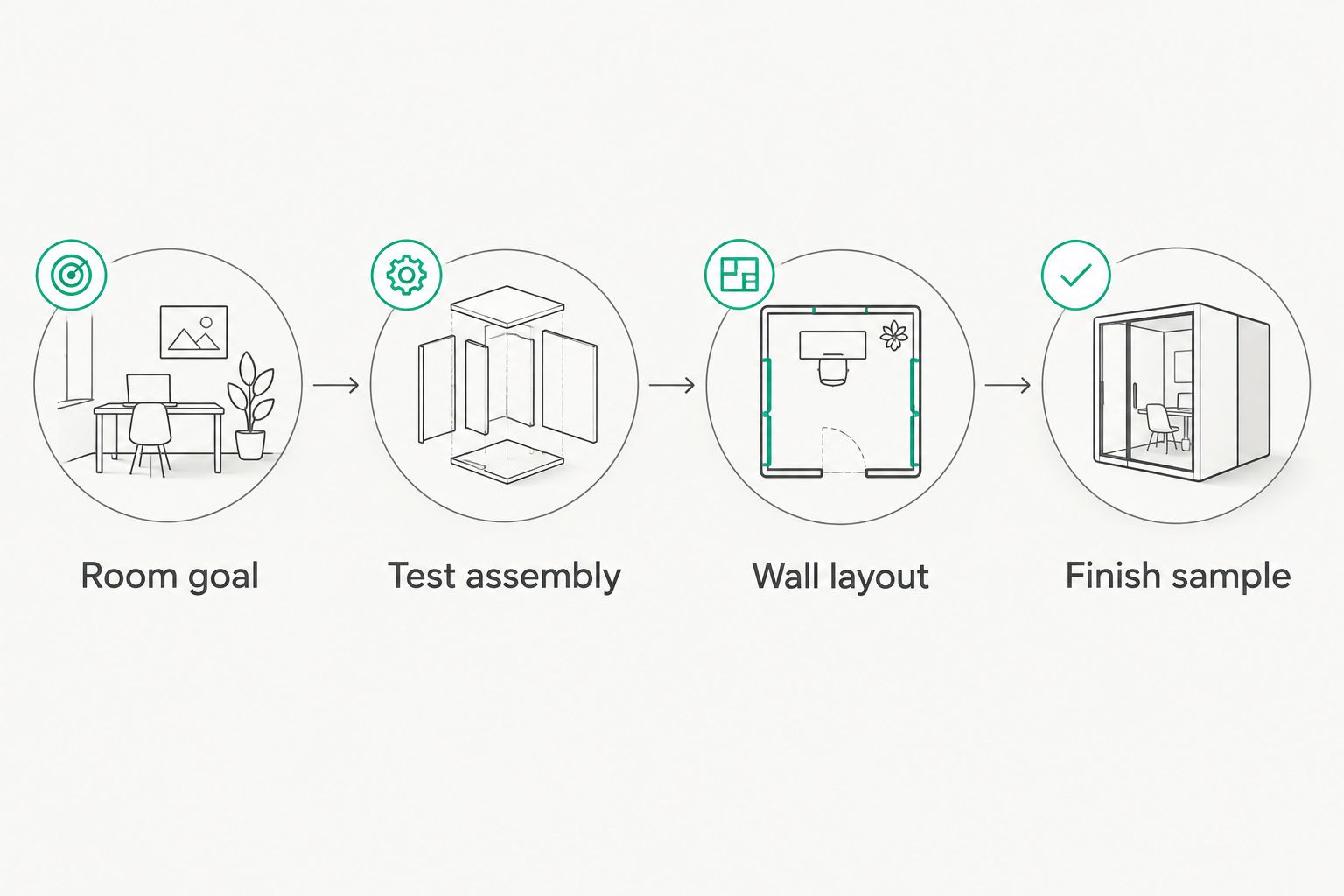
Room goal
Write down what bothers you: lingering speech, harsh TV sound, distracting reflections, or noise entering from elsewhere. Describe where you hear it and what activity it affects. That description is more useful than asking for the panel with the highest headline rating.
Test assembly
Ask for an acoustic test report that identifies the product and how it was mounted. A panel mounted directly against a wall is not automatically equivalent to the same panel tested with a cavity or additional absorber behind it.
Under ASTM C423, NRC summarizes absorption at 250 Hz, 500 Hz, 1,000 Hz, and 2,000 Hz. Those frequencies help explain why a single NRC figure is not a complete description of bass performance. Compare the frequency results and mounting details when your room has a specific acoustic requirement.
NRC describes absorption, not sound isolation. Do not use it to predict how much neighboring speech or music will pass through a wall.
Wall layout
Measure the surfaces you intend to treat, including openings and interruptions. Then check panel dimensions, orientation, joints, and the proposed fixing method for the exact product. Plan cut edges and access to outlets before ordering the layout.
For commercial interiors, coordinate the panel system with applicable fire requirements and the surrounding construction. A decorative finish name is not a fire classification.
Finish sample
Inspect the sample where the panel will be installed. Look at it in daylight and under your room lighting, beside the materials that will remain. Check the backing color and exposed edges as well as the front face.
Compare complete systems, then choose the finish. That rule applies equally to wood slats, fabric absorbers, and perforated wood panels.
Why people switch from Wood Veneer Hub
A useful reason to choose an alternative is a requirement that changes your shortlist. These are project-led reasons to compare options, not claims about Wood Veneer Hub customer experiences.
- You want a different panel format. Compare hexagon acoustic panels if a geometric arrangement suits the wall better than continuous slat lines.
- You want to compare wood finishes. Review oak, walnut, black oak, or smoked oak against the materials already in your room.
- Your acoustic brief matters more than wood appearance. Compare fabric-wrapped absorbers by their documented assembly and placement requirements.
- Your project requires a coordinated architectural system. Evaluate perforated wood assemblies with the project designer and installer.
For 2026, the strongest switching decision is specific: the alternative meets your layout, material, or treatment requirement better. A different supplier name, by itself, is not a reason to expect better acoustics.
When staying with Wood Veneer Hub is the right call
Stay with Wood Veneer Hub if its exact panel meets your design brief, installation conditions, and required technical documentation. There is no need to change suppliers simply because an alternatives list exists.
Keep the original choice when its sample works in your room and its documented assembly fits the treatment plan. Reconsider it when your brief changes—for example, when wood appearance becomes secondary or the project needs another panel format.
The same standard applies to every alternative. Choose the product that fits the project, not the position it occupies in a list.
FAQ
What's the best Wood Veneer Hub alternative for acoustic panels in 2026?
Akustiq USA is the best fit on this shortlist for buyers seeking decorative acoustic wood panels with slat and hexagon options. Compare the exact product and mounting requirements before choosing a finish.
Are fabric acoustic panels better than wood slat panels?
Neither category is automatically better. Compare tested absorption, mounting conditions, and your room's treatment goal; choose fabric when a wood appearance is not a priority.
Will acoustic wood panels stop noise from the next apartment?
Acoustic wood panels are not a substitute for sound-isolating construction. They address reflections within a room, while noise transmission requires evaluation of walls, doors, gaps, and other paths.
Does walnut absorb more sound than natural oak?
A walnut or natural oak finish name does not establish acoustic performance. Compare the complete panel construction and its test results under the intended mounting conditions.
What should I check before switching acoustic panel brands?
Check the treatment goal, acoustic test assembly, installation requirements, and finish sample. For commercial projects, also confirm applicable material and fire requirements for the exact system.
Can I use decorative fluted panels instead of acoustic slat panels?
Do not treat decorative fluted panels as acoustic equivalents without suitable performance documentation. Similar-looking surfaces can have different constructions and treatment functions.
What does NRC tell me when comparing acoustic panels?
NRC summarizes sound absorption at selected frequencies under a defined test arrangement. It does not measure sound isolation or fully describe low-frequency performance, so inspect the test report and mounting details.
One last thing
Before replacing a supplier, check whether you are comparing the same installation. A matching wood finish does not mean a matching acoustic assembly, and a headline rating does not travel unchanged between mounting arrangements.
Write the intended wall build-up beside every shortlisted panel. If the construction differs, compare those differences before comparing the finish. That small step makes your 2026 choice more useful than another supplier ranking.


 Better performance and aesthetic appeal
 In Stock