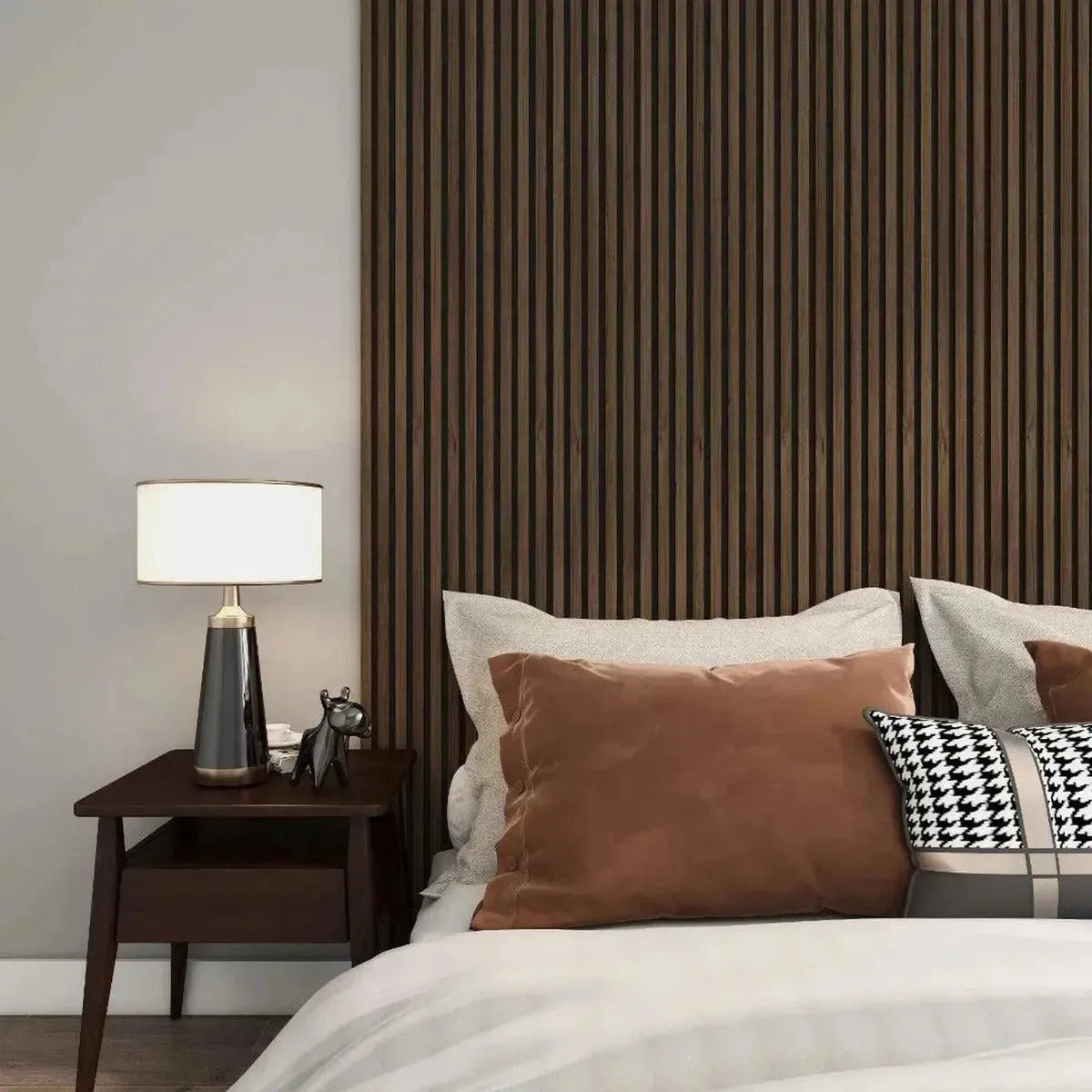
Naturewall gives you a ready-made route to a decorative slat wall, but choosing a supplier alone does not settle the finish, edge details, or acoustic requirements of your room. The best Naturewall alternative in 2026 is Akustiq USA if you want to compare acoustic wood panels in named oak and walnut finishes; custom-built timber slats are the better route if you need a bespoke layout.
- Compare Naturewall alternatives for slat wall panels by finish, installation details, and acoustic evidence—not photographs alone.
- Akustiq USA is the first shortlist choice for acoustic wood panels with named oak and walnut finishes.
- Custom-built timber slats suit bespoke spacing, but decorative timber alone does not establish sound absorption.
- Fabric acoustic panels suit rooms where acoustic treatment matters more than keeping the wood-slat appearance.
Why this matters
A slat wall has two separate jobs: changing how your room looks and, when designed for it, absorbing sound. Decide which job matters before comparing suppliers. Otherwise, you risk choosing a convincing wood finish that does not address the problem that started your search.
For a 2026 renovation, compare the complete installation rather than the panel face alone. Exposed sides, outlet cutouts, transitions to painted walls, and the mounting method all affect the result. A finish you like is only the beginning.
This shortlist separates a direct supplier alternative from two alternative construction approaches. Use the direct alternative when you want ready-made acoustic wood panels; consider the other approaches when your layout or acoustic brief calls for something different.
Naturewall alternatives at a glance
| Option | Best for | Standout feature or approach | Difference from choosing Naturewall |
|---|---|---|---|
| Naturewall | A slat-wall project with a preferred Naturewall design | Ready-made decorative slat-wall approach | The benchmark: keep it on your shortlist if its exact product meets your brief |
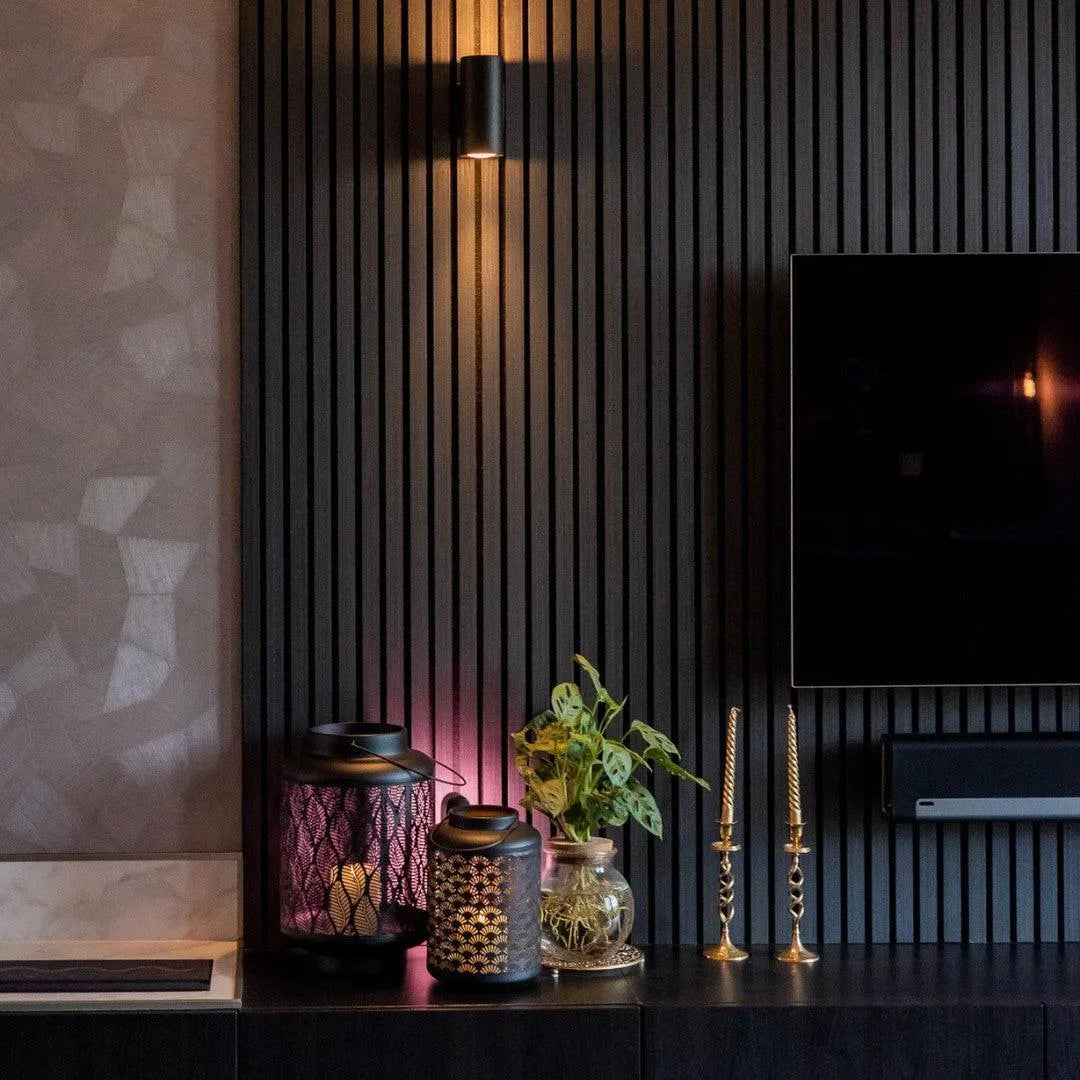
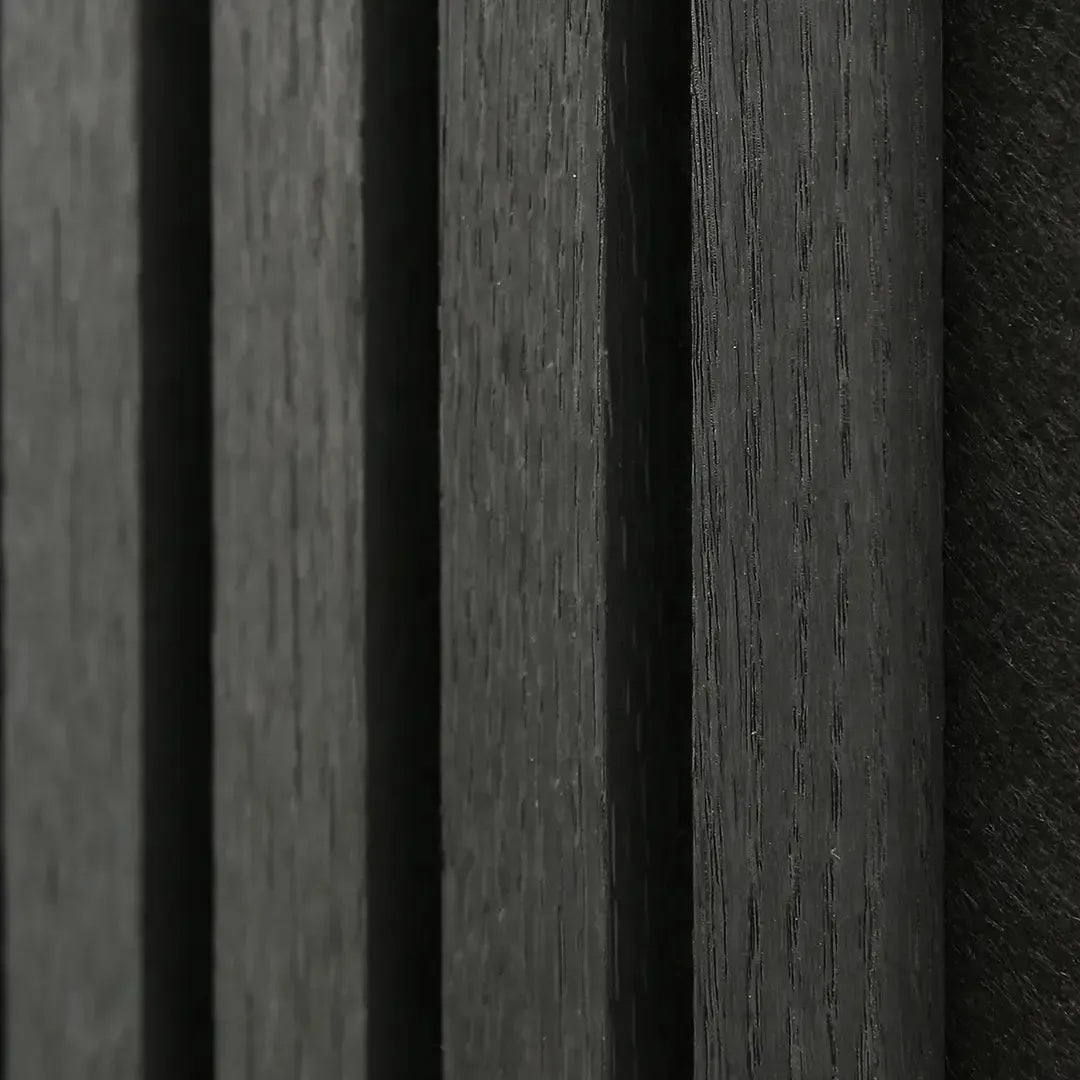
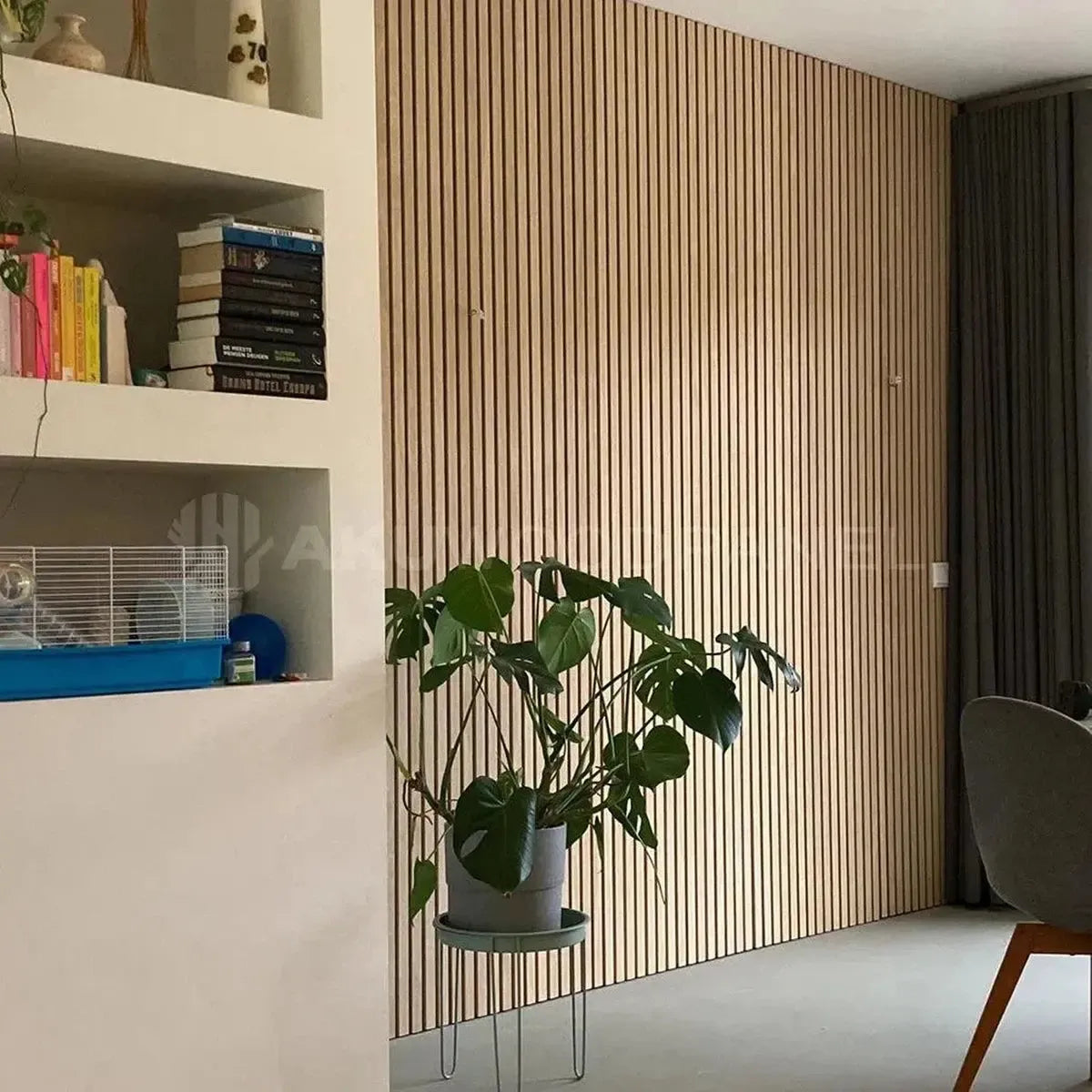
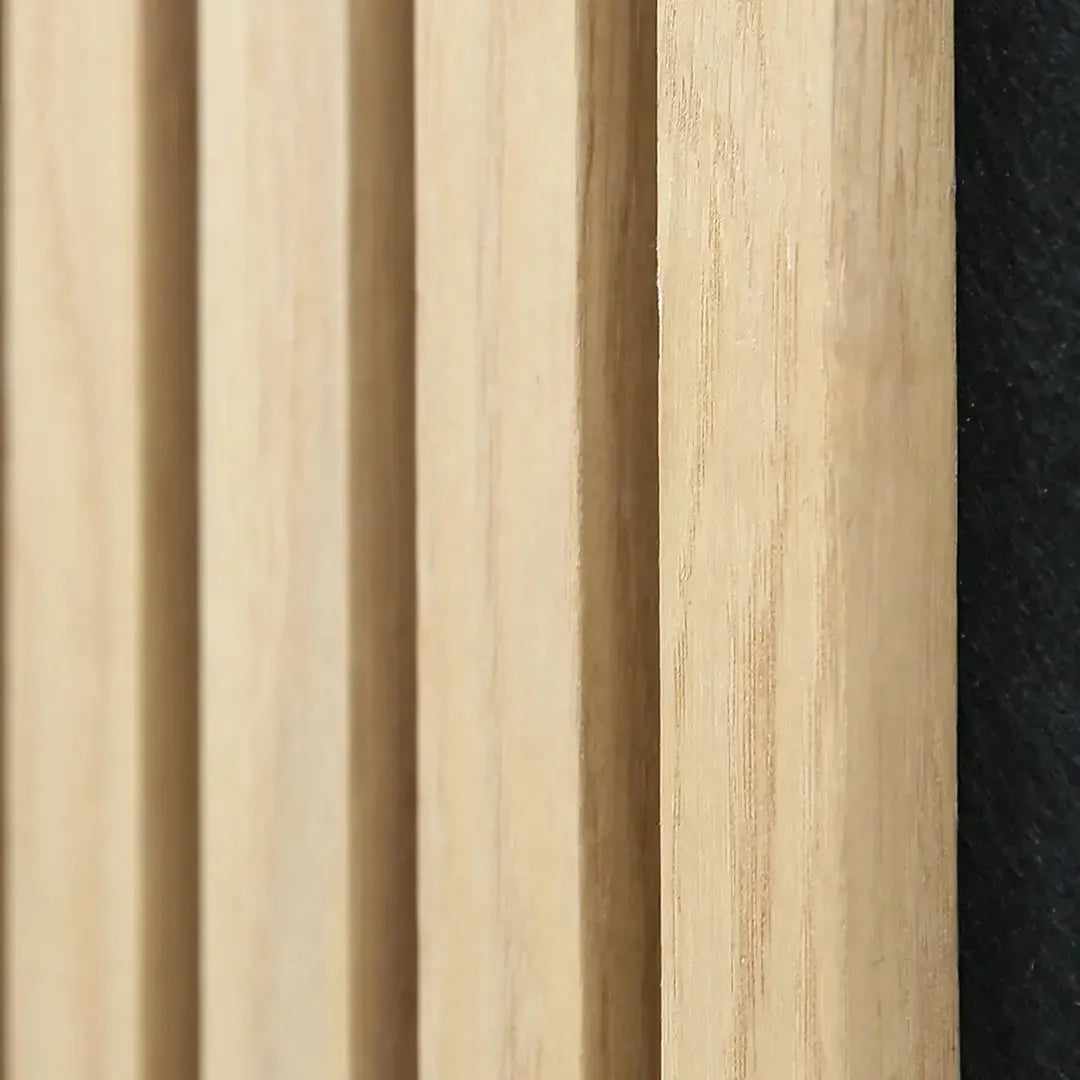
| Akustiq USA acoustic wood panels | Comparing named wood finishes for an interior feature wall | Options include Acoustic Slat Wall Panel Natural Oak, walnut, black oak, and smoked oak | A direct supplier alternative with its own finish and panel options |
| Custom-built timber slats | Bespoke spacing, proportions, and architectural details | You specify the slat arrangement rather than accept a panel module | Changes the construction method, not just the supplier |
| Fabric acoustic panels | Acoustic treatment without a wood-slat requirement | A fabric-faced treatment approach | Changes the visible material and the design brief |
Choose the option that solves your actual constraint. A custom timber installation is not automatically a better acoustic panel, and fabric treatment is not a visual substitute for wood slats. Those distinctions matter more than a generic ranking.
1. Akustiq USA: best for named acoustic wood-panel finishes
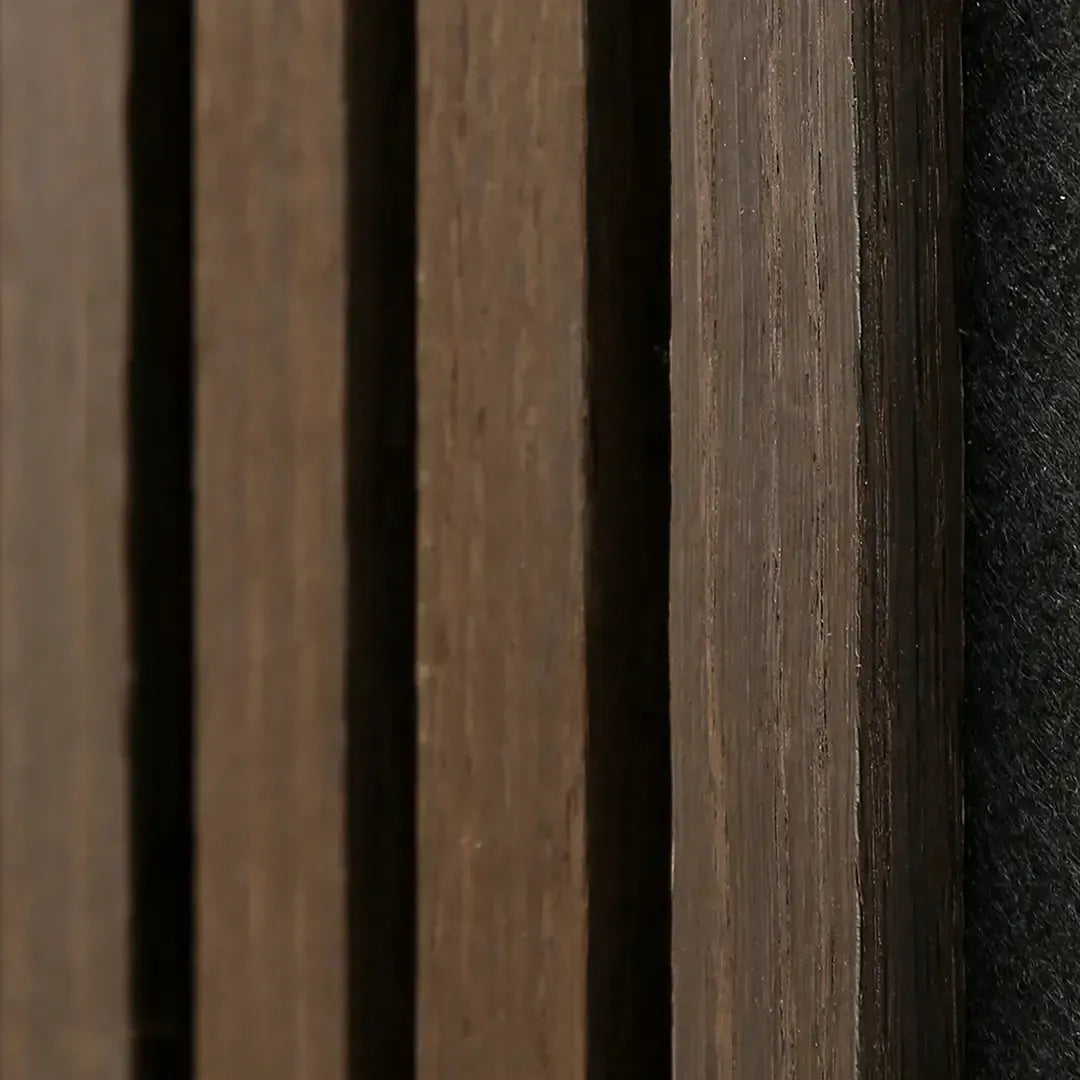
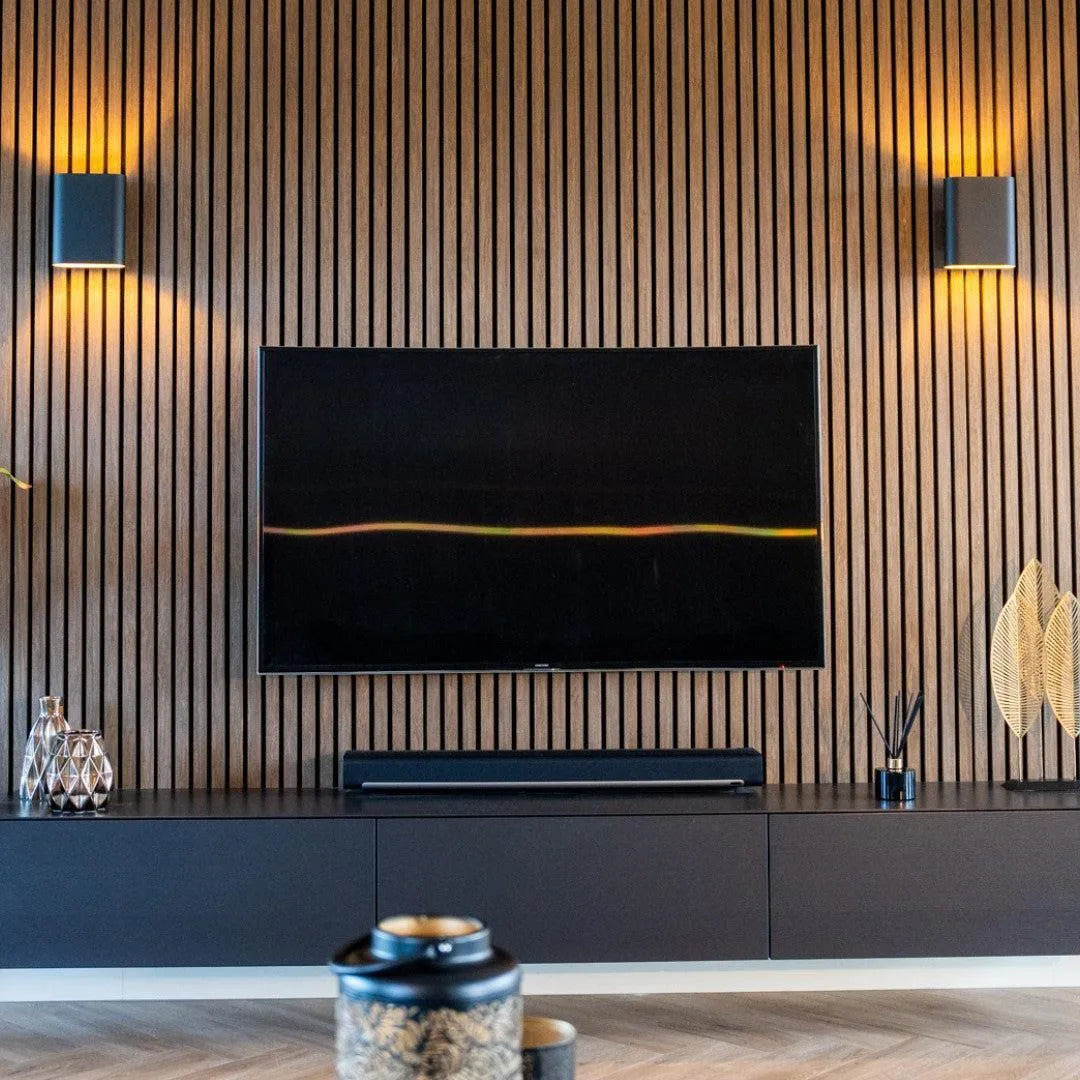
Akustiq USA manufactures and supplies acoustic wood panels for construction and interior applications. Its panel options include natural oak, walnut, black oak, smoked oak, and natural oak with gray felt. That makes it a practical first shortlist choice when you want to retain the slatted wood appearance while comparing another supplier.
Start with the finish you want, then check the exact panel specification. Do not treat different wood names or backing colors as proof of different acoustic performance. Appearance and acoustic evidence answer different questions.
Where Akustiq USA shines
- Named finish choices: You can compare natural oak, walnut, black oak, and smoked oak rather than work from a generic wood-effect description.
- Backing choices: Natural oak and smoked oak options with gray felt give you another visible detail to assess.
- Finishing components: The panel selection includes named end pieces for natural oak, smoked oak, walnut, and black oak.
- Sample route: A full slat-wall sample box and a walnut slat-wall sample are among the listed options.
Where Akustiq USA falls short
- Ready-made panels are not bespoke joinery: If you need individually specified slat spacing, resolve that requirement before choosing a panel system.
- An acoustic panel is not a complete soundproofing assembly: Treating room reflections does not establish isolation from a neighboring room.
- A wood finish name does not settle the edge detail: Check how the exact product handles cut ends and exposed sides before planning the wall.
For a 2026 project, shortlist the exact finish and ask for the installation instructions and acoustic documentation that apply to that product. If you are specifying a commercial interior, also confirm the documentation required by the project team. A decorative photograph cannot answer those questions.
Best for: Homeowners, designers, and construction buyers comparing ready-made acoustic wood-panel finishes.
Verdict: Buy only after the sample, installation detail, and required documentation match your brief.
2. Custom-built timber slats: best for a bespoke layout
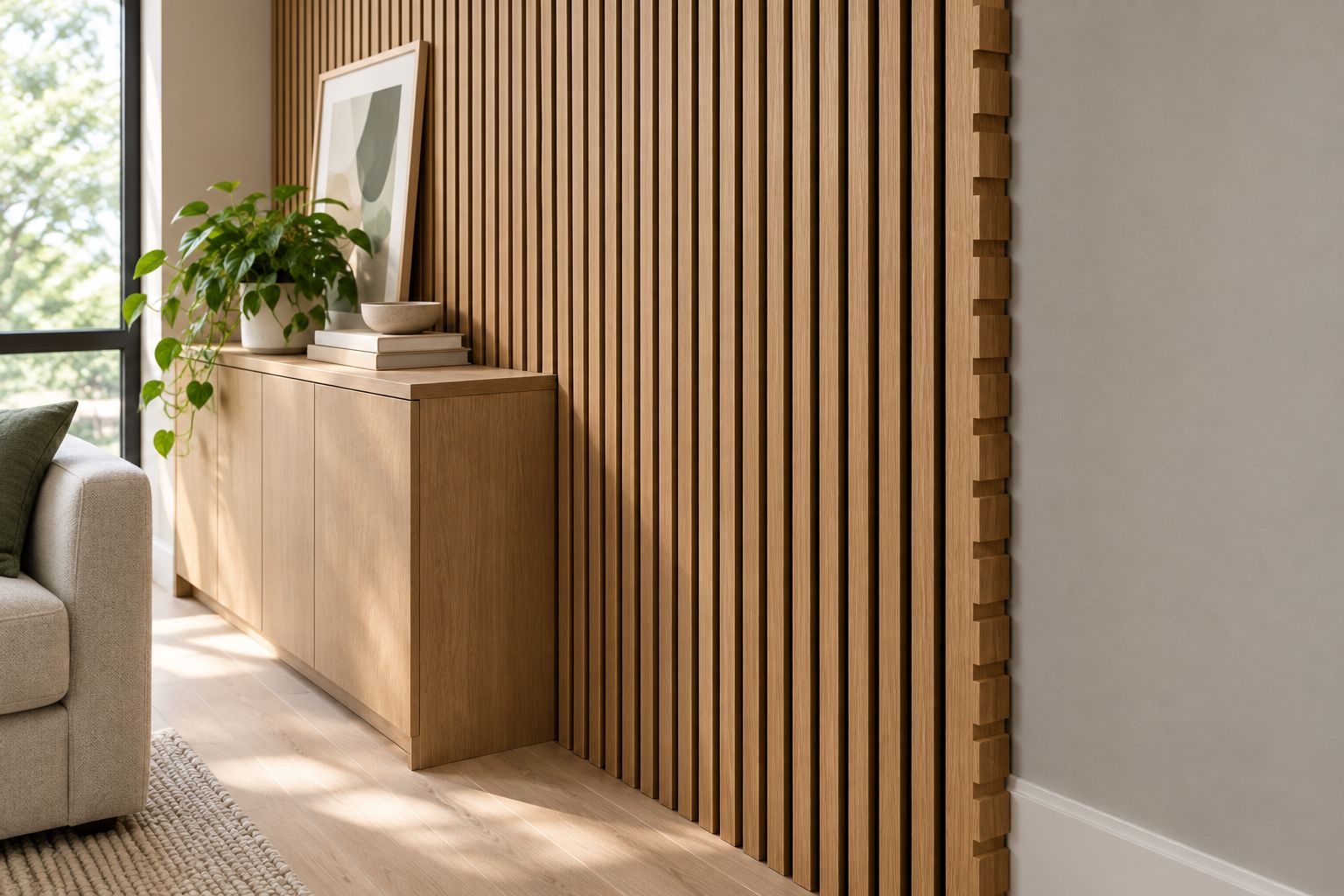
Custom-built timber slats give you control over the arrangement: spacing, orientation, boundaries, and how the wall meets surrounding joinery. This approach suits a project where the composition matters more than choosing a ready-made panel. You define the detail first.
The trade-off is that you also own more of the design work. Timber selection, substrate preparation, fixings, finishing, and any acoustic layer need to be specified together. A row of timber strips is a decorative construction, not evidence of tested sound absorption.
Where custom-built timber slats shine
- Layout control: You can design the arrangement around a doorway, cabinet, or other fixed feature.
- Detail control: You can specify how the ends, sides, and transitions should look.
- Material selection: You can choose the timber and finish for the project rather than start with a finished panel module.
Where custom-built timber slats fall short
- More coordination: Someone must resolve the material, mounting, and finishing details.
- More individual alignment work: Separate slats require a consistent layout during installation.
- No automatic acoustic result: Any absorption claim needs evidence for the complete treatment, not just the timber face.
A custom layout is useful when a ready-made module fights the architecture. For example, plan the slat boundaries around a built-in cabinet before selecting the timber; otherwise, the last strip can become an awkward leftover detail.
Best for: Projects with bespoke proportions or joinery details that determine the slat layout.
Verdict: Hold until the construction detail is resolved; buy materials after that.
3. Fabric acoustic panels: best for an acoustics-first room
Fabric acoustic panels belong on your shortlist when reducing reflections matters more than retaining the wood-slat look. This is a different treatment category, not another slat-panel supplier. Compare the exact product's absorption evidence and mounting instructions.
Where fabric acoustic panels shine
- Clearer material choice: You can prioritize an acoustic treatment without requiring a wood finish.
- Different visual language: Fabric provides an alternative to the repeated lines of a slat wall.
Where fabric acoustic panels fall short
- Not a wood-slat replacement visually: Choose them only if you accept the change in appearance.
- Product-specific performance: A fabric face alone tells you nothing about the absorber behind it.
- Not automatic sound isolation: Absorption and blocking sound between rooms remain separate tasks.
Best for: Rooms where the acoustic brief takes priority over the timber feature-wall design.
Verdict: Buy when the documented treatment fits your room; skip if wood slats are essential.
Why people switch from Naturewall
A useful reason to compare alternatives is a specific project requirement—not a claim that another supplier is better at everything. Keep Naturewall in the comparison and identify the detail that another option needs to solve.
For your 2026 shortlist, use these decision points:
- Finish selection: Compare another supplier when you want to assess its natural oak, walnut, black oak, or smoked oak option against your existing materials.
- Backing appearance: Compare the visible background between the slats alongside the wood face.
- Layout requirements: Consider custom-built timber when your design calls for individually specified spacing or boundaries.
- Acoustic priority: Consider a different treatment category when the wood-slat appearance is no longer a requirement.
These are reasons to investigate alternatives, not evidence of a Naturewall defect. Switching makes sense only when the replacement answers your particular brief more clearly.
How to compare slat wall panels before ordering
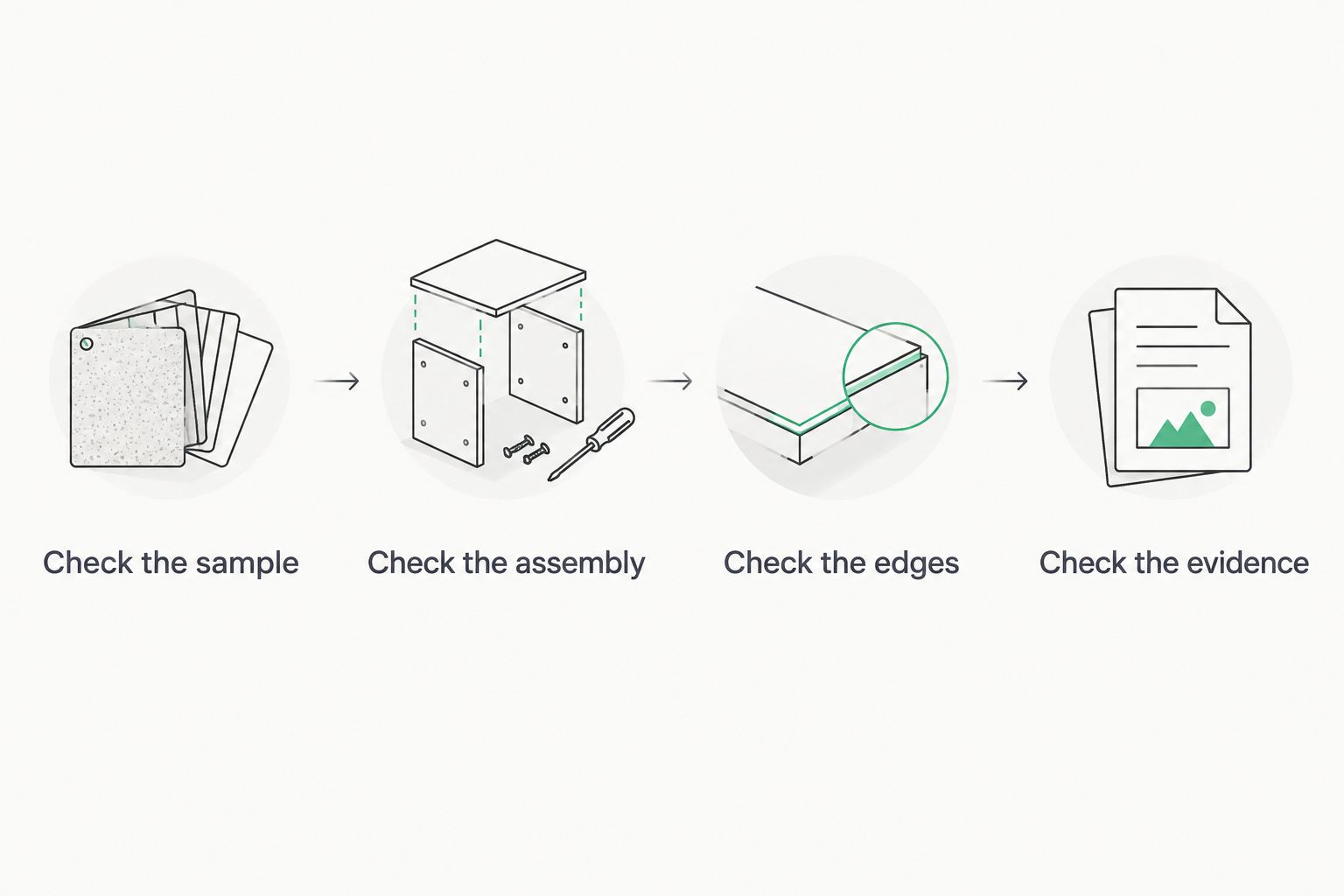
Check the sample
View the finish beside your flooring, cabinets, paint, and upholstery. Move it between daylight and the lighting you use in the evening. You are choosing a material for your room, not matching a photograph on a screen.
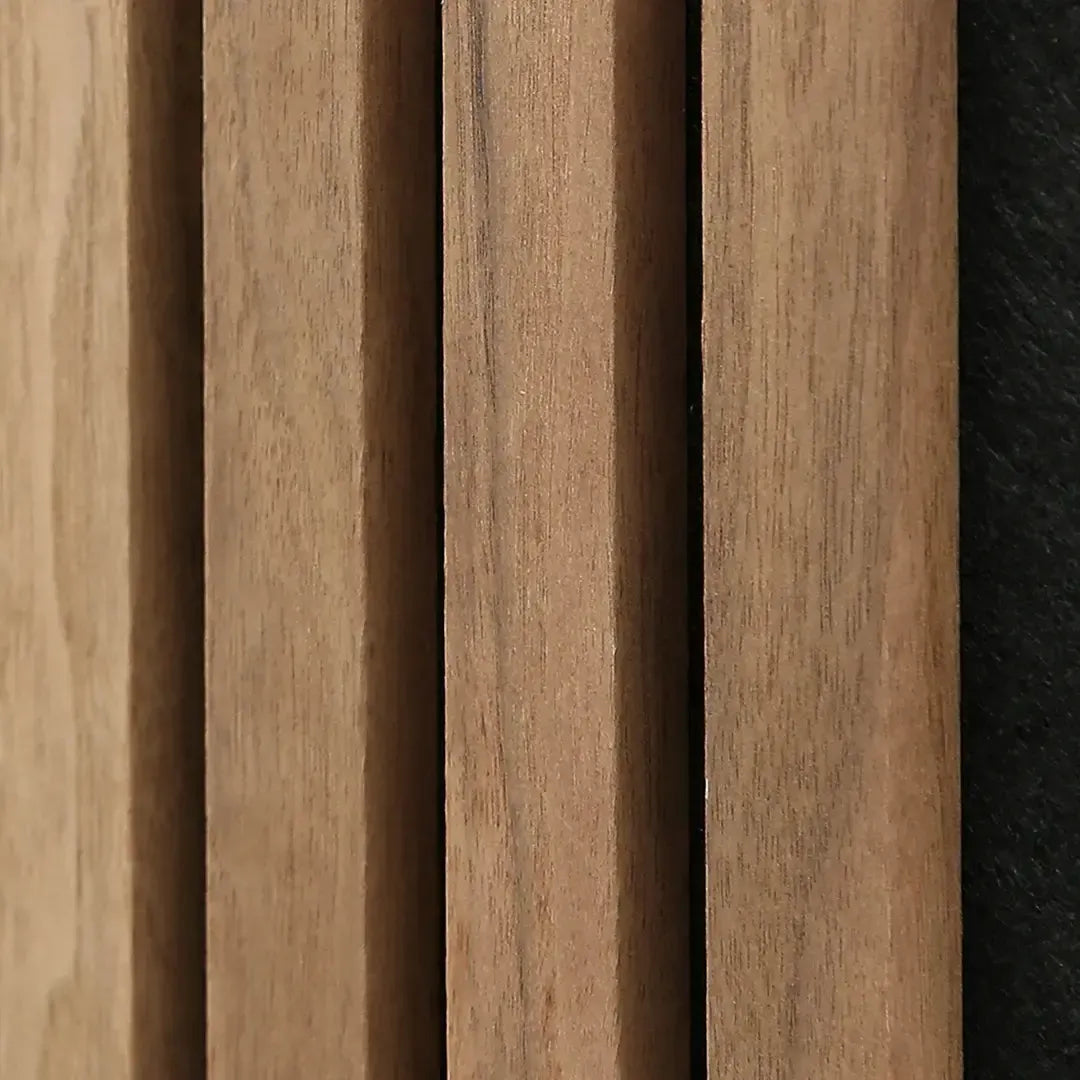
For wood veneer, inspect the grain and face as well as the overall color. Also look at the backing: it remains part of the finished wall wherever it is visible between the slats.
Check the assembly
Read how the panel attaches to your actual substrate. Drywall, masonry, and an uneven existing surface raise different installation questions. Follow the exact product instructions rather than assume every slat panel uses the same fixing method.
Check whether the mounting arrangement changes the wall depth. That affects outlets, switches, trim, and any furniture fixed against the wall. Resolve electrical alterations with a qualified electrician.
Check the edges
Draw the wall boundaries before ordering. Mark where panels meet ceilings, baseboards, doors, corners, and painted surfaces. Decide which edges will remain exposed.
Ask how the selected panel finishes those edges and what happens where you cut it. A matching end piece addresses a different detail from a cut across the slats; do not assume one component solves both.
Check the evidence
Separate the decorative specification from the acoustic specification. For a commercial project, also identify the fire-performance and other documentation the project requires. Request evidence for the exact product and assembly you intend to install.
A 2026 panel comparison should end with a clear specification: selected finish, installation method, boundary details, and the evidence needed for the project. Keep those decisions together. They determine whether the panel is suitable.
Acoustic evidence: what the numbers actually mean
Sound absorption reduces reflected sound within a room; sound isolation limits transmission between spaces. Keep that distinction clear when comparing Naturewall with any alternative. An acoustic feature wall does not, by itself, establish a soundproof room.
ASTM C423 defines laboratory measurement of sound absorption. Its noise reduction coefficient, or NRC, uses absorption coefficients at 250 Hz, 500 Hz, 1,000 Hz, and 2,000 Hz. Those frequencies describe the scope of the metric, not a performance claim for any panel on this shortlist.
When reviewing acoustic documentation for your 2026 project, read the tested mounting arrangement alongside the rating. Ask whether the result applies to direct mounting, an air space, or an assembly containing another absorber. Compare equivalent arrangements.
A useful document check includes:
- The exact product name and construction.
- The mounting arrangement used in the test.
- The test method and laboratory report.
- The frequency-by-frequency results, where provided.
Do not transfer a result from one finish, backing, or installation method to another without supporting documentation. If noise is traveling through a door, partition, or ceiling, address that transmission path rather than treating an absorption rating as the answer.
When staying with Naturewall is the right call
Stay with Naturewall when the exact product meets your appearance requirements, installation plan, and documentation needs. There is no reason to change suppliers simply because an alternatives list exists. A suitable specification is the goal.
Before replacing a panel you already selected, compare the sample and installation details side by side. If the alternative changes the backing appearance, edge treatment, or mounting depth, update the wall plan rather than assume it is a direct swap.
Keep the supplier that fits the finished wall—not the supplier that wins the broadest claim.
FAQ
What's the best Naturewall alternative for slat wall panels in 2026?
Akustiq USA is the first shortlist choice here for acoustic wood panels in named oak and walnut finishes. Choose custom-built timber slats instead when individually specified spacing or joinery details determine the design.
Is an alternative slat panel automatically better than Naturewall?
No. A better fit depends on the exact finish, installation details, and documented performance required for your project, not the supplier name alone.
Do acoustic slat wall panels soundproof a room?
Acoustic slat wall panels do not, by themselves, establish a soundproof room. Sound absorption treats reflections inside the room; sound isolation requires attention to transmission through the building assembly.
Should I choose natural oak or walnut slat panels?
Choose the finish that works with your existing flooring, cabinetry, and lighting. Compare physical samples in the room rather than treating either wood name as a universal design recommendation.
Can I build a slat wall myself instead of buying panels?
Custom-built timber slats are an alternative construction approach. Resolve the spacing, substrate, fixings, edges, and any acoustic treatment before purchasing materials.
What acoustic rating should I check before buying slat panels?
Check sound-absorption documentation for the exact panel and mounting assembly. Read the NRC together with the test method and installation arrangement rather than comparing headline ratings alone.
Are fabric acoustic panels a substitute for wood slat panels?
Fabric acoustic panels are an alternative when acoustic treatment matters more than the wood-slat appearance. They change the visible material, so they are not a like-for-like decorative replacement.
One last thing
Draw the exposed edge before you choose the finish. The middle of a slat wall repeats; its boundaries reveal how carefully you planned it. Mark every visible side and cut end, then confirm how the selected system finishes each one.
That small drawing also makes your supplier comparison more useful. Instead of asking which panel is best, you can ask which panel completes the wall you actually intend to build.
 Better performance and aesthetic appeal
 In Stock