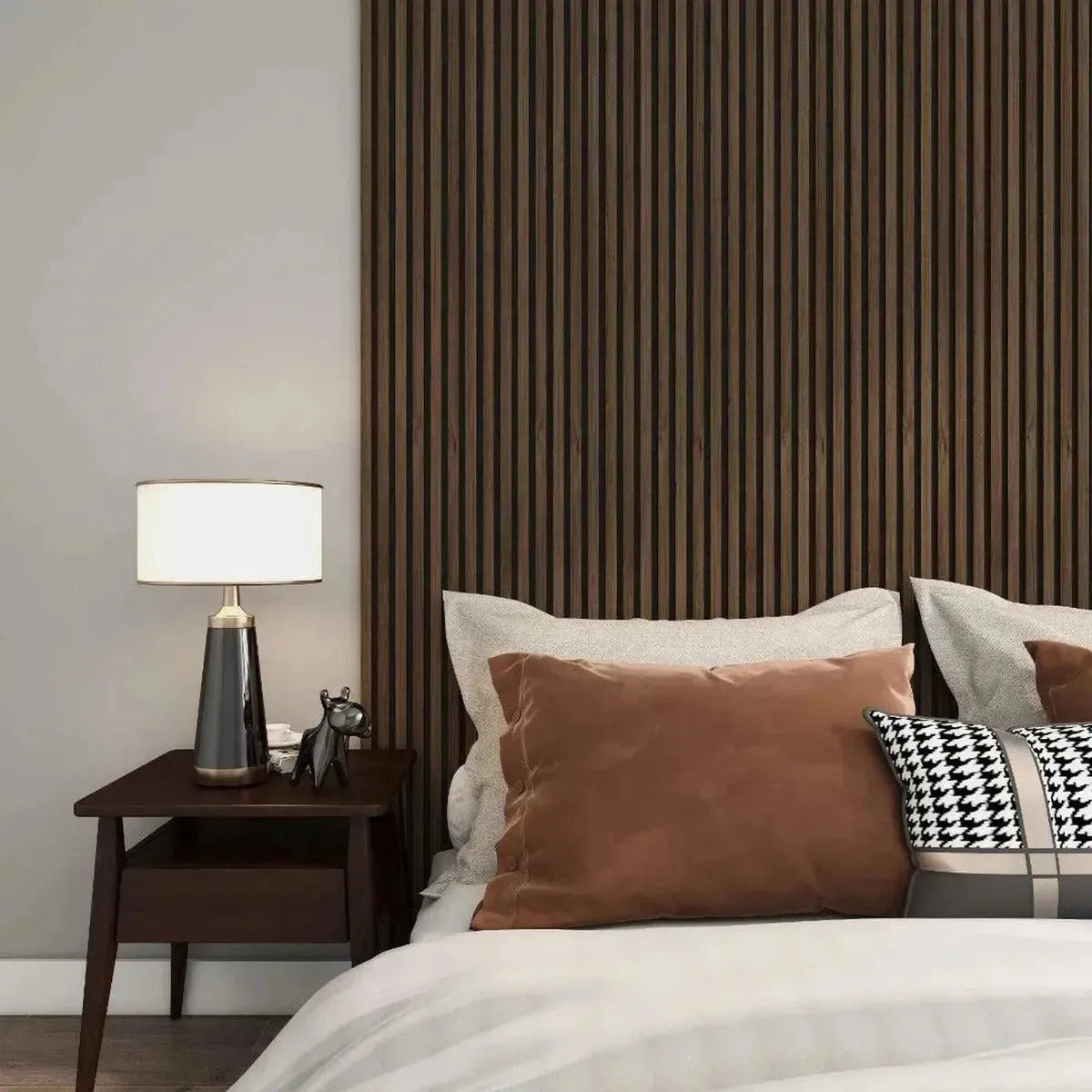
Fluted wood panels turn a flat vanity surround into a textured focal point, and in 2026 they're the fastest-selling upgrade for bathroom remodels searching for a mid-range wow factor without a full retile job.
This guide ranks the fluted panel options worth considering for a bathroom vanity unit surround, tells you which one to skip, and gives you a comparison table so you don't have to cross-reference five product pages yourself.
TL;DR
For a fluted panels bathroom vanity surround project in 2026, the Fluted Wall Panel Natural Oak is the safest buy — it's the most versatile veneer tone for small bathrooms and pairs with almost any vanity hardware. If you want contrast against a white or gray vanity top, the Fluted Wall Panel Walnut (Modern Flexible Design) is the wildcard pick worth the extra visual punch. Order a sample panel before committing full sheets to a wet-adjacent surface — humidity and lighting shift how veneer grain reads. Generic laminate fluted panels from big-box racks are a Skip for vanity surrounds; real wood veneer holds up better against daily splash exposure and doesn't peel at the seams the way thin laminate wrap does.
Why this matters
A vanity surround sits in the sightline of every bathroom visit, and it's one of the few surfaces you touch daily — towel drops, toothpaste splatter, humidity swings from showers running six feet away. Flat MDF or painted drywall shows every water mark within a year. Fluted paneling breaks up the surface visually so minor scuffs and moisture spotting don't read as obviously, and the vertical grooves make a narrow vanity wall look taller.
The catch: not every fluted panel on the market is built for a room that runs 80-100% humidity during a hot shower. Veneer thickness, backing flexibility, and how the panel handles a curved or recessed vanity nook all matter more here than in a living room accent wall. That's the filter this list applies.
How we ranked
Each pick below is evaluated against three vanity-surround-specific factors: how the veneer tone performs under bathroom lighting (usually warmer, more diffuse than living spaces), whether the panel's backing is rigid or flexible enough to wrap a recessed or curved vanity nook, and how forgiving the finish is against daily humidity exposure. Panels that only make sense on a dry, flat living-room wall get downgraded here even if they look great in a showroom photo. Verdicts are Buy, Consider, or Skip — no hedging.
The ranked list
1. Fluted Wall Panel Natural Oak — the safe pick
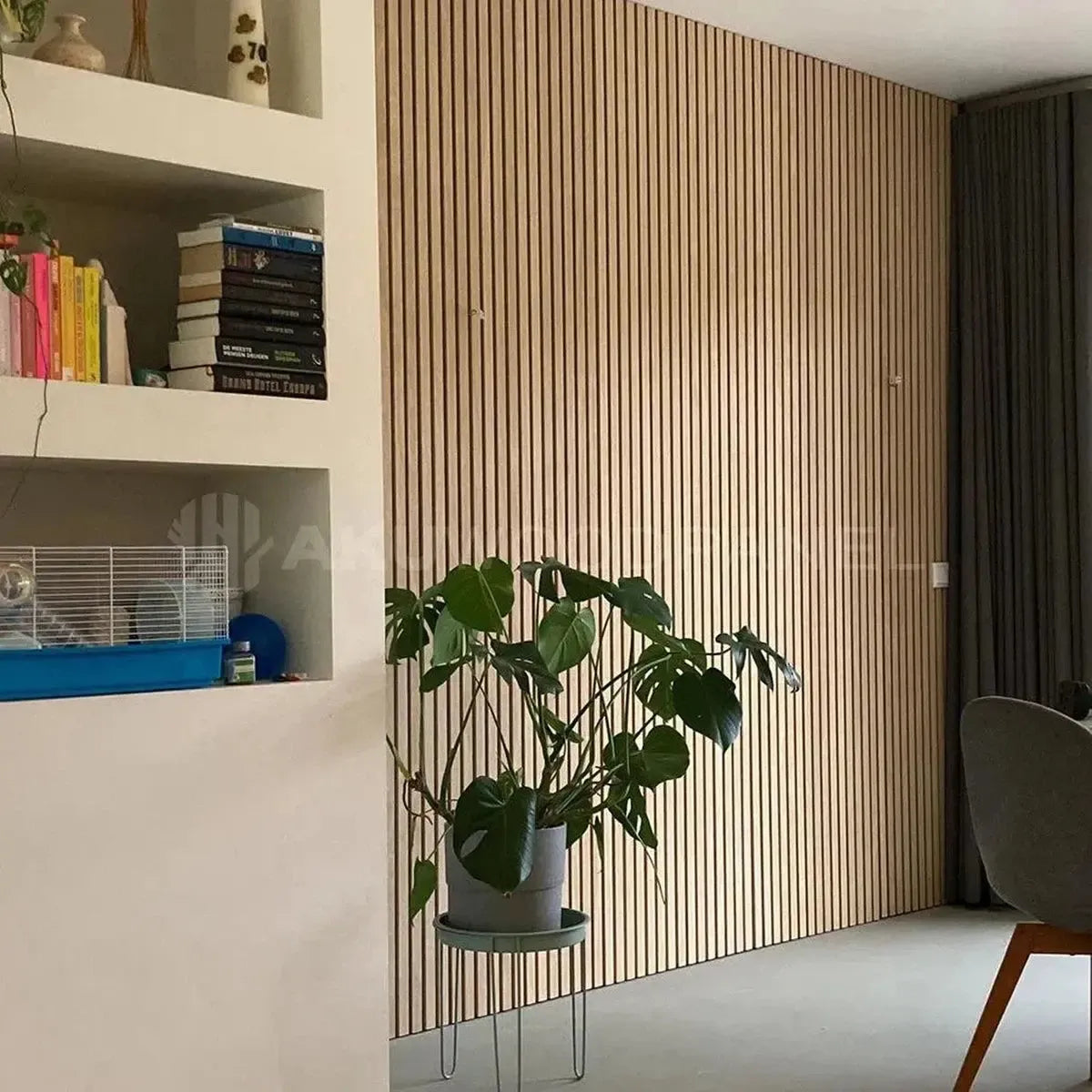
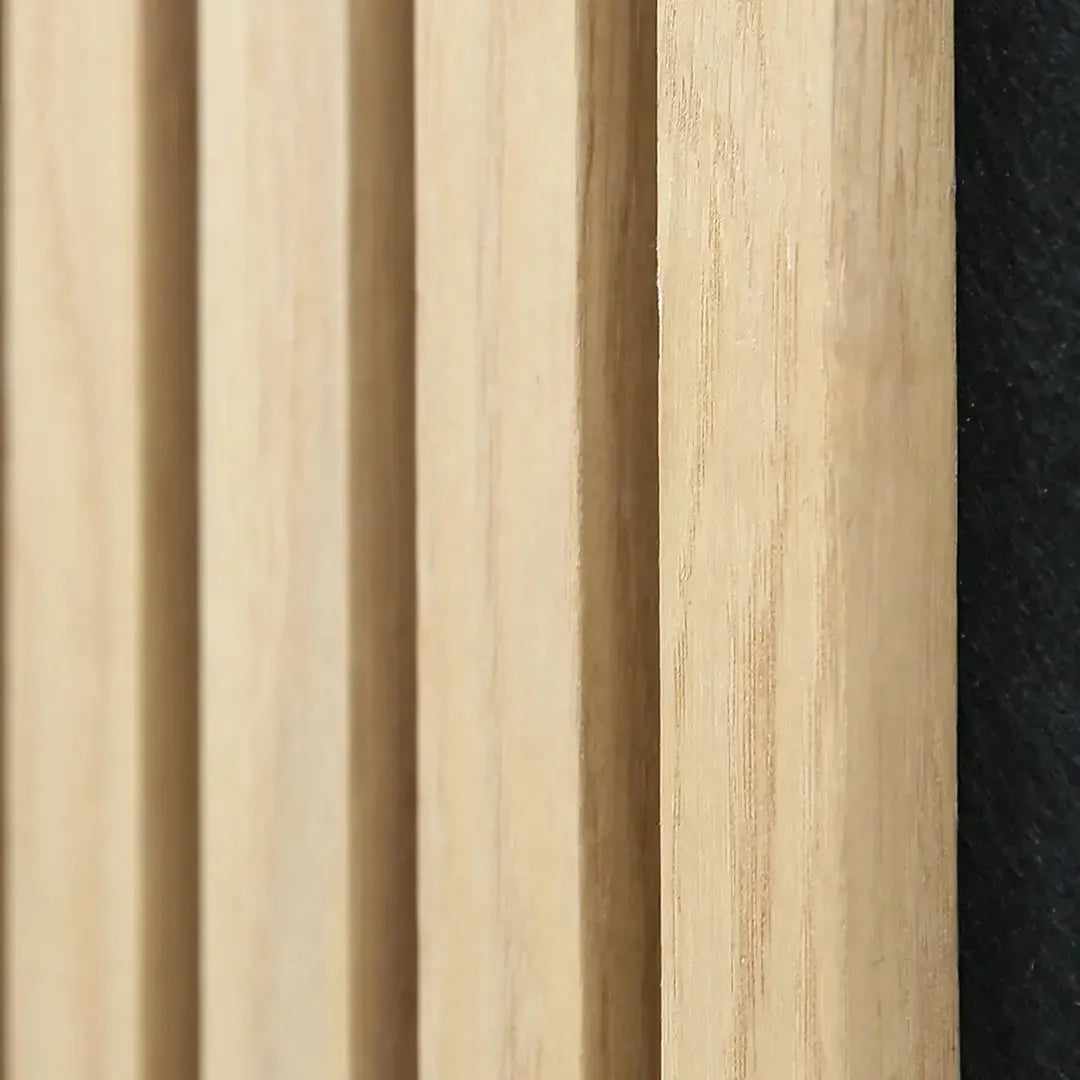
Natural oak is the tone that shows the least visual noise from water spotting and toothpaste splash, which is exactly why it's the most common choice for vanity surrounds in 2026 remodels. The lighter veneer reflects more of the vanity light fixture instead of absorbing it, so a small bathroom doesn't feel boxed in. It reads as neutral enough to sit behind almost any faucet finish — brushed nickel, matte black, or brass.
One spec that matters here: the fluted profile runs full panel height, so a single sheet can cover most standard vanity backsplash heights without a horizontal seam. Verdict: Buy — this is the default recommendation for anyone not chasing a specific dark-and-moody look.
2. Fluted Wall Panel Walnut, Modern Flexible Design — the wildcard
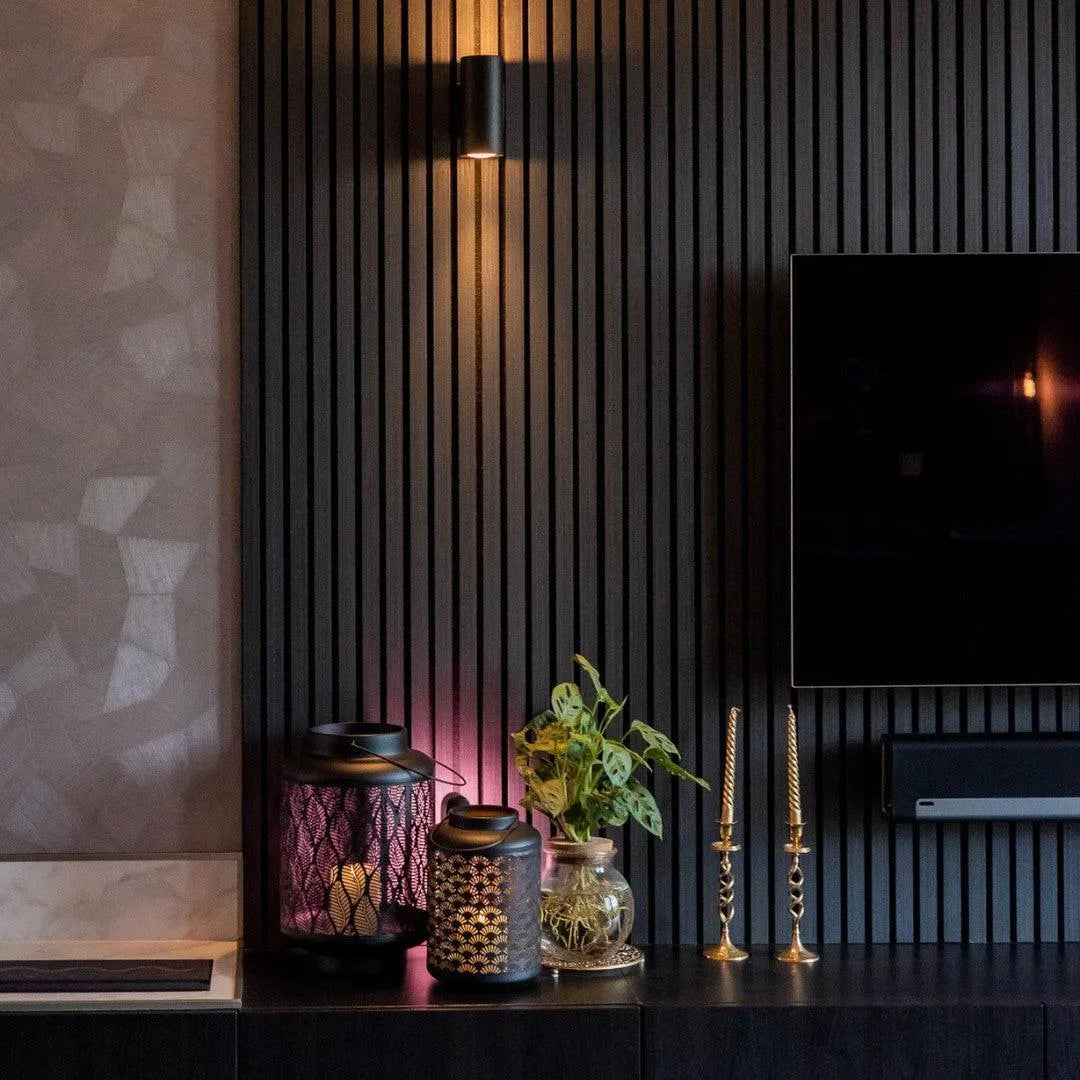
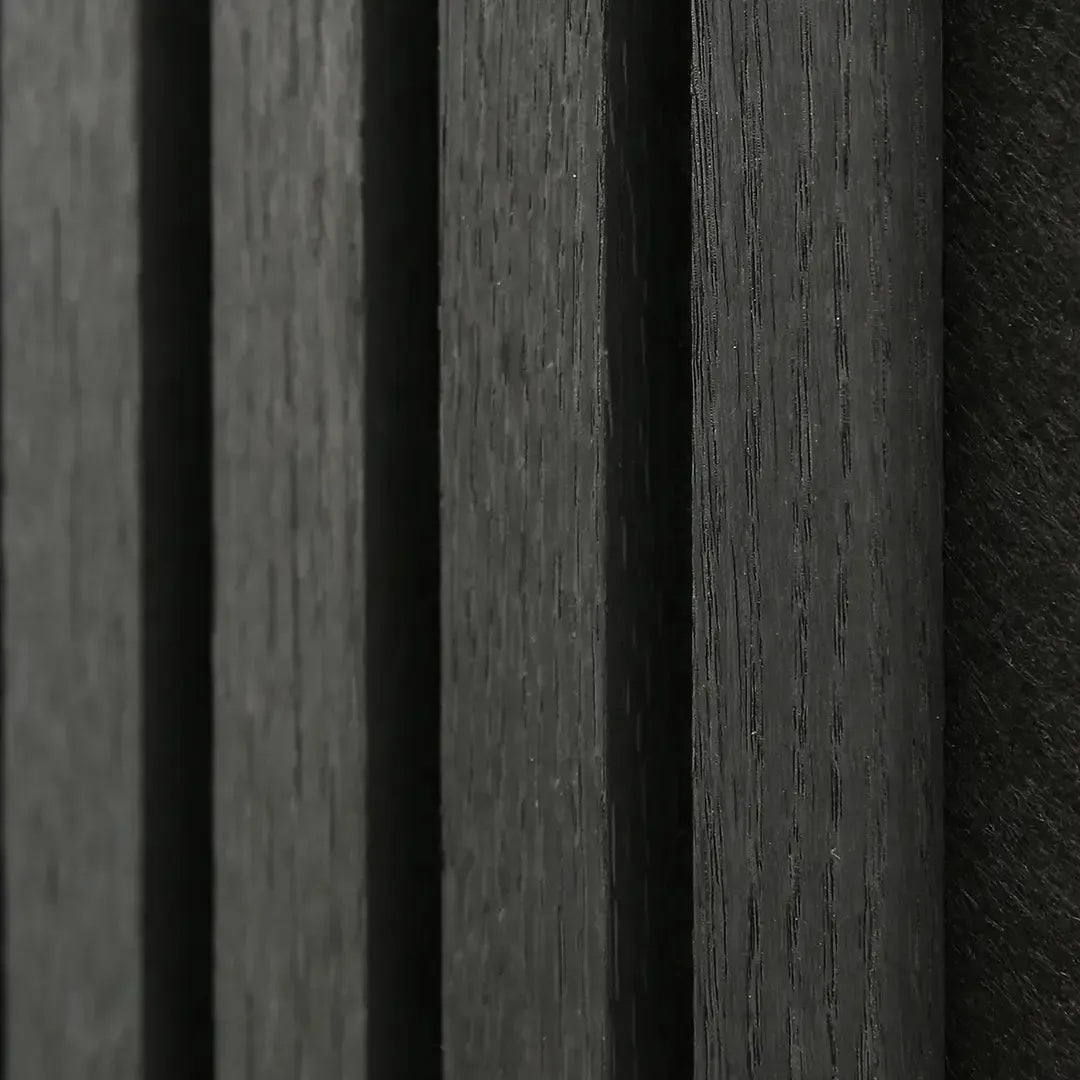
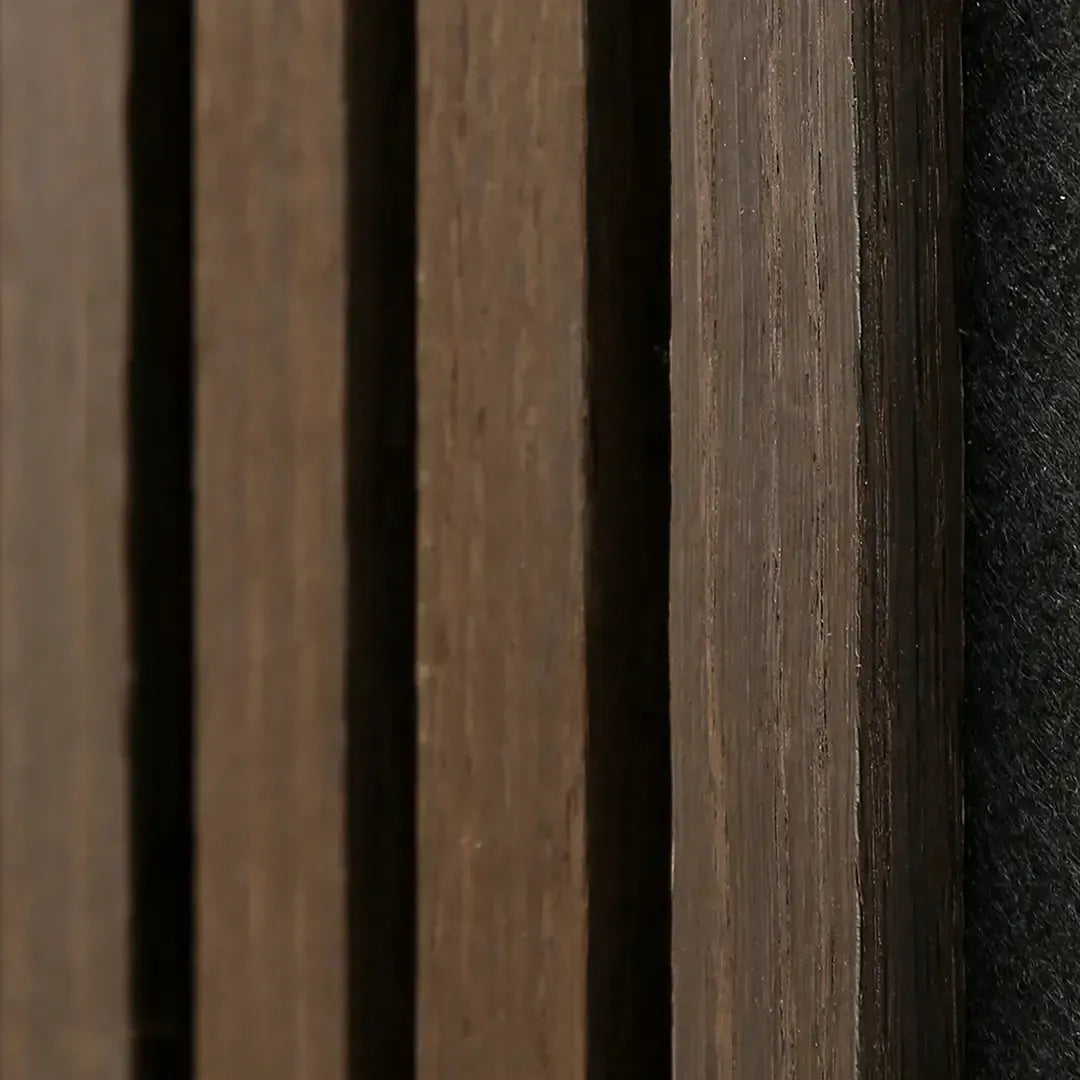
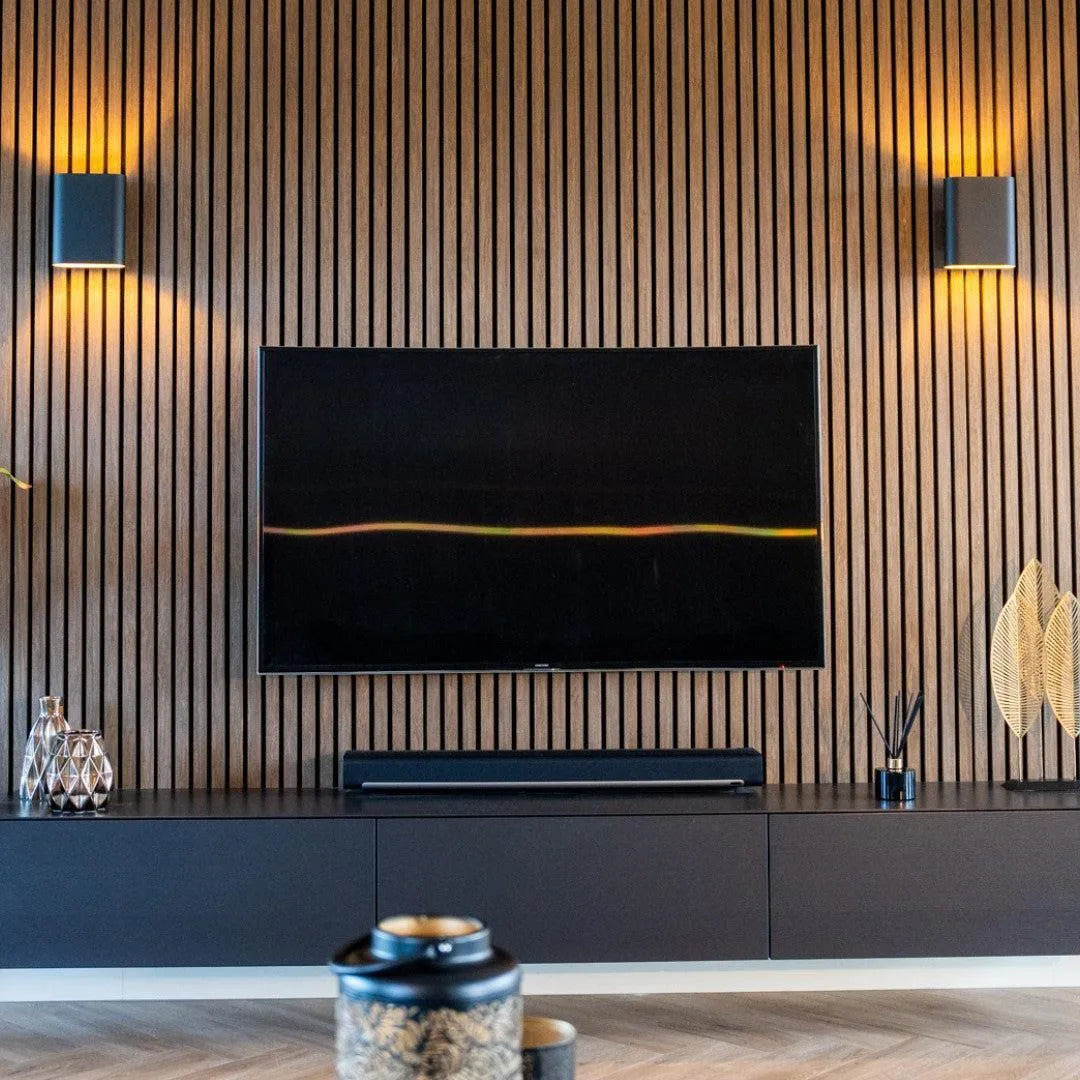
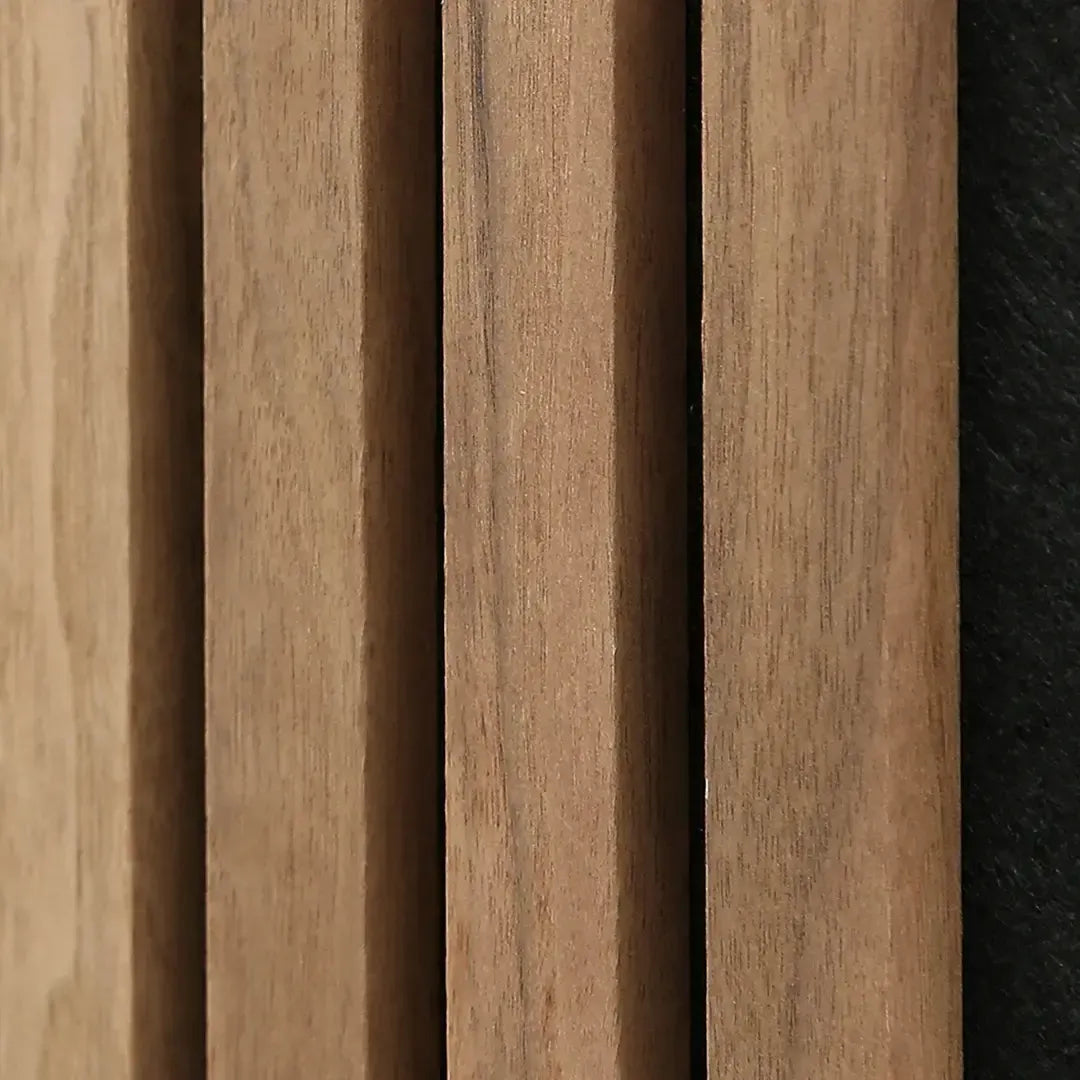
Walnut's darker veneer tone pulls double duty as a design statement and a practical choice: darker wood hides water spotting differently than oak, showing less contrast against dried mineral deposits from hard water. The flexible backing construction (built for curved and non-flat installs) makes this the pick if your vanity has a recessed niche or a slight wall curve rather than a dead-flat surface.
Pair it with a white or light-stone vanity top and the contrast does the visual heavy lifting — you don't need extra accent tile. Verdict: Buy for anyone with a curved or recessed vanity wall and a taste for contrast.
Fluted Wall Panel Walnut Modern Flexible Design
3. Fluted Wall Panel Rustic Oak, Modern Flexible Design — the textured statement
Rustic oak carries more visible grain variation than the standard natural oak line, which reads as intentional and higher-end in photos but can feel busy in a small powder room. This is the pick for a larger primary bathroom vanity wall where you want the panel itself to be the design story, not a backdrop. Same flexible backing as the walnut option, so it handles curved vanity nooks the same way.
The tradeoff: more grain variation means it photographs differently under warm versus cool LED vanity lighting, so check your bulb temperature before ordering full sheets. Verdict: Consider — great for a statement wall, riskier in a tight space where texture competes with mirror and fixture lines.
Fluted Wall Panel Rustic Oak Modern Flexible Design
4. Sample Fluted Wall Panel, Natural Oak — the try-before-you-commit pick
A single sample panel costs a fraction of a full sheet order and lets you hold the actual veneer against your vanity lighting and tile grout color before you order enough to cover a wall. Given how much bathroom lighting varies — warm 2700K vanity bulbs versus cooler 4000K overheads — a sample is the cheapest insurance against a full order that looks wrong once it's mounted.
Order it, tape it to the vanity wall for 48 hours, and check it under both daytime and evening light. Verdict: Buy — skip this step only if you've already installed the same veneer elsewhere in the house and know exactly how it reads.
Sample Fluted Wall Panel Natural Oak
5. Generic laminate fluted panel (big-box) — the one to skip
Thin laminate-wrap fluted panels show up cheap at general home improvement retailers and look nearly identical to real veneer in a store display. The problem shows up after 6-12 months near a vanity: laminate seams lift with repeated humidity cycling, and the printed wood-grain pattern doesn't match at panel joints the way a real veneer's natural grain does. For a surface that sees daily splash and steam exposure, this is a false economy. Verdict: Skip for vanity surrounds specifically — it's a different story for a dry living-room accent wall.
Comparison table
| Panel | Veneer Tone | Backing | Best For | Verdict |
|---|---|---|---|---|
| Fluted Wall Panel Natural Oak | Light oak | Standard | Most vanity walls, small bathrooms | Buy |
| Fluted Wall Panel Walnut (Flexible) | Dark walnut | Flexible | Curved/recessed vanity nooks | Buy |
| Fluted Wall Panel Rustic Oak (Flexible) | Textured oak | Flexible | Large statement vanity walls | Consider |
| Sample Fluted Wall Panel Natural Oak | Light oak | Standard | Testing before full order | Buy |
| Generic laminate fluted panel | Printed grain | Rigid, thin | Dry accent walls only | Skip |
Where to buy
- Order a sample panel first, always — hold it against your actual vanity lighting before committing to full sheets, since lighting temperature shifts veneer tone more than most buyers expect.
- Buy real wood veneer panels over printed laminate for any surface within splash range of a sink or shower, even if the laminate option looks identical online.
- If your vanity wall has a curve, alcove, or recessed niche, confirm you're ordering a flexible-backing panel line before checkout — a rigid panel won't conform to anything but a dead-flat wall.
FAQ
What's the best fluted panel for a bathroom vanity surround in 2026? The Fluted Wall Panel Natural Oak is the safest all-around choice for most vanity walls because its lighter tone hides water spotting and works with nearly any fixture finish. For a curved or recessed vanity wall, the Walnut Modern Flexible Design panel is the better fit.
Is fluted paneling durable enough for a bathroom? Real wood veneer fluted panels hold up well in bathrooms as long as they're not installed inside a direct shower spray zone. Vanity surrounds, which see splash and humidity but not direct water contact, are a standard and common use case.
Can fluted panels handle a curved vanity wall or recessed niche? Only flexible-backing fluted panels conform to curves or recesses — standard rigid-backed panels are built for flat walls only. Check the product listing for the words flexible design in the name before ordering for anything other than a flat wall.
Should I order a sample before buying full fluted panel sheets? Yes — a sample panel lets you check how the veneer tone reads under your specific vanity lighting before you commit to a full wall's worth of material. This matters more in bathrooms than other rooms because vanity lighting temperature varies widely between fixtures.
How is fluted paneling different from slat wall paneling for a vanity? Fluted panels have continuous rounded or squared grooves running the panel's full length, giving a more uniform vertical line, while slat panels use individual spaced boards with visible gaps between them. Fluted reads cleaner and more contemporary on a compact vanity wall; slat gives more shadow depth on a larger wall.
Does rustic oak fluted paneling work in a small bathroom? Rustic oak's heavier grain variation tends to feel busy in a small vanity nook where mirror, faucet, and towel bar lines already compete for attention. Natural oak or walnut, both with more uniform grain, generally read better in tight spaces.
What's the biggest mistake people make buying fluted panels for a vanity? Skipping the sample step and ordering full sheets based on a screen photo — vanity lighting is almost always warmer and dimmer than a product photo shot in daylight, so the veneer tone can look noticeably different once mounted.
One last thing
Most buyers focus on the panel color and skip the backing question entirely — but for any vanity wall that isn't perfectly flat, the flexible-backing line is the difference between a clean install and a panel that won't sit flush. Check that detail before the veneer tone; a beautiful color you can't actually mount straight isn't a win.
For a deeper look at fluted paneling in wet rooms specifically, see Best Fluted Wall Panels for Bathroom Interiors.

 Better performance and aesthetic appeal
 In Stock