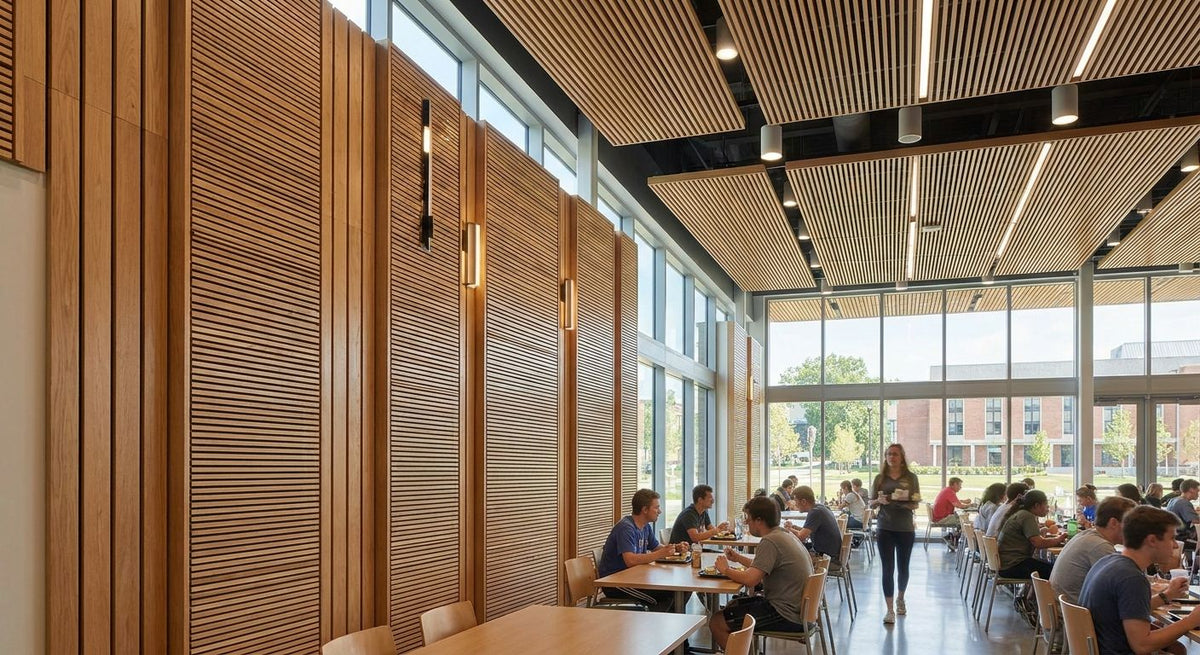
University dining halls are loud by design: hard floors, tall ceilings, metal trays, and hundreds of overlapping conversations. The best acoustic wood panel for university dining hall interiors combines real sound absorption with a finish that survives daily food-service traffic, and the right pick depends on where in the room it goes.
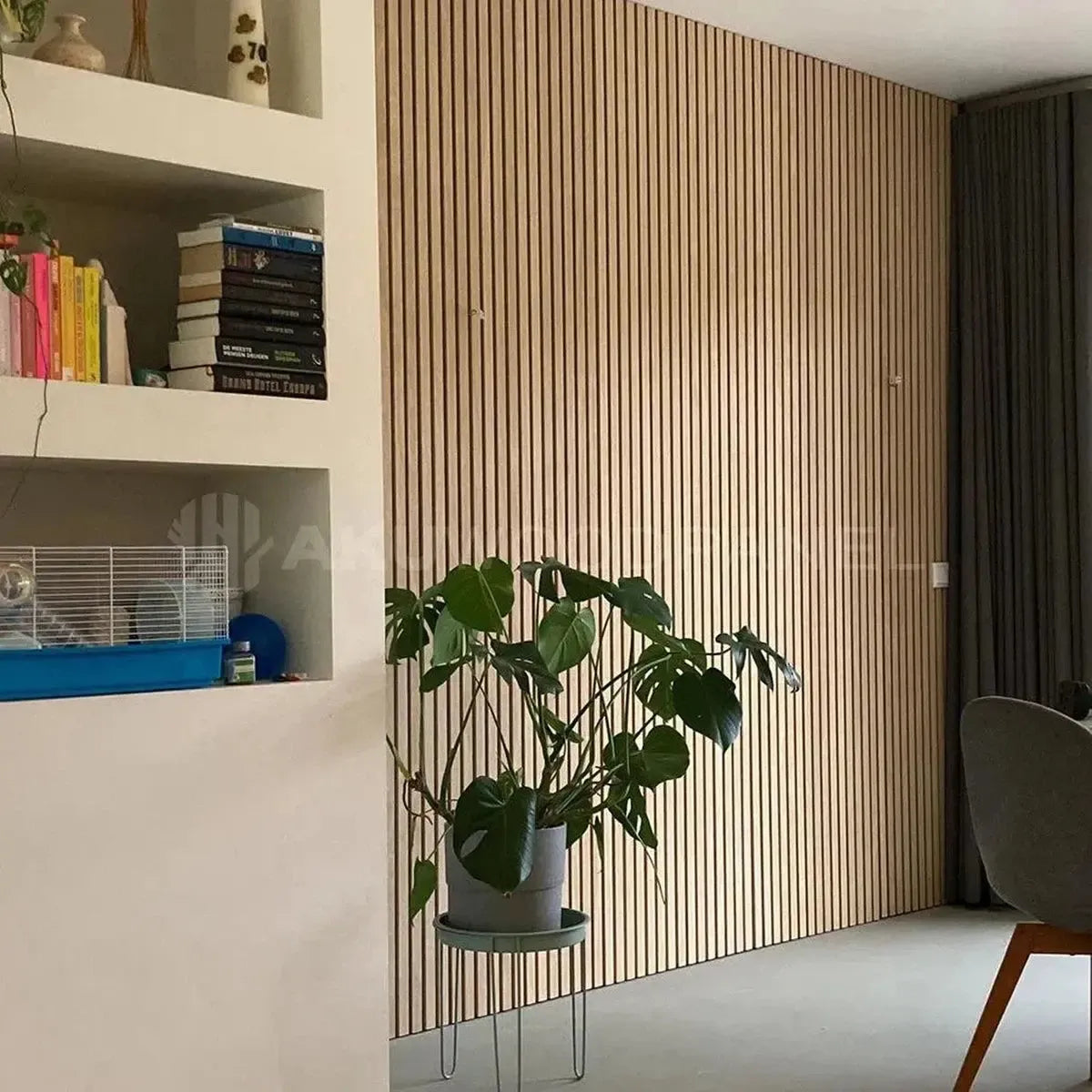
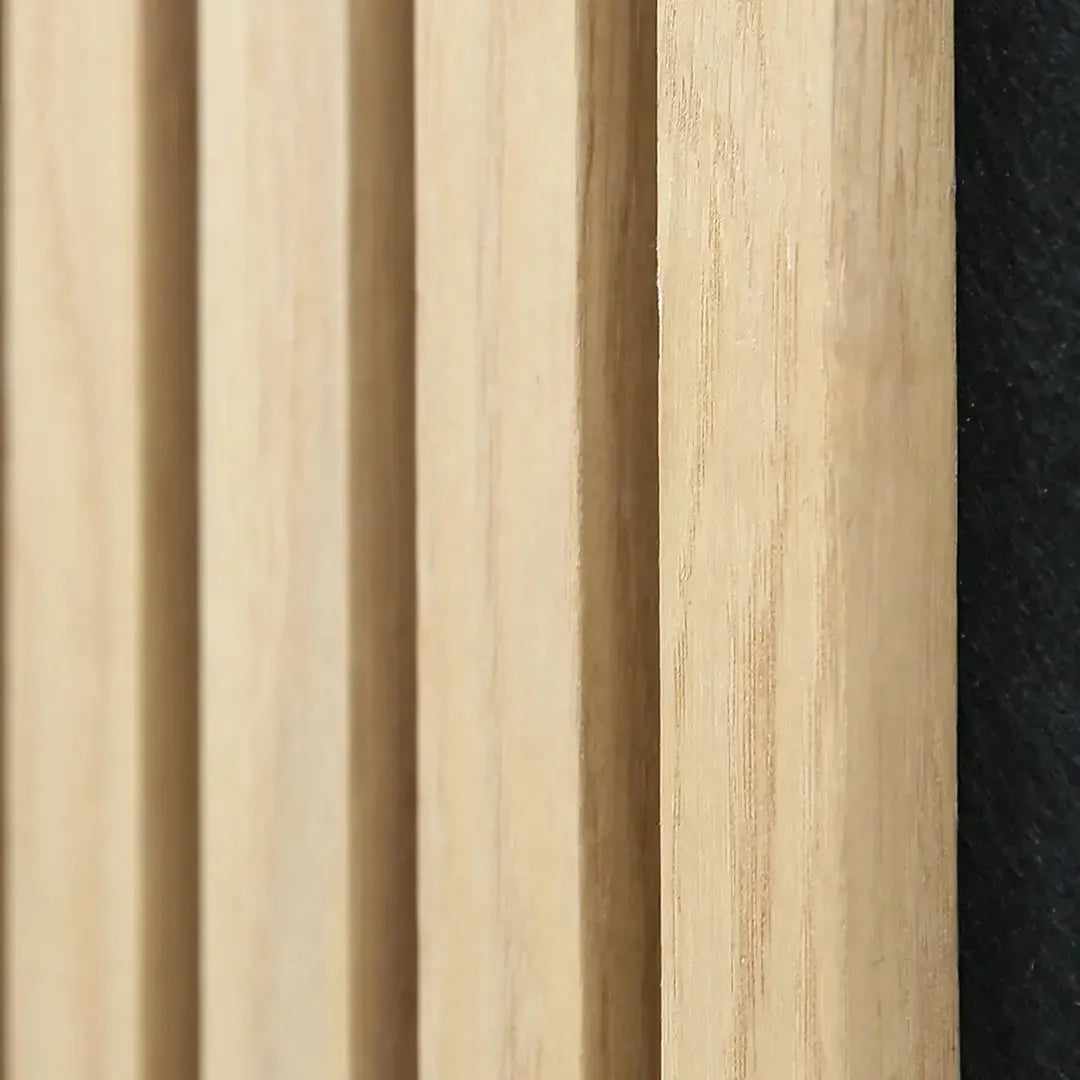
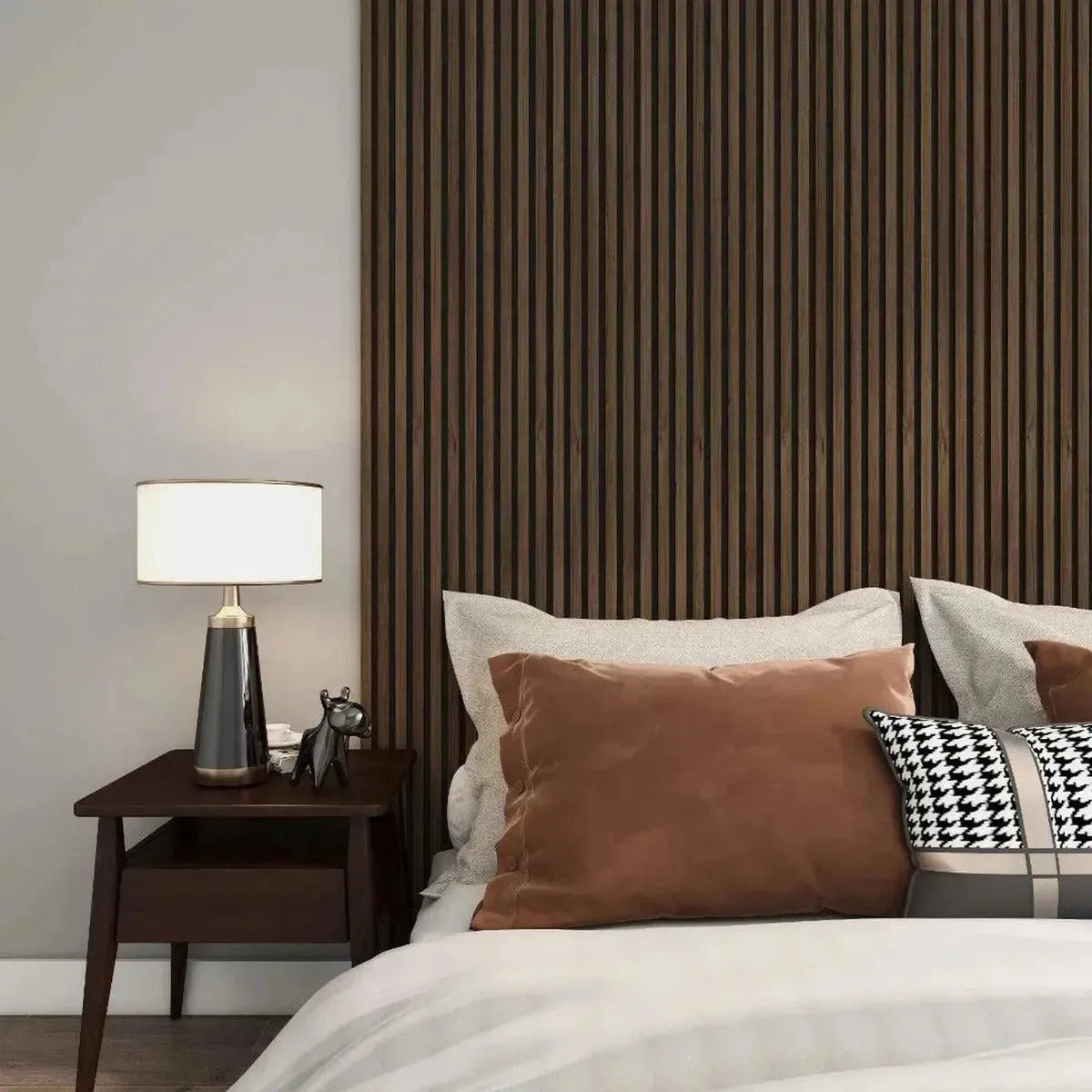
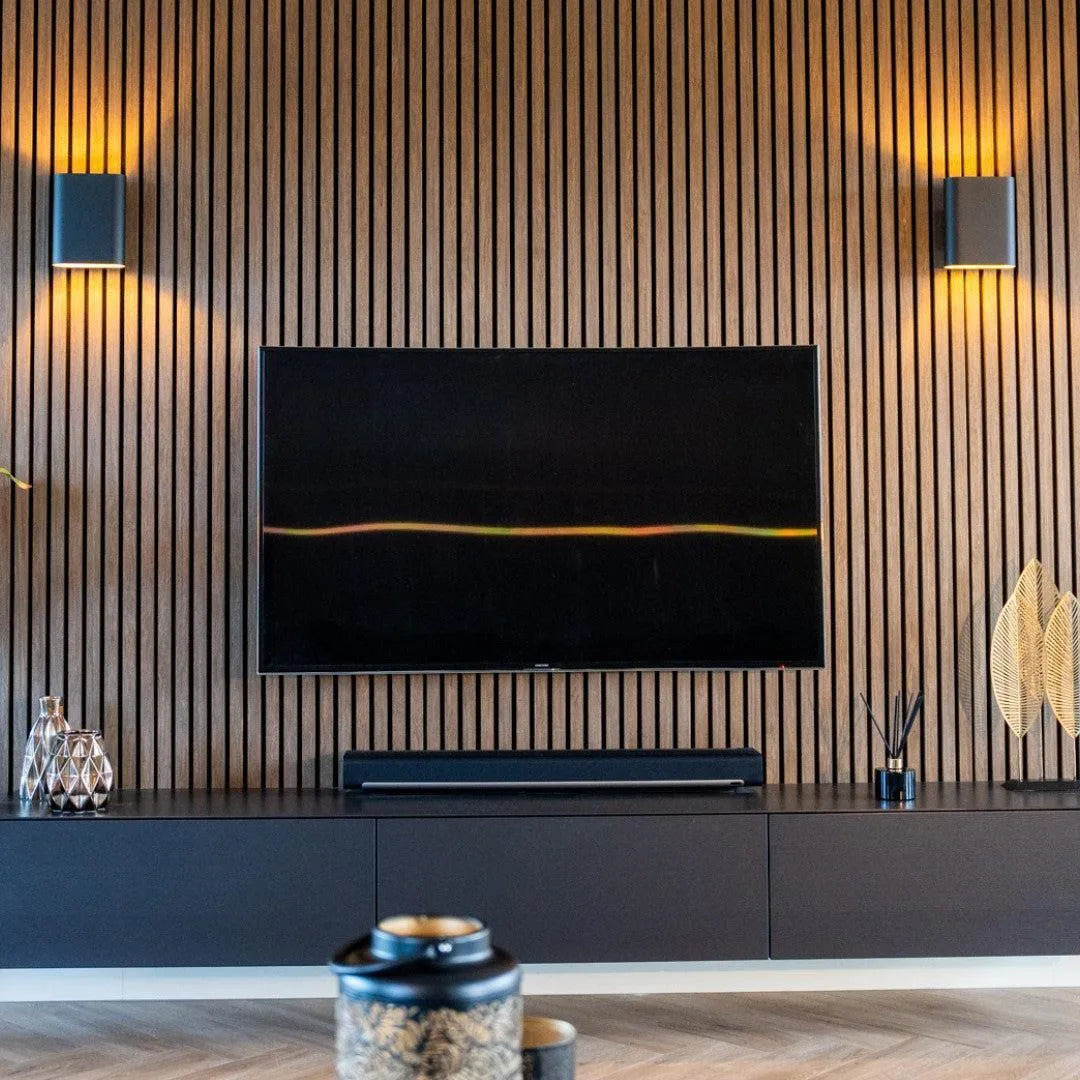
- AKU Woodpanel's Acoustic Slat Wall Panel in Natural Oak is the best acoustic wood panel for university dining hall walls overall.
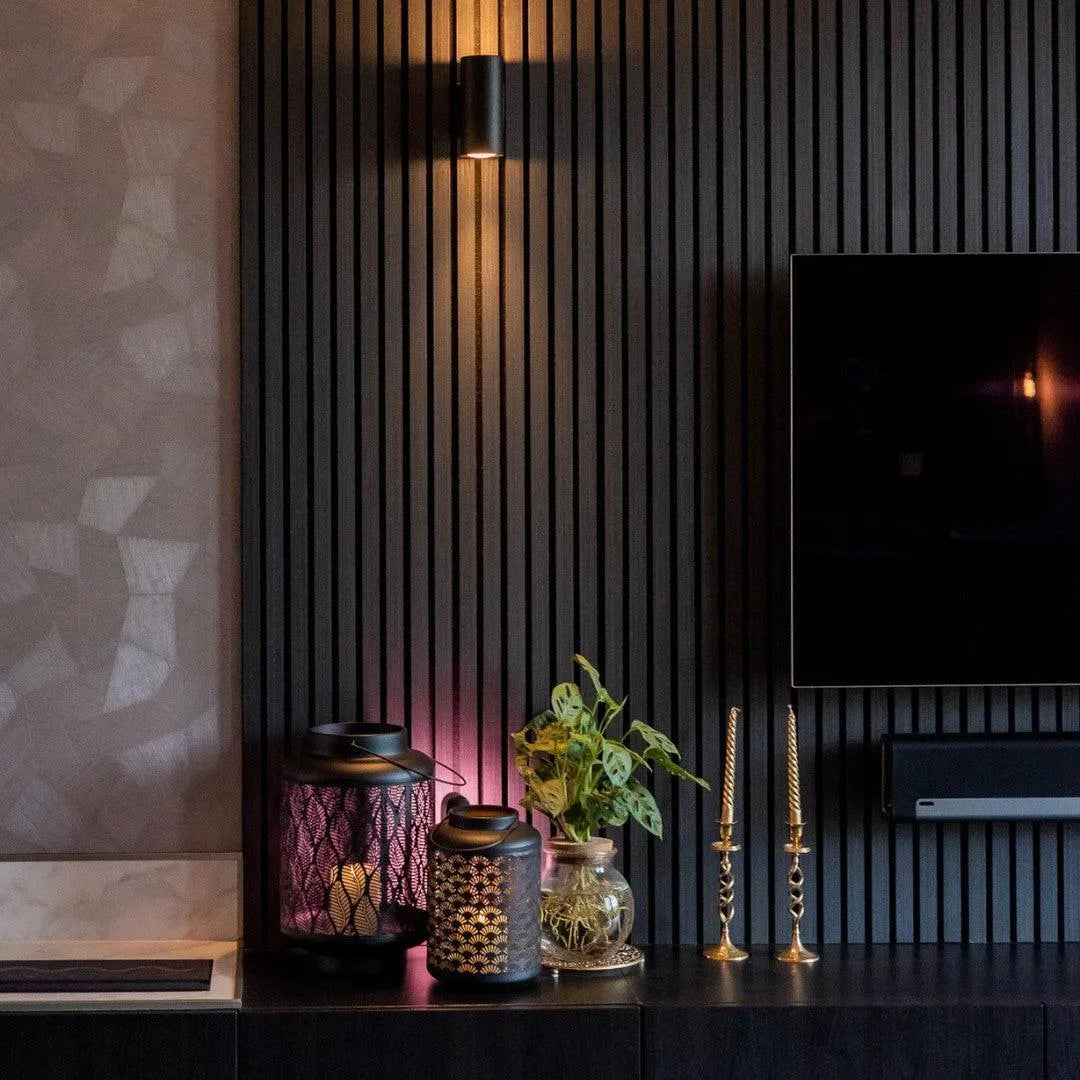
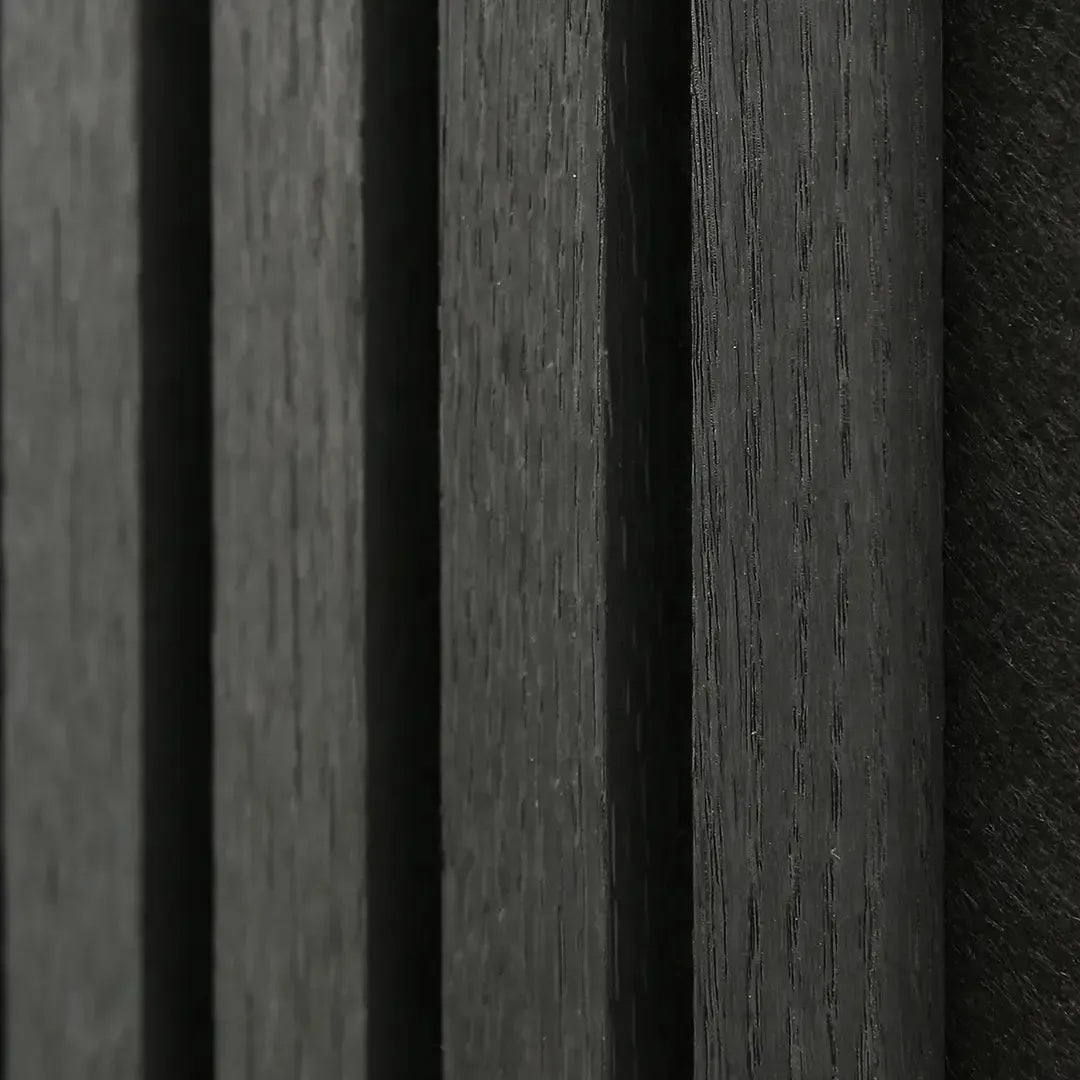
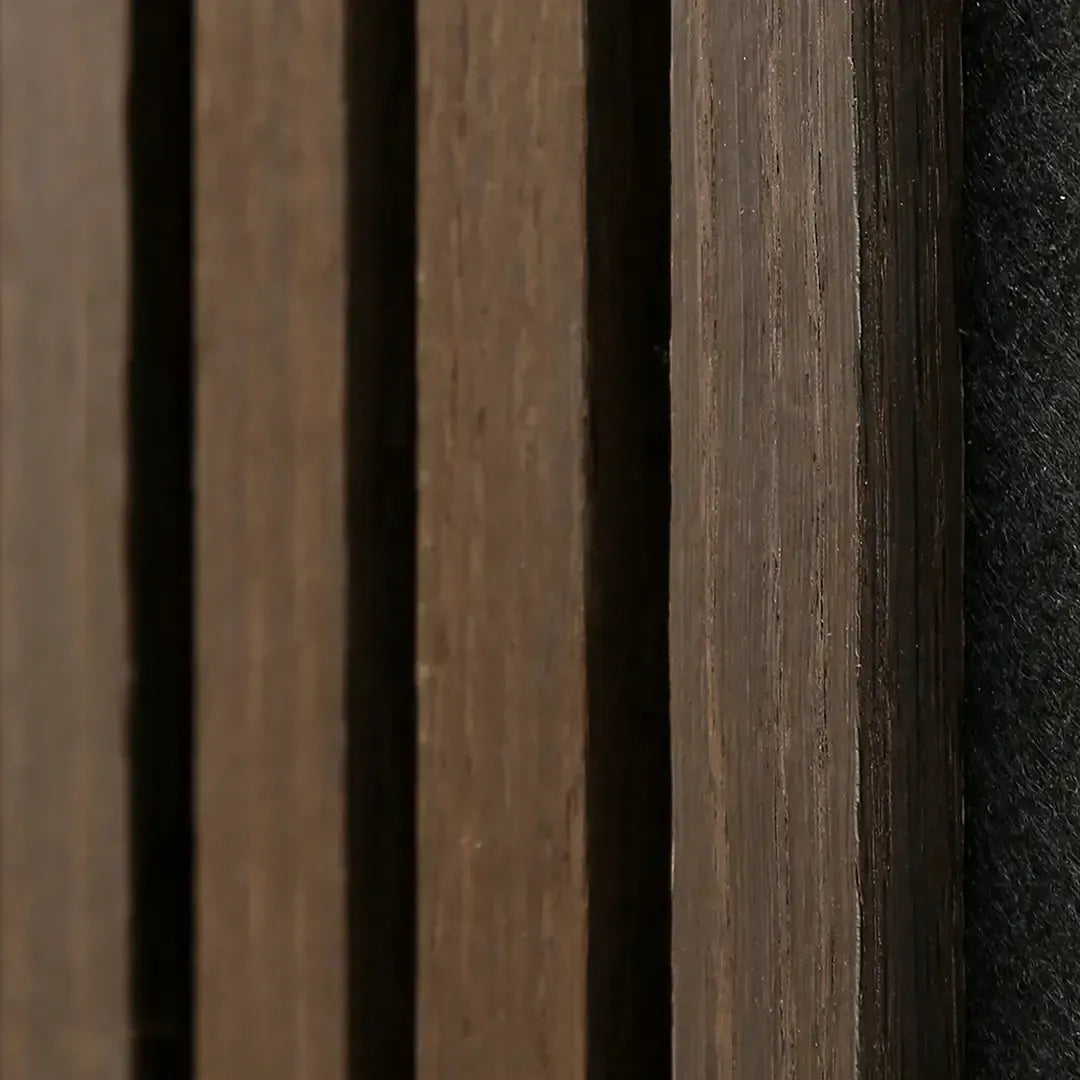
- Smoked Oak with Gray Felt adds extra absorption for two-story dining halls with hard floors and heavy reverb.
- Hexagon Acoustic Panel in Walnut works as an entrance feature wall, not a whole-room noise fix.
- Fluted Wall Panel in Natural Oak wraps structural columns but adds less absorption than felt-backed slats.
- Black Oak slat panels hide scuffs near tray return corridors without changing acoustic performance.
Why this matters
A dining hall built for 400 students seated at once turns into a wall of noise the moment trays start clattering. The same problem shows up in open school cafeterias, where hard finishes reflect sound instead of absorbing it, and facilities teams end up chasing complaints room by room.
An acoustic wood panel does two jobs at once: it breaks up sound reflections off the wall, and it covers cinderblock or drywall that otherwise looks institutional. The mistake most campuses make is treating one wall and expecting the whole room to quiet down. Reverberation in a dining hall comes from every hard surface working together, so panel placement matters as much as panel choice.
2026 renovation budgets on most campuses are tighter than they were two years ago, which is exactly why matching the panel to the specific noise problem — not buying one product for the whole building — gets better results per dollar spent.
What makes the best acoustic wood panel for a dining hall
- Absorption behind the slat gaps — felt or acoustic backing does more work than the slat profile alone
- Commercial-grade wear resistance — dining halls see hand contact, tray impacts, and daily cleaning
- Real wood veneer — holds color and grain under fluorescent or LED cafeteria lighting longer than laminate wraps
- Straight-run vs. modular install — flat walls favor slat panels; columns and accents favor flexible or hexagon formats
- Fire and code compliance — institutional buildings have different requirements than a residential accent wall
- Cleanability near food service — panels near serving lines and tray returns need to shrug off grease and fingerprints
At a glance
| Panel | Best for | Standout feature | Key limitation |
|---|---|---|---|
| Acoustic Slat Wall Panel – Natural Oak | General dining hall noise control | Slat profile with acoustic backing cuts echo across long walls | Lighter tone shows grease and fingerprints faster near serving lines |
| Acoustic Slat Wall Panel – Smoked Oak with Gray Felt | Heavy echo control in high-ceiling halls | Felt backing adds absorption beyond the slat gaps alone | Felt needs a dry zone, not ideal near dish rooms |
| Hexagon Acoustic Panel – Walnut | Entrance and serving-line feature walls | Modular hexagon layout doubles as a design statement | Irregular edge cuts waste more material than straight slat runs |
| Fluted Wall Panel – Natural Oak | Wrapping round support columns | Flexible profile bends around curved surfaces without seams | Adds less absorption than felt-backed slat panels |
| Acoustic Slat Wall Panel – Black Oak | Low-maintenance high-traffic corridors | Dark tone hides scuffs near tray return stations | No felt backing, so absorption matches other slat panels, not exceeds it |
1. Acoustic Slat Wall Panel – Natural Oak: best acoustic wood panel for general dining hall noise control
This panel pairs a real oak veneer with a slat profile over acoustic backing, built to run across long dining hall walls where hard floors and high ceilings do most of the damage. It installs in straight runs, which matters when you're covering 40 or 60 linear feet of cafeteria wall rather than a single accent panel.
Acoustic Slat Wall Panel – Natural Oak pros:
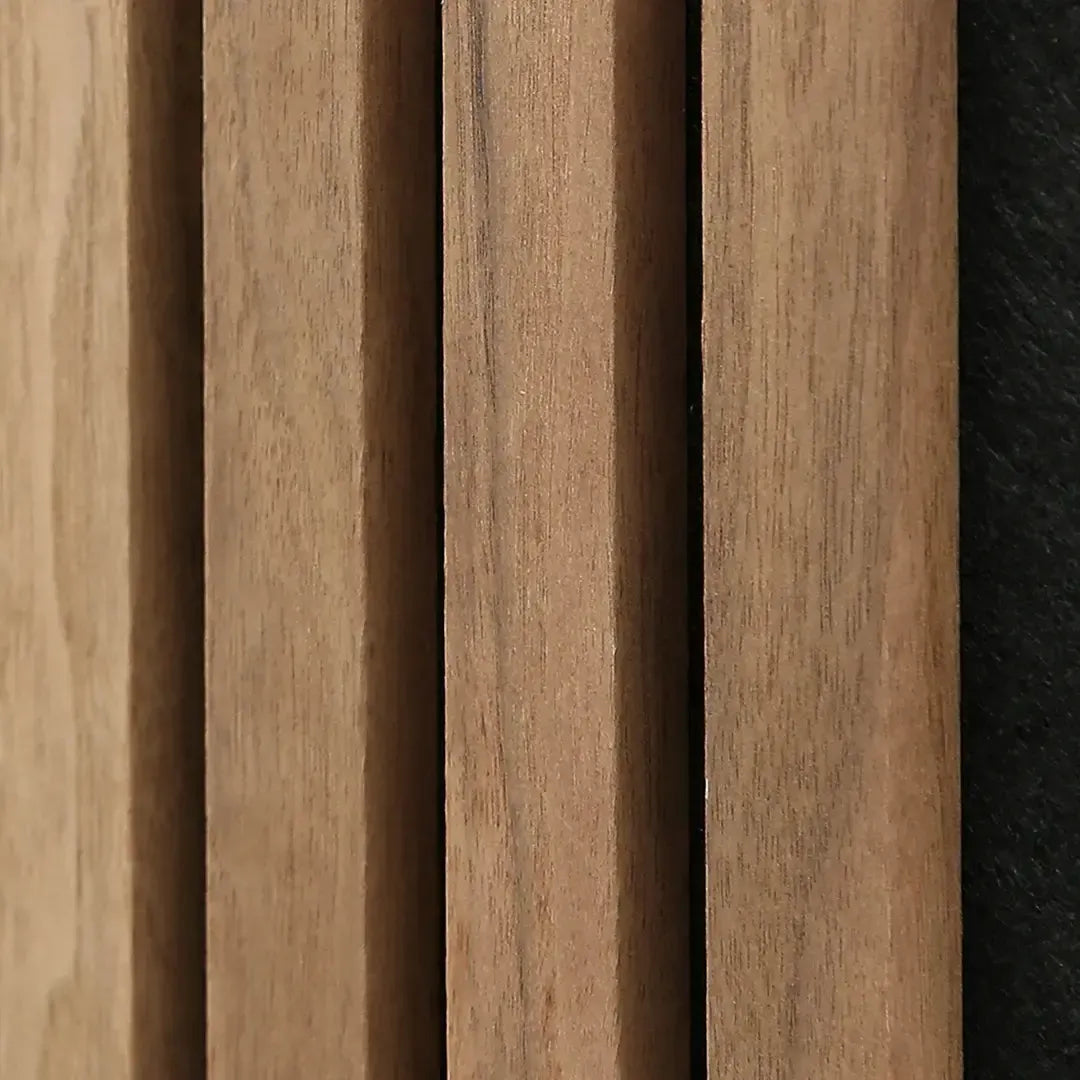
- Real oak veneer holds up visually under commercial lighting
- Slat gaps cut mid-to-high frequency echo common in tile or polished-concrete dining halls
- Neutral tone works with most existing dining hall finishes
- Straight-run format installs faster across large flat walls than modular shapes
Acoustic Slat Wall Panel – Natural Oak cons:
- Shows grease and fingerprints faster than darker finishes near serving areas
- Doesn't match hexagon or fluted profiles if the room also wants a decorative feature wall
Best for: dining halls that need blanket noise reduction across large flat wall runs. Verdict: Buy.
2. Acoustic Slat Wall Panel – Smoked Oak with Gray Felt: best acoustic wood panel for high-ceiling echo control
Same slat construction as the natural oak version, but the smoked oak veneer sits over a gray felt backing that adds absorption beyond what the slat gaps alone provide. It's built for dining halls with double-height ceilings or exposed concrete and brick, where reflected sound has more room to bounce.
Smoked Oak with Gray Felt pros:
- Felt backing adds absorption beyond slat gaps alone
- Darker tone hides daily wear near seating and tray areas
- Reads well against exposed concrete or brick, common on older campus buildings
Smoked Oak with Gray Felt cons:
- Felt backing needs a dry zone — not ideal directly beside dish rooms or beverage stations
- Darker finish reads heavier in dining halls that already lean dark
Best for: dining halls with two-story ceilings or hard-surface floors that need above-average absorption. Verdict: Buy.
3. Hexagon Acoustic Panel – Walnut: best acoustic wood panel for entrance and serving-line feature walls
Hexagon Acoustic Panel in walnut arranges modular acoustic tiles in a honeycomb pattern, giving a dining hall a design focal point at the entrance or behind the serving line while still absorbing sound. It's not meant to cover an entire room — it's built to make one wall do double duty as branding and acoustic treatment.
Hexagon Acoustic Panel – Walnut pros:
- Geometric layout gives dining halls a visual focal point, not just acoustic treatment
- Modular tiles let facilities staff swap one damaged section instead of a full panel run
- Walnut tone pairs naturally with wood tables and trim already common in dining halls
Hexagon Acoustic Panel – Walnut cons:
- Irregular cutting at wall edges wastes more material than a straight slat run
- Full hexagon walls take more install hours than single-run slat panels
Best for: entrance walls, serving-line backdrops, or a single accent wall that needs to look intentional. Verdict: Buy for feature walls; skip for whole-room coverage.
4. Fluted Wall Panel – Natural Oak: best acoustic wood panel for wrapping structural columns
Fluted Wall Panel in natural oak uses a vertically grooved profile with a flexible backing that bends around curved surfaces, which is exactly what a dining hall needs when structural columns break up the floor plan. It ties visually into a natural oak slat wall without leaving a bare column in the middle of the room.
Fluted Wall Panel – Natural Oak pros:
- Flexible profile wraps round or square columns without visible seams
- Creates visual continuity between flat slat walls and structural elements
- Real oak veneer matches natural oak slat panels for a unified look
Fluted Wall Panel – Natural Oak cons:
- Grooved profile absorbs less sound than slat-with-felt or hexagon options
- Not a stand-alone acoustic fix for large flat walls
Best for: dining halls with exposed columns that need to visually match the surrounding slat treatment. Verdict: Buy, paired with a stronger absorber elsewhere in the room.
5. Acoustic Slat Wall Panel – Black Oak: best acoustic wood panel for high-traffic corridors
Black Oak uses the same slat construction as the natural oak version but in a dark veneer built for zones with heavy hand contact and food traffic — tray return corridors, dish drop areas, and busing stations. It's the pick for the parts of the dining hall that take the most physical abuse, not the main seating floor.
Acoustic Slat Wall Panel – Black Oak pros:
- Dark finish hides scuffs, fingerprints, and stains near tray return stations
- Same slat profile as natural oak, so absorption performance doesn't drop
- Reads modern next to stainless steel serving equipment
Acoustic Slat Wall Panel – Black Oak cons:
- No felt backing, so it won't outperform felt-backed panels in heavy-reverb rooms
- Dark tone can make smaller dining alcoves feel tighter under low lighting
Best for: tray return corridors, dish drop zones, and other high-contact areas. Verdict: Buy for high-traffic zones; hold for the main dining floor if warmth matters more than scuff resistance.
“If students raise their voices to be heard across a six-top table, the room needs more absorption, not more square footage.”
How we ranked
Each panel here was measured against the six criteria above: absorption behind the slat gaps, commercial-grade wear resistance, real wood veneer quality, install format, code fit, and cleanability near food service. No single acoustic wood panel wins on every criterion — that's why this list splits by use case instead of stacking every option against one leaderboard. A dining hall renovation almost always needs at least two of these five, not one.
Which acoustic wood panel should you choose?
For most university dining halls, start with the Acoustic Slat Wall Panel in Natural Oak across the main seating walls — it's the panel that handles blanket noise reduction without pulling focus from the room. Add Smoked Oak with Gray Felt on any wall facing a two-story ceiling or an all-hard-surface floor, since that's where reflected sound builds up fastest.
Save the Hexagon Acoustic Panel in Walnut for the entrance or serving-line wall where the room needs a visual anchor, and use the Fluted Wall Panel in Natural Oak only where a column needs to match the surrounding slat treatment. Route Black Oak slat panels to tray return corridors and dish drop zones where scuffs happen daily. Treating a dining hall as one room with five different acoustic needs — not one wall with one fix — is what actually cuts the noise complaints.
FAQ
What's the best acoustic wood panel for a university dining hall?
The Acoustic Slat Wall Panel in Natural Oak from AKU Woodpanel is the best overall pick for general noise control across large dining hall walls. Rooms with two-story ceilings or all-hard-surface floors do better with the felt-backed Smoked Oak version.
Is felt-backed acoustic panel better than plain slat panel for cafeterias?
Felt-backed slat panels absorb more sound than plain slat profiles because the felt layer adds a second absorption surface behind the wood. Reserve felt-backed panels for dry zones away from dish rooms and beverage stations, since felt isn't built for constant moisture exposure.
Can hexagon acoustic panels handle high-traffic dining hall walls?
Hexagon acoustic panels work best as a feature wall at an entrance or serving line rather than a full high-traffic wall, since the modular hexagon shapes take more install time and cutting than a straight slat run. They're a design choice as much as an acoustic one.
Do acoustic wood panels meet fire codes for university buildings?
Fire code requirements for institutional buildings are stricter than for a home accent wall, so any dining hall project should confirm the fire rating on the specific panel before ordering. Check the current specification sheet on the product page rather than assuming one rating applies to every finish.
How do you calculate how many panels a dining hall needs?
Measure the linear wall footage you plan to cover and account for door and window cutouts before ordering panels. Facilities teams usually treat the walls facing the seating area first, since that's where reflected sound has the most impact on conversation.
Is real wood veneer better than laminate for commercial dining halls?
Real wood veneer holds color and grain longer under commercial lighting than laminate wraps, which can fade or peel with years of daily use. Laminate can look similar on day one, but veneer ages more predictably in a high-traffic institutional setting.
Where should acoustic panels go in a dining hall for the biggest impact on noise?
Start with the largest flat walls facing the main seating area, since that's where sound reflects most directly back at diners. Columns, corners, and entrance walls matter less for raw noise reduction and more for finishing the room visually.
How is a black oak slat panel different from a natural oak one acoustically?
Black Oak and Natural Oak slat panels from AKU Woodpanel use the same slat construction and absorption performance — the difference is purely the veneer color. Choose Black Oak for high-contact zones where scuffs show less, and Natural Oak where a lighter tone fits the room better.
One last thing
The wall section facilities teams skip most often is the upper third — the strip between eye level and the ceiling. That's where dining hall noise actually bounces the hardest, since trays and voices project upward before reflecting back down onto the seating area, so a slat or felt-backed panel run that stops at eye level treats the least useful part of the wall.
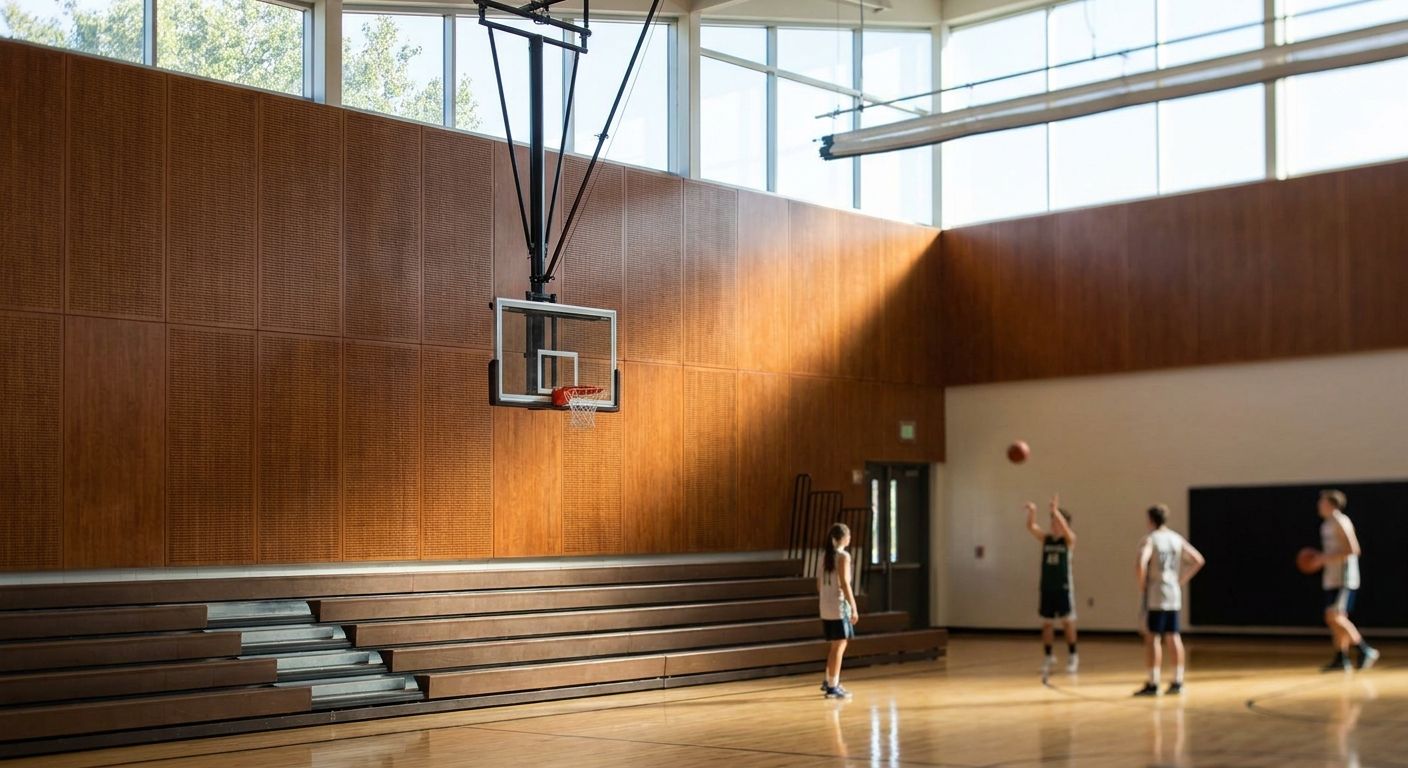


 Better performance and aesthetic appeal
 In Stock