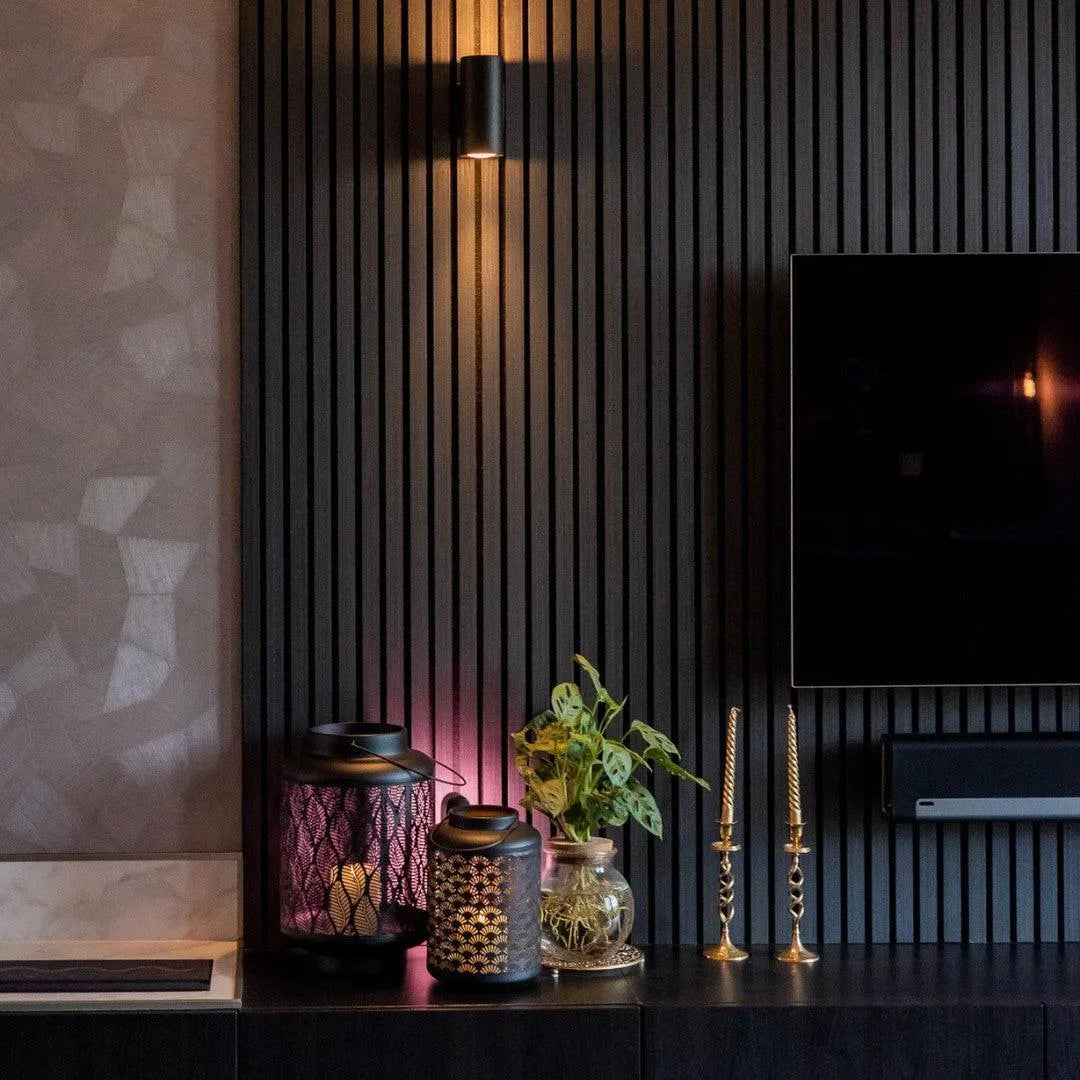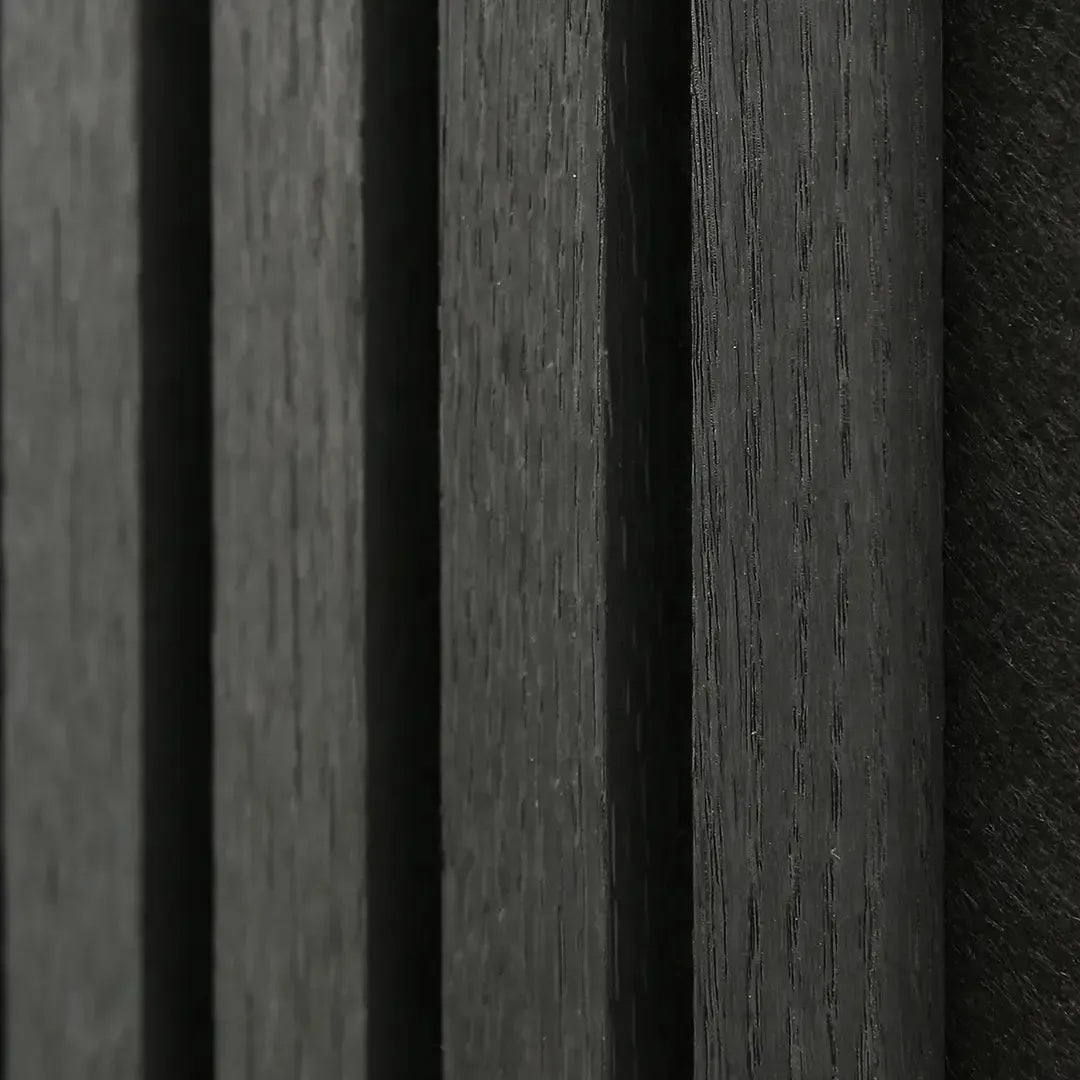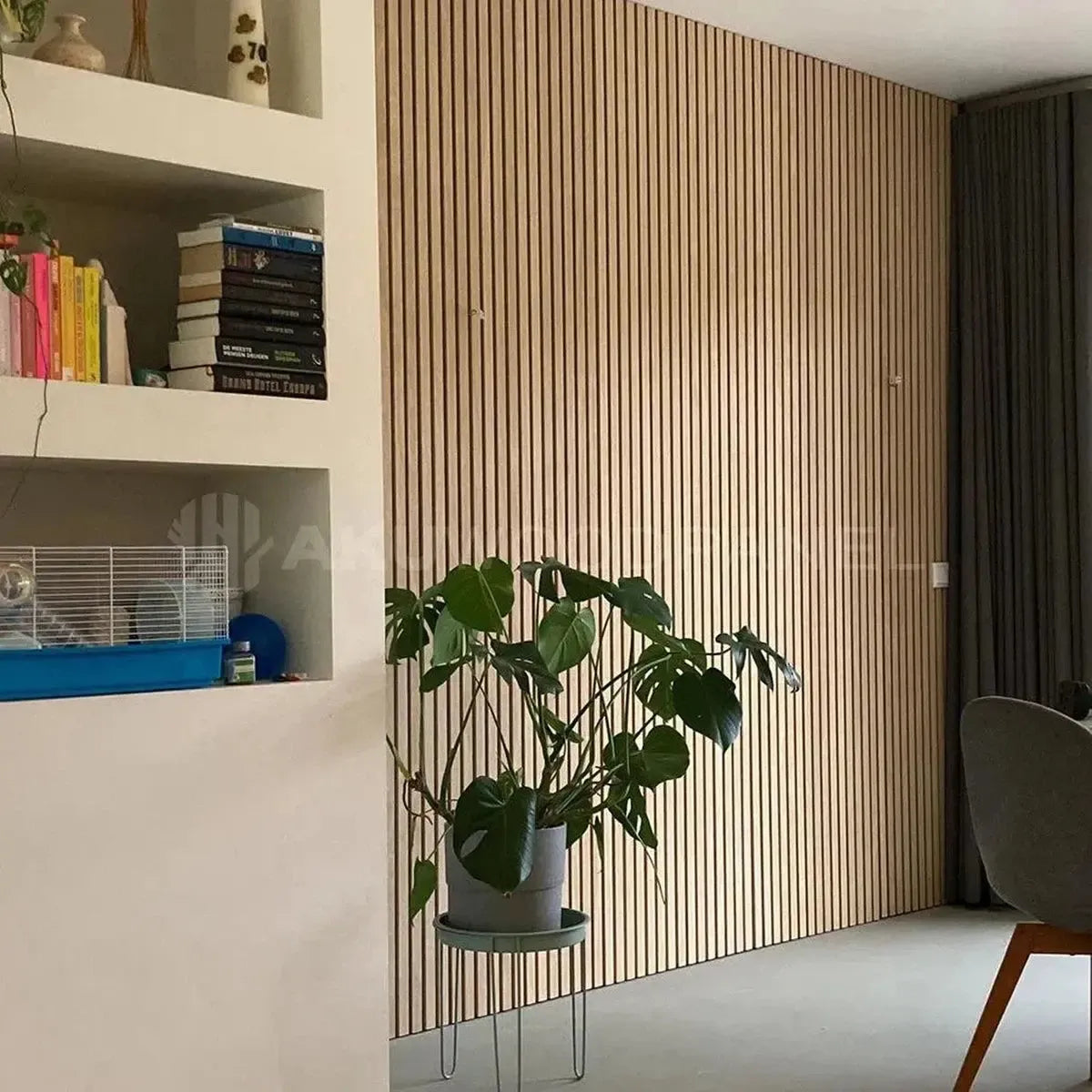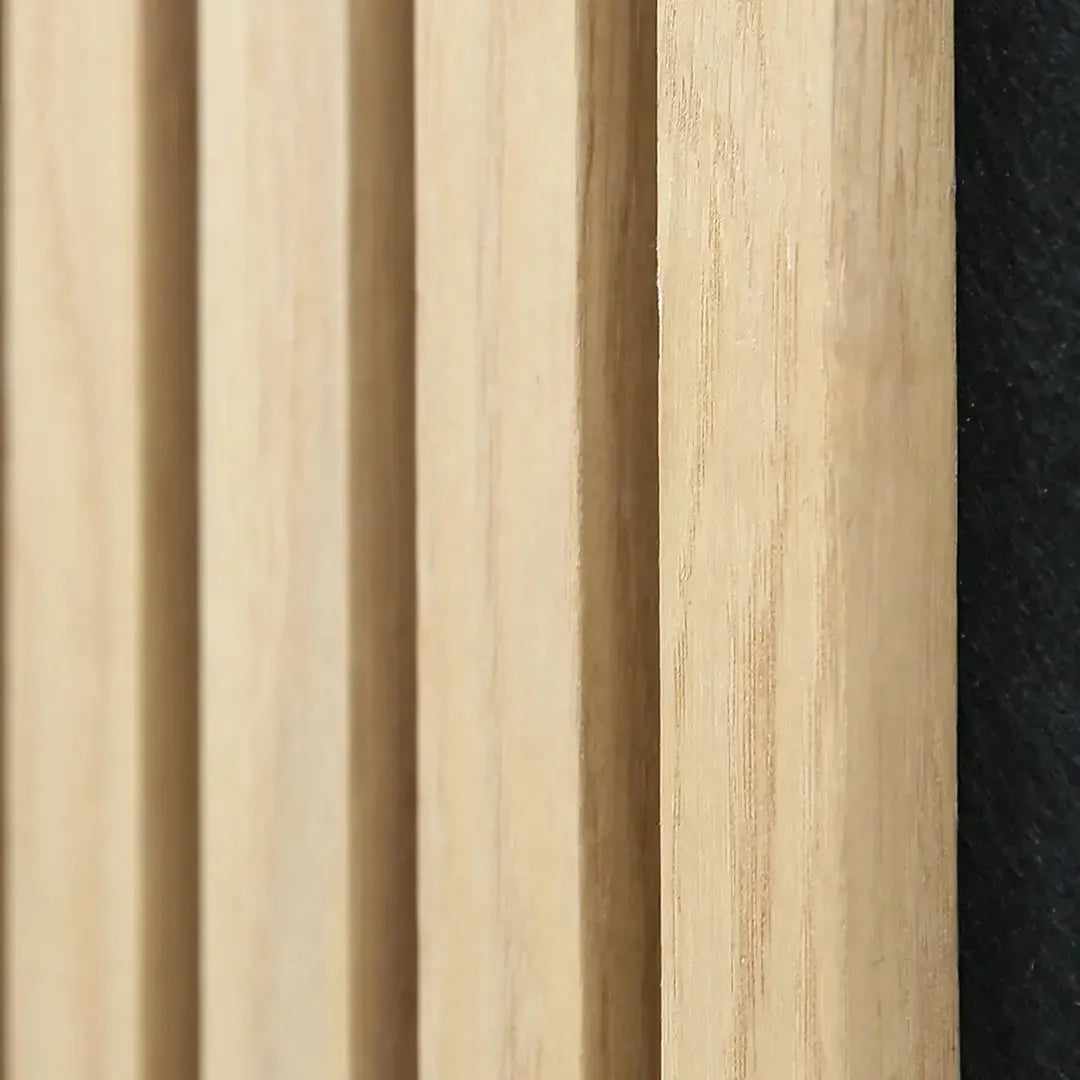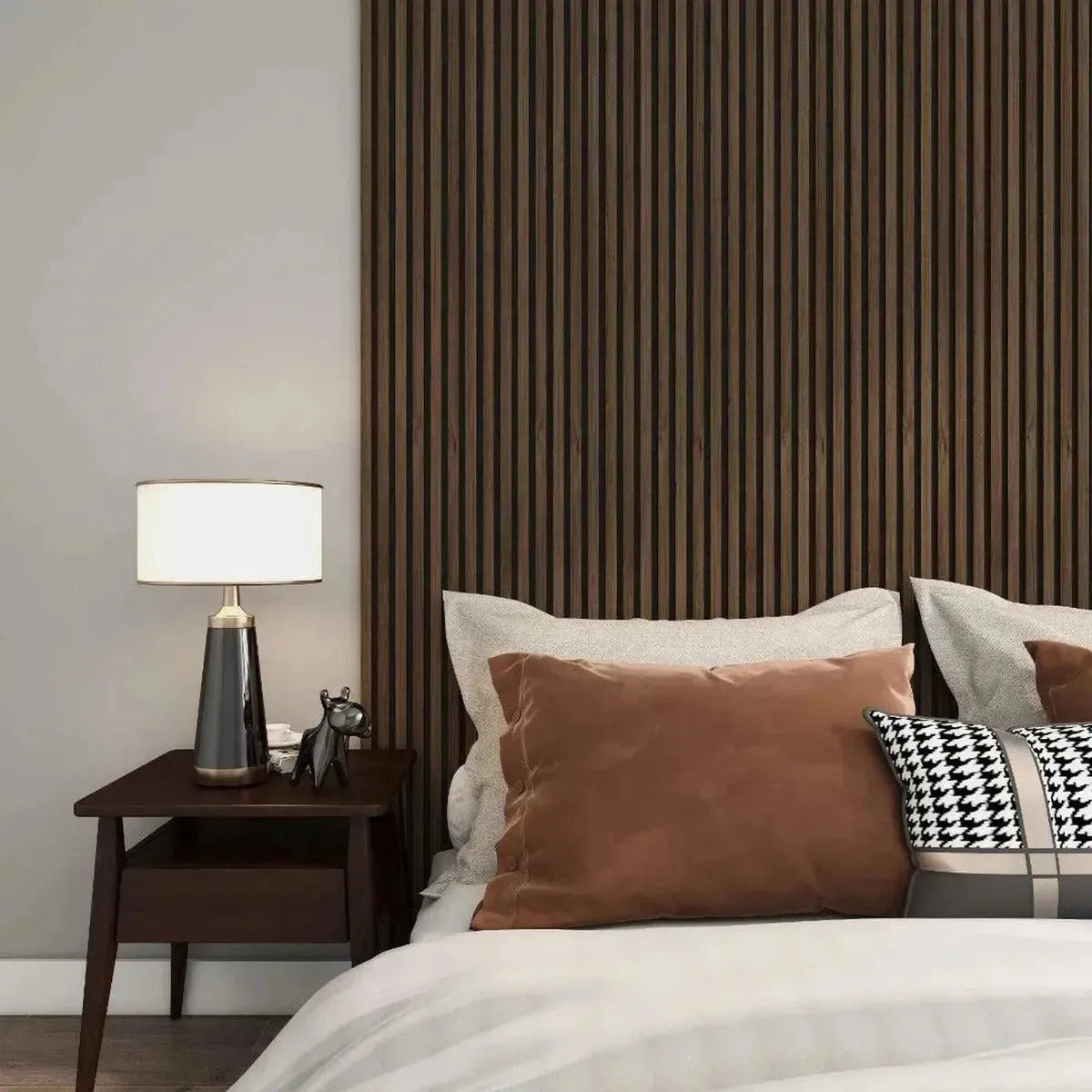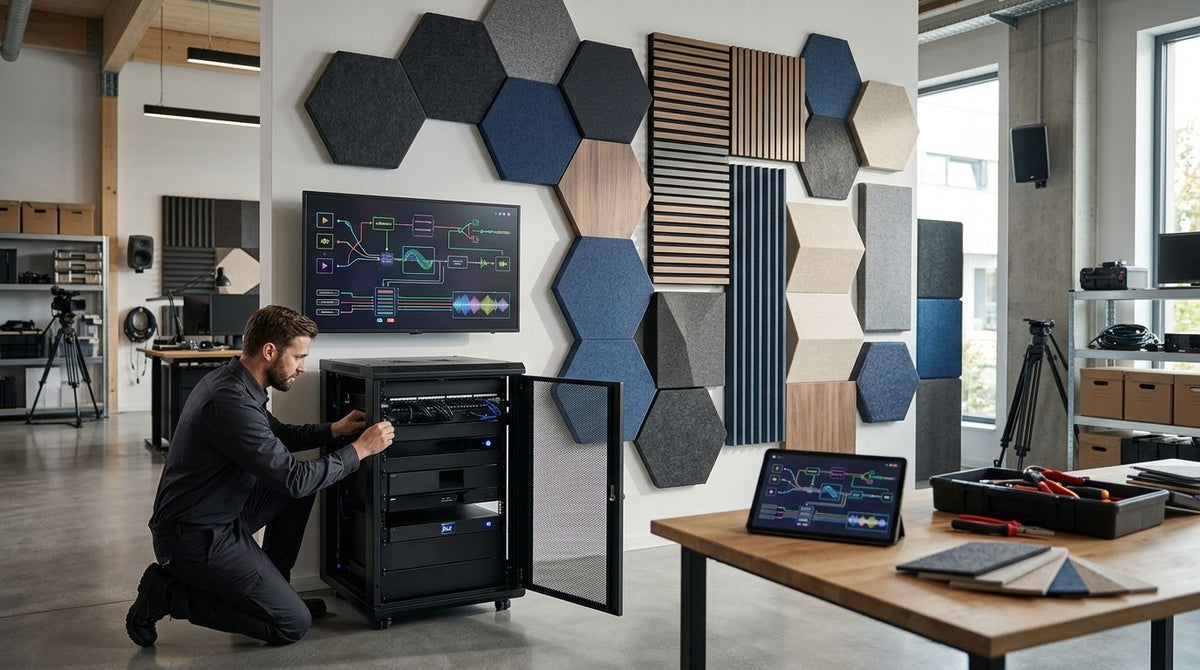
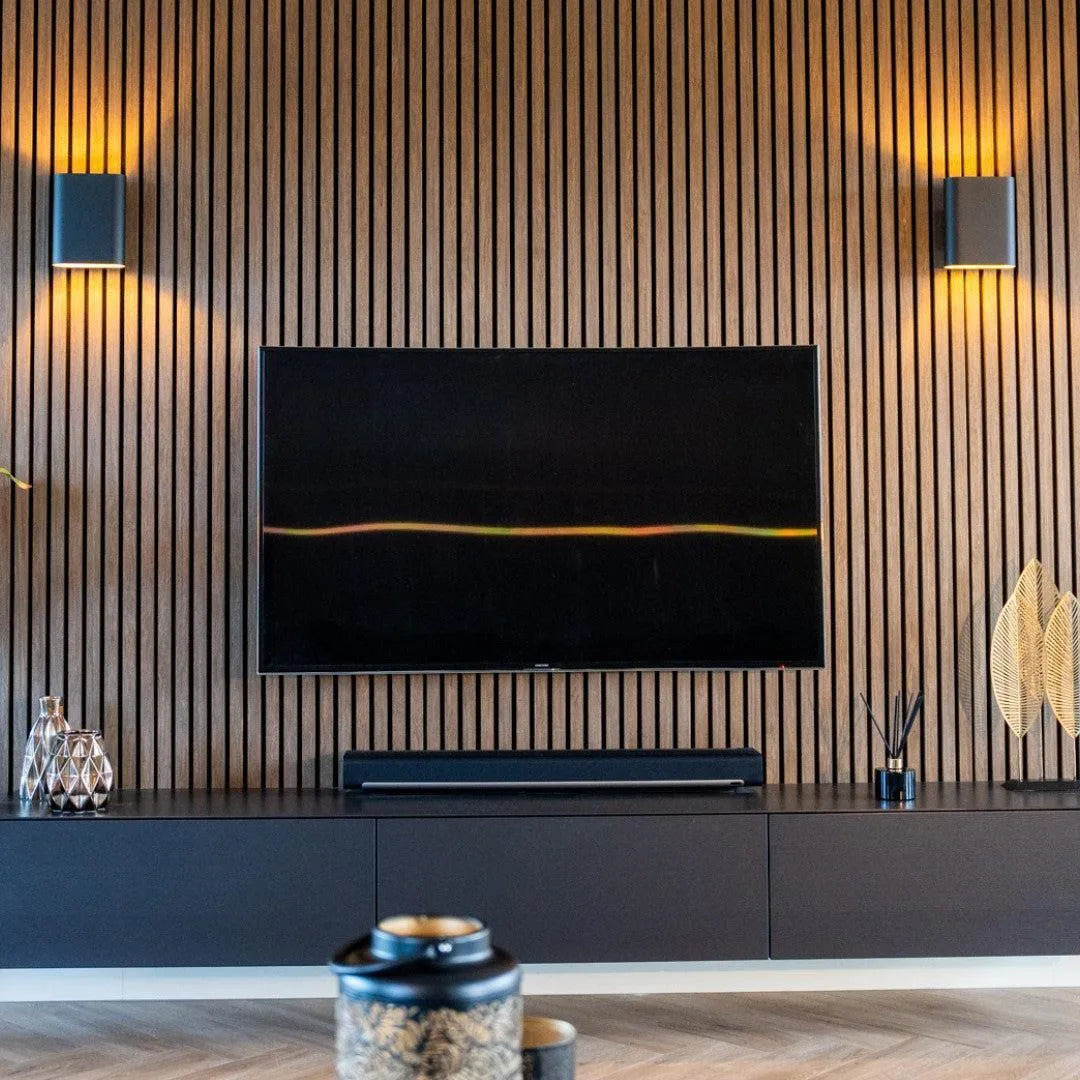
Best overall for a visible AV feature wall in 2026: Akuwood Panel Acoustic Slat Wall Panel Natural Oak with Gray Felt. Best for a dark media-wall finish: Acoustic Slat Wall Panel Black Oak. Best for a smaller accent area: Hexagon Acoustic Panel Black. These are layout and finish recommendations, not a ranking by measured sound absorption: no comparable acoustic test results are supplied for these products.
- Akuwood Panel Natural Oak with Gray Felt is the best overall acoustic wall panel for AV integrators planning a visible slat wall.
- Choose Black Oak slats for a dark media-wall finish; choose Black Hexagon panels for a smaller accent area.
- Do not specify any of these panels by acoustic rating without test data for the exact product and installation.
Why this matters for AV integrators
An AV wall has two jobs: it must fit the room's design, and it must support the room's acoustic plan. A product called an acoustic panel does not, by its name alone, establish how much sound it absorbs at the frequencies that matter to your project. The distinction is especially important when a client expects wall treatment to reduce echoes, improve speech clarity, or change how a listening room sounds.
Start by defining the problem. A reflection returning to a listening position calls for a different placement decision than a large room with a general reverberation problem. If the brief instead concerns sound passing through a wall, an absorptive finish is not a substitute for an isolation assembly. For a closer look at treatment placement in a media room, see the guide to treating a home cinema room.
In 2026, the safest specification separates what you can see from what you can prove. Select the finish and panel format for the wall you are building. Then request acoustic data for the exact assembly before assigning it a performance target.
What makes the best acoustic wall panels for AV integrators?
- Documented absorption: Ask for frequency-specific test data and the installation method used. A single headline rating cannot show how the panel behaves across every band.
- Placement fit: Decide whether the treatment belongs across a feature wall, at a defined reflection point, or in a limited accent area.
- Finish coordination: Match the wall treatment to the screen, speakers, lighting, and other visible surfaces without assuming a finish changes acoustic performance.
- Installation detail: Plan joints, edges, outlets, and access points before fixing a layout. A neat rendering does not resolve a speaker or cable opening.
- Project requirements: Confirm the applicable fire, mounting, and material documentation before specifying a panel for a commercial space.
These criteria put acoustic evidence first and appearance second. The ranking below addresses visible design and layout uses because the supplied product information does not include comparable absorption measurements, fire classifications, or installation specifications.
The options at a glance
| Panel | Best for | Standout feature | Key limitation |
|---|---|---|---|
| Acoustic Slat Wall Panel Natural Oak with Gray Felt | A visible, lighter-toned AV feature wall | Natural oak slats with gray felt | No supplied test result for the planned assembly |
| Acoustic Slat Wall Panel Black Oak | A dark media-wall finish | Black oak slat appearance | Dark finish is a visual choice, not an acoustic rating |
| Hexagon Acoustic Panel Black | A smaller accent area | Hexagon panel format | Less suited to a continuous slat-wall design |
The table is a layout decision tree, not a laboratory leaderboard. All three options belong in a conversation about acoustic wall panels for AV integrators, but none has enough supplied test data to claim the highest absorption. Do not treat row order as proof that Natural Oak outperforms Black Oak or that either slat panel outperforms the hexagon panel.
A full-width slat layout and a contained hexagon layout also change what the installer must coordinate. The former puts more emphasis on consistent joints and planned openings across the wall; the latter makes the treatment's boundaries more visible. Choose the format while the display, speaker, and wall-service locations can still be adjusted.
1. Natural Oak with Gray Felt: best for a visible AV feature wall
Best for: An AV integrator planning a lighter-toned slat wall that remains a deliberate part of the room design.
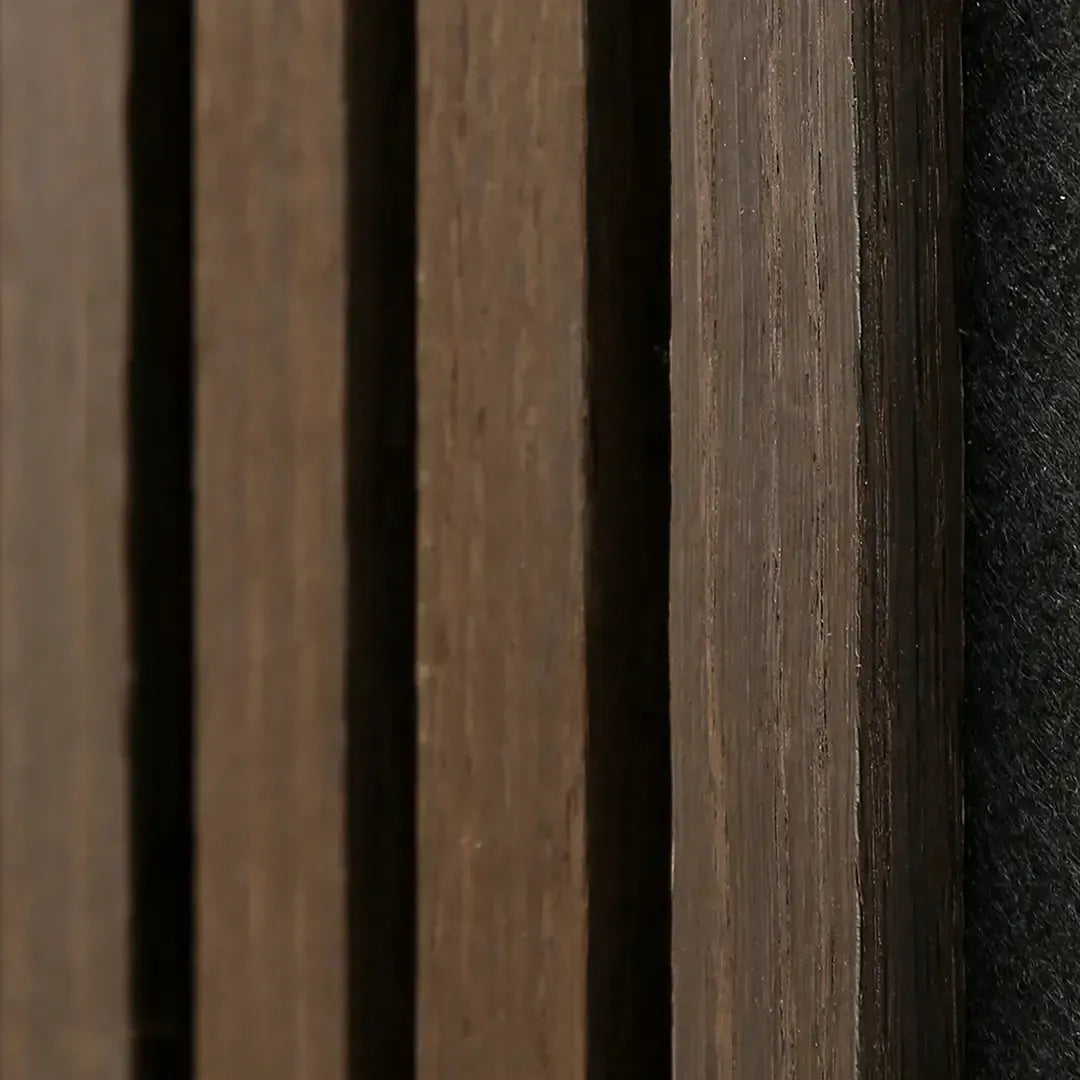
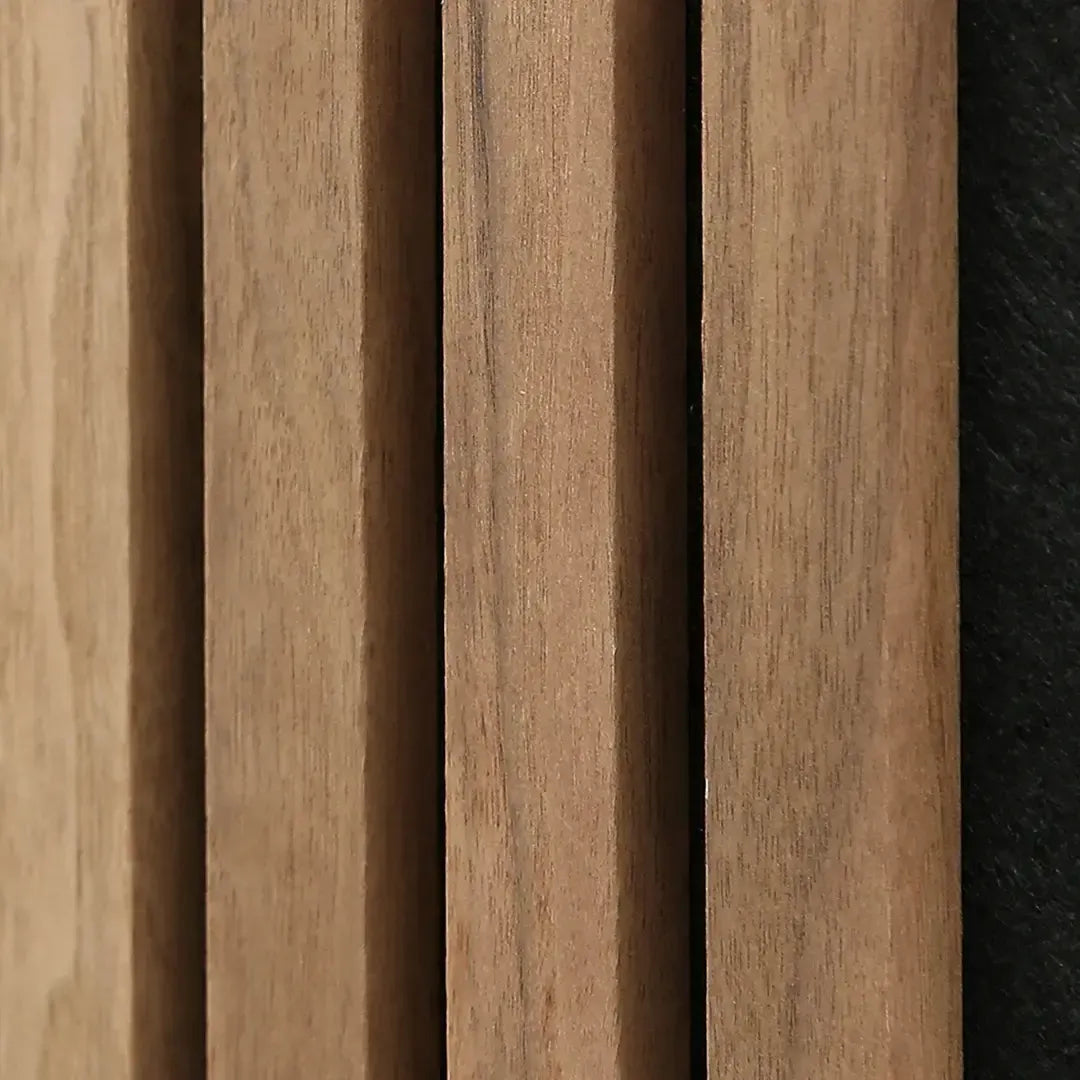
Akuwood Panel Acoustic Slat Wall Panel Natural Oak with Gray Felt pairs a natural oak appearance with gray felt, as identified by its product name. That combination gives you a clear finish direction when the client wants the treatment to read as interior paneling rather than as an isolated patch. It is the default pick here because its named slat-and-felt format suits a continuous feature-wall brief, not because a verified acoustic result puts it ahead of the others.
Natural Oak with Gray Felt pros:
- The product name identifies both the oak finish and gray felt, making the visual specification more precise.
- A slat format suits a wall intended to read as one continuous design element.
- The lighter finish gives you an alternative when a dark media wall would dominate the room.
Natural Oak with Gray Felt cons:
- No frequency-specific absorption results or tested mounting details are supplied here.
- A lighter finish will not satisfy a brief that calls for a dark wall around the display.
- The slat layout needs coordination wherever the wall contains equipment openings or visible terminations.
Before specifying coverage, mark the display boundary, speaker positions, outlets, and any access panels on the wall elevation. Decide where panel joints and finished edges should fall. That sequence prevents an attractive slat pattern from setting a location that conflicts with a service point or a planned speaker position.
Then request documentation for the proposed assembly. If the acoustic brief calls for control at 125 Hz, 500 Hz, or 2 kHz, you need reported performance at those frequencies for a relevant installation—not a conclusion drawn from the word felt. The figures are frequencies to check in test data, not claimed results for this panel.
Verdict: Buy for the visible-wall design brief; hold the acoustic specification until the assembly data is confirmed.
2. Black Oak: best for a dark media-wall finish
Best for: An AV integrator whose client has already chosen a dark slat-wall look around a display.
Akuwood Panel Acoustic Slat Wall Panel Black Oak answers a different design question from the natural oak option. It gives the project a black oak slat finish while retaining the continuous-wall format. Choose it when the finish brief is settled; do not infer that its darker appearance produces a different absorption result.
Black Oak pros:
- The named black oak finish gives the AV wall a defined dark appearance.
- The slat format fits a planned, continuous feature-wall layout.
- It lets you maintain the same type of visual rhythm across the wall instead of switching to a separate accent-panel shape.
Black Oak cons:
- The supplied information does not establish its absorption rating or tested mounting arrangement.
- A dark finish is the wrong choice when the room brief calls for a lighter oak wall.
- Slats still require a deliberate plan around outlets, displays, and speaker locations.
For this pick, resolve the wall elevation before treating the finish as a final material selection. A display can interrupt the slat pattern; so can wall-mounted equipment and access doors. Decide which interruptions are acceptable in the design and which need another treatment location. The panel format is a reason to plan those details, not evidence that installation around them is simple.
Keep the acoustic question separate. In 2026, an integrator should compare tested assemblies, not finish colors, when judging performance. If the brief specifies a target for speech or music, ask for data at the relevant frequencies and confirm that the proposed mounting matches the test conditions. A different cavity or backing arrangement cannot be assumed to produce the published result for another arrangement.
Verdict: Buy for a dark slat-wall brief; hold any performance claim pending product-specific test data.
3. Black Hexagon: best for a smaller accent area
Best for: An AV integrator who needs a defined accent-panel layout rather than a continuous slat wall.
Akuwood Panel Hexagon Acoustic Panel Black changes the design language. Its hexagon format can be laid out as a bounded treatment area, so it belongs on a shortlist when the client does not want slats across the wall. This is a format recommendation only: a smaller treatment area should not be assumed to meet the same room-level objective as a larger one.
Black Hexagon pros:
- The hexagon shape offers a distinct alternative to a continuous slat pattern.
- A black finish fits a brief that calls for a dark accent.
- The format makes the treatment boundary an explicit design decision.
Black Hexagon cons:
- It does not deliver the continuous slat-wall appearance of the other ranked options.
- The supplied information does not include comparable absorption measurements.
- A compact accent area can miss the surfaces identified in the acoustic plan if placement is chosen only for appearance.
Draw the intended panel area on the room elevation and compare it with the surfaces your acoustic plan identifies. If they do not overlap, choose between relocating the treatment and revising the design brief; do not imply that a visually convenient patch solves a different reflection problem. A black hexagon layout can be the right visible treatment and still be the wrong answer to an unverified performance target.
Verdict: Buy for a defined accent-panel brief; hold the room-acoustics claim until coverage and test data support it.
How we ranked these panels
The order prioritizes how clearly each product fits a distinct AV wall brief: a visible slat feature wall, a dark slat media wall, and a smaller hexagon accent area. The named finish and format support those distinctions. They do not support a comparison of measured absorption, installation speed, durability, or fire performance.
That limit matters when you present options to a client. A finish-led shortlist helps settle what the wall should look like. An acoustic specification must then identify the product, the mounting arrangement, the area to be treated, and the evidence that relates the assembly to the project's target. Without that second step, a best-of list becomes a design preference presented as an engineering result.
For 2026 projects, keep those decisions on separate lines in the specification. Record the chosen finish and layout on one line. Record the required acoustic evidence and acceptance criteria on another. If the documentation does not establish the required performance, change the proposed assembly or keep the acoustic target unresolved rather than assigning it an unsupported rating.
Which acoustic wall panel should you choose?
Choose Akuwood Panel Natural Oak with Gray Felt as the default for a visible slat-wall brief. Choose Black Oak when the client specifically wants a dark continuous wall, and Black Hexagon when the treatment should occupy a defined accent area. Those are distinct use cases, not interchangeable acoustic grades.
If the client asks which panel reduces echo most, the honest answer is that this shortlist cannot establish a winner. Ask for comparable test data on the exact proposed installations and identify the room surfaces you intend to treat. The best-looking wall does not automatically have the right area, location, or frequency response for the job.
FAQ
What are the best acoustic wall panels for AV integrators in 2026?
Akuwood Panel Natural Oak with Gray Felt is the best default here for a visible slat-wall brief. Black Oak suits a dark continuous wall, while Black Hexagon suits a smaller accent area; the supplied information does not establish an acoustic-performance winner.
Is a black acoustic wall panel better than a natural oak panel for a media room?
No acoustic advantage is established by the finish color. Choose between Black Oak and Natural Oak with Gray Felt for the planned appearance, then compare product-specific test data for the intended installation.
Do acoustic wall panels soundproof a room?
Acoustic wall treatment is not a substitute for a sound-isolation assembly. If the goal is to stop sound traveling through a wall, specify the wall construction for that objective rather than relying on a decorative panel.
Should AV integrators compare NRC ratings before specifying panels?
Yes, when ratings for the exact products and relevant mounting arrangements are available. Also review frequency-specific results, since a single-number rating does not describe every frequency important to the room.
Where should acoustic panels go in a media room?
Place them according to the room's acoustic plan and the surfaces it identifies for treatment. Coordinate that placement with the screen, speakers, outlets, and access points before finalizing the wall elevation.
Are hexagon acoustic panels better than slat panels?
Neither format is established as acoustically better by the supplied product information. Choose hexagons for a defined accent layout or slats for a continuous wall, then verify the proposed assembly against the acoustic brief.
What should an AV integrator request before specifying wood acoustic panels?
Request acoustic test data for the product and mounting arrangement, plus documentation relevant to the project's installation and fire requirements. Match the documented assembly to the design shown on the wall elevation.
One last thing
A finish decision can be final while the acoustic decision is not. In 2026, put the wall's appearance on the drawing, but keep its performance claim tied to the tested assembly and placement plan. That small separation protects the project from promising sound control based only on a product name.

 Better performance and aesthetic appeal
 In Stock