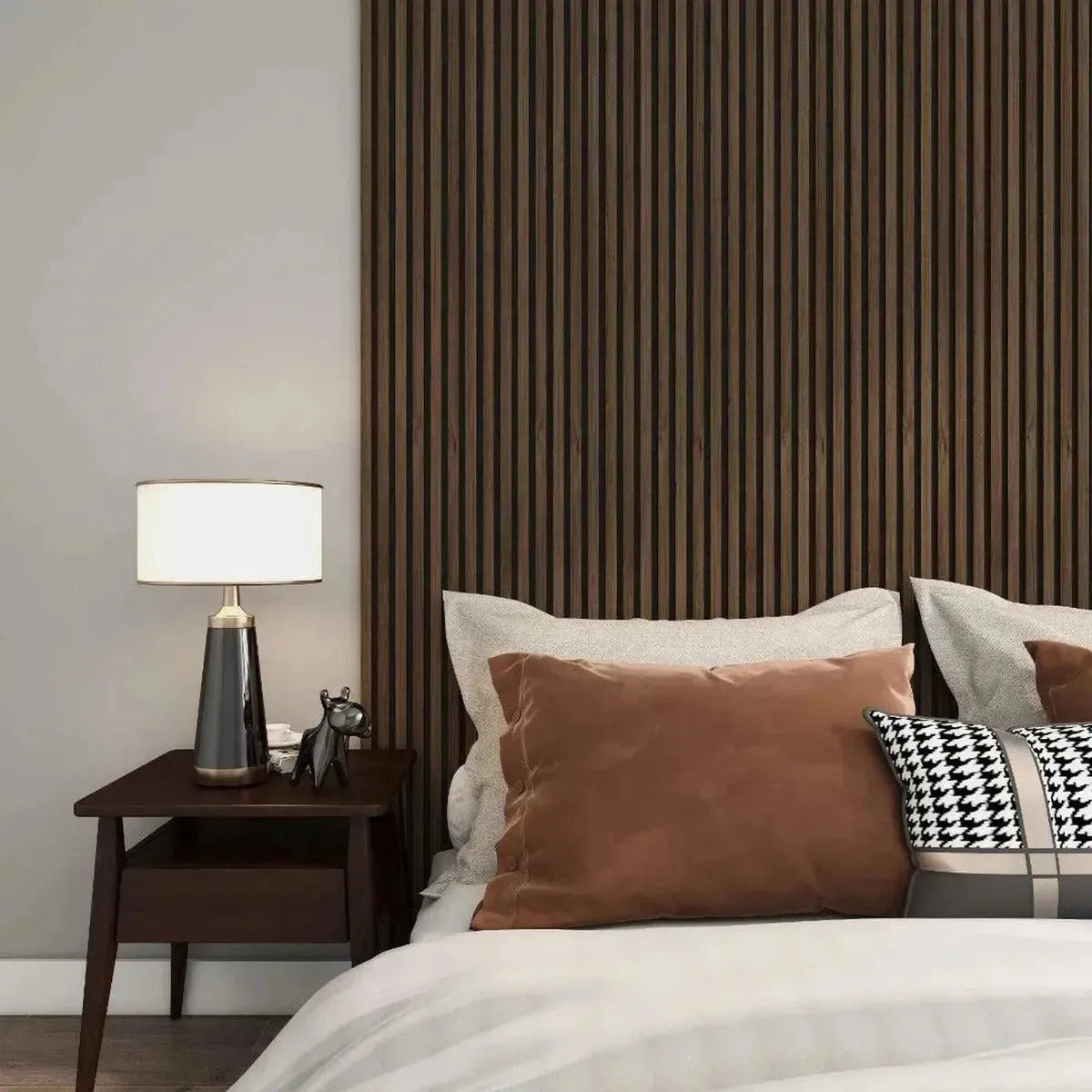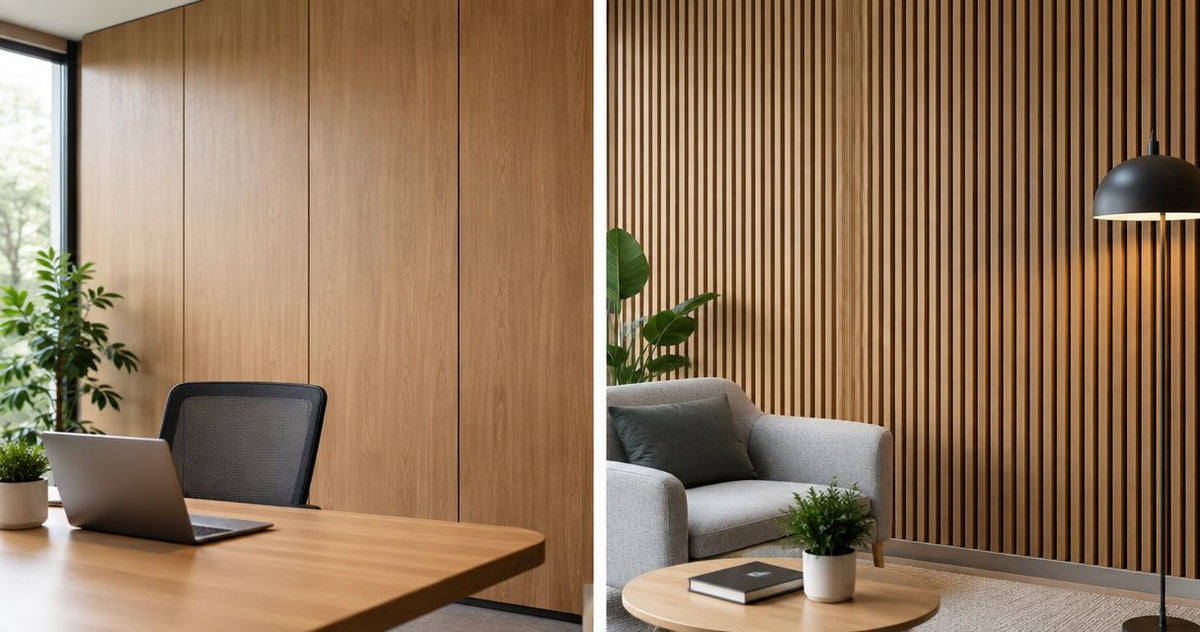
Choose Akustiq USA if you want to compare acoustic slat panels with other decorative wood-panel formats; choose Slat Solution if its exact panel is already approved for your project or matches an existing installation. This 2026 comparison separates finish selection, acoustic evidence, installation planning, and purchasing scope so you can choose for the wall you actually need to build.
- For aku wood panel vs slat solution, choose Akustiq USA for acoustic wood panels and varied decorative formats.
- Choose Slat Solution when its exact panel already matches your existing wall or approved project specification.
- Compare acoustic test assemblies, not just panel appearance or headline NRC ratings.
- Approve physical samples and edge details before committing to either supplier.
Why this matters
A wood-panel wall has two separate jobs: create the finish you want and meet the room's practical requirements. A convincing product photo answers neither the installation question nor the acoustic question. Start with your intended result.
Akustiq USA manufactures and supplies acoustic wood panels for construction and interior applications. Its panel range includes acoustic slat, hexagon, fluted, and other decorative formats. That makes format selection a useful starting point, but it does not make every panel interchangeable.
For a 2026 renovation, decide whether your priority is a decorative feature wall, reduced room echo, or continuity with existing paneling. Those are different purchasing briefs. The best supplier is the one whose exact product and installation details satisfy your brief.
At a glance
| Dimension | Akustiq USA | Slat Solution |
|---|---|---|
| Best for | Buyers comparing acoustic wood panels and multiple decorative formats | Buyers retaining an already approved or matching panel |
| Standout feature | Slat, hexagon, fluted, and other decorative panel formats | Exact-product continuity when its panel is already specified |
| Finish selection | Walnut, natural oak, black oak, and smoked oak slat-panel options | Evaluate the specific finish you intend to use |
| Existing-wall matching | Select against your installed material and a physical sample | Preferred when the exact existing panel is from Slat Solution |
| Acoustic performance | Evaluate the selected product's rating and mounting assembly | Apply the same product-specific evidence requirement |
| Installation fit | Check substrate, fastening, cuts, and finished edges | Check substrate, fastening, cuts, and finished edges |
| Commercial specification | Approve the exact panel and supporting documents | Approve the exact panel and supporting documents |
| Pricing model | Compare the selected product order and complete installation scope | Compare the selected product order and complete installation scope |
Akustiq USA fits buyers comparing several panel formats
Akustiq USA is a strong fit for buyers comparing acoustic wood panels with several decorative wall formats. Its range gives you a way to examine different wall treatments rather than treating every project as a full-height slat wall.
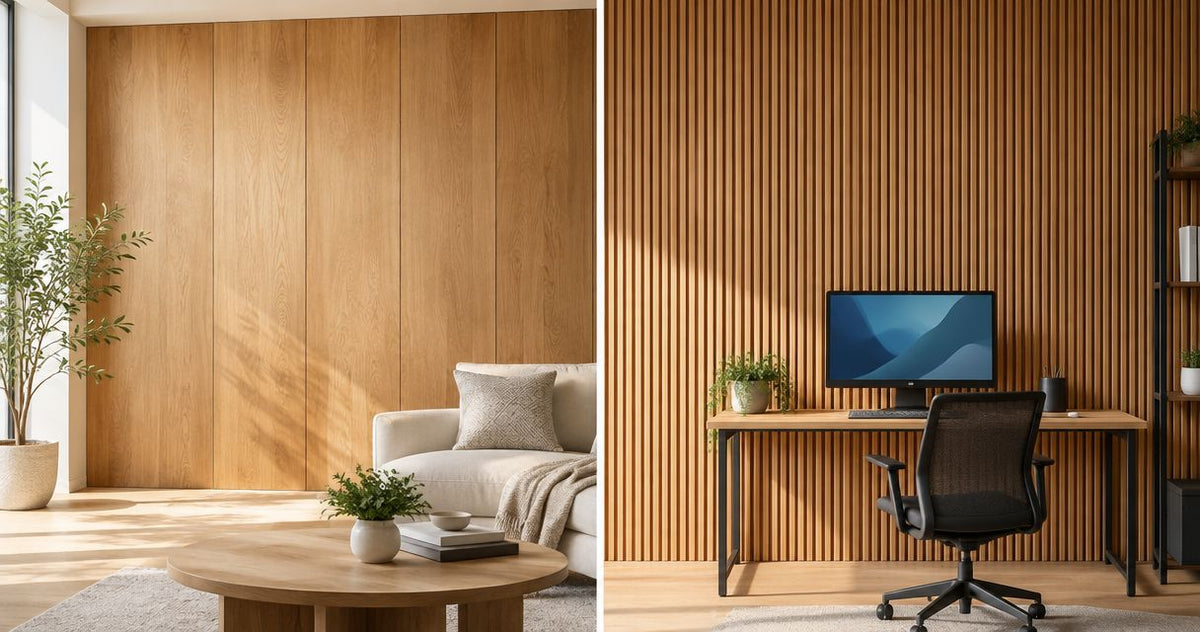
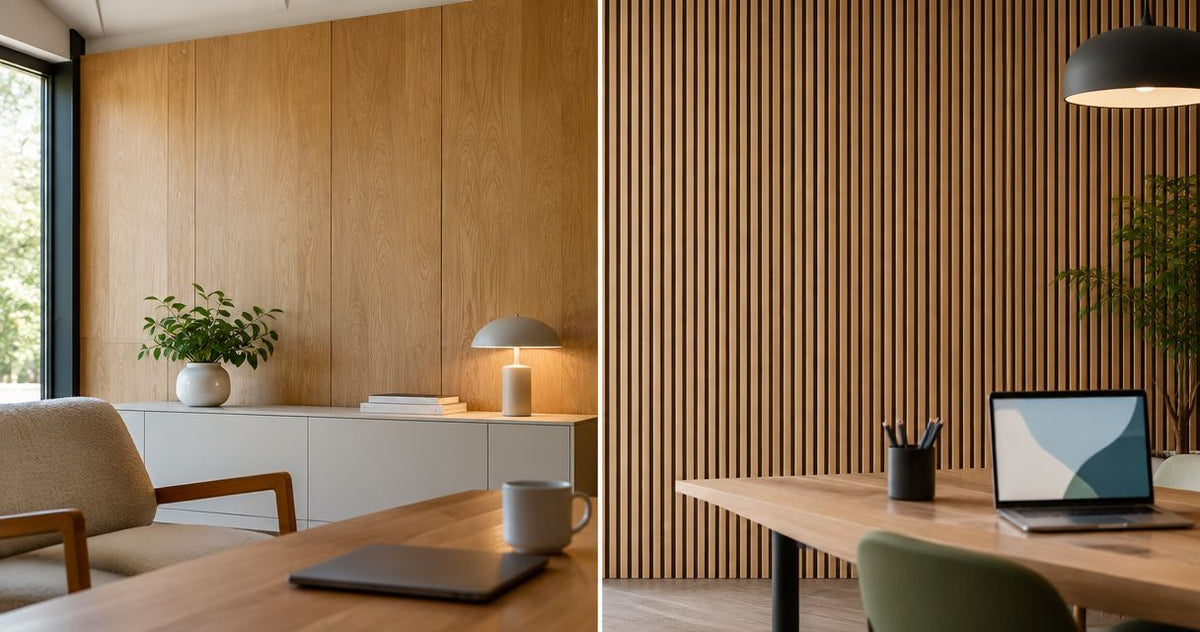
Slat panels create repeated linear detail. Hexagon panels introduce a geometric layout, while fluted panels create a different surface rhythm. The right choice starts with the design brief, not with a claim that one shape always performs better.
The advantage is choice. The limitation is that each format needs its own suitability check: a decorative panel is not automatically an acoustic treatment, and an interior panel is not automatically appropriate outdoors.
Slat Solution is the conditional winner when your choice has already been narrowed to its approved panel. In that situation, reopening the whole format decision adds work without answering a new project requirement.
- Best for format exploration: Akustiq USA.
- Best for an established specification: Slat Solution, when its exact panel is already approved.
Akustiq USA gives you named finish options to shortlist
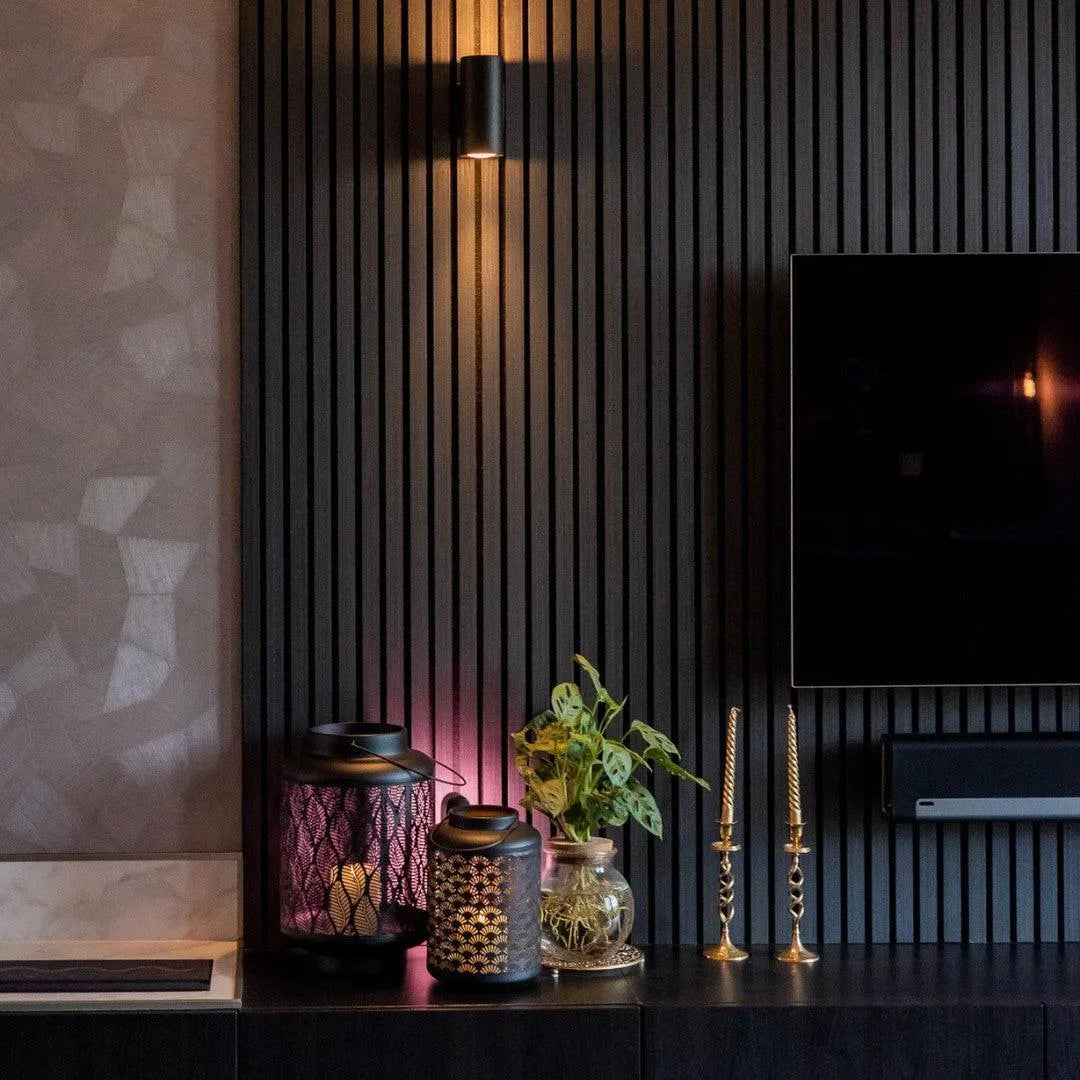
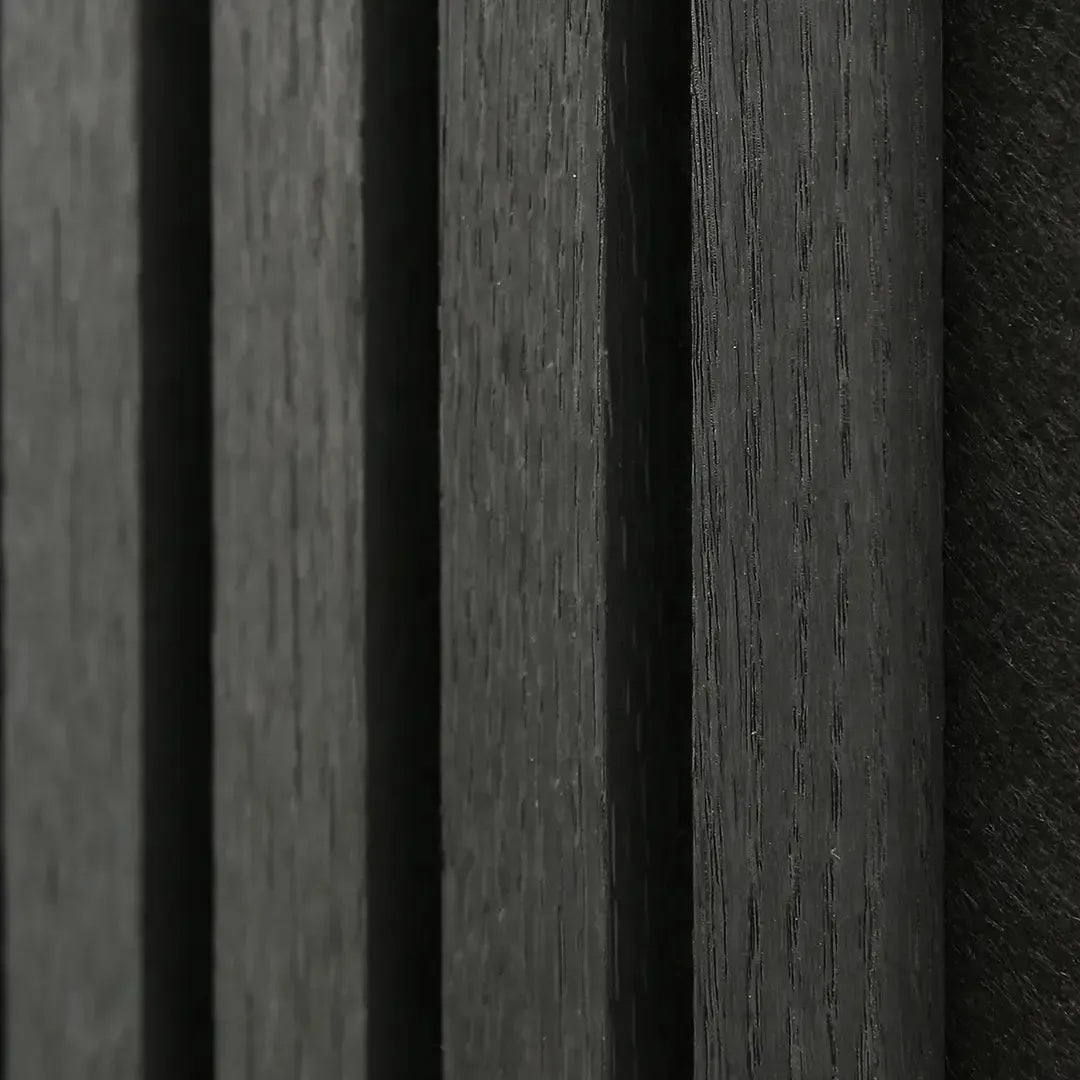
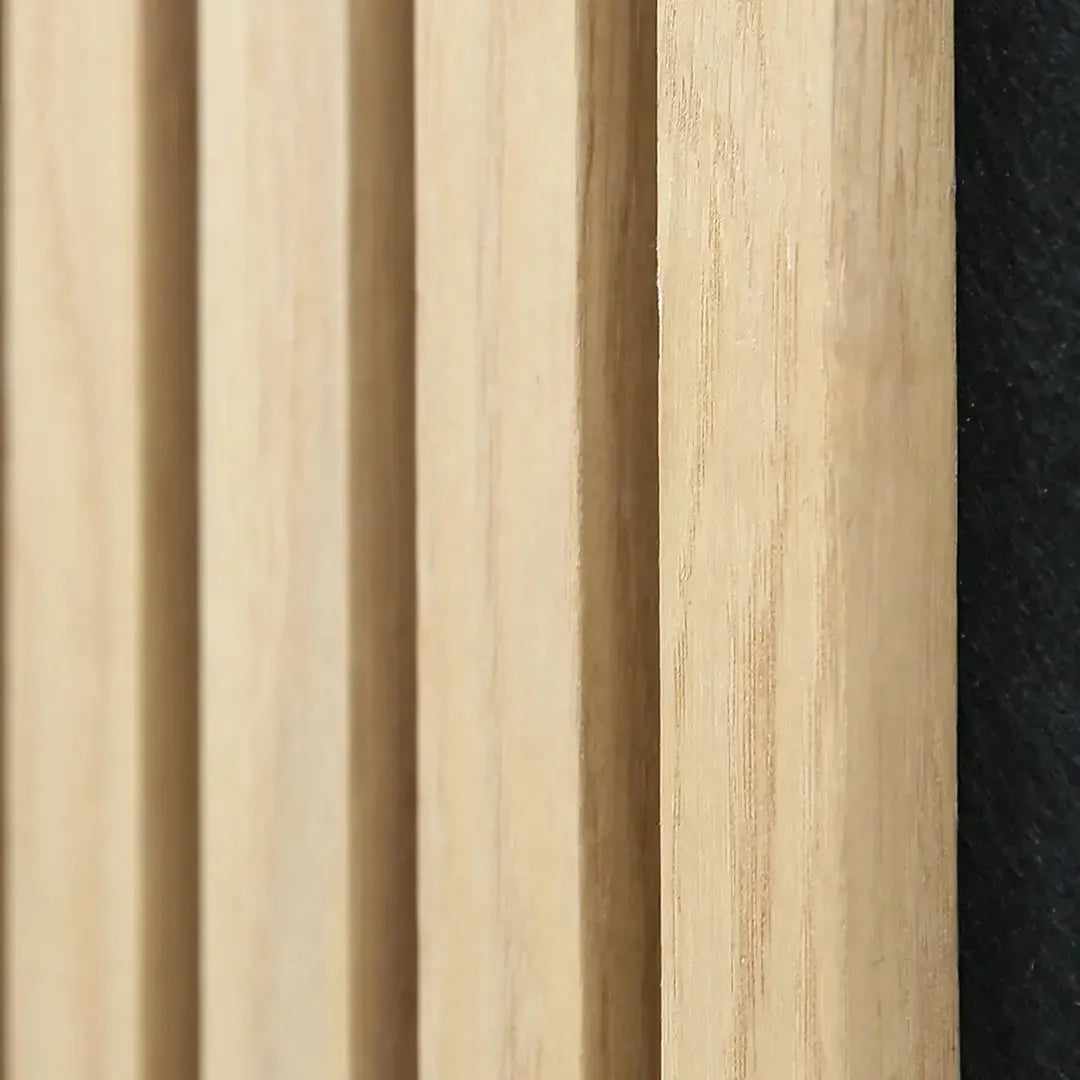
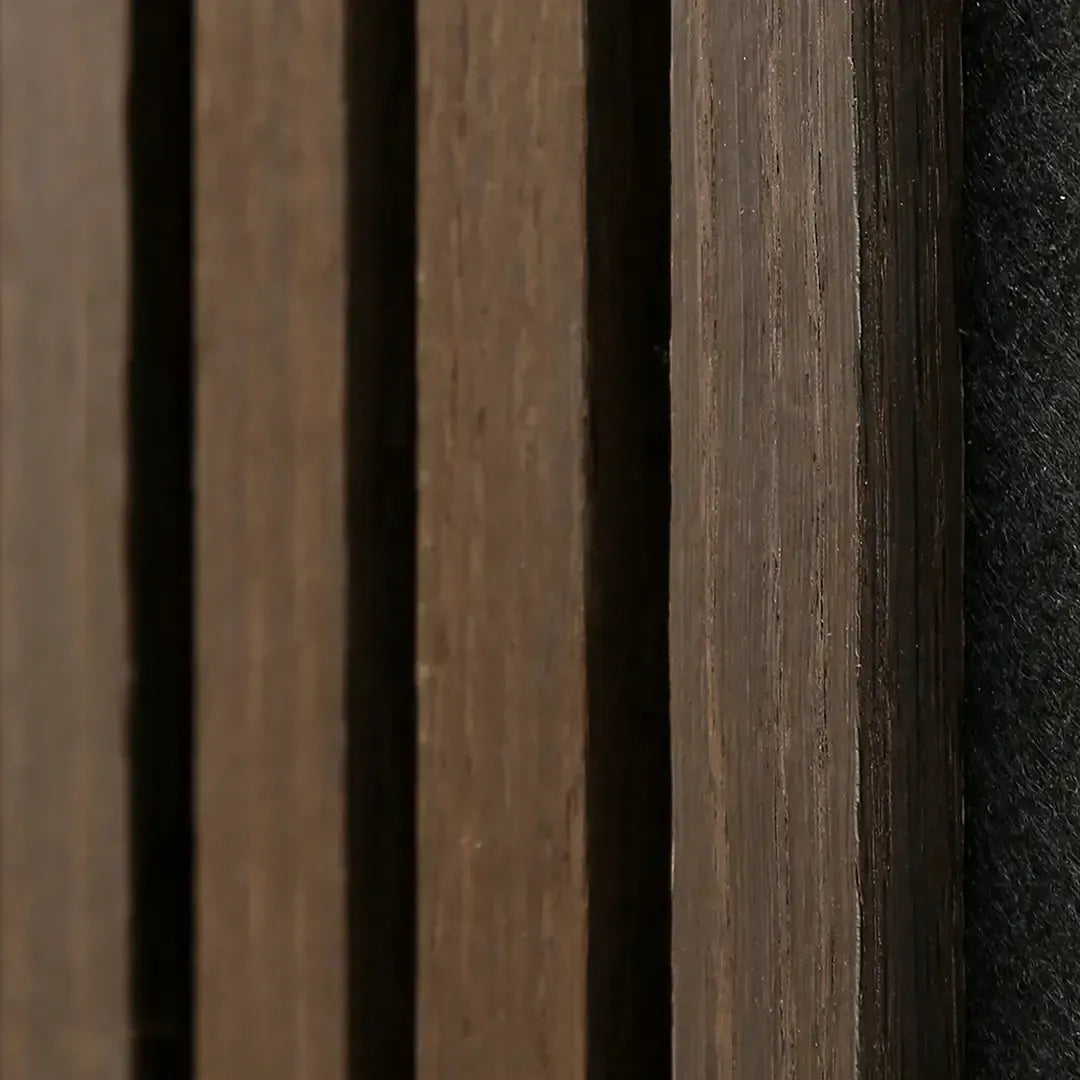
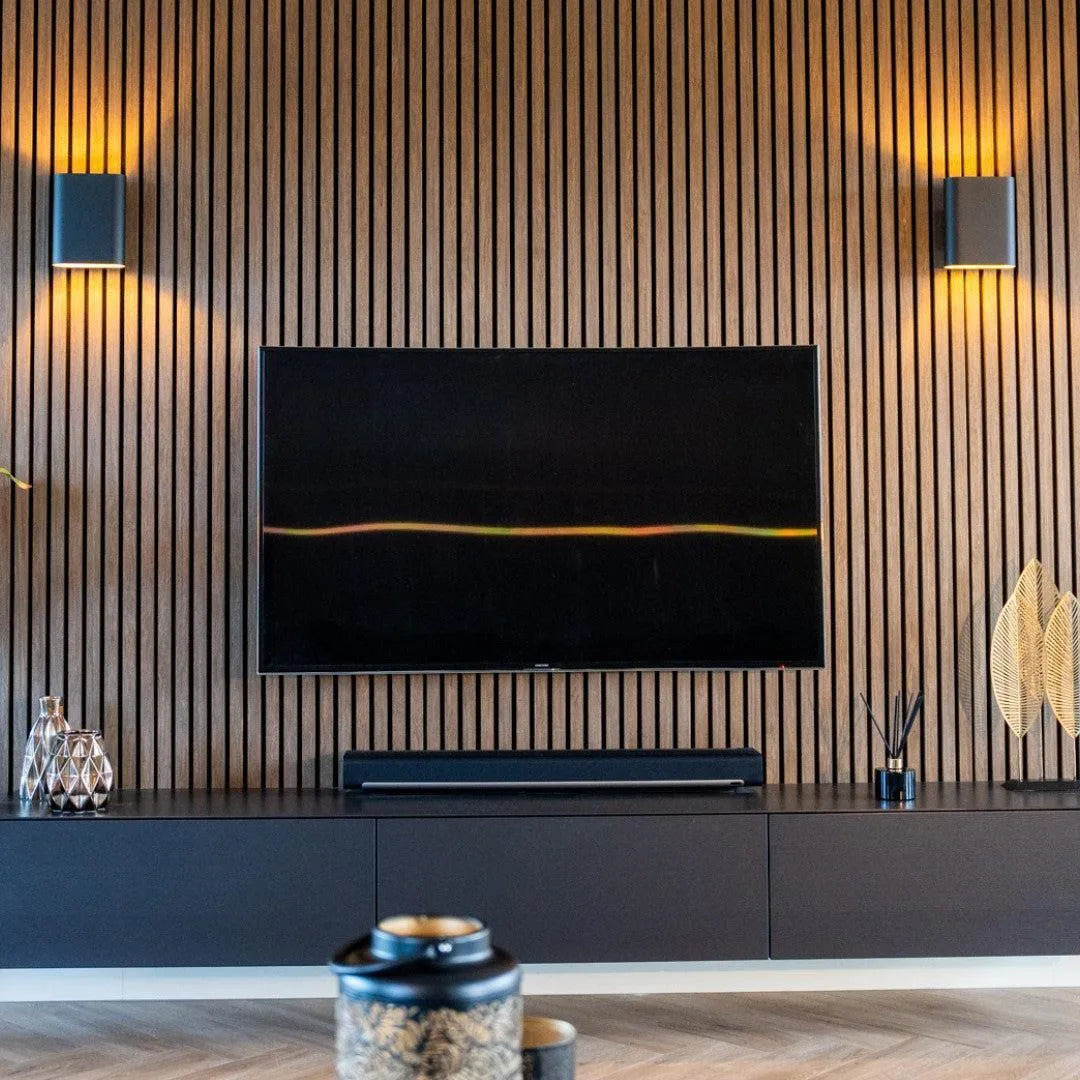
The slat-panel catalog includes walnut, natural oak, black oak, and smoked oak options, along with selected gray-felt variants. These are useful starting points for a finish shortlist. They are not a substitute for seeing the material beside your flooring, furniture, and paint.
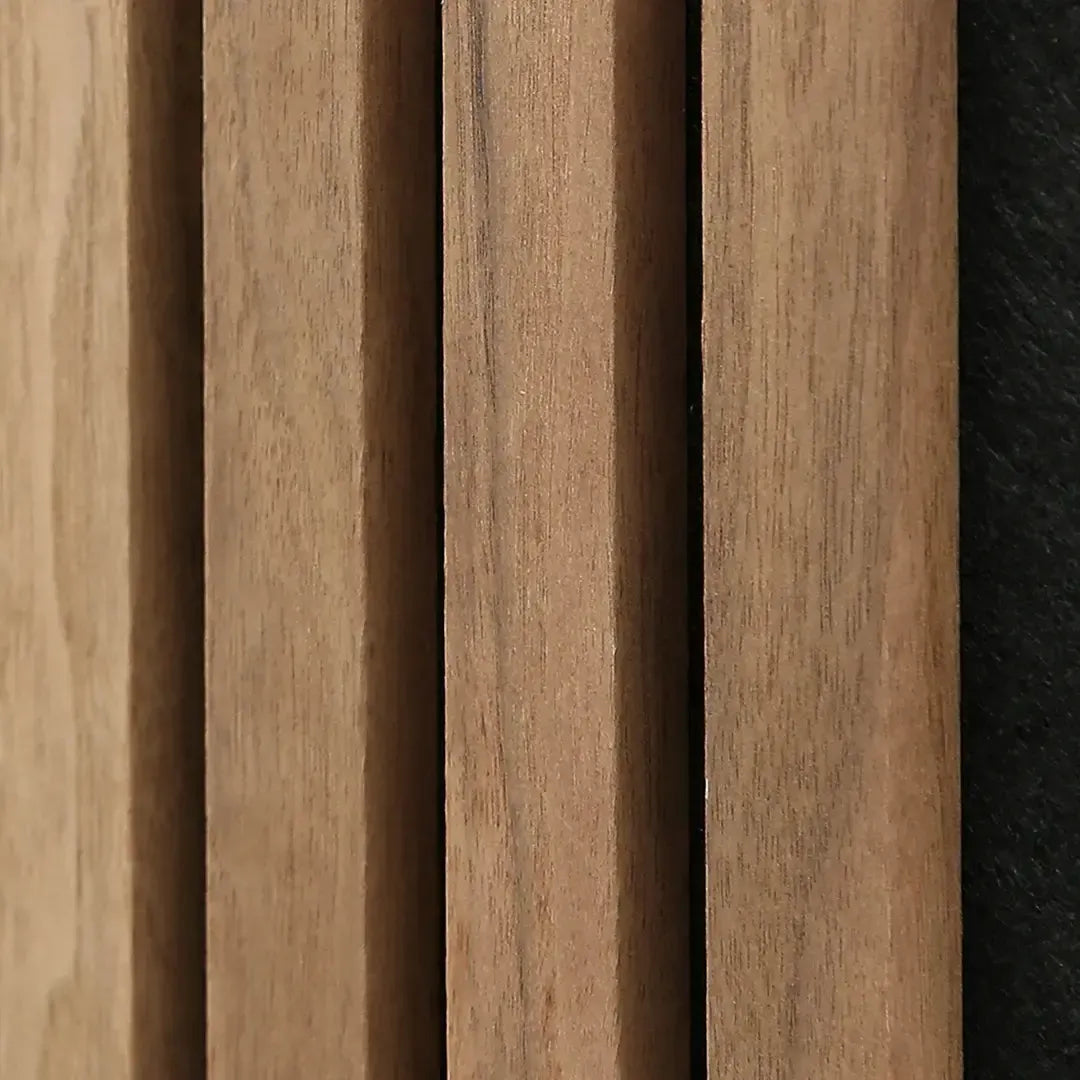
A finish name does not tell you how the whole room will look. Examine the wood face, backing color, exposed edge, and surface sheen together. A backing that looks unobtrusive in a photograph can become a prominent part of the pattern on your wall.
For either supplier, compare the actual intended products rather than two loosely similar names. Do not assume that two oak-labeled panels share the same tone, construction, or finish.
Akustiq USA wins as a documented starting point for these named finish choices; sample approval decides the final selection. Slat Solution wins the finish decision when its physical sample is the one that matches your room or approved finish schedule. That is a genuine design advantage, not a brand-wide quality claim.
Slat Solution wins when its exact panel preserves an existing wall
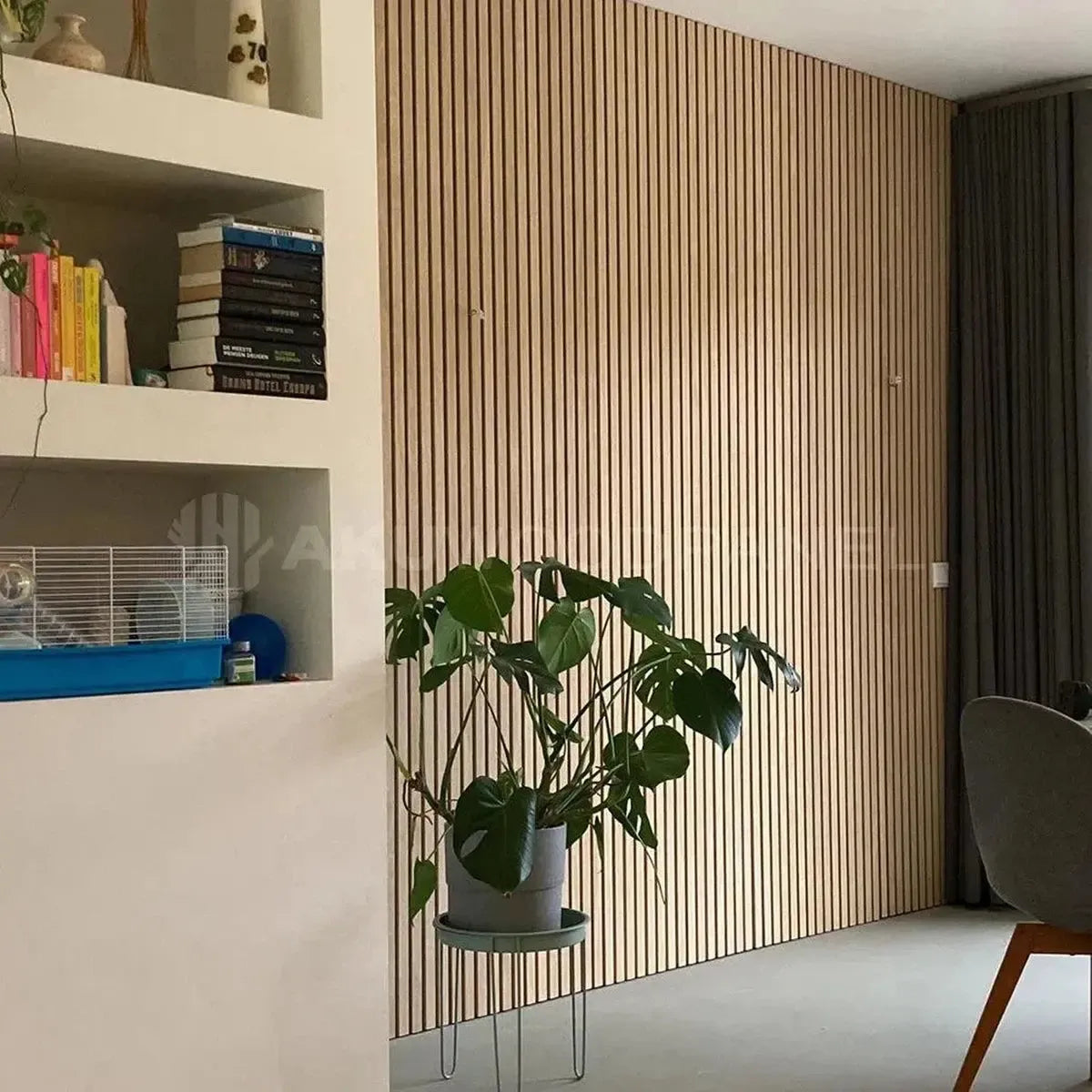
Choose Slat Solution for an extension or repair when its exact panel matches the existing installation. Matching an established wall is a different task from choosing a new feature wall. You need continuity in spacing, depth, backing, finish, and joint placement.
Even a close color match can leave an obvious change in the wall pattern. Check the profile before approving a substitute. Then compare the sample directly against the installed panel, not against a photograph taken under different lighting.
This advantage is conditional on the exact product match. A shared supplier name alone does not prove that a replacement panel matches an older installation, so confirm the product identity and compare the materials.
For a new wall with no existing panel to match, this advantage disappears. Akustiq USA then becomes a practical option for comparing different finishes and formats without an inherited constraint.
Match the whole panel, not just its color
Use the same checks for either supplier:
- Wood-face appearance and surface finish.
- Slat or flute spacing and profile.
- Backing color and visible gaps.
- Panel thickness and exposed edges.
- Joint placement against the existing layout.
Neither brand wins acoustics without an assembly-level comparison
Acoustic performance belongs to a product and its tested mounting assembly, not to a brand name. A panel attached directly to a wall and a panel installed over a cavity are different assemblies. Compare the construction you intend to build.
One concrete example is the Hexagon Acoustic Panel in Natural Oak with Gray Felt. Its product listing specifies a 32-inch format, 4 panels per box, and an NRC of 0.75. Those details apply to that listed product; they do not establish a rating for every slat or fluted panel.
NRC summarizes sound absorption under a standardized test. It is not a promise that your room will become 75% quieter, and it does not establish how much sound passes through a separating wall.
For a 2026 acoustic project, request the test report and identify the mounting arrangement. Check backing, cavity, added insulation, and the frequency-dependent results relevant to your room. A headline rating is only the beginning.
Apply that requirement equally to Slat Solution. Neither supplier earns an acoustic win from appearance alone. Choose the exact assembly supported by evidence that addresses your room's problem.
Echo control is not soundproofing
If speech sounds harsh or TV dialogue is difficult to follow because sound lingers in the room, investigate absorption. If you hear neighboring rooms through the wall, investigate sound transmission, gaps, doors, and the separating construction. Decorative acoustic paneling is not a substitute for a sound-isolation design.
Installation is a tie until the wall details are resolved
Neither supplier gets an installation advantage until you compare the actual wall and fastening instructions. Panel size, substrate condition, cut locations, and edge treatment determine the work. A simple-looking feature wall still needs a buildable layout.
Measure the usable wall area and mark outlets, switches, skirting, windows, and anything mounted through the paneling. Decide where full panels begin and where cut pieces end. Keep narrow leftover strips out of prominent locations when the layout allows.
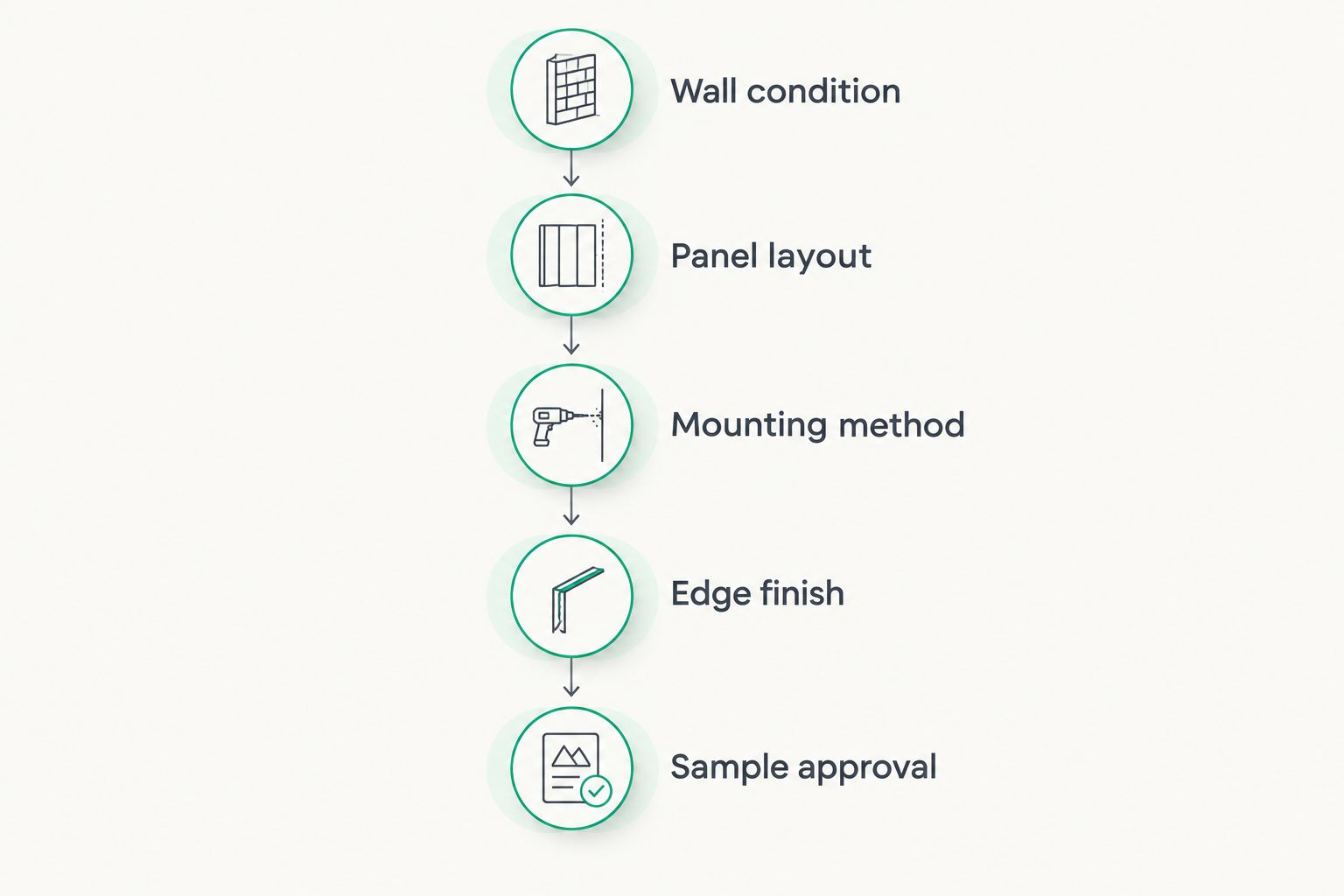
Before ordering for a 2026 installation, resolve these details in sequence:
- Wall condition: Identify the substrate and any uneven areas.
- Panel layout: Locate joints, interruptions, and cut pieces.
- Mounting method: Follow the selected product's installation instructions.
- Edge finish: Plan exposed sides, corners, and terminations.
- Sample approval: Confirm the finish before committing to the layout.
The strongest installation proposal identifies how every exposed edge finishes. Do not let a front-facing photograph hide that decision. Ask the installer to explain the termination at doorways and the treatment around electrical fittings before comparing supplier options.
Commercial approval is a tie: verify the exact product
For a commercial interior, neither supplier wins merely because the panel is described as acoustic or decorative. Your project needs the exact product documentation required by its design, occupancy, and approval process.
Start with the specification. Identify the panel, finish, mounting method, intended location, and required performance evidence. Then check that the documents refer to the product and assembly being proposed—not to another panel in the supplier's range.
Keep fire performance, acoustic absorption, and sound isolation separate. They answer different questions. A document supporting one does not establish the others.
For a 2026 fit-out, confirm requirements with the responsible design professional before purchase. This is especially important when the panel is part of a ceiling installation, an escape route, or an assembly with specific performance requirements.
The advantage for either supplier is a clear, project-ready submission. The limitation is equally clear: an attractive finish cannot compensate for a specification mismatch. Choose the approved assembly, not the most persuasive product description.
Purchasing: compare complete orders, not isolated panels
Neither supplier wins the purchasing decision until both proposals cover the same wall and installation scope. Use the current product order or project quotation as your purchasing model, then account for everything required to finish the work.
Separate the panel selection from the installation budget. Record usable coverage, pack quantity, required finishing components, fixings, wall preparation, labor, and waste from your planned cuts. Compare like with like.
A product-based order lets you identify the selected components individually. An itemized project quotation lets you see how materials and installation are combined. In either case, request clarity rather than assuming that a headline offer covers the complete finished wall.
- Confirm whether the order covers your final layout.
- Identify components that must be ordered separately.
- Check current delivery and return terms before committing.
- Confirm who is responsible for measuring and approving quantities.
- Keep the selected product and installation scope written down.
Do not assume a contractor program, warranty term, delivery promise, or installation service from either brand. Check the current terms that apply to your order. Predictability comes from a defined scope, not from the supplier name.
Final verdict: choose by project status
Choose Akustiq USA if you are planning a new wall
Winner for this profile: Akustiq USA. You are a homeowner, designer, or contractor comparing acoustic wood panels with several decorative formats, and you have not committed to a particular existing panel.
Use the range to shortlist the format and finish, then approve the selected product's sample, installation details, and relevant performance documentation. The benefit is a broader design starting point. The responsibility is keeping decorative selection separate from acoustic and technical approval.
Choose Slat Solution if its panel is already the approved match
Winner for this profile: Slat Solution. You are extending an existing installation or delivering a project whose exact panel has already been approved, and that panel is from Slat Solution.
Retain the specified product when it satisfies the project requirements. Confirm the match rather than substituting on color alone. The benefit is continuity; the limitation is that continuity should not prevent you from rechecking an unsuitable specification.
One-glance scorecard
| Dimension | Winner |
|---|---|
| Comparing several decorative formats | Akustiq USA for the documented range |
| Named slat-finish shortlist | Akustiq USA; physical samples decide the final match |
| Matching an existing Slat Solution installation | Slat Solution, subject to exact-product confirmation |
| Acoustic performance | No brand-wide winner; compare tested assemblies |
| Installation fit | Tie until wall and mounting details are resolved |
| Commercial approval | Tie; exact-product documentation decides |
| Purchasing scope | No winner until complete orders are compared |
FAQ
Is AKU Wood Panel better than Slat Solution?
Akustiq USA is the stronger starting point when you want to compare acoustic wood panels with several decorative formats. Choose Slat Solution when its exact panel is already approved or matches your existing installation.
Which supplier should I choose for an existing slat wall?
Choose the supplier of the exact matching panel after confirming the product identity and physical match. Compare profile, spacing, backing, finish, and joints rather than relying on color alone.
Does an NRC of 0.75 mean my room will be 75% quieter?
No, an NRC of 0.75 does not mean your room will be 75% quieter. NRC summarizes tested sound absorption; the room result depends on the treatment area, placement, and installation assembly.
Are acoustic wood panels the same as soundproofing?
No, acoustic absorption and soundproofing address different problems. Absorption treats sound reflections within a room, while sound isolation addresses transmission through separating construction.
What should I compare before choosing either supplier?
Compare the exact panel, physical sample, usable coverage, installation instructions, edge details, and relevant test documents. Use the same wall layout and performance requirements for both proposals.
Can I assume a decorative wood panel is suitable for a commercial project?
No, approve the exact product against the commercial project's requirements. Check the documents and proposed mounting assembly with the responsible design professional before purchase.
How should I compare the complete purchasing scope?
Compare complete orders for the same finished wall. Include panels, finishing components, fixings, preparation, installation, and waste from the planned cuts, then check the current terms for each order.
One last thing
Inspect a sample from the side as well as the front. The face determines your first impression; the edge determines what you see at doorways, corners, and the end of a feature wall. Before your 2026 purchase, place the sample where the finished wall will terminate and decide how that edge will be completed.

 Better performance and aesthetic appeal
 In Stock