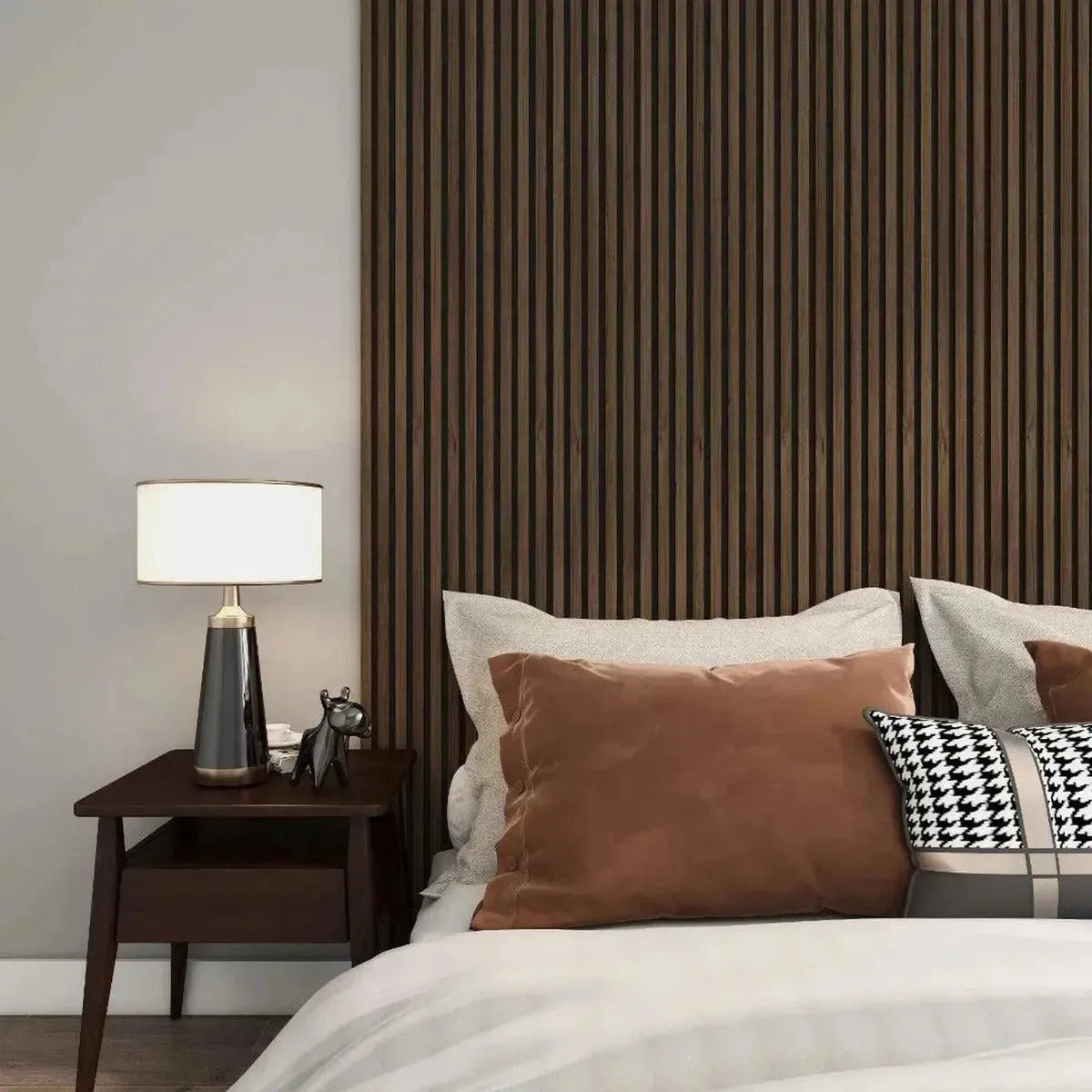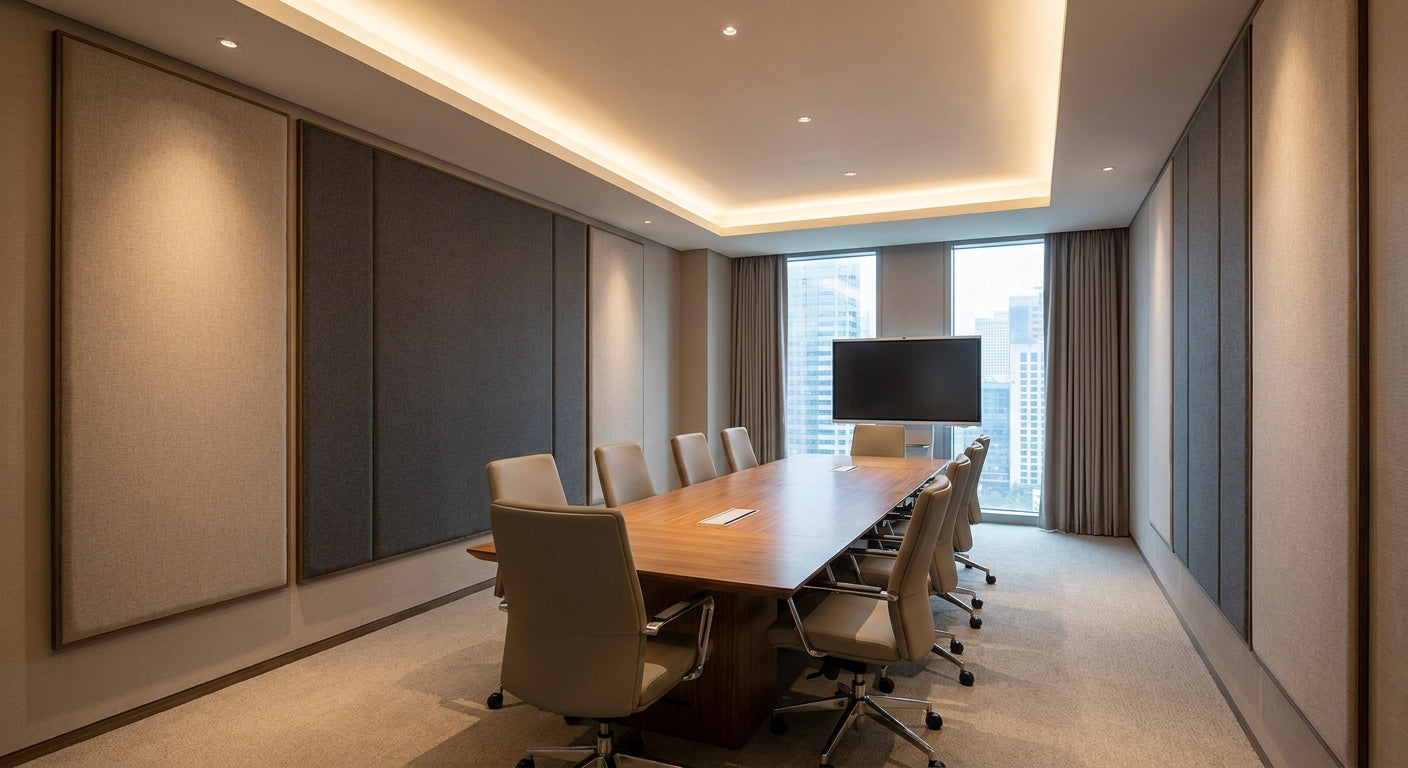
Hotel conference rooms with hard floors, glass walls, and drop ceilings turn every presentation into an echo chamber, and guests notice before they ever mention it in a review. The right acoustic panels hotel conference room owners install cut reverberation fast without turning the space into a padded box.
- Felt-backed oak slat panels are the safe buy for hotel conference rooms hosting 10-50 guests in 2026.
- Walnut slat panels work as the wildcard pick for boardrooms that double as VIP meeting spaces.
- Skip plain veneer slat panels with no felt backing — they look right but do almost nothing for speech clarity.
- Order a sample before ordering a full run; finish color reads differently under conference room lighting.
Why this matters
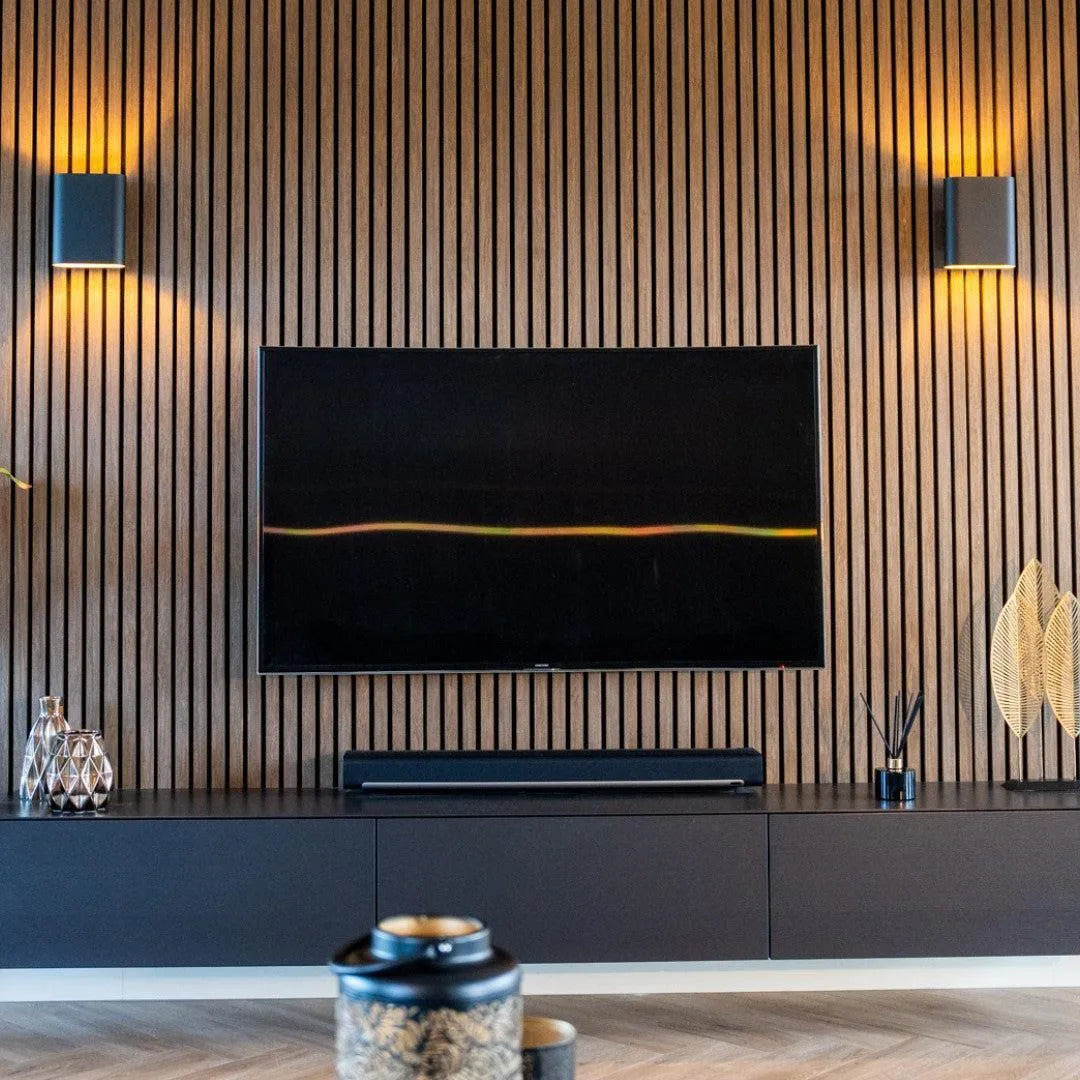
A hotel conference room with glass partitions, a projector screen, and a polished floor reflects most of the sound that hits it. Speakers get asked to repeat themselves, mic feedback spikes, and AV techs turn up gain settings that make the whistling worse, not better. Acoustic wood slat panels absorb that reflected sound at the wall instead of letting it bounce, and they do it while looking like a design feature instead of a retrofit. Akuwood Panel's acoustic slat wall panel in natural oak with gray felt is built for exactly this: real wood veneer over an acoustic felt backing, so the room gets sound absorption and a finished look in one install. Hotels booking corporate events in 2026 are increasingly asked directly about room acoustics before signing contracts, and a bare drywall conference room loses that comparison every time.
Who this is for
This guide is for hotel operations managers, GMs, and design-build contractors specifying finishes for meeting and event spaces — not homeowners chasing a living room accent wall. If you're comparing conference room capacity, AV equipment lists, and finish packages for a 2026 renovation or new build, the criteria below are built around that job, not residential aesthetics.
What to look for in acoustic panels for hotel conference rooms
Felt backing, not just wood veneer
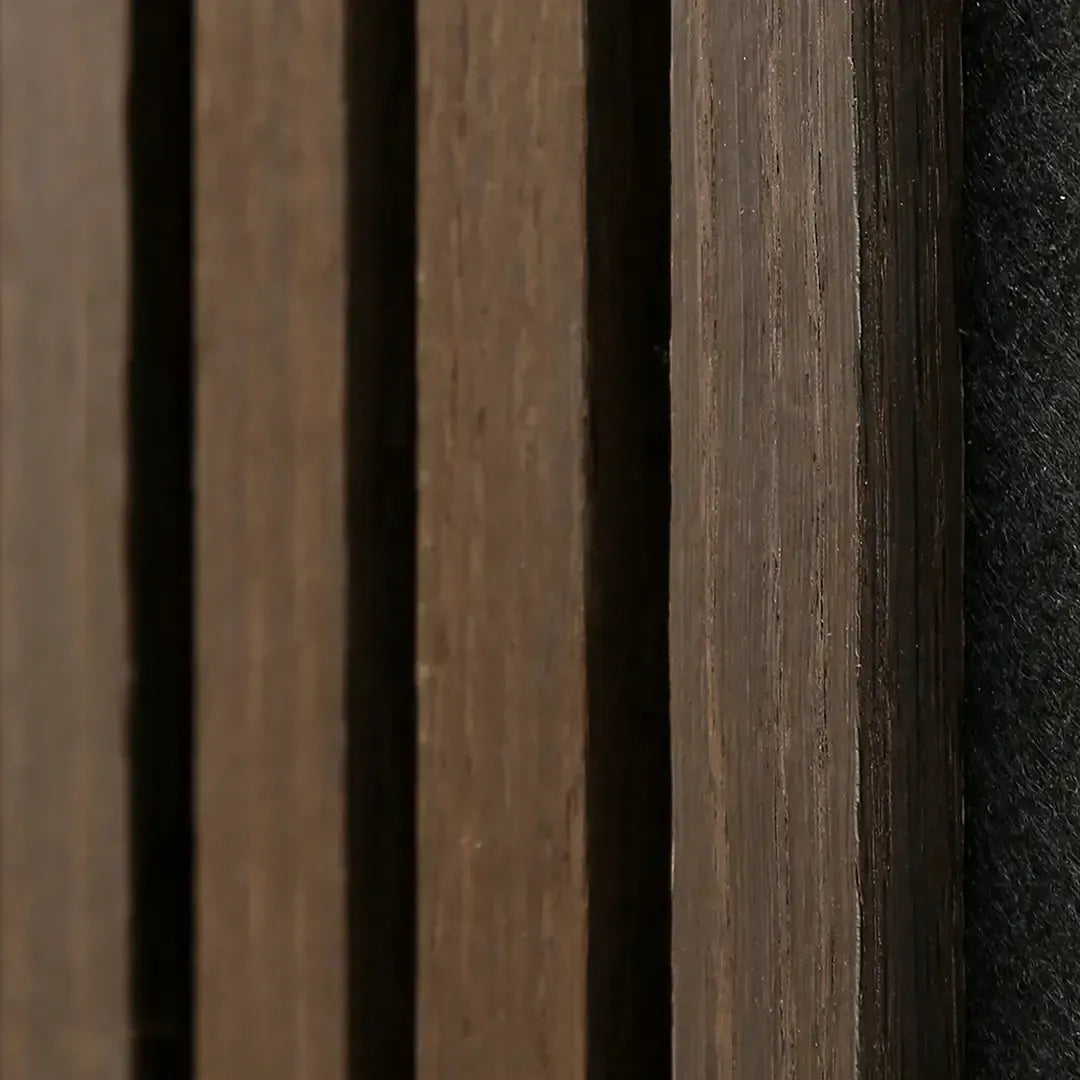
A slat panel without a felt or acoustic fleece backing is decorative wood, not an acoustic product — it looks the part but leaves speech clarity exactly where it started. Felt-backed panels absorb mid and high frequencies where human speech lives, which is the range that matters most in a conference room. Skip anything marketed as "acoustic" that doesn't specify a felt or fiber backing layer.
Coverage per linear wall run
Meeting rooms need enough treated wall area to actually change the reverberation time, not a single accent strip behind the screen. Plan panel coverage across at least one full long wall, since partial coverage on a short wall barely moves the needle in rooms seating 20 or more. Contractors specifying for multiple rooms should calculate square footage per room before ordering, not per wall.
Finish consistency across a hospitality contract
Hotel conference rooms rarely get treated in isolation — corridors, lobbies, and guest rooms often share a finish package. A slat panel line available in matching natural oak, smoked oak, black oak, and walnut lets a GC keep one vendor relationship across an entire renovation instead of sourcing acoustic treatment separately from decorative wood.
Install speed against a room-dark deadline
Conference rooms go offline for renovation and every day dark is lost meeting revenue. Panels that mount directly to drywall or over furring strips with standard hardware install faster than wet-trade acoustic plaster or upholstered panel systems that need a specialist crew.
Cleaning and durability under daily conference traffic
A room booked for back-to-back meetings gets bumped chairs, spilled coffee, and daily vacuum contact at the base. Real wood veneer over felt holds up to routine cleaning far better than fabric-wrapped acoustic panels, which show stains and need specialist care.
Top picks for hotel conference room acoustics
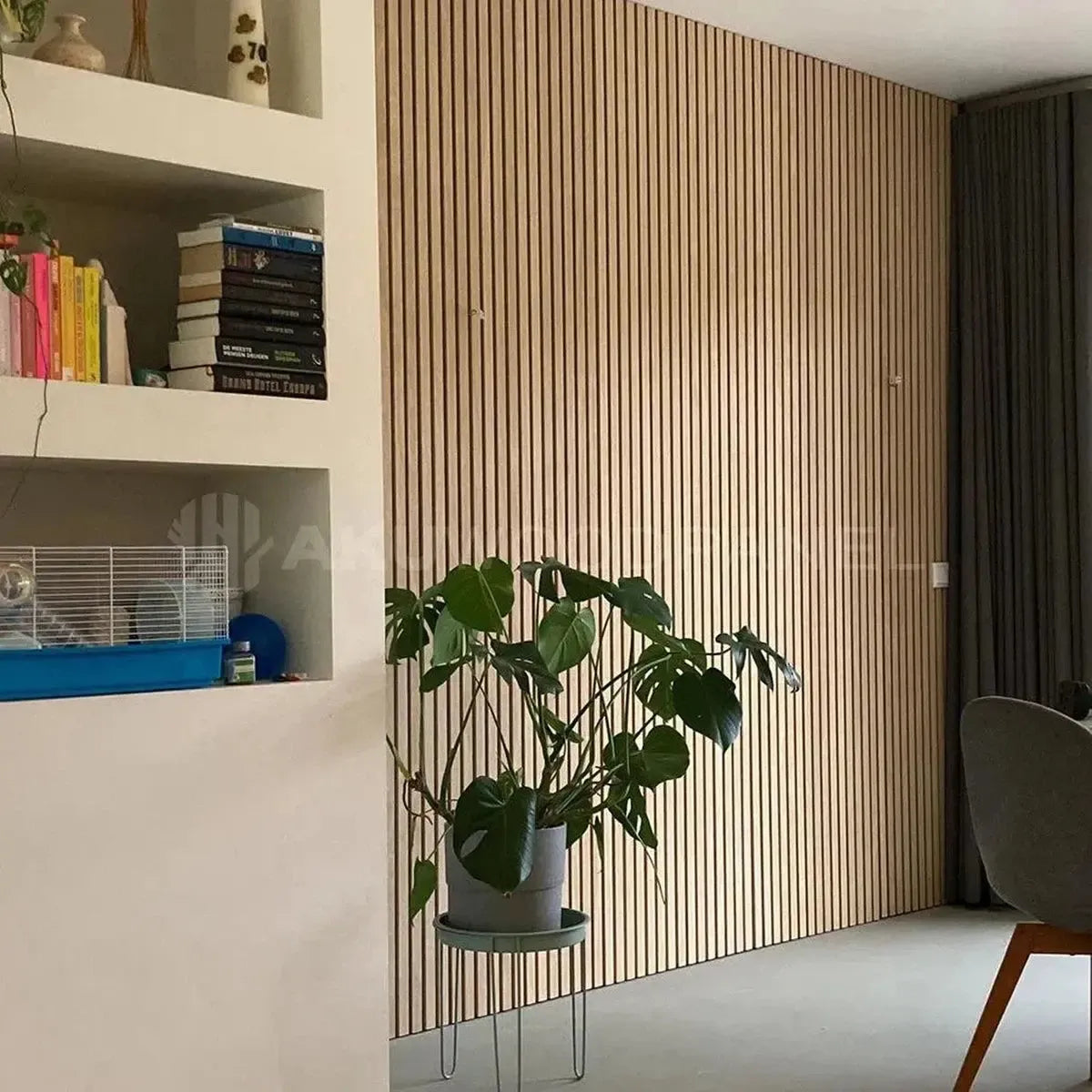
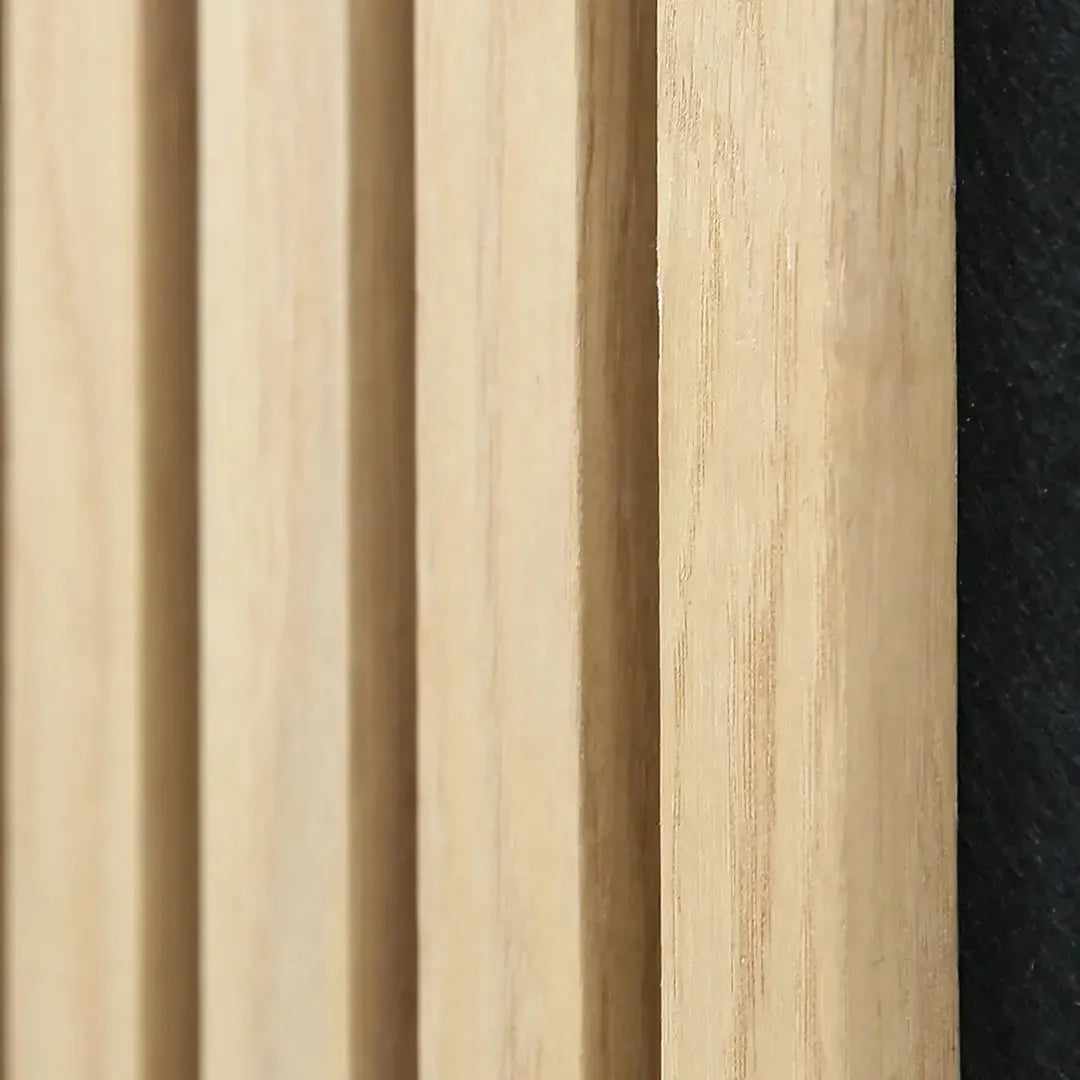
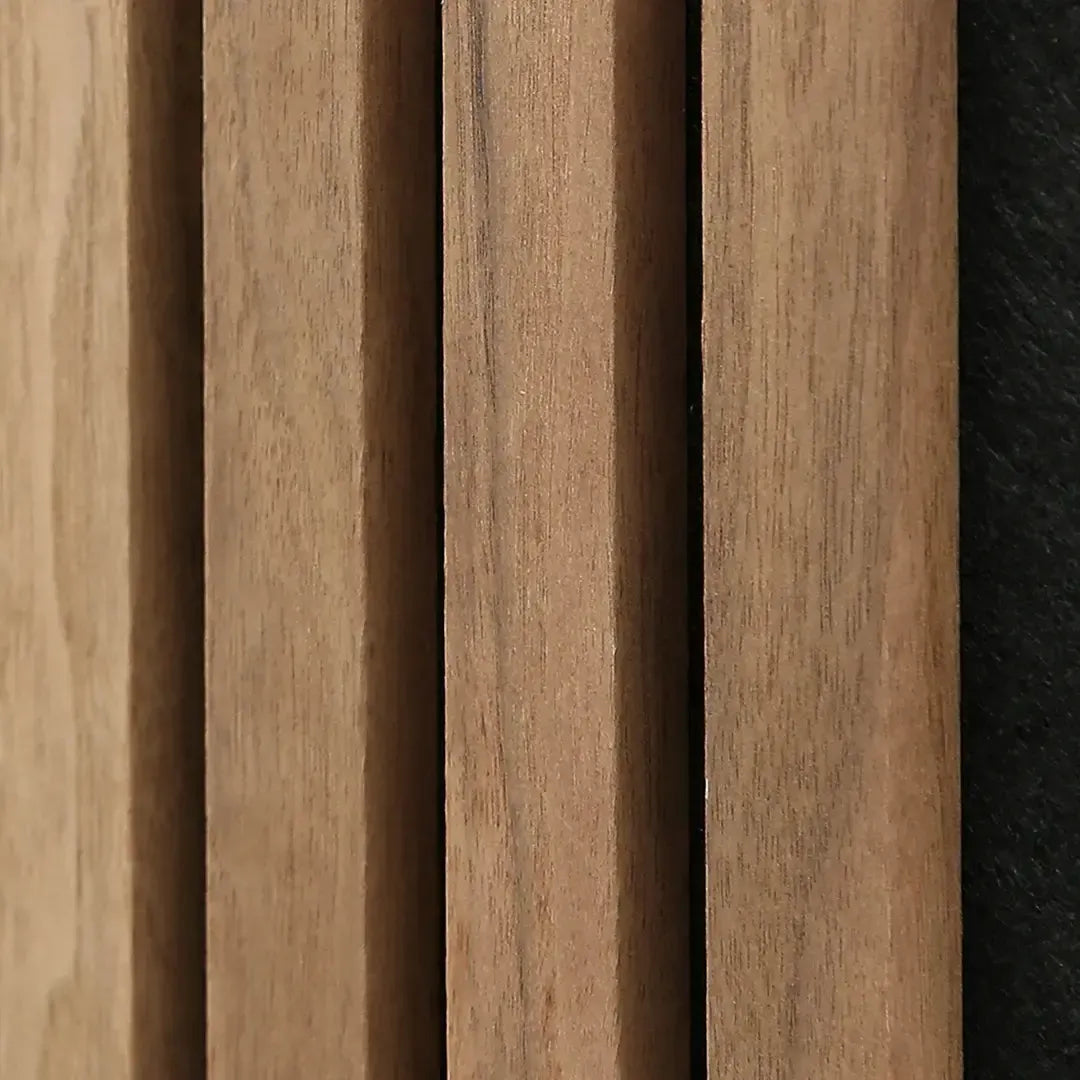
The safe pick — Acoustic Slat Wall Panel, Natural Oak with Gray Felt This is the standard choice for hotel conference rooms because the natural oak finish reads neutral against almost any AV setup or branding, and the gray felt backing handles the mid-frequency absorption that kills speech clarity in glass-walled rooms. Panels line up edge to edge across a full wall run without visible seams once installed. Verdict: Buy — see the natural oak with gray felt panel.
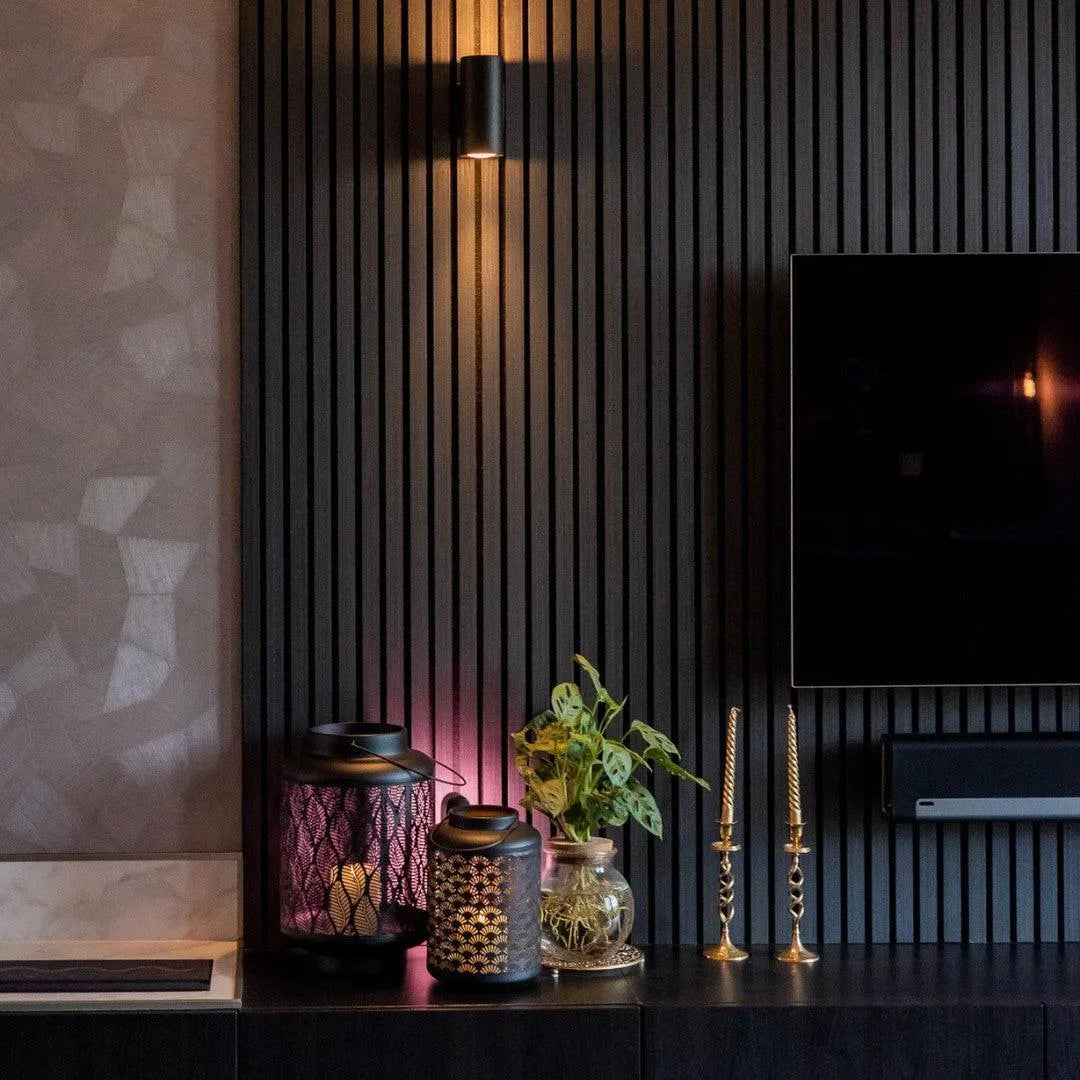
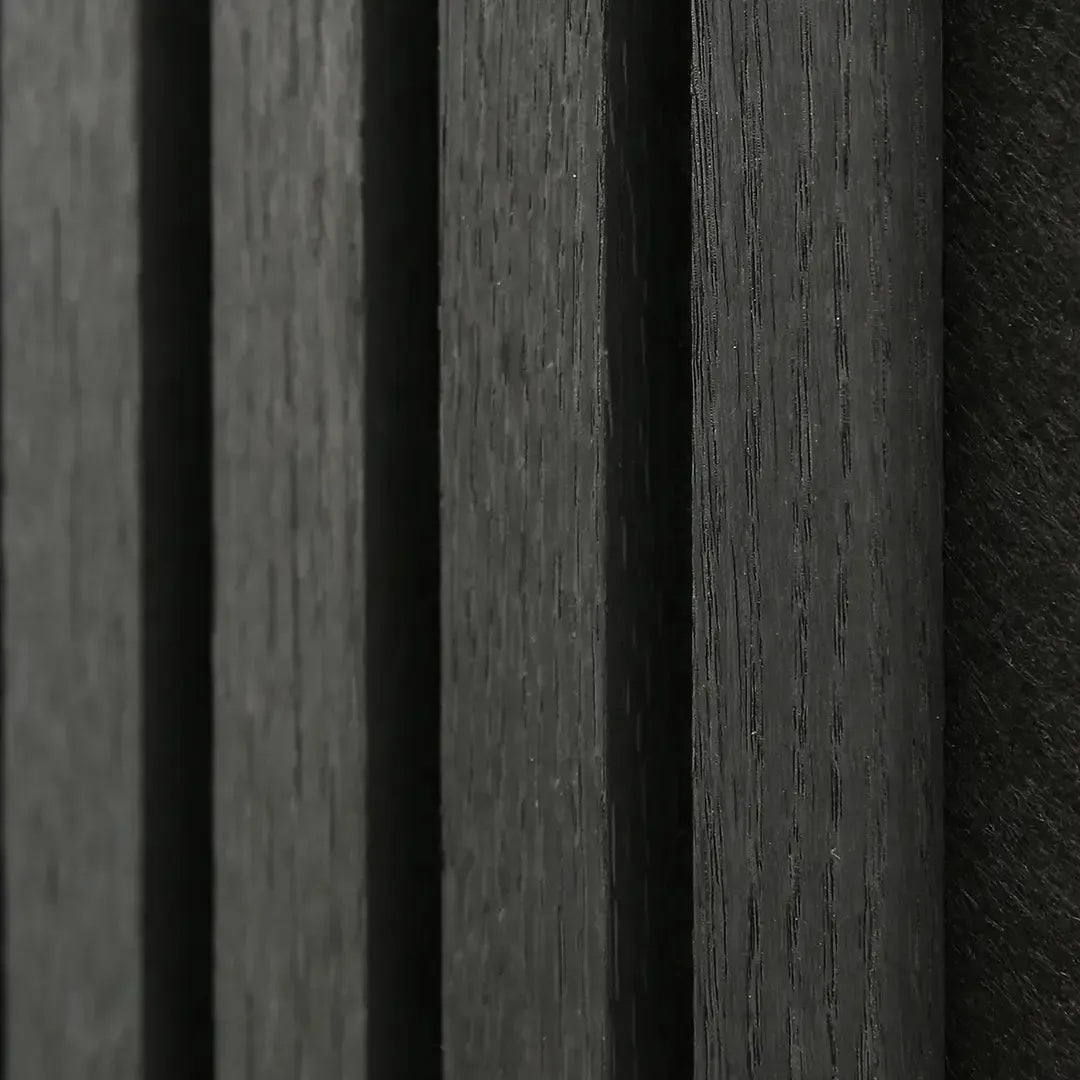
The low-light pick — Acoustic Slat Wall Panel, Smoked Oak with Gray Felt Conference rooms with dimmable lighting for presentations benefit from a darker finish that doesn't wash out under low ambient light the way pale oak can. The smoked oak tone hides scuff marks from chair backs better than lighter finishes, which matters in rooms booked daily. Verdict: Buy for rooms running frequent AV presentations — check the smoked oak with gray felt panel.
The wildcard — Acoustic Slat Wall Panel, Walnut For boardrooms that double as executive meeting space or VIP client rooms, walnut's deeper grain reads more premium than oak and photographs better for the hotel's own marketing shots. It costs a step up in perceived finish quality, which matters when the room is also a sales tool for the property. Verdict: Consider for flagship rooms, Skip for standard breakout spaces on a tight 2026 renovation budget — see the walnut slat panel.
What to avoid
- Plain veneer slat panels with no felt layer. They match the aesthetic of acoustic panels without doing the acoustic job — fine for a lobby accent wall, wrong for a room where speech clarity is the point.
- Partial-wall accent treatment. A single feature strip behind the podium looks intentional but won't touch reverberation in a room seating more than a handful of people.
- Fabric-wrapped acoustic panels for high-traffic rooms. They absorb well but stain fast under daily conference use and need specialist cleaning that most hotel housekeeping teams aren't set up for.
Hotel properties handling corporate and boardroom bookings specifically are covered in more depth in the acoustic slat panels for corporate boardroom walls guide, which walks through boardroom-specific layout considerations beyond general conference space.
Verdict comparison
| Pick | Felt backing | Best for | Verdict |
|---|---|---|---|
| Natural Oak with Gray Felt | Yes | Standard conference rooms, neutral branding | Buy |
| Smoked Oak with Gray Felt | Yes | Low-light rooms, frequent AV use | Buy |
| Walnut | No felt variant listed | Flagship boardrooms, premium finish | Consider |
FAQ
What are the best acoustic panels for a hotel conference room?
Felt-backed wood slat panels, such as natural oak or smoked oak with a gray felt backing, are the standard choice for 2026 hotel conference rooms because they combine sound absorption with a finish that matches lobby and corridor design.
Do acoustic wood panels actually reduce echo in meeting rooms?
Felt-backed slat panels absorb sound in the mid and high frequency range where speech lives, cutting reverberation noticeably when installed across a full wall run rather than a single accent strip.
How many wall panels does a hotel conference room need?
Coverage should run across at least one full long wall for rooms seating 20 or more; partial coverage on a short wall rarely changes the room's reverberation enough to matter.
Is plain wood veneer paneling the same as acoustic paneling?
No. Plain veneer without a felt or fiber backing is decorative only and does not absorb sound the way felt-backed acoustic slat panels do.
Can acoustic slat panels handle daily conference room traffic?
Real wood veneer over felt backing holds up better under daily cleaning and chair contact than fabric-wrapped acoustic panels, which stain and need specialist maintenance.
Should every conference room in a hotel match the same panel finish?
Not necessarily. Flagship or VIP rooms can justify a premium finish like walnut, while standard breakout rooms hold up fine with natural or smoked oak at a lower cost per room.
What's the difference between natural oak and smoked oak panels for meeting rooms?
Natural oak reads neutral under most lighting and works across general-purpose rooms, while smoked oak hides scuffs better and holds up visually in rooms with dimmed presentation lighting.
Do acoustic panels need professional installation in a hotel setting?
Slat panels designed to mount on drywall or furring strips install with standard tools and hardware, which is faster than specialist acoustic plaster crews and keeps rooms dark for renovation for less time.
One last thing
Most hotels treat the wall behind the presenter and stop there — the wall the audience faces gets ignored, even though that's the surface bouncing sound straight back at the speaker's own microphone. Treating both the front and the back wall of a conference room, not just the presentation wall, is the detail that separates a room that sounds fixed from one that still needs a second look before the 2026 renovation budget closes out.
 Better performance and aesthetic appeal
 In Stock