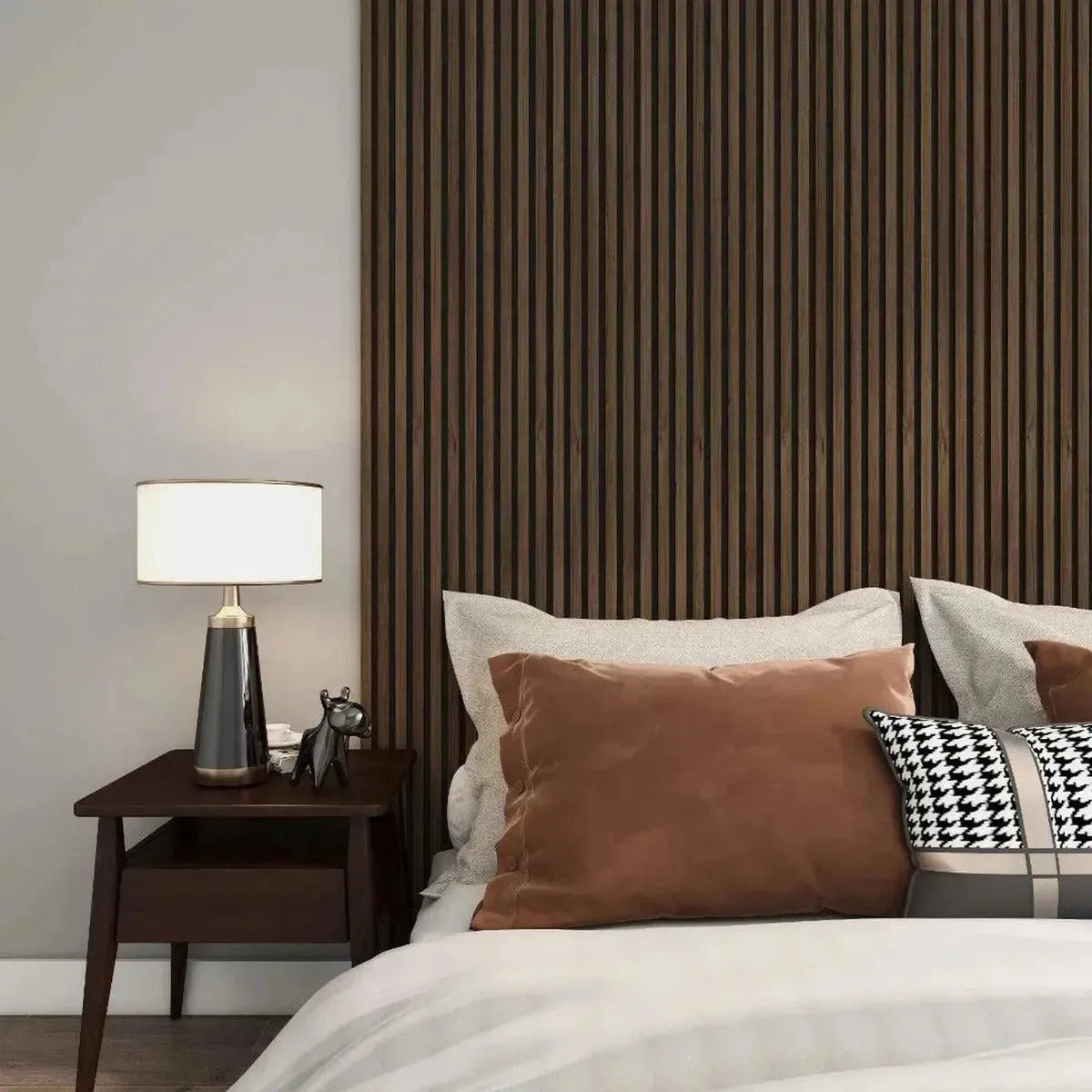
Art studios and maker spaces take a beating that living rooms never see — paint splatter, dust, vibration from saws and sanders, echo off bare drywall or concrete. Wood panels for art studio walls need to survive that abuse while still looking good enough to shoot portfolio photos against.
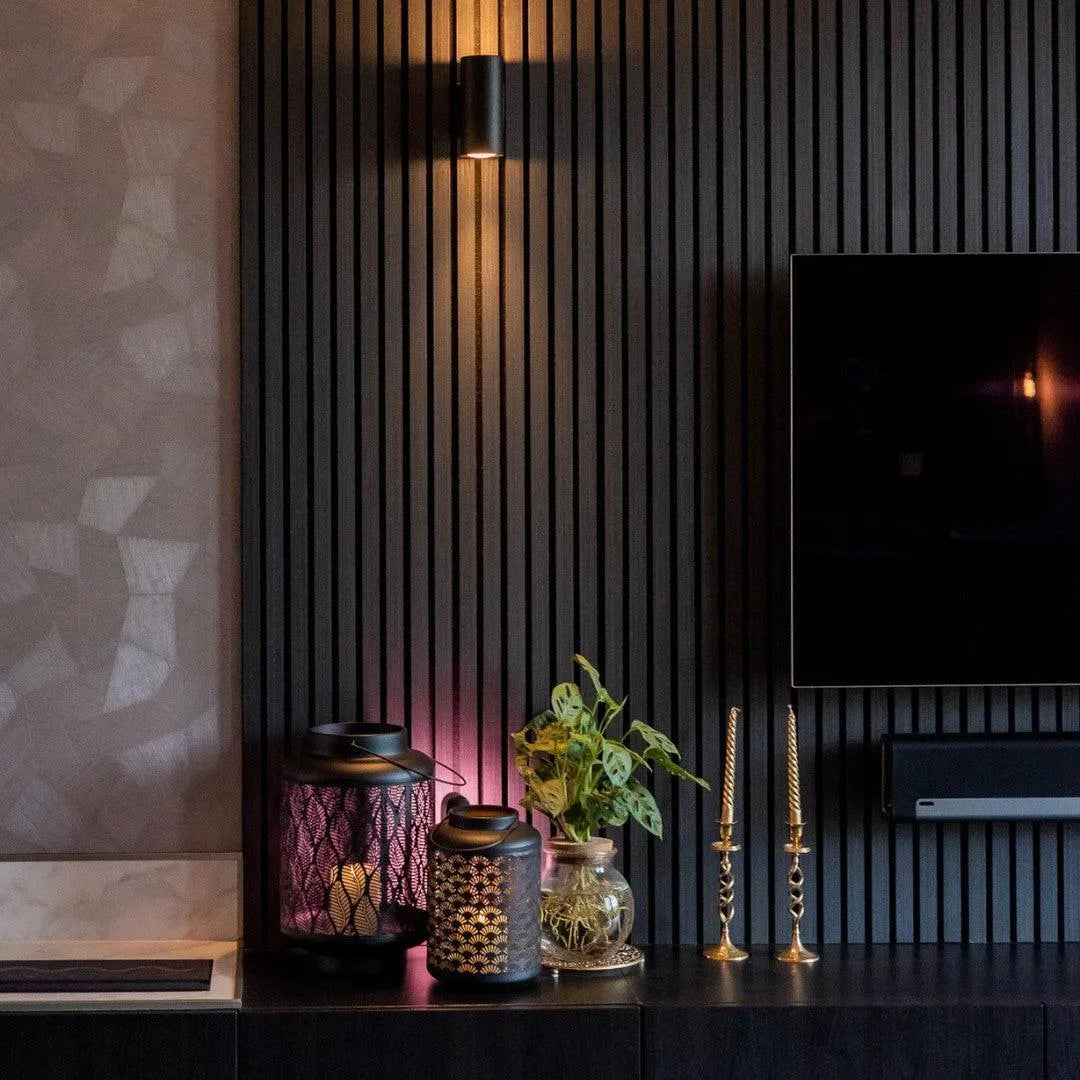
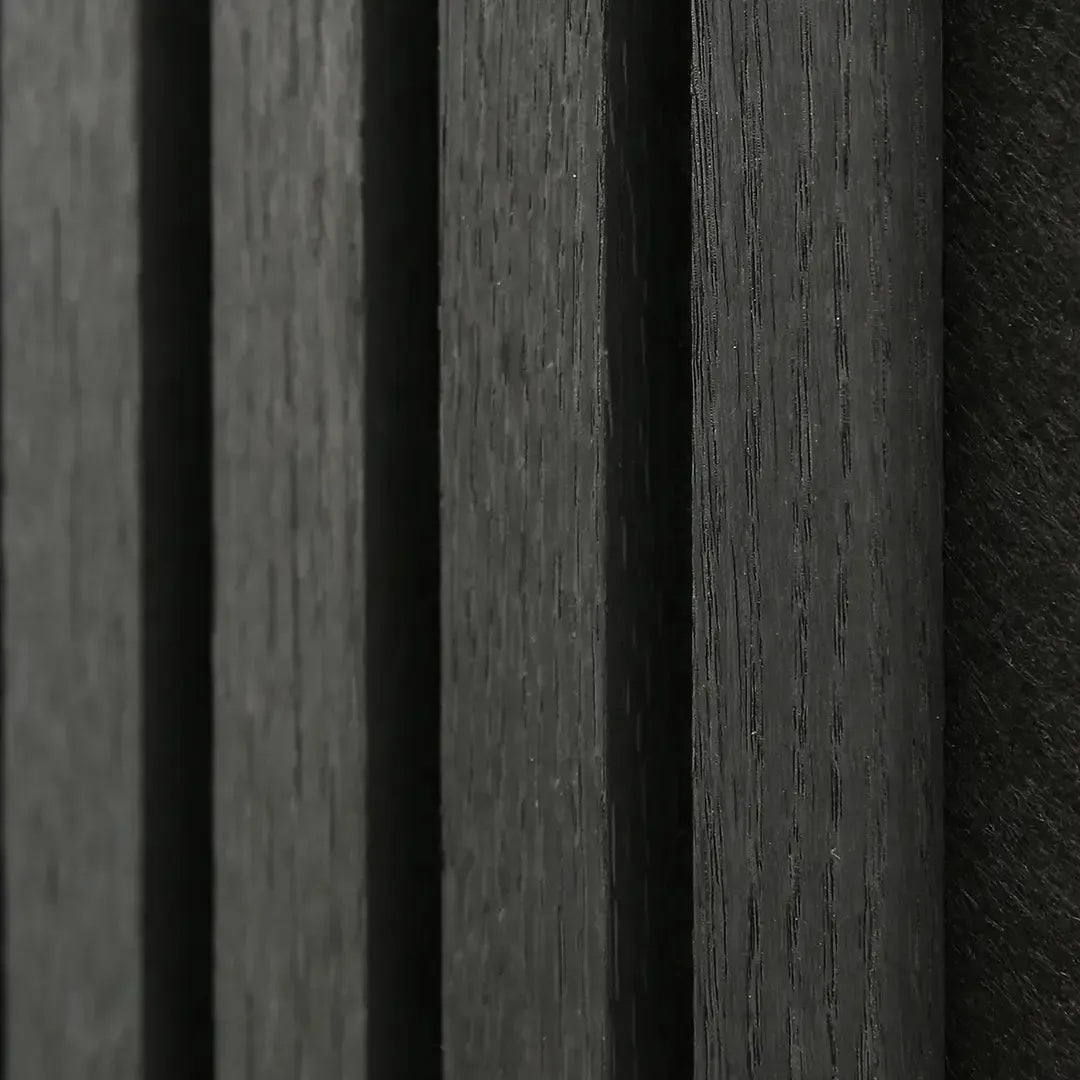
- Acoustic Slat Wall Panel Black Oak cuts tool noise and photographs clean for portfolio shots — buy it.
- Hexagon Acoustic Panel Walnut suits modular pegboard-style layouts in shared maker spaces — buy it.
- Skip printed laminate look-alikes; they scuff and fade under studio lighting within a year.
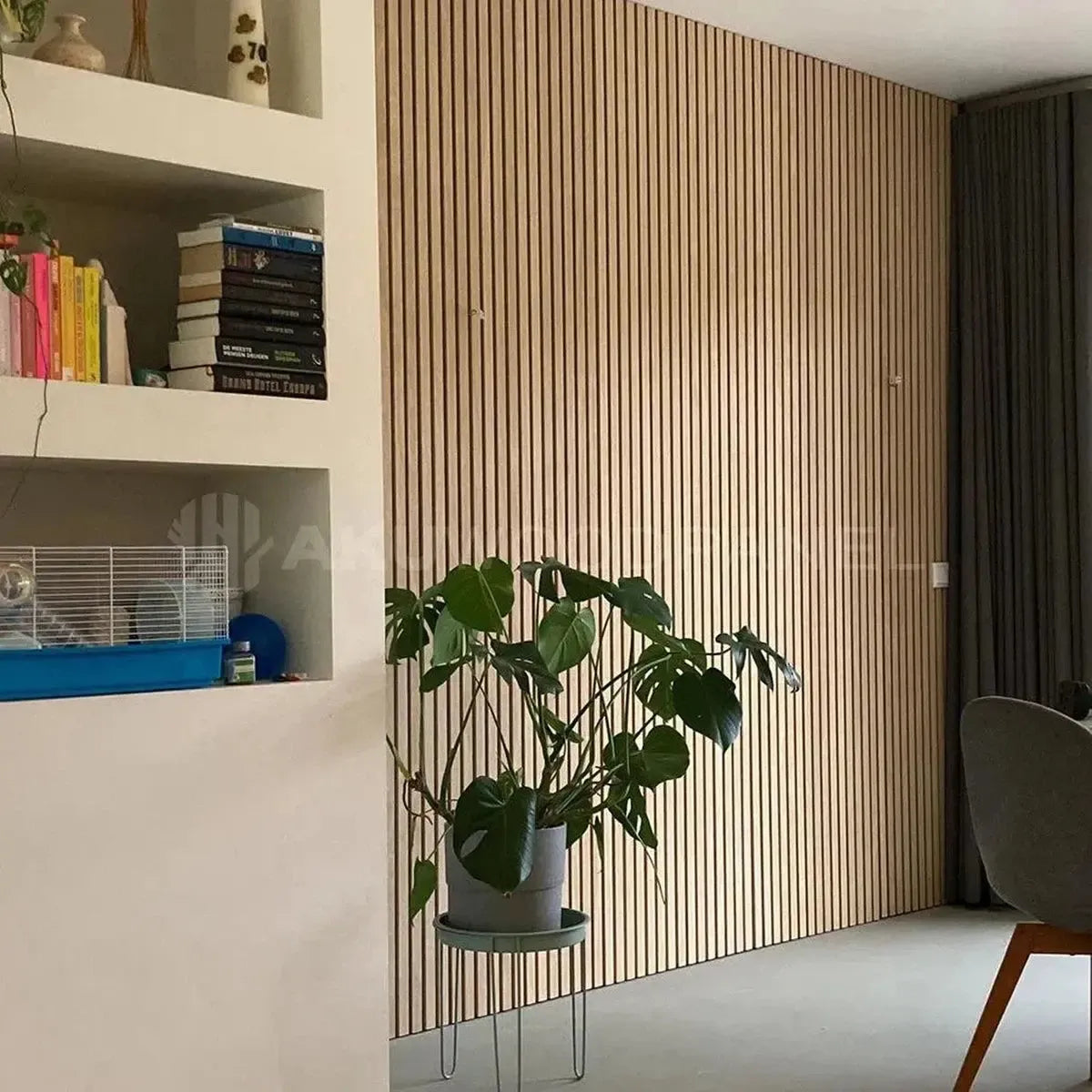
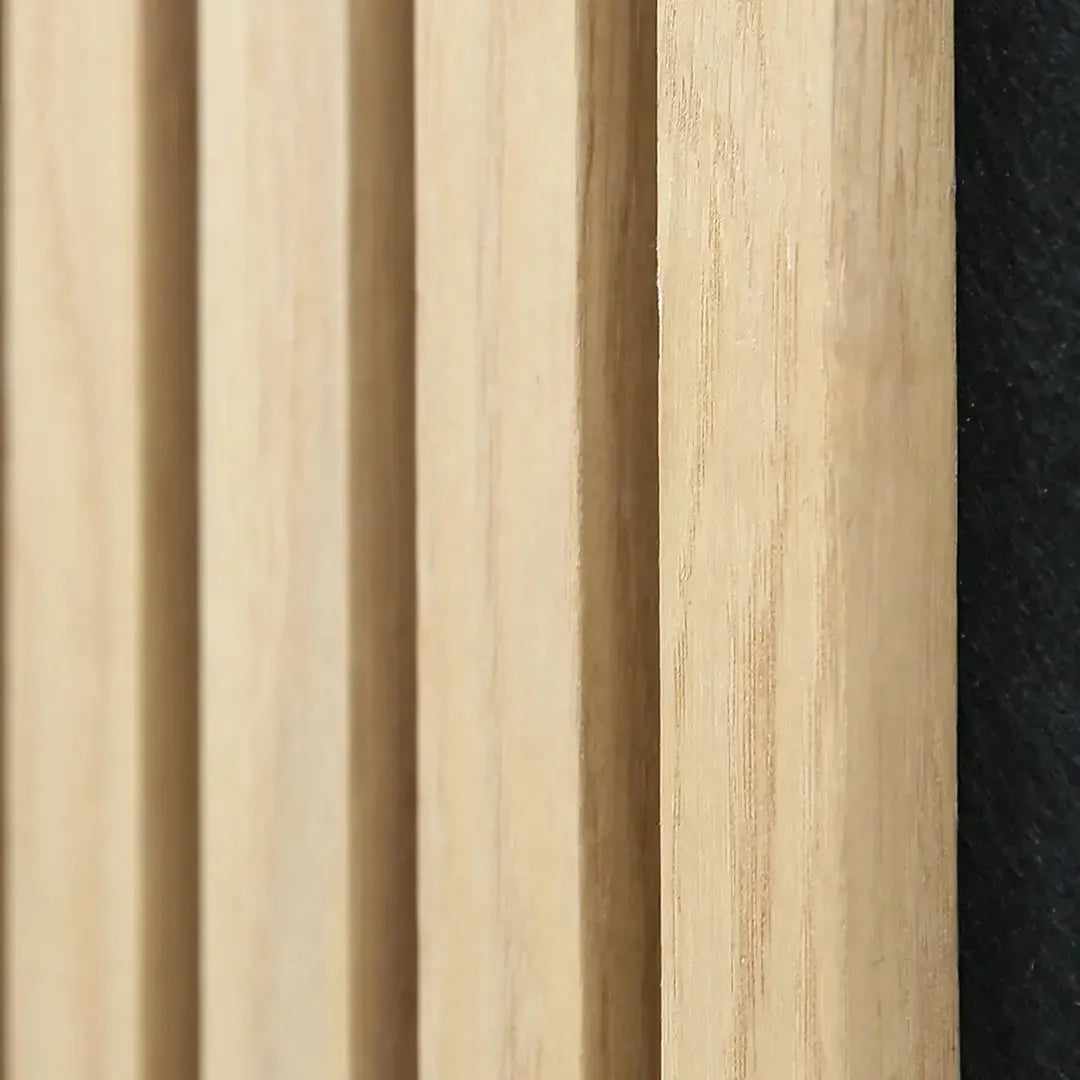
- Fluted Wall Panel Natural Oak works as a lower-cost backdrop wall but offers less sound dampening.
Why this matters
A bare studio wall reflects sound and light the same way — hard, flat, unforgiving. Reverberation from a table saw or a potter's wheel motor bounces off drywall and turns a 200-square-foot room into an echo chamber. Real wood veneer wall panels solve two problems at once in 2026: they knock down reflected noise with slatted acoustic backing, and they give artists a neutral, true-color backdrop for photographing finished work.
Most decorative panel lines on the market are built for living rooms, not shops. That distinction matters more in a maker space than almost anywhere else — a panel that can't take a paint splash or a screw for pegboard mounting isn't built for this job. Aku Woodpanel makes acoustic slat panels with a 3-sided wood veneer designed to hold up to daily studio use, not just wall decor duty.
Who this is for
This guide is for painters, sculptors, ceramicists, woodworkers, and print studio operators fitting out a personal workshop, a rented maker-space bay, or a shared co-op wall. If you need a surface that absorbs machine noise, resists dust and moisture, and still reads as a finished, professional space when clients or students walk in, keep reading.
What to look for in wood panels for art studio walls
Acoustic performance (NRC rating)
A studio full of power tools, kilns, or foot traffic needs actual sound absorption, not just a wood-look surface. Panels rated around an NRC of 0.75 pull measurable reverberation out of a room — the difference between a saw cut that echoes for two seconds and one that dies almost instantly. Skip anything sold as purely decorative if the space doubles as a workshop.
Real wood veneer vs. printed laminate
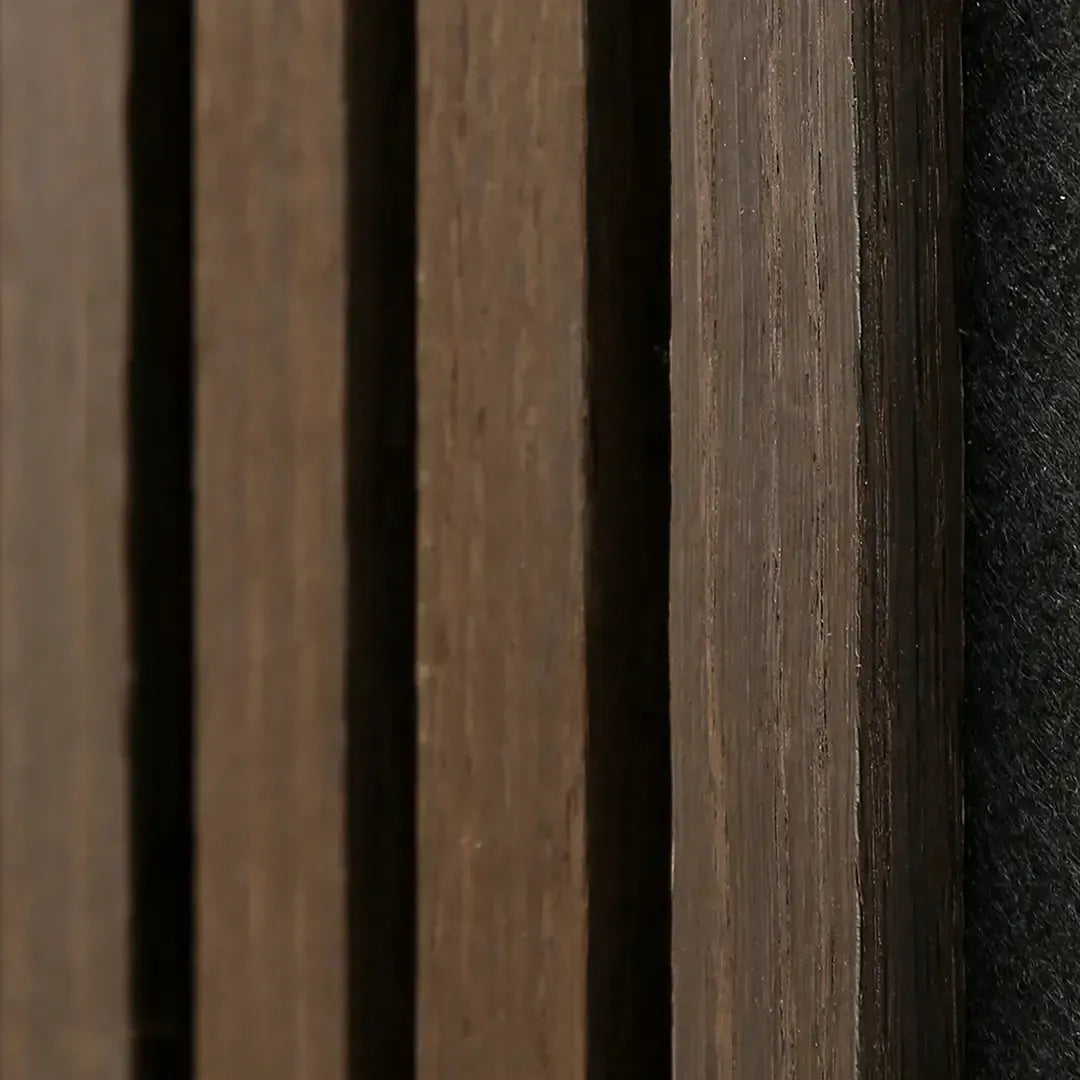
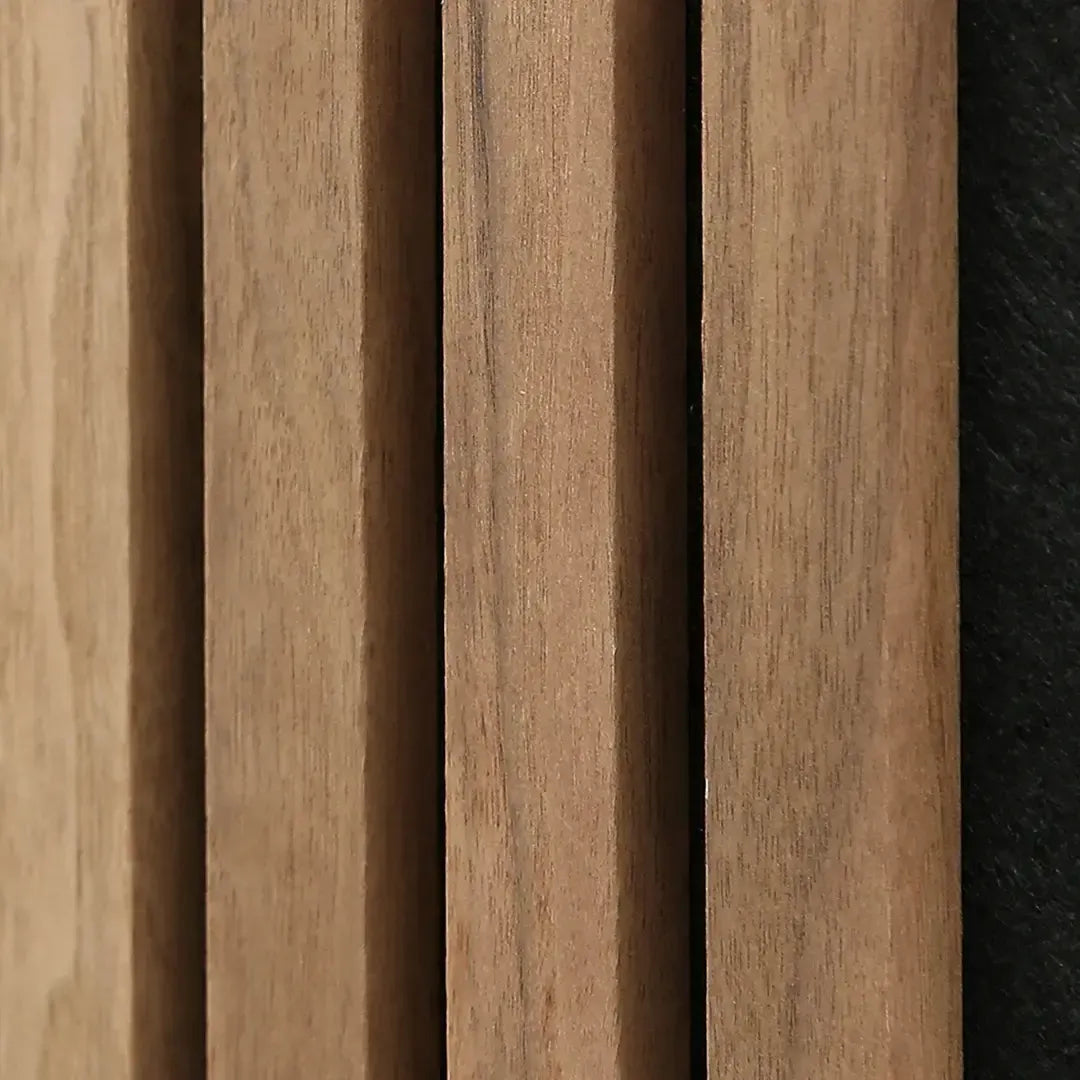
Artists judge color under studio light constantly, and a printed laminate panel shifts hue and grain pattern in ways real veneer does not. A genuine 3-sided wood veneer keeps consistent tone across a whole wall, which matters when you're photographing finished pieces against it for a portfolio or gallery submission.
Durability against dust, splatter, and moisture
Sanding dust, spray fixative, glaze drips — studio walls take contact that a bedroom accent wall never will. Panels need a finish that wipes clean without staining and a substrate that doesn't warp when humidity spikes near a kiln or wet clay station.
Mounting flexibility
Most maker spaces have irregular walls: drywall over studs, exposed brick, sometimes bare concrete in converted warehouse units. Confirm the panel system supports the wall type you actually have before ordering, and check whether end pieces or trim are available to finish exposed edges cleanly.
Coverage and panel width for large open walls
Open studio floors often run 12 to 20 feet of unbroken wall. Panels sold in narrow tiles multiply seam count and installation time; wider formats or modular hexagon layouts cut both down and look more intentional on a big surface.
Cost per square foot
Maker spaces are usually self-funded or split among co-op members, so price per panel adds up fast across a full wall. Compare cost against square footage covered, not just the sticker price of a single unit.
Top picks for studio and maker space walls
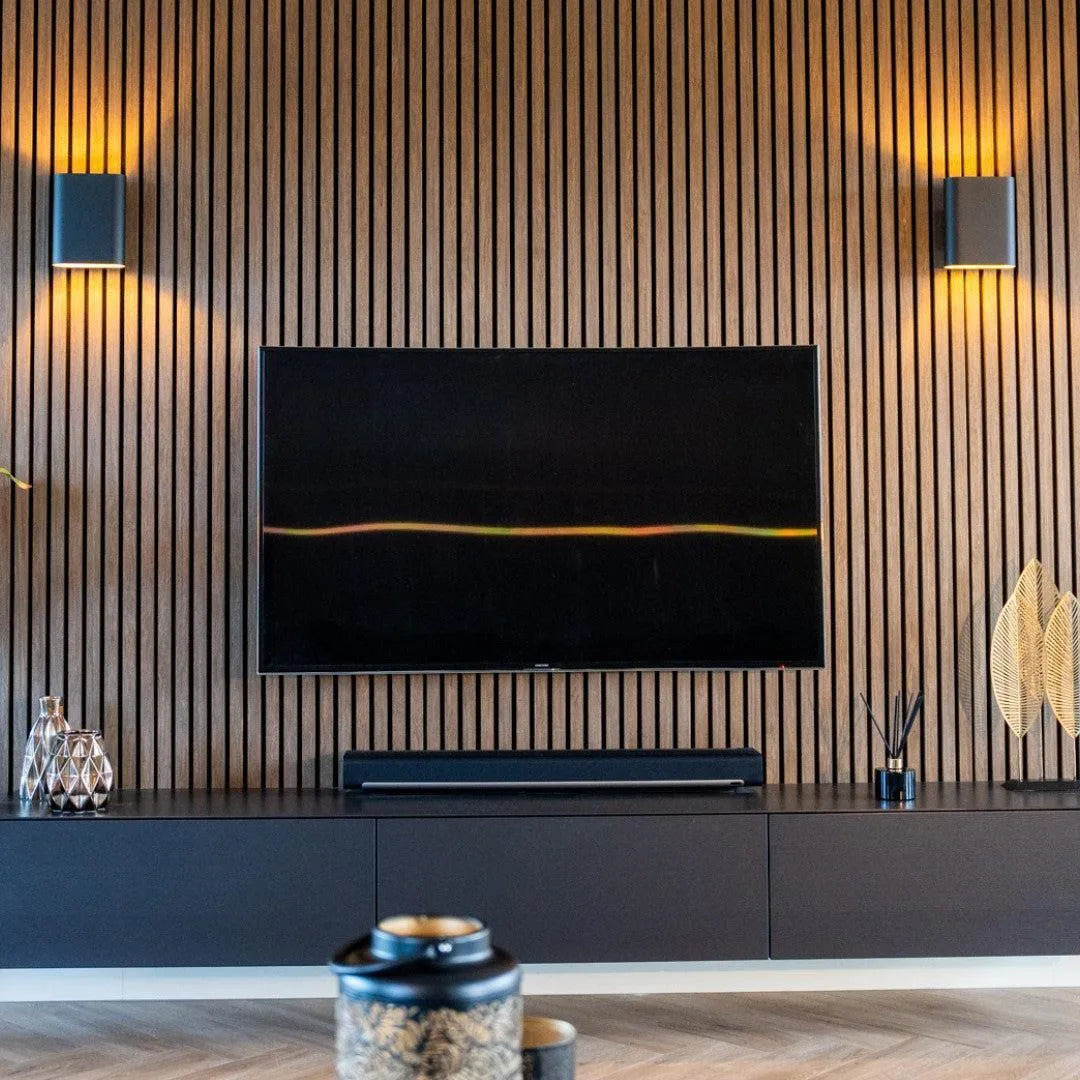
Acoustic Slat Wall Panel Black Oak — the photo-ready pick. Priced at $177.95, this panel carries a 3-sided wood veneer finish that reads as a neutral dark backdrop under studio lighting, which is exactly what most painters and photographers want behind finished pieces. The slat profile also does real acoustic work in a room with power tools running. Buy if your studio doubles as a shoot space for finished work.
Hexagon Acoustic Panel Walnut — the modular wildcard. Sold in 32-inch panels, four per box, this format lets you build an irregular or partial wall coverage pattern that suits shared maker-space bays where you don't own the whole wall. The hexagon shape also breaks up an otherwise flat, industrial-feeling shop interior. Buy for co-op or rented studio bays where a full wall run isn't practical.
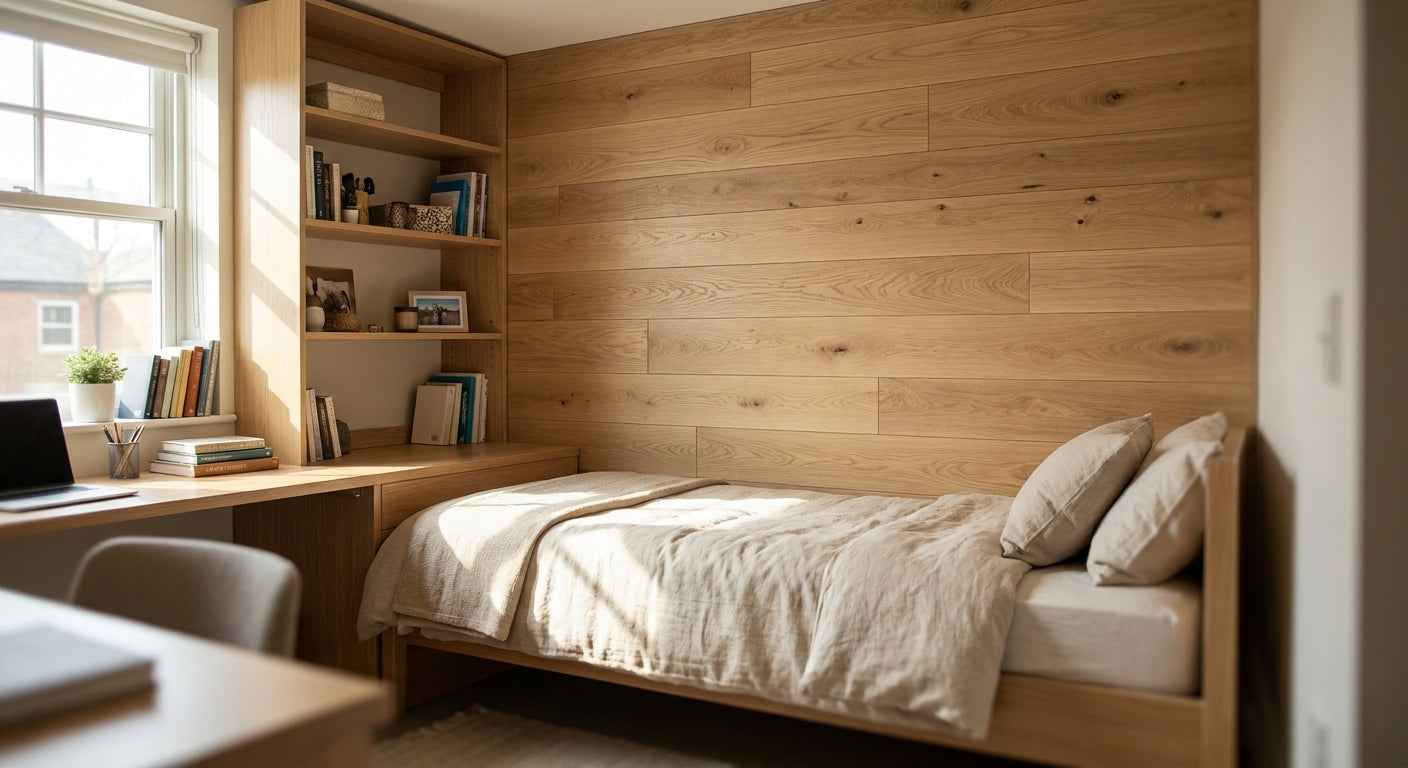
Fluted Wall Panel Natural Oak — the budget backdrop. This flexible-design panel costs less per unit than the full acoustic slat line and installs faster on straight, uninterrupted walls. It won't dampen noise the way the slotted acoustic panels do, so it's a better fit for a quiet studio corner than a full workshop floor. Consider it for a dedicated photo-backdrop wall, not for noise control near equipment.
Exterior Wall Panel Oak — the outbuilding pick. Garden studios, converted garages, and outbuilding workshops need weather-rated cladding, not interior acoustic panels. This oak-finish exterior line handles the elements but offers none of the sound-dampening benefit of the slat or hexagon acoustic lines. Skip it for indoor studio walls; Consider it only if your maker space is a detached, unheated structure.


For a studio that needs both acoustic coverage and a photo backdrop, look at the Black Oak acoustic slat panel first — it's the single pick that does both jobs at once in 2026. For shared maker spaces where you're not covering a full wall, the Walnut hexagon acoustic panel gives you a modular way to fill an odd-shaped section without ordering a full slat run. If your budget prioritizes a clean backdrop over noise control, the Natural Oak fluted wall panel covers straight walls fast at a lower per-unit cost.
What to avoid
- Printed laminate "wood-look" panels — they scuff visibly under direct studio lighting within months and the grain pattern repeats obviously across a wide wall, which reads as fake in portfolio photos.
- Purely decorative acoustic panels with no NRC spec listed — if a seller can't tell you the sound absorption rating, assume it's close to zero and treat the panel as cosmetic only.
- Panels with no trim or end-piece option — exposed raw edges near a saw table or kiln collect dust and look unfinished within the first year of a working studio.
Verdict comparison
| Panel | Acoustic rating | Veneer type | Best for | Price | Verdict |
|---|---|---|---|---|---|
| Acoustic Slat Wall Panel Black Oak | NRC ~0.75 | 3-sided wood veneer | Portfolio backdrop + noise control | $177.95 | Buy |
| Hexagon Acoustic Panel Walnut | NRC ~0.75 | Wood veneer, felt-backed | Shared/modular maker-space walls | $165.95 | Buy |
| Fluted Wall Panel Natural Oak | Minimal | Wood veneer | Budget photo-backdrop wall | Lower per-unit | Consider |
| Exterior Wall Panel Oak | None | Weather-rated finish | Outbuilding/garage studios only | Varies by coverage | Skip indoors |
FAQ
What's the best wood panel for an art studio wall?
The Acoustic Slat Wall Panel Black Oak from Aku Woodpanel works best for most studios in 2026 because it combines real wood veneer for consistent color under studio light with slat-profile sound dampening. Painters and photographers use it as a portfolio backdrop as well as a noise buffer near power tools.
Do acoustic wood panels actually reduce noise in a maker space?
Yes, panels rated around an NRC of 0.75 measurably cut reverberation from saws, sanders, and kiln motors. A bare drywall or concrete wall reflects nearly all of that sound back into the room, while a slotted acoustic panel absorbs a large share of it.
Is real wood veneer better than printed laminate for a studio wall?
Real wood veneer holds consistent color and grain across an entire wall, which matters for photographing finished art. Printed laminate shifts tone under different lighting and scuffs faster with daily studio contact.
How much does it cost to panel a studio wall in 2026?
Cost depends on wall size and panel line, but acoustic slat panels from Aku Woodpanel run roughly $165 to $183 per unit as of 2026, with hexagon and fluted formats priced similarly per box. Compare total coverage needed against per-unit price before ordering.
Can wood slat panels handle dust and paint splatter?
Quality 3-sided wood veneer panels wipe clean of dust and light splatter without staining, though heavy paint contact should still be avoided directly on the veneer face. A dedicated backdrop section away from active work stations holds up best.
Are hexagon acoustic panels good for shared maker spaces?
Yes, hexagon panels sold in modular 32-inch units let you cover an irregular or partial wall section, which fits co-op studios where you don't control the full wall. They also break up flat industrial walls visually.
What panel works best for a garage or outbuilding art studio?
An exterior-rated wall panel line, such as the oak-finish exterior wall panel, handles weather exposure in detached or unheated structures. Interior acoustic slat panels are not weather-rated and should stay indoors.
Do I need trim or end pieces for a studio panel install?
Yes, exposed panel edges near work stations collect dust and wear faster without finishing trim or end pieces. Confirm trim options are available for whichever panel line you choose before starting the install.
One last thing
Most studio owners pick panel color to match existing furniture, but the real variable that matters is how the veneer reads under the specific lighting you shoot photos under — a Black Oak panel that looks neutral under daylight bulbs can read warm or cool under LED studio lights, so test a sample swatch under your actual lighting setup before ordering enough panels to cover a full wall in 2026.
 Better performance and aesthetic appeal
 In Stock