Antique and vintage furniture showrooms live and die on how the wood looks under gallery light, and the wrong wall treatment either fights every piece on the floor or lets footsteps and chatter bounce off polished concrete for the rest of the afternoon.
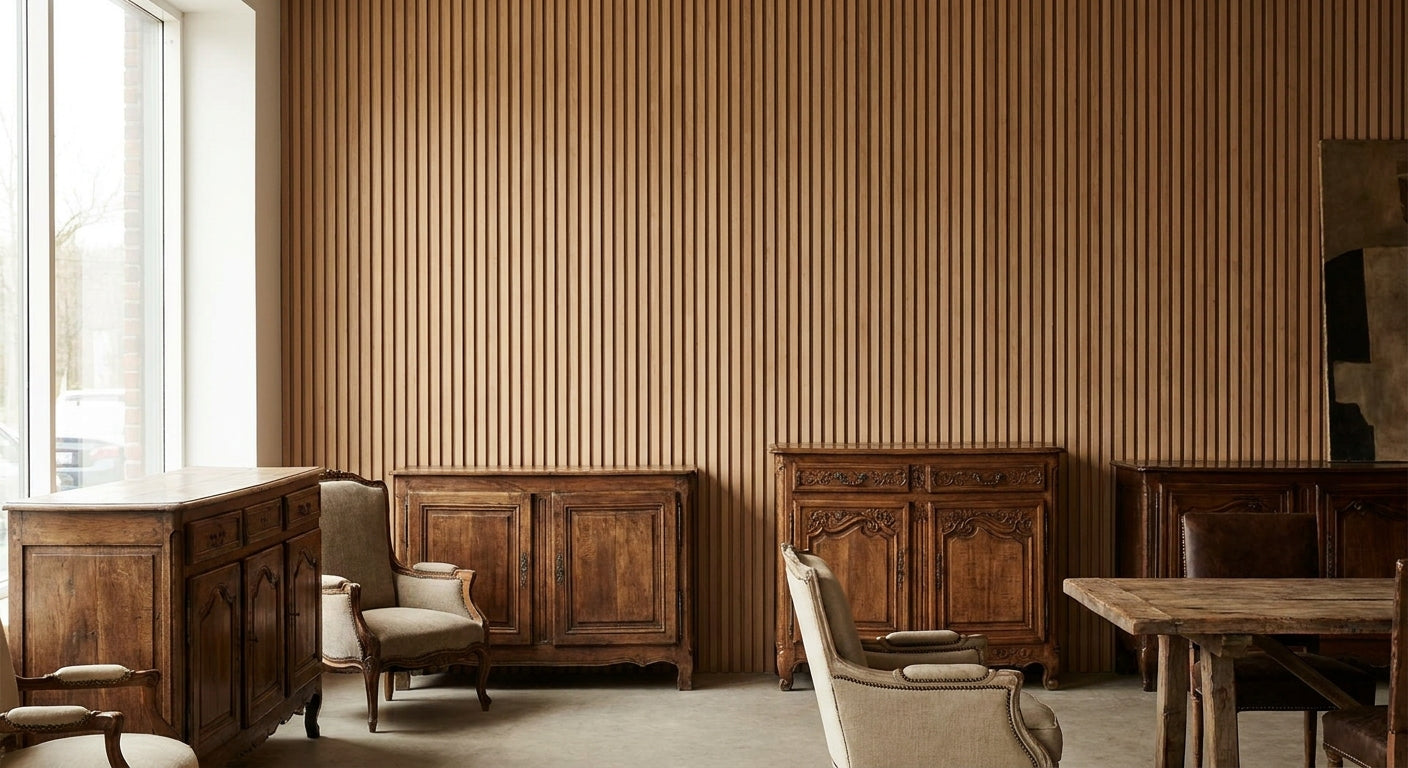
- Natural Oak acoustic slat panels at $169.95 are the safe pick for wood panels for a furniture showroom with mixed inventory.
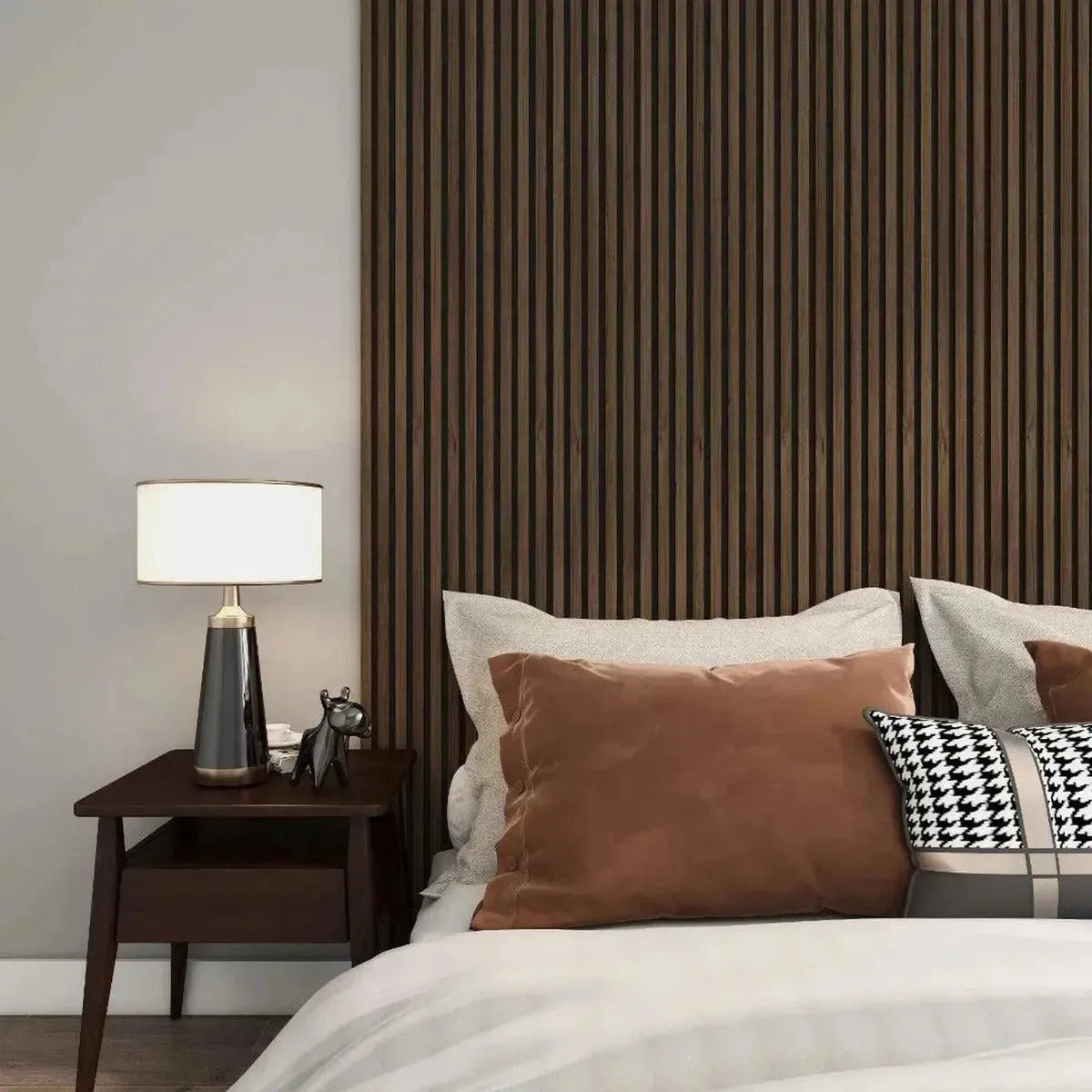
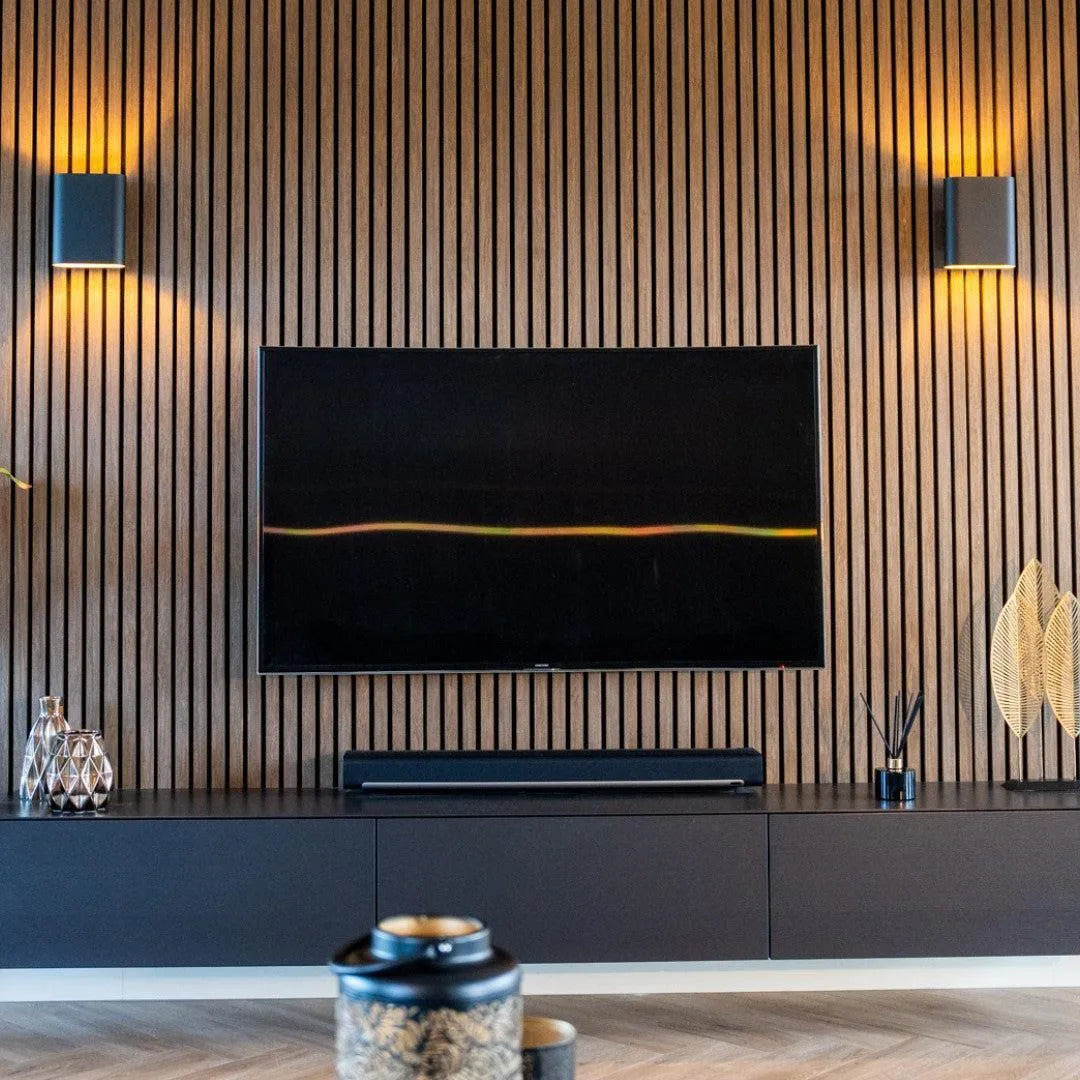
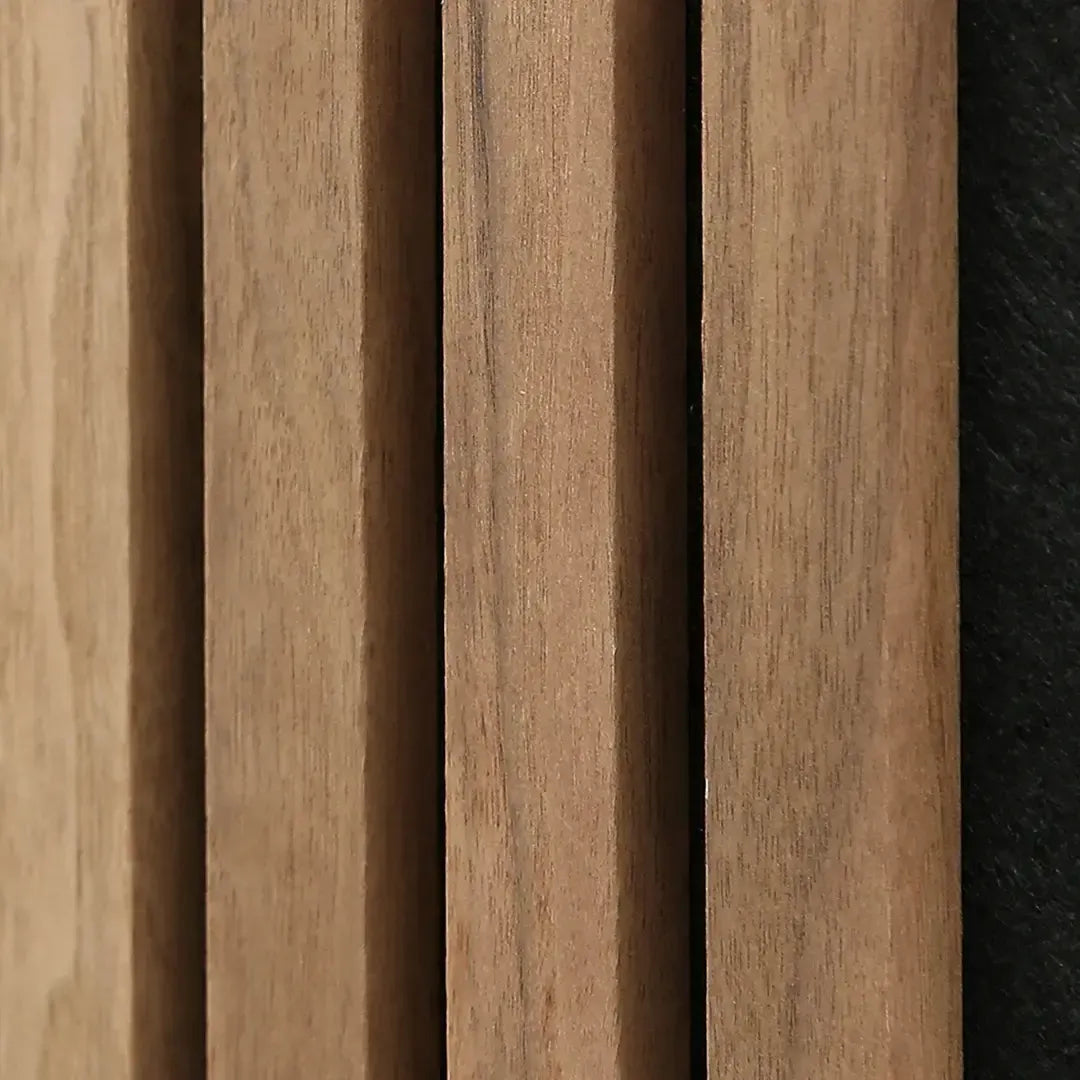
- Walnut acoustic slat panels at $182.95 read as showroom-grade against mahogany and rosewood antiques.
- Hexagon Acoustic Panel Walnut with Gray Felt hits an NRC of 0.75, the strongest echo control in this lineup.
- Skip glossy 3D wood tiles and printed-veneer foam panels on primary display walls in 2026 showrooms.
Why This Matters
A vintage furniture showroom sells atmosphere as much as inventory. Buyers walk concrete or hardwood floors under 10 to 12-foot ceilings, and every voice, cart wheel, and dropped drawer bounces around an open floor plan with no soft surfaces to catch it. Hard-surfaced showrooms without acoustic treatment read as noisy and cheap no matter how good the furniture is.
Wood panels for a furniture showroom solve two problems at once in 2026: they cut noise reflection and give plain drywall the same warmth as the pieces on the floor. A neutral finish like the natural oak acoustic slat panel works as a default backdrop because it doesn't skew orange or gray against a mixed inventory range, unlike bare drywall or generic acoustic foam.
Who This Is For
This guide is for antique dealers, vintage furniture retailers, and consignment showroom owners furnishing 1,500 to 10,000 square foot retail floors, usually in converted warehouses, old storefronts, or barn-style buildings with hard floors and minimal existing sound treatment. It's built for anyone choosing between bare drywall, generic acoustic foam, and real wood veneer paneling, and for anyone who has watched a customer wince at how loud their own footsteps sound in a room full of $3,000 dressers.
What to Look for in Wood Panels for a Furniture Showroom
Veneer tone that flatters aged wood, not competes with it
Antique inventory spans everything from honey-toned pine to near-black ebonized Victorian pieces, and a panel that's too orange or too gray makes half the floor look wrong. A wood tone that sits neutral against both ends of that range does more work than a high-contrast finish, which can compete with dark antiques instead of framing them.
Acoustic performance for hard-floor, high-ceiling rooms
Concrete floors and tall ceilings are common in converted showroom spaces, and both reflect sound instead of absorbing it. Felt-backed panels with a stated NRC (noise reduction coefficient) do real work here. A panel rated around 0.75 pulls meaningfully more chatter and footstep noise out of a room than an unrated decorative slat.
Installation flexibility around uneven, older walls
Older buildings rarely have plumb walls, and showroom layouts change every time a new consignment lot comes in. Panels that mount as individual slats or tiles let you work around outlets, columns, and out-of-square corners without cutting one oversized sheet, and let you relocate sections when the floor plan shifts.
Durability against daily handling and furniture moves
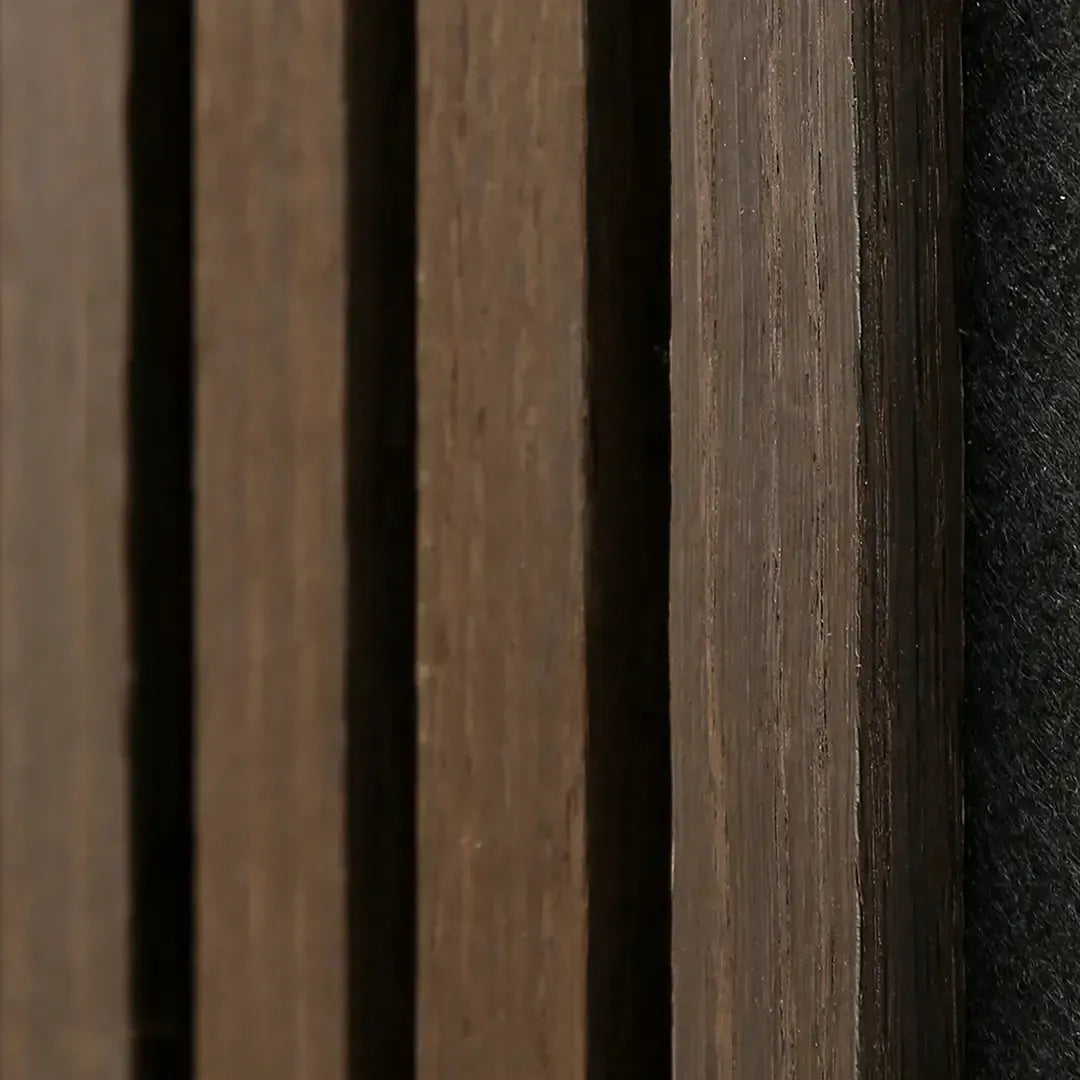
Showroom walls take abuse from dollies, moving straps, and the occasional dresser corner. A 3-sided real wood veneer construction holds up to bumps better than thin laminate wraps, and it doesn't chip white at the edge the way painted MDF does after a year of daily furniture moves.
Finish restraint — let the inventory be the star
The panel's job is to support the furniture, not outcompete it. Busy 3D geometric tiles or high-gloss finishes belong in accent nooks, fitting areas, or the checkout counter, not on the wall backing a $6,000 armoire.
Top Picks for Antique and Vintage Furniture Showrooms
The Safe Pick: Natural Oak Acoustic Slat Panel
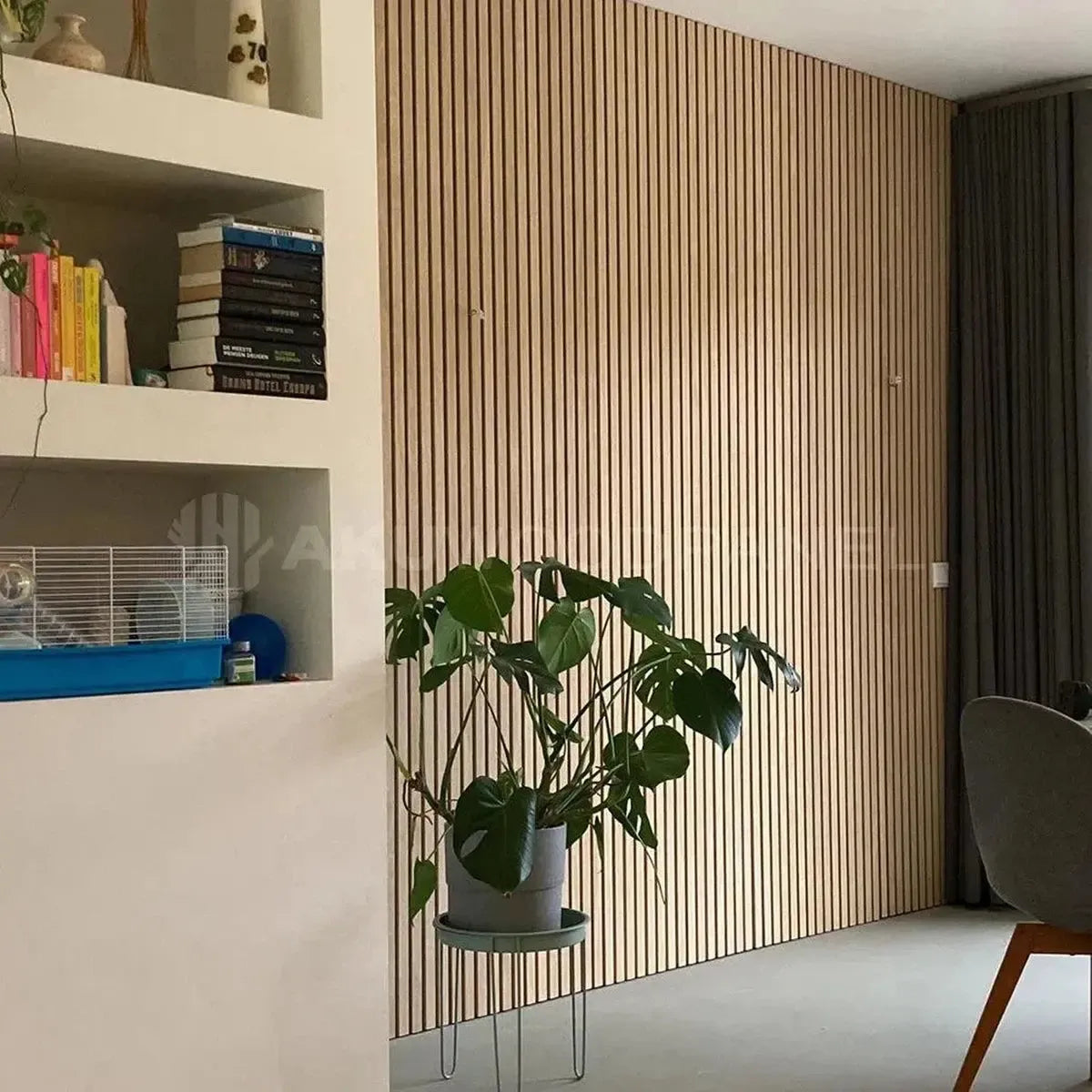
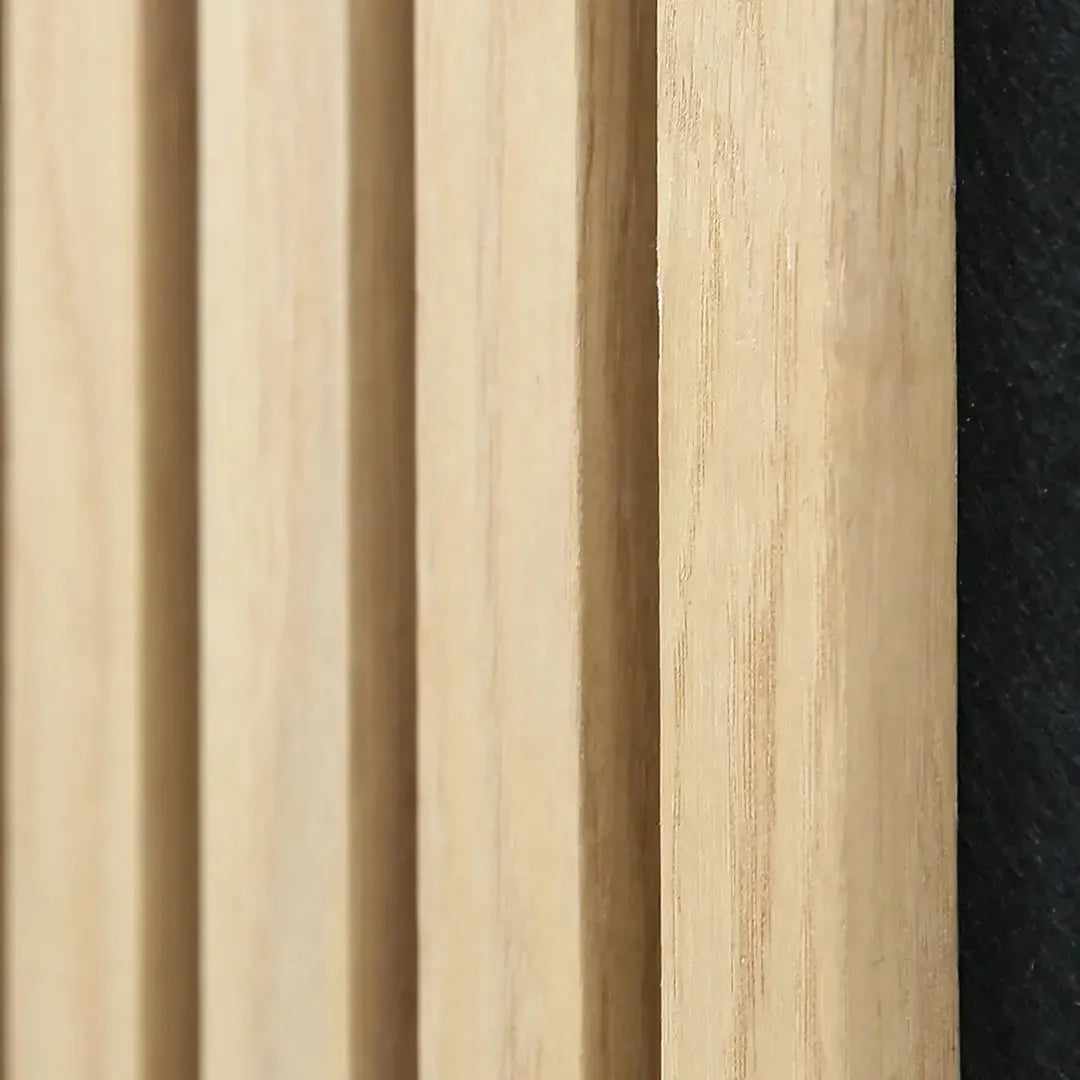
The Natural Oak Acoustic Slat Panel runs $169.95 and uses a 3-sided real wood veneer that reads as neutral honey-oak, close enough to pine, maple, and light oak antiques to blend without looking sterile next to darker pieces. It's the panel to default to on a main display wall when the inventory mix changes month to month. Buy for showrooms without one dominant wood tone.
The Statement Pick: Walnut Acoustic Slat Panel
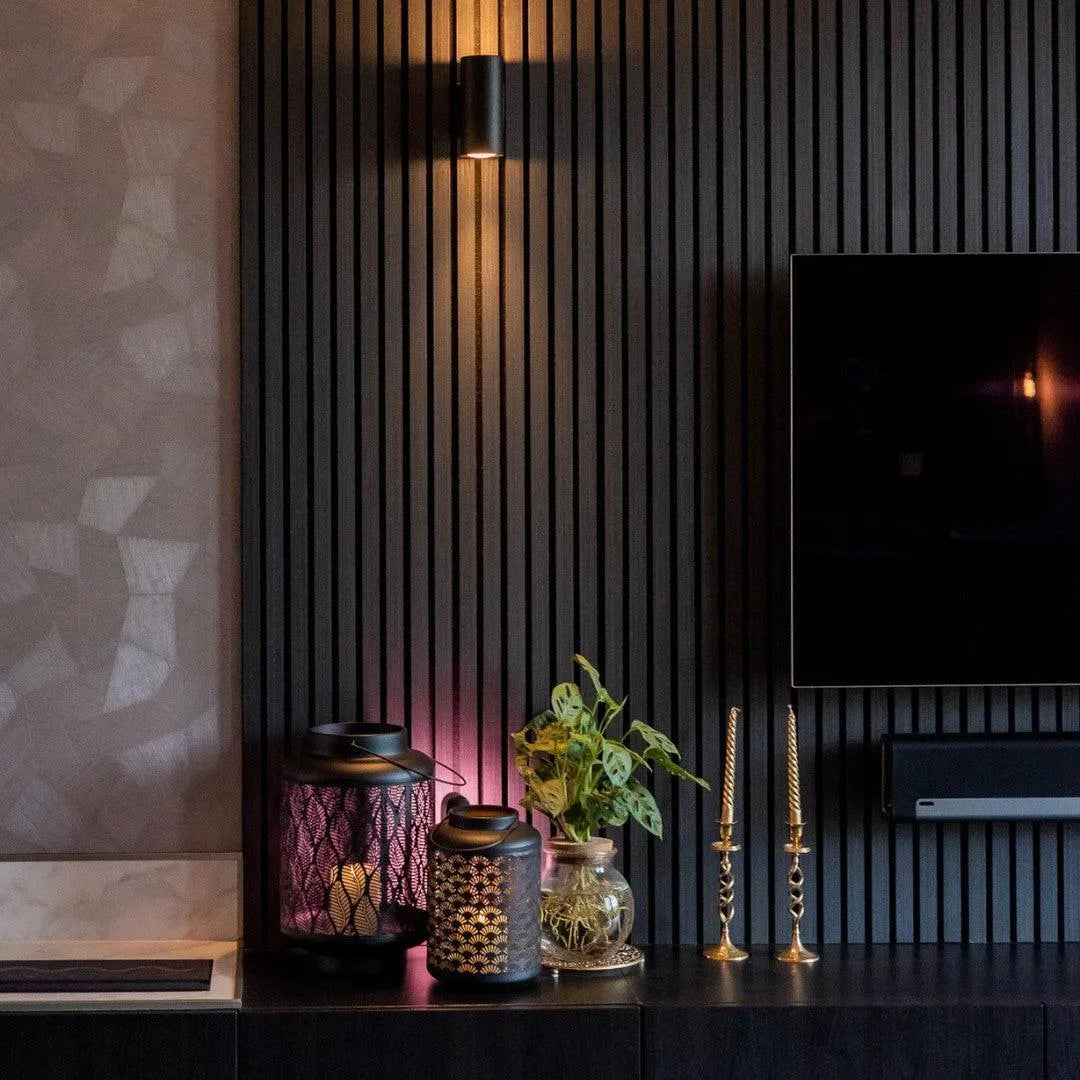
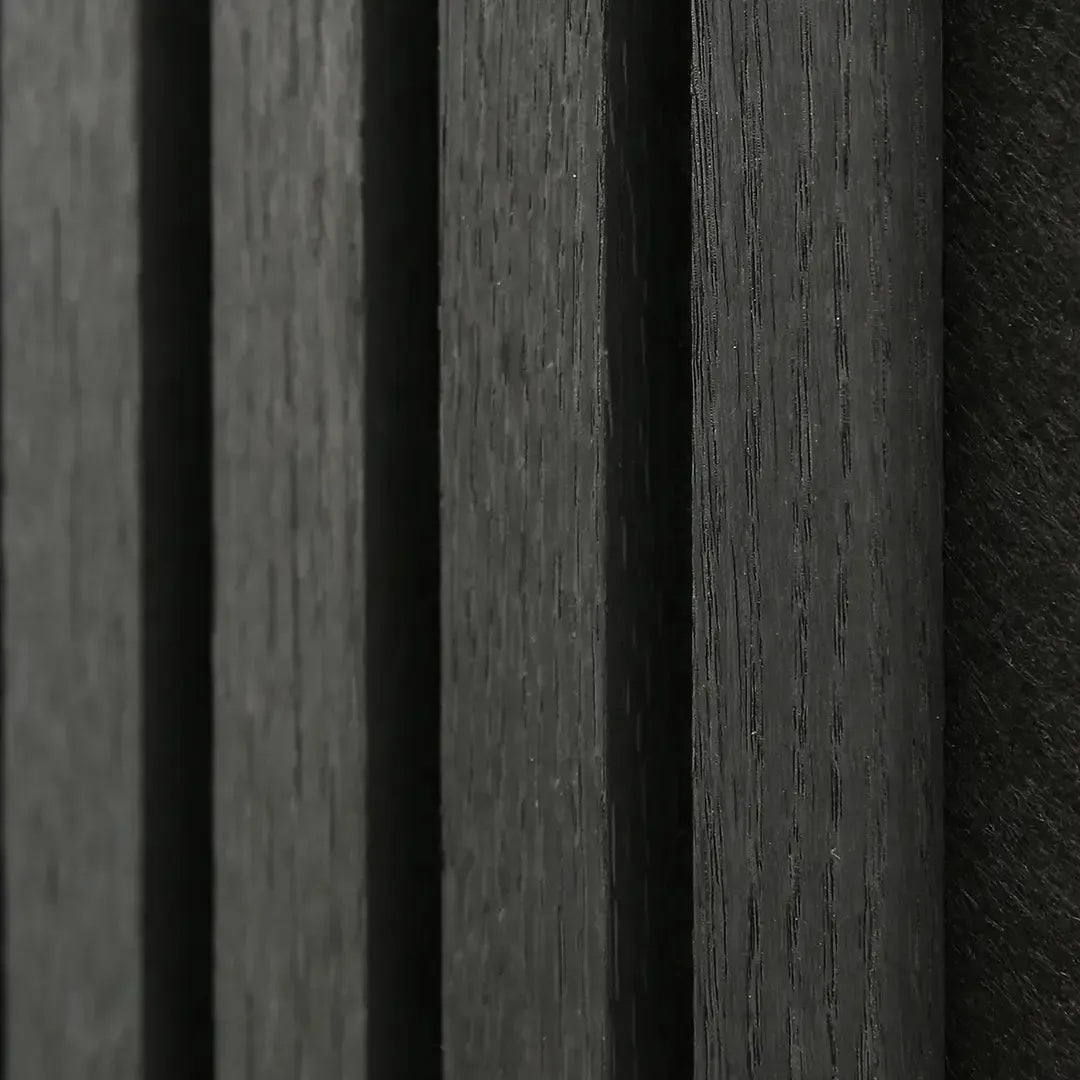
The walnut acoustic slat panel costs $182.95 and carries a deep brown grain that matches mahogany, rosewood, and dark Victorian furniture instead of clashing with it. It reads as considered rather than corporate, and it photographs well for online listings too. Buy if the floor leans heavily toward dark-wood antiques.
The Acoustic Workhorse: Hexagon Panel, Walnut with Gray Felt
The walnut hexagon acoustic panel with gray felt carries an NRC of 0.75, the highest stated sound absorption in this lineup, and ships four 32-inch panels per box at $165.95. It's the pick for the loudest room in the building, a two-story showroom with concrete floors and a cash wrap that echoes every conversation. Buy for the noisiest wall in the showroom, not necessarily every wall.
The Reclaimed-Wood Look: Rustic Oak, Premium 3-Sided Wood Veneer
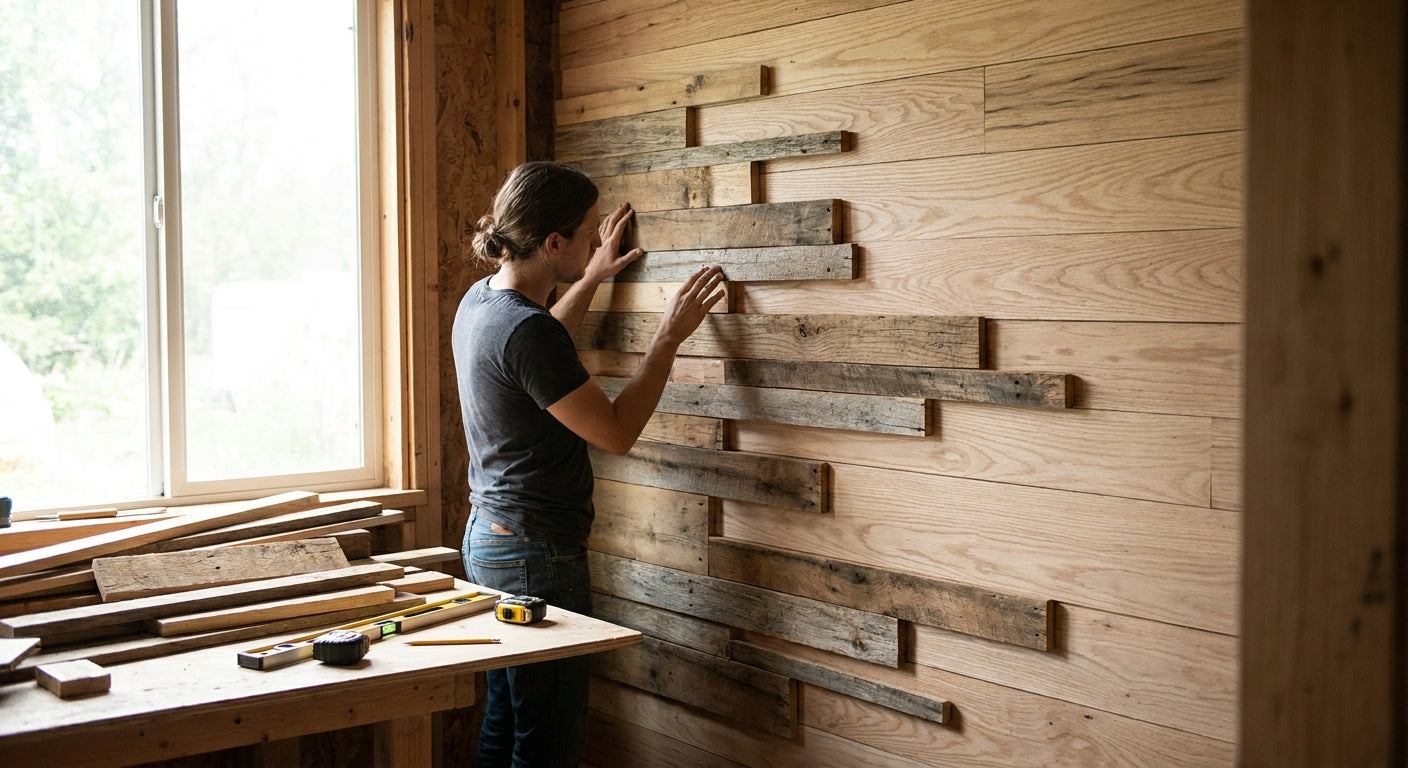
The rustic oak wood veneer panel at $169.95 carries more visible grain variation and knotting than the standard natural oak option, which suits farmhouse-style or barn-conversion showrooms better than a polished antique gallery. It's a good match if the inventory itself leans rustic: primitive pine, painted farm tables, salvage pieces. Consider it for barn-style or country-antique showrooms; skip it if the floor is mostly refined Georgian or Federal-period pieces, where a busier grain competes with delicate inlay work.


What to Avoid
Glossy laminate slat panels that mimic wood grain. They photograph flat under gallery lighting, and customers who deal in real wood furniture notice the difference in five seconds.
Busy 3D geometric or brick-look tiles on primary display walls. These are built for accent nooks and backsplashes, not for backing up a wall of antique chairs.
Unrated foam-core acoustic panels sold as "wood look." They control noise, but the veneer is printed rather than real, and it shows the first time a customer runs a hand along the wall near a $2,000 armoire.
Verdict Comparison
| Panel | Tone | Price | Best For | Verdict |
|---|---|---|---|---|
| Natural Oak Acoustic Slat | Neutral honey oak | $169.95 | Mixed-era inventory | Buy |
| Walnut Acoustic Slat | Deep brown | $182.95 | Dark-wood antiques | Buy |
| Hexagon Walnut with Gray Felt | Walnut, felt-backed | $165.95 | Loudest wall, NRC 0.75 | Buy |
| Rustic Oak, 3-Sided Veneer | Textured, knotted | $169.95 | Barn or farmhouse showrooms | Consider |
AKU Woodpanel's slat and hexagon lines cover the range most furniture showrooms need in 2026: neutral for mixed floors, deep for dark-wood specialists, felt-backed where the echo is worst.
FAQ
What are the best wood panels for a furniture showroom?
Natural Oak and Walnut acoustic slat panels are the best wood panels for a furniture showroom because their real wood veneer tone works with mixed antique inventory rather than against it. Felt-backed hexagon panels add echo control on top of that for loud, hard-floor rooms.
Is real wood veneer better than laminate for a showroom wall?
Yes, real wood veneer holds up better against daily furniture handling and doesn't chip white at bumped edges the way painted laminate or MDF does. It also reads as authentic next to genuine antique wood, which laminate rarely does under gallery lighting.
How much do acoustic wood slat panels cost in 2026?
Acoustic slat and hexagon panels in this lineup run $165.95 to $182.95 depending on finish and format. Rustic and standard oak finishes sit at the lower end, walnut at the upper end.
Do wood slat panels actually reduce echo in a showroom?
Felt-backed panels do, because the felt layer behind the slats absorbs sound instead of reflecting it. The walnut hexagon panel with gray felt in this lineup carries an NRC of 0.75, meaningfully higher than an unrated decorative slat.
Should every wall in a furniture showroom get acoustic panels?
No. Panel the loudest wall first, usually the one facing the largest expanse of hard flooring, before covering the whole room. One well-placed acoustic wall often fixes most of the echo complaint.
What wood tone works best against dark antique furniture?
Walnut panels work best against mahogany, rosewood, and dark Victorian pieces because the deep brown grain sits close in value instead of clashing. Natural oak works better when the floor mixes light and dark wood tones.
Are rustic oak panels a good match for a polished antique gallery?
Not usually. Rustic oak's heavier grain and knotting suit farmhouse or barn-conversion showrooms better than a refined Georgian or Federal-period gallery, where a cleaner natural oak or walnut panel fits the furniture's formality.
One Last Thing
Most showroom owners panel one wall, usually behind the register, and wonder why the echo barely changes. Sound bounces off the wall directly across from the largest hard-floor expanse just as much as it bounces off the wall people are looking at. Panel that opposite wall instead, or in addition, and the drop in echo is noticeably bigger for the same square footage of wood panels for a furniture showroom.

 Better performance and aesthetic appeal
 In Stock