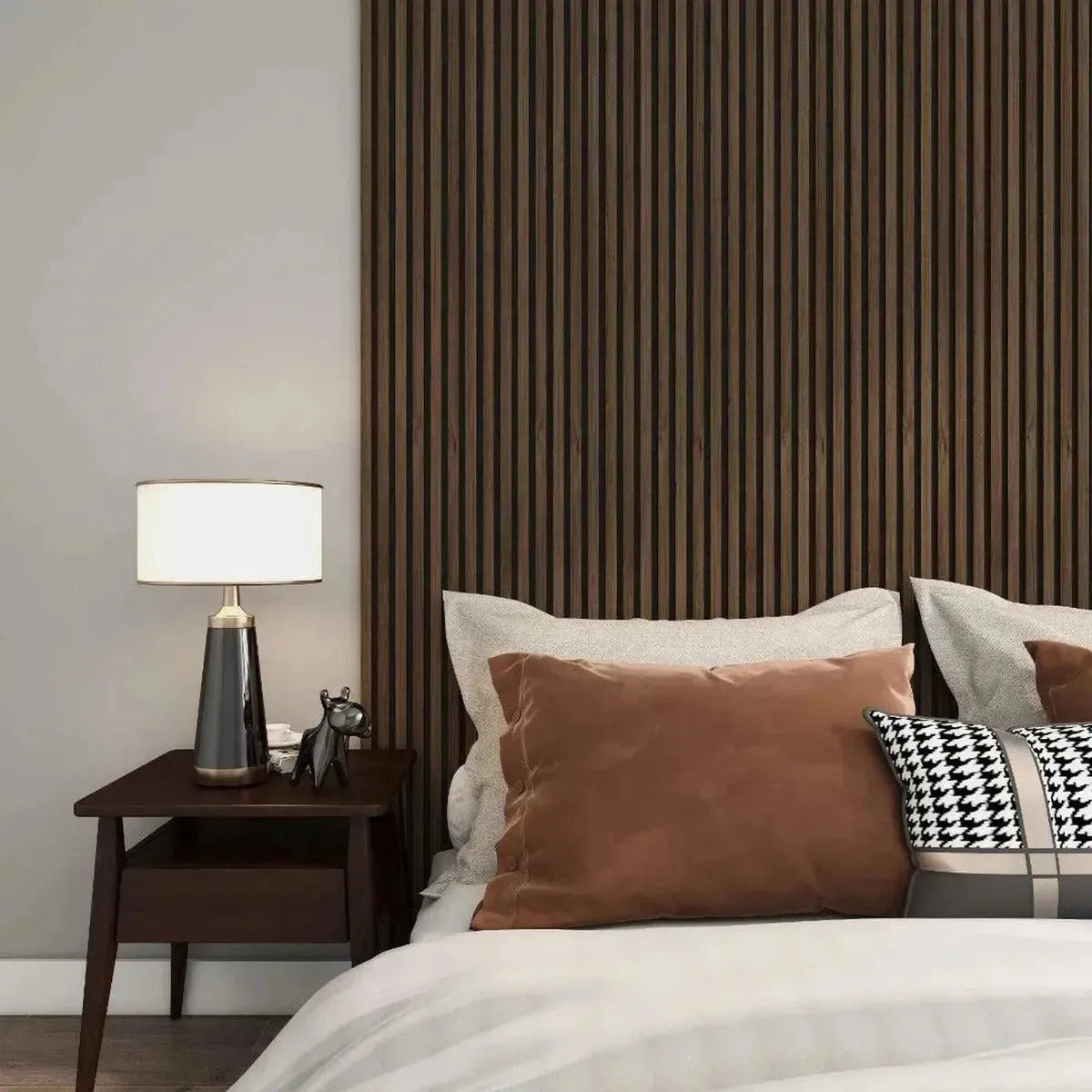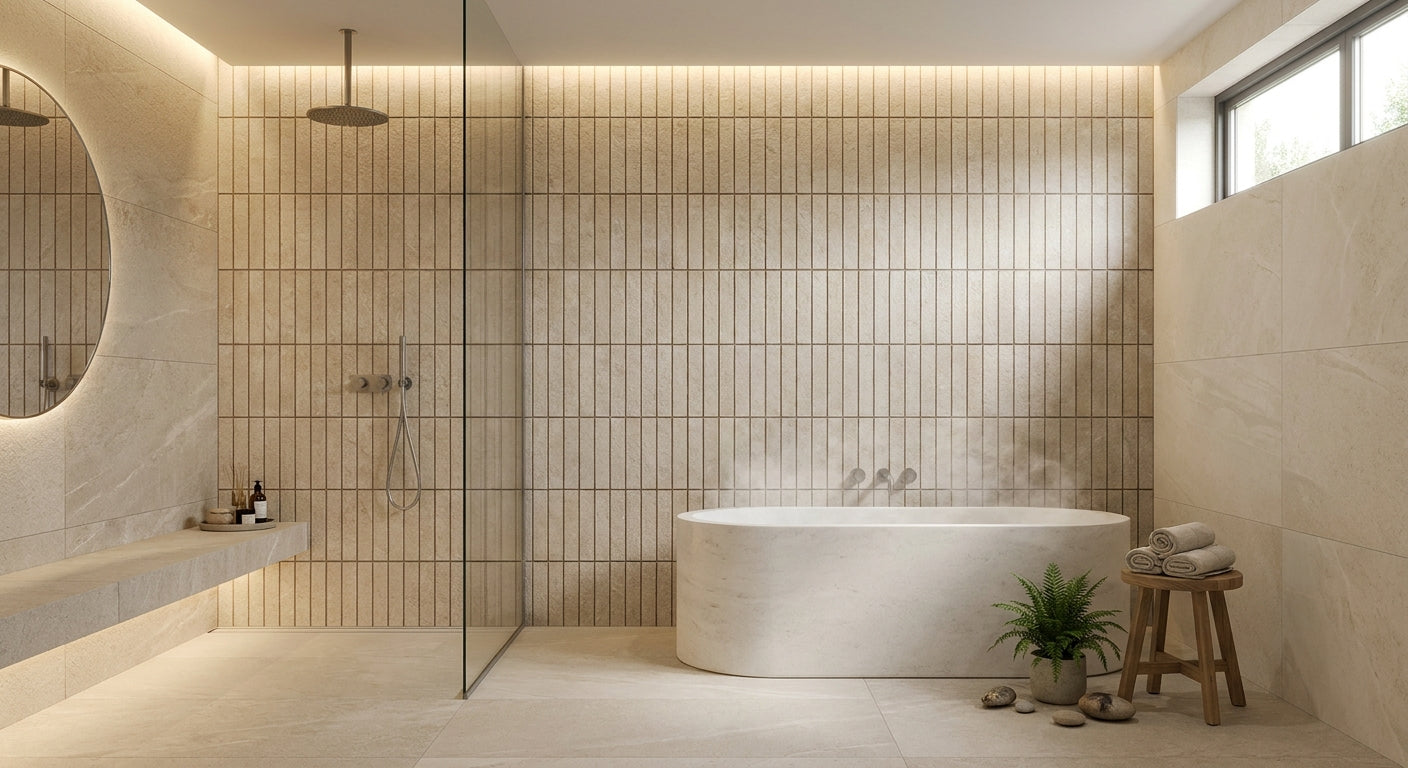
Spa-style wet rooms echo like tile showers because tile, glass, and stone reflect sound instead of absorbing it — tile slat panels solve that while keeping the wet-room look intact.
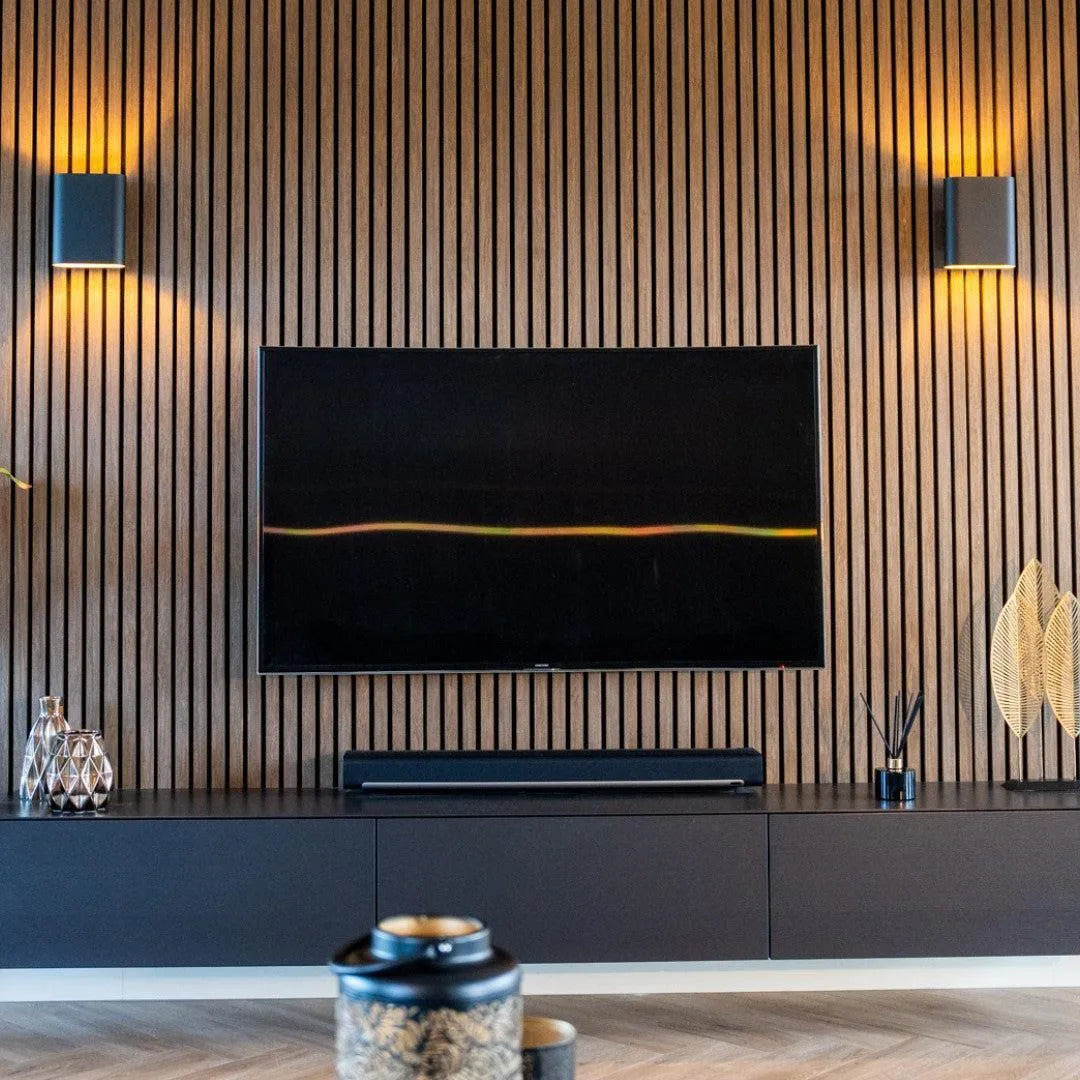
- Tile slat panels spa wet room designs pair real wood veneer with an NRC 0.75 acoustic core — the Tile Acoustic Slat Wall Panel Natural Oak is the safe pick for dry-zone feature walls.
- Hexagon Acoustic Panel Natural Oak with Gray Felt ($165.95, 32 inch) works as a standalone feature wall behind a soaking tub — buy for texture and sound control.
- Keep any veneer slat panel out of direct shower spray in 2026 builds; route standing water zones to sealed tile or exterior-grade cladding instead.
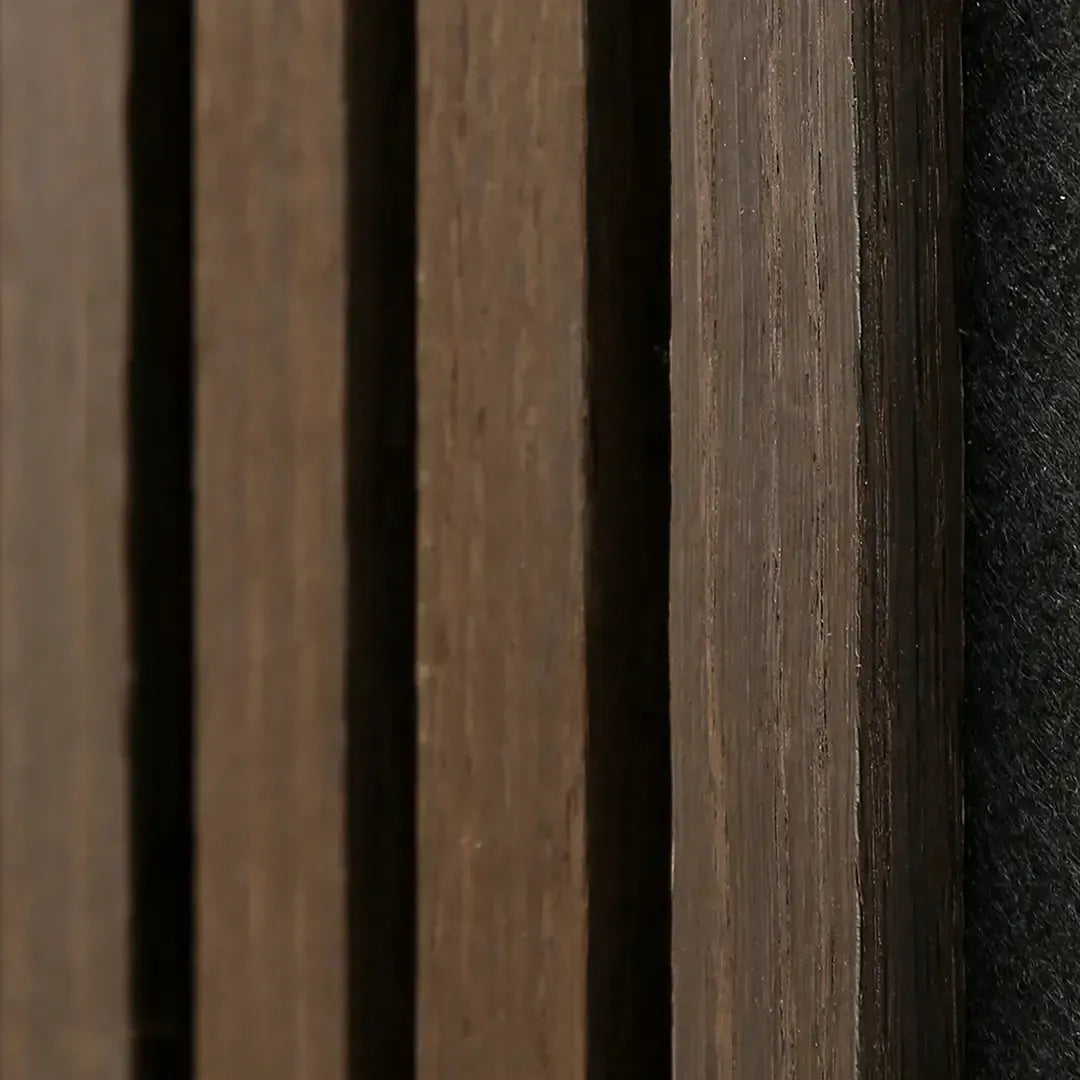
- Full veneer slat boards outperform thin peel-and-stick tile mimics on echo control because the felt backing, not the surface texture, does the acoustic work.
Why this matters
Wet rooms strip out the shower tray and half the soft surfaces a bathroom normally has, so every voice, faucet, and footstep bounces off tile and glass. Homeowners chasing a spa look in 2026 keep hitting the same wall: they want the warmth of wood but assume anything with "acoustic" in the name can't handle humidity.
That's only half true. A tile acoustic slat wall panel in natural oak is built with a felt-backed acoustic core under a real wood veneer face — it's rated for interior use and handles ambient bathroom humidity fine, but it's not a shower-pan substitute. The distinction that matters for a wet room feature wall is where the water lands, not whether the room is generally damp.
Who this is for
This guide is for homeowners and designers finishing a wet room, spa bathroom, or home sauna anteroom who want a wood feature wall that also kills echo — not for anyone tiling the direct spray zone of an open shower. If your contractor is asking "can we panel the wall behind the tub instead of just tiling it," you're the right reader.
What to look for in tile slat panels for a spa wet room
Acoustic rating (NRC), not just looks
The hexagon and slat panel lines in this catalog carry an NRC value of 0.75, which is the number that actually reduces the ringing echo you get off tile and glass in a wet room. A panel with no published NRC is decorative only — fine for a dry hallway, wrong for a room built entirely of hard surfaces.
Real wood veneer over printed laminate
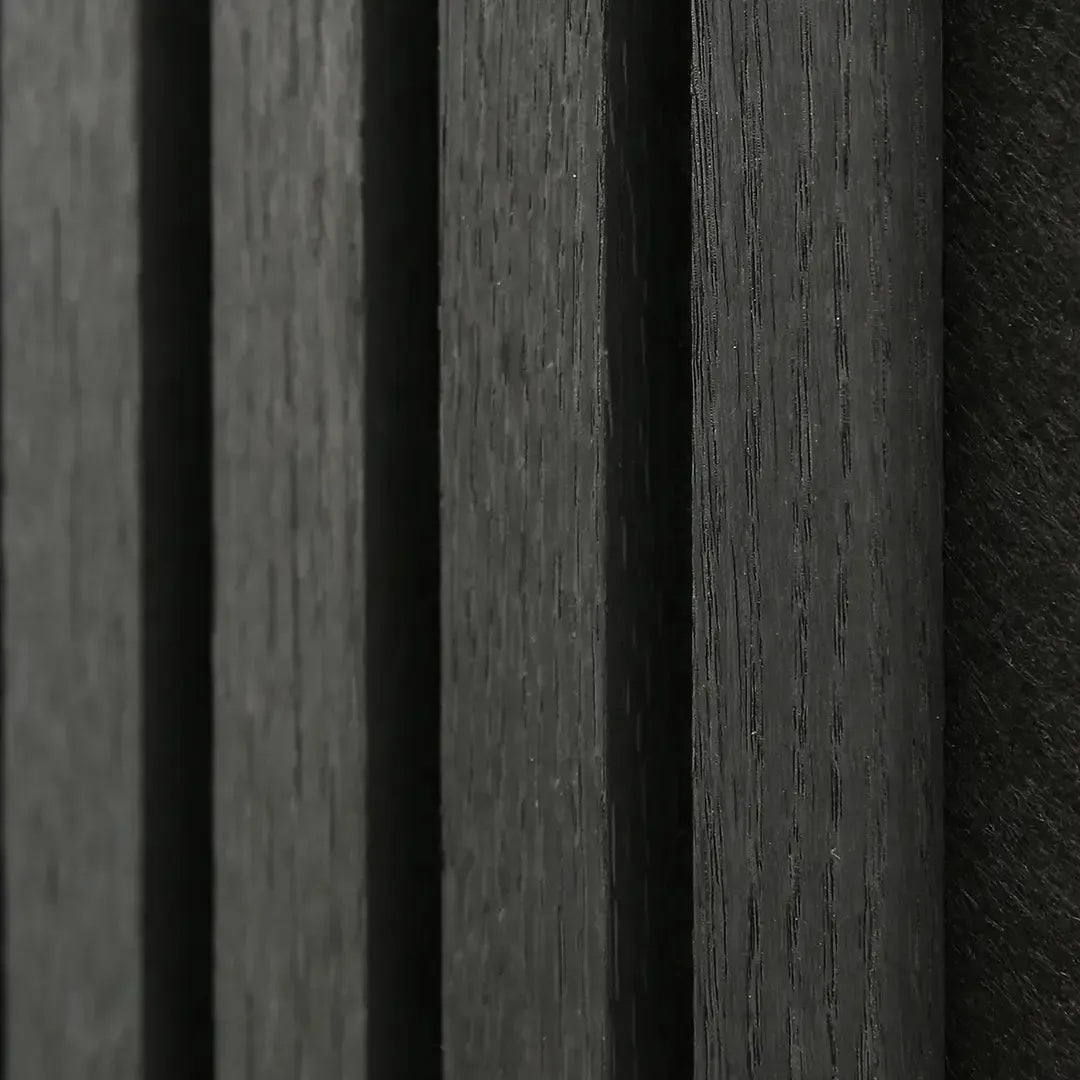
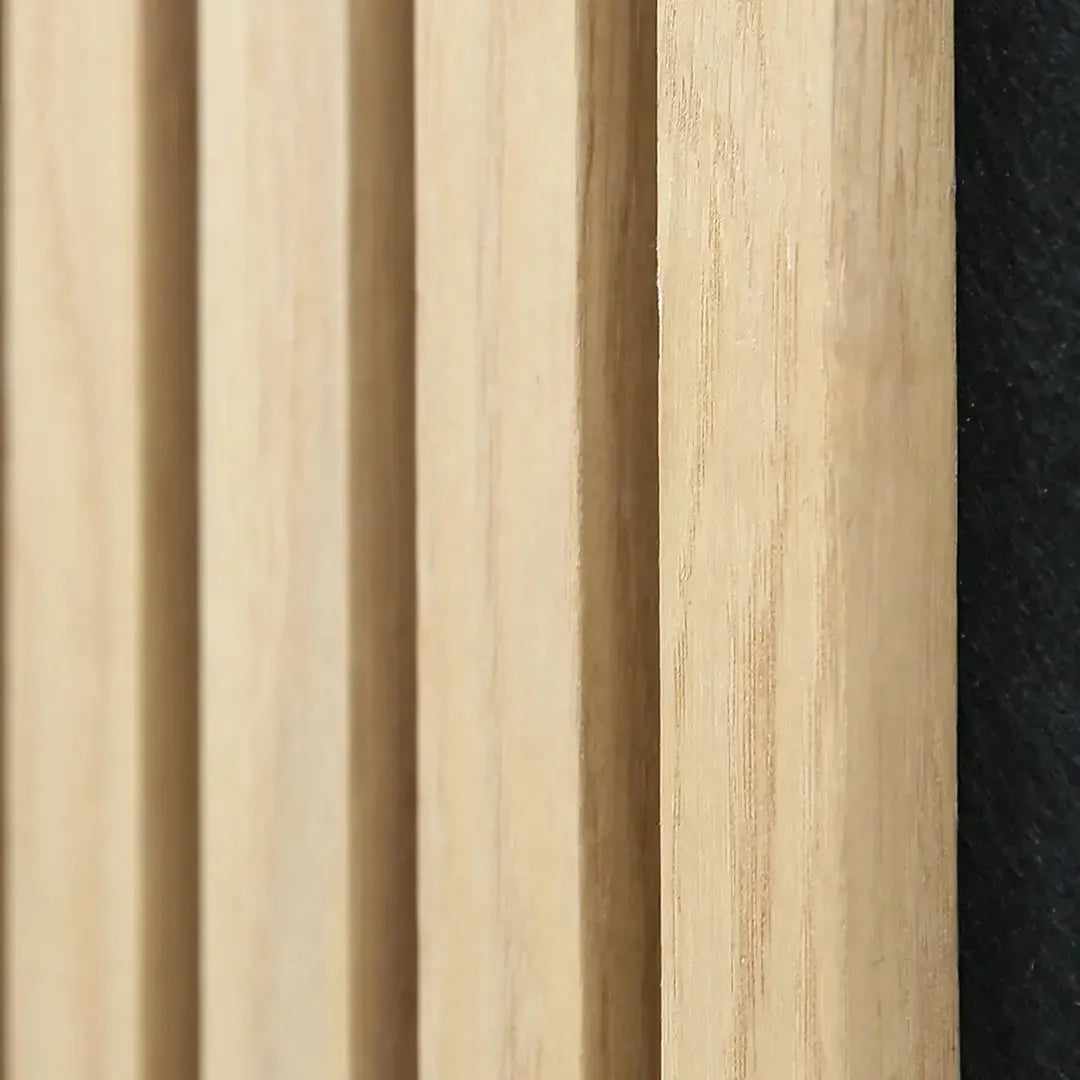
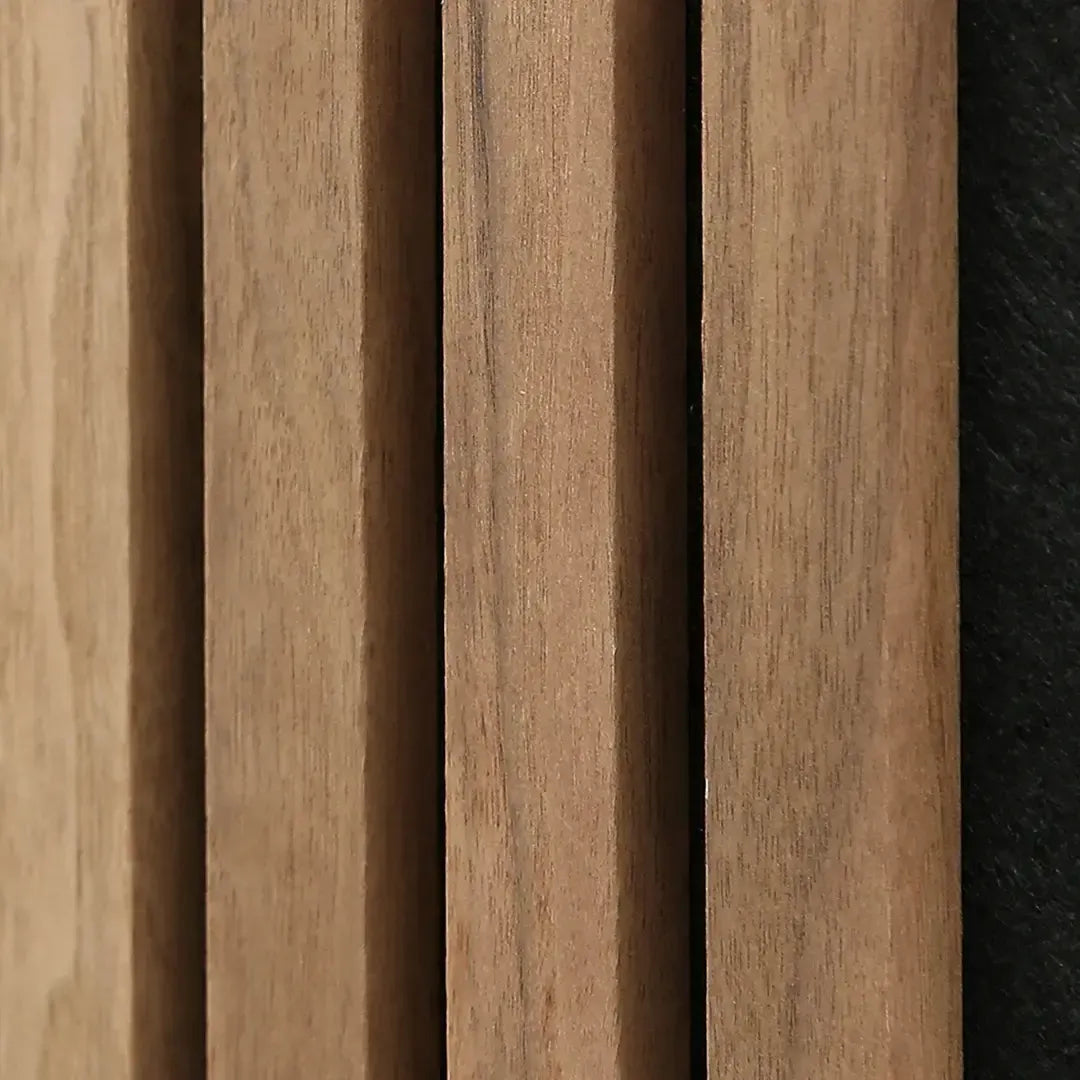
Wet rooms run higher ambient humidity than a standard bath, so a printed laminate face will show swelling and peeling faster than a genuine 3-sided wood veneer. Products built on a 3-sided veneer construction hold their finish longer under repeated humidity cycles than single-face laminate boards.
Panel format: tile vs full slat
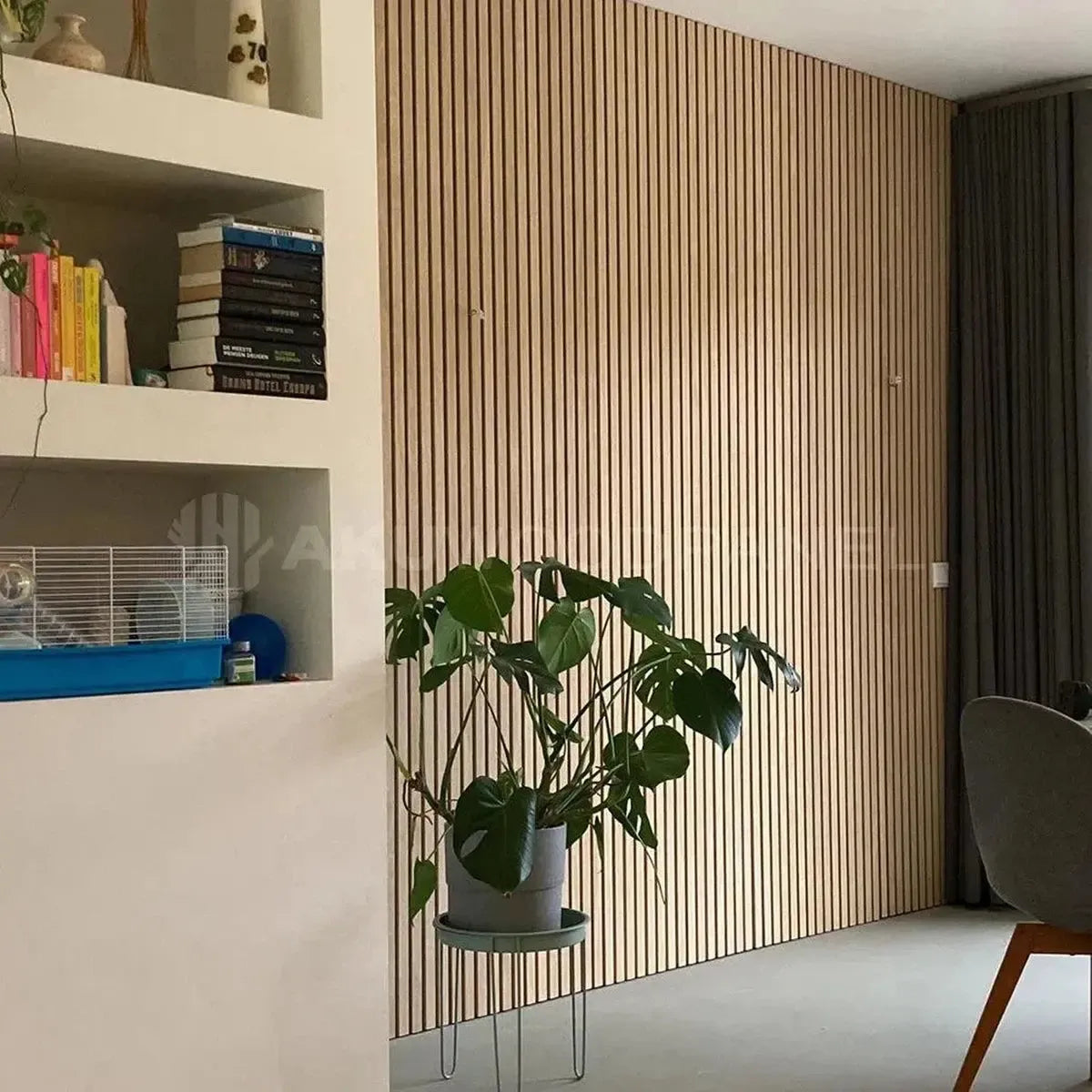
Tile-format acoustic panels are modular squares that let you wrap a vanity return wall or a column without ripping full-length slats — full slat boards look better on a single flat feature wall but are harder to fit around fixtures. Pick tile format when your wet room wall has a window, niche, or corner; pick full slat when it's one clean run.
Finish tolerance for high-humidity rooms
Not every finish in a wood panel lineup is meant for a steam-heavy room — check the high-humidity room finishes guide before locking in a color, because darker smoked and black oak finishes show water spotting differently than natural oak.
Panel count and box size
Hexagon acoustic panels ship four to a box at 32 inches, so a modest 8-foot feature wall behind a soaking tub typically needs two to three boxes depending on layout — order one extra box for cut waste around plumbing.
Top picks for a spa wet room feature wall
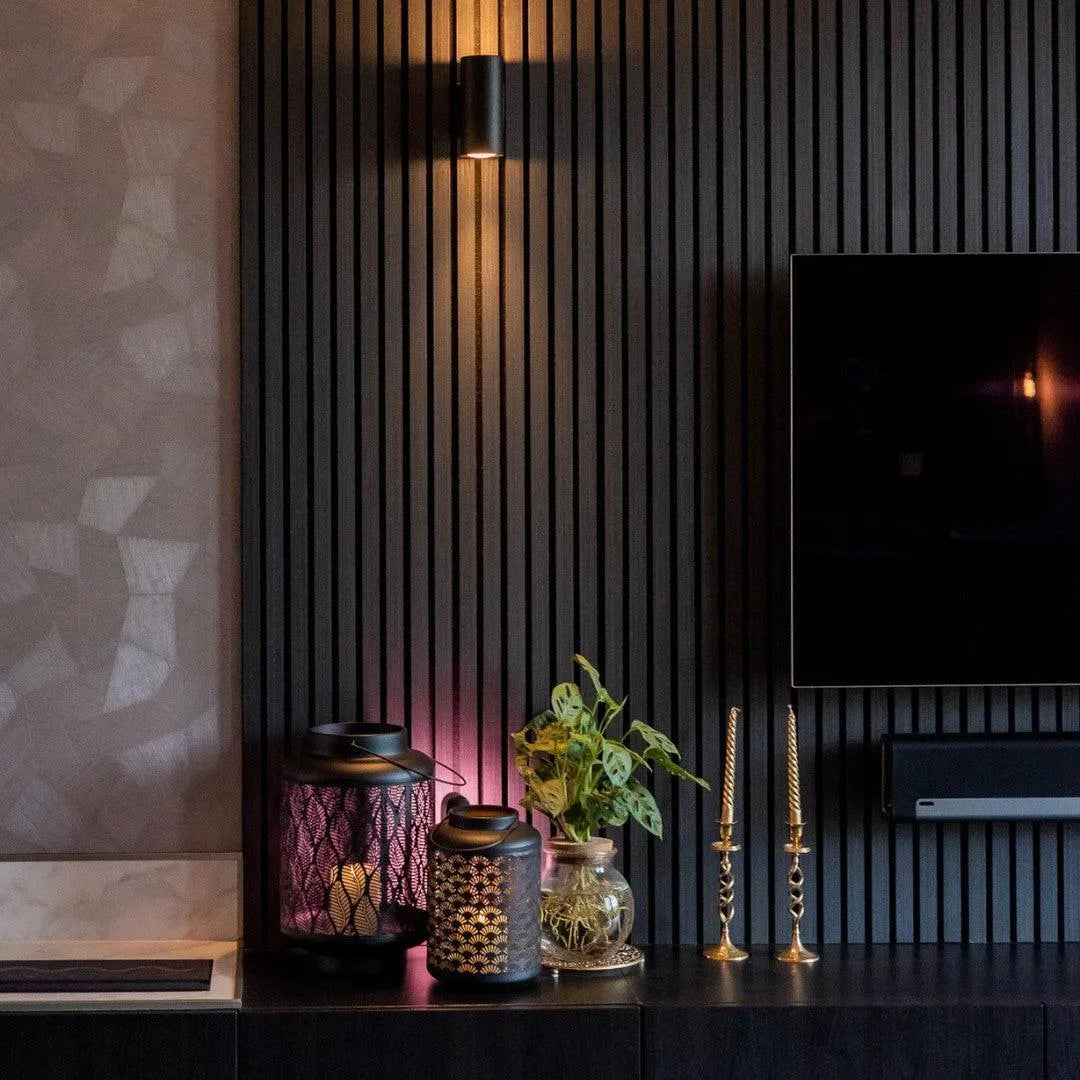
Tile Acoustic Slat Wall Panel, Natural Oak — the safe pick. Real wood veneer over an NRC 0.75 acoustic core, sized for modular tile-style install around fixtures. It handles the ambient humidity of a wet room's dry zones without the swelling risk of laminate. Buy for the wall behind a vanity or the entry wall away from direct spray.
Hexagon Acoustic Panel, Natural Oak with Gray Felt — the texture pick. Four panels per box at 32 inches, $165.95, with the same NRC 0.75 rating in a honeycomb layout instead of straight slats. The gray felt backing shows through the joints for a two-tone effect that reads more spa-lobby than bathroom. Buy as a standalone accent behind a freestanding tub.
Hexagon Acoustic Panel, Walnut with Gray Felt — the wildcard. Same $165.95 box price and 32-inch format as the oak version, but the darker walnut grain hides water spotting better on a wall that gets incidental splash. It reads heavier and more masculine, which works if the rest of the wet room is already light-toned stone. Consider if your palette can carry a darker wood.
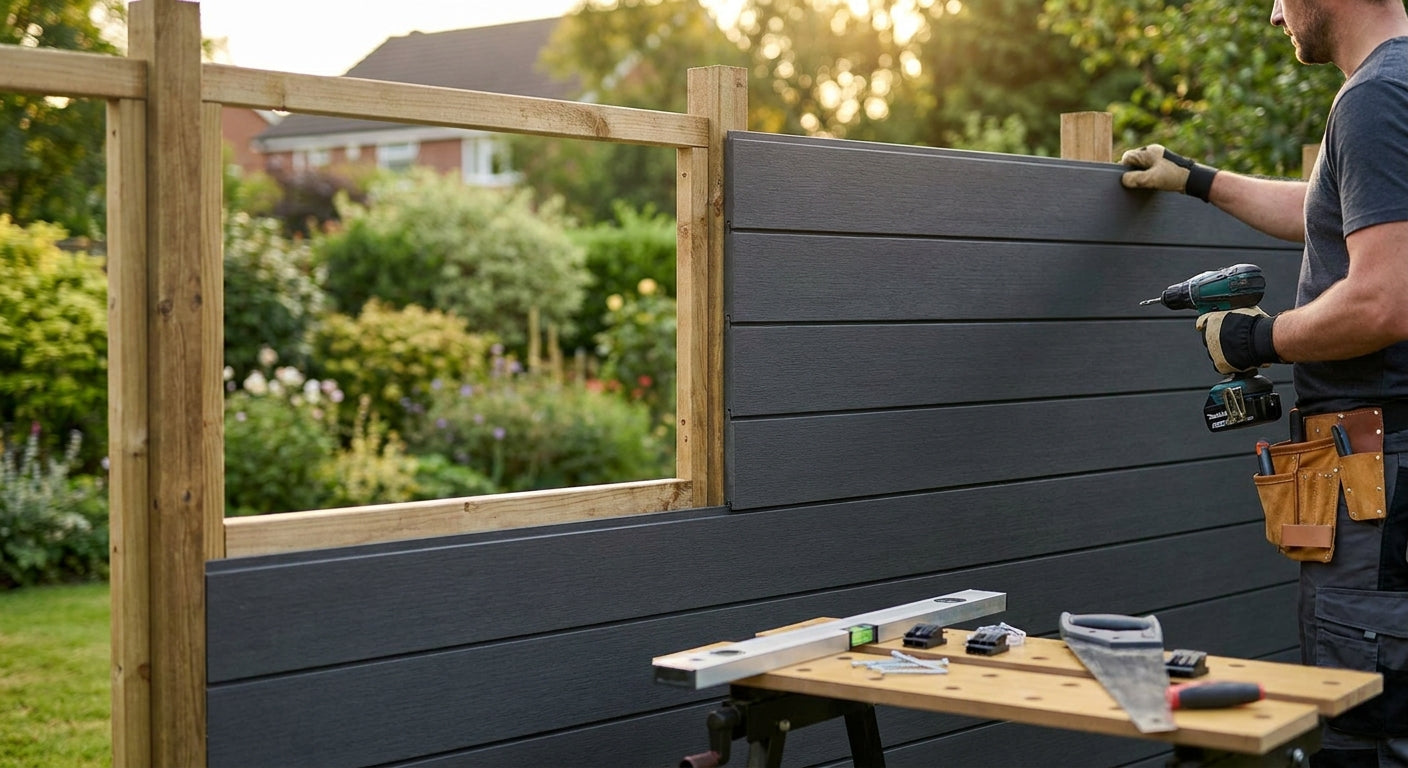
Exterior Wall Panel, Oak — the moisture-tolerant alternative. Rated for over 25 years of maintenance-free outdoor exposure at 94.5 inches per panel, this is the panel to reach for if the wall in question genuinely takes direct water rather than ambient steam — an open-air spa shower or a poolside wet room wall, for instance. It isn't acoustic-rated, so you lose the echo control, but it survives conditions the veneer slat lines aren't built for. Consider for splash-zone walls, skip it for the dry feature wall where you actually want the sound absorption.


What to avoid
Peel-and-stick backsplash tiles on splash-zone walls. They're built for kitchen backsplash duty, not standing water — a wet room's incidental splash exceeds what a peel-and-stick bond is designed to hold up against over years of daily use.
Dark finishes without checking the humidity guide first. Black oak and smoked oak veneers look striking in renders but show water spotting more visibly than natural oak in a room that runs damp for hours after every shower.
Full slat boards on a wall with a niche or window. Cutting a long slat board around a recessed shelf wastes material and leaves visible seams — tile-format panels exist specifically so you don't fight a fixture with a single board.
Verdict comparison
| Panel | NRC rating | Format | Box price | Best wet-room zone | Verdict |
|---|---|---|---|---|---|
| Tile Acoustic Slat Wall Panel, Natural Oak | 0.75 | Modular tile | Varies by box | Vanity wall, entry wall | Buy |
| Hexagon Acoustic Panel, Natural Oak with Gray Felt | 0.75 | Hexagon, 32 in | $165.95 | Tub feature wall | Buy |
| Hexagon Acoustic Panel, Walnut with Gray Felt | 0.75 | Hexagon, 32 in | $165.95 | Darker-palette accent wall | Consider |
| Exterior Wall Panel, Oak | Not rated | Full board, 94.5 in | $126.95 | Direct splash / open-air zone | Consider / Skip for acoustic use |
FAQ
What's the best tile slat panel for a spa wet room?
The Tile Acoustic Slat Wall Panel in Natural Oak is the safest 2026 pick for a spa wet room feature wall because it combines an NRC 0.75 acoustic core with real wood veneer and a modular format that fits around fixtures.
Are wood slat panels safe to install in a wet room?
Wood veneer slat panels handle ambient bathroom humidity fine but aren't built for direct shower spray, so install them on dry-zone feature walls like the vanity wall or entry wall rather than inside the spray path.
Is tile-format paneling better than full slat boards for wet rooms?
Tile format wins when the wall has a window, niche, or corner because the modular squares fit around fixtures without long cut seams; full slat boards look cleaner only on a single flat run.
How much does an acoustic wood wall panel cost in 2026?
Hexagon acoustic panels run $165.95 per box of four 32-inch panels in 2026, while the slat wall panel line runs slightly higher depending on finish.
Can wood veneer panels go near a shower without damage?
They tolerate the steam and ambient moisture of a bathroom but should stay out of direct spray zones; for walls that take standing water, an exterior-grade panel rated for weather exposure is the safer call.
Do hexagon acoustic panels work in high-humidity bathrooms?
Yes, for ambient humidity — the felt-backed NRC 0.75 core is built for interior rooms, but check the finish guide before choosing a dark veneer since spotting shows more on darker wood.
What NRC rating do I need for a spa wet room feature wall?
An NRC of 0.75, the rating on this catalog's hexagon and slat lines, is enough to noticeably cut the ringing echo a hard-surface wet room produces off tile and glass.
How many panel boxes do I need for a wet room feature wall?
An 8-foot feature wall behind a soaking tub typically needs two to three boxes of four 32-inch hexagon panels, plus one extra box to cover cuts around plumbing.
One last thing
The felt backing, not the wood grain, is doing the acoustic work in a tile slat panel — a plain veneer tile with no felt layer will look identical in a photo but do almost nothing for the echo that made you search for acoustic panels in the first place. Check for the felt or acoustic-core spec before you check the finish.
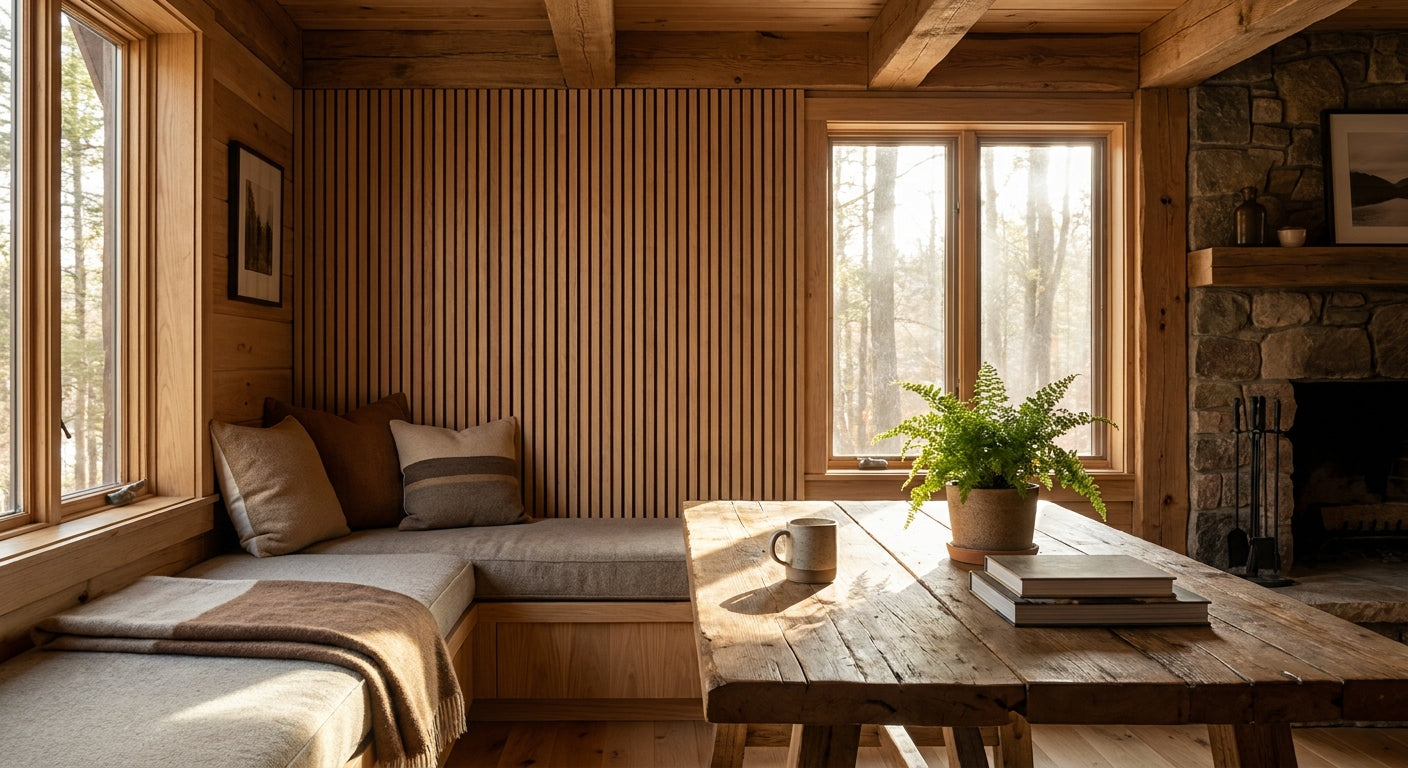

 Better performance and aesthetic appeal
 In Stock