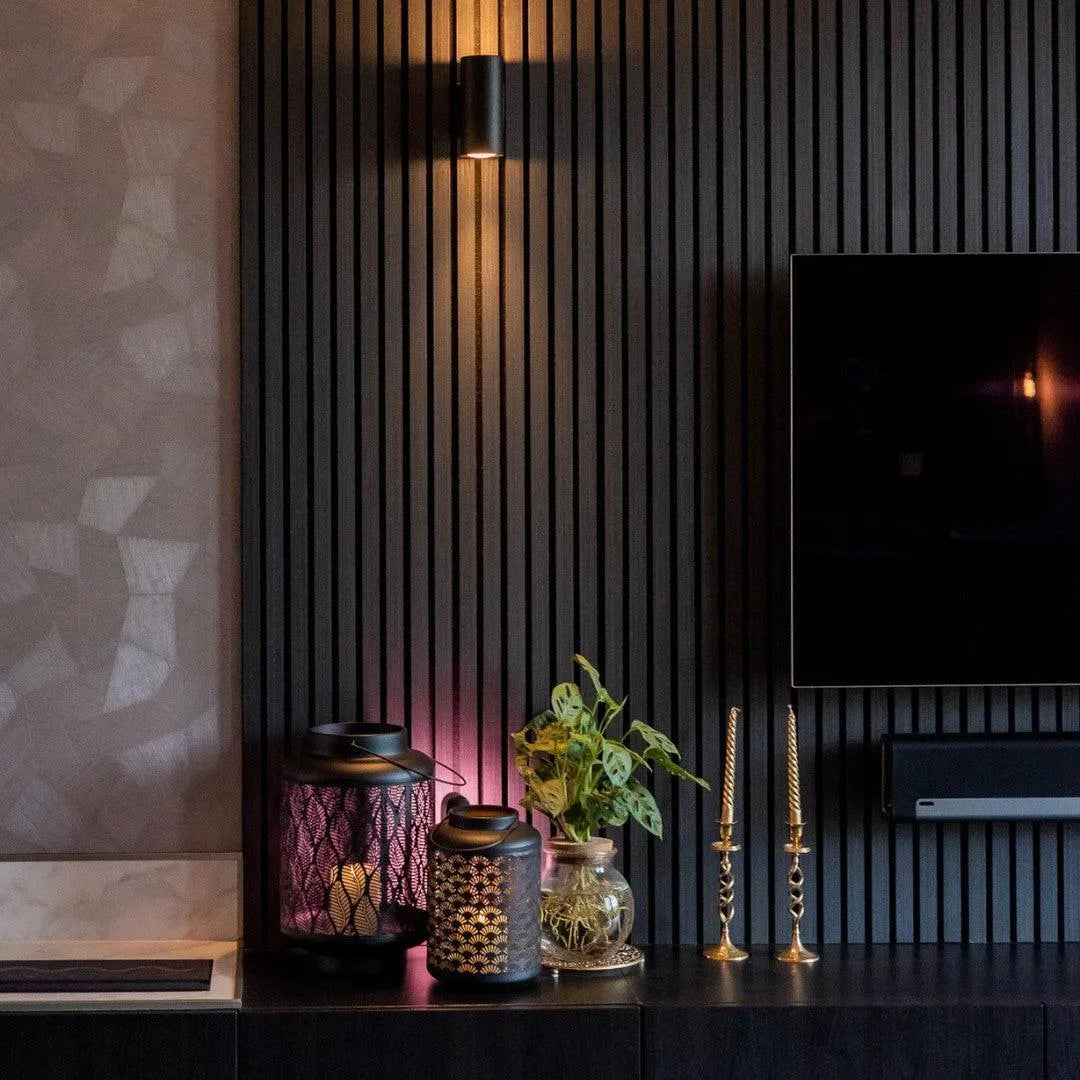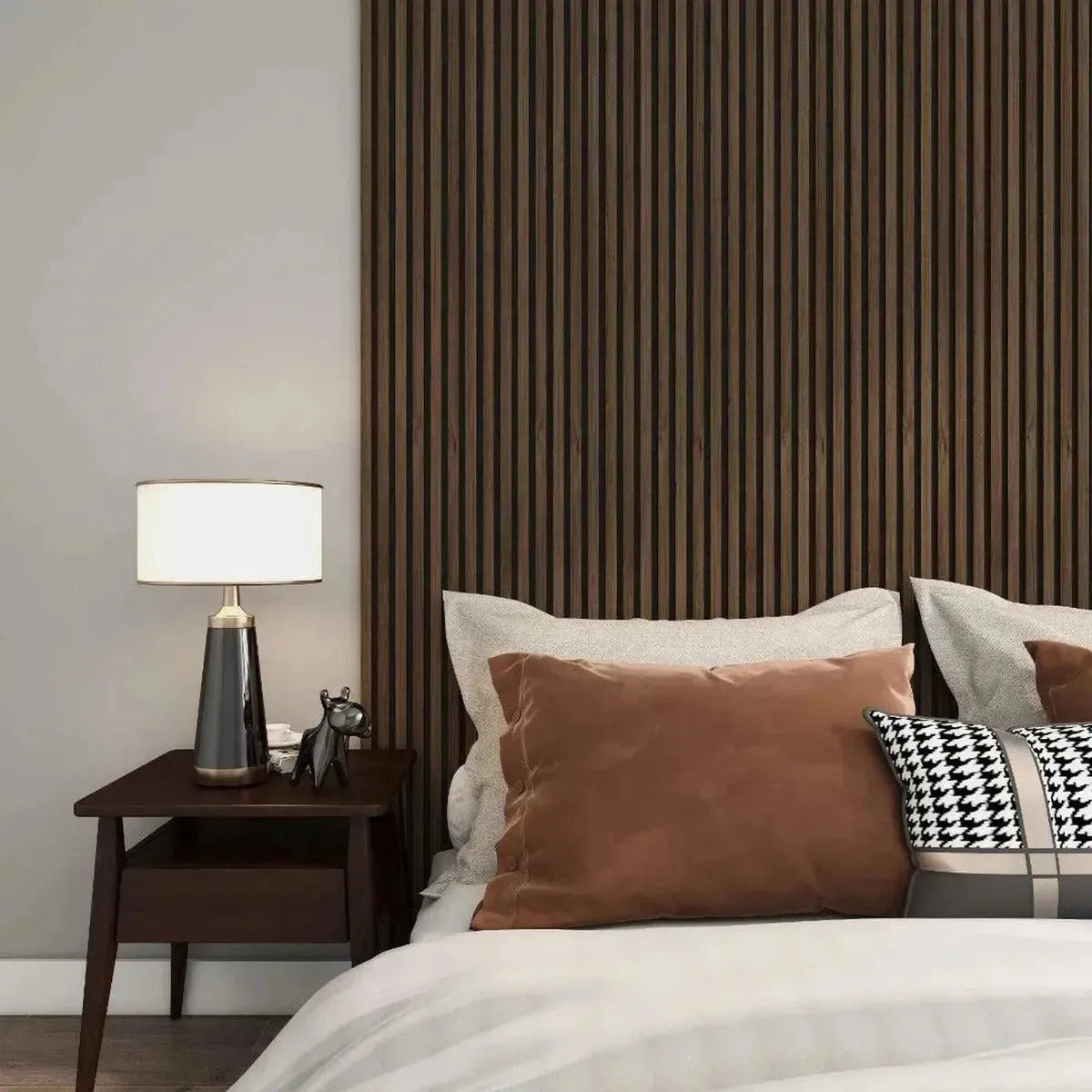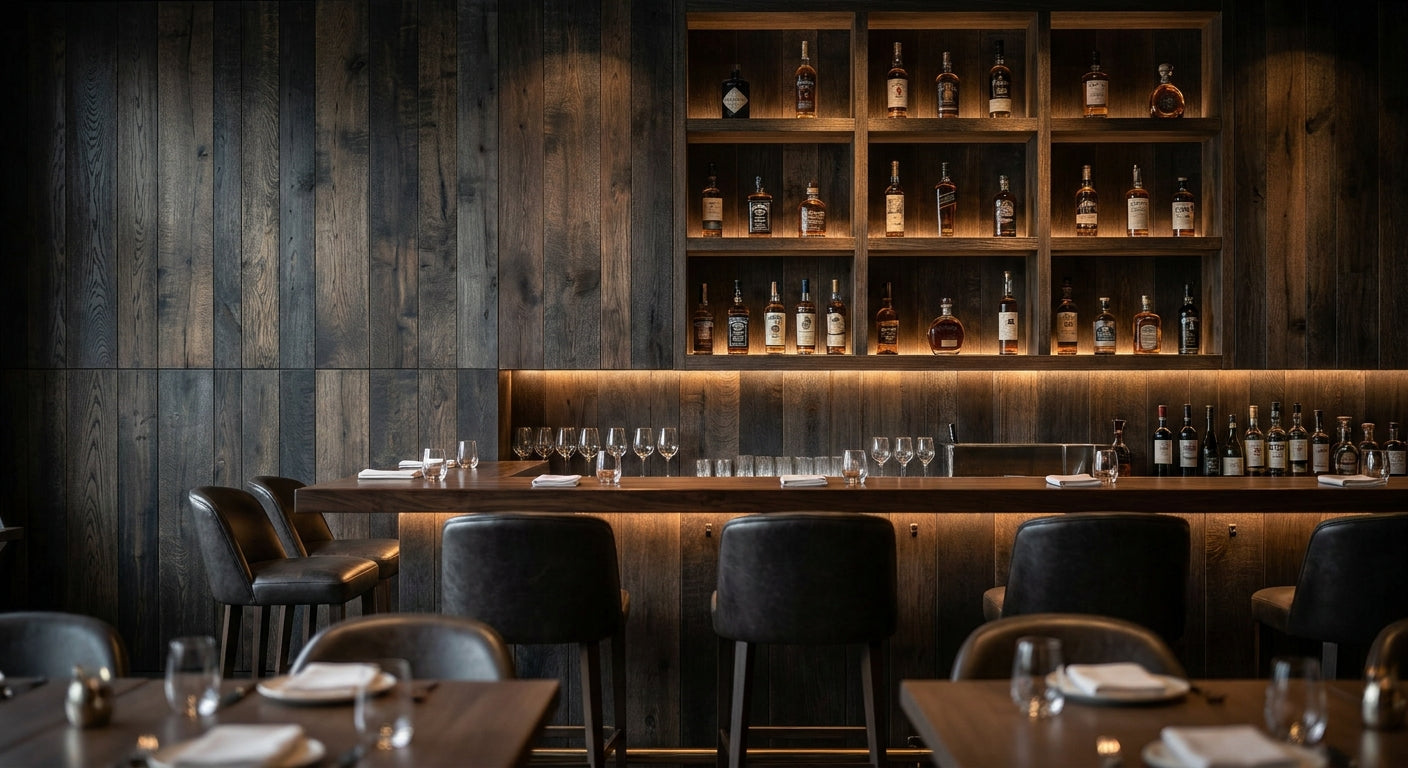
A smoked oak back wall changes how a bar or dining room feels the moment the lights come up, and it quiets the room at the same time — this guide breaks down what to look for in smoked oak panels restaurant back wall installs and which specific panels earn a Buy in 2026.
- AKU Woodpanel's Smoked Oak Acoustic Slat Wall Panel is the safe pick for most bar and restaurant back walls in 2026 — Buy.
- Add the Smoked Oak with Gray Felt version when the room has hard flooring and a high ceiling — it absorbs more without changing the look.
- Use the matching smoked oak end piece to finish exposed corners near a bar top or POS station — raw MDF edges look cheap under pendant lighting.
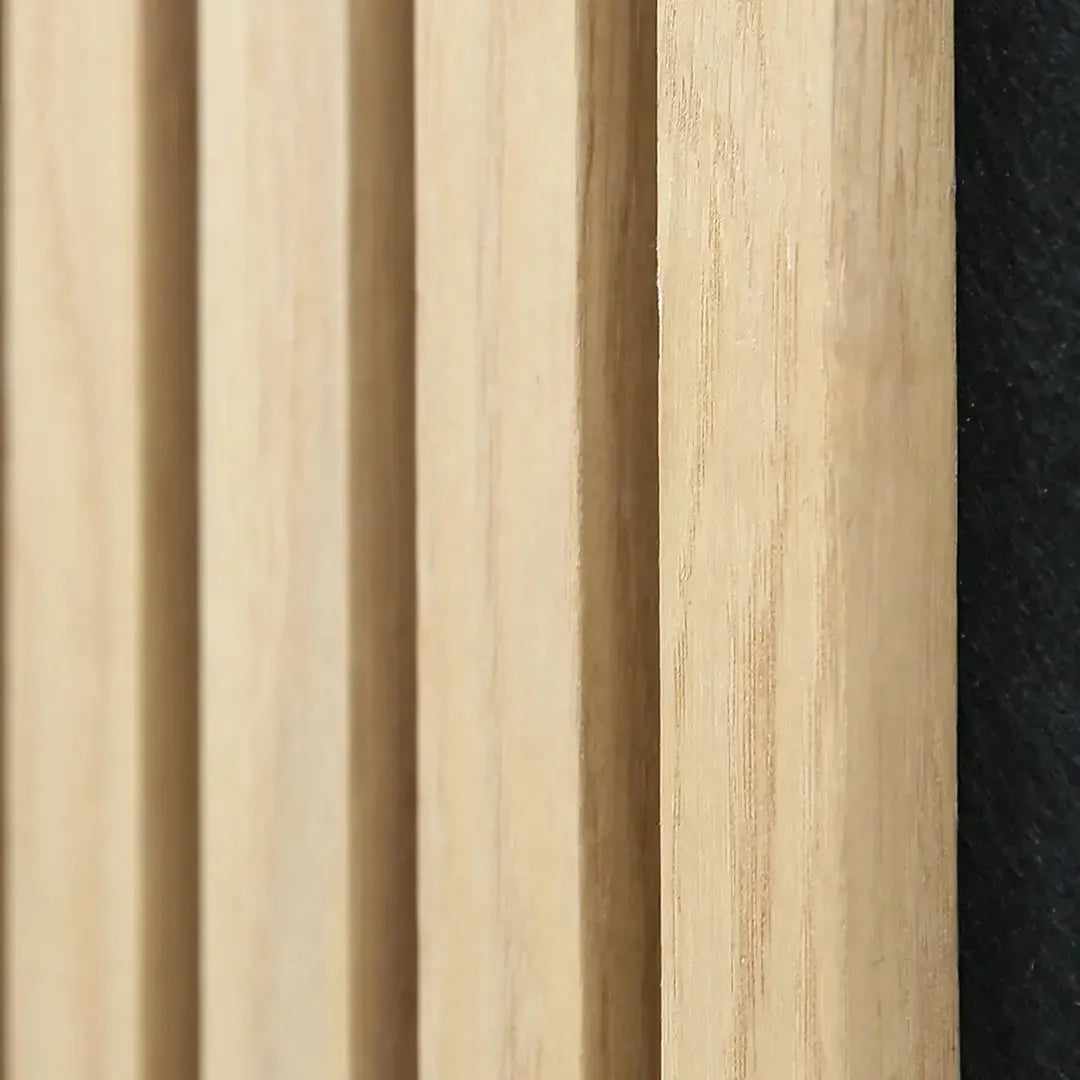
- Order the $10 Full Sample Box before you commit — it includes Smoked Oak, Natural and Walnut so you can check the finish against your actual lighting.
Why this matters
Hard surfaces behind a bar — tile, glass, stainless, mirror — bounce sound instead of absorbing it, which is why guests end up shouting over their own conversation by 8pm on a Friday. A back wall is also the single most photographed surface in most restaurant fit-outs, so it has to do two jobs at once: look intentional and pull noise out of the room.
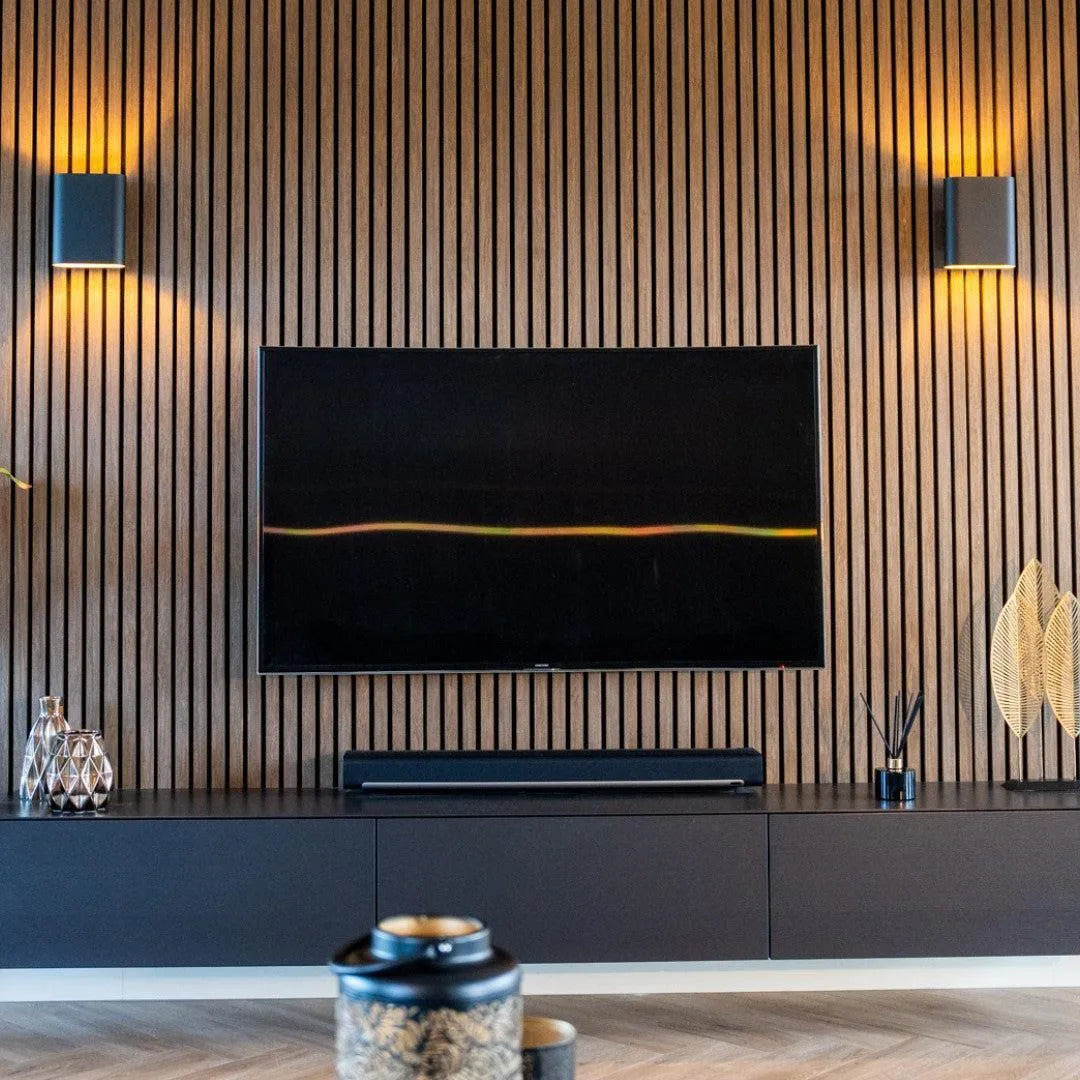
Smoked oak solves both problems at once because the veneer reads as dark and moody without going full black, which keeps a bar warm rather than cold. Behind a bar or open kitchen pass, that combination of aesthetic and acoustic performance is worth more than either one on its own.
Who this is for
This guide is for bar owners, restaurant general managers, hospitality contractors, and interior designers specifying finishes for a commercial fit-out where the back wall sits directly behind the bar, host stand, or open kitchen. If you're speccing a smoked oak acoustic slat wall panel for a space that runs music, dense seating, and hard flooring at the same time, this is written for your exact problem. It's not written for someone doing a single quiet accent wall in a living room — that's a different buying decision with different priorities.
What to look for in smoked oak panels for a restaurant back wall
Veneer authenticity and finish consistency
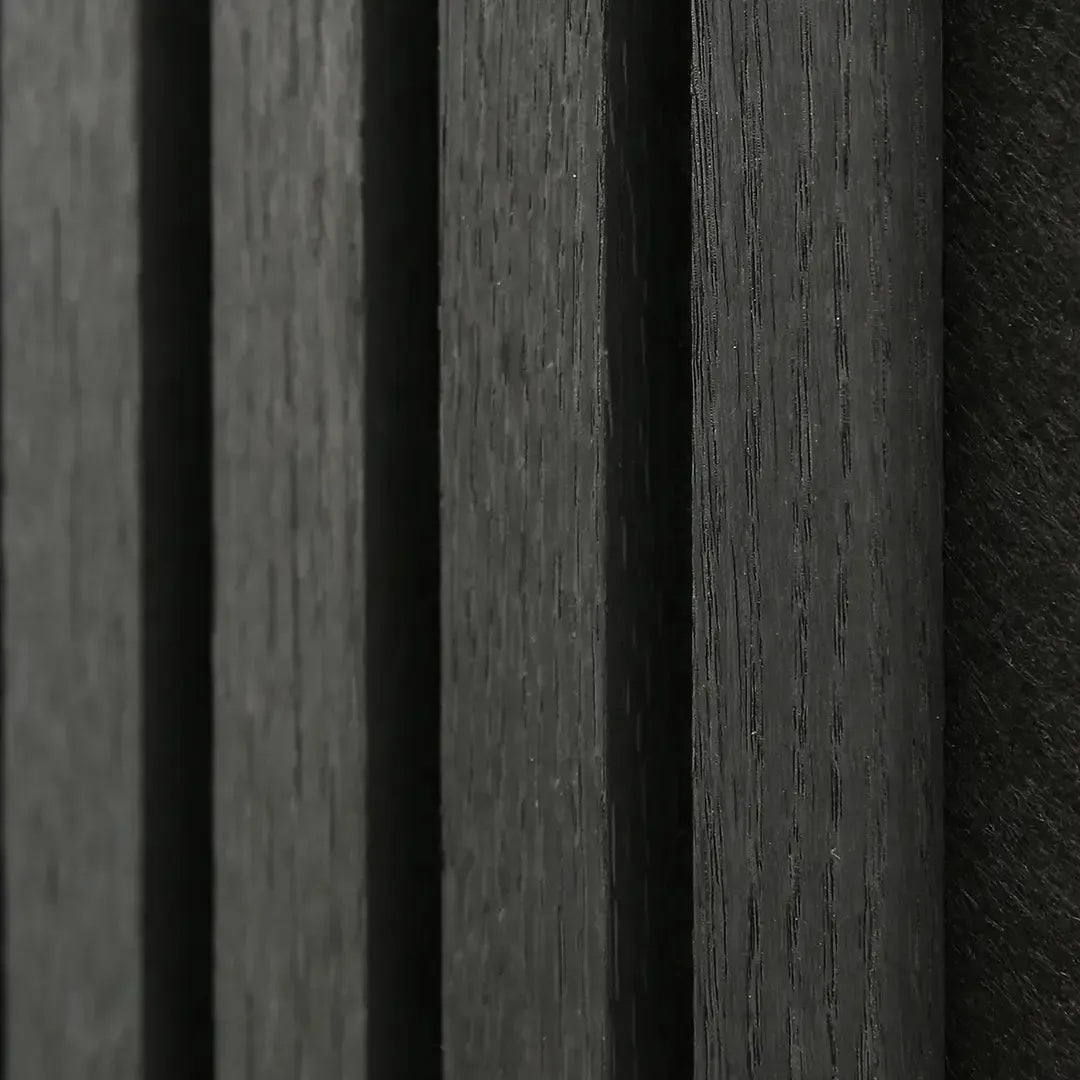
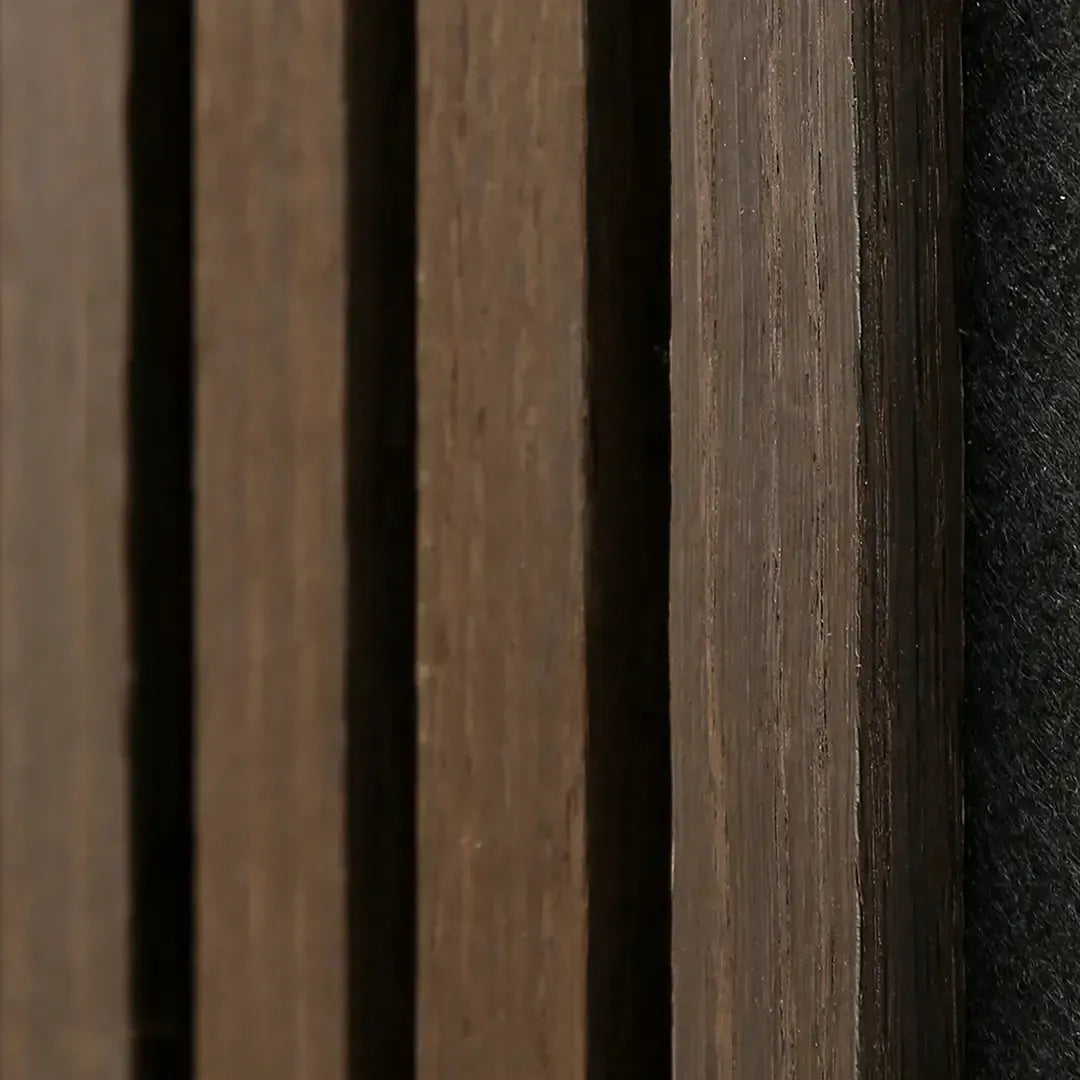
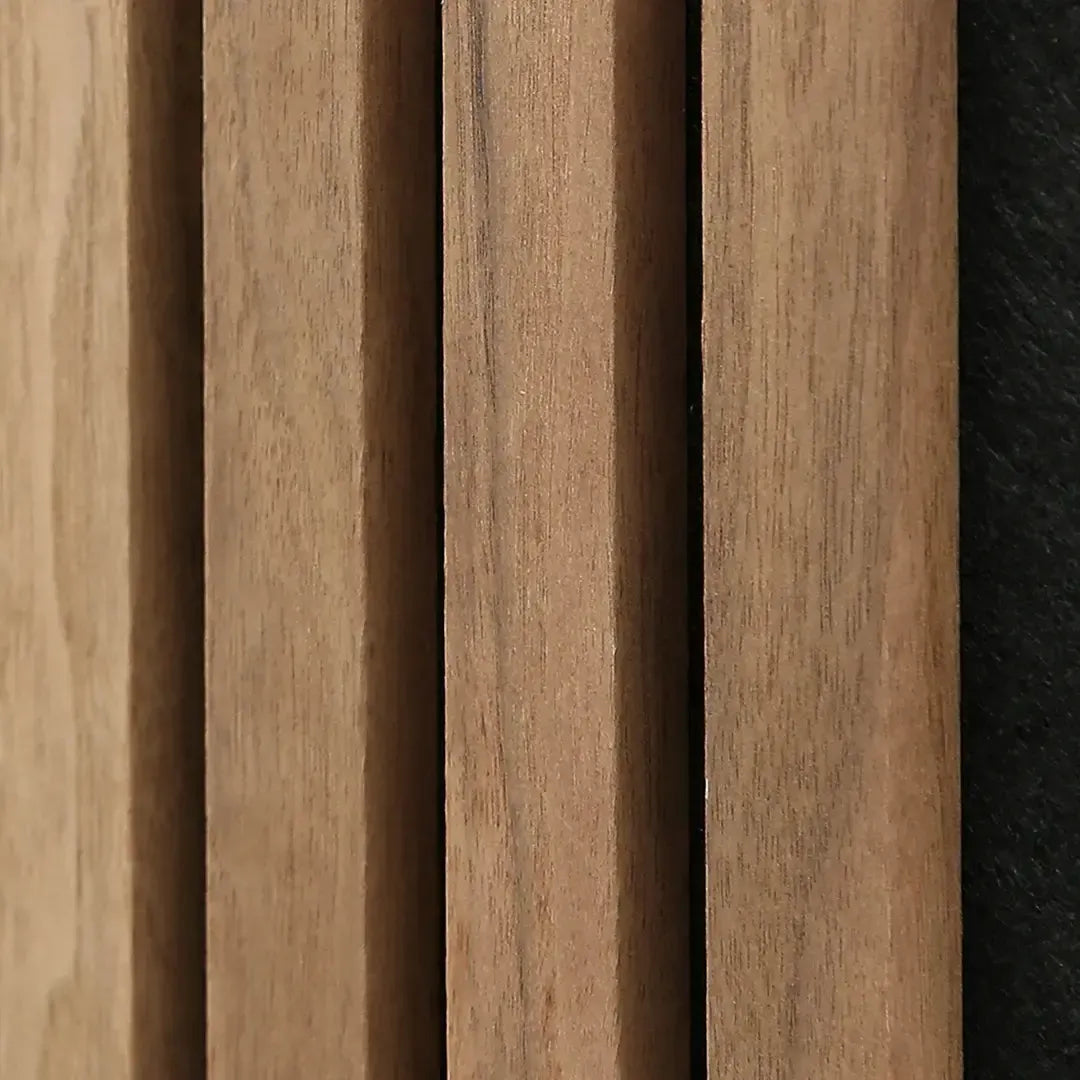
A back wall gets seen from every seat in the room, so grain inconsistency between panels reads as cheap fast. Look for a genuine wood veneer finish rather than a printed laminate — real veneer holds its color under warm bar lighting for years, while printed finishes can look flat or shift tone under LED strips.
Acoustic performance for a loud room
A panel that looks acoustic but has no backing does nothing for echo. Felt-backed slat panels are built for sound absorption — comparable acoustic panels in this category carry an NRC rating around 0.75, which is meaningful in a room full of hard flooring and glassware. If your restaurant runs live music or a packed happy hour, this is the criterion that matters most.
Cleanability and durability near a bar
A back wall near a bar takes splashes, wipe-downs, and the occasional bump from a tray. Panels need a sealed, wipeable surface — not raw, unsealed wood that stains the first time a spritz of citrus hits it.
Fire code compliance for commercial fit-outs
Commercial occupancy has different fire code requirements than a residential feature wall. Ask your supplier directly about fire-rated backing options before you finalize a commercial order — don't assume a residential-grade panel automatically clears inspection.
Panel format and edge finishing
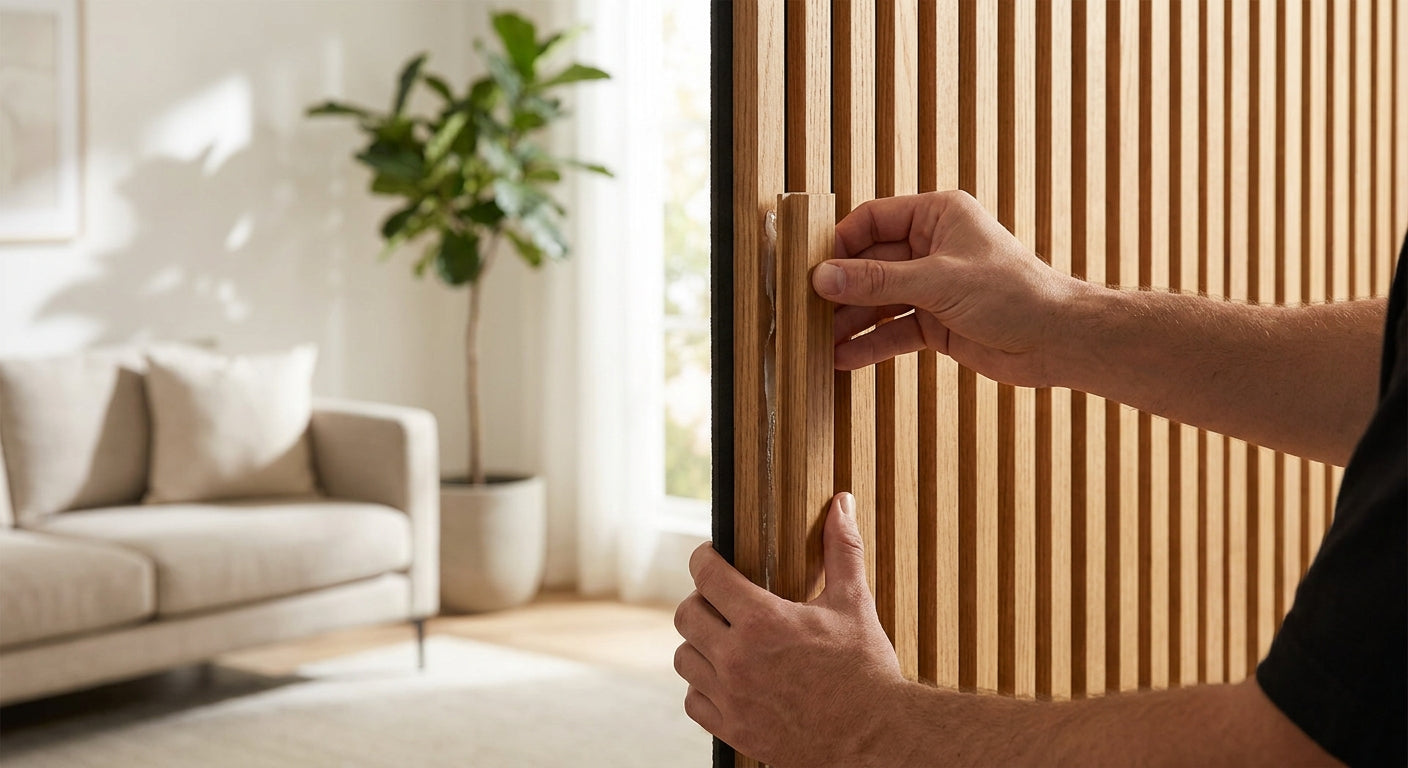
A back wall usually runs corner to corner, around outlets, and up against a bar top — which means you need matching end pieces, not just flat panel stock. Skipping trim pieces is the single fastest way to make a $2,000 installation look like a DIY job.
If glasses clink and conversation bounces back louder than the music, the back wall has too much hard surface and not enough absorption.
Top picks for a bar or restaurant back wall
The anchor pick — Smoked Oak Acoustic Slat Wall Panel. This is the panel most restaurant back-wall installs default to in 2026: real wood veneer over an acoustic-rated slat profile, dark enough to read as intentional under bar lighting without going flat black. Verdict: Buy.
The quiet-room upgrade — Smoked Oak with Gray Felt Acoustic Slat Wall Panel. Same smoked oak face, added felt backing for rooms with concrete floors, tile, or a ceiling over 10 feet where sound has more room to travel before it reflects. Verdict: Buy if your dining room already has an echo complaint on record.
The finishing detail — Smoked Oak End Piece. This is the piece most first-time buyers forget to order, and the one that determines whether corners and edges near the bar look finished or unfinished. Verdict: Buy alongside your main panel order, not after.
The darker alternative — Black Oak. Some speakeasy-style concepts want a wall darker than smoked oak. Black oak delivers that, but it trades the warm amber undertone that makes smoked oak feel inviting rather than cold. Verdict: Consider only if the concept calls for a genuinely black wall.


Restaurant fit-outs that pair smoked oak acoustic slat wall panels with a secondary hexagon accent tend to solve both the acoustic and the visual-interest problem in one order, which is why it's worth deciding on both surfaces before you place a single order.
What to avoid
- Printed "smoked oak look" laminate. It photographs fine on day one and fades or scratches within a year of bar traffic — real veneer holds up longer.
- Panels with zero acoustic backing. They solve the look problem and do nothing for the noise complaint that's actually driving the renovation.
- Skipping end pieces and trim. A back wall without matching end pieces shows raw MDF edge the moment someone stands at the bar and looks left.
Verdict comparison
| Panel | Veneer | Acoustic backing | Best for | Verdict |
|---|---|---|---|---|
| Smoked Oak Acoustic Slat Wall Panel | Real wood, smoked finish | Standard slat profile | Most bar and restaurant back walls | Buy |
| Smoked Oak with Gray Felt | Real wood, smoked finish | Felt-backed, higher absorption | Rooms with an existing echo complaint | Buy |
| Smoked Oak End Piece | Matching veneer trim | N/A | Corners, edges, bar-top junctions | Buy |
| Black Oak | Real wood, darkest tone | Standard slat profile | Speakeasy-dark concepts only | Consider |
Where to buy
- Order the $10 Full Sample Box first — it's the fastest way to see Smoked Oak against your actual bar lighting before a full order ships.
- Order end pieces and your main panel run in the same batch so the finish dye lot matches; ordering trim later risks a subtle color mismatch.
- For commercial jobs, confirm fire-rated backing availability with the supplier in writing before the order is finalized, since code requirements vary by jurisdiction.
FAQ
What is the best smoked oak panel for a restaurant back wall in 2026?
The Smoked Oak Acoustic Slat Wall Panel from AKU Woodpanel is the best default choice for most back walls in 2026 because it pairs real wood veneer with a slat profile built for absorption. Add the gray felt version if the dining room already has an echo problem.
Do smoked oak panels actually reduce noise behind a bar?
Yes, when they use an acoustic slat or felt-backed profile rather than a flat decorative panel. Felt-backed acoustic panels in this category carry an NRC rating around 0.75, which meaningfully cuts reflected sound in a hard-surfaced room.
Is smoked oak better than black oak for a restaurant back wall?
Smoked oak keeps a warm amber undertone that reads as inviting rather than cold, which suits most bar and dining concepts. Black oak is the better call only when the design intent is a genuinely dark, speakeasy-style room.
Can smoked oak panels handle splashes and wipe-downs near a bar?
Sealed, veneer-finished slat panels are built to be wiped down, unlike raw unsealed wood which stains from citrus and spirits. Confirm the finish is sealed before ordering for a high-traffic bar area.
Do I need end pieces for a smoked oak back wall installation?
Yes, if the wall has any exposed corner or edge near a bar top, doorway, or POS station. Skipping matching end pieces is the most common reason a commercial panel install looks unfinished.
How do I know if smoked oak will match my restaurant's lighting?
Order a sample before committing to a full back wall. The $10 Full Sample Box includes Smoked Oak alongside Natural and Walnut, so you can hold it under your actual bar lighting first.
Are smoked oak panels rated for commercial fire code?
Fire code requirements vary by jurisdiction and occupancy type, so confirm fire-rated backing options directly with the supplier before finalizing a commercial order. Don't assume a residential-grade spec automatically passes inspection.
What's the difference between smoked oak and smoked oak with gray felt?
Both use the same smoked oak veneer face; the felt-backed version adds absorption material behind the panel for rooms with harder flooring or higher ceilings. Choose felt backing when noise complaints are already a known issue in the space.
One last thing
Most restaurant back-wall projects fail on the trim, not the panel — order end pieces in the same batch as your main smoked oak run so the dye lot matches, and you'll avoid the single most common visible flaw in a commercial slat wall install.
 Better performance and aesthetic appeal
 In Stock