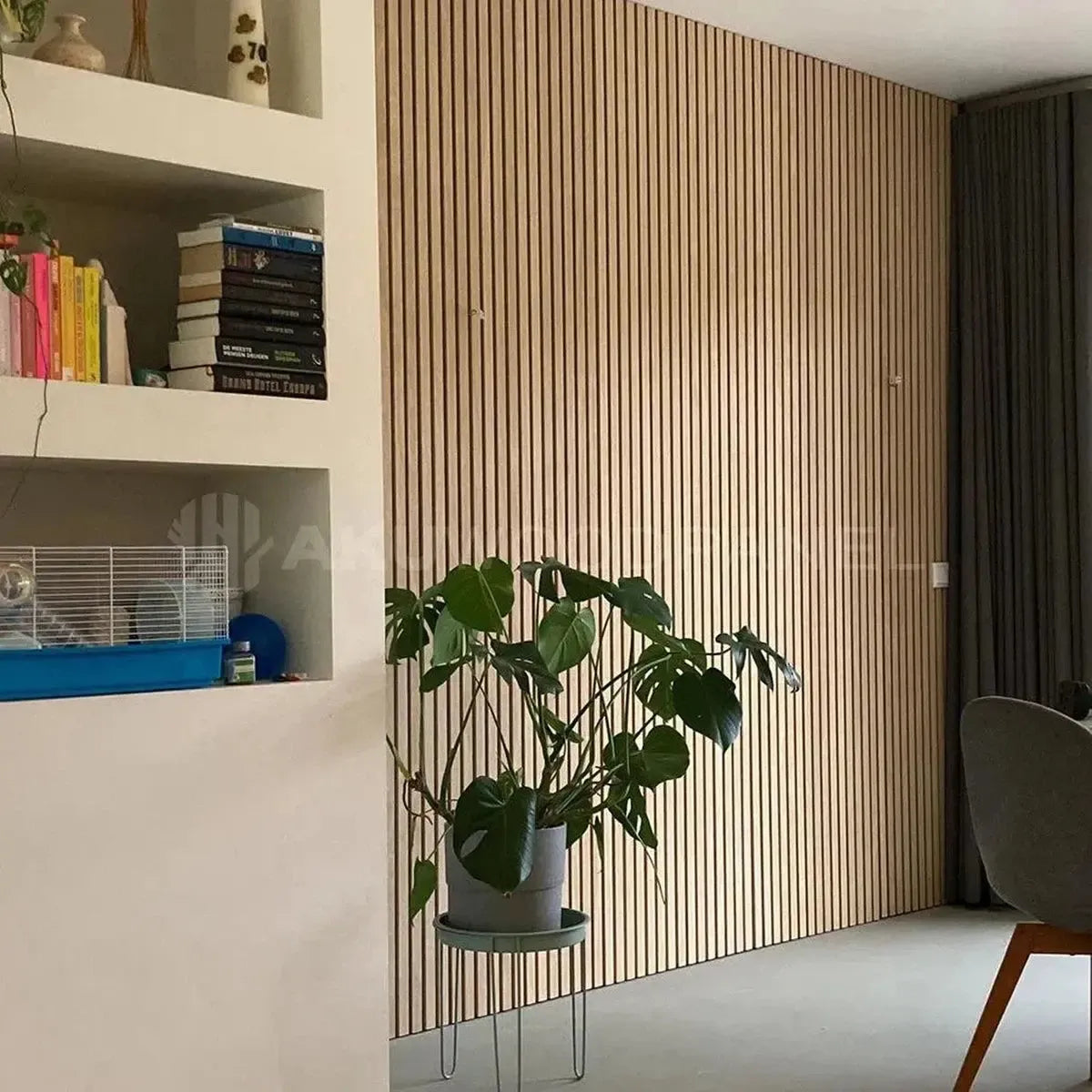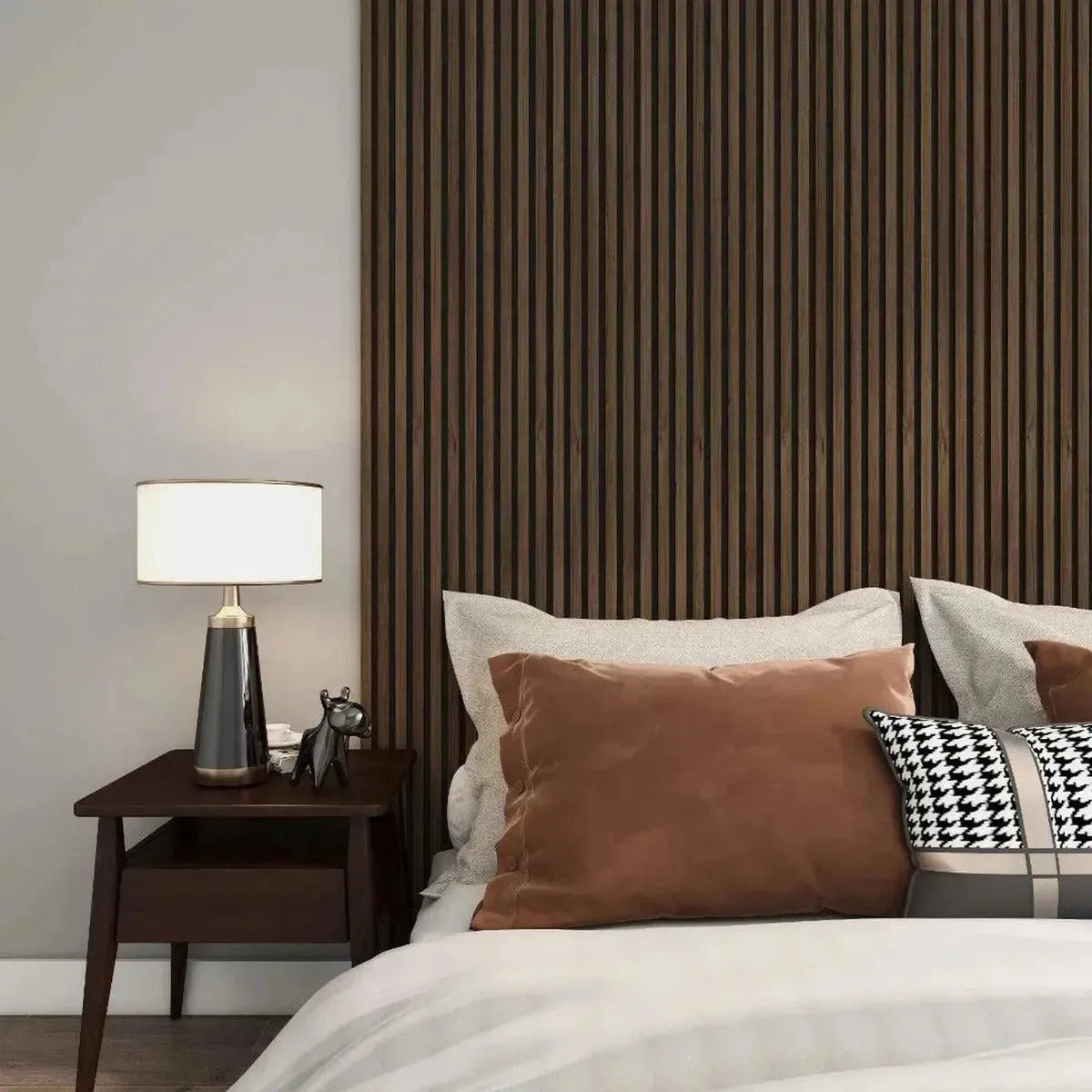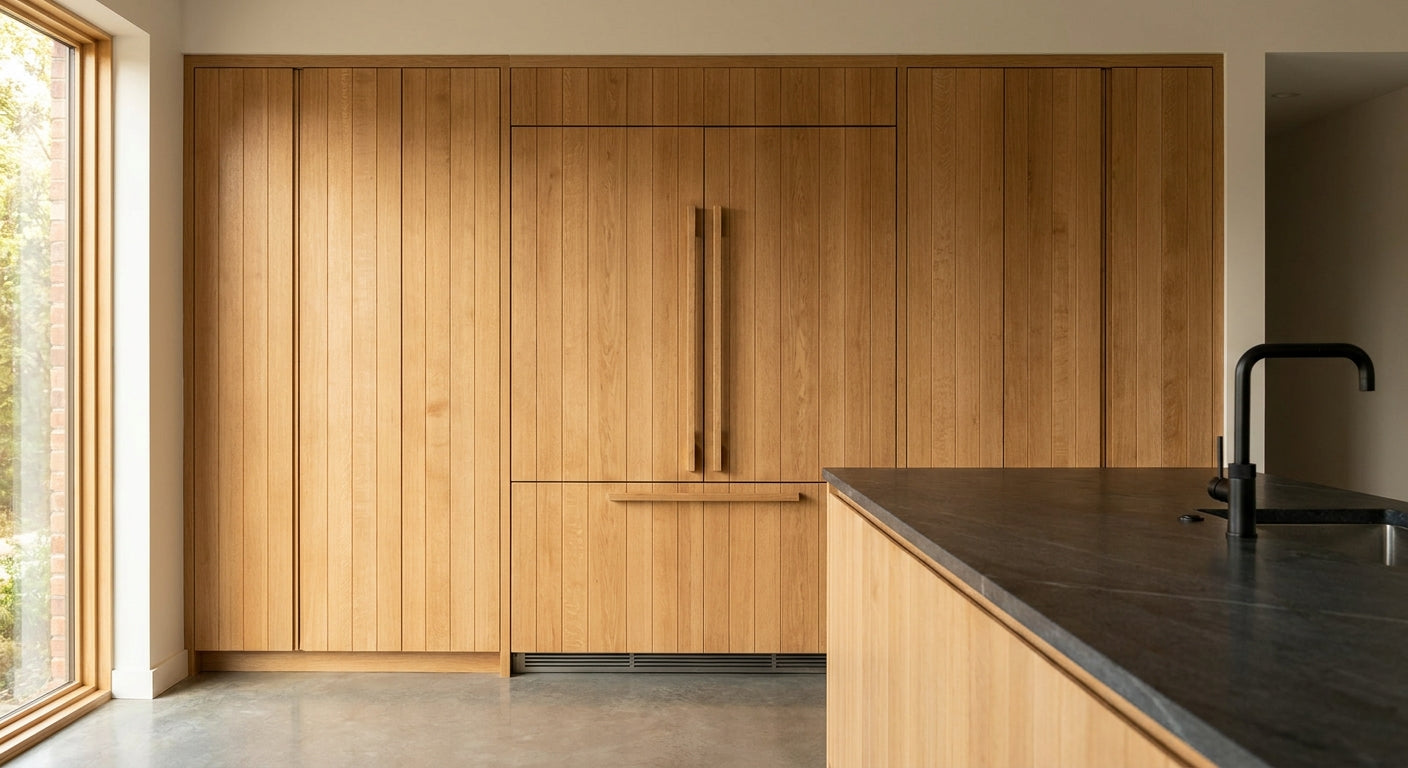
Kitchen cabinet surrounds take more abuse than almost any other wall surface in the house — grease, steam, cabinet doors banging into edges, and constant eye-level scrutiny. Natural oak panels solve the look-and-feel problem while adding a soft acoustic layer to a room that's usually all hard surfaces.
This guide is built for homeowners and renovators deciding whether natural oak panels for a kitchen cabinet surround are the right call, and which format actually holds up in a working kitchen.
TL;DR: For a kitchen cabinet surround, the natural oak acoustic slat panel is the strongest all-around pick — real oak veneer over an MDF core with felt backing gives you grain consistency and some sound dampening in an open kitchen. If you're cladding tight runs around cabinets, pair it with the natural oak end piece for clean terminations. Verdict: Buy for open-plan kitchens with hard flooring; Skip flat laminate look-alikes if grain match matters to you. Order a sample before committing — oak tone shifts noticeably under warm versus cool kitchen lighting in 2026-built LED fixtures.
Why this matters
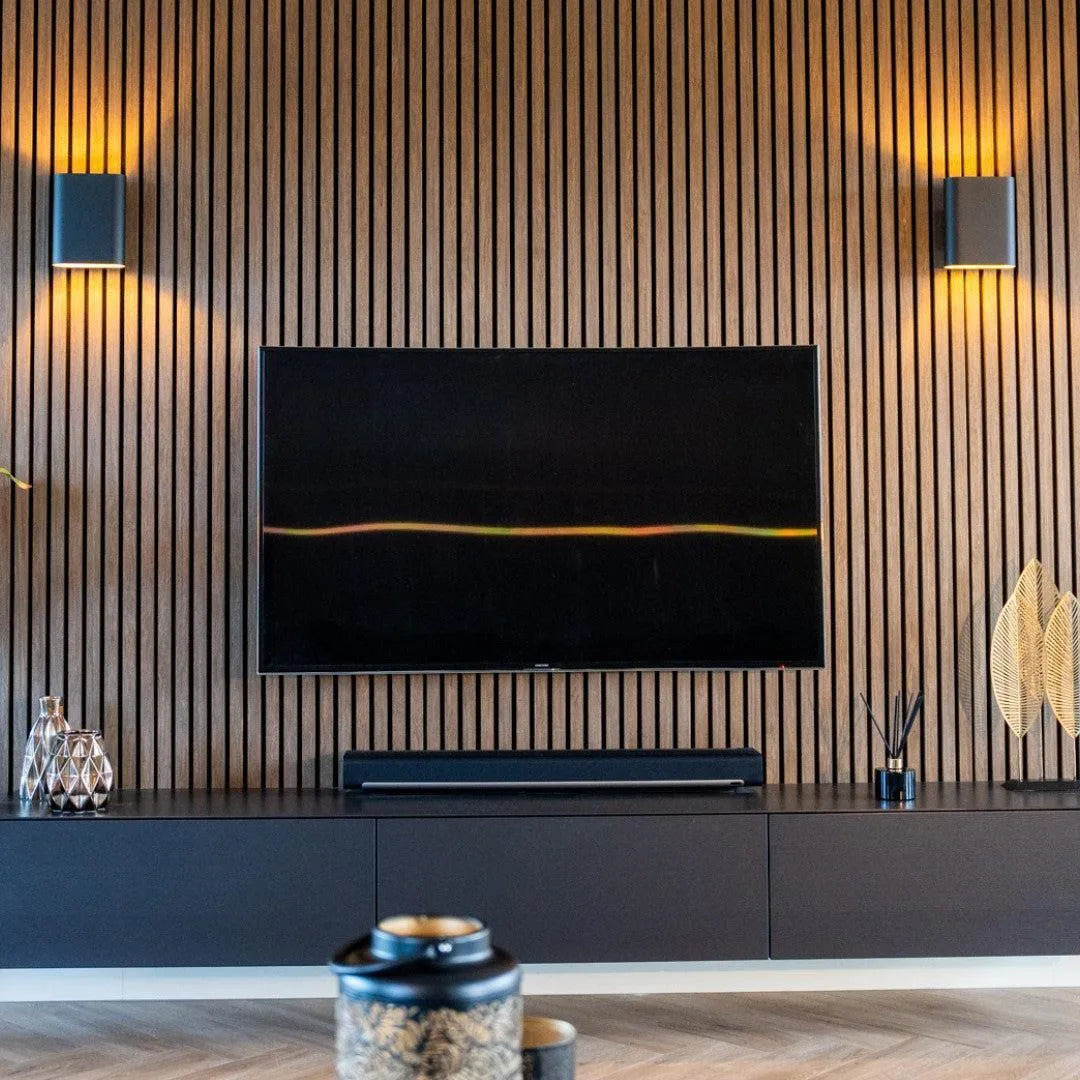
Open-plan kitchens amplify noise — clattering dishes, extractor fans, dinner conversation bouncing off quartz counters and tile backsplash. A cabinet surround finished in flat painted MDF does nothing to soften that. A textured wood panel with a felt or acoustic backing absorbs some of that mid-range noise while giving the cabinetry a furniture-grade finish instead of a builder-grade one.
The other reason natural oak specifically matters here: it's the one finish that reads as "real wood" from three feet away and up close. Painted panels and dark stains hide grain inconsistency. Natural oak doesn't — which is exactly why buyers care about veneer quality more than they do with black oak or smoked oak options.
Who this is for
This buying guide is for homeowners and kitchen renovators cladding the vertical surround around cabinetry — above upper cabinets, flanking a range hood, or wrapping an island base — not full wall installations. If you're doing a whole feature wall instead, the sizing math and moisture exposure are different, and you'll want a different starting point.
What to look for in natural oak panels for a kitchen cabinet surround
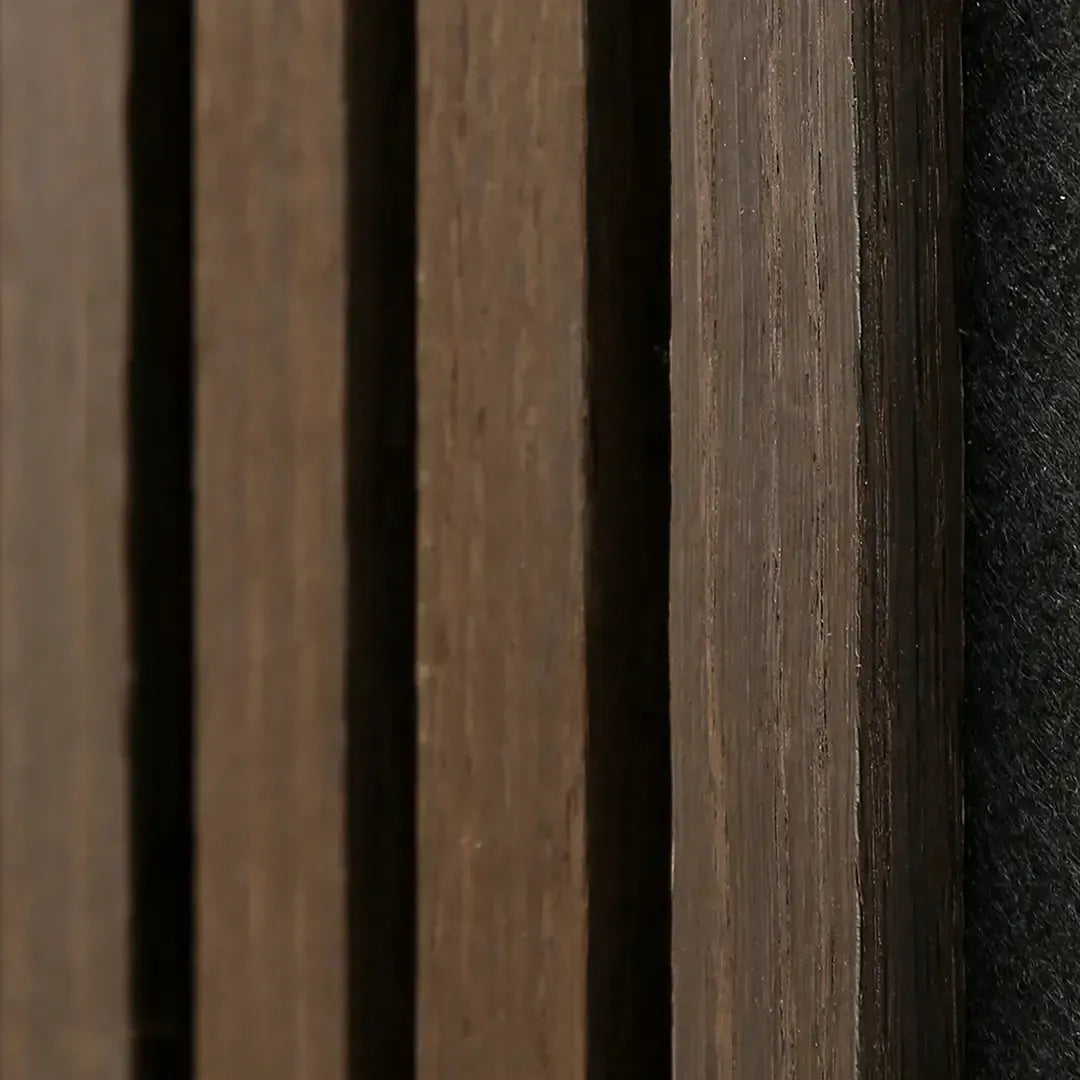
Real wood veneer, not printed laminate
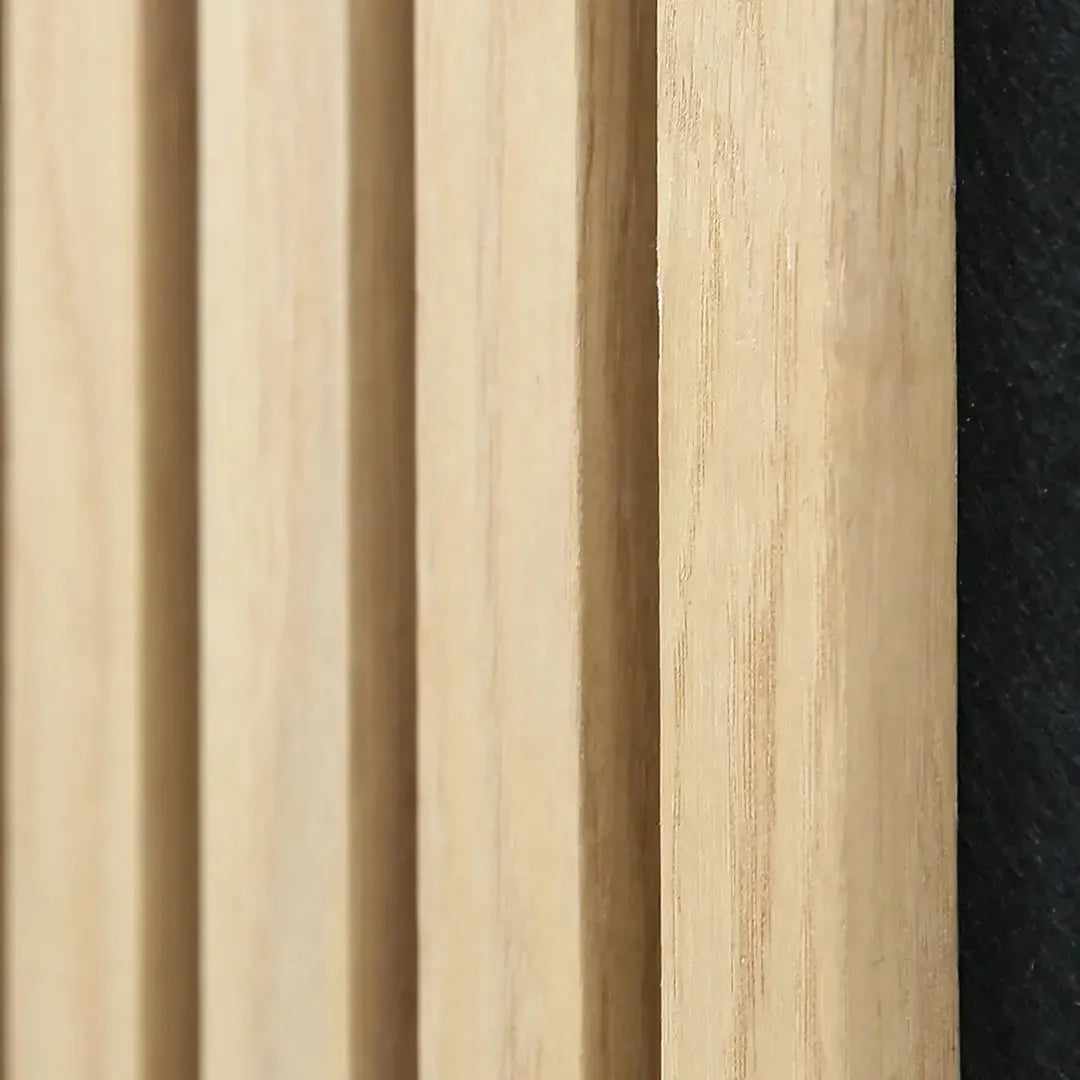
A printed laminate finish looks convincing in a photo and flat in person, especially under direct task lighting near a range. Real oak veneer has grain variation panel to panel, which is the entire point of choosing "natural oak" over a uniform synthetic finish. If the product page doesn't specify veneer, assume laminate.
Heat and moisture tolerance near the cook zone
A surround next to a range or within a few feet of a dishwasher takes steam and occasional heat exposure that a living-room feature wall never sees. Panels rated for interior use generally handle ambient kitchen humidity fine, but direct heat contact — right beside an open flame or an un-vented cooktop — is a different question you should confirm before installing anything within a couple feet of a burner.
Slot or slat spacing that reads right at cabinet scale
A wide-slat pattern designed for a 12-foot living room wall can look oversized on a 24-inch cabinet surround. Narrower spacing and a tighter grain pattern generally scale better on smaller vertical runs — check a sample against your actual surround width before ordering full panels.
Color consistency with the rest of the room
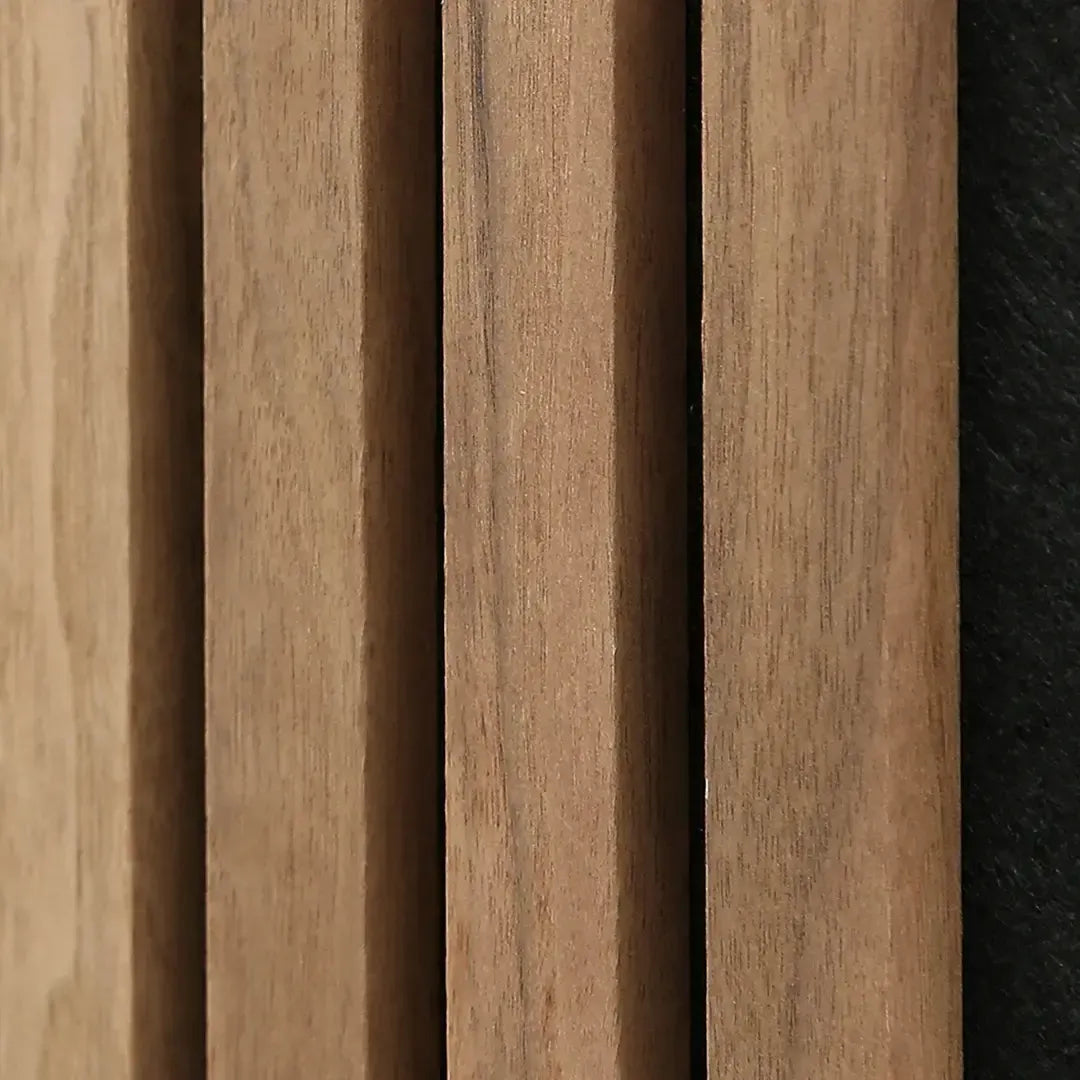
Natural oak isn't one color — it ranges from pale honey to warmer amber depending on the veneer batch and the finish coat. If your cabinets, floor, or trim are already a specific oak tone, order a sample panel and hold it against the cabinetry in daylight and again under kitchen LEDs before you commit to a full order.
Clean edge termination around cabinet corners
A cabinet surround has more corners and terminations per square foot than a flat wall — where it meets the upper cabinet base, where it turns a corner, where it stops at a doorway. A dedicated end piece profile in the matching natural oak finish makes the difference between a finished look and visible cut edges.
Installation depth that doesn't crowd cabinet clearance
Panel plus mounting substrate adds real thickness to a wall. Around cabinets, that added depth can interfere with door swing or drawer clearance if you don't account for it before installing uppers or trim.
Top picks for kitchen cabinet surround cladding
The anchor pick: Acoustic Slat Wall Panel, Natural Oak
This is the panel most homeowners land on for cabinet surrounds because it does two things at once — real oak veneer for the grain match, and a felt-backed acoustic layer for the open-plan noise problem. It reads as furniture-grade next to cabinetry rather than as a cladding afterthought. Verdict: Buy — the safe, default choice for a working kitchen surround. See the natural oak acoustic slat panel.
The low-commitment move: Sample Slat Wall Panel, Natural Oak
Oak tone is the single biggest reason kitchen panel orders go wrong — the swatch on screen and the panel under your actual kitchen lighting are two different colors more often than not. A sample panel costs a fraction of a full order and removes that risk entirely before you commit to covering an entire surround. Verdict: Buy — non-negotiable step before any full order in 2026 or any year after. Order the natural oak sample panel.
The finishing piece: End Piece Slat Wall Panel, Natural Oak
Cabinet surrounds have more corners per linear foot than any other wall in the house, and a visible cut edge next to a cabinet door is the fastest way to make a nice panel job look unfinished. The matching end piece profile closes out terminations cleanly instead of leaving raw edge exposed. Verdict: Buy if your surround has any corner, return, or termination against trim — which almost all of them do. Check the natural oak end piece panel.
The wildcard: Fluted Wall Panel, Natural Oak
Fluted profiles have a tighter, more vertical rhythm than slat panels, which reads more like millwork than acoustic paneling — a good call if your kitchen leans toward a furniture-front cabinet style rather than flat-panel modern. It doesn't carry the felt acoustic backing, so it's a look-first choice rather than a noise-reduction one. Verdict: Consider if the aesthetic fit matters more to you than sound dampening. View the fluted natural oak panel.
What to avoid
- Uniform "oak-look" laminate panels with no veneer callout. They photograph fine and look flat under kitchen task lighting where real grain would catch shadow.
- Wide-slat patterns sized for large walls. Scaled for a living room, they overwhelm a 24-inch cabinet surround and look disproportionate up close.
- Panels with no matching end piece or trim option. You'll end up with a visibly cut raw edge at every corner and termination, which undercuts the entire point of upgrading the surround.
Verdict comparison
| Pick | Best for | Acoustic backing | Verdict |
|---|---|---|---|
| Acoustic Slat Wall Panel, Natural Oak | Default cabinet surround cladding | Felt-backed | Buy |
| Sample Slat Wall Panel, Natural Oak | Color-matching before a full order | N/A | Buy |
| End Piece Slat Wall Panel, Natural Oak | Clean corner and edge termination | N/A | Buy |
| Fluted Wall Panel, Natural Oak | Furniture-front cabinet styles | None | Consider |
FAQ
What's the best natural oak panel for a kitchen cabinet surround? The acoustic slat wall panel in natural oak is the strongest general pick for 2026 kitchens — real veneer plus a felt-backed acoustic layer handles both the grain-match and the open-plan noise problem at once.
Is natural oak better than smoked oak for a kitchen surround? Natural oak reads lighter and matches pale or mid-tone cabinetry better; smoked oak leans darker and pairs better with black hardware and darker countertops. Neither is objectively better — it comes down to what's already in the room.
How much does a natural oak panel cost for cabinet surround cladding? Pricing varies by panel size and finish — check current listings on the site rather than relying on a fixed figure, since panel pricing shifts with material costs.
Can natural oak panels handle heat and steam near a range? Interior wood panels tolerate normal kitchen humidity and ambient steam fine, but direct heat contact right beside an open flame or unvented cooktop is a separate risk you should account for with clearance, not with the panel finish alone.
Do I need an end piece profile for a cabinet surround install? Yes, if your surround has any corner, return, or termination against trim — which nearly all cabinet surrounds do. Skipping the end piece leaves a visible raw cut edge.
How do I know if a panel is real oak veneer or printed laminate? Check the product listing for an explicit veneer callout. If wood species isn't named specifically, treat it as laminate until proven otherwise, and order a sample to check grain variation in hand.
Should I order a sample before committing to a full cabinet surround order? Yes — oak tone shifts under different lighting more than almost any other finish, and a sample panel is the cheapest way to confirm the match against your actual cabinetry before ordering full coverage.
Are fluted panels a good alternative to slat panels for cabinet surrounds? Fluted panels suit furniture-front cabinet styles better than flat-panel modern kitchens, but they trade away the felt acoustic backing that slat panels carry — pick based on look first if you go this route.
One last thing
Most cabinet surround installs fail on lighting, not on the panel itself — a natural oak sample that looks perfect under a showroom bulb can shift noticeably warmer or cooler under your kitchen's actual LED temperature. Hold the sample against your cabinets at the same time of day you'll actually be looking at the finished surround, not just once in daylight, before placing a full order in 2026.

 Better performance and aesthetic appeal
 In Stock