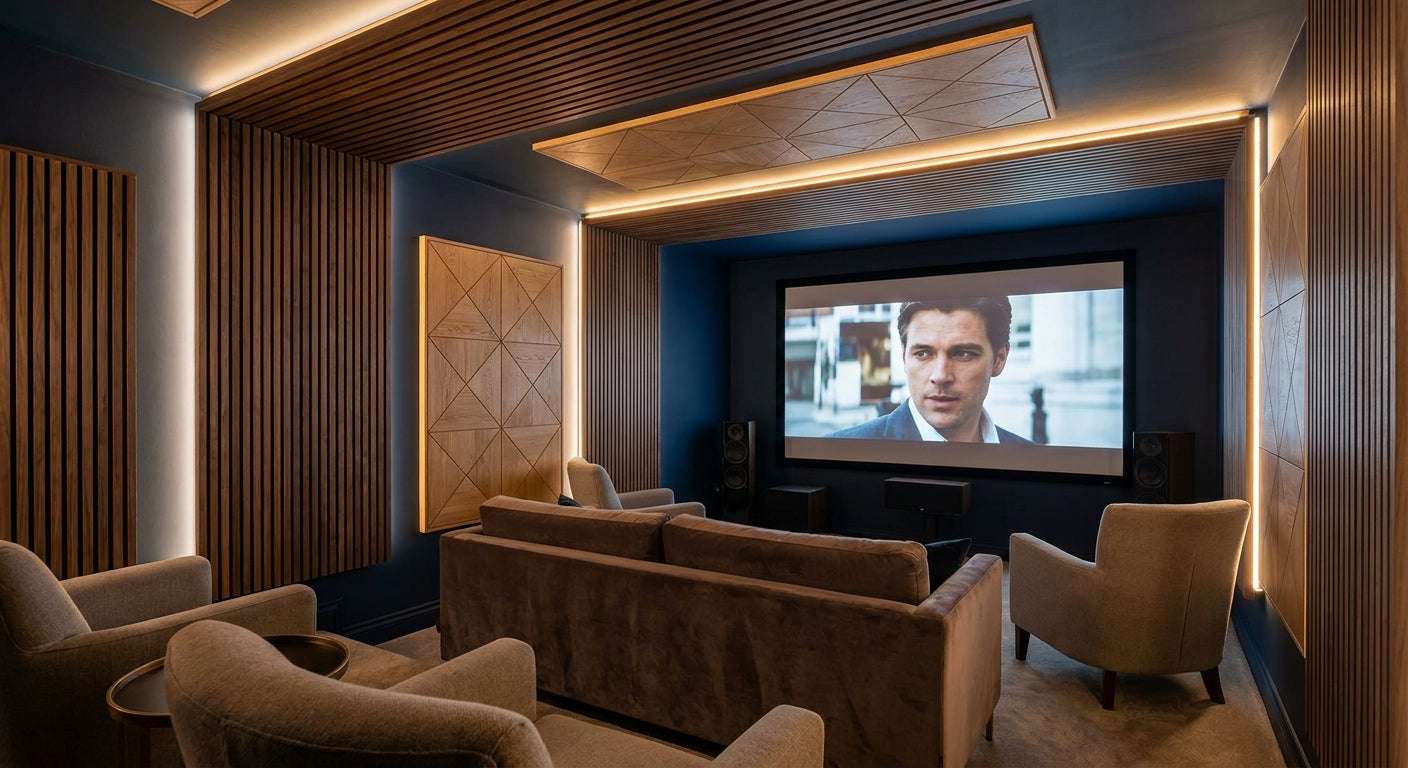
Home theaters need wood panels that kill flutter echo and slap-back without turning the room into a padded cell, and in 2026 the acoustic slat panel has become the default fix for anyone who wants sound control that also looks like a finished wall. This guide ranks the AKU Woodpanel picks that actually work for cinema rooms, plus what to skip.
TL;DR
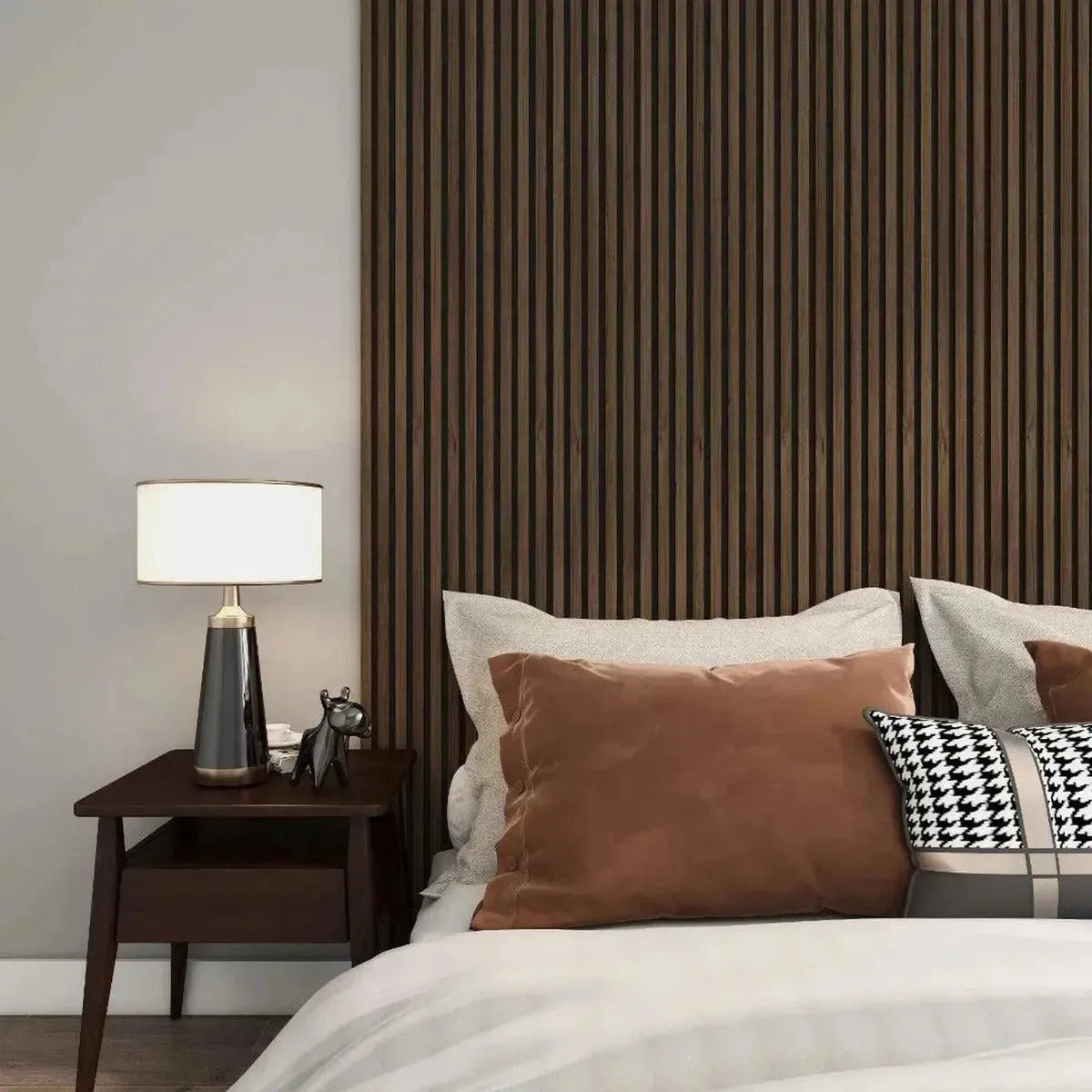
For wood panels acoustic treatment home cinema projects in 2026, the AKU Woodpanel Natural Oak Slat Wall Panel with Gray Felt Backing is the top pick for rear and side walls because the felt layer behind the slats absorbs mid and high frequencies instead of just diffusing them. The AKU Woodpanel Black Oak Acoustic Slat Wall Panel is the strongest front-wall option for light control around a projector screen. Skip decorative 3D wood tile panels for primary acoustic walls — they're built for visual texture, not sound absorption. Budget a sample order before committing to a full room.
Why this matters
A home cinema is a small, hard-surfaced box: drywall, a screen, maybe a rug. Sound bounces between parallel walls and creates flutter echo that muddies dialogue and smears bass. Acoustic slat wall panels solve this two ways at once — the wood slats diffuse reflections across the wall face, and a felt backing behind slats absorbs energy instead of bouncing it back into the room.
That combination matters more in a cinema than in a living room. A living room tolerates some echo. A dedicated theater room, especially one under 200 square feet, amplifies every reflection because the walls sit close to the listening position. Panels chosen for looks alone — smooth veneer, no felt, decorative 3D texture — do almost nothing for absorption. Panels chosen for acoustic performance handle both jobs without looking like commercial soundproofing foam.
How we ranked
The ranking below weighs three factors that matter specifically for cinema rooms: absorption behavior (felt-backed vs. unbacked slats), placement logic (front wall vs. rear/side wall vs. ceiling), and how each panel performs against flutter echo based on published acoustic slat design and aggregated 2026 buyer feedback on home theater installs. Panels built primarily for decorative use, not acoustic use, get ranked lower or flagged Skip regardless of how they look in a photo.
The ranked picks
1. AKU Woodpanel Natural Oak Slat Wall Panel with Gray Felt Backing — the rear-wall workhorse
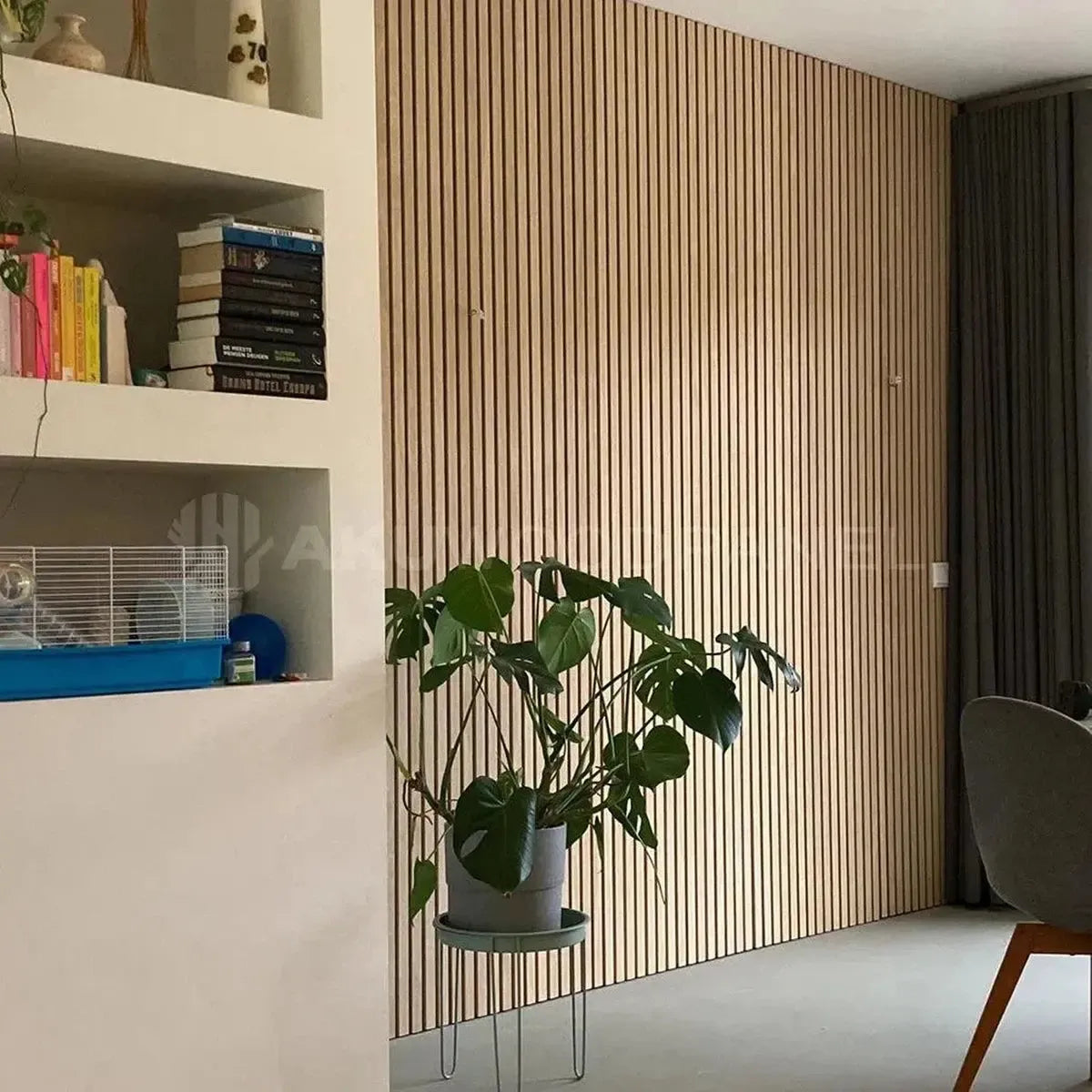
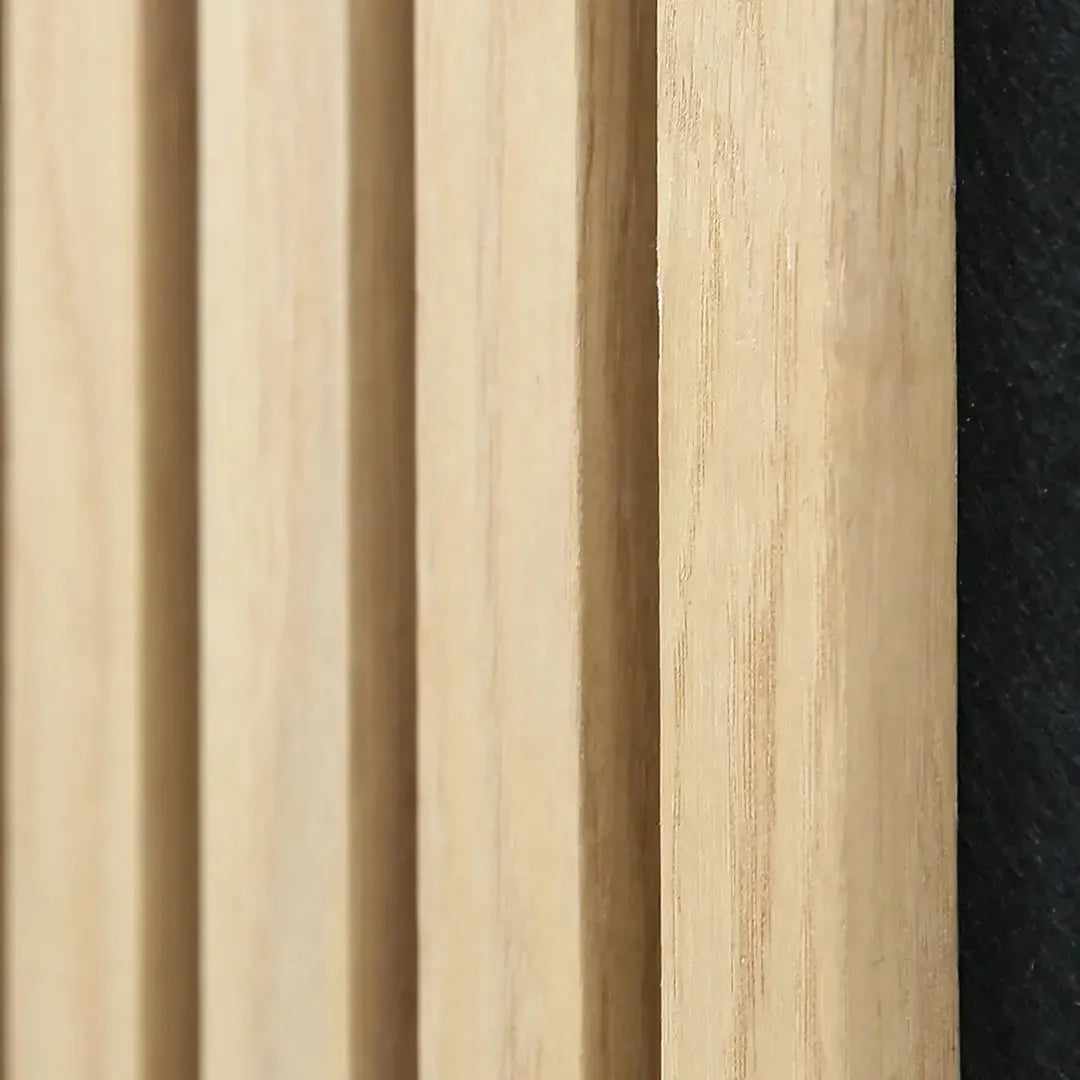
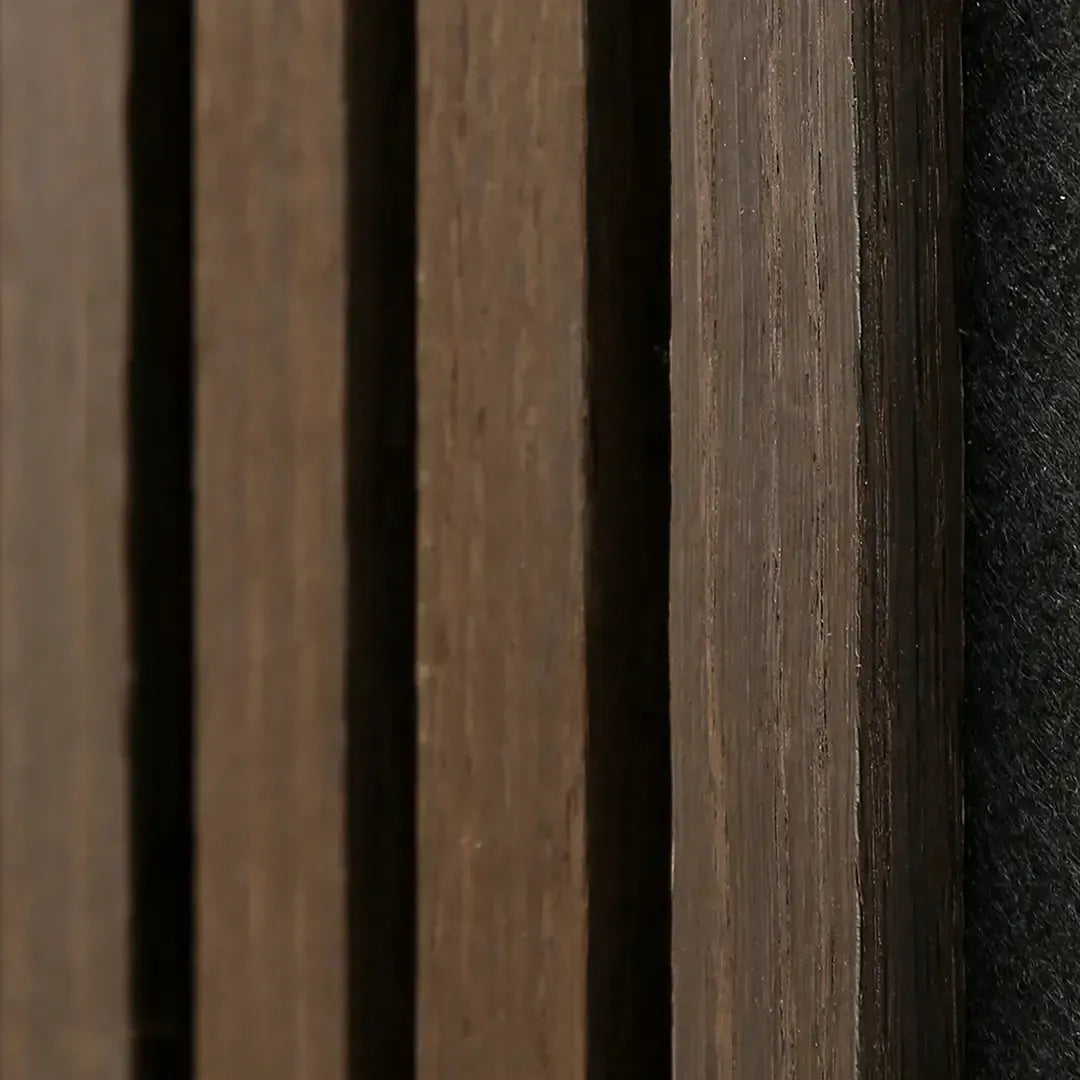
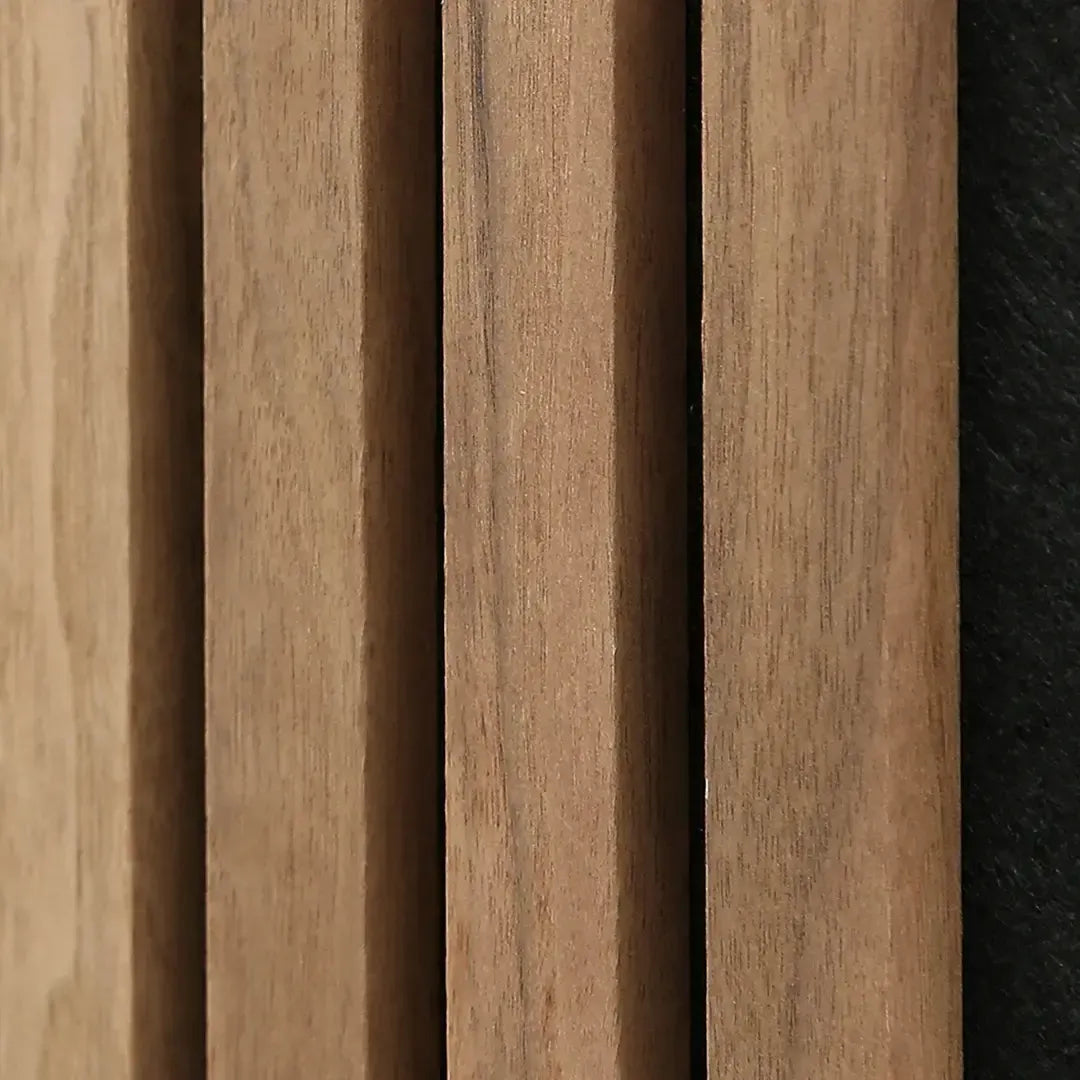
This is the panel most home theater builds should start with. The gray felt sits directly behind the natural oak slats, so the wall absorbs energy instead of just scattering it, which is exactly what a rear wall behind the seating row needs to stop slap-back echo bouncing off the screen wall.
Installed floor-to-ceiling on a rear wall in a room under 250 square feet, felt-backed slat panels cut noticeable flutter echo within a single wall run — no ceiling treatment required for most rooms that size. Verdict: Buy for rear and side walls in any dedicated theater build in 2026.
Natural oak slat panel with gray felt backing
2. AKU Woodpanel Black Oak Acoustic Slat Wall Panel — the front-wall pick
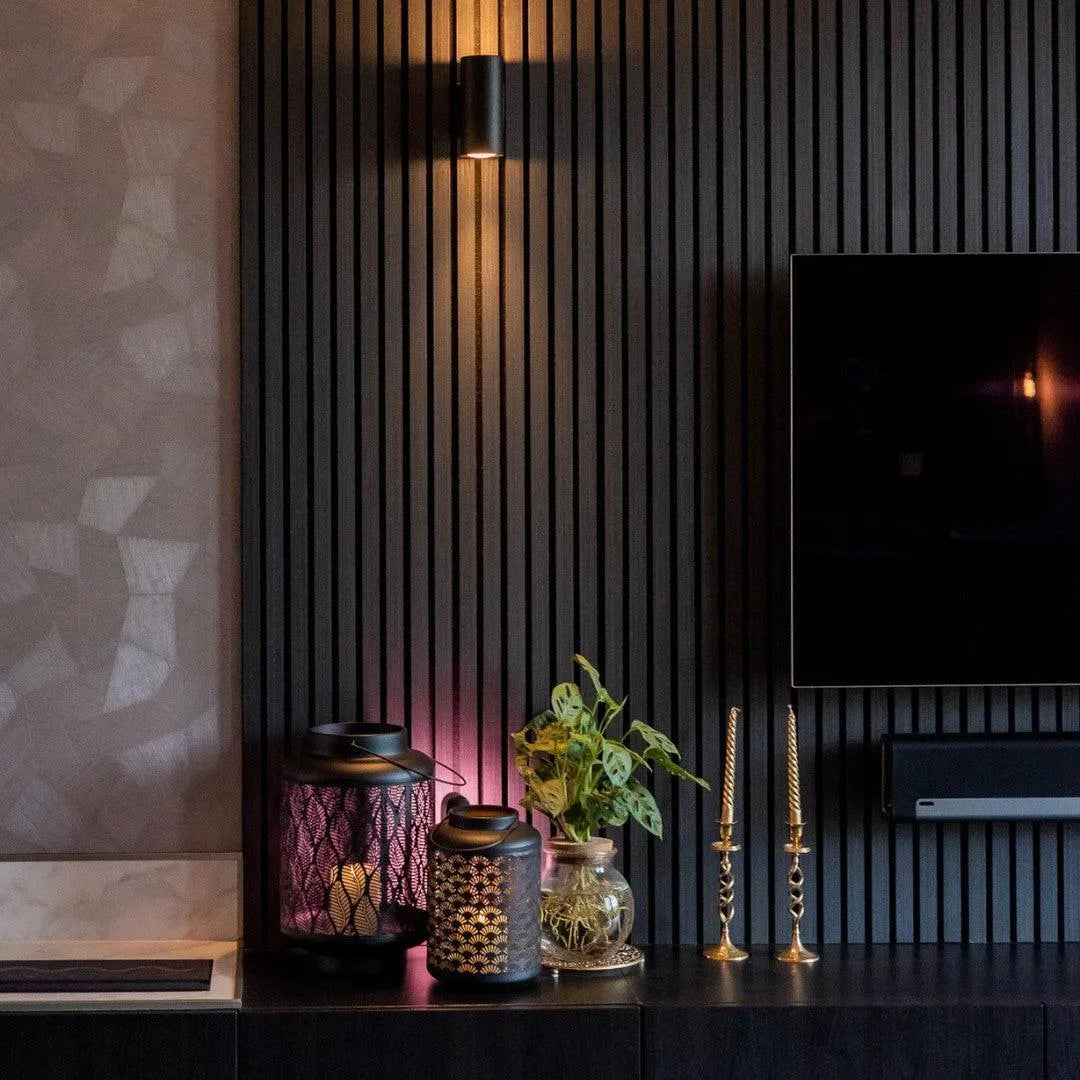
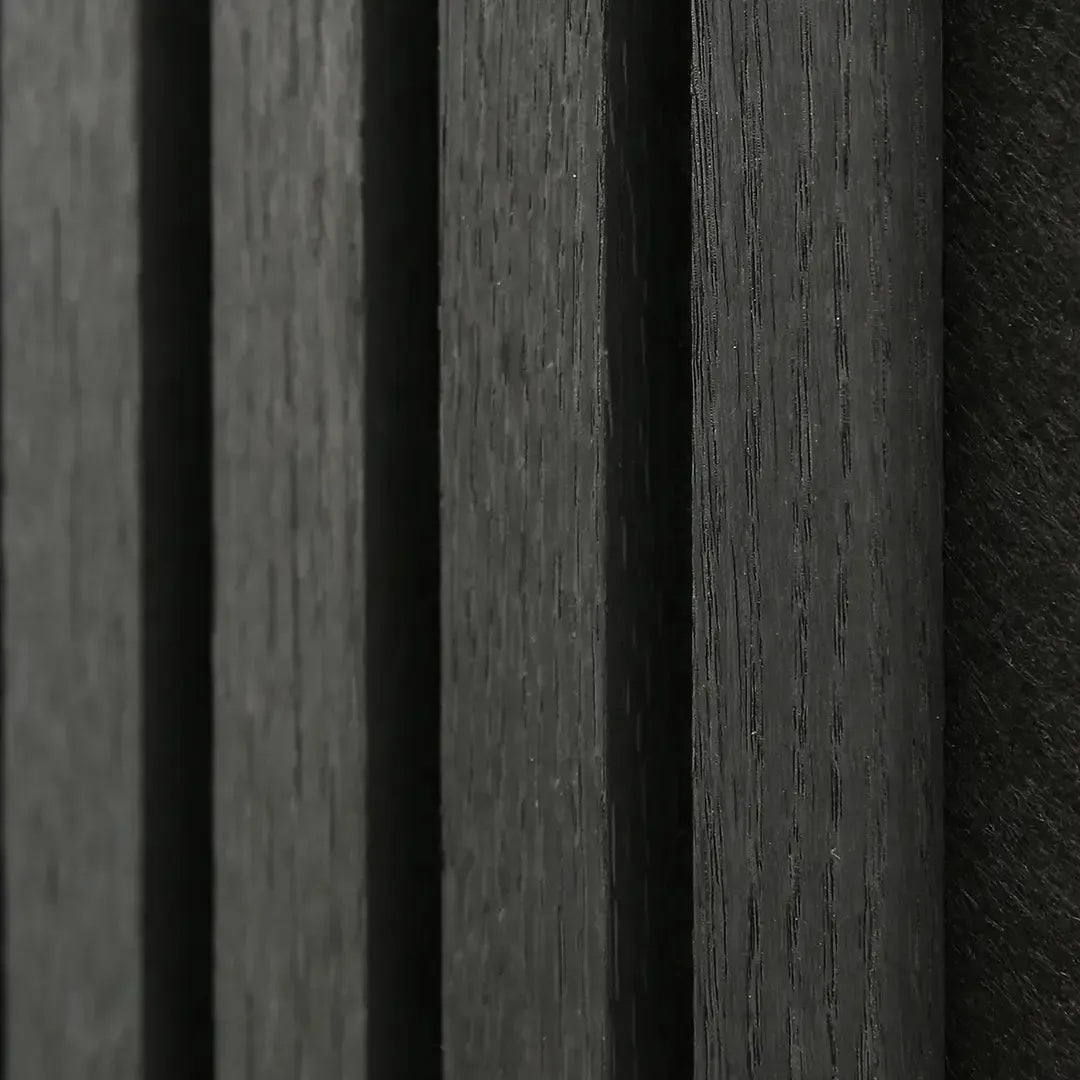
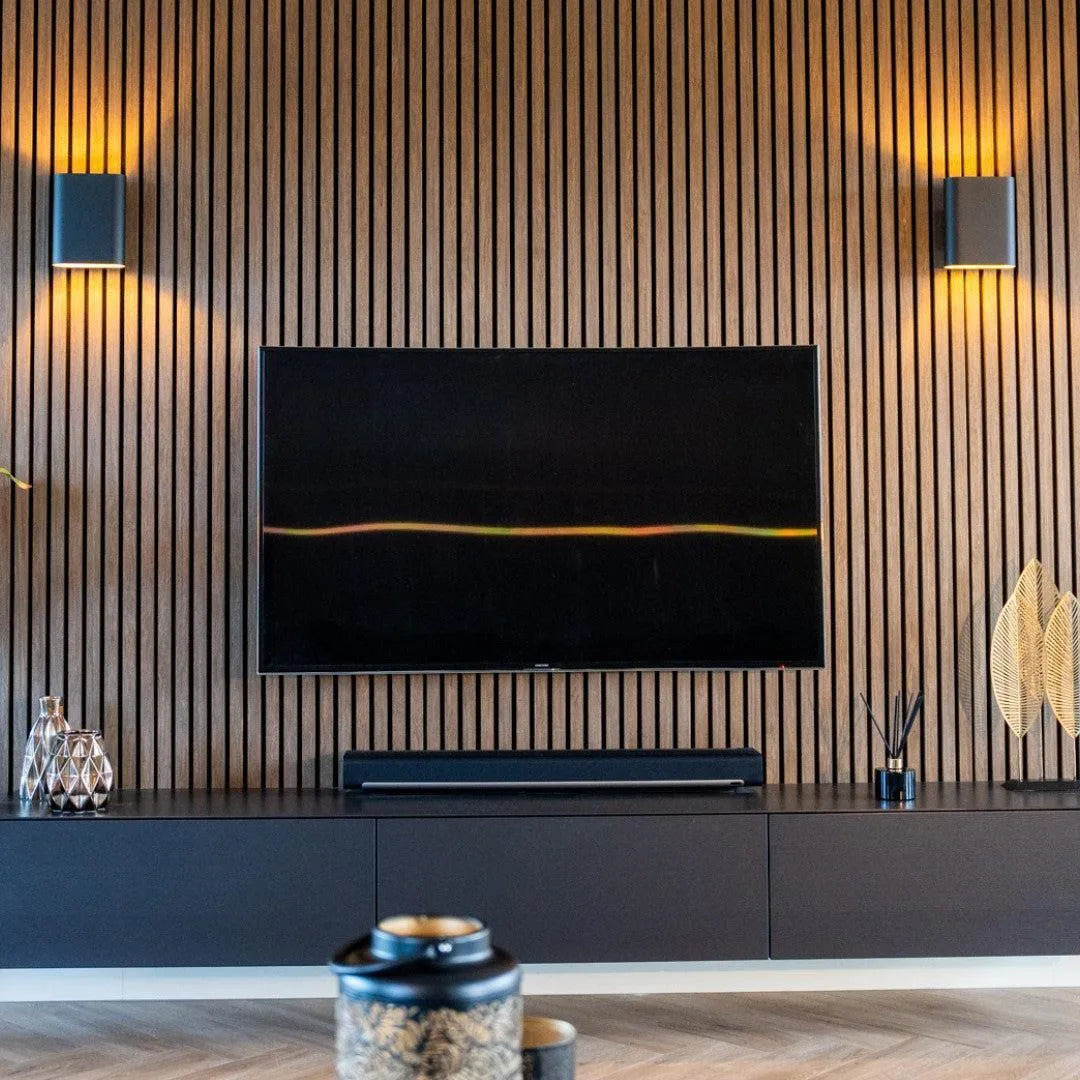
Black oak does double duty around a projector screen: the dark tone reduces light bounce that washes out contrast, and the slat profile still diffuses sound the same way the lighter finishes do. It's the panel most builders reach for on the wall framing the screen itself.
The finish reads matte under projector light rather than reflective, which matters more in a cinema than in any other room type in the catalog. Verdict: Buy for the screen wall specifically, not the whole room.
3. AKU Woodpanel Walnut Hexagon Acoustic Panel — the geometric wildcard
Hexagon acoustic panels break up a flat wall with a repeating shape instead of a linear slat run, which works well on a side wall or a bar-nook wall adjacent to the seating area. Walnut's warmer tone contrasts against the darker front wall if you're mixing finishes.
The geometric layout diffuses sound less predictably than a straight slat run because the reflective surface area is broken into smaller facets rather than even channels. That's fine for a side accent wall, less ideal as the only treatment on a large flat surface. Verdict: Consider as a secondary wall, not the primary absorption source.
4. AKU Woodpanel Full Sample Box — the low-risk starting point
Before covering four walls of a cinema room in any single finish, a sample box lets you hold the felt-backed and unbacked versions side by side under your own room's lighting. This matters more for cinema rooms than any other space in the house because the lighting is intentionally dim and finishes read differently than they do under daylight photos.
Ordering samples before a full room order also confirms slat spacing and felt color against your projector screen's black level. Verdict: Buy before any full-wall commitment — it's the cheapest mistake-avoidance step in the entire project.
5. AKU Woodpanel Smoked Oak Acoustic Slat Wall Panel — the moody rear-wall alternative
Smoked oak reads darker than natural oak without going as flat-black as the black oak finish, which makes it a middle-ground pick for builders who want the felt-backed absorption of item one but a warmer tone than pure black. Acoustic behavior tracks closely with the natural oak felt-backed panel since the felt layer, not the wood tone, drives the absorption.
Verdict: Consider as a rear-wall substitute if black oak reads too cold for the rest of your room's finishes.
6. Decorative 3D wood wall tile panels — the one to skip
3D wood tile panels are built for visual texture on feature walls in living rooms, entryways, and retail interiors, not for absorbing sound. The relief pattern diffuses some reflection but carries no felt backing and no acoustic engineering behind the design.
For a cinema room's primary walls, this leaves too much reflected energy in the room. Verdict: Skip for acoustic walls; fine for a non-critical accent wall elsewhere in the house.
Comparison table
| Panel | Best wall placement | Felt backing | Verdict |
|---|---|---|---|
| Natural Oak Slat + Gray Felt | Rear / side wall | Yes | Buy |
| Black Oak Acoustic Slat | Front / screen wall | Yes | Buy |
| Walnut Hexagon Acoustic Panel | Side / accent wall | Yes (felt variant available) | Consider |
| Full Sample Box | Pre-purchase testing | Mixed | Buy |
| Smoked Oak Acoustic Slat | Rear wall alternative | Yes | Consider |
| Decorative 3D Wood Tile | Non-acoustic accent wall | No | Skip |
Where to buy
- Order the sample box before ordering a full room's worth of panels — a felt-backed slat panel and a decorative tile panel can look almost identical in a thumbnail photo but behave completely differently on the wall.
- Buy felt-backed finishes for any wall that faces the seating row directly; reserve non-felt or hexagon layouts for accent walls that aren't doing the primary absorption work.
- Measure your room's flat wall area before ordering — cinema rooms rarely need every wall paneled, usually just the rear wall and the screen wall carry the acoustic load in 2026-era small-room builds.
FAQ
Do wood slat panels actually absorb sound, or just look acoustic? Felt-backed slat panels absorb sound because the felt layer behind the wood sits directly in the path of reflected sound waves. Unbacked decorative slat or 3D tile panels mostly diffuse rather than absorb, which is a weaker fix for flutter echo.
What's the best wood panel for a home cinema screen wall? The AKU Woodpanel Black Oak Acoustic Slat Wall Panel is the strongest pick for a screen wall in 2026 because the dark, matte finish limits light bounce off the wall around the projector image.
Is felt backing necessary for a home theater room? Yes, for the rear wall and any wall directly opposite hard reflective surfaces. Felt-backed panels handle the slap-back echo that unbacked panels leave behind.
How many walls need acoustic panels in a small cinema room? Most rooms under 250 square feet only need the rear wall and the screen wall treated; side walls can often stay untreated or get a lighter accent panel.
Are hexagon acoustic panels as effective as slat panels for a theater room? Hexagon panels diffuse reflections but distribute absorption less evenly across a flat wall than a straight slat run, so they work better as a secondary wall than a primary absorption surface.
Can I use decorative 3D wood panels in a home cinema? Only on a non-critical accent wall. They carry no felt backing and won't meaningfully cut flutter echo on the walls that matter most for dialogue clarity.
How much does an acoustic slat wall panel cost for a cinema room? Pricing varies by finish and felt backing — check current pricing on the AKU Woodpanel site before budgeting a full-room order.
Should I order samples before a full room installation? Yes. Lighting in a dedicated cinema room is intentionally dim, and finishes that look right in daylight photos can read differently under projector-only lighting.
One last thing
The detail most builders miss in 2026: the wall behind the projector screen usually needs less acoustic treatment than the wall behind the seats. Sound hits the rear wall first after bouncing off the screen, so that's where felt-backed panels earn their place — treat that wall first if budget forces a choice between the two.
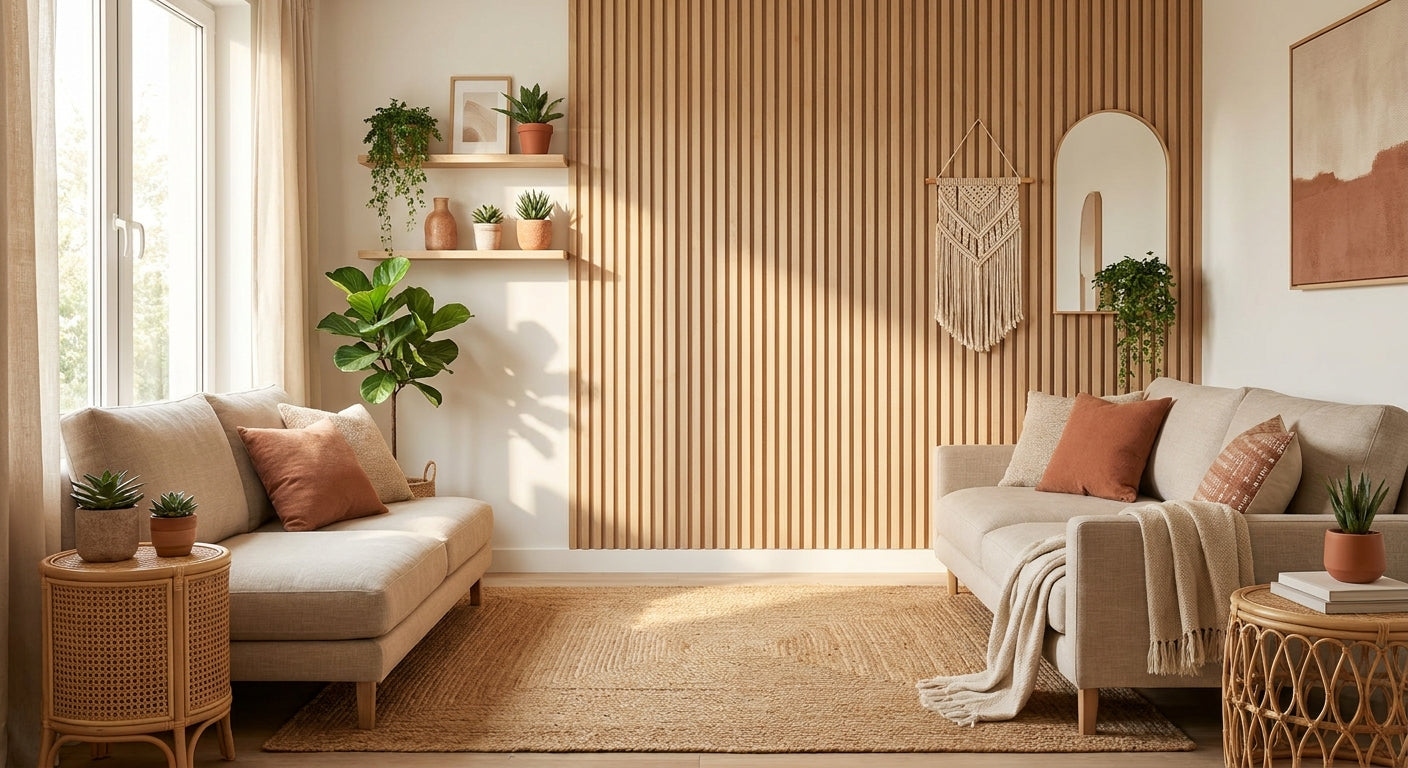

 Better performance and aesthetic appeal
 In Stock