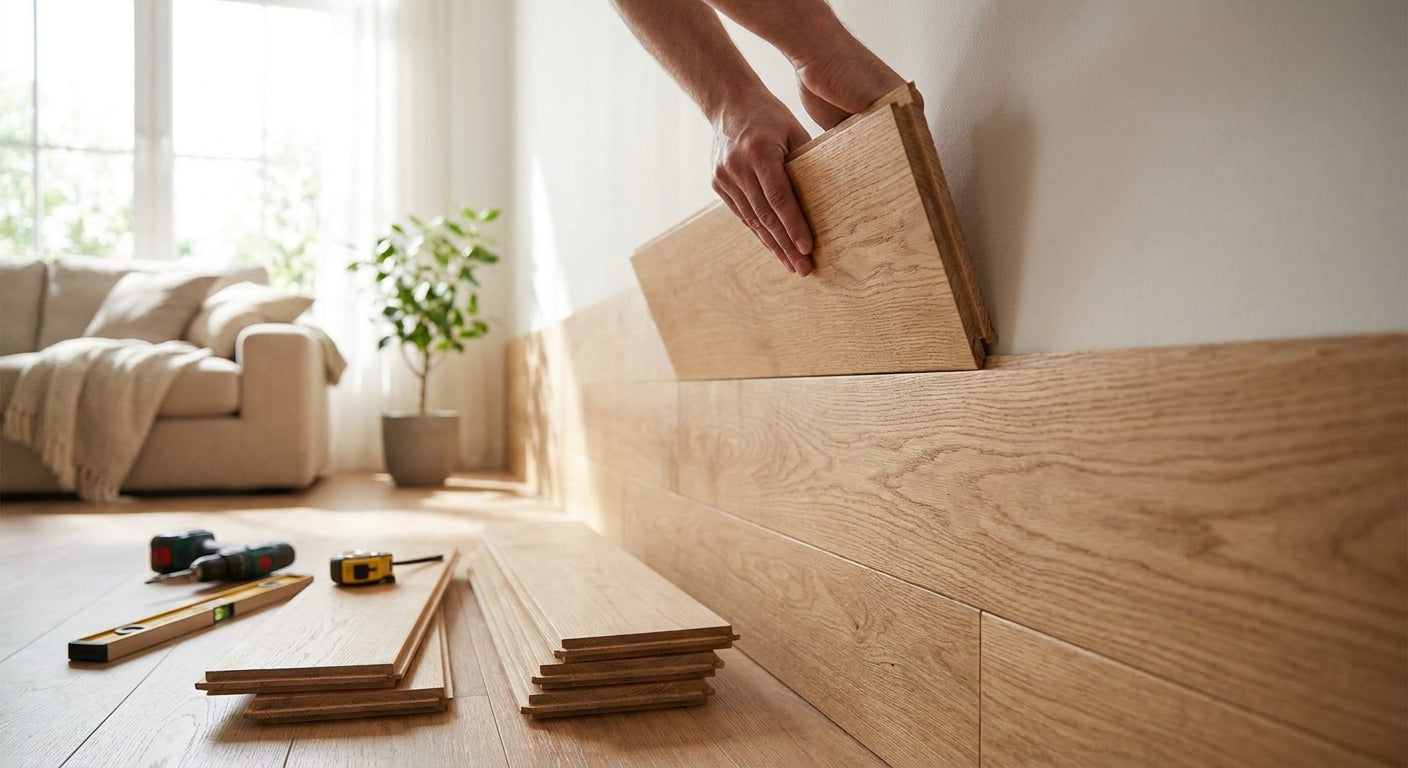
Interlocking wood wall panels let you click, slot, or tongue-and-groove your way to a finished feature wall in an afternoon instead of a weekend, and the ranking below covers which systems actually hold that promise for DIY installs in 2026.
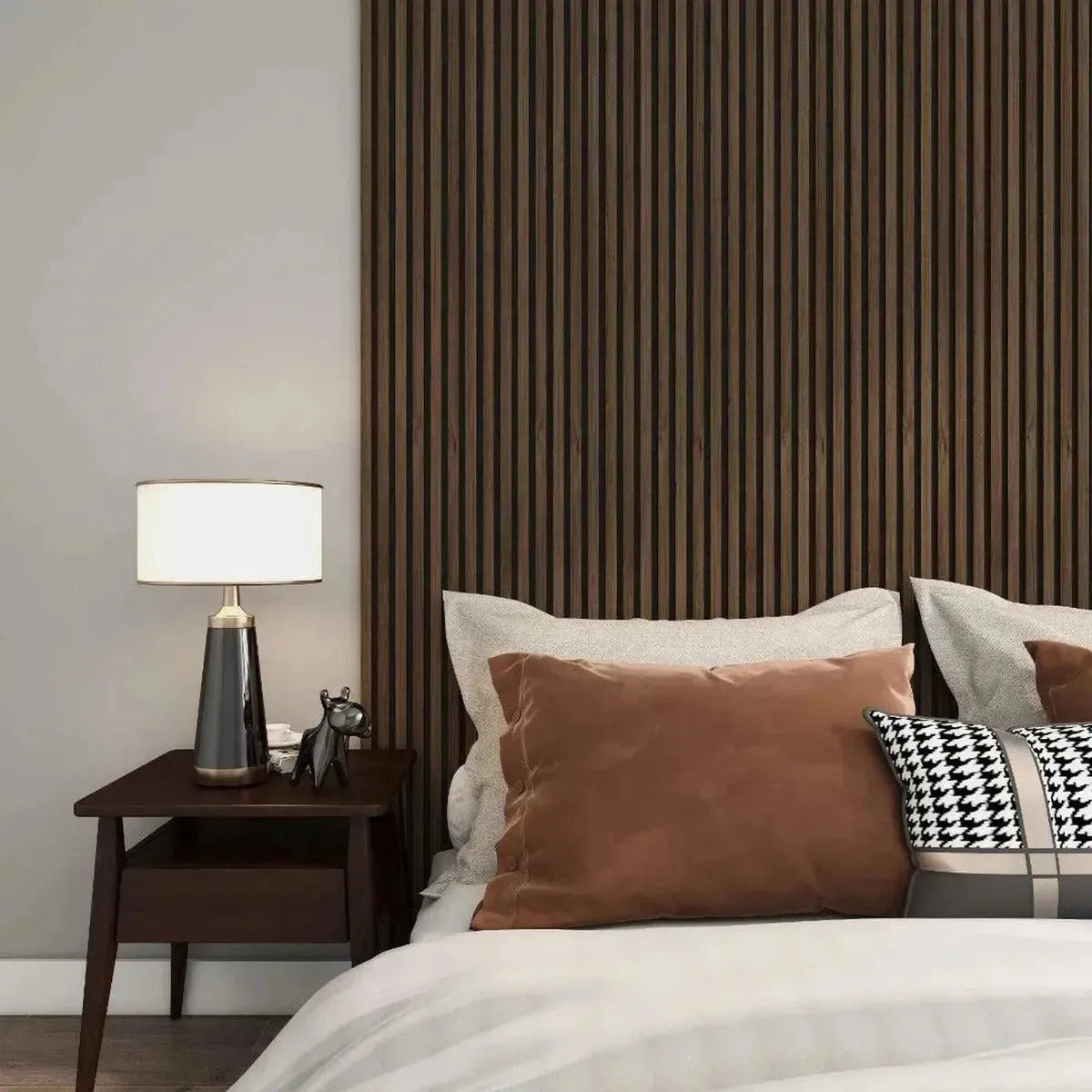
- Natural Oak Acoustic Slat Wall Panel wins for click-fit speed on drywall — Buy for a first feature wall in 2026.
- Walnut Fluted Wall Panel closes seams tight at $233.95 per panel even on a slightly bowed wall — Buy.
- Walnut Hexagon Acoustic Panel needs real layout planning before the first cut — Consider it for one accent wall only.
- Skip rigid slat-style interlocking wood wall panels on curved walls; flexible fluted backing bends, rigid slats crack.
Why this matters
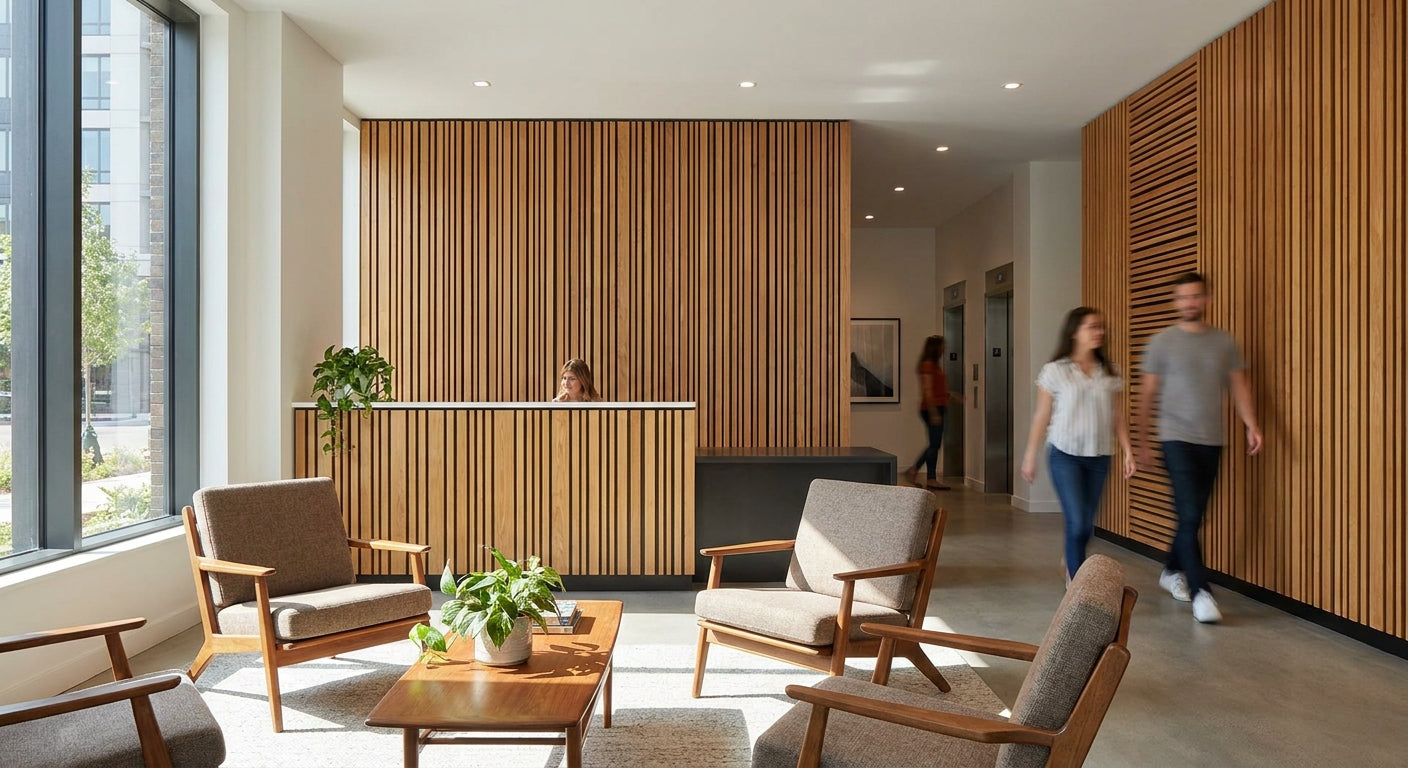
Most "wood wall panel" searches assume you're gluing or screwing full sheets to studs, which turns a Saturday project into a three-day one. Interlocking wood wall panels change that math: tongue-and-groove or click-fit edges lock adjacent boards together, so spacing and alignment get built into the panel instead of into your tape measure. That's true whether you're panelling a single accent wall or fitting out a home office corner.
Akuwood Panel's interlocking wood wall panels use this edge design across the slat, fluted, and hexagon lines, which is why they show up in DIY roundups and not just in commercial spec sheets. For a first-time installer in 2026, the edge system matters more than the veneer species — a panel that locks true saves you from re-cutting an entire wall's worth of boards.
There's a real cost to getting this wrong. A rigid slat panel forced onto an out-of-square wall will show a widening gap by the third or fourth board, and once the interlock is engaged, you can't shim it invisibly. Knowing which edge system suits your wall before you order saves a return shipment and a wasted weekend.
How we ranked these
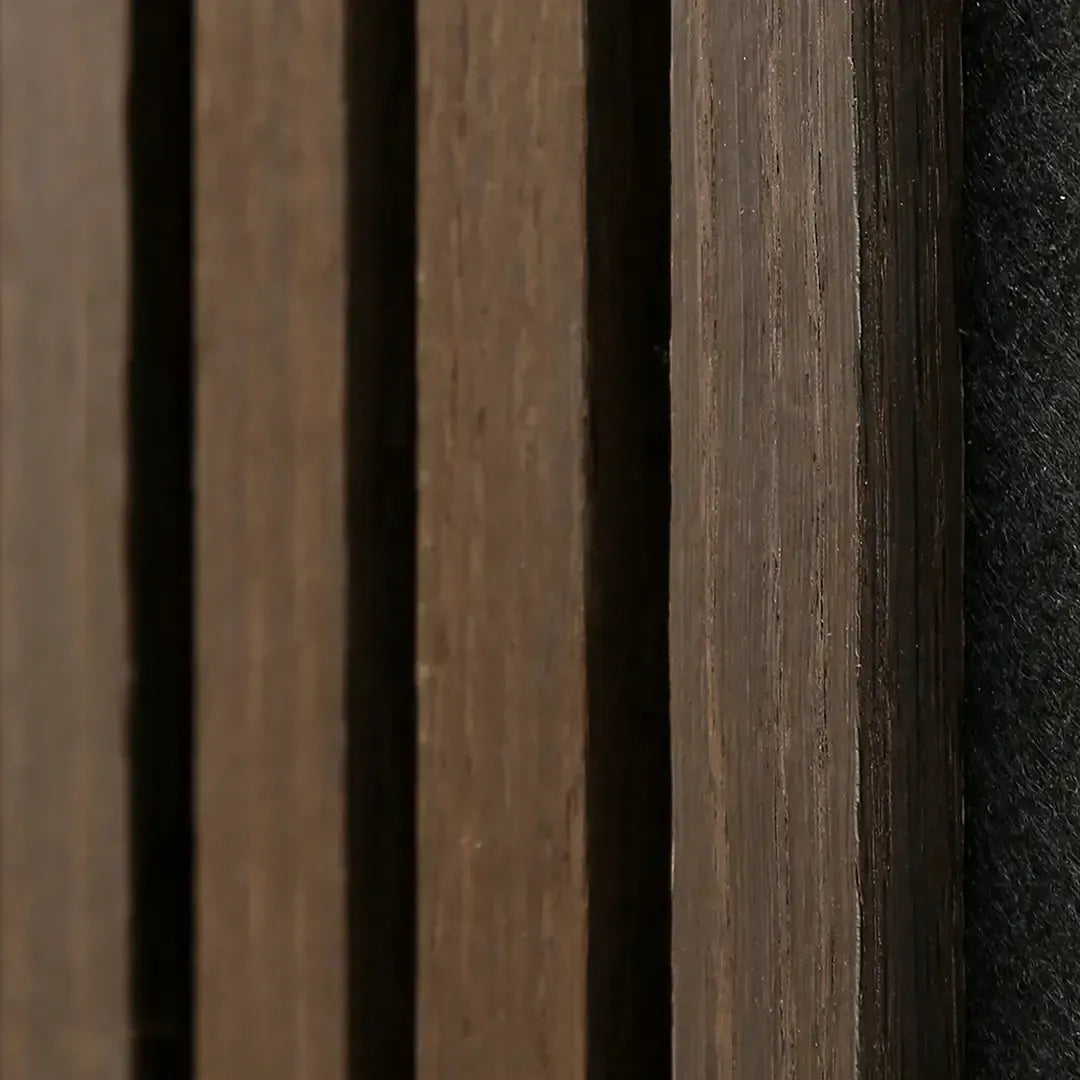
This ranking weighs four things pulled from Akuwood Panel's 2026 interlocking wood wall panel catalog: edge-fit design (interlocking tongue-and-groove vs. butt-joint), veneer coverage (3-sided wood veneer vs. single-face), available finishing hardware (end pieces, corner trim), and price per panel where it's published. Panels without a public per-unit price get ranked on fit and finish, not a guessed number. The list also weights how forgiving each edge system is toward an imperfect wall, since most DIY spaces aren't perfectly square to begin with.
Exterior-rated boards are included only where their interlock system crosses over into interior feature-wall use; pure siding-grade panels get flagged separately below so you don't confuse a cladding board for an interior accent panel. Nothing here claims a lab test — this is a comparison of published 2026 specs and catalog data, not a hands-on trial, and the verdicts reflect that.
Best interlocking wood wall panels, ranked
1. Natural Oak Acoustic Slat Wall Panel — the safe pick
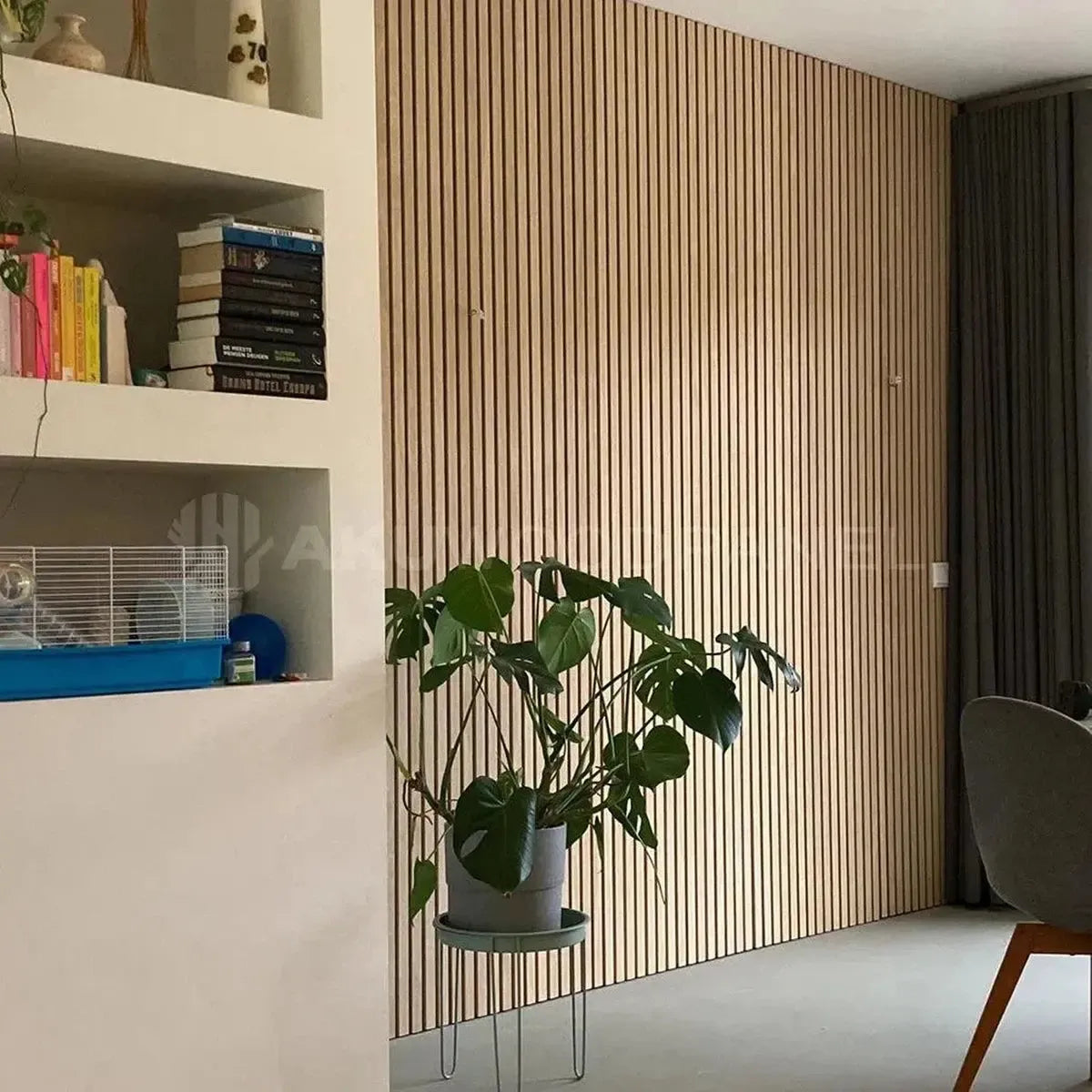
Natural Oak Acoustic Slat Wall Panel is the pick for anyone installing their first feature wall. Its tongue-and-groove slats click into the adjacent board, so one person can square up a wall section without a second set of hands holding boards level while someone else drives screws.
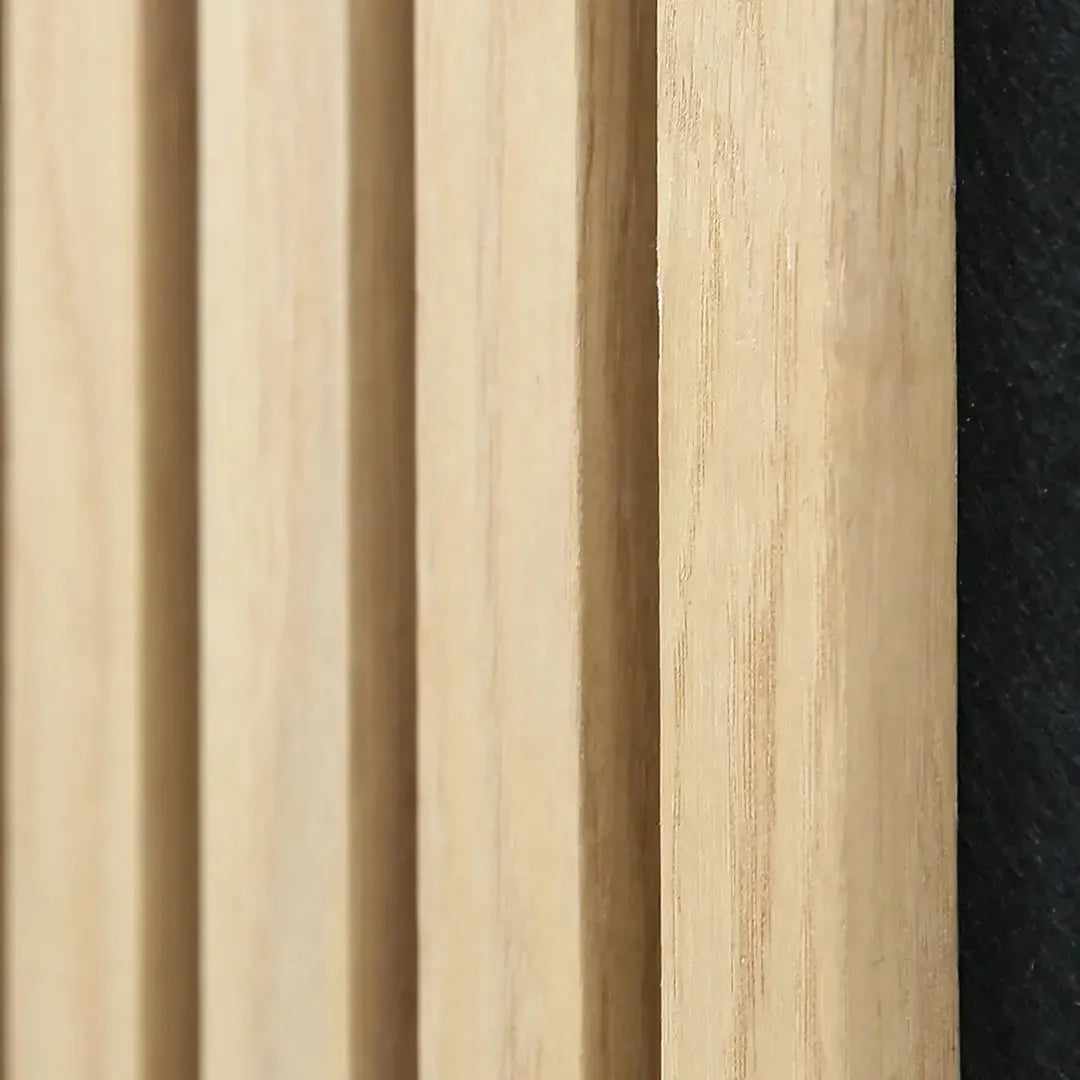
A $2.50 sample panel lets you test the click-fit and grain tone before committing to a full order — cheap insurance against a grain mismatch you'd otherwise only spot after the wall is up. The natural oak finish also hides minor scuffs better than darker veneers, which matters in a hallway or stairwell where boards take more contact.
Buy if you want the lowest-risk interlocking system in the catalog for 2026.
2. Walnut Fluted Wall Panel — the tight-seam pick
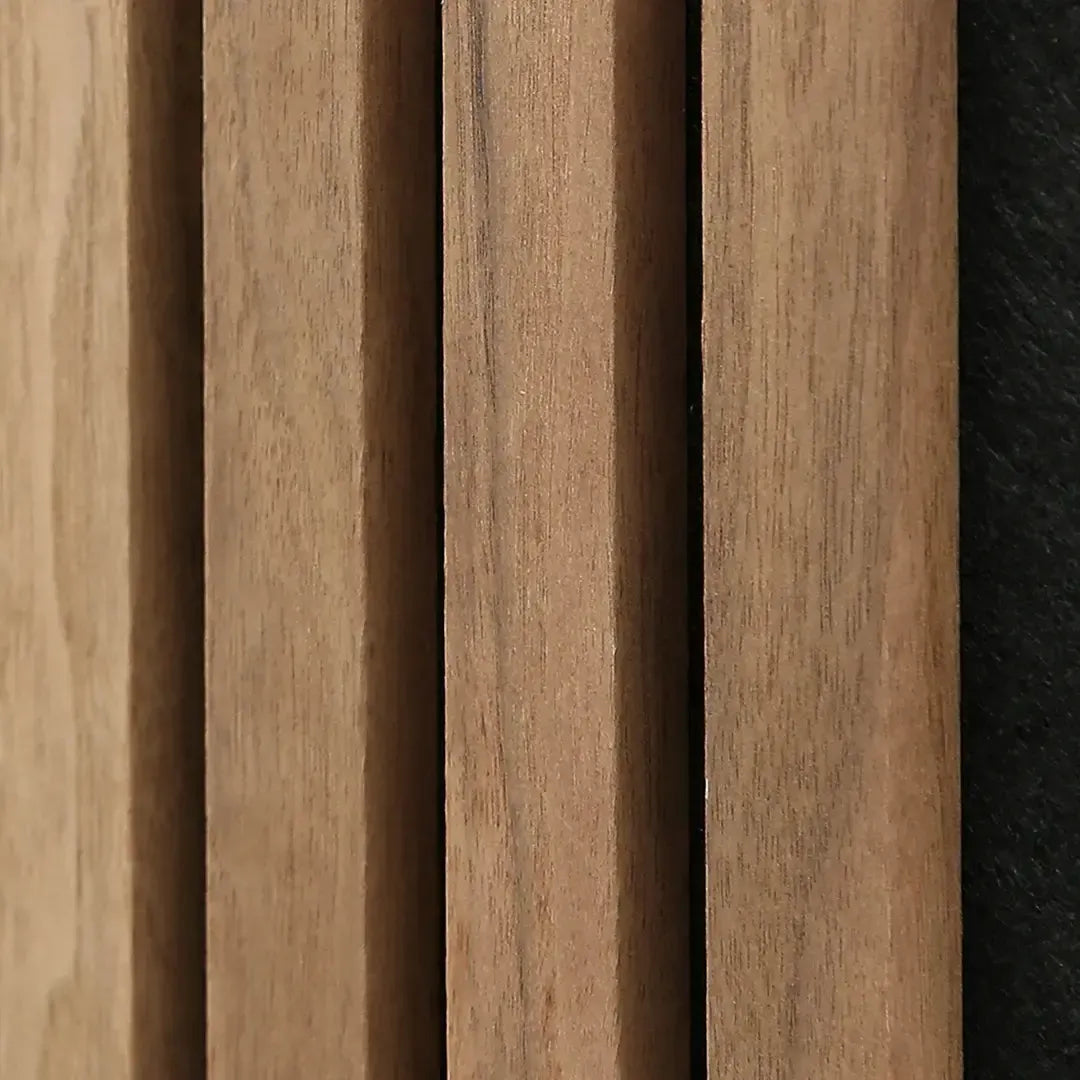
Walnut Fluted Wall Panel runs $233.95 per panel and pairs real wood veneer with a flexible MDF backing, so the fluted grooves line up edge-to-edge without the hairline gap you sometimes see on rigid interlocking boards. That flexible backing also lets it bend slightly around a soft curve, which a rigid slat panel can't do without cracking.
The flexibility does mean the panel needs full-surface contact adhesive or a batten grid behind it rather than just edge screws, so budget a little more install time on the backing prep than you would for a rigid slat.
Buy if the wall isn't perfectly flat or square — this is the interlocking panel that forgives a slightly bowed stud instead of fighting it.
3. Walnut Hexagon Acoustic Panel — the wildcard
Walnut Hexagon Acoustic Panel interlocks on three edges instead of two, which means a six-sided layout needs real planning before the first panel goes up — sketch the pattern on paper first and mark your center line on the wall.
Once it's mapped, the hex shape hides seam lines better than a straight slat wall does, and the acoustic backing behind the veneer helps with echo in a way a flat slat panel doesn't match edge for edge.
Consider it for a single accent wall, not a full room; the extra cut-and-fit time per hexagon adds up fast across large square footage.
4. Black Oak Acoustic Slat Wall Panel — the dark statement
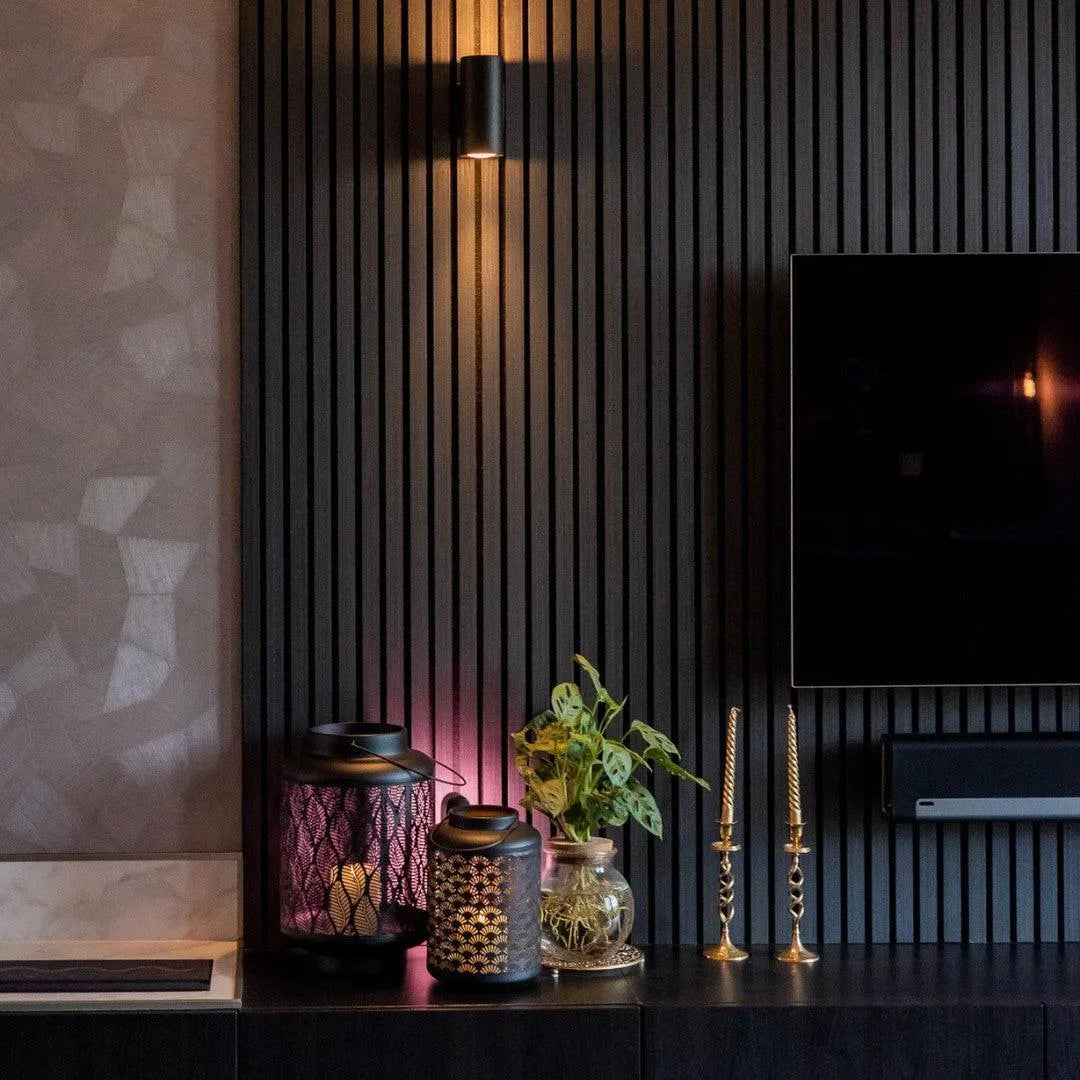
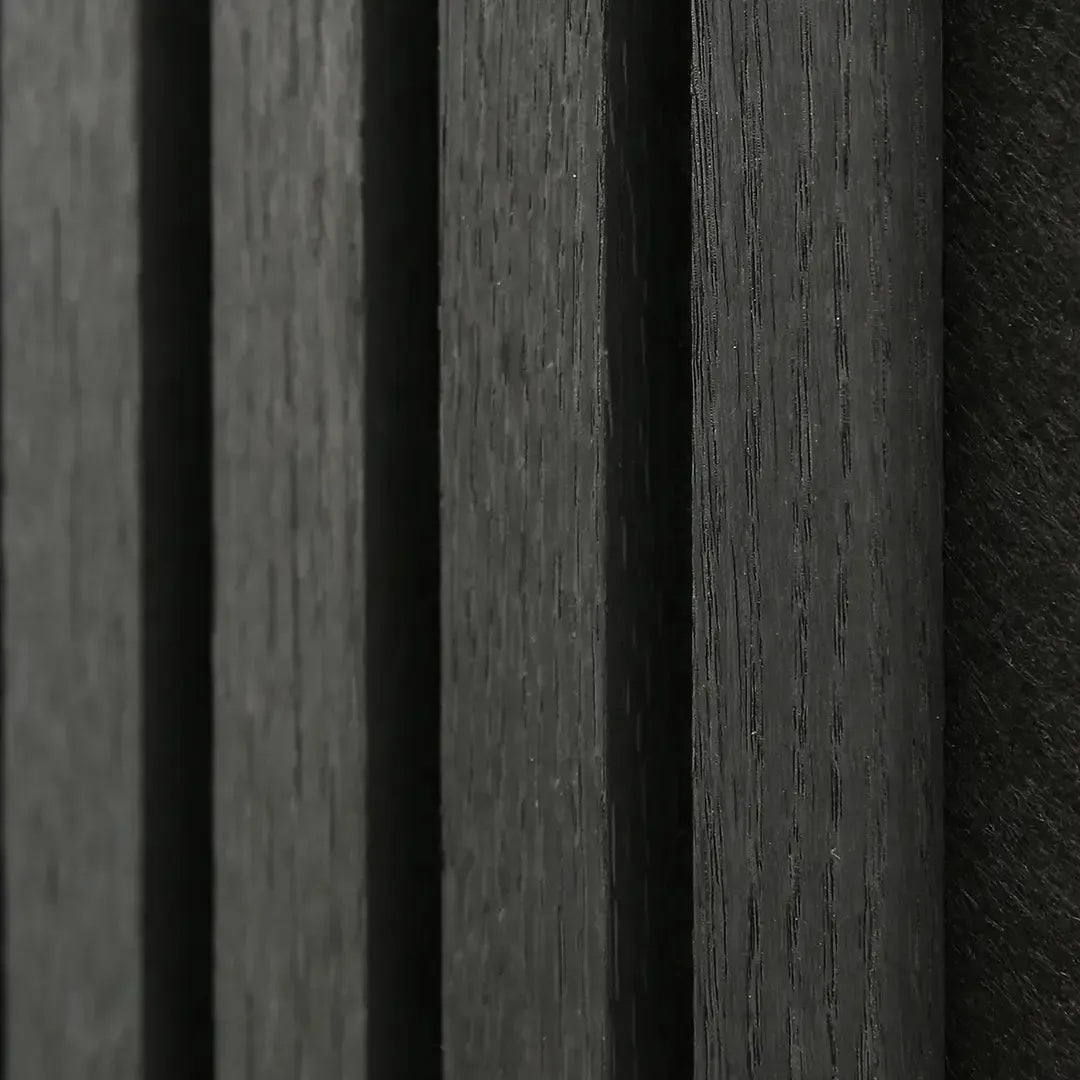
Black Oak Acoustic Slat Wall Panel uses the same 3-sided wood veneer and click-edge as the natural oak version, just in a darker finish that shows dust and fingerprints faster near light switches and doorframes.
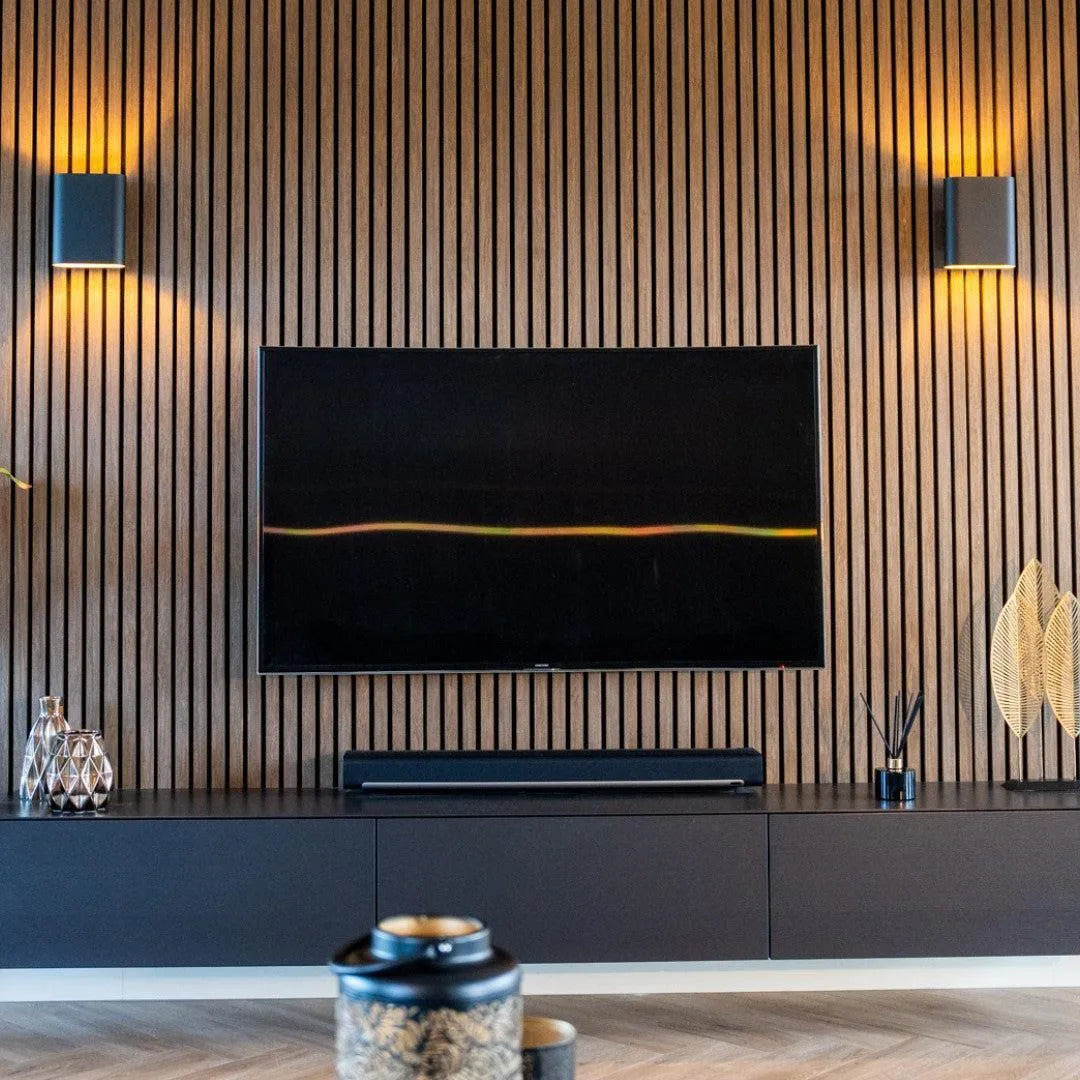
That same dark tone is exactly why designers reach for it on a media wall or fireplace surround where the goal is contrast, not durability under constant touch. It reads more dramatic on camera and in low light than the lighter oak finishes do.
Consider it for a media wall away from high-touch zones. Skip it for a hallway or entryway.
5. Slim Walnut 3D Wood Wall Tile — the small-space option
Slim Walnut 3D Wood Wall Tile locks edge-to-edge like the slat panels but ships in a smaller tile format, which suits a backsplash or narrow accent wall better than a full room.
The smaller units make it easier to work around outlets, switches, or an odd corner without a full-panel rip cut, which is the main advantage over a full-size slat board in a tight space.
Hold off if you're covering more than one wall — the smaller format means more seams to align per square foot than a full-size interlocking slat panel.
6. Birch Exterior Wall Panel — skip for interior speed installs
Birch Exterior Wall Panel is built for outdoor cladding, with a weather-rated finish and matching rubber end caps and screws sold separately. It interlocks the same way as the interior slat panels, but the exterior hardware and weatherproofing steps add a full extra day to any install.
That extra day covers sealing exposed cuts, fitting corner trim, and checking clearance off the ground so moisture doesn't wick into the panel edge — none of which an interior install needs to worry about.
Skip it for an interior feature wall — use the acoustic slat or fluted lines instead and save the exterior panel for an actual outdoor wall.


Comparison table
The table below lines up the same six panels by edge system, ideal wall condition, and verdict so you can scan without rereading each writeup.
| Panel | Edge system | Best for | Verdict |
|---|---|---|---|
| Natural Oak Acoustic Slat Wall Panel | Click-fit tongue-and-groove | First-time installers | Buy |
| Walnut Fluted Wall Panel | Flexible click-fit | Uneven or slightly curved walls | Buy |
| Walnut Hexagon Acoustic Panel | Three-edge interlock | One accent wall, patterned | Consider |
| Black Oak Acoustic Slat Wall Panel | Click-fit tongue-and-groove | Dark media walls | Consider |
| Slim Walnut 3D Wood Wall Tile | Tile-edge interlock | Small accent areas, backsplashes | Hold |
| Birch Exterior Wall Panel | Weather-rated interlock | Outdoor cladding only | Skip |
Installation reality check: alignment beats adhesive
Tongue-and-groove and click-fit edges remove guesswork on spacing, but they don't fix a bad starting line. The first board sets the reference for every panel after it, so a small lean at board one becomes a visible slope by board twelve.
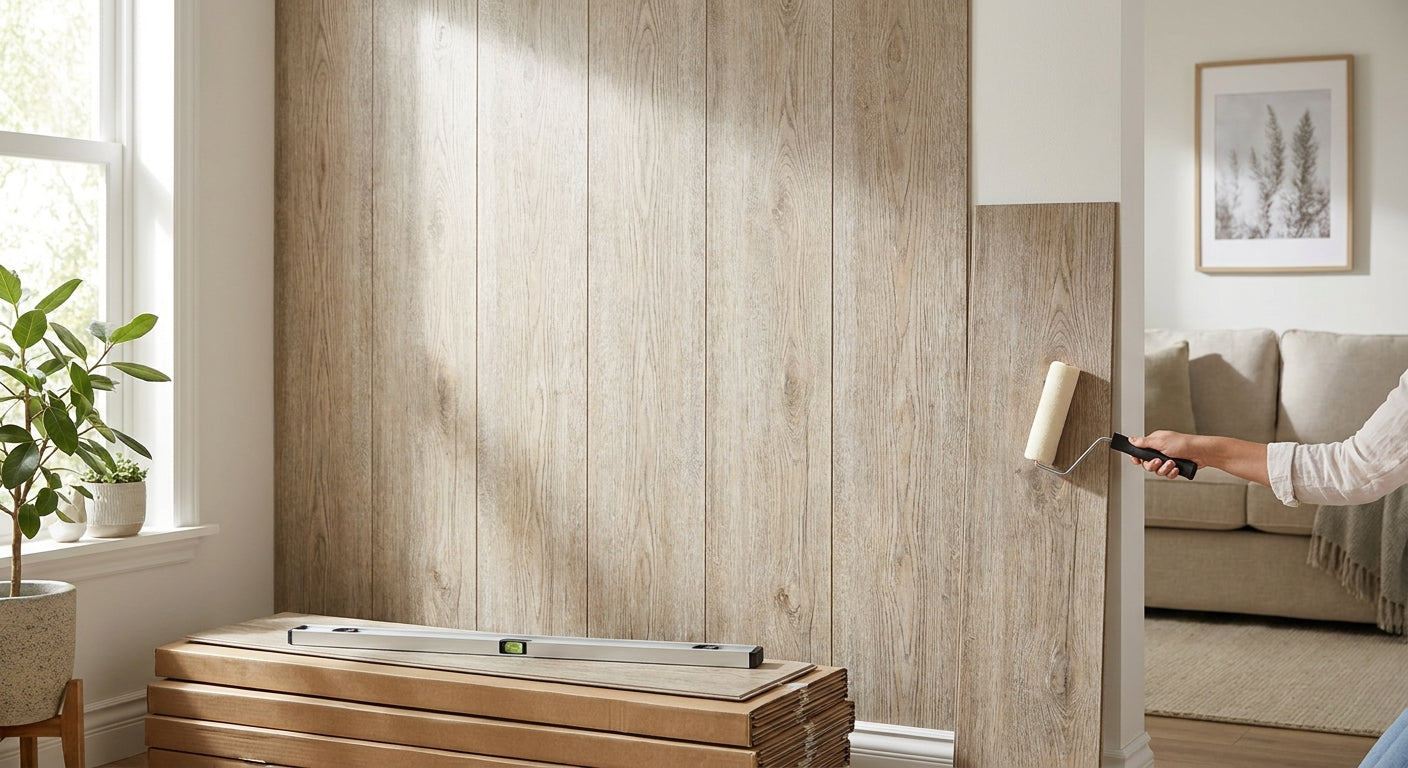
For a full wall of narrow slats, aligning wall panels straight from the very first click matters more than which screw or adhesive you back it with — you can't nudge a locked joint after the fact. Check the first course with a level before locking in board two, not after board six.
This is the step most DIY installs skip, because the panel's own edge system feels self-correcting. It isn't. The interlock keeps boards parallel to each other, not level to the floor or plumb to the ceiling — that part is still on you.
“A locked interlocking joint can't be nudged straight after the fact — get board one right or the whole wall drifts.”
Common mistakes that ruin an interlocking install
- Starting in a corner instead of the center. Corners are rarely square, so a panel forced into a corner first telegraphs that error across the whole wall. Start from the center or the most visible point and work outward.
- Skipping the dry-fit. Lay two or three boards on the floor and click them together before anything touches the wall. It takes five minutes and catches a warped board before it's screwed in place.
- Mixing lots without checking grain. Real wood veneer varies batch to batch. Order end pieces and trim with the field panels, not weeks later, so the grain and tone match.
- Forcing a rigid panel around a curve. Rigid slat and hexagon panels crack under bend stress. Only the fluted line's flexible backing is built to take a soft curve.
- Ignoring humidity swings. Real wood veneer moves slightly with humidity; leave the panels in the room for 48 hours before installing so they acclimate and the interlock doesn't fight seasonal expansion.
Where to buy interlocking wood wall panels
- Order a sample first. At $2.50 for a natural oak sample, testing the click-fit and grain match costs less than one wasted full-size panel — and it's the fastest way to confirm the finish reads right under your room's actual lighting.
- Buy end pieces and trim in the same order as the field panels. Wood veneer batches vary slightly between production runs, and matching trim ordered weeks later can read a shade off next to the wall.
- Read the install steps before you order, not after. The walkthrough on installing slat wall panels on drywall flags the stud-spacing issue that trips up most first-time installs, and it's worth ten minutes before boards show up at your door.
FAQ
What are interlocking wood wall panels?
Interlocking wood wall panels are boards with a tongue-and-groove or click-fit edge that lock into the adjacent panel, removing the need to measure and space each board individually. Akuwood Panel's slat, fluted, and hexagon lines all use this edge system in 2026.
Are interlocking wood wall panels easier to install than glue-up panels?
Yes, interlocking wood wall panels are faster because the edge design sets spacing and alignment for you, so one person can install a wall section without clamps or spacers. Glue-up panels still need even adhesive coverage and drying time between boards.
How much do interlocking wood wall panels cost?
Walnut Fluted Wall Panel costs $233.95 per panel in the 2026 catalog, and a natural oak sample panel costs $2.50. Full pricing varies by finish and panel type, so check current listings before ordering a full wall's worth.
Can interlocking wood wall panels go on a curved wall?
Only flexible-backed panels like the Walnut Fluted Wall Panel bend around a soft curve; rigid slat-style interlocking wood wall panels stay flat and will crack if forced around a bend. Confirm the backing type before ordering for anything but a flat wall.
Do I need special tools to install interlocking wood wall panels?
A level, a saw for end cuts, and screws or adhesive sized for the panel's backing cover most installs. The interlock itself does the alignment work, but the first board still needs to be checked level before you lock in the second one.
What's the difference between slat and fluted interlocking wood wall panels?
Slat panels have flat gaps between boards and a rigid backing, while fluted panels have rounded grooves and a flexible MDF backing that closes seams tighter and bends slightly. Fluted panels cost more per panel but forgive an uneven wall better.
How many interlocking wood wall panels do I need for a wall?
Coverage depends on panel width and wall height, and most installs need 10-15% extra for end cuts and waste. Measure the wall in square feet first, then check the panel's coverage per unit before ordering.
One last thing
The end piece is not optional trim — it's the interlock's finish edge. Skip the $38.95 end piece to save money and the last board in the run shows its raw core panel at the wall's edge, which is the one detail that gives away a rushed install in 2026. Order the matching end piece with the first shipment, not as an afterthought once the wall's already up.
 Better performance and aesthetic appeal
 In Stock