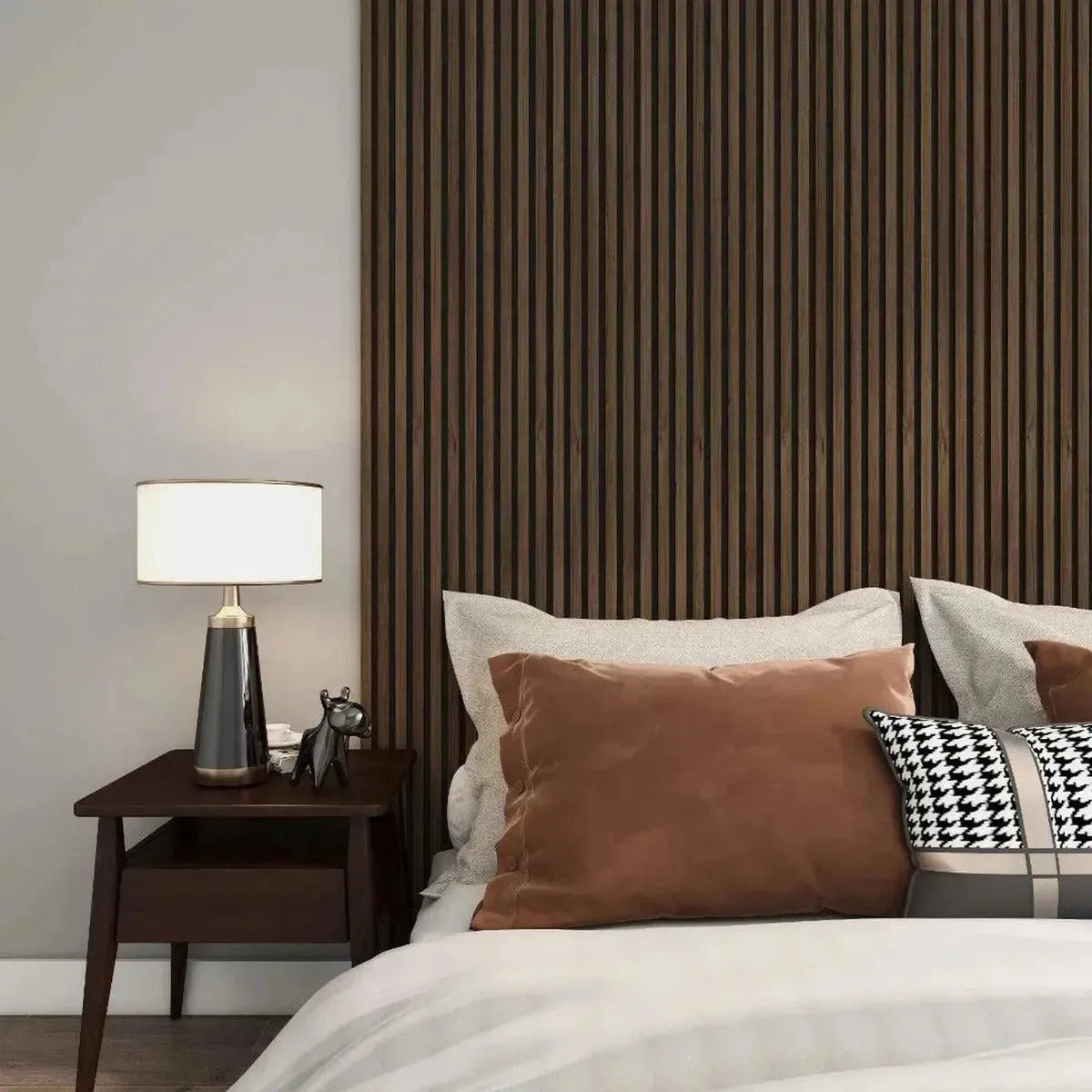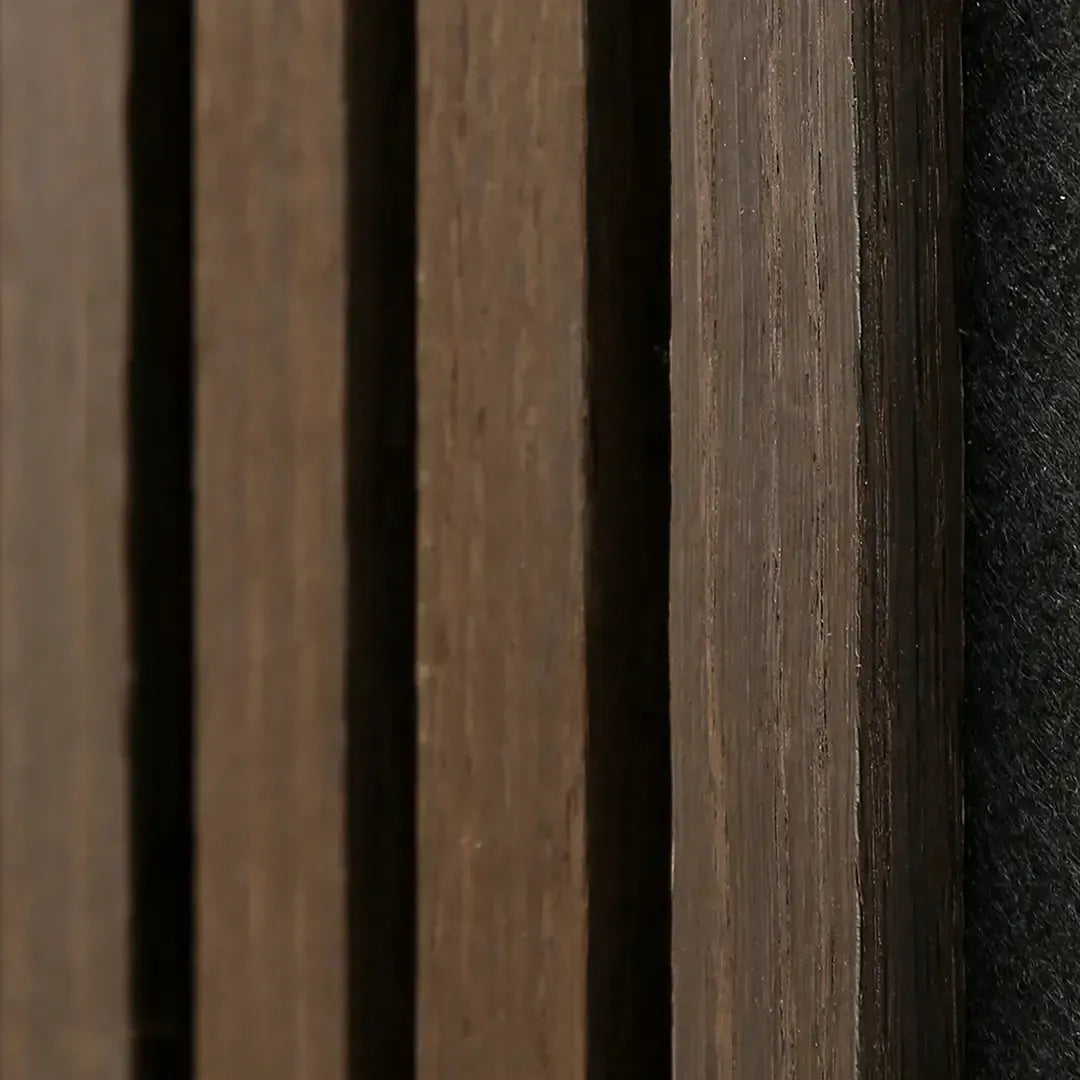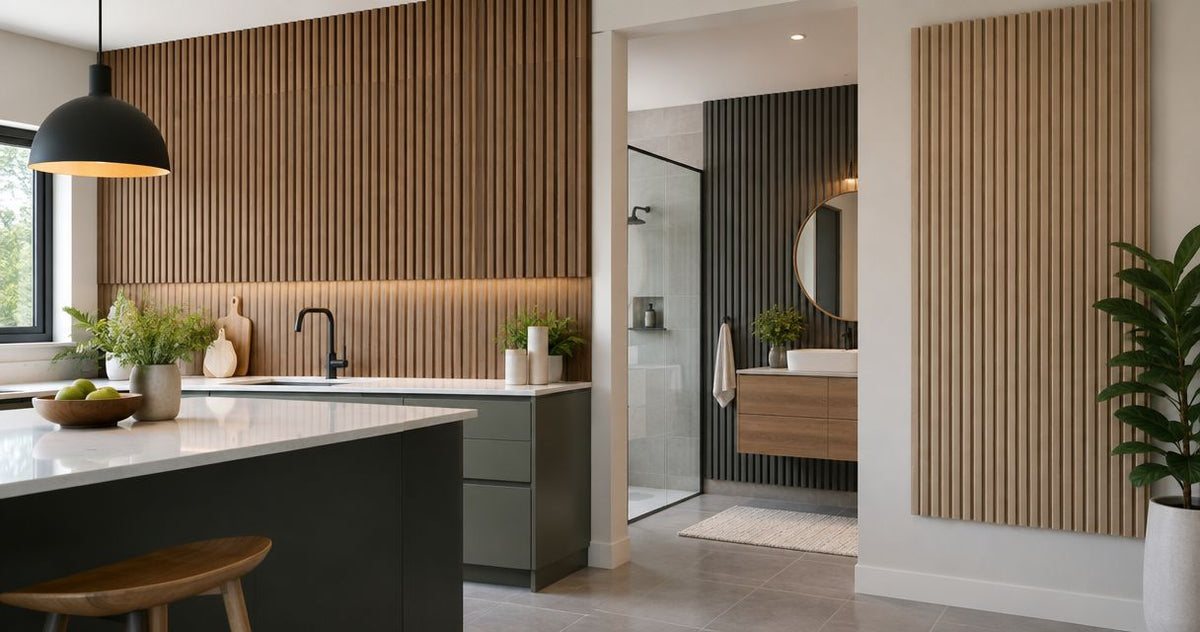
Best overall for a dry open-plan kitchen and dining wall in 2026: Akuwood Panel Acoustic Slat Wall Panel Natural Oak. Best for a darker dining scheme: Acoustic Slat Wall Panel Smoked Oak with Gray Felt. Best for a compact accent: Hexagon Acoustic Panel Natural Oak. None is a default choice for a shower wall or wet backsplash; a bathroom specification needs documented moisture suitability for the exact panel and installation.
- Akuwood Panel Natural Oak is the best overall acoustic wall panel for kitchen and bath remodelers treating a dry dining wall.
- Smoked Oak with Gray Felt suits darker dining schemes; Walnut suits a warm, continuous slat wall.
- Hexagon Acoustic Panel Natural Oak fits a smaller dry accent area, not a wet bathroom surface.
- For 2026 bathroom projects, confirm moisture suitability and acoustic test data before specifying any wood panel.
Why this matters
A kitchen and bath remodeler has two different problems to solve. A kitchen open to a dining or living area can have hard floors, counters and cabinet fronts that reflect sound. A bathroom adds humidity and direct-splash questions that a decorative product name cannot answer. Treating those rooms as interchangeable is how an attractive material ends up in the wrong location.
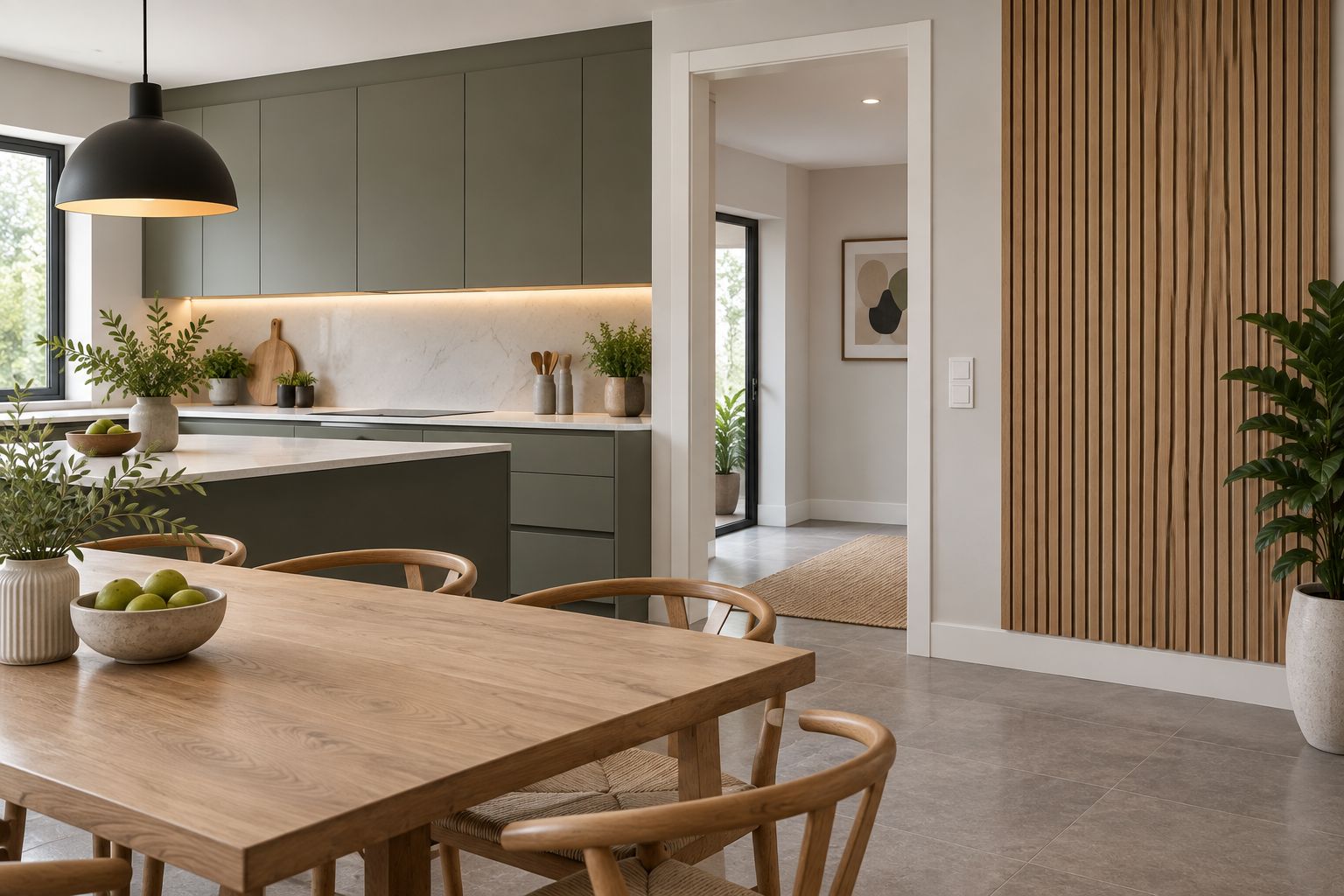
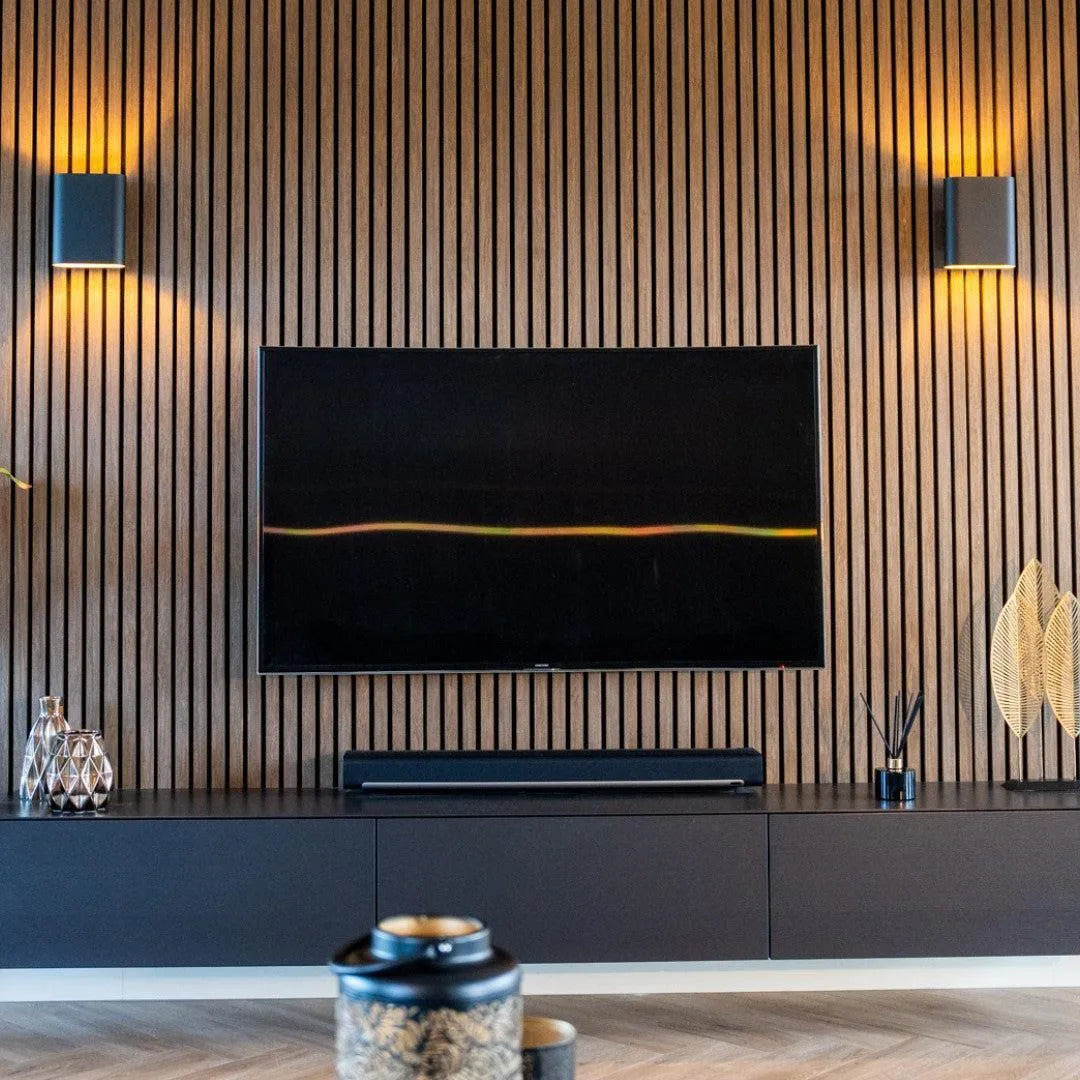
Akuwood Panel acoustic wall panels are a sensible shortlist for dry feature walls, not a substitute for a wet-area specification. If the client wants less echo at the dining table, assess the wall area available for treatment. If the client wants a finish behind a sink or inside a shower, establish moisture requirements first and evaluate a material documented for that location. The Natural Oak acoustic slat wall panel is the starting point for a dry, shared kitchen and dining space.
In 2026, make the product decision after you identify where water can reach the wall, where people hear the echo and which surfaces remain available after cabinetry goes in. Those three observations are more useful than choosing a wood color from a rendering.
What makes the best acoustic wall panels for a remodel
Use these criteria before choosing a finish. They keep a decorative wall treatment from being mistaken for a tested answer to every sound or moisture problem.
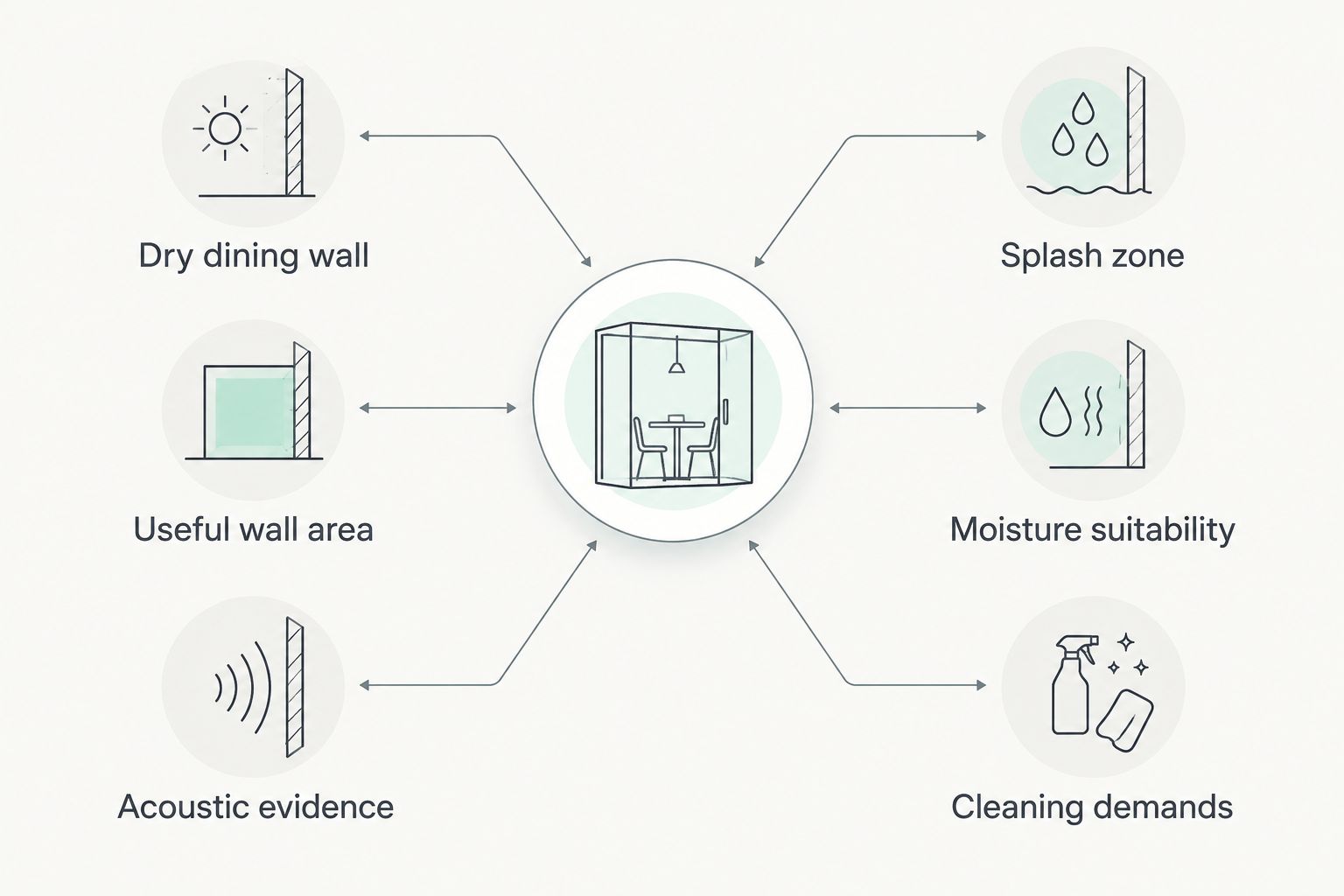
- Location suitability: Separate a dry dining wall from a sink splash zone, shower enclosure or persistently humid location. Obtain written installation guidance for the exact product before using it near water.
- Acoustic evidence: Ask for a test report covering the proposed panel and mounting assembly. A wood appearance, felt color or acoustic label alone does not establish performance in your room.
- Useful wall area: Check what remains after upper cabinets, doors, outlets and trim. A continuous wall allows a different layout from a short section beside a pantry.
- Finish coordination: Compare veneer and felt against the actual cabinet fronts, counters and flooring under the room's lighting. Color names alone are not samples.
- Edges and access: Plan exposed ends, inside corners, switches and any access panels before ordering. A clean drawing avoids an improvised stop at the end of a cabinet run.
- Maintenance demands: Confirm the cleaning method the finish permits. In a kitchen, the proposed position matters as much as how the panel looks on installation day.
For a 2026 remodel, acoustic evidence and location suitability outrank finish preference. A panel that looks right but lacks the documentation your wet-area detail requires stays out of that detail.
The 2026 picks at a glance
| Panel | Best for | Standout feature | Key limitation |
|---|---|---|---|
| Akuwood Panel Natural Oak acoustic slat wall panel | Dry, open-plan kitchen and dining walls | Natural oak slat finish | Moisture suitability and installed acoustic performance need confirmation |
| Akuwood Panel Smoked Oak with Gray Felt acoustic slat wall panel | Darker dining schemes with a gray-backed finish | Smoked oak and gray felt pairing | Felt color does not establish a noise-reduction result |
| Akuwood Panel Walnut acoustic slat wall panel | Warm, continuous slat feature walls | Walnut finish | A full wall needs careful edge and obstruction planning |
| Akuwood Panel Hexagon Acoustic Panel Natural Oak | Compact dry accent areas | Individual hexagon format | Less straightforward for a continuous wall layout |
These are use-case picks, not a published performance ranking. No acoustic test values or moisture ratings for these four products were supplied with the product list. The table compares the named formats and where each makes the clearest design choice; project approval still depends on the product documentation.
1. Akuwood Panel Natural Oak: best for open-plan dining walls
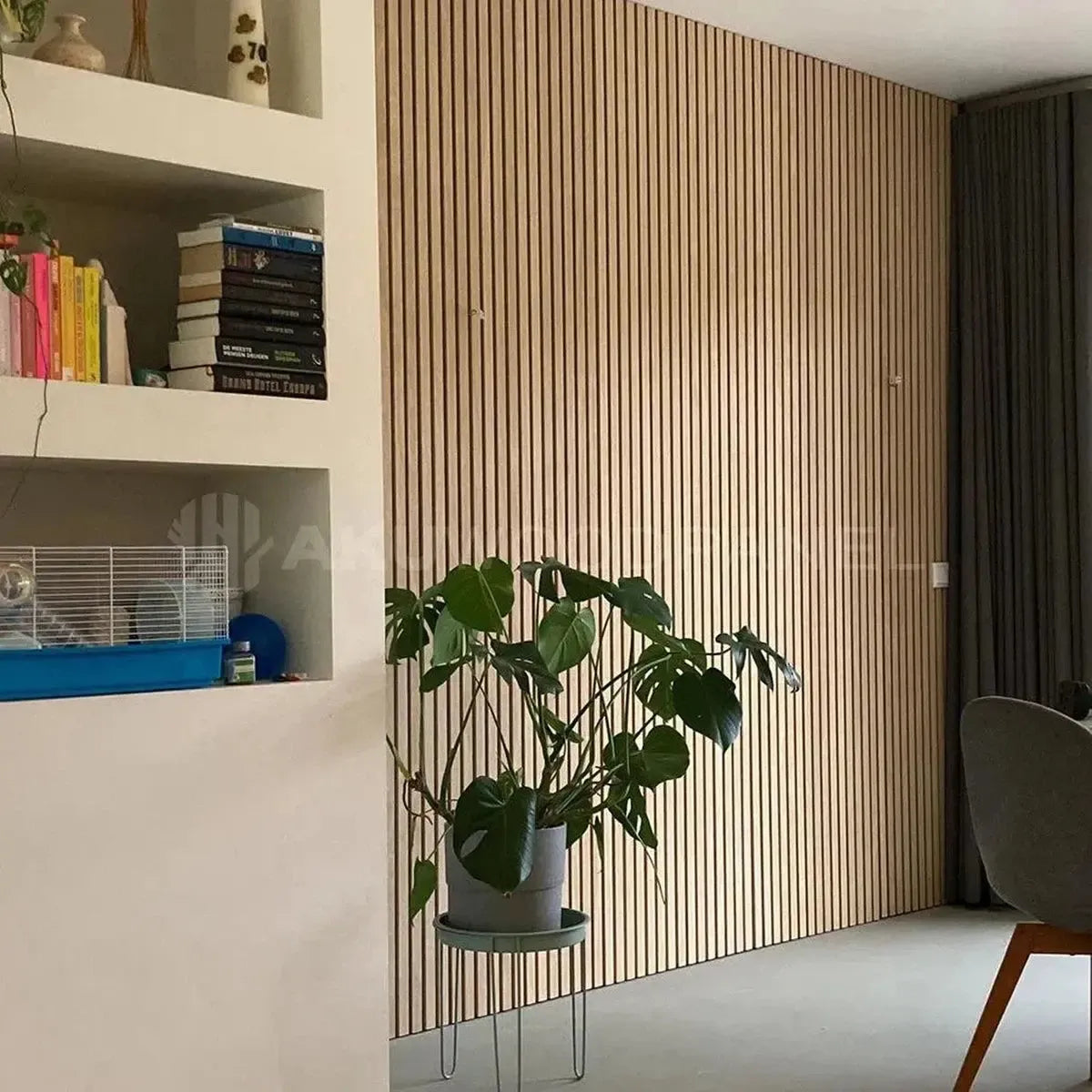
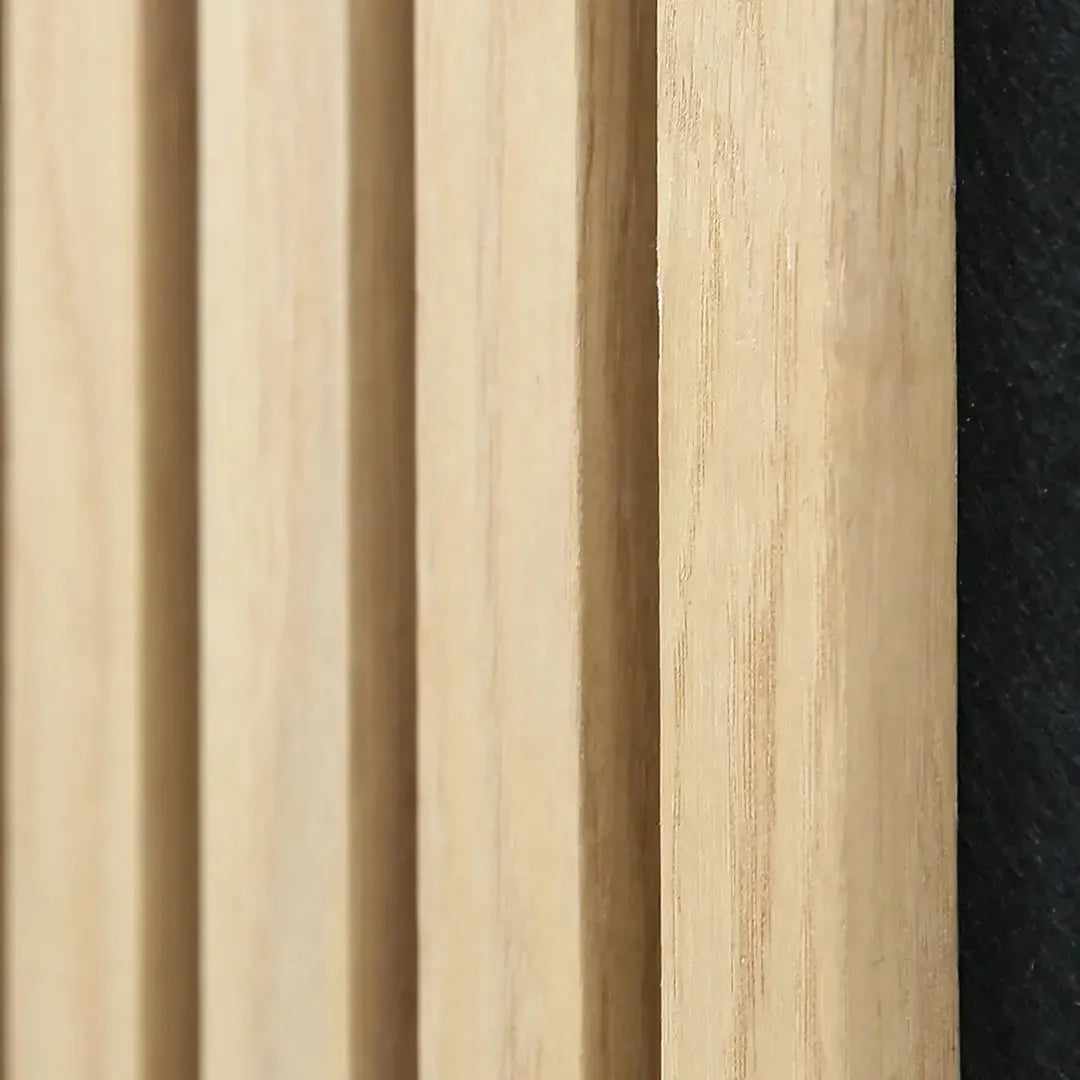
Best for: A dry wall shared by the kitchen and dining area. Akuwood Panel Natural Oak is the best default acoustic wall panel for kitchen and bath remodelers whose immediate brief is a wood feature wall in an open-plan room. Its named slat format makes it the clearest starting point when the wall can carry a continuous treatment rather than a small decorative cluster.
Begin with the wall people face or sit beside when conversation is difficult. Mark cabinets, switches, doors and furniture on the elevation before deciding how much paneling the design can accommodate. Do not promise a particular acoustic improvement from the finish alone; request test information for the intended mounting method.
Akuwood Panel Natural Oak pros:
- Slat format suits a continuous feature-wall drawing.
- Natural oak offers a clear finish reference for comparing samples with cabinets and flooring.
- The panel is explicitly identified as acoustic, so you can request the corresponding test documentation.
Akuwood Panel Natural Oak cons:
- The available product information does not establish suitability for direct splashes or a shower wall.
- A wall interrupted by cabinets and openings takes more layout work than an open elevation.
- The product name does not tell you the result for your installed assembly.
Verdict: Buy for a dry feature wall after checking the specification; skip it for an undocumented wet-area installation. For a 2026 kitchen remodel, that distinction belongs on the drawing, not in a conversation after installation.
2. Akuwood Panel Smoked Oak with Gray Felt: best for darker dining schemes
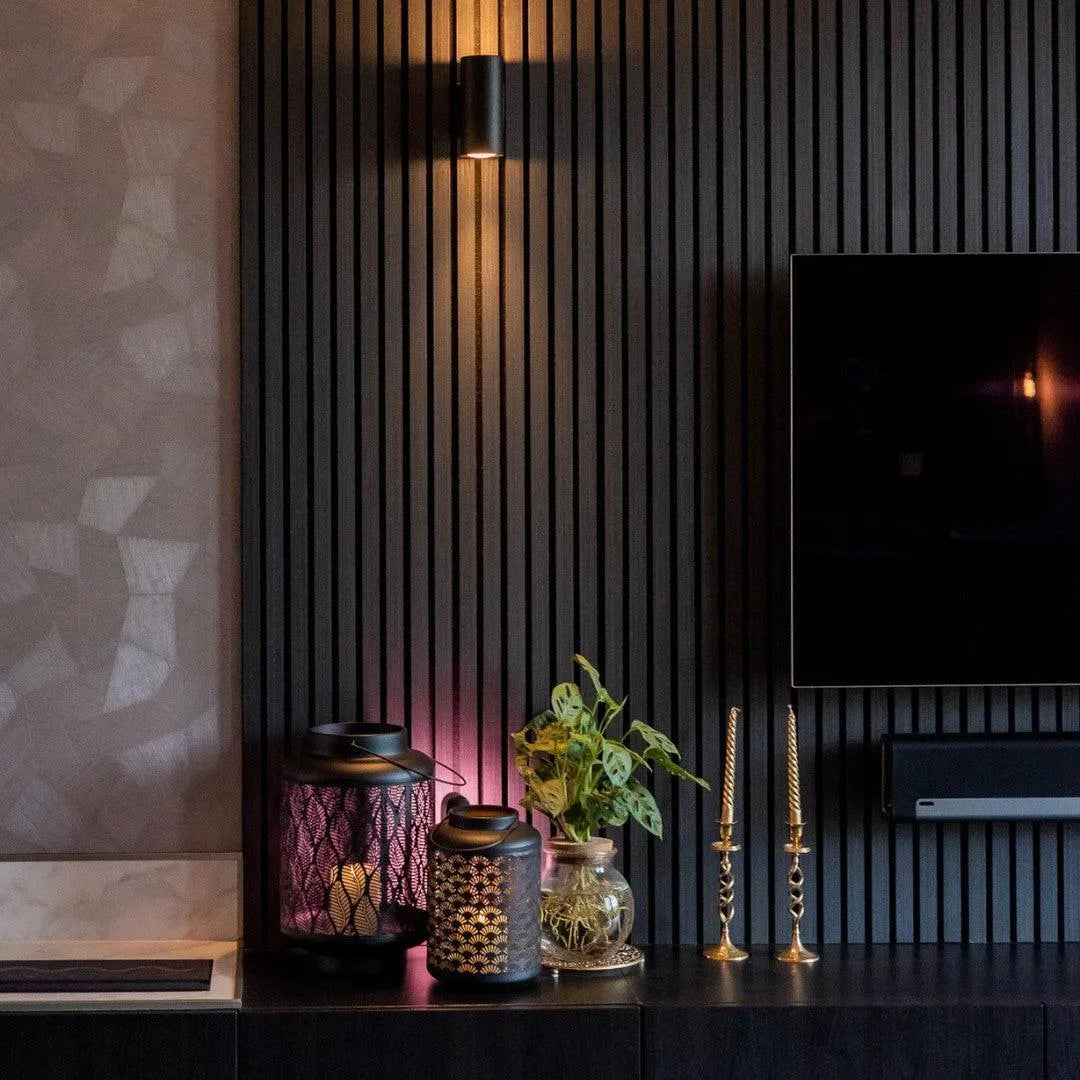
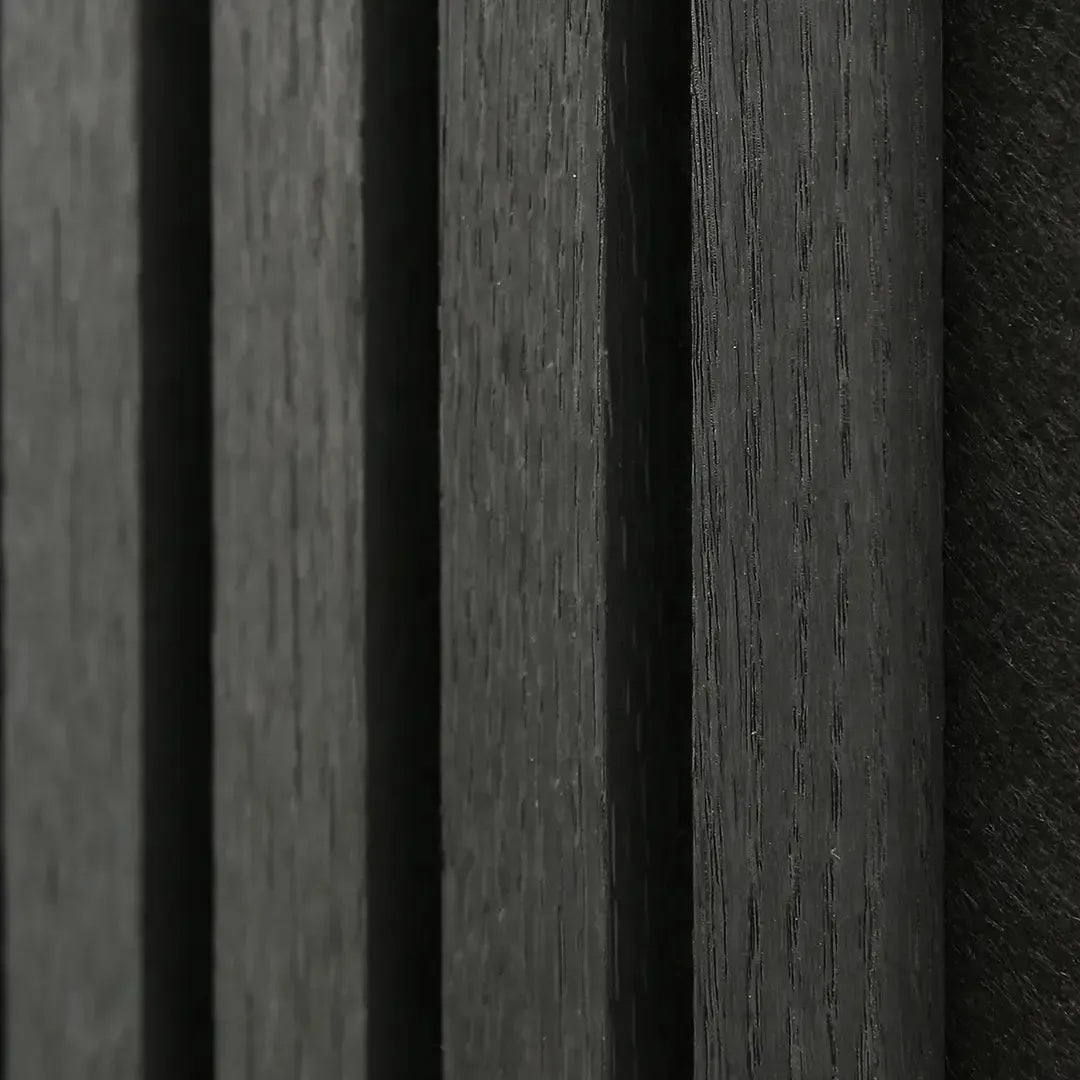
Best for: A dry dining feature wall where the design calls for smoked oak with a visible gray felt pairing. The Smoked Oak with Gray Felt acoustic slat wall panel earns this slot on finish coordination, not on a claimed acoustic advantage over the natural oak option.
Check the finish against the installed cabinet color rather than a screen image. If the dining wall receives daylight from one side, review a physical sample in that light and under the room's electric lighting. A gray-backed design can be a deliberate part of the elevation; it is not evidence of a particular absorption rating.
Akuwood Panel Smoked Oak with Gray Felt pros:
- The product name identifies both the smoked oak finish and gray felt, making the visual specification clear.
- Slat format works for a planned, continuous dining-wall treatment.
- It gives a distinct alternative when natural oak does not suit the material palette.
Akuwood Panel Smoked Oak with Gray Felt cons:
- The provided information does not quantify acoustic performance for the proposed installation.
- The darker finish needs an in-room sample check against adjacent surfaces.
- Felt backing does not establish wet-area suitability.
Verdict: Buy for a dry dining wall when smoked oak and gray felt fit the design; hold if the brief requires a verified acoustic result first. In a 2026 specification, list the finish choice and the required test documentation separately.
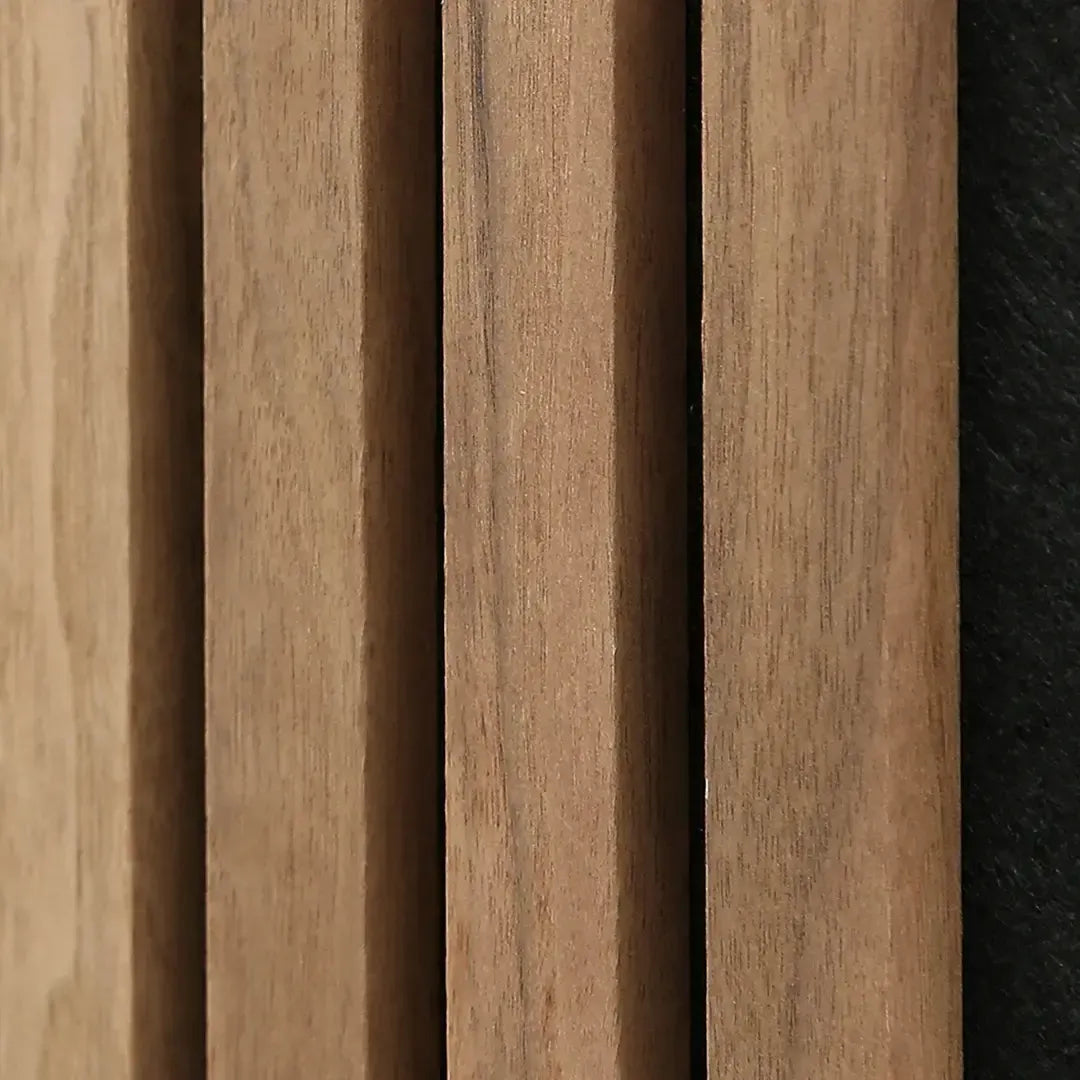
3. Akuwood Panel Walnut: best for warm, continuous slat walls
Best for: A dry kitchen-adjacent or dining wall where the client wants a walnut finish across a continuous elevation. The Walnut acoustic slat wall panel fills a different design slot from the gray-felt smoked oak pick: it is the warm-finish option when the wall itself, rather than a compact accent, is the visual focus.
Draw the full elevation before selecting it. Note where the panel starts and stops, especially at a cabinet edge, doorway or change in wall plane. If a contractor cannot show how the exposed edge will finish, the design is not ready for ordering. Check the actual veneer appearance with a sample; a finish name cannot settle a match to existing woodwork.
Akuwood Panel Walnut pros:
- Walnut is explicitly named, giving the finish schedule a defined reference.
- A slat format supports a continuous feature-wall composition.
- It creates an alternative to natural oak without changing the basic wall-layout approach.
Akuwood Panel Walnut cons:
- Exposed ends and interruptions need a documented detail.
- No product-specific moisture approval is available in the supplied information.
- An acoustic label does not replace assembly-level test data.
Verdict: Buy for a dry, well-detailed walnut feature wall; wait if the proposed location is routinely splashed. That is the practical 2026 decision even when the finish looks right in the design presentation.
4. Akuwood Panel Hexagon Natural Oak: best for compact dry accents
Best for: A small, dry wall section where a remodeler wants an acoustic panel format without drawing a full-height slat wall. The Hexagon Acoustic Panel Natural Oak offers a separate layout choice for a dining nook or dry bath-adjacent dressing area. Its name identifies a hexagon acoustic panel; it does not verify performance in a humid room.
Lay out the cluster around the actual obstruction positions. A switch, mirror or wall light can determine whether the intended arrangement works. In a bathroom remodel, keep the choice conditional until the exact location and product instructions establish that the installation is suitable. A dry wall near a bathroom is not the same as a wall inside its splash zone.
Akuwood Panel Hexagon Natural Oak pros:
- Hexagon format gives you a compact alternative to a continuous slat treatment.
- Natural oak provides a defined finish to compare with nearby materials.
- A small accent can be planned around a limited clear wall area.
Akuwood Panel Hexagon Natural Oak cons:
- Individual shapes require a deliberate arrangement and spacing plan.
- A compact accent cannot be assumed to deliver the same result as a larger treated wall.
- The supplied information does not establish bathroom moisture suitability.
Verdict: Buy for a compact dry accent after reviewing the mounting instructions; skip it as an unverified shower or backsplash finish. For 2026 bath work, location approval comes before pattern selection.
How to plan the wall before ordering
A useful acoustic panel schedule starts with an elevation, not a product count. For an illustrative 10 ft-wide by 8 ft-high wall, the gross area is 80 sq ft. That is only the wall's rectangle: subtract doors, cabinets and any other area you will not cover, then use the chosen product's actual dimensions and installation guidance to establish quantities. The example is not a claimed panel coverage figure.
Mark three zones on the drawing: surfaces exposed to direct splashes, dry walls available for treatment and sections blocked by fixed fixtures. Then identify the listener position and the reflective surfaces causing the complaint. If the brief is speech comfort at the dining table, prioritize the usable dry wall in that space; do not move panels into a wet location merely to increase coverage.
For a bathroom, ask for product-specific cleaning, humidity and splash-zone guidance in writing. A tile-shaped panel, wood veneer or felt backing does not confer a waterproof rating. Where the application requires a wet-area surface, specify a material and installation assembly documented for that exposure instead of treating an acoustic panel as a substitute.
How these picks were ranked
The order reflects the remodeler's decision: first find a usable dry wall, then choose the format that fits its size and finish scheme. Natural oak slats take the default slot for a continuous kitchen and dining feature wall. Smoked oak with gray felt and walnut serve distinct finish briefs; hexagons serve a compact accent. None receives a higher rank because of an unprovided absorption figure.
Before approving any 2026 purchase, check the exact product's dimensions, installation instructions, cleaning guidance and acoustic documentation. Ask how the proposed mounting assembly was tested. A claim about reducing echo concerns sound reflected within a room; it does not, by itself, establish sound isolation through a wall. If the client wants less sound passing between rooms, the wall assembly needs its own specification.
Which acoustic wall panel should you choose?
Choose Akuwood Panel Natural Oak for the undecided client with a dry, open-plan kitchen and dining wall. It gives the remodeler a defined slat-panel starting point while leaving the finish, mounting and acoustic documentation open for proper approval. Select Smoked Oak with Gray Felt when the visible gray backing and darker finish suit the room; select Walnut for a warm continuous wall; select Hexagon Natural Oak when the available dry area calls for a compact accent.
For a shower, wet backsplash or other location whose moisture exposure is unresolved, choose none of these on the information provided. The right next move is to obtain written suitability guidance for the exact application. That answer is more useful than a 2026 best-of label that ignores where the panel will be installed.
FAQ
What are the best acoustic wall panels for kitchen and bath remodelers in 2026?
Akuwood Panel Natural Oak acoustic slat wall panels are the best default here for a dry, open-plan kitchen and dining feature wall. Bathroom and splash-zone use requires product-specific moisture approval before selection.
Can acoustic wood panels go inside a shower?
Do not specify these wood acoustic panels inside a shower without documentation approving the exact product and installation for that exposure. An acoustic product name does not establish waterproof performance.
Will acoustic slat panels stop noise passing through a kitchen wall?
Do not treat acoustic slat panels as a proven sound-isolation assembly. Ask for evidence covering the complete wall construction if the aim is to reduce sound transfer between rooms.
Is smoked oak with gray felt better than natural oak for echo?
The supplied information does not establish an acoustic-performance winner between these finishes. Choose by the dry-wall design brief, then compare test data for the proposed mounting assemblies.
Which panel fits a small dry accent wall?
Akuwood Panel Hexagon Acoustic Panel Natural Oak is the compact-format pick in this guide. Plan the arrangement around switches, lights and mirrors before ordering.
How do I estimate how many panels a remodel needs?
Measure the usable wall area after excluding cabinets, doors and sections you will not cover. Use the selected product's verified dimensions and installation guidance to calculate the final quantity.
Can I use an acoustic panel behind a kitchen sink?
Do not assume a wood acoustic panel is suitable behind a sink. Obtain written splash and cleaning guidance for the exact product, or specify a finish documented for that location.
One last thing
The most useful question on a 2026 kitchen and bath remodel is not which oak looks best. Ask where the client actually hears the echo and whether a dry wall in that listening area is still available after the cabinets are installed. That answer can determine both the layout and whether an acoustic wood panel belongs in the project at all.
 Better performance and aesthetic appeal
 In Stock