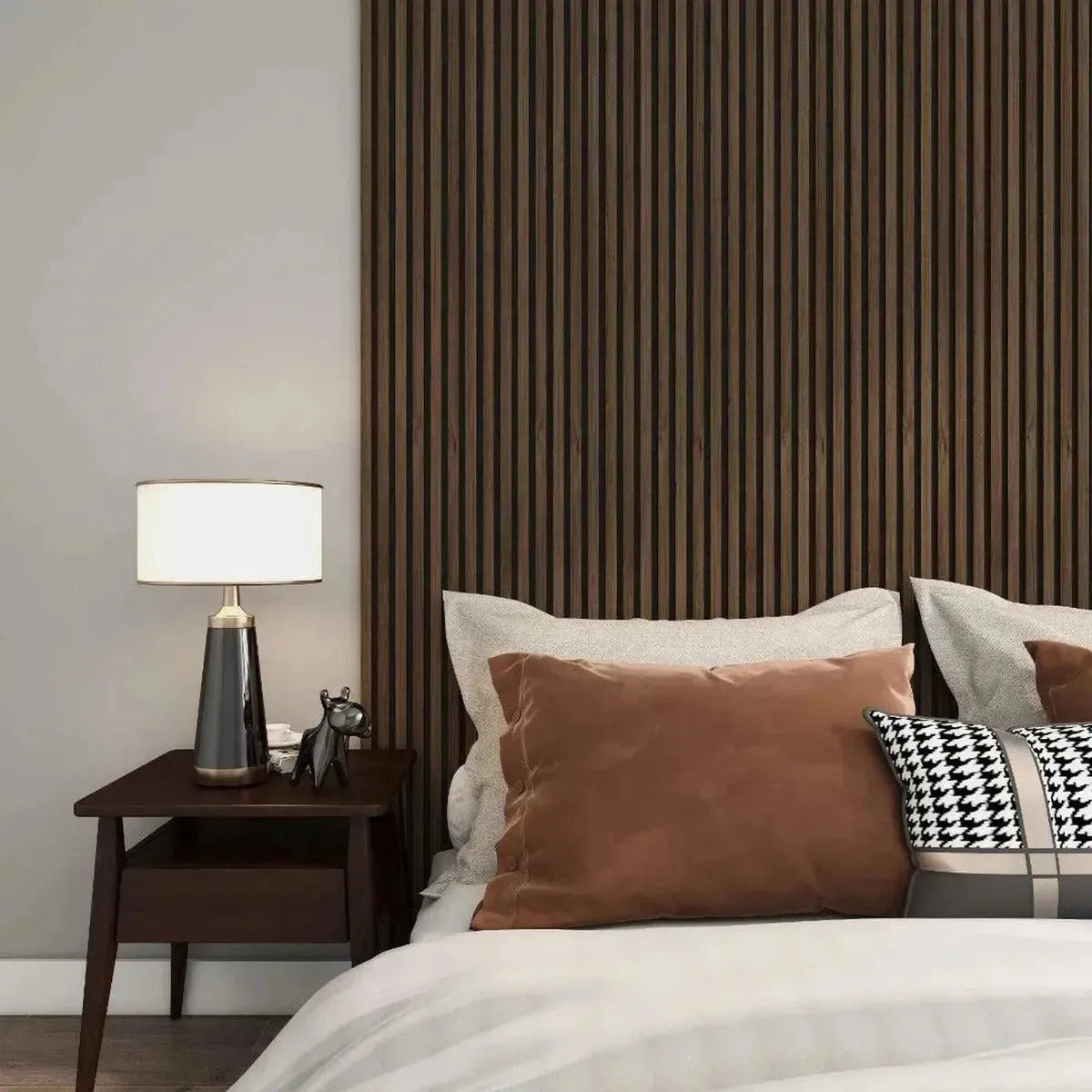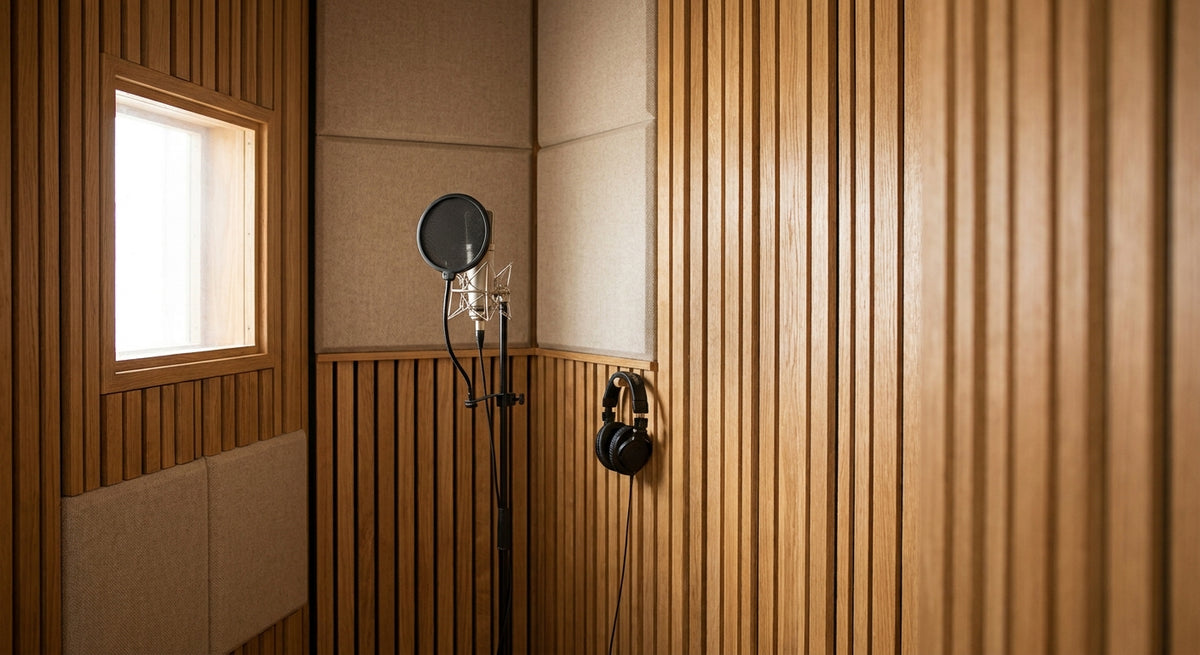
Vocal booths built with foam alone still ring at low frequencies, and a real wood veneer panel with felt backing solves both the echo and the aesthetic problem in one purchase. This guide breaks down what to buy for acoustic panels for vocal booth walls in 2026, with actual verdicts, not vague suggestions.
- Hexagon Acoustic Panel Walnut with Gray Felt hits an NRC of 0.75 and works as the primary absorption layer for a vocal booth — buy it.
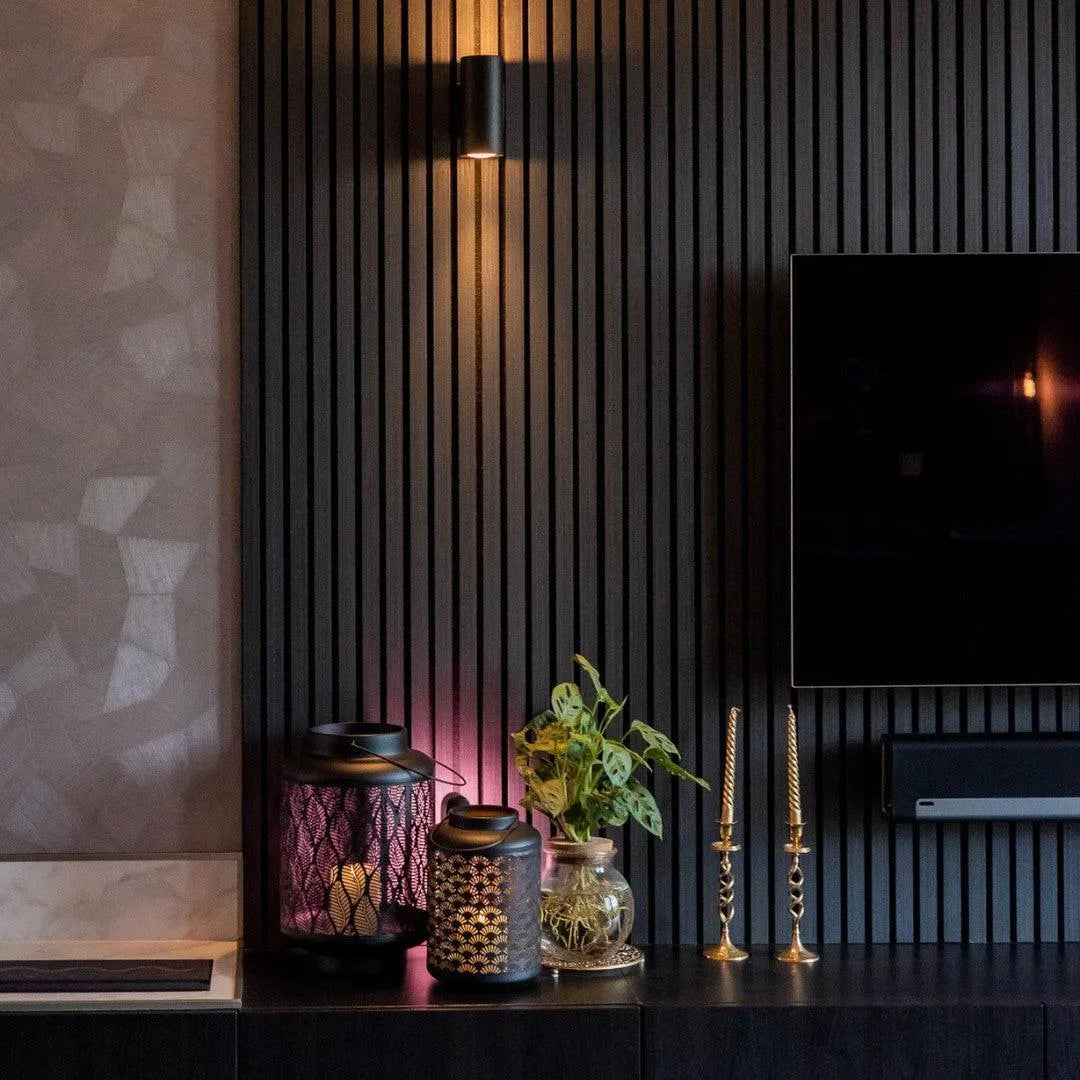
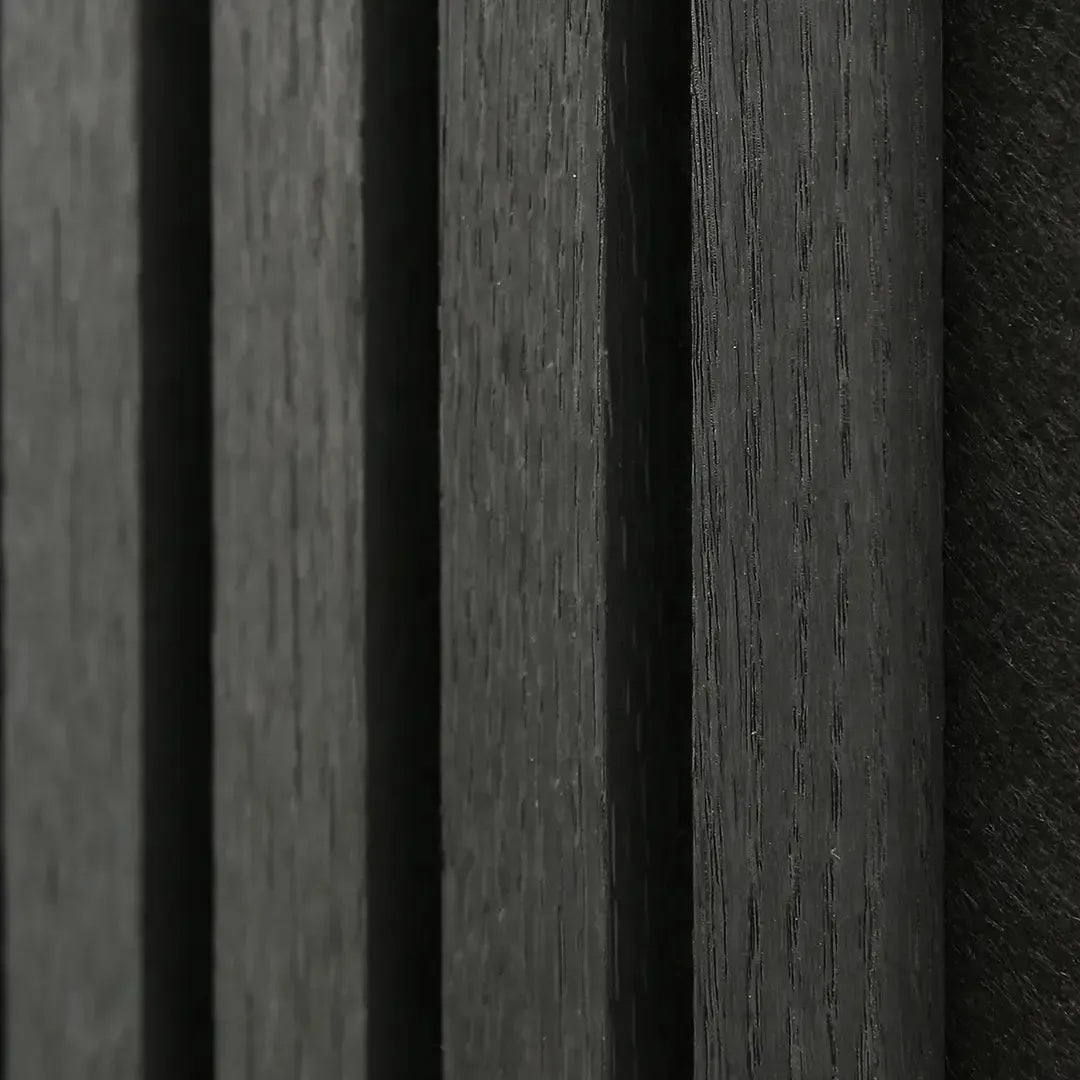
- Acoustic Slat Wall Panel Black Oak gives you a camera-ready dark backdrop for streaming booths at $177.95 a box — buy it.
- Order the $10 Full Sample Box before committing to a full booth build; veneer color shifts under studio lighting more than people expect.
- Skip smooth, unbacked veneer sheets sold as decorative wall panels — they reflect sound instead of absorbing it.
- Acoustic panels for vocal booth treatment work best mixed with corner bass traps, not as a standalone fix.
Why this matters
A vocal booth is a small, hard-surfaced room by definition — closets, converted offices, and DIY plywood booths all reflect sound aggressively because there's so little air volume to dissipate it. Foam wedges absorb high frequencies but do almost nothing below 500 Hz, which is exactly where boomy vocal recordings come from. Wood veneer acoustic panels with a felt or fiber core absorb across a wider band and don't look like a recording studio threw up on your wall, which matters if the booth doubles as a home office or gets filmed for video content in best acoustic slat panels for podcast studio walls style setups.
Who this is for
This is for podcasters, voice-over artists, and musicians building or upgrading a dedicated vocal booth — usually a closet conversion, a garden studio, or a framed-out corner of a home office. You're not treating a whole room; you're treating 40 to 100 square feet of wall where every inch of coverage counts and where the panel has to survive being seen on camera.
What to look for in acoustic panels for vocal booth walls
NRC rating and felt backing
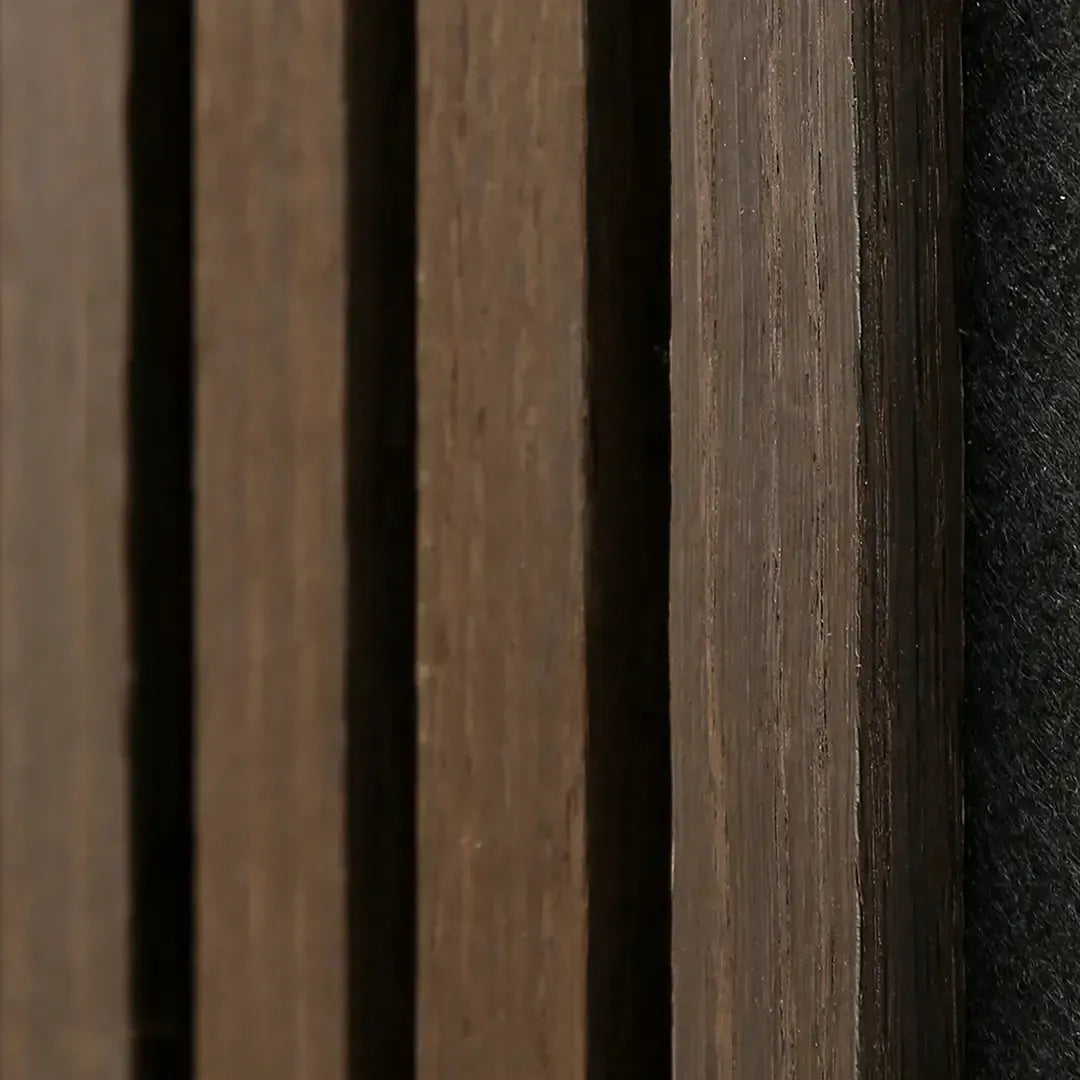
The Noise Reduction Coefficient tells you how much sound energy the panel absorbs versus reflects, and for a vocal booth you want a felt-backed panel, not a solid veneer sheet. Akuwood Panel's hexagon acoustic panels carry an NRC of 0.75, which is a meaningful jump over decorative-only wood cladding that scores closer to 0.05 to 0.10. Skip anything marketed as acoustic that doesn't list a rating at all.
Panel depth and shape
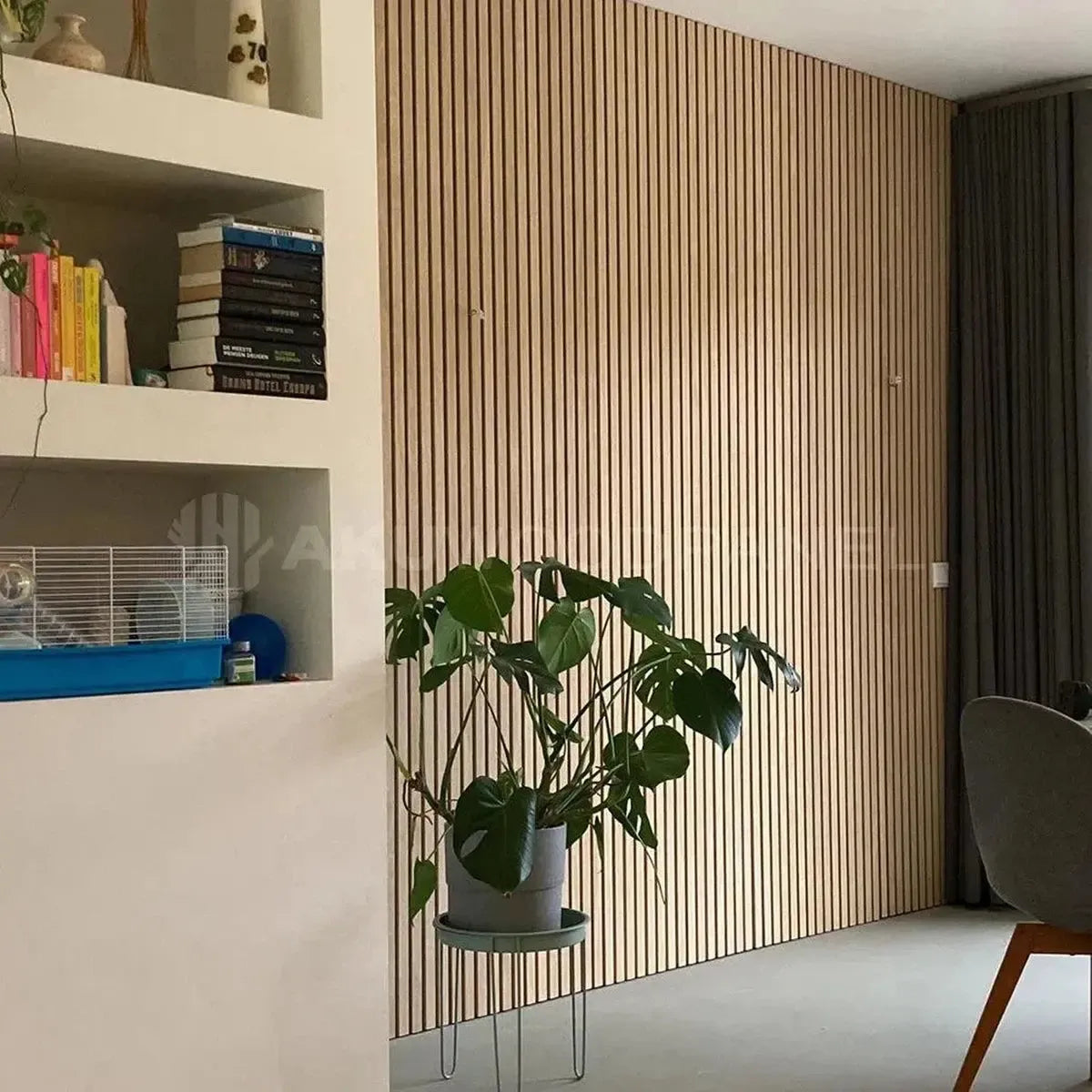
Slat panels with routed grooves diffuse sound as well as absorb it, which helps in a small booth where flat parallel walls cause flutter echo. Hexagon panels do the same job with a different visual pattern and tile better around irregular booth corners. Either shape works; pick based on how much wall coverage you need to fill.
Coverage per box for a small footprint
Most boxes ship 4 panels, so mapping your booth's square footage against panel count before ordering prevents a mid-build reorder delay. A typical 4x4 foot closet booth needs coverage on at least two adjacent walls plus the ceiling corner where reflections bounce hardest.
Mounting method for tight spaces
Booths are often framed with thin stud walls or even drywall over plywood, so panels that mount with standard adhesive or screws without needing a full furring-strip system save build time. Check whether your chosen finish requires spacer strips behind it for airflow — felt-backed panels usually don't.
Finish consistency under studio lighting
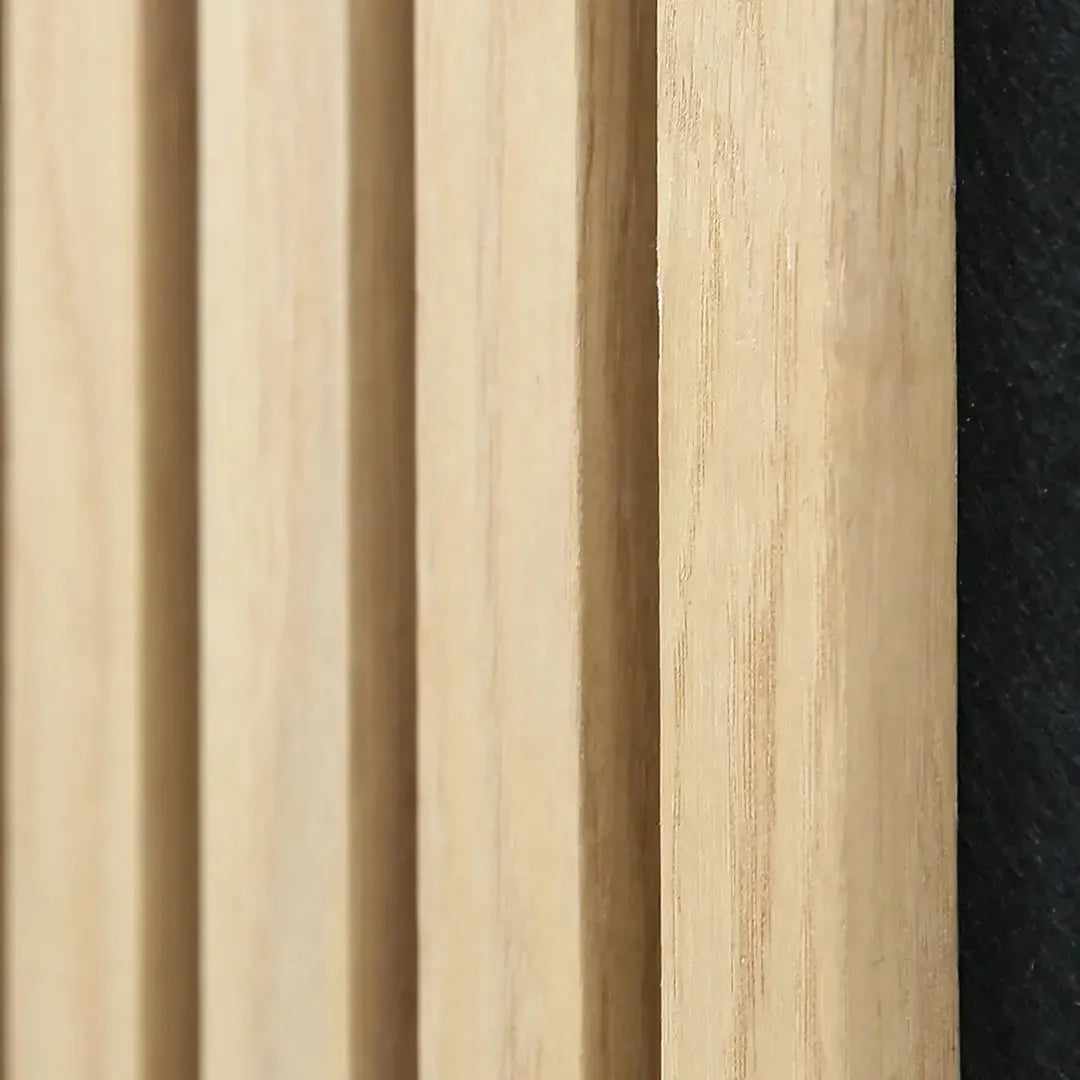
A booth gets recorded on video more often than a living room wall does, and veneer color shifts noticeably under LED panel lighting versus daylight. This is the single biggest reason to order a sample box before buying a full run — what reads as warm walnut on a monitor can look muddy brown on camera.
Cost per square foot at small scale
Because a vocal booth is small, panel price per box matters less than total units needed — don't over-optimize for the cheapest per-box price if it means buying twice as many boxes to hit the coverage you need.


Top picks for vocal booth walls
The absorption workhorse: Hexagon Acoustic Panel Walnut with Gray Felt
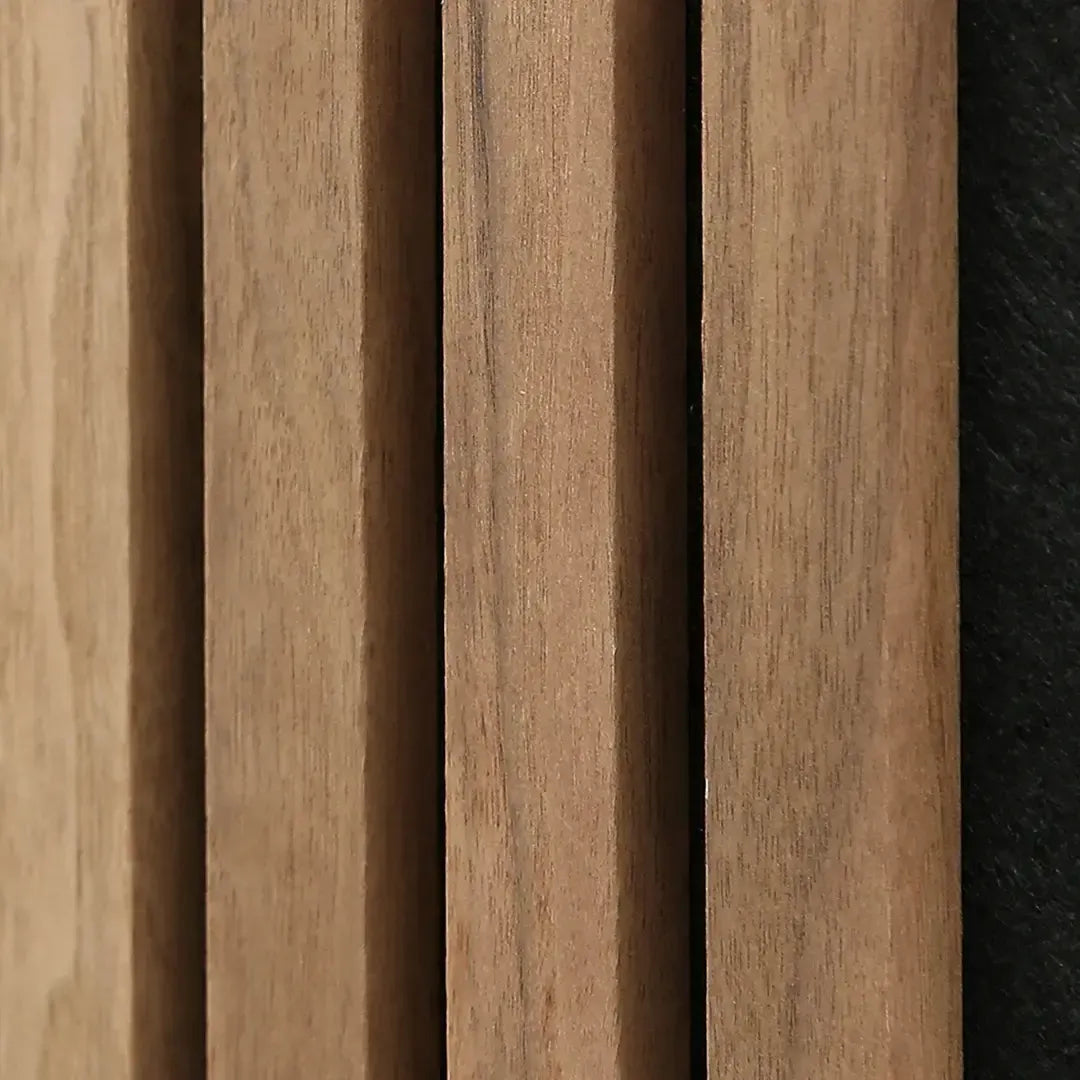
This is the panel to put on the wall directly behind the microphone. It carries an NRC of 0.75, ships 4 panels per box for $165.95, and the felt backing does the actual absorption work while the walnut veneer keeps the booth from looking like a padded cell. Verdict: Buy — this is the primary treatment layer for most closet-sized booths.
The camera-ready backdrop: Acoustic Slat Wall Panel Black Oak
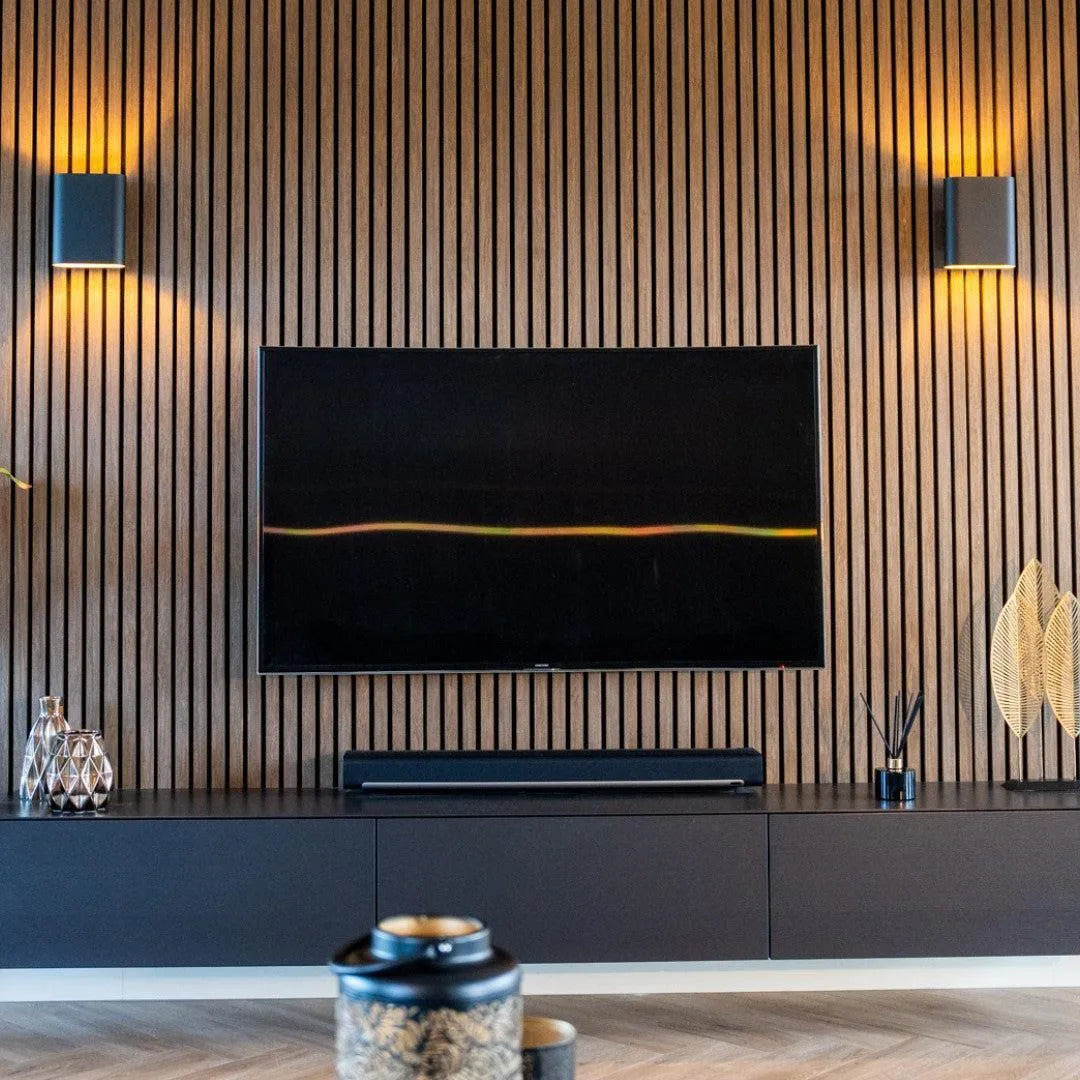
If the booth gets filmed for YouTube or livestream thumbnails, black oak slats give a dark, high-contrast background that doesn't need extra lighting gels to look intentional. It's a 3-sided wood veneer panel priced at $177.95 per box, and the grooved profile still diffuses sound even though it's a slightly denser cut than the felt hexagon option. Verdict: Buy for creator-facing booths; Consider skipping it as your only panel if you need maximum absorption over aesthetics.
The low-risk starter: Full Sample Box
For $10 you get 4 panels across Natural, Smoked Oak, and Walnut finishes, which is cheap insurance against ordering a full run in the wrong tone. Booth lighting is unforgiving, and this is the fastest way to check a finish against your actual gear and wall color before spending on coverage. Verdict: Buy — order this before anything else if you haven't built the booth yet.
What to avoid
- Unbacked decorative veneer sheets — they look like acoustic panels but have no NRC rating worth mentioning and mostly reflect sound back into the booth.
- Foam-only treatment as your sole layer — foam handles high frequencies but leaves low-mid boominess untouched in a small, hard-cornered room.
- Undersized coverage — treating one wall and calling it done leaves the opposite hard surface to bounce sound straight back at the mic; plan coverage on at least two adjacent surfaces.
Verdict comparison
| Panel | Absorption type | Price | Best for | Verdict |
|---|---|---|---|---|
| Hexagon Acoustic Panel Walnut with Gray Felt | Felt-backed, NRC 0.75 | $165.95 | Primary absorption wall | Buy |
| Acoustic Slat Wall Panel Black Oak | Grooved veneer diffusion | $177.95 | On-camera backdrop | Buy |
| Full Sample Box | Swatch only | $10 | Finish testing before a full order | Buy |
In 2026, most home vocal booths still get built with mismatched foam and plywood, and the fix is rarely more complicated than covering the two loudest reflection points with a felt-backed panel and calling it done.
FAQ
What's the best material for acoustic panels for vocal booth walls?
Felt-backed wood veneer panels perform best for vocal booths in 2026 because they absorb across a wider frequency range than decorative veneer while still looking finished on camera. Foam alone leaves low-mid frequencies untreated in small, hard-cornered rooms.
Is wood veneer better than foam for a vocal booth?
Wood veneer panels with felt backing absorb more broadly than foam wedges, which mainly handle high frequencies. Foam is cheaper per square foot but leaves boominess in the low-mids that a small booth amplifies.
How much does it cost to treat a small vocal booth with acoustic panels?
A closet-sized booth typically needs 3-5 boxes of panels to cover two adjacent walls, which runs roughly $500 to $900 depending on finish. Ordering a $10 sample box first avoids a costly reorder if the color doesn't match your lighting.
What NRC rating do I need for a vocal booth?
Look for an NRC of 0.70 or higher on any panel you're using as primary treatment. Akuwood Panel's felt-backed hexagon panels rate at 0.75, which is enough to noticeably tighten up a small room's reflections.
Do acoustic wood panels work as well as studio foam?
Felt-backed wood panels outperform foam on absorption breadth but cost more per panel. For a vocal booth where the wall is also visible on camera, wood panels solve both the acoustic and aesthetic problem foam can't.
How many panels do I need for a vocal booth?
Most closet or corner booths need coverage on two adjacent walls, which usually means 3-4 boxes at 4 panels per box. Measure your booth's square footage against the box count before ordering to avoid a mid-build reorder.
Can I mount acoustic panels on drywall in a booth?
Yes, felt-backed panels generally mount with standard adhesive or screws directly to drywall without needing furring strips. Check the specific panel's mounting instructions since profile depth varies by finish.
One last thing
The felt backing is doing more acoustic work than the veneer itself — if a booth budget is tight, prioritize the felt-backed hexagon panel over a thicker, more expensive slat design that skips the felt layer entirely.
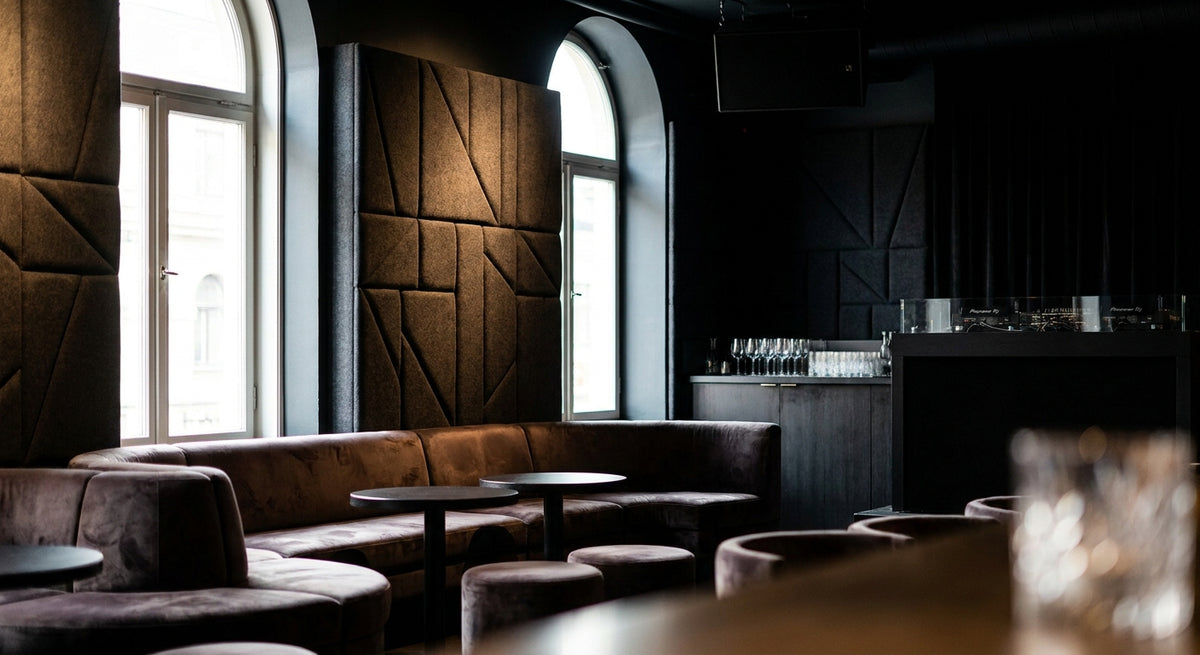
 Better performance and aesthetic appeal
 In Stock