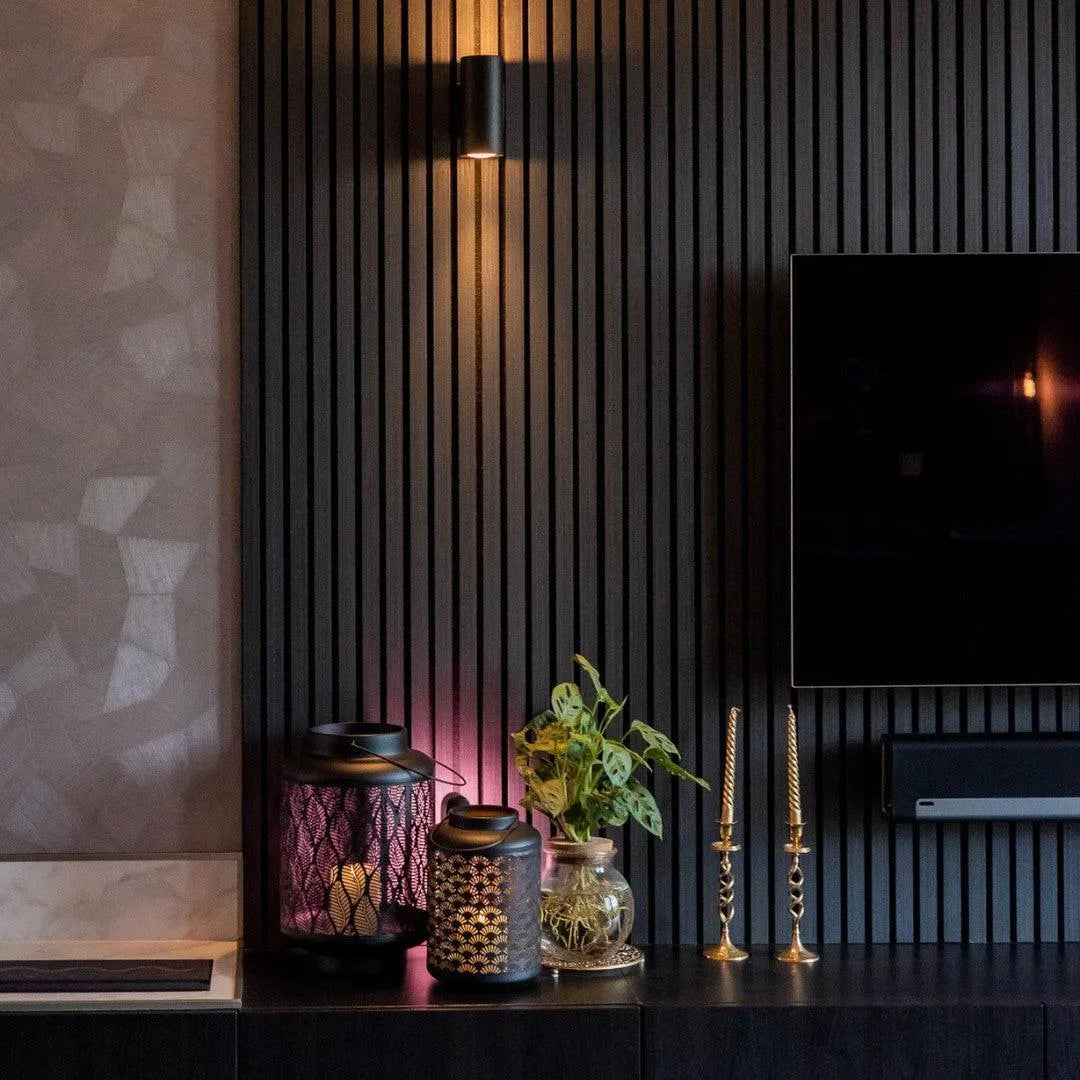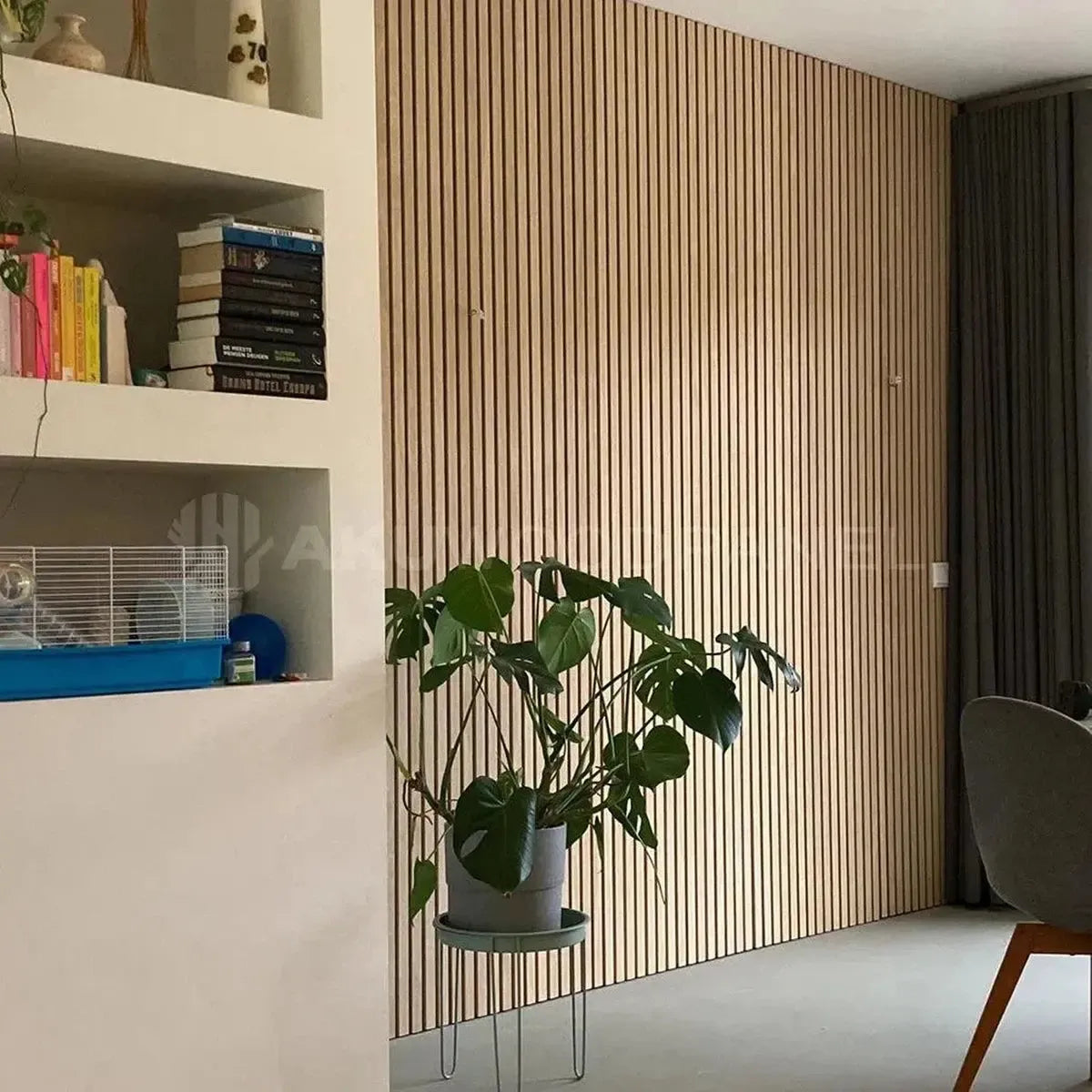
University research lab acoustic panels are wood-veneer wall systems installed in write-up rooms, corridors, and shared bench areas to cut reverberation from HVAC diffusers, fume hood exhaust fans, and hard epoxy or tile surfaces. Research wings run louder than typical classroom buildings because glass partitions, exposed ceiling grids, and rows of centrifuges and shakers reflect sound instead of absorbing it, so a facilities plan built for a lecture hall usually under-treats a lab suite.
- Felt-backed acoustic panels like AKU Woodpanel's hexagon line carry an NRC of 0.75, built for write-up rooms and PI offices.
- Start acoustic panels for research labs in write-up rooms and huddle spaces, not open wet-lab benches.
- Solid slat panels like Black Oak at $177.95 work for corridors; felt-backed Natural Oak at $169.95 fits absorption-critical rooms.
- Order the $10 sample box before a bulk purchase order clears a university procurement committee.
- Keep panels back from fume hood sash clearances and eyewash stations during install.
Why acoustic panels matter for university research labs
A research building's acoustic problem is rarely the lab bench itself — it's everything around it. Write-up rooms with glass walls bounce conversation back at grad students trying to hear a safety briefing over a running fume hood. Corridors lined with lockers and tile floors carry equipment hum from one end of a wing to the other.
AKU Woodpanel's acoustic wood panels address this with a felt-backed layer behind real wood veneer slats. The hexagon panel line, for instance, carries an NRC (Noise Reduction Coefficient) of 0.75 — meaning roughly three-quarters of incoming sound energy gets absorbed rather than reflected back into the room. That number matters more in a lab wing than almost anywhere else on campus, because the background noise floor is already higher before anyone starts talking.
University facilities teams buying acoustic panels for research labs in 2026 also have to satisfy code reviewers, safety officers, and a purchasing committee — which changes the buying process more than the acoustic math does.
How to choose acoustic panels for a university research lab
Audit your lab's actual noise sources first
Don't buy panels before you know what's making noise. Walk the wing during a normal working hour, not during a quiet inspection.
- Fume hood exhaust fans and duct runs
- Centrifuges, shakers, and vortex mixers
- HVAC diffusers and return grilles
- Hard epoxy or vinyl composition flooring
- Glass partition walls between labs and corridors
- Exposed structural ceilings with no acoustic tile
Start with write-up rooms and shared huddle spaces
Wet-lab benches are usually the wrong first target — code and chemical-resistance requirements limit what you can mount there anyway. Treat the rooms where people actually talk.
- Write-up bays and shared workstation clusters
- PI and postdoc offices adjacent to lab suites
- Small conference rooms booked for group meetings
- Corridor seating nooks near elevator banks
- Break rooms and shared kitchenettes
Pick felt-backed panels where absorption matters most
A solid wood slat panel looks the same as a felt-backed one from six feet away, but the felt layer behind the slats is what actually absorbs sound rather than just scattering it. For rooms where speech clarity is the priority, felt-backed panels are the better spec.
- Hexagon panels with an NRC of 0.75 for write-up rooms and small huddle spaces
- Slat panels with gray felt backing for PI offices and shared workstations
- Solid slat panels (no felt) for corridors where absorption matters less than durability
- Full sample box ordering before a bulk purchase order to confirm finish match
Keep panel finishes neutral for wayfinding and branding
Most research buildings run departmental signage and wayfinding color codes. A panel finish that clashes with existing signage becomes a maintenance headache the first time a sign gets repainted.
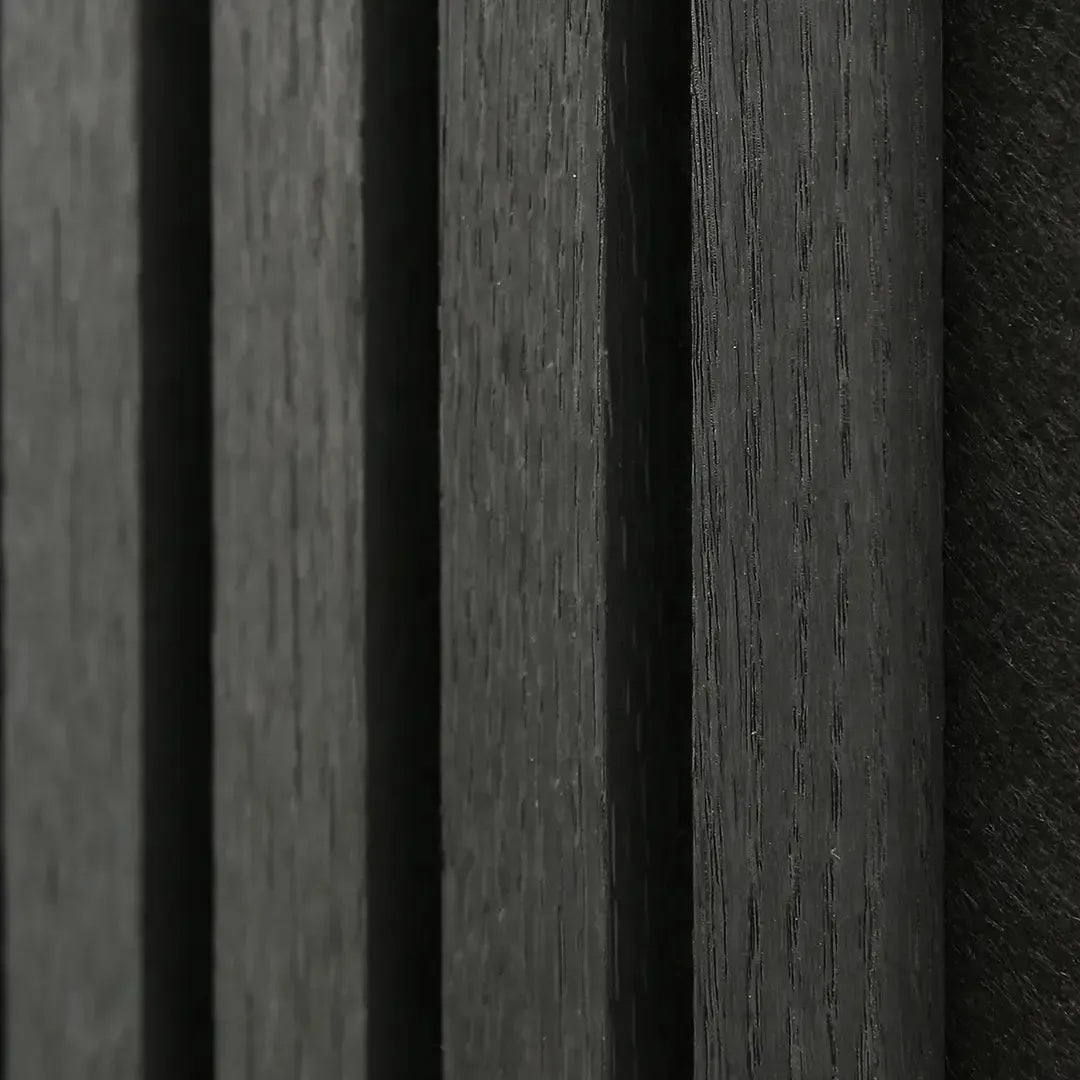
- Black Oak for corridors needing a dark, low-glare backdrop
- Natural Oak for offices and reading nooks needing a lighter tone
- Smoked Oak as a mid-tone option that hides scuffing
- Walnut where a warmer, higher-contrast finish reads better against lab signage
Install away from fume hood clearances and utility chases
This is the step facilities teams skip and regret. A panel installed too close to a hood sash violates clearance rules that safety officers will flag during the next inspection.
- Confirm hood sash clearance distances with EHS before mounting anything nearby
- Never cover eyewash stations, emergency shutoffs, or pull stations
- Leave utility chase access panels unobstructed
- Mount on furring strips over concrete or block walls rather than direct-fastening
- Route conduit and low-voltage cable behind the panel line, not through it
Calculate coverage by square footage, not by room count
A facilities order built around "one room = one panel order" almost always comes up short once cuts and trim waste are factored in.
- Measure wall area in square feet, not room count
- Add 10% overage for cuts around outlets and door frames
- Use end pieces to finish exposed slat edges cleanly
- Order the $10 sample box before committing to a full purchase order
Get bulk pricing before the budget cycle closes
University procurement runs on fiscal-year deadlines that don't care about your acoustic plan. Get quotes across multiple finishes early so a committee vote doesn't stall an install date.
- Request quotes across felt-backed and solid finishes in the same request
- Compare per-panel and per-box pricing before totaling square footage
- Bundle trim and end pieces into the same purchase order
- Time the order to land before the fiscal-year budget freeze, not after


Panel options for research lab walls
| Panel type | Best for | Starting price | Key limitation |
|---|---|---|---|
| Acoustic Slat Wall Panel, Black Oak | Corridors and lobbies needing a dark, low-glare finish | $177.95 | No felt backing, lower absorption |
| Acoustic Slat Wall Panel, Natural Oak with Gray Felt | Write-up rooms and PI offices needing more absorption | $169.95 | Felt visible between slats |
| Hexagon Acoustic Panel, Natural Oak with Gray Felt | Small huddle rooms and reading nooks, NRC 0.75 | $165.95 | 32-inch module means more pieces for large walls |
| Full Sample Box | Confirming finish before a bulk purchase order | $10 | No install hardware included |
Verdict: for a research lab wing in 2026, treat write-up rooms and offices first with felt-backed panels, then extend solid slat panels into corridors once the acoustic-critical rooms are covered. Buy the felt-backed line for write-up rooms; hold on corridor solid panels until write-up rooms are done; buy the sample box before any bulk order goes to committee.
Common mistakes universities make with lab acoustic panels
- Treating corridors before write-up rooms. Corridors look worse acoustically on paper, but the rooms where people actually hold conversations need the felt-backed absorption first.
- Direct-fastening into concrete without furring strips. This causes screws to miss anchoring points and panels to sit unevenly against uneven block walls.
- Covering egress signage or utility chase access. A panel run that blocks an evacuation diagram gets flagged and re-installed at the department's cost.
- Choosing solid slat panels where felt-backed would perform better. Solid panels look identical from a distance but do far less to cut speech reflection in a small office.
- Ordering by room count instead of square footage. A wing with six offices of different sizes needs a square-footage takeoff, not a flat per-room order.
FAQ
What NRC rating do acoustic wood panels need for a research lab?
An NRC of 0.70 or higher is a reasonable target for write-up rooms and offices in a research lab wing. AKU Woodpanel's felt-backed hexagon panels carry an NRC of 0.75, which covers most lab-adjacent speech-clarity needs.
Can acoustic panels be installed near fume hood exhaust vents?
Acoustic panels should stay outside the hood sash clearance zone set by your safety office. Confirm clearance distances with EHS before mounting anything near a hood, and never cover ductwork or utility chase access panels.
How much do acoustic panels cost for a university research lab?
Individual acoustic slat and hexagon panels from AKU Woodpanel range from $165.95 to $177.95 depending on finish and felt backing in 2026. A $10 sample box lets facilities teams confirm finish match before a bulk purchase order.
Should research labs use felt-backed or solid wood acoustic panels?
Felt-backed panels absorb more sound and belong in write-up rooms, offices, and huddle spaces where speech clarity matters most. Solid slat panels without felt are a reasonable, lower-cost choice for corridors and lobby areas.
How do you calculate acoustic panel coverage for a lab building?
Measure the actual wall square footage of each room being treated, then add roughly 10% for cuts around outlets, doors, and corners. Ordering by room count instead of square footage is the most common shortfall in university facilities orders.
Can university facilities departments get bulk pricing on acoustic panels?
Request quotes across multiple finishes in a single inquiry before totaling square footage, since felt-backed and solid panels are priced differently. Time the order ahead of the fiscal-year budget freeze to avoid delays.
Do wood acoustic panels work in corridors as well as lab rooms?
Solid slat panels hold up well in corridors, where foot traffic and lockers are the bigger concern than speech absorption. Felt-backed panels are still the better spec for any adjoining conference or huddle room.
Is real wood veneer durable enough for a lab building's high-traffic corridors?
AKU Woodpanel's slat panels use a 3-sided wood veneer construction built for wall-mounted commercial use, not flooring-level abuse. Corridors see foot and cart traffic at floor level, not wall level, so panel wear at typical mounting height is limited.
One last thing
The hexagon panel line ships four panels to a box at a 32-inch module size — a detail that matters more for lab wings than for a home office. That module size means facilities crews can lay out panel grids around wall-mounted outlets, data jacks, and safety signage without cutting through a single full panel, which cuts install time on rooms already crowded with conduit and low-voltage cable.



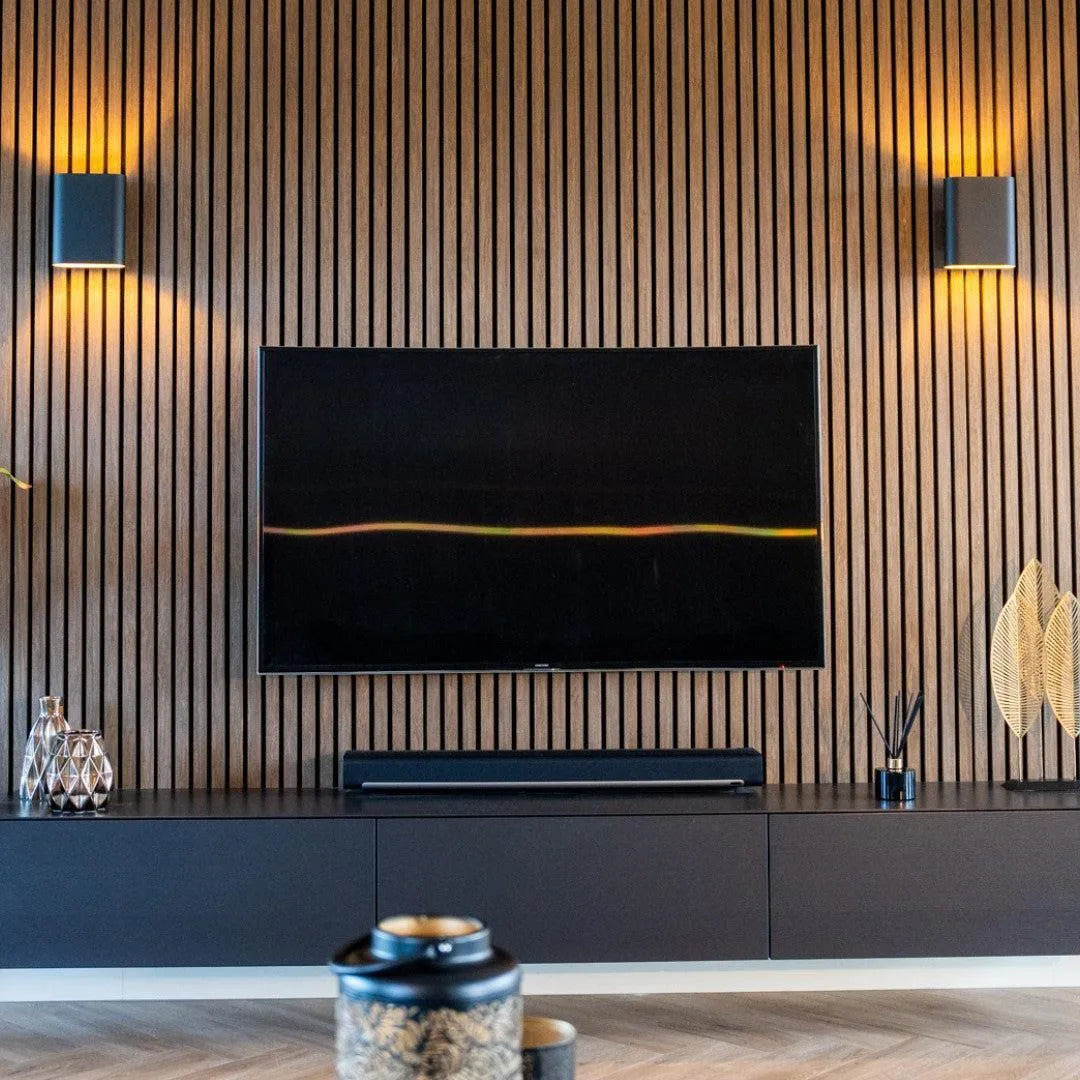

 Better performance and aesthetic appeal
 In Stock