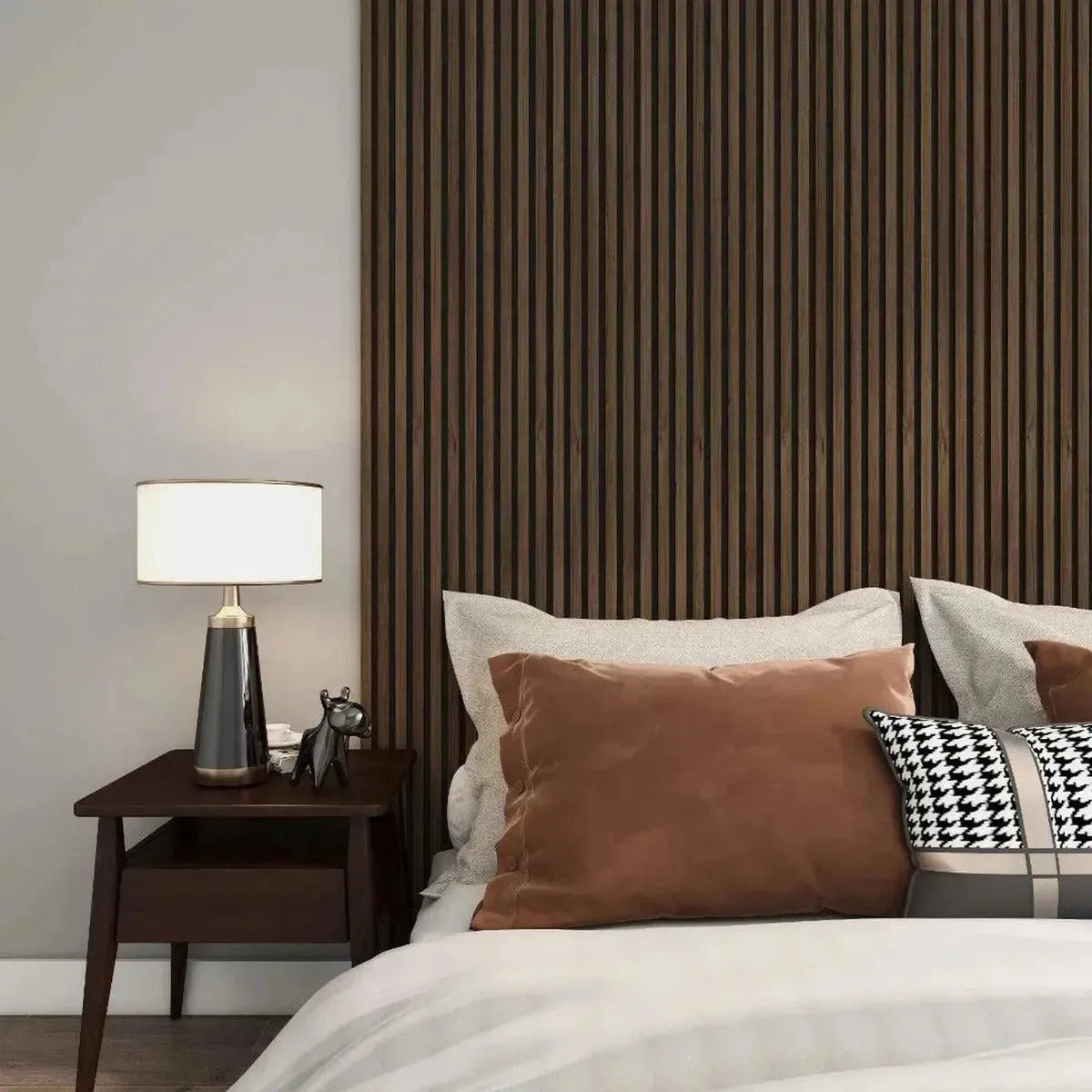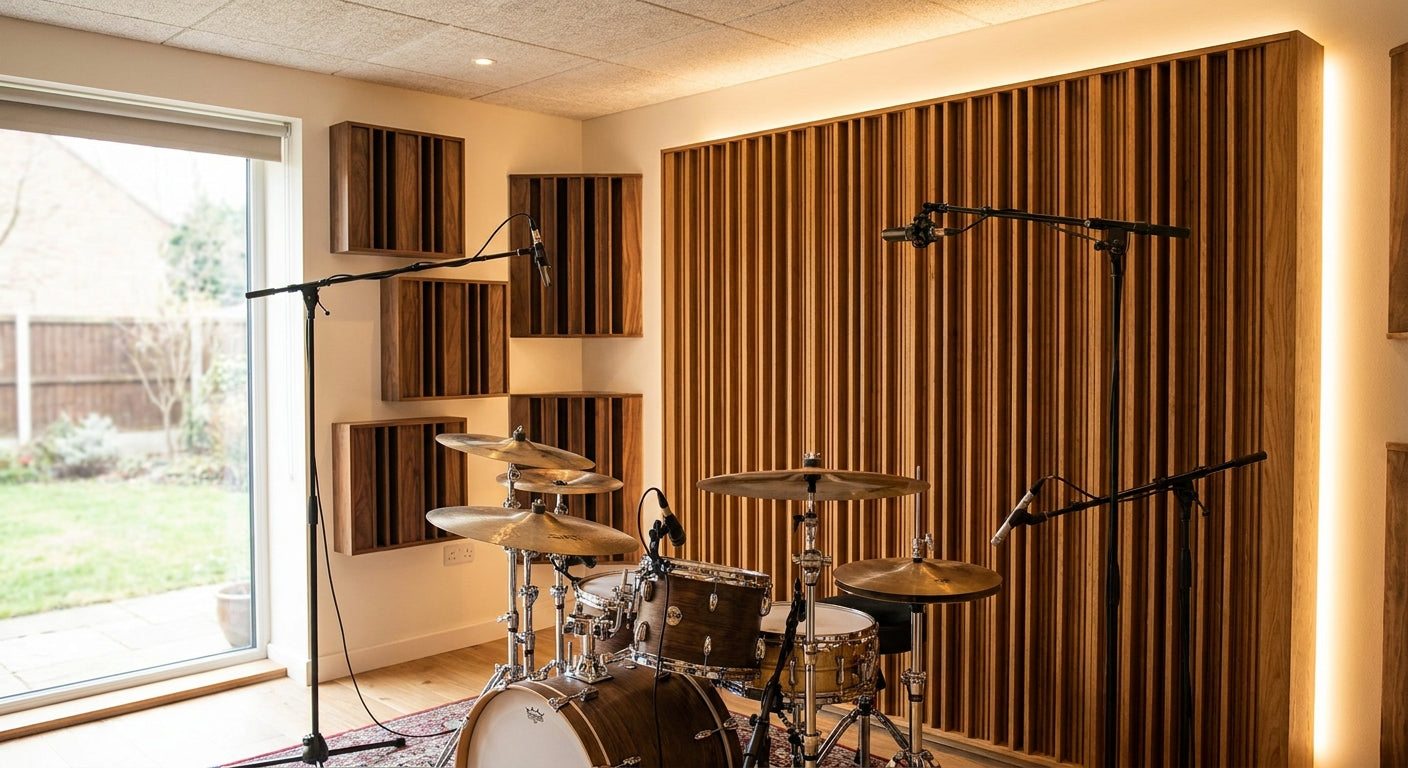
Slat wood panels absorb the flutter echo and midrange slap that turn a drum room into a boomy box, without turning the space into a padded cell. This guide breaks down what actually matters when you're treating a room for a drum kit in 2026, and which Akuwood Panel products earn a Buy versus a Skip.
TL;DR
For acoustic wood panels drum room treatment in 2026, the Acoustic Slat Wall Panel Black Oak is the safe pick for full-wall coverage behind the kit, and the Hexagon Acoustic Panel Walnut is the better choice for corner buildup where low end piles up. Order the Full Sample Box Slat Wall Panel before committing to a full room, because finish and felt density matter more in a drum room than in a living room. Skip anything marketed as "soundproofing" foam tile that promises full isolation for under $50 a box. Verdict: felt-backed slat wood panels beat foam and drop ceiling tiles for drum rooms because they handle midrange reflection while still surviving daily impact and dust.
Why this matters
A drum kit throws energy across the whole audible spectrum, from a 60 Hz kick thud to an 8 kHz cymbal wash, and untreated drywall bounces almost all of it straight back at the player. That's why a practice room with four bare walls feels louder and harsher than the same kit sounds on a record. Acoustic slat wall panels with felt backing knock down that midrange reflection and flutter echo without stripping every bit of natural room tone, which is the difference between a room that sounds "dead" and one that just sounds controlled. A garage band practice room built out in 2026 with the wrong material ends up re-done within a year, usually because someone bought decorative slats with no felt behind them.
Who this is for
This guide is for home drummers, garage bands, and small studio owners treating a dedicated drum room in a house, garage, or basement, not commercial studios spending five figures on isolation booths. If you're trying to keep a spouse or neighbor from hearing every rim shot through a shared wall, panels alone won't solve that; you need mass and decoupling first. But if your problem is a boomy, harsh-sounding room where the kit is already isolated reasonably well, slat wood paneling is the right tool.
What to look for in acoustic wood panels for a drum room
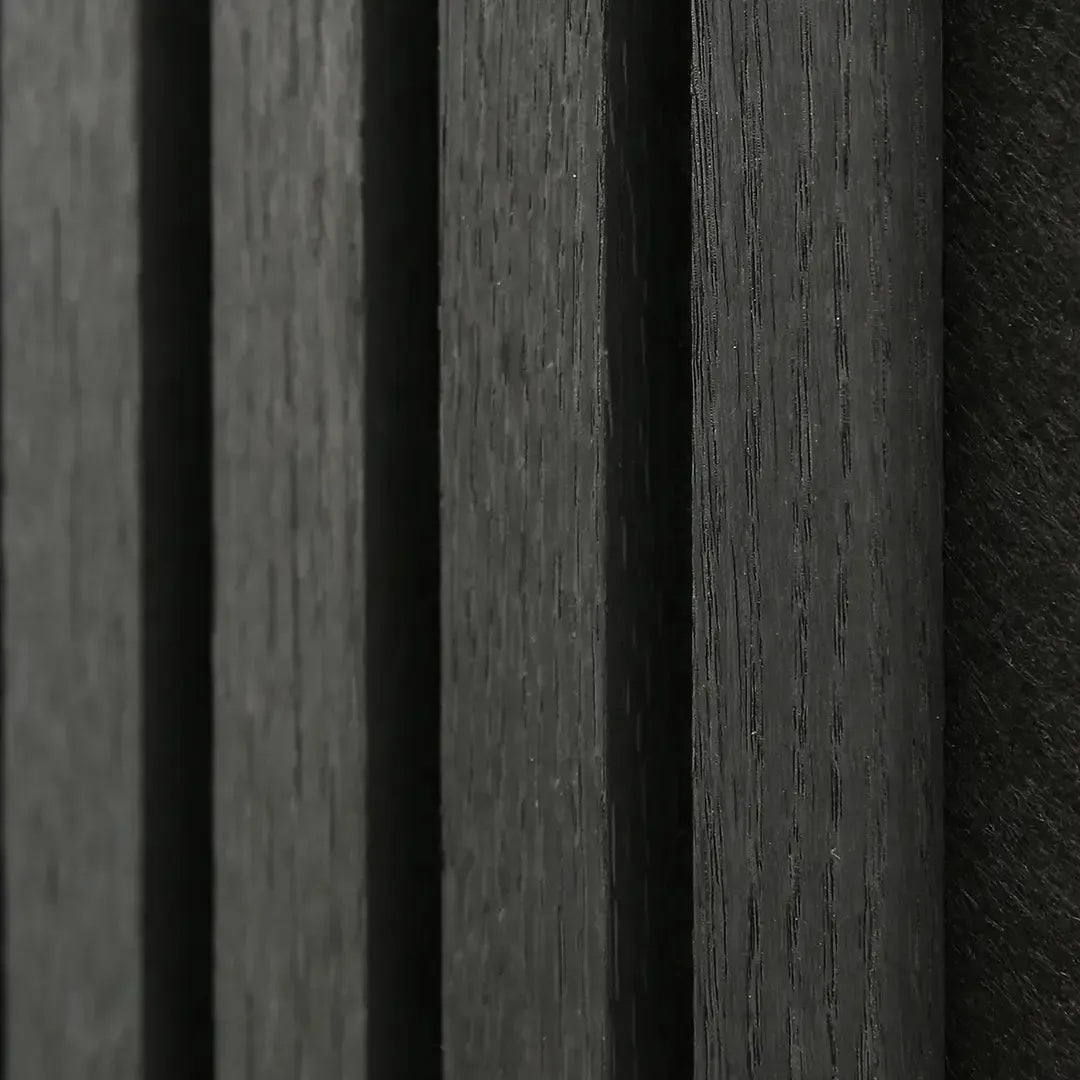
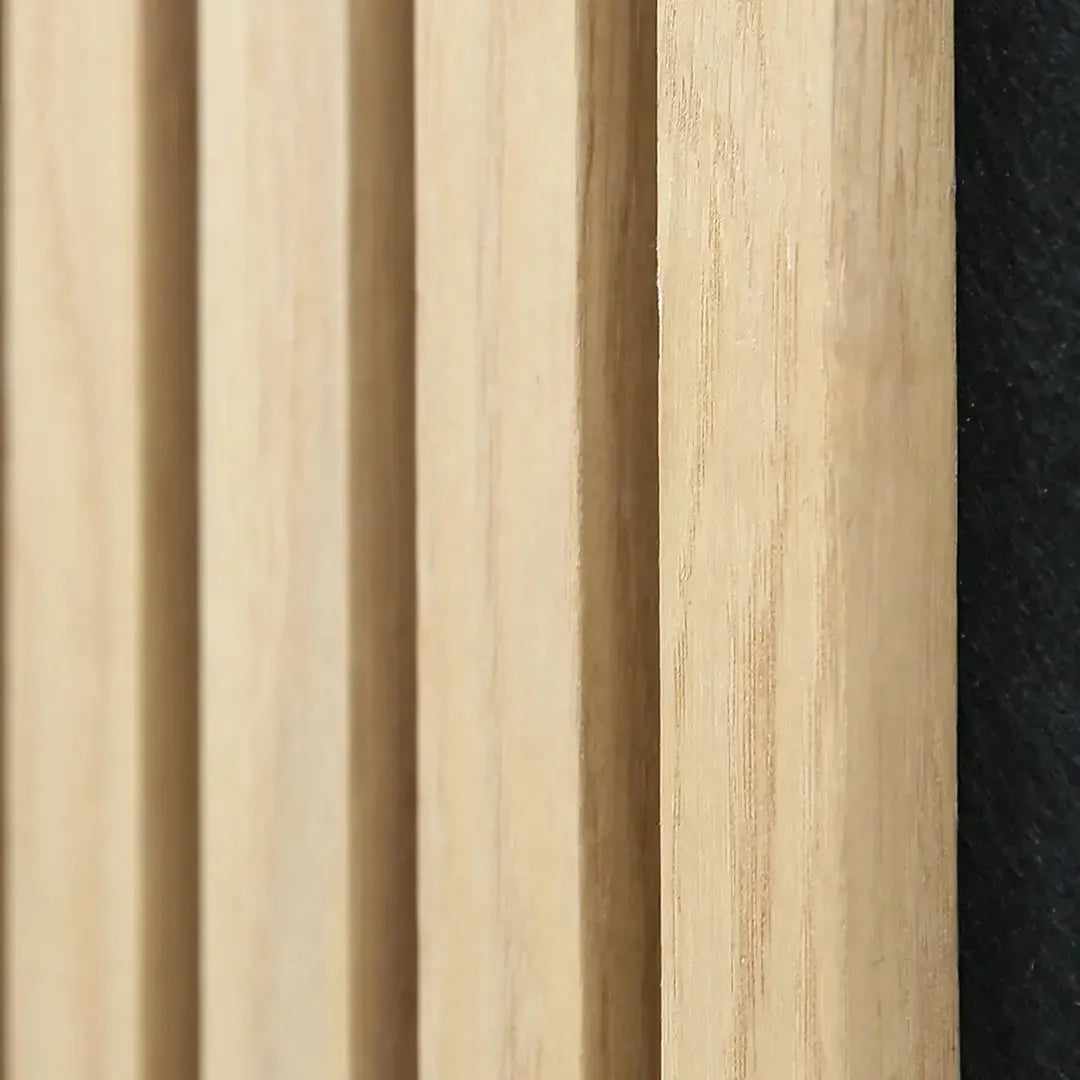
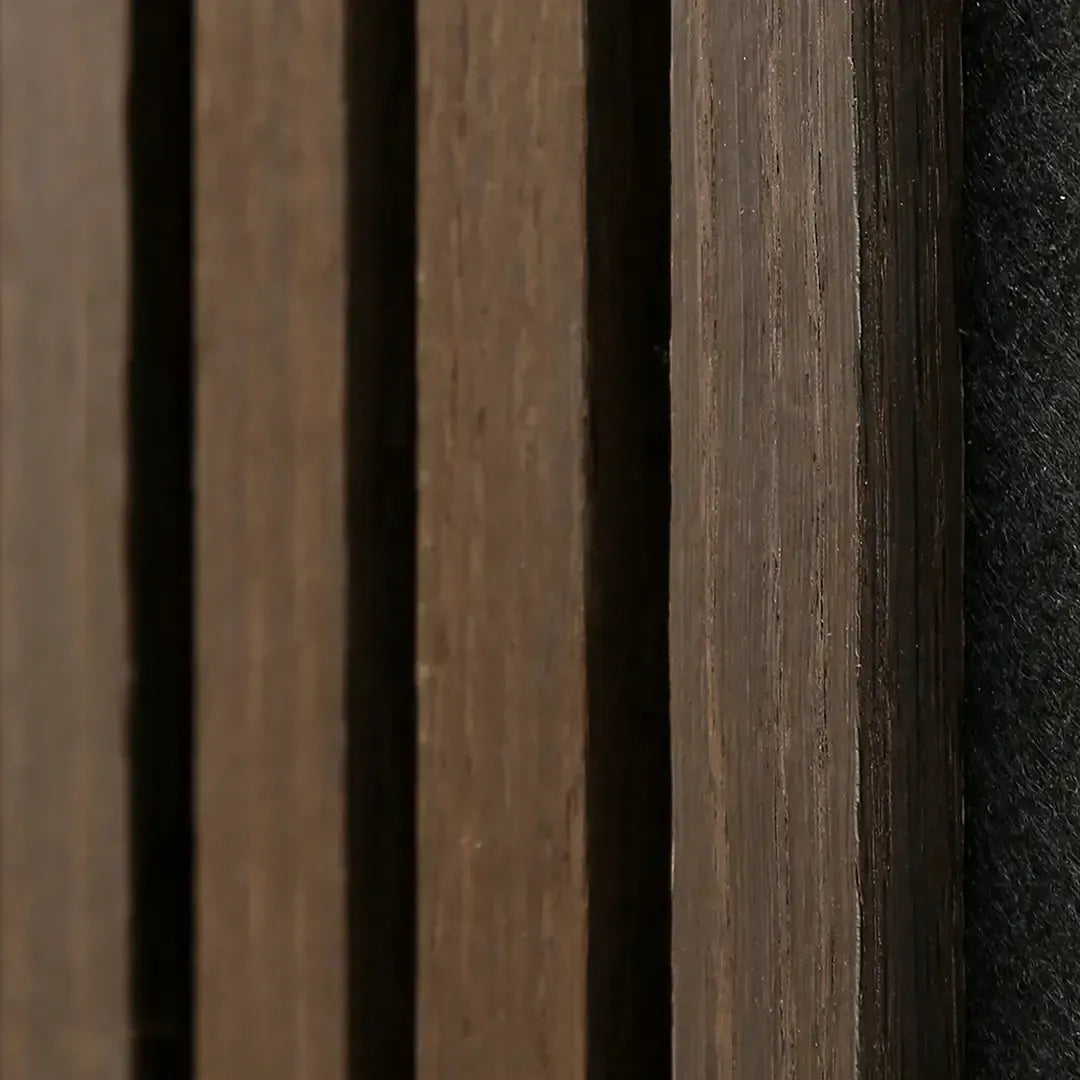
Real wood veneer over acoustic felt backing
The veneer layer is cosmetic, but the felt backing behind it is what actually absorbs sound energy, so panels without a felt layer are decorative only. A drum room isn't a place for a wall that just looks acoustic; you need the felt doing real work behind the slats.
Slat spacing that handles midrange, not just high end
Wider slat gaps expose more felt surface area, which matters more in a drum room than in a bedroom because cymbals and snare crack sit higher in frequency than most home noise sources. Tighter spacing looks cleaner but exposes less absorptive material per square foot of wall.
Coverage percentage across the room, not just one accent wall
A single feature wall behind the kit does almost nothing for flutter echo bouncing between two parallel walls. Aim for coverage on at least two opposing walls, roughly 50-70% of each surface, before you judge whether the room actually sounds different.
Mounting method that survives vibration
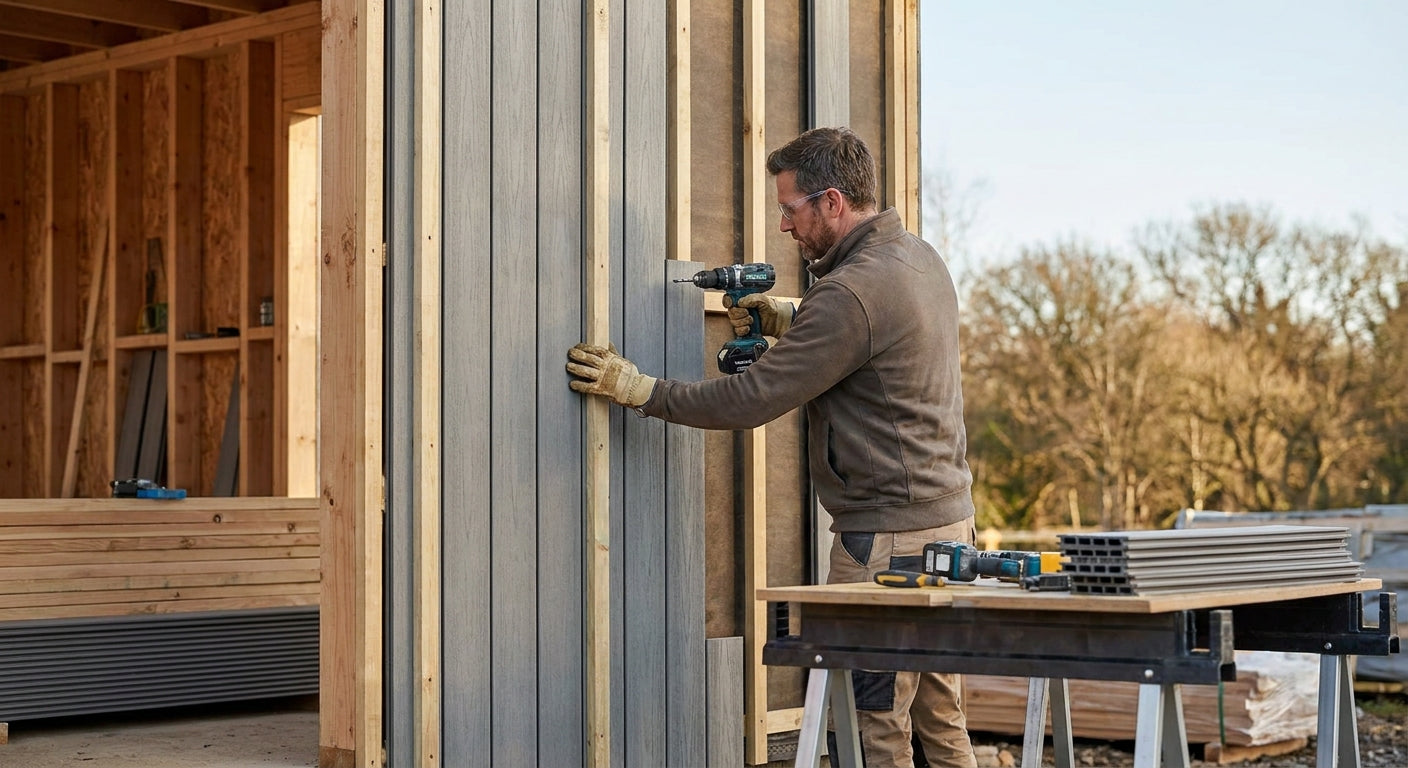
A drum kit shakes a room in ways a TV wall or reading nook never will, so panels held on with adhesive strips alone are a real risk over time. Screw-mounted slat panels with proper end pieces hold up to years of daily impact from cymbal stands and kick pedal vibration.
Finish that hides scuffs and dust
Drum rooms collect dust, drumstick nicks, and the occasional stray stick toss faster than any other room in the house. Darker finishes like black oak or smoked oak hide daily wear far better than pale natural oak in a room that gets used every day.
Corner and edge treatment
Low frequencies from a kick drum and floor tom pile up in room corners more than anywhere else on the wall. A panel line that stops short of the corner, with no end piece or trim, leaves the exact spot where bass buildup is worst untreated.
Top picks for a drum room in 2026
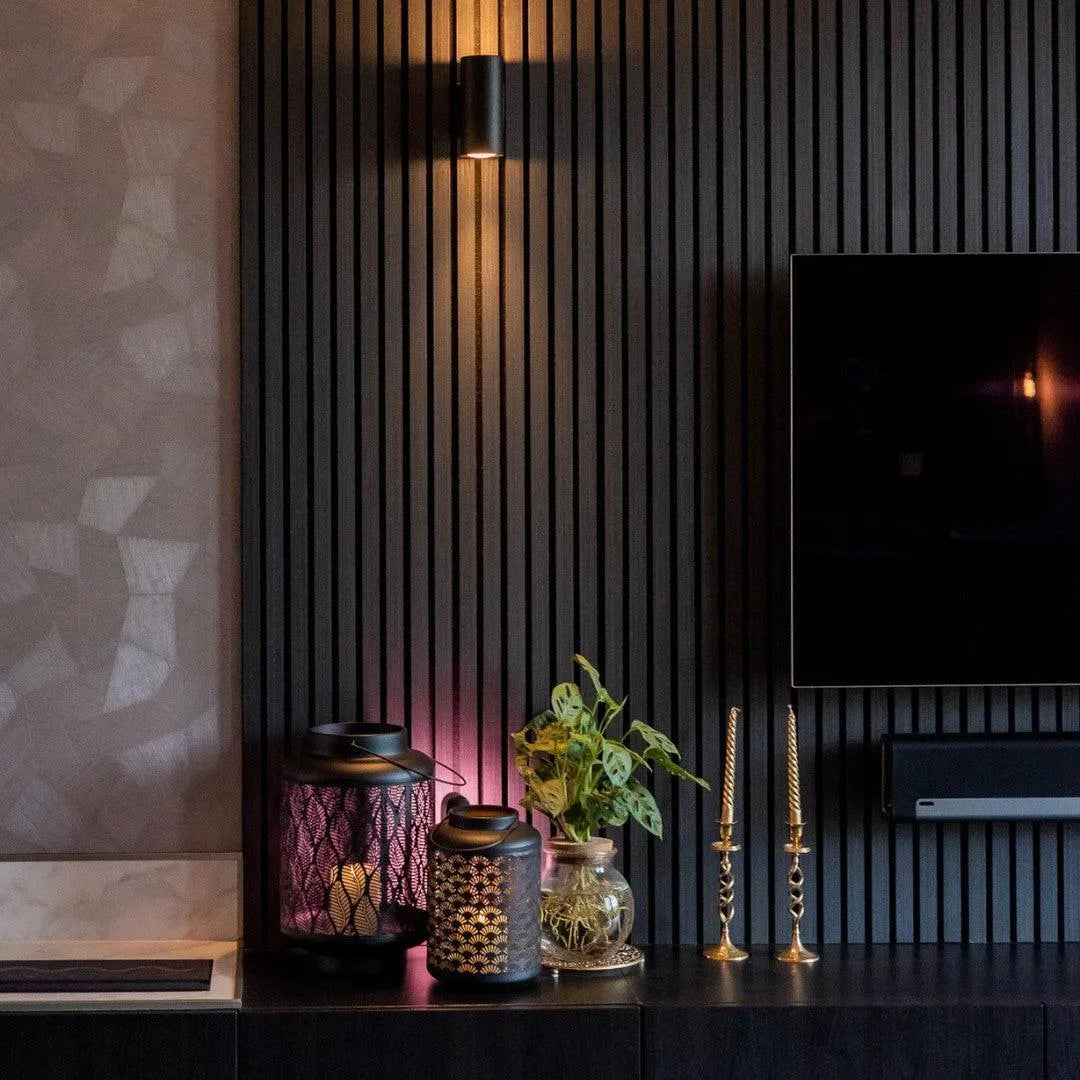
1. Acoustic Slat Wall Panel Black Oak — the low-light pick The darker finish hides scuffs and drumstick marks better than any lighter option in the lineup, which matters in a room used daily. Felt backing sits behind real oak veneer, giving you coverage across a full wall section rather than a single accent strip. For a room that gets hit hard, this is the Acoustic Slat Wall Panel Black Oak, and the verdict is Buy.
2. Hexagon Acoustic Panel Walnut — the corner specialist Hexagon panels break up the geometry of a flat wall line and are easier to wrap into corners than long straight slats, which is exactly where drum-room bass buildup concentrates. The walnut tone reads warmer than black oak if the room also doubles as a hangout space. This is the Hexagon Acoustic Panel Walnut, and the verdict is Consider — pair it with a slat wall rather than using it as your only treatment.
3. Full Sample Box Slat Wall Panel — the no-regret first order A drum room is not the place to guess on finish and felt color from a screen; you want the material in hand under the room's actual lighting before you order a full run. The Full Sample Box Slat Wall Panel gets you multiple finishes side by side for less than the cost of re-ordering a wrong color later. Verdict: Buy before anything else on this list.
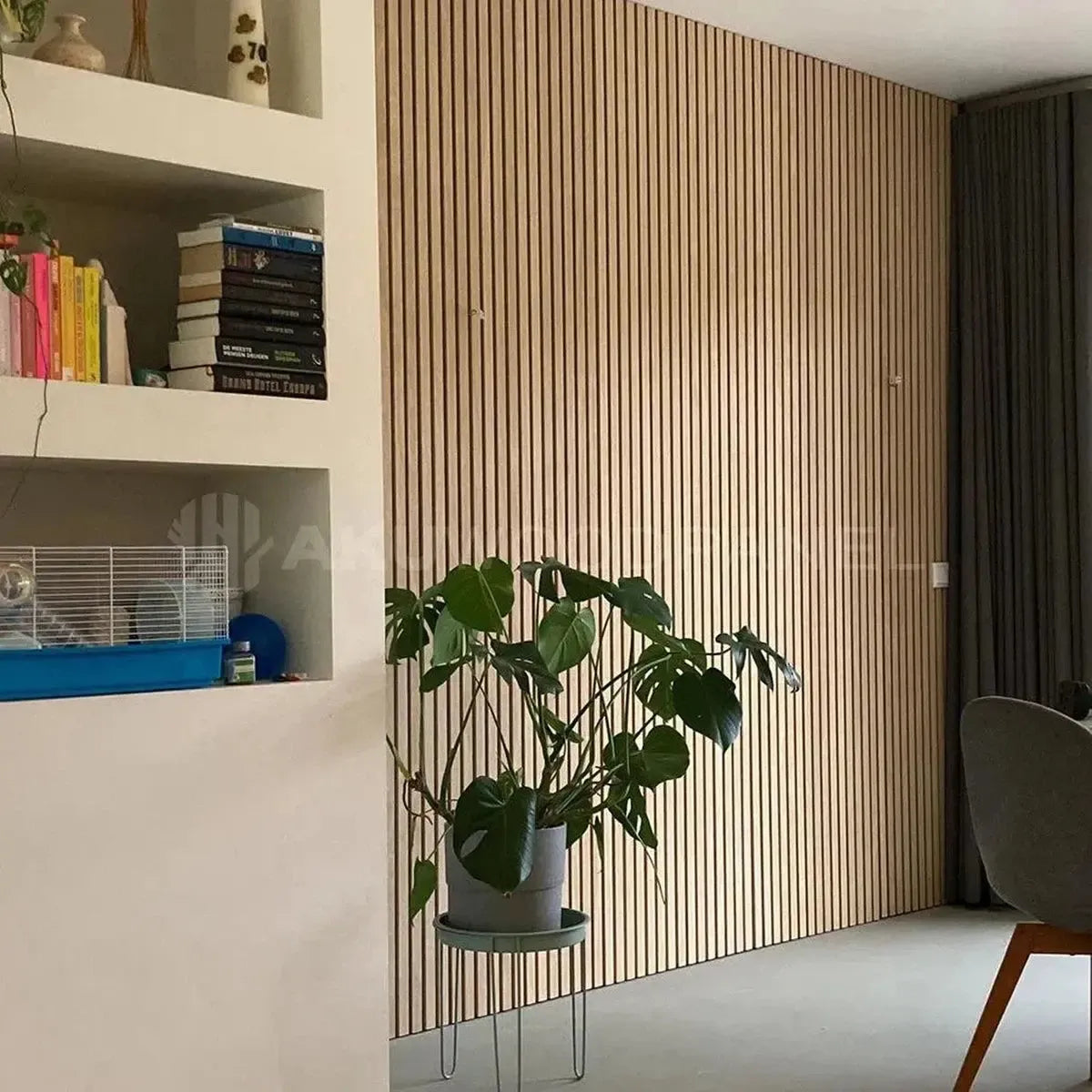
4. Acoustic Slat Wall Panel Natural Oak with Gray Felt — the daylight pick If the drum room has windows or gets used for daytime lessons, the lighter natural oak with gray felt keeps the space from feeling like a cave the way black oak can in a windowless basement. It carries the same felt-backed construction as the darker finishes, just with a lighter face. Verdict: Consider for rooms with natural light; Skip it for a windowless basement drum room where scuffs will show fast.
What to avoid
- Foam wedge panels sold as "soundproofing" — they absorb high frequencies well but do almost nothing for the low-mid thump a kick drum and floor tom produce, and they don't survive stick impact.
- Decorative slat panels with no felt layer — they look identical to acoustic versions in photos but add zero absorption; check for felt backing specifically before ordering.
- Full-room foam tile kits with no wood element — durable enough for a vocal booth, not for a room where drumsticks and cymbal stands regularly make contact with the wall.
Verdict comparison
| Pick | Finish | Best for | Verdict |
|---|---|---|---|
| Acoustic Slat Wall Panel Black Oak | Dark oak veneer | Daily-use rooms, hides scuffs | Buy |
| Hexagon Acoustic Panel Walnut | Warm walnut hexagon | Corner bass buildup | Consider |
| Full Sample Box Slat Wall Panel | Mixed finishes | First-time buyers | Buy |
| Acoustic Slat Wall Panel Natural Oak with Gray Felt | Light oak, gray felt | Daylit practice rooms | Consider |
FAQ
Do acoustic wood panels stop drum sound from leaving the room? No. Slat wood panels absorb reflected sound inside the room and cut flutter echo, but stopping sound from traveling through walls to another room requires mass and decoupling, not surface absorption alone.
What's the best acoustic wood panel for a drum room? For 2026, the Acoustic Slat Wall Panel Black Oak is the strongest all-around pick because the felt backing handles midrange reflection and the dark finish hides daily wear from stick impact and dust.
How many panels do you need for a drum room? Coverage across 50-70% of two opposing walls is the practical target for most home drum rooms, rather than treating all four walls floor to ceiling.
Is felt-backed slat wood paneling better than foam for drum rooms? For midrange control and durability against stick impact, yes. Foam wedges handle higher frequencies well but wear out faster and don't address the low-mid energy a drum kit generates.
Can acoustic wood panels handle kick drum frequencies? Slat wood panels reduce midrange reflection more than deep bass; kick drum energy in the 60-100 Hz range needs corner bass trapping in addition to wall panels, not instead of them.
Should panels go on walls, ceiling, or both in a drum room? Walls first, since that's where most flutter echo originates between a drummer and the nearest reflective surface; ceiling treatment helps in rooms with hard, low ceilings but isn't the first move.
How much wall coverage do you need in a practice room? Start at roughly half of each of two facing walls and add more if the room still sounds harsh after a week of use; over-treating early wastes budget on surfaces that weren't the actual problem.
Are hexagon acoustic panels good for corners in a drum room? Yes, hexagon shapes wrap into corner geometry more naturally than long slat runs, which matters because bass buildup from a kick drum concentrates in corners more than on flat wall sections.
One last thing
Most people treating a drum room in 2026 put all their panel budget on the wall directly behind the kit, when the corners flanking that wall are usually where the room actually sounds worst. Split the order between a slat wall section and hexagon panels in the two nearest corners before adding more coverage anywhere else.



 Better performance and aesthetic appeal
 In Stock