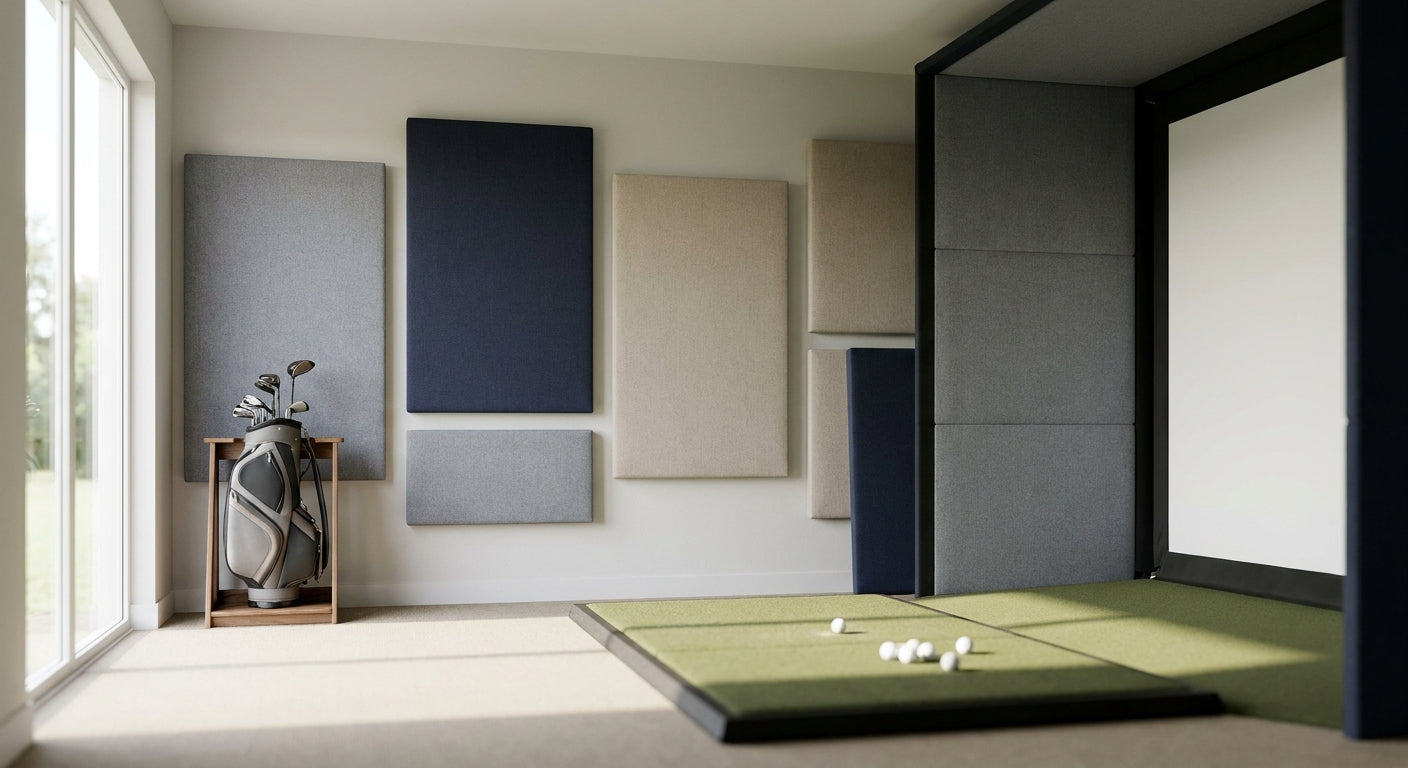
Golf simulator rooms are almost always converted garages, basements or spare bedrooms — hard, flat, reflective surfaces that turn every club strike, ball flight sound and voice command into an echo chamber. This guide breaks down which acoustic panels for golf simulator room setups actually hold up in 2026, not just which ones photograph well behind a projector screen.
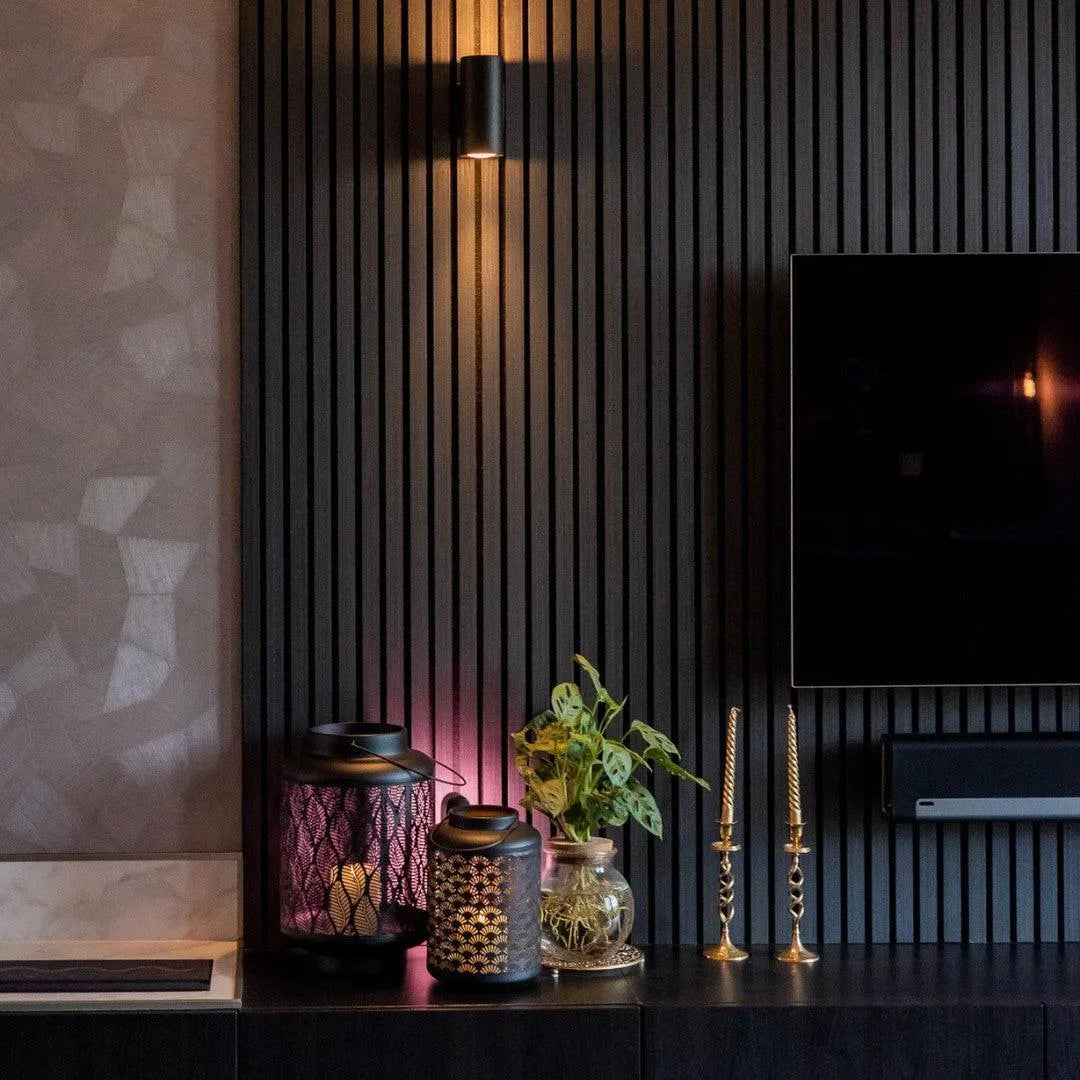
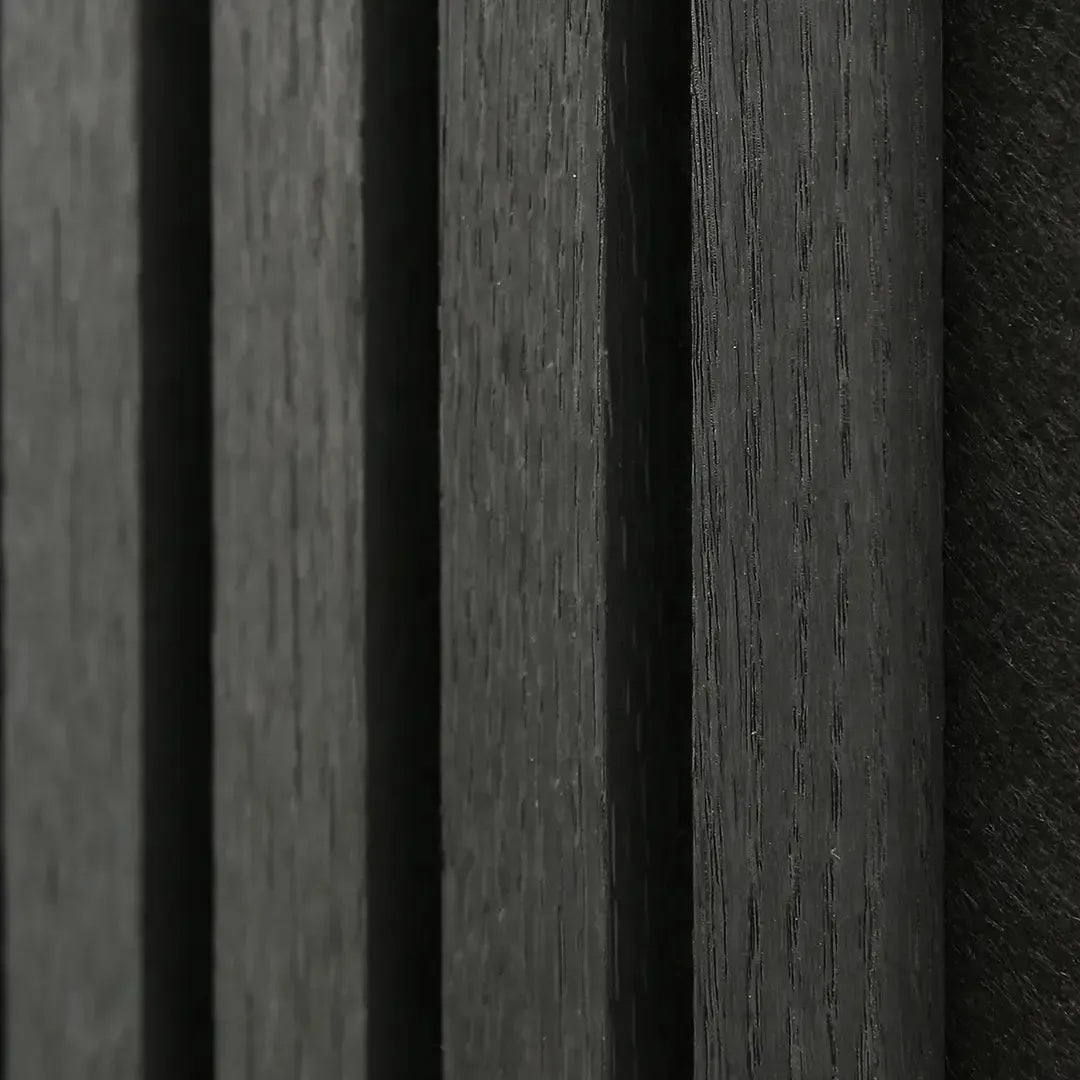
- Acoustic Slat Wall Panel in Black Oak wins for screen-side walls at $177.95 per box — buy it for the darkest, lowest-glare surface.
- Hexagon Acoustic Panel Walnut with Gray Felt rates 0.75 NRC — buy it for side and back wall diffusion.
- The $10 Full Sample Box lets you test three finishes before committing to a full simulator bay.
- Skip glossy or foam-only panels behind the screen in 2026 — glare and impact wear ruin both the look and the function.
Why this matters
A golf simulator bay is a small, boxed-in room asking a lot of its walls: absorb ball-strike sound, kill the slap-back echo off a projector screen, and still look like a room someone would want to spend an hour in. Drywall and garage insulation do none of that. Foam tiles absorb some noise but do nothing for the room's appearance and tend to yellow or dent within a year.
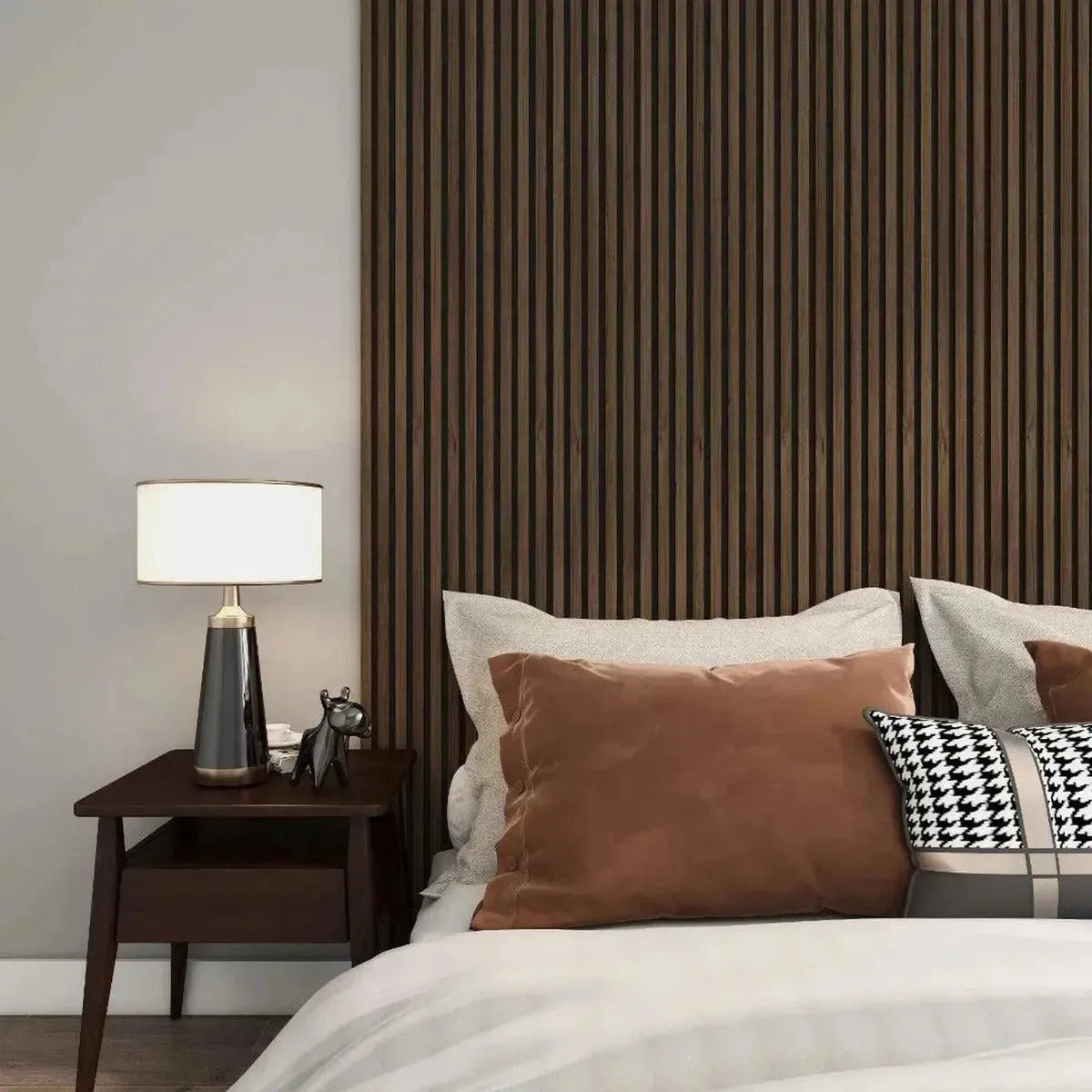
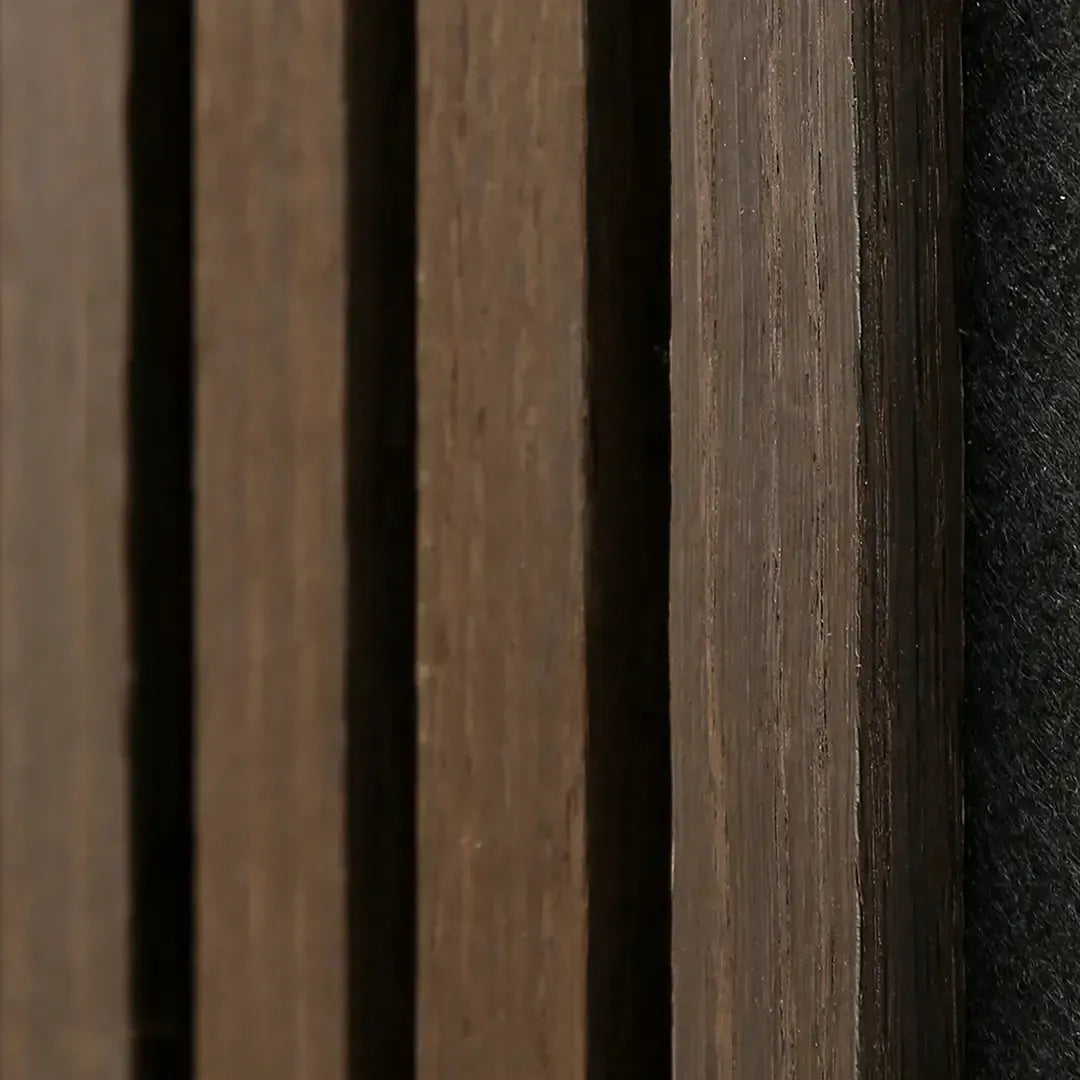
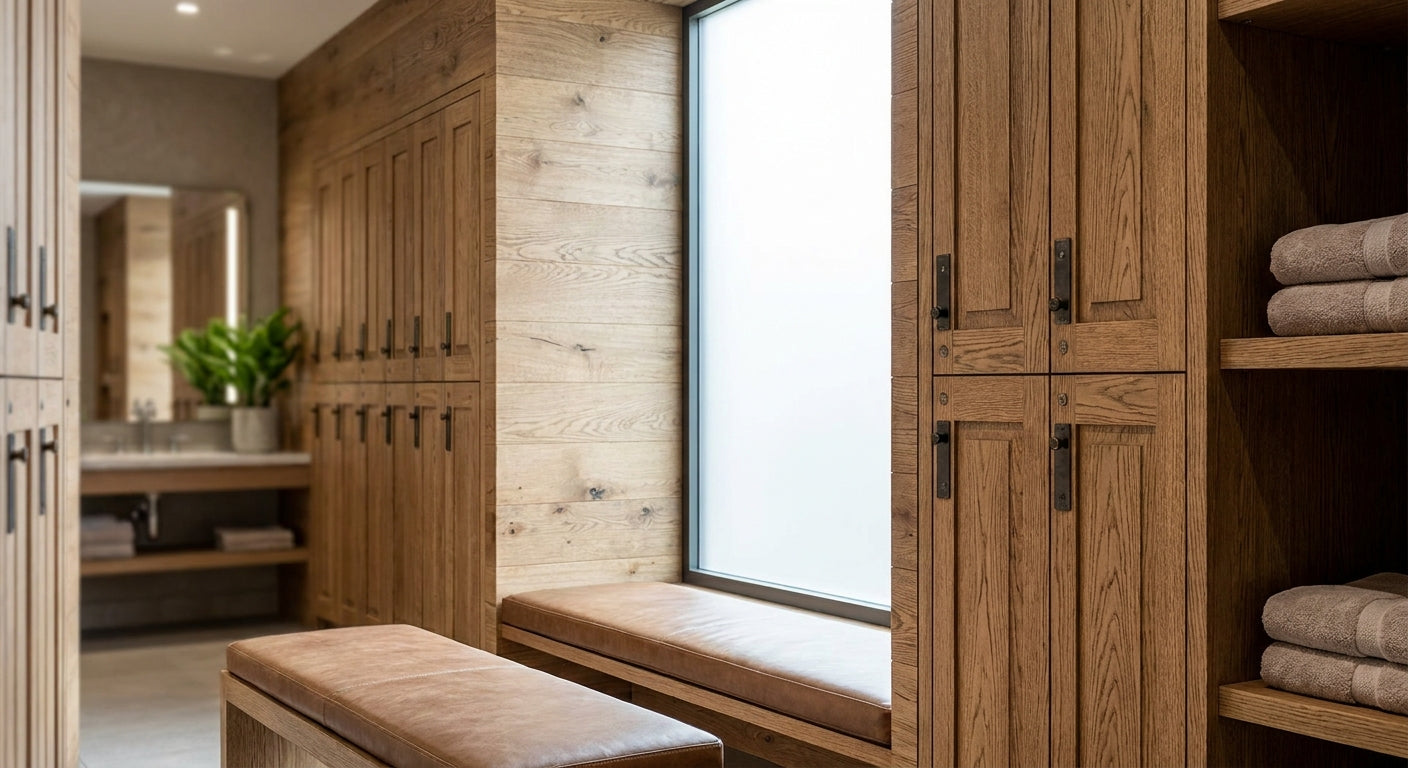
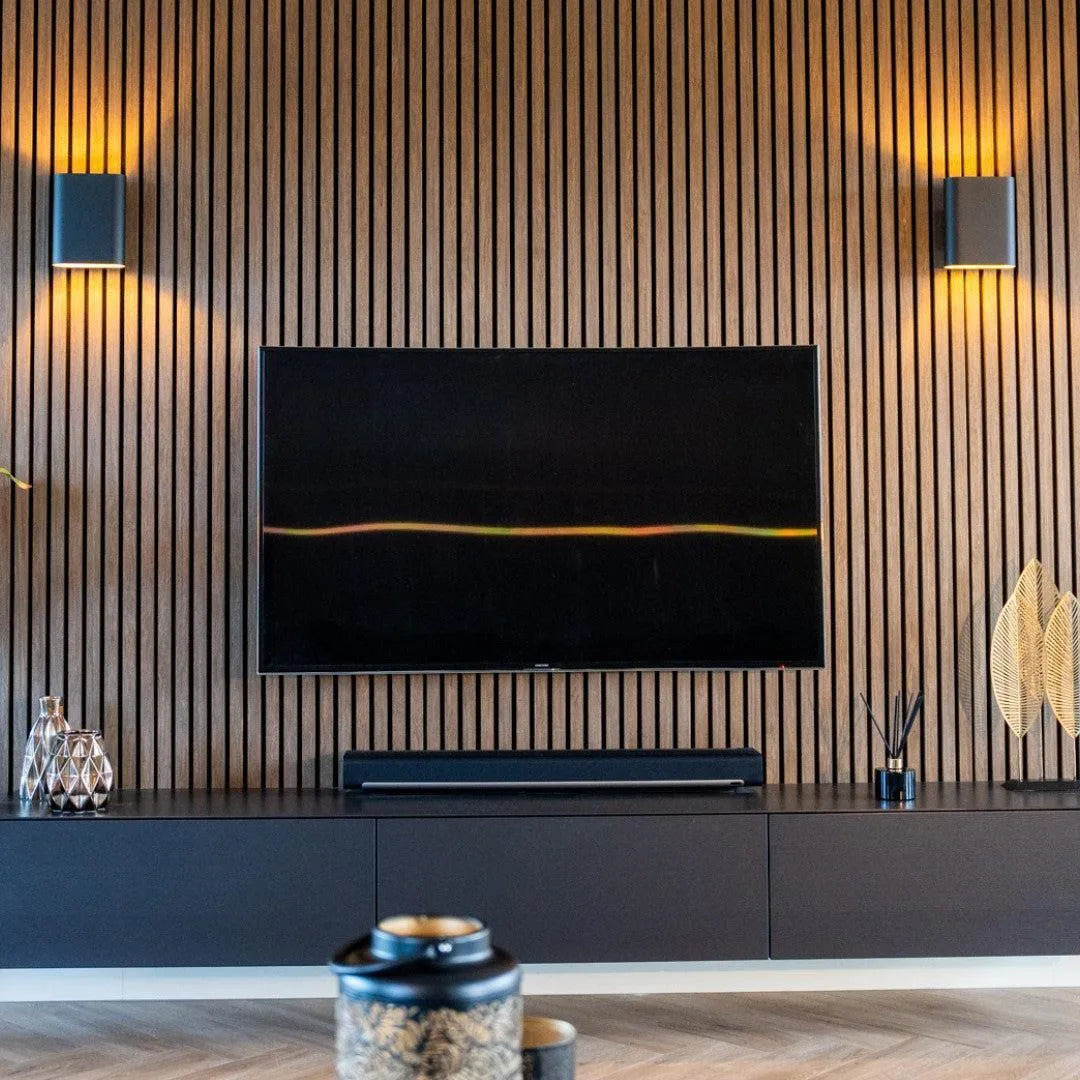
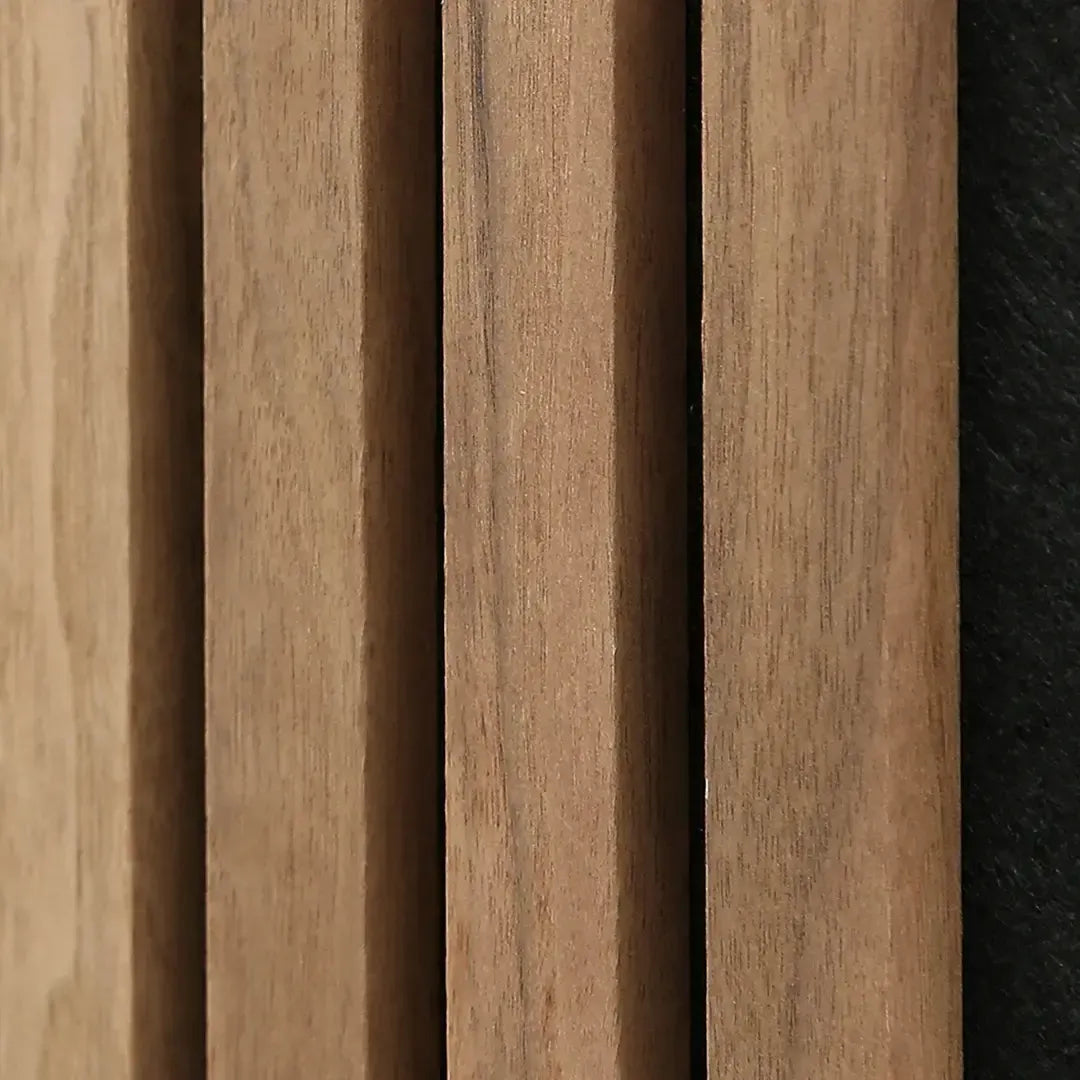
Wood veneer acoustic panels solve both problems at once — they cut reflected sound the way felt-backed foam does, and they look finished enough that the room doubles as a den, not just a hitting bay. Akuwood Panel builds its acoustic panel lines around a 3-sided wood veneer face with a perforated or slotted profile that lets sound pass through into a felt or foam backing, which is exactly the mechanism a simulator room needs on the walls flanking the screen.
Who this is for
This is for anyone finishing a garage, basement, or spare room into a dedicated golf simulator bay — homeowners doing it themselves on a weekend, and small commercial operators building out a two- or three-bay simulator lounge who need the room to look intentional, not like a padded cell.
What to look for in acoustic panels for a golf simulator room
Sound absorption rating, not marketing language
An NRC (Noise Reduction Coefficient) number tells you how much sound a panel actually absorbs versus reflects — a rating close to 1.0 absorbs nearly everything, a rating near 0 reflects almost everything back. The Hexagon Acoustic Panel line carries a stated 0.75 NRC, which is a real, checkable number rather than a vague sound-dampening claim, and it's the figure to compare against anything else you're considering for the same wall.
Impact tolerance behind the screen
The wall directly behind and beside a simulator screen takes stray ball strikes, especially from off-center hits or a rushed swing before the mat is set. A panel built on a 3-sided wood veneer face with a solid backing holds up to accidental contact far better than thin foam tiles that dent or tear on the first mishit.
Glare control for the projector
A bright or glossy panel finish behind the screen throws light back at the lens and washes out contrast on every shot replay. Darker finishes — black oak, smoked oak, black hexagon — cut that glare noticeably more than natural or light oak tones, which matters more in a simulator bay than in a living room.
Modularity for awkward bay dimensions
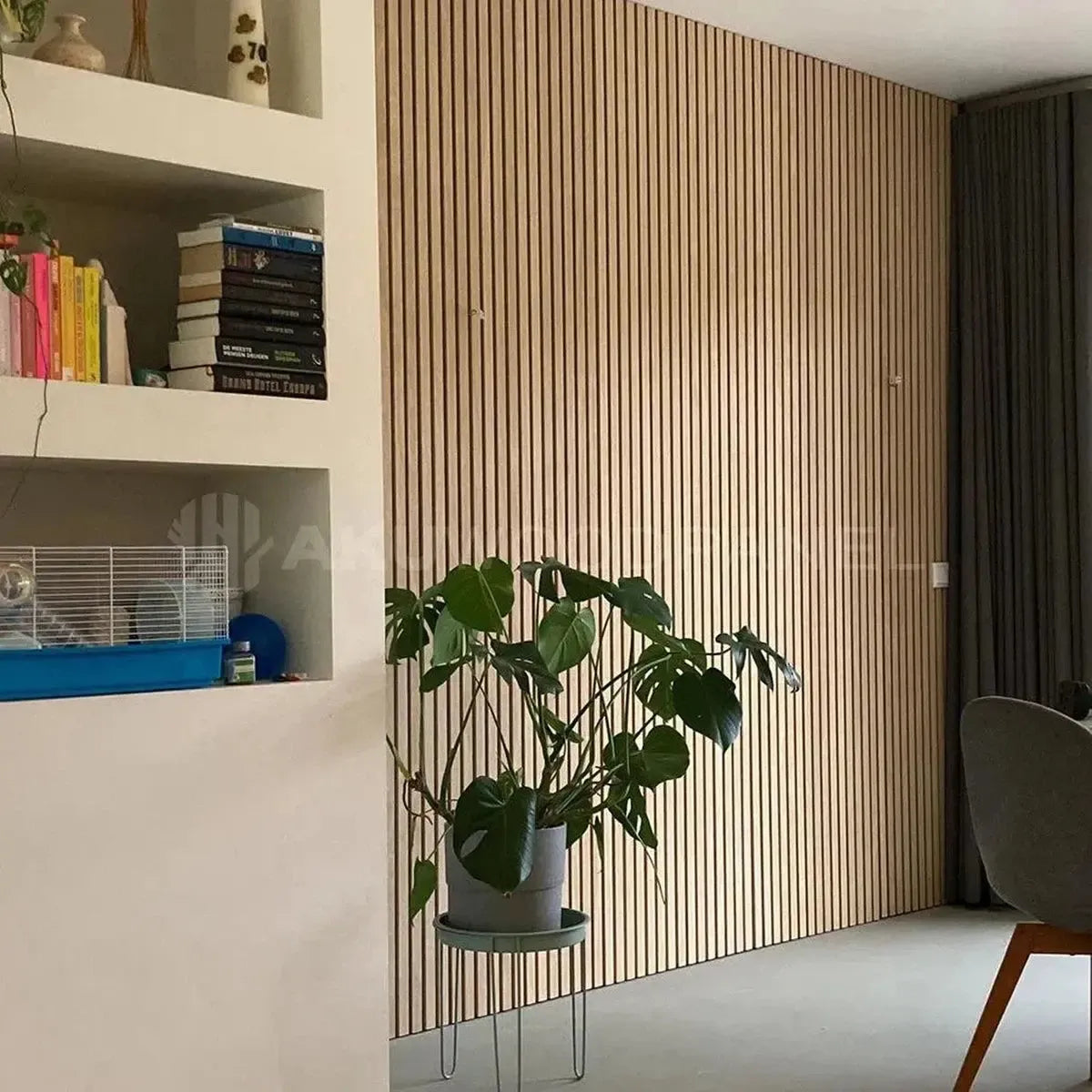
Most simulator rooms aren't perfect rectangles — there's a support post, a low header, or a sloped section near the garage door. Slat panels handle long runs and corners cleanly with end pieces; hexagon panels fill irregular shapes and partial walls without leaving a visible gap at the edge.
Installation speed for a DIY timeline
Most people building a simulator bay want it done in a weekend, not a month. Panels that mount directly to drywall or a furring strip system without custom framing get the room usable faster than a full acoustic-foam-and-frame build-out.
Cost per full bay, not per panel
A typical simulator bay needs coverage on two to three walls, which adds up fast at $148.95 to $182.95 per box depending on finish. Ordering a sample box first, at $10, is cheaper than re-ordering an entire wall's worth of panels because the tone looked different once it was actually up.
Top picks for a golf simulator room
Acoustic Slat Wall Panel, Black Oak — the screen-side pick. Built on the same 3-sided wood veneer construction as the rest of the slat line, priced at $177.95 per box, and dark enough to kill glare on the wall directly behind the screen. This is the wall your projector sees every session, so the darkest finish in the lineup earns its price. Buy.
Hexagon Acoustic Panel, Walnut with Gray Felt — the diffusion pick. Rated at 0.75 NRC and priced at $165.95, the hexagon shape breaks up flat reflective surfaces on side and back walls better than a straight slat run, which matters in a narrow bay where sound bounces corner to corner. Buy.
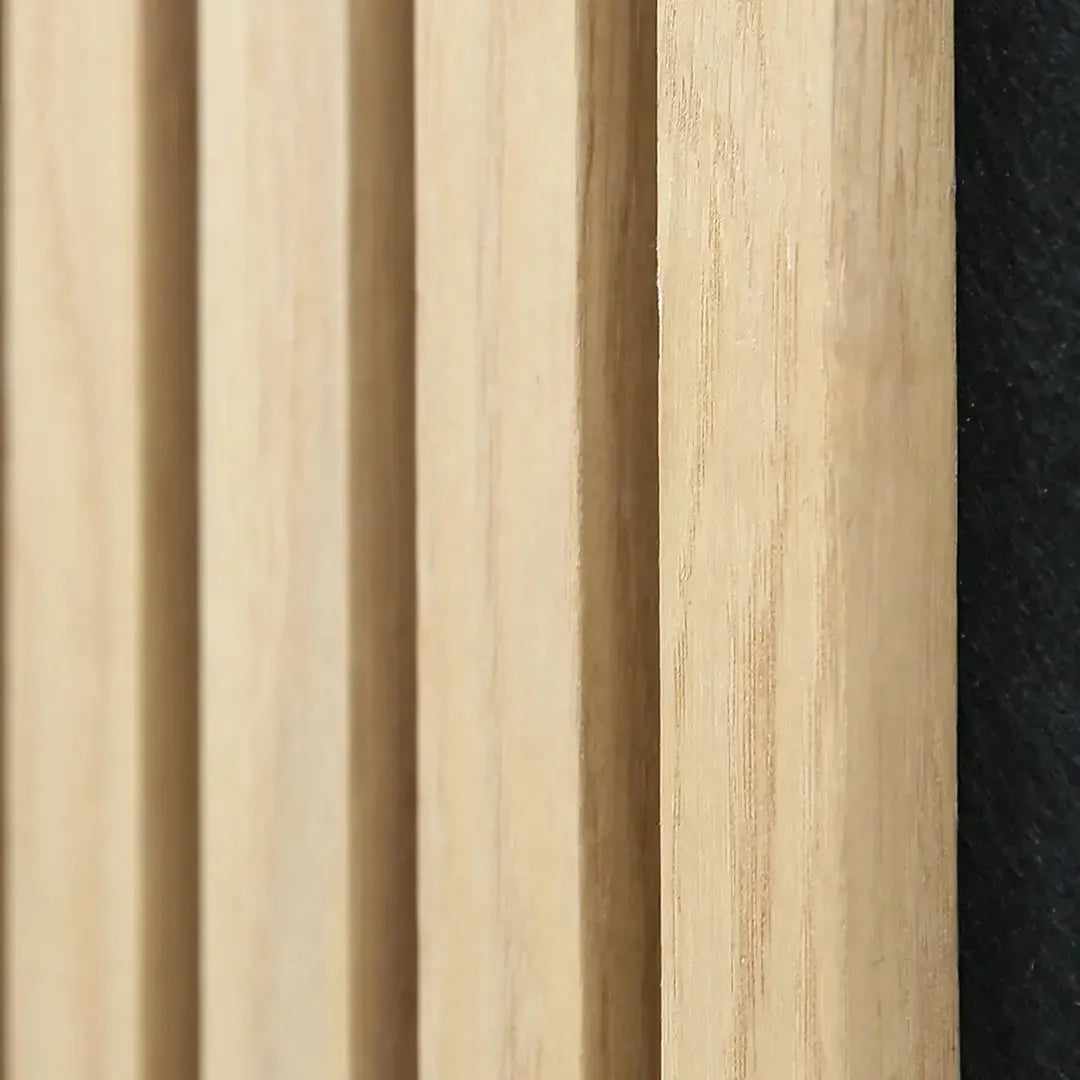
Full Sample Box, Slat Wall Panel — the low-risk pick. Ten dollars gets you Natural, Smoked Oak and Walnut finishes in hand before you commit to a full bay order, which is the cheapest insurance against ordering the wrong tone for a room lit by a projector instead of daylight. Buy, especially if this is your first panel order.
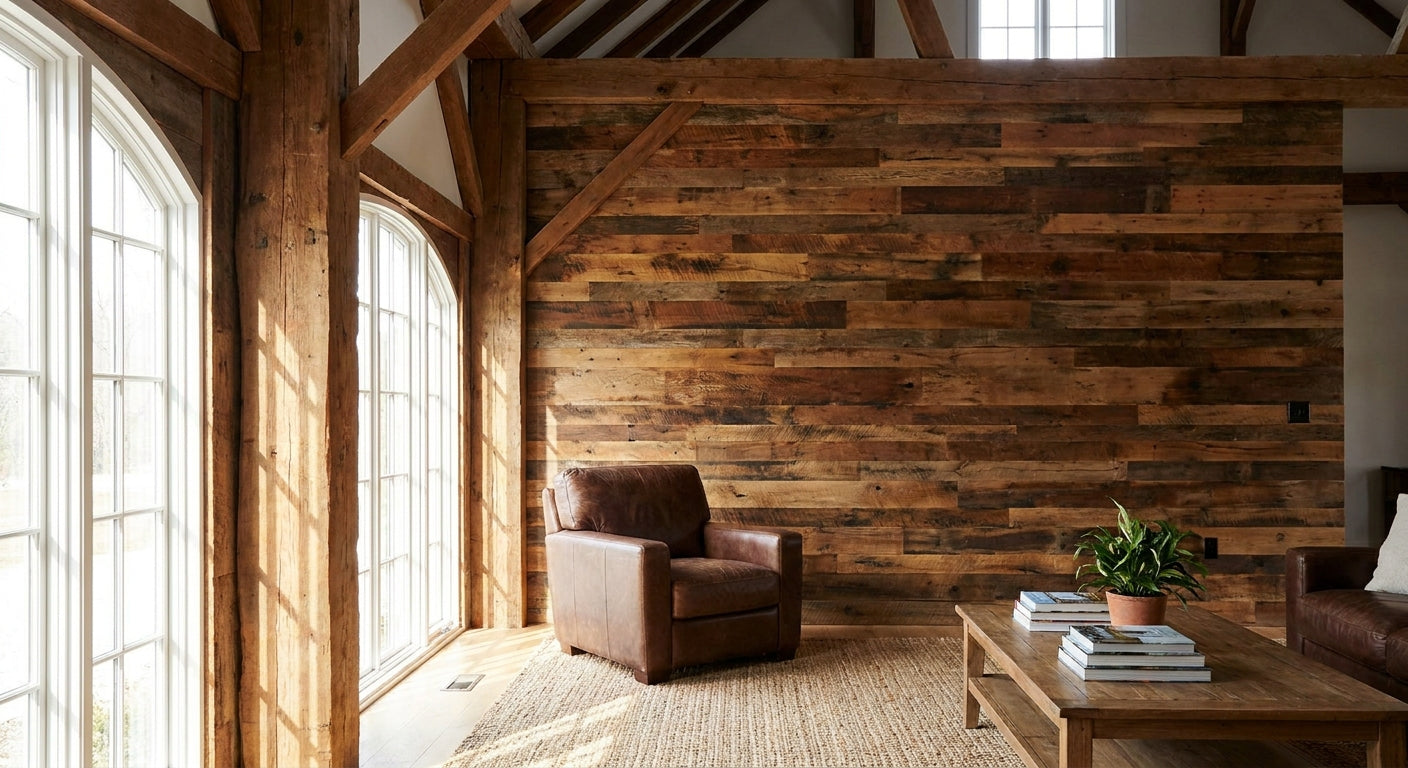
Wooden Wall Panel, Rustic Oak — the wildcard. The heavier grain texture reads well in a den-style build-out, but the rougher surface catches more dust behind a screen that's rarely cleaned weekly. Consider it for walls away from the screen, not the impact zone.


What to avoid
- Bare acoustic foam tiles — they absorb sound but do nothing for a room you're trying to make presentable, and they dent or discolor within a year of regular use.
- Glossy or high-sheen finishes behind the screen — anything reflective throws glare straight back at the projector lens and washes out shot replay footage.
- Adhesive-only mounting with no backing support on the impact wall — a panel that isn't secured to a furring strip or solid substrate can shift or separate after repeated contact near the hitting zone.
Verdict comparison
| Product | Best For | Price | Verdict |
|---|---|---|---|
| Acoustic Slat Wall Panel, Black Oak | Screen-side wall, glare control | $177.95 | Buy |
| Hexagon Acoustic Panel, Walnut with Gray Felt | Side/back wall diffusion, 0.75 NRC | $165.95 | Buy |
| Full Sample Box, Slat Wall Panel | Testing finishes before a full order | $10 | Buy |
| Wooden Wall Panel, Rustic Oak | Accent walls away from the screen | $169.95 | Consider |
FAQ
What's the best acoustic panel for a golf simulator room?
Dark, felt-backed wood veneer panels like Black Oak slat panels or the Hexagon Acoustic Panel with Gray Felt work best in 2026 because they cut screen glare and rate around 0.75 NRC for sound absorption. Lighter, glossy finishes reflect more light and sound back into the room.
Do acoustic panels stop golf ball impact noise?
Wood veneer acoustic panels with felt backing absorb a meaningful share of the crack and echo from a club strike, though nothing eliminates impact noise entirely in a hard-surfaced room. Combining panels on two or three walls does more than treating a single wall.
How many panels do I need for a golf simulator bay?
Most simulator bays need coverage on the screen wall and at least one side wall to control echo, which usually runs two to four boxes depending on ceiling height and bay width. Ordering a $10 sample box first avoids mismatched tones once the full order arrives.
Is felt backing better than plain wood veneer for sound absorption?
Felt-backed panels generally absorb more sound than plain wood veneer because the felt layer catches sound waves the wood surface alone reflects. The Hexagon Acoustic Panel with Gray Felt carries a stated 0.75 NRC rating as a reference point.
Can acoustic panels go directly behind a golf simulator screen?
Yes, as long as the panel has a solid backing and isn't mounted with adhesive alone, since that wall takes the most incidental ball contact in the room. A dark finish like Black Oak also reduces glare thrown back at the projector.
How much does it cost to acoustic-treat a golf simulator room in 2026?
Panel pricing in 2026 runs $148.95 to $182.95 per box depending on finish, and a typical two-to-three-wall bay uses several boxes per wall. A $10 sample box is the cheapest way to confirm the tone before committing to a full order.
Do I need acoustic panels on the ceiling of a simulator room?
Ceiling treatment helps in rooms with hard, flat ceilings and high ball flight noise, but most simulator bays get the biggest improvement from wall coverage first. Start with the screen wall and one side wall before treating the ceiling.
What NRC rating is good enough for a golf simulator room?
An NRC around 0.75, like the rating on the Hexagon Acoustic Panel line, is a solid benchmark for a simulator bay in 2026. Anything significantly lower reflects more sound than it absorbs and won't meaningfully cut echo.
One last thing
The wall most people forget is the one behind them, not the one behind the screen — the swing follow-through and the golfer's own voice bounce off the back wall just as hard as ball strikes bounce off the front one. Treat both, not just the photogenic side.
 Better performance and aesthetic appeal
 In Stock