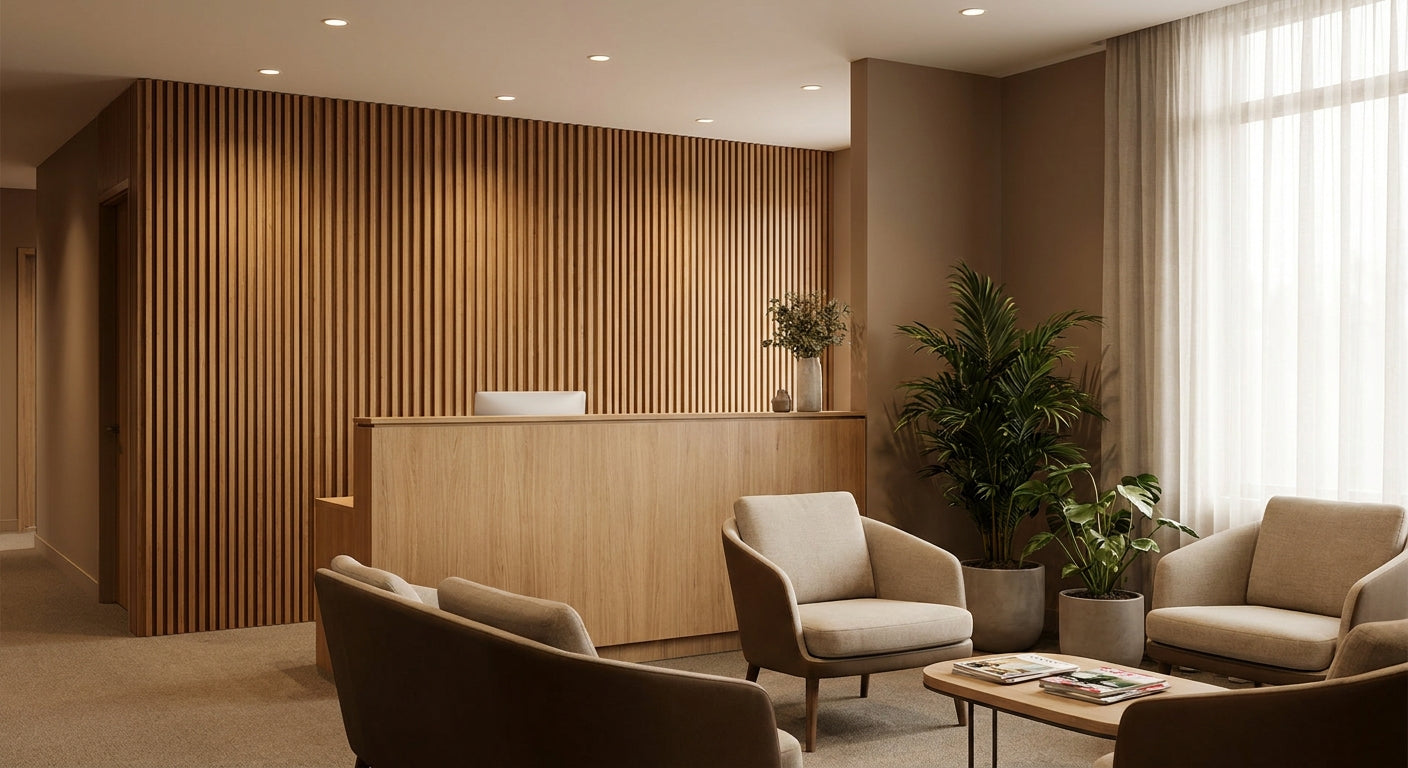
Dental reception areas hit patients with the worst combination possible: hard floors, glass partitions, and nervous small talk that bounces off every surface. Wood wall panels solve the noise problem and the sterile-clinic look in one move, and in 2026 more practice owners are treating acoustic paneling as a first-year build cost, not an afterthought.
TL;DR: For a dental practice reception in 2026, the acoustic slat wall panel in natural oak with gray felt is the safe buy — real wood veneer over an NRC-rated felt core that cuts echo without looking clinical. Wood wall panels for dental practice reception areas need to balance sound absorption, easy wipe-down maintenance, and a calm aesthetic that doesn't spike patient anxiety. Skip anything with exposed foam or unfinished MDF edges — they degrade fast under daily cleaning. Verdict: Buy the felt-backed slat panel for the main reception wall.
Why This Matters
A typical dental reception area runs 150 to 300 square feet, with a check-in desk, waiting chairs, and often a fish tank or water feature adding to the ambient noise. Hard surfaces — tile, laminate counters, glass — reflect sound instead of absorbing it, so every zipper, phone ring, and drill hum from the back rooms carries straight to the people waiting. Practice owners upgrading interiors in 2026 are choosing acoustic wood panels over fabric wall art or foam tiles because panels do double duty: they cut reverberation and they read as a design upgrade, not a hospital fix. Some practices are also referencing dedicated guidance on acoustic slat panels for dental and medical clinic rooms when specifying panels for treatment areas, not just the front-of-house.
Who This Is For
This guide is for practice owners, office managers, and interior designers specifying finishes for a dental reception remodel in 2026 — whether that's a single-chair startup practice or a multi-location group buying panels for five lobbies at once. If your patients sit for 10 to 20 minutes before an appointment and the room echoes every cough, this is the fix.
What to Look For in Wood Wall Panels for a Dental Reception
Real wood veneer over printed laminate
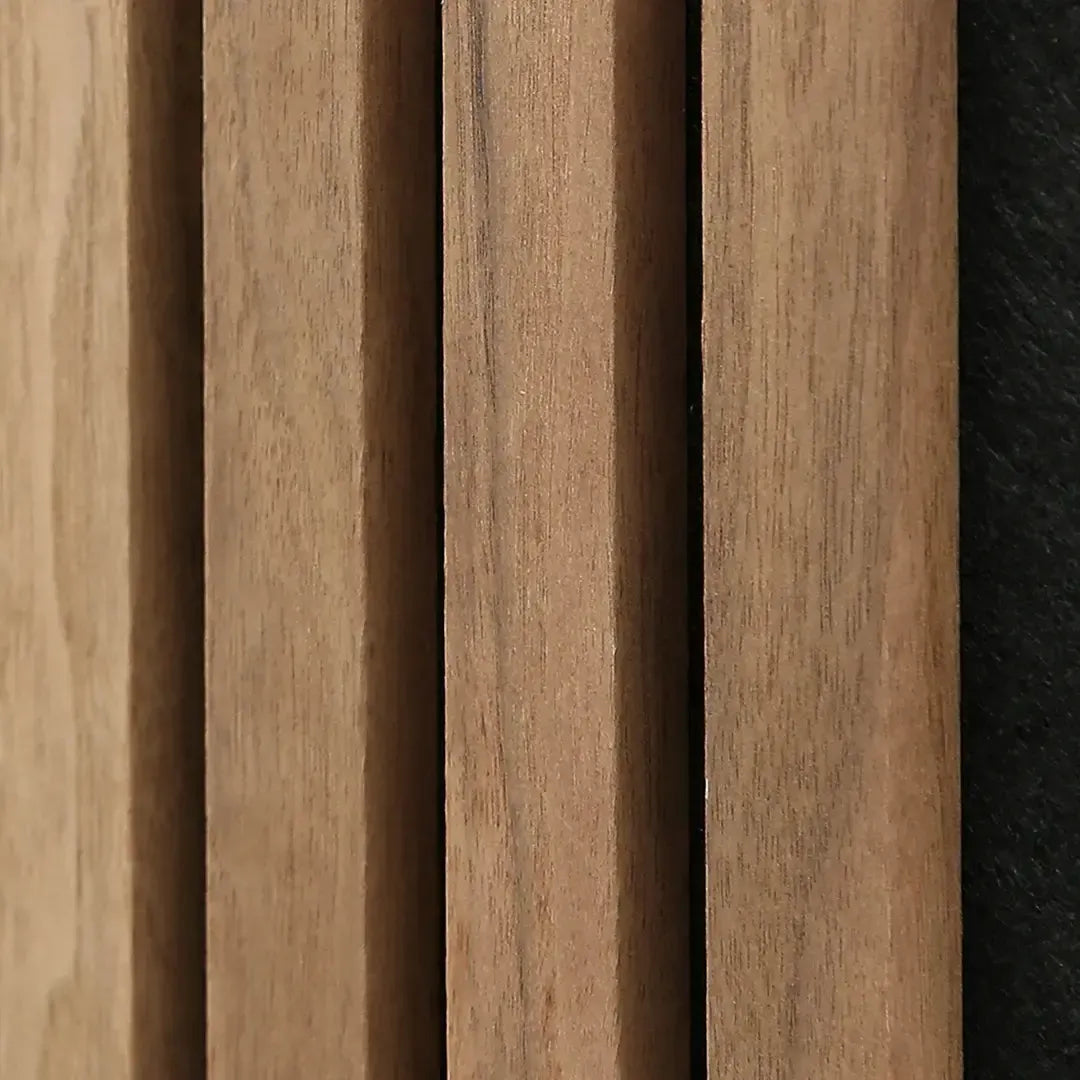
Printed laminate scratches and fades under fluorescent lighting within a couple of years. Real wood veneer ages instead of degrading, and it holds up better to the daily foot traffic a reception area sees.
An acoustic backing, not just a decorative slat
A slat panel without acoustic felt or foam behind it is decoration, not noise control. For a dental reception, you want the felt backing doing the absorption work while the wood front does the visual work.
Wipeable, low-maintenance finish
Reception walls near a check-in counter pick up hand oils, coffee splashes, and the occasional coughed-on surface. A sealed wood finish that wipes clean beats anything porous or textured that traps grime.
A color that doesn't skew cold or sterile
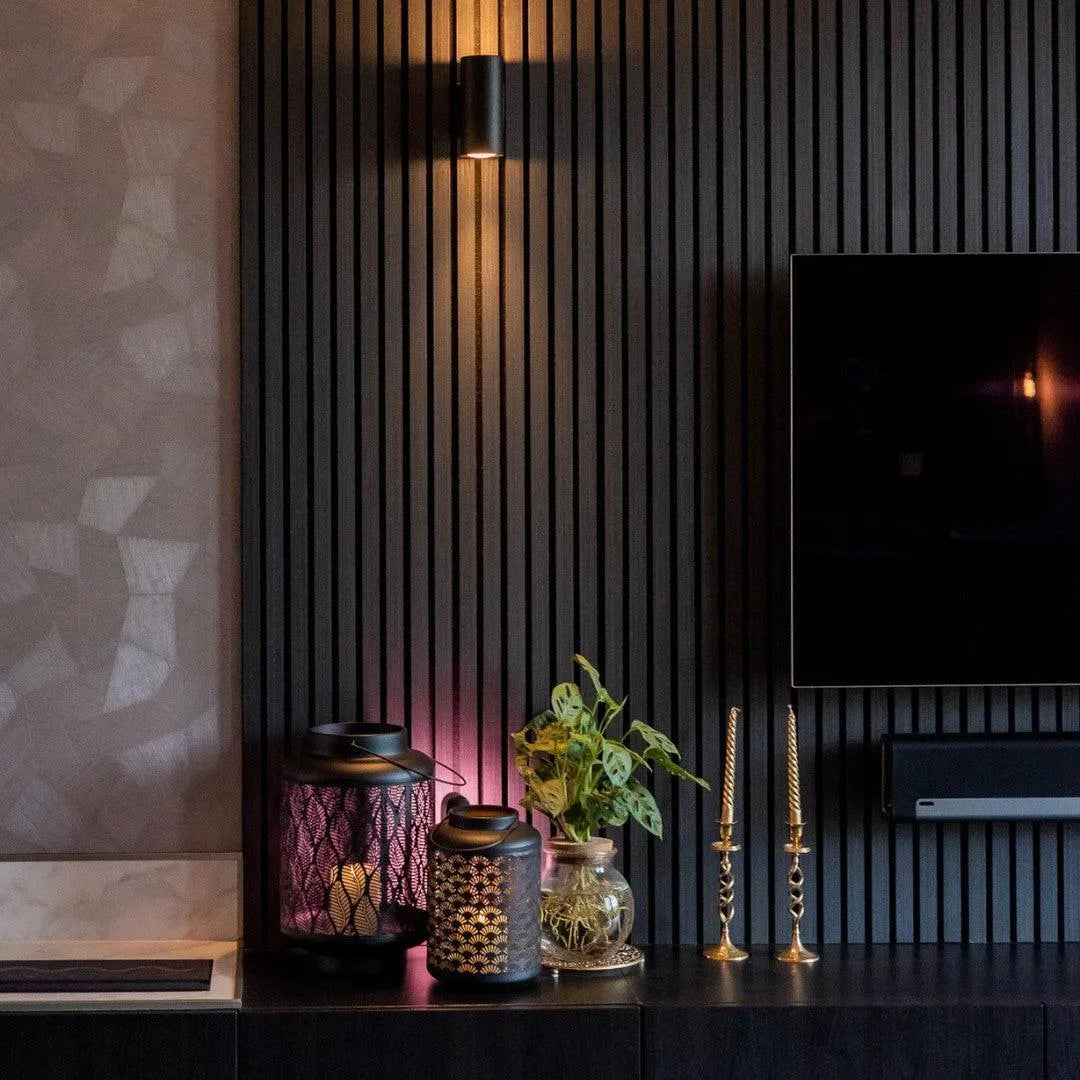
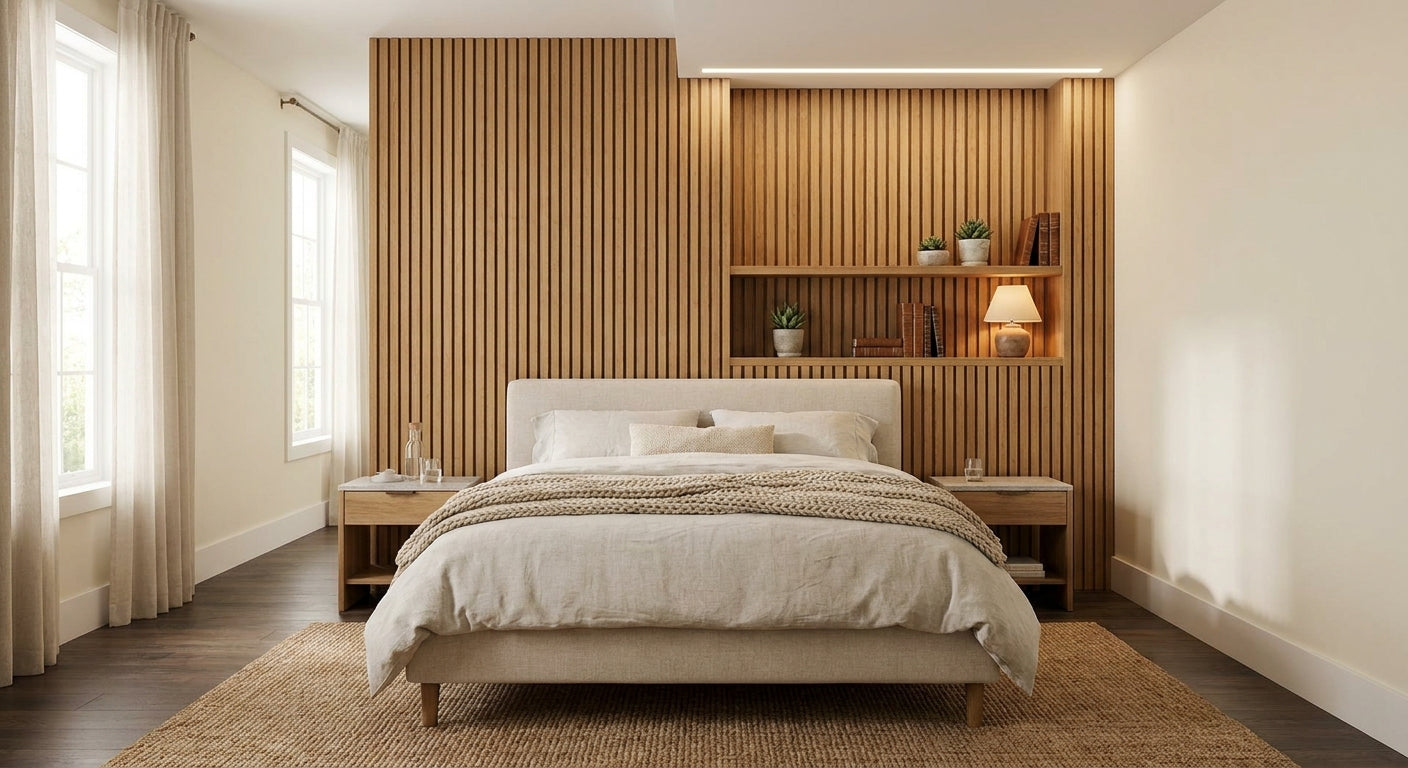
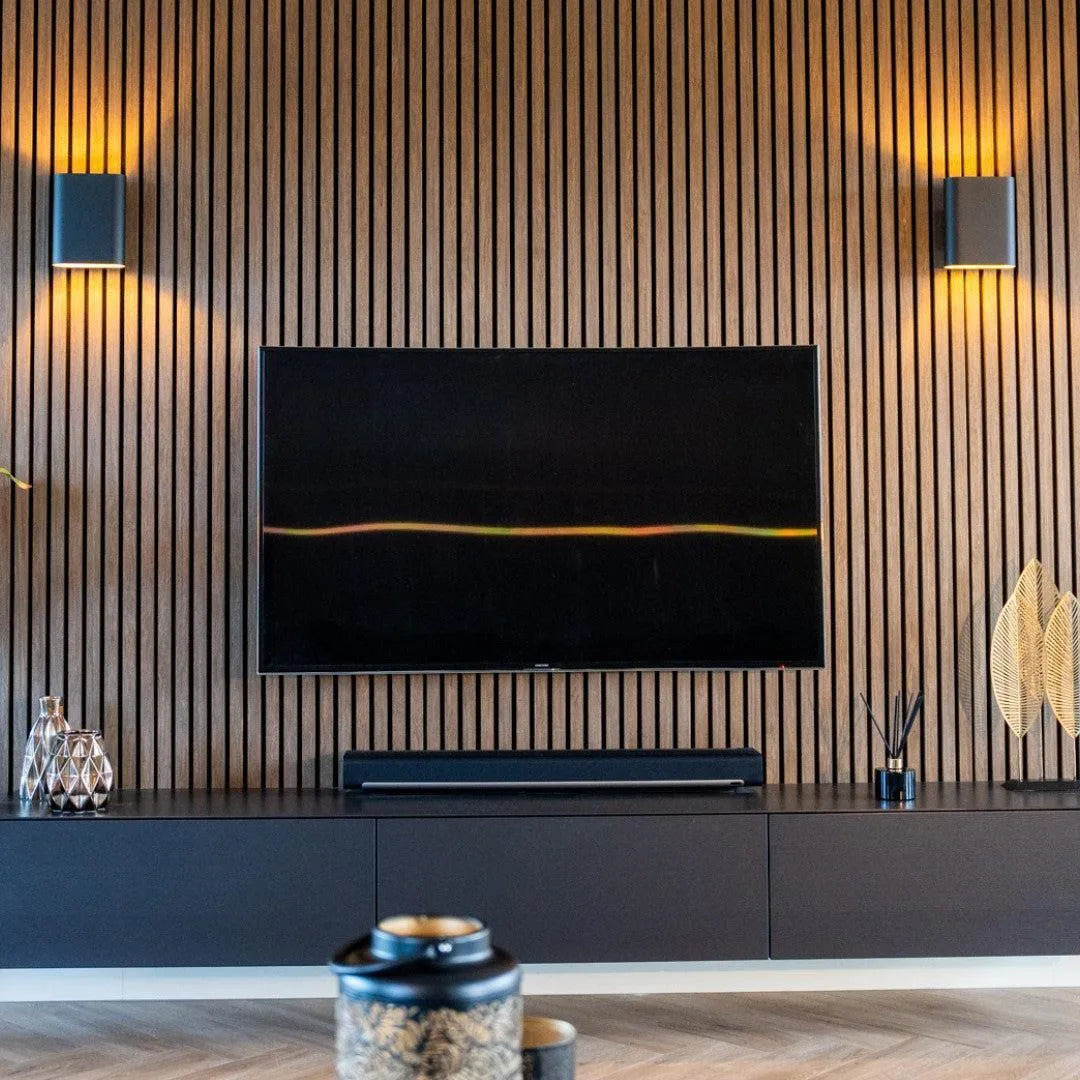
Bright white or stark black paneling can push a reception area further toward clinical, which is the opposite of what most practices want. Warmer tones — natural oak, walnut — soften the room without looking dated.
Panel format that fits an accent wall, not a full gut renovation
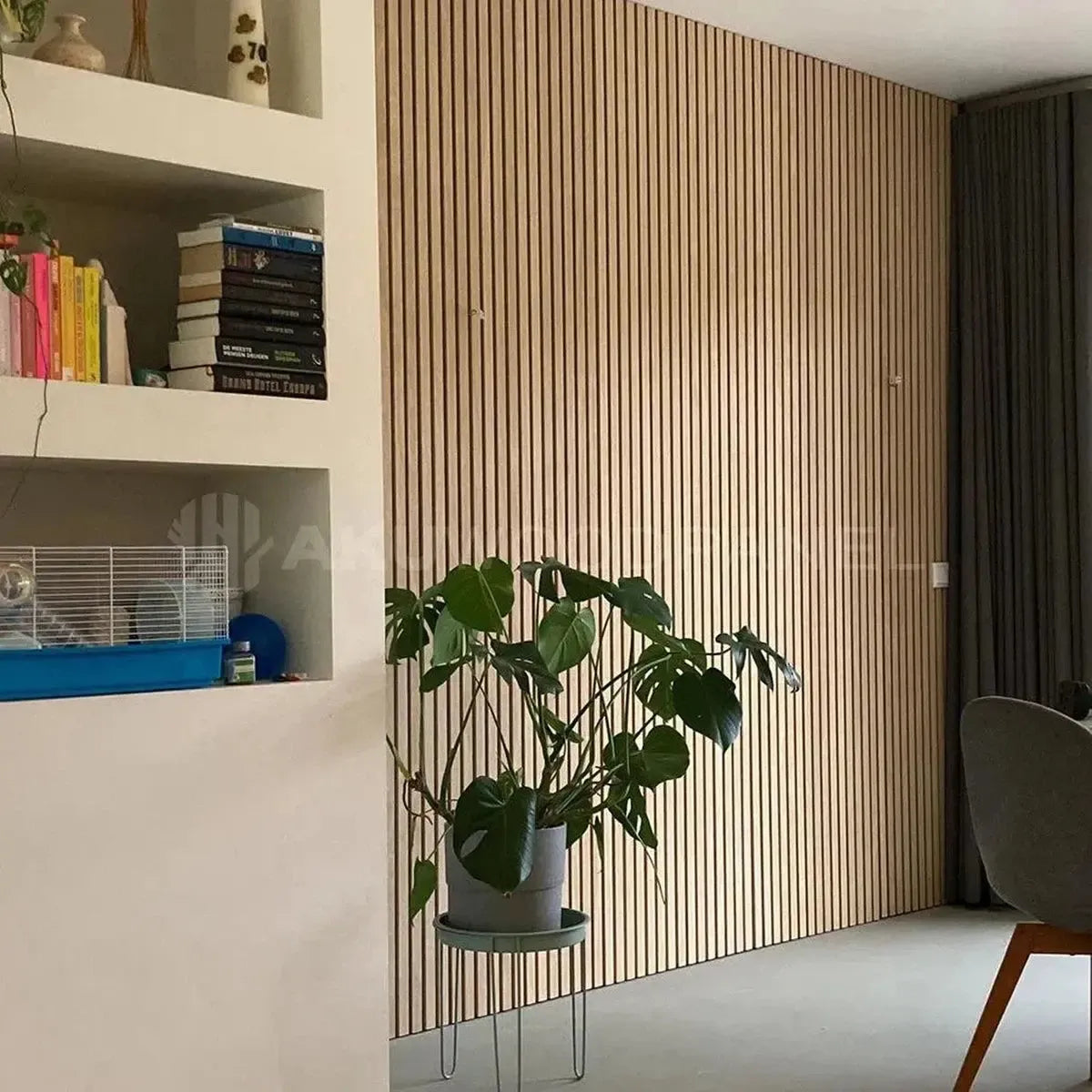
Most reception upgrades don't call for re-cladding every wall. A slat or fluted panel format installed on one focal wall behind the check-in desk delivers the acoustic and visual impact without a multi-week renovation.
Sample-first ordering
Color and grain read differently under a reception area's lighting than they do on a screen. Ordering a sample before committing to a full wall order avoids a costly mismatch.
Top Picks for Dental Practice Reception Areas
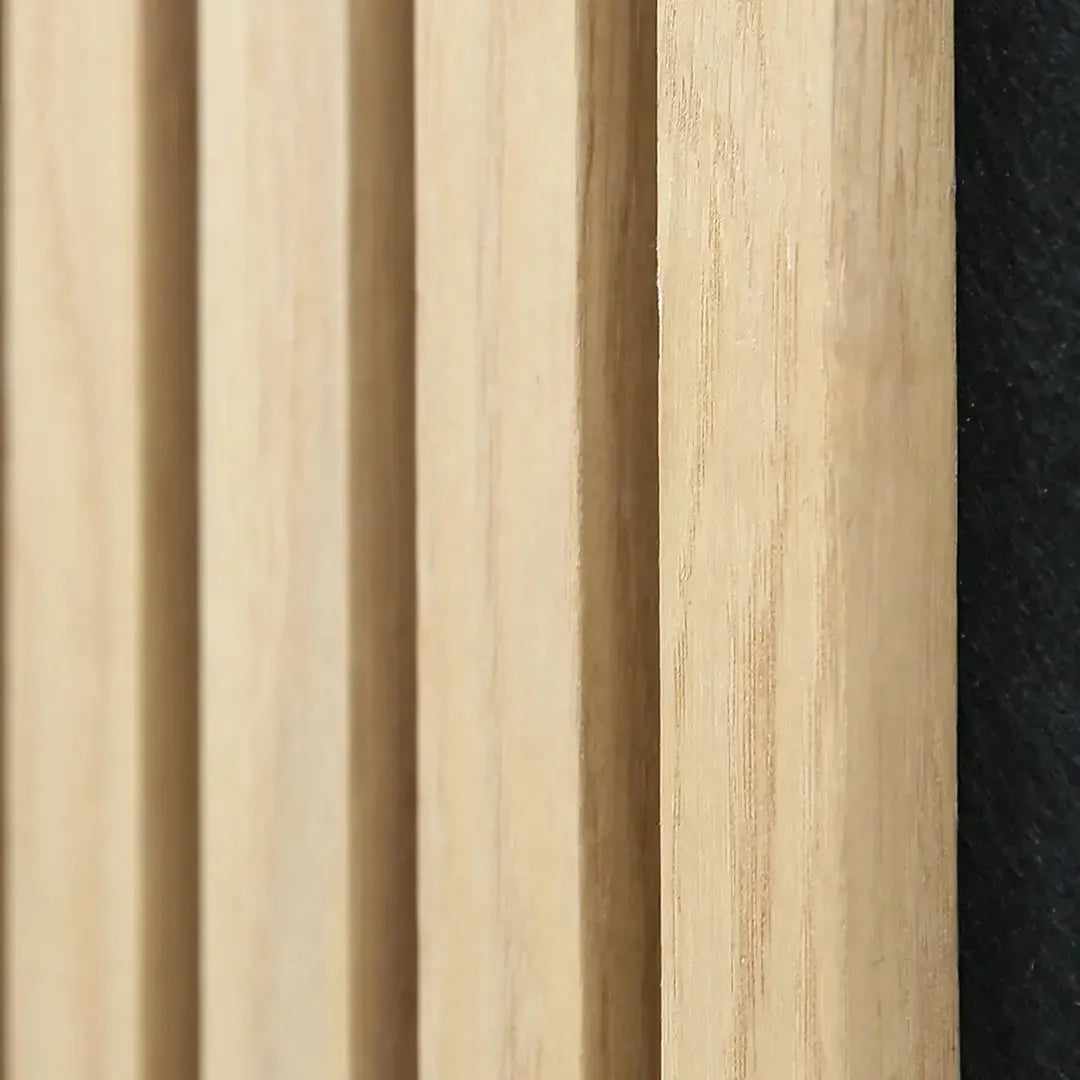
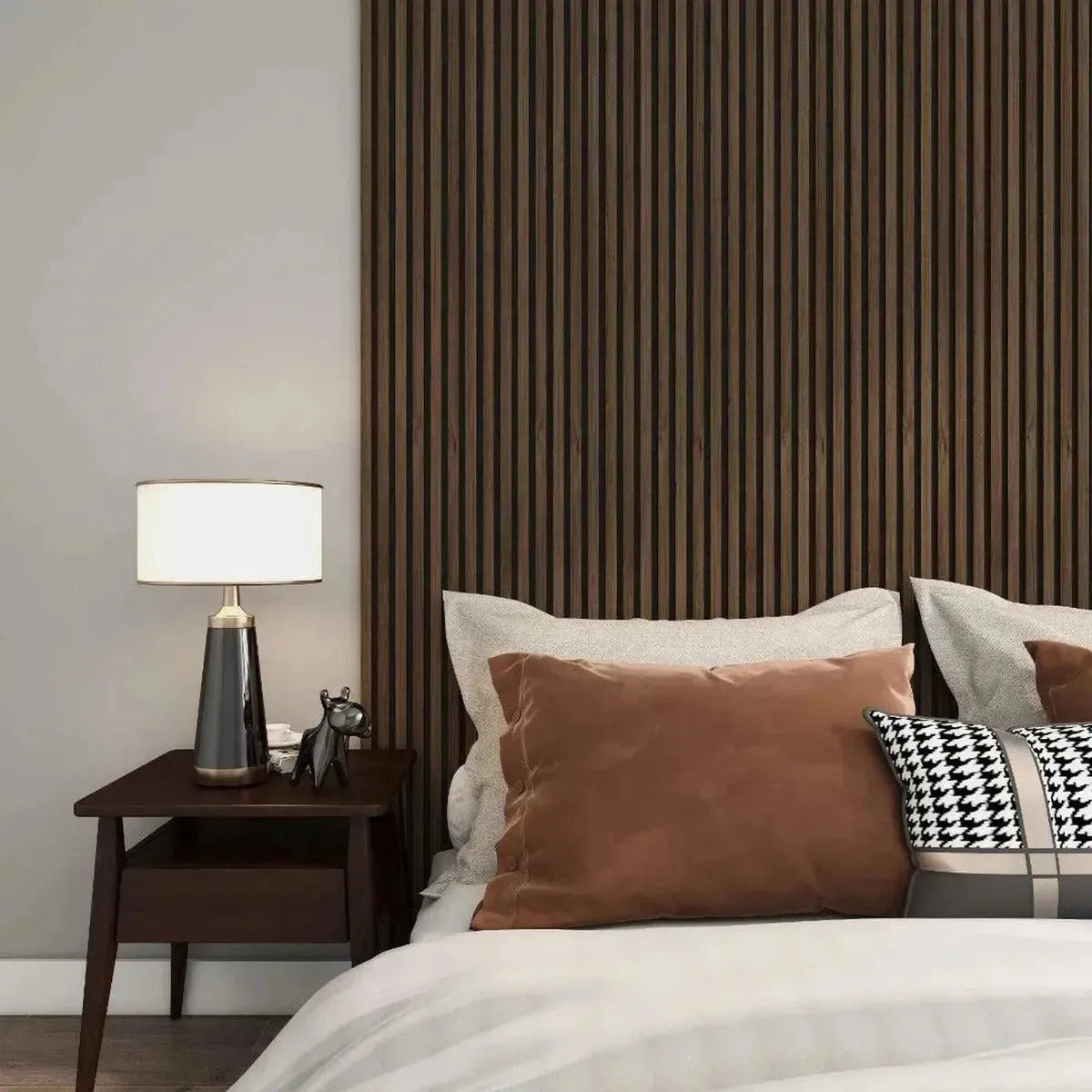
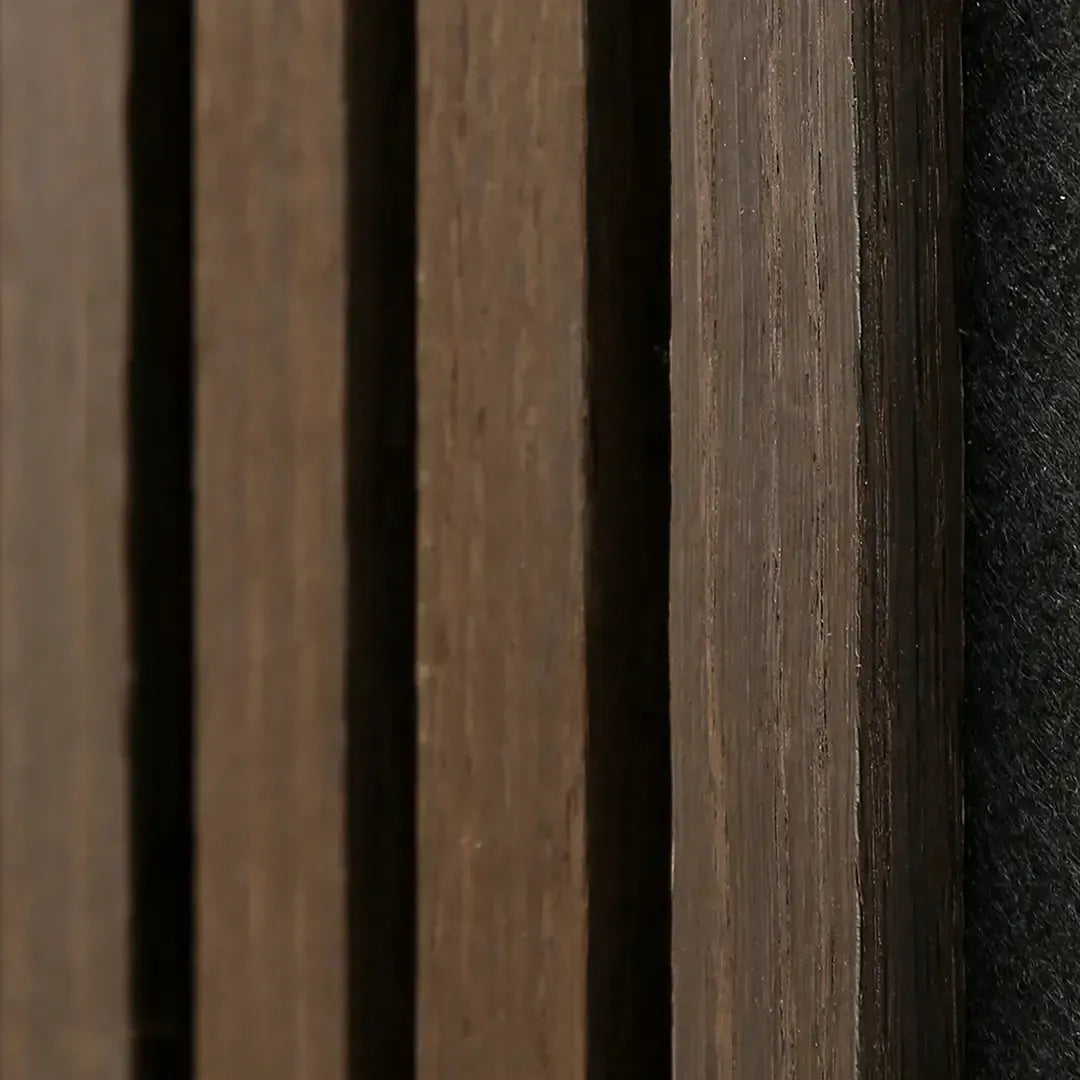
The safe pick: Acoustic Slat Wall Panel, Natural Oak with Gray Felt The hook here is balance — this panel doesn't try to make a design statement, it just works. The gray felt backing sits behind a real oak veneer slat front, and the neutral gray reads calm rather than cold under reception lighting. One number that matters: a single accent wall in a 200-square-foot reception area typically needs coverage for one 8 to 10-foot run, which is a manageable order size for a first-time buyer. Verdict: Buy. See the acoustic slat wall panel in natural oak with gray felt.
The design statement: Fluted Wall Panel, Natural Oak The hook is texture without slats — fluted panels give a softer, rounded profile that reads more boutique than most dental offices attempt. It still absorbs some ambient sound through surface diffusion, though it's not a dedicated acoustic product the way felt-backed slats are. Practices going for a spa-like reception rather than a clinical one lean toward this pick. Verdict: Consider if aesthetics matter more than maximum sound absorption. Check the fluted wall panel in natural oak.
The low-risk starting point: Sample Slat Wall Panel, Natural Oak The hook is exactly what it sounds like — a sample, not a commitment. Before ordering enough panel to cover a reception wall, this lets a practice manager hold the actual oak grain and felt tone next to the existing paint and flooring under real lighting. Verdict: Buy as step one for any 2026 remodel budget, regardless of which full panel you land on. Order the sample slat wall panel in natural oak.
What to Avoid
- Unfinished MDF-core panels without sealed edges. They look fine on install day and swell or chip within a year of daily wipe-downs near a check-in desk.
- Full-foam acoustic tiles marketed for offices. They absorb sound well but read as a recording booth, not a reception area — wrong tone for patients who are already anxious.
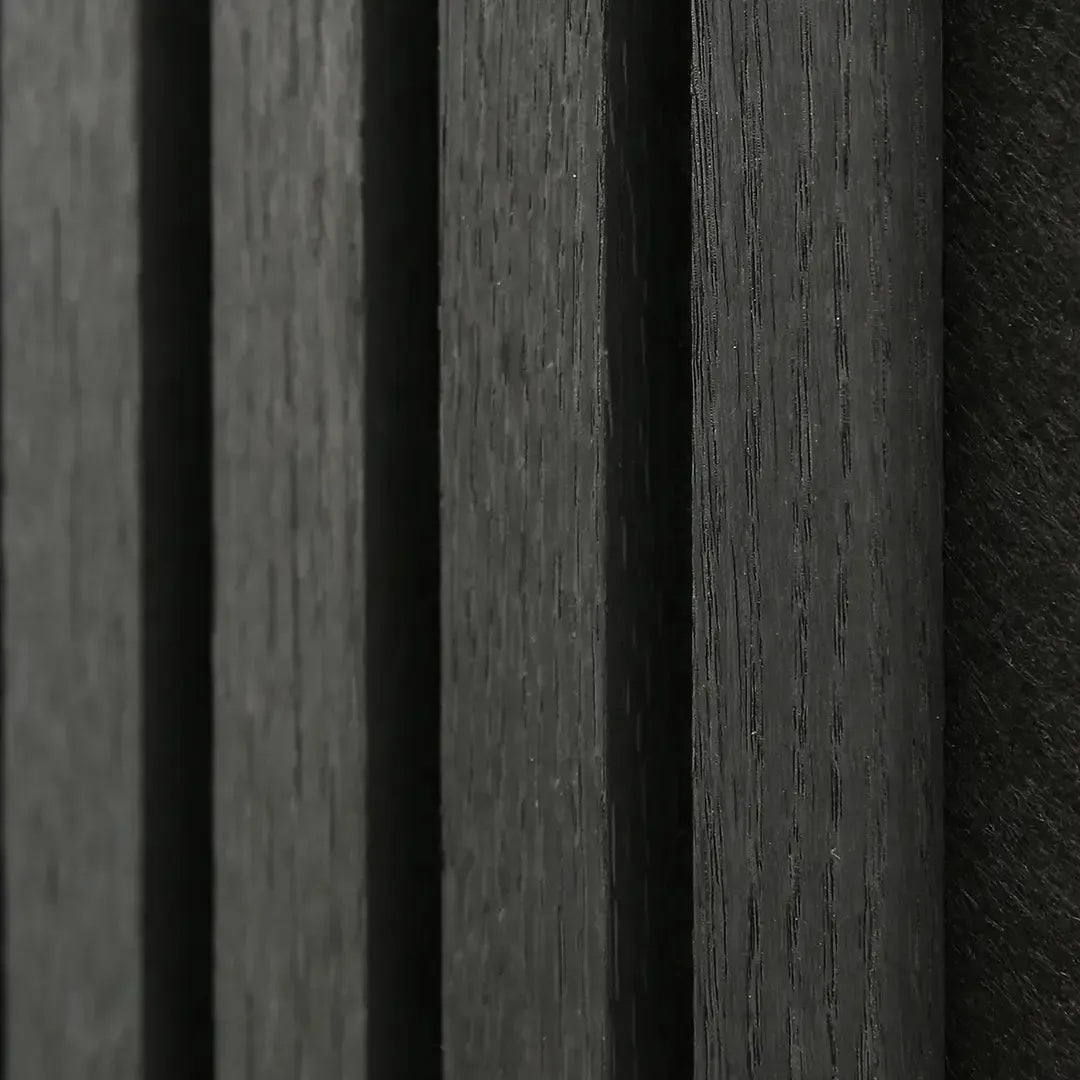
- Ultra-dark finishes on a wall with low natural light. Black oak and similarly dark panels can shrink a small reception area visually, which works against a room that's already tight on square footage.
Verdict Comparison
| Panel | Acoustic Performance | Maintenance | Best For | Verdict |
|---|---|---|---|---|
| Acoustic Slat Wall Panel, Natural Oak with Gray Felt | Strong (felt-backed) | Wipeable | Main reception feature wall | Buy |
| Fluted Wall Panel, Natural Oak | Moderate (surface diffusion) | Wipeable | Boutique-style reception | Consider |
| Sample Slat Wall Panel, Natural Oak | N/A | N/A | Pre-purchase testing | Buy |
FAQ
What's the best wood wall panel for a dental reception area in 2026? The acoustic slat wall panel in natural oak with gray felt is the strongest all-round choice — it combines real wood veneer with an acoustic felt backing that cuts echo without a clinical look.
Is wood paneling better than foam acoustic tiles for a dental office? For reception areas, yes — foam tiles absorb sound but visually signal studio or clinic, while felt-backed wood slat panels absorb sound and still look like a design feature.
How much wall coverage does a dental reception need? Most reception areas need coverage for one accent wall behind the check-in desk, typically an 8 to 10-foot run in a 150 to 300 square foot room, not full-room cladding.
Do wood acoustic panels need special cleaning in a medical setting? Sealed wood veneer with a felt backing wipes clean like any painted wall surface; avoid porous or unsealed finishes that trap grime near high-touch areas.
Can wood wall panels go behind a check-in desk with cutouts for outlets or signage? Yes — slat and fluted panel formats are typically cut to fit around outlets, signage mounts, and desk cutouts during a standard install.
Should I order a sample before buying panels for a dental practice? Always order a sample first — grain and tone shift under reception lighting compared to a product photo, and a mismatch on a full wall order is expensive to redo.
Are dark oak or black panels a bad choice for a small reception area? Generally yes for smaller rooms — dark finishes visually shrink a space that's already tight on square footage; natural oak or lighter walnut tones read more open.
Do acoustic wood panels help with noise between the reception and treatment rooms? They reduce reverberation in the reception area itself; for noise specifically between reception and treatment rooms, panels on shared walls are addressed separately from front-of-house accent walls.
One Last Thing
The detail most practice owners miss in 2026: the loudest source of reception noise usually isn't the waiting patients, it's the hard checkout counter reflecting sound straight back at them. A single felt-backed panel wall placed directly opposite or behind that counter does more acoustic work than paneling the entire room.

 Better performance and aesthetic appeal
 In Stock